USA will send no senior government official to COP25 climate conference
 US will ‘protect its interests’ at COP25 climate conference, No senior members of Donald Trump’s administration will attend COP25. https://www.sbs.com.au/news/us-will-protect-its-interests-at-cop25-climate-conference 2 Dec 19, The US will send a diplomatic team but no senior members of Donald Trump’s administration to a global climate change conference starting in Spain on Monday, according to a statement.However, in an effort to raise the US profile in Madrid, House speaker Nancy Pelosi will led a 15-member congressional delegation to “reaffirm the commitment of the American people to combating the climate crisis”.
The US, at Mr Trump’s direction, is withdrawing from the Paris climate accord, which set a goal of limiting global temperature rises to well within two degrees Celsius from pre-industrial levels.
Spain stepped in to host the COP25 meeting, which seeks to boost commitments to fight climate change, after Chile pulled out due to civil unrest.
“The United States will continue to participate in ongoing climate change negotiations and meetings – such as COP25 – to ensure a level playing field that protects US interests,” the US State Department said Saturday.
The US team will be headed by ambassador Marcia Bernicat, principal deputy assistant secretary of state for oceans and international environmental and scientific affairs.
Ms Pelosi, calling climate change “the existential threat of our time,” announced a delegation of Democrats drawn from both the House and the Senate, with no members of Mr Trump’s Republican party.
The president has cast the Paris climate accord as elitist and unfair to the US, saying when announcing his decision to withdraw that he was “elected to represent the citizens of Pittsburgh, not Paris”.
But scientists say the accord is vital to check the worst damage from global warming, such as increasing droughts, rising floods and intensifying storms.
The US is the world’s second biggest emitter of greenhouse gases after China, and is the only country to pull out of the Paris agreement.
The final US withdrawal from the landmark accord is scheduled for 4 November, 2020, a day after the next presidential election.
Several Democratic presidential aspirants have said that, if elected, they would immediately return to the agreement.
No president should have the absolute authority to launch nuclear weapons
|
Joseph Cirincione is a nuclear weapons policy expert and president of the Ploughshares Fund, a global security foundation. Impeachment has a way of bringing out a president’s worst instincts — and the world could end up paying the price. As impeachment hearings intensified, an increasingly erratic president appeared to finally snap. “I can go into my office and pick up the telephone,” he told visiting lawmakers, “and in 25 minutes, 70 million people will be dead.” It was 1974, and the president was Richard Nixon. He was right. U.S. policy, then and now, gives the president absolute authority to launch nuclear weapons whenever they want, for whatever reason. No consensus is required. No one else need approve. Indeed, no other official even need know. The president, on their own, can simply summon the “nuclear football,” open binders of attack options and relay orders to the National Military Command Center. The orders would be sent down to missile control officers — where intercontinental ballistic missiles are primed on “hair-trigger” alert — and 30 minutes later you’d have nuclear explosions over the targets, just as Nixon claimed.
It was 1974, and the president was Richard Nixon. He was right. U.S. policy, then and now, gives the president absolute authority to launch nuclear weapons whenever they want, for whatever reason. No consensus is required. No one else need approve. Indeed, no other official even need know. The president, on their own, can simply summon the “nuclear football,” open binders of attack options and relay orders to the National Military Command Center. The orders would be sent down to missile control officers — where intercontinental ballistic missiles are primed on “hair-trigger” alert — and 30 minutes later you’d have nuclear explosions over the targets, just as Nixon claimed……
Procedures adopted in the fearful days of the Cold War — including the first use of nuclear weapons in a conventional conflict, the sole authority of the president to fire these weapons and keeping our missiles ready to launch in minutes — combine now to present an unacceptable risk of nuclear disaster. Little can be done now to reduce these risks. If we do escape catastrophe, it should be the first order of business in a new administration to declare new nuclear guidance and adjust nuclear alert postures accordingly. Legislators, including House Armed Services Committee Chairman Adam Smith (D-Wash.), have already introduced bills to prevent presidents from acting solely on their own to launch nuclear weapons and to make it official policy that America will never initiate a nuclear war. These provide a sound basis for a new president to revamp nuclear doctrine and to prevent, as President John F. Kennedy said, that slender thread holding the nuclear sword of Damocles from being cut by “accident or miscalculation or madness.” We must prepare to do all we can to ensure that no one individual — sane or insane — can ever start a nuclear war on their own. This column was produced in collaboration with The WorldPost, a publication of the Berggruen Institute. https://www.washingtonpost.com/opinions/2019/12/01/no-president-should-have-absolute-authority-launch-nuclear-weapons/ |
|

Cyber attack targets UK’s nuclear industry
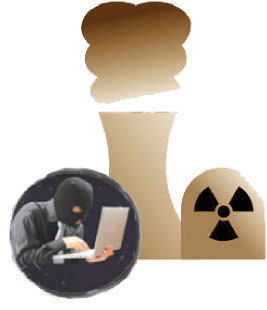 Telegraph UK, Wil Crisp, 30 NOVEMBER 2019 GCHQ cyber experts have been called in after a digital attack on a major player in Britain’s nuclear power industry triggered a security crisis.
The National Cyber Security Centre (NCSC), an arm of GCHQ, has been secretly providing assistance to a nuclear power company in the UK that has struggled to recover after being hit by a cyber attack, The Telegraph can reveal.
A Nuclear Decommissioning Authority (NDA) report, obtained using freedom of information legislation, said officials are “aware that an important business in the Nuclear Power Generating Sector has been negatively impacted by a cyber attack and has had to rely on expertise from the NCSC to help them with recovery”.
The document,... (subscribers only) https://www.telegraph.co.uk/business/2019/11/30/cyber-attack-targets-uks-nuclear-industry/
Russia’s nuclear company Rosatom in financial trouble trying to fund nuclear project in Turkey

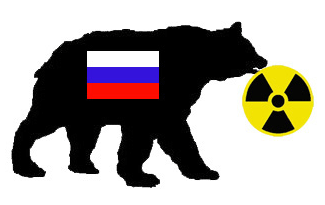 Turkey’s first nuclear plant delayed by funding problems – energy expert https://ahvalnews.com/turkey-energy/turkeys-first-nuclear-plant-delayed-funding-problems-energy-expert, Nov 30 2019 Completion of Turkey’s first nuclear power station is likely to be delayed as the Russian company building it is struggling to secure funding, former diplomat and Bosphorus Energy Club head Mehmet Öğütçü told Turkish daily Sözcü. A small part of the plant in Akkuyu, southern Turkey, may be opened for political reasons in 2023, the centenary of the founding of the Turkish Republic, Öğütçü said. But Russian state-owned Rosatom is having difficulties financing the project, which is expected to cost between $20 billion and $25 billion, he said, adding that Western companies were avoiding Akkuyu over concerns about nuclear armament. A Turkish consortium pulled out of the project last year, citing a failure to reach commercial terms with Rosatom, which owns a 51 percent stake in the project. A report by the main opposition Republican People’s Party this month criticised the terms of the government’s deal with Rosatom, which has been guaranteed a price of 12.35 U.S. cents per kilowatt hour in a 15-year power purchase agreement. |
|
Russia’s Rosatom planning to market Small Modular Nuclear Reactors to Europe
|
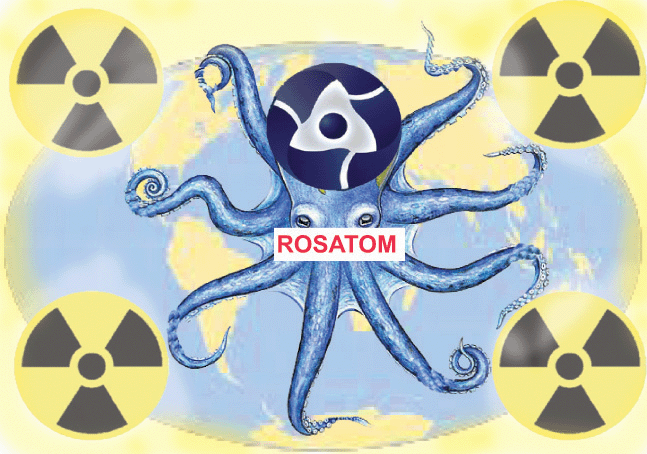
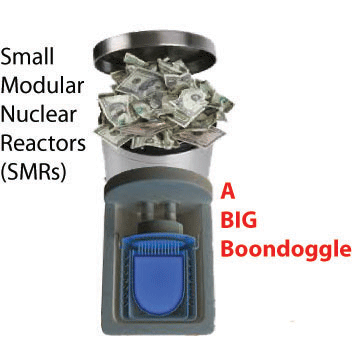
Russian company’s plan for nuclear power expansion revealedVLADIMIR PUTIN has made nuclear energy one of Russia’s key priorities, and now the Russian nuclear power company Rosatom has revealed to Express.co.uk their plans to ramp up expansion into Europe with small modular reactors. Express UK By CHARLIE BRADLEY, Fri, Nov 29, 2019
Rosatom is completely under state control, and while its emphasis with some projects has been geared towards powering hard to reach Russian territories, it has also undertaken numerous international projects. This includes the development of nuclear power plants in China, Turkey and Iran, highlighting the growing presence of Russian energy throughout the world. And now, with some projects already under way in countries like Hungary and Finland, its Vice President of Marketing and Business Development Overseas, Anton Moskvin, has told Express.co.uk that Europe is a future target for the company.He said: “I must say Europe is very interesting for us with prospective small modular reactors market development, we know that several countries are interested. The UK has great interest in the small modular reactors.” …… However, some in the EU have expressed concern over any plans for the Russian nuclear giant, fearing that the country could use its business to wield political influence.
In 2014, President Putin agreed a deal worth £8.5billion with Hungary President Viktor Orban, a deal which has seen the two leaders meet regularly since. Hungary is both a NATO and EU member, and the latter has sought legislation to ensure countries embarking on nuclear deals with Moscow do not become dependent on the Kremlin. RFI (Radio France International) reported last month that Jan Haverkamp, vice-chairman of Nuclear Transparency Watch, has serious reservations about the projects. He said: “Our assessment is that the Kremlin tries to use nuclear power now to regain some of that lost influence. “We see Rosatom being very eager to buy up nuclear companies in Europe, where they try to get a participation in order to get a solid nuclear foothold inside the EU.” Mr Moskvin said he could not comment on political issues……… https://www.express.co.uk/news/world/1211103/putin-news-russia-europe-nuclear-power-eu-rosatom-spt |
|
Nuclear-capable air-launched ballistic missile tested over the Barents Sea
|
The Kinzhal missile was launched from a MiG-31K taking off from Olenegorsk airbase on the Kola Peninsula. Barents Observer By Thomas Nilsen, December 01, 2019
The missile changes the military power-balance in the north due to its range, speed and ability to overcome any known missile defence systems. Kh-47M2 Kinzhal (NATO name SA-N-9 Gauntlet) is one of the six new strategic nuclear weapons presented by Vladimir Putin in his presidential address to the Federal Assembly on March 1, 2018. Now, the missile is tested and like several of the other new strategic weapons under development by Russia, the test took place in the northwestern part of the country……. https://thebarentsobserver.com/en/security/2019/12/nuclear-capable-air-launched-ballistic-missile-tested-over-barents-sea |
|
Suffolk Coastal Labour opposes the development of new nuclear capacity at Sizewell

 Suffolk Coastal Labour 27th Nov 2019, Suffolk Coastal Labour does not support the concept of ‘The Energy Coast’. The branding itself puts at risk the visitor and tourist economy of East Suffolk which depends on The Suffolk Coast and Heaths Area of Outstanding Natural Beauty.
It conflicts with established identities such as ‘The Sunshine Coast’ and ‘The Heritage Coast’. The huge industrial projects proposed threaten the local economy and environment without bringing any benefits. Traffic congestion on the A12 and ruralroads will discourage visitors and compromise the quality of life of localresidents.
In Suffolk Coastal, Labour opposes the development of new
nuclear capacity at Sizewell. The Sizewell C development cannot be
undertaken without unacceptable impacts on the Suffolk Coast and Heaths
Area of Outstanding Natural Beauty. It will compromise the future of RSPB
Minsmere, and, especially during the construction period, other Sites of
Special Scientific Interest and the highly sensitive local environment. It
will threaten jobs and prosperity in the visitor and tourist economy, the
agricultural sector and food and drink industries. It offers very few new
permanent jobs for local people. Current proposals to mitigate the worst
effects of the construction project are grossly underfunded and will not
relieve the impact of huge numbers of vehicle movements for goods and
people on the A12 and surrounding rural roads. There are no proposals to
invest adequately in rail alternatives.
UK’s Labour and Greens parties have highly prioritised climate change action
David Lowry’s Blog 29th Nov 2019, A letter writer in today’s Times newspaper complained that politicians have not prioritized climate change in their manifestos.Your correspondent Lesley Boase asks “why isn’t urgent action climate
change at the top of [political parties’] manifestos”? The day before
the letter appeared, the Labour Party launched its 48-page manifesto for
the environment ‘A Plan for the Environment. At its launch in
Southampton, Mr Corbyn stressed” The reality is this election is our last
chance to tackle the climate and environment emergency,” in setting out
“Labour’s plan for real change to protect our planet and restore our
natural world.” He added: “We have no time to waste…we have a choice.
We can shut our eyes, cross our fingers and entrust our fate to a system
that has already driven our planet to the brink of catastrophe. Or we can
do everything possible to tackle the biggest threat we face.
http://drdavidlowry.blogspot.com/2019/11/political-parties-prioritise-climate.html
Premiers of Ontario, Saskatchewan, New Brunswick to plan development of Small Modular Nuclear Reactors
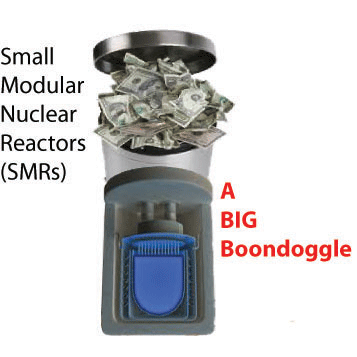
 Ontario, Saskatchewan, N.B. premiers to announce nuclear reactor deal, Global News BY STAFF THE CANADIAN PRESS November 30, 2019 “….. The Ontario government said Premier Doug Ford will meet with Saskatchewan Premier Scott Moe and New Brunswick Premier Blaine Higgs for an announcement at a hotel near Pearson International Airport on Sunday afternoon.
A spokesman with Moe’s office confirmed the announcement is connected to an agreement on technology for small modular reactors, while a spokeswoman for Ford’s office said it’s an agreement to work together to determine the best technologies for the deployment of small modular reactors in Canada……
Moe has said that Saskatchewan will address climate change over the next decade by looking to carbon capture and storage technology and by increasing research efforts around small modular nuclear reactors.
However, the possibility of bringing nuclear power to Saskatchewan could still be years away https://globalnews.ca/news/6239231/premiers-nuclear-reactor-deal/
Plans for nuclear waste disposal, but there’s no long term solution

The Staggering Timescales Of Nuclear Waste Disposal, Christine Ro https://www.forbes.com/sites/christinero/2019/11/26/the-staggering-timescales-of-nuclear-waste-disposal/#621facec29cf
High-level nuclear waste consists largely of spent fuel from nuclear reactors. Though it makes up a small proportion of overall waste volumes, it accounts for the majority of radioactivity. This most potent form of nuclear waste, according to some, needs to be safely stored for up to a million years. Yes, 1 million years – in other words, a far longer stretch of time than the period since Neanderthals cropped up. This is an estimate of the length of time needed to ensure radioactive decay.
They’re also such mind-bogglingly long periods that in 1981, the US Department of Energy established the Human Interference Task Force to devise ways to warn future generations of the dangerous contents of nuclear repositories. This was a challenging task then, and nuclear semiotics remains the stuff of science fiction. Written language has only existed for about 5,500 years, so there’s no guarantee that Earth’s inhabitants, tens of thousands of years from now, would understand any of the writing systems currently in use. The meanings of visual signs also drift over time. The more whimsical “ray cat solution,” of genetically engineering cats to glow in the presence of radioactive material, is even less reliable.
Even stopping nuclear power operations is a necessarily drawn-out process. Decommissioning a single nuclear reactor typically takes about 20 years. Most countries grappling with nuclear waste are planning for at least 40 to 60 years just to implement their repository programs.
After brief flirtations with amusingly bad ideas including shooting nuclear waste into space, the consensus among nuclear scientists is that the best option for dealing with high-level nuclear waste is deep geological disposal. One of the International Atomic Energy Agency’s conditions for such a geological site is low groundwater content, which has been stable for at least tens of thousands of years, and geological stability, over millions of years. Thus, Japan, with its seismic instability, is unlikely to have any suitable candidates for deep geological disposal.
Like many countries, Japan is relying on interim storage of high-level waste while hoping that longer-term solutions will present themselves eventually. In fact, no country even has an operational deep geological repository for spent nuclear fuel. (The US has a deep disposal site in New Mexico for “transuranic” waste from nuclear weapons, which is long-lived and intermediate-level waste whose elements have higher numbers than uranium in the periodic table.)
It’s challenging to find a site that ticks all of the geological boxes (including relatively impermeable material with little risk of water infiltration), and that isn’t politically controversial. To take two notable examples, communities in Nevada, US and Bure, France have hotly opposed plans to establish repositories. Given the history of environmental justice globally, it’s likely that any future locations approved for nuclear waste dumps will be found in poor areas.
Only one country, Finland, is even building a permanent spent-fuel repository. Even in Finland, however, it’s estimated that a license won’t be issued until 2024. Similar licenses for other European countries scouting out possible locations likely wouldn’t be available until 2050 in Germany and 2065 in the Czech Republic. And these countries are outnumbered by those that don’t even have an estimated timeframe for licensing, as they’re so far back in the process of searching for a site.
Strategies remain worryingly short-term, on a nuclear timescale. Chernobyl’s destroyed reactor no. 4, for instance, was moved in July 2019 into a massive steel and concrete “sarcophagus” that will only last 100 years. Not only will containers like this one fall short of the timescales needed for sufficient storage, but no country has allotted enough funds to cover nuclear waste disposal. In France and the US, according to the recently published World Nuclear Waste Report, the funding allocation only covers a third of the estimated costs. And the cost estimates that do exist rarely extend beyond several decades.
Essentially, we’re hoping that things will work out once future generations develop better technologies and find more funds to manage nuclear waste. It’s one of the most striking examples of the dangers of short-term thinking.Check out my website.
France wants to label nuclear as “green”. Germany will have none of it
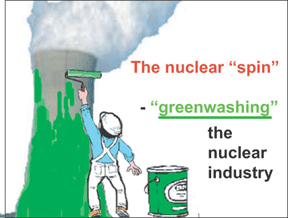 Paris, Berlin divided over nuclear’s recognition as green energy https://www.euractiv.com/section/energy-environment/news/france-and-germany-divided-over-nuclears-inclusion-in-eus-green-investment-label/ By Cécile Barbière | EURACTIV.fr | translated by Daniel Eck 27 Nov 19, Disagreement on the inclusion of nuclear power in the EU’s upcoming green finance taxonomy has revived long-standing divisions between France and Germany over the energy transition. EURACTIV France reports.
Franco-German relations have already been strained by French President Emmanuel Macron’s radical comments on NATO’s “brain death,” which attracted strong rebukes in Berlin.
Now, the European Commission’s proposed taxonomy for sustainable finance has emerged as a new bone of contention.
Tabled in 2018, the EU taxonomy aims to determine which economic activities can benefit from a sustainable finance label at European level. The objective is to give clear indications to investors so they can redirect their financing towards environmentally-friendly sectors.
Six pre-defined environmental objectives must be met in order to obtain the label. If any technology seriously undermines one of those goals, it is automatically disqualified.
It is because of this double level of control that nuclear energy failed to win the green label in the European Parliament, until the Council representing EU member states voted to reinstate it in September.
Although nuclear energy largely meets the low-carbon emissions objective, “it was not possible to include nuclear power because there is no scientific evidence for waste treatment. This means that the sector does not meet both requirements,” explained Jochen Krimphoff, WWF’s deputy director for green finance.
Since the beginning of the negotiations on the EU’s taxonomy, France has been pushing to reintroduce nuclear power, much to Germany’s dismay.
“France will advocate that nuclear energy should be part of this eco-label,” said French Finance Minister Bruno Le Maire at the conference to replenish the Green Fund at the end of October.
“We cannot succeed in the ecological transition, and we cannot achieve our goal in terms of combating global warming without nuclear energy,” the French minister said.
The move is all the more surprising given France’s rather progressive positions on the taxonomy. For example, Paris has, like the Commission and Parliament, been calling for the taxonomy to enter into force as early as 2020, while the Council has advocated for implementation in 2023.
For its part, Germany would not be opposed to labeling gas as green. This could be at the risk of a deal that would see both gas and nuclear power re-entering the scheme.
Despite Halting Progress, UN Continues its Push for a Nuclear-Weapons-Free Zone in the Middle East
And as another effort to negotiate a legally-binding treaty concluded last week, there were lingering questions crying out for answers: how realistic is the proposal in the face of implicit opposition from US and Israel? Is the proposal still in the realm of political fantasy?
Expressing confidence in the ongoing negotiations, Emad Kiyaei, Director at the Middle East Treaty Organization (METO) and a former director at American-Iranian Council told IPS, a WMD-Free Zone in the Middle East is far from being a fantasy– and is based on the goodwill of the states from within the region to reach an agreement.
Last week’s conference, he said, was “a positive step forward and the states in the (committee) room were showing more flexibility and constructive discourse that we have witnessed in decades on this issue.”
He pointed out that the danger of a nuclear arms race in the Middle East shows that business cannot continue as usual.
“It is a real threat, however, and this threat is further exacerbated by the global nuclear weapons states that have used the Middle East in their power games and scapegoated in not reaching a final document at the 2015 NPT Review Conference.”
He said the states from within the region understand the gravity of the threat and
the need for a comprehensive process that reduces tensions and serves as a starting point for an inclusive discussion in goodwill.
The United Nations says it has been working to eliminate nuclear weapons, including through the Treaty on the Non-Proliferation of Nuclear Weapons (NPT), as well as the Comprehensive Nuclear-Test-Ban Treaty (CTBT) and the Treaty on the Prohibition of Nuclear Weapons (TPNW), both of which are yet to enter into force.
Dr Rebecca Johnson of the Acronym Institute for Disarmament Diplomacy and author of “Unfinished Business” on multilateral negotiations, told IPS: “The stakes for international as well as regional security could not be higher.”
“Ending weapons of mass destruction possession and use in the Middle East has to be a vital priority for everyone.”
“It’s helpful that most of the P5 (the five permanent members of the UN Security Council, namely the UK, US, France, China and Russia) — and relevant states of the region attended the UN Conference — but very worrying that the United States and Israel decided to boycott,” she said.
“They behave as if they want to keep at least nuclear weapons and freedom of action for the foreseeable future. That’s a dangerous position to take, particularly after Donald Trump unilaterally pulled the US out of the JCPOA (2015 nuclear restraint agreement with Iran), which has reopened the door for Tehran to accelerate its nuclear production programmes, including uranium enrichment.”
Last week’s conference “was very limited in what it can accomplish in a week. What will it take to restore the JCPOA and bring Israel and the US to the table?”
“Politics is of course key here”, declared Dr Johnson.
UN Secretary-General Antonio Guterres welcomed “the successful conclusion of the Conference” and congratulated the participating States, in particular on the adoption of a Political Declaration, and supported their continuing efforts to pursue, in an open and inclusive manner, the establishment of a Nuclear-Weapons and Other Weapons of Mass Destruction-Free Zone in the region.
Currently, there are five regional nuclear-weapon-free-zones – in Latin America and the Caribbean; Africa; Central Asia; Southeast Asia; and the South Pacific.
According to the United Nations, treaties covering those States are: African Nuclear Weapon Free Zone Treaty (Treaty of Pelindaba); South Pacific Nuclear Free Zone Treaty (Treaty of Rarotonga); Treaty on the Southeast Asia Nuclear Weapon Free Zone (Treaty of Bangkok); Treaty on a Nuclear Weapon Free Zone in Central Asia (Semipalatinsk Treaty); and, the first ever such zone, the Treaty for the Prohibition of Nuclear Weapons in Latin America and the Caribbean (Treaty of Tlatelolco).
The world’s five declared nuclear powers are the P5 in the UN Security Council while the four undeclared nuclear powers are India, Pakistan, Israel and North Korea.
But there are at least three countries in the region—Iran, Saudi Arabia and Egypt – harboring intentions of going nuclear perhaps in a distant future.
Asked about the progress made so far, Kiyaei said since 2016, civil society in the region has been working with states from within the region and the international community to draw attention to the fact that the most important component missing was the belief that such a zone is possible and the goodwill needed to sustain this process.
The Middle East Treaty Organization (METO) with international experts has issued a draft treaty text that shows several possibilities to move forward if only the states want to achieve the zone, instead of using this topic to bash each other for short-term political points, he added.
“We have noticed a change of language that was shown even in the UN Resolution that was adopted for an annual conference on the WMD Free Zone. This is a rare opportunity whereby the conference on the zone is initiated and led by states within the Middle East, while the five Permanent Members of the UN Security Council (minus the United States) serve as observers”, said Kiyaei, co-author of “Weapons of Mass Destruction: A new approach to non-proliferation” (Brookings Institution and Chatham House).
Dr Johnson said: “The main diplomatic challenge is to take forward a positive process that engages positively with the existing treaty regimes covering all types of weapons of mass destruction (WMD).”
At a minimum, it would have been important for the November Conference to commit to holding a follow up conference under UN General Assembly auspices.
“They should also consider what positive initiatives can be taken to the Non-Proliferation Treaty (NPT) Conference in 2020, especially in light of the 1995 Resolution on the Middle East and the failure to hold the 2012 Conference that was agreed in 2010.”
“I’ve been talking with various regional and P5 states about what diplomatic initiatives could be practical to propose in 2020, but let’s see first how last week’s UN Conference has progressed.”
Tijjani Muhammad-Bande, President of the UN General Assembly, warned delegates about the continued existence of more than 15,000 nuclear warheads stockpiled around the world, “and any use of these weapons would be a humanitarian and ecological catastrophe, causing irreplaceable damage.”
Although nuclear weapons have only been used once in history, the 1945 bombings of the Japanese cities of Hiroshima and Nagasaki during the Second World War attest to their devastation, he added.
Asked who the key non-starters are, Kiyaei said the United States and Israel decided not to participate in this year’s conference, however, their absence in the room is not necessarily a bad thing at this moment as it allows the other states to have a constructive discussion to serve as a positive and crucial step towards a positive outcome.
“Having said that, we call on Israel to pay attention that with consensus on all final decisions on the WMD Free Zone treaty, it has nothing to lose by joining the process and everything to gain.”
The US’s stand is that the time is not right and the states in the region are not ready for disarmament. “We would like to remind that there is huge difference between disarmament and dismantlement—there is no such thing as not being ready for disarmament as disarmament begins with a conversation if there is
goodwill”.
The question is not readiness, wanting or not wanting—as Israel has on numerous times supported the establishment of a WMD Free Zone in the Middle East.
“It is time to start this discourse—just as it is time for the nuclear weapons states to dismantle their stockpiles based on a specific timeline,” he declared.
Thorny topic of Fukushima food at the 2020 Olympics
It’s a thorny subject for the authorities. They pitched the Olympics in part as a chance to showcase the recovery of areas affected by the 2011 earthquake, tsunami and nuclear disaster.
Government officials tout strict checks on food from the prefecture as evidence the produce is completely safe, but it remains unclear whether athletes and sports teams from around the world will be convinced.
In Fukushima, producers are keen to see their products served in the Olympic Village and have submitted a bid to the organizers………
It’s a thorny subject for the authorities. They pitched the Olympics in part as a chance to showcase the recovery of areas affected by the 2011 earthquake, tsunami and nuclear disaster.
Government officials tout strict checks on food from the prefecture as evidence the produce is completely safe, but it remains unclear whether athletes and sports teams from around the world will be convinced.
In Fukushima, producers are keen to see their products served in the Olympic Village and have submitted a bid to the organizers.
But the figures have only gone some way to reassuring foreign officials: Numerous countries including China, South Korea and the U.S. maintain restrictions on the import of some or all produce from Fukushima.
South Korea, currently locked in a dispute with Japan over wartime issues, has been vocal about its concerns ahead of the Olympics, even raising the possibility of bringing in its own kitchen and food.
“We have requested the Olympic organizers to provide objective data verified by an independent third body,” the South Korean Sports and Olympic Committee said in a statement earlier this year.
“Since Japan repeatedly said its food from Fukushima is safe, we have demanded they provide statistics and data to back up their claims,” an official with the committee said.
The position underlines a long-running problem for Japan: While it points to its extensive, government-mandated checks as proof of safety, many abroad feel the government is not an objective arbiter…….
The International Olympic Committee has said it is still weighing how to handle the matter……. https://www.japantimes.co.jp/news/2019/11/26/national/fukushima-food-olympics-tokyo-2020/#.Xd7rfugzbIU
The negotiations in Madrid for COP 25 Climate Change Conference
WHAT TO EXPECT FROM THE UN’S COP 25 CLIMATE CHANGE CONFERENCE, https://ensia.com/notable/cop-25-un-climate-talks/ Andrew Urevig @aurevig November 26, 2019 — In 2015, 195 countries adopted an international treaty aiming to limit global warming to less than 2 °C (3.6 °F) above average preindustrial temperatures in order to avert the worst of Earth’s climate emergency.
How exactly will these countries implement that treaty, the Paris agreement? That’s a key question for the thousands of people set to attend the COP 25 negotiations, the 25th annual Conference of Parties to the United Nations Framework Convention on Climate Change. Despite a last-minute change of location from Chile to Spain, the talks are still slated for December 2–13.
Representatives of countries around the world are preparing to negotiate rules for international carbon markets, finalize details on climate finance and ready the world for the crucial next decade of action on the climate crisis. Chilean environmental minister Carolina Schmidt will preside over the negotiations.
Double Counting Strikes Back
According to Schmidt, “COP 25 will be the COP of implementation.” The main goal is to fill in the legal and technical details of the Paris agreement. That work began at COP 24, which was held last year in Poland.
Left unresolved last year were the rules for voluntary carbon emissions markets, which would let nations meet their pledged emissions cuts by trading reductions with other countries. In a June interview, Schmidt said that these rules, covered under Article 6 of the Paris treaty, would be a major focus of COP25.
Finishing the work of COP 24, this year’s negotiations should finalize the details of the Paris agreement. But consensus could be difficult to reach. During the last climate talks, according to Carbon Brief, draft rules for the carbon markets would have prohibited double counting of emissions, a scenario in which reductions would be counted by both the country that achieved them and the country purchasing those reductions as emissions offsets. But the delegation from Brazil rejected that prohibition, pushing the conversation off to this year.
Other Issues
Other issues will be on the table, too. Countries at COP 25 will discuss details for climate finance to support countries designated as developing as they adapt to climate change and mitigate their carbon emissions.
Outside the halls of power, COP 25 could see street demonstrations and other protests. Last year’s talks coincided with protests worldwide, including 3,000 who marched in Katowice, Poland, where the talks were held.
U.S. diplomats will be among the negotiators — but potentially for the last time. President Donald Trump notified the U.N. Framework Convention on Climate Change (UNFCCC) on Nov. 4, 2019, that the U.S. would withdraw from the Paris agreement. The U.S. is scheduled be officially out of the deal by Nov. 4, 2020, less than a week before COP 26 will begin in Glasgow, Scotland. A U.S. delegation will still be invited to attend the conference — but not to negotiate, in an official capacity, the future of the Paris accord.
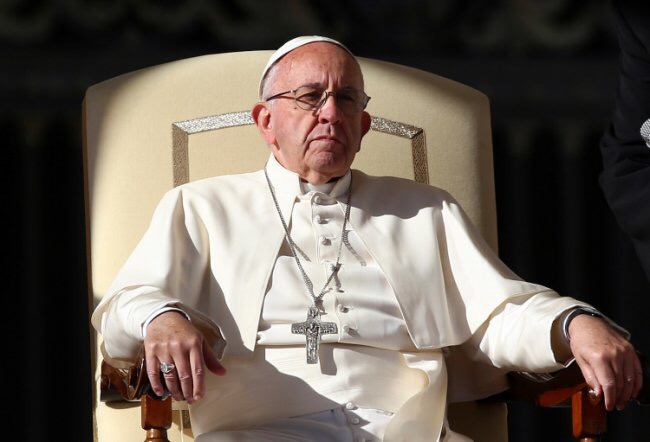
Pope Francis, in Japan, Warns of ‘Selfish Decisions’ on Nuclear Energy
|
Making the first visit to the country by a pope in 38 years, Francis called for an end to the nuclear arms race in visits to Hiroshima and Nagasaki. NYT, By Motoko Rich, 25 Nov 19, TOKYO — In the first visit to Japan by a pontiff in 38 years, Pope Francis on Monday edged close to calling for the renunciation of all nuclear power in a country that experienced the worst nuclear disaster since Chernobyl but has yet to determine a viable alternative for its energy needs.A day after traveling to Nagasaki and Hiroshima, the only places where atomic bombs have ever been used in war, the pope met in Tokyo on Monday with victims of the 2011 earthquake, tsunami and nuclear meltdown that ravaged northeastern Japan. Francis noted that the Catholic bishops of Japan had called for the shutdown of all nuclear plants in Japan after the 2011 disaster, in which waves from the tsunami overpowered the Fukushima Daiichi nuclear power plant and set off catastrophic meltdowns in three reactors. “As we think about the future of our common home, we need to realize that we cannot make purely selfish decisions,” the pope said on Monday, “and that we have a great responsibility to future generations.” Although Japan has a tiny and shrinking Catholic population, the pope drew thousands of people to his appearances in Nagasaki and Hiroshima, where he called for an end to the nuclear arms race. In denouncing any use of atomic weapons as “a crime not only against the dignity of human beings but against any possible future for our common home,” he appeared to go further than his predecessors, who called for an end to stockpiling nuclear arms. “The arms race wastes precious resources that could be better used to benefit the integral development of peoples and to protect the natural environment,” the pope said in an address in Peace Park in Nagasaki, which commemorates the 74,000 people who died in the atomic bombing on Aug. 9, 1945, three days after the bombing of Hiroshima, which killed 140,000 people. “In a world where millions of children and families live in inhumane conditions, the money that is squandered and the fortunes made through the manufacture, upgrading, maintenance and sale of ever more destructive weapons are an affront crying out to heaven,” he added. …… On Monday, Francis also addressed the deterioration of international ties at a time when populist governments and leaders have taken to looking inward. “We are witnessing an erosion of multilateralism, which is all the more serious in light of the growth of new forms of military technology,” he said in Nagasaki. “Such an approach seems highly incongruous in today’s context of interconnectedness; it represents a situation that urgently calls for the attention and commitment of all leaders.”……. He described what he called the disconnectedness of a group of young people he had met at St. Mary’s Cathedral in Tokyo . “They remain on the margins, unable to grasp the meaning of life and their own existence,” he said. “Increasingly, the home, school and community, which are meant to be places where we support and help one another, are being eroded by excessive competition in the pursuit of profit and efficiency. Many people feel confused and anxious; they are overwhelmed by so many demands and worries that take away their peace and stability.” …….. Reporting was contributed by Makiko Inoue, Eimi Yamamitsu and Hisako Ueno. https://www.nytimes.com/2019/11/25/world/asia/pope-francis-japan-nuclear.html Motoko Rich is Tokyo bureau chief for The New York Times. She has covered a broad range of beats at the Times, including real estate (during a boom), the economy (during a bust), books and education. @motokorich |
|
1 This Month
19 November – Webinar – The Reality of Reprocessing
Time: 11:00 AM Pacific Time (US & Canada) / 2:00 PM Eastern / 7:00 PM UK / 8:00 PM CET
Register for the Zoom Event Here

Tell Congress: Prevent Nuclear Catastrophe in Iran

Tell Congress: Prevent Nuclear Catastrophe in Iran

Read the Public Inquiry Report, the Commissioners’ report, Surrendering Australia: The AUKUS Deception is available to download for free at aukuspublicinquiry.com. Or just watch the replay of the National Press Club Luncheon.


Shut down the radiation-damaged Heysham nuclear reactors now
To see nuclear-related stories in greater depth and intensity – go to https://nuclearinformation.wordpress.com

Say No to NASA’s Reckless Nuclear Reactor on the Moon
Say No to NASA’s Reckless Nuclear Reactor on the Moon
-
Archives
- November 2026 (178)
- October 2026 (302)
- September 2026 (339)
- August 2026 (330)
- July 2026 (355)
- June 2026 (287)
- May 2026 (306)
- April 2026 (356)
- March 2026 (251)
- February 2026 (267)
- January 2026 (308)
- December 2025 (358)
-
Categories
- 1
- 1 NUCLEAR ISSUES
- business and costs
- climate change
- culture and arts
- ENERGY
- environment
- health
- history
- indigenous issues
- Legal
- marketing of nuclear
- media
- opposition to nuclear
- PERSONAL STORIES
- politics
- politics international
- Religion and ethics
- safety
- secrets,lies and civil liberties
- spinbuster
- technology
- Uranium
- wastes
- weapons and war
- Women
- 2 WORLD
- ACTION
- AFRICA
- Atrocities
- AUSTRALIA
- Christina's notes
- Christina's themes
- culture and arts
- Events
- Fuk 2022
- Fuk 2023
- Fukushima 2017
- Fukushima 2018
- fukushima 2019
- Fukushima 2020
- Fukushima 2021
- general
- global warming
- Humour (God we need it)
- Nuclear
- RARE EARTHS
- Reference
- resources – print
- Resources -audiovicual
- Weekly Newsletter
- World
- World Nuclear
- YouTube
-
RSS
Entries RSS
Comments RSS

