Yukon and Ontario and SMRs – Memorandum of Misunderstanding?

The Yukon public and their elected representatives may not fully understand the implications of introducing small modular nuclear reactors into their electricity mix.
The governments of Yukon and Ontario recently signed a partnership agreement to share Ontario’s expertise about energy development, which includes evaluation of small modular and micro-reactors. The Yukon wants to reduce reliance on diesel while meeting increasing electricity demand.
There are glaring problems with this memorandum of understanding.
First: the Ontario government cannot share what it doesn’t know. There has not been a single successful commercial SMR built worldwide. Construction of the much-touted Darlington New Nuclear Project in Ontario has barely begun.
Second: There is little private investment interest in this technology due to:
- the extraordinarily high cost ($7.7 billion for the first BWRX-300 SMR at Darlington),
- long timeline to completion (nuclear reactors have taken years longer than expected to build.)
- risks associated with accidents
Third: The Ontario public bears the full cost of building and maintaining Ontario’s reactors, remediating environmental damage, the costs of decommissioning reactors at their end of life, and management of the radioactive waste for which there is no feasible solution. Can Yukon afford this expensive electricity source?
Fourth: Nuclear reactors are notoriously unreliable; some are offline for long periods of time, like Point Lepreau in New Brunswick (which operated only 27% of the time in the 2024-2025 fiscal year), requiring diesel or gas backup to meet electricity demands.
The Second Global Sumud Flotilla: Israeli Piracy and Abduction on the High Seas
6 May 2026 Dr Binoy Kampmark, https://theaimn.net/the-second-global-sumud-flotilla-israeli-piracy-and-abduction-on-the-high-seas/
They have become adept flouters of international law. When doing so, they justify such violations with streaky, anaemic interpretations of self-defence and security. The Global Sumud Flotilla’s encore effort to break the Gaza blockade, which has been in place with varying forms of severity since 2007, did have one meritorious claim. After vanishing under a news cycle saturated with the Iran War, the blockade of the Strait of Hormuz and a global energy crisis, the unpardonably miserable plight of Gazans did make a return to the media stage.
The state of catastrophic misery for those on the Gaza Strip is something the Israeli authorities refuse to ameliorate. Despite the illusory ceasefire that commenced on October 9, 2025, Israel maintains an asphyxiating role over the narrow territory, much of which it has subjected to occupation. Since then, it continues to permit an excruciatingly limited number of supplies to a largely displaced population. On April 10, the United Nations Human Rights Chief Volker Türk made remarks about the ongoing nature of the killings and depredations by Israeli forces. Till that point, 738 Palestinians had been killed since the ceasefire had come into effect. “For the past 10 days, the Palestinians are still being killed and injured in what is left of their homes, shelters and tents of displaced families, on the streets, in vehicles, at a medical facility and a classroom.” Humanitarian personnel and journalists also continue to feature in the casualty lists.
The purpose of the Global Sumud Flotilla, as with its mission in September 2025, was to “not only break Israel’s illegal siege and deliver life-saving humanitarian aid, but also to establish a sustained civilian presence.” Participants include doctors, nurses, eco-builders, war crimes investigators, civilian protectors (unarmed) and a miscellany of others. With missionary zeal, those involved intend to “begin rebuilding healthcare systems and basic infrastructure destroyed over the past two years” even under fire from Israeli forces.
On March 27, the Palestinian NGOs Network (PNGO) released a statement commending those involved in the Freedom Flotillas, praising the efforts of the organisers “of the new Global Sumud Flotilla, which is set to depart soon.” The group acknowledged the need to escalate and strengthen “solidarity efforts with the Palestinian people” in the wake of such distractions offered by the “ongoing war in the Gulf region and the Israeli-American aggression.” Following a symbolic launch in Barcelona on April 12, the flotilla, made up of 58 vessels, set out.
On April 30, the flotilla, still in international waters off Greece, was intercepted by Israeli forces. Al Jazeera reported that the majority of 175 activists captured were taken to Crete, with Saif Abu Keshek from Spain and Brazilian Thiago Ávila proving worthy of being taken to Israel for questioning. According to Israel’s Foreign Ministry, both are affiliated with the Popular Conference for Palestinians Abroad (PCPA), a group they regard as clandestinely affiliated with Hamas.
The interception troubled Amnesty International’s Senior Director for Research, Policy, and Campaigns, Erika Guevara Rosas. “The Israeli navy crossing hundreds of miles just to ensure civilian boats carrying food, baby formula, and medical supplies don’t make it to Palestinians reveals the lengths Israel is prepared to go in order to maintain its cruel and unlawful 19-year-long blockade of the occupied Gaza Strip.”
The conduct of the IDF did not go unremarked in a number of capitals. The Foreign Ministries of Spain, Türkiye, Brazil, Jordan, Pakistan, Malaysia, Bangladesh, Colombia, Maldives, South Africa and Libya issued a joint statement condemning “in strongest terms the Israeli assault” on the flotilla, “a peaceful civilian humanitarian initiative aimed at drawing the attention of the international community to the humanitarian catastrophe in Gaza.”
The World Federation of Trade Unions expressed the firm view that the act had been one of piracy, involving the sabotage and destruction of boats, the assault and attack of activists and the abandonment of some of their number at sea “with no means of reaching land.” The WTFU also took issue with the illegal detention of Abu Keshek, a member of the World Federation and a trade unionist of the Catalan union IAC.
On May 3, the state attorney presented a list of offences to the Ashkelon Magistrates’ Court including “assisting the enemy during wartime” and “membership in and providing services to a terrorist organisation.” Spain’s Foreign Ministry unequivocally rejects the claims, insisting on Abu Keshek’s immediate release.
On May 5, the Court granted the state’s request to prolong the detention of Abu Keshek and Ávila being held at Shikma Prison till May 10. Their conditions feature total isolation, sleep deprivation through using high-intensity lighting in cold cells for 24-hour spells, and blindfolds when moved outside their quarters, including when medically inspected. Both have furnished testimony to the Israeli-based human rights group Adalah, which is acting on their behalf, noting “severe physical abuse amounting to torture.” The detainees are also undertaking a hunger strike, having only consumed water since April 30.
Adalah reasons that such a decision amounted “to judicial validation of the state’s lawlessness.” The six-day extension had also been granted “without imposing any limitations or judicial constraints on the interrogation period.” An appeal is being mustered by the group, which argues that an abduction undertaken over 1,000 kilometres from Gaza of non-Israeli citizens excludes the application of Israeli domestic law.
In drumming up such publicity, the question of effectuality arises. At what point does citizenry activism, decked out and decorated by high profile activists, win through? Do participants become, after a time, victims of their own futile publicity, their actions easily dismissed as stunts lost in the cul-de-sac of ineffective virtue? Figures such as the Swedish activist Greta Thunberg, who was on her second flotilla outing, can be easy fodder for the establishment machine, portrayed as privileged in grievance, cunningly exploited by the unscrupulous. This is certainly a line pursued by Israeli propaganda.
That line, however, has failed to neutralise the symbolic freight borne by the flotilla. Israel’s attempts to stifle the focus on Gaza has not worked, though the authorities were careful, unlike their previous violent outing of piracy and abduction, not to detain Thunberg longer than was needed. Low lying fruit, more easily bruised by faulty accusations of aiding a terrorist adversary, was preferred. It is an approach that is fast unravelling.
The mainstream media is finally beginning to echo Americans’ outrage at Israeli slaughter
Over the past two years, Israel has lost the support of the American public and is now losing one of its last bulwarks in the political arena — prominent voices in the mainstream media.
By Philip Weiss April 29, 2026, https://mondoweiss.net/2026/04/the-mainstream-media-is-finally-beginning-to-echo-americans-outrage-at-israeli-slaughter/
The ‘Cronkite moment’ during the Vietnam War was the night in 1968 when CBS anchor Walter Cronkite said the U.S. was stuck in a “stalemate” and that the only honorable path was to negotiate a withdrawal. President Johnson concluded that he’d lost Middle America and soon decided not to run for reelection.
Israel lost Middle America at least a year ago, according to opinion polls, and it is at last losing what is more important to its support, prominent mainstream voices, the Cronkites of our era.
On April 23, Geoff Bennett of the PBS NewsHour did the unthinkable. He sharply questioned the Israeli ambassador to the U.N. over Israel’s (wanton) killings of civilians and journalists in Lebanon.
“How many civilian deaths per Hezbollah target is acceptable? Is it five? Is it 10? Is it 300? Or is there no ceiling at all?” Bennet said.
And this, too: “What military objective is served by killing reporters?”
Ambassador Danny Danon did what any self-respecting spokesperson for Israel does in such a spot . . . he accused Geoff Bennett of antisemitism. He said the charges were a lie and a “blood libel.” But Bennett did what no broadcaster does, and fought back.
“I take issue with that, sir,” he said and cited Committee to Protect Journalists figures on 15 reporters and media workers killed in Lebanon.
The NewsHour surely anticipates criticism of Bennett’s refusal to accept Israeli propaganda (a sharp departure from the Dana Bashes and Jake Tappers of the world). So it has headlined the story, “Israel’s U.N. ambassador says IDF is the ‘most moral military in the world.’” Giving Danon a victory, though Danon is peeved.
Trump attacks Pope Leo again ahead of Marco Rubio’s Vatican visit

by Gerard O’Connell, May 5, 2026, https://www.americamagazine.org/vatican-dispatch/2026/05/05/trump-pope-leo-marco-rubio/?utm_source=ActiveCampaign&utm_medium=email&utm_content=Trump%20attacks%20Pope%20Leo%20again%20ahead%20of%20Marco%20Rubio%20s%20Vatican%20visit&utm_campaign=Daily%205%205%2026
On the eve of U.S. Secretary of State Marco Rubio’s visit to the Vatican on May 7—a visit widely seen in Rome as an attempt to restore more tranquil relations with the White House—President Donald J. Trump publicly attacked Pope Leo, alleging that “he’s endangering a lot of Catholics and a lot of people” and falsely claiming yet again that for the pontiff, “it’s O.K. for Iran to have a nuclear weapon.”
His latest attack came on “The Hugh Hewitt Show” when the host told the president, who is going to China on May 14-15, that he wanted the pope to talk about Jimmy Lai, the imprisoned Hong Kong Catholic businessman and democracy activist, and for Mr. Trump “to bring him home.” Mr. Trump responded: “The pope would rather talk about the fact that it’s O.K. for Iran to have a nuclear weapon. I don’t think that’s very good. I think he’s endangering a lot of Catholics and a lot of people, but I guess, if it’s up to the pope, he thinks it’s just fine for Iran to have a nuclear weapon.” Mr. Hewitt commented, “He’s from Chicago; he’s got to learn a few things.”
Before returning to Rome from Castel Gandolfo on Tuesday, Pope Leo responded to journalists about President Trump’s attack but without mentioning his name.
“The church’s mission is to preach the Gospel and peace. If anyone wants to criticize me for proclaiming the Gospel, let them do so,” the pope said.
“I have spoken about this from the very moment I was elected, and now we are nearing the anniversary. I said [then], “Peace be with you.”
“The church’s mission is to preach the Gospel, to preach peace,” he repeated.
“If anyone wants to criticize me for proclaiming the Gospel, let them do so with the truth,” he said. Then alluding to the fact that Trump had accused him of being in favor of Iran having nuclear weapons—a false charge—Pope Leo said: “For years, the church has spoken out against all nuclear weapons, so there is no doubt about that. And so I simply hope to be heard for the sake of the value of God’s words.”
For his part, Mr. Rubio downplayed the rift between President Trump and Pope Leo over Iran, saying that Mr. Trump’s recent criticisms were rooted in his opposition to Iran potentially obtaining a nuclear weapon, which he said could be used against millions of Catholics and other Christians. Mr. Rubio said the whole world should be opposed to that.
Mr. Trump “doesn’t understand why anybody—leave aside the pope, the president and I, for that matter—[I] think most people cannot understand why anyone would think that it’s a good idea for Iran to ever have a nuclear weapon,” Mr. Rubio told reporters at the White House.
President Trump openly denigrated Pope Leo for the first time on Truth Social shortly after the airing of a segment on CBS’s “60 Minutes” on the evening of April 12, which featured three American cardinals—Blase Cupich, Robert McElroy and Joseph Tobin—who came out strongly against the war by Israel and the United States against Iran, calling it ‘unjust.”
Mr. Trump did not strike out against the cardinals; instead, he publicly disparaged Leo, decrying the pope as “weak on crime” and “terrible on foreign policy.” His attack came hours before Leo set out on a visit to four African countries on the morning of April 13.
On the plane to Algeria, in response to journalists’ questions, Pope Leo said, “I have no fear neither of the Trump administration nor speaking out loudly of the message of the Gospel, which is what I believe I am here to do, what the church is here to do.”
On another occasion, Mr. Trump falsely accused Leo of being in favor of a nuclear-armed Iran, ignoring the fact that the American-born pope, like his predecessors, is for the total abolition of nuclear weapons. Pope Francis declared that not only is the use of nuclear arms immoral but also the possession of such weapons. Today, nine states have nuclear weapons: the United States, Russia, China, France, the United Kingdom, India, Pakistan, North Korea and Israel.
When President Trump threatened to wipe out the “whole civilization” of Iran, Pope Leo on April 7 denounced this threat against the Iranian people as “truly unacceptable” and called on the citizens of the countries involved in the war in Iran “to contact the authorities, political leaders, congressmen—to ask them, tell them, to work for peace and to reject war always.” Moreover, during his visit to Africa, he stated that he “cannot be in favor of war” and said he was not interested in engaging in a debate with Mr. Trump.
Mr. Rubio, a Catholic of Cuban descent, will be received by Pope Leo in a private audience on May 7. The Vatican confirmed this on May 4 and said the meeting would begin at 11:30 a.m. and end at noon. Mr. Rubio and Vice President JD Vance first met Leo on May 19, the day after the formal inauguration of the Petrine ministry of the first American pope. On that occasion, Mr. Vance handed the pope a letter from President Trump inviting him to visit the United States.
Mr. Rubio is the first high-level official from the Trump administration to meet the pope since that May 19 meeting, and there have been major differences between the Holy See and the U.S. administration on domestic and foreign policy issues since then, many of which the pope alluded to in his Jan. 9 speech to the diplomatic corps accredited to the Holy See.
Those tensions are wide-ranging and extend from major differences over the Trump administration’s sidelining of multilateralism, its breaches of international law, the mass deportation of migrants, the gutting of the U.S. Agency for International Development, the wars in the Middle East, the crisis between the Trump administration and the European Union over Ukraine and Iran and much else.
In addition, there is the quite extraordinary fact that President Trump has not spoken by phone with the pope since Leo’s election on May 8, 2025, almost exactly one year ago. But he has invited the pope’s brother Louis, whom the president described as “all MAGA,” to the White House. Moreover, he even claimed that then-Cardinal Robert Prevost was elected pope only because Donald J. Trump was president.
When will the new nuclear operators be required to put money aside for decommissioning?
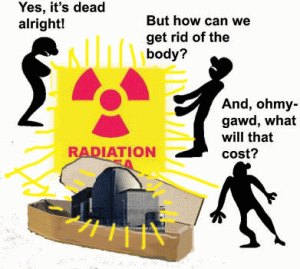
4 May 26
https://www.newcivilengineer.com/ai-search/?q=When%20will%20the%20new%20nuclear%20operato
New nuclear operators are required by law to set aside funds for decommissioning and waste disposal from the very first day of a plant’s operation . Under the legal framework established by the government, energy firms must have a robust, funded decommissioning plan (FDP) in place and approved by the Secretary of State before they are even granted permission to begin construction on a new power station
Key Funding Requirements
The regulations are designed to ensure that the financial risk of cleaning up nuclear sites remains with the developers rather than the taxpayer. According to the government’s Funded Decommissioning Programme Guidance:
- Insolvency-Proof Funds: Operators must establish funds for clean-up that are administered independently of both the operator and the government to ensure they remain protected even if the company faces financial difficulties .
- Full Cost Responsibility: Operators are responsible for the full costs of decommissioning and their share of waste disposal. Energy Secretary Charles Hendry stated that requiring a credible funding plan “is the best way to protect taxpayers from having to pick up the bill” .
- Waste Transfer Pricing: To provide cost certainty for investors, the government proposed a cap on the waste transfer price for disposing of higher-activity waste in a Geological Disposal Facility (GDF). This cap was suggested to be set at a high level—roughly three times current cost estimates—with an additional risk fee charged to operators to compensate the government for accepting any residual risk .
Evolving Models: The Sizewell C Precedent
While the standard requirement involves operators building up independent funds, the government has introduced a new financial model for the Sizewell C project. As detailed in the written ministerial statement Sizewell C | Public on the hook for decommissioning costs of up to £12bn, this project utilises a Regulated Asset Base (RAB) model:
- Consumer Funding: Decommissioning for Sizewell C will be funded via the RAB, which can include additional costs on consumer electricity bills .
- Contingent Liabilities: While the RAB includes protections to minimise public risk, the government has acknowledged a potential exposure of up to £12bn in “remote circumstances” where a fund shortfall materialises .
- Timeline: For modern plants like Sizewell C, decommissioning is expected to be a long-term process, potentially beginning toward the end of the 21st century and continuing until 2160
The government continues to update these roadmaps to ensure they remain suitable for new technologies, such as Small Modular Reactors (SMRs), while protecting future generations from bearing legacy costs .
You may be interested in learning more about the estimated total cost of the UK’s nuclear cleanup mission, the progress of the Geological Disposal Facility, or how the Regulated Asset Base model impacts consumer energy bills.
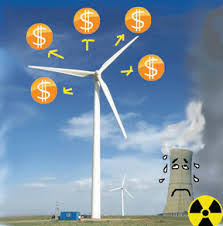
Scots are right to back renewables over nuclear energy.
By Dr Paul Dorfman, Bennett Institute, University of Sussex; Dr Keith
Baker FRSA, Glasgow Caledonian University; Professor Peter Strachan, Robert
Gordon University; Professor Steve Thomas, University of Greenwich; Dr
David Toke, University of Aberdeen.
POLLING released a couple of weeks ago
found that nuclear power has a “miserable” level of support in
Scotland, with more than half of those surveyed saying that the main focus
should be on renewables. According to the facts, this makes sense. Solar
and wind now dominate global electricity generation. Worldwide, solar and
wind power will both surpass nuclear in 2026.
This surge has halted the
fossil fuel power generation rise, with renewables overtaking coal,
supported by battery storage providing system flexibility at scale. All
this points to a shift in the dynamics of the power system. When renewable
energy generation exceeded the rise in global electricity demand last year,
an important threshold was crossed. In 2025, solar became the EU’s top
power source, with wind and solar now the bedrock of European energy
self-reliance. Power generation from renewables in Europe has reached a new
record of 384.9 Terrawatt-hours (TWh).
Meanwhile, Scottish wind power has
also set new records. More renewable energy is produced in the Scottish
Highlands per household than any other area of the UK. Annual renewable
generation across the Highlands is staggering. Renewable energy development
will be further supported by SSEN’s investment of £7 billion in Scotland
in 2026-31, creating 17,500 jobs. More than 100% of Scotland’s
electricity demand has been produced by renewables for the first time,
supporting more than 42,000 jobs and an economic output of more than
£10.1bn.
New UK nuclear plans would be yet another blow to electricity
bill-payers, when Scottish families are already paying what amounts to a
“nuclear tax” to fund the two most expensive nuclear power plants in
the world, England’s Hinkley Point C and Sizewell C.
Meanwhile, the
Norwegian Nuclear Committee has just said no to nuclear power in Norway.
Due to new nuclear construction timescales – up to 17 years according the
UK Government – and the vast cost over-runs, fissile fuel is a policy
dead end, diverting scarce resources away from realistic climate and energy
solutions.
Small modular reactors (SMRs) are another a costly distraction.
They are still in development and decades away from deployment at scale.
All this means that new nuclear is too late for the climate and energy
crises. What’s worse, every pound invested in nuclear is a pound not
invested in renewables, energy efficiency, storage and grid resilience –
investments that would provide a much bigger pay-off.
The National 6th May 2026,
https://www.thenational.scot/business/26081051.scots-right-back-renewables-nuclear-energy/
The billion-dollar boondoggle: how Vogtle became the US’s monument to nuclear folly

by Paul Hockenos, 29 Apr 2026, https://energytransition.org/2026/04/the-billion-dollar-boondoggle-how-vogtle-became-the-uss-monument-to-nuclear-folly/#more-30303
In the quiet scrubland of Waynesboro, Georgia, two enormous concrete domes rise from the landscape. Vogtle Units 3 and 4, the first new nuclear reactors built in the US in more than 30 years, were once touted as the rebirth of US American nuclear ambition. Instead, they have become a monument to mismanagement and cost overruns – conclusive evidence that nuclear power is a nonstarter. Paul Hockenos reports.
The story of Vogtle is a cautionary tale illustrating that nuclear power cannot be delivered cheaply, quickly and reliably in democratic societies with up-to-scratch regulatory systems. Time and again, from South Korea’s reactors at Shin Kori and Shin Wolsong to Finland’s Olkiluoto-3 and France’s Flamanville EPR, on-the-ground experience has proven otherwise. Vogtle belongs squarely in that lineage, but with a uniquely US American twist: the financial burden has been shifted almost entirely onto the backs of ordinary consumers.
A promise of renaissance
The Georgia Public Service Commission approved the project in 2009: two Westinghouse AP1000 reactors, at a cost of USD 14 billion in total, online by 2016 and 2017. Clean, reliable emissions-free baseload power – an answer to climate change that didn’t depend on fickle solar output or fossil gas.
But by the time the reactors finally limped into commercial service – Unit 3 in July 2023 and Unit 4 in April 2024 – the price tag had swollen to more than USD 36.8 billion, cementing Vogtle’s place as the most expensive power plant ever built in human history. Not even the notorious cost spirals of European nuclear megaprojects come close: Finland’s Olkiluoto-3 ballooned to €11 billion, meaning that Vogtle surpassed that threefold.
This is not simply a cost overrun but rather a systemic indictment of the nuclear construction model: slow, labour intensive, technologically rigid and utterly incompatible with modern energy economics.
Ratepayers foot the bill
The primary victims of this financial misadventure are Georgia Power’s 2.7 million customers, many of whom were compelled to subsidize the reactors long before they produced a single kilowatt-hour of electricity. Thanks to a legislative instrument called Construction Work in Progress, households were effectively forced to act as involuntary venture capitalists, paying roughly USD 1,000 per household in advance charges.
Georgia Power collected USD 17 billion in profits during the construction period, while shareholder losses were capped at around USD 3 billion. Ratepayers, meanwhile, will carry billions in future costs for decades. This is why they pay the highest power bills in the US.
Now that the reactors are online, the financial pressure has only intensified. Residential electricity rates have jumped roughly 24 per cent, with new hikes expected. Analysts estimate that electricity from the new units is five times more expensive than equivalent capacity from solar plus battery storage – an astonishing figure in a region with some of the best solar potential in the US.
A cascade of failures
To understand how Vogtle spiralled into a USD-22-billion cost-overrun fiasco, one must examine the full sequence of missteps – a textbook example of how nuclear megaprojects fail globally.
One of the most consequential errors occurred before construction even began. Westinghouse launched the project without a completed reactor design, a mistake so fundamental it borders on negligence. This error echoed Europe’s nuclear struggles at Olkiluoto and Flamanville, where partially completed designs led to cascading construction problems. In 2017, Westinghouse – burdened by the Vogtle AP1000 debacle – filed for bankruptcy.
That collapse forced Vogtle’s owners to take over the direct management of the project, a role for which they were ill-prepared. What followed was a sprawling mess of renegotiated contracts and design revisions. Independent monitors documented that Georgia Power repeatedly provided ‘materially inaccurate cost estimates’, undermining any possibility of regulatory oversight. Nevertheless, the Public Service Commission allowed construction to continue and rejected its own staff’s recommendations to cancel the project – decisions that are costing Georgians billions.
Then came the workforce crisis. Because the US had not built a nuclear reactor in decades, the skilled labour pipeline had atrophied. Vogtle thus became a crash-course training ground for thousands of inexperienced workers. Attrition among electricians reached 50 per cent. Component failure rates hit 80 per cent at times, necessitating extensive and costly do-overs.
The result is damning: a project lost in its own complexity, burdened by the weight of an entire industry that had forgotten how to build what it claimed to champion.
What Georgia could have had instead
What makes Vogtle’s story especially tragic is not merely what Georgians must now pay, but what they could have had. The nearly USD 37 billion could have financed a diversified portfolio of renewable energy: solar farms, battery storage and energy efficiency upgrades that would have delivered more capacity at lower cost and in far less time.
Renewable energy has evolved into something antithetical to nuclear power: decentralized, modular and increasingly affordable systems that can be scaled rapidly without the all-or-nothing risks of nuclear megaprojects. Just about everywhere in the world, solar and wind are being installed in record volumes precisely because they are nimble, predictable and financially transparent. Nuclear, by contrast, requires vast upfront capital, long construction timelines and political intervention to remain viable.
Georgia, with its abundant sunshine and growing distributed-energy ecosystem, could have led the US South into a new era of affordable clean power. Instead, its utility regulators locked the state into a nuclear future that its customers regret.
The lessons of Vogtle
Vogtle Units 3 and 4 were marketed as a blueprint for America’s nuclear future. In reality, they have demonstrated that the economics of traditional nuclear construction in the US are fundamentally broken. Not broken at the margins, but broken at the core – structurally, financially and technologically.
This project, like so many others, depended not on engineering brilliance but on regulatory leniency, optimistic accounting and public subsidy. Its failures are not the product of unfortunate circumstance, but of a model that no longer fits the realities of modern energy infrastructure.
The legacy of Vogtle is thus a warning to policymakers, regulators and utility executives: nuclear power, in its large-scale conventional form, cannot compete in the contemporary energy economy – not on cost, not on time and not without burdening the very people it claims to serve.
For ratepayers, Vogtle is a generational misfortune. For the nuclear industry, it is another nail in the coffin of the ‘renaissance’ that never arrives. And for everyone concerned about climate change, it is a reminder that the clean energy transition cannot afford fantasies, wishful thinking or vanity megaprojects.
One would think the lessons of Vogtle incontrovertible. But in May 2024, the Biden administration’s energy secretary Jennifer Granholm attended a ribbon-cutting ceremony for the recently connected units. Her conclusions were very different: she predicted that 198 more such large-scale reactors will join the Vogtle units, which she considered a success story.
What Georgia has built is not a triumph of American ingenuity but rather a fraud that should speak the final word on nuclear power in the US.
The UK Descends Into Confected Antisemitism Hysteria
Nate Bear, Do Not Panic May 05, 2026
The UK has descended into confected hysteria over antisemitism to protect Keir Starmer and Labour from being wiped out by the Greens in local elections this week.
The British establishment is well-practiced in manufacturing antisemitism hysteria, of course, having used it to destroy Jeremy Corbyn’s Labour Party when it got too close to power.
Now the UK’s political and media establishment is trying to pull the same trick, but this time on the Green Party and its Jewish leader, Zack Polanski.
This fresh round of hysteria really ramped up after a man with a history of mental illness (and of stabbings) stabbed two Jews in north London last week. Neither died and both will live. Omitted from almost all state-corporate media coverage was the fact that he also stabbed a third man, a Muslim. Also omitted was his history of stabbings (he previously stabbed his own dog, a Somali man, and two police officers), and his history of psychotic breaks.
Despite the circumstances clearly pointing to random attacks by a person suffering an acute mental episode, the police treated it not just as a planned antisemitic attack, but as terrorism.
The terrorism threat level in the UK was raised to severe.
I remember when terrorism used to mean car bombs, political goals, manifestos and scores of dead people, not a mentally disabled man with a butter knife scratching a few people.
But the attack was perfect fodder for the British media and political establishment, who blamed support for Palestine and opposition to genocide for enabling antisemitism, and instantly began demanding pro-Palestine protests were fully outlawed.
The environment of hysteria that ensued is hard to describe if you don’t follow British media or politics closely, but it has been extraordinary.
Keir Starmer gave a primetime televised address to the nation.
His speech was a complete misrepresentation of the facts of the case, completely omitting the Muslim victim, completely omitting the man’s history of illness and random stabbing attacks. But they were deliberate lies of omission critical to constructing an antisemitism narrative.
And it worked.
Every headline, every news broadcast for a week led with the story about ‘the antisemitism crisis in Britain.’
I remember when terrorism used to mean something. I also remember when antisemitism used to mean something. And implying all Jews support the actions of Israel used to be considered antisemitic.
But now that’s all anyone with political or media power does.
Starmer said that anti-genocide, pro-Palestine protests have created the environment for antisemitic attacks. The Green Party’s opposition to Israel’s genocide, the media said, has fuelled antisemitism. The Guardian had a story on the Green Party’s ‘struggle against antisemitism,’ a story which presumably included how just eight months ago the entire Green Party membership antisemitically elected a Jewish leader.
And when you deconstruct the logical conclusions behind the implication that Jews are being attacked because of what Israel has done, it will break your brain.
Firstly the implication that Jews are attacked because of Israel, not because of their religion, means Israel represents all Jewish sentiment……………………………….
We’ve reached the point where everything is antisemitism apart from the thing that is actually antisemitism.
And this is because the Zionists have lost the propaganda war. Genocide is not going back in the bottle. Everyone sees what Israel has done. Everyone can now see what Israel is: a genocidal settler-colony apartheid state run by ethno-supremacists.
The deliberate conflation of antisemitism and anti-Zionism then is intended to silence criticism of Israel, and erase the truth about what Israel is and has done.
It’s also intended to stop the Green Party inflicting a humiliating defeat on Keir Starmer and his Labour Party in local elections this week.
The establishment calculation is that if you can establish in the mind of progressives the idea that a vote for the Greens is actually a vote for hate, not a vote against genocide or apartheid, you can stop Labour bleeding leftist votes to the Greens.
If the Zionist establishment can reestablish that black is white, they think they have a chance.
But it goes even deeper than that.
The UK establishment aren’t just using the attack for rhetorical purposes, they are using it to actually get Green Party election candidates arrested.
Andrew Gilligan, a former adviser to Boris Johnson and Rishi Sunak, and now a right-wing journalist, wrote a story about two Green Party candidates Saiqa Ali and Sabine Mairey who he said had made ‘antisemitic’ posts. Last week, he gloated that following his stories, they’d both been arrested…………………………………………………
Three people are stabbed every day in London. Over one thousand people a year, of all religions and none.
None of these ever warrant a national prime ministerial TV address.
Twenty-seven mosques in the UK were attacked between July and October last year.
No extra security funding (Starmer has promised an extra £25 million for Jewish areas). No discourse about Islamophobia. Just tumbleweed.
But a random attack on two Jews gets the full national psychodrama treatment because it can be so usefully weaponised to serve the interests of Zionism.
Are people going to fall for this?
I don’t think so.
Is Zack Polanski going to fall for this after seeing what happened to Corbyn?
Hopefully not.
We have more than enough evidence by now to know that you can never appease Zionists.
There is no middle-ground, no strategy of accommodation.
Any concession is interpreted as a sign of weakness. As Corbyn showed us, once they’ve drawn blood, they’ll bleed you dry.
The only anti-Zionist strategy that makes any sense is one of full confrontation.
The only route to victory is their full defeat. https://www.donotpanic.news/p/the-uk-descends-into-confected-antisemitism
Nuclear Sector Must Step Up Cybersecurity

The nuclear industry is weak on cyber security, says a policy institute analysis. To respond, the sector has to take a more transparent and collaborative approach – and speed up action on improvement
Staff Writer NS ENERGY, 4th May 2026
THE ROYAL INSTITUTE OF INTERNATIONAL Affairs (a UK policy institute colloquially known as ‘Chatham House’) has described the nuclear industry’s status on cybersecurity as “playing catch-up”. It has warned that “the nature of licensing systems for nuclear operators means that long periods of risky working practices are often tolerated”. As an example, it highlighted the UK’s Sellafield fuel cycle site, which pleaded guilty in June 2024 to criminal charges that related to gaps in its cybersecurity between 2019 and 2023. The site had been repeatedly flagged in inspections by the UK Office for Nuclear Regulation (ONR), which warned it would apply ‘enhanced regulatory attention’ to cybersecurity practices.
The Royal Institute of International Affairs (RIIA) warning came in a report, ‘Cybersecurity of the civil nuclear sector’ that considered the threat landscape and the international legal framework for cybersecurity as it applies to the nuclear industry. The group examined the issue because it saw the civil nuclear industry expanding worldwide at the same time as cyber threats are evolving, and because cyber operations targeting civil nuclear systems have been reported worldwide…………………………………………………………………………
Playing catch-up
RIIA says that the nuclear sector lacks a comprehensive understanding of the threat landscape around cybersecurity and effective resilience strategies.
Vulnerabilities arise from technical and non-technical factors, including the use of older software, personnel being targeted and the lack of sufficient sector-wide awareness and collaboration. Cyber incidents can also occur accidentally as a result of existing vulnerabilities in commercial software. These vulnerabilities include: entry points such as inadequate IT infrastructure maintenance; missing patches and updates; unsafe working practices such as connection to unprotected networks; the use of portable storage devices; legacy systems; and inadequate data protection. The report says, “this range of potential threats makes it doubly essential to ensure fundamentally secure working practices, as it is very difficult to identify and protect against every individual vulnerability”.
The authors say “the nuclear industry was a comparatively late starter” on cybersecurity, compared with other industries associated with critical national infrastructure or sectors such as finance. They add that “the nuclear industry’s strong pre-existing physical security, and its use of bespoke or uncommon industrial control software, meant that there was a sense within the sector that all aspects of security were sufficiently covered.” That sense has gone: more systems in nuclear power plants have acquired digital elements, including commercial off-theshelf software solutions and more cyber vulnerabilities have been introduced as a result. This has increasingly left systems and facilities open to attack and, “in some respects, the civil nuclear industry is thus still playing catch-up”.
The group also says that another challenge to realising cyber security is that the nuclear industry is isolated from other sectors. It is therefore difficult to exchange experiences of best practice with other industries; instead the exchange is “ad hoc, often informal, and largely based on the personal drive and networks of individuals in cybersecurity roles”. The industry is not transparent about incidents, because it is concerned about revealing information about vulnerabilities and equally concerned about public perception if vulnerabilities are revealed. Regulators typically discuss cybersecurity gaps only with specific operators rather than sharing concerns more widely. The report says, “the nuclear industry’s preoccupation with perceptions can get in the way of transparency, even though stronger disclosures would help to bolster confidence in the safety of working practices”…………………………………………………………
………… SMRs may have more cyber vulnerabilities because they are less bespoke than traditional reactors, are connected to the internet and cannot have sterile ‘air gaps’ where there is no connection, because operators require remote access. They may be “more of a target for opportunistic cybercriminals”. In addition, SMRs will also be vulnerable through the construction supply chain, while using artificial intelligence (AI) could lower the entry barrier for cyberattack by making tools for cyber intrusions more accessible and affordable. Finally, if they are successful there will simply be more SMRs, in more places where cyber criminals can attack…………………………………………………………………………….. https://www.nsenergybusiness.com/analysis/playing-catch-upon-cyber-safety/
Sachs on U.S. Power in Freefall: “The Most Dangerous Country in the World”
May 4, 2026 , https://scheerpost.com/2026/05/04/sachs-on-u-s-power-in-freefall-the-most-dangerous-country-in-the-world/
The global economy is no longer wobbling — it’s splintering. In a sweeping, unsparing conversation, economist Jeffrey Sachs describes a world pushed to the edge by Washington’s wars with Iran and Russia, its economic confrontation with China, and its attempt to reassert dominance across the Western Hemisphere. The pillars that held the global system together for decades — stable trade routes, energy flows, technological exchange, and financial integration — are being weaponized or dismantled outright. Europe, Sachs argues, has “cut itself off from its main natural resource provider” and is now “completely adrift economically,” while Asia accelerates toward deeper integration and long‑term advantage. The United States, meanwhile, is “irrational, poorly led, and desperate to keep control over what it no longer controls,” creating a world that is both fragmented and profoundly unstable.
The global economy is entering a period of rupture, not turbulence. That is the central warning from economist Jeffrey Sachs, who argues that Washington’s simultaneous confrontations with Iran, Russia, and China — combined with its efforts to dominate the Western Hemisphere — have pushed the international system to a breaking point. What once looked like temporary disruptions now resemble structural fractures.
Sachs begins with the U.S.–China relationship, which he says is “never going to be what it was 10 years ago,” noting that the era of “dynamic… mutual investments in both directions” is over. The same is true for Europe’s ties to Russia, which he describes as “damaged perhaps to the point of no return in our generation.” These ruptures are not cyclical; they are foundational.
A Fragmented World Takes Shape
According to Sachs, the world is reorganizing into regional blocs because long‑distance trade has become too risky. Asia is deepening its internal economic ties, Africa is likely to follow, and Europe — having severed its energy lifeline to Russia — is “completely adrift economically.” The continent, he argues, is now dependent on an “unstable, nasty and disdainful United States,” a strategic position that leaves it weaker than at any point since the end of World War II.
These shifts are not abstract. They are already reshaping global markets, supply chains, and political alignments. And Sachs warns that the situation could deteriorate rapidly if the United States “resumes the war with Iran,” a scenario he puts at “50% or higher,” with “devastating” consequences for the global economy.
Washington’s New Economic Doctrine: Hegemony First
Sachs traces the current crisis to a profound shift in U.S. thinking. For decades, economics was understood as a tool for mutual benefit — a view rooted in classical ideas about open trade. But as China rose and the U.S. share of global output declined, Washington’s foreign‑policy establishment reframed economics as an instrument of geopolitical control.
He describes how “international relations people… view the world not as win‑win but as win‑lose,” and how economic policy has been reoriented toward “preserving American hegemony.” This shift, he argues, has produced a 20‑year campaign to weaponize trade, technology, and finance — from semiconductor restrictions to sanctions to the freezing of sovereign assets.
The result is a world in which the basic scaffolding of globalization is being dismantled. Sachs rejects the claim that globalization “failed,” insisting instead that it “provided the basis for worldwide economic progress,” especially in developing economies. What failed, he says, was Washington’s expectation that it could remain permanently dominant.
Europe’s Strategic Blindness
Europe, in Sachs’s view, is the biggest loser in this new order. He argues that the continent “played along completely with the U.S.” in severing ties with Russia, despite decades of American pressure to prevent closer German‑Russian integration.
The result is a self‑inflicted wound: shuttered industries, soaring energy costs, and a political class that “bought into a completely failed economic and geopolitical strategy.” Sachs sees no path to recovery until Europe produces new leadership capable of recognizing geographic and economic realities.
The Return of Blockades and Piracy
One of the most alarming trends Sachs identifies is the resurgence of maritime coercion. He notes that Trump recently boasted that the U.S. is “essentially pirates now,” a statement that aligns with years of tanker seizures, sanctions‑driven blockades, and naval pressure campaigns.
Sachs calls this “shocking,” pointing out that freedom of navigation has been a bedrock principle of international order. He warns that if Europe participates in efforts to “contain” Russian shipping, “there will be war between Europe and Russia and Europe will be devastated.”
The United States, he argues, lacks both the naval capacity and the geopolitical support to sustain blockades against major powers. China, in particular, now possesses a “formidable navy” and a rapidly advancing military that makes U.S. dominance in Asia increasingly untenable.
A Dangerous Gap Between Ambition and Reality
Sachs’s most sobering claim is that the United States has become “the most dangerous country in the world” — not because of its strength, but because of the widening gap between its ambitions and its actual capabilities.
He describes a political class that is “irrational, very poorly led, rather desperate to keep control over what it no longer controls,” and a public that overwhelmingly believes the country is on the wrong track.
The danger, he argues, lies in the attempt to enforce global dominance through military and economic coercion at a moment when the U.S. lacks the power to achieve those aims. This mismatch creates instability, escalation risks, and the potential for catastrophic miscalculation.
Asia Ascendant
In contrast, Sachs sees Asia — particularly China — as the likely long‑term winner of the global realignment. Regional integration is accelerating, technological capacity is expanding, and the U.S. has limited leverage to disrupt these trends. “The closer one gets to Asia,” he says, “the less relevant the United States becomes.”
A World in Transition
The picture Sachs paints is stark: a fragmented world, a declining West, and a United States whose pursuit of hegemony is destabilizing the very system it once built. Whether the coming years bring a managed transition or a series of crises may depend on whether Washington can accept a multipolar world — or whether it continues to fight a losing battle to preserve the unipolar moment.
Israeli Attack on Flotilla Violated the UN Convention on the Law of the Sea
James Marc Leas. May 02, 2026, https://cancelf35.substack.com/p/israeli-attack-on-flotilla-violated
On Thursday, April 29, Israeli military forces illegally attacked vessels of the Global Samud Flotilla (GSF) while they were sailing on the high seas. Israeli commandos unlawfully seized 21 boats and abducted 177 flotilla participants, according to Nicole Schellekens, a Belgian GSF land-support person.
On May 1, the BBC reported that Israel released all but two of the detained participants in Greece. Thiago Avila and Said Abu Keshek remain in Israeli custody, and Israel has stated that it is transporting them to its territory.
Schellekens passed on a report that 34 of the abductees were physically abused by Israeli commandos while protecting the two men. The 34 were hospitalized, and 4 of them remain in the hospital at Heraklion on the Island of Crete. See the video by Elly Van Reusel, a medical doctor on “Magic,” one of the 22 seized boats.
The GSF condemned Israel’s actions as an act of piracy and called for the immediate release those still held by Israel.
The flotilla was engaged in a legal and peaceful mission aimed at breaking the internationally condemned Israeli siege of Gaza—a siege that imposes collective punishment on Gaza’s civilian population. The mission seeks to end Israel’s illegal policy of starvation, a policy that stunts the physical and cognitive development of children.
The flotilla was necessary only because, after destroying farms and fishing boats, Israel restricted or closed all land routes for aid into Gaza, and governments worldwide have so far failed to use their legal and political powers to force an end to the illegal siege.
The U.S. government has gone further than any other nation in collaborating with Israel’s illegal assault on Gaza’s civilians—the US provides the funds, bombs, F-35 jets, and bulldozers, along with the diplomatic cover that grants the Israeli government impunity.
US states have done little. Rather than adopt human rights promoting purchasing and investment legislation, Vermont has gone so far as to train its Air National Guard with 115-decibel F-35 jets low over one of the state’s most densely populated cities, where political and military leaders knew the flights would cause suffering to working-class and ethnic minority children. This location was deliberately selected to prepare the unit to target civilians. It was foreseeable that the Trump Administration would call the Vermont F-35 unit up, first to bomb in Venezuela, and now poised to resume their bombing in Iran.
The Israeli Assault on the Flotilla Violated International Law
Although Israel is not a party to the United Nations Convention on the Law of the Sea (UNCLOS), the core provisions of the treaty are recognized as customary international law and are legally binding on all countries.
• Article 92 grants a vessel’s flag state exclusive jurisdiction, effectively making the vessel sovereign territory of that country. By boarding the flotilla’s vessels without permission, abducting passengers, and seizing the boats, Israeli commandos violated the sovereignty of each of the flag states.
• Article 87 guarantees freedom of navigation on the high seas. Freedom revoked by Israeli commandos.
• Article 110 specifically prohibits warship personnel from boarding a foreign ship on the high seas except under narrowly defined circumstances—none of which applied in this case.
• Article 88 reserves the high seas for peaceful purposes.
• Article 301 requires states to refrain from any threat or use of force against the territorial integrity or political independence of any state. Which includes the vessels of any state.
Israel violated all of these provisions.
nforcement of the UN Convention on the Law of the Sea
Previous violations of the law of the sea have led to enforcement actions, including:
• Ordering the prompt release of vessels
• Awarding compensation
• Banning the perpetrator from accessing ports
• Freezing the perpetrator’s assets
• Restricting trade with the perpetrator
• Banning the transfer of military goods to the perpetrator
• Establishing a tribunal to investigate and prosecute those responsible
Enforcement Action Is Needed Now
Similar enforcement actions must be taken in response to Israel’s gross violations of the Law of the Sea. If flag states fail to act, they effectively grant impunity to the Israeli perpetrators, invite further violations, and they encourage even more extreme illegal actions by Israel.
Demand that your government officials take enforcement action now.
Ukraine drone attacks hit nuclear power plant, Baltic port
President Volodymyr Zelenskyy hails ‘successful destruction’ of the port, as Russia warns of oil price rises.
By AFP and Reuters 3 May 20263 May 2026
Ukrainian drone attacks have targeted the Russian-held Zaporizhzhia nuclear power plant in southeastern Ukraine and a Russian Baltic Sea port, as Kyiv and Moscow accuse each other of killing civilians in overnight air raids.
The International Atomic Energy Agency (IAEA) said a drone had targeted the external radiation control laboratory, a part of the plant located outside the nuclear power plant’s perimeter, on Sunday. It said it was not yet clear if there had been injuries.
“IAEA team at the site has requested access to the lab,” agency chief Rafael Grossi said. He reiterated that attacks near nuclear sites pose nuclear safety risks – both sides have repeatedly targeted nuclear infrastructure
Earlier on Sunday, Ukrainian forces also launched an attack on the Russian Baltic Sea port of Primorsk, Russian and Ukrainian authorities said,
The attack on Primorsk, a major oil-exporting outlet, did not result in an oil spill but it caused a fire in the town that was extinguished, Leningrad Governor Alexander Drozdenko said.
More than 60 drones were downed overnight over the northwestern region, he added.
Ukraine confirmed the attack on the port, with Ukrainian President Volodymyr Zelenskyy claiming it as a “successful destruction of the facilities of the port of Primorsk”.“The missile ship ‘Karakurt’ was hit, as well as a patrol boat and another tanker of the shadow oil fleet,” the Ukrainian president said in a post on Telegram.
“Significant damage was also done to the infrastructure of the oil loading port,” Zelenskyy also claimed………………………………………………………………………………………. https://www.aljazeera.com/news/2026/5/3/ukraine-drone-attack-hits-russian-baltic-port-governor-says
|
Israel is making Palestinians disappear in more ways than one.

At least 2,842 Palestinians had ‘evaporated’ … [which] civil defence teams attribute to Israel’s use of thermal and thermobaric weapons, which effectively ‘vaporise’ human bodies
Belen Fernandez 4 May 2026 , https://www.middleeasteye.net/opinion/israel-making-palestinians-disappear-more-ways-one
Reports of missing children and ‘evaporated’ bodies reveal a widening pattern of erasure in Gaza, where entire families are killed, lost under rubble or reduced to biological traces
n 23 April, the Israeli newspaper Haaretz reported that “dozens of children go missing each week” in the Gaza Strip “against the backdrop of the postwar chaos” – a curious euphemism, no doubt, for the ongoing US-backed genocide in the Palestinian territory, which proceeds apace despite the ceasefire that was ostensibly implemented last year.
The article begins with four-year-old Mohammed Ghaban, who disappeared in early April in northern Gaza: “[H]e had been playing with his brother in front of his displaced family’s tent. He went inside, asked for a hug, put on his sandals and went out.” And then he was gone.
The author cites an estimate from the Palestinian Center for the Missing and Forcibly Disappeared that 2,900 children “disappeared during the war”, with 2,700 bodies thought to be trapped under the rubble and the remaining 200 simply missing.
Such statistics are in keeping with the modus operandi of the Israeli military, which, according to the official fatality count, has killed more than 72,500 Palestinians in Gaza since the launch of the genocide in 2023, with thousands more still missing and presumed dead under the rubble.
United Nations special rapporteur Francesca Albanese warned back in September that the true death toll might already have been more in the vicinity of 680,000.
Speaking of disappearances, an Al Jazeera Arabic investigation revealed in February that at least 2,842 Palestinians had “evaporated” in the Gaza Strip since the start of the war – a phenomenon Gaza’s civil defence teams attribute to Israel’s use of US-manufactured thermal and thermobaric weapons, which effectively “vaporise” human bodies.
The gruesome tally was quickly eclipsed by the deranged US-Israeli war on Iran and wider regional catastrophe, which has monopolised the news for the past two months. But the topic remains as sinisterly relevant as ever.
In remarks to Al Jazeera at the time, civil defence spokesperson Mahmoud Basal outlined the process for determining the number of vaporised victims at homes targeted by Israeli strikes: “If a family tells us there were five people inside, and we only recover three intact bodies, we treat the remaining two as ‘evaporated’ only after an exhaustive search yields nothing but biological traces – blood spray on walls or small fragments like scalps.”
Vaporised bodies
Upon publication of these macabre findings, the Israeli military got its panties into a genocidal bunch and issued a huffy communique to allegedly set the record straight.
Rejecting Al Jazeera’s “false claim of the evaporation of Gazan bodies”, the army insisted that it “uses only lawful munitions” and that it “strikes military targets and objectives in accordance with international law and takes all feasible measures to mitigate harm to civilians and civilian property to the extent possible.”
It’s not clear, of course, why a military that has been accused of potentially killing nearly 700,000 people – and that wipes out entire families and neighbourhoods without so much as batting an eye – took such particular offence at the whole “evaporation” matter.
Granted, disappearing bodies into thin air is a pretty good way of hiding the true extent of mass slaughter.
And while the vaporisation of Palestinian bodies may not fit the official legal definition of enforced disappearance, it is quite literally exactly that.
According to the website of the Office of the United Nations High Commissioner for Human Rights, “an enforced disappearance is considered to be the arrest, detention, abduction or any other form of deprivation of liberty by agents of the State or by persons or groups of persons acting with the authorization, support or acquiescence of the State, followed by a refusal to acknowledge the deprivation of liberty or by concealment of the fate or whereabouts of the disappeared person, which place such a person outside the protection of the law”.
In light of Israel’s explicit disappearing act in Gaza, however, a considerable expansion of that definition would seem to be in order.
And yet Israel is guilty of the traditional variety of enforced disappearance, as well. Last August, UN experts denounced reports that starving Palestinian civilians – including a child – were being forcibly disappeared from aid distribution sites run by the notorious Gaza Humanitarian Foundation.
Backed by Israel and the US, the foundation also specialised in massacring desperate folks who had gathered in search of food and other necessary items for survival.
Meanwhile, in both Gaza and the West Bank, Israel’s enforced disappearances of medical personnel, journalists and all manner of other humans have flourished since the onset of the genocide – not that this hasn’t always been par for the course.
Global pattern
For its part, the US has had a hand in enforced disappearances in a whole lot of places around the world, including by aiding and abetting bloodthirsty right-wing regimes throughout Latin America during the Cold War.
Tens of thousands were disappeared in Argentina, Guatemala and beyond as the US and its buddies nobly went about making the hemisphere safe for capitalism.
In Mexico, more than 130,000 persons have been disappeared, the vast majority of them following the launch in 2006 of the US-backed “war on drugs”, which would be more aptly characterised as a war on the poor.
But from Mexico to the Middle East, the number of disappeared hardly conveys the extent of victimisation. The families of the missing are victims, too, condemned as they are to indefinite psychological limbo in the absence of concrete information regarding the fate of their loved ones – without which it is impossible to commence the grieving process or obtain the emotional closure that is necessary to move on with one’s life.
In the case of Israel’s “evaporation” of Palestinians in Gaza, it’s hard to say whether the knowledge that your loved one has been vaporised is concrete enough to enable eventual closure. After all, there’s nothing very concrete about being forcibly vanished without a trace.
Indeed, Al Jazeera quotes Palestinian father Rafiq Badran on the almost inconceivable psychological torment that attends Israel’s sinister new spin on the theme of enforced disappearance: “Four of my children just evaporated,” Badran said, holding back tears. “I looked for them a million times. Not a piece was left. Where did they go?”
Now, with regional war raging as the arms industry rakes in big bucks, it has become even easier for global audiences to tune out the unique plight of the Palestinians – which means that the genocide is effectively being disappeared from the spotlight, as well.
In the end, of course, the Israeli goal is nothing less than to forcibly disappear the very idea of a Palestinian people. But unfortunately for Israel, its blood-drenched legacy will not be so easily concealed.
Chernobyl at 40: Belarus took the brunt
April 28, 2026, https://beyondnuclear.org/chernobyl-at-40-belarus-took-the-brunt/
A report from Olga Karatch, Belarussian founder in exile of Our House:
On April 26, it marked 40 years since the largest nuclear technological disaster in history — the explosion at the Chernobyl nuclear power plant. Although the plant is geographically located in Ukraine, Belarus suffered the greatest damage due to weather conditions.
The Chernobyl disaster resulted in radioactive contamination of nearly 150,000 km², while around 5,000 km² became an exclusion zone with the strictest restrictions.
The distance from Chernobyl to the Belarusian border is only 11 km. To Minsk — about 330 km. To Vilnius, where the action took place — less than 490 km.
In 1986, an RBMK reactor exploded at the plant. This type of reactor used graphite rods to control the reaction, as well as water. At a certain point, water could interfere with the insertion of the graphite rods.
These rods function as the reactor’s brakes. When the brakes fail, disaster becomes inevitable — and it did.
Similar reactors were operating at other plants, including the Ignalina nuclear power plant in Lithuania.
According to the IAEA report INSAG-7, as early as 1983 a so-called positive feedback effect (positive scram effect) was identified — later becoming one of the key factors in the Chernobyl disaster.
The RBMK reactor itself was considered high-risk: incidents occurred at the Leningrad plant (1975), at Chernobyl (1982, 1984), and at Ignalina.
Nuclear power plants are often presented as environmentally friendly, but this is an oversimplification.
In the Soviet Union, the nuclear sector was part of a closed system, overseen by a separate ministry.
Nuclear power plants did not exist in isolation: they were part of a broader industry, one of whose end products was weapons-grade plutonium and uranium.
Information about radiation accidents was often concealed. Victims were misdiagnosed and forced to sign non-disclosure agreements. People died, and even doctors sometimes did not know the real causes — because of secrecy.
Today, safety standards have improved, but the risks have not disappeared.
Moreover, the economic efficiency of nuclear energy is increasingly questioned. In some cases, the cost of decommissioning a plant exceeds the profits generated during its operation.
Belarus continues to pursue nuclear projects while serious concerns remain regarding safety and transparency.
During the construction of the Belarusian NPP:
— a reactor vessel was dropped (2016)
— equipment was damaged during transportation
After launch, shutdowns, disconnections, and periods of downtime have been repeatedly reported.
The Lithuanian regulator (VATESI) has repeatedly pointed to recurring failures and a lack of transparency.
Conclusion
Due to the clear mismatch between high risks and questionable benefits, “Our House” advocates phasing out nuclear energy.
We will continue to participate in public actions and speak about these issues openly.
1 This Month
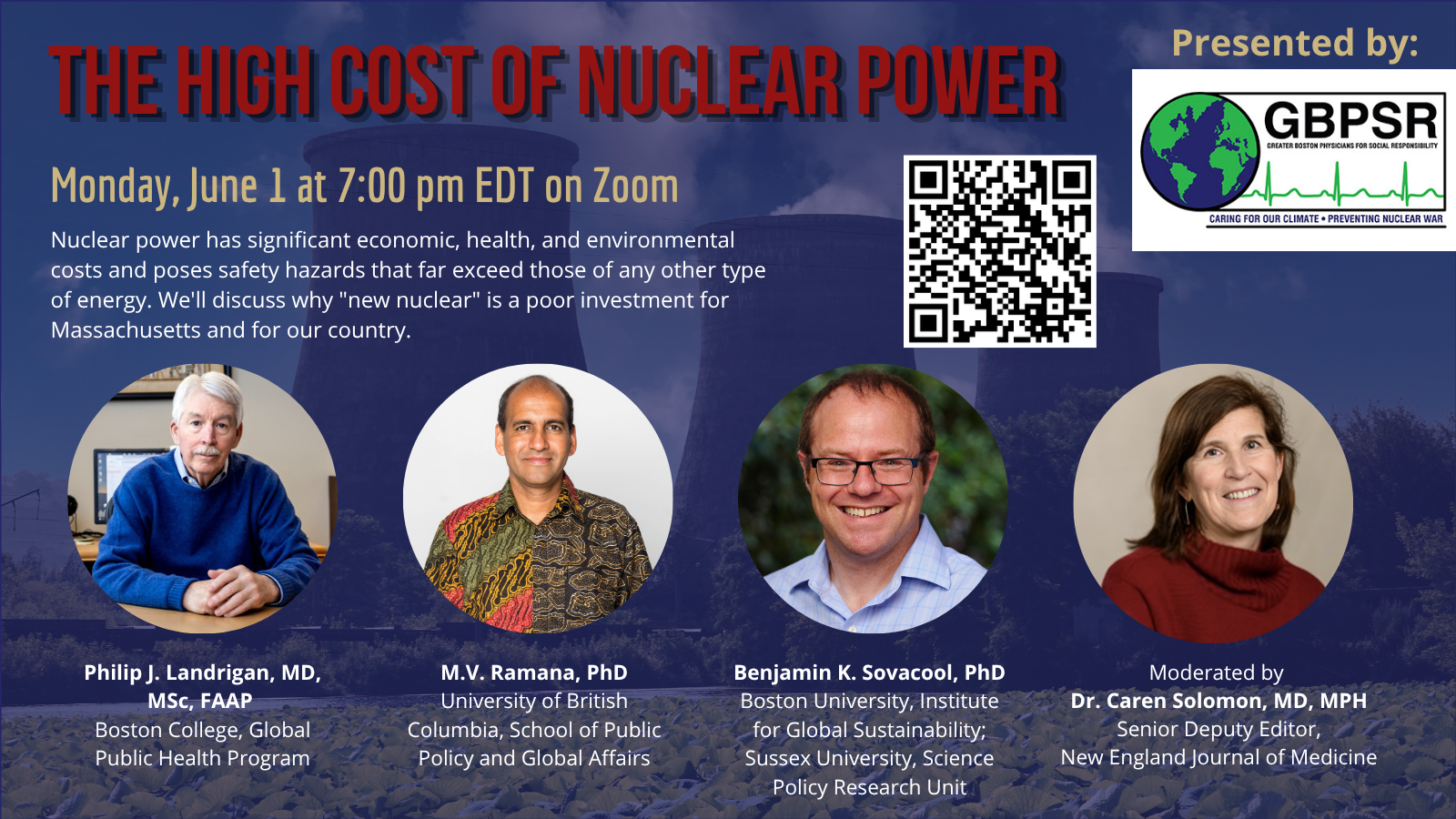
1 June Webinar – The High Cost of Nuclear Power – Register
6 June – WEBINAR- Get Inspired by Protests Against Military Bases!


Cuba Is Not a Failed State – It Is a Besieged State
PETITION: “Global Appeal to Endorse Palestinian Right of Return of Refugees”

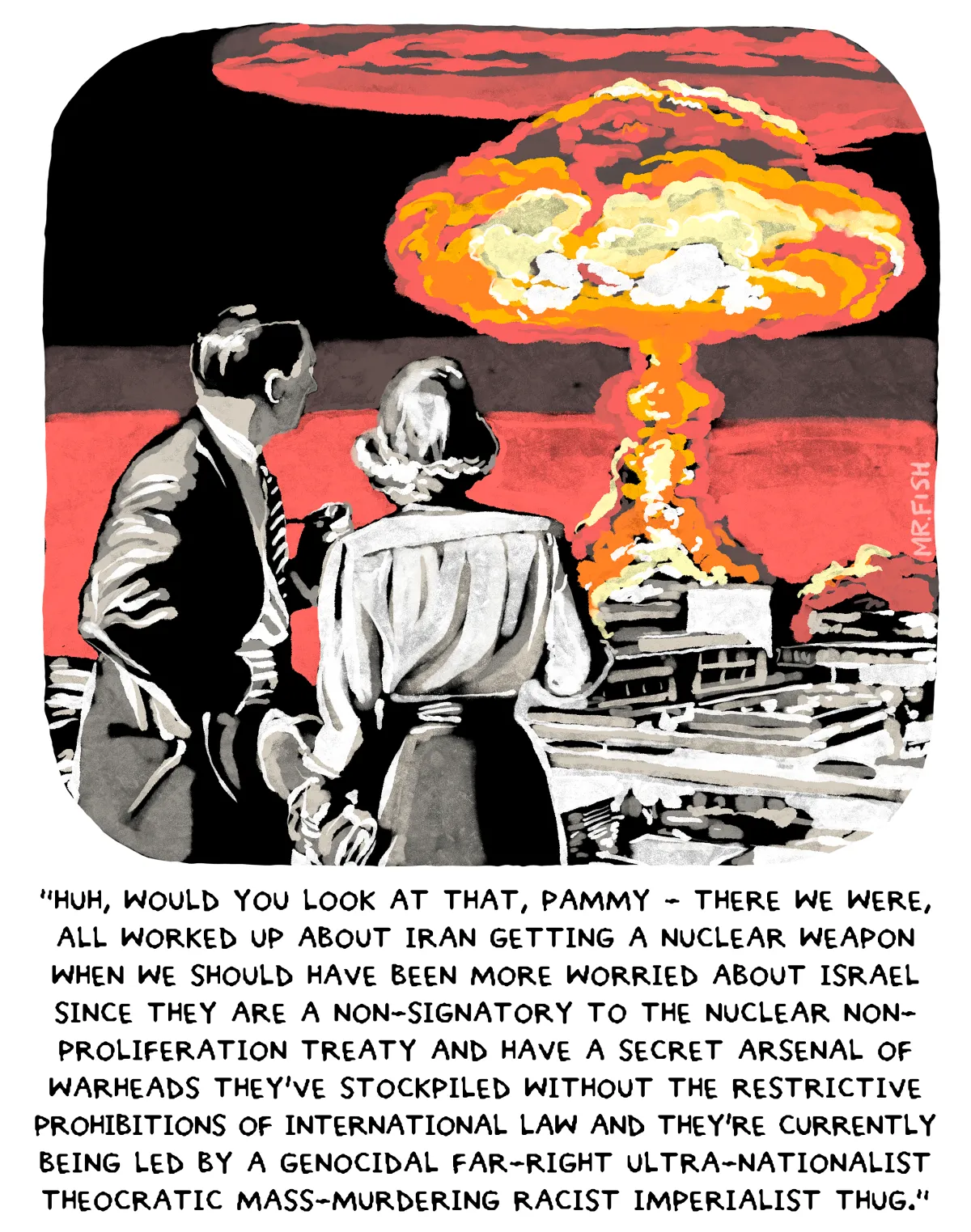

of the week– Nuclear Reactor Information Task Force
To see nuclear-related stories in greater depth and intensity – go to https://nuclearinformation.wordpress.com
-
Archives
- June 2026 (27)
- May 2026 (306)
- April 2026 (356)
- March 2026 (251)
- February 2026 (268)
- January 2026 (308)
- December 2025 (358)
- November 2025 (359)
- October 2025 (376)
- September 2025 (257)
- August 2025 (319)
- July 2025 (230)
-
Categories
- 1
- 1 NUCLEAR ISSUES
- business and costs
- climate change
- culture and arts
- ENERGY
- environment
- health
- history
- indigenous issues
- Legal
- marketing of nuclear
- media
- opposition to nuclear
- PERSONAL STORIES
- politics
- politics international
- Religion and ethics
- safety
- secrets,lies and civil liberties
- spinbuster
- technology
- Uranium
- wastes
- weapons and war
- Women
- 2 WORLD
- ACTION
- AFRICA
- Atrocities
- AUSTRALIA
- Christina's notes
- Christina's themes
- culture and arts
- Events
- Fuk 2022
- Fuk 2023
- Fukushima 2017
- Fukushima 2018
- fukushima 2019
- Fukushima 2020
- Fukushima 2021
- general
- global warming
- Humour (God we need it)
- Nuclear
- RARE EARTHS
- Reference
- resources – print
- Resources -audiovicual
- Weekly Newsletter
- World
- World Nuclear
- YouTube
-
RSS
Entries RSS
Comments RSS
 nuclear-news