Romania quits deal with China for new nuclear reactors
|
Romania to exit deal with Chinese company for new nuclear reactors https://www.romania-insider.com/ro-exit-deal-cgn-nuclear-jan-2020 Romania’s Government will exit the deal with the Chinese partner for the construction of reactors 3 and 4 at the Cernavoda nuclear power plant, prime minister Ludovic Orban announced in an interview with Hotnews.ro.“It is clear to me that the partnership with the Chinese company is not going to work,” Orban said, adding that the Government has already started to look for a new partner and financing for this project.
In 2015, Romanian state-owned electricity producer Nuclearelectrica, the company that operates the Cernavoda nuclear power plant, signed a memorandum of understanding with China General Nuclear Power Corporation (CGN) for the construction of two new reactors (3 and 4). On May 8 last year, the two sides officially signed the preliminary agreement on the construction and operation of two new reactors. However, the cooperation between Nuclearelectrica and CGN became uncertain after Romania’s president Klaus Iohannis and U.S. president Donald Trump signed a joint declaration in Washington, on August 21, that mentioned, among others, a closer cooperation between U.S. and Romania in the field of nuclear energy. In September, former PM Viorica Dancila also signed a memorandum in this regard with U.S. Energy Secretary Rick Perry. Moreover, China General Nuclear Power Corporation was accused of nuclear espionage by the U.S. Government back in 2016. |
|
Unsafety of Russia’s November-class submarines
Sailing These Russian Nuclear Submarines Was Basically A Suicide Mission, Safety was sacrificed for the sake of performance. National Interest, by Sebastien Roblin, 22 Jan 2020
Key Point: The November-class submarined expanded Soviet influence, but at a cost.
The United States launched the first nuclear-powered submarine, the USS Nautilus, in 1954, revolutionizing undersea warfare. The Nautilus’s reactor allowed it operate underwater for months at a time, compared to the hours or days afforded conventional submarines. The following year, the Soviet Union began building its own nuclear submarine, the Project 627—known as the November class by NATO. The result was a boat with a few advantages compared to its American competition, but that also exhibited a disturbing tendency to catastrophic accidents that would prove characteristic of the burgeoning Soviet submarine fleet during the Cold War………
the power of the November class’s reactors was bought at the price of safety and reliability. A lack of radiation shielding resulted in frequent crew illness, and many of the boat suffered multiple reactor malfunctions over their lifetimes. This lack of reliability may explain why the Soviet Union dispatched conventional Foxtrot submarines instead of the November-class vessels during the Cuban Missile Crisis, despite the fact that the diesel boats needed to surface every few days, and for this reason were cornered and chased away by patrolling American ships.
In fact, the frequent, catastrophic disasters onboard the Project 627 boats seem almost like gruesome public service announcements for everything that could conceivably go wrong with nuclear submarines. Many of the accidents reflected not only technological flaws, but the weak safety culture of the Soviet Navy………..
This is just an accounting of major accidents on the November-class boats—more occurred on Echo- and Hotel-class submarines equipped with the same nuclear reactors. Submarine operations are, of course, inherently risky; the U.S. Navy also lost two submarines during the 1960s, though it hasn’t lost any since.
The November-class submarines may not have been particularly silent hunters, but they nonetheless marked a breakthrough in providing the Soviet submarine fleet global reach while operating submerged. They also provided painful lessons, paid in human lives lost or irreparably injured, in the risks inherent to exploiting nuclear power, and in the high price to be paid for technical errors and lax safety procedures. https://nationalinterest.org/blog/buzz/sailing-these-russian-nuclear-submarines-was-basically-suicide-mission-115661
History of U.S. missiles testing atomic, bacterial and viral weapons in Utah
 from anonymous contributor, 22 Jan 2020, Some of What The USA Military , Corporations and government did to us on top of detonating several open air nuclear bombs on us.
My government had a missile base 60 miles from Uranium and downwinder hell in Utah. My governemt also detonated four atomic bombs under the river that went through my town, in the llate 1960s..
My government and military contractors launched hundreds of single and multistage missiles from Green River Utah to White Sands new mexico from 1965 to 1970. The missiles went to white sands New Mexico, which is approximately 900 miles from Green River Utah. Their trajectory took them over southern Utah National parks, the navajo, zuni, ute hopi and pueblo nativ,e reservations, and most of north and central New Mexico. White sands New Mexico is 925 miles from Green river utah. White sands new mexico is 50 miles from alamagordo New Mexico . Alamagorgo is where the fist Atomic bomb, in the world was detonated. The cold war, multibillion dollar Missile project tested single and multistage rockets and biological warfare payloads.
They tested payloads
The Green-White sands missile project was to test missile paylods over the south west usa. You can find sections of missiles that failed in the 900 mile stretch, from Green ricver to white sands nm. They launched hundreds of missiles and rockets Some of the missile-rockets failed and crashed into the desert, long before reaching their south central New Mexico destination clasw to the mexico usa border. There are missile carcasses and stages from southern utah to in the Canuyonlands national Park, The Grand Gulch National Nation Monument, in The Four Corners Area of the USA where Utah, Colorado and Arizona intersect. Missile parts and from failed missiles can also be found in the New Mexico and Utah Navajo reservations. There detritus of missiles can found by Farminton New Mexico , west of Santa Fe New Mexico, east of demming New mexico and by Socorro nm . The initial stages of multistage rockets are mostly in utah.
The military and government tested several biological weapon payloads, in the missiles-rockets that went from Utah to white sands new mexico.The army , and corporate contractors, put Biological Warfare payloads on missiles. with viruses and bacteria in them. They tested the a weaponized version of the Hanta Virus. They tested Hearty bacterial spores, like anthrax as well. They launched the biological warfare payloads with viruses and bacteria in special mediums to test the stability of the most Hearty virus and bacterial spore-systems in missile carrier systems.
The biological warfare medium-containing–payloads were on rockets that went from Green River Utah to White sands new mexico from 1965 to 1970.
Hannta virus did not exist in the United States of America in Humans, until 1990. It was weaponized by the United States government and corporations in the 1960s. The first Hanta Virus casualties recorded in the USA were a family of Navajos in New Mexico, in 1992. Hanta virus is has now apread to mice vectors in all parts of the United States of america. It is epidemic in the USA . I know because I once worked for an agency that treated and tracked it.
The 1993 Four Corners hantavirus outbreak was an outbreak of hantavirus that caused the first known human cases of hantavirus disease in the United States. It occurred within the Four Corners region – the geographic intersection of the U.S. states of Utah, Colorado, New Mexico, and Arizona – of the southwestern part of the country in the spring of 1993. This region is largely occupied by Native American tribal lands, including the Hopi, Ute, Zuni, and Navajo reservations, from which many of the cases were reported.
“The Discovery of Hantaan Virus: Comparative Biology and …
by KM Johnson · 2004 · Cited by 10 · Related articles
Nov 1, 2004 · They became infected by tissues of antigen-positive wild mice of that single species. … Dr. Lee named it “Hantaan,” after a small river near the border between the 2 Koreas, where human infection was isolated and endemic in the 1950s”
FROM “Brief Histories of Three Federal Military Installations in Utah: Kearns Army Air Base, Hurricane Mesa, and Green River Test Complex” (PDF). Utah Historical Quarterly. Utah State Historical Society. 34 (2). Spring 1966. Archived from the original (PDF) on October 29, 2013. Retrieved September 12, 2013. More than 100 employees of the [Atlantic Research]
The Utah Launch Complex was a Cold War military subinstallation of White Sands Missile Range for USAF and US Army rocket launches. In addition to firing Pershing missiles, the complex launched Athena RTV missiles with subscale warheads of the Advanced Ballistic Re-entry System to reentry speeds and impact at the New Mexico range. From 1964 to 1975 there were 244 Green River launches, including 141 Athena launches and a Pershing to 281 kilometers altitude. “Utah State Route 19 runs through the Green River Launch Complex, which is south of the town and eponym of Green River.”
Hiroshima High Courtorder Ikata nuclear reactor to be halted
 A group of people supporting residents opposed to running the No. 3 reactor at the Ikata nuclear power plant applaud Friday outside the Hiroshima High Court after Shikoku Electric Co. was ordered to suspend the unit.
Shikoku Electric again ordered to halt Ikata nuclear reactor over volcano risk
Jan 17, 2020
The Hiroshima High Court on Friday revoked a lower court decision and ordered Shikoku Electric Power Co. to suspend its only operable nuclear reactor in Ehime Prefecture because its preparations for a potential eruption of Mount Aso are inadequate.
The utility has previously claimed the reactor is safe to run because it would have enough advance warning of an eruption to take safety measures.
The high court also said the Nuclear Regulatory Agency’s regulations were unreasonable.
The ruling marks the second time the high court has ordered a halt of the No. 3 reactor at the Ikata nuclear power plant.
The reactor had been shut for regular maintenance work since late December and was likely to restart within a couple of months, but now must remain idled pending an appeal. Shares in the company, which didn’t disclose the court’s reason for issuing the order, plunged on the news, ending the day down 6 percent at ¥957.
The move is the latest in a series of setbacks for an industry still struggling to recover from the Fukushima nuclear disaster nearly nine years ago, with less than a fifth of the nation’s reactors having received approval to operate.
Residents near reactors have been filing numerous lawsuits against nuclear power operations in recent years, leading to some temporary closures. Utilities have generally been successful in getting rulings against them overturned on appeal.
In a statement, Shikoku Electric said the decision by the Hiroshima High Court is “extremely regrettable” and pledged to “promptly file an appeal so that the order can be revoked as soon as possible.”
In making its decision, the court considered whether the operator and the NRA’s regulations and risk estimates for a potential eruption at the caldera of Mount Aso, about 130 km away, were adequate.
Last March, three residents of nearby Yamaguchi Prefecture who had lost a case against the Ikata reactor in the Yamaguchi District Court were appealing the decision made by the Iwakuni branch. The lower court ruled the Ikata plant could continue operating because the probability of a big eruption occurring during the reactor’s life span was low, and the NRA’s safety standards were adequate.
The reactor is currently idled for scheduled inspections and the removal of spent mixed-oxide fuel was completed on Wednesday. It is expected to be restarted on April 27.
A previous order forcing a halt in operations was issued by the Hiroshima High Court in December 2017, citing the risk of Mount Aso erupting. The same court then overturned the decision in September 2018 on appeal, and Shikoku Electric restarted the reactor a month later.
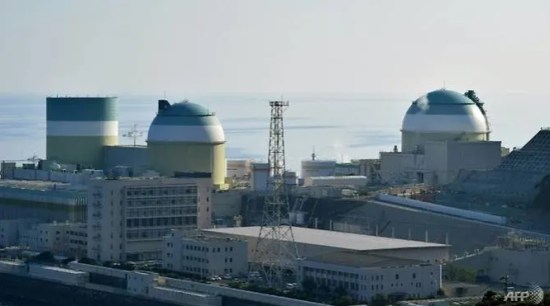 The plant lies near an active faultline, the court ruled.
Japan court halts nuclear reactor restart citing volcano, earthquake risks
17 Jan 2020
TOKYO: A Japanese nuclear reactor near a fault line must remain shut because of the risk of its being struck by earthquakes and volcanic eruptions, a high court ordered on Friday (Jan 17).
All nuclear power stations were shut down after the 2011 Fukushima nuclear accident following a catastrophic tsunami, and many remain closed.
The Japanese public has turned against atomic power, despite Prime Minister Shinzo Abe insisting the nation needs nuclear plants to power the world’s third-largest economy, and the court decision was a boost for the country’s anti-nuclear movement.
The move by the Hiroshima High Court reversed a lower court decision in March that would have allowed the reactor at the Ikata nuclear plant in western Japan to resume operations.
The plant’s operator, Shikoku Electric Power, wanted to resume work at the reactor, which had been halted for routine inspections, and said it will appeal the high court’s ruling.
The case was originally lodged by residents of a neighbouring region who complained the utility failed to properly evaluate the risks posed by a local volcano and seismic faultlines.
High court presiding judge Kazutake Mori revoked the lower court ruling that paved the way for the reactor to come online.
Mori said there was an active fault line near the plant and safety assessments had been insufficient, national broadcaster NHK said.
He also argued it was not logical to assume that volcanic eruptions can be predicted far in advance, as assumed under the national standards for operating nuclear reactors, according to NHK.
“There is a fault line within 2km from the nuclear plant but Shikoku Electric has not conducted thorough surveys, and the way the Nuclear Regulation Authority reached its assessment that there was no problem contained errors and inadequacies,” the judge said, according to NHK.
Shikoku Electric criticised the ruling and stressed the scientific merit of the firm’s argument that it was safe to operate the reactor.
“After closely examining the decision, we will file a petition of objection so that the injunction will be cancelled as soon as possible,” the utility said in a statement.
No long-term prospects in Japan for reusing, storing spent MOX fuel
 A spent nuclear fuel rod is seen stored in a pool at the No. 3 reactor building at the Ikata Nuclear Power Plant in the Ehime Prefecture town of Ikata on Jan. 14, 2020
January 15, 2020
There are no prospects that spent mixed-oxide (MOX) fuel, made by reprocessing spent nuclear material, can be further reprocessed and reused for nuclear power generation in accordance with the Japanese government’s energy policy. Storing such fuel for a long period has thus raised safety concerns.
Shikoku Electric Power Co. showed work to replace and store MOX fuel in the No. 3 reactor building at its Ikata Nuclear Power Plant to media outlets on Jan. 14.
It was the first time that the company has removed spent MOX fuel since it began to use MOX fuel — produced by extracting plutonium and other reusable nuclear materials from spent nuclear fuel and mixing them with uranium — for commercial power generation at the plant.
An employee operated a crane to extract MOX fuel rods, each of which is about 4.1 meters long and weighs some 700 kilograms, from the reactor core and transfer them into a storage pool one by one inside the reactor building.
According to the company, work to extract spent nuclear fuel rods began on the evening of Jan. 13, and will have removed 16 rods by Jan. 16. In early March five new rods will be inserted into the core. The firm will keep cooling down spent MOX fuel in the pool for more than 10 years.
However, the Nuclear Regulation Authority (NRA) has expressed concerns that the storage of spent MOX fuel in the pool over such a long period is highly dangerous. In case of a power blackout, the temperature of the water in the pool could not be maintained at a certain level and it would become unable to cool the fuel just as was the case with the Fukushima nuclear crisis.
“From the viewpoint of safety, it’s undesirable that a large number of such rods are preserved,” said NRA Chairman Toyoshi Fuketa.
Furthermore, spent MOX fuel generates heat about three to five times that generated by ordinary used nuclear fuel. In case of trouble with a cooling system, such MOX fuel would be far more dangerous than conventional spent nuclear material.
Nevertheless, an employee of an electric power company confessed that the firm “has no leeway to think about what it should do after cooling down spent MOX fuel.”
Pools holding spent fuel at nuclear power plants are almost full, and utilities operating atomic power stations are struggling to find places to store the material.
The Federation of Electric Power Companies of Japan (FEPC) intends to use MOX fuel in 16 to 18 nuclear reactors across the country. Tokyo Electric Power Company Holdings Inc. (TEPCO) and Chubu Electric Power Co. had planned to use MOX fuel in the No. 3 reactor at the Kashiwazaki-Kariwa Nuclear Power Plant in Niigata Prefecture, and the No. 4 unit at the Hamaoka Nuclear Power Plant in Shizuoka Prefecture, respectively.
However, such fuel is being used at only four reactors — Ikata’s No. 3 reactor, the No. 3 and 4 reactors at Kansai Electric Power Co.’s Takahama plant in Fukui Prefecture and the No. 3 unit at Kyushu Electric Power Co.’s Genkai complex in Saga Prefecture.
If MOX fuel is used at more reactors, the amount of spent material will keep increasing. However, utilities are dealing with the problem by shifting fuel whose heat generation volume has declined to facilities where the spent fuel is air-cooled.
The government is aiming to reprocess spent MOX fuel to reuse it in an effort to “effectively utilize resources.” If spent nuclear fuel including MOX fuel were to be disposed of as radioactive waste, the government’s atomic power policy based on the assumption that spent nuclear fuel should be reused would waver.
Japan and France are the only countries in the world that are still working on the extraction of reusable nuclear materials from spent MOX fuel. Japan’s Agency for Natural Resources and Energy will have allocated a total of 1.4 billion yen from state budgets in fiscal 2019 and 2020 for basic research on reuse of spent MOX fuel, and will earmark more funds through fiscal 2024.
However, it remains to be seen how far such technology can be developed in the foreseeable future.
“There have been no research achievements enabling the commercial use of the technology,” said an official of the Japan Atomic Energy Agency.
Even if the technology to reuse spent MOX fuel is developed, there is a possibility that sufficient funds will not be secured to put it into commercial use unless idled nuclear power stations are restarted steadily because massive amounts of money are needed just for reprocessing spent nuclear fuel. Many atomic power stations remain offline because safety regulatory standards for such facilities have been stiffened following the outbreak of the Fukushima nuclear crisis in March 2011.
An official of the Agency for Natural Resources and Energy said the reprocessing and reuse of spent MOX fuel is not a priority.
“There is approximately 19,000 metric tons of ordinary spent nuclear fuel that hasn’t been reprocessed in Japan, and priority is placed on reprocessing such material into MOX fuel. The volume of spent MOX fuel is extremely small, and we’re not working fast enough to consider how to reuse such fuel,” said the official.
(Japanese original by Yuichi Nakagawa and Ryoko Kijima, Matsuyama Bureau, and Suzuko Araki, Riki Iwama and Yuka Saito, Science & Environment News Department)
https://mainichi.jp/english/articles/20200115/p2a/00m/0na/029000c
Costs for managing Japan’s nuclear plants to total 13 trillion yen
KYODO NEWS Jan 15, 2020
The total costs to implement government-mandated safety measures, maintain facilities and decommission commercially operated nuclear power plants in Japan will reach around 13.46 trillion yen ($123 billion), a Kyodo News tally showed Wednesday.
The amount, which could balloon further and eventually lead to higher electricity fees, was calculated based on financial documents from 11 power companies that own 57 nuclear reactors at 19 plants, as well as interviews with the utilities.
Two years after the 2011 Fukushima nuclear crisis, the Japanese government introduced new safety standards which made measures against natural disasters and major accidents mandatory for restarting reactors.
The power companies have been given the option of either maintaining their idled nuclear power plants and restarting them once they had implemented the required safety measures, or decommissioning their plants.
But it has become clear either choice required massive costs. Of the total costs, 5.4 trillion yen was for safety measures implemented as of last month at 15 power plants they are trying to restart.
Decommissioning costs for 17 reactors belonging to nine nuclear power plants, which were deemed too expensive to implement safety measures for, totaled around 849.2 billion yen. As the estimated costs for decommissioning the No. 1 to No. 4 reactors at the Fukushima Daiichi nuclear power plant run by Tokyo Electric Power Company Holdings Inc. differ, they were not included in the figure.
Maintenance costs, which will not only apply to restarted plants in operation but also to idled ones and those in the process of being decommissioned, are required for 54 reactors at 17 plants. Those under construction were excluded.
In the six years from fiscal 2013, when the new regulations were introduced, they totaled around 7.2 trillion yen.
The costs include labor, repairs and others considered nuclear power plant expenses as shown in each company’s annual securities report. But plant depreciation costs and a reserve for dismantling facilities were subtracted as they overlapped with some expenses for safety measures and decommissioning.
Maintenance fees will be required every year moving forward and are expected to continue to grow from the annual costs of around 1 trillion yen across the 11 utilities.
The total costs could further rise by several hundred billion yen as money needed to construct anti-terrorist facilities, also required under the new safety standards, was not included in the figures of some of the companies.
The majority of the 17 reactors at nine power plants slated for decommissioning are aging and they also include four at the Fukushima Daini complex, which local officials requested to be scrapped.
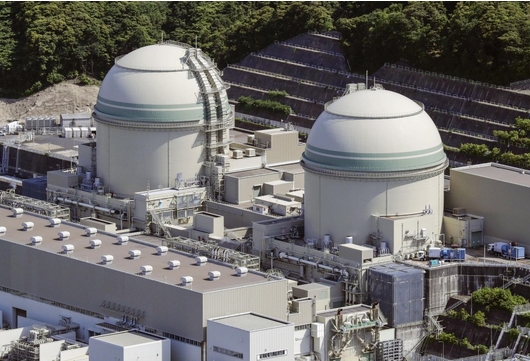 File photo taken from a Kyodo News helicopter on May 30, 2019, shows the No. 3 (L) and No. 4 reactors at Kansai Electric Power Co.’s Takahama nuclear power plant in Fukui Prefecture, central Japan.
The total costs to implement government-mandated safety measures, maintain facilities and decommission commercially operated nuclear power plants in Japan will reach around 13.46 trillion yen ($123 billion), a Kyodo News tally showed Wednesday.
The amount, which could balloon further and eventually lead to higher electricity fees, was calculated based on financial documents from 11 power companies that own 57 nuclear reactors at 19 plants, as well as interviews with the utilities.
Two years after the 2011 Fukushima nuclear crisis, the Japanese government introduced new safety standards which made measures against natural disasters and major accidents mandatory for restarting reactors.
The power companies have been given the option of either maintaining their idled nuclear power plants and restarting them once they had implemented the required safety measures, or decommissioning their plants. But it has become clear either choice required massive costs.
Of the total costs, 5.4 trillion yen was for safety measures implemented as of last month at 15 power plants they are trying to restart.
Work begins to remove spent MOX fuel at Ikata nuclear plant in Ehime
 A pool containing used mixed-oxide fuel that was removed from reactor No. 3 of the Ikata nuclear power plant in Ehime Prefecture on Tuesday
January 15, 2020
MATSUYAMA, EHIME PREF. – Shikoku Electric Power Co. has started removing nuclear fuel, including spent mixed-oxide (MOX) fuel, from a nuclear reactor in western Japan.
The work at the No. 3 reactor at the company’s Ikata nuclear plant in Ehime Prefecture, which began late Monday night, is the first time used MOX fuel, a blend of plutonium extracted from spent nuclear fuel and uranium, has been removed from any commercial nuclear power plant in Japan excluding tests.
A total of 157 fuel assemblies, including 16 MOX fuel assemblies, will be removed. The work is expected to continue through Thursday.
The work was originally scheduled to start at 12 a.m. Monday, but was delayed as the firm was investigating an incident that occurred during preparation work Sunday, in which a control rod was removed from the reactor by mistake and was re-inserted seven hours later.
Japan is not equipped to reprocess spent MOX fuel. Shikoku Electric, therefore, will store the MOX fuel at the power plant for the time being.
In March, five new MOX fuel assemblies will be installed in the reactor.
Control rod mistakenly removed from Ikata reactor in Ehime during maintenance
 Reactor No. 3 at the Ikata nuclear power plant in Ehime Prefecture in April 2018
Jan 13, 2020
MATSUYAMA, EHIME PREF. – During recent maintenance work at the Ikata nuclear power plant that was to include the country’s first removal of spent mixed-oxide (MOX) fuel following full-scale “pluthermal” power generation, a control rod was removed from the reactor by mistake, according to Shikoku Electric Power Co.
The incident involving reactor No. 3 at the plant in Ikata, Ehime Prefecture, caused no loss of control of the nuclear reaction in the unit and no radioactive materials were released, the company said Sunday. The reactor has been shut down since Dec. 26 to perform the maintenance work.
To remove fuel assemblies during the inspection, it was necessary to raise the apparatus at the top of the reactor from which fuel is suspended. While raising the apparatus, a control rod was also lifted out of the reactor along with the fuel assemblies, Shikoku Electric stated.
Control rods are used to suppress nuclear fission, and are inserted in order to halt a nuclear reactor. According to the power company, for fission to be allowed to occur within the reactor, it is necessary to adjust the concentration of boron within the reactor coolant in addition to removing the control rods.
According to Shikoku Electric and prefectural authorities, one of the 48 control rods in the unit was lifted out of the reactor containment vessel accidentally at around 1:20 p.m. Sunday together with the upper part of the apparatus that holds fuel assemblies in place from above and below.
As the apparatus was lifted by crane, a worker noticed that the control rod had also been raised out of the containment vessel. Around seven hours later, the control rod was reinserted into the reactor.
Because the crane’s weight sensor had shown a value typically seen when the control rods are disconnected, the control rods were determined to have been detached from the apparatus and the crane was raised, Shikoku Electric said.
The company had planned to start removing the spent MOX fuel assemblies, which contain a blend of plutonium extracted from spent nuclear fuel and uranium, from the reactor at 12 a.m. Monday. The work is now expected to be delayed due to the company’s investigation into the incident involving the control rod.
Shikoku Electric also announced last Tuesday that in October 2017 it mistakenly conducted an inspection of an emergency air supply filter in the main control room of reactor No. 3 without removing all the fuel from the reactor as stipulated in the safety regulations.
The operation to extract the MOX fuel assemblies is the first such removal to be performed at any commercial nuclear power plant in Japan since an initiative on pluthermal power generation using the mixed fuel was announced in 1997, according to Shikoku Electric.
The government and power firms are promoting pluthermal power generation as part of the nuclear fuel cycle featuring the extraction of plutonium from spent nuclear fuel for reuse. Shikoku Electric started pluthermal power generation in 2010 using 16 MOX fuel assemblies installed in the Ikata No. 3 reactor.
The company had been planning to remove all of them during the reactor maintenance, which is to continue through April 27. The firm will consider reusing the spent MOX fuel, which is expected to be stored at the power plant for the foreseeable future due to a lack of reprocessing facilities in this country.
Climate change afflicting the health of the world’s children
 Warning: Climate change will bring major new health risks for kids https://thebulletin.org/2020/01/warning-climate-change-will-bring-major-new-health-risks-for-kids/?utm_source=Newsletter&utm_medium=Email&utm_campaign=MondayNewsletter01202020&utm_content=ClimateChange_HealthRisks_01172020#
By Kathleen E. Bachynski, January 17, 2020 As we enter a new decade, headlines from across the world make all too clear that the effects of climate change are not just looming. They’re here, they’re now, and they’re devastating communities on every continent. For example, in Australia, unprecedented fires have emitted roughly 400 million tons of carbon, killed at least 25 people, and destroyed 2,000 homes. In Indonesia, terrible flooding has killed at least 67 people and caused 400,000 to abandon their homes. The loss of sea ice in the Arctic is shrinking access to food resources that numerous indigenous communities have depended on for generations.
But the health effects of climate change go beyond even the most immediate and obvious consequences of fires, floods, and melting ice. In November 2019, the medical journal The Lancet published a detailed report examining the effects that climate change will have on human health under two scenarios: one in which the world reins in emissions according to commitments laid out in the Paris agreement, and one in which the world does not. In both cases, children will be most vulnerable to the numerous health harms resulting from decisions made by their parents and grandparents. Children are particularly likely to suffer the effects of climate change for numerous reasons: Their immune and organ systems are still developing, they drink relatively more water and breathe in more air than do adults relative to their body weight, and they tend to spend more time outdoors. Understanding the full scope of the public health consequences of a changing climate, then, involves examining how the risks will affect the bodies of the youngest people.
According to the Lancet report, air pollution—specifically, exposure to fine particulate matter known as PM 2.5—represents the largest environmental risk factor for premature deaths across the globe. When people think of the public health effects of air pollution, they often imagine the worst-case scenarios. For example, the smoke from the fires in Australia is currently so severe that a day spent inhaling the air in east Sydney represents the equivalent of smoking 19 cigarettes.
But air pollution need not reach such extreme levels to cause serious harm. Far more commonly, people are unaware of the daily pollution that they are breathing in due to the burning of fossil fuels, such as coal and gas. In fact, more than 90 percent of children are exposed to concentrations of PM 2.5 higher than the World Health Organization’s guidelines on outdoor air pollution. Over a lifetime, unhealthy air damages lungs and increases risks for a host of diseases, from asthma to pneumonia. And due to their small body size and the factors cited above, children absorb more of this pollution than do adults.
Similarly, The Lancet report notes that children are particularly vulnerable to the effects of heat. Specifically, young children are at greater risk for experiencing electrolyte imbalance, fever, respiratory disease, and kidney disease during periods of extreme heat. Rates of heat-related deaths are four times higher among children younger than one year old as compared to people aged 1-to-44. Changing temperature and precipitation patterns are also influencing the transmission of disease from insects to humans. In particular, malaria and dengue are spread by mosquitoes, and climate suitability for transmission of these diseases is increasing in numerous parts of the world. Because children tend to spend more time outdoors, they are more likely to contract these diseases. In 2017, children accounted for 61 percent of all malaria deaths worldwide, and climate change is putting more children at even greater risk.
Changing climate patterns, droughts, and fires also threaten to reduce crop yields and increase food insecurity. Moreover, rising carbon dioxide appears to diminish the nutrient quality of crucial staple foods such as wheat and rice. Combined, these trends are likely to exacerbate the already serious global health problem of malnutrition, which currently accounts for nearly one-fifth of premature deaths and poor health globally. The consequences of malnutrition are particularly severe among children. In 2018, 22 percent of children under five years of age were stunted, meaning they experienced impaired growth and development. Stunting is largely irreversible and includes serious consequences, from poorer cognition to increased risk of nutrition-related chronic diseases later in life.
Finally, The Lancet report observes that climate change has other health implications that are more challenging to quantify but crucial to address, such as mental health effects. Researchers have found that children are at high risk of mental health problems following the types of natural disasters that are likely to increase due to climate change. For example, one study found that 31 percent of a group of children who were evacuated during Hurricane Katrina reported clinically significant symptoms associated with depression and Post Traumatic Stress Disorder. According to the Centers for Disease Control, children are at particular risk for stress after a disaster because they often understand less about what is occurring, feel less able to control events, and have less experience coping with difficult situations.
Protecting children from air pollution, heat-related deaths, infectious diseases, malnutrition, and mental health effects associated with climate change will involve the mobilization of all sectors of society to drastically reduce emissions and invest in health systems and infrastructure. The Lancet report notes a few promising signs, such as increased public and political engagement, and increasing health adaptation spending to improve communities’ resilience to a changing climate. Unfortunately, however, current efforts are falling far short of what is needed to meaningfully reduce carbon emissions on the scale needed to address the threat posed to human health. According to a 2019 United Nations report, greenhouse gas emissions must begin falling by 7.6 percent this year in order to meet the most ambitious goals laid out in the 2015 Paris climate accord. But the world is nowhere near this goal, and many countries are heading in the opposite direction. Notably, in 2018, energy-related carbon dioxide emissions rose by 2.7 percent in the United States. The United Nations has warned that every year of delay “brings a need for faster cuts, which become increasingly expensive, unlikely, and impractical.”
Waiting until action becomes more difficult, or perhaps even impossible, has appalling moral consequences. The longer we fail to act to address the risks of climate change, the more human lives we place on the line. And the majority of those lives will belong to the most vulnerable among us. It is no wonder, then, that children across the world have taken the lead in advocating for urgent, necessary action. The public health stakes for them—and for all people—grow higher with each passing year. Our health is fundamentally tied to our planet’s health. We must all consider, then, what actions we need to take to protect our planet—and thereby our communities, our children, and our selves.
Report shows that most young adults fear a nuclear attack this decade
 More than half the world’s millennials fear a nuclear attack this decade The International Committee of the Red Cross released an astounding report. Vox, By Alex Ward@AlexWardVoxalex.ward@vox.com Jan 20, 2020 A majority of millennials around the world believe it’s more likely than not that a nuclear attack will happen sometime in the next 10 years — a sign that younger adults’ views on global affairs is exceedingly bleak. The International Committee of the Red Cross, a worldwide humanitarian organization, surveyed 16,000 millennials — adults between the ages of 20 and 35 — in 16 countries and territories last year: Afghanistan, Colombia, France, Indonesia, Israel, Malaysia, Mexico, Nigeria, Palestinian Territories, Russia, South Africa, Syria, Switzerland, the United Kingdom, Ukraine, and the United States. Half of those nations are experiencing conflict right now, while the other half are fortunately in peace. Based on the results released last week, this demographic is worried about what the future holds. “More than half of millennials — 54 percent — believe it is likely that a nuclear attack will occur in the next decade,” reads the report. Those questioned in Malaysia are the most likely to fear a nuclear device going off soon, while Syrians are the least likely to worry about that. However, respondents said that nuclear weapons were the least concerning of the 12 different issues they were asked to rank, with corruption topping the list followed by unemployment and increasing poverty. Still, the fear of a nuclear attack seems to be a trend. A January 2018 World Economic Forum survey of 1,000 leaders from government, business, and other industries, for example, identified nuclear war as a top threat. The worldwide shudder is understandable. The chance of a nuclear conflict between the US and North Korea isn’t entirely gone. India and Pakistan, two nuclear-armed enemies, could rekindle their decades-long squabble at any time. And the US and Russia — the world’s foremost nuclear powers — have had warheads pointed at each other since the earliest days of the Cold War……… https://www.vox.com/2020/1/20/21070621/millennials-survey-nuclear-world-war-3-red-cross |
|
In Turkey, renewable energy rising, as nuclear partnership with Japan is scrapped
|
Turkey, Japan scrap partnership in Sinop nuclear plant in Turkey’s north, Hurriyet Daily News, 20 Jan 2020, Turkey is reassessing its major partner for the country’s second nuclear plant in the Black Sea province of Sinop, Energy Minister Fatih Dönmez said on Jan. 19.In an interview with state-run Anadolu Agency, Dönmez said that the time schedule and pricing of the nuclear power plant in Sinop fell short of the ministry’s expectations after the results of feasibility studies, carried out by Japanese Mitsubishi Heavy Industries, Ltd., came out.
“We agreed with the Japanese side to not continue our cooperation regarding this matter,” Dönmez said…….. An intergovernmental agreement was signed between Turkey and Russia in May 2010 for Akkuyu NPP, the first nuclear plant of Turkey that will have four VVER-1200 power reactors with a total installed capacity of 4,800 megawatts. …… Share of local and renewable energy increases to 62 pct Dönmez also said Turkey saw an increase in the share of local and renewable resources for the country’s electricity production. Electricity production from local and renewables sources in 2019 amounted to 62 percent compared to 49 percent in 2018, a 13 percent increase, he further elaborated……… http://www.hurriyetdailynews.com/turkey-japan-scrap-partnership-in-sinop-nuclear-plant-in-turkeys-north-151212 |
|
New report: China soon to join countries where renewables are cheaper than coal
Oil Price 19th Jan 2020, In September of last year Oilprice reported an incredible milestone for renewable energy when solar and wind power became cheaper than coal in most of the world. Now, a new report released this week by Wood Mackenzie Power and Renewables has heralded another milestone: China will soon be added to that list of countries in which coal is no longer more economical than renewable energy.
The age of the individual must end – our world depends on it
1 This Month
19 November – Webinar – The Reality of Reprocessing
Time: 11:00 AM Pacific Time (US & Canada) / 2:00 PM Eastern / 7:00 PM UK / 8:00 PM CET
Register for the Zoom Event Here

Tell Congress: Prevent Nuclear Catastrophe in Iran

Tell Congress: Prevent Nuclear Catastrophe in Iran

Read the Public Inquiry Report, the Commissioners’ report, Surrendering Australia: The AUKUS Deception is available to download for free at aukuspublicinquiry.com. Or just watch the replay of the National Press Club Luncheon.


Shut down the radiation-damaged Heysham nuclear reactors now
To see nuclear-related stories in greater depth and intensity – go to https://nuclearinformation.wordpress.com

Say No to NASA’s Reckless Nuclear Reactor on the Moon
Say No to NASA’s Reckless Nuclear Reactor on the Moon
-
Archives
- November 2026 (156)
- October 2026 (302)
- September 2026 (339)
- August 2026 (330)
- July 2026 (355)
- June 2026 (287)
- May 2026 (306)
- April 2026 (356)
- March 2026 (251)
- February 2026 (267)
- January 2026 (308)
- December 2025 (358)
-
Categories
- 1
- 1 NUCLEAR ISSUES
- business and costs
- climate change
- culture and arts
- ENERGY
- environment
- health
- history
- indigenous issues
- Legal
- marketing of nuclear
- media
- opposition to nuclear
- PERSONAL STORIES
- politics
- politics international
- Religion and ethics
- safety
- secrets,lies and civil liberties
- spinbuster
- technology
- Uranium
- wastes
- weapons and war
- Women
- 2 WORLD
- ACTION
- AFRICA
- Atrocities
- AUSTRALIA
- Christina's notes
- Christina's themes
- culture and arts
- Events
- Fuk 2022
- Fuk 2023
- Fukushima 2017
- Fukushima 2018
- fukushima 2019
- Fukushima 2020
- Fukushima 2021
- general
- global warming
- Humour (God we need it)
- Nuclear
- RARE EARTHS
- Reference
- resources – print
- Resources -audiovicual
- Weekly Newsletter
- World
- World Nuclear
- YouTube
-
RSS
Entries RSS
Comments RSS

