Rolls Royce’s fantasy plan for so-called ‘mini’ nuclear reactors

|
Rolls-Royce plans mini nuclear reactors by 2029 https://www.bbc.com/news/business-51233444 By Roger Harrabin & Katie Prescott, BBC environment analyst and business reporter, 24 January 2020
Mini nuclear reactors could be generating power in the UK by the end of the decade. Manufacturer Rolls-Royce has told the BBC’s Today programme that it plans to install and operate factory-built power stations by 2029. Mini nuclear stations can be mass manufactured and delivered in chunks on the back of a lorry, which makes costs more predictable. But opponents say the UK should quit nuclear power altogether. They say the country should concentrate on cheaper renewable energy instead. Environmentalists are divided over nuclear power, with some maintaining it is dangerous and expensive, while others say that to achieve net zero emissions by 2050 all technologies are needed. However, the industry is confident that mini reactors can compete on price with low-cost renewables such as offshore wind. Rolls-Royce is leading a consortium to build small modular reactors (SMRs) and install them in former nuclear sites in Cumbria or in Wales. Ultimately, the company thinks it will build between 10 and 15 of the stations in the UK. They are about 1.5 acres in size – sitting in a 10-acre space. That is a 16th of the size of a major power station such as Hinkley Point. SMRs are so small that theoretically every town could have its own reactor – but using existing sites avoids the huge problem of how to secure them against terrorist attacks. It is a rare positive note from the nuclear industry, which has struggled as the cost of renewables has plummeted. In the past few years, major nuclear projects have been abandoned as Japanese companies Toshiba and Hitachi pulled out because they could not get the required funding. And the construction of Hinkley Point in Somerset could cost £3bn more than was expected, in an echo of the row over the rail mega-project HS2. “The trick is to have prefabricated parts where we use advanced digital welding methods and robotic assembly and then parts are shipped to site and bolted together,” said Paul Stein, the chief technology officer at Rolls-Royce.
He said the approach would dramatically reduce the cost of building nuclear power sites, which would lead to cheaper electricity. But Paul Dorfman from University College London said: “The potential cost benefits of assembly line module construction relative to custom-build on-site construction may prove overstated. “Production line mistakes may lead to generic defects that propagate throughout an entire fleet of reactors and are costly to fix,” he warned. “It’s far more economic to build one 1.2 GW unit than a dozen 100 MW units.” Rolls-Royce is hoping to overcome the cost barrier by selling SMRs abroad to achieve economies of scale. Its critics have warned that SMRs will not be ready in substantial numbers until the mid 2030s, by which time electricity needs to be carbon-free in the UK already to meet climate change targets. |
|

Sloppy safety and waste management at Electricite de France’s nuclear sites

 Improve Nuclear Plant Maintenance Works, Watchdog Says, Francois de Beaupuy, Bloomberg News (Bloomberg) 24 Jan 2020 — Electricite de France SA and its suppliers must improve maintenance operations at nuclear reactors and waste management because they have lost skills and become sloppy in recent years, the French nuclear safety authority said.
The warning reflects a string of incidents related to substandard manufacturing or installation of equipment at EDF and its suppliers. It underscores the difficulties the French nuclear giant faces in extending the lifetime of aging reactors and building new ones, prompting it to announce an action plan to revamp the industry’s skills.
“There’s a need to reinforce skills and some carelessness among some players in the industry,” Bernard Doroszczuk, chairman of Autorite de Surete Nucleaire, said at a press conference near Paris on Thursday. “There’s a lack of rigor in the oversight of safety by operators,” from manufacturing to welding to equipment tests “which must be corrected.”
Discussions are still going on with EDF regarding safety improvements, including ways to prevent or mitigate the impact outside its plants in case of a severe accident such as the meltdown of the radioactive fuel and its vessel, said Sylvie Cadet-Mercier, a commissioner of the regulator. A spokesman for the utility declined to comment…… https://www.bnnbloomberg.ca/edf-must-improve-nuclear-plant-maintenance-works-watchdog-says-1.1378571
USA Politicians on both sides sucked in by propaganda for fantasy new nuclear reactors


|
Reporter’s notebook: Nuclear reactors prove tough tech, despite
bipartisan push, https://www.houstonchronicle.com/business/energy/article/Reporter-s-notebook-Nuclear-reactors-prove-15000083.php
James Osborne Jan. 24, 2020 WASHINGTON – If there’s any clear area of agreement between Republicans and Democrats on climate change, it’s on the need to develop a new generation of nuclear power plants as quickly as possible. More precisely, it’s the need to bring down the multi-billion dollars costs of existing plants and create a meltdown-proof reactor that can run on recycled uranium and plutonium rods, which power companies and environmentalist alike can get behind. But getting bipartisan agreement on the need for those reactors has proven far easier than developing them, as companies look to overhaul a nuclear reactor design that has changed little since they first began operation in the United States in the 1950s. One year after the Senate passed a law requiring the government’s leading nuclear authority, the Nuclear Regulatory Commission, to overhaul its processes for approving nuclear power plants to account for the new reactors, senators are already beginning to exhibit impatience. At a hearing earlier this month, Sen. Sheldon Whitehouse, a Rhode Island Democrat, quizzed NRC officials about why they thought the Senate passed the law. When one of them said, “You really want me to guess,” he responded: “I would hope you would know, that it would be so clear why we gave you this power.” Two-fer The point, Whitehouse said, is to create a new carbon-free energy source that could also be fueled by the growing stockpiles of spent nuclear rods at reactors around the country, ending a decades-long debate about where to dispose of them. “I don’t know if that’s going to pan out, but people who are very smart and have invested millions of dollars tell me that is their intention,” Whitehouse said. “We want to see that focus on turning that waste into something positive.” With backers like billionaire Bill Gates, a wave of startups is trying to develop a reactor that uses materials such as molten salt or liquid metal to cool itself — instead of water — allowing a reactor that loses power to cool down on its own. But so far only one company, California-based Oklo, is ready to submit plans for its reactor to the NRC for review, said Scott Burnell, a spokesman for the agency. |
|
|
Mayor in Kyushu admits to ‘bribe’ from company in nuclear business
 Mayor in Kyushu admits to ‘bribe’ from company in nuclear business, THE ASAHI SHIMBUN, January 24, 2020 GENKAI, Saga Prefecture–The mayor here said Jan. 23 that he received–but returned–what he suspected was a bribe from a contractor tied to an individual known to have lavished gifts on nuclear power company executives.Shintaro Wakiyama, 63, said at a news conference at the Genkai town office that he received “about 1 million yen ($9,140)” from Shiohama Industry Corp. in July 2018, immediately after he was elected mayor for the first time. He said he returned the money to the company, which is based in Tsuruga, Fukui Prefecture, through an acquaintance in December 2019. Wakiyama also said he recently learned that the acquaintance had died soon after the money was returned, but he did not provide any details about the intermediary……… Several executives related to nuclear power operations at Kansai Electric Power Co. have resigned for receiving cash and other presents from Moriyama. They said he had demanded contracts from the utility for his company…… http://www.asahi.com/ajw/articles/AJ202001240040.html |
|
In UK “big” nuclear power versus “small” (both unaffordable) at Wylfa
 The global nuclear lobby might look like a unified force – it’s anything but!. The nuclear nations fight each other in desperately trying to flog off their unaffordable white elephant nuclear reactors to ‘developing’ countries, or to any sucker, really. .
The nuclear industry itself is divided – the ‘conventional’ big nuclear reactors versus the (not yet existing) Small and Medium Nuclear Reactors (SMRs)
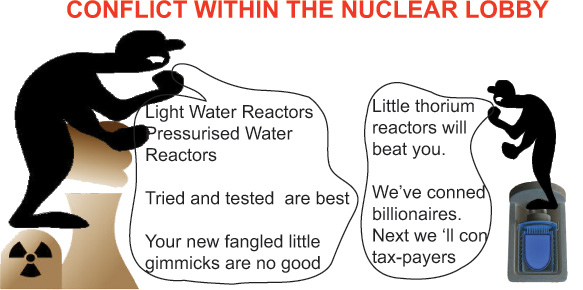
‘No plans’ for Wylfa mini nuclear power station according to developer, https://www.dailypost.co.uk/news/north-wales-news/no-plans-wylfa-mini-nuclear-17599188, Owen Hughes, Business correspondent, 20 JAN 2020
Horizon Nuclear Power said its full focus is on delivering a full scale nuke plant.
Wylfa Newydd developer Horizon Nuclear Power says there are “no plans” to build mini reactors at its Anglesey site.
Rolls Royce is currently leading a consortium developing the technology for Small Modular Reactors (SMRs) – supported by the UK Government. Trawsfynydd in Gwynedd has been tipped at a prime spot for one of the reactors and over the weekend Wylfa was also reported as a target location.
But Horizon has released a statement making clear the Wylfa site is not being put forward for this technology as they press on with the current plan for a full scale nuclear site.
A spokesman said: “There are no plans to deploy a Rolls Royce Small Modular Reactor at the Wylfa Newydd site.”
He added: “Activity on the Horizon project is currently suspended, but we’re working hard to establish the conditions for a restart using our tried and tested reactor design, which has already cleared the UK regulators’ assessment process.
Energy Secretary Andrea Leadsom wants additional information before deciding whether to give planning permission for Wylfa Newydd.
She deferred the decision on the site in October.
If permission is granted then the next step will be securing funding to make the project happen.
When it comes to SMRs, Alan Woods, strategy and business development director for Rolls-Royce, said they were focusing on sites in Wales and the north of England. Modular reactors are smaller and, once the first is approved and built, manufacturers hope mass-production will lead to shorter construction times and lower costs for each unit.
The consortium will need to establish factories to produce the small modular reactors with the pre-fabricated modules transported to sites for construction.
India – a case study in regulatory capture by the nuclear industry
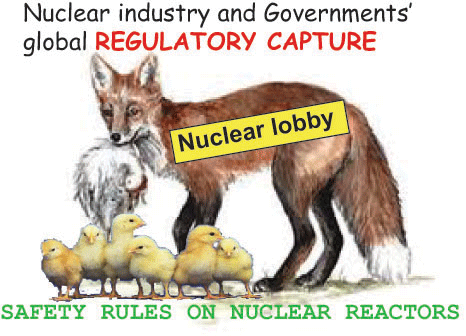
 Leaflet SONALI HURIA, January 22,2020
 In this piece, the author while discussing the issues around nuclear safety, debates on why it is important to re-examine the proposed Nuclear Safety Regulatory Authority Bill for better regulation, transparency, and liability. SINCE returning to power last year with an overwhelming majority in the 2019 general elections, the Modi-led government has passed a series of legislations in rapid succession without any credible dialogue both within and outside Parliament – …………even as there has been exceptional eagerness to push these amendments and pass new legislation, including notifying the Citizenship (Amendment) Act, 2019 despite intense country-wide protests and a raging debate on its underlying intent, there are urgent issues, such as, nuclear safety, which remain in indefinite suspension.
The UPA-II government, under Dr Manmohan Singh, had introduced the Nuclear Safety Regulatory Authority (NSRA) Bill in the Lok Sabha on 07 September 2011, aimed at replacing India’s existing nuclear regulator, the Atomic Energy Regulatory Board (AERB) with a purportedly improved and more autonomous Nuclear Safety Regulatory Authority (NSRA) which would have the mandate to ‘regulate nuclear safety and activities related to nuclear material and facilities’.
The Bill, however, which had been referred to the Department-related Parliamentary Standing Committee on Science and Technology, Environment and Forests, did not come up for discussion before the dissolution of the 15th Lok Sabha, and subsequently, lapsed. The Standing Committee had reportedly endorsed the Bill with only minor suggestions for changes, while two members of the Committee from the CPI(M), gave dissent notes, arguing that the Bill provided ‘no substantive autonomy’ to the proposed NSRA. According to available information, in April 2017, the Union Minister of State (Independent Charge) Atomic Energy and Space, Dr Jitendra Singh, in a written response to a question in the Lok Sabha had stated that a ‘fresh Bill’ similar to the earlier NSRA Bill, was ‘under examination’……….India’s nuclear regulatory framework has long been criticized for being so thoroughly enmeshed within the government structure so as to render its requisite independence, practically meaningless. Nuclear safety in India has been the remit of the AERB, which was set up in November of 1983 by an executive order of the Secretary of the DAE under Section 27 of the Atomic Energy Act, 1962, with modifications made in April 2000 to “exclude all BARC facilities from (its) oversight, (following) the declaration of BARC as a nuclear weapons laboratory”.
The AERB has had the dishonourable reputation of being subservient to India’s exclusively public sector operators, which it is required to monitor, and is also acknowledged as suffering from an acute lack of independence from industry and government.
As things stand, the AERB is responsible for monitoring the safety of the various nuclear facilities operated by agencies such as, the Nuclear Power Corporation of India Limited (NPCIL) and the Uranium Corporation of India Limited (UCIL), which fall under the purview of the Department of Atomic Energy (DAE). However, the Board is required to report to the Atomic Energy Commission (AEC), whose chairman is the Secretary of the DAE and one of whose members is the Chair of the NPCIL, and which overall, comes under the direct control of the Prime Minister of India. Thus, the regulatory board reports to the very agency it is required to assess and monitor in the interest of public safety.
Moreover, the AERB frequently draws upon the ‘expertise’ of scientists and engineers provided by the DAE – “almost 95% of the members in AERB’s review and advisory committees are drawn from among retired employees of the DAE, either from one of their research institutes like the Bhabha Atomic Research Center or a power generation company like the Nuclear Power Corporation of India Ltd.” – thus, calling into question the AERB’s functional autonomy.
Dr A Gopalakrishnan, the former Chairman of the AERB has been at pains to explain how the present institutional setup makes nuclear safety regulation in India a ‘mere sham’ and that for the AERB to function effectively, the DAE’s hold on the Board needs to be urgently done away with. In 1995, during Dr Gopalakrishnan’s tenure as the nuclear regulator, the AERB had prepared a comprehensive ‘Document on Safety Issues in DAE Installations’ – a report detailing nearly 130 safety issues across India’s nuclear installations with 95 of them having been designated ‘top priority’, to which the first reactions from the NPCIL and BARC according to Dr Gopalakrishnan, were of denial and questioning AERB’s own technical expertise to review safety matters.
A 2012 Performance Audit Report on the AERB prepared by the Comptroller and Auditor General of India (CAG) and submitted to the Indian Parliament labelled the AERB a ‘subordinate office, exercising delegated functions of Central government and not that of the regulator’.
The Public Accounts Committee (PAC) scrutinizing the CAG report in 2013 castigated the Regulatory Board for failing to prepare a ‘comprehensive nuclear radiation safety policy despite a specific mandate in its constitution order of 1983’. The International Atomic Energy Agency’s (IAEA) Peer Review of India’s Nuclear Regulatory Framework in 2015 was also categorical in asserting that the AERB was in need of being separated from ‘other entities having responsibilities or interests that could unduly influence its decision making’.
As has been pointed out by MV Ramana, physicist and author of The Power of Promise, there have been accidents of ‘varying severity’ at several of the nuclear facilities being operated by the DAE, yet the regulatory board has frequently been seen downplaying the seriousness of such incidents, “postponing essential repairs to suit the DAE’s time schedules, and allowing continued operation of installations when public safety considerations would warrant their immediate shutdown and repair”. The charade of the AERB’s professed independence is further underscored by its conspicuous silence on the recent cybersecurity breach at the Koodankulam Nuclear Power Plant in Tirunelveli District in Tamil Nadu in October 2019.
It is these glaring frailties of the nuclear regulatory framework coupled with the obdurate insistence of the Central government to massively expand its activities along the entire nuclear fuel cycle, despite unsettled safety concerns, a long-standing and vociferous people’s resistance against uranium mining and nuclear energy projects, and concerns surrounding the health, environmental, economic, and democratic costs of this expansion, that make imperative, the need for a fiercely independent and non-partisan nuclear regulator.
Does the proposed NSRA fit the bill?
The NSRA Bill, 2011 upon its introduction, had failed to invoke any enthusiasm among independent experts, nuclear sector watchers, and civil society actors, and instead, was met with grim scepticism given that among other things, it made light of the principle of ‘separation’ as required under Article 8 of the IAEA Convention on Nuclear Safety to which India is a State Party.
The NSRA Bill provides for the establishment of a ‘Council of Nuclear Safety’, headed by the Prime Minister and comprised of five or more Union Ministers, the Cabinet Secretary, Chairman of the AEC, and other ‘eminent experts’ nominated by the Central government, which in turn, will constitute ‘search committees’ to select the Chair and Members of the proposed Regulatory Authority. Moreover, under Article 14 of the Bill, the Chairperson and Members of the NSRA can be removed by an order of the Central government.
Dr Gopalakrishnan argues that the Bill makes only an ornamental show of granting independence to the NSRA by requiring the Authority to report to the Parliament instead of a government department, ministry or official. Concomitantly, however, the Bill also unambiguously provides for the supersession of and the assumption of ‘all the powers, functions and duties’ of the Authority by the Central Government, if in its ‘opinion’ the Authority fails to function in concert with the provisions of the proposed Act, and, requires the Authority to seek approval of the central government prior to initiating any interaction with nuclear regulators of other countries and/or international organizations ‘engaged in activities relevant to…nuclear/radiation safety, physical security of nuclear material and facilities, transportation of nuclear and radioactive materials and nuclear and radiation safety and regulation’.
Article 20 (q) of the Bill mandates the NSRA to ‘discharge its functions and powers in a manner consistent with the international obligations of India’. This provision, argues Dr Gopalakrishnan is deeply worrisome for it “could mean, that if the Prime Minister has promised the French President in 2008 that India would buy six European Pressurised Reactors (EPRs)…(this) unilateral and personal commitment…will now (be) labelled ‘India’s international obligation’, and the NSRA cannot question, even on strong safety grounds, the setting up of those six EPR units, since that will violate the said clause of the Bill” – this might prove disastrous for both, public and environmental safety in the long term.
Experts argue that far from separating the regulator from the government, these provisions contained in the NSRA Bill will only mean absolute government control over nuclear regulation, including over appointment and dismissal procedures, thus, opening the way for ‘pliant technocrats’ to occupy prominent positions within the Authority.
The proposed Bill is also fuzzy on the question of which nuclear facilities will fall under the purview of the NSRA – it empowers, for instance, the central government to exempt “any nuclear material, radioactive material, facilities, premises and activities” from the jurisdiction of the Authority, on grounds of ‘national defence and security’. ……….
These and other provisions of the Bill are a stark reminder that the DAE has no love lost for transparency and public oversight – take, for instance, Article 45 which requires the Chairperson, Members, and other employees of the Authority to sign a ‘declaration of fidelity and secrecy’ “to not communicate or allow to be communicated to any person not legally entitled to any information relating to the affairs of the Authority”. It is for these reasons that the former nuclear regulator, Dr Gopalakrishnan has described the proposed NSRA Bill as an exercise in ‘boxing in’ nuclear regulation “from all sides by government controls, diktats, and threats of retaliation”, thus making it even more emaciated than the existing nuclear regulator – the AERB. …..https://theleaflet.in/in-a-season-of-impetuous-lawmaking-whither-nuclear-safety/
No clear explanation of USA’s rush to produce more plutonium cores for nuclear weapons
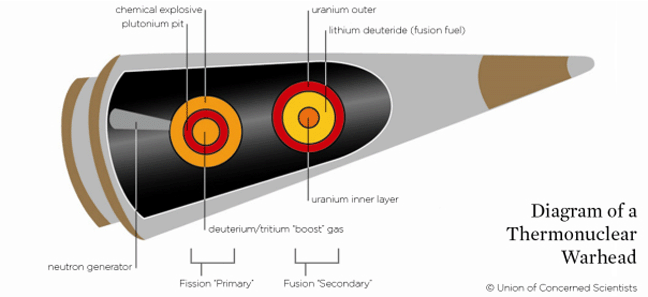
The U.S. is Boosting Production of Nuclear Bomb Cores (For More Nuclear Weapons) https://nationalinterest.org/blog/buzz/us-boosting-production-nuclear-bomb-cores-more-nuclear-weapons-115826 Thanks, arms race. by Michael Peck, 22 Jan 2020,
In another sign that the nuclear arms race is heating up, the U.S. is ramping up production of nuclear bomb cores.
The National Nuclear Security Administration (NNSA) has announced that it plans to increase the production of plutonium pits to 80 per year. The grapefruit-sized pits contain the fissile material that give nuclear weapons such tremendous power.
Production will center on the Mixed-Oxide Fuel Fabrication Facility at Savannah River site in North Carolina, which would be modified to manufacture at least 50 pits per year, and Los Alamos National Laboratory in New Mexico, which would generate at least 30, by 2030.
America’s nuclear weapons cores are aging, with some pits dating back to the 1970s, leading to concerns about the reliability of the U.S. nuclear stockpile.
“The U.S. lost its ability to produce pits in large numbers in 1989, when the Rocky Flats Plant near Denver, Colorado, was shut down after the Federal Bureau of Investigation and Environmental Protection Agency investigated environmental violations at the site,” noted Physics Today magazine in 2018. Up to 1,200 pits per year had been manufactured there.
“Since then, only 30 pits for weapons have been fabricated—all at LANL [Los Alamos National Laboratory], the sole U.S. facility with production capability. Weapons-quality pit production ceased in 2012, when LANL began modernizing its 40-year-old facilities, although several practice pits have since been fabricated. The oldest pits in the stockpile—which now numbers 3,882, according to DOE’s National Nuclear Security Administration (NNSA)—date to 1978.”
In its 2018 Nuclear Policy Review, the Trump administration called for 80 new plutonium pits per year. Congress has also allocated large sums, with $4.7 billion alone allocated in FY 2019 for maintenance and life extension of the nuclear stockpile. The NNSA says it is legally mandated to ensure a capacity of at least 80 pits per year.
Though the production of nuclear cores has been an issue for years, a looming U.S.-Russia arms race makes the situation even more sensitive. Russia is fielding a new generation of strategic nuclear weapons, including a hypersonic nuclear-armed glider and an air-launched ballistic missile. The Trump administration has withdrawn from the 1987 Intermediate-Range Nuclear Forces treaty with Russia, alleging Russian violations, leading to fears that a new competition will beget the return of nuclear-armed, medium-range ballistic and cruise missiles.
Anti-nuclear groups are furious. “Expanded pit production will cost at least $43 billion over the next 30 years,” argues the Natural Resources Defense Council and other groups.Yet the Defense Department and NNSA have never explained why expanded plutonium pit production is necessary. More than 15,000 plutonium pits are stored at NNSA’s Pantex Plant near Amarillo, Texas. Independent experts have concluded that plutonium pits have reliable lifetimes of at least 100 years (the average pit age is less than 40 years). Crucially, there is no pit production scheduled to maintain the safety and reliability of the existing nuclear weapons stockpile. Instead, proposed future pit production is for speculative new-design nuclear weapons, but those designs have been canceled.”
Introducing a new generation of nuclear weapons “could adversely impact national security because newly produced plutonium pits cannot be full-scale tested without violating the global nuclear weapons testing moratorium.”
Michael Peck is a contributing writer for the National Interest. He can be found on Twitter and Facebook.
”Plutonium pits” not only unnecessary, but also very dangerous for the environment
“They want as much dirty warhead manufacturing as possible for Los Alamos, and they don’t want anybody to know or discuss the predictable problems and impacts on our communities and environment,”
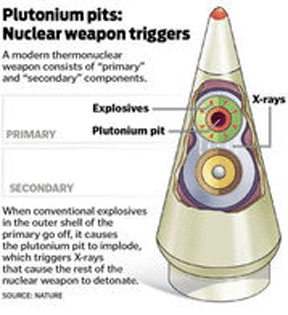 Lawmakers assured review of nuclear weapons work to be open https://apnews.com/5d500281694f4bbae30dc5356d18244d By SUSAN MONTOYA BRYAN, ALBUQUERQUE, N.M. (AP) 22 Jan 2020 — A review of a proposal to ramp up production of key components for the United States’ nuclear arsenal will be open and transparent, according to members of New Mexico’s congressional delegation.
Sens. Tom Udall and Martin Heinrich and Rep. Ben Ray Lujan said in a joint statement to The Associated Press that they received assurances from federal officials that the review process also will include an opportunity for public comment. The Democrats were briefed last week by federal officials after the National Nuclear Security Administration announced it did not need to do a more expansive nationwide review of the impacts of building plutonium cores at federal installations in New Mexico and South Carolina. As supporters of bringing more defense-related spending to New Mexico, the lawmakers initially refrained from commenting on whether they would support an expanded review, saying they needed more information. Watchdog groups have argued that federal officials are violating national environmental laws by not doing a more in-depth analysis. The lawmakers said as the U.S. Energy Department, Los Alamos National Laboratory and its contractors move forward with plutonium core production, they have a responsibility to take precautions to protect employees, the community and the environment. “Furthermore, we expect that the Defense Nuclear Facilities Safety Board will continue to conduct thorough oversight of lab plans and operations and their recommendations will be taken seriously by DOE and Los Alamos leadership,” the lawmakers said in the statement. Watchdogs say the federal government already has tried to limit the oversight of the safety board and that a site-specific review at Los Alamos lab would fall short of what’s needed to understand the affects of such a major undertaking. They also point to the lab’s history of safety and security lapses. Greg Mello of the Albuquerque-based Los Alamos Study Group said he’s disappointed the delegation “wants to remain the dark about the environmental impacts” of what he likened to a new Rocky Flats-type plutonium warhead factory in northern New Mexico. With a long history of leaks, fires and environmental violations, the Rocky Flats facility in Colorado underwent a $7 billion cleanup that was finished in 2005. “They want as much dirty warhead manufacturing as possible for Los Alamos, and they don’t want anybody to know or discuss the predictable problems and impacts on our communities and environment,” Mello said. Watchdogs also have concerns about the waste that would be generated by plutonium core production, saying it could take up valuable space at the Waste Isolation Pilot Plant in southern New Mexico, where the federal government sends tons of Cold War-era waste from decades of bomb-making and nuclear research as part of a multibillion-dollar cleanup effort. “Our politicos should explicitly support nationwide public review of expanded plutonium pit production instead of condoning NNSA’s stove-piped approach that is designed to suppress citizen opposition,” said Jay Coghlan, executive director of Nuclear Watch New Mexico. A draft supplemental analysis of the work planned for Los Alamos is expected to be released in the coming months. However, a few of the concerned groups are considering legal action to force a broader analysis. Federal officials have set a deadline of 2030 for increased core production, with work being split between Los Alamos lab and the Savannah River Site in South Carolina. At stake are jobs and billions of dollars to revamp existing buildings or construct new factories. The mission of producing the plutonium cores has been based at Los Alamos for years but none have been made since 2011 as the lab has been dogged by a string of safety problems and concerns about a lack of accountability. Officials for years have pushed for production to resume, saying the U.S. needs to ensure the stability and reliance of its nuclear arsenal. The National Nuclear Security Administration has said most of the cores in the stockpile were produced in the 1970s and 1980s. |
|
Wildfires – drastic climate effects in Australia, but Europe is copping it, too

Wildfires show us how the climate emergency is already affecting Europe, Guardian, Imogen West-Knights We look at the devastation of Australia’s bushfires and don’t believe it could happen here. But it already is, 22 Jan 2020 “……… what we’re seeing in Australia. Since the fire season began there, in the middle of last year, 29 people have died, along with more than a billion animals, and an area comparable in size to the whole of England has been ablaze. It’s a vicious reminder that, for all the sophistication of the modern world, something as primitive as fire can still bring us to our knees. As shocking as the scale of the destruction has been, though, it’s easy to see it on our computer screens here on the other side of the world, in the middle of a British winter, and feel disconnected from it. We accept that the climate emergency is now truly upon us yet still feel that it’s mostly happening to other people, elsewhere.wildfires are increasingly a problem for everyone, including in the UK. Last August, there were almost five times as many of them around the world as there had been the previous August. In the EU, the number of wildfires in the first half of 2019 was three times the annual average for the previous decade. And while they used to be a serious problem only in hotter, southern European countries such as Portugal and Spain, now northern Europe is in trouble too.
The Swedish fires of 2018 were by far the most severe in the country’s history, burning an area almost twice as large as the worst previous wildfire, in 2014. In the UK, 2018 and 2019 were the worst two years on record for wildfires, particularly on moors in the north-west of England and parts of Scotland. One fire last year, at Marsden Moor in Yorkshire, destroyed almost three square miles of land. The damage is on a very different scale to the almost 30,000 square miles that have burned in Australia, of course, but this is still a development we can’t afford to ignore.
Aside from all the more immediate effects – the threat to humans, livestock and wildlife – the recent increase in wildfires has been linked to severe air quality problems. People living up to 62 miles (100km) downwind of fires in the Pennines in 2018 were exposed to toxic fumes. And as there is no sign of cooler weather in the years ahead, it is reasonable to expect more fires in 2020. The EU has now established a fleet of firefighting planes, and the European Forest Institute has warned that unless we take steps to protect the countryside – for instance, by planting less-flammable species and creating barriers to the spread of flames – emergency services won’t be able to prevent the rapid spread and firestorms that have characterised the Australian crisis.
This isn’t all because of the climate crisis – changes to land use and increased urbanisation over several decades are also factors. Weather patterns are noisy data, and it’s difficult to attribute any single wildfire to the climate crisis. The scientific consensus, however, is that it is increasing the intensity and frequency of fire-conducive weather across the world.
Even those fires that are eventually linked to human error, like a still-lit disposable barbecue, are increasingly likely due to warming temperatures. Hotter summers mean more barbecues lit in the first place. The climate crisis is going to change the way we behave in every aspect of our lives. And with the probability of another summer of extreme weather coming, we will need to adapt to new dangers that won’t just be on the other side of the planet but, quite literally, in our own backyards.
It’s not at all clear that we’re ready for what might be coming. There is still a cognitive jump yet to be made when those of us in Europe read about the fires in Australia, from mourning the destruction there to recognising that we face some version of the same threat. When we look at Australia, we’re not looking at the future that might await Europe. That future is already here.
• Imogen West-Knights is a writer and freelance journalist
The human species is devouring its home -endless resource use
And don’t let’s forget – the nuclear industry is counting on this!
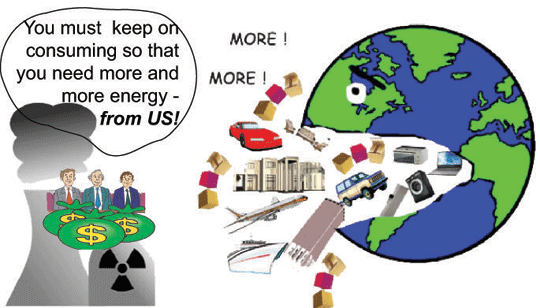
World’s consumption of materials hits record 100bn tonnes a year, https://www.theguardian.com/environment/2020/jan/22/worlds-consumption-of-materials-hits-record-100bn-tonnes-a-year Unsustainable use of resources is wrecking the planet but recycling is falling, report finds, Damian Carrington Environment editor @dpcarrington, Wed 22 Jan 2020 . The amount of material consumed by humanity has passed 100bn tonnes every year, a report has revealed, but the proportion being recycled is falling.
The climate and wildlife emergencies are driven by the unsustainable extraction of fossil fuels, metals, building materials and trees. The report’s authors warn that treating the world’s resources as limitless is leading towards global disaster.
The materials used by the global economy have quadrupled since 1970, far faster than the population, which has doubled. In the last two years, consumption has jumped by more than 8% but the reuse of resources has fallen from 9.1% to 8.6%.
The report, by the Circle Economy thinktank, was launched at the World Economic Forum in Davos. Continue reading
Climate change could unlock new microbes and increase heat-related deaths
Climate change could unlock new microbes and increase heat-related deaths, Science Daily, January 22, 2020, Source: Johns Hopkins Medicine
- Summary:
- Scientists warn that global climate change is likely to unlock dangerous new microbes, as well as threaten humans’ ability to regulate body temperature…..
- Ahima, director of Johns Hopkins’ Division of Endocrinology, Diabetes and Metabolism, wrote in the journal that “global warming threatens human thermoregulation and survival.” ……
- Casadevall’s article explores “the specter of new infectious diseases” as a result of the changing climate.
“Given that microbes can adapt to higher temperatures,” writes the professor of molecular microbiology and immunology, and infectious diseases, at Johns Hopkins’ schools of medicine and public health, “there is concern that global warming will select for microbes with higher heat tolerance that can defeat our endothermy defenses and bring new infectious diseases.”
Endothermy allows humans and other warm-blooded mammals to maintain high temperatures that can protect against infectious diseases by inhibiting many types of microbes.
Casadevall cites a particular climate threat from the fungal kingdom.
“We have proposed that global warming will lead many fungal species to adapt to higher temperatures,” he writes, “and some with pathogenic potential for humans will break through the defensive barrier provided by endothermy.”….
- In all four JCI “Viewpoint” articles, long-term strategies are urged to reduce greenhouse gas emissions and slow the trend of rising temperatures. ….https://www.sciencedaily.com/releases/2020/01/200122122105.htm
$123 billion the cost of safety measures for Japan’s nuclear stations
 Costs for managing Japan’s nuclear plants to total 13 trillion yen, https://english.kyodonews.net/news/2020/01/8722fafaff9b-costs-for-managing-japans-nuclear-plants-to-total-13-trillion-yen.html
KYODO NEWS – Jan 15, 2020 The total costs to implement government-mandated safety measures, maintain facilities and decommission commercially operated nuclear power plants in Japan will reach around 13.46 trillion yen ($123 billion), a Kyodo News tally showed Wednesday.
The amount, which could balloon further and eventually lead to higher electricity fees, was calculated based on financial documents from 11 power companies that own 57 nuclear reactors at 19 plants, as well as interviews with the utilities.
Two years after the 2011 Fukushima nuclear crisis, the Japanese government introduced new safety standards which made measures against natural disasters and major accidents mandatory for restarting reactors.
The power companies have been given the option of either maintaining their idled nuclear power plants and restarting them once they had implemented the required safety measures, or decommissioning their plants. But it has become clear either choice required massive costs.
Of the total costs, 5.4 trillion yen was for safety measures implemented as of last month at 15 power plants they are trying to restart.
Decommissioning costs for 17 reactors belonging to nine nuclear power plants, which were deemed too expensive to implement safety measures for, totaled around 849.2 billion yen.
As the estimated costs for decommissioning the No. 1 to No. 4 reactors at the Fukushima Daiichi nuclear power plant run by Tokyo Electric Power Company Holdings Inc. differ, they were not included in the figure.
Maintenance costs, which will not only apply to restarted plants in operation but also to idled ones and those in the process of being decommissioned, are required for 54 reactors at 17 plants.
Those under construction were excluded. In the six years from fiscal 2013, when the new regulations were introduced, they totaled around 7.2 trillion yen.
The costs include labor, repairs and others considered nuclear power plant expenses as shown in each company’s annual securities report. But plant depreciation costs and a reserve for dismantling facilities were subtracted as they overlapped with some expenses for safety measures and decommissioning.
Maintenance fees will be required every year moving forward and are expected to continue to grow from the annual costs of around 1 trillion yen across the 11 utilities.
The total costs could further rise by several hundred billion yen as money needed to construct anti-terrorist facilities, also required under the new safety standards, was not included in the figures of some of the companies.
The majority of the 17 reactors at nine power plants slated for decommissioning are aging and they also include four at the Fukushima Daini complex, which local officials requested to be scrapped.
North Korea abandoning talks with “hostile” USA
|
North Korea walks away from nuclear talks with United States, blaming ‘brutal and inhumane’ sanctions,ABC News, 22 Jan 2020, North Korea has walked away from nuclear talks with the United States, saying a 2019 year-end deadline for the talks had been ignored so it no longer felt bound by commitments, which included a halt to its nuclear testing and the firing of inter-continental ballistic missiles.
Key points:
North Korean leader Kim Jong-un had earlier set a December 31 deadline for denuclearisation talks with the US and White House national security adviser Robert O’Brien said at the time the US had opened channels of communication. Mr O’Brien said he hoped Kim would follow through on denuclearisation commitments he made at summits with US President Donald Trump. However, that now would appear to be off the table with North Korea announcing at the United Nations-backed Conference on Disarmament that it was no longer interested in talks. “We found no reason to be unilaterally bound any longer by the commitment that the other party fails to honour,” Ju Yong Chol said while in Geneva. Speaking as the envoy from the People’s Democratic Republic of Korea (DPRK), he accused the US of applying “the most brutal and inhuman sanctions”.
“If the United States tries to enforce unilateral demands and persists in imposing sanctions, North Korea may be compelled to seek a new path.”……https://www.abc.net.au/news/2020-01-22/north-korea-ends-nuclear-talks-with-us/11887832 |
|
Swedish Parliament Rejects Proposal to Halt Nuclear Shutdown
Swedish Parliament Rejects Proposal to Halt Nuclear Shutdown, Bloomberg, By Niclas Rolander, January 23, 2020,
A majority in the Swedish parliament rejected a proposal from the nationalist Sweden Democrats to stop Vattenfall AB’s plans to close two nuclear reactors, in a victory for the Social Democrat-led government.
The Sweden Democrats had support from three parties but failed to secure a majority. Its proposal to give the state-owned utility instructions to reverse its plans to wind down the Ringhals 1 reactor and to restart another reactor that was shuttered Dec. 30 lost by a single vote on Wednesday afternoon.
Vattenfall has repeatedly said it isn’t economically viable to keep running the two reactors, which were commissioned in 1975 and 1976, respectively. The company also operates two newer reactors at the plant, which produces a sixth of Sweden’s electricity, and is owned jointly with Germany’s Uniper SE, which holds a 29.6% stake through a subsidiary. ……. https://www.bloomberg.com/news/articles/2020-01-22/swedish-parliament-rejects-proposal-to-halt-nuclear-shutdown
Iran will never seek nuclear weapons – P.M Rouhani
|
Iran’s Rouhani: nation ‘will never seek nuclear weapons’, with or without 2015 deal in place, https://www.france24.com/en/20200122-iran-s-rouhani-nation-will-never-seek-nuclear-weapons-2015-nuclear-deal-europe-washington Iran will never seek nuclear weapons with or without a nuclear deal, Iranian President Hassan Rouhani said on Wednesday, calling on the European powers to avoid Washington’s mistake of violating Tehran’s 2015 nuclear deal with major powers.
We have never sought nuclear weapons … With or without the nuclear deal we will never seek nuclear weapons … The European powers will be responsible for the consequences of violating the pact,” said Rouhani, according to his website President.Ir. In reaction to Washington’s withdrawal from the deal in 2018 and the reimposition of sanctions, Iran has gradually rolled back on its commitments. Rouhani said Iran remained committed to the deal and could reverse its steps away from compliance if other parties fulfilled their obligations. |
|
1 This Month
19 November – Webinar – The Reality of Reprocessing
Time: 11:00 AM Pacific Time (US & Canada) / 2:00 PM Eastern / 7:00 PM UK / 8:00 PM CET
Register for the Zoom Event Here

Tell Congress: Prevent Nuclear Catastrophe in Iran

Tell Congress: Prevent Nuclear Catastrophe in Iran

Read the Public Inquiry Report, the Commissioners’ report, Surrendering Australia: The AUKUS Deception is available to download for free at aukuspublicinquiry.com. Or just watch the replay of the National Press Club Luncheon.


Shut down the radiation-damaged Heysham nuclear reactors now
To see nuclear-related stories in greater depth and intensity – go to https://nuclearinformation.wordpress.com

Say No to NASA’s Reckless Nuclear Reactor on the Moon
Say No to NASA’s Reckless Nuclear Reactor on the Moon
-
Archives
- November 2026 (156)
- October 2026 (302)
- September 2026 (339)
- August 2026 (330)
- July 2026 (355)
- June 2026 (287)
- May 2026 (306)
- April 2026 (356)
- March 2026 (251)
- February 2026 (267)
- January 2026 (308)
- December 2025 (358)
-
Categories
- 1
- 1 NUCLEAR ISSUES
- business and costs
- climate change
- culture and arts
- ENERGY
- environment
- health
- history
- indigenous issues
- Legal
- marketing of nuclear
- media
- opposition to nuclear
- PERSONAL STORIES
- politics
- politics international
- Religion and ethics
- safety
- secrets,lies and civil liberties
- spinbuster
- technology
- Uranium
- wastes
- weapons and war
- Women
- 2 WORLD
- ACTION
- AFRICA
- Atrocities
- AUSTRALIA
- Christina's notes
- Christina's themes
- culture and arts
- Events
- Fuk 2022
- Fuk 2023
- Fukushima 2017
- Fukushima 2018
- fukushima 2019
- Fukushima 2020
- Fukushima 2021
- general
- global warming
- Humour (God we need it)
- Nuclear
- RARE EARTHS
- Reference
- resources – print
- Resources -audiovicual
- Weekly Newsletter
- World
- World Nuclear
- YouTube
-
RSS
Entries RSS
Comments RSS

