Japan could decide on fate of radioactive waste water before the Olympics in July

|
Fukushima Water Waste Decision Could Come Before Tokyo Olympics, VOA, 26 Jan 2020, Japanese officials say a decision on how to deal with radioactive water from the Fukushima nuclear plant could come before the Tokyo Olympics begin in July……
TEPCO officials recently guided a Reuters reporter around the plant, which covers about 3.5 million square meters in northeast Japan. The reporter described large cranes being used to break up major parts of the plant’s structure. The reporter also described operations aimed at removing spent fuel from a reactor. Overall, about 4,000 people are taking part in the cleanup effort, Reuters reported. Some Olympic events are set to take place within 60 kilometers of the destroyed plant, Reuters said. One major part of the cleanup has involved treating and storing contaminated water from the area. TEPCO has predicted that Fukushima will run out of all its storage space for water by 2022. A government group studying future storage solutions said last month that it had decided on two main possible solutions. One solution is to treat the water and then control its release into the Pacific Ocean. The other would be to let the water evaporate. Japanese experts say the government may decide on a solution within the next few months. Either process is expected to take years to complete. Joji Hara is a Tokyo-based spokesman for the power company. He told Reuters that TEPCO has already been making preparations to inform the public about any developments related to Fukushima. “The Olympics are coming, so we have to prepare for that, and TEPCO has to disclose all the information – not only to local communities but also to foreign countries and especially to those people coming from abroad,” Hara said….. oji Hara is a Tokyo-based spokesman for the power company. He told Reuters that TEPCO has already been making preparations to inform the public about any developments related to Fukushima. “The Olympics are coming, so we have to prepare for that, and TEPCO has to disclose all the information – not only to local communities but also to foreign countries and especially to those people coming from abroad,” Hara said. The Olympic torch will be carried through a sports center called J-Village. The center served as an operations base for the Fukushima nuclear plant during the first years after the disaster. The torch will then pass through areas near the destroyed power station on its way to Tokyo. Last month, the environmental group Greenpeace said it found radiation “hotspots” at J-Village, about 18 kilometers south of the plant. When Tokyo was chosen for the 2020 Summer Olympics, Prime Minister Shinzo Abe declared that Fukushima was “under control” and would not affect activities related to the Games. https://learningenglish.voanews.com/a/fukushima-water-waste-decision-could-come-before-tokyo-olympics/5254594.html |
|
Lawmakers seek safeguards on decommissioning of Pilgrim Nuclear Power Station
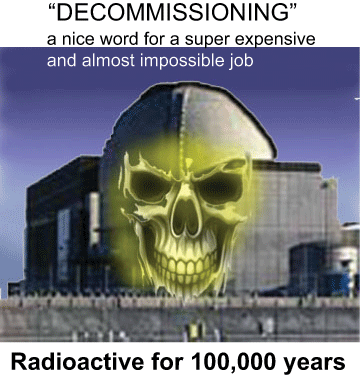 Lawmakers seek safeguards on nuclear plant decommissioning, 22 WWLP.com by: Chris Lisinski: Jan 25, 2020 BOSTON (SHNS) – Lawmakers are seeking additional influence over the decommissioning of the recently shuttered Pilgrim Nuclear Power Station, but a representative for the company conducting the work argued Wednesday that those attempts may be unconstitutional. Tom Joyce, a lobbyist for Holtec Decommissioning International, said that bills imposing higher clean-up standards (H 2904 / S 1949) or reforming how decommissioning is funded (S 1948, S 1992) would exceed the state’s authority and infringe on the jurisdiction of the federal Nuclear Regulatory Commission. Joyce told the Joint Committee on Telecommunications, Utilities and Energy that passage of the bills would likely prompt a lawsuit from Holtec, delaying the decommissioning process that the company has said will take seven years…….. Backers of the legislation, though, see the proposals as important steps to protect local stakeholders amid a process that has drawn criticism and a lawsuit from the attorney general. Plymouth Republican Rep. Mathew Muratore, who filed one of the bills that would require decommissioning to meet stricter environmental standards, said his goal is to ensure the land is clean enough to appeal to potential businesses and avoid remaining vacant…… The Pilgrim facility officially ended operations on May 31 after decades of generating power. In August, the NRC approved the transfer of Pilgrim’s license from Entergy to Holtec International to handle its decommissioning. Attorney General Maura Healey, with the backing of the Baker administration, filed a lawsuit seeking to block the transfer until the NRC holds a hearing on concerns about Holtec’s ability to decommission the plant safely, its financial stability and the company’s alleged involvement in a kickback scheme. Speakers at Wednesday’s committee hearing said the case, which also features the Pilgrim Watch group as a party, is still pending. Other bills before the committee (S 1948, S 1992) would charge the owners of any nuclear power station in the state $25 million per year and stash the money into a fund managed by the state treasurer only to be used for postclosure activities. Pilgrim Watch chair Mary Lampert said that money would serve as an “insurance policy” – if decommissioning concluded using the existing trust fund set aside for those purposes, the owners would get back the additional funding plus interest, she said. If not, the state would have a reserve ready to cover any shortfall. Without a safety net backing up the more than $1 billion trust fund, Lampert said taxpayers would be on the hook. “Who’s going to pay the difference? We’re going to pay the difference,” she told the committee. “Holtec cannot be required to do so. Why can it not be required to do so? Because it is a limited liability company and you cannot get blood out of this stone.” Rep. Sarah Peake, a cosponsor of the bill, said Connecticut found itself footing a $480 million bill to complete decommissioning of the former Connecticut Yankee Nuclear Power Plant. Like the legislation concerning cleanup standards, Joyce argued the funding proposals would unconstitutionally circumvent NRC authority…. Muratore and Lampert said they did not agree with that argument, with the latter arguing that the bills in question are all “money bills” and therefore grant the state authority to take additional action. “States have the authority to enact a more conservative (environmental) standard if it applies after NRC has released the site because once the NRC has released the site, it no longer has authority, so there is not a question of preemption,” Lampert said. In his fiscal year 2021 budget unveiled Wednesday, Gov. Charlie Baker proposed language that would allow the Department of Public Health to assess operators of nuclear reactors in the process of being decommissioned — such as Holtec — for the costs of radiation monitoring and emergency planning associated with the project. https://www.wwlp.com/news/state-politics/lawmakers-seek-safeguards-on-nuclear-plant-decommissioning/ |
|
Tepco estimates 44 years to decommission its Fukushima No. 2 nuclear plant.
Japan Times 23rd Jan 2020, Tokyo Electric Power Company Holdings Inc. has estimated that it will take 44 years to decommission its Fukushima No. 2 nuclear plant. Tepco presented the outline of decommissioning plans to the municipal assembly of Tomioka, one of the two host towns of the nuclear plant, on Wednesday.
The Fukushima No. 2 plant is located south of the No. 1 plant, which suffered a triple meltdown accident in the wake of the March 2011 massive earthquake and tsunami.
According to the outline, the decommissioning process for the No.
2 plant will have four stages, taking 10 years for the first stage, 12
years for the second stage and 11 years each for the third and fourth
stages.
Tepco will survey radioactive contamination at the nuclear plant in
the first stage, clear equipment around nuclear reactors in the second,
remove the reactors in the third and demolish the reactor buildings in the
fourth. Meanwhile, the plant operator will transfer a total of 9,532 spent
nuclear fuel units at the plant to a fuel reprocessing company by the end
of the decommissioning process, and 544 unused fuel units to a processing
firm by the start of the third stage.
https://www.japantimes.co.jp/news/2020/01/23/national/tepco-fukushima-decommissioning/#.Xi1KBmj7RPb
Republicans try to get nuclear power accepted as “renewable” in California
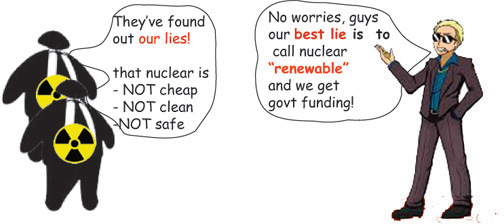
- California Republicans on Tuesday introduced legislation to temporarily halt the requirements of the state’s Renewables Portfolio Standard (RPS) program and redirect funds to ensure utilities improve their infrastructure and vegetation management programs.
- The proposed bill would also, if and when the program is reinstated, include nuclear generation and all hydroelectric facilities operating as of January 1, 2021 in the program’s definition of an “eligible renewable energy resource.”
- The bill, along with a second piece of legislation introduced by state Assemblyman James Gallagher, R, and Sen. Jim Nielsen, R, “will help prevent future wildfires and utility power shutoff events,” according to a press release. But environmental advocates say that the move to extend RPS eligibility to hydro and nuclear facilities might not go far in California’s current political landscape.
Dive Insight:
California established its RPS program in 2002, requiring at the time that renewable resources make up 20% of electricity retail sales by 2017. However, the program’s targets have changed over the years; the state passed Senate Bill 100 in 2018, accelerating RPS requirements to 60% by 2030, as well as requiring that carbon-free resources supply all of the state’s electricity by 2045.
Large hydropower and nuclear generation don’t currently count toward the RPS standard requirements, but the state is still defining the zero-carbon requirement passed in SB 100, Alex Jackson, senior attorney at the Natural Resources Defense Council, told Utility Dive.
In the last three years, California utilities have also been wrestling with the increased threat of wildfires posed by their infrastructure. Devastating fires in 2017, 2018 and 2019 have caused billions of dollars in damage across the state, pushing Pacific Gas & Electric to declare bankruptcy in early 2019.
To reduce this risk, the utility adopted a public safety power shut-off (PSPS) program, proactively de-energizing areas that are particularly prone to fires during windy or dry weather conditions. The shut-offs have drawn widespread criticism from regulators, lawmakers and customers in Northern California……..
Environmental advocates pushed back against the proposal to include both large hydropower and nuclear generation as eligible resources under the RPS program.
The RPS is part of a deliberate state move away from fossil fuels, and utilities already get a lot of their power from hydro, so counting it in the RPS requirements would discourage investments in wind, solar, and other renewables, Kathryn Phillips, director of Sierra Club California, told Utility Dive…..
On the nuclear energy front, “there’s no way you can call nuclear renewable,” she said. “It doesn’t emit carbon, but it has lots of other very intense environmental impacts.”
“Nuclear is being phased out not because of its ineligibility for RPS requirements, but because these large inflexible baseload plants are increasingly incompatible with a system that’s predominantly run on intermittent clean energy resources,” according to Jackson.
Flexibility is key going forward and the high operating costs of nuclear plants is what led PG&E to propose the retirement of the Diablo Canyon plant in the first place, he added. …….https://www.utilitydive.com/news/proposed-bill-include-large-hydro-nuclear-power-californias-rps/570919/
Class action lawsuit about failed V.C. Summer nuclear plant goes back to state court

|
Federal judge kicks Santee Cooper nuclear fiasco lawsuit back to state court, https://www.thestate.com/news/local/crime/article239614263.html
BY JOHN MONK, JANUARY 26, 2020 A class action lawsuit resulting from the failed V.C. Summer nuclear plant and involving South Carolina-owned power company Santee Cooper is back in state court. That’s the latest turn of the legal screw in a lawsuit involving more than 2 million of Santee Cooper’s customers. A key issue is whether Santee Cooper’s customers will be stuck with paying several billion dollars that the power company is said to owe due to the nuclear project’s failure in mid-construction in July 2017. Another affected matter is whether the historic state-owned utility, which began as a rural electrification project in the 1930s, will eventually be sold to a big out-of-state energy company or remain under state control. Last year, Santee Cooper’s partner in the doomed V.C. Summer nuclear venture — SCANA, a publicly traded company suffering financial woes because of the project — was sold to Dominion Energy, one of the nation’s largest power companies. The state’s 170 lawmakers will be mulling the possible sale of Santee Cooper in this legislative session. Last week, U.S. Judge Terry Wooten ordered that the Santee Cooper case — which had temporarily been transferred to federal court — be sent back to state court to be tried before special Judge Jean Toal, a former S.C. Supreme Court chief justice. It is unclear when a trial will begin. Toal had originally set Feb. 24 as the trial start date in the case. But Judge Wooten’s order could be appealed to the federal 4th Circuit Court of Appeals, delaying the trial. The lawsuit was initially filed in August 2017 by Santee Cooper customers seeking to avoid having to pay for the failed nuclear plant. Costs for the project — estimated at $9 billion before it failed — had for years been added to their monthly bills and continue to be added, according to a complaint in the case. Over the next two years, the parties “vigorously litigated in state court, engaging in significant discovery — including dozens of depositions and the exchange of millions of pages of documents — and arguing numerous substantive motions,” according to a memorandum in the case. Defendants in the case included Santee Cooper, SCANA and various electric cooperatives to which Santee Cooper provides power to be sold to customers around the state. As joint partners in the nuclear venture, Santee Cooper contributed 45% of the cost, while SCANA took responsibility for project oversight and shouldered 55% of the cost. In November, SCANA suddenly moved to transfer the case from Toal’s court to federal court, where it wound up before Judge Wooten. In the month before the case was transferred, Toal had certified the case as a class action, rejected a move by SCANA to send the case to an arbitrator and set a three-week trial to begin on Feb. 24, according to records in the case. Although numerous lawsuits have been filed in state and federal court against SCANA, this lawsuit is the major legal action against Santee Cooper on behalf of ratepayers. According to plaintiffs in the case, Santee Cooper increased its electricity rates five times over the years to pay for construction and other costs associated with the doomed nuclear project. Santee Cooper spent some $4.7 billion on the failed project, and its customers continue to pay extra on their monthly bills for the failure, according to plaintiffs. Santee Cooper is a main defendant in the case, along with SCANA and SCE&G. Plaintiffs are asking the court to refund hundreds of millions of dollars in costs associated with the failed nuclear project they say they have already paid in increased monthly bills. Plaintiffs also also asking the court to rule that Santee Cooper cannot keep passing costs for the failed project on to them — a future amount estimated at more than $4 billion. After the case was transferred to Wooten, the Santee Cooper customers, along with Santee Cooper, urged Wooten to send the the case back to state court, arguing there was no need for federal courts to take up the case. “The central issues involve South Carolina actors, agreements made in South Carolina, governed by South Carolina law, affecting a South Carolina power project and costing South Carolina customers billions of dollars,” they argued. Wooten agreed. “The court finds it would not be appropriate to exercise federal jurisdiction here,” he wrote in his order last week. @ChristinaMac1
|
|

Ontario landowners sign deal with agency looking to store used nuclear fuel
|
Ontario landowners sign deal with agency looking to store used nuclear fuel https://www.660citynews.com/2020/01/24/ontario-landowners-sign-deal-with-agency-looking-to-store-used-nuclear-fuel/ BY COLIN PERKEL, THE CANADIAN PRESS
TORONTO — Landowners in a rural Ontario municipality about two hours northwest of Toronto have signed an agreement that will allow authorities to soon start doing site tests for a proposed facility to store high-level nuclear waste. The agreement with the Nuclear Waste Management Organization leaves South Bruce as one of two possible sites for a deep geological repository, along with an area near Ignace in northern Ontario. Darren Ireland, a local farmer, said in a statement on Friday that the project “has the potential to bring long-term benefits to the area.” About three-million highly radioactive used fuel bundles from reactors are currently stored at existing nuclear generating stations in Canada, including at the Bruce Nuclear Generating Station on the shores of Lake Huron near Kincardine, Ont. Authorities have long contended the current storage system is not sustainable and have been searching for a permanent solution, with the aim of finding a single site for storage by 2023.
The proposed repository is separate from a proposed massive underground bunker for low and intermediate radioactive waste at the Bruce plant near Kincardine. That multibillion-dollar project has drawn fierce opposition both in Canada and the U.S. because of its proximity to Lake Huron. Although Ontario Power Generation insists its studies show the underground facility would safely contain waste that remains hazardous for thousands of years, the project has been stalled for years awaiting federal government approval. One condition Ottawa has set is for Indigenous groups in the area to give their blessing, which has not happened. The Nuclear Waste Management Organization has similarly been searching for a place to store used nuclear fuel, which is far more toxic. The organization said Friday it now has deals in place for about 526 hectares of land northwest of Teeswater, Ont., although Indigenous groups have yet to support the project. The deals with landowners include a combination of option and purchase arrangements to allow the waste organization to do studies while allowing landowners to keep using their land, the organization said. If the site is ultimately selected to host the repository, the organization would buy the optioned land. It would also then look to acquite more land in the area to form a site of about 607 hectares. Mahrez Ben Belfadhel, a vice-president with the waste management organization, said they were pleased landowners were on board, and called identification of the South Bruce site an important milestone. “With agreements in place and access to land in South Bruce, we expect to begin studies such as borehole drilling and baseline environmental monitoring in the coming months to assess the suitability of the area,” Ben Belfadhel said in a release. The Bruce County municipality of South Bruce, south of Walkerton, Ont., has about 5,600 residents. Its main centres are the villages of Mildmay and Teeswater. The organization also said the adjacent township of Huron-Kinloss, Ont., would no longer be considered a potential host for the project. The waste organization was set up at the direction of the federal government in 2002 by Ontario Power Generation, N.B. Power and Hydro-Quebec. The three producers and Atomic Energy of Canada Limited, a federal Crown corporation, fund its operations. |
|
Despite years of negotiations, we came once again to the brink of conflict with Iran.
Reporting on the Iran nuclear deal: ‘nothing happens until everything happens’Our world affairs editor reflects on how, despite years of negotiations, we came once again to the brink of conflict. Guardian, Julian Borger Sun 26 Jan 2020, Countries tend to go to war when diplomacy fails. But Washington and Tehran are now facing off because it succeeded. It was because the 2015 nuclear deal was Barack Obama’s proudest foreign policy achievement that Donald Trump was so determined to destroy it.
The US and Iran are sliding back towards the brink of conflict. If a missile had landed a little bit differently in the course of the latest exchange of hostilities, they would probably be at war by now.
As the pendulum has swung one way and then the other, the Guardian has tried to cover the diplomacy with the same depth and emphasis as the military manoeuvres, even when it seems slow-moving and complex.
When formal talks began between the Obama administration and the new government of Hassan Rouhani in September 2013, our foreign editor, Jamie Wilson, decided we should cover the whole process in detail because of the potentially historic nature of success, and the very high price of failure.
. When formal talks began between the Obama administration and the new government of Hassan Rouhani in September 2013, our foreign editor, Jamie Wilson, decided we should cover the whole process in detail because of the potentially historic nature of success, and the very high price of failure.
……… For Rezaian – now a Washington columnist – and many of those who saw the worst side of the Islamic Republic, its cruelties are all the more reason to prevent it developing nuclear weapons, and bind it into an international agreement. For others, particularly on the American right, any deal that eased the pressure on Iran’s economy would make the west complicit in Iran’s oppression at home and aggression abroad.
In the end, all those years of diplomacy and all the delicate compromises of the JCPOA, by which the Iranians accepted nuclear limits for sanctions relief, came to naught. Tehran’s nuclear programme is expanding again, and the US and Iran are back on the brink of conflict.
It is a chilling thought that no one in the US chain of command has the authority to stop Trump if he were to pick up the verification codes on the small plastic card (for some reason called the nuclear “biscuit”) that a US president always has close by, and order up Armageddon.
With that other extinction-level threat, the climate emergency, there is so much happening that it is impossible to keep up. But the nuclear threat is different: nothing happens until everything happens. By the time there is something substantial to report on, it could be far too late.https://www.theguardian.com/membership/2020/jan/25/iran-nuclear-deal-us-reporting
India joins the panic to sell costly, impractical, nuclear power to Africa and Middle East
|
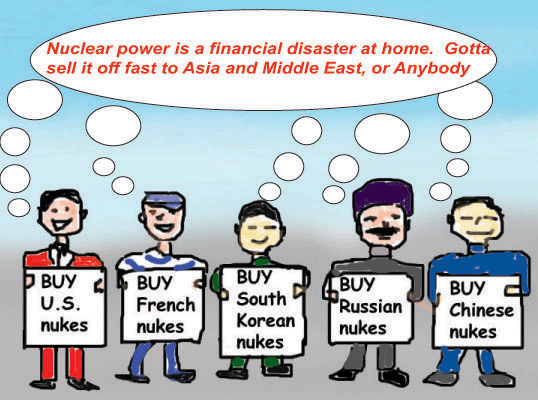
Indian Envoy To Russia Says Countries Could Build Nuclear Power Plants In Africa & Middle East Caspian Newa By Vusala Abbasova January 26, 2020 Russia and India may team up to construct nuclear power plants in Africa and the Middle East, according to India’s ambassador to Russia, building on their current experiences in Bangladesh.
“We are already working under the scheme in Bangladesh,” Varna added, referring to the current construction of the country’s first nuclear power plant, called Rooppur. “Now Russia is also pretty active in the construction of nuclear power plants in the Middle East and Africa. That opens a new pathway of cooperation for us.” Varma believes the two sides could also launch projects in Africa using the experience they gained from joint work on Rooppur, which is being built by Russia’s Rosatom State Atomic Energy Corporation and costing over $13 billion. “Russia already has agreements in this field with a number of African countries,” Varma said. “Ethiopia is one of them, and there are some countries in the Middle East.”
|
|
Davos conference – an expensive exercise in corporate spin
 original idea that is helpful to the majority of people on the planet.
John Ralston Saul described Davos as follows:<< DAVOS (THE ANNUAL CONFERENCE OF THE WORLD ECONOMIC FORUM) Tucked away into the Swiss Alps, a consecrated temple of tomorrow’s conventional wisdom for political and business leaders.
Once a year in the depths of winter two thousand businessmen, academics, politicians and civil servants gather there under the gaze of three hundred journalists. The consultants speak up in hope of winning clients. Politicians attempt to impress lenders. Businessmen glad-hand like salt-tax collectors, happy to be there and filled with world-saving ideas.
Davos is a slightly ludicrous attempt at something worrying – an international assembly on the corporatist model.
Last year we learned that corporations don’t want to pay tax. This year we learned that don’t want to do anything that might impact on short-term profits, so they ignore all appeals to limit CO2 emissions. In short, we cannot expect anything from Davos “except business as usual”, until crises occur, and they propagate to the point where they threaten short-term profits.
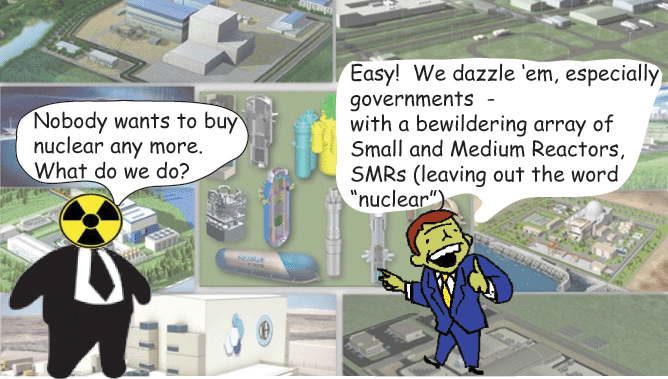
Yesterday the nuclear nations pushed the fantasy of Small Modular Nuclear Reactors
William Sanford. 25 January 2020
Faux News “The Five” tried to push the Safe SMR Narrative just yesterday. Complete nonsense on the Climate Crisis shows how doubling down on stupid (and old) technology is a last resort effort to preserve their doomed industry.
Sweden, Switzerland, and Germany all announced increased rates of decommissioning. Add Spain, Italy, as USA continues to hide, censor, and deflect the TRUTH. The IAEA playbook directly from Vienna …and the worst part is many “climate activists” actually buy into the false narrative that nuclear energy is “carbon free.”
The ‘Nuclear Cycle’ uses huge amounts of gas/diesel. From pulling uranium out of the ground to enrichment, use, removal, dry cask ops, and delivery to a repository, LOTS of petroleum. And NO, nuke plants DO NOT RUN on their own power. 1.7 !illion cancers annually worldwide AS A direct result of nuclear power plants directly from the IAEA/NRC.
In UK “deep disposal” is planned for the mounting, costly and forever problem of nuclear wastes
 How To Solve Nuclear Energy’s Biggest Problem https://oilprice.com/Alternative-Energy/Nuclear-
 Power/How-To-Solve-Nuclear-Energys-Biggest-Problem.html By Haley Zaremba – Jan 22, 2020, Nuclear waste is a huge issue and it’s not going away any time soon–in fact, it’s not going away for millions of years. While most types of nuclear waste remain radioactive for mere tens of thousands of years, the half-life of Chlorine-36 is 300,000 years and neptunium-237 boasts a half-life of a whopping 2 million years.
All this radioactivity amounts to a huge amount of maintenance to ensure that our radioactive waste is being properly managed throughout its extraordinarily long shelf life and isn’t endangering anyone. And, it almost goes without saying, all this maintenance comes at a cost. In the United States, nuclear waste carries a particularly hefty cost.
Last year, in a hard-hitting expose on the nuclear industry’s toll on U.S. taxpayers, the Los Angeles Times reported that “almost 40 years after Congress decided the United States, and not private companies, would be responsible for storing radioactive waste, the cost of that effort has grown to $7.5 billion, and it’s about to get even pricier.”
How much pricier? A lot. “With no place of its own to keep the waste, the government now says it expects to pay $35.5 billion to private companies as more and more nuclear plants shut down, unable to compete with cheaper natural gas and renewable energy sources. Storing spent fuel at an operating plant with staff and technology on hand can cost $300,000 a year. The price for a closed facility: more than $8 million, according to the Nuclear Energy Institute.”
With the United States as a poster child of what not to do with your nuclear waste, the United Kingdom is taking a much different tack. The UK is currently undertaking what the country’s Radioactive Waste Management (RWM) department says “will be one of the UK’s largest ever environmental projects.” This nuclear waste storage solution comes in the form of a geological disposal facility (GDF), a waste disposal method that involves burying nuclear waste deep, deep underground in a cocoon of backfill, most commonly comprised of bentonite-based cement. This type of cement is able to absorb shocks and is ideal for containing radioactive particles in case of any failure. The GDF system would also be at such a depth that it would be under the water table, minimizing any risk of contaminating the groundwater.
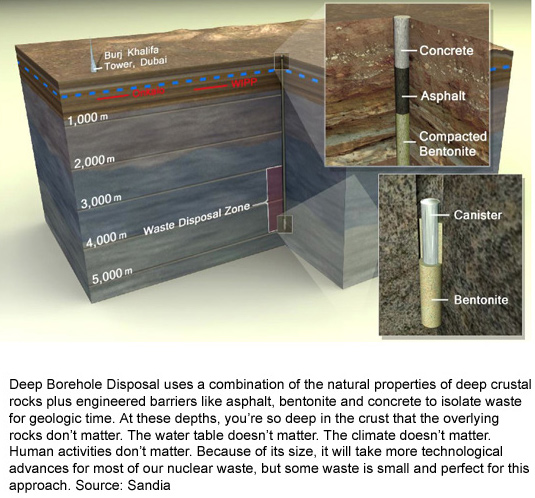
According to reporting from Engineering & Technology, nuclear waste is a mounting issue in Europe and in the UK in particular. “Under European law, all countries that create radioactive waste are obliged to find their own disposal solutions – shipping nuclear waste is not generally permitted except in some legacy agreements. However, when the first countries charged into nuclear energy generation (or nuclear weapons research), disposal of the radioactive waste was not a major consideration. For several of those countries, like the UK, that is now around 70 years ago, and the waste has been ‘stored’ rather than disposed of. It remains a problem.”
In fact, not only does it remain a problem, it is a mounting problem. As nuclear waste has been improperly or shortsightedly managed in the past, the current administration can no longer avoid dealing with the issue. In the past the UK used its Drigg Low-Level Waste Repository on the Cumbrian Coast to treat low and intermediate level waste, but now, thanks to coastal erosion, the facility will soon begin leeching radioactive materials into the sea, although that might not be quite as scary as it sounds.
Back in 2014, the Environment Agency raised concerns that coastal erosion could result in leakage from the site within 100 to 1,000 years, although it was counter-claimed that the levels of radioactivity after such a time would be low enough to be harmless,” Engineering & Technology writes. “This would definitely not be the case for high-level wastes, where radioactivity could remain a hazard into and beyond the next ice age, hence the need for longer-term disposal.”
Where exactly will that longer-term disposal be based? That’s up for debate. And it won’t be an easy thing to decide, as the RWM says that they will need a community to volunteer to be involved in such a costly, lengthy, and potentially unpopular project. And it’s not just an issue for the current inhabitants of potential locations in the UK, but for many generations to come over the next tens of thousands of years of radioactivity
Doomsday clock now closest ever to midnight, due to climate and nuclear dangers
|
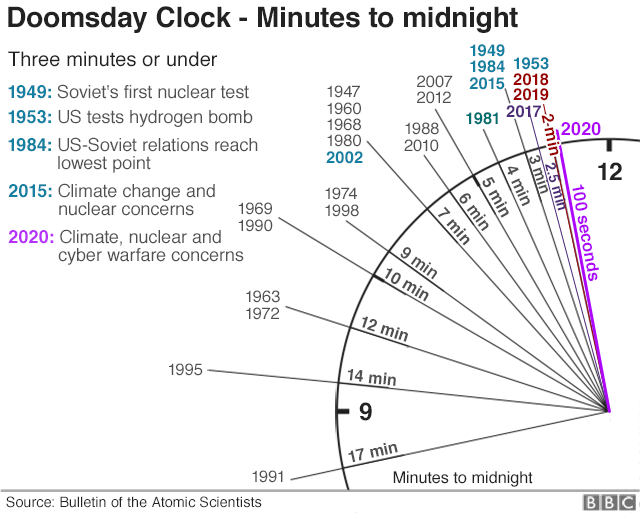
Doomsday Clock nears apocalypse over climate and nuclear fears, BBC, 23 Jan 2020, The symbolic Doomsday Clock, which indicates how close our planet is to complete annihilation, is now only 100 seconds away from midnight.The Bulletin of the Atomic Scientists (BAS) said on Thursday that the change was made due to nuclear proliferation, failure to tackle climate change and “cyber-based disinformation”.
The clock now stands at its closest to doomsday since it began ticking. Last year the clock was set at two minutes to midnight – midnight symbolises the end of the world – the same place it was wound to in 2018…….. The idea began in 1947 to warn humanity of the dangers of nuclear war……….. https://www.bbc.com/news/world-us-canada-51213185 |
|
USA’s National Nuclear Security Administration (NNSA) spurns environmental assessment for plutonium cores
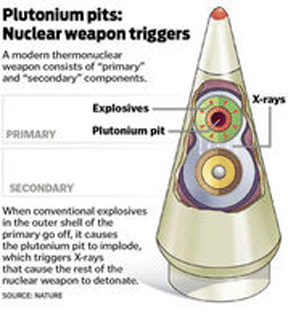
 NNSA Says No EIS Needed to Expand LANL Pit Production, http://nuclearactive.org/ January 24th, 2020 The Department of Energy’s semi-autonomous agency, the National Nuclear Security Administration (NNSA), has determined that a full environmental impact statement is not needed to increase the number of triggers for nuclear weapons manufactured at Los Alamos National Laboratory (LANL) by 50 percent – from 20 to 30. Since 1997, DOE has limited production to 20 triggers, or plutonium pits, per year. Nevertheless, since that time, LANL has not produced anything near 20 pits per year – the most in one year was six. Safety and seismic issues have shut down production for years. Even so, LANL is the only U.S. location for such work. Critics oppose the decision and have stated that litigation may result. In 2018, the current administration determined that the U.S. would increase pit production at LANL and begin production at the Savannah River Site, located in South Carolina. Savannah River has never produced plutonium pits, let alone the planned 50 per year. For Savannah River, NNSA has determined that it would follow the National Environmental Policy Act (NEPA) and issue a full environmental impact statement for public review and comment. The federal agencies have refused to conduct a programmatic environmental impact statement for operations at both facilities, including the transportation of nuclear materials between them. For LANL, NNSA said it would produce a supplemental analysis to the 2008 environmental impact statement. A supplemental analysis may not address the impacts of the 2011 Las Conchas fire, increased hexavalent chromium in the regional aquifer, and increased seismic danger on the Pajarito Plateau, which LANL occupies. The 1997 decision to limit the number of pits to 20 is the result of citizen litigation. The Natural Resources Defense Council (NRDC), based in Washington, DC, represented 39 citizens groups from around the country against DOE. CCNS was one of the citizen plaintiffs, along with Tri-Valley Communities Against a Radioactive Environment, or Tri-Valley CARES, located in Livermore, California, where the Lawrence Livermore National Laboratory, LANL’s “sister” nuclear weapons laboratory, is located. Marylia Kelley, Executive Director of Tri-Valley CAREs, said, “NNSA’s refusal to complete programmatic environmental review before plunging ahead with plans to more than quadruple the production authorization for plutonium bomb cores flies in the face of our country’s foundational environmental law, the [NEPA], and a standing federal court order mandating that the government conduct such a review. The order was obtained in prior litigation by [NRDC] on behalf of itself, Tri-Valley CAREs, and additional plaintiffs. Today, I find myself shocked but not surprised that NNSA would so flagrantly flout the law. [] My group stands ready to uphold NEPA and the specific court order.” http://www.trivalleycares.org/ For more information, please see the following documents [links provided by Nuclear Watch New Mexico]: NNSA’s Federal Register Notice of Availability for the final Supplement Analysis is available at https://www.govinfo.gov/content/pkg/FR-2020-01-08/pdf/2020-00102.pdf It provides succinct background. NNSA’s final Supplement Analysis is available at https://www.energy.gov/sites/prod/files/2020/01/f70/final-supplement-analysis-eis-0236-s4-sa-02-complex-transformation-12-2019.pdf The 1998 court order that requires DOE to prepare a supplemental PEIS when it plans to produce more than 80 pits per year is available as Natural Resources Defense Council v. Pena, 20 F.Supp.2d 45, 50 (D.D.C. 1998), https://law.justia.com/cases/federal/district-courts/FSupp2/20/45/2423390/ |
|
Greta Thunberg says climate demands ‘completely ignored’ at Davos
|
Greta Thunberg says climate demands ‘completely ignored’ at Davos, https://www.sbs.com.au/news/greta-thunberg-says-climate-demands-completely-ignored-at-davos 24 Jan 2020, Greta Thunberg says she isn’t surprised that calls to disinvest in fossil fuels have fallen on deaf ears at the World Economic Forum in Davos. Teenage climate activist Greta Thunberg said calls to the corporate elite meeting in Davos to immediately disinvest in fossil fuels had been ignored. “We had a few demands (coming into the World Economic Forum). Of course these demands have been completely ignored. We expected nothing less,” Thunberg told reporters in the Swiss ski resort on the last day of the conference. Thunberg was a highlight of the 50th edition of the conference, drawing massive attention including barbs by US Secretary Steven Mnuchin who on Thursday told the teen to go “study economics”. Asked about Mnuchin’s comments, the Swede said: “Of course it has no effect. We are being criticised like that all the time.” “If we cared about that, we would not be able to do what we do. We put ourselves in the spotlight.” The spat between Mnuchin and Thunberg underlined the tensions over climate change at the World Economic Forum (WEF) in Davos, where governments and major firms have come under pressure to act now on global warming. Asked about the 17-year-old’s demand for an immediate halt to investment in fossil fuels, Mnuchin said on Thursday: “Is she the chief economist? Who is she? I’m confused,” adding after a pause that it was “a joke”. “After she goes and studies economics in college, she can come back and explain that to us.” In a speech on Tuesday, US President Donald Trump castigated the “prophets of doom” that predict a climate “apocalypse”, in comments widely seen as an attack on Thunberg who sat in the audience. But either by accident or design, there was no meeting between Trump and Thunberg at the forum. |
|
2020 Olympic events worryingly close to radioactive areas

In an Olympic year, Japan faces decision over contaminated Fukushima water Aaron Sheldrick OKUMA, Japan (Reuters)24 Jan 2020, – At the wrecked Fukushima nuclear plant north of Tokyo, workers in protective suits are still removing radioactive material from reactors that melted down after an earthquake and tsunami knocked out its power and cooling nearly nine years ago.
On an exclusive tour of the plant, spread over 3.5 million square meters (865 acres), Reuters witnessed giant remote-controlled cranes dismantling an exhaust tower and other structures in a highly radioactive zone while spent fuel was removed from a reactor.
Officials from Tokyo Electric, which owns the plant, also showed new tanks to hold increasing amounts of contaminated water.
About 4,000 workers are tackling the cleanup, many wearing protective gear, although more than 90% of the plant is deemed to have so little radioactivity that no extra precautions are needed. Photography was highly restricted and no conversations were allowed with the workers.
Work to dismantle the plant has taken nearly a decade so far, but with Tokyo due to host the Olympics this summer – including some events less than 60 km (38 miles) from the power station – there has been renewed focus on safeguarding the venues…….
The buildup of contaminated water has been a sticking point in the cleanup, which is likely to last decades, and has alarmed neighboring countries. In 2018, Tepco said it had not been able to remove all dangerous material from the water – and the site is running out of room for storage tanks.
Officials overseeing a panel of experts looking into the contaminated water issue said in December choices on disposal should be narrowed to two: either dilute the water and dump it in the Pacific Ocean, or allow it to evaporate. The Japanese government may decide within months, and either process would take years to complete, experts say……..
Athletes from at least one country, South Korea, are planning to bring their own radiation detectors and food this summer.
Baseball and softball will be played in Fukushima City, about 60 km (38 miles) from the destroyed nuclear plant. The torch relay will begin at a sports facility called J-Village, an operations base for Fukushima Daiichi in the first few years of the disaster, then pass through areas near the damaged station on its way to Tokyo.
In December, Greenpeace said it found radiation “hotspots” at J-Village, about 18km south of the plant.
When Tokyo won the bid to host the 2020 Summer Olympics Prime Minister Shinzo Abe declared that Fukushima was “under control” in his final pitch to the International Olympic Committee.
In 2016, the Japanese government estimated that the total cost of plant dismantlement, decontamination of affected areas, and compensation would be 21.5 trillion yen ($195 billion) – roughly a fifth of the country’s annual budget at the time.
(Reporting by Aaron Sheldrick: Editing by Gerry Doyle) https://mobile.reuters.com/article/amp/idUSKBN1ZK0CV?__twitter_impression=true
1 This Month
19 November – Webinar – The Reality of Reprocessing
Time: 11:00 AM Pacific Time (US & Canada) / 2:00 PM Eastern / 7:00 PM UK / 8:00 PM CET
Register for the Zoom Event Here

Tell Congress: Prevent Nuclear Catastrophe in Iran

Tell Congress: Prevent Nuclear Catastrophe in Iran

Read the Public Inquiry Report, the Commissioners’ report, Surrendering Australia: The AUKUS Deception is available to download for free at aukuspublicinquiry.com. Or just watch the replay of the National Press Club Luncheon.


Shut down the radiation-damaged Heysham nuclear reactors now
To see nuclear-related stories in greater depth and intensity – go to https://nuclearinformation.wordpress.com

Say No to NASA’s Reckless Nuclear Reactor on the Moon
Say No to NASA’s Reckless Nuclear Reactor on the Moon
-
Archives
- November 2026 (156)
- October 2026 (302)
- September 2026 (339)
- August 2026 (330)
- July 2026 (355)
- June 2026 (287)
- May 2026 (306)
- April 2026 (356)
- March 2026 (251)
- February 2026 (267)
- January 2026 (308)
- December 2025 (358)
-
Categories
- 1
- 1 NUCLEAR ISSUES
- business and costs
- climate change
- culture and arts
- ENERGY
- environment
- health
- history
- indigenous issues
- Legal
- marketing of nuclear
- media
- opposition to nuclear
- PERSONAL STORIES
- politics
- politics international
- Religion and ethics
- safety
- secrets,lies and civil liberties
- spinbuster
- technology
- Uranium
- wastes
- weapons and war
- Women
- 2 WORLD
- ACTION
- AFRICA
- Atrocities
- AUSTRALIA
- Christina's notes
- Christina's themes
- culture and arts
- Events
- Fuk 2022
- Fuk 2023
- Fukushima 2017
- Fukushima 2018
- fukushima 2019
- Fukushima 2020
- Fukushima 2021
- general
- global warming
- Humour (God we need it)
- Nuclear
- RARE EARTHS
- Reference
- resources – print
- Resources -audiovicual
- Weekly Newsletter
- World
- World Nuclear
- YouTube
-
RSS
Entries RSS
Comments RSS

