Opposition to the chosen ATC site in the Castilla La Mancha region grew after questions arose about its geological suitability, with regional president Emiliano García-Page praising the minister on Monday for “ending the nightmare of the nuclear cemetery”…. (subscribers only) https://www.endseurope.com/article/1673270/spain-scraps-controversial-nuclear-waste-facility
Trump’s budget – slashes foreign aid, but $billions more for nuclear weapons
 The 2 most controversial national security items in Trump’s new budget Trump wants to gut foreign aid and beef up America’s nuclear force. Vox, By Alex Ward@AlexWardVoxalex.ward@vox.com Feb 10, 2020 President Donald Trump is about to propose a budget that leans much more heavily on military might — including new spending on modernized nuclear weapons — than diplomatic prowess, funding a muscular foreign policy some worry could lack the necessary finesse to deal effectively with global crises. The White House’s FY 2021 budget — standing at a whopping $4.8 trillion — is already making waves for deep cuts to social safety net programs like Medicare and Medicaid. Since Congress has to sign off on government spending, the full request is likely dead on arrival due to Democrats’ control of the House. And with no agreed-upon budget, there is no agreed-upon spending. It’s almost guaranteed, then, that the next few months will be filled with partisan fighting and wrangling over how to use taxpayer funds. Which means the White House’s budget document really serves more as a statement of principles and priorities — the budget, as some say, is policy. When it comes to defense and foreign policy, Trump has once again shown a preference for a stronger military partly at the expense of a weaker diplomatic and development tools. The two main national security takeaways from the budget’s expected toplines:
The problem, however, is that this foreign aid funding isn’t just charity: Taking nearly $12 billion out of the foreign aid budget would severely harm US diplomatic efforts. For one, giving nations money they need to keep volatile situations stable enhances global security, and could actually prove cost-effective to the US if the money helps prevent catastrophe at home or abroad down the line……….. In years past, Republicans and Democrats have pushed back against these draconian slashes to foreign aid, and they are likely to do so again. But the president’s insistence on tearing down America’s assistance programs to bare bones — even though they hover at only around 1 percent of the federal budget — shows how misguided he is about their outsize impact. Trump’s decision to modernize America’s nuclear arsenal is costlyThe United States has the second-largest nuclear arsenal in the world, behind Russia, but with many of these systems dating back to the Cold War, keeping warheads, bombs, and delivery systems up to date is extremely expensive. In 2017, the nonpartisan Congressional Budget Office estimated that modernizing the nuclear arsenal would cost $1.2 trillion over 30 years. That would require a herculean effort on behalf of multiple, subsequent administrations — not to mention the continued patience of taxpayers — to ensure it was completed. Trump’s proposed billions, championed by Republicans and criticized by Democrats, is one step in that direction……. Kingston Reif of the Arms Control Association, says “The administration’s nuclear weapons spending plans are unnecessary and unsustainable,” he told me. “The costs and opportunity costs of the plans are real and growing, and the biggest nuclear modernization bills are just beginning to hit.” Reif offered an alternative: “Scaling back the plans for new delivery systems, warheads, and infrastructure would make the modernization effort easier to execute and reduce the threat to other defense programs while still leaving a devastating deterrent.” It’s worth noting that Trump has pulled the US out of a massive arms control treaty with Russia, and it may not extend another vital one next year. Some experts worry that could lead to an arms race, causing the US to spend even more on nuclear systems down the line. …………https://www.vox.com/2020/2/10/21131273/trump-budget-fy2021-foreign-aid-nuclear |
|
Some climate models now predict unexpected , unprecedented spike in global temperatures

A few climate models are now predicting an unprecedented and alarming spike in temperatures — perhaps as much as 5 degrees Celsius, Business Insider, CONNOR PERRETT FEB 9, 2020
- A handful of climate projections are predicting much higher rise in global temperatures than scientists have seen in the models before.
- While there’s concern over the number, some scientists hope the latest projections are outliers.
- A 2-degree rise in temperature could lead sea level to jump, coral reefs to die, and water to become dangerously scarce in some parts of the world. Some models right now predict a 5-degree rise.
Several recent climate models have suggested the Earth’s climate could warm to a far higher temperature than scientists previously predicted, according to a report from Bloomberg.
The startling anomaly first appeared in models from the National Centre for Atmospheric Research (NCAR), which suggested that if Earth’s atmospheric carbon-dioxide concentration doubles (as it’s expected to do by the end of the century), the planet could wind up 5.3 degrees hotter. That’s 33% higher than the group’s previous estimate.
About a fifth of new climate-model results published in the past year have indicated similarly stark global temperature spikes, according to Bloomberg. The UK-based Met Office Hadley Centre predicted a 5.5 degrees of warming, the US Department of Energy calculated a 5.3°-degree jump, French scientists estimated a 4.9-degree increase, and a model from Canadian scientists predicted the largest rise: 5.6 degrees
Scientists hope the models are an “overshot,” Bloomberg reported. It will take scientists a significant amount time – at least months – to figure out how to interpret the results.
The climate models estimate “climate sensitivity,” which tells scientists how much warmer the planet will get as a result of rising CO₂ concentrations. For four decades, the expected temperature rise if CO2 levels double has been about 3 degrees.
These models have a proven track record of accurately forecasting climate change. A recent study from the American Geophysical Union found that climate projections over the past five decades have largely been accurate – actual climate observations aligned with the models’ predictions.
Still, there’s a hope among climate scientists that the new projections are outliers. About a dozen other models are still due to be released, Bloomberg reported, and they could help paint a clearer picture……. https://www.businessinsider.com.au/global-warming-climate-models-higher-than-usual-confusing-scientists-2020-2?r=US&IR=T
Delhi’s disaster – disappearing water supplies
|
Delhi is facing a water crisis. Ahead of day zero, the city’s residents have turned to the mafia and murder https://www.abc.net.au/news/2020-02-08/delhi-water-crisis-leads-to-mafia-murder-and-mutiny/11931208
By South Asia correspondent James Oaten and Som Patidar
On a crisp Delhi morning, dozens of women, men and children in one of the city’s poorest areas gather on the side of the road holding plastic bottles and buckets. They’re waiting for a water truck to arrive, clearly identifiable with its large tank on the back and hoses sprouting from the top like tentacles. When it does, the residents will have just a few minutes to fill their containers as much as possible to hopefully secure enough water for the day. In winter, when Delhi is cool, the situation is relatively calm. But in summer, when temperatures surge past 40 degrees Celsius, the situation becomes much more desperate. Fights have broken out. People have been killed. What it’s like to live with limited access to waterWe are getting water now as it is winter, but the crisis deepens in summer,” mother-of-three Babli Singh explained. The Delhi government has in recent years tried to supply water to unauthorised colonies by drilling water bores, but this is a short-term solution that exacerbates a bigger problem. Elsewhere, private enterprises — known locally as the “water mafia” — have been able to profit from the despair by building their own bores. The activity is illegal, but there has been little to nothing done to crack down on the practice. The ABC saw one such private enterprise drilling in a street, and the workers explained they were digging deeper than ever in an effort to find new water. Locals have been forced to borrow money to pay for waterMs Singh is one of the many families that had to pay the so-called water mafia to get their home connected to an illegal bore water supply. Her father-in-law, Inder Dev Singh, said he feels forgotten. “We are not getting any help from the government,” he explained. “The government has been promising us a water pipeline for a long time. We paid for our own private pipeline.” “We have to run behind water tankers. Sometimes I do not get water.” Ms Singh and her family of nine live in what’s considered Asia’s largest “unauthorised colony,” Sangam Vihar — which is home to well over 1 million residents and is located in Delhi’s southern outskirts. The buildings and infrastructure here were never designed or approved by a government agency. Rather, residents simply built their homes on a small plot of land with whatever resources they could muster, mostly concrete and brick. It’s a claustrophobic environment, with dusty roads so congested and narrow that cars often cannot enter. Essential services are also lacking, with the vast majority of residents relying on tanker water for drinking and groundwater for cleaning and washing. But with reserves so low, there’s real concern underground supplies will run dry in just a few months. “Our children go to school without a bath for four or five days,” Ms Singh said. “We are suffering. Life is very hard.” The rise of the ‘water mafia’ Delhi is one of 21 Indian cities that could run out of groundwater this summer, according to a 2018 government thinktank report. If and when this happens, it will be known as “day zero”. The water woes are a product of years of booming population growth, drought and mismanagement. During the summer, that pipe is only turned on for two hours, giving the family a small but crucial window to fill up a large underground tank they installed themselves. The water is drinkable if it is boiled first, he explained. Buying extra water is an option, but in an area where work is infrequent and wages are low, people often need to borrow money to buy extra allocations. “Water is supposed to be free,” Mr Singh explained. “[The private providers] do not want us to get a [government] water by pipeline as they are earning lot of money by providing water by tankers. “There will be a time when there will be no water.
A man was shot in a dispute over waterThe issue of water often only gets attention during the summer, when the situation becomes amplified. In the summer of 2018, a man was shot in Sangam Vihar during a dispute over water. In the same year, in another part of Delhi, a group of men and a juvenile were arrested for beating to death a father and son in another water dispute. Videos of skirmishes and violence also regularly emerge in summer on social-media application WhatsApp. This year, the issue is getting unseasonal attention as Delhiites head to the polls for local government elections. Political candidates, keen on securing votes from the city’s poorest, have made sweeping promises to build pipes to deliver water to every house in Delhi. “It does not get the respect it deserves,” explained Jyoti Sharma, who heads up the water security not-for-profit organisation, FORCE. “Water is central to everything we do. But everybody takes it for granted. So, it does not get the attention it deserves. It’s just these few election days that it’s being talked about.” Ms Sharma says there have been some positive steps in recent years, including forcing large homes to capture rainwater, and directing recycled water into rivers and ponds to recharge underground reserves. But it’s not enough to reverse the depleting trend. She worries about “day zero” but thinks it won’t occur this summer. “I am an Indian,” she explains.
“I’m hoping day zero will not happen. I am hoping it will not happen.” |
|
Climate emergency plans must have a ‘no new nuclear’ clause
The nuclear and fossil fuel industry are mutually intertwined.
“There is no such thing as a zero or near-zero-emission nuclear power plant”
the mean value is about 66 grams of carbon dioxide for every kWh produced by nuclear power. This compares to about 9g for wind, 32g for solar and 443 for gas.
“This puts nuclear as the third highest carbon emitter after coal-fired plants and natural gas….

|
No new nuclear https://theecologist.org/2020/feb/06/no-new-nuclear Radiation Free Lakeland, 6th February 2020
Campaigners demand a ‘no new nuclear’ clause in climate emergency planning. Climate activists across the world are uniting to protect the planet from continuing fossil fuel use. There is much talk of a green industrial revolution and a Green New Deal. This sounds good, but what does it mean?
Kevin Frea, co-chair of the Climate Emergency Network and deputy leader of Lancaster City Council has worked hard to sign local councils up declaring a climate emergency. He said: “This movement is being led by every political group and is involving local people in planning the actions needed to cut carbon.” But there’s an important thing missing here. Last September members of Radiation Free Lakeland lobbied Lancaster City Council asking the council to include a No New Nuclear clause in their climate emergency planning. Continue reading |
Arctic ice melt is changing ocean currents

|
Arctic ice melt is changing ocean currents https://www.sciencedaily.com/releases/2020/02/200207095705.htm
|
Spain scraps controversial nuclear waste facility
|
Spain scraps controversial nuclear waste facility, Richard Weyndling
06 Feb 2020 Nuclear waste management in Spain faces upheaval after ecological transition minister Teresa Ribera this weekend recognised that plans for a centralised temporary storage facility (ATC) have “not been well-managed” and will “not easily be revived under any circumstance”.
“We will responsibly seek solutions for nuclear waste and open a serious and sensible debate. We have to decide whether we need one, two or three sites and if we have to look at regional solutions,” she told El País newspaper.
|
|
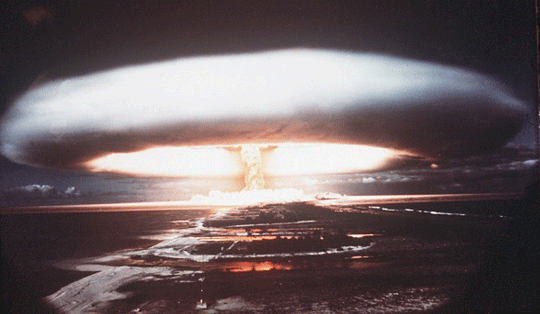
Polynesian MP calls on France for “vast project” to withdraw radioactive waste in Mururoa
|
Polynesia: MP Moetai Brotherson asks Macron for a “vast project” to withdraw radioactive waste in Mururoa, 8 Feb 2020 https://la1ere.francetvinfo.fr/polynesie-depute-moetai-brotherson-demande-macron-vaste-projet-retrait-dechets-radioactifs-mururoa-798235.html [machine translate] The deputy of Polynesia Moetai Brotherson asked in a letter to Emmanuel Macron, who will be in April in the Polynesian archipelago, that he undertakes on “a vast project of withdrawal and reprocessing of all radioactive waste and residues from the Moruroa nuclear tests “.
From 1966 to 1996, the Mururoa and Fangataufa atolls were the scene of 193 nuclear tests , which had effects on the health and the environment of the populations. The head of state is expected to visit Polynesia in mid-April, when two summits are being held, “France-Oceania” and “One Planet Summit”.
” Mr. President, rather than ostrich, the French Republic would be honored to commit today to an ambitious and vast project to withdraw and reprocess all radioactive waste and residues from the tests Moruroa nuclear “, explains the deputy attached to the communist group in the Assembly and representative of Tavini Huiraatira, Polynesian separatist party, in a letter which AFP had a copy on Friday. Threats of collapse
He recalls that nuclear tests, ” especially in their underground part, generated a quantity of radioactive waste and residues “. ” Today, a significant proportion of this waste is stored in wells several hundreds of meters deep drilled in the coral ring of Moruroa, or worse, at the bottom of its lagoon, in particular at a place called ‘Colette bench ‘ “.
But ” cracks in the base of the atoll “, “induced by underground tests in particular “, threaten ” collapse part of the atoll. It appears that both the containment wells, as the Colette bank are precisely in the endangered area “,
“Dramatic message”For the Polynesian deputy, not to commit to the depollution of the site ” would be to send a dramatic message to the Polynesians, to the Peoples of the Pacific, but also to the People of France, in particular to his youth who wants to see (…) real strong actions in favor of the environment “. Moetai Brotherson underlines that ” the biggest investment made by the State in French Polynesia in recent years is the TELSITE geomechanical surveillance project of Moruroa. The billions invested still come to underline the reality of this collapse, real sword of Damocles, for the Polynesians first, for the Pacific region then, for the reputation of the French Republic finally
|
|
Canada’s Nuclear Waste Management Organization (NWMO) courts indigenous communities

Indigenous communities courted as nuclear industry looks for place to put used fuel, February 7, 2020 by Christopher Read Christopher Read APTN InvestigatesIn what’s referred to as “Canada’s Plan,” the Nuclear Waste Management Organization (NWMO) is looking for a place to bury 4.8 million bundles of used nuclear fuel.
More specifically, the NWMO, which is a consortium of Canadian nuclear industry players created by an act of parliament, is looking for a community willing to allow used nuclear fuel to be placed in what’s called a deep geological repository – or DGR.
Currently the NWMO is engaging with Ignace, Ontario a small community 250 km northwest of Thunder Bay, as well as the municipality of South Bruce, on Lake Huron northwest of Toronto.
Indigenous communities in both those areas are being courted and having the DGR concept pitched to them by the NWMO.
Indigenous engagement is a major focus at the NWMO.
It has put out an eight-part video series on reconciliation, and it also employs Bob Watts as their vice president of Indigenous Relations.
Watts is a long time major player in Indigenous politics who has held high-level positions with the Assembly of First Nations and the federal government………
Fundamentally, a DGR needs to protect radioactive waste from water, because water could potentially bring the deadly radioactive material back into contact with our environment. …….
not everyone is sold on the safety case made by the NWMO.
Gordon Edwards is president of the Canadian Coalition for Nuclear Responsibility and is likely the nuclear industry’s best known critic in Canada.
Edwards isn’t impressed with the NWMO’s multiple barrier system.
“You can put barrier after barrier after barrier, that doesn’t mean that you have a safe system,” he said. ”The same multiple barrier philosophy is used in nuclear reactors. They say the fuel is inside metal tubes, which are called zirconium, that’s another barrier, it’s called the sheath. And those are inside pressure tubes, which is another barrier. And then that’s inside a calandria, which is another barrier. And that’s inside the reactor building, which is another barrier. Consequently, there cannot be a nuclear accident.
“Well, we’ve seen what happened with that philosophy. Chernobyl exploded and the whole area around Chernobyl is still uninhabitable and will be for at least another hundred years. Fukushima, we’ve had three reactors melting down on the same weekend and those multiple barriers were all in place.”
Edwards said the notion that we can build something to last hundreds of thousands of years, the length of time used nuclear fuel will potentially remain dangerously radioactive – is folly.
“You have to realize that the pyramids of Egypt are only 5,000 years old,” said Edwards. “Go and look at them there. They’re really deteriorated a great deal. So the half-life of plutonium is 24,000 years. The Great Lakes didn’t even exist 24,000 years ago. So we’re talking about periods of time that dwarf the span of human history.”
Edwards said he believes taking a wait-and-see approach is better than putting the used fuel in a DGR.
“We can afford to wait another century or two and see if we can come up with a genuine solution,” he said. “If we can’t come up with a genuine solution, we can continue to look after it. We can continue to transmit the information. We can continue to repackage it periodically into better and better packages, which is going to make sure. And if there is leakage that occurs, failure of containment – we can spring into action right away and fix it and not let it get out of hand. That’s a much better approach.
“This is called rolling stewardship.”………
The NWMO said it hopes to have identified a willing host community for a deep geological repository by 2023.
Nuclear Courtship, Part 2 airs next week, and will be accompanied with a web story which will examine the mood of some of the communities engaging with the nuclear industry.cread@aptn.ca https://aptnnews.ca/2020/02/07/indigenous-communities-courted-as-nuclear-industry-looks-for-place-to-put-used-fuel/
Corpses of UK’s nuclear submarines still unburied after 25 years

|
Nuclear vessels still languish at Fife dockyard 25 years after pledge against submarine graveyard, by Cheryl Peebles The Courier.co.uk
February 7 2020,Seven of the vessels, which contain radioactive material, have languished for decades at the Fife dock awaiting dismantling by the Ministry of Defence.
They include HMS Dreadnought, the UK’s first nuclear-powered submarine which was retired from service in 1980. It was during a visit to Rosyth in January 1995 that the then defence procurement minister Roger Freeman made the statement. The milestone prompted a repeated demand from Dunfermline and West Fife MP Douglas Chapman for action to deal with the vessels. Mr Chapman said: “It is astonishing that 25 years after Roger Freeman made that statement we are still waiting for the UK government to clear up these submarines that were decommissioned in the 1980s. “I have pressured the government for years to have some sort of joined-up thinking to remove these. “It is not only costing the taxpayer millions every year to keep them but also taking up valuable dock space that Babcock could be utilising for more economically productive activities.”…… https://www.thecourier.co.uk/fp/news/local/fife/1123498/nuclear-vessels-still-languish-at-fife-dockyard-25-years-after-pledge-against-submarine-graveyard/ |
|
Aging nuclear plants: increased danger as U.S.utilities want their lives extended to 80 years
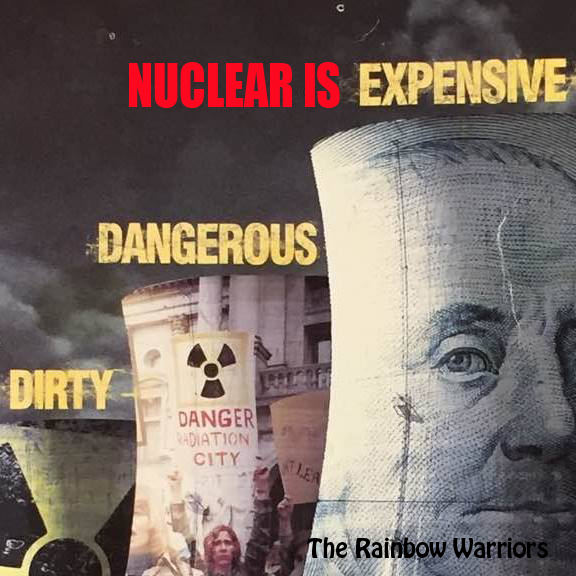
Our aging nuclear plants Utilities nationwide are seeking permission to extend the life of reactors built in the 1970s to the 2050s. GoErie.com , By Ari Natter /Bloomberg, Feb 9, 2020
Bonnie Rippingille looked out at the wisps of steam curling from the Turkey Point Nuclear Power Plant across Biscayne Bay with a sense of dread. In December federal regulators approved Florida Power & Light Co.’s request to let the facility’s twin nuclear reactions remain in operation for another 20 years beyond the end of their current licenses. By that point they’ll be 80, making them the oldest reactors in operation anywhere in the world.
“That’s too old,” said Rippingille, a lawyer and retired Miami-Dade County judge. “They weren’t designed for this purpose.”
With backing from the Trump administration, utilities nationwide are preparing to follow suit, seeking permission to extend the life of reactors built in the 1970s to the 2050s as they run up against the end of their 60-year licenses.
“We are talking about running machines that were designed in the 1960s, constructed in the 1970s and have been operating under the most extreme radioactive and thermal conditions imaginable,” said Damon Moglen, an official with the environmental group Friends of the Earth. “There is no other country in the world that is thinking about operating reactors in the 60 to 80-year time frame.”
Indeed, the move comes as other nations shift away from atomic power over safety concerns, despite its appeal as a carbon-free [ whaaat?] alternative to coal and other fossil fuels. Japan, which used to get more than a quarter of its electricity from nuclear power, shut down all its plants in 2011 after a tsunami caused a nuclear meltdown at three reactors in Fukushima. Only a handful have restarted while others that can’t meet stringent new standards are slated to close permanently. Germany decided that year to shutter its entire fleet by 2022 and is now having trouble meeting its ambitious climate goals.
By contrast, the U.S. Nuclear Regulatory Commission is poised to decide this year on requests by subsidiaries of Exelon Corp. to extend the life of two nuclear reactors at its Peach Bottom Atomic Power Station in Pennsylvania and Dominion Energy Inc. to extend the life of two nuclear reactors at a power plant in Surry, Virginia.
Dominion has notified the commission it intends to ask permission to extend the life of two more reactors north of Richmond, Virginia. Duke Energy Corp. has said it plans to seek license extensions for its entire fleet of 11 nuclear reactors, starting with three in Seneca, South Carolina……
The nuclear industry has been buffeted by a wave of early reactor retirements in the face of competition from cheap natural gas and subsidized renewable power. Constructing a new nuclear plant – the only one being built in the U.S. is years behind schedule and over budget – can cost billions of dollars. Retrofitting an existing one is more likely to be in the hundreds of millions of dollars range. ……
Opponents such as Edward Lyman, a nuclear energy expert with the Union of Concerned Scientists, argue that older plants contain “structures that can’t be replaced or repaired,” including the garage-sized steel reactor vessels that contain tons of nuclear fuel and can grow brittle after years of being bombarded by radioactive neutrons. “They just get older and older,” he said. If the vessel gets brittle, it becomes vulnerable to cracking or even catastrophic failure.
Other concerns surround the durability of components such as concrete and electric cables, but an advisory board to the Nuclear Regulatory Commission, the independent government agency that gave Turkey Point the green light to operate into the 2050s, said those risks could be managed safely.
The commission’s decision doesn’t sit well with Philip Stoddard, mayor of South Miami, a city of 13,000 on about 18 miles away from the Turkey Point plant. He keeps a store of potassium iodide, used to prevent thyroid cancer, large enough to provide for every child in his city should the need arise.
“You’ve got hurricanes, you’ve got storm surge, you’ve got increasing risks of hurricanes and storm surge,” said Stoddard, 62. All of this not only increases the likelihood of a nuclear disaster, it also complicates a potential evacuation, which could put even more lives at risk…….
“They are going to be flooded,” Cox said. “If we are relicensing a major utility we need to be preparing for the impacts of sea level rise.”…….. https://www.goerie.com/business/20200209/our-aging-nuclear-plants
Natural Resources Defense Council: It’s Time to Pursue a Genuine Solution for Nuclear Waste
 NRDC: It’s Time to Pursue a Genuine Solution for Nuclear Waste February 07, 2020 WASHINGTON — President Donald Trump bowed to reality as he said his administration would end its attempts to force nuclear waste into the unsafe Yucca Mountain site in Nevada.
Following is a statement by Geoff Fettus, senior attorney in the Nuclear Program at the Natural Resources Defense Council: “With this change of direction by the Trump administration, decades of unfortunate attempts to shove nuclear waste down Yucca Mountain officially come to an end. Congress must now move in a new direction, one based on sound science, the consent of the state and local citizens, and compliance with all environmental laws.” Please see this analysis for more information on this issue: https://www.nrdc.org/experts/geoffrey-h-fettus/final-resting-place-nuclear-waste The National Resources Defense Council (NRDC) is an international nonprofit environmental organization with more than 3 million members and online activists. Since 1970, our lawyers, scientists, and other environmental specialists have worked to protect the world’s natural resources, public health, and the environment. NRDC has offices in New York City, Washington, D.C., Los Angeles, San Francisco, Chicago, Bozeman, MT, and Beijing. Visit us at NRDC.org and follow us on Twitter @NRDC. |
|
French President Emmanuel Macron seeks leading role in post-Brexit EU nuclear strategy
|
Macron seeks leading role in post-Brexit EU nuclear strategy, Defense News, By: Thomas Adamson, The Associated Press PARIS (AP) 8 Feb 20,— French President Emmanuel Macron on Friday advocated a more coordinated European Union defense strategy in which France, the bloc’s only post-Brexit nuclear power, and its arsenal would hold a central role.
Addressing military officers graduating in Paris, Macron set out his country’s nuclear strategy in a bid to show leadership one week after nuclear-armed Britain officially exited the EU. PARIS (AP) — French President Emmanuel Macron on Friday advocated a more coordinated European Union defense strategy in which France, the bloc’s only post-Brexit nuclear power, and its arsenal would hold a central role. Addressing military officers graduating in Paris, Macron set out his country’s nuclear strategy in a bid to show leadership one week after nuclear-armed Britain officially exited the EU……. https://www.defensenews.com/smr/nuclear-arsenal/2020/02/07/macron-seeks-leading-role-in-post-brexit-eu-nuclear-strategy/ |
|
|
Norways Nuclear Naughtiness – Censored Secrets and Haldens Hurtful History
5 February 2020
Out of respect to the Author of the article under unfair use I had to change the copy to fair use as requested. More changes may happen as the days, weeks and years go on depending on how fair use I am allowed. Takk!
“One of the documents TU has received “partial access” in. In addition to the email’s metadata, we can glimpse what might be the letter “d” in the upper left corner on page 4 of the document. (Illustration: Ole Petter Pedersen)”

The Norwegian nuclear reactor that recently shut down is estimated to cost some 20 billion Kroner. A lack of transparency overshadows the whole project against the recommendations of the IAEA`s report on the Failings of the Fukushima nuclear disaster.
On the January 29, Martiniussen and Peterson sent a complaint to the Civil Ombudsman requesting transparency and good practice be followed by giving details of the plans for a nuclear waste dump.
They were refused access to crucial documentation that should have been released to the public (Tax Paying funders) documenting a meeting between the Norwegian Minister of Industry and the Director-General of the OECD-NEA,
How to blank out history, the present and the future
The only major information to their request for data was the letter “d” on page 4.
The scary issue here is that Many countries including Russia funded aspects of the IFA nuclear experiments at Halden. The site was closed down in a furor of condemnation and suspicion. Was the nuclear industry allied to the Norwegian Salmon industry? Many questions remained to be answered!

Totally unrelated Salmon picture that didnt end up in Russia
Norway, having no experience in nuclear waste turned to the French nuclear company Orano and the Swedish company Studsvik,. Not the best idea in the world as these companies eyed an opportunity for profit and maybe, just maybe a few kilos of moldy farm salmon as well. But we will never know because of the Letter D (The only letter to be transparently offered to the FOI request by these 2 brave and intrepid sleuths).
Norway is now left with 17 tonnes of highly active, spent nuclear fuel thanks to those dastardly Russians and their American hug bunnies.
“All technical options are more or less known already, and NND’s general assessments of different directions cannot be kept secret”
But they are actually a secret of great National importance. So are the farmed Salmon deals that are also not to transparent (Possibly against OECD guidelines, but we will never know the truth!)
The Ministry of Trade and Industry claims that information must be kept secret for competition reasons. Luckily for the dodgy companies that will, may (we really dont know) be involved or how they will be involved. Shades of Fukushima radioactive Salmon perhaps?

Both the Minister of Industry and Employees in the Ministry of Trade and Industry Have decided to take a more top down anti democratic approach to transparency.
“That is why it is also crucial for TU’s social mission, to pursue cases where the authorities deny the citizens access. The Public Law is in practice the guarantee of the citizens that it is possible to control those we have given power and authority to carry out important social tasks.”
Must have a public conversation
The waste is dangerous and has a whole series of unknowns attached to it.
“Furthermore, the Norwegian nuclear fuel to be treated is of a metallic type that hardly any other country has. Therefore, there is no market for the treatment methods Studsvik investigates on behalf of NND. The treatment methods are specially designed for the Norwegian nuclear waste. The general methods Studsvik can offer were also publicly known through a report that was published in 2014.”
The request for data (More than the letter D) is nearly two years old.
“The Civil Ombudsman is the only body where it is possible to examine the ministry’s crush in unnecessary secrecy.”
So pre planning before the reactor was quickly ignored amongst the barrage of Russian troll bots and dubious bloggers highlighting the polluting and dangerous ways of the Halden reactor that proved that this should not be a private conversation only between two people.
“There are representatives at the highest level. In that case, the inhabitants must subsequently have the opportunity to gain insight into what is being discussed.”
Original article in full on the source url below
The ” task force” stage of Olympic cancellation ?

Tokyo Olympic coronavirus task force set up
February 6, 2020
The organizing committee for the 2020 Tokyo Olympic and Paralympic Games has launched a task force to respond to the spread of the new coronavirus.
The organizer told reporters on Thursday that it set up the task force on Tuesday headed by Director General Toshiro Muto.
It said officials already held a first meeting and talked about the need for cooperation with relevant organizations such as the central government and Tokyo metropolitan government, as well as the International Olympic Committee and the International Paralympic Committee over the virus outbreak.
They plan to discuss concrete measures to ensure the safety of athletes and spectators in the run-up to the torch relays that start in March, test events and the Olympic and Paralympic Games this summer.
Muto said he finds no problem in holding the Games, and his committee will closely monitor the situation in a calm manner, and take every step necessary to ensure safe conditions for athletes and spectators.
Tokyo 2020 Organisers set up task force to counter coronavirus
TOKYO (Reuters) – Tokyo Olympics organisers have set up a task force to coordinate with public health authorities on how to respond to the growing coronavirus epidemic.
Tokyo 2020 CEO Toshiro Muto said at a press briefing on Thursday that he chaired the newly created Novel Coronavirus Countermeasures Task Force, which held its first meeting on Feb. 4. A second briefing would be held as early as tomorrow, he said.
Muto said on Wednesday that the coronavirus spread could throw “cold water” over the 2020 Games momentum. At Thursday’s briefing, he pledged that the event “would go on as planned.”
Virus poses stark challenges to Abe’s tourism goals as Tokyo Olympics loom
Some experts say the coronavirus crisis is likely to continue for several months, possibly affecting the Tokyo Olympics starting July 24 — a nightmare scenario for Abe, who has tried to use the world’s largest sporting event to promote the Japanese economy and thereby further drum up voters’ support for his government.
According to a simulation by a medical team led by Gabriel Leung, the dean of the University of Hong Kong’s faculty of medicine, the number of infections in five Chinese mega-cities — Beijing, Shanghai, Guangzhou, Shenzhen and Chongqing — would peak between late April and early May, meaning the crisis would still continue further beyond that period.
 Tourists stroll near Kiyomizu Temple, a popular sightseeing spot in Kyoto, on Thursday. Japan’s recent tourism boom is being tested amid the coronavirus outbreak.
January 31, 2020
The coronavirus outbreak is posing myriad challenges for the Japanese economy, including a key Abe administration policy initiative — the promotion of inbound tourism.
In recent years, inbound tourism has been one of the few sectors to see rapid growth in the long-stagnant Japanese economy. Top government officials, especially Chief Cabinet Secretary Yoshihide Suga, have touted the country’s “exploding” inbound tourism as a successful example of their “structural reform” deregulation initiatives.
In fact, everything looked to be on track until recently. The number of foreign tourists skyrocketed from 8.36 million in 2012 to 31.88 million in 2019, largely thanks to the yen’s depreciation and Suga’s initiative to ease Japan’s visa conditions for tourists from other Asian countries, most notably China.
Total spending by foreign tourists in Japan likewise surged from an estimated ¥1.1 trillion to ¥4.8 trillion during the same period, with Chinese tourists spending as much as 36.8 percent of total tourism expenditures in 2019, followed by Taiwanese at 11.4 percent and South Koreans at 8.7 percent.
“It has been confirmed that the effects from inbound tourism … is turning into one of the main growth engines of the Japanese economy,” declared the Japan Tourism Agency in its 2018 white paper.
“By becoming a tourism-oriented country, we have created a large and robust industry that is driving regional revitalization throughout Japan,” Prime Minister Shinzo Abe boasted in his annual policy speech in January last year.
But that rosy vision of “a tourism-oriented country” has recently been put in doubt.
Since July, the number of South Korean tourists, typically the second-largest ethnic group among visitors, plummeted by more than 50 percent as nationalistic sentiment in both countries flared up over thorny history and trade issues.
In December, the number of tourists from the country who came to Japan stood at 248,000, down 63.6 percent from the same month in the previous year. Experts had already said it had become impossible for Abe’s government to meet its target of 40 million foreign tourists in 2020.
And then the coronavirus hit. Beijing has taken the extraordinary step to ban all Chinese from going overseas on group tours, effective Jan. 27. The number of Chinese tourists, the largest group by nationality, is expected to fall drastically as a result.
Some experts say the coronavirus crisis is likely to continue for several months, possibly affecting the Tokyo Olympics starting July 24 — a nightmare scenario for Abe, who has tried to use the world’s largest sporting event to promote the Japanese economy and thereby further drum up voters’ support for his government.
According to a simulation by a medical team led by Gabriel Leung, the dean of the University of Hong Kong’s faculty of medicine, the number of infections in five Chinese mega-cities — Beijing, Shanghai, Guangzhou, Shenzhen and Chongqing — would peak between late April and early May, meaning the crisis would still continue further beyond that period.
“The best case scenario, you would have something … where we go through the spring into the summer, and then it dies down,” David Fisman, a professor at the University of Toronto, was quoted as saying by media reports.
During an Upper House Budget Committee session Wednesday, Liberal Democratic Party member Motoyuki Fujii pointed out it took about six months to contain the SARS (severe acute respiratory syndrome) crisis in 2003, which was caused by a similar virus and infected about 8,000 people and killed 774 from Nov. 2002 to Aug. 2003.
The new coronavirus, which was first officially confirmed in Wuhan on Dec. 31, has already infected at least around 9,800 and killed 213, according to the tally compiled by the South China Morning Post as of Friday.
“I’m concerned. … Now we have exactly about six months before the Olympic Games will start in July,” Fujii said.
“I’d like the government to make its maximum efforts to get rid of the effects of the infectious disease by the time we will have the Olympic Games,” he added.
In response, Seiko Hashimoto, the minister in charge of the Olympics and Paralympics, said that “measures against infectious diseases including the new coronavirus are very important” in organizing the event.
“I believe safety and the sense of security must be ensured to make the Tokyo Olympics successful,” Hashimoto said.
It is still probably too early to predict any effects on the Tokyo Games, as many key details of the new coronavirus still remain unknown.
But the outbreak has also highlighted a legal loophole and Japan’s apparent unpreparedness to deal with serious outbreaks of infectious disease in general.
Medical experts were shocked to learn that a carrier of the novel coronavirus could infect others even during the incubation period, when no symptoms are apparent. However, under the law, quarantine officers are not allowed to force a person showing no symptoms to undergo a medical test to determine whether that person is a carrier of a designated infectious disease.
In fact, two Japanese citizens who arrived at Tokyo’s Haneda Airport from Wuhan on a government-chartered airplane Wednesday refused to be tested for the virus. They went home from the airport and did not stay at a housing facility prepared by the government.
“Two people have refused to undergo a virus test. We tried to persuade them for hours but there was no legally binding power. It’s very regrettable,” Prime Minister Shinzo Abe admitted during an Upper House budget committee session Thursday.
On the political front, a setback in the promotion of inbound tourism is likely to deal a heavy blow to Abe as he struggles to carve out a legacy for his administration, which began in December 2012. Abe’s term as the president of the ruling LDP will expire in September next year.
His Abenomics policy mix consists of three main components: ultraloose monetary easing by the Bank of Japan, aggressive fiscal spending by the government and structural economic reforms, most notably deregulation.
Many economists have regarded monetary easing and fiscal spending as temporary measures to buy time, given the ballooning central government debt.
Structural economic reforms, in particular deregulation, is the key to achieve sustainable growth, they say, and promotion of inbound tourism has been often pointed out as one of the few successful cases of Abe’s structural reform initiatives.
1 This Month
19 November – Webinar – The Reality of Reprocessing
Time: 11:00 AM Pacific Time (US & Canada) / 2:00 PM Eastern / 7:00 PM UK / 8:00 PM CET
Register for the Zoom Event Here

Tell Congress: Prevent Nuclear Catastrophe in Iran

Tell Congress: Prevent Nuclear Catastrophe in Iran

Read the Public Inquiry Report, the Commissioners’ report, Surrendering Australia: The AUKUS Deception is available to download for free at aukuspublicinquiry.com. Or just watch the replay of the National Press Club Luncheon.


Shut down the radiation-damaged Heysham nuclear reactors now
To see nuclear-related stories in greater depth and intensity – go to https://nuclearinformation.wordpress.com

Say No to NASA’s Reckless Nuclear Reactor on the Moon
Say No to NASA’s Reckless Nuclear Reactor on the Moon
-
Archives
- November 2026 (156)
- October 2026 (302)
- September 2026 (339)
- August 2026 (330)
- July 2026 (355)
- June 2026 (287)
- May 2026 (306)
- April 2026 (356)
- March 2026 (251)
- February 2026 (267)
- January 2026 (308)
- December 2025 (358)
-
Categories
- 1
- 1 NUCLEAR ISSUES
- business and costs
- climate change
- culture and arts
- ENERGY
- environment
- health
- history
- indigenous issues
- Legal
- marketing of nuclear
- media
- opposition to nuclear
- PERSONAL STORIES
- politics
- politics international
- Religion and ethics
- safety
- secrets,lies and civil liberties
- spinbuster
- technology
- Uranium
- wastes
- weapons and war
- Women
- 2 WORLD
- ACTION
- AFRICA
- Atrocities
- AUSTRALIA
- Christina's notes
- Christina's themes
- culture and arts
- Events
- Fuk 2022
- Fuk 2023
- Fukushima 2017
- Fukushima 2018
- fukushima 2019
- Fukushima 2020
- Fukushima 2021
- general
- global warming
- Humour (God we need it)
- Nuclear
- RARE EARTHS
- Reference
- resources – print
- Resources -audiovicual
- Weekly Newsletter
- World
- World Nuclear
- YouTube
-
RSS
Entries RSS
Comments RSS

