Fukushima’s huge accumulation of radioactive water – a pressing problem as Olympics approach
 Contaminated water at nuclear plant still an issue ahead of Tokyo Olympics, https://www.thecanary.co/global/world-news/2020/03/10/contaminated-water-at-nuclear-plant-still-an-issue-ahead-of-tokyo-olympics/ Work to deal with contaminated water at Japan’s Fukushima nuclear power plant continues as the Olympic Games approach.
Inside a giant decontamination facility at the destroyed plant, workers in hazmat suits monitor radioactive water pumped from three damaged reactors.
The decontamination process is a key element of a contentious debate over what should be done with the nearly 1.2 million tons of still-radioactive water being closely watched by governments and organisations around the world ahead of this summer’s Tokyo Olympics.
The plant’s operator, Tokyo Electric Power Company, or Tepco, says it needs to free up space as work to decommission the damaged reactors approaches a critical phase. It is widely expected that Tepco will gradually release the water into the nearby ocean following a government decision allowing it to do so.
The company is still vague on the timing.
But local residents, especially fishermen, are opposed to the plan because they think the water release would hurt the reputation of already battered fisheries, where annual sales remain about half of the level before the nuclear accident, even though the catch has cleared strict radioactivity tests.
Tepco chief decommissioning officer Akira Ono says the water must be disposed as the plant’s decommissioning moves forward because the area used by the tanks is needed to build facilities for the retrieval of melted reactor debris.
Workers are planning to remove a first batch of melted debris by December 2021.
Remote control cranes are dismantling a highly contaminated exhaust tower near Unit 2, the first reactor to get its melted fuel removed.
At Unit 3, spent fuel units are being removed from a cooling pool ahead of the removal of melted fuel.
The dilemma over the ever-growing radioactive water is part of the complex aftermath of the magnitude 9.0 earthquake and tsunami that hit on March 11 2011, destroying key cooling functions at the Fukushima Dai-ichi plant.
Three reactors melted, releasing massive amounts of radiation and forcing 160,000 residents to evacuate.
About 40,000 still have not returned.
Except for the highly radioactive buildings that house the melted reactors, most above-ground areas of the plant can now be visited while wearing just a surgical mask, cotton gloves, a helmet and a personal dosimeter.
The area right outside the plant is largely untouched and radiation levels are often higher.
The underground areas remain a hazardous mess.
Radioactive cooling water is leaking from the melted reactors and mixes with groundwater, which must be pumped up to keep it from flowing into the sea and elsewhere.
Separately, even more dangerously contaminated water sits in underground areas and leaks continuously into groundwater outside the plant, experts say. The contaminated water pumped from underground first goes through caesium and strontium removal equipment, after which most is recycled as cooling water for the damaged reactors.
The contaminated water pumped from underground first goes through caesium and strontium removal equipment, after which most is recycled as cooling water for the damaged reactors.
Katsumi Shozugawa, a radiology expert at the University of Tokyo who has been analysing groundwater around the plant, said the long-term consequences of low-dose exposure in the food chain has not been fully investigated.
“At this point, it is difficult to predict a risk,” he said.
“Once the water is released into the environment, it will be very difficult to follow up and monitor its movement.
“So the accuracy of the data before any release is crucial and must be verified.”
After years of discussions about what to do with the contaminated water without destroying the local economy and its reputation, a government panel issued a report earlier this year that narrowed the water disposal options to two: diluting the treated water to levels below the allowable safety limits and then releasing it into the sea in a controlled way, or allowing the water to evaporate in a years-long process.
The report also urged the government to do more to fight the “reputational damage” to Fukushima fishing and farm produce, for instance by promoting food fairs, developing new sales routes and making use of third-party quality accreditation systems.
Tepco and government officials promise the plant will treat the water for a second time to meet legal requirements before any release.
At the end of a tour of the treatment facility, a plant official showed journalists a glass bottle containing clear water taken from the processing equipment.
Workers are required to routinely collect water samples for analysis at laboratories at the plant.
Radiology technicians were analysing the water at one lab.
Officials say the treated water will be diluted with fresh water before it is released into the environment.
Doubts about the plant’s water treatment escalated two years ago when Tepco acknowledged that most of the water stored in the tanks still contains cancer-causing caesium, strontium and other radioactive materials at levels exceeding safety limits.
Nuclear power, then nuclear weapons? for United Arab Emirates
 Why is the UAE, where solar energy is abundant, about to open four nuclear reactors? https://theconversation.com/why-is-the-uae-where-solar-energy-is-abundant-about-to-open-four-nuclear-reactors-130248 Paul Dorfman, 11 Mar 20, Honorary Senior Research Associate, Energy Institute, UCL March 11, 2020 The United Arab Emirates (UAE) is building the world’s largest concentrated solar power plant, capable of generating 700 megawatts. During daylight, solar power will provide cheap electricity, and at night the UAE will use stored solar heat to generate electricity.But at the same time, four nuclear reactors are nearing completion in the UAE, built by the South Korean Electric Power Corporation, KEPCO. The nuclear power plant is named Barakah – Arabic for divine blessing. The UAE’s investment in these four nuclear reactors risks further destabilising the volatile Gulf region, damaging the environment and raising the possibility of nuclear proliferation. Safety flawsThe UAE nuclear contract remains South Korea’s one and only export order, despite attempts by KEPCO to win contracts in Lithuania, Turkey, Vietnam and the UK. Barakah, construction of which began in 2011, is in the Gharbiya region of Abu Dhabi, on the coast. Although nuclear reactor design has evolved over time, key safety features haven’t been included at Barakah. This is important, since these reactors might not be able to defend against an accidental or deliberate airplane crash, or military attack. Particularly worrying is the lack of a “core-catcher” which, if the emergency reactor core cooling system fails, works to keep in the hot nuclear fuel if it breaches the reactor pressure vessel. Concrete cracking in all four reactor containment buildings hasn’t helped, nor has the installation of faulty safety relief valves. All this is further complicated by large-scale falsification of KEPCO quality control documents, which ended up in a far-reaching criminal investigation and convictions in 2013. Proliferation risksThe tense Gulf strategic geopolitical situation makes new civil nuclear construction in the region even more controversial than elsewhere, as it can mean moves towards nuclear weapon capability, as experience with Iran has shown. Following military strikes against Saudi oil refineries in late 2019, nuclear energy safety in the region increasingly revolves around the broader issue of security. This is especially the case since some armed groups may view the UAE’s military operations in Yemen as a reason to target nuclear installations, or intercept enriched uranium fuel or waste transfers. Such spillover from foreign policy – and politics more generally – will increasingly dovetail with nuclear safety considerations in the region. Perhaps disconcertingly, Yemeni rebels already claim to have fired a missile at the Barakah nuclear power plant site in 2017. Although UAE denied the claim, saying it had an air defence system capable of dealing with any threat, protection of Barakah won’t be an easy task. Time to scramble fighter aircraft or fire surface-to-air missiles may be limited, as the attacks in Saudi Arabia indicated. Not only that, but the increase in transport of radioactive materials into and through the Gulf once the reactors at Barakah start up will, unfortunately, present a major maritime risk. Environmental concernsThe Gulf is one of the most water-scarce regions in the world, and Gulf states rely on desalination. Radioactive release to the marine environment following an accident or deliberate incident at Barakah would have significant pollution consequences for desalination and drinking water in the region. And the UAE coast is a vulnerable environment, critically important for a very large range of marine life. Extensive mangrove habitats grow on and in coastal fine sediments and mudflats, notable for their ability to sequester radioactivity. Acting as a “sink” and concentrating radioactivity over time, normal operational nuclear discharge from Barakah will inevitably lead to human inhalation and ingestion. The debate over nuclear power and climate is hotting up, with some scientists suggesting new nuclear can help. Yet, the International Panel on Climate Change recently reported that extreme sea-level events will significantly increase, whether emissions are curbed or not. All coastal nuclear plants, including Barakah, will be increasingly vulnerable to sea-level rise, storm surges, flooding of reactor and spent fuel stores. The UAE’s governmental environmental assessment of global heating’s impact on Barakah is conspicuous by its absence. Since not all energy policy choices are equal, the case for nuclear power in the Middle East has never been strong. While lower CO₂ emissions and improvement in renewable technology is one explanation for the dynamic global ramp in new renewable generation and the fall in new nuclear – the main driver seems to be the plummeting costs of the former and the increasing costs of the latter. So it’s strange that the UAE has cast significant resources at nuclear power, when other viable options already exist. Since new nuclear seems to make little economic sense in the Gulf, which has some of the best solar energy resources in the world, the nature of Emirate interest in nuclear may lie hidden in plain sight – nuclear weapon proliferation. |
|
The planet’s largest ecosystems could collapse faster than we thought
 The planet’s largest ecosystems could collapse faster than we thought https://www.ehn.org/ecosystems-collapse-2645447028.html?rebelltitem=1#rebelltitem1
Massive, vital ecosystems that have existed for thousands of years could breakdown in just a few decades, according to a new study, Brian Bienkowski 11 Mar, 20
If put under the kind of environmental stress increasingly seen on our planet, large ecosystems —such as the Amazon rainforest or the Caribbean coral reefs—could collapse in just a few decades, according to a study released today in Nature Communications.
In the case of Amazon forests, stressors could cause collapse in just 49 years. In Caribbean coral reefs, it could take as little as 15 years.
“The messages here are stark,” said lead researcher John Dearing, a professor in physical geography at the University of Southampton, in a statement.
Those estimates come from Dearing and colleagues who examined data on how 42 natural environments—small and large, and on both land and water—have transformed. They found that larger ecosystems may take longer than small ones to collapse, but the rate of their decline is much more rapid.
Ecosystem stress can come in many forms such as climate change, deforestation, overfishing, pollution and ocean acidification.
Humanity now needs to prepare for changes in ecosystems that are faster than we previously envisaged through our traditional linear view of the world, including across Earth ‘s largest and most iconic ecosystems, and the social–ecological systems that they support,” the authors wrote.
Larger ecosystems are made up of smaller “sub-systems” of species and habitats, which provide some resilience against rapid change. However, once these smaller systems start to collapse, the new study finds the large ecosystems as a whole fall apart much faster than previously expected.
Researchers pointed to the destructive Australian and Amazon rainforest wildfires as recent examples of this dangerous fast rate of collapse.
“These findings are yet another call for halting the current damage being imposed on our natural environments that pushes ecosystems to their limits,” Dearing added.
See the full study in Nature Communications.
Joe Biden to encourage nuclear power, and Bernie Sanders is not all that anti nuclear
 Bernie’s nuclear plan, explained, By KELSEY TAMBORRINO Politico Newsletter 03/10/2020 BREAKING DOWN BERNIE’S NUCLEAR PLAN: Sen. Bernie Sanders has pledged to secure 100 percent of U.S. electricity from renewable sources by 2030, and he’d do so in part by ending new licenses to nuclear power plants. But his opposition to nuclear energy may not be as radical as his critics fear, Pro’s Gavin Bade reports this morning. Sanders’ campaign says he would not order the vast majority of existing reactors in the U.S. to shut down, and campaign aides privately acknowledge that Sanders will lack the tools to bring an end to nuclear power within the next decade.Sanders’ opposition to nuclear power stands in contrast to former Vice President Joe Biden, who promises to “identify the future of nuclear power,” including new waste disposal systems and small, modular reactors that the industry hopes will be safer and easier to deploy. The nuclear issue could affect upcoming Democratic primaries in states like Illinois, New Jersey, Ohio and Connecticut, where state nuclear subsidies keep plants running and employ thousands of union jobs. Sanders’ allies say the candidate would prioritize phasing out natural gas and coal-fired power before shutting any nuclear generators. The campaign declined to give further detail on how it would ensure nuclear plants are not replaced by gas, but emphasized Sanders’ call for a complete phase-out of fossil fuels and a ban on hydraulic fracking for gas. …..https://www.politico.com/newsletters/morning-energy/2020/03/10/bernies-nuclear-plan-explained-785957 |
|
The lies about nuclear waste dumping in Scotland – from U.S. nuclear submarines
We were lied to in the past about dumping of nuclear waste https://www.thenational.scot/politics/18295704.lied-past-dumping-nuclear-waste/
By Iain Ramsay, Greenock & Inverclyde 11 Mar 20, QUITE a few years back, when I was a local SNP candidate here in Inverclyde, the local small boat owners and fishermen’s association approached me with their worries and problems, which resulted in me taking up the cudgels on their behalf.One of their spokesmen, who had a prawn fishing boat, was the late Brian Penny, who explained the problem and gave me the astounding fact that all the sea life had died in the Holy Loch.
The obvious cause of this was the USA nuclear submarine base of Polaris submarines, which must be discharging or dumping nuclear waste into the loch. With the help of the Greenock Telegraph we made a complaint to the far-off powers in Westminster who (according to them) sent a naval investigation team and took samples of sand, and water from the Loch, and assuring all concerned, that there was no need for any worry, as their tests had shown that the Loch was clean and no contamination was found.
 So who was to be believed, our local men who worked the river, or the boffins from the Anglo/Brit Navy? It was their expert word against our on-the-spot working fishermen. The result was that, as usual, nothing happened, until long after the USA navy left, the commander of the Holy Loch base retired and confessed to dumping tons of radio active waste into the loch.
Along with this admission was his statement that the base would have been illegal in America, as such nuclear bases have got to be more than 20 miles from the nearest town.This Holy Loch base was bang in the middle of the river Clyde, and only two miles from Greenock, the second-largest town in Scotland.
This confession by this former USA commander made the Royal Navy tests a total lie. No such tests were made. Proof of the pudding resulted in a permanently based dredger, working for well over a year on the very spot where the American commander’s mother ship was moored. I hope since that panic clean-up, sea life may have made a comeback, although some types of nuclear waste are a danger for a hundred years or more. I hope the USA were back charged for this long and hazardous clean-up, or did we taxpayers foot that bill also?
This doesn’t end the story of contamination, and if anything is only the beginning of a long line of attacks on our fragile environment. The English-flag-flying Royal Navy have taken over where the Yankees left off. Just across the river we have a nuclear submarine base, which not only admits to discharging radioactive waste from Faslane into the Gairloch but announces that this will increase by 50% when the new nuclear subs arrive.
The fact is, the only enemy attack we have to thole right now is from this highly dangerous Cobalt-60 and Tritium cocktail, a GIFT from the Royal Navy. However if you look up GIFT in a German dictionary, it means poison or venom. There are no contingency plans for our children’s health, when only less than two miles away we have a unique seawater swimming pool in Gourock which will eventually filter this contamination through, to be shared by all.
No, to Mr Donald Doull, the base commander, don’t install that new pipeline which will spew out this dangerous filth into our beloved Clyde. Rather fill your navy tankers with the effluent, and sail it down to the River Thames, when opposite the Westminster Parliament discharge this contaminated water into the river. Let’s see how long the Londoners would tolerate such muck spreading on their patch. You will find the English are not as gullible as to accept your stupid comment that this waste is of an acceptable radioactive level. Acceptable by whom, may I ask?
Groups question the viability of the three coastal sites for UK’s new nuclear plants
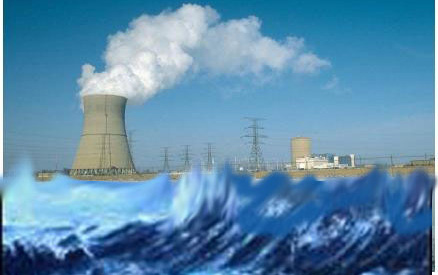 Hinkley, Sizewell and Bradwell, Stop Hinkley 10th March 2020, A meeting between representatives of groups opposing new nuclear development, the Office for Nuclear Regulation (ONR) the independent nuclear safety regulator, and the Environment Agency discussed how the ONR regulates against external hazards.
2018. According to minutes of meetings held by ONR’s group of climate
change experts, projections of sea level rise for the year 2100 contain
“considerable uncertainty” and ” small changes to UK storm systems can
alter the height of storm surges significantly”. Crucially, sea level has a
huge effect on the severity of storm surges. An increase in sea level of
one metre could mean that a storm of a severity currently expected only
once every thousand years is likely to occur once every decade. The meeting
took place in Bridgwater on 28th January 2020. Stop Hinkley was joined by
Together Against Sizewell C (TASC) and Blackwater Against New Nuclear Group
(BANNG). The groups are questioning the viability of the three coastal
sites which are all vulnerable to the impacts of flooding, storm surges and
coastal processes which will inevitably intensify in coming years.
U.S. Department of Energy’s plans could mean delay in Hanford nuclear waste clean-up
|
Nuclear waste cleanup efforts in Washington could be delayed https://triblive.com/news/world/nuclear-waste-cleanup-efforts-in-washington-could-be-delayed/, ASSOCIATED PRESS | Wednesday, March 11, 2020 RICHLAND, Wash. — The Department of Energy has announced priority plans for environmental cleanup nationwide and indicates a slower process for the decommissioned nuclear site in Washington state, a report said.
The focus at the Hanford Site will be to start treating waste at the $17 billion vitrification plant, but the report does not detail other work at the 580-square-mile site, the Tri-City Herald reported Tuesday. The report does not mention moving radioactive capsules to safer storage and cleaning up a radioactive spill under one of the buildings a mile north of Richland. “It is shocking that DOE would propose to delay projects like the cesium-strontium capsules and the 324 Building contamination, which pose such great risks to the workers and public,” said Tom Carpenter, executive director for Hanford Challenge, a watchdog and worker advocacy group. The “Environmental Management Vision 2020-2030: A Time of Transition and Transformation” report may also signal delays and decreased commitment to current plans for up to 10 years, including cleanup of contaminated groundwater flowing toward the Columbia River, the newspaper said. “Proactively addressing these hazards before they pose an imminent risk is critically important, and frankly, they can’t wait until sometime in the 2030s,” said David Reeploeg, the Tri-City Development Council vice president for federal program. A budget request for upcoming year by President Donald Trump’s administration proposes cleaning up 56 gallons of radioactive waste held in underground tanks at the site. Reeploeg added that he was pleased there is some commitment to treat tank waste. Hanford produced plutonium for nuclear weapons during the Cold War and World War II. |
|
Renewable energy push for Fukushima
|
Nine years since nuclear disaster, Fukushima looks to hydrogen as recovery efforts chug along, https://www.straitstimes.com/asia/east-asia/nine-years-since-nuclear-disaster-fukushima-looks-to-hydrogen-as-recovery-efforts11 Mar, 20 TOKYO – Fukushima is staking its future on renewable energy, taking the lead in a country that is not just squarely wedded to coal-fired power, but also reluctant to give up nuclear energy.This despite the anniversary on Wednesday (March 11) of the devastating triple tragedy nine years ago.
One of the world’s biggest renewable-based hydrogen power facilities was opened in Fukushima last Saturday, in the town of Namie that is home to just 1,100 people, or 5 per cent of the pre-disaster population. Many municipalities in the hardest-hit coastal areas of north-east Japan remain ghost towns, despite exclusion orders being gradually lifted, as former residents do not return. The full decommissioning of the crippled Fukushima Daiichi nuclear power plant is expected to continue until 2040 at best, while local fishermen despair over the increasing likelihood that water from the plant will be released into the Pacific Ocean. Japanese experts say all radioactive particles, except harmless tritium, would have been removed in the treatment process. Still, there are concerns that the move will further hurt a region already suffering from “toxic rumours” that have reduced demand for its produce despite stringent testing standards. Much of Japan observed a minute of silence at 2.46pm on Wednesday as emotions remain raw, especially among those directly affected by the catastrophe. It was the fateful time, down to the minute, when a magnitude 9.0 earthquake triggered 14m-high monster waves that caused nuclear meltdowns in three reactors at the Fukushima Daiichi plant. It was one of the world’s worst nuclear tragedies. Latest National Police Agency figures show a death toll of 15,899 people, with 2,529 missing. Another 3,739 people died owing to disaster-related causes, the Reconstruction Agency said. As many as 470,000 people fled their homes at the peak of the nuclear disaster, but more than 47,000 still have not returned. While many official memorial ceremonies were either scaled down or cancelled because of the coronavirus outbreak, Prime Minister Shinzo Abe vowed that the government will continue providing “seamless support to rebuild the lives of victims”. This involves not just physical infrastructure – including homes and retail businesses – to improve the living environment, but also support for new industries like that of renewables. The initial plan was to abolish the Reconstruction Agency in March 2021. But after 32 trillion yen (S$424.5 billion) was spent on rebuilding, the government decided to keep the organisation for another 10 years. Meanwhile, the Japanese government and Fukushima Daiichi operator Tokyo Electric Power Company (Tepco) continue to face civil lawsuits from Fukushima evacuees, although the sole criminal case arising from the disaster ended in a “not guilty” verdict last year. There are about 30 such civil lawsuits throughout the country. In the latest decision in favour of the plaintiffs, the Sapporo District Court on Tuesday ordered the government and Tepco to pay 52.9 million yen in damages to 89 people who evacuated to Hokkaido. Another judgment, by the Sendai High Court, is expected on Thursday. Still, Mr Abe has branded the upcoming Olympic Games as the “Reconstruction Olympics” to show the world how the region has recovered. The Olympic torch relay, which will pass through all 47 of Japan’s prefectures, is set to flag off on March 26 from the J-Village soccer training facility. It is just 20km from the nuclear plant and viewed as one of Fukushima’s key symbols of reconstruction. But environment group Greenpeace Japan had flagged in a report on Monday that typhoons like Hagibis, which battered the region last year, had created new radiation hot spots in areas that were previously cleared by the authorities. “It is vital to constantly monitor radiation levels and carry out decontamination work,” said Greenpeace representative Kazue Suzuki. Its survey found 40 hot spots with radiation levels more than four times the government’s decontamination standard of 0.23 microsievert per hour, including one with 71 microsieverts per hour near the J-Village complex. Long-term Fukushima residents, including Mr Nobuyoshi Ito, who lives in Iitate Village, have yielded similar results in grassroots surveys. “Perhaps, for runners passing through, the exposure is not very high, but the situation is still not ideal for those who have returned and are exposed to the radiation 24 hours a day, 365 days a year,” the 76-year-old said. “No matter how much money has been put into this, it is evident that full reconstruction or recovery back to how lives were before the disaster is not possible,” Mr Ito added. “That is the reality of a nuclear disaster.” |
|
Japan may have to cancel the Olympics
Covid-19 could scupper Prime Minister Abe Shinzo’s pet project

March 7, 2020
IF BANYAN HAD to choose one country in which to ride out a pandemic, it would surely be Japan. Early 19th-century woodblock prints of bathing testify to Japan’s old and admirable cult of cleanliness. Modern Japanese have for years been quick to don a face mask at the first sniffle, out of consideration for others. And the population responds swiftly to public messaging.
Hygiene measures advocated against covid-19 since mid-January emphasise frequent washing of hands. This has surely helped slow the spread of the coronavirus, especially given that of Japan’s 1,035 covid-19 cases and 12 deaths, most are associated with a cruise ship held for weeks off Yokohoma. One striking and positive side-effect is already apparent: unlike in Europe or America, doctors report sharp falls in cases of ordinary flu, not only compared with previous years but also with the first part of the winter. Given that 3,300 deaths were attributed to flu in Japan in 2018, the good hygiene inculcated in recent months may well have saved far more lives than covid-19 has claimed.
For all that, social strains have shown in recent days. In Tokyo scuffles have broken out in queues for facemasks outside pharmacies. Panic-buying of toilet paper has left shelves bare. A photograph of toilet rolls in a public lavatory chained to their dispenser with a bicycle lock has done the rounds. While hardly “Lord of the Flies”, it is all highly unusual in such a well-behaved country.
Blame a squall of doubt over the government of the usually assertive prime minister, Abe Shinzo. His problems seem, precisely, to have begun with the cruise ship, the Diamond Princess. When cases of covid-19, contracted overseas, became clear among the 3,700 people aboard, measures to isolate them failed badly. The vessel was, as one passenger put it, a floating petri dish, as the number of infected soared to over 700, with seven deaths. Extraordinarily, crew were eventually let ashore from the infected vessel, and Japanese passengers allowed to return home on public transport, with no further quarantine measures.
When it comes to bumbling crisis management, Japan has form. After the Kobe earthquake in 1995, yakuza (gangsters) set up soup kitchens, so slow was government help to arrive. Bureaucratic disarray ruled in the Diamond Princess’s handling, too. European ambassadors with nationals aboard complained they did not know who in the government to call. Fans wondered whether Mr Abe, invisible during the crisis, had lost his touch. His hitherto unassailable poll ratings fell sharply.
To contain the damage to his reputation as well as the coronavirus, on February 27th Mr Abe took the initiative, telling all schools to close until April. Preparing for the worst, he rushed through legislation this week allowing a state of emergency to be declared. And he unveiled an emergency spending package.
The assertive Abe, then, is back. So much so that questions are growing about what expert advice, if any, he drew on for his schools decision. New social stresses will surely emerge, not least for working mothers (it never seems to be fathers) who must now drum up weeks of day-time childcare. “The government does not grasp what it’s like to raise children,” one mother complains.
The government claims that Japan will return to normal in April. That seems implausible. A state visit by China’s president, Xi Jinping, which was supposed to put the two countries’ listing relationship on an even keel, has already been postponed. There is little political cost to Mr Abe—after all, nationalists who backed his rise to power had been grumbling about his hosting the Chinese dictator.
Much more rides on the Olympic Games in Tokyo this summer. Mr Abe intends them to foster the patriotism whose absence among ordinary Japanese he laments. He wants the games to make Japan seem open, global and even multicultural. And, though vastly over budget, they are to crown the prime minister’s seven-year rule.
To cancel the games would generate not only disappointment among ordinary Japanese but anger at the wasted expense they have already had to bear. But a pandemic would take the decision out of his hands—not least, says Nakano Koichi of Sophia University, because the Olympic village would be “a cruise ship on land”. Bet on a postponement of the games at the very least, and on a long delay before the prime minister’s popularity shines again.
Will coronavirus cancel the Tokyo 2020 Olympics?
March 6, 2020
Games on? Or Games over?
It would be one of the biggest sports news stories ever.
The postponement – or cancellation – of the world’s greatest sporting mega-event because of coronavirus would be unprecedented in peacetime.
The 2020 Olympics are due to take place in Tokyo from 24 July to 9 August – here are some of the key questions as the Olympic movement faces up to unchartered territory.
What is the latest in Japan?
There is inevitably mounting concern; Japan’s proximity to China where the outbreak began, the postponement of Tokyo 2020 volunteer training, the restrictions placed on last weekend’s Tokyo marathon where only elite runners were allowed to participate, the suspension of J-League matches and other sports events, and the country’s closure of schools.
The Asia Sevens rugby tournament, which was due to be a pre-Games test event held in Tokyo next month, was cancelled on Wednesday.
The news came just as International Olympic Committee (IOC) president Thomas Bach was facing the media in Lausanne, after a two-day executive board meeting.
Tokyo 2020 organisers had also agreed to scale back the torch relay in response to coronavirus, with the lighting of the flame due to take place in Greece next week.
Japan’s Olympics minister broke ranks on Tuesday, saying that Tokyo’s contract with the IOC allowed for the Games to be postponed until later this year.
What has the IOC said?
 President Thomas Bach says the IOC remains ‘fully committed’ to Tokyo 2020
At the news conference on the banks of Lake Geneva, Bach fended off a barrage of questions about whether the Olympics could be delayed.
The admission 24 hours earlier from Japan’s Olympics minister perhaps forced Bach into a hastily arranged and unscheduled statement, in which he tried to make clear his confidence the event would proceed as planned, and urged athletes to prepare “full steam”.
At his news conference the following day, Bach struck an even more defiant tone.
He denied having a ‘Plan B’, refused to be drawn on when any decision could be made and remarkably insisted that the words “cancellation” and “postponement” were not even mentioned during the meeting.
The president did admit to a “challenge” when it came to the cancelling of some qualifying events, as has the International Paralympic Committee (IPC), which has also said qualification criteria will be reviewed as a result.
In a letter to athletes on Thursday, Bach seemed to reveal a little more realism, admitting the coronavirus was “a major concern for all of us” and was “a major subject of discussion” at the executive board meeting.
When asked what exactly his confidence was based on, Bach referred to the guidance the IOC is receiving from the World Health Organisation, part of a dedicated task-force that is now in regular dialogue, without explaining what that advice actually was.
Why no ‘Plan B’?
Bach’s reassuring messaging will no doubt be welcomed by many in Japan, the Olympic movement, its stakeholders, and many athletes.
But some may wonder whether the president is in denial. Or merely delaying the inevitable. Others will ask if it is irresponsible or naive not to have a contingency plan.
The reality is the IOC almost certainly does have a ‘Plan B’. Insiders explain that it always does for unforeseen events at the Olympics, ranging from terrorism and war to natural disasters and boycotts.
As Bach – a man who never gives the impression of panicking – explained in Lausanne, he has been faced with challenges ahead of previous Games before – from the Zika virus and Russia’s state-sponsored doping scandal before Rio 2016, to the threat of nuclear war on the Korean peninsular in the build-up to Pyeongchang 2018.
So perhaps his calm exterior should not come as too great a surprise. The IOC operates in something of a bubble after all, and will not be pushed into an expression of alarm just because some in the outside world expects it.
Perhaps this is wise. This crisis comes with the IOC facing a challenge to persuade cities to bid to host Games at the best of times. Bach is hardly going to rush into cancelling or delaying Tokyo 2020 – and perhaps in doing so deter other cities from bidding in the future – until it becomes absolutely necessary.
Why no decision yet?
 The 2020 Olympics are due to run from 24 July to 9 August
Firstly, because it may be premature. If the Games were being held now, it is hard to see how it could proceed as planned given the current approach of the Japanese authorities to mass gatherings and thousands of athletes in close proximity to each other in the village. But if, as many hope, the outbreak peaks, and then eases in the summer months, then it would be Games on.
And secondly, if the IOC were to publicly countenance a delay or cancellation, it would almost certainly have a detrimental effect, harming sales of tickets and hospitality packages, worrying athletes, and harming the all-important broadcast and sponsorship partners who ultimately bankroll the Olympic movement.
The only exception to this stance so far has come from long-serving IOC member Dick Pound, who last week admitted a decision to cancel could be made as late as May.
Ultimately, the situation is fluid and developing all the time, and just because Bach is confident now, it does not mean the situation will not change. So his words should be viewed with that in mind.
Who decides?
Under the heading ‘Termination’, clause 66 of the official Tokyo 2020 host city contract gives the IOC the authority to “withdraw the Games from the city” in the event of war (as happened in 1916, 1940 and 1944), civil disorder or boycott, or if the organisation believes that the safety of participants would be threatened “for any reason whatsoever”.
Significantly perhaps, the document states the IOC can also terminate if the Games do not take place in 2020. There is no reference to postponement.
The IOC then, is in control. But ultimately it will act on the advice of the experts at the World Health Organisation – and the Japanese government.
And with so much at stake, until they tell the IOC that to proceed would be irresponsible, expect the show of confidence to be maintained for as long as possible.
Could there be a short delay?
The distinct sense I picked up in Lausanne this week was that the kind of short-term three to four-month delay mooted by Japan’s Olympic Minister is highly unlikely. In fact, almost impossible.
It would certainly be very difficult trying to fit an autumn or winter Games into an already crowded sporting calendar, with so many other international events planned years in advance and potentially impacted.
Under a deal agreed four years ago, more than 5,000 apartments in the athletes’ village are due to be sold to private residents after the Paralympics, so it is unclear whether it would even be possible to accommodate 11,000 competitors and thousands more support staff at a later date in the event of a postponement. The availability of hotel rooms and volunteers would be uncertain.
The IOC’s most important live broadcast partner NBC – which has just announced it has sold a record £970m of advertising for Tokyo 2020 – may also take a dim view of the prospect of the Games clashing with the professional US basketball and NFL seasons, with the obvious negative knock-on effect that would have on audiences.
What are the other options?
- Stage the Games without fans and behind closed doors, as suggested this week by British Cycling performance director Stephen Park.
Intriguingly, this suggestion was not ruled out by a senior IOC insider when it was put to him in Lausanne as a possible worst-case scenario this week, and the medical directors of international federations have been consulted on their thoughts about this option.
It would make for a strange and diminished Olympic experience of course. TV cameras would be told to focus on the athletes, rather than the empty seats. The Tokyo authorities would have to refund the cost of millions of tickets, at a cost of hundreds of millions of pounds.
But at least the athletes would get to compete. And the IOC would have honoured its commitment to its broadcast partners to stage the event. In Japan, as elsewhere in the world, sports like baseball and sumo wrestling are currently being staged behind closed doors. Could this be the authorities preparing for and learning about how to handle such an approach later in the year? Is Plan B already being rehearsed?
- Delay it by a whole year.
- Try to re-locate the event elsewhere.
- Or cancel it altogether, which as Pound suggested last week, actually feels like the most likely outcome in the event the outbreak prevents the Games taking place as planned.
That may seem unthinkable. The impact would be hard to quantify, But interestingly, it may not be as cataclysmic to the IOC as you may imagine.
The host city contract states that in the event of a cancellation, the local organising committee “waive any claim and right to any form of indemnity, damages or other compensation or remedy of any kind”. So Tokyo could not sue the IOC for damages.
The IOC has built up reserves of about £700m in case a Games is lost, and which would enable it to still support international sports federations and national Olympic committees.
The IOC is thought to have spent about £20m on insurance to cover most of the £800m investment it pumps into each summer Olympics.
On the assumption that its policy covers diseases like coronavirus, the IOC could claim for lost income.
Who would be the biggest losers in the event of cancellation?
The insurance industry, which would suddenly face hundreds of millions of pounds’ worth of claims from broadcasters, advertisers, sponsors, hotels, and of course the local organisers themselves, all trying to claw back some of the losses they would incur.
Japan, which may have insurance for lost ticket sales, but would be unable to reclaim the estimated £10bn it has spent on infrastructure and preparation for the Games over the past seven years as it tries to use the event as a means of kickstarting a recovery from the 2011 Tohoku disaster. And it is too late to scale back now. The investment has been made. The loss in tourism revenue would also be a major blow to the country’s struggling economy.
And finally the athletes, men and women who have spent years dreaming of and training for the Games. For many, Tokyo will be their only chance of experiencing the Olympics.
When one considers just how much is at stake, perhaps it is no surprise that Bach seems so reluctant to even contemplate the suggestion of a delay or cancellation, and is in no rush to take a decision before he needs to.
And they say that small nuclear reactors do not have military applications
Pentagon awards contracts to design mobile nuclear reactor Defense News
The department awarded contracts to BWX Technologies, Inc. of Virginia, for $13.5 million; Westinghouse Government Services of Washington, D.C. for $11.9 million; and X-energy, LLC of Maryland, for $14.3 million, to begin a two-year engineering design competition for a small nuclear microreactor designed to potentially be forward deployed with forces outside the continental United States.
The combined $39.7 million in contracts are from “Project Pele,” a project run through the Strategic Capabilities Office (SCO), located within the department’s research and engineering side. The prototype is looking at a 1-5 megawatt (MWe) power range. The Department of Energy has been supporting the project at its Idaho National Laboratory…….
If the testing goes well, a commercially developed, Nuclear Regulatory Commission licensed reactor will be demonstrated on a “permanent domestic military installation by 2027,” according to DoD spokesman Lt. Col. Mike Andrews. “If the full demonstration proves to be a cost effective energy resilience alternative, NRC-licensed [reactors] will provide an additional option for generating power provided to DoD through power purchase agreements.”
The best way to differentiate between the programs may be to think of the A&S effort as the domestic program, built off commercial technology, as part of an effort to get off of local power grids that are seen as weak targets, either via physical or cyber espionage. Pele is focused on the prototyping a new design, with forward operations in mind — and may never actually produce a reactor, if the prototype work proves too difficult…… https://www.defensenews.com/smr/nuclear-arsenal/2020/03/09/pentagon-to-award-mobile-nuclear-reactor-contracts-this-week/
High Courts in Japan to assess government liability for Fukushima nuclear disaster
|
Attention is on how the courts will assess the liability of the government, which has flatly denied responsibility over the accident at Tokyo Electric Power Company Holdings Inc.’s Fukushima No. 1 nuclear plant. The plant suffered meltdowns in three of its reactors after being hit by a massive earthquake and tsunami on March 11, 2011, forcing many residents to evacuate. So far, six of 10 district courts have found the government responsible for the nuclear accident, while the other four did not recognize government liability. The key issues are whether the government was able to predict the huge tsunami and was able to avert the catastrophe by taking preventive measures. The plaintiffs claim that the government could have prevented the accident if it had urged Tepco to take measures by exercising its regulatory power, based on its long-term earthquake prediction issued in 2002. All of the 10 district courts recognized Tepco’s responsibility to pay damages to the plaintiffs based on a law obliging a plant operator to pay damages over a nuclear accident, regardless of whether it was negligent or not. The Maebashi District Court and five others found that the long-term earthquake assessment was reliable, saying it was a reasonable prediction that should have been taken into account when considering tsunami countermeasures. The courts thus recognized the government’s responsibility, finding that it acted illegally by neglecting to order Tepco to take preventive measures — such as relocating power sources to a higher location at the plant. By contrast, two separate rulings issued by the Chiba District Court did not support the claim of government responsibility, reaching verdicts that the nuclear accident could not have been avoided even if preventive measures had been taken. Still, all district court rulings found that the government had been able to foresee the possibility of a huge tsunami hitting the plant. “Based on the premise that a nuclear plant should be protected at any cost, the government should exercise its regulatory power soon after it predicts a tsunami,” said Izutaro Managi, a lawyer involved in a case filed with the Fukushima District Court. The Fukushima case involves some 3,800 plaintiffs — the largest number among suits filed against Tepco and the government over the nuclear accident. The first high court ruling is expected later this year. “If high courts issue rulings in succession recognizing state responsibility over the nuclear accident, the Japanese government as a perpetrator should act to address damages from the accident,” Managi said. Specifically, he called on the government to review its compensation guidelines, which include measures such as monthly payments of ¥100,000 to each resident in evacuation zones. |
|

Iran continues to provide international inspectors access to its nuclear facilities
“The agency has not observed any changes to Iran’s implementation of its nuclear-related commitments under the JCPOA in connection with this announcement, or in the level of cooperation by Iran in relation to agency verification and monitoring activities under the JCPOA,” Grossi said in prepared remarks……..
The JCPOA promised Iran economic incentives in return for the curbs on its nuclear program, but since President Donald Trump pulled the U.S. out of the deal unilaterally in 2018 and imposed new sanctions, the country’s economy has been struggling.
Its violations of the pact are intended to pressure the other nations involved to increase economic incentives to make up for the American sanctions. So far, attempts by the other members of the JCPOA have fallen short of Iran’s demands.
In a separate report to members last week, the IAEA said it had identified three locations in Iran where the country possibly stored undeclared nuclear material or undertook nuclear-related activities without declaring it to international observers.
The activities at those locations are believed to have dated from the early 2000s, before the nuclear deal, and Iran responded to the report by suggesting that the IAEA had no legal basis to inspect those sites.
In his speech to the board members, Grossi called on “Iran to cooperate immediately and fully with the agency, including by providing prompt access to the locations specified by the agency.”
“The agency has identified a number of questions related to possible undeclared nuclear material and nuclear-related activities at three locations that have not been declared by Iran,” Grossi said, according to his prepared remarks. “The agency sought access to two of the locations. Iran has not provided access to these locations and has not engaged in substantive discussions to clarify the agency’s questions.” https://www.japantimes.co.jp/news/2020/03/09/world/u-n-atomic-watchdog-says-iran-still-providing-nuclear-access/#.XmbVIagzbIU
Peach Bottom nuclear station can struggle on for 80 years!

It’s getting a bit tiresome – this endless, mindless repetition of “carbon-free”  “clean energy” “zero-carbon” nuclear energy. Why don’t Larry Pearl and other writers, who otherwise provide thorough and well-researched information – why don’t they do their homework on the full carbon emissions of the entire nuclear fuel chain? Even the reactors themselves release a tiny an mount of Carbon 14. There is not only the chain of construction and demolition, but also the continuing fuel chain of mining through to radioactive waste disposal.
Exelon’s Peach Bottom becomes second US nuclear plant to get license 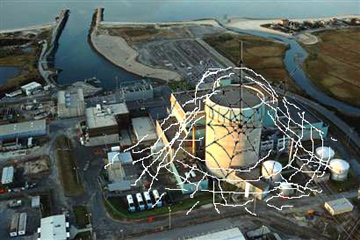 approval to 80 years, Utility Dive , By Larry Pearl March 9, 2020
Dive Brief:
- Exelon’s Peach Bottom plant became the second nuclear power reactor in the U.S. to get permission to operate out to 80 years, after the Nuclear Regulatory Commission approved another 20-year extension on Friday.
- Last December, Florida Power & Light’s Turkey Point units 3 and 4 got the first such approval as utilities work to retain a major source of carbon-free [?] as long as possible.
- Dominion has applied for a similar license extension for its Surry nuclear plant and plans to request for at least two more, while Duke plans to do the same for all 11 of its nuclear plants, Bloomberg reported last month.
Dive Insight:
Peach Bottom Unit 2 in York County, Pennsylvania, is now licensed to operate through August 2053 and Unit 3 through July 2054. The approvals come as more and more states move to adopt aggressive clean energy goals and the nuclear industry looks to advance a new generation of reactors.
But the economics of the current generation of U.S. reactors remains challenging, especially for new plants, and the industry and a number of states have adopted programs to recognize the zero emission attributes of nuclear.
While Exelon Nuclear’s Chief Nuclear Officer Bryan Hanson called the license extension, “good news for the environment, our employees and the community,” he noted that “nuclear plants must remain financially viable to continue to operate. ….
But FERC’s move in December to effectively raise the price floor for subsidized resources attempting to bid into the PJM wholesale capacity market complicates state efforts to support nuclear plants in Pennsylvania and elsewhere.
A variety of stakeholders have petitioned FERC to reconsider its decision.
The NRC’s decision to move forward with Peach Bottom’s license extension is also being challenged…. https://www.utilitydive.com/news/exelons-peach-bottom-becomes-second-us-nuclear-plant-to-get-license-approv/573690/
Nuclear reactors on the sea floor – Russia’s costly problem

Lifting Russia’s accident reactors from the Arctic seafloor will cost nearly €300 million, https://thebarentsobserver.com/en/ecology/2020/03/lifting-russias-accident-reactors-arctic-seafloor-will-cost-nearly-eu300-millionExperts are discussing the framework for safe lifting of dumped reactors from four submarines and uranium fuel from one icebreaker reactor in the Kara Sea, in addition to one sunken nuclear submarine in the Barents Sea. By Thomas Nilsen 8 Mar, 20,
Russian and European experts agree that the dumped Soviet-era nuclear reactors in the Kara Sea can’t stay on the seafloor forever.
The Soviet Union used the waters east of Novaya Zemlya to dump accidental reactors, spent nuclear fuel and solid radioactive waste from both the navy and the fleet of nuclear-powered civilian icebreakers.
About 17,000 objects were dumped in the period from the late 1960s to the late 1980s.
Most of the objects are metal containers with low- and medium level radioactive waste. The challenge today, though, are the reactors with high-level waste and spent uranium fuel, objects that will pose a serious threat to the marine environment for tens of thousands of years if nothing is done to secure them.
According to the Institute for Safe Development of Nuclear Energy, part of Russia’s Academy of Science, the most urgent measures should be taken to secure six objects that contain more than 90% of all the radioactivity.
It is the information site for Russia’s submarine decommissioning program that informs about the plans.
The reactors from the submarines K-11, K-19 and K-140, plus the entire submarine K-27 and spent uranium fuel from one of the old reactors of the Lenin-icebreakers have to be lifted and secured.
Also, the submarine K-159 that sank north of Murmansk while being towed for decommissioning in 2003 have to be lifted from the seafloor, the experts conclude.
Special priority should be given to the two submarines K-27 in the Kara Sea and K-159 in the Barents Sea.
The study report made for Rosatom and the European Commission has evaluated the costs of lifting all six objects, bringing them safely to a yard for decommissioning and securing the reactors for long-term storage.
The estimated price-tag for all six will €278 millions, of which the K-159 is the most expensive with a cost of €57,5 millions. Unlike the submarines and reactors that are dumped in relatively shallow waters in the Kara Sea, the K-159 is at about 200 meters depth, and thus will be more difficult to lift.
Lifting the K-27, transporting to a shipyard for decommissioning and long-term storage in Saida Bay will come at a price of €47,7 millions the report reads.
The work can be done over an eight years period, according to the expert.
But, as the expert-group underlines, the €278 millions funding does not exist in any Russian Federal budgets today.
1 This Month
19 November – Webinar – The Reality of Reprocessing
Time: 11:00 AM Pacific Time (US & Canada) / 2:00 PM Eastern / 7:00 PM UK / 8:00 PM CET
Register for the Zoom Event Here

Tell Congress: Prevent Nuclear Catastrophe in Iran

Tell Congress: Prevent Nuclear Catastrophe in Iran

Read the Public Inquiry Report, the Commissioners’ report, Surrendering Australia: The AUKUS Deception is available to download for free at aukuspublicinquiry.com. Or just watch the replay of the National Press Club Luncheon.


Shut down the radiation-damaged Heysham nuclear reactors now
To see nuclear-related stories in greater depth and intensity – go to https://nuclearinformation.wordpress.com

Say No to NASA’s Reckless Nuclear Reactor on the Moon
Say No to NASA’s Reckless Nuclear Reactor on the Moon
-
Archives
- November 2026 (156)
- October 2026 (302)
- September 2026 (339)
- August 2026 (330)
- July 2026 (355)
- June 2026 (287)
- May 2026 (306)
- April 2026 (356)
- March 2026 (251)
- February 2026 (267)
- January 2026 (308)
- December 2025 (358)
-
Categories
- 1
- 1 NUCLEAR ISSUES
- business and costs
- climate change
- culture and arts
- ENERGY
- environment
- health
- history
- indigenous issues
- Legal
- marketing of nuclear
- media
- opposition to nuclear
- PERSONAL STORIES
- politics
- politics international
- Religion and ethics
- safety
- secrets,lies and civil liberties
- spinbuster
- technology
- Uranium
- wastes
- weapons and war
- Women
- 2 WORLD
- ACTION
- AFRICA
- Atrocities
- AUSTRALIA
- Christina's notes
- Christina's themes
- culture and arts
- Events
- Fuk 2022
- Fuk 2023
- Fukushima 2017
- Fukushima 2018
- fukushima 2019
- Fukushima 2020
- Fukushima 2021
- general
- global warming
- Humour (God we need it)
- Nuclear
- RARE EARTHS
- Reference
- resources – print
- Resources -audiovicual
- Weekly Newsletter
- World
- World Nuclear
- YouTube
-
RSS
Entries RSS
Comments RSS

