French nuclear workers in fear of coronavirus infection
 French nuclear plants tighten hygiene procedures over coronavirus worries Benjamin Mallet, PARIS (Reuters) 21 Mar 20, – French utility EDF is introducing stricter hygiene procedures at its nuclear plants after walk-outs by a small number of workers who feared getting infected with coronavirus during radiation screening, union and industrial sources said on Friday.
Under French labor laws, staff have the right to walk off the job if they consider there is a clear and imminent threat to their health or safety.
After working in the radioactive areas of nuclear plants, staff have to step through narrow shower-style portals in their underwear to be checked for possible radiation exposure. Workers feared the surface areas of these portals could become a source of spreading the virus.
EDF (EDF.PA) has now agreed to clean the portals twice per eight-hour shift, to increase security distances between workers and provide gloves and hand sanitizer, according to new internal rules announced on Tuesday.
“The problem has been solved or will be soon, provided that guidelines are respected,” CGT union member Thierry Raymond told Reuters.
CGT nuclear specialist Thomas Plancot said more than a dozen workers – mostly contractors – had walked out over the issue in the nuclear plants of Fessenheim, Civaux and Chooz, including a sixty-year-old who considered himself especially at risk because of his age. …….https://www.reuters.com/article/us-health-coronavirus-france-nuclear/french-nuclear-plants-tighten-hygiene-procedures-over-coronavirus-worries-idUSKBN2172J1
Coronavirus and the growthmania that drives environmental destruction.
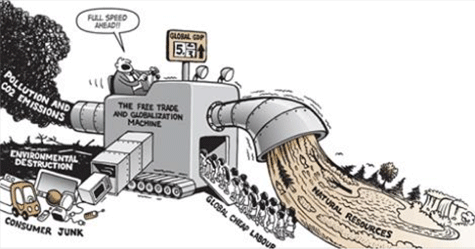
Paul R. Ehrlich: A pandemic, planetary reckoning, and a path  forward, Environmental Health News, Mar 20, 2020 Bolster basic medical care
“………..It is convenient for progressives to blame the COVID-19 disaster in the United States on the spectacular incompetence and corruption of the current Republican national leadership. Yes, it has turned away from science, and worked hard to speed the demise of civilization.
One of the Republicans’ many steps in that direction was to destroy the global health security and biodefense directorate that the Obama Administration created to help prepare for emergent diseases. Americans are now likely paying with their lives for Trump’s move there.
But the basic problem dates much further back and is bipartisan. After all both parties have been supportive and remain supportive of the growthmania that has been the basic driver of environmental destruction.
Rather than dwell on the past, however, let’s look at what the U.S. should be doing about the epidemiological environment starting right now. The U.S. has long stood alone in failing to supply all its citizens with health care, an error COVID-19 has highlighted. Changing that, however it is done, should be top priority.
Besides the obvious ethics and justice reasons, people without basic medical care exacerbate public health problems, especially pandemics, in ways that threaten even senators and presidents.
A comprehensive national health program should also remove incentives for infected people to go to work sick and for keeping businesses and other entities that provide essential services functioning.
Plans and equipment should be put in place to greatly increase the capacity of the medical system to deal with large surges of victims of epidemics.
Programs are needed to keep both the plans and essential supplies up to date. A provision for quickly establishing unified leadership in disasters is essential.
Climate change and biodiversity
U.S. security in a globalized world demands leadership in dealing with all aspects of the world’s epidemiological environment.
In addition to rejoining the Paris agreement, America should demand greatly increased ambition in replacing fossil fuels in energy systems so it will have a better chance of ameliorating the building climatic catastrophe and reduce the likely huge refugee flows that will transform the entire global epidemiological environment.
The U.S. should aid China to reduce that nation’s huge pig-duck-pond-wildlife market, which is a lethal virus manufacturing machine. Putting pigs and ducks together with ponds is bad in itself, but adding wildlife markets to the mix makes it worse – and it’s an important factor in the global epidemiological environment.
America and China could lead a civilization-wide program to halt the destruction of biodiversity – another factor which negatively impacts that environment.
What I’m basically saying is that the U.S. should fix the epidemiological environment by taking the obvious steps to solve the human predicament – to avoid the collapse of civilization now entrained…….. https://www.ehn.org/pandemic-population-covid-19-2645518249.html
Coronavirus Halts Street Protests, but Climate Activists Have a Plan
 Coronavirus Halts Street Protests, but Climate Activists Have a Plan, NYT, 20 Mar 20, Greta Thunberg, protesting in Brussels this month, is now calling for digital strikes. The coronavirus outbreak has prompted climate activists to abandon public demonstrations, one of their most powerful tools for raising public awareness, and shift to online protests.
This week, for example, organizers of the Fridays for Future protests are advising people to stay off the streets and post photos and messages on social media in a wave of digital strikes.
“We are people who listen to the scientists and it would be hypocritical of us to not treat this as a crisis,” said Saoi O’Connor, a 17-year-old Fridays for Future organizer from Cork, Ireland.
Greta Thunberg, the 17-year-old Swedish activist who inspired the Friday youth protest group, last week stayed at home and tweeted a photo of herself and her two dogs, with a message calling on protesters to “take it online.”
Similarly, a coalition of climate movements had planned huge protests around commemorations for the 50th annual Earth Day in April. Those have now been canceled or moved online. One group, Earth Initiative and March for Science New York City, plans to live-stream speakers and performers at an online event.
Dominique Palmer, 20, a Fridays for Future organizer in Britain, acknowledged the challenges of protesting online. Hashtags and snappy videos are good, she said, but really making an impact will require more work. Twitter protests in which activists send out messages aimed directly at selected officials, and phone-banking, in which they telephone them en masse, are two of the ideas under consideration.
The new strategy marks a sharp turnaround for climate activists. A year ago this month, more than a million youth activists took to the streets worldwide in a global day of climate action.
It also comes at a crucial time. With a presidential election in the United States this year, activists had hoped to raise the profile of climate change on the public agenda. And, just days after the election, world leaders are scheduled to gather in Glasgow for United Nations-led climate talks where presidents and prime ministers will face pressure to get more ambitious about reining in greenhouse gas emissions. ….. https://www.nytimes.com/2020/03/19/climate/coronavirus-online-climate-protests.html
1,000 staff at Sellafield nuclear facility self-isolating amid pandemic
 Coronavirus: 1,000 Sellafield staff self-isolating amid pandemic https://www.bbc.com/news/uk-england-cumbria-51951984 18 March 2020
About 1,000 employees at the Sellafield nuclear site in Cumbria are self-isolating amid the coronavirus outbreak. The firm earlier said it was carrying out a controlled shutdown of the Magnox plant, ahead of any absences. The plant in Seascale reprocesses spent fuel and Sellafield Ltd said it was scaling back operations so staff could concentrate on critical processes. The thousand staff represents about 8% of the whole workforce. They are either showing symptoms, have close family who have symptoms, or are having to distance themselves because they have an underlying health condition. On closing the reprocessing site, Sellafield said: “As a proactive measure, to retain the reprocessing stream in a sustainable state for the future, we are moving to a controlled shutdown of the Magnox reprocessing plant over the next few days. “This approach will enable the best opportunity for an effective restart when circumstances permit. With safety in mind, similar measures may be necessary elsewhere across the business.” |
|
The Virus Is Teaching Everyone What Runaway Growth Really Means
The Virus Is Teaching Everyone What Runaway Growth Really Means
To make sense of the spread of Covid-19, economics—particularly black swan events and compound growth—can provide guidance. Bloomberg, By Gernot Wagner, March 20, 2020, Compound growth is relentless. Investors know that all too well: Start saving early, and even low annual growth rates will eventually yield big results.
Black swan events, too, are relentless. The existence of low-probability, high-impact events, in fact, is a powerful explanation for the long-standing “equity premium puzzle,” why equities on average return so much more than bonds and make compound growth all the more powerful.
Climate change is beset with both. I’ve spent a decade trying to explain that to anyone who’ll listen. It’s not levels; it’s growth rates. It’s not what we know— though that’s bad enough—it’s largely about the unknowns and perhaps unknowables.
Black swans need no explanation in the context of the coronavirus pandemic. Compound growth, alas, still does—or at least it did for much too long into the current crisis.
Witnessing the rapid changes in attitudes has been more than educational, to put it mildly. Watching the Trump administration—and, by extension, Fox News—turn 180 degrees almost overnight might be particularly jarring. But this time, even oft-rational leaders were caught off guard. French President Emmanuel Macron went to the theater on Friday, March 6, demonstrating normalcy. The following Tuesday, his culture minister tested positive for the virus. A week later, Macron ordered a complete shutdown of the country. ……
The first question one must ask when looking at any benefit-cost analysis is where it might be so wrong as to overturn the original results. For climate, it’s clear that standard benefit-cost calculations lead to an underestimate of the true cost of each ton of carbon dioxide emitted. Benefits of mitigation are typically higher than calculated, while cost estimates often turn out to be lower than assumed.
For Covid-19, the uncertainties also seem to point in one and only one direction: toward shutting down sooner rather than later. Given that the benefits of shutting down today include include avoiding a later shutdown, it’s hard to see how any of the many other uncertainties could dwarf the relentless compound growth of infections of roughly 33% per day.
It’s exactly this insight that reportedly convinced British Prime Minister Boris Johnson—belatedly—to pursue strong mitigation measures as well. The original U.K. strategy of “herd immunity,” after all, would have implied a significant culling of the herd.
All that points to another significant lesson that applies to the virus as much as to climate and to decision-making more broadly: Your actions inadvertently causing a death (an “error of commission”) might feel worse than the lack of one’s actions leading to that same death (an “error of omission”) but the end result is the same. Error is error, dead is dead.
With Covid-19, the bias goes toward leaders wanting to avoid doing too much at first, lest they are seen to be causing undue economic pain. Omitting early action, meanwhile, has already proved to cause even more pain later on.
Economist Milton Friedman famously argued how actions taken in a crisis “depend on the ideas that are lying around.” In this crisis, it behooves us not to ignore one of the most powerful of economic ideas: how compound growth, in the end, dwarfs all. https://www.bloomberg.com/news/articles/2020-03-20/the-virus-is-teaching-everyone-what-runaway-growth-really-means
Ozone-depleting chemicals appearing again in the atmosphere
 The Global Victory Over Ozone-Killing Chemicals Is Coming Undone https://www.bloomberg.com/news/articles/2020-03-20/the-virus-is-teaching-everyone-what-runaway-growth-really-means Mysterious emissions have been slowing the atmosphere’s healing. Scientists think they’ve finally discovered the source. By Eric Roston, March 18, 2020, Ozone-destroying chemicals once thought to be successfully banished are now making their way into the air again, slowing down our atmosphere’s recovery after those same chemicals effectively ripped a hole in it in the mid-20th century. Slowing things down still further: scientists haven’t been able to figure out where the chemicals are coming from.Before the rapidly changing global climate seized our collective attention, destruction of the Earth’s protective ozone shield became an environmental cause célèbre. Chemists in the 1970s predicted the damage to the atmosphere that could be done by chlorofluorocarbons, which were common in everything from aerosol hairspray to refrigerators. (They won the Nobel Prize in 1995.) The 1987 Montreal Protocol phasing out CFCs was eventually signed by 197 countries—every country in the United Nations, plus entities like the European Union and the Holy See—making it one of the pinnacles of global environmental diplomacy.
Then something funny started to happen. In 2012, two years after the treaty mandated all CFC production should cease, unexpected blips in atmospheric levels of a key chemical, CFC-11, started to appear. They’ve been attributed in part to unauthorized production of the chemicals in China—but that still wasn’t enough to make sense of the concentrations scientists were seeing. Now a team led by scientists at the Massachusetts Institute of Technology have a possible answer. Their research, published Tuesday in the journal Nature Communications, shows that equipment and materials manufactured legally before the phase-out still hold enormous volumes of CFCs. As these products decay, the chemicals leak out. . Emissions from these previously underestimated “banks” of CFC chemicals are enough to slow ozone recovery by about six years if they’re not disposed of, according to the researchers.
CFCs—and their eventual replacements, hydrofluorocarbons—also trap heat. While there’s far less of them in the atmosphere than there is of carbon dioxide, they’re much more potent. The chemicals being released have the warming potential of 9 billion metric tons CO₂, or roughly 30% more than the European Union has pledged to eliminate by 2030.
Given how prevalent CFCs once were, properly disposing of them would be a huge, disruptive challenge. It would mean dismantling buildings with CFC-based foam insulation, replacing old refrigerators and air conditioners, and either destroying or burying the whole lot to lock the CFCs out of the atmosphere. “While 100% destruction of the banks is unrealistic,” the authors write, “certainly some material can be recovered and destroyed.”
|
|
Paul Ehrlich on the pandemic and the challenge to civilisation
Paul R. Ehrlich: A pandemic, planetary reckoning, and a path forward, Environmental Health News, Mar 20, 2020
The COVID-19 pandemic is bringing environmental destruction and the deterioration of social and cultural systems into sharp focus. But we can learn from this.
For more than half a century, scientists have been expressing concern over the deterioration of what I like to call the “epidemiological environment.” That environment consists of the constellation of circumstances that influence patterns of disease and factors related to health.
It includes such things as population sizes and densities, diets, speed and type of transportation systems, toxics, climate disruption, frequency of human-animal contacts, availability of medical isolation facilities, stockpiles of medicines, vaccines, and medical equipment.
The epidemiological environment also includes cultural norms: levels of education, equity in societies, competence of leadership. Few aspects of the human predicament do not impinge on our epidemiological environment.
My own interest in one part of that environment, transmissible diseases, started as a grad student working on the evolution of DDT resistance in fruit flies. The results of that research had obvious implications for the evolution of antibiotic resistance, a key element in the epidemiological environment.
It clearly influenced my wife Anne and my scenarios in our 1968 book, The Population Bomb and a section on the epidemiological environment in The Population Explosion, the 1990 sequel book. We were responding not just to our own fears, but the fears of colleagues much more knowledgeable in areas like virology and epidemiology.
Of course, the utter failure of global society to deal appropriately with high probability threats to civilization warned of by the scientific community is hardly limited to pandemics.
Climate disruption is the best recognized of contemporary health threats, but the decay of biodiversity, and “updating” the American nuclear triad as part of the Russian-United States’ “mutually assured imbecility” are among the most critical.
Those, at least, are not obvious to the average citizen or decision-maker, but what about others such as increased flows of plastics and toxics (especially synthetic hormone mimicking compounds) into the global environment?
Everyone knows about volumes of plastics in waste streams and oceans and has personal experience with the thermal paper receipts coated with bisphenol-A (BPA), yet little to no remedies have been undertaken.
Indeed, why are there so few effective responses to the epidemics and the maladies of industrial civilization?……….
Teaching planetary literacyThis seems wildly optimistic in a world that has not even recognized its problems of overpopulation and overconsumption or the impacts on health and well-being of socio-cultural regression: rising xenophobia, racism, religious prejudice, sexism, and, especially, economic inequity. What explains this? There are the causes usually noted, such as the power of money, not just in politics but in global culture as a whole. But a major element is widespread ignorance, partly due to broken educational systems – allowing, for example, mobs of innumerate economists, politicians, and decision-makers in general to believe in perpetual growth in population and consumption. The widespread inability of “educated” people to think is frequently underlined by statements on how “we don’t have a population problem, just a problem of too much consumption.” Can’t they grasp the not-so-difficult idea that a billion people are likely to consume more than a hundred? Case in point on the ignorant “educated”: Donald Trump got a B.S. in economics from the Wharton School of my alma mater, the University of Pennsylvania. To overwhelm this vast ignorance demands resuscitation of our higher education system. Universities and colleges remain stalled in a 19th century Aristotelian state. They have given up any goal except turning out people who will be financially successful in a deteriorating culture — oiling parts of the engine with never a thought for where the train is heading. And that “education” clearly doesn’t even give its products a grasp of such concepts as exponential growth, as the response of Trump and many others to the COVID-19 epidemic have shown. Educational systems have given up any pretense of supplying leadership to society or informing people about what is coming down the track. Faculty members discuss “sustainability” in major universities that will not even divest from fossil fuel stocks. Can the absence of a draft alone explain the difference between the ferment in universities during the Vietnam War and the quiet today with the situation a million times worse? Once again, population size and growth are major factors in this human dilemma – maybe Homo sapiens shouldn’t have tried to organize itself into groups exceeding the Dunbar number, which anthropologist Robin Dunbar showed was about 150 people, the size of hunter-gatherer groups. He also showed that’s roughly the size of groups in which human beings are comfortable today. Rethinking resourcesWhere could all the money come from to make the changes to preserve civilization? That’s one of the challenges for the economists who today are operating in a perpetual-growth fairyland. Much depends on the course of events and whether the debt pyramid collapses. One obvious step, however, is repurposing the military. When Anne and I were working with them on nuclear winter issues, we were greatly impressed by the intelligence and ethics of some of the field-grade officers with whom we were involved. The military is already way ahead of the present civilian government in addressing existential threats like climate disruption. Various military units have already been deployed to deal with emergencies ranging from pandemics to hurricanes, and there is no reason why they cannot be used to help in tasks ranging from building medical isolation facilities to small-scale affordable housing for the homeless. Allocation of resources is part of the epidemiological environment. The gigantic amounts of money wasted on such nearly useless toys as nuclear weapons, aircraft carriers, main battle tanks, and air superiority jet fighters could be redirected toward rebuilding infrastructure such as sewage systems, modernized electric grids and water-handling networks, and on and on. The same can be said for the other funds and activities used for decades to support (often clandestinely) U.S. state terrorism that has cumulatively killed millions since the second World War. Is all this impractical, pie-in-the-sky, never-happen stuff? Sure. But nothing is more impractical than civilization trying to continue business as usual as it circles the drain. The current pandemic disaster may end up damping down consumerism and improving the environment – there are reports of the lethal smog usually blanketing some Chinese cities clearing during pandemic lockdowns. Maybe there’s some chance that people are learning lessons. We can always hope. Paul Ehrlich is the Bing Professor of Population Studies, Emeritus and President of the Center for Conservation Biology at Stanford. https://www.ehn.org/pandemic-population-covid-19-2645518249.html |
|
Terrorism fears for Japan’s nuclear reactors – safety measures still not implemented
|
The threats to nuclear power plants are not restricted to earthquakes and tsunamis. The United States’ Nuclear Regulatory Commission compiled anti-terrorism measures in the wake of the 9/11 terrorist attacks. Japan similarly compiled new safety standards that went into effect in 2013. The new standards in Japan envisage such threats as an airliner crashing into a nuclear reactor building. They require plants to have an emergency control room at least 100 meters away from the nuclear reactor building, along with cooling pumps, so that the operator can continue to cool the nuclear reactor even if the adjacent control room is damaged…….. Terrorist acts that could result in major nuclear disasters are risks that must be taken into consideration at nuclear plants. Under ordinary circumstances, response facilities should be ready to operate at the time the nuclear reactor is restarted. Originally the deadline for completing the construction of response facilities was “within five years of the enforcement of new regulatory standards.” However, this deadline was extended due to delays in the screening of nuclear reactors that was required before they could be restarted. The revised deadline was within five years of the authorization of construction plans, including safety and other measures, after each nuclear power plant was judged to comply with new safety standards introduced after the Fukushima nuclear disaster. The first reactor to be restarted after the Fukushima nuclear disaster was the No. 1 reactor at the Sendai plant, and now it has reached that five-year deadline. Yet in spite of being granted a five-year period of grace, it failed to meet the requirements. It can’t be helped if the operator is seen as having made light of safety. So far nine nuclear reactors operated by the Kansai, Shikoku and Kyushu power companies have been restarted — and all of them are facing delays in the construction of response facilities. Kansai Electric Power Co. is due to halt the No. 3 and No. 4 reactors at its Takahama nuclear power plant this year. Power companies will not be able to avoid a loss of revenue from taking their reactors offline, and if they have to supplement power shortages with thermal power generation, then it will incur additional fuel costs. Furthermore, the costs for safety measures besides those to counter terrorism are only increasing. The former catchphrase that “nuclear energy is a cheap and stable source of power” is no longer applicable. There is no “finish line” when it comes to safety. The latest nuclear reactor suspension is surely the result of officials making light of this fundamental principle. https://mainichi.jp/english/articles/20200319/p2a/00m/0na/009000c |
|

Politicians exploit false conspiracy theory that the coronavirus is a bioweapon
Why do politicians keep breathing life into the false conspiracy theory that the coronavirus is a bioweapon? https://thebulletin.org/2020/03/why-do-politicians-keep-breathing-life-into-the-false-conspiracy-theory-that-the-coronavirus-is-a-bioweapon/?utm_source=Newsletter&utm_medium=Email&utm_campaign=Newsletter03192020&utm_content=DisruptiveTech_PoliticiansConpiracyCoronavirus_03132020#
By Matt Field, John Krzyzaniak, March 19, 2020 Editor’s note: Don’t miss our special report, produced in collaboration with The New Yorker magazine, on the questionable safety of biological laboratories, “Hot Zone in the heartland?”
You’ve probably heard the rumor: The new coronavirus is a bioweapon. Some malicious country—perhaps the United States, maybe China, depending on who’s talking or tweeting—purposefully unleashed the virus that causes Covid-19 on the world. You might have also heard that the idea was widely dismissed by disease and defense experts. A good bioweapon, some note, wouldn’t spread as easily and indiscriminately as the new coronavirus does. But for political opportunists and conspiracy theorists, the rising number of Covid-19 infections, the growing ranks of the dead, and the mass disruptions to the daily rhythms of life have created fertile conspiratorial ground.
The Covid-19 bioweapon conspiracy theory has not only failed to be debunked; it even seems to be getting a second wind, and prominent politicians from countries around the world are embracing it. “For a while, it seemed the pushback on the bioweapons narrative from the Washington Post and Foreign Policy was effective,” biodefense researcher Filippa Lentzos said. “But in recent days, the narrative seems to be coming back with a vengeance.” Current and former government officials, including former Iranian president Mahmoud Ahmadinejad, Chinese Foreign Ministry spokesman Lijian Zhao, and US Sen. Tom Cotton of Arkansas have given credence to some version of the theory in the last month.
In the United States, Cotton isn’t fully letting up on his suggestion last month that the virus was a Chinese military creation. In a Fox News interview in February, he appeared to suggest just that, before walking back the idea, sort of. (In a series of tweets, he said the bioweapon theory was just one of several hypotheses.) Bioweapon or not, Cotton still believes someone is responsible for the pandemic, someone Chinese. In a statement Thursday announcing that he’d be temporarily closing his Senate office, he called the virus the “Wuhan coronavirus” five times, vowing, “We will hold accountable those who inflicted it on the world.” In a later clarifying tweet, he said that, yes, he meant China.
A March 12 article in Britain’s Express tabloid added fuel to fire, reporting that University of Illinois law professor Francis Boyle, who helped draft the legislation that implemented the Biological Weapons Convention in the United States, had identified a “smoking gun” that showed the coronavirus was a bioweapon leaked from a Chinese research lab near Wuhan, the city where the outbreak originated. Boyle reportedly based his theory on a paper on ScienceDirect that noted a “gain-of-function” in the virus that makes it better than other coronaviruses at spreading among humans. But as the Express itself notes in a correction, the research paper Boyle cited does not speculate on what caused the gain-of-function in the virus. “It was therefore incorrect when our article claimed ‘the paper suggested Covid-19 has been tampered with,’” the correction notes.
That didn’t stop Manish Tewari, a prominent Indian parliamentarian and spokesperson for the Indian National Congress, the country’s leading opposition party, from re-tweeting the Express article to his more than 380,000 followers, adding his own highly charged twist: the disease outbreak is a terrorist act.
“CoronaVirus is a bioweapon that went [rogue] or that was made to go [rogue]. It is an act of terror,” Tewari tweeted on March 12. “International investigation conducted either under auspices of ICJ or ICC is necessary to unearth the truth & bring focus back on eradicating Biological Weapons.”
Lentzos worries that the parade of prominent figures promoting the bioweapons conspiracy theory could weaken the global taboo against possessing bioweapons—making biological weapon research appear to be widespread. “It’s being pushed at senior political levels, most prominently from Iran, but also from Russia and to some extents China,” she said. “It’s important we call this out. We can’t afford to have it seem like states have bioweapons and are getting away with it, or even that states would want to pursue these sorts of weapons. It significantly degrades the taboo against biological weapons.”
In early March, Iran had over 3,500 confirmed cases spanning all 31 of its provinces, and Iranian officials began jumping on the bioweapons conspiracy bandwagon. Hossein Salami, the commander of Iran’s Revolutionary Guard said that the Covid-19 outbreak was “perhaps a bioterror attack” carried out by the United States. The following day, a conservative Iranian lawmaker repeated the claim, telling an Iranian state-run news outlet that the virus had been intentionally spread throughout Iran and China and proposing an independent bioterror defense organization.
Mahmoud Ahmadinejad, the former Iranian president who seems unable to resist a good opportunity to propagate falsehoods (even Al-Qaida once asked him to stop making things up), also got in on the coronavirus conspiracy action. In an open letter to the UN secretary-general, he wrote that it was clear that the virus was “produced in laboratories … by the warfare stock houses of biologic war belonging to world hegemonic powers.”
Naturally, it didn’t take long for these conspiracies to percolate to the top. On March 12, Iran’s supreme leader issued an edict endorsing the idea that “this incident might be a biological attack” and creating a “health and treatment headquarters” within the armed forces to help control the spread of the virus.
The Chinese government, meanwhile, the bogymen in Cotton’s telling, has at least one prominent conspiracy-monger in its ranks. On March 12, Zhao, China’s foreign ministry spokesperson, demanded answers from the US government by tweeting, “It might be US army who brought the epidemic to Wuhan.”
The new coronavirus is thought to have jumped from animals to people, but researchers still haven’t pinned down which species to blame. The pangolin, an ant-eating animal prized for its meat and scales in China, is one candidate, according to an article in Nature. But scientists haven’t found a close-enough genetic match between viruses found in pangolins and those found in humans to reach a definitive conclusion
And so the source of Covid-19 remains ambiguous, and, like a certain US senator from Arkansas, conspiracy theories thrive on ambiguity.
“We ought to be transparent with the American people about all this,” Cotton said last month to defend his controversial musings. “Maybe some of these so-called experts think they know better. I don’t. And they really don’t either.”
The vital importance of media accuracy at this critical time
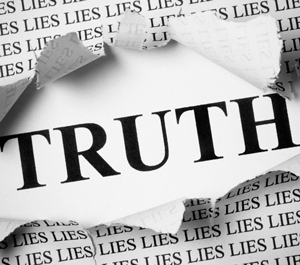 It’s Vitally Important for Media to Get Facts Right in a Life-or-Death Crisis https://fair.org/home/its-vitally-important-for-media-to-get-facts-right-in-a-life-or-death-crisis/
This won’t be popular to read in some quarters, but federal and state officials need to start adjusting their anti-virus strategy now to avoid an economic recession that will dwarf the harm from 2008–2009…. Barring [a quick vaccine], our leaders and our society will very soon need to shift their virus-fighting strategy to something that is sustainable…. America urgently needs a pandemic strategy that is more economically and socially sustainable than the current national lockdown.
The Blackwater Against New Nuclear Group (BANNG) protests the lack of full information on nuclear plans
BANNG 19th March 2020, In the wake of the coronavirus epidemic, Bradwell B has cancelled two-thirds of the exhibitions it had planned as part of its public
consultation on its proposals for a new nuclear power station. But, the
company is still calling for feedback on its plans to be given at any time
up to 27th May 2020.
The Blackwater Against New Nuclear Group (BANNG) has protested that the partial consultation will be only partially informed and
consequently feedback will be unrepresentative of the views of the whole of
the Blackwater communities. Prof. Andy Blowers, Chair of BANNG has written
to the Chinese company developing the proposals urging that the
consultation be terminated altogether. The exhibitions that did take place
were well attended, engaging in robust discussion where citizens were able
to question the plans and make clear in face-to-face exchanges with company
staff their concerns about the imposition of a massive nuclear complex on
the Dengie peninsula. The meetings at Maldon and Bradwell Village were well
attended, informative and occasionally emotional.
https://www.banng.info/news/banng-press-release-19th-march-2020/
Japan Olympics Official Tests Positive For COVID-19 As Training Camps Canceled Across Country
 The deputy head of Japan’s Olympics Committee has coronavirus after reportedly experiencing a mild fever on Sunday after returning from a trip to Europe and the United States, according to the Wall Street Journal.
March 17, 2020
Kozo Tashima, who is also the president of Japan’s Football Association, was in Orlando, Florida on March 5 where he watched the Japanese women’s soccer national team play against Spain. While in the US he lobbied for Japan to host the women’s soccer World Cup during meetings held in New York – before returning to Japan on March 8.
“My symptoms didn’t start until March 14, so I wasn’t a major infection risk to others, but I apologize to those who were in meetings with me, JFA executives, the media and others I may have been in close contact with,” said Tashima in a statement, adding that his condition isn’t serious.
Mr. Tashima is almost certain to be unable to attend the next executive board meeting for the Olympic organizing committee at the end of this month, at which the impact of the coronavirus pandemic is likely to be on the agenda. Mr. Tashima is one of 25 executive board members who attend meetings every few months to review Olympic planning. –Wall Street Journal
While government officials said on Tuesday that they intend to hold the Olympics during the pandemic, with spectators and without changes to the scale of the event scheduled to begin July 24, Prime Minister Shinzo Abe has begun to change his tone, according to TIME.
Abe and his cabinet, as well as the organizers and Tokyo Governor Yuriko Koike, had until days ago been unanimous in insisting the Games would be staged as scheduled. But, following a G-7 leaders’ video conference on the coronavirus Monday, Abe avoided comment on the timing of the event.
“I want to hold the Olympics and Paralympics perfectly, as proof that the human race will conquer the new coronavirus, and I gained support for that from the G-7 leaders,” he told reporters after the event.
…
Asked whether the timing of the event was discussed, Abe repeated the same phrases without answering directly. He also used similar words when asked about the issue in parliament Monday. –TIME
Meanwhile, NHK reports that foreign countries’ national team training camps for the Olympic and Paralympic games have been canceled or postponed in 16 cities across Japan.
Cancellations include the table tennis and gymnastics team from Colombia, which planned on training in the western city of Kitakyushu, as well as Britain’s wheelchair basketball team which had scheduled practice in Urayasu City near Tokyo.
NHK also reports that events or projects to promote exchanges between foreign athletes and local residents have been canceled or postponed in approximately 60 municipalities throughout Japan – including a project by Matsukawa Town in Nagano Prefecture which planned to send high school students to Costa Rica.
Japanese Prime Minister Gives First Hints Tokyo Olympics Could Be Postponed

March 17, 2020
Japanese Prime Minister Shinzo Abe has begun to shift his messaging on the Tokyo Olympics, in a sign he may have accepted that the deadly coronavirus will make it necessary to postpone the event planned to start in July.
Abe and his cabinet, as well as the organizers and Tokyo Governor Yuriko Koike, had until days ago been unanimous in insisting the Games would be staged as scheduled. But, following a G-7 leaders’ video conference on the coronavirus Monday, Abe avoided comment on the timing of the event.
“I want to hold the Olympics and Paralympics perfectly, as proof that the human race will conquer the new coronavirus, and I gained support for that from the G-7 leaders,” he told reporters after the event.
Sporting events around the globe have been called off, delayed or held without spectators because of the virus, raising questions on whether it would be safe to bring hundreds of thousands of athletes, officials and spectators together in Tokyo. Last week, U.S. President Donald Trump suggested the Tokyo Olympics should be pushed back a year.
Asked whether the timing of the event was discussed, Abe repeated the same phrases without answering directly. He also used similar words when asked about the issue in parliament Monday.
Abe’s comments come after a poll showed almost two thirds of Japanese voters thought the Olympics should be postponed due to the pandemic. Japan’s prime minister had been closely associated with Tokyo hosting the games — flying to Buenos Aires in 2013 to make a bid for Japan’s case in person and appearing at the closing ceremonies for the Rio Games four years ago dressed as the Super Mario video game character to promote Tokyo 2020.
“The politics of delaying the games have shifted. In the early days of the crisis, delaying would have been an admission that Abe had failed to manage it. Now that it’s a global crisis, delaying may be what’s necessary to defend the Japanese people,” Tobias Harris, a Japan analyst for Teneo Intelligence in Washington, wrote on Twitter.
Proceed As Planned?
With a growing number of qualifying events already canceled, the summer start date is looking increasingly impracticable. The Tokyo Organizing Committee is asking that spectators stay away from Japan’s torch relay beginning at the end of the month, Kyodo News reported, an event usually expected to drum up excitement for the games.
Olympics Minister Seiko Hashimoto later denied that Abe’s comments meant any delay to the event.
“Holding it perfectly means preparing properly to hold it as planned, and working together to that end,” she said Tuesday. Chief Cabinet Secretary Yoshihide Suga also said there was no change to Japan’s preparations.
The French Olympic committee chief was reported as saying earlier that the virus must be on the wane by late May to allow the Tokyo Games to take place in July.
In response, Hashimoto reiterated that the International Olympic Committee had the authority to make the decision.
“I am aware of various individual opinions, but the government’s position is to provide support in close cooperation with the IOC, the organizing committee and the Tokyo metropolitan government,” she said.
The Olympic Games haven’t been canceled since the summer of 1944, when they were called off due to World War Two.
Japan’s Sendai nuclear reactor 1 offline because not meeting safety requirements
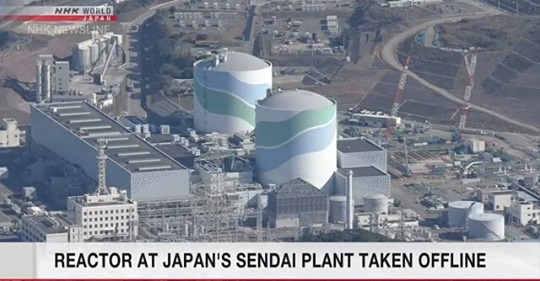
March 16, 2020
The operator of a nuclear power plant in southwestern Japan has suspended one of its reactors as it cannot meet the deadline for building mandatory facilities to deal with emergencies.
Kyushu Electric Power Company began work to reduce output at the No.1 reactor at the Sendai plant in Kagoshima Prefecture at 2:30 a.m. on Monday. The reactor went offline at 1:01 p.m.
Kyushu Electric will start regular inspections on the reactor earlier than scheduled.
This is the first time for a reactor to go offline because of its failure to meet the government’s new regulations.
The regulations were drawn up in 2013 after the nuclear accident at the Fukushima Daiichi plant two years earlier.
They require nuclear plant operators to construct facilities to ensure the safety of reactors in the event of emergencies such as acts of terror and aircraft crashes.
The Nuclear Regulation Authority, or NRA, obliges the operators to erect such facilities within five years of construction plans being approved.
Kyushu Electric says it aims to put the reactor back online after completing the necessary facilities by December and gaining approval from the NRA.
The utility also plans to shut down the No.2 reactor at the Sendai plant in May for failing to meet the deadline.
Kansai Electric Power Company is also expected to suspend the No.3 and No.4 reactors at the Takahama nuclear plant in Fukui Prefecture in August and October respectively for the same reason.
Destruction of habitats, loss of biodiversity, bring pandemics

|
DESTRUCTION OF HABITAT AND LOSS OF BIODIVERSITY ARE CREATING THE PERFECT CONDITIONS FOR DISEASES LIKE COVID-19 TO EMERGE As habitat and biodiversity loss increase globally, the novel coronavirus outbreak may be just the beginning of mass pandemics ENSIA, John Vidal 18 Mar 20, “……… Only a decade or two ago it was widely thought that tropical forests and intact natural environments teeming with exotic wildlife threatened humans by harboring the viruses and pathogens that lead to new diseases in humans like Ebola, HIV and dengue. But a number of researchers today think that it is actually humanity’s destruction of biodiversity that creates the conditions for new viruses and diseases like COVID-19, the viral disease that emerged in China in December 2019, to arise — with profound health and economic impacts in rich and poor countries alike. In fact, a new discipline, planetary health, is emerging that focuses on the increasingly visible connections among the well-being of humans, other living things and entire ecosystems.
Is it possible, then, that it was human activity, such as road building, mining, hunting and logging, that triggered the Ebola epidemics in Mayibout 2 and elsewhere in the 1990s and that is unleashing new terrors today? “We invade tropical forests and other wild landscapes, which harbor so many species of animals and plants — and within those creatures, so many unknown viruses,” David Quammen, author of Spillover: Animal Infections and the Next Pandemic, recently wrote in the New York Times. “We cut the trees; we kill the animals or cage them and send them to markets. We disrupt ecosystems, and we shake viruses loose from their natural hosts. When that happens, they need a new host. Often, we are it.”
Increasing Threat Research suggests that outbreaks of animal-borne and other infectious diseases like Ebola, SARS, bird flu and now COVID-19, caused by a novel coronavirus, are on the rise. Pathogens are crossing from animals to humans, and many are now able to spread quickly to new places. The U.S. Centers for Disease Control and Prevention (CDC) estimates that three-quarters of “new or emerging” diseases that infect humans originate in nonhuman animals. Some, like rabies and plague, crossed from animals centuries ago. Others, like Marburg, which is thought to be transmitted by bats, are still rare. A few, like COVID-19, which emerged last year in Wuhan, China, and MERS, which is linked to camels in the Middle East, are new to humans and spreading globally.
Other diseases that have crossed into humans include Lassa fever, which was first identified in 1969 in Nigeria; Nipah from Malaysia; and SARS from China, which killed more than 700 people and traveled to 30 countries in 2002–03. Some, like Zika and West Nile virus, which emerged in Africa, have mutated and become established on other continents.
Kate Jones, chair of ecology and biodiversity at UCL, calls emerging animal-borne infectious diseases an “increasing and very significant threat to global health, security and economies.” Amplification Effect In 2008, Jones and a team of researchers identified 335 diseases that emerged between 1960 and 2004, at least 60% of which came from non-human animals.
Increasingly, says Jones, these zoonotic diseases are linked to environmental change and human behavior. The disruption of pristine forests driven by logging, mining, road building through remote places, rapid urbanization and population growth is bringing people into closer contact with animal species they may never have been near before, she says. The resulting transmission of disease from wildlife to humans, she says, is now “a hidden cost of human economic development. There are just so many more of us, in every environment. We are going into largely undisturbed places and being exposed more and more. We are creating habitats where viruses are transmitted more easily, and then we are surprised that we have new ones.
Jones studies how land use change contributes to the risk. “We are researching how species in degraded habitats are likely to carry more viruses which can infect humans,” she says. “Simpler systems get an amplification effect. Destroy landscapes, and the species you are left with are the ones humans get the diseases from.”
“There are countless pathogens out there continuing to evolve which at some point could pose a threat to humans,” says Eric Fevre, chair of veterinary infectious diseases at the University of Liverpool’s Institute of Infection and Global Health. “The risk [of pathogens jumping from animals to humans] has always been there.”
The difference between now and a few decades ago, Fevre says, is that diseases are likely to spring up in both urban and natural environments. “We have created densely packed populations where alongside us are bats and rodents and birds, pets and other living things. That creates intense interaction and opportunities for things to move from species to species,” he says. Tip of the Iceberg “Pathogens do not respect species boundaries,” says disease ecologist Thomas Gillespie, an associate professor in Emory University’s Department of Environmental Sciences who studies how shrinking natural habitats and changing behavior add to the risks of diseases spilling over from animals to humans……… https://ensia.com/features/covid-19-coronavirus-biodiversity-planetary-health-zoonoses/
|
|
1 This Month

Tell Congress: Prevent Nuclear Catastrophe in Iran

Tell Congress: Prevent Nuclear Catastrophe in Iran

Read the Public Inquiry Report, the Commissioners’ report, Surrendering Australia: The AUKUS Deception is available to download for free at aukuspublicinquiry.com. Or just watch the replay of the National Press Club Luncheon.

19 November – Webinar – The Reality of Reprocessing
Time: 11:00 AM Pacific Time (US & Canada) / 2:00 PM Eastern / 7:00 PM UK / 8:00 PM CET
Register for the Zoom Event Here


Shut down the radiation-damaged Heysham nuclear reactors now
To see nuclear-related stories in greater depth and intensity – go to https://nuclearinformation.wordpress.com

Say No to NASA’s Reckless Nuclear Reactor on the Moon
Say No to NASA’s Reckless Nuclear Reactor on the Moon
-
Archives
- November 2026 (156)
- October 2026 (302)
- September 2026 (339)
- August 2026 (330)
- July 2026 (355)
- June 2026 (287)
- May 2026 (306)
- April 2026 (356)
- March 2026 (251)
- February 2026 (267)
- January 2026 (308)
- December 2025 (358)
-
Categories
- 1
- 1 NUCLEAR ISSUES
- business and costs
- climate change
- culture and arts
- ENERGY
- environment
- health
- history
- indigenous issues
- Legal
- marketing of nuclear
- media
- opposition to nuclear
- PERSONAL STORIES
- politics
- politics international
- Religion and ethics
- safety
- secrets,lies and civil liberties
- spinbuster
- technology
- Uranium
- wastes
- weapons and war
- Women
- 2 WORLD
- ACTION
- AFRICA
- Atrocities
- AUSTRALIA
- Christina's notes
- Christina's themes
- culture and arts
- Events
- Fuk 2022
- Fuk 2023
- Fukushima 2017
- Fukushima 2018
- fukushima 2019
- Fukushima 2020
- Fukushima 2021
- general
- global warming
- Humour (God we need it)
- Nuclear
- RARE EARTHS
- Reference
- resources – print
- Resources -audiovicual
- Weekly Newsletter
- World
- World Nuclear
- YouTube
-
RSS
Entries RSS
Comments RSS

