Moscow: roadworks commence on top of radioactive waste dump: protestors enraged

 Protests as Moscow moves to build road on radioactive dump, https://www.france24.com/en/20200318-protests-as-moscow-moves-to-build-road-on-radioactive-dump Moscow (AFP)Moscow authorities on Wednesday began work on building a highway over a Soviet-era dump of radioactive materials, despite months of public protests and warnings from environmental campaigners.
Greenpeace and other activists have long campaigned against the project to build an eight-lane motorway over the top of a tree-lined slope in southern Moscow that contains radioactive waste buried in the Soviet era.
The former top-secret facility produced the radioactive element thorium for nuclear reactors until the 1970s.
“We have registered 0.4 microsieverts,” while the permitted level in Moscow is 0.3,” Vlasov told AFP, adding that he expected those levels to increase in the future.
“When large-scale work begins, all this crap will be in the air,” he said.
Galina Rozvadovskaya, who lives near the site, said she came as soon as she learnt of the start of the construction work.
“Our task is to stop this lawlessness,” Rozvadovskaya told AFP. “What do we want? For them to conduct a proper survey of this burial site.”
Moscow Mayor Sergei Sobyanin is keen to redevelop post-industrial wasteland and insists there are only “insignificant traces of contamination” on the road’s route.
Activists say, however, dangerous radioactive particles could be spread around and end up in people’s lungs. Citing a state report, Greenpeace says the site contains at least 60,000 tonnes of radioactive waste.
ma-video-as/am/cdw
Joe Biden, Bernie Sanders, on climate and nuclear power
 Georgia’s Presidential Primary: Biden And Sanders
 On Climate WABE
Sanders and Biden agree that the U.S. should re-commit to the Paris Climate Agreement, the international accord that President Donald Trump is pulling the country out of. They also say the U.S. should be a world leader on climate change. And they have pledged to reject donations from the fossil fuel industry.
Both say that we need to make sure workers from, say, the coal industry, and their communities, aren’t left behind in a transition to cleaner energy sources.
They want to make big investments in infrastructure and in research and technology; they want to help get more electric vehicles on the roads, and improve railroads and public transit.
Timeline and Spending
Biden says he’d spend $1.7 trillion over the next ten years. Sanders proposes to spend almost ten times that amount, $16.3 trillion.
On the schedule side, Biden’s goal is net-zero greenhouse gas emissions by 2050.
Different Tactics
Both candidates have extensive plans, and we’re not getting all the details in here. But here are some of the tactics where they begin to diverge.
Part of what Biden wants to invest in is carbon capture technology, to basically suck carbon dioxide out of the air and store it to help counteract emissions.
Biden wants to regulate natural gas much more strictly, and to ban new oil and gas leases on federal lands. And he’d encourage renewable energy development in those places.
Sanders wants to basically remake the country’s electric system.
He wants to expand government-run power authorities and have them generate electricity from renewable sources, to eventually drive coal- and gas-fired power plants out of business.
Beyond the regulations Biden is calling for on natural gas, Sanders wants to flat out ban fracking. He also wants to ban imports and exports of fossil fuels.
And Sanders calls carbon capture technology, which Biden supports, a false solution.
While Sanders is against all of it, Biden supports research on a new generation of smaller, cheaper nuclear reactors. And he doesn’t rule out continuing to use the existing ones. https://www.wabe.org/georgias-presidential-primary-sanders-and-biden-on-climate/
Big European bank offers to help Russia retrieve 1000s of radioactive junk from the Arctic sea
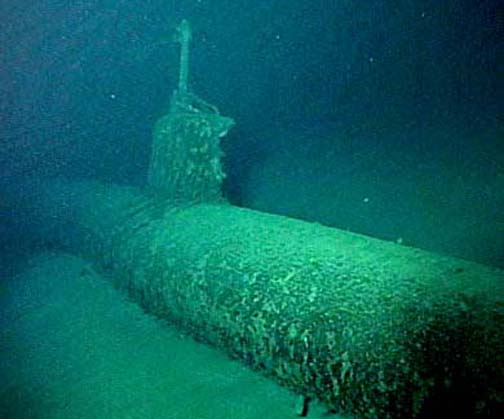
CTY Pisces – Photos of a Japanese midget submarine that was sunk off Pearl Harbor on the day of the attack. There’s a hole at the base of the conning tower where an artillery shell penetrated the hull, sinking the sub and killing the crew. Photos courtesy of Terry Kerby, Hawaii Undersea Research Laboratory. August 2003.
|
Major European bank could help Russia lift its sunken nuclear submarines https://bellona.org/news/nuclear-issues/2020-03-major-european-bank-could-help-russia-lift-its-sunken-nuclear-submarinesThe European Bank for Reconstruction and Development has signaled its readiness to help Russia raise Soviet-era radioactive debris, including two sunken nuclear submarines, from the bottom of Arctic seas. March 18, 2020 by Charles Digges charles@bellona.no While the deal is not yet final, it is thought that financial assistance would be allocated by the bank’s Northern Dimensions Environmental Partnership program – whose Nuclear Window fund has disbursed millions of dollars to help clean up radioactive hazards in Russia and Ukraine. Talks on funding the recovery of these Cold War artifacts have been underway since the end of last year, when the Russian government reinvigorated long-dormant discussions on retrieving the sunken radioactive cast offs. Alexander Nikitin, who heads Bellona’s St Petersburg offices, has been a part of these discussions. According to the Russian government’s official website on submarine decommissioning programs, the plan to raise the subs was presented at the EBRD’s assembly of donors in December, where the cost for the project was estimated at €300 million. It will now be up to Russia, the site reported, to furnish the bank with a comprehensive plan on raising the subs. While Moscow has considered various methods for raising the subs over the years, those who participated in the December discussions concluded a special ship might have to be built to get the job done. Beginning in the 1960s, the Soviet Navy used the waters east of the Novaya Zemlya atomic weapons testing range as a sort of watery nuclear waste dump. While the Soviet Union was hardly the only nuclear nation that resorted to dumping radioactive waste at sea, it was one of the most prolific. According to catalogues released by Russia in 2012, the military dumped some 18,000 separate objects in the Arctic that could be classified as radioactive waste. These included some 17,000 containers of radioactive waste; 19 ships containing radioactive waste; 14 nuclear reactors, including five still loaded with spent nuclear fuel; and 735 other piece of radioactively contaminated heavy machinery. Scientists at the Nuclear Safety Institute of the Russian Academy of Sciences, or IBRAE, say that time and corrosion have managed to decay thousands of these hazards and render them harmless. This leaves about 1,000 that continue to post a high risk of spreading radioactive contamination. Chief among these are two submarines, the K-159 and the K-27, both of which officials say pose the greatest threat to the environments in which they now lie. The K-159, which sank while it was being towed to decommissioning in 2003 and killed the nine sailors aboard, now lies in some of the most fertile fishing grounds of the Kara Sea. Raising this sub, say Russian experts, should be a priority. Its reactors hold some 800 kilograms of spent nuclear fuel, which they fear could contaminate the sea floor, leading to an economic crisis for the Russian and Norwegian fishing industries.
Like the K-159, the K-27 claimed its share of victims. Nine members of its crew of 144 died of radiation related illnesses shortly after returning to shore. Many more of the crew succumbed to similar illnesses in the years that followed. Too radioactive to be dismantled conventionally, the Soviet Navy towed the K-27 to the Arctic Novaya Zemlya nuclear testing range in 1982 and scuttled it in one of the archipelago’s fjords at a depth of about 30 meters. The sinking took some effort. The sub was weighed down by concrete and asphalt to secure its reactor and a hole was blown in its aft ballast tank to swamp it. But the fix won’t last forever. The asphalt was only meant to stave off contamination until 2032. Worse still is that the K-27’s reactors could be in danger of generating an uncontrolled nuclear chain reaction, prompting many experts to demand it be retrieved first. Raising these submarines from the depths will require technology Russia currently lacks. Even the lifting of the Kursk – perhaps the most famous sub recovery to date – required the assistance of the Dutch. But the K-159 lies at a depth much greater than the Kursk did, leading many experts to suggest building an new vessel for the purpose. From 1946 to 1993, more than 200,000 tons of waste, some of it highly radioactive, was dumped in the world’s oceans, mainly in metal drums, according to the International Atomic Energy Agency. The lion’s share of dumped nuclear waste came from Britain and the Soviet Union, figures from the IAEA show. By 1991, the US had dropped more than 90,000 barrels and at least 190,000 cubic meters of radioactive waste in the North Atlantic and Pacific. Other countries including Belgium, France, Switzerland and the Netherlands also disposed of tons of radioactive waste in the North Atlantic in the 1960s, 70s and 80s. |
|
|

Sellafield nuclear waste site to close due to coronavirus
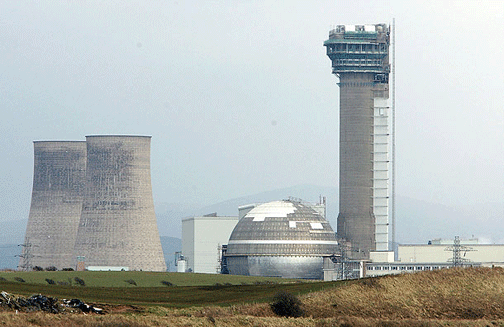 Sellafield nuclear waste site to close due to coronavirus, Magnox reprocessing plant will begin controlled shutdown after 8% of staff self-isolate,Guardian Jillian Ambrose Energy correspondentThu 19 Mar 2020 Britain’s nuclear waste site will shut its reprocessing plant at Sellafield after more than 8% of its staff began self-isolating to prevent the spread of the coronavirus.
The controlled shutdown of the Magnox plant in Cumbria will begin in the next few days after an outbreak of the Covid-19 virus within Sellafield’s 11,500 staff.
The company told employees on Tuesday evening that it would “scale back some operations” to “make best use of available people”.
Sellafield revealed last weekend that a staff member had tested positive for coronavirus, and on Monday it confirmed that another employee with suspected Covid-19 had begun self-isolation.
The number of Sellafield employees self-isolating has quickly climbed to about 1,000.
A Sellafield spokesman said the number in self-isolation included people with symptoms of the virus as well as those with underlying health conditions who undertaking social distancing……..
The Magnox plant is to close permanently this year. It began reprocessing waste from Britain’s first nuclear reactors in 1964 to separate the uranium and plutonium, which can still be reused from the spent radioactive waste. https://www.theguardian.com/business/2020/mar/18/sellafield-nuclear-waste-plant-close-coronavirus-staff
“Peaceful” and military nuclear reactors always inextricably linked
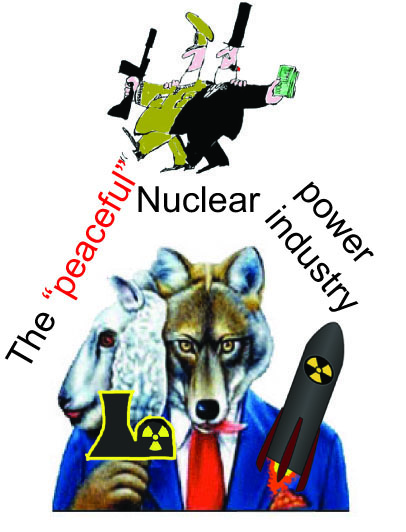 Anne McMenamin Nuclear Fuel Cycle Watch Australia, 19 Mar 20, . I’m referring to the structural links between the commercial and military uses of nuclear reactors, and, to some extent, the way THEY see it – which doesn’t always line up with the technical realities. History shows that the 2 industries have been inextricably linked from the beginning.
“Great efforts have been and still are made to disguise the close connection between nuclear energy for war and for power stations. Two reasons are suggested for this: political convenience in avoiding additional informed protests against nuclear weapon production and industrial convenience in carrying on without public protest what has become a very profitable industry.”
Sir Kelvin Spencer CBE FCGI LLD (HON)
First issue of Medicine and War, in 1985
Similarly, a document from the Los Alamos National Laboratory in August, 1981, states:
“There is no technical demarcation between the military and civilian reactor and there never was one. What has persisted over the decades is just the misconception that such a linkage does not exist.”
“Some Political Issues Related to Future Special Nuclear Fuels Production,”
LA- 8969-MS, UC-16
In 2013, historian Dr David Palmer said,
“The issue is processing uranium for nuclear power that then can be used for defence. You have to understand this in terms of Adelaide; it’s a military, industrial and intelligence complex.”
Palmer was commenting on the notable push for nuclear energy and nuclear submarines coming from numerous academics and business people in Adelaide. He considered the real motive behind the nuclear push is security in energy supply for the military, and hence the need to solve the problem of waste disposal, which is currently discouraging investment in nuclear power. Major military/weapons corporations such as Raytheon, Halliburton subsidiary Kellogg, Brown and Root, Lockheed Martin, Babcock and General Atomics are now a noticeable presence in the SA economy.
Links can be clearly seen, e.g. Heathgate, which owns the Beverley mine, is a wholly owned subsidiary of General Atomics, one of the world’s largest weapons manufacturer/servicer. https://www.facebook.com/groups/1021186047913052/
Military use: that is clearly the reason for developing Small Nuclear Reactors
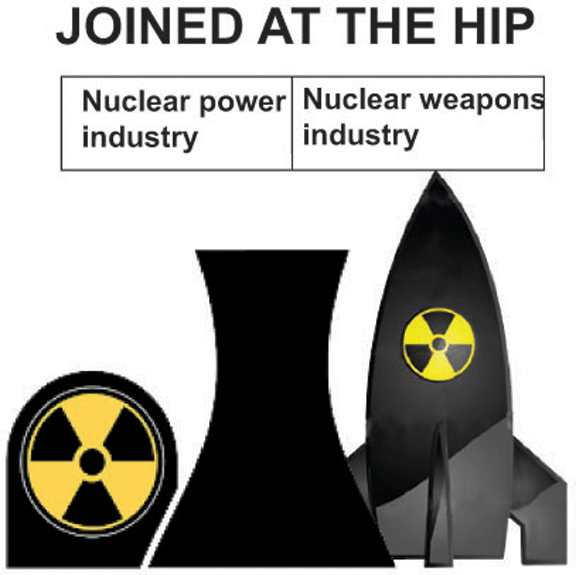 If the testing goes well, a commercially developed, Nuclear Regulatory Commission licensed reactor will be demonstrated on a “permanent domestic military installation.
The department awarded contracts to BWX Technologies, Inc. of Virginia, for $13.5 million; Westinghouse Government Services of Washington, D.C. for $11.9 million; and X-energy, LLC of Maryland, for $14.3 million, to begin a two-year engineering design competition for a small nuclear microreactor designed to potentially be forward deployed with forces outside the continental United States.
The combined $39.7 million in contracts are from “Project Pele,” a project run through the Strategic Capabilities Office (SCO), located within the department’s research and engineering side. The prototype is looking at a 1-5 megawatt (MWe) power range. The Department of Energy has been supporting the project at its Idaho National Laboratory.
Pele “involves the development of a safe, mobile and advanced nuclear microreactor to support a variety of Department of Defense missions such as generating power for remote operating bases,” said Lt. Col. Robert Carver, a department spokesman. “After a two-year design-maturation period, one of the companies funded to begin design work may be selected to build and demonstrate a prototype.”…….
A second effort is being run through the office of the undersecretary of acquisition and sustainment. That effort, ordered in the 2019 National Defense Authorization Act, involves a pilot program aiming to demonstrate the efficacy of a small nuclear reactor, in the 2-10 MWe range, with initial testing at a Department of Energy site in roughly the 2023 timeframe.
If the testing goes well, a commercially developed, Nuclear Regulatory Commission licensed reactor will be demonstrated on a “permanent domestic military installation by 2027,” according to DoD spokesman Lt. Col. Mike Andrews. “If the full demonstration proves to be a cost effective energy resilience alternative, NRC-licensed [reactors] will provide an additional option for generating power provided to DoD through power purchase agreements.”…….
According to Dr. Jonathan Cobb, a spokesman for the World Nuclear Association, small nuclear reactors come in three flavors. The first, small modular reactors, sit in the 20-300 MWe range and are approaching the point they will appear on market.
The second category sits from 10-100 megawatts, and have been used in transports such as icebreakers. According to Cobb, a pair of 32 MWe reactors, based on icebreaker technology, are being used aboard the Akademik Lomonosov, a Russian “floating power plant.”
The third category, covering what the Pentagon appears most interested in, is a category known as microreactors. The challenge, Cobb said, is that this group is the furthest behind technologically, with demonstrations of commercial systems targeted for “the second half of the 2020s,” putting them in the “ballpark” of what DoD is looking for with its A&S effort……
Edwin Lyman, director of the Nuclear Safety Project at the Union of Concerned Scientists, has concerns about the availability of fuel to power a proliferation of small nuclear reactors. He noted, “there are no clear plans for manufacturing the quantity of high-assay low enriched uranium, much less the production of high-quality TRISO [TRi-structural ISOtropic particle] fuel, that would be able to meet timelines this decade.”……
Lord, for her part, would not rule out working with foreign allies on the nuclear program in some way, saying “We always talk with our partners and allies about collaboration. We have many umbrella vehicles, if you will, to do that, particularly with [National Technology and Industrial Base] countries — U.K., Canada, Australia. We have a little bit of an easy button there for working back and forth with technical information.”… https://www.defensenews.com/smr/nuclear-arsenal/2020/03/09/pentagon-to-award-mobile-nuclear-reactor-contracts-this-week/?fbclid=IwAR2MTkRUDqIkruQHY0RivblBzoSY6gubpl8gkWDUDhedVwZEGstJhHYLb6U#.XmawxEl-aJ0.facebook
Impact of coronavirus is curbing greenhouse gas emissions
How changes brought on by coronavirus could help tackle climate change Based on projections for economic growth in 2020, there are suggestions that the impact of the coronavirus might significantly curb global emissions. https://www.sbs.com.au/news/how-changes-brought-on-by-coronavirus-could-help-tackle-climate-change
Restrictions in the free movement of people are disrupting economic activity across the world as measures to control the coronavirus roll out.
There is a strong link between economic activity and global carbon dioxide emissions, due to the dominance of fossil fuel sources of energy.
This coupling suggests we might be in for an unexpected surprise due to the coronavirus pandemic: a slowdown of carbon dioxide emissions due to reduced energy consumption.
Based on new projections for economic growth in 2020, we suggest the impact of the coronavirus might significantly curb global emissions.
The effect is likely to be less pronounced than during the global financial crisis (GFC). And emissions declines in response to past economic crises suggest a rapid recovery of emissions when the pandemic is over.
But prudent spending of economic stimulus measures, and a permanent adoption of new work behaviours, could influence how emissions evolve in future.
The world in crisis
In just a few short months, millions of people have been put into quarantine and regions locked down to reduce the spread of the coronavirus. Around the world, events are being cancelled and travel plans dropped.
A growing number of universities, schools and workplaces have closed and some workers are choosing to work from home if they can.
Even the Intergovernmental Panel on Climate Change has cancelled a critically important meeting and will instead hold it virtually.
The International Energy Agency had already predicted oil use would drop in 2020, and this was before an oil price war emerged between Saudi Arabia and Russia.
The unprecedented coronavirus lockdown in China led to an estimated 25 per cent reduction in energy use and emissions over a two-week period compared to previous years (mostly due to a drop in electricity use, industrial production and transport).
This is enough to shave one percentage point growth off China’s emissions in 2020.
Reductions are also being observed in Italy, and are likely to spread across Europe as lockdowns become more widespread.
The emission-intensive airline industry, covering 2.6 per cent of global carbon dioxide emissions (both national and international), is in freefall.
It may take months, if not years, for people to return to air travel given that coronavirus may linger for several seasons.
Given these economic upheavals, it is becoming increasingly likely that global carbon dioxide emissions will drop in 2020.
Coronavirus is not the GFC
Leading authorities have revised down economic forecasts as a result of the pandemic, but so far forecasts still indicate the global economy will grow in 2020. For example, the Organisation for Economic Cooperation and Development (OECD) downgraded estimates of global growth in 2020 from three per cent (made in November 2019) to 2.4 per cent (made in March 2020).
The International Monetary Fund has indicated similar declines, with an update due next month.
Assuming the carbon efficiency of the global economy improves in line with the 10-year average of 2.5 per cent per year, the OECD’s post-coronavirus growth projection implies carbon dioxide emissions may decline 0.3 per cent in 2020 (including a leap year adjustment).
But the GFC experience indicates that the carbon efficiency of the global economy may improve much more slowly during a crisis. If this happens in 2020 because of the coronavirus, carbon dioxide emissions still could grow.
A decomposition of CO2 emissions growth into economic growth (orange) and carbon efficiency improvements (green) to estimate future emissions based on OECD economic growth projections. Glen Peters/CICERO
Under the worst-case OECD forecast the global economy in 2020 could grow as little as 1.5 per cent.
All else equal, we calculate this would lead to a 1.2 per cent decline in carbon dioxide emissions in 2020.
This drop is comparable to the GFC, which in 2009 led to a 0.1 per cent drop in global GDP and a 1.2 per cent drop in emissions.
So far, neither the OECD or International Monetary Fund have suggested coronavirus will take global GDP into the red.
The emissions rebound
The GFC prompted big, swift stimulus packages from governments around the world, leading to a 5.1 per cent rebound in global emissions in 2010, well above the long-term average.
Previous financial shocks, such as the collapse of the former Soviet Union or the 1970s and 1980s oil crises, also had periods with lower or negative growth, but growth soon returned.
At best, a financial crisis delays emissions growth a few years. Structural changes may happen, such as the shift to nuclear energy after the oil crises, but evidence suggests emissions continue to grow.
The economic legacy of the coronavirus might also be very different to the GFC. It looks more like a slow burner, with a drop in productivity over an extended period rather than widespread job losses in the short term.
Looking to the future
The coronavirus pandemic will not turn around the long-term upward trend in global emissions. But governments around the world are announcing economic stimulus measures, and the way they’re spent may affect how emissions evolve in future.
There is an opportunity to invest the stimulus money in structural changes leading to reduced emissions after economic growth returns, such as further development of clean technologies.
Also, the coronavirus has forced new working-from-home habits that limit commuting, and a broader adoption of online meetings to reduce the need for long-haul business flights. This raises the prospect of long-term emissions reductions should these new work behaviours persist beyond the current global emergency.
The coronavirus is, of course, an international crisis, and a personal tragedy for those who have lost, and will lose, loved ones. But with good planning, 2020 could be the year that global emissions peak (though the same was said after the GFC).
That said, past economic shocks might not be a great analogue for the coronavirus pandemic, which is unprecedented in modern human history and has a long way to go.
Tokyo High Court slashes damages to Fukushima nuclear disaster evacuees
|
Tokyo High Court slashes damages to Fukushima nuclear disaster evacuees, Japan Times, 18 Mar 20, The Tokyo High Court on Tuesday ordered ¥1 million in additional damages be paid each to some 300 evacuees from the 2011 Fukushima nuclear disaster, down by two-thirds from the amount awarded by a lower court ruling.The total amount of additional compensation Tokyo Electric Power Company Holdings Inc. must pay was reduced to about ¥360 million from the ¥1.1 billion awarded by the Tokyo District Court in 2018…….
In their petition, the plaintiffs, including former residents of the Odaka district in Minamisoma, Fukushima Prefecture, sought additional damages of ¥10.9 billion in total. The ruling was the second by a high court on a collective damages lawsuit filed by those displaced by the nuclear accident, following one issued by Sendai High Court last week. On Tuesday, presiding Judge Wataru Murata said Tepco must pay additional damages on top of the ¥8.5 million it paid per person based on estimates calculated under government-set interim standards. The additional damages have to be paid to compensate for the loss of hometowns, as “the foundations of residents’ lives have changed greatly and have yet to be restored,” Murata said. But the amount of the additional damages should be reduced because individual circumstances of the evacuees should not be taken into account, Murata said, denying the need for such consideration as had been recognized by the lower court…….https://www.japantimes.co.jp/news/2020/03/18/national/crime-legal/tokyo-high-court-slashes-damages-fukushima-nuclear-disaster-evacuees/#.XnJ94IgzbIU |
|
New research on the global climate impacts of a small nuclear war
How a small nuclear war would transform the entire planet
Nuclear waste dumping for the beautiful landscape of the Northwoods?
 Nuclear Waste In The Northwoods https://www.wxpr.org/post/nuclear-waste-northwoods#stream/0 By GARY ENTZ 18 Mar 20, The issue of nuclear waste generated by power plants in the United States always seems to be somebody else’s problem. In this week’s Northwoods Moment in History, Gary Entz reminds us how it wasn’t so long ago that it could have been a problem for the Northwoods and could be again in the future.
The beautiful landscape of the Northwoods along with its pristine lakes and streams is something that most people would not associate with a nuclear waste dump. Yet not so long ago that is exactly what the United States Department of Energy had in mind for the region. What was once known as Atomic Power grew out of the atomic weapons research programs of World War II and the Cold War. The first fission reactor capable of generating electricity came online in 1951 and the first commercial reactor to generate electricity for the public market came online in 1957. By March of 1979, when the accident at Three Mile Island occurred, there were over eighty nuclear reactors that either were or had been in operation in the U.S. with nearly sixty more under construction. Wisconsin had three of those reactors, located at Point Beach, Kewaunee, and La Crosse. Nuclear power is touted as being clean energy because it has zero emissions; that is, the steam rising from a nuclear cooling tower is just that, water steam. However, fuel rods are usually swapped out every 18 to 24 months. Spent fuel rods remain dangerously radioactive for 10,000 years or longer and must be safely stored. Unused nuclear fuel rods typically spend 7 to 10 years in a pool of water to cool down and are then stored in dry casks either at the power plant site or in a spent fuel storage installation. Today there eighty sites across dozens of states where nearly 80,000 metric tons of nuclear waste from America’s power plants and military installations is stored. This is where the Northwoods comes in. By the late 1970s, the Department of Energy wanted a centralized location where all the nation’s nuclear waste could be stored and monitored. In the 1980s, the DOE ranked Wisconsin’s Wolf River Batholith as number two of the top three options for a high-level nuclear waste repository. The Batholith is a 1,000 square mile watershed that extends over seven counties, including Langlade, Shawano, Waupaca, Menominee, Portage, Marathon and Oconto counties, and the land of three tribes, the Stockbridge-Munsee, Menominee and Ho-Chunk. This area was selected due to its stable granite geology and lack of earthquakes. The proposed sixteen square mile facility was dangerously close to popular waterways. If the radioactive materials leaked, then contaminated water could flow into the Wolf River, the Fox River, and on to Lake Winnebago and Lake Michigan. The people of the Northwoods and all of Wisconsin were overwhelmingly opposed to becoming a nuclear dump for the DOE. In a 1983 statewide referendum, 89 percent voted for a moratorium on nuclear power and a waste disposal site in Wisconsin. Because of the licensing issues at Yucca Mountain, Nevada, the DOE has been looking for different options, and in 2008 the Wolf River Batholith was again listed as a leading alternative. In 2015, when the state legislature voted to overturn the 1983 moratorium on nuclear power, it also inadvertently lifted to moratorium on a nuclear waste dump. |
|
EDF reassures UK that during coronavirus epidemic, nuclear operations will continue
|
EDF Energy says plans in place to maintain operations at UK nuclear plants https://uk.finance.yahoo.com/news/edf-energy-says-plans-place-144424093.html?guccounter=1&guce_referrer=aHR0cHM6Ly9uZXdzLmdvb2dsZS5jb20v&guce_referrer_sig=AQAAABq2naeyyQ9ohtcPQW2Ho9e2-qDfI6XSbDwfZUneTxi4VhdT3GWx-zWbqg0MCFS2ArOO-cBI7xrEXbGJxc_Z4MEQGCMb8xZYz9GdF6dLu3azUPUvN5EB4x2GgyUSjwZkX1E93xGECuqxS4HnxqOETaVwytGf9KBTZIzT3QuaBP-R Reuters18 March 2020 By Nina ChestneyLONDON (Reuters) – EDF Energy has plans in place to maintain operations at its nuclear power plants in Britain during the coronavirus outbreak, it told Reuters on Tuesday.
The company operates all 15 nuclear reactors in Britain. Currently eight of those, with a combined capacity of around 4.2 gigawatts – almost half of the country’s total nuclear power capacity – are offline for planned or unplanned outages. “We have comprehensive plans in place to maintain operations at all of our power stations and planned generation is not affected at any of our sites,” said a spokeswoman, declining to specify what the measures were. On Monday, EDF Energy’s parent company EDF <EDF.PA> said it would reduce staff at its Flamanville nuclear power plant in northern France due to coronavirus infections in the Cotentin region. The plant has been offline for maintenance. Britain’s Office for Nuclear Regulation (ONR) said all UK sites have minimum staffing levels, and contingency plans should they fall below these levels, to enable them to stay in control of activities that could affect nuclear safety under all foreseeable circumstances. The ONR, which is in charge of overseeing nuclear safety, said its staff have been directed to work at home. “A number of inspectors will continue to travel to sites where required, but we will endeavour to carry out as much of our business as possible via phone, email and Skype,” it said. “These measures will not have a severe impact on our regulation of the nuclear industry.” (Reporting by Nina Chestney; Editing by Pravin Char and Jan Harvey) |
|
Democrats may not support Trump’s new W93 nuclear weapons program
|
Political Battle Brewing Over New Nuclear Program, National Defense
3/17/2020, By Jon Harper The Trump administration’s proposal to begin work on a new nuclear warhead program to modernize the nation’s aging stockpile is expected to be hotly contested.For fiscal year 2021, President Donald Trump requested $28.9 billion for the Pentagon’s nuclear enterprise. He requested an additional $15.6 billion for efforts by the National Nuclear Security Administration, which manages the stockpile, including $53 million for NNSA work on a new warhead, dubbed the W93.
The Pentagon’s budget blueprint includes $480 million for work on the weapon system over the future years defense program, with $32 million slated for 2021. The W93 is intended for the Navy’s submarine-launched ballistic missiles, according to senior defense officials. There are currently two families of warheads for the sea-based leg of the triad: the W76 and the W88. “Both of these systems are growing old, and so now we must start thinking about a warhead that will replace one of those two when it’s time for those systems to retire,” a senior defense official told reporters during a background briefing. “These things take a long time. There’s a seven-stage process by which we start to develop a warhead.”…….. The Department of Energy has estimated that the program will cost about $10.9 billion in 2019 dollars. Hans Kristensen, director of the Nuclear Information Project at the Federation of American Scientists, said the $10.9 billion estimate is “low-balling it.” A new fuze is also needed, he noted in an email. “New fuzes are expensive.” Other components could increase the price tag. “The W88 uses the Mk5 [reentry body] but the W93 will likely use a new Mk7, which will add to the cost projection,” Kristensen said. “A W93 using Mk7 obviously will be more expensive than the standard life-extension programs.”….. Nuclear modernization programs, especially those related to warheads, have put Republicans and Democrats at loggerheads in the past. “This will be, I predict, the probably most contentious issue in this year’s defense authorization bill about modernizing the stockpile,” House Armed Services Committee Ranking Member Rep. Mac Thornberry, R-Texas, said during recent remarks at the Brookings Institution. “There is a temptation to say, ‘Oh, it’s worked pretty well so far. Why do we need to mess with it and spend all this money?’” Thornberry said the nuclear arsenal needs to be modernized. However, Democrats may not go along with the W93 plans. “Congressional leadership has yet to receive the military requirement or justification for another new nuclear warhead,” a spokesperson for HASC Democrats said in an email. “As recently as July 2019, the Department of Energy projected it would begin work on this warhead in 2023. Work on this new warhead will add billions of dollars to an already strained nuclear modernization plan.”…… https://www.nationaldefensemagazine.org/articles/2020/3/17/political-battle-brewing-over-new-nuclear-program |
|
How dangerous is a coronavirus infection?

Gene Leonard MDCorona 30 Morbitity Mers 18 Mar 20
Do not listen to conspiracy theories or factoids. It is serious. 86 percent of the people, who already heve the virus in the USA, do not know they have it. It can kill babies and toddlers as well. If you value your loved ones hunker down, and help slow down the deadly virus’s transmission.
How dangerous is a coronavirus infection?
Usually coronavirus illnesses are fairly mild, affecting just the upper airway. But the new virus, as well as both SARS and MERS, are different.
Those three types of betacoronaviruses can latch onto proteins studding the outside of lung cells, and penetrate much deeper into the airway than cold-causing coronaviruses, says Anthony Fauci, director of the U.S. National Institute of Allergy and Infectious Diseases in Bethesda, M.D. The 2019 version is “a disease that causes more lung disease than sniffles,” Fauci says.
Damage to the lungs can make the viruses deadly. In 2003 and 2004, SARS killed nearly 10 percent of the 8,096 people in 29 countries who fell ill. A total of 774 people died, according to the World Health Organization.
MERS is even more deadly, claiming about 30 percent of people it infects. Unlike SARS, outbreaks of that virus are still simmering, Fauci says. Since 2012, MERS has caused 2,494 confirmed cases in 27 countries and killed 858 people.
MERS can spread from person to person, and some “superspreaders” have passed the virus on to many others. Most famously, 186 people contracted MERS after one businessman unwittingly brought the virus to South Korea in 2015 and spread it to others. Another superspreader who caught MERS from that man passed the virus to 82 people over just two days while being treated in a hospital
Nuclear-powered submarines – fraught with legal and political problems

|
The Complex Policy Questions Raised by Nuclear Energy’s Role in the Future of Warfare, Just Security by Alex Gilbert, Morgan Bazilian and Julia Nesheiwat, March 16, 2020 The United States military, as well as other militaries around the world, are racing to develop high-energy weapons—lasers, high-powered microwaves, and electromagnetic rail guns—in order to compete with near-peer competitors on the next generation of military technologies. But the electricity to power these systems will need to derive from somewhere, and so military planners are eyeing a new generation of energy-dense nuclear reactors, despite potential policy and legal challenges to doing so…….. The Army is considering mobile nuclear power plants, in part to drive high-energy weapons, an idea one retired three-star hailed as a potential logistics revolution. And should the U.S. build space-based lasers for missile defense, nuclear energy may be the only way to provide the needed megawatts. All this raises key policy concerns in relation to international law, rules of engagement, and the laws of warfare. Basing, or even deploying, nuclear reactors in the territorial waters or land of an overseas ally requires the permission of the host government, which may be averse to expanding nuclear power as in the case of major bases like Yokosuka, Japan. Diego Garcia, an island in the Indian Ocean, provides another challenging case as the ongoing territorial dispute between the United Kingdom and Mauritius threatens the U.S. base there, and a nuclear plant would only complicate the existing dispute. The U.S. Navy already faces constraints on where their nuclear-powered ships can visit. Floating nuclear power plants, like those developed by Russia and China, face similar concerns if they transit foreign waters or, in the case of the South China Sea, are stationed in disputed territories. Similarly, mobile reactors, like those considered by the U.S. Army, would likely be transported by air, requiring permission of all overflight countries. Beyond basing, a critical question is whether the U.S. military would own and operate these new reactors, as the Navy currently does, or whether they would pursue commercial alternatives, as the Army is considering. The U.S. Army report on mobile reactors noted that, with either government or commercial ownership, there are concerns about international rules and licensing that present potential barriers to deployment. In some cases, potential host countries do not even have nuclear regulatory agencies. Further, commercial ownership raises liability concerns, both in the case of a military incident or an accident. International nuclear liability treaties are not well harmonized between the U.S. and most of its allies, especially when it comes to the unique concerns of transportable reactors. Using nuclear power for high-energy weapons also creates targeting dilemmas for the U.S. and foreign militaries. High-energy weapons and their support infrastructure, including reactors, may be initial targets in a conflict. The social, environmental, and reputational impacts of damaging a nuclear reactor, particularly on a country’s home territory, or with effects on a third country, could lead to conflict escalation and international condemnation……. Nuclear-powered laser satellites could aggravate concerns about nuclear arms controls as such systems could be used for anti-ballistic missile or anti-satellite applications. While the Outer Space Treaty prohibits weapons of mass destruction in orbit, it does not prohibit other types of weaponry. During the Cold War, Soviet military space reactors raised calls for bans on space nuclear power, particularly after one accidentally crashed in Canada. Recent calls for space arms control have been unsuccessful. As with terrestrial nuclear-powered lasers, the unique role of laser satellites would make them early targets in any major power conflict, leading to risks of collateral damage from radioactive and dangerous space debris, as occurred after the accidental 2009 collision involving a decommissioned Soviet nuclear satellite.. The article below is not about Australia, but it is about small nuclear reactors. Everybody knows, (just quietly) that Australia won’t be getting small nuclear reactors for providing electricity. The real aim is for nuclear-powered submarines. So this article, about the legal and political problems of nuclear reactors for Defence is applicable to Australia, too
The Complex Policy Questions Raised by Nuclear Energy’s Role in the Future of Warfare, Just Security by Alex Gilbert, Morgan Bazilian and Julia Nesheiwat, March 16, 2020 The United States military, as well as other militaries around the world, are racing to develop high-energy weapons—lasers, high-powered microwaves, and electromagnetic rail guns—in order to compete with near-peer competitors on the next generation of military technologies. But the electricity to power these systems will need to derive from somewhere, and so military planners are eyeing a new generation of energy-dense nuclear reactors, despite potential policy and legal challenges to doing so…….. The Army is considering mobile nuclear power plants, in part to drive high-energy weapons, an idea one retired three-star hailed as a potential logistics revolution. And should the U.S. build space-based lasers for missile defense, nuclear energy may be the only way to provide the needed megawatts.
All this raises key policy concerns in relation to international law, rules of engagement, and the laws of warfare.
Basing, or even deploying, nuclear reactors in the territorial waters or land of an overseas ally requires the permission of the host government, which may be averse to expanding nuclear power as in the case of major bases like Yokosuka, Japan. Diego Garcia, an island in the Indian Ocean, provides another challenging case as the ongoing territorial dispute between the United Kingdom and Mauritius threatens the U.S. base there, and a nuclear plant would only complicate the existing dispute.
The U.S. Navy already faces constraints on where their nuclear-powered ships can visit. Floating nuclear power plants, like those developed by Russia and China, face similar concerns if they transit foreign waters or, in the case of the South China Sea, are stationed in disputed territories. Similarly, mobile reactors, like those considered by the U.S. Army, would likely be transported by air, requiring permission of all overflight countries.
Beyond basing, a critical question is whether the U.S. military would own and operate these new reactors, as the Navy currently does, or whether they would pursue commercial alternatives, as the Army is considering. The U.S. Army report on mobile reactors noted that, with either government or commercial ownership, there are concerns about international rules and licensing that present potential barriers to deployment. In some cases, potential host countries do not even have nuclear regulatory agencies. Further, commercial ownership raises liability concerns, both in the case of a military incident or an accident. International nuclear liability treaties are not well harmonized between the U.S. and most of its allies, especially when it comes to the unique concerns of transportable reactors.
Using nuclear power for high-energy weapons also creates targeting dilemmas for the U.S. and foreign militaries. High-energy weapons and their support infrastructure, including reactors, may be initial targets in a conflict. The social, environmental, and reputational impacts of damaging a nuclear reactor, particularly on a country’s home territory, or with effects on a third country, could lead to conflict escalation and international condemnation…….
Nuclear-powered laser satellites could aggravate concerns about nuclear arms controls as such systems could be used for anti-ballistic missile or anti-satellite applications. While the Outer Space Treaty prohibits weapons of mass destruction in orbit, it does not prohibit other types of weaponry. During the Cold War, Soviet military space reactors raised calls for bans on space nuclear power, particularly after one accidentally crashed in Canada. Recent calls for space arms control have been unsuccessful. As with terrestrial nuclear-powered lasers, the unique role of laser satellites would make them early targets in any major power conflict, leading to risks of collateral damage from radioactive and dangerous space debris, as occurred after the accidental 2009 collision involving a decommissioned Soviet nuclear satellite…. …… https://www.justsecurity.org/69056/the-complex-policy-questions-raised-by-nuclear-energys-role-in-the-future-of-warfare/
|
|
“Military Intelligence?” 30,000 U.S. soldiers to Corona-infested Europe for “war games”

|
U.S. Army invades virus plagued Europe, http://space4peace.blogspot.com/2020/03/us-army-invades-virus-plagued-europe.html BRUCE K. GAGNON BRUNSWICK, MAINE, UNITED STATES
In the midst of a staggering virus epidemic that has shut much of Europe down, the insane and arrogant United States is presently sending 30,000 Army troops throughout Europe for war games.As the soldiers emerged from their transport planes they shook the hands of US and European military officials welcoming them to the hot bed of corona-virus.
|
|
1 This Month

Tell Congress: Prevent Nuclear Catastrophe in Iran

Tell Congress: Prevent Nuclear Catastrophe in Iran

Read the Public Inquiry Report, the Commissioners’ report, Surrendering Australia: The AUKUS Deception is available to download for free at aukuspublicinquiry.com. Or just watch the replay of the National Press Club Luncheon.

19 November – Webinar – The Reality of Reprocessing
Time: 11:00 AM Pacific Time (US & Canada) / 2:00 PM Eastern / 7:00 PM UK / 8:00 PM CET
Register for the Zoom Event Here


Shut down the radiation-damaged Heysham nuclear reactors now
To see nuclear-related stories in greater depth and intensity – go to https://nuclearinformation.wordpress.com

Say No to NASA’s Reckless Nuclear Reactor on the Moon
Say No to NASA’s Reckless Nuclear Reactor on the Moon
-
Archives
- November 2026 (156)
- October 2026 (302)
- September 2026 (339)
- August 2026 (330)
- July 2026 (355)
- June 2026 (287)
- May 2026 (306)
- April 2026 (356)
- March 2026 (251)
- February 2026 (267)
- January 2026 (308)
- December 2025 (358)
-
Categories
- 1
- 1 NUCLEAR ISSUES
- business and costs
- climate change
- culture and arts
- ENERGY
- environment
- health
- history
- indigenous issues
- Legal
- marketing of nuclear
- media
- opposition to nuclear
- PERSONAL STORIES
- politics
- politics international
- Religion and ethics
- safety
- secrets,lies and civil liberties
- spinbuster
- technology
- Uranium
- wastes
- weapons and war
- Women
- 2 WORLD
- ACTION
- AFRICA
- Atrocities
- AUSTRALIA
- Christina's notes
- Christina's themes
- culture and arts
- Events
- Fuk 2022
- Fuk 2023
- Fukushima 2017
- Fukushima 2018
- fukushima 2019
- Fukushima 2020
- Fukushima 2021
- general
- global warming
- Humour (God we need it)
- Nuclear
- RARE EARTHS
- Reference
- resources – print
- Resources -audiovicual
- Weekly Newsletter
- World
- World Nuclear
- YouTube
-
RSS
Entries RSS
Comments RSS

