Delay to community vote on nuclear waste dump for South Bruce, Ontario
 South Bruce council says no to immediate vote on nuclear waste plan, CTV News, Scott Miller, CTV News London Videographer 10 June 20, TEESWATER, ONT. — South Bruce Mayor Robert Buckle says now is not the time to have a community vote on the possibility of burying nuclear waste near Teeswater.
“Due to the medical crisis we have right now, we cannot have a referendum. Furthermore, we have to make sure that people in South Bruce are familiar with all the pros and cons, because this project is going to have a tremendous effect on our community, not only now but for generations,” he says. The decision on where to bury Canada’s high-level nuclear waste is down to the Municipality of South Bruce, near Teeswater, and Ignace, in Northern Ontario. The Nuclear Waste Management Organization (NWMO) is looking for a home for 5.2 million used nuclear fuel bundles, that remain dangerously radioactive for centuries. About 1,300 acres of land north of Teeswater has been optioned by the NWMO, as a potential site to bury the waste, forever. Michelle Stein is a local farmer who lives directly beside the proposed site. She is leading a local group opposed to the plan. Protect our Waterways – No Nuclear Waste presented a petition to South Bruce council with 1,500 local signatures against the project Tuesday night. They’re asking council for a community vote on the nuclear waste plan as soon as possible. “We’re trying to let them know that it’s time for them to listen to their constituents. There’s a lot of us who are not willing to host the nuclear dump. And it’s time the community gets a vote to decide what’s going on,” Stein says. Hundreds took part in a rolling protest of the nuclear waste plan after presenting the petition Tuesday night……. Stein says an online petition in opposition of the project. has garnered over 10,000 signatures from across Canada. https://london.ctvnews.ca/south-bruce-council-says-no-to-immediate-vote-on-nuclear-waste-plan-1.4977788 |
|
Russia has nuclear-powered icebreakers. Trump wants USA to have them, too
 Trump Orders Coast Guard To Look Into Building Nuclear-Powered Icebreakers Like Russia. The  memo also calls for examining possible defensive armament options to protect these ships against near-peer threats. The Drive, BY JOSEPH TREVITHICK, JUNE 9, 2020 US. President Donald Trump issued a memorandum on Arctic and Antarctic security today that called on the U.S. Coast Guard to explore the possibility of buying nuclear-powered icebreakers, a type of ship that only Russia operates. The same document orders an assessment of what kind of defensive weapons any future icebreakers might carry, specifically to defend against possible threats from “near-peer competitors,” such as Russia or China. The Coast Guard’s tiny existing icebreaking fleets have been in increasingly desperate need of replacement for years now and the service finally awarded a contract for its first new heavy icebreaker, a conventionally-powered design, in decades just over a year ago. Trump issued the new Memorandum on Safeguarding U.S. National Interests in the Arctic and Antarctic Regions on June 9, 2020. Despite its more general name, the document is centered entirely on buying icebreakers and related issues. The memo directs the Department of Homeland Security, by way of the Commandant of the Coast Guard, and in cooperation with the Secretary of Defense, Secretary of the Navy, and the Secretary of Energy, to conduct a study of the “benefits and risks of a polar security icebreaking fleet mix that … are appropriately outfitted to meet the objectives of this memorandum.” This is part of a larger assessment of icebreaking requirements that the Secretary of Homeland Security, with help from the Secretary of State, the Secretary of Defense, the Secretary of Commerce, and the Director of the Office of Management and Budget, is now also instructed to conduct……..
nuclear propulsion is costly and complex, and employing it on icebreakers could raise concerns about potential operational and environmental risks for ships that will be primarily operating in regions well known for experiencing extreme weather. Environmental activists have long expressed these concerns with regard to Russia’s nuclear icebreaking fleets, as well as its new floating nuclear powerplants. Taymyr alone has suffered a number of radiation leaks over the years. https://www.thedrive.com/the-war-zone/33971/trump-orders-coast-guard-to-look-into-building-nuclear-powered-icebreakers-like-russia
|
|
The last major treaty for nuclear weapons control now hangs in the balance
|
Nuclear might crux of push for new pact. Treaty expiration would end caps on arms; U.S. envoy says Russia meeting set Northwest Arkansas Democrat Gazette by PAUL SONNE AND ROBYN DIXON, 10 June 20, THE WASHINGTON POST The last major treaty limiting U.S. and Russian nuclear might hangs in the balance as the Trump administration pushes to replace it with an arms-control pact that also includes China five months before the U.S. presidential election.The New START accord, which restricts the number of deployed strategic nuclear warheads and certain launch platforms, is set to expire in February. If the Trump administration declines to extend it and the caps disappear, the United States and Russia will be left without any significant limits on their nuclear forces for the first time in decades.
Russia has said it is willing to extend the New START pact unconditionally. But the Trump administration has balked, saying the treaty signed by former President Barack Obama in 2010 is outdated, insufficient and overly advantageous for Moscow. …….. The result is a game of nuclear brinkmanship in the waning days of the Trump administration’s first term…… https://www.nwaonline.com/news/2020/jun/10/nuclear-might-crux-of-push-for-new-pact/ |
|
USA’s failing nuclear industry will not be saved by new plan to stockpile uranium
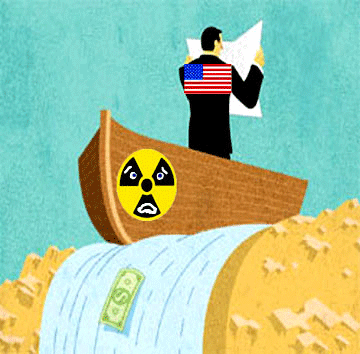 Will More Uranium Really Solve America’s Nuclear Crisis? Oil Price, By Haley Zaremba – Jun 10, 2020, “…….. Even though the United States is responsible for a whopping third of all nuclear energy production worldwide, the country is quickly losing ground as nuclear plants struggle to turn a profit. Hit hard by the influx of cheap oil and natural gas from the domestic shale revolution, the nuclear energy industry in the U.S. is now being pummeled once again by COVID-19, and this time, many experts are wondering whether the industry can weather the storm.
French nuclear watchdog demands EDF fix faults at 5 reactors
French nuclear watchdog demands EDF fix faults at 5 reactors, Montel News, MURIEL BOSELLI, Paris 10 June 20, France’s nuclear safety authority has served EDF with a formal notice to repair deviations and reinforce five reactors at its 5.4 GW Gravelines nuclear power plant by the end of October – work that would not require shutdowns.
The notice concerned deviations in five out of the plant’s six reactors. Operator EDF had already made changes to equipment around reactor 5, ASN said on Wednesday. https://www.montelnews.com/en/story/french-nuclear-watchdog-demands-edf-fix-faults-at-5-reactors/1121918
Government, nuclear industry badly in need of a reality check
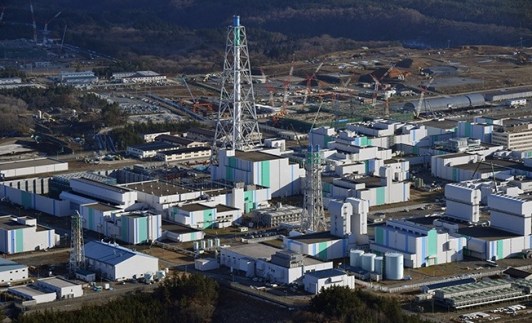 Japan Nuclear Fuel Ltd.’s spent nuclear fuel reprocessing facility in Rokkasho, Aomori Prefecture
May 15, 2020
In his 1991 book “Rokkashomura no Kiroku” (Record of Rokkasho village), journalist Satoshi Kamata documented the displacement of residents for a planned large development project in the northern village.
Kamata reproduced an essay written by an elementary school pupil, whose school was earmarked for closure because of the megaproject.
“I detest development more than I could ever say,” the youngster wrote.
The villagers were promised a rosy future, with rows of factories turning their rural community into a vibrant urban center. But none of that happened, and the school closed in 1984.
“All that talk about the factories was a lie,” the child lamented. “I truly hate being made to feel so sad and lonely.”
Instead of this development project that never materialized, the village of Rokkasho in Aomori Prefecture ended up hosting a facility for reprocessing spent nuclear fuel.
A series of delays held up the project for years, but the Nuclear Regulation Authority finally ruled the plant’s safety measures acceptable under its new standards on May 13.
The Rokkasho plant was meant to be the “nucleus” of the nation’s nuclear fuel recycling program of the future, with the purpose of minimizing nuclear waste by reusing spent fuel.
The reprocessed fuel was to be burned in fast-breeder reactors, but efforts to develop a viable fast-breeder reactor have gone nowhere. Attempts to use the reprocessed fuel in conventional nuclear reactors have also stalled.
The whole project has effectively become a proverbial pie in the sky.
But neither the government nor utilities would acknowledge this reality and review the project, apparently because they fear the issue of nuclear waste will become the focus of attention.
I wonder how long they are going to keep their heads in the sand without addressing the thorny problem of how to dispose of nuclear waste.
Here’s a riddle: What cannot be seen when your eyes are open, but can be seen when your eyes are closed? The answer is a dream.
Where the nuclear fuel recycling program is concerned, I imagine the nation’s nuclear community must be dreaming or hallucinating.
Japan should end its nonsensical effort to recycle nuclear fuel
 A view of the under-construction reprocessing plant, seen from the Obuchi-numa swamp in Rokkasho, Aomori Prefecture, on May 12.
May 14, 2020
Japanese nuclear regulators have endorsed the safety of a contentious plant to reprocess spent nuclear fuel.
The Nuclear Regulation Authority (NRA) on May 13 approved a draft report on the safety inspection of the reprocessing plant being built in Rokkasho, Aomori Prefecture, by Japan Nuclear Fuel Ltd.
The report says the plant meets the new nuclear safety standards introduced after the 2011 Fukushima nuclear disaster. The NRA’s decision represents a big step forward toward bringing the long-delayed Rokkasho reprocessing plant online.
Japan’s policy program to establish a nuclear fuel recycling system to recover plutonium from spent nuclear fuel to be reused in reactors, however, is already bankrupt beyond redemption. Operating the reprocessing plant simply does not make sense because of the many problems it entails with regard to nuclear proliferation, cost effectiveness, energy security and other important policy issues.
Prime Minister Shinzo Abe’s administration should change its policy concerning nuclear fuel recycling. It would be irresponsible to maintain this unsustainable national policy aimlessly simply because of the NRA’s verdict that the plant meets the new safety standards.
TROUBLE-PLAGUED PLANT
The government and the electric power industry have been promoting the concept of recycling separated plutonium back into the fuel of reactors as a valuable “semi-homemade” energy source for a nation without much natural resources.
The Rokkasho reprocessing plant, the core facility for this strategy, was originally scheduled to be completed in 1997, but the deadline has been delayed as many as 24 times due to a series of technological glitches and other problems.
The plant started a trial run in 2006, but the process was plagued by malfunctions and suspended after the catastrophic accident at the Fukushima No. 1 nuclear power plant in 2011.
The NRA, which was created after the accident, spent six years carefully assessing the safety of the reprocessing plant. It was the body’s first safety screening mission for a nuclear fuel reprocessing facility.
Despite the nuclear watchdog’s effective endorsement of its safety, the plant still has a long way to go before it becomes ready for full-scale operation. The details of its design will be scrutinized while the work to install required safety measures has yet to be carried out.
It is unclear whether the plant will be completed in fiscal 2021, the new deadline set by the operator. Winning the consent of the local community is another challenge that has to be overcome before the plant can come on stream.
At nuclear power plants across the nation, growing amounts of spent nuclear fuel are waiting to be shipped to the reprocessing plant. At some nuclear plants, there is not much room left in the spent fuel pools. The power industry warns that there could be disruptions in power generation unless the reprocessing plant starts operating.
The Rokkasho plant is designed to reprocess up to 800 tons of spent fuel annually to extract plutonium. It is true that the facility would help prevent a situation where there is no room left in the pools.
UNUSABLE PLUTONIUM
The plant, when it operates at full capacity, could extract as much as seven tons of plutonium from spent reactor fuel a year. The problem is that there will be few plausible ways to use the material.
The plan to develop a fast neutron reactor that can burn and breed plutonium, which was supposed to be the key technology for plutonium consumption, has gone awry after it was decided that Japan’s “Monju” prototype sodium-cooled fast-breeder reactor should be decommissioned following a sodium leak accident.
There is no plan to develop a new demonstration fast-breeder reactor to succeed the Monju.
The Japanese government then considered participating in France’s Advanced Sodium Technical Reactor for Industrial Demonstration (ASTRID) project to build a prototype sodium-cooled nuclear reactor. But the idea was dropped after the French government decided to scale down and possibly pull the plug on the project.
Japan’s plan to burn so-called MOX (mixed oxide) fuel, which is usually plutonium blended with natural uranium, in existing nuclear reactors has also failed to make progress as fast as the government expected. Currently, only four reactors are using MOX fuel, far less than the industry’s target of operating 16 to 18 MOX reactors.
In short, there is little prospect for massive consumption of plutonium in this nation, at least in the near future.
Japan has a stockpile of 46 tons of weapons-usable plutonium, enough for producing 6,000 atomic bombs. Japan has made an international commitment to reducing its plutonium stock.
If Japan starts extracting plutonium from spent nuclear fuel through reprocessing, the international community will become doubtful of its commitment to reducing its plutonium stockpile despite being the only country to have suffered the devastation of atomic bombings.
Japan could even be suspected of harboring an ambition to develop and possess nuclear weapons in the future.
The government plans to limit the amount of plutonium extracted from spent fuel to less than the volume consumed at the MOX reactors.
But reprocessing spent reactor fuel to recover plutonium simply does not make sense in the first place when the amount of material stored in Japan should be slashed.
SHIFTING FINANCIAL BURDEN IS UNACCEPTABLE
The nuclear fuel recycling policy is also losing its economic rationale as well due to ballooning costs.
Even ordinary nuclear power generation is losing its competitiveness against other energy sources because of higher costs. The cost of building the reprocessing plant is now estimated at 2.9 trillion yen ($27.13 billion), four times higher than the original estimate. The total amount to be shelled out for the project, including operational and scrapping costs, is projected to be nearly 14 trillion yen.
Most major industrial nations have given up on the idea of nuclear fuel recycling as not being worth the cost. All the other countries that are still pursuing this path, including China and Russia, are nuclear powers. Most of these projects are strategic state-financed efforts that disregard costs.
But the reprocessing and MOX reactor projects in Japan are private-sector businesses. The costs involved have to be passed onto consumers through higher electricity bills.
The government and the industry should not be allowed to continue pursuing this unreasonable nuclear fuel policy at the expense of consumers.
In many other parts of the world, renewable energy sources are fast gaining ground, eroding the share of nuclear power.
In addition to sharp declines in costs, the fact that solar and wind power is a purely “homemade” energy source for any country is accelerating the trend.
If Japan really places a high policy priority on energy security, it would make much more sense for it to expand “purely homemade” energy sources than promote a “semi-homemade” one.
But the government continues sticking to the nation’s traditional nuclear power policy, putting a damper on growth in renewable energy production.
If the government decides to scuttle the nuclear fuel recycling agenda, it will immediately face the sticky challenge of deciding how to dispose of spent nuclear fuel.
But the project should not be kept alive through irresponsible collusion between the government and the power industry to avoid tackling this challenge.
Political leaders should make the tough decision as soon as possible to put the nation on a path toward a new energy future.
Trump’s dangerous idea on nuclear testing – top Democrats demand answers
 Top Democrats demand answers on Trump administration’s ‘unfathomable’ consideration of nuclear testing The Hill BY REBECCA KHEEL – 06/08/20 A group of top House Democrats is demanding answers from the Trump administration on reported conversations within the administration on whether to resume nuclear testing.“It is unfathomable that the administration is considering something so short-sighted and dangerous, and that directly contradicts its own 2018 Nuclear Posture Review,” the lawmakers wrote in a letter Monday to Energy Secretary Dan Brouillette and Defense Secretary Mark Esper
The posture review, the lawmakers wrote, “which this administration often cites as inviolable, makes clear that ‘the United States will not resume nuclear explosive testing unless necessary to ensure the safety and effectiveness of the U.S. nuclear arsenal.’
The letter was signed by House Armed Services Committee Chairman Adam Smith (D-Wash.) and House Appropriations Committee Chairwoman Nita Lowey (D-N.Y.), along with Reps. Jim Cooper (D-Tenn.), chairman of the Armed Services Subcommittee on Strategic Forces; Marcy Kaptur (D-Ohio), chairwoman of the Appropriations subcommittee on energy and water; and Pete Visclosky (D-Ind.), chairman of the Appropriations Subcommittee on Defense.
The Pentagon declined to comment………
The lawmakers demanded answers to questions by June 22, as well as a briefing by June 25. Questions include under what legal authority and funding testing is being considered, whether the intelligence community is analyzing what the effects of a test would be on U.S. allies and adversaries, and whether there has been any independent assessment requested by the Energy or Defense departments on the need, cost and effect of resuming nuclear testing. https://thehill.com/policy/defense/501687-top-democrats-demand-answers-on-trump-administrations-unfathomable
Nuclear testing ban to be introduced in U.S. Congress

 Reps. Steven Horsford and Dina Titus announce nuclear testing ban legislation, 8 NewsNow by: Kaitlyn Olvera Jun 8, 2020, LAS VEGAS (KLAS) — Congressman Steven Horsford and Congresswoman Dina Titus have introduced a nuclear testing ban. The Preserving Leadership Against Nuclear Explosives Testing (PLANET) Act, introduced Monday, would prevent President Donald Trump from restarting nuclear weapons testing in Nevada.
This legislation “would prevent the Trump administration from restarting explosive nuclear weapons testing by restricting funds for fiscal year 2021 and all previous years from being used for such a purpose,” a release about the legislation stated.
The Washington Post reported the Trump administration had a discussion about conducting a nuclear test with top security officials on May 15, in response to accusations that Russia and China were performing low-yield nuclear tests. This is a claim both countries have denied.
Specifically, the PLANET Act would, according to Rep. Horsford’s office:
- Prohibit the use of funds appropriated in Fiscal Year 2021 or from any previous year to prepare for or to conduct an explosive nuclear test that produces any yield
- Allow for stockpile stewardship activities that are consistent with U.S. law – such as certifying the safety, security and reliability of the U.S. nuclear stockpile – so long as those activities are consistent with the “zero-yield” scope of the Comprehensive Test Ban Treaty (CTBT)…… https://www.8newsnow.com/news/local-news/reps-steven-horsford-and-dina-titus-announce-nuclear-testing-ban-legislation/
Number two executive of the defunct SCANA Corpto plead guilty to fraud conspiracy in nuclear plant failure
|
Top SCANA ex-official to plead guilty to fraud conspiracy in nuclear plant failure https://www.thestate.com/news/local/crime/article243356621.html, BY JOHN MONK
JUNE 08, 2020 The number two executive of the defunct SCANA Corp. — whose top officials engineered the biggest business failure in South Carolina history: the $10 billion V.C. Summer nuclear plant fiasco — has agreed to plead guilty to criminal conspiracy fraud charges in connection with the nuclear failure, according to a document filed Monday in U.S. District Court in Columbia.
The upcoming guilty plea of Stephen A. Byrne, 60, is a centerpiece of a Monday filing involving his alleged criminal actions. He will need to have his guilty plea formally accepted by a U.S. District Court judge before it becomes official. Byrne is charged with conspiring to commit mail fraud, the document said. The document is a motion requesting a stay in a Securities and Exchange civil fraud lawsuit against Byrne and SCANA’s former CEO, Kevin Marsh. That civil lawsuit was filed in February. One big difference between civil and criminal proceedings is that in a criminal proceeding, a defendant can be subject to a prison term. The document alleges that “through intentional and material misrepresentations and omissions, Byrne and others deceived regulators and customers to maintain financing for the (nuclear) project and to financially benefit SCANA.” The Monday filing said there is “an ongoing criminal investigation” and indicated more criminal charges against other former SCANA top officials may be in the offing. |
|
|
Chinese Foreign Ministry urges US to avoid nuclear testing
BEIJING, June 8. /TASS/. China urges the United States to abide by its international obligations and abandon plans to carry out nuclear tests, Chinese Foreign Ministry Spokesperson Hua Chunying said at a briefing on Monday.
“We insist that the United States should strictly abide by its obligations to end nuclear testing… and we hope that it will listen to the international community,” the Chinese diplomat pointed out. “The US should abandon plans that could undermine global stability and strategic order,” she added……… https://tass.com/world/1165339
Sellafield’s 11000 cubic metres of nuclear waste – UK’s storage problem
 Plans for 11,000m³ of nuclear waste, In Cumbria, 8 June 20 A DECISION on whether Sellafield can continue storing 11,000 cubic metres of nuclear waste in one of its Seascale buildings is due to be made tomorrow (Tuesday).Sellafield was granted permission to build a five-storey building in 1992 for interim storage of encapsulated intermediate-level waste. However the permission expires at the end of 2021, due to a condition imposed at the time by Copeland council. The nuclear firm now wants to have permission to continue storing the waste, as a more permanent solution is not yet available. The county council’s development control and regulation committee will discuss the application at a meeting at 10am. A report prepared for the authority said: “The building is required to be retained for the continued storage of intermediate-level waste (ILW) which is required to be stored until alternative facilities come on line. “The alternative storage solution is likely to be the Geological Disposal Facility (GDF), which is currently out to consultation on host site availability, and until such time as the GDF is made available a suitable interim storage place for ILW is required…… Both Seascale and Ponsonby parish councils have objected to the proposal. The report said that the Seascale authority wanted Sellafield to submit a full planning application. “When constructed these [facilities] had a 50-year life and Copeland put a time limit of 30 years to allow time for future storage options; these amendments need a full planning application. “Seascale Community are living with what are described as health and quality of life risks and this needs to be taken into account.”…….. The meeting is due to take place virtually. For more information on how to join the meeting, visit the council’s site cumbria.gov.uk https://www.in-cumbria.com/news/18502494.plans-11-000m-nuclear-waste/ |
|
Top Democrats promote bill to ban live nuclear tests
 Lead Dems back bill to ban live nuclear tests, Defense News, By: Joe Gould 5 June 20, WASHINGTON ― The Senate’s top Democrat, Sen. Chuck Schumer, is co-sponsoring legislation meant to prevent the Trump administration from restarting explosive nuclear weapons testing.
The Preserving Leadership Against Nuclear Explosives Testing, or PLANET, Act, announced Thursday, would bar any funds from being used for such tests. It follows a Washington Post report of high-level discussions around the possibility of doing a “rapid test” ― potentially America’s first live nuclear test since 1992.
The bill is led by Sen. Ed Markey, D-Mass., and a longtime arms control advocate on the Senate Foreign Relations Committee. While a key administration official has said tests could begin within months if ordered by the president for technical or geopolitical reasons, critics say it could incentivize Russia and China to openly test with little valuable data to show for U.S. tests…….. https://www.defensenews.com/congress/2020/06/04/lead-dems-back-bill-to-ban-live-nuclear-tests/
If he wins election, Joe Biden would restore Iran nuclear deal
 Biden would restore nuclear deal if he wins elections: George
 Washington University professor, By Javad Heirannia Tehran Times, June 7, 2020
Professor Askari, who served as special advisor to Saudi finance minister, also says a Democratic president “would set about undoing Trump’s foreign policy errors.”
Following is the text of the interview:…………………..
Q: If Joe Biden is elected the next president of the United States, will he change his approach toward China? Also, what would be his approach to Iran and the nuclear deal in general?
A: I think a Biden, or for that matter any Democratic President, would set about undoing Trump’s foreign policy errors. Yes, he would try to chart a new course with China. Tough but with a plan that is step by step to restore workable relations. Not a series of disjointed reactions to the moment in time. He would restore, or rejoin, the nuclear agreement with Iran. But now he would want an extension of the time that Iran could resume for nuclear research and have breakout capabilities. In this way, he would appear as tough but at the same time reduce tensions in the Persian Gulf and America’s military exposure around the world. https://www.tehrantimes.com/news/448604/Biden-would-restore-nuclear-deal-if-he-wins-elections-George
Trump tells Iran they should get “a better deal” with him now, before the U.S. election
 Urging Iran to ‘Make the Big Deal,’ Trump Ties Nuclear Negotiations to Election, The president’s invitation came as international inspectors were said to have found that Iran had boosted its stockpile of low-enriched uranium in the past three months.
Aides to Mr. Pompeo and Mr. Trump declined to explain why, if the United States was negotiating in its own national interest, Iran might get preferential treatment for negotiating with Mr. Trump before the election……
“We had a deal when you entered office,” Iran’s foreign minister, Mohammad Javad Zarif, responded to Mr. Trump in a tweet on Friday. Iran and the other participants in the 2015 agreement — Britain, France, Germany, the European Union, Russia and China — “never left the table,” he said. “Your advisers — most fired by now — made a dumb bet. Up to you to decide *when* you want to fix it.”
Hesameddin Ashena, the top policy adviser to President Hassan Rouhani of Iran also responded. “You are going down on November 3rd and we know that,” he tweeted. “So you’ll need to offer much more than Obama did!”…….. https://www.nytimes.com/2020/06/05/world/middleeast/trump-iran-nuclear.html
1 This Month

Tell Congress: Prevent Nuclear Catastrophe in Iran

Tell Congress: Prevent Nuclear Catastrophe in Iran

Read the Public Inquiry Report, the Commissioners’ report, Surrendering Australia: The AUKUS Deception is available to download for free at aukuspublicinquiry.com. Or just watch the replay of the National Press Club Luncheon.

19 November – Webinar – The Reality of Reprocessing
Time: 11:00 AM Pacific Time (US & Canada) / 2:00 PM Eastern / 7:00 PM UK / 8:00 PM CET
Register for the Zoom Event Here


Shut down the radiation-damaged Heysham nuclear reactors now
To see nuclear-related stories in greater depth and intensity – go to https://nuclearinformation.wordpress.com

Say No to NASA’s Reckless Nuclear Reactor on the Moon
Say No to NASA’s Reckless Nuclear Reactor on the Moon
-
Archives
- November 2026 (147)
- October 2026 (302)
- September 2026 (339)
- August 2026 (330)
- July 2026 (355)
- June 2026 (287)
- May 2026 (306)
- April 2026 (356)
- March 2026 (251)
- February 2026 (267)
- January 2026 (308)
- December 2025 (358)
-
Categories
- 1
- 1 NUCLEAR ISSUES
- business and costs
- climate change
- culture and arts
- ENERGY
- environment
- health
- history
- indigenous issues
- Legal
- marketing of nuclear
- media
- opposition to nuclear
- PERSONAL STORIES
- politics
- politics international
- Religion and ethics
- safety
- secrets,lies and civil liberties
- spinbuster
- technology
- Uranium
- wastes
- weapons and war
- Women
- 2 WORLD
- ACTION
- AFRICA
- Atrocities
- AUSTRALIA
- Christina's notes
- Christina's themes
- culture and arts
- Events
- Fuk 2022
- Fuk 2023
- Fukushima 2017
- Fukushima 2018
- fukushima 2019
- Fukushima 2020
- Fukushima 2021
- general
- global warming
- Humour (God we need it)
- Nuclear
- RARE EARTHS
- Reference
- resources – print
- Resources -audiovicual
- Weekly Newsletter
- World
- World Nuclear
- YouTube
-
RSS
Entries RSS
Comments RSS

