Legal challenge to “Interim” storage of nuclear wastes, before permanent disposal determined
 Holtec’s interim nuclear waste application challenged in court, BY THERESA DAVIS / JOURNAL STAFF WRITER, AlbuquerquebJournal, June 6th, 2020
Holtec International’s proposed nuclear waste interim storage facility in southeast New Mexico faces a new legal challenge.
Anti-nuclear group Beyond Nuclear filed a petition for review Thursday in the U.S. Court of Appeals for the District of Columbia Circuit. The group asks for review of the U.S. Nuclear Regulatory Commission’s rejection of their petitions.
The group alleges that the NRC cannot issue Holtec a license because the company’s application includes a provision that the U.S. Department of Energy may be the owner of the facility’s nuclear waste. The group says approval would violate the Nuclear Waste Policy Act.
That law prevents the government from taking ownership of nuclear waste from private utilities before a permanent repository is in operation. The government has yet to open such a site.
“The reason that provision is in the NWPA is to protect a state like New Mexico from being forced to store this waste before a permanent repository is opened,” said Kevin Kamps, a radioactive waste specialist with Beyond Nuclear. “(Holtec has) now added a clause that includes ‘and/or nuclear utilities’ in the list of potential customers. That was good enough for the NRC, apparently.”
Beyond Nuclear presented its petition to NRC’s Atomic Safety and Licensing Board. In April, the NRC upheld that board’s dismissal of the petition.
An April 23 NRC order says Holtec “hopes Congress will change the (NWPA) law to allow DOE to enter into temporary storage contracts with Holtec.”………
The petition alleges that the NRC is also violating the Administrative Procedure Act.
“Agencies have to work with what Congress gave (them),” said Mindy Goldstein, an attorney for Beyond Nuclear and the director of the Turner Environmental Law Clinic at the Emory University School of Law. “We feel NRC is stepping around that requirement. Congress has said that DOE can’t own this waste.”
The proposed facility would store spent nuclear fuel in 500 canisters on a 1,000-acre site between Carlsbad and Hobbs. The full project could store 10,000
The most effective leader in the world – Jacinda Adern
 New Zealand’s Prime Minister May Be the Most Effective Leader on the Planet. Uri Friedman 19 April 20 The Atlantic Amid the Trump administration’s calamitous response to the Covid-19 pandemic, media have been looking to other countries for inspiration in responsible leadership during a period of crisis. New Zealand Prime Minister Jacinda Arden has been one popular pick, having capably managed to limit the damage to only 1,504 infections and 22 deaths, as of June 5.
A widely shared article in the Conversation (4/5/20) described Ardern as putting on a “masterclass in crisis leadership.” The Washington Post (4/7/20) characterized her government’s response as a “triumph of science and leadership.” Elsewhere, she has been praised as “the most effective leader on the planet” (Atlantic, 4/19/20) who “should be teaching the rest of the world” (Guardian, 4/10/20). The Financial Times (4/19/20) unironically anointed her “Saint Jacinda.”
Despite its obvious geographical and economic advantages, New Zealand certainly deserves praise. But less deserving have been the European countries corporate media consistently highlight as outstanding performers. With over 185,000 cases and 8,763 deaths, Germany has one of the highest per capita fatality rates in the world. Yet Chancellor Angela Merkel has drawn effusive praise as somebody who “embraces science” (Atlantic, 4/19/20; Guardian, 4/16/20; Financial Times, 4/3/20). CNN (5/7/20) proclaimed her a “global leader on coronavirus”; Vox (5/21/20) said she’d been “praised for her clear and effective communication with her country — and the world.”
In its editorial on crisis leadership, the New York Times editorial board (4/30/20) also praised Merkel (while attacking China for supposedly covering up the outbreak). They highlighted and applauded the leadership of several other countries, including Denmark, Norway and Finland. Amazingly, the editorial also singled out and commended Italian Prime Minister Giuseppe Conte, whose inept response has led to Italy having the third-highest number of deaths in the world at the time of its publication.
There was far less praise for leaders in the Global South. Indeed, the only one mentioned by name was Taiwan’s Tsai Ing-wen, and this was primarily because she “sent millions of face masks to the United States and Europe”—although with 443 total cases and only seven deaths, Taiwan has had a far more enviable record on Covid-19 than most of the countries featured in the editorial. True Asian leadership, according to the Times editorial board, is helping white people, apparently.
Many $billions for U.S. Air Force’s new nuclear weapons
 The Air Force Is Getting Ready To Receive New
 Nuclear Weapons, National Interest, David Axe, 5 June 20, Here’s What You Need To Remember: Now the command is in the beginning of a modernization effort costing tens of billions of dollars. New B-21 stealth bombers are slated to supplant the B-1s and B-2s starting in the mid-2020s. The Ground-Based Strategic Deterrent rocket, a replacement for the 1960s-vintage Minuteman, is in development.
The U.S. Air Force’s nuclear command says it’s about to undergo a major reorganization as it prepares to field new bombs, missiles, bombers and rockets.
Air Force Global Strike Command stood up in 2009 as the successor to Strategic Air Command, which maintained around-the-clock nuclear alerts during the Cold War.
Today the command’s 34,000 personnel oversee 20 B-2 stealth bombers, 76 B-52 bombers and 450 Minuteman III intercontinental ballistic missiles together capable of delivering thousands of nuclear warheads.
It also operates 62 B-1 bombers that do not have a nuclear mission.
AFGSC’s forces comprise the aerial and ground “legs” of the United States’s atomic triad, which also includes the U.S. Navy’s submarine-launched Trident ballistic missiles.
The command’s forces are capable of extinguishing essentially all life on Earth within a matter of hours.
Accidents and misbehavior marred AFGSC’s early years. In 2014 ICBM crews got caught cheating on tests. In 2018 security forces at Minot Air Force Base, home to a portion of the Minuteman fleet, lost track of some of their weapons. The suicide rate is high in the atomic force.
Now the command is in the beginning of a modernization effort costing tens of billions of dollars. New B-21 stealth bombers are slated to supplant the B-1s and B-2s starting in the mid-2020s. The Ground-Based Strategic Deterrent rocket, a replacement for the 1960s-vintage Minuteman, is in development.
The new Long-Range Stand-Off Weapon, a nuclear-tipped cruise missile, will replace the B-52’s current nuclear cruise missiles. The bomber fleet is getting a refurbished model of its main atomic gravity bomb, the B-61. The missile wings’ security forces are swapping out their five-decade-old UH-1 helicopters for new MH-139s……….https://news.yahoo.com/air-force-getting-ready-receive-060000340.html
China is reconsidering building nuclear reactors in Britain
|
China poised to pull plans for UK nuclear plants https://www.straitstimes.com/world/europe/china-poised-to-pull-plans-for-uk-nuclear-plants 5 June 20 LONDON (BLOOMBERG) – China’s ambassador to the UK said that Prime Minister Boris Johnson’s plans to seek alternatives to Huawei Technologies Co Ltd in the 5G network could spoil plans for Chinese companies to build nuclear power plants and the HS2 high-speed rail network, the Sunday Times reported.Mr Liu Xiaoming signalled that Beijing is viewing the decision over Huawei as “a litmus test of whether Britain is a true and faithful partner of China”, the newspaper reported the ambassador telling business leaders, saying that the words were “interpreted as a threat by those listening”.
China General Nuclear Power Corp plans to build its own nuclear reactor at Bradwell in Essex, according to the newspaper report. China has a minority share in nuclear power plants at Hinkley Point in Somerset and Sizewell C in Suffolk, both in partnership with EDF of France. |
|
Huge police squadron paid by nuclear industry to monitor residents of Bure
the tens of millions of euros per year disbursed by Andra to pay for the presence of the gendarme squadron represents a significant sum. In 2018, the agency’s net profit amounted to only 11.5 million euros,
Cigeo related expenses are directly funded by the three major nuclear players: EDF and Orano, two private companies, and CEA, a public research establishment. In 2018, they poured 212 million euros into the landfill project.

Large Man Looking At Co-Worker With A Magnifying Glass — Image by © Images.com/Corbis
In Bure, the nuclear waste agency pays the police,  À Bure, l’agence des déchets nucléaires se paie des gendarmes, Reporterre, 5 juin 2020 / Marie Barbier (Reporterre) et Jade Lindgaard According to information obtained by Mediapart and Reporterre, an agreement was signed in 2018 between the national gendarmerie and Andra, the agency responsible for the burial of nuclear waste, in this village of the Meuse. Since then, the agency has paid tens of millions of euros to monitor residents through gendarmes. This partnership poses ethical and legal problems.
Around Bure, in the Meuse, where the most dangerous nuclear waste from French power plants must be buried in a gigantic mine 500 meters underground, the villages are only inhabited by a handful of people. And yet, 75 gendarmes patrol there 24 hours a day. For almost a year and a half, according to information collected by Mediapart and Reporterre, these soldiers are paid by Andra, the National Agency for Radioactive Waste Management, which has set up a laboratory at the future landfill.
In October 2018, an agreement was signed between Andra and the General Directorate of the National Gendarmerie (DGGN) “in order to guarantee the safety of personnel and facilities in the long term” the agency confirmed to us, in response to our questions. According to figures given by the agency itself, “ten million euros” are spent each year by Andra, a public industrial and commercial establishment (EPIC), to pay the soldiers engaged and cover related costs, including catering. To date, therefore, at least twenty million euros have been spent – or are in the process of being spent – in this context
The mobile gendarmes are hosted directly on Andra’s site, in a block built for this purpose. They sleep there, store their equipment and their vehicles and take their recovery days there before leaving to patrol. These soldiers, often very young, stay there for three to six weeks before leaving on another assignment. They are immediately replaced by new arrivals. The DGGN refused to communicate the exact content to us The government decision to assign a squadron of mobile gendarmes to this territory dates from the summer of 2017. In June, Le Bindeuil, a hotel-restaurant known to accommodate Andra staff and gendarmes, suffered damage during the anti-nuclear days. And in August, a demonstration ended in confrontations with the police. These facts are today the subject of judicial information, in which ten people are under investigation, and which gives rise to massive and particularly intrusive surveillance, as we detailed in our four-part investigation……..
Is it legal to pay a squadron of gendarmes to protect themselves?….
Long dormant, this system was revived by a decree, signed by Alain Juppé in 1997…..
….. In 2009, an agreement was signed with EDF for the protection of nuclear power plants. “At the national level, the overall workforce is around a thousand gendarmes,” confirms EDF, who specifies that “this specialized platoon is financed by EDF” but that the latter “does not communicate on the cost of this protection” .
This is to prevent a new Zad, like that of Notre-Dame-des-Landes, from forming But Andra’s laboratory cannot, unlike nuclear power plants, be considered a sensitive site. No radioactive waste is present there. Cigeo’s excavation work.
So what is the purpose of the gendarmerie platoon paid by Andra at the Bure site? According to many residents that we were able to contact, these gendarmes are mainly assigned to the surveillance of the territory and its inhabitants. For the police, it is a question of preventing the militants evicted from Lejuc wood – a communal forest once occupied by opponents of Cigeo – from returning. And to prevent a new Zad from forming, he example of Notre-Dame-des-Landes, in Loire-Atlantique
According to residents interviewed for this article, the patrol vehicles are reformed vehicles, old Range Rovers, or newer models from Kangoo and Transit. A villager saw them move at night with torches bearing the acronym of Andra. What exactly are their prerogatives? The Directorate General of the National Gendarmerie refused to answer our questions.
“Permanent and repeated identity checks infringe on individual freedoms” and can “only lead to incidents”.
Me Matteo Bonaglia, one of the lawyers indicted in the framework of the criminal investigation for association of criminals, says he is “surprised by such means allocated to Andra. This explains, however, the over-militarization that we observe in this territory where the fight against the project to bury nuclear waste is playing out, Andra being able to allocate the assistance of the police force in a proportion three times greater than everywhere elsewhere.
It is already difficult to oppose the Cigeo project and assert its anti-nuclear opinions. Here, the multiplication of controls and the over-representation of gendarmes constitutes a de facto obstacle to freedom of opinion and the free expression of ideas. It also explains the large number of trials that have taken place in recent years for offenses such as contempt and rebellion, not everyone is so willing to be subject to constant scrutiny. ”
This agreement with the gendarmerie is all the more problematic since Andra appears several times in the file currently being examined after the start of the fire at the Hôtel-restaurant du Bindeuil, in which ten anti-nuclear activists are put under review and to which Mediapart and Reporterre had access.
The agency did not bring a civil action, but complained three times. Thus, on February 17, 2017, its director, David Mazoyer, filed a complaint “on behalf of Andra” after “degradations” committed on the site of the eco-library, belonging to the agency. “During the night of February 16 to 17, 2017,” explains the director of gendarmes in Ligny-en-Barrois the opponents damaged, bent or tore down the fence around the site, mainly on the west facade and on a line of about 150 meters. These degradations were the subject of an additional indictment and joined the long list of crimes covered in this sprawling instruction.
A few months later, on June 21, 2017, the day of the fire at the Le Bindeuil hotel and restaurant, David Mazoyer filed a second complaint: “Other members of their movement attacked the code on the pedestrian portal giving access to the Ecothèque site. This device is damaged and out of use. I am filing a complaint on behalf of Andra for the destruction of this device. ”
Finally, on April 24, 2018, it was the head of Andra’s risk protection and prevention service who complained about receiving documents after discovering photos belonging to the Ecoteca during a search.
According to our information, the platoon of gendarmes paid by Andra is not assigned to the “Bure cell”, a cell of gendarmes with their own badge in charge of the current investigation. But what about a complainant who pays gendarmes to go and monitor the people against whom he has complained? By order of the prefecture, Andra gendarmes can also in theory be assigned to the maintenance of order at demonstrations or at the courthouse. The mix of genres would then be total: a complainant who pays the police in a demonstration against him or worse, during trials of opponents of his project …
In addition to this potential conflict of interest, the apparently legal agreement between Andra and the national gendarmerie raises legal questions. In 2018, a circular from the Minister of the Interior Gérard Colomb paved the way for a much wider billing than what had been initially planned. “The circular no longer takes the precaution of limiting it to” organizers of sporting, recreational or cultural events for profit “. We can invoice everyone, regardless of the object and the lucrative purpose or not, “said Mickaël Lavaine.
In 2018, the publication of his article in the review of legal current events in administrative law gave rise to an action brought by the Collectif des Festivals before the Council of State, the organizers denouncing the considerable sums of security which they owed. ” discharge to the State.
This mixture of genres questions the impartiality of police work
In this legal debate, the two paragraphs of article L211-11 of the code of internal security, organized by the Columbus circular, are opposed. The first specifies that these conventions concern only “organizers of sporting, recreational or cultural events for profit”, the second target much more broadly all “natural or legal persons”. “The Council of State will have to rule on this debate: is paragraph 2 linked to paragraph 1? If he decides in this sense, which I defend, that means that Andra cannot be invoiced, nor of the associations which organize the potato festival. This would return to the spirit of the text of the Tour de France, “said Mickaël Lavaine. The Council of State is expected to decide by summer.
For the researcher, this legal debate poses a much broader question: “The internal security code specifies that the police or gendarmerie forces may be charged for law enforcement services which cannot be attached to the normal obligations incumbent on the public authorities’. But what is the obligation normal state? This notion is vague enough to be able to put what you want into it. If we push the logic of the Columbus circular to its end, there is nothing to prohibit charging the organizer of an FO demonstration or the CGT for the police devices of a demonstration. However, the Declaration of Human Rights provides that the public force must be financed by taxes. ”
For Alexandre Faro, lawyer for one of the activist witnesses assisted in the investigation opened after the fire at Bindeuil, “this amounts to privatizing the police in favor of Andra. From a strict legal point of view this is very questionable because in France the police are a monopoly of the state and the Constitution provides that sovereignty is exercised by the people and for the people. ”
These debates also animated Andra employees when the agreement with the DGGN was signed. An internal source tells us that “that posed questions”: “Why is Andra paying when it is a public establishment?
Far from being anecdotal, the tens of millions of euros per year disbursed by Andra to pay for the presence of the gendarme squadron represents a significant sum. In 2018, the agency’s net profit amounted to only 11.5 million euros, mainly made up of research tax credit, as indicated in the establishment’s annual financial report. Cigeo related expenses are directly funded by the three major nuclear players: EDF and Orano, two private companies, and CEA, a public research establishment. In 2018, they poured 212 million euros into the landfill project.
The gendarmes paid by Andra who crisscross the territory are not the same as those who are investigating for justice as part of the judicial information and have listened for months to opponents of Andra. But they belong to the same institution. This mix of genres questions the impartiality of police work. Then does not public power find itself in a situation of insincerity towards the citizens whom it controls with such relentlessness? The gendarmes, Andra, justice, political leaders on one side; opponents of the other. Two tight-knit camps, one facing the other, like in a war situation.
https://reporterre.net/A-Bure-l-agence-des-dechets-nucleaires-se-paie-des-gendarmes
Trump wants a nuclear test – adding to the sickness of the world
Trump apparently wants a nuclear test. It could be bad for your health. https://thebulletin.org/2020/06/trump-apparently-wants-a-nuclear-test-it-could-be-bad-for-your-health/#Sara Z. Kutchesfahani
June 5, 2020 In recent weeks, the Trump administration reportedly discussed the possibility of doing something the United States has not done since 1992: resuming explosive testing of nuclear weapons. Since the creation of the nuclear bomb, at least eight nations have detonated 2,056 nuclear test explosions at test sites around the world. Ten years ago, Japanese artist Isao Hashimoto created an informative but scary time-lapse map depicting all of these explosions. In it, each nation gets a flashing dot on the map whenever it detonates a nuclear weapon, with a running tally kept on the top and bottom bars of the screen.
While the story begins in 1945 with the first ever nuclear weapon test (code-named Trinity), the real action comes in 1962, when there were 178 tests globally, more than in any other year. Not only is the rapid rate alarming, but where they happened—mainly on the lands of indigenous people—is also shocking.
A US resumption of nuclear tests would send a bad signal to other countries and prompt them to test and create their own nuclear weapons. Moreover, innocent bystanders could be exposed to the radioactive fallout from a nuclear explosion. Tens of thousands of people have been afflicted by leukemia, thyroid cancer, miscarriages, and severe birth defects as a result of past nuclear testing in the United States alone.
Half of the 2,056 nuclear tests were conducted by one country alone: the United States. Yes, that’s right: the total number of US-conducted tests stands at 1,030, which is more than the number of tests done by the other seven nuclear testing countries combined. Most of the explosions took place at the height of the Cold War in a series of tit-for-tat exchanges between the United States and the Soviet Union.
Even before the banner year of 1962, nuclear testing was already out of control. In 1954, the United States carried out Castle Bravo, the most powerful US nuclear weapon test (and its first thermonuclear weapon, also known as an H-bomb). The 1961 Soviet Tsar Bomba (“King of Bombs”) detonation, though, remains the most powerful human-made explosion in history. Tsar Bomba created an explosion equivalent to 50 megatons of TNT. Let’s pause for a moment for a mathematical intermission to put this yield into perspective.
1 ton = 1,000 kilograms, or 2,200 pounds of explosives
1 kiloton = 1,000 tons, or about 2,200,000 pounds
1 megaton = 1,000,000 tons, or about 2,200,000,000 pounds
The biggest conventional bomb in the US arsenal = 11 tons of TNT
Little Boy (Hiroshima) = 16 kilotons of TNT
Fat Man (Nagasaki) = 20 kilotons of TNT
Castle Bravo = 15 megatons of TNT (roughly 1,000 times more powerful than the Little Boy bomb)
Tsar Bomba = 50 megatons of TNT (roughly 10 times the total explosive power unleashed in all of World War Two, including both the Little Boy and Fat Man bombs that destroyed Hiroshima and Nagasaki)
Each and every above-ground nuclear explosion spread radioactive materials throughout the atmosphere. Once the Partial Nuclear Test Ban Treaty took effect in 1963, many of the tests moved underground, but those still sometimes leaked radioactive materials into the atmosphere. The overall effect was the contamination of the air and soil where people live and work—some of which is still around today.
While testing continued throughout the Cold War, it came to a gradual halt by 1992, such that by 1993, negotiations for a Comprehensive Nuclear Test Ban Treaty began. The Comprehensive Test Ban Treaty is an international treaty banning all nuclear explosions for both civilian and military purposes, in all environments, but it has yet to enter into force. Although the United States has not ratified the treaty, it and all other nuclear weapon states (apart from North Korea), have honored the test ban. Perhaps maybe until now.
Why should the average person care about all this? Well, because there was and is an enormous human cost of nuclear weapons testing. If you go back and watch the Hashimoto video, you’ll notice none of the 1,030 US tests were conducted anywhere near Washington, DC. Likewise, none of the Soviet, French, or British tests were carried out around Moscow, Paris, or London. Instead, the explosions took place mainly on the lands of indigenous people, such as in the Marshall Islands, or in some cases, in the country’s own backyard, such as in New Mexico, Colorado, and Nevada.
Nuclear testing ignores the voices of those who are tangibly affected by it. The human cost of nuclear weapons testing, from environmental contamination to the exploitation of powerless communities, has largely been overlooked. When the United Sates opened a nuclear testing site near Las Vegas, the people who lived downwind of the test site were assured that only a safe level of radiation could reach them. Yet, sheep started getting sick. They had burns on their faces and lips and blisters on their bodies. Ewes miscarried. Many lambs were born deformed or too weak to nurse. Around 20,000 sheep in total—a quarter of the herds in southern Utah and Nevada—died.
If that was the effect on sheep, imagine the effect on humans. Cancers associated with radiation exposure (including leukemia and thyroid cancer) were all too common. Women suffered from miscarriages. Those who didn’t miscarry gave birth to babies with severe birth defects, some of which were so severe that the infants didn’t look human. In 1990, US Congress created the Radiation Exposure Compensation Act to help rectify these injustices. To date, over 36,000 people have claimed benefits from the fund, giving a sense of the scale of the harm. But this is a lower limit. An independent study has estimated that radiation from testing caused more than 340,000 excess American deaths between 1951 and 1973.
The harms are not just a thing of the past: Utah “downwinders” are still suffering and dying as a result of health effects from nuclear tests conducted upwind in Nevada decades ago. One such downwinder is Mary Dickson, who has seen friends and family die of cancer, and has even had her own battles with it. In 2007, she wrote Exposed—an unpublished screenplay based on a true story about her sister, a fellow downwinder, and her deteriorating health due to the effects of the above-ground nuclear tests.
I’ve had the privilege of reading Exposed, and it is superb. Dickson pieces together the historical nuclear nuggets in such a compelling way that it not only deserves a thorough and careful read, but also a viewing, with tissues at hand. It is extremely powerful and personal, so much that anyone reading or watching it would be outraged by the Trump administration’s latest proclamations to resume nuclear testing. (The Players Club in New York had planned to stage a reading of the play in May 2020 on the sidelines of the Nuclear Non-Proliferation Treaty Review Conference, but unfortunately these plans were put on hold due to the coronavirus pandemic.) One of the most dramatic lines of the play reads, “The hardest thing is not the dying. It’s that the dead are so easily forgotten. We’re fighting for all of them. So their lives will serve as a warning. So it won’t happen again.”
Anti–nuclear resistance in Russia: problems, protests, reprisals

Produced by RSEU’s program “Against nuclear and radioaсtive threats”
Report “Anti–nuclear resistance in Russia: problems, protests, reprisals” Produced by RSEU’s program “Against nuclear and radioaсtive threats”
Editor and translator: Vitaly Servetnik
English editor: Anna WhiteCover
illustration: Anastasia Semenova
Layout: Sergey Fedulov
Saitnt Petersburg 2020
Nuclear energy: failures and lies…….5
Expired reactors……………………………6
Decommissioning problems…………..7
Uranium mining protest………………..8
The Mayak plant: Rosatom’s dirty face………10
Struggle against nuclear repository……………11
A road through a radioactive graveyard……..14
Conclusion: nuclear power is a problem, not a solution….14
Nuclear energy: failures and lies
4 https://7×7–journal.ru/articles/2019/08/09/admin-istraciya–severodvinska–udalila–s–oficialnogo–saj-ta–reliz–o–skachke–radiacii–v–gorode–posle–vzry-va–pri–ispytanii–reaktivnoj–ustanovki–baza–soobshi-la–o–shesti–postradavshih–ot–oblucheniya
8 https://www.tol.org/client/article/23174-nucle-ar-strength-kola.html
9 https://barentsobserver.com/en/sections/nature/ kola-reactor-3-runs-overtime (Eng.)
10 https://barentsobserver.com/en/nature/ ice-cold-swimming-nuclear-protest (Eng.)
11 http://pim.org.ru/old/2005–04–28–answer–mur-manproc.pdf (Rus.)
12 https://profile.ru/society/ekolog–znachit–vrag–13271/
13 https://kec.org.ru/organisation/histrory/
14 http://rusecounion.ru/eng/nuclearstatusre-port2019 (Eng.)
15 http://rusecounion.ru/eng/node/2994 (Eng.),http://rusecounion.ru/eng/node/2991 (Eng.)
16 https://www.rbc.ru/spb_sz/29/12/2018/ 5c2633749a7947f8833fc99817 http://decommission.ru/2019/06/14/laes_sos-nobyl/
18 http://decommission.ru/2017/12/21/yad-news_1_201217/
19 http://rusecounion.ru/eng/node/2993 (Eng.)
20 http://rusecounion.ru/eng/node/2992 (Eng.)
21 http://greenworld.org.ru/?q=human_right_21111622 https://shtab.navalny.com/hq/kurgan/3687/
23 https://novayagazeta.ru/arti-cles/2019/11/08/82647–strana–uraniya
24 https://youtu.be/irqY75jSnA8
25 https://vk.com/wall–141292704_3351
26 https://45.ru/text/gorod/53533571/
27 https://ovdinfo.org/express–news/2020/04/15/v–kurgane–fsb–vozbudilo–ugolovnoe–delo–protiv–ekoaktivistki
28 http://chng.it/xHgMmwkPq5
29 http://rusecounion.ru/ru/no–uf6
30 http://activatica.org/blogs/view/id/8619/title/ pochemu–nuzhno–ostanovit–uranovyy poezd
31 https://www.zaks.ru/new/archive/view/195957
32 http://rusecounion.ru/ru/decomatom_19320
33 https://66.ru/news/society/226814/
34 https://greenpeace.ru/blogs/2019/12/17/peter-burg–ne–hochet–radioaktivnyh–podarkov/
35 https://foeasiapacific.org/2019/07/01/ russia-must-stop-criminal-persecu-tion-of-ecodefense-director-alexandra-koroly-ova-repeal-the-foreign-agent-law-and-promote-envi-ronmental-justice/ (Eng.)
36 https://ecodefense.ru/2019/12/30/alexandra–koroleva–political–refuge/
37 http://rusecounion.ru/ru/decom_mayak_2018
38 http://nuclear.tatar.mtss.ru/fa230907.htm
39 http://chel–portal.ru/enc/dvizhenie_za_yader-nuyu_bezopasnost
40 http://hudoc.echr.coe.int/eng?i=001-103084(Eng.), http://hudoc.echr.coe.int/eng?i=001-158136(Eng.)
41 https://www.vesti.ru/doc.html?id=949087
42 https://theins.ru/confession/81445
43 https://www.kommersant.ru/doc/941081
44 https://www.rbc.ru/poli-tics/18/03/2015/550812909a79475f79d367cc
45 https://novayagazeta.ru/ news/2016/12/13/127413–sud–v–chelyabinske–likvid-iroval–priznannyy–inostrannyym–agentom–fond–za–prirodu
46 https://za–prirodu.ru/page/ekspansija–neve-zhestva
47 http://babr24.com/kras/?IDE=198678
48 http://www.change.org/mogilnik
49 https://youtu.be/WTKfCnXt58Q?t=1729
50 https://meduza.io/news/2016/08/25/krasnoyarsk-ogo–aktivista–obvinili–v–razzhiganii–nenavisti–k–at-omschikam
51 http://greenworld.org.ru/sites/default/greenfiles/ Mariasov_doklad_int.pdf
52 https://vk.com/@pitsunova–filkina–gramota–ros-rao
53 https://news.sarbc.ru/main/2019/07/25/235566.html
54 https://regnum.ru/news/polit/2867802.html
55 http://chng.it/5RsJDQfkxq
56 https://ovdinfo.org/express–news/2020/03/11/ kirovskie–vlasti–ne–soglasovali–miting–ni–na–odnoy–iz–31–ploshchadok–no
57 http://rusecounion.ru/ru/horda_msk
58 https://youtu.be/R9_9phYaWBE
59 https://youtu.be/bMKfYD1SLdc
60 https://youtu.be/l5K8agywCNw
61 https://youtu.be/iXOyT0qPUi0
62 http://activatica.org/blogs/view/id/9759/title/ na–sklon–v–moskvoreche–vernulsya–simvol–obo-rony–sob
Czech Fiscal Council warns on the long-term risk of financing a new nuclear reactor

Even the World Nuclear News, voice of the global nuclear industry, admits that nuclear reactors are just too costly
Czech budget council warns of Dukovany cost https://www.world-nuclear-news.org/Articles/Czech-budget-council-warns-of-Dukovany-cost 05 June 2020
The Czech Fiscal Council, Národní rozpočtová rada (NRR), has warned that financing a new nuclear power unit could have a long-term impact on the country’s budget and could be “a lot higher” than current estimates.
Czech Prime Minister Andrej Babiš said last week that the government will provide a loan to ČEZ to cover 70% of the cost of building a new unit at the Dukovany nuclear power plant, with the majority state-owned utility funding the remaining 30%. The project cost is estimated to be about EUR6.0 billion (USD6.7 billion).
In its latest quarterly report, published on 3 June, the NRR said it was outside its remit to comment on the country’s choice of energy mix, but that it considered it necessary to comment on aspects of policy that significantly affect public budgets.
“In May 2020, the government presented a proposal to provide a loan to ČEZ covering up to 70% of the funds needed for the completion of the Dukovany nuclear power plant, while the costs of project implementation are expected to be around CZK160 billion. It’s obvious that such an amount would have to be secured by the state on the capital markets and thus the share of public debt in GDP would increase,” it said.
v”In addition, experience from the construction of nuclear power plants abroad in recent years has shown that the budgeted amounts are generally significantly exceeded. In the end, the fiscal costs of completing a nuclear power plant may be significantly higher than current estimates. Decisions of similar importance should therefore, in the NRR’s view, be taken on the basis of careful analysis and after a more detailed discussion.”
ČEZ applied to the State Office for Nuclear Safety on 25 March to construct two new reactors at its Dukovany nuclear power plant. Four VVER-440 units are currently in operation at the site, in Vysočina Region.
Russian city Severodvinsk, (near site of nuclear accident) sealed off due to Covid-19
 Coronavirus seals off city near secret Russian nuclear accident site, https://thebarentsobserver.com/en/2020/06/coronavirus-seals-city-near-secret-russian-nuclear-accident-site The Moscow Times 05, 2020, Authorities have blocked access to Severodvinsk, the north Russian city located near the site of last year’s mysterious nuclear testing accident as the coronavirus outbreak there intensified.The governor of the Arkhangelsk region signed an order to close public access to Severodvinsk this Saturday, the city’s press service said Thursday. Severodvinsk is near the Nyonoksa testing site where an August 2019 explosion during a rocket engine test killed five Russian nuclear workers and led to a radiation spike.
Severodvinsk will set up checkpoints Friday and restrict entry and exit starting midnight Saturday to everyone except workers and people attending funerals, going to country houses or transiting through the city.
“The measure remains in effect until special orders,” the city’s press service said in a statement.
Around 700 people have been infected with Covid-19 at two of the city’s major shipyards since April, an unnamed shipbuilding industry source told the Vedomosti business daily. The Sevmash and Zvezdochka shipyards reportedly saw more than 200 new cases in the past week alone.
The outbreak has prompted federal health officials last week to order enterprises in Severodvinsk to limit their activities.
The Arkhangelsk region has confirmed 2,496 coronavirus infections since the start of the outbreak. Severodvinsk accounts for roughly half of the region’s overall cases.
Last August, a missile exploded during what is believed to have been a recovery operation. The secrecy surrounding the accident has led outside observers to speculate that the explosion involved the Burevestnik nuclear-powered intercontinental cruise missile, dubbed the SSC-X-9 Skyfall by NATO.
President Vladimir Putin later said the accident occurred during testing of what he called promising new weapons systems.
Beyond Nuclear Files Federal Lawsuit Challenging High-Level Radioactive Waste Dump
 Beyond Nuclear Files Federal Lawsuit Challenging High-Level Radioactive Waste Dump for Entire Inventory of U.S. “Spent” Reactor Fuel, Common Dreams, 5 June 20 Petitioner charges the Nuclear Regulatory Commission knowingly violated U.S. Nuclear Waste Policy Act and up-ended settled law prohibiting transfer of ownership of spent fuel to the federal government until a permanent underground repository is ready to receive it. WASHINGTON – Today the non-profit organization Beyond Nuclear filed an appeal with the U.S. Court of Appeals for the District of Columbia Circuit requesting review of an April 23, 2020 order and an October 29, 2018 order by the U.S. Nuclear Regulatory Commission (NRC), rejecting challenges to Holtec International/Eddy-Lea Energy Alliance’s application to build a massive “consolidated interim storage facility” (CISF) for nuclear waste in southeastern New Mexico. Holtec proposes to store as much as 173,000 metric tons of highly radioactive irradiated or “spent” nuclear fuel – more than twice the amount of spent fuel currently stored at U.S. nuclear power reactors – in shallowly buried containers on the site. But according to Beyond Nuclear’s petition, the NRC’s orders “violated the Nuclear Waste Policy Act and the Administrative Procedure Act by refusing to dismiss an administrative proceeding that contemplated issuance of a license permitting federal ownership of used reactor fuel at a commercial fuel storage facility.” Since it contemplates that the federal government would become the owner of the spent fuel during transportation to and storage at its CISF, Holtec’s license application should have been dismissed at the outset, Beyond Nuclear’s appeal argues. Holtec has made no secret of the fact that it expects the federal government will take title to the waste, which would clear the way for it to be stored at its CISF, and this is indeed the point of building the facility. But that would directly violate the 1982 Nuclear Waste Policy Act (NWPA), which prohibits federal government ownership of spent fuel unless and until a permanent underground repository is up and running. No such repository has been licensed in the U.S. The U.S. Department of Energy’s (DOE) most recent estimate for the opening of a geologic repository is the year 2048 at the earliest. In its April 23 decision, in which the NRC rejected challenges to the license application, the four NRC Commissioners admitted that the NWPA would indeed be violated if title to spent fuel were transferred to the federal government so it could be stored at the Holtec facility. But they refused to remove the license provision in the application which contemplates federal ownership of the spent fuel. Instead, they ruled that approving Holtec’s application in itself would not involve NRC in a violation of federal law, and that therefore they could go forward with approving the application, despite its illegal provision. According to the NRC’s decision, “the license itself would not violate the NWPA by transferring the title to the fuel, nor would it authorize Holtec or [the U.S. Department of Energy] to enter into storage contracts.” (page 7). The NRC Commissioners also noted with approval that “Holtec hopes that Congress will amend the law in the future.” (page 7). “This NRC decision flagrantly violates the federal Administrative Procedure Act (APA), which prohibits an agency from acting contrary to the law as issued by Congress and signed by the President,” said Mindy Goldstein, an attorney for Beyond Nuclear. “The Commission lacks a legal or logical basis for its rationale that it may issue a license with an illegal provision, in the hopes that Holtec or the Department of Energy won’t complete the illegal activity it authorized. The buck must stop with the NRC.” “Our claim is simple,” said attorney Diane Curran, another member of Beyond Nuclear’s legal team. “The NRC is not above the law, nor does it stand apart from it.”……… “When Congress passed the Nuclear Waste Policy Act and refused to allow nuclear reactor licensees to transfer ownership of their irradiated reactor fuel to the DOE until a permanent repository was up and running, it acted wisely,” said Kevin Kamps, radioactive waste specialist for Beyond Nuclear. “It understood that spent fuel remains hazardous for millions of years, and that the only safe long-term strategy for safeguarding irradiated reactor fuel is to place it in a permanent repository for deep geologic isolation from the living environment. Today, the NWPA remains the public’s best protection against a so-called ‘interim’ storage facility becoming a de facto permanent, national, surface dump for radioactive waste. But if we ignore it or jettison the law, communities like southeastern New Mexico can be railroaded by the nuclear industry and its friends in government, and forced to accept mountains of forever deadly high-level radioactive waste other states are eager to offload.” In addition to impacting New Mexico, shipping the waste to the CISF site would also endanger 43 other states plus the District of Columbia, because it would entail hauling 10,000 high risk, high-level radioactive waste shipments on their roads, rails, and waterways, posing risks of radioactive release all along the way………. “When Congress passed the Nuclear Waste Policy Act and refused to allow nuclear reactor licensees to transfer ownership of their irradiated reactor fuel to the DOE until a permanent repository was up and running, it acted wisely,” said Kevin Kamps, radioactive waste specialist for Beyond Nuclear. “It understood that spent fuel remains hazardous for millions of years, and that the only safe long-term strategy for safeguarding irradiated reactor fuel is to place it in a permanent repository for deep geologic isolation from the living environment. Today, the NWPA remains the public’s best protection against a so-called ‘interim’ storage facility becoming a de facto permanent, national, surface dump for radioactive waste. But if we ignore it or jettison the law, communities like southeastern New Mexico can be railroaded by the nuclear industry and its friends in government, and forced to accept mountains of forever deadly high-level radioactive waste other states are eager to offload.” In addition to impacting New Mexico, shipping the waste to the CISF site would also endanger 43 other states plus the District of Columbia, because it would entail hauling 10,000 high risk, high-level radioactive waste shipments on their roads, rails, and waterways, posing risks of radioactive release all along the way. Besides threatening public health and safety, evading federal law to license CISF facilities would also impact the public financially. Transferring title and liability for spent fuel from the nuclear utilities that generated it to DOE would mean that federal taxpayers would have to pay for its so-called “interim” storage, to the tune of many billions of dollars. That’s on top of the many billions ratepayers and taxpayers have already paid to fund a permanent geologic repository that hasn’t yet materialized. https://www.commondreams.org/newswire/2020/06/04/beyond-nuclear-files-federal-lawsuit-challenging-high-level-radioactive-waste?utm_campaign=shareaholic&utm_medium=referral&utm_source=twitter |
|
Radioactive waste imported from Estonia for iconic Bears Ears, Utah?

Radioactive Waste May Be Dumped Near Bears Ears—Public Comments Requested https://www.adventure-journal.com/2020/06/radioactive-waste-may-be-dumped-near-bears-ears-public-comments-requested/ BY JUSTIN HOUSMAN | JUNE 3, 2020
|
There is a metals plant in the Eastern European nation of Estonia that generates a surplus of uranium-laced waste, as much as 660 tons per year. A uranium mill near Bears Ears National Monument, in southeastern Utah, has applied to the state of Utah to accept the waste which they can process for the uranium. The waste that process generates will be stored on-site at the White Mesa facility, which is about five miles from the Ute Mountain Ute Tribe’s White Mesa reservation. Locals are concerned. Groundwater accessed by the reservation has been contaminated for years. The tribe worries it’s because of the uranium mill, the state argues it has nothing to do with it. “I think it would be the tribe’s preference that the facility shut down,” said Scott Clow, environmental programs director for the tribe. “But that’s a big ask there. “The mill has been there for 38 years now, and that’s a pretty short window of time compared to how long the tribe was there before and how long the tribe is going to be there after the mill, and all of that contamination. “The mill has already become the cheapest alternative for disposal of low-level radioactive waste in North America. Now, it appears that it may become a destination for the materials from around the globe. That is disconcerting and dangerous,” he said. A company called Energy Fuels Resources owns the White Mesa Mill. Andrew Wheeler, currently the head of the EPA, worked as a lobbyist for Energy Fuels Resources in years past, and helped successfully lobby the Trump administration to shrink the size of the Bears Ears monument to allow for more uranium mining possibilities, arguing it was in the national interest to do so. Estonia limits how much of the radioactive material the metals processing plant can store, out of safety concerns, which is why the plant is looking for a place to ship the waste tailings. The White Mesa Mill is the only mill in the country capable of extracting the uranium from the Estonian tailings. The Utah Department of Environmental Quality has asked for public comment before final approval of the shipments can proceed. The original deadline for comment was June 5, but it has recently been extended until July 10. You can email your comment to this address: dwmrcpublic@utah.gov. Instructions for commenting can be found here, in the public notice about the project. |
|
Nuclear submarine accidents contaminating Russia’s Far East
Here’s What You Need To Remember: The explosion blew out the reactor’s twelve-ton lid—and fuel rods—and ruptured the pressure hull. The reactor core was destroyed, and eight officers and two enlisted men standing nearby were killed instantly. A the blast threw debris was thrown into the air, and a plume of fallout 650 meters wide by 3.5 kilometers long traveled downwind on the Dunay Peninsula. More debris and the isotope Cobalt-60 was thrown overboard and onto the nearby docks.
In 1985, a Soviet submarine undergoing a delicate refueling procedure experienced a freak accident that killed ten naval personnel. The fuel involved was not diesel, but nuclear, and the resulting environmental disaster contaminated the area with dangerous, lasting radiation. The incident, which remained secret until after the demise of the USSR itself, was one of many nuclear accidents the Soviet Navy experienced during the Cold War……
The explosion blew out the reactor’s twelve-ton lid—and fuel rods—and ruptured the pressure hull. The reactor core was destroyed, and eight officers and two enlisted men standing nearby were killed instantly. A the blast threw debris was thrown into the air, and a plume of fallout 650 meters wide by 3.5 kilometers long traveled downwind on the Dunay Peninsula. More debris and the isotope Cobalt-60 was thrown overboard and onto the nearby docks.
According to Nuclear Risks, the accident scene was heavily contaminated with radioactivity. Gamma ray radiation was not particularly bad; at an exposure rate of five millisieverts per hour, it was the equivalent of getting a chest CT scan every hour. However, the explosion also released 259 petabecquerels of radioactive particles, including twenty-nine gigabecquerels of iodine-131, a known cause of cancer. This bode very badly for the emergency cleanup crews, especially firefighters who needed to get close to the explosion site, and the nearby village of Shkotovo-22. Forty-nine members of the cleanup crew displayed symptoms of radiation sickness, ten of them displaying acute symptoms…….
While the Chazhma Bay region appears contaminated to this day with radiation, it is unknown how much of it is the result of the K-431 incident and how much the result of the many nuclear-powered submarines that were junked and forgotten in the area.
The K-431 incident was one of several involving Soviet submarine reactors. Ten Soviet submarines experienced nuclear accidents, and one other, K-11, also suffered a refueling criticality………. https://news.yahoo.com/1985-nuclear-submarine-explosion-contaminated-213000521.html
Russia will now allow use of atomic weapons against non-nuclear strike
By including a non-nuclear attack as a possible trigger for Russian nuclear retaliation, the document appears to send a warning signal to the U.S. The new expanded wording reflects Russian concerns about the development of prospective weapons that could give Washington the capability to knock out key military assets and government facilities without resorting to atomic weapons.
In line with Russian military doctrine, the new document reaffirms that the country could use nuclear weapons in response to a nuclear attack or an aggression involving conventional weapons that “threatens the very existence of the state.”
But the policy document now also offers a detailed description of situations that could trigger the use of nuclear weapons. They include the use of nuclear weapons or other weapons of mass destruction against Russia or its allies and an enemy attack with conventional weapons that threatens the country’s existence.
U.S.-Russia relations are at post-Cold War lows over the Ukrainian crisis, the accusations of Russian meddling in the U.S. 2016 presidential election and other differences.
Last year, both Moscow and Washington withdrew from the 1987 Intermediate-range Nuclear Forces Treaty. The only U.S.-Russia nuclear arms control agreement still standing is the New START treaty, which was signed in 2010 by U.S. President Barack Obama and then-Russian President Dmitry Medvedev. The pact limits each country to no more than 1,550 deployed nuclear warheads and 700 deployed missiles and bombers and envisages sweeping on-site inspections to verify compliance.
Uranium mining protests in Russia
“……..Uranium mining protest
In the Kurgan region, Rosatom’s subsidiary company, Dalur, has been mining uranium and the local communities fear an environmental disaster. In the summer of 2019, the state environmental appraisal revealed a discrepancy between Dalur’s documentation and the Russian legislation
Activists attribute her persecution to her work at the Public Monitoring Fund for the Environmental Condition and the Population Welfare which she led back in 2017. The Foundation has repeatedly published information on the possible environmental damage resulting from Dalur’s mining activity. (28)
9
In the fall of 2019, environmentalists revealed that radioactive and toxic waste (uranium hexafluoride, UF6)were being imported from Germany through the port of Amsterdam into Russia. This is the waste from the uranium enrichment process which will be sent to the Urals or Siberia and stored in containers above the ground. Thus, under the auspices of a commercial transaction, the German uranium–enriching enterprise, Urenco, avoids its nuclear waste problem, while Rosatom profits by taking the hazardous waste into Russia.
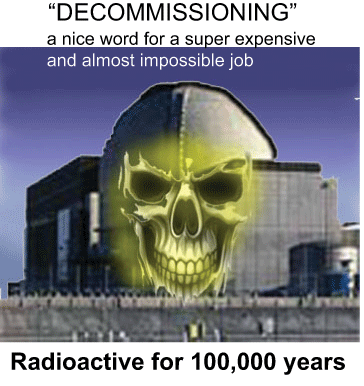
Activists, despite government oppression, campaign for decommissioning of Russia’s aging nuclear reactors
 Anti–nuclear resistance in Russia: problems, protests, reprisals [Full Report 2020] Report “Anti–nuclear resistance in Russia: problems, protests, reprisals” Produced by RSEU’s program “Against nuclear and radioaсtive threats”
“………..For many years, Murmansk regional environmental groups have opposed the ageing Kola NPP reactor’s lifetime extension. They have participated in public hearings, have organised many demonstrations (8-9-10), appealed to and received support from the prosecutor’s office(11), but this was all ignored by Rosatom. Activists also called on the governor to shut down the old NPP, but environmental organisations were shutdown instead. One such organisation is Kola Environmental Center (KEC) – listed as a Foreign Agent in 2017– and was subject to two trials and fined 150,000 rubles (12). KEC was forced to close down as a legal entity in2018, but has continued its environmental work as a public movement(13). Another organisation in the region –Nature and Youth – made the decision to close down in order to avoid prosecution, but continues its work as an unregistered initiative
• In 2018, after 45 years of operation, the first power unit of the Leningrad NPP was finally shut down.The second one scheduled for shutdown is in 2020, the third in 2025 and the fourth in 2026. However,decommissioning projects have not yet been clearly developed for the reactors.
• The public organisation, Green World, has worked for many years in Sosnovy Bor, Leningrad Region, a city dominated by the nuclear industry and closed to outsiders. Since 1988, activists of the organisation have opposed dangerous nuclear projects in the Baltic Sea region(17) and have provided the public with independent information on the environmental situation. (18)
In its place, another organisation was opened – the Public Council of the South Coast of the Gulf of Finland. Activists have continued their work as before under this new name…….”
1 This Month

Tell Congress: Prevent Nuclear Catastrophe in Iran

Tell Congress: Prevent Nuclear Catastrophe in Iran

Read the Public Inquiry Report, the Commissioners’ report, Surrendering Australia: The AUKUS Deception is available to download for free at aukuspublicinquiry.com. Or just watch the replay of the National Press Club Luncheon.

19 November – Webinar – The Reality of Reprocessing
Time: 11:00 AM Pacific Time (US & Canada) / 2:00 PM Eastern / 7:00 PM UK / 8:00 PM CET
Register for the Zoom Event Here


Shut down the radiation-damaged Heysham nuclear reactors now
To see nuclear-related stories in greater depth and intensity – go to https://nuclearinformation.wordpress.com

Say No to NASA’s Reckless Nuclear Reactor on the Moon
Say No to NASA’s Reckless Nuclear Reactor on the Moon
-
Archives
- November 2026 (147)
- October 2026 (302)
- September 2026 (339)
- August 2026 (330)
- July 2026 (355)
- June 2026 (287)
- May 2026 (306)
- April 2026 (356)
- March 2026 (251)
- February 2026 (267)
- January 2026 (308)
- December 2025 (358)
-
Categories
- 1
- 1 NUCLEAR ISSUES
- business and costs
- climate change
- culture and arts
- ENERGY
- environment
- health
- history
- indigenous issues
- Legal
- marketing of nuclear
- media
- opposition to nuclear
- PERSONAL STORIES
- politics
- politics international
- Religion and ethics
- safety
- secrets,lies and civil liberties
- spinbuster
- technology
- Uranium
- wastes
- weapons and war
- Women
- 2 WORLD
- ACTION
- AFRICA
- Atrocities
- AUSTRALIA
- Christina's notes
- Christina's themes
- culture and arts
- Events
- Fuk 2022
- Fuk 2023
- Fukushima 2017
- Fukushima 2018
- fukushima 2019
- Fukushima 2020
- Fukushima 2021
- general
- global warming
- Humour (God we need it)
- Nuclear
- RARE EARTHS
- Reference
- resources – print
- Resources -audiovicual
- Weekly Newsletter
- World
- World Nuclear
- YouTube
-
RSS
Entries RSS
Comments RSS

