California Coastal Commission unanimously approves storage plan at San Onofre Nuclear Generating Station CBS8, 17 Jul 20, The Commission voted 10-0 to approve the program to allow storage of spent nuclear fuel on-site. SAN DIEGO COUNTY, Calif. — The California Coastal Commission voted 10-0 in a special meeting today to approve an inspection and maintenance program allowing Southern California Edison to store spent nuclear fuel in a storage site at the San Onofre Nuclear Generating Station.
The program outlines actions SCE will take to inspect the canisters that contain spent nuclear fuel, as well as how potential issues with the canisters will be remedied.
Robotic devices will be used to inspect the canisters and site conditions will be simulated on a test canister, which will be observed for potential degradation. Two spent fuel storage canisters will be inspected every five years starting in 2024, and the test canister will be inspected every two to three years.
Canister flaws will be repaired by the application of a nickel-based metallic spray, and the presence of flaws may result in increased canister inspection frequency and an increase in the number of canisters inspected.
The inspection and maintenance program was also reviewed by the engineering consulting firm LPI, which provided recommendations that included the increase in canister inspections should flaws arise.
Nearly 3.6 million pounds of spent nuclear fuel are stored at the plant, which stopped producing electricity in 2012.
Gov. Gavin Newsom and leaders from the Legislature must demand action on nuclear waste and fill gaps in oversight. By Bart Ziegler, CalMatters, 17 Jul 20,
From San Onofre to Humboldt Bay, nuclear waste is piling up in California.
This most-toxic waste – tons and tons of it – is deadly for 200,000 years. Stranded next to a rising ocean at aging and decommissioned plants, the waste has no permanent home.
California is overdue in showing leadership.
Just as California has broken ranks with the federal government on regulating greenhouse gas emissions, Gov. Gavin Newsom and leaders from the Legislature must demand action on nuclear waste and fill gaps in oversight.
With federal regulators all but cornering nuclear policy, the industry all too often is left to regulate itself. Meanwhile, private contractors slop at ratepayer-funded decommissioning troughs while running loose with safety.
Enough is enough, California!
In north San Diego County, conditions at the shuttered San Onofre Nuclear Generating Station scream for state intervention, as Rep. Mike Levin, a Democrat from San Juan Capistrano, concluded in a task force report issued recently.
First, some background.
Decommissioning started this year at the San Onofre plant, which quit making electricity in 2012. The plant’s majority owner, Southern California Edison, has opened its $4 billion decommissioning purse to Holtec International as lead contractor in charge of transferring 3.6 million pounds of spent nuclear fuel from cooling pools to a storage system of Holtec’s design.
That’s where things get dicey.
Edison’s contractors are cramming the spent fuel assemblies into thin-walled, steel canisters. Workers hoist the canisters from wet storage with a behemoth, track-driven gantry crane and crawl them to a concrete, dry-storage vault. That’s where the 73 canisters will stay. Indefinitely.
Public hand-wringing intensified after a near-accident in 2018 involving a fully-loaded canister and the release of reports showing the canisters are prone to gouging during transfer. That can lead to corrosion and failure, especially in a marine environment. To make matters worse, the canisters cannot be repaired, monitored, inspected or transported once entombed in the vault.
What can California do? For starters, leaders can immediately improve oversight of nuclear waste storage.
Nuclear plant owners admit to not having developed procedures to replace fully-loaded canisters. That’s why, as part of decommissioning California’s coastal nuclear plants at San Onofre, Diablo Canyon and Humboldt Bay, the state Coastal Commission must demand the construction of handling facilities – known as “hot cells” – where canisters can be repaired or replaced.
State lawmakers should order construction of a hot cell at the decommissioned Rancho Seco Nuclear Generating Station, just 40 miles south of their offices in Sacramento.
In San Diego County, near the border with Orange County, 8.2 million people live within 50 miles of the old San Onofre plant. On July 16, the California Coastal Commission is set to act on a staff recommendation to approve Edison’s application to dismantle the plant’s cooling pools. That approval would be disastrous. For now at least, the spent fuel cooling pools provide our last option for dealing with a damaged canister.
Coastal Commissioners are appointed by the same Legislature that should prepare for a crisis instead of responding to one. You don’t wait for a fire to create a fire department. Preparation is cheaper and faster than responding to a crisis. Tragically, the COVID-19 pandemic has shown that preparation is not always our strongest suit.
As recommended in the Report of the San Onofre Nuclear Generating Station Task Force, a state model would improve agency coordination on waste storage permit applications and increase engagement with federal agencies to advance solutions for containing and handling deadly nuclear waste. The solutions should be tied to strict, economic enforcement.
Coastal commissioners, lawmakers, regulators and anyone else with a stake in California – that’s nearly 40 million of us – should read the report and demand action on nuclear waste.
Michigan bill opposing high-level nuclear waste dump languishes in Senate committee Iosco County News Herald, By Jim Bloch For MediaNews Group,Jul 16, 2020
The Michigan House of Representative passed a concurrent resolution on Feb. 5 opposing the proposed high-level nuclear waste dump near the shores of Lake Huron in the municipality of South Bruce, Ontario, Canada.
The resolution was sponsored by Gary Howell, the republican representative of the 82nd District, which comprises Lapeer County.
It urges “the United States Congress to take every legal action possible to prevent the construction of any underground high-level nuclear waste repository in the Great Lakes basin,” and urges “the Canadian government to prohibit a high-level nuclear waste repository anywhere in the Great Lakes basin.”
One of the cosponsors of the resolution was Gary Eisen, the St. Clair Township Republican who represents the 81st District, which swoops around the southern half of St. Clair County and includes Marysville, St. Clair, Marine City and Algonac, as well as surrounding townships.
“It’s sitting in the Senate now in Dan Lauwers’s committee,” Eisen said in June, noting that the onset of the COVID-19 pandemic put the brakes on a lot of the legislature’s work. “Everything’s ten times harder now.”
The resolution is in the Committee on Energy and Technology, which Lauwers chairs. His 25th Senate District includes St. Clair County………..
“Placing a deep geological repository near the Great Lakes is a high-risk venture with the potential of causing irreparable harm to millions of lives,” said the resolution. “Underground waste repositories have leaked in the past, costing billions of dollars to repair. Germany, for instance, is spending billions of dollars to dig up low- and intermediate-level radioactive waste that was stored in a salt mine due to leakage and other environmental concerns. In 2014, chemical reactions in a steel barrel full of radioactive waste caused an explosion and fire at a low- and intermediate-level underground waste site in Carlsbad, New Mexico causing a cloud of radioactivity to be released at the surface. Not only did this put the health and safety of the public at risk, it cost taxpayers $2 billion to clean up and repair. As demonstrated, low- and intermediate-level facilities have failed, and this high-level nuclear proposal provides no guarantee, whatsoever, to keep radioactive waste from our environment.”
If the Michigan Senate approves the resolution, it will be sent to Prime Minister of Canada, the Minister of Environment and Climate Change, the Minister of Foreign Affairs, the Premier of Ontario, the Canadian Nuclear Safety Commission, the Canadian Environmental Assessment Agency, the Speaker of the U.S. House, the President of the U.S. Senate, the members of the Michigan congressional delegation, and the U.S. Nuclear Regulatory Commission.
On Jan. 17, Michigan’s U.S. Sens. Debbie Stabenow and Gary Peters, along with Congressman Dan Kildee and Congressman John Moolenaar, introduced a bipartisan resolution opposing Canada’s placement of a permanent nuclear waste storage in South Bruce.
If the Michigan Senate approves the resolution, it will be sent to Prime Minister of Canada, the Minister of Environment and Climate Change, the Minister of Foreign Affairs, the Premier of Ontario, the Canadian Nuclear Safety Commission, the Canadian Environmental Assessment Agency, the Speaker of the U.S. House, the President of the U.S. Senate, the members of the Michigan congressional delegation, and the U.S. Nuclear Regulatory Commission.
Waste Control Services (WCS) has been disposing of the nation’s low level nuclear waste in Andrews County at a cost of $100 dollars per cubic foot for Class A waste and $1000 dollars per cubic foot for Class B and C waste.
There is an additional surcharge of 40 cents per unit of radioactivity, but The Texas Commission on Environmental Quality recently approved the request by WCS to drop the price to 5 cents per unit.
A spokesman for WCS explained the market is dynamic so when the price drops, they need to be able to continue to compete.
Public Citizen Texas Office Director, Adrian Shelley worries that by allowing WCS to import nuclear waste at a fraction of the cost, it could result in massive liability for the state.
“If WCS collects less money to import waste in Texas, then there will be less money available should an accident occur and ultimately we’re concerned Texas taxpayers will be on the hook should an accident occur,” Shelley said.
The company doesn’t expect less revenue, rather they anticipate more income as a result of the price drop.
WCS reports Andrews County gets 5% of their revenue and the state gets 25%.
WCS has also been working to get approval for years to temporarily store the nation’s high level nuclear waste that would include spent nuclear fuel rods.
Pandemic drives plant operators to employ remote checks, WNN, 17 July 2020Nuclear power plant operators are carrying out remote quality and safety related assessments of systems, structures and components (SSCs) to overcome physical distancing and mobility restrictions during the global COVID-19 pandemic, participants in a recent International Atomic Energy Agency (IAEA) webinar said. SSCs must be regularly monitored, replaced and have their quality verified.
Thanks to Botswana, the Treaty on the Prohibition of Nuclear Weapons has now reached 40 states parties. After just 10 more ratifications, it will enter into force. Botswana deposited its instrument of ratification with the UN Secretary-General, António Guterres, on 15 July, the anniversary of the entry into force of the Treaty of Pelindaba, which established the whole of Africa as a nuclear-weapon-free zone.
In case you missed it, Fiji also ratified the ban treaty last week. You can read about the significance of this step and Fiji’s long history of activism against the bomb in the Guardian, thanks to Dr Vanessa Griffen and Talei Luscia Mangioni.
The 40th ratification is a significant milestone, dispelling any doubts over the treaty’s inevitable entry-into-force. The Australian Government simply cannot ignore the ban forever.
In more good news, on Tuesday night the City of Port Adelaide Enfield became the first South Australian council to endorse the ICAN Cities Appeal. There are now 28 Australian councils that call for the federal government to sign and ratify the Treaty on the Prohibition of Nuclear Weapons.
Today is the 75th anniversary of the first nuclear explosion, code-named “Trinity”. This event has significance for all people impacted by nuclear weaponry worldwide, including in Australia. Nuclear explosions don’t stay in the past, the effects of radiation continue through the decades and generations. In just a couple of hours we’ll begin our special Trinity video panel with three incredible women who are fighting against the bomb. Check the details and get the Zoom link here, or watch it later from the ICAN Australia Facebook page.
BY ALEXANDRA GENOVA, PHOTOGRAPHS BY PHIL HATCHER-MOORE OCTOBER 13, 2017
Decay and desolation scar the landscape of a remote corner of the Kazakh Steppe. Unnatural lakes formed by nuclear bomb explosions pockmark the once flat terrain, broken up only by empty shells of buildings. It appears uninhabitable. And yet, ghosts – living and dead – haunt the land, still burdened by the effects a nuclear testing program that stopped nearly 30 years ago.
The site, known as the Polygon, was home to nearly a quarter of the world’s nuclear tests during the Cold War. The zone was chosen for being unoccupied, but several small agricultural villages dot its perimeter. Though some residents were bussed out during the test period, most remained. The damage that continues today is visceral.
Photographer Phil Hatcher-Moore spent two months documenting the region, and was struck by the “wanton waste of man’s folly.”
His project ‘Nuclear Ghosts’ marries the wasted landscape and intimate portraits of villagers still suffering the consequences.
The figures are astonishing – some 100,000 people in the area are still affected by radiation, which can be transmitted down through five generations. But with his intimately harrowing pictures, Moore sought to make the abstract numbers tangible.
“Nuclear contamination is not something we can necessarily see,” he says. “And we can talk about the numbers, but I find it more interesting to focus on individuals who encapsulate the story.”
Moore interviewed all his subjects before picking up his camera and learned that secrecy and misinformation plagued much of their experience.
“[During the 50s] one guy was packed up with his tent and told to live out in the hills for five days with his flock. He was effectively used as a test subject to see what happened,” says Moore. “They were never told what was going on, certainly not the dangers that they may be in.”
Though human stories were central, Moore also documented the scientific test labs that are still uncovering the damage. The juxtaposition of these labs alongside portraits of people disfigured by radiation makes for uncomfortable viewing. But this proximity is deliberate.
“There was a history of humans being used as live subjects,” says Moore. “I wanted to marry these ideas together; the way people were used by researchers at the time and how that trickles down into every day life – what that looks like, what that means.”
While some of Moore’s subjects are severely deformed, many suffer from less visible health issues like cancer, blood diseases or PTSD. And the hidden, insidious nature of the thing is what is perhaps most troubling. “For a long time there hadn’t been much nuclear development but it is a very real issue right now,” says Moore. “But we don’t talk about what it takes to renew these weapons. These people are legacy and testament to what was done to meet those ends.”
See more of Phil Hatcher-Moore’s work on his website and follow him on Instagram.
Now I Am Become Death’: The Legacy of the First Nuclear Bomb Test, NYT, By Maria Cramer July 15, 2020
“………The effects of radiation were not well understood by most scientists on the project at the time, according to historians, and the preparations that were made to keep civilians safe reflected that ignorance.
They placed crude monitors around the small towns within 40 miles of the testing site. A scientist who was seven months pregnant and her husband, who was also a scientist, were sent to a motel in one of the towns with a Geiger counter, a device used to detect radioactive emissions, to measure the radiation. If the needle hit a certain mark, she was instructed to alert officials so that they could evacuate the town, Professor Wellerstein said.
Officials did not warn any of the residents — many of them ranchers, Navajos, Mexican settlers and their descendants who raised cattle and drank water from cisterns — about the test. Should anyone ask about the blast, officials had proposed several cover stories, including telling the public that a remote ammunitions depot had exploded, Professor Wellerstein said.
Officials did not warn any of the residents — many of them ranchers, Navajos, Mexican settlers and their descendants who raised cattle and drank water from cisterns — about the test. Should anyone ask about the blast, officials had proposed several cover stories, including telling the public that a remote ammunitions depot had exploded, Professor Wellerstein said.
“It produced more light and heat than the sun,” said Tina Cordova, a founder of the Tularosa Basin Downwinders Consortium, which has urged the government to conduct more research about the aftermath of the blast and to compensate the affected communities.
Based on census data at the time, the consortium estimates there were tens of thousands of people living within a 50-mile radius of the blast, Ms. Cordova said.
Ash fell for days afterward in the landscape and in every direction and in amazing quantities,” she said.
Warnings went unseen and ignored.
The day after the blast, Leo Szilard, a Hungarian physicist who worked on the Manhattan Project, sent a petition signed by 70 scientists to President Harry S. Truman, urging him to give Japan a chance to surrender before dropping the bombs.
“Thus a nation which sets the precedent of using these newly liberated forces of nature for purposes of destruction may have to bear the responsibility of opening the door to an era of devastation on an unimaginable scale,” the petition cautioned.
It was not the first plea to reconsider using a nuclear bomb to end the war.
A month before the test, a committee, which included Dr. Szilard and was headed by the German scientist James Franck, issued the Franck Report, urging the United States to first demonstrate the power of the weapons to members of the United Nations……….
Scientists “were totally shocked when the Japanese reported radiation sickness at Nagasaki,” said Professor Wellerstein, who has written about what the United States knew about the long-term consequences of using the weapons……..
The true effects of the test on the people who lived near the test site remain unclear.
“The Trinity downwinders have not been treated in either a fair or a just manner,” he said.
Ms. Cordova, who grew up in Tularosa, N.M., said cancer had been pervasive in the towns near the Trinity test site, where everyone can name someone who died of the disease.
“We know that the government basically walked away and has taken no responsibility for the suffering and the dying,” said Ms. Cordova, who has survived thyroid cancer and has several relatives who died of various forms of cancer.
Members of Congress from New Mexico have introduced legislation that would expand the Radiation Exposure Compensation Act, which compensates uranium miners and people who lived downwind from nuclear testing sites, to include the residents who lived around Trinity.
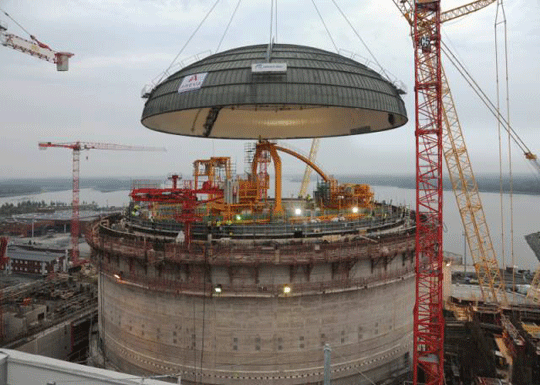
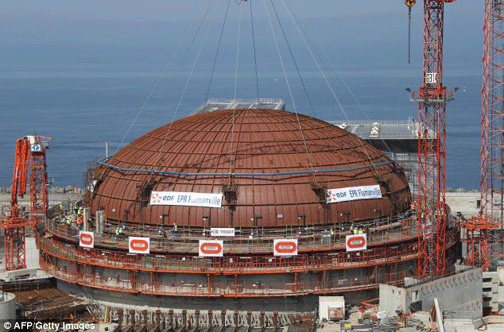
French auditor calls for financing guarantee for future EPR projects, WNN, 15 July 2020, EDF must ensure the financing and profitability of its proposed EPR2 reactor before starting construction of any plants based on the design in France, the country’s state audit office has said. The EPR2 is a simplified version of the EPR design, construction of which has been hit by delays and cost increases in France and Finland……..
Construction of the Olkiluoto 3 EPR began in 2005, with completion of the reactor originally scheduled for 2009. However, with various delays and setbacks, fuel loading is now planned for later this year. The loading of fuel into the Flamanville EPR in France, construction of which began in December 2007, is now scheduled for the end of 2022. Two EPR units are also under construction at the Hinkley Point C project in Somerset, UK.
In a report published 9 July, the Cour des Comptes says the rivalries between Areva and EDF “resulted in the hasty launch of the construction sites of the first two EPRs, in Finland and in Flamanville. This insufficient preparation led to underestimating the difficulties and the construction costs, and to overestimating the capacity of the French nuclear sector to face it, at the cost of financial risks for the companies of the sector.”
The report says the 3.3 times increase in the construction cost, estimated by EDF at EUR12.4 billion (2015 value), and by at least 3.5 times the commissioning time for the Flamanville EPR compared to initial forecasts, “constitutes a considerable drift”. It says this is the result of “unrealistic initial estimates, poor organisation of the project by EDF, a lack of vigilance on the part of the supervisory authorities and a lack of awareness of the loss of technical competence of industrialists in the sector”.
The audit office added, “The construction of new EPRs in France cannot in any event be envisaged without clear prior answers on the methods of financing and the role of nuclear power production in the electricity mix of tomorrow.”
The report says EDF is no longer in a position to finance the construction of new reactors on its own. The utility, it says, is studying means of financing that either makes the consumer – as in the case of the UK’s contract-for-difference for construction of Hinkley Point C – or the taxpayer bear the costs of construction.
“The financial challenges are major, with the cost of construction of three pairs of EPR2 reactors being estimated at EUR46 billion (2018 value),” the Cour des Comptes notes. “Taking into account their duration of construction, production and dismantling, the decision to build or not to build future EPRs will have consequences until the 22nd Century. …. https://world-nuclear-news.org/Articles/French-auditor-calls-for-financing-guarantee-for-f
Danielle Endres: Nuclear testing as a form of colonization, https://www.sltrib.com/opinion/commentary/2020/07/15/danielle-endres-nuclear/By Danielle Endres ·16 July 20
At 5:29 a.m. on July 16, 1945, scientists in the Manhattan Project detonated the world’s first nuclear weapon in the desert homelands of the Mescalero Apache, a place now known as Alamogordo, New Mexico. As the detonation cloud mushroomed into the sky, the Trinity test ushered in a new era, the atomic age.
Some researchers argue that the atomic age is the beginning of Anthropocene — the planetary era defined by the impact of humans on global ecological systems — because of the release of radiation into our ecosystem from nuclear weapons production and testing. Indeed, the Centers for Disease Control notes “All people who were born since 1951 have received some exposure to radiation from weapons testing-related fallout.”
With this opening of the nuclear Pandora’s box, nuclear weapons remain a ubiquitous though often unseen feature of geopolitics, modern warfare, culture and society. While there are many arguments to be made about the social and environmental legacies of nuclear weapons, I focus on how the nuclear weapons production process is linked with structures of racism and colonialism.
Trinity downwinders have tracked cancers, other illnesses and deaths linked to radiation exposure in communities near the Trinity site in their call for compensation trough RECA. The Mescalero Apache Reservation is a Trinity downwinder community. The impacts on Mescalero Apache nation from the Trinity test are just one example of a larger pattern in which Black, Indigenous, people of color and poor rural communities disproportionately experience adverse consequences from nuclear weapons production and testing.
After the Trinity test, and the bombings on Hiroshima and Nagasaki that it enabled, the world entered a nuclear era with a massive proliferation of nuclear weapons. There are many scholarly resources from which learn more about how the cradle to grave cycle of nuclear weapons production relates to racism and colonialism.
Historian Gabrielle Hecht’s “Being Nuclear” shows how uranium mining in African countries is linked with race and colonialism. In “The Nuclear Borderlands,” anthropologist Joseph Masco recounts the impacts of nuclear weapons production on Indigenous and Nuevomexicano communities in New Mexico. And Traci Voyles tells of devastating effects of uranium mining on the Navajo nation in “Wastelanding.”
My research focuses on nuclear colonization, a phenomenon in which the nuclear production process disproportionately damages Indigenous peoples’ land, health and sovereignty due to the disparate location of nuclear production and testing sites on or near Indigenous reservations and homelands.
Spiritual leader and anti-nuclear advocate Corbin Harney called the Western Shoshone Nation the most nuclear bombed nation in the world because of the more than 1,000 nuclear tests that happened on Western Shoshone treaty-protected homelands, a.k.a. Nevada Test Site. For more than 30 years, the federal government then seriously considered storing the nation’s high-level nuclear waste from nuclear power inside Yucca Mountain, a spiritual place in Western Shoshone homelands.
Nuclear colonialism is yet another example of environmental injustice. Marginalized people are disproportionately harmed in the production of nuclear technologies just as they are disproportionately damaged by climate change, air pollution, and toxicity.
We must fight to end our reliance on nuclear weapons, not just to protect future generations from accidental or intentional use, but also to work toward a more just and equitable world in which everyone can breathe clean air, have access to a clean water, live in a healthy environment, participate in decisions about their land and communities, and not be asked to sacrifice in the name of a “national interest” that rarely works in support of Black, Indigenous and people of color.
On this 75th anniversary of the Trinity test, let us commit to nuclear abolition from the standpoint of environmental justice and decolonization.
Danielle Endres, Salt Lake City, is a member of Utah Campaign to Abolish Nuclear Weapons and a professor of rhetoric and communication at the University of Utah whose research focuses on the sociopolitical implications of nuclear technologies. Views in this article are her own and do not represent the University of Utah.
Siberia heatwave was ‘almost impossible’ without climate change, scientists say, SBS News 16 Jul 20, An extreme heatwave in the Arctic is a problem for the entire planet, say scientists, because the region regulates weather around the globe and contains much of the world’s carbon-rich permafrost.A recent heatwave in Siberia that saw temperature records tumble as the region sweltered in 38-Celsius highs was “almost impossible” without the influence of man-made climate change, leading climate scientists say.
An international team of researchers found that the record-breaking warm period was more than 2 degrees hotter than it would have been if humans had not warmed the planet through decades of greenhouse gas emissions.
The five hottest years in history have occurred in the last five years and there’s a better-than-even chance that 2020 will be the hottest ever recorded.
Earth’s poles are warming faster than the rest of the planet, and temperatures in Siberia – home to much of the world’s carbon-rich permafrost – were more than 5 degrees hotter than average between January and June. ………
‘Important for everyone’
The team behind the calculations stressed that the Siberian heatwave was a problem for the entire globe. Some 1.15 million hectares of forest going up in flames released millions of tonnes of CO2 into the atmosphere.
At the same time, the wildfires and sustained heatwaves accelerated the region’s permafrost melt. This caused an oil tank built on frozen soil to collapse in May, leading to one of the region’s worst-ever oil spills…….
The 2015 Paris climate deal commits nations to capping temperature rises to “well-below” 2 degrees above pre-industrial levels and to strive for a 1.5 degrees limit if at all possible. With just 1 degree of warming so far, Earth is already buffeted by record-breaking droughts, wild fires and super storms made more potent by rising sea levels.
To keep in line with the 1.5-degree target, the United Nations says global emissions must fall by 7.6 per cent every year this decade.
Now I Am Become Death’: The Legacy of the First Nuclear Bomb Test
The 75th anniversary of what’s known as the Trinity explosion, the world’s first nuclear weapon test, comes as tensions over nuclear devices intensify. NYT, By Maria Cramer July 15, 2020 It was 1 a.m. on July 16, 1945, when J. Robert Oppenheimer met with an Army lieutenant general, Leslie Groves, in the parched landscape of Jornada del Muerto — Dead Man’s Journey — a remote desert in New Mexico.
A group of engineers and physicists was about to detonate an atomic device packed with 13 pounds of plutonium, a nuclear weapon that the government hoped would bring an end to World War II……..At 5:29 a.m. local time, the device exploded with a power equivalent to 21,000 tons of TNT and set off a flash of light that would have been visible from Mars, researchers said.
It was the first nuclear test in history.
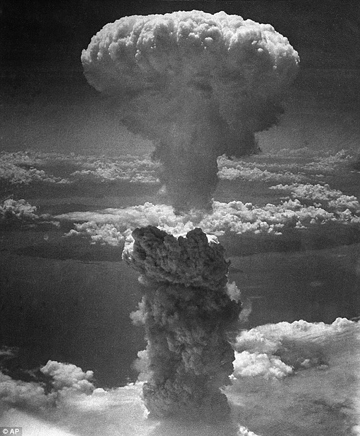
Less than a month later, the United States would drop a nearly identical weapon on the city of Nagasaki in Japan. The bomb, named Fat Man, fell three days after Americans dropped a uranium bomb, called Little Boy, on Hiroshima. Both weapons immediately killed tens of thousands of Japanese people and forced Japan’s surrender on Aug. 14, bringing an abrupt end to the war.
Since the Trinity test 75 years ago, at least eight countries have conducted more than 2,000 nuclear bomb tests, said Jenifer Mackby, a senior fellow at the Federation of American Scientists. More than half of those tests have been conducted by the United States, a legacy of the Trinity explosion, as the United States and several other countries have continued to refuse to ratify the treaty prohibiting nuclear weapon test explosions.
Many of the scientists who witnessed the blast quickly realized the “foul and awesome” power they had set free, according to historians.
Mr. Oppenheimer said a Hindu scripture ran through his mind at the sight of the explosion: “Now I am become Death, the destroyer of worlds.”
The Japan Nuclear Fuel Ltd. (JNFL) nuclear fuel reprocessing plant in the village of Rokkasho, Aomori Prefecture, is seen in this May 14, 2020 file photo taken from a Mainichi Shimbun aircraft
July 15, 2020
TOKYO — Japan Nuclear Fuel Ltd. (JNFL) had been inappropriately storing nuclear waste at a nuclear fuel reprocessing plant in Rokkasho, Aomori Prefecture, in northern Japan, including keeping waste in undesignated areas, the country’s nuclear regulatory body has revealed.
The Nuclear Regulation Authority (NRA) had instructed JNFL to make improvements in its practices in 2017, but the company had left some of its nuclear waste in places where they were not supposed to be. There has been no confirmation that any of the radioactive substances leaked. There have been a series of shoddy practices uncovered at JNFL, which is likely to call into question the company’s attitude.
At the fuel reprocessing plant, uranium and plutonium are extracted from spent nuclear fuel for reuse in nuclear reactors. Highly radioactive waste liquid that is generated in the process becomes nuclear waste when it is solidified in glass. According to the NRA and others, JNFL had been keeping nuclear waste in a building different from the one the waste is meant to be stored in. As for the approximately 160 kilograms of shards of radioactive waste liquid solidified in glass, an appropriate storage method had not been stipulated. There were eight cases of inappropriate storage, some of them spanning the past 19 years.
Inspectors from the NRA Secretariat confirmed inappropriate storage of nuclear waste in August 2017. The regulatory body asked that JNFL correct its practices by August 2019, but only two of the eight cases had been remedied by the end of June 2020.
At a meeting concerning the safety inspection of the nuclear fuel reprocessing plant this past May, the NRA had determined that the plant had effectively met the government’s new criteria. JNFL explained that it had intended to consult with the NRA Secretariat once the inspections had taken place. The NRA, meanwhile, says that the situation is exempt from safety inspections under the government’s new criteria.
Japan’s nuclear regulator has demanded Tokyo Electric Power Company clarify the responsibilities of its president in the event of a nuclear accident.
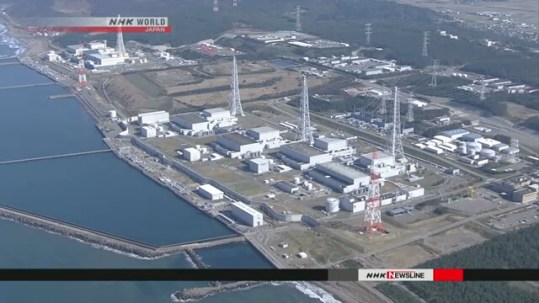
Three years ago, the Nuclear Regulation Authority endorsed safety measures at TEPCO’s two nuclear reactors at the Kashiwazaki-Kariwa plant in Niigata Prefecture.
The regulator then requested that the company lay out its policies for preventing another nuclear accident in the plant security rulebook. The company had several years earlier been at the heart of the 2011 Fukushima Daiichi nuclear disaster.
On Thursday, TEPCO officials told the regulator that they would include a clause stipulating that the president be quickly informed of any risk with the potential to lead to an accident. The clause also stipulates that the president address the issue, regardless of whether the risk has been confirmed or not.
The officials also said records related to such issues would be kept for five years.
But the regulation authority says the storage period should be longer. It also says the responsibilities of the president should be laid out more specifically.
They are also demanding written opinions from law experts on the matter. Tokyo Electric says it will reconsider these measures.
Regulators want TEPCO to be as specific in its safety measures as possible, after the company rejected a report warning of the possible impact of a massive tsunami before the 2011 Fukushima Daiichi nuclear disaster.
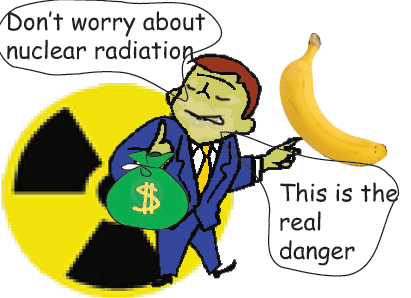
One such tactic, which was witnessed after Fukushima, occurred through the reframing of radiation risks as simplistic and natural, unrelated to the specific risks associated with Fukushima. For instance, the government distributed pamphlets that explained that radiation naturally exists in our food, ch as the potassium levels present in bananas.
Yet such information is irrelevant to the hazards of internalizing fission products from a nuclear power plant. While bananas have naturally occurring potassium, it would require eating around 20 million bananas to get radiation poisoning. On the other hand, each radionuclide released during nuclear meltdown events like Fukushima possesses specific biological signatures and presents particular risks when inhaled or ingested.
Being Clear-Eyed About Citizen Science in the Age of COVID-19, Sapiens MAXIME POLLERI / 15 JUL 2020
“……..there are inherent political complexities involved when citizens or nongovernmental organizations step in and claim expertise in areas typically reserved for state agencies and experts. Like those entities, citizen science has its own potential pitfalls.
For one, corporate polluters or state agencies can potentially exploit citizen science, delegating the monitoring of contamination to the victims of a disaster. For instance, by the end of this year, Japan’s Nuclear Regulation Agency plans to remove 80 percent of radiation monitoring posts in Fukushima, arguing that the radiation levels in many areas have stabilized themselves—owing also in part to the presence and efficiency of monitoring networks provided by citizens. This decision has been controversial, since problems of radioactive contamination persist in Fukushima. For instance, one of the main radioactive pollutants, Cesium-137, has a long lifespan and can emit radiation for nearly 300 years.
Retiring these posts will force citizen scientists to take on the burden of monitoring, shifting liability for ensuring safe living conditions onto the shoulders of the nuclear victims. In addition, the growing impact of citizen science can lead to reduced public expenditure, minimal government intervention, and risk privatization, meaning that risk becomes individual and private. Too much delegation to citizens runs the risk of creating societies where individuals have to take care of themselves in increasingly polluted environments, while interpreting complex data about controversial environmental dangers. And not every community can afford to purchase expensive monitoring devices or test food in a consistent manner.
Citizen scientists also risk reproducing forms of ignorance around certain hazards. n post-Fukushima Japan, what is meant by the “science” of citizen science is often synonymous with a tracking and monitoring agenda, where individuals resort to the very same technologies and knowledge forms used by states, nuclear lobbies, or radiological protection agencies.
Yet many anthropologists and historians have argued that what we know (and don’t know) about the extent of radiation hazards and dangers was embedded in a culture of secrecy, denial, and propaganda that was shaped by the nuclear arms race of the Cold War. Considerations over international security and political stability were often prioritized over the safety of workers or citizens who had been exposed to radiation. As a result, some of the negative effects of radiation were downplayed through different tactics.
One such tactic, which was witnessed after Fukushima, occurred through the reframing of radiation risks as simplistic and natural, unrelated to the specific risks associated with Fukushima. For instance, the government distributed pamphlets that explained that radiation naturally exists in our food, ch as the potassium levels present in bananas.
Yet such information is irrelevant to the hazards of internalizing fission products from a nuclear power plant. While bananas have naturally occurring potassium, it would require eating around 20 million bananas to get radiation poisoning. On the other hand, each radionuclide released during nuclear meltdown events like Fukushima possesses specific biological signatures and presents particular risks when inhaled or ingested. During my fieldwork in Fukushima, I witnessed that this legacy of misinformation was carried on by some citizens who unwittingly replicated these propagandist forms of knowledge by making similar naturalistic or overly simplistic comparisons.
As citizen science efforts grow, it is also critical to consider to what extent citizen involvement might put individuals at risk of adverse health effects. This is a tricky question when one considers that certain members of the population, like children, are more sensitive to radiation than others. In Fukushima, some Japanese parents have understandably opted to evacuate rather than rely on citizen science, arguing that doing so would expose their children to unacceptable levels of radiation and that forcing children to be responsible for their own safety is unethical.
Citizen scientists are hardly homogeneous groups, as mothers, farmers, and urban citizens do not experience hazards and recovery in the same way. In that regard, factors such as gender, employment, and social class strongly influence why people enter citizen science, how science is mobilized, and how data about a controversial hazard ends up being interpreted. For instance, people like Natsuo have used the results gathered by citizen science to highlight the dangers of living in Fukushima, while other citizen science organizations help bring people back to their beloved region. These conflicts can result in even more fragmented communities and conflicts within and around citizen science. ……
In Japanese, two words—shiru and wakaru—can be used for the verb “knowing.” Shiru means “to find out” or “to learn.” It implies a process of acquisition of knowledge and information. Wakaru, on the other hand, is closer to “understanding this knowledge.” Shiru comes before wakaru, and in a way, one can know but not necessarily understand. Wakaru consequently shows a greater and more personal level of comprehension often based on a given context.
For Masayuki, state institutional experts possessed shiru, but not wakaru. Having been directly affected by radioactive contamination, Masayuki strongly believed that the inhabitants of a place, the jūmin (literally, the people who resided) were best suited to manage their life in a post-Fukushima Japan. https://www.sapiens.org/culture/fukushima-citizen-science/
Tell Congress: Prevent Nuclear Catastrophe in Iran
Read the Public Inquiry Report, the Commissioners’ report, Surrendering Australia: The AUKUS Deception is available to download for free at aukuspublicinquiry.com. Or just watch the replay of the National Press Club Luncheon.
19 November – Webinar – The Reality of Reprocessing
Time: 11:00 AM Pacific Time (US & Canada) / 2:00 PM Eastern / 7:00 PM UK / 8:00 PM CET

 While some of Moore’s subjects are severely deformed, many suffer from less visible health issues like cancer, blood diseases or PTSD. And the hidden, insidious nature of the thing is what is perhaps most troubling. “For a long time there hadn’t been much nuclear development but it is a very real issue right now,” says Moore. “But we don’t talk about what it takes to renew these weapons. These people are legacy and testament to what was done to meet those ends.”