Japanese local governments depend on “nuclear money”

|
Japanese town’s approval of nuclear reactor restart reflects subsidy dependence , https://mainichi.jp/english/articles/20201129/p2a/00m/0na/001000c 29 Nov 20, TOKYO — Japanese local governments’ dependence on “nuclear plant money” distributed by the national government was starkly highlighted recently when one town granted their approval for a reactor restart at one power plant badly damaged in the March 2011 Great East Japan Earthquake and tsunami.
TOKYO — Japanese local governments’ dependence on “nuclear plant money” distributed by the national government was starkly highlighted recently when one town granted their approval for a reactor restart at one power plant badly damaged in the March 2011 Great East Japan Earthquake and tsunami.
However, the Japanese government has taken measures such as changing both the subsidies’ name and their governing mechanisms after the 2011 disaster, so that local governments can still get the money even when the power plant in their jurisdiction has been off-line for long periods. At least some 115 billion yen (around $1.11 billion) has been distributed as subsides and aid from the national government to local hosts of nuclear power plants this fiscal year alone. According to the town of Onagawa, it received about 530 million yen (approximately $5.1 million) in subsidies based on the Three Power Source Development Laws in fiscal 2010, the year before the Great East Japan Earthquake. That has increased following the disaster, with subsidies reaching over 1.4 billion yen (roughly $13.5 million) in fiscal 2017 and 2018. This included payments totaling 1.08 billion yen (roughly $10.4 million) connected to two reactors at the plant in service for more than 30 years.
Onagawa’s total fiscal 2019 spending stood at 34 billion yen (roughly $327.4 million). If the fixed property taxes paid for the nuclear power plant (about 2.7 billion yen, or roughly $26 million) are added to the subsidies stemming from the Three Power Source Development Laws, money derived from the nuclear plant accounts for over 10% of the town’s annual revenue. “We are being greatly helped in terms of finance,” a municipal government official commented. Of the monies based on the Three Power Source Development Laws, Onagawa reaped about 350 million yen (about $3.37 million) more than previously in one subsidy for enhancing the area around the plants — a category designed to gain cooperation from communities hosting the plants. In fiscal 2019, the subsidies were put toward the salaries of seven local social welfare council employees (about 28 million yen, or roughly $270,000), updating a hospital’s electronic medical record system (about 77 million yen, or some $742,000), and renovating a gymnasium, tennis court and baseball field (about 240 million yen, or roughly $2.31 million), among other purposes. Such subsidies can be used for various purposes under the name of enhancing public services. According to municipal project guidelines, although there were many cases where local tax revenue accounted for around 10-20% of expenses, renovation costs for the athletic facilities were covered entirely by the subsidies. Onagawa’s situation is hardly unique. Local governments hosting nuclear power plants generally rely heavily on the large subsidies. National government policies contribute greatly to the increasing subsidies handed out even as nuclear power stations remain shuttered. The Ministry of Economy, Trade and Industry reviewed regulations following the nuclear disaster such that the plants would be deemed as “in operation” to a certain extent even while their reactors were off-line. Takeo Kikkawa, professor at International University of Japan, suggested that the national government “may have been distributing generous subsidies even when the plants were suspended to make it easier for local governments to approve reactor restarts.” According to the Onagawa government, reforms that allowed local bodies to receive more funding based on the years a power station has been in service was also one of the factors behind the town’s increased subsidy take. Central government figures have raised concerns over this particular change to the subsidy system, including that the economy minsitry is doing it “for its own convenience.” Furthermore, public relations and research-related subsidies received by Onagawa to cover nuclear power plant tours, information circulars and other costs, among other purposes, recovered to the same level as before the 2011 disaster (around 10 million yen annually, or roughly $96,300) since fiscal 2015. A senior official at a major electric power company commented, “Thorough PR activities are indispensable for getting reactors restarted.” It was revealed in the town’s project assessment report that a large majority of the contracts to enhance public services and conduct PR-related activities were negotiated without any competition. Once the No. 2 unit at the Onagawa nuclear station is back on-line, the town is also set to receive subsidies from the nuclear fuel tax, collected from the power company based on the nuclear plant’s performance. The community also reaps further benefits when employees of power companies, including subcontractors, frequent local eateries and other businesses during regular inspections. Hideaki Tanaka, a tax law professor at Meiji University, commented, “This nuclear plant money is an extreme example of the government’s subsidy and aid regime.” And so the town of Onagawa’s approval of the restart at their local nuclear plant could be considered inevitable, so dependent on nuclear money have host municipalities become. (Japanese original by Yuki Takahashi, Business News Department)
|
|
It is likely that Trump gove the nod for assassination of Iran nuclear scientist
 Observer 29th Nov 2020, As the president lashes out wilfully during his last days in office, it seems likely that he at least gave the nod to this killing. Iran’s leaders, mindful of previous, unexplained killings of its nuclear experts, have been quick to blame Israel for Fakhrizadeh’s death. But American and regional analysts suggest that if Israel was involved, it would only have acted after getting the nod from Trump.
This explanation makes sense for several reasons. Like last January’s assassination of the Revolutionary Guard general Qassem Suleimani, Friday’s outrage is an extraordinarily provocative act. It risks goading Iran into armed retaliation against its most prominent enemies – Israel, Saudi Arabia and US forces based in the region. The assassination, in this sense, is tantamount to a declaration of war.
UK’s beautiful Lake District – no “final solution” for the nuclear waste problem.
 Radiation Free Lakeland 28th Nov 2020, Millom Rock and Deer Parks, This is a lovely description of a walk in an amazingly beautiful area.unbelievable it could be seriously considered as a nuclear waste dump. This quarry and surrounding area is being seriously considered by Radioactive Waste Management (a government quango) for the “disposal” of heat generating nuclear wastes.
In order to justify new nuclear build such as that at Hinkley Point, there needs to be a “final solution” for the
nuclear waste. This is no solution it is an excuse. A very dangerous excuse.
https://mariannewildart.wordpress.com/2020/11/28/millom-rock-deer-parks/
Dismantling Duke Energy’s Crystal River nuclear plant
|
Work begins soon on dismantling Duke Energy’s Crystal River nuclear plant
The utility’s contractor began the decommissioning process this fall, which will ramp up in 2021. By Malena Carollo Nov. 27
CRYSTAL RIVER — Decommissioning of Duke Energy Florida’s nuclear plant is finally underway.Accelerated Decommissioning Partners — Duke Energy’s decommissioning contractor — began its work this fall to dismantle the shuttered nuclear portion of the Crystal River Energy Complex…… The nuclear portion of the plant was shut down in 2009 after Duke Energy’s predecessor, Progress Energy Florida, failed at a do-it-yourself repair to the building housing the reactor, cracking its 42-inch-thick concrete walls in the process…… https://www.tampabay.com/news/business/2020/11/27/what-does-it-take-to-decommission-duke-energys-nuclear-plant/ |
|
What’s behind the assaisnation of Iran’s top nuclear scientist?
The operation behind the assassination of the Iranian nuclear program founder, The Hybrid War Institute,
Eyal Pinko, 29 Nov 20,
On Friday morning, November 27, Muhsin Fakhrizadeh, considered the founder of Iran’s nuclear program, was assassinated…….. It is not the first-time assassination attempts were made to kill Fakhrizadeh, who survived a similar assassination attempt five years ago. Sixty years old Fakhrizadeh, who holds a doctorate in physics by his profession, was a key figure in the Iranian nuclear program and is considered one of its ancestors. Besides, Fakhrizadeh has been involved in other Iranian strategic plans, such as developing Iran’s air defense system and developing the missile upgrade program, known as Iran and Hezbollah’s missile precision project………
Once a clear and high-quality intelligence picture has been produced, which will allow an understanding of the target’s life routine and planned events, a relevant operational plan to thwart him will create, including the timing of the attack, ways, and means of access and withdrawal from the attack. …….. The recent assassination of Fakhrizadeh comes just a few weeks before the regime change in the United States, and the understanding that President-elect Joe Biden is expected to ease the nuclear sanctions imposed by Trump on the Iranian regime as part of his “maximum pressure” progra ……….
Senior Iranians, who were quick to accuse Israel of assassination, promised that Iran would not remain silent, and a painful Iranian response was expected. Fakhrizadeh’s senior status and key role in Iran’s nuclear and ballistic missile development raises the likelihood of an Iranian response. As Supreme Leader Ali Khamenei’s military adviser, Hossein Dehghani, said, “In the last days of a provocative ally, Israel is striving to increase pressure on Iran to go to war. We will pursue the shahid’s killers and make them regret their actions.” Dehghani is one of the prominent candidates for Iran’s presidency in the elections that are expected to take place in the country next year.
Simultaneously, the change of the administration in the United States and the Iranian hope for the expected changes with the entry of Biden into office is a brake and a deterrent to the Iranian response. An Iranian response at this time may be against Israeli elements only and at low intensity. As a recall, Iran has previously stated that it will respond sharply to the United States for the assassination of Qasem Soleimani and has not yet implemented its threat in practice. It will now be a shaky deadline for it to react, at least until the Biden administration stabilizes.
For Israel, if it is the one behind the assassination operation, it is likely that the assassination operation will not significantly delay or halt Iran’s ballistic missile and nuclear developments. But it could create a deterrent to Israel taking all measures to prevent Iran from reaching nuclear capability, even when it is expected that the US political support for these efforts will decrease significantly during Biden’s administration.. https://www.hwi.institute/post/the-operation-behind-the-assassination-of-the-iranian-nuclear-program-founder
Closer to nuclear war – as USA tests ICBM intercept
US’ successful ICBM intercept test brings us closer to a nuclear war and proves Moscow’s concerns were well grounded, 17 Nov 20, Rt.com, Scott Ritter – is a former US Marine Corps intelligence officer and author of ‘SCORPION KING: America’s Suicidal Embrace of Nuclear Weapons from FDR to Trump.’ He served in the Soviet Union as an inspector implementing the INF Treaty, in General Schwarzkopf’s staff during the Gulf War, and from 1991-1998 as a UN weapons inspector. Follow him on Twitter @RealScottRitter
On Tuesday, the US Missile Defense Agency (MDA) announced it conducted a test of an Aegis Ballistic Missile Defense (BMD) System-equipped Arleigh Burke-class destroyer, the USS John Finn, against what was termed a “threat-representative Intercontinental Ballistic Missile (ICBM) target” using a Standard Missile-3 (SM-3) Block IIA interceptor. The test object was launched from Kwajalein Atoll, in the Republic of the Marshall Islands, toward an area of the Pacific Ocean northeast of Hawaii. According to the MDA, the SM-3 Block IIA missile successfully intercepted its target.
The successful test is but the latest in a series intended to prepare the SM-3 Block IIA missile and its associated systems–the Aegis Baseline-9 Weapons System and Command and Control Battle Management Communications (C2BMC) network–for operational duty as America’s frontline missile defense capability……..
Russia has long held that the deployment of anti-ballistic missile systems in Europe represented a major alteration of the strategic balance of power, insofar as it empowered a potential US/NATO nuclear first strike scenario, in which US nuclear-armed missiles would be launched against Russian strategic nuclear forces in an effort to preemptively destroy them. Europe would then avoid the certainty of mutually assured destruction by hiding behind the US missile defense shield, which in theory would be capable of shooting down the handful of Russian missiles that might survive such an attack. ………..
The combination of low-yield nuclear weapons on board US submarines lurking off Russia’s coast with US destroyers equipped to shoot down Russian ICBMs is the stuff of any Russian nuclear planner’s worst nightmare. Russia will most likely be compelled to reexamine its alert posture to account for the increased possibility that the US may seek to launch a preemptive decapitation attack using low-yield nuclear weapons.
This means that Russia will be compelled to react quickly to any detection event suggestive of such a strike, reducing the time for leaders to consider the possibility of error before giving the order to launch. In short, while the US may claim that the SM-3 Block IIA is a defensive weapon that creates stability in regional and global security, the exact opposite is the case–the SM-3 Block IIA increases the chance for inadvertent nuclear war between the US and Russia. This is never a good outcome. https://www.rt.com/op-ed/507015-icbm-intercept-aegis-russia/
Resuming nuclear testing is unnecessary — and unsafe
Resuming nuclear testing is unnecessary — and unsafe https://www.deseret.com/opinion/2020/11/29/21720975/letter-resuming-nuclear-testing-is-unnecessary-and-unsafe, By Marc Coles-Ritchie, Salt Lake City , Nov 29, 2020,
Our beautiful state of Utah should not again have to suffer the consequence of being downwind of nuclear testing. Over 1,000 nuclear weapons tests were conducted by the U.S. government in the latter half of the 1900s, which had devastating health and environmental consequences. We cannot risk harming more people with new nuclear testing.
There is no military or technical need to resume nuclear testing now. Our government affirms every year through the Stockpile Stewardship Program that our nuclear arsenal is safe and reliable and that testing is not needed.
Any new U.S. testing would likely lead other nuclear weapons states to resume their own nuclear weapons testing — or worse, the use of such destructive weapons. Funding nuclear testing in the U.S. sends a dangerous message to the rest of the world.
£132billion and counting – Britain’s nuclear decommissioning mess could take 120 years

Safety dangers of small modular nuclear reactors (SMRs)
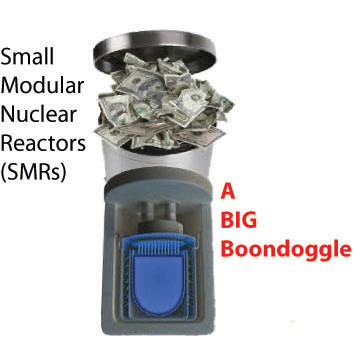
 Nuclear power isn’t the answer to Nunavut’s energy problems, expert says. Nicole Bogart CTVNews.ca Writer, @nlynnbogart, November 27, 2020 TORONTO — Despite growing interest from the federal government and nuclear proponents, the Canadian Environmental Law Association warns that the safety implications of small modular reactors (SMRs) may outweigh the environmental pay off.
Theresa McClenaghan, executive director of the Canadian Environmental Law Association, says despite proponents’ claims that Canada’s North is a promising market for the small, transportable reactors, the technology isn’t suited for remote locations.
“They’re very inappropriate for remote locations. They’re very inappropriate for anywhere,” McClenaghan told CTV’s Your Morning Friday.
“You’d be talking about creating new kinds of waste that we don’t already have in Canada… [and] having to worry about very long distance transportation.” ……
The federal government has invested in research into the technology and is set to release an SMR action plan with a focus on Canada’s North by the end of this year.
Alberta, New Brunswick, Saskatchewan and Ontario have all signed a memorandum of understanding regarding development of small modular reactors…….
McClenaghan says the government is missing key concerns, including the security of the reactors.
“A very serious concern that no one is talking about is non-proliferation risks – and the risk of a diversion of the materials to weapons,” she said.
“That’s a serious risk for any nuclear technology. But especially when you start to distribute the materials like this and have less control, [and] the industry is hoping they can just leave the units without operators.”
McClenaghan adds that despite the industry’s claims that nuclear power doesn’t produce greenhouse gases, the production of SMRs would.
“Nuclear does produce greenhouse gases because you have to mine, transport, and refine. In fact, the full life cycle is two times as much as solar and six times as much as onshore wind,” she explained.
There are also growing concerns about the implications for Indigenous communities in Canada.
The Northwest Territories Energy Strategy is calling for communities to decide. There’s a whole history of decisions being made and imposed in communities. That’s how a lot of the diesel ended up there in the first place,” McClenaghan said, noting that affordable energy remains the biggest rallying cry for these communities.
“I have seen quite a bit of interest in hybrid systems where they can start to reduce the reliance on diesel, but take advantage for the times of year when solar isn’t available.” https://www.ctvnews.ca/climate-and-environment/nuclear-power-isn-t-the-answer-to-nunavut-s-energy-problems-expert-says-1.5207328
UK taxpayers foot huge bill for the incompetence of The Nuclear Decommissioning Authority (NDA)
 UK’s nuclear sites costing taxpayers ‘astronomical sums’, say MPs
Public accounts committee says ignorance, incompetence and weak oversight to blame, Guardian, Damian Carrington Environment editor @dpcarrington Fri 27 Nov 2020 The Nuclear Decommissioning Authority (NDA) has a perpetual lack of knowledge about the state and location of waste on the 17 sites it is responsible for making safe, a powerful committee of MPs has found.
This results from decades of poor record keeping and weak government oversight, the MPs said. Combined with a “sorry saga” of incompetence and failure, this has left taxpayers footing the bill for “astronomical sums”, they said.
The NDA acknowledges that it still does not have full understanding of the condition of its sites, including 10 closed Magnox stations from Dungeness in Kent to Hunterston in Ayrshire, the MPs report said.
The NDA’s most recent estimate is that it will cost current and future generations of UK taxpayers £132bn to decommission the civil nuclear sites, with the work not being completed for another 120 years.
Since 2017, the NDA’s upper estimate of the cost of the 12-15-year programme just to get the sites to the ”‘care and maintenance” stage of the decommissioning process has increased by £3.1bn to £8.7bn. “Our past experience suggests these costs may increase further,” said the MPs’ report.
The lack of knowledge of the sites was a significant factor in the failure of a 2014 contract the NDA signed with a private sector company to decommission the Magnox sites. The government was forced to take back the contract in 2018 and the botched tender has now cost taxpayers £140m, the MPs found.
Sir Geoffrey Clifton-Brown, deputy chair of the public accounts committee (PAC), said: “Although progress has been made since our [2018] report, incredibly, the NDA still doesn’t know even where we’re currently at, in terms of the state and safety of the UK’s disused nuclear sites. Without that, and after the Magnox contracting disaster, it is hard to have confidence in future plans or estimates.” ……….
The UK has eight operating nuclear power plants, with all but one due to retire in the next decade. Only one new plant is being built, at Hinkley Point in Somerset, and it is years behind schedule and billions over budget.
Despite recent speculation over another new plant being given the go-ahead at Sizewell in Suffolk, Boris Johnson failed to announce this in his green industrial revolution plan last week. The government’s new national infrastructure strategy, published on Wednesday, said: “The government is pursuing large-scale nuclear projects, subject to clear value for money for both consumers and taxpayers.”
In 2015, the government stripped another private consortium of a £9bn contract to clean up the nuclear waste site at Sellafield. The company had been heavily criticised for its executives’ expense claims which included a £714 bill for a “cat in a taxi”. https://www.theguardian.com/environment/2020/nov/27/uks-nuclear-sites-costing-taxpayers-astronomical-sums-say-mps#_=_
Architect of its nuclear programme assassinated – Iran vows retaliation
Mohsen Fakhrizadeh was ambushed with explosives and machine gun fire in the town of Absard, 70km (44 miles) east of Tehran. Efforts to resuscitate him in hospital failed. His bodyguard and family members were also wounded.
There was no immediate claim of responsibility, but the Iranian foreign minister, Mohammad Javad Zarif, said Israel was probably to blame, and an adviser to Iran’s supreme leader, Ayatollah Ali Khamenei, vowed retaliation. “We will strike as thunder at the killers of this oppressed martyr and will make them regret their action,” tweeted Hossein Dehghan.
The killing was seen inside Iran as being as grave as the assassination by US forces of the Islamic Revolutionary Guard Corps commander Qassem Soleimani in January.
Israel will face accusations that it is using the final weeks of the Trump administration to try to provoke Iran in the hope of closing off any chance of reconciliation between Tehran and the incoming US administration led by Joe Biden.
Amos Yadlin, a former head of Israeli Defence Force intelligence, said: “With the window of time left for Trump, such a move could lead Iran to a violent response, which would provide a pretext for a US-led attack on Iranian nuclear facilities.”…….. https://www.theguardian.com/world/2020/nov/27/mohsen-fakhrizadeh-iranian-nuclear-scientist-reportedly-shot-dead-near-tehran
The global energy revolution

RethinkX 25th Nov 2020, We are on the cusp of the fastest, deepest, most profound disruption of the energy sector in over a century. Like most disruptions, this one is being driven by the convergence of several key technologies whose costs and capabilities have been improving on consistent and predictable trajectories – namely, solar photovoltaic power, wind power, and lithium-ion battery energy storage.
Our analysis shows that 100% clean electricity from the combination of solar, wind, and batteries (SWB) is both physically possible and economically affordable across the entire continental United States as well as the overwhelming majority of other populated regions of the world by 2030.
Adoption of SWB is growing exponentially worldwide and disruption is now inevitable because by 2030 they will offer the cheapest electricity option for most regions. Coal, gas, and nuclear power assets will become stranded during the 2020s, and no new investment in these technologies is rational from this point forward.
New comic book investigates the dilemma about France’s nuclear wastes
Mediapart 26th Nov 2020, What to do with nuclear waste? Bury them. Or ? Where the population is reluctant to dispute. For example, in Meuse. But how to convince the last recalcitrant? By watering the municipalities with subsidies. What if they resist? There remains repression. This mind-boggling story is that of a new comic book investigative book: One hundred thousand years.
Comprehensive research now shows that irradiated areas near Chernobyl have fewest mammals
Scientific American (accessed) 26th Nov 2020, More than 30 years after the Chernobyl nuclear plant’s meltdown, an 18-mile
radius around the site remains almost entirely devoid of human
activity—creating a haven for wildlife. But scientists disagree over
lingering radiation’s effects on animal populations in this region, called
the Exclusion Zone.
A new analysis, based on estimating the actual doses
animals receive in various parts of the zone, supports the hypothesis that
areas with the most radiation have the fewest mammals. “The effects we
saw are consistent with conventional wisdom about radiation,” says
University of South Carolina biologist Timothy Mousseau, co-author of the
new study in Scientific Reports. “What’s surprising is that it took this
long to start looking at this in a rigorous, comprehensive way.”
https://www.scientificamerican.com/article/chernobyl-exclusion-zone-radiation-doses-reanalyzed/
Corruption investigation into AREVA’s sale of Nigerian uranium
1 This Month

Read the Public Inquiry Report, the Commissioners’ report, Surrendering Australia: The AUKUS Deception is available to download for free at aukuspublicinquiry.com. Or just watch the replay of the National Press Club Luncheon.



19 November – Webinar – The Reality of Reprocessing
Time: 11:00 AM Pacific Time (US & Canada) / 2:00 PM Eastern / 7:00 PM UK / 8:00 PM CET
Register for the Zoom Event Here



Shut down the radiation-damaged Heysham nuclear reactors now
To see nuclear-related stories in greater depth and intensity – go to https://nuclearinformation.wordpress.com

Say No to NASA’s Reckless Nuclear Reactor on the Moon
Say No to NASA’s Reckless Nuclear Reactor on the Moon
-
Archives
- November 2026 (109)
- October 2026 (302)
- September 2026 (339)
- August 2026 (330)
- July 2026 (355)
- June 2026 (287)
- May 2026 (306)
- April 2026 (356)
- March 2026 (251)
- February 2026 (267)
- January 2026 (308)
- December 2025 (358)
-
Categories
- 1
- 1 NUCLEAR ISSUES
- business and costs
- climate change
- culture and arts
- ENERGY
- environment
- health
- history
- indigenous issues
- Legal
- marketing of nuclear
- media
- opposition to nuclear
- PERSONAL STORIES
- politics
- politics international
- Religion and ethics
- safety
- secrets,lies and civil liberties
- spinbuster
- technology
- Uranium
- wastes
- weapons and war
- Women
- 2 WORLD
- ACTION
- AFRICA
- Atrocities
- AUSTRALIA
- Christina's notes
- Christina's themes
- culture and arts
- Events
- Fuk 2022
- Fuk 2023
- Fukushima 2017
- Fukushima 2018
- fukushima 2019
- Fukushima 2020
- Fukushima 2021
- general
- global warming
- Humour (God we need it)
- Nuclear
- RARE EARTHS
- Reference
- resources – print
- Resources -audiovicual
- Weekly Newsletter
- World
- World Nuclear
- YouTube
-
RSS
Entries RSS
Comments RSS

