British MP’s continue to botch in the ever more costly saga of Britain’s “old” nukes and “new” nukes
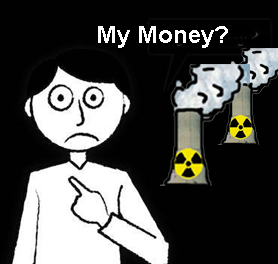 Times 27th Nov 2020, The NDA doesn’t really know because, as it told MPs, it “still does not have full understanding of the condition of the 17 sites”. It’s a point it proved with the meltdown of the £3.8 billion Magnox clean-up contract wrongly awarded to the Cavendish Fluor Partnership in 2014. That fiasco saw a High Court judge rule that the losing bidder, Energy Solutions and its partner, Bechtel, should have won the 14-year contract to bring the plants to a state of “care and maintenance”. The upshot? The government terminated the contract at a cost to the taxpayer of £142 million.
And now it’s back in the hands of the NDA, which is telling MPs that even that bit of work will now cost up to £8.7 billion and take another “12 to 15 years”. As the committee notes: “Past experience with the NDA suggests even these estimates will soon be out of date and costs may increase further”.
Isn’t that the story of everything to do with nuclear? True, you’d expect new-build plants to be better managed than Magnox and less
tricky to decommission than the Sellafield complex. The NDA also rejects the committee’s “suggestions that we may not understand the safety of our sites”. And the taxpayer-fleecing cost of the electricity coming from the £22.5 billion Hinkley Point C is meant to cover the clean-up bill.
 Yet before Boris presses the go button on more nukes, including Rolls-Royce’s modular type, shouldn’t there be a debate about the waste? The government’s big idea is to bribe some local authority into housing a nice toxic dump, prettily dressed up as a “geological disposal facility”. Copeland in Cumbria is the closest to volunteering. But a deal is a long way off and the plan’s been vetoed before by Cumbria county council.
https://www.thetimes.co.uk/edition/business/nuclear-clean-up-bill-needs-scrutiny-h7c3xcz27
Fukushima nuclear reactor no.1 – debris prevented from falling into fuel storage pool

Tokyo Electric Power Company on Thursday released footage showing precautions it had taken to keep a broken crane from falling into the pool.
The crane, weighing 161 tons, has been hanging over the pool since a hydrogen explosion hit the building in March 2011. The pool is still holding nuclear fuel.
The video shows a platform being moved on rails to a spot directly under the broken part of the crane. A bag on the platform is then filled with mortar and fixed to the crane to hold it in place.
The entire process was done remotely due to high levels of radiation in the reactor building.
TEPCO plans to install a cover over the whole building before starting the removal of fuel from the pool as early as fiscal 2027.
Survey finds that most Fukushima evacuees do not intend to return
65% of Fukushima evacuees have no intention of returning home: survey https://english.kyodonews.net/news/2020/11/675982b84707-65-of-fukushima-evacuees-have-no-intention-of-returning-home-survey.html
KYODO NEWS Osaka, Sixty-five percent of the people who evacuated from Fukushima Prefecture after the March 2011 nuclear disaster have no intention of returning, according to a recent survey conducted by a Japanese university.
While the survey, conducted by a research facility at Kwansei Gakuin University, only received responses from 522 of 4,876 people to whom questionnaires were sent, it provided a rare insight into how former residents see the reconstruction of their former home.
The government of the northeastern prefecture has not carried out such surveys in recent years. There were over 36,900 evacuees within and outside the prefecture as of October, according to the prefectural government.
Among the 522 respondents who resided in the prefecture at the time of the nuclear meltdowns at the Fukushima Daiichi power plant triggered by the massive quake and ensuing tsunamis, 341 people said they do not intend to return.
According to the survey conducted between July and September, 138 people said they plan to go back and 43 people did not answer or offer a valid response.
In response to a multiple-choice question asking why they have not returned to their homes, 46.1 percent said they still fear contamination of the environment, followed by 44.8 percent who said they have settled down in places they currently live.
Russia claims to have successfully tested an “unstoppable” nuclear missile
Russia tests ‘unstoppable’ nuclear missile after worrying threat to the US
Russia claims to have successfully tested an “unstoppable” nuclear missile, with state media saying it has the ability to hit US cities in minutes. news.com.auAlly Fosterallyjfoster 27 Nov 20,
The Russian military has claimed to have successfully tested an “unstoppable” nuclear missile, with the weapon almost reaching speeds of 10,000km/h.
The hypersonic weapon, known as the Mach 8 Zircon or Tsirkon, has been touted as President Vladimir Putin’s “weapon of choice”, with Russian media even claiming it could destroy prominent US locations within five minutes.
The Russian Ministry of Defence recently performed a test launch of the nuke in the White Sea, with officials claiming to have successfully hit a target located 450km away in the Barents Sea.
In a statement, the Russian Ministry of Defence claimed the missile reached speeds of more than 8 March, or about 9878 km/h.
It reportedly took just over four minutes to reach its target.
Though Russia has continually claimed success in testing and creating these nuclear missiles, the country has also recently been reminded of the dangers such weapons can pose if something goes wrong.
On August 8, 2019, an explosion at a weapons testing range in Nyonoksa killed seven people and injured multiple others.
Intelligence officials quickly came up with multiple theories about the cause of the deadly explosion, with some believing a test of a new nuclear powered missile had gone wrong and others claiming a nuclear reactor blew up.
………Russian officials remained tight lipped about the incident, simply claiming the explosion was the result of a failed test of an “isotope power source for a liquid-fuelled rocket engine”.
The country’s weather agency later confirmed the blast ejected radioactive material into the air.
Reports claimed radiation levels temporarily soared to 20 times above the normal level in Severodvinsk, a city about 30 km from the weapons testing site in Nyonoksa. https://www.news.com.au/technology/innovation/military/russia-tests-unstoppable-nuclear-missile-after-worrying-threat-to-the-us/news-story/6dfc0365ac9fcd29d22c3bb5157455e1
A mock B61-12 nuclear bomb dropped for the first time.

Christina Macpherson’s websites & blogs
n.b This will be illegal under international law, as of January 22
By Greg Waldron27 November 2020 The Lockheed Martin F-35A has operated a flight test involving the dropping of a mock B61-12 nuclear bomb.The work took place at the Tonopah Test Range, and was conducted by Sandia National Laboratories. It was the first in a series of tests to assess the type’s ability to drop the weapon.

The aircraft, travelling faster than the speed of sound, dropped the inert weapon from 10,500ft. The weapon hit the designated target area 42s later.
“We’re showing the B61-12’s larger compatibility and broader versatility for the country’s nuclear deterrent, and we’re doing it in the world of Covid-19,” says Sandia executive Steven Samuels.
“We’re not slowing down. We’re still moving forward with the B61-12 compatibility activities on different platforms.”
This was the first time a B61-12 was dropped from the internal weapons bay of a fighter. It was also the first time the weapon was released at a speed greater than Mach 1.
The work follows other tests involving the Boeing F-15E Strike Eagle and Northrop Grumman B-2 Spirit stealth bomber.
Sandia designs and produces non-nuclear components for the USA’s nuclear stock pile.
“The latest test is a critical piece in the F-35A and B61-12 programme,” adds Samuels. “Aboard the newest fighter, the B61-12 provides a strong piece of the overall nuclear deterrence strategy for our country and our allies.”
Beware the “madness of militarism” – Biden likely to appoint war-loving Michèle Flournoy as Defense Secretary
 Hey Joe, Where You Going With That Pentagon in Your Hands? https://www.commondreams.org/views/2020/11/23/hey-joe-where-you-going-pentagon-your-hands
The pernicious and lucrative aspects of military madness are personified in the favorite to be Biden’s Defense Secretary. by Norman Solomon,
Warning and petitioning Biden to dissuade him from a Flournoy nomination probably have scant chances of success. But if Biden puts her name forward, activists should quickly launch an all-out effort to block Senate confirmation.
As the Biden administration takes office, progressives have an opportunity to affirm and amplify the position that Martin Luther King Jr. boldly articulated when he insisted that “I never intend to adjust myself to the madness of militarism.” In the present day, the pernicious and lucrative aspects of that madness are personified in the favorite to be Biden’s Defense Secretary.
Days ago, the Project On Government Oversight (POGO) published a detailed analysis under the headline “Should Michèle Flournoy Be Secretary of Defense?” The well-documented answer: No.
Citing “extensive defense industry ties,” POGO provided an overview of Flournoy’s revolving-door career. When she wasn’t oiling the war machine in the Clinton and Obama administrations, Flournoy was profiteering from servicing that machine:
- “In 2002 she went from positions in the Pentagon and the National Defense University to the mainstream but hawkish Center for Strategic and International Studies, which is largely funded by industry and Pentagon contributions.”
- “Five years later, she co-founded the second-most heavily contractor-funded think tank in Washington, the highly influential Center for a New American Security. That became a stepping stone to her role as under secretary of defense for policy in the Obama administration.”
- “From there she rotated to the Boston Consulting Group, after which the firm’s military contracts expanded from $1.6 million to $32 million in three years. She also joined the board of Booz Allen Hamilton, a consulting firm laden with defense contracts. In 2017 she co-founded WestExec Advisors, helping defense corporations market their products to the Pentagon and other agencies.”
Running parallel to Flournoy’s financial conflicts of interest was her long record of advocacy for military conflicts.
“Flournoy was widely considered to have been one of Obama’s more hawkish advisers and helped mastermind the escalation of the disastrous war in Afghanistan,” Arwa Mahdawi pointed out in a Nov. 21 Guardian piece. “She has called for increased defense spending, arguing in a 2017 Washington Post op-ed that Trump was ‘right to raise the need for more defense dollars.’ She has complained that Obama didn’t use military force enough, particularly in Syria. She supported the wars in Iraq and Libya. . .”
The president-elect is hardly in a position to hold such a record against prospective appointees. He has never fully acknowledged, much less renounced, his own roles in advocating for disastrous U.S. wars — most notably and tragically, the war in Iraq.
Biden hasn’t gotten his story straight or come clean about supporting the U.S.-led invasion of Iraq in 2003. His specious claims that he didn’t really support the invasion have been gross misrepresentations of the historical record. Actually, Biden was the Democrat in the Senate who exerted the most leverage in support of the Iraq invasion, and he did so with public enthusiasm.
The foreseeable dangers of picking Flournoy to run the Pentagon are compounded by Biden’s selection of Antony Blinken to be Secretary of State. It was Blinken who, 18 years ago, served as staff director for the Senate Foreign Relations Committee while its chairman, Joe Biden, oversaw the pivotal and badly skewed two-day hearing in summer 2002 that greased the congressional skids for approving an invasion of Iraq.
Blinken, along with Flournoy, co-founded WestExec Advisors, which the Washington Post’s breaking-news coverage of the Blinken nomination gingerly described as “a political strategy firm.” It was a nice euphemism, in contrast to how POGO describes the WestExec Advisors mission — “helping defense corporations market their products to the Pentagon and other agencies.” The term “war profiteering” would be even more apt.
If past behavior is the best predictor of future behavior, there are ample reasons for apprehension about the top of the military and foreign-policy team that Biden has begun to install for his presidency. But realism should not lead to fatalism or passivity.
Extricating the United States from the grip of the military-industrial complex will require massive and sustained organizing. With that goal in mind, a grassroots campaign to prevent Michèle Flournoy from becoming Secretary of Defense would be wise.
Canada’s environmental groups join to oppose experimental Small Nuclear Reactors (SMRs)
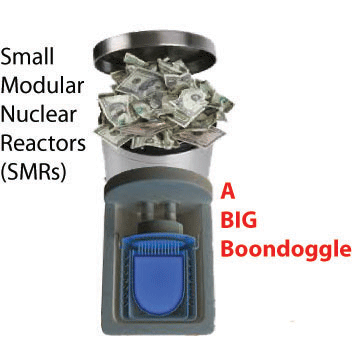 Canadian environmental groups oppose experimental small modular nuclear reactors, https://blackburnnews.com/midwestern-ontario/midwestern-ontario-news/2020/11/24/canadian-environmental-groups-oppose-experimental-small-modular-nuclear-reactors/ By Janice MacKay November 24, 2020 A number of groups have joined together to ask the federal government to halt its plans to fund experimental new small modular nuclear reactors (SMRs).
The Federal Government is preparing to launch the federal government’s SMR ” Action Plan” within weeks.
The SMR Action Plan is expected to include a strategy to fund and support the development of experimental nuclear reactors by private sector companies, the majority based in the US and UK.
In a media release, dozens of organizations from coast to coast have called the proposed new nuclear reactors a dirty, dangerous distraction from tackling climate change. They include Greenpeace Canada, Friends of the Earth Canada, Ralliement contre la pollution radioactive, Équiterre, the Coalition for Responsible Energy Development in New Brunswick, the Canadian Coalition for Nuclear Responsibility and Northwatch..
The Bloc Québécois, the NDP and the Green Party all oppose the government’s “small” modular nuclear reactor plan.
On November 13, Monique Pauze from the Bloc Québécois stated: “The Bloc Québécois denounces the intention of Ottawa to invest in nuclear energy to the benefit, once again, of the Ontario industrial sector, instead of financing the transition towards clean electricity. The Bloc calls for the abandonment of the anticipated deployment of small modular nuclear reactors. The Federal government is leading Canada towards a wall by betting on nuclear energy that is absolutely not clean.”
NDP natural resources critic Richard Cannings said in a statement: “Many Canadians have concerns about impacts of nuclear energy. When it comes to energy generation there are better ways forward. We have options that are cheaper and safer and will be available quicker. I think we should be supporting the development of energy storage solutions to help roll out renewables like solar and wind on a larger scale instead.”
On November 10, all three Green Party of Canada caucus members issued a statement and signed a letter to Minister O’Regan and Minister Navdeep Bains saying that: “Small nuclear reactors (SMRs) have no place in any plan to mitigate climate change when cleaner and cheaper alternatives already exist. The federal government must stop funding the nuclear industry and instead redirect investments towards smarter solutions. Nuclear fails on many grounds, including on the economics.”
Prof. Susan O’Donnell from the Coalition for Responsible Energy Development in New Brunswick said: “Building new nuclear reactors does not belong in a climate action plan. Leading researchers have shown that investing in renewable energy is the best path to net zero and that adding nuclear energy to the mix actually hinders rather than helps.”
Shawn-Patrick Stensil, Director of Programs at Greenpeace Canada, said: “The Liberal government is throwing good money after bad. Hypothetical new nuclear power technologies have been promising to be the next big thing for the last forty years, but in spite of massive public subsidies, that prospect has never panned out.”
The release pointed out the proposed reactors are still on the drawing board and will take a decade or more to develop. If built, their power will cost ten times more than wind or solar energy. The most advanced SMR project to date in the US has already doubled its estimated cost – from $3B to over $6B.
The federal government announced its first SMR grant of $20 million to Terrestrial Energy on October 15.
The environmental groups said they are shocked that the government is funding new nuclear energy development with no parliamentary review, while trying to avoid public scrutiny and debate. They called the consultation process leading to date on the SMR Action Plan a sham. Individuals and groups could only comment on the plan if they first signed on to a statement of principles supporting SMR technologies. They say nuclear power and uranium mining will always be dirty and dangerous. Radioactive waste will have to be kept out of the environment for tens of thousands of years, and there is no known means of achieving that.
Destructive potential of over a million tons of radioactive water into the Pacific
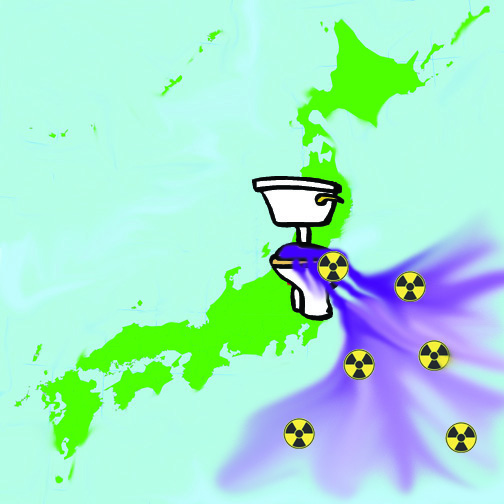 Almost Unnoticed Nuclear Pandemic Is Spreading in Japan, https://indepthnews.net/index.php/the-world/asia-pacific/3967-almost-unnoticed-nuclear-pandemic-is-spreading-in-japanBy Manlio Dinucci, MONTREAL (IDN) 4 Nov 20, – It was not Covid-19, therefore the news went almost unnoticed: Japan will release over a million tons of radioactive water from the Fukushima nuclear power plant into the sea. The catastrophic incident in Fukushima was triggered by the Tsunami that struck the north-eastern coast of Japan on March 11, 2011, submerging the power plant and causing the core of three nuclear reactors to melt.
The power plant was built on the coast just 4 meters above sea level with five-meter-high breakwater dams, in a tsunami-prone area with waves 10-15 meters high. Furthermore, there had been serious failures by the private company TEPCO (the Tokyo Electric Power Company) managing the plant, in the control of the nuclear plant: the safety devices did not come into operation at the time of the Tsunami.
Water has been pumped through the reactors for years to cool the molten fuel. The water became radioactive and was stored inside the plant in over a thousand large tanks, accumulating 1.23 million tons of radioactive water. TEPCO is building other tanks, but they will also be full by mid-2022.
TEPCO must continue pumping water into the melted reactors and has decided to discharge, in agreement with the government, the water accumulated so far into the sea after filtering it to make it less radioactive (however, to what extent it is not known) with a process which will last 30 years. There is also radioactive sludge accumulated in the decontamination filters of the plant, stored in thousands of containers, and huge quantities of soil and other radioactive materials.
As TEPCO admitted, the melting in reactor 3 is particularly serious because the reactor was loaded with Mox, a much more unstable and radioactive mix of uranium oxides and plutonium.
The Mox for this reactor and other Japanese ones was produced in France, using nuclear waste sent from Japan. Greenpeace has denounced the danger deriving from the transport of this plutonium fuel for ten thousand kilometres.
Greenpeace also denounced that Mox favours the proliferation of nuclear weapons, since plutonium can be extracted more easily and, in the cycle of uranium exploitation, there is no clear dividing line between civilian and military use of fissile material.
Up to now, around 240 tons of plutonium for direct military use and 2,400 tons for civil use (nuclear weapons can however be produced with them), were accumulated in the world (according to 2015 estimates), plus about 1,400 tons of highly enriched uranium for military use. A few hundred kilograms of plutonium would be enough to cause lung cancer to 7.7 billion inhabitants of the planet, and plutonium remains lethal for a period corresponding to almost ten-thousand human generations.
A destructive potential has thus accumulated, for the first time in history, capable of making the human species disappear from the face of Earth. The nuclear bombings of Hiroshima and Nagasaki; the more than 2,000 experimental nuclear explosions in the atmosphere, at sea and underground; the manufacture of nuclear warheads with a power equivalent to over one million Hiroshima bombs; the numerous accidents involving nuclear weapons and those involving civilian and military nuclear plants, all this has caused radioactive contamination that has affected hundreds of millions of people.
A portion of approximately 10 million annual cancer deaths worldwide – documented by WHO – is attributable to the long-term effects of radiation. In ten months, again according to the World Health Organization data, Covid-19 caused about 1.2 million deaths worldwide.
This danger should not be underestimated, but it does not justify the fact that mass media, especially television, did not inform that over one million tons of radioactive water will be discharged into the sea from the Fukushima nuclear power plant, with the result that it will further increase cancer deaths upon entering in the food chain.
President Joe Biden will have just 16 days from Inauguration Day to rescue the New START Treaty
 Biden May Have 16 Days to Stave Off a Nuclear Arms Race, Preserving the New START treaty with Russia will be one of his earliest missions, Bloomberg, By Peter Coy , 25 Nov 20,
If New START is allowed to expire, a nuclear arms race could break out. Retired Navy Admiral James Stavridis, the former supreme allied commander of NATO, wrote in a Bloomberg Opinion column on Oct. 30, that a stop to New START would allow both sides to deploy more nukes of current designs as well as make more advanced systems, “all of which would be very destabilizing.”
Some pressure, right? For insight into what Biden and his team will do, I interviewed Jon Wolfsthal, who served from 2014 to 2017 as a special assistant to President Barack Obama and as senior director for arms control and nonproliferation at the National Security Council. He was also a senior adviser to Vice President Biden on nuclear security and nonproliferation from 2009 to 2012.
Some pressure, right? For insight into what Biden and his team will do, I interviewed Jon Wolfsthal, who served from 2014 to 2017 as a special assistant to President Barack Obama and as senior director for arms control and nonproliferation at the National Security Council. He was also a senior adviser to Vice President Biden on nuclear security and nonproliferation from 2009 to 2012.
Wolfsthal says he’s optimistic about Biden’s chances of staving off a fresh nuclear arms race……….
Biden and his team will have a long list of nuclear weapons problems to deal with, including the rapid growth of China’s
………… Wolfsthal says New START, which went into effect in 2011, is flawed but shouldn’t be left to expire, because
Nuclear arms control doesn’t get as much attention as other priorities for Biden’s first 100 days, but nothing is more
Danger to San Onofre nuclear waste, from ocean’s king tides
 Annual High Tide Spurs Concerns About Future Safety of San Onofre Nuclear Waste Stock Near South OC, Voice of OC, By BRANDON PHO November 23, 2020, They’re called king tides:Ocean waves that grow especially tall a few times during the year, rumbling against the California coast and offering a glimpse into future sea level rise and a reshaping shoreline, according to state coastal regulators.
Those tides rolled up to San Onofre last weekend, where a sea wall stands to protect what nearby communities fear is a man-made disaster in waiting: the decommissioned but still radioactive San Onofre Nuclear Generating Station (SONGS). The following week, local officials and activists convened a set of dueling community forums that well capture the ongoing dispute over what exact risk the nuclear waste sitting at SONGS poses to all life within the area joining Orange and San Diego counties. The debate centers on the integrity of SONGS’ nuclear waste storage system, which has been criticized as prone to failure and an ecological and human health hazard. One Nov. 19 forum hosted by nuclear watchdogs saw some of their fears echoed back to them by Dr. Ian Fairlie, a radiation biologist in London who once headed the Secretariat of the UK Government’s CERRIE committee on internal radiation risks……. Members of the public laid out those concerns at an Aug. 20 panel meeting, and the comments can be read here. ……. environmentalists are looking at sea level rise’s impacts on coastlines well into 2100. Edison had previously argued studies into that time frame aren’t necessary……… There’s deep disagreement about what to do with the leftover nuclear waste, all 1,800 metric tons of which are in dry storage and embedded in concrete. The spent fuel contains radioactive isotopes like Cesium-137, the amount of which critics say is comparable to levels released during the Chernobyl disaster of 1986.……… The contention between watchdogs and Edison is the type of dry storage the company chose. Critics say the company has cheaped out through more cost-efficient, but less safe, thin-walled HOLTEC canisters, feared to be more prone to cracking and corrosion from conditions like the plant’s salty seaside locale. Instead, watchdogs have called for the use of thicker casks they say would better stave off the risk of failure and exposure. Fairlie at the Nov. 19 forum, hosted by the Samuel Lawrence Foundation and local nuclear safety groups, said the current canisters in use by Edison are “not very good – they are cheap … 5/8ths of an inch thick, prone to cracking.” They’re “designed to be temporary and they’re not really robust from external attack in my view,” he said, adding “it would be much, much, much better” for the spent fuel to be stored in a thicker cask — “Unlikely to be subject to cracks.” The only problem? “They’re very expensive.” ……… https://voiceofoc.org/2020/11/annual-high-tide-spurs-concerns-about-future-safety-of-san-onofre-nuclear-waste-stock-near-south-oc/ |
|
Depressing news for the nuclear lobby in Western Europe
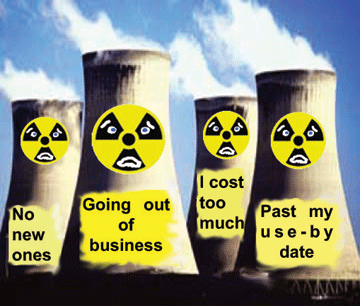 Western Europe cools on plans for nuclear power https://climatenewsnetwork.net/western-europe-cools-on-plans-for-nuclear-power/, November 25th, 2020, by Paul Brown As more reactors face closure, governments in Europe may prefer renewable energy to replace nuclear power.
LONDON, 25 November, 2020 – News that two more reactors in the United Kingdom are to shut down on safety grounds earlier than planned has capped a depressing month for nuclear power in Europe.
The news came after weeks of unfounded speculation, based on “leaks”, that the British government was about to take a stake in a giant new French-designed nuclear power station planned at Sizewell in Suffolk on the east coast of England as part of a “Green New Deal.” Taxpayers’ backing would have enabled the heavily-indebted French company EDF to finance the project.
In the event Boris Johnson, the prime minister, in his 10-point “green” plan for the UK, boosted a far more speculative alternative scheme from a Rolls-Royce consortium which was helping to pay for research and development into a full-blown proposal to construct 16 small modular reactors (SMRs).
He failed to mention the Sizewell scheme at all, and instead of singing the praises of nuclear power extolled the virtues of offshore wind power, in which the UK is currently the world leader.
Johnson hopes that offshore wind will produce enough electricity to power every home in Britain, leaving little room for a nuclear industry. He has referred to the UK as “becoming the Saudi Arabia of wind power.”
Meanwhile across the English Channel in Belgium the Electrabel company – the Belgian subsidiary of French utility Engie – has cancelled any further planned investment in its seven-strong nuclear reactor fleet because of the government’s intention to phase out nuclear power by 2025.
“The cause of this damage [at Hunterston] is not fully understood, and it is entirely possible that this form of age-related damage may be much more extensive”
Plans will only be re-instated if a Belgian government review fails to find enough alternative electricity supply to replace the reactors’ output. The seven Belgian reactors currently produce half the country’s electricity supply.
These reversals come seven years after British governments promised a nuclear renaissance by encouraging French, Japanese, American and finally Chinese companies to build ten nuclear power stations in the UK. Only one station has been begun, a £22 billion (US$29 bn) joint venture between EDF and Chinese backers.
The French, with a 70% stake and the Chinese with 30%, began work on the twin reactors, to be known as Hinkley Point C, in Somerset in the West of England more than two years ago. The station was due to be completed in 2025, but is behind schedule and has cost overruns.
The two partners wanted to replicate these reactors at the planned Suffolk plant, Sizewell C, but EDF has not found the necessary capital to finance it, hoping that the London government would either take a stake or impose a nuclear tax on British consumers to help pay for it.
The idea was for Hinkley Point C and Sizewell C to replace the 14 smaller reactors that EDF owns in Britain, thus keeping the nuclear industry’s 20% share of the UK’s electricity production. Johnson appears to have dashed these hopes. At best Hinkley Point C will produce 7% of the nation’s needs.
Meanwhile there is a question mark over the future of EDF’s remaining reactor fleet in Britain. Two of the 14, also at the Sizewell site, are French-designed pressurised water reactors opened in 1991, and have plenty of life left in them, but the other 12 are all older British-designed advanced gas-cooled reactors (AGRs) that use graphite blocks to control nuclear reactions.
Premature closure
A serious safety flaw has emerged in this design, involving hundreds of cracks in the graphite, causing doubts over whether the reactors could be turned off quickly in an emergency.
After a long stand-off with the UK’s nuclear safety watchdog, the Office for Nuclear Regulation, EDF decided earlier this year to prematurely close two of the worst affected reactors – both in a station known as Hunterston B in Scotland. Now, for the same reason, two further reactors at Hinkley Point B in Somerset will also close. All four reactors will be defuelled in 2022.
Currently six of these 12 AGR reactors are turned off – out of service for maintenance or safety checks. Two of them, at Dungeness B on the south-east coast of England, have been undergoing repairs since 2018 – this time because of corrosion of vital pipework – although cracks in the graphite blocks are also a safety issue here too.
While EDF remains upbeat about its prospects in developing nuclear power and is keeping its remaining ageing AGR reactors going until they can be replaced, it is hard to see where the company will get the money to build a new generation of reactors or attract government subsidies to do so.
The UK’s decision to back the British company Rolls-Royce to develop SMRs means it is unlikely the government has the money or the political inclination to back the French as well.
Rolls-Royce has been badly hit by the Covid-19 pandemic because a large part of its business relies on the struggling aviation business, while it needs support because it makes mini-reactors to power British nuclear submarines. The proposed SMR research programme will allow nuclear-trained personnel to switch between military and civilian programmes.
Long out of office
The Rolls-Royce SMRs are a long shot from the commercial point of view, since they  are unproven and likely to be wildly expensive compared with renewable energy. However, they have the political advantage of being British, and their development lies so far into the future that the current government will be out of office before anyone knows whether they actually work or are economic.
As far as the current crop of reactors is concerned, it is clear that at least those with graphite cores are nearing the end of their lives. Nuclear power has some way to go before it can expect a renaissance in the UK.
Paul Dorfman is a research fellow at University College London. He told the Climate News Network: “It is  apparent that the graphite cores of Hunterston B, Hinkley B, and possibly all UK AGR reactors have developed and continue to develop significant structural damage to graphite bricks, including keyway cracks in the fuelled section of the reactor.
“It is also clear that the cause of this damage is not fully understood, and it is entirely possible that this form of age-related damage may be much more extensive.
“Given that weight loss in graphite blocks and subsequent graphite cracking occurs in all UK AGRs, what’s happening with Hunterston B has significant implications for the entire UK AGR fleet.
Dr Dorfman concluded: “Given the parlous finances of EDF, who are already struggling with their own reactor up-grade bills in France, it is entirely likely that UK nuclear generation will be reduced to just Sizewell B, with electricity generation relying almost entirely on renewables by the time Hinkley C comes online, very late and over-cost as usual.” – Climate News Network
The effect on Europe of the UN Treaty on the Prohibition of Nuclear Weapons
 Nuclear prohibition: Changing Europe’s calculations https://www.europeanleadershipnetwork.org/commentary/nuclear-prohibition-changing-europes-calculations/ Beatrice Fihn |Executive Director of the International Campaign to Abolish Nuclear Weapons (ICAN),Daniel Högsta |Campaign Coordinator of the International Campaign to Abolish Nuclear Weapons (ICAN), 25 Nov 20,
On 22 January 2021, nuclear weapons will be placed in the same category as chemical and biological weapons – the other weapons of mass destruction – illegal under international law. On that date, the Treaty on the Prohibition of Nuclear Weapons (TPNW) will enter into force and will change the legal and normative landscape around nuclear weapons. This has significant implications for any European governments complicit in the practice of deployment and potential use of nuclear weapons of mass destruction.
A historic milestone for nuclear disarmament
Continue reading
Waste Isolation Pilot Plant – building of ventilation shaft is halted, due to Covid-19 and planning problems
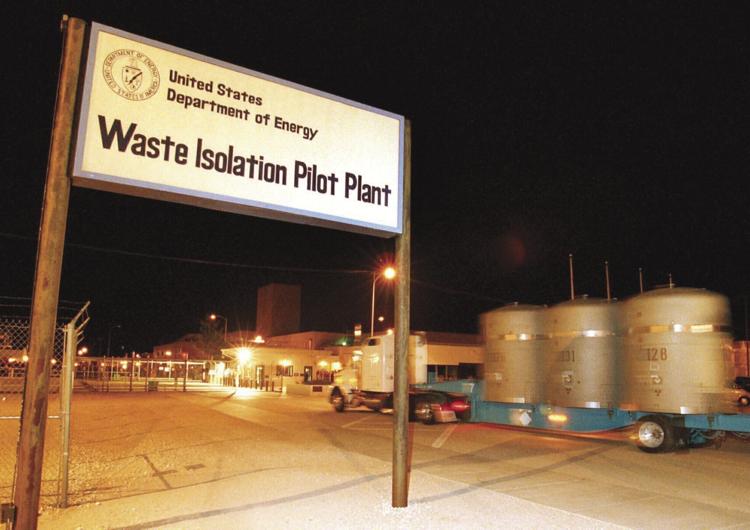 WIPP: New Mexico regulators halt utility shaft project, cite COVID-19, planning problems, Adrian Hedden, Carlsbad Current-Argus, 25 Nov 20, Construction of a $100 million utility shaft at the Waste Isolation Pilot Plant could be halted after the New Mexico Environment Department denied a request to extend state authorization to build the shaft, citing missed deadlines in the planning of the project and the continued spread in COVID-19 cases at the facility.
The shaft, part of an almost $300 million rebuild of WIPP’s ventilation system, along with a series of fans and filter buildings known as the Safety Significant Confinement Ventilation System (SSCVS), was intended to improve airflow in the WIPP underground and allow for waste emplacement and mining to occur simultaneously along with future expansions of the nuclear waste repository……….
Spike in COVID-19 at WIPP could put workers in danger
NMED also cited a recent rise in COVID-19 cases at WIPP, as the pandemic continued to spread in record-breaking numbers across New Mexico, and the agency’s responsibility to ensure human health is not put at risk by activities under the TA, requesting a plan for COVID-19 mitigation at the facility. https://www.currentargus.com/story/news/local/2020/11/24/wipp-utility-shaft-halted-new-mexico-cites-covid-planning-problems/6397790002/
Germany hosts France, Britain for talks on Iran nuclear deal
Germany hosts France, Britain for talks on Iran nuclear deal, DW, 25 Nov 20,
German Foreign Minister Heiko Mass met his counterparts Dominic Raab and Jean-Yves Le Drian in Berlin for talks on the Iran nuclear deal. The trio hopes for a change in US policy once Joe Biden is sworn in.
German Foreign Minister Heiko Maas held talks with his French and British counterparts in Berlin on Monday, with the partners urging Iran to stop breaching a nuclear deal it signed in 2015.
“From our view, Iran is systematically violating the agreement,” a spokeswoman with the German Foreign Ministry said. “Together with our European partners, we urge Iran to stop these violations and return to fulfilling all its nuclear obligations.”
Maas met with Britain’s Dominic Raab and France’s top diplomat Jean-Yves le Drian ahead of an expected change of policy towards Iran when US President-elect Joe Biden is sworn in as president in January.
Maas’s spokeswoman said she “confident” that a “constructive” US approach would help rein in the Iranian government, German news agency DPA reported.
The agreement, which world powers reached with Iran, sought to limit Tehran’s nuclear program to prevent it from developing nuclear weapons in return for the easing of economic sanctions…….
Changing US policy
Biden, who takes office on January 20, has said he would re-join the accord if Tehran first resumed strict compliance.
He wants to work with allies “to strengthen and extend it, while more effectively pushing back against Iran’s other destabilizing activities.”…..https://www.dw.com/en/germany-hosts-france-britain-for-talks-on-iran-nuclear-deal/a-55699826
Living with the Nuclear Prohibition Treaty: nuclear weapons states swould be unwise to attack it
 Living With the Nuclear Prohibition Treaty: First, Do No Harm, Carnegie Endowment for International Peace, GEORGE PERKOVICH 25 Nov 20 Now that fifty countries have ratified the UN Treaty on the Prohibition of Nuclear Weapons (TPNW), it will enter into force in January 2021…….
NATIONS WITHOUT NUCLEAR WEAPONS HAVE REASON TO SUPPORT THE TREATY
Supporters of the prohibition treaty are not crazy. They have good reasons. The 122 countries that adopted the treaty in 2017 were already legally committed not to acquire nuclear weapons, as they had signed the fifty-year-old Nuclear Non-Proliferation Treaty.
None of them face threats of aggression from the United States, Russia, China, or other countries that nuclear weapons would plausibly deter. Yet, all could suffer great harm from someone else’s nuclear war—especially one involving the still excessively destructive U.S. and Russian arsenals…….
TPNW supporters represent more than half of the world’s population and are understandably frustrated that the nuclear weapon states have not fulfilled their legal obligations and political commitments to pursue nuclear disarmament. …
COUNTRIES WITH NUCLEAR WEAPONS WON’T SIGN UP
A cynical answer is that the TPNW will do little good. The nine governments that wield nuclear weapons will not sign it. Nor have any security allies of nuclear-armed states, including all members of NATO, Japan, and South Korea, for example. In other words, the treaty will not change any country’s reliance on or possession of nuclear weapons.
While that is true, both supporters and critics of the treaty have reason to heed Hippocrates’s injunction to “first do no harm.” The importance of this injunction is especially great in NATO Europe and the United States.
In several NATO states, significant numbers of citizens and civil society organizations and their political representatives strongly support the TPNW. This includes the Netherlands and Germany, which are among the five states that host U.S. nuclear bombs as part of NATO’s nuclear-sharing arrangement…………
CRITICIZING THE TPNW IS THE WRONG APPROACH
Here, the United States, the United Kingdom and France—as nuclear weapon states—have vital roles to play. If they do not openly respect the concerns that motivate support for the TPNW, and instead direct critical ire at those who do, they will harden rather than weaken the resolve of TPNW supporters. The United States and France are particularly guilty of this.
A much wiser course, building on opportunities that a new administration in Washington may offer, would be to reinvigorate efforts to stop the incipient qualitative and quantitative arms race between Russia and the United States and NATO. …… https://carnegieendowment.org/2020/11/10/living-with-nuclear-prohibition-treaty-first-do-no-harm-pub-83198
1 This Month

Read the Public Inquiry Report, the Commissioners’ report, Surrendering Australia: The AUKUS Deception is available to download for free at aukuspublicinquiry.com. Or just watch the replay of the National Press Club Luncheon.



19 November – Webinar – The Reality of Reprocessing
Time: 11:00 AM Pacific Time (US & Canada) / 2:00 PM Eastern / 7:00 PM UK / 8:00 PM CET
Register for the Zoom Event Here



Shut down the radiation-damaged Heysham nuclear reactors now
To see nuclear-related stories in greater depth and intensity – go to https://nuclearinformation.wordpress.com

Say No to NASA’s Reckless Nuclear Reactor on the Moon
Say No to NASA’s Reckless Nuclear Reactor on the Moon
-
Archives
- November 2026 (109)
- October 2026 (302)
- September 2026 (339)
- August 2026 (330)
- July 2026 (355)
- June 2026 (287)
- May 2026 (306)
- April 2026 (356)
- March 2026 (251)
- February 2026 (267)
- January 2026 (308)
- December 2025 (358)
-
Categories
- 1
- 1 NUCLEAR ISSUES
- business and costs
- climate change
- culture and arts
- ENERGY
- environment
- health
- history
- indigenous issues
- Legal
- marketing of nuclear
- media
- opposition to nuclear
- PERSONAL STORIES
- politics
- politics international
- Religion and ethics
- safety
- secrets,lies and civil liberties
- spinbuster
- technology
- Uranium
- wastes
- weapons and war
- Women
- 2 WORLD
- ACTION
- AFRICA
- Atrocities
- AUSTRALIA
- Christina's notes
- Christina's themes
- culture and arts
- Events
- Fuk 2022
- Fuk 2023
- Fukushima 2017
- Fukushima 2018
- fukushima 2019
- Fukushima 2020
- Fukushima 2021
- general
- global warming
- Humour (God we need it)
- Nuclear
- RARE EARTHS
- Reference
- resources – print
- Resources -audiovicual
- Weekly Newsletter
- World
- World Nuclear
- YouTube
-
RSS
Entries RSS
Comments RSS

