Incidents at Belarus nuclear station have alarmed neighbouring Lithuania
 Lithuania wary of incident at Belarus nuclear plant https://www.euractiv.com/section/politics/short_news/lithuania-weary-of-incident-at-belarus-nuclear-plant/ Benas Gerdžiūnas | 1 Dec 20, LRT.lt/en Lithuania has asked Belarus for clarification after its new nuclear plant located some 50 kilometres from the country’s capital suffered an incident just five days after launch.
Belarus President Alexander Lukashenko took part in the opening of the plant on 6 November, where he said the launch of the Astravyets NPP was as “ordinary” as building a metro.
“Belarus is becoming a nuclear power,” he declared.
Several voltage-measuring transformers outside of the nuclear reactor exploded during an incident on 7 November, according to sources at TUT.by, an independent media outlet in Belarus.
On Monday, the Belarusian Energy Ministry said that “a need to replace the measuring equipment arose” during testing, without providing further details.
Lithuania’s State Nuclear Power Safety Inspectorate (VATESI) said the plant is still undergoing testing. However, “we have also received no information about the [planned] next steps to launch the plant”, VATESI told BNS in a written comment.
Lithuania has been one of the most ardent critics of the nuclear plant built by the Russian state atomic corporation Rosatom and funded by a loan from the Kremlin.
Vilnius says the plant is unsafe and was built in breach of international safety standards. Minsk denies all allegations.
In September, Estonia, Greece, Italy, Latvia, Lithuania and Poland had sent a joint statement to the Director-General of the International Atomic Energy Agency (IAEA) and contracting parties to the Convention on Nuclear Safety (CNS), calling on Belarus to start addressing nuclear safety issues without delay.
At the same time, the Russian company Rosatom is in talks with Belarus about the construction of a second nuclear power plant and a research reactor in the country, Rosatom chief Alexander Likhachev announced on Tuesday in a video statement.
In August, Estonia, Latvia and Lithuania agreed not to purchase electricity from the plant.
The Baltic states are gearing up to switch from the Russian-controlled BRELL electricity grid that also includes Belarus, and synchronise with the continental European system by 2025.
(Benas Gerdžiūnas, LRT.lt/en | Alexandra Brzozowski, EURACTIV.com)
Armenian paper urges use of a nuclear ”dirty bomb” on Azerbaijan
 paper urges use of nuclear bomb on Azerbaijan, Writer urges Armenia to use nukes against Azerbaijani population, turn capital into ‘wasteland for next 5,000 years’ AA 2020 Vakkas Doğantekin |01.12.0 ANKARA
An Armenian newspaper in the US published an opinion piece that urges the use of universally banned weapons of mass destruction (WMDs) against Azerbaijan and its civilian population.
The piece by Stepan Altounian called on the Armenian government to use any nuclear weapon available to turn the Azerbaijani capital Baku into a “wasteland for the next 5,000 years.”
“I, as probably all Armenians, was devastated but not necessarily surprised over the news that Armenia lost to the Azeris,” Altounian wrote, referring to Armenia’s Nov. 10 surrender to Azerbaijan in the conflict over the Nagorno-Karabakh region, also known as Upper Karabakh.
Intense fighting that erupted on Sept. 27 ended weeks later when the Armenian occupiers retreated from territories internationally recognized as part of Azerbaijan.
In the controversial piece, endorsed and published by the Armenian media group Asbarez, Altounian asked “Where was the nuclear option?” at a time when governments and the UN are urging nuclear disarmament.
“Why not take the nuclear waste from Metzamor and manufacture dirty bombs?” he wrote. …….. https://www.aa.com.tr/en/azerbaijan-front-line/armenian-paper-urges-use-of-nuclear-bomb-on-azerbaijan/2062187
America’s underground radioactive dump – Waste Isolation Pilot Plant facing disruption
 Nation’s Only Underground Nuclear Waste Dump Could Face Disruptions, GAO Report Says, https://weather.com/news/news/2020-12-02-underground-nuclear-waste-dump-carlsbad-new-mexico By Jan Wesner Childs At a Glance
The only underground nuclear waste dump in the United States is suffering from shortfalls in planning and staffing that could lead to disruptions at the facility, according to a new report from the Government Accountability Office.
The report published last month indicated that the Waste Isolation Pilot Plant near Carlsbad, New Mexico, could become full if the amount of waste shipped to the facility keeps expanding or if a new way of measuring waste is rejected in a pending court challenge, according to the Associated Press. The plant, known as the WIPP, was built in the 1980s for the disposal of defense-related nuclear waste, including clothing, tools, rags, debris, soil and other items contaminated with radioactive elements, according to a fact sheet from the facility. The WIPP’s disposal rooms were carved out of ancient salt beds 2,150 feet below ground. The U.S. Energy Department (DOE) estimates the facility could be full as soon as 2025, and work to expand storage capacity has been delayed. “DOE does not have assurance that WIPP’s planned additional physical space will be constructed before existing space is full, which would result in a potential interruption to disposal operations,” the GAO said in a summary of its report. The facility was shut down after two accidents in 2014 and has been operating at limited capacity since it reopened in 2017. Two ventilation projects need to be completed to return the WIPP to full operations, the GAO said, but those have been met by challenges in oversight and regulatory approval. Construction on a giant utility shaft, which is part of the project, is in danger of being suspended due to missed planning deadlines and the continued spread of COVID-19 at the facility, the Carlsbad Current-Argus reported. The WIPP had recorded 150 cases of COVID-19 as of Nov. 23, according to a news release. The GAO report cited staffing issues dating back to January, when about one-third of positions were vacant in the DOE’s Carlsbad Field Office, responsible for overseeing the project. The DOE has estimated that the WIPP would need to operate for at least 30 years to meet disposal needs, according to the AP. |
|
America’s Waste Isolation Pilot Plant needs more space as increasing as nuclear trash amounts increase
 Daily Mail 1st Dec 2020, The federal government’s only underground nuclear waste dump could run out of room if the number of drums shipped to the New Mexico site keeps expanding or if a new method for measuring the waste is unraveled as part of a pending legal challenge, according to a nonpartisan congressional watchdog.
The Government Accountability Office in a recent report said better planning is needed at the Waste Isolation Pilot Plant to avoid
potential disruptions. The report specifically points to the need for adding more physical space at the repository before it becomes full, which the U.S. Energy Department estimates could happen as soon as 2025. The agency faces statutory limitations on how much waste can be disposed of at the site.
Australia and USA to develop hypersonic missiles
|
Australia to help develop hypersonic missiles, AFR
Andrew Tillett, Political correspondent , 30 Nov 20, The Australian and US militaries will develop a new hypersonic missile capable of flying the distance between Sydney and Melbourne in seven minutes, amid an arms race with China and Russia.
The two governments will sign an agreement on Tuesday to collaborate on research, build and test hypersonic cruise missiles that can fly at five times the speed of sound and are able to sink an aircraft carrier. Missiles the Royal Australian Air Force is helping to develop under the Southern Cross Integrated Flight Research Experiment Local defence companies, particularly in the small and medium enterprises field, will be tapped to contribute to the project, which is expected to take between five and 10 years to bring a precision-guided missile to fruition. Defence Minister Linda Reynolds said the experiment would culminate in flight tests to see how the weapon performed in operational conditions to guide on future acquisitions. As part of the Morrison government’s 2020 force structure plan, $9.3 billion was allocated for high-speed, long-range strike and missile defence including hypersonic development, in a bid to keep adversaries away from Australian shores. ….. https://www.afr.com/politics/federal/australia-to-help-develop-hypersonic-missiles-20201130-p56j75 |
|

UK’s projected high electricity costs for Hinkley nuclear project – a warning for Egypt
for electricity generated by the El Dabaa plant that Russia’s state-owned
Rosatom is building in Egypt.
predicted that prices per megawatt hour – how much it costs to produce one
megawatt of energy for one hour – from El Dabaa would be at least four
times more than from renewable power sources. Renewable energy prices have
fallen significantly since 2016, while nuclear power has become more
expensive.
from the Hinkley Point C nuclear power station that EDF is building for
decades after the plant is completed. While construction does not follow
the Build-Own-Operate model, EDF negotiated a 35-year power purchase price
linked to inflation with the British government in 2016 to extract as much
profit as possible. The British government’s Public Accounts Committee
conservatively estimated that this deal will cost consumers an additional
$40 billion (about R615 billion) over the 35 years of the contract compared
with alternative energy sources such as solar and wind.https://allafrica.com/stories/202012010852.html
Canada’s indigenous communities must not be guinea pigs for useless Small Nuclear Reactors (SMRs)
 From the Hill — Small Modular Reactors, The Rossland Telegraph , by Dick Cannings MP on Monday Nov 30 2020, Earlier this year, Seamus O’Regan, the Minister of Natural Resources said in a speech that “We are placing nuclear energy front and centre… This is nuclear’s moment.” And in discussions around building a new economy after COVID, the government is doubling down on those sentiments. The latest debates are slightly different from those of the last fifty years as they involve a new technology: Small Modular Reactors, or SMRs. Spoiler alert–I don’t necessarily share the Minister’s unbridled enthusiasm for nuclear energy as the answer to all our prayers……..can nuclear power help us in our efforts to significantly reduce greenhouse gas emissions within the next few years? SMRs represent an experimental technology that, according to industry experts, will not be producing power anywhere in Canada for about a decade. Once the technology matures and SMRs can be produced in quantity, they could theoretically be cheaper than present, very expensive nuclear plants. But those claims are very difficult to assess.
SMRs are often touted as a solution to get remote indigenous communities off diesel power. While I am very much in favour of helping these communities find alternate power sources, SMRs do not fit the bill. These communities want power generation solutions that they can build and manage themselves. They want alternative power sources now, not in ten years. And they do not want to be the guinea pigs for brand-new nuclear technology that will likely provide few jobs for local residents and cost significantly more than mature technologies such as solar, wind, and bioenergy. A Special Chiefs Assembly of the Assembly of First Nations passed a unanimous resolution in December 2018 demanding “that the Government of Canada cease funding and support of the Small Modular Nuclear Reactors program.”
……… [smrs] shouldn’t be relied on by present day governments as the panacea to a clean energy future. Even the Canada Energy Regulator (formerly the National Energy Board) predicts that SMRs will collectively contribute only the equivalent of half of a conventional hydro dam by 2050.
To reach meaningful targets by 2030 and 2040, we need to double down on technologies we know will get us there…… And energy efficiency efforts alone could get us almost half-way to our targets. These are the routes to success.https://rosslandtelegraph.com/news/column-hill-small-modular-reactors#.X8Ven2gzbIU
Grid flexibility a better choice than nuclear – could save UK $millions

Christina Macpherson’s websites & blogs
When even a right wing news medium like Forbes start questioning the ”wisdom” of nuclear development , that industry must be getting worried.
Ditch Nuclear And Save $860 Million With Grid Flexibility, U.K. Told, Forbes, David Vetter Senior Contributor, 30 Nov 2,
The U.K. could save money, reduce the risk of blackouts and more quickly achieve its carbon-cutting goals by abandoning plans to build more nuclear power facilities and instead invest in a flexible electricity grid, new analysis has found.
According to the report from Finnish energy tech firm Wärtsilä, the U.K. would stand to save $860 million per year if, instead of new nuclear power, the government backed grid flexibility measures, such as battery storage and thermal generation. That equates to a saving of about $33 dollars per British household per year. Crucially, the analysis revealed that even if energy generation was to remain the same as it is today, Britain could increase renewables’ share of that generation to 62% simply by adding more flexibility (renewables currently account for around 47% of electricity used, according to the government).
The Wärtsilä report is timely because, in a ten-point plan released earlier this month, prime minister Boris Johnson promised an additional $684 million for the nuclear sector, and the building of new large and small nuclear power stations. Notably, grid flexibility was not mentioned in the plan.
The report also raises questions about the necessity of the 3.2 gigawatt Hinkley Point C nuclear power station, under development in Somerset, southwest England, which has been dogged by controversy and delays since its inception. In addition to coming with all the usual challenges associated with nuclear fission—not least the storage of radioactive waste—the project is at least $3.6 billion over budget and has been the target of numerous lawsuits and both local and international complaints.
Speaking to Forbes.com, Ville Rimali, growth and development director at Wärtsilä Energy, explained why his firm determined that grid flexibility is a preferable alternative to nuclear, as Britain looks for a pathway to achieve net zero carbon emissions by 2050.
“Flexibility unlocks more renewable energy by balancing the intermittency of wind and solar power to ensure the power supply always matches demand,” Rimali said. “For example, when more power is generated than needed, you can store the surplus in batteries to be used later. The alternative is paying renewables to switch off, which is expensive and inefficient.”
“It’s a bit like running a bath where the volume of water and the size of the plug keep changing,” he explained. “The smaller the bathtub, the more likely the water is to overflow or run out. Flexibility is like having a bigger bathtub—you can pour more water in, without the risk of running out or overflowing.” ………
investing in nuclear power could, according to Wärtsilä, entrench an inflexible grid while making renewables such as solar and wind less cost-effective.
“New nuclear sites will rely heavily on government subsidies, negatively impact market prices and ultimately weaken the business case for renewables and flexibility,” Rimali said……… https://www.forbes.com/sites/davidrvetter/2020/11/30/ditch-nuclear-and-save-860-million-with-grid-flexibility-uk-told/?sh=2733622b1975
Hypersonic Missiles- ‘we program weapons that don’t work to meet threats that don’t exist.’

Like a Ball of Fire, London Review of Books, Andrew Cockburn on hypersonic weaponry, Vol. 42 No. 5 · 5 March 2020 “………. Putin’s bellicose claim – two weeks before the presidential election in which he was running for a fourth term – and the more recent official announcement that Avangard had now entered service, drew alarmed and unquestioning attention in the West. ‘Russia Deploys Hypersonic Weapon, Potentially Renewing Arms Race’ the New York Times blared. ‘The new Russian weapon system flies at superfast speeds and can evade traditional missile defence systems. The United States is trying to catch up.’
The ease with which the chimerical menace of hypersonic weapons has been launched into the budgetary stratosphere by the arms lobby suggests that their luck will hold for a long time yet. https://www.lrb.co.uk/the-paper/v42/n05/andrew-cockburn/like-a-ball-of-fire
Britain’s Nuclear Decommissioning Authority doesn’t know how much the waste clean up wiill cost or when it will finish

David Lowry’s Blog 27th Nov 2020, The nuclear industry has perpetrated a lot of untruths in six decades of dissembling. But the brazen atomic assertion repeated endlessly in the1950s that atomic energy would produce power “too cheap to meter” ( originally said by the then chairman of the US Atomic Energy Commission, Lewis Stauss, on 16 September 1954, speech to the US National Association of Science Writers when he opined: “It is not too much to expect that our children will enjoy in their homes electrical energy too cheap to meter..”)
progress.”
http://drdavidlowry.blogspot.com/2020/11/nuclear-dissembling-from-too-cheap-to.html
With independence, Scotland will remove allnuclear weapons from the Clyde
The National 29th Nov 2020, EVERY single nuclear weapon will be removed from the Clyde once Scotland
becomes independent, according to Ian Blackford. The SNP Westminster leader
was unequivocal as he opened the second day of his party’s conference via
video link from Skye.
Iran considers barring international nuclear inspectors, following assassination of scientist
Telegraph 29th Nov 2020, Iran was weighing its response Sunday to the killing of its top nuclear
scientist, which it blames on arch-foe Israel, as his body was taken to
Shiite shrines ahead of being buried. Two days after Mohsen Fakhrizadeh
died following a firefight between his guards and unidentified gunmen
outside Tehran, parliament called in a statement for international
inspectors to be barred from nuclear facilities.
Today’s Google headlines on nuclear issues – weapons and Iran dominate the stories.
 30 Nov 20, Todays news headlines – 92 articles on nuclear issues.
41 of these concerned nuclear weapons and issues around international diplomacy, and the upcoming Treaty on the Prohibition of Nuclear Weapons.
By far the most often mentioned topic was the assassination of Iran’s top nuclear weapons expert, Mohsen Fakhrizadeh ( pictured at left).
In general, articles about nuclear weapons tend to be factual accounts of national policies and weapons development. There are also articles with strong opposition to nuclear arms and testing.
Articles on so-called non military nuclear issues. Most (29) of these have been in support of, or promoting nuclear power. During the past week there has been a plethora of articles enthusing over small nuclear reactors (SMRs) . Today, of the 19 articles advocating new nuclear power, 9 were focussed on small nuclear reactors. Other pro nuclear themes were – reassurance that radiation is not such a worry, space research, fusion, hydrogen, and nuclear as climate solution.
Anti-nuclear articles (18) argued against new nuclear power, especially small reactrors, on grounds of costs, wastes, safety , climate uselessness, comparison with renewables.
4 “neutral” articles just set out information on decommissioning reactors, UK policy,health issues.
UAE, Jordan Condemn Killing of Iranian Nuclear Scientist, Call for Self-restraint
UAE, Jordan Condemn Killing of Iranian Nuclear Scientist, Call for Self-restraint, https://www.haaretz.com/middle-east-news/iran/.premium-uae-condemns-killing-of-iranian-nuclear-scientist-calls-for-self-restraint-1.9335920 The states cautioned against regional escalations after the killing of Iranian nuclear scientist Mohsen FakhrizadehThe United Arab Emirates condemned on Sunday the killing of top Iranian nuclear scientist Mohsen Fakhrizadeh and called on all parties to exercise self-restraint to avoid sliding the region into new levels of instability, the state news agency reported on Twitter.
Jordan, a staunch U.S. ally also condemned the assassination of Fakhrizadeh, state media reported, and called for collective efforts to avoid an escalation in tensions in the Middle East region.
Why we shouldn’t be talking about nuclear waste “disposal”
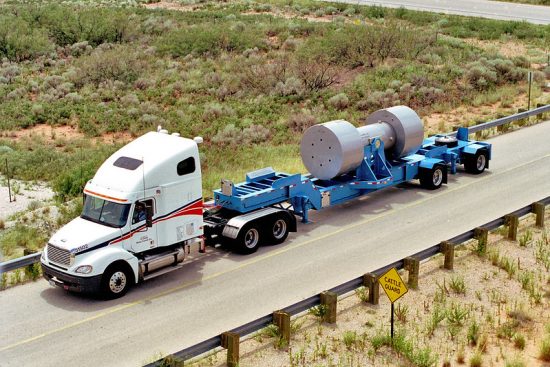
All casked up with nowhere to go https://beyondnuclearinternational.org/2020/11/29/all-casked-up-with-nowhere-to-go/ November 29, 2020 by beyondnuclearinternational
Why we shouldn’t be talking about nuclear waste “disposal” By Linda Pentz Gunter, 29 Nov 20
Let’s get one thing clear right off the bat. You don’t “dispose” of nuclear waste.
The ill-suited, now canceled, but never quite dead radioactive waste repository at Yucca Mountain was not a “disposal” site.
The radioactive mud being dredged from the sea bed at the Hinkley C nuclear site in the UK, is not going to get “disposed of” in Cardiff Grounds (a mile off the Welsh coast).
When Germany dumped radioactive waste in drums into the salt mines of Asse, it wasn’t “disposed” of.
Taking nuclear waste to Texas and New Mexico border towns and parking it there indefinitely is not “disposal”.
To talk about radioactive waste “disposal” is simply dishonest. It’s disingenuous at best and deliberately misleading at worst.
In Cardiff Bay, that radioactive waste will get “dispersed.” At Asse, the waste leaked out of the barrels and “dispersed” into water that has flooded the site.
At Yucca Mountain, were it to get a renewed green light, water will eventually carry off those radioactive particles, sending them into groundwater and drinking water downstream of the dump.
“Once you have made radioactive waste, then you are looking at long-term isolation, not disposal,” says Paul Gunter of Beyond Nuclear. “And its cost. And if you are looking to manage the liability of cost, then don’t make it.”
That’s the easiest kind of radioactive waste to “dispose” of. The kind you haven’t made. Because, as Gunter says, “there is no alchemy for radioactive detritus.” Once we’ve made it, it’s with us pretty much forever.
Federal agencies and nuclear corporations continue to wrestle over what to do with the already tens of thousands of tons of high-level radioactive waste (at least 90,000 at last count) generated by America’s commercial nuclear power plants — all casked up with nowhere to go (and a lot of it still in the fuel pools). Because, absent alchemy, that waste is always going to be somewhere, even if we can’t see it.
Once upon a time, the general public understood this. In 1986, when the US Department of Energy was looking for a geological burial site for commercial nuclear waste, it began giving serious consideration to the “granite state” of New Hampshire.
New Hampshire towns — some of which would have been seized and razed by eminent domain to make way for the repository — rose up in opposition. A stunning 100 of them signed a resolution that not only opposed the burial, storage, and transportation of high-level nuclear waste in New Hampshire, but also its production.
A law was eventually passed in New Hampshire that forbade siting a nuclear waste repository in the state, but not banning its generation. The construction of the Seabrook nuclear power plant on the New Hampshire coast progressed, and today the single unit of the two originally planned is duly generating radioactive waste for the state of New Hampshire, with still no place to go.
In fact, the law banning a repository in New Hampshire was quietly, almost covertly, overturned in the New Hampshire state legislature in 2011, a fact uncovered by State Rep. Renny Cushing while writing legislation in 2016. (Cushing is a founder of this country’s first anti-nuclear power group, the Clamshell Alliance, which vigorously opposed the construction of Seabrook.)
https://www.youtube.com/watch?v=BLeYKkA2V7EA German four-part animation piece, humorously demonstrated the impossibility of disposing of radioactive waste. This is the second segment.
In a characteristically stealthy way, the Nuclear Regulatory Commission has ensured there will be no repeat of that New Hampshire defiance. Today, under what was once called the Nuclear Waste Confidence Decision, but is now termed the “Continued Storage of High-Level Waste”, (presumably because no one dare claim any “confidence” about finding a waste solution), an intervention against a reactor license renewal can be disallowed if it is based on contentions challenging the absence of a long-term radioactive waste solution.
This means that our aging fleet of nuclear reactors are free to generate yet more radioactive waste, some of them for another 20 or even 40 years, even though there is still no sign of land when it comes to finding a safe, long-term management plan for what to do with it.
That’s remarkable hubris this far into the nuclear game. Even if one could (very reluctantly) forgive the initial optimistic procrastination — when Fermi achieved the first chain reaction in 1942, but everyone decided the waste problem would be solved later — there is no forgiving it now, 78 years on. That’s more than ample time to have realized that continuing to make more of a lethal substance that you can never dispose of is scientifically and morally reprehensible.
We cannot dispose of radioactive waste. But we can dispose of nuclear power. We should hesitate no longer and do just that.
Linda Pentz Gunter is the international specialist at Beyond Nuclear and writes for and edits Beyond Nuclear International.
1 This Month

Read the Public Inquiry Report, the Commissioners’ report, Surrendering Australia: The AUKUS Deception is available to download for free at aukuspublicinquiry.com. Or just watch the replay of the National Press Club Luncheon.



19 November – Webinar – The Reality of Reprocessing
Time: 11:00 AM Pacific Time (US & Canada) / 2:00 PM Eastern / 7:00 PM UK / 8:00 PM CET
Register for the Zoom Event Here



Shut down the radiation-damaged Heysham nuclear reactors now
To see nuclear-related stories in greater depth and intensity – go to https://nuclearinformation.wordpress.com

Say No to NASA’s Reckless Nuclear Reactor on the Moon
Say No to NASA’s Reckless Nuclear Reactor on the Moon
-
Archives
- November 2026 (109)
- October 2026 (302)
- September 2026 (339)
- August 2026 (330)
- July 2026 (355)
- June 2026 (287)
- May 2026 (306)
- April 2026 (356)
- March 2026 (251)
- February 2026 (267)
- January 2026 (308)
- December 2025 (358)
-
Categories
- 1
- 1 NUCLEAR ISSUES
- business and costs
- climate change
- culture and arts
- ENERGY
- environment
- health
- history
- indigenous issues
- Legal
- marketing of nuclear
- media
- opposition to nuclear
- PERSONAL STORIES
- politics
- politics international
- Religion and ethics
- safety
- secrets,lies and civil liberties
- spinbuster
- technology
- Uranium
- wastes
- weapons and war
- Women
- 2 WORLD
- ACTION
- AFRICA
- Atrocities
- AUSTRALIA
- Christina's notes
- Christina's themes
- culture and arts
- Events
- Fuk 2022
- Fuk 2023
- Fukushima 2017
- Fukushima 2018
- fukushima 2019
- Fukushima 2020
- Fukushima 2021
- general
- global warming
- Humour (God we need it)
- Nuclear
- RARE EARTHS
- Reference
- resources – print
- Resources -audiovicual
- Weekly Newsletter
- World
- World Nuclear
- YouTube
-
RSS
Entries RSS
Comments RSS

