USA show of force -flying nuclear bombers over Iran

US flying nuclear bombers over Iran to deter NYE attack, 9 news, By CNN Dec 31, 2020 The US have flown nuclear-capable B-52 bombers to the Middle East in the latest show of force meant to deter Iran, as defense officials remain divided over the risk posed by the regime and the Iraq-based militias it supports.
……… The B-52 flight was the second time this month the Pentagon has sent the nuclear-capable bombers to the region. It follows the Navy’s rare December 21 announcement that it had sent a nuclear-powered submarine through the Persian Gulf, accompanied by guided-missile cruisers. ,,,,,,,https://www.9news.com.au/world/donald-trump-us-flying-nuclear-bombers-over-iran-to-deter-nye-attack/f02018ea-2b8f-4d07-9941-e1df3a0a0f4c
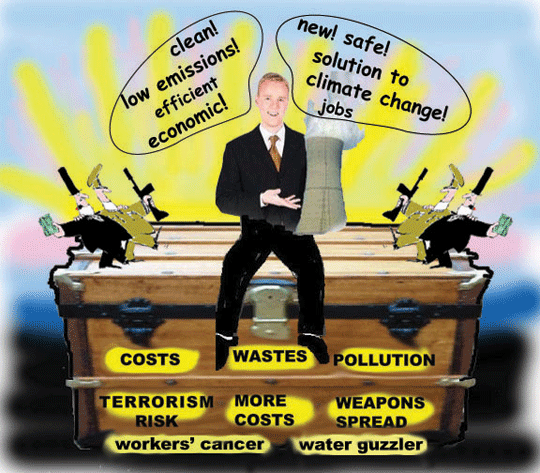
Get ready for a 2021 barrage of pro nuclear spin, from a desperate industry
”Utilities Middle East” and Russia’s Rosatom held a webinar extolling the “benefits” of nuclear power. The panellists went on at length  on how nuclear power is “clean” ”safe” ”economic” – and of course the ”waste problem is solved”, and nuclear is the ”cure for climate change.”
At the end of this hymn of praise, however, there’s a cautionary note.
There’s a question mark over “public acceptance”which means that it is “make or break” time for the industry’s future.
Clearly the world, especially “developing countries”, is in for a barrage of glossy, expensively produced, pro nuclear spin.
|
The barrier to nuclear is perception, says panel, World Nuclear News, 31 December 2020 ” the benefits of nuclear power are clearer than ever, but the industry still has some way to go in addressing perceptions of its alleged drawbacks with cost, safety and radioactive waste. This was the overriding message of the three panellists in a webinar held last week by Utilities Middle East in partnership with Russian state nuclear corporation Rosatom. …….
Public acceptance
Alexander Voronkov, regional vice-president and director of Rosatom’s Middle East and North Africa divisionsaid public acceptance of nuclear energy is vital to the successful implementation of any nuclear power plant project. “It’s make or break. That’s why it’s important to put in place an effective communication programme at the very early stage of an NPP project with the public and the other key stakeholders, to address their concerns. We have learned that if you work with the public constantly and comprehensively it is possible to reach a high level of public acceptance of nuclear power.” In Russia as a whole, that level is as high as 75%, he said………… A low level of public acceptance of nuclear power is usually due to a lack of knowledge, he said, so it is important to create diversified communication programmes to explain, in simple terms, what nuclear energy is and its benefits. “We have developed different tools in line with international best practice, with the Press and NGOs, through the establishment of nuclear energy information centres near construction sites,” he said…… the climate emergency and the post-COVID recovery are spurring policymakers and the financial community, Sama Bilbao y León, director general of World Nuclear Association. said, to increasingly recognise the role that nuclear power can play at a global level. |
|
Fukushima nuclear clean-up hugely affected by discovery of lethal radiation levels

|
Lethal Levels of Radiation Found in Damaged Fukushima Reactor Will Have ‘Huge Impact’ on Shutdown, Regulators Warn https://www.commondreams.org/news/2020/12/30/lethal-levels-radiation-found-damaged-fukushima-reactor-will-have-huge-impact The radiation levels reported around shield plugs at two reactors are high enough to kill a worker exposed for even an hour. Brett Wilkins, staff writer
In what Japanese regulators on Wednesday called an “extremely serious” development, lethal levels of radiation have been recorded inside the damaged reactor building at the Fukushima No. 1 nuclear power plant, threatening the shutdown and decommissioning of the site of the second-worst peacetime nuclear disaster in history.”This will have a huge impact on the whole process of decommissioning work.” —Toyoshi Fuketa, Nuclear Regulation Authority According to The Asahi Shimbun, Japan’s Nuclear Regulation Authority (NRA) reported that massive amounts of radioactive materials have been found around shield plugs of the containment vessels in the No. 2 and No. 3 reactors. NRA officials estimated radiation levels at 10 sieverts per hour—enough to kill a worker who spends just one hour there. Decommission of the reactor requires workers to remove the shield plugs, which block radiation from the reactor core during normal plant operation. This discovery has forced officials to reconsider their shutdown plans. NRA chair Toyoshi Fuketa said that removing the highly irradiated shield plugs made safe retrieval of nuclear fuel debris—an already dangerously daunting task—all the more difficult.. “It appears that nuclear debris lies at an elevated place,” Fuketa said at a news conference earlier this month. “This will have a huge impact on the whole process of decommissioning work.” The latest alarming find is the result of an investigation that resumed in September after a five-year pause in which the NRA took new measurements of radiation levels around the shield plugs at the No. 2 and No. 3 reactors. Tokyo Electric Power Co., the operator of the plant, announced December 24 that nuclear fuel debris removal would be postponed until 2022 or later due to the coronavirus pandemic. As Common Dreams reported in October, Greenpeace and other environmental and anti-nuclear advocates expressed shock and outrage after the Japanese government announced a plan to release stored water from the ill-fated plant into the Pacific Ocean. Greenpeace subsequently released a report claiming that radioactive carbon-14 released into the ocean “has the potential to damage human DNA.” The Fukushima Daiichi disaster—the result of a 2011 earthquake and tsunami that killed more than 15,000 people in northeastern Japan—was the worst nuclear incident since the 1986 Chernobyl meltdown in the former Soviet Union, and the worst in Japan since the United States waged a nuclear war against the country in 1945 that killed hundreds of thousands of people. |
Joe Biden must end the cover-up of, and the huge money to, Israel’s nuclear weapons
|
Joe Biden should end the US pretence over Israel’s ‘secret’ nuclear weapons, Guardian, Desmond Tutu, 1 Jan 2021

The cover-up has to stop – and with it, the huge sums in aid for a country with oppressive policies towards Palestinians Desmond Tutu is a Nobel peace laureate and a former archbishop of Cape Town Every recent US administration has performed a perverse ritual as it has come into office. All have agreed to undermine US law by signing secret letters stipulating they will not acknowledge something everyone knows: that Israel has a nuclear weapons arsenal. Part of the reason for this is to stop people focusing on Israel’s capacity to turn dozens of cities to dust. This failure to face up to the threat posed by Israel’s horrific arsenal gives its prime minister, Benjamin Netanyahu, a sense of power and impunity, allowing Israel to dictate terms to others. But one other effect of the US administration’s ostrich approach is that it avoids invoking the US’s own laws, which call for an end to taxpayer largesse for nuclear weapons proliferators. Israel in fact is a multiple nuclear weapons proliferator. There is overwhelming evidence that it offered to sell the apartheid regime in South Africa nuclear weapons in the 1970s and even conducted a joint nuclear test. The US government tried to cover up these facts. Additionally, it has never signed the nuclear non-proliferation treaty. Yet the US and Israeli governments pushed for the invasion of Iraq based on lies about coming mushroom clouds. As Israeli nuclear whistleblower Mordechai Vanunu said: the nuclear weapons were not in Iraq – they are in Israel. Amendments by former Senators Stuart Symington and John Glenn to the Foreign Assistance Act ban US economic and military assistance to nuclear proliferators and countries that acquire nuclear weapons. While president, Jimmy Carter invoked such provisions against India and Pakistan. But no president has done so with regard to Israel. Quite the contrary. There has been an oral agreement since President Richard Nixon to accept Israel’s “nuclear ambiguity” – effectively to allow Israel the power that comes with nuclear weapons without the responsibility. And since President Bill Clinton, according to the New Yorker magazine, there have been these secret letters……… This farce should end. The US government should uphold its laws and cut off funding to Israel because of its acquisition and proliferation of nuclear weapons. The incoming Biden administration should forthrightly acknowledge Israel as a leading state sponsor of nuclear proliferation in the Middle East and properly implement US law. Other governments – in particular South Africa’s – should insist on the rule of law and for meaningful disarmament, and immediately urge the US government in the strongest possible terms to act……… https://www.theguardian.com/commentisfree/2020/dec/31/joe-biden-us-pretence-israel-nuclear-weapons |
|
Dr Helen Caldicott as mentor for anti-nuclear activists
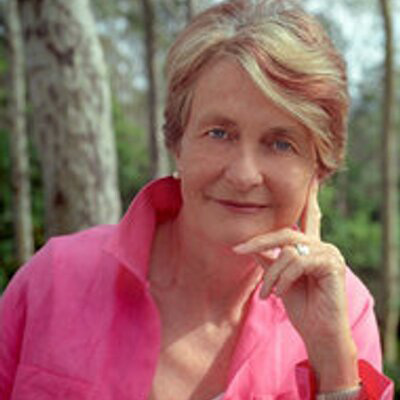 My Six Mentors, “………Helen Caldicott, MD, by Mary Olson, Gender and Radiation Impact Project, 1 January 20121
Helen Caldicott deserves a much greater place in our histories of the Cold War and ending the USA / USSR arms race than she generally gets. This is, perhaps, because she is powerful and a woman. A pediatrician, who in the 1970’s would not tolerate the radioactive fallout she and her patients were suffering from nuclear weapons tests in Australia, Helen and her family came to the USA. She and another physician named Ira Helfand revived what had been a local Boston organization of physicians and created a Nobel Prize winning organization called Physicians for Social Responsibility (PSR), which later participated in the creation of another Nobel Prize winning group, the International Physicians for the Prevention of Nuclear War (IPPNW). These two along with hundreds of other organizations committed to peace and nuclear disarmament formed the International Campaign for the Abolition of Nuclear Weapons (ICAN) which has helped to create the new Treaty on the Prohibition of Nuclear Weapons (see http://icanw.org/the-treaty ) and also won the Nobel Prize (2017).
Helen herself is a powerful communicator and will move audiences at a level that can change the course of someone’s life and work. She followed her own destiny to winning meetings with Mikhail Gorbachev, President of the Soviet Union, where she educated him about Nuclear Winter and the fact that nuclear is not a war that anyone can win. She also met with President Reagan in the era and diagnosing early-stage dementia… Her ability to bring the reality of the world to these men, and reality of these men to the world set her aside, in a class by herself—and was an enormous contribution to us all.
I first met Helen in the body of her Cold War block-buster book “Nuclear Madness.” I was in the midst of an existential crisis that could have become an even bigger health crisis. After college I needed a job (not yet a career) because I was broke, broken up from my first “true” love, and far from home. I got a job as a research assistant in a lab at a prestigious medical school; it was 1984.
Within 2 weeks, I was inadvertently contaminated with radioactivity (without my knowledge) by carelessness of a lab-mate. The radioactive material, Phosphorus-32 is used in research to trace biochemical activity in living organisms. This type of radioactivity is not deeply penetrating, so there was some reason not to panic, however the I was exposed continuously for over a week, and I also found radioactivity at home– my toothbrush was “hot”—so I had also had some level of internal exposure. I was terrified. The lab used concentrations of the tracer thousands of times higher than is typical.
The institution told me there was no danger, but because I was upset, they helped me transfer to a different job. No accident report was filed, and in the midst of transition, my radiation detection badge was never processed. It is not possible to know the dimensions of my exposure—I began having symptoms that were not normal for me. Many people, including some family members told me I was imagining things. No one in my circle understood how terrified I was.
I was fortunate that Helen had already written “Nuclear Madness”—the first edition came out in 1978, just before the March 1979 Three Mile Island nuclear meltdown in Harrisburg PA—an event that propelled the book into multiple printings including a Bantam Paperback edition that I found. It turned out that 7 years later I helped Helen to revise and update the same text for the 1994 WW Norton edition. It was Helen’s deep commitment to truth, to speaking and writing that truth, to empowering people to take action for good. Helen’s words accurately described radiation and its potential for harm, and in my panic about the unknown, this calmed me.
Every other authority I had encountered was trying to tell me there was no problem—when I knew they had no right to dismiss what had happened to me. I am quite certain that had I remained alone with my fear, despair, and confusion my panic would have resulted in behaviors that would have compounded any harm bodily from that radioactive contamination. Reading Helen’s work let me know there was at least one woman walking the Earth who did know what I was going through… it made it possible for me to choose recovery and walk away from a legal battle that would have forced me to maintain, hold and prove a myself a victim. Instead, following in Helen’s wake, I chose Peaceful Warrior. Thank you Helen! : ……….. https://www.genderandradiation.org/blog/2020/12/31/my-six-mentors
India and Pakistan exchange list of nuclear installations

 India, Pakistan exchange list of nuclear installations
The exchange was made in accordance with Article-II of the Agreement on Prohibition of Attacks against Nuclear Installations and Facilities between Pakistan and India. Hindustan Times, INDIA Jan 01, 2021, Press Trust of India by Kunal Gaurav Islamabad
Pakistan and India on Friday conducted the annual practice of exchanging the list of their nuclear installations under a bilateral arrangement that prohibits them from attacking each other’s atomic facilities.
The exchange was made in accordance with Article-II of the Agreement on Prohibition of Attacks against Nuclear Installations and Facilities between Pakistan and India, signed on December 31, 1988, the Foreign Office (FO) said in a statement here.
It said that “the list of nuclear installations and facilities in Pakistan was officially handed over to a representative of the Indian High Commission at the Ministry of Foreign Affairs today, at 1100 hrs (PST).” “The Indian Ministry of External Affairs in New Delhi handed over the list of Indian Nuclear installations and facilities to a representative of the Pakistan High Commission at 1130 hrs (IST),” it added.
The agreement contains the provision that both countries inform each other of their nuclear installations and facilities on January 1 every year.
This has been done consecutively since January 1, 1992, according to the FO.
The exchange of information comes despite the ongoing tensions between India and Pakistan…….. https://www.hindustantimes.com/india-news/india-pakistan-exchange-list-of-nuclear-installations/story-UGFFx7sfYdK4QWTLKNYtxM.html
This is the sort of letter that citizens need to be writing – in support of the nuclear weapons ban
 Sudbury letter: Council should support banning of nuclear weapons, https://www.thesudburystar.com/opinion/letters/sudbury-letter-council-should-support-banning-of-nuclear-weaponsAuthor of the article:
The United Nations has passed the Treaty on the Prohibition of Nuclear Weapons and it will become international law on Jan. 22, 2021. Some 86 countries have signed this agreement. Unfortunately, Canada is not one of them.
As it is cities that will be targeted by nuclear weapons, Sudbury, a producer of nickel, would likely be a target. The International Campaign Against Nuclear Weapons (ICANw) is asking cities to support the Treaty on the Prohibition of Nuclear Weapons by passing the following motion (many Canadian cities have already passed this motion including Toronto, Halifax, Vancouver and Victoria):
“Our city of Sudbury, Ont., is deeply concerned about the grave threat that nuclear weapons pose to communities throughout the world. We firmly believe that our residents have a right to live in a world free from this threat. Any use of nuclear weapons, whether deliberate or accidental, would have catastrophic, far-reaching and long-lasting consequences for people and the environment. Therefore, we support the Treaty on the Prohibition of Nuclear Weapons and call on our governments to sign and ratify it.”
The world has about 14,000 nuclear weapons with about 1,500 on hair-trigger alert. The firing of these weapons could happen by accident, miscalculation, terrorism or an unstable government. The catastrophe would be immediate.
I would urge Sudbury city council to pass the motion and support the United Nations Treaty on the Prohibition of Nuclear Weapons.
Richard Denton
Sudbury
Mary Olson pays tribute to Rosalie Bertell, the great explainer of radiation impacts on health.
My Six Mentors, by Mary Olson, Gender and Radiation Impact Project, 1 January 20121
 “……………. Rosalie Bertell, PhD
It was Rosalie who most let me know that I am able to contribute original work towards the day that People, to decide not to split atoms any more. Human beings began splitting atoms in Chicago, in 1942. Rosalie, a PhD in mathematics and member of the Order of Gray Nuns, knew more than anyone else I have worked with, that all of it—every last nuclear license, and radioactive emission, all the waste and all the bombs and all the money congress gives to nuclear activities are choices. People made, and continue to make these decisions…and we can change our mind.
Rosalie studied radiation impacts and was committed to service on behalf of future generations. She won the Right Livelihood award for her work with communities impacted by nuclear industry. Often called the “alternative Peace Prize” – she was one of the first women to be honored. As a laureate, she was encouraged to find and mentor students. Rosalie hoped that I, and my coworker Diane D’Arrigo would go to graduate school and she could be our mentor. We decided since we were already in our 50’s to simply study with her, informally. We traveled, 5 or 6 times to the Mother House where she resided and she generously met with us in the last two years of her life. She was always small in stature, but at that point her back was bent and she barely came up to my chest, but still had the intensity of a wolverine!
It was Rosalie Bertell who helped me tackle one of the biggest challenges I have faced. After a public talk on radioactive waste policy that I gave during this time, a woman asked me if radiation was more harmful to women, to her, compared to a man. Even though I had studied and known many of the top independent radiation researchers, including Bertell, I had never heard that biological sex could be a factor for harm—other than in reproduction (pregnancy)—but that is more about the embryo and fetus than the woman. I told her that I was sorry, I did not know and would get back to her. In fact, I forgot.
Two years later, when nuclear reactors exploded in Japan at a site called Fukushima Daiichi, I remembered that question and knew it urgently needed an answer. I was unaware that Dr Arjun Makhijani and a team had written on sex differences in radiation harm in 2006 (see www.ieer.org ) and also did not turn that up as I searched for any information on differences between males and females. My findings, five years later are an independent confirmation of the IEER work.
Since I found nothing on a basic google dive, I called Rosalie, who was at that point nearing the end of her life, to ask if she had studied biological sex. She had not, and the one report she pointed me to was out of print. It was my second call, a week later, that prompted her to tell me that I would have to look at the data myself.
I had no idea that the National Academy of Science (NAS) had published tables with 60 years of data on cancers and cancer deaths among the survivors of Hiroshima and Nagasaki. Rosalie told me to find out for myself. I was shocked. I had stopped any formal study of math in the 6th grade…she was a mathematician—I asked her to do it, and she reminded me that she was dying. I protested again. It was her next words that pushed me. Rosalie said, “The data is divided by males and females so you can look at this question—and if there is a difference, it will be a simple pattern. It is good you do not have more math because if there is a difference, you will find it and not make it more complicated than it is.” She said to get a few pencils, a sharpener, an eraser and lots of paper, and go to it. I did.
The result was my first paper on the topic, “Atomic Radiation is More Harmful to Women,” (October 2011) published to the web in time for Rosalie to congratulate me. Three years later the paper was the basis for my invitation to speak at the global Vienna Conference on the Humanitarian Consequences of Nuclear Weapons. Three years later as the new Treaty on the Prohibition of Nuclear Weapons was in the work, I founded the Gender and Radiation Impact Project. Rosalie is the one who put rocket fuel in my determination to help. If the world decides to base radiation protection on Refence Little Girl—make every regulation in terms of protecting females who are infants—five years old, future generations have a chance. Rosalie is the one who modeled for me that it is possible to reach for the best possible outcome, and, indeed, we have an obligation to do so………..…… https://www.genderandradiation.org/blog/2020/12/31/my-six-mentors
In Indonesia – small nuclear reactors as a prelude to nuclear weapons?
How the USA and Soviet Union planned to use nuclear radiation as a weapon.
This was initially seen as a great idea – you could kill all the people while leaving the omfrastructure intact for your own use.For decades, the thought of radiological weapons has conjured terrifying images of cities covered in “death dust.” Classified as a weapon of mass destruction — alongside chemical, biological, and nuclear weapons — it has remained a point of mystery as to why these devastatingly indiscriminate weapons were not pursued in earnest by more state and non-state actors alike.
What did early radiological weapons (RW) programs look like? How and why did they arise, and what accounts for their ultimate demise? Aside from a handful of known cases, why have RW programs not proliferated with the same alacrity as other weapons programs?
Thanks to the rigorous and rich historical work of Samuel Meyer, Sarah Bidgood, and William Potter of the Middlebury Institute of International Studies at Monterey, we now have more answers. Focusing on the United States and Soviet Union in the 1940s and 1950s, the authors, in a recent study published in the journal International Security, trace the unique origins of these RW programs, as well as explain why they were subsequently abandoned. Their study, “Death Dust: The Little-Known Story of U.S. and Soviet Pursuit of Radiological Weapons,” reveals a fascinating web of causes, including organizational and bureaucratic politics, international competition, economic and technological constraints, and even the powerful initiatives of well-placed individuals.
While the authors’ work examines the past, it speaks directly to the present and future trajectory of RW programs. If you are interested in military innovation, the history of weapons of mass destruction, the sociology of technology, and science fiction (yes, science fiction!), the exchange featured below is for you.
Samuel Meyer, Sarah Bidgood, and William C. Potter: We define a radiological weapon as one intended to disperse radioactive material in the absence of a nuclear detonation. ……..
……….. May 1941 — the first reference to RW appeared in a U.S. government document: the Report of the Uranium Committee. The report identified three possible military aspects of atomic fission, the first of which was “production of violently radioactive materials … carried by airplanes to be scattered as bombs over enemy territory.” (The other two possible applications noted in the report were “a power source on submarines and other ships” and “violently explosive bombs.”) ………
Technological advances were among the major drivers of RW programs in both the U.S. and the Soviet Union, and RW were initially pursued in tandem with nuclear weapons and chemical weapons (CW) programs. The anticipated promise of RW as a weapons innovation, however, never materialized in either country due to a combination of factors, including technical difficulties in the production and maintenance of the weapons, diminution in the perceived military utility of RW relative to both CW and nuclear weapons, and low threat perceptions about adversary RW capabilities. ……..
the parallelism in many respects between the rise and demise of the U.S. and Soviet RW programs; and (5) the serious but ultimately unsuccessful effort by the United States and the Soviet Union to secure a draft convention at the Conference on Disarmament prohibiting radiological weapons.
MK: Are radiological weapons a thing of the past or do they remain an attractive option for some countries and non-state actors today?
The authors: We are encouraged that no country has either used RW in war or has incorporated them into a national military arsenal. We are concerned, however, that the Russian Federation, despite its own unsuccessful history with RW, has shown renewed interest in advanced nuclear weapons that seek to maximize radioactive contamination. We also worry that some countries may conclude that RW serve their perceived national interests, especially in the absence of international legal restraints. It therefore is important, we believe, to revive U.S.-Russian cooperation to ban radiological weapons and strengthen the norm against their use.
Morgan L. Kaplan is the Executive Editor of International Security and Series Editor of the Belfer Center Studies in International Security book series at the Belfer Center for Science and International Affairs at the Harvard Kennedy School. https://thereader.mitpress.mit.edu/death-dust-the-little-known-story-of-radiological-weapons/
How the nuclear industry avoids a proper safety analysis
The Nuclear Industry’s Really Bad Safety Analysis, Clean Technica. December 31st, 2020 by George Harvey
Before we allow small modular reactors, mini reactors on barges, reactors for making hydrogen, reactors to be set up on the Moon, or just about any nuclear reactors to be built, we should get an explanation from the nuclear industry of why some of its calculations have been so bad. I am talking about numbers that are so bad, off by an order of magnitude, that they are functionally deceptive. And if they are not intentionally deceptive, that is not an excuse. They fool people into thinking things are true when they are not, and they are very much to the advantage of the nuclear industry.
In my experience, nuclear industry numbers come in three flavors. The first of these is just about spot-on, just about 100% of the time. These numbers relate to such things as calculations of energy potentials. If a company says a reactor can provide 1,000 MW of power, you can count on it that the output of that plant will be 1,000 MW.
There is a second type of calculation that the industry provides. This relates to the costs and timelines for construction of new reactors. Calculations in these areas seem to underestimate both by about half. If the figure for a new reactor is $5 billion and its construction is to take 5 years, I would figure on a $10 billion cost and a 10-year timeline. I acknowledge that I have not done a careful study of this, but I have often noted that real world results that were double what was estimated, and I only remember one that was correct. (I am speaking of US and UK reactors here, not those that are built in China, with which I am much less familiar.)
It is the third type of number that really bothers me, however, and this is something I have studied since the Fukushima Disaster. For some purposes regarding safety, the industry numbers are off by an order of magnitude, with its calculations appearing to make the reactors ten times as safe as they are.
I admit that some safety numbers are controversial. There is huge disagreement about how many people died as a result of the Chernobyl Disaster, for example. I will start with that.
got an email some time back from a nuclear industry advocate. In it he said the explosion of a reactor at Chernobyl proved that nuclear energy was safer than coal or other fossil fuels. I will grant you that our use of coal has caused a large number of deaths, both in the mines and among the general public. But the email was revealing in its very specific number. How it was calculated, I don’t know, but the figure given was 17 deaths.
Though that was the lowest I have seen, other figures from nuclear advocates are equally specific. A list at Wikipedia says provides the old Soviet Union’s official list of 31 people who were killed. I have seen that figure used recently. Elsewhere in the same article, however, it is stated that a total of 60 people died, according to a later source, including later deaths of radiation-induced cancer. Again, the same article speaks of UN estimates of 4,000 people who might have died of health effects in the Ukraine, Belarus, and Russia, with a total of 16,000 when other parts of Europe are factored in, and maybe as many as 60,000 when worldwide effects are considered. Greenpeace has projected death tolls possibly going up to a million.
So what are we to believe? To answer that question, I will say we should not believe any specific figure, but instead note that the low figures from the nuclear industry and the high figures from anti-nuclear activists differ by over four orders of magnitude.
I would also note that the figures from the nuclear industry are not believable, because they do not even admit the possibility of more deaths than the low numbers they specify. And I will not say the high figures are unbelievable in quite the same way, though I would not believe them just because they come from Greenpeace. The point is that the differences themselves are disturbing…………..
The Fukushima Daiichi plant was protected by a 5.7 meter (18.7 feet) sea wall. The Tohoku tsunami that hit it, which arose from the most powerful earthquakes ever recorded in Japan, was 14.5 meters (47.6 feet) tall at the plant. To get a grasp on what this means, remember that a tsunami of this type is not an ordinary wave that quickly crashes and withdraws, it is a rise in the water level than keeps going on for a period of time, possibly several minutes. So for a period that must have felt terrifyingly long to those who witnessed it, water kept rising until it was nearly 8.8 meters (28.9 feet) higher than the sea wall. Videos of the Tohoku tsunami show the effect.
The nuclear industry’s response to this could be summed up in the question: Who could have predicted such a thing? But that fails utterly to recognize some facts. The sea wall was clearly too low, based on the region’s history.
To start with, the earthquake was the most powerful on record, but the records only go back to 1900. The 14.5-meter wave at Fukushima Daiichi was not the highest that the tsunami produced. The highest wave it had was 40.5 meters (133 feet) in Iwate Prefecture. But we should recognize this was not really the unique event it seemed. Limiting our look to other tsunamis on the northeastern coast of Japan, we could count the 1896 Sanriku Earthquake, which had waves of up to 30 meters (100 feet), and the 1933 Sanriku Earthquake, which had waves of up to 28.7 meters (94 feet).
Both of these events happened less than 100 years before the Fukushima power plant was designed in the early 1970s. They should have been taken into account for construction of sea walls. In fact, they were taken into account for building a 15.5-meter (51 feet) flood gate at Fudai, Iwate, a village of roughly 2,600 people. The waves were higher there than at Fukushima Daiichi, but they barely topped the flood gate, and no one it protected was killed.
So why did Fukushima Daiichi have a 5.7-meter sea wall? I would say it was clearly a matter of human failure. Though I have to admit that reality might have been very different, I can picture someone walking into a room with a group of engineers in it, and asking how tall the sea wall was going to be. And the answers comes back as a question, “What is the budget?”
I have never seen the nuclear industry address the question of why their safety analysis calculations are off by an order of magnitude. Until they do, and I think it should include a gigantic mia culpa, my own choice would be not to allow any of their fantastical designs to be built. https://cleantechnica.com/2020/12/31/the-nuclear-industrys-really-bad-safety-analysis/
New delay in planning decision for £16bn Wylfa nuclear development on Anglesey
months for talks with potential new investors to continue. Japanese
multi-national Hitachi announced in September they were pulling out of
funding the £16bn nuclear development on Anglesey. At that point BEIS
Secretary of State Alok Sharma delayed the Development Consent Order (DCO)
decision for the application to December 31. Now following a letter from
Duncan Hawthorne, chief executive of Wylfa developer Horizon Nuclear Power,
that date has been extended to April 30.
Non violent anti-nuclear action – the Clamshell Alliance model for success
Know Your Nonviolent History: In 1976 Clamshell Alliance Launches Mass Demonstrations https://www.riverasun.com/know-your-nonviolent-history-in-1976-clamshell-alliance-launches-mass-demonstrations/August 18, 2016, by Rivera Sun On August 1st, 1976, the first nonviolent mass demonstration of the Clamshell Alliance took place at the proposed site of the Seabrook Nuclear Energy Facility in New Hampshire. The Clamshell Alliance was a group of anti-nuclear activists who worked to stop nuclear power plant construction at a time when President Nixon’s “Project Independence” had proposed the construction of over 1,000 nuclear power plants throughout the nation. Although the Clamshell Alliance was only partially successful in halting the Seabrook facility, their mass mobilizations deterred the plans for other plants and changed the landscape of nuclear energy forever. If not for the Clamshell Alliance, it is possible that we would be living in the nuclear nightmare of President Nixon’s vision of a thousand plants by the year 2000.
|
The Clamshell Alliance used a model of affinity groups of 6-20 people, and a spokes council system that functioned on consensus decision-making by all members. In July 1976, the Clamshell Alliance adopted a Declaration of Nuclear Resistance and by August 1st had mobilized their first protest of 200-600 people. Later in August, a second protest and civil disobedience action occupied the Seabrook construction site for 75 minutes, singing songs and planting trees. Nearly all of the 200 participants were arrested. In April of 1977, the Clamshell Alliance mobilized 2,000 people for a demonstration. 1,400 participants were arrested, most refusing to post bail. They were held in jails and National Guard armories for up to two weeks. The activists used this time for training and networking, and subsequently, the detention of the activists was seen as a blunder on the part of Governor Meldrim Thomson. In 1978, the Clamshell Alliance successfully organized another series of mass demonstrations and arrests. From June 23-26th, the alliance accepted an agreement to legally protest on the site for three days. Some sources claim this protest was one of the largest on-site protests in the history of the anti-nuclear movement, citing over 20,000 participants and very few arrests. On March 29th, 1979, the meltdown of the Three Mile Island reactor in Harrisburg, Pennsylvania, propelled the dangers of nuclear power to the forefront of national concern. In collaboration with other groups, a huge anti-nuclear energy rally was organized in Washington, D.C. on May 6, 1979. Between 50,000 and 120,000 people gathered to protest nuclear power and demand safe alternatives. These demonstrations played a major role in slowing and stopping the rush toward nuclear energy. Although Unit 1 of Seabrook Power Plant went online in 1990, Unit 2 was cancelled altogether. The project cost seven times the original billion-dollar estimate and was completed 14 years later than anticipated. In that time, hundreds of other proposals were dropped, due to the high social and fiscal costs encountered by the Seabrook Power Plant. For decades after the inception of the Clamshell Alliance and other similar groups, no new nuclear power facilities were proposed or constructed. The Clamshell Alliance left a lasting legacy in its organizing structure, movement practices, consensus model, and strategies for change. These are all tools and resources that can be used by current movements for change. This article is from Rivera Sun’s book of nonviolent histories that have made our world. Click here for more information. |
|
Never give up! 95 year old Hibakusha welcomes the UN nuclear ban treaty
Hibakusha: A-bomb survivor, 95, never giving up the battle to eliminate nuclear weapons https://mainichi.jp/english/articles/20201229/p2a/00m/0na/032000c
December 30, 2020 (Mainichi Japan) Following news that the Treaty on the Prohibition of Nuclear Weapons would enter into force early in 2021, some 200 people including atomic-bomb survivors, or hibakusha, gathered in front of the Atomic Bomb Dome in the western Japan city of Hiroshima on Oct. 25, 2020 and shared their joy.
But one “face” of the city bombed during World War II, who four years earlier had smiled as he shook hands with Barack Obama, the first U.S. President to visit Hiroshima while in office, was not able to take part. The following hibakusha report, coming 75 years after the atomic bombing of Hiroshima, focuses on the life of this figure, 95-year-old Sunao Tsuboi, who has stood at the forefront of hibakusha activities with an indomitable spirit.
Tsuboi has served as chairman of the Hiroshima Prefectural Confederation of A-bomb Sufferers Organizations (Hiroshima Hidankyo) for the past 16 years. He now spends his days at his home in Hiroshima’s Nishi Ward, where a decorative card bears his creed in calligraphic ink: “Futo Fukutsu — Never give up!”
From around the time the imperial year changed from Heisei to Reiwa in May 2019, Tsuboi’s legs became extremely weak, and he was unable to do without his wheelchair. He has been receiving intravenous drips once a fortnight for cancer, heart disease and anemia. This year he received at least 30 blood transfusions, and it has not been easy for him to get out of bed.
On the day of the atomic bombing on Aug. 6, 1945, Tsuboi suffered burns over his entire body, and he remained unconscious for over 40 days. His sight became impaired in his left eye, and he became critically ill three times. To repay his feeling of indebtedness for being able to live, he became a teacher, and continued to share his experiences with students for over four decades, becoming known as “Pikadon Sensei” — a reference to the flash (pika) and boom (don) of the atomic bomb.
After he retired, he continued to share his experiences both in Japan and overseas, visiting 21 countries including Britain, France, China, India, Pakistan and North Korea, which possess nuclear weapons.
“The color of our skin doesn’t have to be the same. We don’t need borders. Humankind won’t be happy unless we help each other,” Tsuboi says. With his fist raised high, he has continued to call for a world without nuclear weapons.
Tsuboi released comments expressing his joy after he learned that the Treaty on the Prohibition of Nuclear Weapons would enter in force.
“I am filled with excitement, thinking, ‘At long last. This is great.’ It is a major step toward my long-held, earnest desire for nuclear weapons to be banned and eliminated,” he said. At the same time, he noted that states with nuclear weapons, as well as Japan, had not ratified the treaty and said, “The road hereafter may be rough.”
Still, each time I have met Tsuboi, he has repeatedly stated, “I won’t give up until there are zero nuclear weapons. Never give up!”
(Japanese original by Naohiro Yamada, Osaka Photo Group)
Small modular reactor plan – a dangerous distraction from climate change action
 Feds’ Small Modular Reactor Action Plan is a dangerous distraction from climate change mitigation, Corporate Knights BY RICK CHEESEMAN, December 29, 2020
Canada can be a world leader in this promising, innovative, zero-emissions energy technology, and this is our plan to position ourselves in an emerging global market,” Natural Resources Minister Seamus O’Regan said in a statement.
The governments of New Brunswick, Ontario, Saskatchewan and Alberta, together with the federal government, advocate that small modular reactors (SMRs) are essential if Canada is to achieve a net-zero economy by 2050. According to the feds’ 2018 Call to Action report on the mini nuclear reactors, “SMRs are a reliable, clean, non-emitting source of energy, with costs that are predictable and competitive with other alternatives.”
The first problem with these claims is that SMRs don’t yet exist and aren’t expected to exist for a decade, making these claims dubious. It’s not the only questionable claim made by proponents.
Are SMRs a clean, zero-emission source of power?
Nuclear reactors emit much lower concentrations of carbon than fossil fuels, so one could claim they are zero-emission. But they have their own, uniquely harmful, emissions. From thousands of tonnes of spent fuel to hundreds of thousands of tonnes of mine tailings, nuclear power leaves a radioactive trail that is an immediate threat to waterways and water tables and is lethal for hundreds of thousands of years. SMRs will only add to that.
In 2010, Ad Standards Canada ruled that an ad claiming CANDU reactors were emission-free was “inaccurate and unsupported.” The Power Workers’ Union was expected to remove all ads containing the “emission-free” statement and to qualify any future claims. ……
After 70 years, the nuclear industry still hasn’t found a way to keep habitable environments safe from spent fuel for anything close to the time frames required for it to be harmless. There have been many plans in the past and there are current plans but all have one thing in common: they are unfit for purpose.
Some SMR technologies promise to use CANDU spent fuel in the SMR, claiming this will reduce both the radioactivity and quantity of the spent fuel. This claim is theoretical, based on proprietary data, and a report published by the Bulletin of the Atomic Scientists said doing so would be “playing with fire,” noting that the process, called pyroprocessing, will exacerbate the spent fuel storage and disposal challenges, not mitigate them.
Will SMRs be safe?
A range of power-generation and storage technologies that are clean, emissions-free, safe and low cost, is imminent. Within 10 years, these technologies will be widespread, fully incorporated into all levels of society, and deployed to all regions – all before the first SMR comes online. In all likelihood, by the time an SMR comes to market, there will be a more economical and environmentally responsible alternative in place.
While the rhetoric is persuasive, the case for SMRs doesn’t stand up to objective scrutiny. Allocating climate-change funds to them is a travesty.
1 This Month

Read the Public Inquiry Report, the Commissioners’ report, Surrendering Australia: The AUKUS Deception is available to download for free at aukuspublicinquiry.com. Or just watch the replay of the National Press Club Luncheon.


19 November – Webinar – The Reality of Reprocessing
Time: 11:00 AM Pacific Time (US & Canada) / 2:00 PM Eastern / 7:00 PM UK / 8:00 PM CET
Register for the Zoom Event Here



Shut down the radiation-damaged Heysham nuclear reactors now
To see nuclear-related stories in greater depth and intensity – go to https://nuclearinformation.wordpress.com

Say No to NASA’s Reckless Nuclear Reactor on the Moon
Say No to NASA’s Reckless Nuclear Reactor on the Moon
-
Archives
- November 2026 (109)
- October 2026 (302)
- September 2026 (339)
- August 2026 (330)
- July 2026 (355)
- June 2026 (287)
- May 2026 (306)
- April 2026 (356)
- March 2026 (251)
- February 2026 (267)
- January 2026 (308)
- December 2025 (358)
-
Categories
- 1
- 1 NUCLEAR ISSUES
- business and costs
- climate change
- culture and arts
- ENERGY
- environment
- health
- history
- indigenous issues
- Legal
- marketing of nuclear
- media
- opposition to nuclear
- PERSONAL STORIES
- politics
- politics international
- Religion and ethics
- safety
- secrets,lies and civil liberties
- spinbuster
- technology
- Uranium
- wastes
- weapons and war
- Women
- 2 WORLD
- ACTION
- AFRICA
- Atrocities
- AUSTRALIA
- Christina's notes
- Christina's themes
- culture and arts
- Events
- Fuk 2022
- Fuk 2023
- Fukushima 2017
- Fukushima 2018
- fukushima 2019
- Fukushima 2020
- Fukushima 2021
- general
- global warming
- Humour (God we need it)
- Nuclear
- RARE EARTHS
- Reference
- resources – print
- Resources -audiovicual
- Weekly Newsletter
- World
- World Nuclear
- YouTube
-
RSS
Entries RSS
Comments RSS

