Strong opposition to USA’s Nuclear Rubberstamp Commission extending nuclear reactors’ lives to 100 years
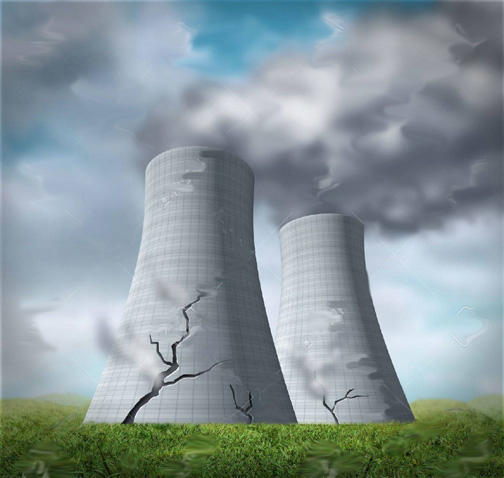

Well, I can’t help think that all these officials are looking out for themselves here. They hope that the disasters and cleanups won’t be their problem, – but the problem of future taxpayers.
|
RESOUNDING NO – TO LETTING NUCLEAR PLANTS RUN FOR 100 YEARS, The Sentinel By Karl Grossman, Jan 22, 2021
The U.S. Nuclear Regulatory Commission held a “public meeting” this week on what it titled “Development of Guidance Documents To Support License Renewal For 100 Years Of Plant Operation.” Comments from the “public” were strongly opposed to the NRC’s desire for it to let nuclear power plants run for a century. “I request you pause and consider before you go ahead on this reckless path,” testified Michel Lee, chairman of the New York-based Council on Intelligent Energy & Conservation Policy. “Our position and that of our constituents is a resounding no,” declared Paul Gunter, director of the Reactor Oversight Project at the national organization Beyond Nuclear. “It’s time to stop this whole nuke con job,” said Erica Gray, nuclear issues chair of the Virginia Sierra Club. There is “no solution” to dealing with nuclear waste, she said. It is “unethical to continue to make the most toxic waste known to mankind.” And, “renewable energy” with solar and wind “can power the world.” Jan Boudart, a board member of the Chicago-based Nuclear Energy Information Service, spoke, too, of the lack of consideration of nuclear waste. Cited was the higher likelihood of accidents with plants permitted to run for 100 years. Whether the NRC—often called the Nuclear Rubberstamp Commission—listens is highly unlikely considering its record of rubberstamping whatever has been sought by other nuclear promoters in government and the nuclear industry. Nuclear power plants when they began being built were not seen as running for more than 40 years because of radioactivity embrittling metal parts and otherwise causing safety problems. So operating licenses were limited to 40 years. But with the major decline of nuclear power—the U.S. is down to 94 plants from a high of 129 and only two are now under construction—the nuclear promoters in the U.S. government and nuclear industry are pushing to let nuclear power plants run for 100 years to somehow keep nuclear power going…….. In further discussing the “Life Beyond Eighty” scheme for nuclear power plants, Rosseel showed a U.S. Energy Information Administration slide projecting the amount of energy nuclear power would contribute to the U.S. energy supply in decline from 19% in 2019 to 12% in 2050 while renewable energy sources would jump from the current 19% to 38%. For the DOE, which inherited the role of promoting nuclear power from the U.S. Atomic Energy Commission, abolished by Congress in 1974 for being in conflict of interest for having a dual role of both promoting and regulating nuclear power, this decline is of great concern. At the start of the “public meeting” on January 21—held online as a teleconference—Allen L. Hiser, Jr., senior technical advisor for the Division of New and Renewed Licenses of the NRC, said the Atomic Energy Act of 1954 gave authority to the U.S. government to license nuclear power plants for 40 years. “But nothing in the AEA [Atomic Energy Act] prohibits a number of license renewals,” said Hiser. Using this lack of prohibition in the Atomic Energy Act, the NRC is now pushing ahead on the scheme to let nuclear power plants run for 100 years.
The NRC—which was supposed to only get the regulatory function from the eliminated U.S. Atomic Energy Commission—has also, with DOE, been a promoter of nuclear power. Earlier, it began extending the operating licenses of nuclear power plants to run for 60 years—and most of the plants in the U.S. now are being allowed to run for 60 years. And in recent years it has given the go-ahead for nuclear plants to run for 80 years, and several have been licensed for that length. In granting the license extensions to 60 and 80 years, the NRC has also been allowing the plants to be “uprated” to generate more electricity—to run hotter and harder—further asking for disaster. Gunter testified about an NRC cover-up involving the extending of nuclear power plant licenses. Using PowerPoint to reinforce his points, Gunter displayed a 2017 report commissioned by the NRC made by the DOE’s Pacific Northwest National Laboratory. The “very critical report,” said Gunter, looked at conducting research on the impacts of extending nuclear power plant operating licenses. It is titled “Criteria and Planning Guidance for Ex-Plant Harvesting to Support Subsequent License Renewal.” http://www.beyondnuclear.org/storage/aging/slr/autopsy_PNNL-27120_harvesting_Dec2017.pdf The report listed many significant issues considering the “harsh” degradation of nuclear power plant components over the years, he said. It pointed to “a host of critical technical gaps.” fter he “raised questions about” issues in the report at a meeting on operating license extensions held in 2018 at the NRC’s headquarters in Rockville, Maryland, the report was “taken down from government websites,” said Gunter. However, Beyond Nuclear saved a copy of the report. He spoke of an email that Beyond Nuclear obtained, after two years of trying under the U.S. Freedom of Information Act, from an NRC employee saying: “Big picture, I think the entire report needs to be scrubbed.” A “sanitized” version of the report, said Gunter, was “republished” in 2019. Gunter spoke of “public safety” being threatened. Gunter, also at the “public meeting” this week, said among the issues not being considered in the NRC’s drive to extend the licenses of nuclear power plants to 100 years is the management of the radioactive waste generated by the plants and “the advent of reliable, competitive and abundant renewable energy.” The oldest nuclear power plant in the U.S. was Oyster Creek in Toms River, New Jersey which opened in 1969 and was shut down 49 years later in 2018. What President Joe Biden does about nuclear power—he has said he is for “advanced” nuclear power—and the pro-nuclear NRC remains to be seen. The president appoints the five members of the NRC, and its current chairperson, a nuclear engineer and Trump appointee, is resigning. Biden could move to have done to the NRC what was done to its predecessor agency, the AEC, to have it abolished. And to push to end nuclear power in the U.S. Most U.S. nuclear power plants, according to a PowerPoint slide shown by the NRC’s Hiser, have already operated more than 40 years—the numbers of years they were seen as running safely when they began operating. https://www.thesentinel.com/communities/montgomery/news/science/resounding-no-to-letting-nuclear-plants-run-for-100-years/article_4cef89fc-5cc1-11eb-bfab-8b68f4bca770.html |
|
|
USA and Iran must overcome 9 hurdles to revive the nuclear deal.
 Nine hurdles to reviving the Iran nuclear deal, Bulletin of the Atomic Scientists, By Seyed Hossein Mousavian | January 19, 2021, Although reviving the agreement is certainly still possible, it won’t be easy. The two sides will need to overcome nine hurdles to make it happen.
First, the sequencing of a mutual return could be an immediate problem. Iran expects the United States to lift sanctions first, because it was the Trump administration that withdrew first. While Tehran’s demand is legitimate, Washington may ask that Iran come into full compliance before lifting sanctions. …….
Second is the issue of what compliance constitutes …….
Third, the Trump administration imposed numerous sanctions against Iran under the guise of terrorism and human rights, aimed at preventing the Biden administration from returning to the deal. For a clean implementation of the agreement, Biden will need to remove all of these sanctions as well.
Fourth, Trump’s withdrawal from the agreement and violation of the UN Security Council Resolution 2231 as well as other international commitments has damaged US credibility abroad. …..Fifth, because of Trump’s maximum pressure policy, the Iranian economy has suffered hundreds of billions of dollars of losses while Iran was in full compliance with the terms and conditions of the deal……..
Sixth, the “snapback” mechanism built into the agreement allows any country to force the UN Security Council to reimpose multilateral sanctions against Iran if Iran fails to fulfill its commitments. But this is one-sided: There is no such remedy for Iran if other parties fail to do their part. ………
Seventh, in the first week of December 2020, the Iranian parliament passed a bill mandating Iran’s Atomic Energy Organization to resume enriching uranium to 20 percent purity. The legislation also requires the Iranian government to cease voluntary implementation of the IAEA’s Additional Protocol within two months of the bill’s enactment if the other signatories fail to fully deliver on their commitments under the agreement. …….
Eighth, there are some in the United States who are worried that Trump may start a reckless last-ditch war with Iran before leaving office. ……
Ninth, some pundits and politicians in Washington want Biden to leverage the Trump administration’s sanctions to pressure Iran to accept additional commitments beyond the original agreement as a condition for US return to compliance……..
Despite these hurdles, Biden should nevertheless seek a reentry into the deal. Only a clean and full implementation by all parties can save the world’s most comprehensive nuclear agreement, contain rising US-Iran tensions, and open the path toward more confidence building measures. That path should include, upon Biden’s issuing an executive order to rejoin the JCPOA, the creation of a working committee of parties to the agreement tasked with ensuring full compliance by all signatories, and a forum, organized by the UN secretary general, in which Iran and the Gulf countries can discuss a new structure for improving security and cooperation in the region. https://thebulletin.org/2021/01/nine-hurdles-to-reviving-the-iran-nuclear-deal/?utm_source=Newsletter&utm_medium=Email&utm_campaign=ThursdayNewsletter01212021&utm_content=NuclearRisk_9hurdles_01192021
Tokyo High Court holds TEPCO responsible for Fukushima nuclear crisis
No wonder that the global nuclear industry is hellbent on nationalising itself – so that the taxpayer is responsible. Nobody will want to invest in private nuclear companies after this.
High court denies government responsibility for Fukushima nuclear crisis, Japan Times, 22 Jan 21, The Tokyo High Court on Thursday ordered the operator of the crippled Fukushima No. 1 nuclear power plant to pay damages to evacuated residents, but it overturned an earlier ruling by Maebashi District Court that had also acknowledged the central government’s responsibility over the 2011 nuclear crisis.
Among around 30 such lawsuits across the country, the decision of the Tokyo High Court was the first high court ruling absolving the state of responsibility, contradicting an earlier decision of the Sendai High Court in September that ordered both the state and Tokyo Electric Power Company Holdings Inc. to pay damages.
The government’s failure to instruct Tepco to take measures against tsunamis “is not found to be significantly unreasonable,” Presiding Judge Akira Adachi said in handing down the ruling.
The lawsuit focused on the reliability of an official long-term quake assessment made in 2002, which has been used in previous rulings to determine the liability of the state and Tepco for their failure to prevent the nuclear disaster.
Adachi noted the assessment had caused a debate since its release, and that the government was unable to predict a huge tsunami.
Implementing measures such as constructing seawalls would not have prevented the tide from entering the nuclear plant, he added.
Thursday’s ruling instead ordered Tepco to pay a total ¥119.72 million to 90 plaintiffs, more than triple the amount awarded in the lower court ruling. ………..https://www.japantimes.co.jp/news/2021/01/21/national/crime-legal/government-denies-fukushima-responsibility/
Russia welcomes US proposal to extend New Start nuclear treaty
Russia welcomes US proposal to extend nuclear treaty, 9 News, By Associated Press
UK’s Centre for Policy Studies about to change its name to Centre for the Promotion of Nuclear Sizewell C?

|
Times 21st Jan 2021. Apparently the Centre for Policy Studies is “Britain’s leading centre-right think tank”. But who knew it was changing its name to the Centre for the Promotion of Sizewell C? Its latest missive comes with a press release headed: “Net zero target at risk without investment in new nuclear”.
And given the report’s general drift, you’d think all 58 pages had been penned by France’s EDF: the cost-overrun and late-delivery specialists behind the consumer-fleecing £22.5 billion Hinkley Point C.
Actually, you’d be wrong. EDF merely “supported” the report. Ask the CPS what that means and it admits it paid for it — or at least “contributed funding”.
True, Britain needs an energy mix…. But Sizewell C? That also brings flood risk and money from the Hong Kong crackdown experts of Beijing.
And the National Infrastructure Commission reckons a “highly renewable power system” plus “flexible technologies”, including hydrogen, “could besubstantially cheaper” than relying on a “fleet of nuclear power plants”. A fake independent report from the CPS hardly improves their
case. https://www.thetimes.co.uk/article/an-airline-takeover-that-might-fly-8t8qbjl07 |
|
More than half of public supports UK joining UN ban on nuclear weapons.
The National 22nd Jan 2021, More than half of public supports UK joining UN ban on nuclear weapons.
https://www.thenational.scot/news/19029821.half-public-supports-uk-joining-un-ban-nuclear-weapons/
Despite Covid regulations, 22 nuclear bombs delivered to Scotland

As many as 22 nuclear warheads were transported from England to Scotland in eight road convoys during 2020 despite coronavirus restrictions, according to a new report by campaigners.
Another bomb convoy arrived at the Royal Naval Armaments Depot at Coulport in Argyll on 15 January and set off south to the nuclear weapons factory at Burghfield in Berkshire on 20 January during a ban on non-essential travel.
Nukewatch, which monitors the convoys, accused the UK Ministry of Defence (MoD) of taking “disregard for public safety to a new low”. Critics and politicians questioned whether the convoys were essential…..
A historic United Nations treaty banning nuclear weapons came into force on 22 January 2021 after being signed by 51 countries. It is supported by the Scottish Government, but opposed by the UK Government.
Convoys comprising 20 or more vehicles regularly transport Trident nuclear warheads by road between Coulport and Burghfield for maintenance and upgrades. They are tracked and filmed by activists, and often travel close to Glasgow, Edinburgh, Newcastle, Manchester and Birmingham.
The Ferret reported in May 2018 that safety problems plaguing the convoys had risen to a record high. The total number of incidents logged by the MoD over ten years was 179.
A historic United Nations treaty banning nuclear weapons came into force on 22 January 2021 after being signed by 51 countries. It is supported by the Scottish Government, but opposed by the UK Government.
Convoys comprising 20 or more vehicles regularly transport Trident nuclear warheads by road between Coulport and Burghfield for maintenance and upgrades. They are tracked and filmed by activists, and often travel close to Glasgow, Edinburgh, Newcastle, Manchester and Birmingham.
The Ferret reported in May 2018 that safety problems plaguing the convoys had risen to a record high. The total number of incidents logged by the MoD over ten years was 179……..
Jane Tallents from Nukewatch criticised the MoD for ignoring lockdown travel bans. “We call on the MoD to suspend these non-essential movements at least while the Covid restrictions are at this high level,” she told The Ferret.
“The emergency plans for dealing with a serious accident while transporting nuclear weapons always looked inadequate to us. But travelling while all our hospitals are near to being overwhelmed by the pandemic is taking the MoDs disregard for public safety to a new low.
“The resources are just not available to organise an evacuation and tell people to take shelter near to the site of a radiation leak from a damaged warhead in transit especially in any of the high population areas they travel through.”
Tallents pointed to evidence that the warhead convoy often broke down. “We are told to trust their safety record with nuclear weapons but it appears they can’t even manage to keep their vehicles roadworthy,” she said.
The Nuclear Information Service, which researches nuclear weapons, also urged the MoD to stop bomb convoys during Covid restrictions. “I can’t see any reason for the convoys to happen during lockdown,” said the group’s director, David Cullen.
“I’m sure there’s enough leeway in the programme to work around the restrictions if they wanted to. There’s no way drivers and security staff can maintain safe distances within the convoy vehicles.”
He added: “The government owes Scotland an explanation, and I’d like to see them release the risk assessment they used to justify this.”
The Scottish Greens also disputed whether the bomb convoys were essential. “It is deeply irresponsible to have weapons of mass destruction on our roads, especially at the moment,” said Green MSP, Mark Ruskell.
“They increase the risk of being targeted by terrorist groups, and although the likelihood of a catastrophic incident remains slim, the implications of a safety breach would be horrific and impossible to contain.” https://theferret.scot/22-nuclear-bombs-scotland-covid/
Fukushima’s former residents demand stricter decontamination of radiation before they would return
One condition that stands out among the list, though, is a further reduction in the amount of radiation, which 1 in 3 residents raised as an important issue. The government has been decontaminating specially designated areas, where it was once thought that settlement was limited for good but which can be reopened for residents. It has set the annual radiation exposure limit to be lower than 20 millisieverts as one of the standards to lift the evacuation orders.
Now that nearly 10 years have passed since the nuclear crisis at the Fukushima No. 1 plant, Kamata stressed the need for the government to decontaminate the area under stricter standards so that residents will feel safer returning to their hometown.
“In order to maintain people’s feelings for their hometowns, I want (the government) to stick to the stance of rebuilding our Tomioka in the form that we all want, including restoring the (basic living) environment.”……..
The lifting of the evacuation order in the specially designated area is expected in the spring of 2023, 12 years after the order was first issued.
“Without tackling issues such as restoring the living environment and infrastructure, as well as decommissioning of the Fukushima No.1 plant in a diligent manner, people won’t come back,” said Kamata. …https://www.japantimes.co.jp/news/2021/01/22/national/fukushima-decontaminating-town/
Pro nuclear publicist James Conca made a very big gaffe about Fukushima disaster
 Gaffe of the Week: “Nuclear is No Problem At All.” Seattle Met By Erica C. Barnett 3/17/2011 Talk about bad timing: At a little-noticed public hearing in the state house energy, technology, and communications committee last week, representatives from the US nuclear energy industry touted nuclear power as the most important “industry in the history of humanity.” And when pressed about the news coming out of Japan, reassured committee members that there was absolutely no risk of nuclear meltdown from reactors hit by last week’s earthquake…..As Japanese authorities continued today to use ever-more-desperate measures (including water cannons and fire-truck hoses) to cool the melting fuel rods at several of the reactors, the head of the Nuclear Regulatory Administration said at least one reactor was bleeding radiation directly into the atmosphere and said “extremely high” radiation levels near the plant could make it impossible to continue trying to cool the reactors. All of which makes the rosy picture painted by the nuclear industry Friday look even more dubious. After representatives of the nuke industry touted the industry’s safety record—working at a nuclear plant is “safer than working at Toys ‘R’ Us,” Hanford lab director Jim Conca told the committee—committee members asked the industry reps whether they were confident that all the safety systems they’d just praised would hold up in Japan. Asked specifically about the nuclear situation in Japan, Nuclear Energy Institute public affairs director Jim Colgary reassured Rep. Deb Eddy (D-48) that the safety systems in place at the nuclear reactors “absolutely” would come through. “It’s a conservative safety system,” Colgary said…. Conca added: “I’m very happy that Japan has 26 percent nuclear because those will not be the problems. When you see the pictures things burning [in Japan], it won’t be nuclear, it’ll be the gas-fired power plants and things like that. Nuclear is no problem at all.” |
|
|
So called “Improved” process for Cumbrian nuclear waste dump removes local right of veto

 Keep Cumbrian Coal in the Hole 21st Jan 2021 Copeland “Working Group” along with Allerdale “Working Group” are ostensibly the “local support” for a Geological Disposal Facility in Cumbria. They are enthusiastically going along with the ‘new and improved’ process of steps towards Geological Disposal of Heat Generating
Nuclear wastes.
Taiwan. Nuclear power plant referendum set to take place in August
Nuclear power plant referendum set to take place in August, Taipei, Jan. 22 (CNA) A national referendum on activating the long-mothballed Fourth Nuclear Power Plant in New Taipei will be held on Aug. 28, after the Central Election Commission (CEC) confirmed the date that was already set in stone in the Referendum Act.
The Referendum Act stipulates that national referendums can only be held once every two years starting from 2021 and only on the fourth Saturday of August during those years.
The CEC said in a statement Friday that polling stations will be open on Aug. 28 from 8 a.m. to 4 p.m………
Critics….. have warned of the safety hazards of the plant in particular and nuclear power in general, citing the 2011 Fukushima Dai-ichi nuclear power plant meltdown in Japan. ……… https://focustaiwan.tw/politics/202101220020
Canada’s nuclear regulator updates its drug and alcohol testing requirements.
Canada’s nuclear regulator updates its drug and alcohol testing requirements. 22 Jan 21, ………Depending on the nature of their job, nuclear workers may be tested:
- Before being hired
- After an incident has occurred
- Randomly
- If a supervisor has cause to believe there is a reason to test (also known as ‘reasonable grounds’)
- Follow-up after confirmation of a substance use disorder…… https://www.miragenews.com/canada-s-nuclear-regulator-updates-its-drug-and-alcohol-testing-requirements…..
Biden keeps Trump appointee as acting nuclear weapons chief
|
Biden keeps Trump appointee as acting nuclear weapons chief
By: Aaron Mehta 22 Jan 21, WASHINGTON — Charles Verdon will serve as acting administrator for the National Nuclear Security Agency, serving under acting energy secretary David Huizenga as the Biden administration begins.
Huizenga, the new acting energy secretary, had been serving as associate principal deputy administrator for NNSA. He comes from the nonproliferation side of the agency and has experience with DoE’s office of environmental management. Verdon, who was confirmed in 2018 as head of defense programs at the National Nuclear Security Administration, is one of the few Trump political appointees being kept in a national security position. Previously a career NNSA employee, Verdon has largely avoided politics during his time in office, focusing instead on the technical details behind America’s planned nuclear warhead modernization efforts. The NNSA is a semi-autonomous agency located within the DoE. While the Pentagon is in charge of developing the planes, submarines and missiles that deliver nuclear weapons, the NNSA is in charge of developing and producing the actual warheads. The department’s fiscal 2021 budget request for nuclear weapons activities was $15.6 billion. ……. https://www.defensenews.com/smr/nuclear-arsenal/2021/01/21/biden-keeps-trump-appointee-as-acting-nuclear-weapons-chief/ |
|
The 70-year nuclear gloom begins to lift on January 22
 Abolishing Nuclear Weapons: A New Chance, https://portside.org/2021-01-19/abolishing-nuclear-weapons-new-chance– 20 Jan 21,
The 70-year nuclear gloom begins to lift on January 22, 2021. The nine countries that have held the world captive to the threat of nuclear war are losing moral ground to 122 smaller countries that approved the world’s first nuclear weapons ban.
The 70-year nuclear gloom begins to lift on January 22, 2021. The nine countries that have held the world captive to the threat of nuclear war are losing moral ground to 122 smaller countries that approved the world’s first nuclear weapons ban in July 2017. Once 50 of those 122 approving countries completed the ratification process of the UN Treaty for the Prohibition of Nuclear Weapons in their legislatures, it became international law in October 2020.
The law goes into effect January 22, 2021 to the profound relief of most people of the world. Those now 51 “freedom fighter” countries commit to having nothing to do with nuclear weapons – no design, testing, manufacturing, storage, transport, use or threat of use. Consider this a marathon for disarmament to outpace the current nuclear arms race in which all nuclear-armed countries are, in lockstep, upgrading their weapons.
And this is only the beginning. Thirty five additional countries are in the process of ratifying the Treaty; 50 more support the Treaty; a dozen more have immense popular support, among them Canada, and are one election away from signing the Treaty. If the United States, where a majority of citizens does not want to use nuclear weapons, signed the Treaty, the rest would follow.
Actions of note:
- The General Electric Company stopped production of nuclear weapons in 1993.
- Two of the world’s largest pension funds have divested from nuclear weapons.
- Mitsubishi UFG Financial Group, 1 of the 5 largest banks in the world, has excluded nuclear weapons production from its portfolio, labeling them “inhumane.”
- Kennedy and Khrushchev were working toward the abolition of nuclear weapons when Kennedy was assassinated.
- Reagan and Gorbachev agreed to a radical dismantling of their nuclear weapons.
- Our goal must be a world “without nuclear weapons… “nuclear war cannot be won and must never be fought:” Former Republican Secretary of State George Schultz and former Democrat Secretary of Defense William Perry.
- Mayors for Peace: 7675 cities in 163 countries support the total abolition of nuclear weapons.
- 56 former presidents, prime ministers, foreign and defense ministers from 20 NATO countries and Japan and South Korea recently signed an open letter in support of the UN treaty to ban nuclear weapons. “Sooner or later our luck will run out – unless we act…There is no cure for a nuclear war,” they asserted. “Prevention is our only option.”
- Pope Francis: “The use of atomic energy for purposes of war is immoral. As is the possession of atomic weapons.”
A limited nuclear war could trigger a global famine that would likely end billions of lives. A full scale nuclear war would end human and most other life on Earth, reminding us of the classical depiction of total war: they had to destroy the village to save it. A nuclear war, whether by accident, misjudgment or intention to destroy the enemy would destroy the rest of us as well – how insane is that?
What then can President-elect Biden do?
Open dialogue with and renew nuclear agreements and diplomacy with Russia immediately.
Change US policy in 3 key ways: No first use of nuclear weapons; take weapons off of hair trigger alert; and select another senior official to share decision-making about “pressing the button.”
Revive the agreement with Iran: they do not develop nuclear weapons, we lift sanctions.
With South Korea, engage in diplomacy with North Korea to freeze and roll back their nuclear weapons program.
Stop the new program of upgrading nuclear weapons.
Listen to the world’s majority and lead the United States toward signing the new UN Treaty and the others will follow. It is our only solution to exit a dead-end system that permits a single human being, in the words of national security analyst Joseph Cirincione, “to destroy in minutes all that humanity has constructed over millennia.”
Pat Hynes, retired from Boston University, is on the board of the Traprock Center for Peace and Justice https://traprock.org.
100 year licences for nuclear reactors? – a hazardous plan
What a great idea! This way, all the nuclear industry heavies, all the regulatory officials involved, will be long gone when disaster strikes. They get off scot free – no costs, no blame, no shame. Just leaves the taxpayers’ grandchildren, great grandchildren and so on, to deal with the massive problems caused bu these self=serving decision-makers.
NRC to discuss 100-year licenses for nuclear plants, Facilities could receive longer extensions, Gloucester Daily Times. By Heather Alterisio Staff Writer, 9 Jan 21, SEABROOK, N.H. — A daylong Nuclear Regulatory Commission meeting Thursday will revolve around discussion of any technical issues that could arise if nuclear power plants were licensed to operate for 100 years.
When a nuclear power plant is first licensed by the NRC, that license permits a plant to operate for 40 years. After that, owners of nuclear plants can apply for a 20-year license extension. Nearly every power plant in the U.S. has gone through that renewal process at least once, according to NRC spokesman Scott Burnell.
Seabrook Station at 626 Lafayette Road received approval from the NRC in 2019 to extend its operating license from 2030 to 2050. The plant sits about 17 miles northwest — as the seagull flies — from parts of Cape Ann.
As of Oct. 31, the federal Energy Information Administration said there were 56 commercially operating nuclear power plants with 94 nuclear reactors in 28 states.
About 10 years ago, the NRC began discussions to address what protocols should be put in place if plant owners wanted to renew their license a second time, allowing operation for 80 years. Burnell said the law does not set a limit on how many times a plant can apply to renew its license.
The NRC has since awarded second renewals to a Florida plant and one in Pennsylvania, allowing operation for 80 years. The meeting Thursday — which will be online and open to the public — poses the question, what protocols should be in place if a plant owner pursued a third renewal, allowing it to operate for 100 years?………
Natalie Hildt Treat, executive director for C-10, an Amesbury-based nonprofit that monitors Seabrook Station and its impact on surrounding communities, said C-10 has already brought attention to issues related to aging concrete at Seabrook, the first nuclear power plant known to have this problem.
Prior to and while Seabrook Station was undergoing its recent license renewal process, C-10 pressed the NRC to address concrete degradation caused by alkali-silica reaction in which tiny cracks develop in concrete structures. C-10 worked closely with Victor Saouma, a professor of civil engineering at the University of Colorado Boulder and an expert in alkali-silica reaction.
Saouma is one of the experts who will speak Thursday on technical issues relating to concrete. C-10 believes there should be federal regulations that include taking concrete samples from all of the nation’s nuclear reactors, testing them “rigorously,” and creating protocols for how to manage issues as they arise, Treat said.
“We don’t think the NRC or the plant operators have a handle on whether these reactors are safe today, much less an unprecedented number of decades,” she said.
Treat added that Seabrook Station, like other plants around the country, was designed a few decades ago and they “are not getting any safer as they age.”
It is implausible to think that plants could safely operate for more than double of their anticipated life span,” she said.
Construction of the Seabrook reactor began in 1976 and the plant began operating at full power in 1990.
More information on the work of C-10 may be found at www.c-10.org.
The public meeting is Thursday from 9 a.m. to 5 p.m. For more information or for the Microsoft Teams webinar details, visit www.nrc.gov/pmns/mtg?do=details& Code=20201407.
To access the meeting by telephone, call 301-576-2978 and then enter the passcode, 835226175#.
Heather Alterisio may be contacted at halterisio@gloucestertimes.com
1 This Month

Read the Public Inquiry Report, the Commissioners’ report, Surrendering Australia: The AUKUS Deception is available to download for free at aukuspublicinquiry.com. Or just watch the replay of the National Press Club Luncheon.


19 November – Webinar – The Reality of Reprocessing
Time: 11:00 AM Pacific Time (US & Canada) / 2:00 PM Eastern / 7:00 PM UK / 8:00 PM CET
Register for the Zoom Event Here



Shut down the radiation-damaged Heysham nuclear reactors now
To see nuclear-related stories in greater depth and intensity – go to https://nuclearinformation.wordpress.com

Say No to NASA’s Reckless Nuclear Reactor on the Moon
Say No to NASA’s Reckless Nuclear Reactor on the Moon
-
Archives
- November 2026 (109)
- October 2026 (302)
- September 2026 (339)
- August 2026 (330)
- July 2026 (355)
- June 2026 (287)
- May 2026 (306)
- April 2026 (356)
- March 2026 (251)
- February 2026 (267)
- January 2026 (308)
- December 2025 (358)
-
Categories
- 1
- 1 NUCLEAR ISSUES
- business and costs
- climate change
- culture and arts
- ENERGY
- environment
- health
- history
- indigenous issues
- Legal
- marketing of nuclear
- media
- opposition to nuclear
- PERSONAL STORIES
- politics
- politics international
- Religion and ethics
- safety
- secrets,lies and civil liberties
- spinbuster
- technology
- Uranium
- wastes
- weapons and war
- Women
- 2 WORLD
- ACTION
- AFRICA
- Atrocities
- AUSTRALIA
- Christina's notes
- Christina's themes
- culture and arts
- Events
- Fuk 2022
- Fuk 2023
- Fukushima 2017
- Fukushima 2018
- fukushima 2019
- Fukushima 2020
- Fukushima 2021
- general
- global warming
- Humour (God we need it)
- Nuclear
- RARE EARTHS
- Reference
- resources – print
- Resources -audiovicual
- Weekly Newsletter
- World
- World Nuclear
- YouTube
-
RSS
Entries RSS
Comments RSS

