Russian lawmakers approve New START nuclear treaty extension
|
Russian lawmakers approve New START nuclear treaty extension, PBS, Jan 27, 2021, MOSCOW (AP) — Russian lawmakers on Wednesday quickly approved the extension of the last remaining nuclear Russia-U.S. arms control treaty, a fast-track action that comes just days before it’s due to expire.
Both houses of parliament voted unanimously to extend the New START treaty for five years, a day after a phone call between U.S. President Joe Biden and Russian President Vladimir Putin. The Kremlin said they agreed to complete the necessary extension procedures in the next few days………… https://www.pbs.org/newshour/world/russian-lawmakers-approve-new-start-nuclear-treaty-extension |
|
|
Quietly, under the brouhaha of the pandemic, the global nuclear lobby prepares a propaganda onslaught

”If you tell a lie big enough and keep repeating it, people will eventually come to believe it. A lie told once remains a lie but a lie told a thousand times becomes the truth ” – Joseph Goebbels
This month, I’ve concentrated my efforts on the ground-breaking and historic  UN Treaty for the Prohibition of Nuclear Weapons coming into force. Of course, the nuclear weapons states will try to destroy that Treaty. Failing destruction, they will aim for pooh poohing and rubbishing that Treaty. Finally they’ll go for a favourite strategy – ignoring it, and hoping that the world will just forget about it.
I don’t think that the world will forget about it. The challenge will be to help those workers and communities that depend on nuclear-weapons-making to be helped out of that toxic situation, and into life-sustaining work and activities.
MEANWHILE, as media and science correctly focus on the global coronavirus pandemic, the issue of nuclear power has pretty much disappeared from view. Nothing is happening?
Not so. Things are happening, and the nuclear lobby is busy planning a big propaganda push – a Goebbels-worthy spinfest, for 2021.
Today, the nuclear weapons industry is pretty much the only reason for”peaceful” nuclear power. ”Peaceful nukes” provide the trained experts, the technology development necessary for the weapons industry. If governments and universities can be persuaded to back commercial nuclear energy, this solves a lot of probems. Especially, it helps to blur the picture on the astronomic costs of nuclear weapons, as quite a lot of costs are covered by ”peaceful” nuclear development.
There’s another pressing reason to keep nuclear power going. It’s the horrible and never-ending cost of shutting down reactors and dealing with their toxic wastes. How much cheaper to just relicense them for 100 years? That way, the present responsible officials will all be gone, and they don’t have to worry about that problem. Heck – they’ve handed it over to our great-grandchildre, What a fine idea! NOT!!
Against this background, the nuclear lobby is girding its loins for the public perception battle.
Armed with lies – that nuclear fixes climate – that it’s cheap, is clean, works great with renewables, essential for society – blah blah, the nuclear lobby is preparing its onslaught. They generally try pretty hard to ignore matters like comparative costs, and wastes problems. But they can just lie again, if put on the spot about such problems.
Just a few quotatios from World Nuclear News :-
The barrier to nuclear is perception“
”addressing perceptions of its alleged drawbacks”
Bilbao y León – “the nuclear industry has responsibly managed all its used nuclear fuel and waste “from day one”.
“We know where every ounce of used nuclear fuel and nuclear waste is because we have been managing it throughout the history of the nuclear industry. …….
“The real challenges to nuclear are external” – ”small modular reactors ..cheaper, safer, better, and going to provide more discreet financial solutions” [the discreet bit is true?]
The government nuclear regulatory authorities are, unfortunately, usually well onside with the industry – in what is known as “regulatory capture”. Again, from World Nuclear News –
”The hurdles advanced nuclear developers face‘ – ””We, as the regulator, are working on building public trust, confidence and social acceptance in these new technologies.’‘
Joseph Goebbels would be proud of the skills of Sama Bilbao y Leon, Director General of the World Nuclear Association. She’s great with language (as the global nuclear lobby has realised, in appointing her, and several other women, to top promotional positions.)
Buddhist leader urges international co-operation in further steps on the Nuclear Ban Treaty
 Buddhist Leader Welcomes Entry into Force of Nuclear Ban Treaty, Urges
 International Cooperation to CombatPandemic in 39th Annual Peace Proposal, Soka Gakkai , Jan 26, 2021, TOKYO, Jan. 26, 2021 /PRNewswire/ — On January 26, 2021, the 39th annual peace proposal by Daisaku Ikeda, president of the Soka Gakkai International (SGI) Buddhist association, titled “Value Creation in a Time of Crisis” was released, marking the anniversary of the founding of the SGI.
Ikeda calls for further global cooperation to address the key issues of our time: the COVID-19 pandemic, the climate crisis, and the need to rid the world of nuclear weapons. These issues are not constrained by national borders and cannot be solved by any one government or organization alone……….
Consistent with his decades of action toward the abolition of nuclear weapons, Ikeda welcomes the UN Treaty on the Prohibition of Nuclear Weapons (TPNW), which entered into force on January 22, 2021, as a “pivotal event ushering in a new era” that will spur a paradigm shift in approaches to security. He calls on Japan to participate in the first meeting of the States Parties to the TPNW, to begin to create the conditions in which future ratification can become possible.
He proposes that a forum for discussing the relationship between nuclear weapons and the UN Sustainable Development Goals (SDGs) be held during the first meeting of States Parties to the TPNW.
At the Nuclear Non-Proliferation Treaty (NPT) Review Conference scheduled for August 2021, Ikeda also urges discussion on the true meaning of security in the light of crises such as the climate emergency and the pandemic.
He calls for the final document of the Review Conference to include a pledge of non-use of nuclear weapons and the freezing of all nuclear weapon development until 2025.
A statement from Soka Gakkai President Minoru Harada welcoming the entry into force of the TPNW issued on January 22 can be found at: https://www.sokaglobal.org/contact-us/media-room/statements/tpnw-entry-into-force.html. The SGI has also cosigned an interfaith statement together with more than 170 other religious groups. See: https://sgi-ouna.org/tpnw-eif-interfaith-statement ………..https://www.prnewswire.com/news-releases/buddhist-leader-welcomes-entry-into-force-of-nuclear-ban-treaty-urges-international-cooperation-to-combat-pandemic-in-39th-annual-peace-proposal-301214677.html
Biden’s USA headed for confrontation with Russia? The troubling appointment of Victoria Nuland
Nuland’s actions helped produce the regime change in Ukraine which led to U.S. arms sales, U.S. sanctions on Russia, even the first Trump impeachment over the matter of anti-tank missile delivery. The coup damaged U.S.-Russian relations
Basic Notes on Victoria (“Fuck the EU!”) Nuland, more https://www.counterpunch.org/2021/01/25/basic-notes-on-victoria-fuck-the-eu-nuland/ BY GARY LEUPP, 25 Jan 21
On January 5 Joe Biden quietly announced the nomination of Victoria (“Fuck the EU!”) Nuland as Deputy Secretary of State for Political Affairs. This announcement may signal the inception of the confrontation with Russia placed on hold during the Trump presidency.
For four years the Democrats have pilloried Trump for “coddling” Putin, although in fact Trump has heaped sanctions on Russia bringing relations to their lowest point since the early Cold War. Now they want some more serious anti-Russian measures. They want their president, Commander-in-Chief of the Exceptional Nation and Leader of the Free World against its adversaries, return us to Clinton-Obama normalcy. That means “getting tougher” with Russia. But what does tougher mean?
Nuland is eminently qualified for the task of making things much worse, even provoking war with the other superpower that while lacking foreign bases, and spending a fraction of what NATO spends on military defense, has over 6000 nuclear weapons. (Remember? The U.S. developed and used nuclear weapons in 1945, the only country to ever do so. The Soviets followed by developing their own bomb in 1949, in self-defense. That’s when Truman established NATO as an anti-Soviet, anti-communist military alliance.)
Moscow feels a mounting resentment over the expansion of a hostile military alliance, formed during the Cold War under conditions no longer pertinent, to surround it. Is this hard to fathom? How would Congress view a gradual expansion of a Russian-led military alliance committed to spending 2% of its members’ GDPs on military spending to embrace Mexico, Cuba, Nicaragua, Venezuela, Panama and maybe Canada next year?
Nuland is a career official, serving under multiple administrations, representing bipartisan imperialism. She was deputy director for “affairs in the former Soviet republics” in the Bill Clinton administration. Her task was to exploit the pain and suffering caused by the implosion of the Soviet Union to assert greater U.S. hegemony over Eurasia, using the traditional mix of covert operations, National Endowment for Democracy meddling, “color revolutions,” aid promises, etc.
During this period Clinton reneged on the U.S. promise to Moscow in 1989 that NATO would not advance “one inch” east after the Soviets accepted German reunification. Instead he drew Poland, Hungary and Czechoslovakia, long members of the dissolved Warsaw Pact, into the anti-Russian military alliance in 1999. It was an extraordinary repudiation of the Bush-Gorbachev agreement, an egregious provocation of a now-friendly country (then headed by the buffoonish Boris Yeltsin), unremarked on by the U.S. press at the time as anything controversial. Since then the expansion of NATO has been treated as no more remarkable than the expansion of UNESCO. Thank Nuland in part for making you think relentless NATO growth is normal, and that it makes sense for North Macedonia and Montenegro to have joined most recently (during the Trump term).
Thank Nuland too, in part, for the “color revolutions” in Serbia (2000), Georgia (2003), Ukraine (2004) and Kyrgyzstan (2005). The (fake) concept of the popular uprising against (Russian-backed) tyranny, backed by an altruistic America that stands for Freedom and Democracy—that’s Nuland’s baby. She surely has plans for Belarus. And she must be deeply alarmed that the State Department did not try to interfere in the last flare-up of violence in Nagarno-Karabakh leaving Russian diplomacy to resolve the situation. (Just because Russia itself extends into the Caucasus and borders Georgia and Azerbaijan doesn’t mean that it should “interfere” in countries that ought by rights to be ruled by the U.S.A.—due to Exceptionalism and all.)
The extremely reactionary chauvinistic Nuland was deputy foreign advisor to Dick Cheney during the Bush-Cheney administration (2003-2005) and then U.S. ambassador to NATO (2005-2008). Under Obama she was Under Secretary of State for Europe and Eurasia, handpicked by Hillary Clinton. She is married to noted neocon warmonger-scholar Robert Kagan. Both were deeply complicit in spreading the Big Lies leading to the Iraq War in 2003. Nuland supported Hillary Clinton’s terroristic regime change efforts in Libya and Syria. But her main mission in life is to expand NATO. Joe Biden shares her passion for this project.
Nuland is perhaps best known for her pithy ejaculation: “Fuck the EU!” in a telephone call with the U.S. ambassador to Ukraine in 2014.
In that year, while Nuland built support for the coup in Kiev (Feb. 18 to 21), she boasted openly that the U.S. had invested $5 billion in supporting “the Ukrainian people’s European aspirations.” (This referred to the support of some Ukrainians for the violent overthrow of the democratically elected president, Viktor Yanukovych, on the basis of his alleged pro-Russian policies and his opposition to European Union affiliation under the conditions the EU was then offering.) To state the matter honestly: the U.S. spent $5 billion to install a government in Kiev that would request NATO membership (ostensibly to protect it from always-aggressive, always expanding Russia) and bind it forever to the U.S. military-industrial complex and “Free World.”
Since NATO membership since the end of the Cold War has invariably been followed by EU membership, it was easy for Nuland to pose as the champion of Ukraine’s EU membership versus the evil Russians (supposedly) opposing that membership. Yanukovych himself had negotiated seriously with the EU but rejected a plan for association due to its austerity provisions. Meanwhile Moscow offered an attractive aid package. This in the world of U.S. propaganda was a choice between Europe and Russia, with Yanukovych siding with America’s adversary.
The Maidan coup occurred just a month after Nuland was recorded discussing the upcoming event with U.S. ambassador to Ukraine, Geoffrey Pyatt. Nuland, who had joined Sen. John McCain and other U.S. politicians in offering cookies to the Maidan protestors, discussed with Pyatt who should serve as prime minister after the coup. Pyatt noted that the EU favored Vitali Klitschko, the ex-boxer.
“Fuck the EU!” replied Nuland, who wanted banker and NATO supporter Arseniy Yatsenyuk to lead the new government. She soon got her way.
Nuland worked with Oleh Tyahnybok, head of the neo-Nazi Svoboda Party (and one of the three leaders Nuland ordered Pyatt to keep in touch with) and the Right Sector militia. Both glorify Stephan Bandera, the Ukrainian fascist leader who aided the Nazis in rounding up Ukrainian Jews during the war. Tyahnybok publicly inveighs against the “Moscow-Jewish mafia ruling Ukraine.”
When Congressman Dana Rohrbacher Nuland in a hearing was asked soon after the coup whether there had been any neo-fascists on the Maidan she refused to answer the question, stating there were “mothers, grandmothers, and veterans…all colors of Ukraine, including ugly colors” on the Maidan. In other words, a diverse anti-Russian crowd. (Notice how she ignored the existence of the 30% of Ukrainians who are ethnic Russians and were a support base for the president targeted for toppling. Just the sort of sensitivity to ethnicity you’d expect from a top U.S. State Department official who’d been comfortable with the slaughter of Iraqis.) Continue reading
Iran urges Biden to make haste to rejoin the nuclear deal
 Iran warns Biden over nuclear deal, Canberra Times Nasser Karimi 26 Jan 21,
 Iran has warned the Biden administration it will not have an indefinite time period to rejoin the 2015 nuclear deal between Tehran and world powers.
Iran also said it expects Washington to swiftly lift crippling economic sanctions that Donald Trump imposed after pulling America out of the atomic accord in 2018, as part of what he called maximum pressure against Tehran.
Biden has pledged to return to the nuclear deal, but Iran’s cabinet spokesman Ali Rabiei said there has yet to be any communication between the two sides on the subject……..https://www.canberratimes.com.au/story/7101356/iran-warns-biden-over-nuclear-deal/?cs=14264
A dangerous out-dated ”zombie” U.S. Navy policy on ballistic missile submarines
Failure to consider new technology may result in a situation where a nuclear first strike is seen as the only way to guarantee “winning” a war, despite the almost incomprehensible levels of destruction involved. As the situation gets complex with China developing its own submarine-based deterrent force, such instability will be dangerous to everyone.
Dismukes argues that to reduce this danger we have to recognize the two factors it stems from: advances in submarine detection technology; and a dubious, outdated U.S. policy on strategic ASW. The new administration should tackle that policy ASAP.
This seems to be the result of the inertia of a strategy laid down in a different era, one which is becoming increasingly precarious as technology advances.
Previous administrations have failed to spell out the actual policy, preferring to keep it under wraps. Continuing this lack of clarity could prove catastrophic.
Bradford Dismukes is a strategy expert with thirty years’ experience at the Center for Naval Analyses or CNA, having headed a group which supported and developed U.S. Navy strategy. His new blog challenges ideas which have, as he says, “marched zombie-like out of the Cold War,” without being questioned. One such idea is the policy of Strategic Anti-Submarine Warfare (ASW), which Dismukes says makes nuclear escalation more likely, not less, if threatened in time of crisis or executed in war.
ASW is all about finding, tracking and destroying enemy submarines. Strategic ASW targets the submarines carrying nuclear missiles. During the Cold War, Strategic ASW was about tying up enemy forces and affecting the war on the ground, but now the situation is quite different.
“Today, the Russians would have every reason to see the mission primarily as preparation for a U.S. first strike,” says Dismukes. Continue reading
The aerospace industry – the goal is weaponry and global dominance
|
Keep Space for Peace! Save the Heavens fro!m Hegemony https://www.womenagainstmilitarymadness.org/articles/2020/12/22/keep-space-for-peace-save-the-heavens-from-hegemony Bruce K. Gagnon
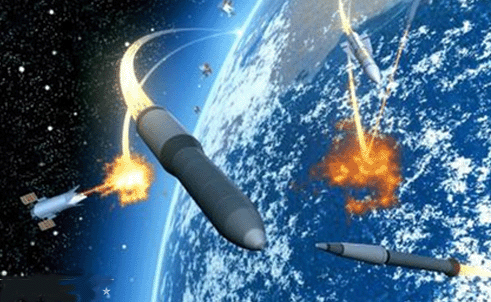
Recently we learned that the aerospace industry is pushing to turn a former naval air station in Brunswick, Maine, into a spaceport. Promising lots of “high tech” jobs, a bill is being pushed in Augusta, our capital, by some of the most “progressive” legislators in the state. Similarly, we are hearing from many other states where launch complexes are being promoted – from Hawaii to New Mexico to Alaska – that the industry wants some of the most pristine places on Earth to become spaceports. Why? A spaceport in Kodiak Island, Alaska (locals call it “Spacepork”), was built some years ago in spite of overwhelming opposition by local residents. They were promised that it would be used only for civilian launches. So far, all the launches at Kodiak have actually been for Pentagon (and Israeli) space-weapons technology tests. We’ve been hearing for several years now that new companies formed by tech-industry billionaires Elon Musk (whose projects include Tesla and SpaceX) and Jeff Bezos (Amazon, Blue Orbit) plan to launch as many as 35,000 mini-sats (satellites) into orbit. Imagine the enormous hole these polluting launches will punch into the ozone layer. The plan is to have a satellite orbiting over the head of every person on Earth 24 hours a day, making it possible for the new 5G wireless technology system to be profitable. Many questions are being raised about the military (dual-use) applications of these satellites as well. Space Force Earlier this year, Trump was able to “stand up” his new high-tech legacy branch of the military, called the Space Force. Congress was overwhelmingly in favor – that means both parties supported it; the only thing the Democrats (who could have stopped it cold in the House of Representatives) wanted to change was the name ¾ to “Space Corps.” They surrendered on that as well. When the new leaders of the Space Force speak about it, they keep using the word “lean” to describe the new service branch. They want to make it sound as though it won’t be a “fiscal burden” to the nation, especially at a time when we have more unemployment than during the Great Depression. But facts are facts, and I can testify that the aerospace-industry publications have been bragging about since the 1980s when Ronald Reagan first proposed Star Wars, that this would be the largest industrial project in the history of the planet. So $15 billion is just the foot in the door. Where will the funds come from to pay for this? Our entitlement programs ¾ Social Security, Medicare, Medicaid, and what little is left of the social safety net –– are on the chopping block to be sacrificed to the aerospace industry. During his presidency, Trump announced that the U.S. rejects the United Nations Outer Space and Moon Treaties that declare the planetary bodies are the “province of all humankind” – meaning that no nation, corporation, or individual can claim ownership of them. Thus the way is open for a new gold rush to grab the planets for resource extraction. And, if Biden were to continue Obama’s legacy, the way will be paved. The Real Missions of Space Force In 2015, Obama signed the U.S. Commercial Space Launch Competitiveness Act into law. The act grants companies the rights to whatever they manage to pluck out of these extraterrestrial bodies. Effectively an extension of capitalism into space, the bill is one of the few during Obama’s presidency that received widespread support from the GOP as well as from the Democrats, because apparently nothing screams bipartisanship louder than asteroid mining. (Asteroids are rocky and metallic objects that orbit the sun but are smaller than planets.)[1] “This is the single greatest recognition of property rights in history,” said Eric Anderson, a founder of Planetary Resources, Inc., a company whose mission it is to mine asteroids. “This legislation establishes the same supportive framework that created the great economies of history, and will encourage the sustained development of space.” I’ve long believed that the Space Force (and before that the Space Command) will have two primary missions: first, to give the U.S. and its Western capitalist allies “control and domination” of Earth; and secondly, the Space Force will be given the task to create the technologies to “control and dominate” the pathway on and off our sacred Mother Earth. In 1989, the U.S. Congress published an internal study called “Military Space Forces: The Next 50 Years.” In this study, the congressional staffer who wrote it explained the need to control the pathway between the Earth and the Moon. He suggested that armed space stations on either side of the Moon would allow the Pentagon to seize the “Earth-Moon gravity well.” He wrote: “Armed forces might lie in wait at that location to hijack rival shipments on return.” So this plan has been in the works for many years – in fact, since a former Nazis first briefed Congress back in 1958. From Nazi Rocket Science to the U.S. Militarizing Space Program Walter Dornberger was Hitler’s head man in charge of his World War II era V-1 and V-2 rocket program. He was the staff link between rocket scientist Wernher von Braun and Hitler. Dornberger, like von Braun and 1,600 other Germans, was smuggled into the U.S. after the war in the secret military program called Operation Paperclip. Speaking at a congressional hearing in 1958, Dornberger insisted that America’s first space priority ought to be to “conquer, occupy, keep and utilize space between the Earth and the Moon.” There has been unanimity in the halls of Congress since Dornberger’s testimony – both parties have faithfully kept the funding for the militarized space program alive and growing. Dornberger would be happy today to see that his Nazi prophecy has largely come to fruition. International Treaties and an Achilles Heel The U.S. has been leading the way to militarize and weaponize space since the beginning of WW II. For a while the former Soviet Union was in the game – until its collapse in 1991. Neither Russia nor China could keep up with the U.S. in the ensuing years, and they continually begged the U.S. to join them in negotiating a treaty to ban all weapons in space – in other words, close the door to the barn before the horse gets out. During Republican and Democrat administrations since Bill Clinton, the response to Moscow and Beijing was the same from Washington – NO. So Russia and China slowly but steadily have moved forward since the early 1990s and have begun to close the space gap – always continuing to urge the creation of a space-weapons ban treaty. But Washington still refuses to even consider it. In fact, the U.S. has gone in the opposite direction of international treaties under Trump – pulling out of the Anti-Ballistic Missile Treaty (ABM), Intermediate-Range Nuclear Forces Treaty (INF), and the Iran Nuclear Deal. Will the U.S. under Biden renew the Strategic Arms Reduction Talks (START), which run out in 2021? It’s all really quite simple – the U.S. has not wanted to be bound by any treaties that limit its goal for “control and domination.” One could say the U.S. has become a renegade or pirate nation controlled by the soulless corporate agenda, which is all about power and greed. This all makes the job of the Global Network[2] terribly difficult. Since our founding in 1992 we’ve been working hard to build an international constituency to keep space for peace. The corporate agenda is determined to block any progress toward that goal. But I’ve always maintained that like everything else, the aerospace industry and its Star Wars project has an Achilles heel. It’s money. The current global virus pandemic is only bringing this reality to bear as never before. We Must Stop an Arms Race in Space! If we hope to beat this insane and provocative plan, then we must starve the beast. We can do that by bringing our national priorities down to earth and fighting for social progress – for programs like Medicare for All and funding to deal with our real problem today: climate crisis. Please help us beat the expensive and dangerous Space Force by demanding our government provide programs that honor life on this lovely planet. Best wishes to all of you. Keep your spirit strong! ~ Bruce K. Gagnon is coordinator of the Global Network Against Weapons & Nuclear Power in Space (keepspace4peace.org) and lives in Bath, Maine. He began working on space issues in 1982. Endnotes [1] Definition from solarviews.com [2] Global Network Against Weapons & Nuclear Power in Space |
|
|
Bradwell: UK’s ill-conceived nuclear project, with cronyism and vested interests, will damage environment.
 Bradwell B Action Network 24th Jan 2021, Appeal to Prime Minster, Foreign and Energy Ministers, selected MP’s and Essex County Councillors to Reconsider Chinese State Plans for Essex Nuclear Power Plant by local community. Bradwell B Action Network (BAN), a front-line grass roots campaign organisation, sent a strong message to the Prime Minster and other representatives including the government energy and
foreign ministers and their opposites, pointing out a broad range of concerns and urging them to take immediate action to halt CGN’s plans for the Bradwell B nuclear plant.
State owned CGN are planning to build and operate. The site, at Bradwell on Sea, Essex is also within 30km range of large urban populations to the North, West and South. Despite UK security services raising concerns over the plans, consecutive Conservative governments have chosen to ignore the threats and allow CGN to pursue this ill-conceived project.
EDF collapses on the stock market amid difficult negotiations in Brussels.
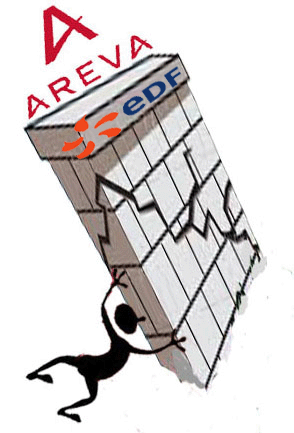 Le Monde 25th Jan 2021, EDF collapses on the stock market amid difficult negotiations in Brussels.
The French group is engaged in a vast reorganization project, contested by the company’s unions. EDF is the largest nuclear operator in Europe and one of the main electricity producers in the world, but a few lines were enough to make its value skid on the stock market on Monday January 25.
In an article published on the BFM Business website on Monday morning, the channel said that negotiations between Paris and Brussels on one of the key points of the French nuclear reform are failing. In a few minutes, the group’s action collapsed and lost up to 18% in the afternoon to close at -15%.
A day of tumbling stopped at the last minute by an intervention from Bercy, who did everything to deny the failure of the negotiations. To understand this dark day for the company, we must return to the very subject of negotiations. For months, France has been pleading with the
European Commission for a reform of the complex system which requires EDF to resell part of its production to its competitors. Set up in 2011, this mechanism called “regulated access to historic nuclear electricity” (Arenh) forces the energy company to resell a quarter of its nuclear
production at a fixed price – this tariff is set at 42 euros per megawatt hour.
Nuclear Ban Treaty obligates countries to assist nuclear victims and remediate environments
Policy Approaches Addressing the Ongoing Humanitarian and Environmental Consequences of Nuclear Weapons: A Commentary, Wiley Online Library Nate Van Duzer Alicia Sanders‐Zakre 20 January 2021 https://doi.org/10.1111/1758-5899.12870
Abstract
The 2017 Treaty on the Prohibition of Nuclear Weapons (TPNW) not only bans nuclear weapons, it obligates its states parties to engage in assisting victims and remediating contaminated environments (Articles 6 and 7). As states and civil society consider the best methods to implement these provisions, it is important to take stock and review existing policy approaches addressing the ongoing humanitarian and environmental consequences of nuclear weapons. This practitioner commentary, written by members of the International Campaign to Abolish Nuclear Weapons (ICAN), which was awarded the 2017 Nobel Peace Prize for its advocacy for the TPNW, reviews existing programs of victim assistance and environmental remediation. It highlights key considerations for policy makers seeking to improve on the existing mechanisms.
……….. Key takeaways
Dozens of identified sites around the world remain contaminated by nuclear weapons use, production and testing, and there is no one standard for their remediation. Notably, there is no widely accepted standard to determine how clean is clean, or how to monitor radiation levels over time. Speed and thoroughness of cleanup vary widely as well, and the cost to remediate each site ranges from millions of US$ to billions. Even remediated sites are often still somewhat closed to the public. The nuclear‐armed states have historically done the most to direct and carry out the cleanup of sites, even if the test site is not under those states’ jurisdiction. However, nuclear‐armed states do not always respond to local requests for action. https://onlinelibrary.wiley.com/doi/10.1111/1758-5899.12870
Uranium mining plunder of Greenland, and the threat to the sub-arctic environment
|
The plundering of Greenland, Uranium and other resources the latest threat to precious sub-arctic ecosystems, Beyond Nuclear International. By Niels Henrik Hooge, 24 Jan 21, The governments of Greenland and Denmark are encouraging large-scale mining in Greenland, including what would be the second-largest open pit uranium mine in the world. Now groups are calling on those governments to halt such desecration and instead establish an Arctic sanctuary. Your organization can sign onto this petition. Read the petition here, then send your organization name (and logo, optional) to either Niels Henrik Hooge at nielshenrik@noah.dk or to Palle Bendsen at: pnb@ydun.net. No or few World Heritage Sites probably have more or bigger mining projects in their vicinity than the Kujataa UNESCO World Heritage Site (WHS) in Southern Greenland. The property was inscribed on UNESCO’s world heritage list in 2017. It comprises a sub-arctic farming landscape consisting of five components that represent key elements of the Norse Greenlandic and modern Inuit farming cultures. On one hand they are distinct, on the other they are both pastoral farming cultures located on the climatic edges of viable agriculture, depending on a combination of farming, pastoralism and marine mammal hunting. The landscape constitutes the earliest introduction of farming to the Arctic. Some of the world’s biggest mining projects are located near Kujataa Kujaata is situated in Kommune Kujalleq, the southernmost and smallest municipality of Greenland with its rich mineral resources. These include zinc, copper, nickel, gold, diamonds and platinum group metals, but first and foremost substantial deposits of rare earth elements (REEs) and uranium. …… Some of the biggest REEs mining projects in the world are located only a few kilometres from the Kujataa WHS. The biggest and most controversial is the Kvanefjeld REEs-uranium mining project, owned by the Australian company Greenland Minerals Ltd., GML. According to GML, in addition to containing the second biggest uranium and by far the largest thorium deposits, the Ilimaussaq Complex, of which Kvanefjeld is a part, possesses the second largest deposits of rare earth elements in the world. The mine, which would be the world’s second largest open pit uranium mine, is located on top of a mountain, almost one kilometre above sea-level, and only six kilometres away from Narsaq, a town of approximately 1,500 inhabitants, and also near some of the parts of the Kujataa WHS. A second major project close to Kujataa is the Kringlerne REEs mining project, which is described by its owner, the Australian mining company Tanbreez Mining Greenland A/S, as the probably largest deposit of REEs in the world. ………… Calls for enlargement of the Kujataa WHS Especially in Southern Greenland, there has long existed a notion that the Kujataa World Heritage Site in its present form has been delineated to accommodate the Kvanefjeld mining project and that the potential impacts of the other mining projects surrounding the site have not been considered. …………… Kujataa’s OUV under threat It is also clear that Kujaata’s Outstanding Universal Value, i.e. its exceptional cultural and natural significance, will be under threat if the mining projects surrounding the site are implemented. There have already been calls to put Kujaata on the World Heritage Convention’s danger list. Kujataa’s unique farming traditions have been a determining factor in designating it as world heritage. However, the Danish Risø National Laboratory has estimated that up to a thousand tons of radioactive dust might be released annually from just the Kvanefjeld open pit mine due to material handling, hauling and blasting and from the ore stock and waste rock piles. Furthermore, if the tailings by some unforeseen cause such as leakages, technical problems, etc. would turn dry, massive amounts of radioactive and toxic dust would be blown away. The dust from the aforementioned sources will be carried by heavy arctic sea winds across the region, where it will affect among others agricultural activities. The predominant wind direction and the direction for the strongest winds are east- and north- eastwards, where the Kujataa WHS is located. The area, its people, domestic animals and wildlife would be chronically exposed to radioactive and other toxic species via drinking water, food and air1. Furthermore, most if not all the planned mining projects in the area are open pit mines. Perpetual blasting with explosives on the mountain tops in the open pit mines surrounding the world heritage site and the excavation and transport by dump trucks to the mills, where the rocks are crushed, could cause considerable noise disturbance during the entire operation of the mines. According to the EIA draft reports for the Kvanefjeld project, a dilution factor in the order of 2000 for the waste water would be required to be rendered safe for the most critical parameters. This would mean that the discharges of waste water during just one year would have to be diluted into 7 km3 of seawater in the Fiord system, which is part of the Kujataa World Heritage Site, and into 260 km3 of seawater during the planned operational lifetime of the Kvanefjeld mine. Furthermore, seepage, leaks and spills of liquids form the tailings will cause contamination of groundwater and rivers by radioactive and non-radioactive toxic chemical species. Seafood would become contaminated as well, due to the substantial discharges of wastes into the Fiords and the coastal sea. Large-scale mining and particularly uranium mining are incompatible with the development of three of the four sectors of the farming landscape, namely fishing and hunting, tourism and food production. It is relevant to ask how the entire character of the landscape would change in the development from a rural to an industrial area in the wake of both the big mining projects. This also pertains to the question of urban development, when among others new ports, port facilities and accommodation villages have to be built and corresponding support infrastructure implemented. No real plans to protect Kujataa………… in its description of the impacts of the nearby mining activities, the management plan relies on a draft of an Environmental Impact Assessment (EIA) of the Kringlerne mining project, which was rejected by Greenland’s Environmental Agency for Mineral Resources Activities (EAMRA), because it did not contain enough relevant information. EAMRA has also rejected the four latest EIA draft reports on the Kvanefjeld project because of lack of information. Among other things, Kvanefjeld’s owner, GML, is criticised for not providing a comprehensive assessment of the earthquake risk in the region, final results of tests of toxic elements during extraction and processing, final radiological estimates and results of investigations of impacts of radioactive minerals, and for failing to describe the alternatives regarding management of tailings and the shutdown of the tailings facility. In September 2019, the CEO of GML was also formally reproached by Greenland’s Prime Minister and the Department of Nature and Environment’s Permanent Secretary for lobbying high-ranking civil servants and ministers who had no competence within the EIA review process in order to undermine EAMRA’s authority. A Heritage Impact Assessment is not enough …….. it could be argued that there is already enough reason for the Greenlandic and Danish States Parties to involve UNESCO and – considering that environmental issues are at the core of the problems and Kujataa’s management plan is based on rejected EIA draft reports – to include IUCN in the process. However, the biggest problem for not only Kujataa, but all Greenland’s three world heritage sites could be the fact that Greenland’s environmental legislation does not mandate strategic environmental impact assessments for minerals exploration areas, which means that the public is not kept informed in advance on what areas could be designated. Thus, implementation of the Aarhus Convention in Greenland should have high priority in order to reinforce Greenland’s environmental legislation. Niels Henrik Hooge is member of NOAH Friends of the Earth Denmark’s uranium group. https://wordpress.com/read/feeds/72759838/posts/3144708883 |
|
|
Protest rally against University of Arkansas’ involvement with nuclear weapons corporation
 Group protests UA involvement with nuclear
 corporation, https://www.nwahomepage.com/news/group-protests-ua-involvement-with-nuclear-corporation/ by: Megan Wilson, Jan 22, 2021, FAYETTEVILLE, Ark. (KNWA/KFTA) – Northwest Arkansans join peace groups around the world celebrating an international treaty on prohibiting nuclear weapons.
A group gathered at the University of Arkansas to protest its contract with the nuclear weapons corporation Honeywell International.
Abel Tomlinson is the founder of Arkansas Non-Violence Alliance.
He said the University contradicts its mission statement by building non-nuclear components for the bombs.
“Its mission statement says that they’re ‘determined to build a better world.’ and we belive that building nuclear bombs is the complete opposite of that. Nobody should be having them. They’re endangering everyone, it’s unacceptable,” Tomlinson said.
The University of Arkansas was aware of today’s protest, but did not wish to comment.
Arab League hails passing of Treaty on Prohibition of Nuclear Weapons
 Arab League hails passing of Treaty on Prohibition of Nuclear Weapons, Business Standard, 24 Jan 21, The Treaty on the Prohibition of Nuclear Weapons was adopted in July 2017 and was opened for signature in September 2017
The Arab League has welcomed the Treaty on the Prohibition of Nuclear Weapons, commonly known as the Nuclear Weapon Ban Treaty’s coming into force and urged for intensifying international efforts to establish a nuclear-weapon-free zone in the Middle East.
In a statement on Friday, AL Secretary-General Ahmed Aboul-Gheit descibed the move as an important step towards the disarmament and the non-proliferation of nuclear weapons in the world, reports Xinhua news agency.
He explained that the Arab countries were supportive of international efforts during the negotiation process for this treaty, “despite Israel’s boycott of this path as an extension of its anti-nuclear disarmament policies and its stances opposing international efforts aimed at getting rid of nuclear weapons, especially in the Middle East”.
“It is time to intensify efforts to establish a nuclear-weapon-free zone in the Middle East, which is fully consistent with the objectives of this treaty,” the AL chief said… https://www.business-standard.com/article/international/arab-league-hails-passing-of-treaty-on-prohibition-of-nuclear-weapons-121012300306_1.html
Local governments growing more reliant on nuclear taxes
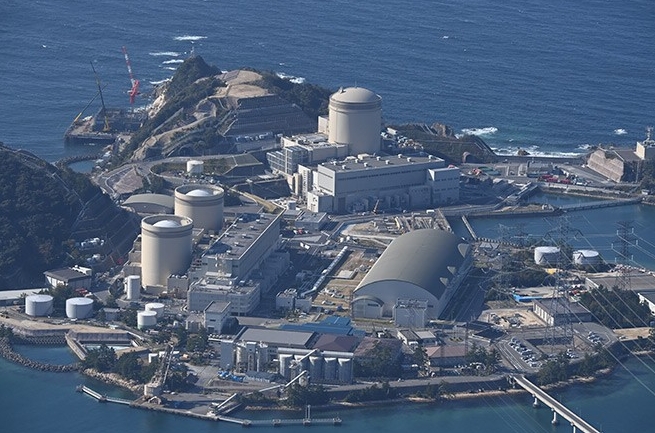
Kansai Electric Power Co.’s Mihama nuclear power plant in Mihama, Fukui Prefecture
January 20, 2021
Local governments are increasingly depending on tax revenues from the nuclear plants they host, a relationship that has deepened over the 10 years since the Fukushima nuclear disaster, an analysis by The Asahi Shimbun shows.
That follows the introduction of new tax regimes that ensure a steady flow of nuclear-related tax yields–even when reactors are idle or in the process of being decommissioned. They were brought about largely through increasing existing taxes on nuclear fuels and levying new taxes on spent nuclear fuels kept at the plants.
In fiscal 2011, right after the triple meltdown at the Fukushima No. 1 nuclear power plant, jurisdictions home to nuclear plants and related facilities yielded some 20.1 billion yen ($193.7 million) in taxes. The bulk of that came from taxes on nuclear fuel; many local governments only began collecting spent fuel taxes years after the accident.
But then the figure more than doubled to an estimated 46.7 billion yen in fiscal 2020, ending in March, despite the nuclear plants being offline.
The Asahi Shimbun studied nuclear-related tax revenues received by host municipalities and the 13 prefectures where those municipalities are located.
Local governments can impose taxes on nuclear fuel and spent nuclear fuel at plants and related facilities through approving ordinances to do so.
Of all the jurisdictions examined, Aomori Prefecture, where nuclear fuel cycle facilities are concentrated, and Fukui Prefecture, which hosts 15 reactors, the most in Japan, account for more than 60 percent earned through those taxes.
The amount for fiscal 2020 is larger than the 40.3 billion yen brought in during fiscal 2010, when the plants were operating.
Nuclear fuel taxes were originally based on the value of reactor fuel.
But all the nuclear plants went offline following the Fukushima disaster in March 2011.
As a result, six prefectures housing nuclear plants reported no tax revenues from nuclear fuel taxes in fiscal 2011.
Desperate to secure income sources even during plant closures, Fukui Prefecture introduced in autumn 2011 a new fuel-tax system based on reactor output capacity–meaning the reactors can be taxed even when shut down.
Other jurisdictions home to nuclear plants followed suit.
In 2014, Ehime Prefecture devised a tax on output capacity that can still be applied when the reactor is undergoing decommissioning. Soon after, Saga Prefecture introduced a similar system.
Nuclear plant operators must pay taxes on spent nuclear fuel to the local government as well as to the prefectural government if ordinances requiring the payment were enacted at both levels.
Ehime and Saga prefectures began taxing spent nuclear fuel in 2019.
Ikata, home to the Ikata nuclear plant in Ehime Prefecture, introduced a tax on spent nuclear fuels in fiscal 2018, after Genakai, which hosts the Genkai nuclear plant in Saga Prefecture, did the same in fiscal 2017.
Mutsu, located in Aomori Prefecture, is ready to capitalize on playing host to an interim storage facility for spent nuclear fuel, which is expected to go into operation in fiscal 2021.
The Mutsu city government established new rules in March last year so it can levy tax on spent nuclear fuels. The tax is projected to bring 9.3 billion yen to the city over five years.
Fukui Prefecture introduced a tax regime for nuclear fuels in 1976, ahead of any other local governments with nuclear facilities in the country.
Since then, tax revenues from nuclear fuels and spent fuels brought in by all jurisdictions totaled more than 1 trillion yen through fiscal 2020. And the figure is projected to grow in the years to come.
The driving force behind these local governments expanding their nuclear taxes in new and creative ways is a decline in tax revenues from fixed assets on nuclear facilities, and fewer grants and subsidies coming in from the national coffers to promote nuclear energy.
Many host communities have underlined the need to secure income from hosting nuclear plants, operating or not, to finance new roads and other infrastructure that would be used to evacuate residents in the event of a serious accident.
But a significant number of local governments used tax revenues derived from nuclear plants to cover upkeep of hot spring resorts and other seemingly unrelated facilities, the study shows.
Regional utilities added the amount of taxes on nuclear fuels and spent nuclear fuels they will pay into the electricity rates that consumers paid until 2016, when the retail electricity market became fully liberalized.
Even after the market liberalization, they can do the same to come up with funds to pay nuclear fuel and spent nuclear fuel taxes.
The nuclear weapons ban treaty is groundbreaking, even if the nuclear powers haven’t signed
 The nuclear weapons ban treaty is groundbreaking, even if the nuclear powers haven’t signed https://theconversation.com/the-nuclear-weapons-ban-treaty-is-groundbreaking-even-if-the-nuclear-powers-havent-signed-153197January 22, 2021 Tilman Ruff, Honorary Principal Fellow, School of Population and Global Health, University of Melbourne, Today, many around the world will celebrate the first multilateral nuclear disarmament treaty to enter into force in 50 years.The UN Treaty on the Prohibition of Nuclear Weapons (TPNW) was adopted at the United Nations in 2017 and finally reached the milestone of 50 ratifications in October. The countries that have signed and ratified include Austria, Ireland, Mexico, New Zealand, South Africa, Nigeria and Thailand. The treaty completes the suite of international bans on all major weapons considered unacceptable because of their indiscriminate and inhumane effects, including anti-personnel landmines, cluster munitions, biological and chemical weapons. The countries that have signed the TPNW were fed up with over half a century of the nuclear-armed states flouting their obligation to rid the world of their weapons. They have asserted the interests of humanity and global democracy in a way the nuclear-armed states were powerless to stop. It is certainly long overdue for the most cruel and destructive weapons of all — nuclear weapons — to be banned. But this treaty is a sign of hope — a necessary and important step toward a less destructive planet. What will the treaty do?The aim of the treaty is a comprehensive and categorical ban of nuclear weapons. It binds signatories not to develop, test, produce, acquire, have control of, use or threaten to use nuclear weapons. States also cannot “assist, encourage or induce” anyone to engage in any activity prohibited under the treaty — essentially anything to do with nuclear weapons. The TPNW strengthens the current nuclear safeguards found in the 1970 Treaty on the Non-Proliferation of Nuclear Weapons by requiring all states that join to have comprehensive provisions in place and not allowing states to weaken their existing safeguards. The treaty provides the first legally binding multilateral framework for a process by which all nations can work toward eliminating nuclear weapons. For instance, states with another nation’s nuclear weapons stationed on their territory must remove them. States with nuclear weapons can “destroy then join” the treaty, or “join then destroy”. They must irreversibly dismantle their weapons, as well as the programs and facilities to produce them, subject to agreed timelines and verification by an international authority. Further, the TPNW is the first treaty to commit member nations to provide long-neglected assistance for the victims of atomic bombs and weapon testing. It also calls for nations to clean up environments contaminated by nuclear weapons use and testing, where feasible. Nuclear-armed states have been put on noticeCurrently, 86 nations have signed the TPNW, and 51 have ratified it (meaning they are bound by its provisions). The treaty now becomes part of international law, and the number of signatories and ratifications will continue to grow. However, none of the nine nuclear powers — the US, China, Russia, France, the UK, India, Pakistan, Israel and North Korea — have yet signed or ratified the treaty. Many other countries that rely on other nations’ nuclear weapons for their security, such as the 27 members of NATO, Australia, Japan and South Korea, have also not signed. So, why does the treaty matter given these states currently oppose it? And what effect can we expect the treaty to have on them? While any treaty is technically only binding on the states that join it, the TPNW establishes a new international legal standard against which all nuclear policies will now be judged. The treaty, in short, is a game-changer, and the nuclear-armed and dependent countries have been put on notice. They know the treaty jeopardises their claimed right to continue to threaten the planet with their weapons, as well as their plans to modernise and maintain their nuclear arsenals indefinitely. The strength of their opposition is a measure of the treaty’s importance. It will have implications for everything from defence policies and military plans to weapons manufacturing to financial investments in the companies that profit from making now illegal nuclear weapons. For example, a growing number of banks, pension funds and insurance companies around the world are now divesting from companies that build nuclear weapons. These include the Norwegian Pension Fund (the world’s largest sovereign wealth fund), ABP (Europe’s largest pension fund), Deutsche Bank, Belgium’s largest bank KBC, Resona Holdings, Kyushu Financial Group and Mitsubishi UFJ Financial Group in Japan, and the Japanese insurance companies Nippon Life, Dai-ichi Life, Meiji-Yasuda and Fukoku Mutual. A ‘dangerous’ belief nuclear weapons enhance securityWould joining the treaty mean nations like Australia, Japan, South Korea and NATO members would have to end their military cooperation with nuclear-armed states like the US? No. There is nothing in the TPNW that prevents military cooperation with a nuclear-armed state, provided nuclear weapons activities are excluded. Countries like New Zealand and Kazakhstan have already demonstrated that joining the treaty is fully compatible with ongoing military cooperation with, respectively, the US and Russia. In a recent letter urging their governments to join the treaty, 56 former presidents, prime ministers and defence and foreign ministers from these nations said
The signatories include two former NATO secretaries-general, Willy Claes and Javier Solana. Ban treaties have been proven to work with other outlawed weapons — landmines, cluster munitions and biological and chemical weapons. They have provided the basis and motivation for progressive efforts to control and eliminate these weapons. They are now significantly less produced, deployed and used, even by states that haven’t joined the treaties. We can achieve the same result with nuclear weapons. As Hiroshima survivor Setsuko Thurlow said at the UN after the treaty was adopted, This is the beginning of the end of nuclear weapons. |
|
|
1 This Month

Read the Public Inquiry Report, the Commissioners’ report, Surrendering Australia: The AUKUS Deception is available to download for free at aukuspublicinquiry.com. Or just watch the replay of the National Press Club Luncheon.


19 November – Webinar – The Reality of Reprocessing
Time: 11:00 AM Pacific Time (US & Canada) / 2:00 PM Eastern / 7:00 PM UK / 8:00 PM CET
Register for the Zoom Event Here



Shut down the radiation-damaged Heysham nuclear reactors now
To see nuclear-related stories in greater depth and intensity – go to https://nuclearinformation.wordpress.com

Say No to NASA’s Reckless Nuclear Reactor on the Moon
Say No to NASA’s Reckless Nuclear Reactor on the Moon
-
Archives
- November 2026 (109)
- October 2026 (302)
- September 2026 (339)
- August 2026 (330)
- July 2026 (355)
- June 2026 (287)
- May 2026 (306)
- April 2026 (356)
- March 2026 (251)
- February 2026 (267)
- January 2026 (308)
- December 2025 (358)
-
Categories
- 1
- 1 NUCLEAR ISSUES
- business and costs
- climate change
- culture and arts
- ENERGY
- environment
- health
- history
- indigenous issues
- Legal
- marketing of nuclear
- media
- opposition to nuclear
- PERSONAL STORIES
- politics
- politics international
- Religion and ethics
- safety
- secrets,lies and civil liberties
- spinbuster
- technology
- Uranium
- wastes
- weapons and war
- Women
- 2 WORLD
- ACTION
- AFRICA
- Atrocities
- AUSTRALIA
- Christina's notes
- Christina's themes
- culture and arts
- Events
- Fuk 2022
- Fuk 2023
- Fukushima 2017
- Fukushima 2018
- fukushima 2019
- Fukushima 2020
- Fukushima 2021
- general
- global warming
- Humour (God we need it)
- Nuclear
- RARE EARTHS
- Reference
- resources – print
- Resources -audiovicual
- Weekly Newsletter
- World
- World Nuclear
- YouTube
-
RSS
Entries RSS
Comments RSS

