Wall Street: the Ultimate War Profiteers

Wall Street: the Ultimate War Profiteers
Wall Street plays the foundational role in the war industry by outright owning war corporations……
Big Finance sits at the top of the war industry by purchasing most shares of war corporations and by owning war corporations. Insatiable demand for profit places immense structural pressure on the Pentagon and Capitol Hill for sky-high U.S. military and intelligence budgets, broad deployment of troops overseas, and the opening up of governmental jobs to corporations. …………
Wars must be created and expanded, and military bases, through which to route goods and services, must be established and entrenched to satisfy investors. Notwithstanding, ending the wars first requires addressing the embedded profit motive, otherwise it is business as usual.
Who Are the Ultimate War Profiteers? A U.S. Air Force Veteran Removes the Veil, Covert Action Magazine By Christian Sorensen February 10, 2021
While war corporations, or so-called “defense contractors,” make billions in profits, Wall Street is the ultimate beneficiary of today’s nonstop wars. The prosaic nature of war profiteering—far from the work of a shadowy cabal—is precisely why the collusion is so destructive and should be outlawed.
The U.S. ruling class deploys the military for three main reasons: (1) to forcibly open up countries to foreign investment, (2) to ensure the free flow of natural resources from the global south into the hands of multinational corporations, and (3) because war is profitable. The third of these reasons, the profitability of war, is often lacking detail in analyses of U.S. imperialism: The financial industry, including investment banks and private equity firms, is an insatiable force seeking profit via military activity.
The war industry is composed of corporations that sell goods and services to the U.S. government and allied capitalist regimes around the world. Investment banks and asset management firms hold most shares of every major public war corporation.
The best-known financial firms holding the stock of war corporations include: Vanguard Group, BlackRock, State Street, JPMorgan Chase, Wells Fargo, and Wellington Management Continue reading
Nuclear Rubberstamping Commission to weaken rules on radioactive trash
 “It’s not cotton candy”

Meanwhile, the Nuclear Regulatory Commission may soon consider new regulations that would allow WCS and other commercial sites to accept a higher level of nuclear waste than Texas currently allows.
The WCS facility is permitted to accept Class A, B, and C nuclear waste — categories that fall below high-level material like spent nuclear fuel. But certain material, much of it generated by the decommissioning of nuclear power plants, falls into what experts call a gray area between the lower-level categories and spent nuclear fuel. It has an equally ambiguous name: “Greater than Class C.”
“These are some of the most dangerous materials in the world,” “It’s not cotton candy.”
”an effort over many years to make it look less threatening, and to sneak it in as less hazardous,”
 West Texas is on track to get even more nuclear waste — thanks to the federal government. A hazardous waste disposal company in Andrews County wants to handle more dangerous levels of nuclear waste. Federal agencies are pondering new rules that could allow more of it to come to Texas. Texas Tribune, BY ERIN DOUGLAS FEB. 10, 2021 To get rid of eight gallons of water, the U.S. Department of Energy spent $100,000.
It’s little more than half a tank of gasoline in a midsize car, but the radioactive shipment from South Carolina to a West Texas company last fall marked one change that could lead to more nuclear waste traveling to Texas — waste that, until recently, was considered too dangerous to be disposed of.
Much of the public debate surrounding Waste Control Specialists’ hazardous waste facility in Andrews County, on the New Mexico border, has focused on the company’s plans, with a partner, to store the riskiest type of nuclear waste: the spent fuel rods from nuclear power plants, which can remain dangerously radioactive for hundreds of thousands of years.
Scientists agree that spent nuclear fuel should be stored deep underground, but the U.S. still hasn’t located a suitable site. Interim Storage Partners — a joint venture of Waste Control Specialists and Orano USA, a subsidiary of one of the world’s biggest nuclear power companies — proposed bringing the spent fuel to a 332-acre site next to the WCS facility in Andrews County until a permanent storage site is found.
If the plan succeeds, it would be a big expansion for Waste Control Specialists, which has been disposing of the nation’s low-level nuclear waste — including tools, building materials and protective clothing exposed to radioactivity — for a decade. Interim Storage Partners’ website says it expects to get the federal approval for spent nuclear fuel storage, a major step in the plan, this year.
The idea still faces significant legal hurdles and stiff opposition from environmental groups, local oil companies, some residents and Texas Gov. Greg Abbott, who wrote to federal regulators last year asking them to deny the license application, stating that the proposal presents a “greater radiological risk than Texas is prepared to allow.”
The federal government and the companies involved say radioactive spills during transportation or storage that expose people or the environment to radiation are very unlikely to occur, but opponents fear human error, mechanical failures or geological changes could result in groundwater contamination.
But while the slow-moving plan is wrapped in political turmoil, lower-profile changes and proposals from federal agencies are giving Waste Control Specialists another avenue to accept more radioactive waste than it does today.
The wastewater that traveled from an old South Carolina nuclear weapons facility more than 1,000 miles in three truckloads in late September was an example: It was the first shipment made after a 2019 U.S. Department of Energy decision to reinterpret how different levels of radioactive waste are classified, allowing it to be disposed of at a commercial facility.
The decision lets the DOE categorize waste based on its properties and hazard level rather than how it was created, and allows radioactive waste from nuclear weapons production and government-sponsored nuclear energy research to be shipped to commercial sites such as the one in Texas, rather than indefinitely stored at a government site.
“They did this eight gallons as a sort of test,” said Tom Clements, the director of Savannah River Site Watch, an advocacy group that monitors the DOE’s site in South Carolina, a nuclear national security complex where materials for nuclear weapons were produced until 1991 at the end of the Cold War. “It is the foot in the door to taking more material to WCS.”
And the federal Nuclear Regulatory Commission is also considering new rules that could give Waste Control Specialists a green light to pursue bringing more dangerous radioactive waste to its commercial facility than currently allowed by state law.
The company is already permitted to accept low-level nuclear waste in Andrews County. The plan to build a facility to store spent nuclear fuel, the most dangerous kind, would bring what’s considered high-level nuclear waste. In addition, NRC staff recommended in October that the agency consider allowing commercial facilities like WCS to accept materials that fall into a third danger level between those two categories.
“The floodgates may be opening [in Texas],” Clements said.
That’s exactly what many environmentalists and local opponents feared after the hazardous waste facility was built in 1995. At the time, a company official told the community that it had no plans to expand to radioactive waste disposal.
“This is one of the difficulties of a community or state agreeing to one type of waste facility, because it can be changed on you,” said Rodney Ewing, a scientist and professor in nuclear security at Stanford University. “If it’s judged to be safe, that becomes the rationale for accepting more waste.”……………
Radioactivity in West Texas Continue reading
Nuclear waste facilities at risk of flooding and sea surges

Recent research suggests that as seas rise, some nuclear waste storage facilities are at risk of flooding or storm damage.
“We really focused in to say, ‘OK, well, how many plants might actually be subject to these risks?'” says Sarah Jordaan of the School of Advanced International Studies at Johns Hopkins University.
Her team looked at 13 facilities along the U.S. coast.
They found that if seas rise about six feet – which is possible by the end of the century – more than half of the waste storage sites would be directly along the water’s edge or even surrounded by water.
So she says it’s critical to anticipate these long-term vulnerabilities and take action.
“There are certainly ways that those risks can be managed now,” Jordaan says.
For example, after five years, spent fuel can be moved to dry casks. This is a safer long-term storage method than the cooling pools where a lot of spent fuel is currently stored.
So Jordaan says it’s critical for policymakers to understand the risks at nuclear facilities and create regulations and policies to ensure greater safety.
French nuclear attack submarine patrolling South China Sea
|
French Nuclear Attack Boat Patrolled South China Sea https://news.usni.org/2021/02/10/french-nuclear-attack-boat-patrolled-south-china-sea
By: Xavier Vavasseur, February 10, 2021 A French Navy Rubis-class nuclear-powered submarine (SSN) patrolled the South China Sea, the French minister of armed forces announced in a series of tweets.
French armed forces minister Florence Parly called the patrol “a striking proof of the capacity of our French Navy to deploy far and for a long time in connection with our Australian, American and Japanese strategic partners.” On Monday night, Parly shed some light on the current deployment of Rubis-class SSN FS Emeraude (S604) to the Pacific region. In a series of messages on Twitter, she said: “Since September, a nuclear attack submarine (SSN Émeraude) and a support vessel (BSAM Seine) have sailed up to 15,000 km from the coasts of mainland France in the Indian Ocean and the Pacific. This extraordinary patrol has just completed a passage in the South China Sea. A striking proof of the capacity of our French Navy to deploy far and for a long time in connection with our Australian, American and Japanese strategic partners. Why such a mission? To enrich our knowledge of this area and to affirm that international law is the only rule that is valid, whatever the sea in which we sail. Nation of the Indo-Pacific (~ 2 million inhabitants), France has the 2nd largest exclusive economic zone in the world (11 million km2 of which 9 are in the Indo-Pacific). We intend to protect our sovereignty and our interests.” Naval News first reported about Emeraude’s mission to the Pacific when it stopped over in Australia. The submarine then visited the U.S. naval base in Guam and participated in an anti-submarine warfare (ASW) exercise with the U.S. Navy and JMSDF. Following an exercise with the Indonesian Navy Emeraude will likely be joining the French carrier strike group which is set to depart this week for the Indian Ocean and Persian Gulf region. |
|
Despite punishment by the government, Russia’s ”Eco-Defense’ has helped to stop construction of a nuclear power plant
Expensive, experimental, Sizewell nuclear project would be operational far too late to affect global heating

 Independent 8th Feb 2021, A new nuclear power plant at Sizewell is the wrong choice for a zero carbon Britain. The climate column: The proposed Sizewell C will not produce electricity until about 2040, which means it cannot reduce the UK’s carbon emissions with the speed necessary to avoid catastrophic tipping points.
couple of years of being commissioned.
ever. It’s been trying to build the first four of them for over 20 years but had not yet got any actually working.
U.S. Dept of Justice gets the resignation of attorney who launched Ohio nuclear corruption probe
|
U.S. Attorney Who Launched Ohio Nuclear Bailout Bribery Probe Resigns https://radio.wosu.org/post/us-attorney-who-launched-ohio-nuclear-bailout-bribery-probe-resigns#stream/0
By JO INGLES The U.S. Attorney for the Southern District of Ohio has submitted his resignation. David DeVillers is one of 56 U.S. Attorneys appointed by former President Trump asked to resign by the Biden administration’s Department of Justice.
DeVillers said in a written statement that he had hoped to stay on as U.S. Attorney until his successor was appointed. He urged the next U.S. Attorney to be just, apolitical, aggressive and impactful. “It is with a heavy heart that I announced my resignation,” DeVillers wrote. “I have been a prosecutor for my entire career, and it was my wish to remain a prosecutor until the end of my career, but that is not to be.” DeVillers, who was appointed by Trump in 2019 to replace outgoing U.S. Attorney Benjamin Glassman, was heading up several high-profile cases throughout the state. He made a splash last summer by announced racketeering charges against five individuals, including then-Ohio House Speaker Larry Householder, accusing them of funneling $60 million in bribes from a utility company in exchange for securing the passage of a nuclear bailout law. So far, two defendants and the dark money group Generation Now have pleaded guilty in the $60 million conspiracy. Householder has pleaded not guilty and remains in the Ohio legislature after winning reelection in November. DeVillers last year announced corruption cases against three current and former members of Cincinnati City Council, who are accused of taking bribes in exchange for favorable votes on development projects. One, Tamaya Dennard, was sentenced to 18 months in prison after pleading guilty to honest wire fraud. And in Columbus, DeVillers was coordinating the federal criminal and civil rights investigation into the killing of Casey Goodson Jr. by a Franklin County Sheriff’s Deputy, and another civil rights probe of the killing of Andre Hill by a since-fired Columbus Police officer. “While it was my hope to continue on for a few more months to finish some of the work we have started, I am absolutely certain that the AUSAs and investigators working for the people of the Southern District of Ohio will bring this work to a successful and just closure,” DeVillers said. The U.S. Attorney for the Northern District of Ohio, Justin Herdman, resigned last month. |
|
Call for an independent Scotland to demand removal of nuclear weapons from Faslane
Daily Record 10th Feb 2021. An independent Scotland should delay NATO membership until nuclear weapons are removed from Faslane, a campaign group has demanded. The call is a
challenge to current SNP policy which is to seek continuing membership of
the defence alliance if a majority of Scots vote Yes at a future
referendum.
https://www.dailyrecord.co.uk/news/politics/independent-scotland-should-delay-nato-23461400
Opposition to more nuclear waste in Texas – unlikely alliance of environmental groups and oil companies
West Texas is on track to get even more nuclear waste — thanks to the federal government,Texas Tribune, BY ERIN DOUGLAS FEB. 10, 2021 “………..Nuclear debate in Texas The nuclear power industry prides itself on operating no-emissions plants without burning fossil fuels like coal and natural gas, which create the greenhouse gas emissions that contribute to climate change. By locating in the Permian Basin, one of the most productive oil fields in the world, Waste Control Specialists has found itself in a political fight against fossil fuel interests that its customers often compete with.
Elaine Magruder is co-owner of an Andrews County ranch where her family has raised cattle and pumped oil since 1893. She’s also a member of a coalition of Permian Basin landowners and oil and gas operators that oppose radioactive waste storage and disposal in Andrews County. The coalition is led by Fasken Oil and Ranch, which owns thousands of acres in Andrews County.
Magruder says she’s worried that a transportation accident could expose local residents to radioactive material and disrupt oil and gas operations. She also worries that a leak at the facility could allow radioactive material to seep into the ground, contaminating area drinking water. The facility is near the Ogallala Aquifer of the Great Plains, which provides drinking water for millions in the West………….
Ewing, the Stanford University nuclear security professor, said the larger risk is environmental contamination due to the facility’s proximity to the aquifer — a concern shared by some other nuclear scientists and geologists.
This unlikely alliance of environmental groups and oil companies has Abbott on its side. In November, the governor sent a letter urging the Nuclear Regulatory Commission to deny the application for storing spent nuclear fuel in Andrews County, arguing in part that the proposed facility “imperils America’s energy security” by making the region an even greater possible terrorism target than it is today due to its oil and gas reserves………… https://www.texastribune.org/2021/02/10/nuclear-waste-government-rules/
Court orders Tokyo Electric Power Company pay ¥600 million to 271 plaintiffs
Japan Times 10th Feb 2021, A court has ordered Tokyo Electric Power Company Holdings Inc. to pay a total of some ¥600 million to 271 plaintiffs over an evacuation caused by
the 2011 nuclear disaster. The Iwaki branch of Fukushima District Court
reached its conclusion Tuesday in a lawsuit filed by 297 plaintiffs —
which included residents of the heavily affected Yamakiya district in the
town of Kawamata who were ordered to evacuate — seeking ¥14.7 billion in
damages from Tepco.
The plaintiff side expressed its intention to appeal to
a higher court. The suit is the second in a series filed by evacuees who
left their homes due to the triple meltdown at Tepco’s Fukushima No. 1
nuclear power plant triggered by the March 2011 earthquake and tsunami. The
plaintiffs excluded the state from the suit as it hoped to achieve an early
resolution.
Financial and environmental uncertainties made UK Planning inspectorate reject Wylfa nuclear project
Nuclear Engineering International 8th Feb 2021The UK Planning inspectorate on 4 February released its report on the WylfaNewydd project on Anglesey for which energy company Horizon – a subsidiaryof Hitachi – had needed approval of the Development Consent Order (DCO)
to allow the project to go ahead.
However, in their 906-page report, the
government appointed planning inspectors recommended that the project
should be rejected, citing a number of expert concerns. The application has
since been withdrawn after Hitachi, decided that the plant was too
expensive to build without government funding, and Horizon subsequently
failed to find any other backers for the project.
On funding, the inspectorate’s report said that “despite the Applicant’s commitment
to continued dialogue with UK Government, there remains “considerable
uncertainty regarding the overall funding for the proposal and the extent
to which the private sector alone can, or is prepared to accept, the
business risk to fund it”.
The planning inspectors’ report said there
was a lack of scientific evidence put forward by developers to demonstrate
that the Arctic and Sandwich tern (seabird) populations around the Cemlyn
Bay area would not be disturbed by construction. There were fears that
these birds would abandon the Bay as a result. It also raised wider
concerns over the general impact on Cemlyn Bay, the Cae Gwyn site of
special scientific interest and Tre’r Gof.
Amidst the trauma of the Chamoli flash floods, people recall an old lost nuclear device
|
Did a lost nuclear device cause Chamoli flash floods? Decades-old suspicion comes back to haunt villagers, https://www.newindianexpress.com/nation/2021/feb/10/the-floods-were-caused-by-lost-nuclear-deviceuttarakhand-villagers-story-goes-back-to-1965-2262071.html In the year 2018, state cabinet minister of Uttarakhand Satpal Maharaj had said that he had urged the Prime Minister to take action in this regard. Express News Service
CHAMOLI: While experts are yet to pinpoint the cause of Chamoli flash floods and many are warning about climate change, the floods brought back fears of old tales related to a lost radioactive material in the Nanda Devi glaciers. As per local residents in and around village Raini, a ‘machine’ was installed on Nanda Devi mountains in 1965 which had a nuclear device within. Kartik Singh (92), a resident of Raini village claims that he was part of the 1965 expedition to install the ‘machine’, says, “I used to work as a porter then. Some people asked me to carry a packed, concealed load. I agreed. We went to a place called ‘Camp IV’. Later, a blizzard hit us and we decided to leave the device and return to safety.” A mix of myths and rumours have filled Raini and adjacent villages after the flash floods. Many believe that the nuclear device caused the flash floods which wreaked havoc washing away two hydropower projects and killing many. Total 32 bodies have been found to date while 174 are missing. “The device is dangerous and may be the cause of these floods meting the snow,” added Singh. In the year 2010, responding to an RTI query of an activist Gurvinder Singh Chadha which had total 7 questions related to the radioactive device in question, the Bhabha Atomic Research Center had replied, “This center has no information on the above. Hence, we are unable to provide any information under the RTI Act 2005.” Interestingly, one of the questions by Chadha included if American senator Richard Autier warned India about the nuclear device in 1965 and famous Russian scientist Arthur Compeleene also warned India saying that lakhs of people may be affected due to the radiation. Chadha died last year. Dushyant Mainali, a practicing advocate in Uttarakhand Hugh Court and friend of the activist recalls, “He had filed RTI queries related to the device two times. He used to talk about this story often and had logical reasons to make us believe.” Many books have been written on the issue including one by Stephen Alter. The Mussoorie-based author has written about a secret operation in which a device was to be installed to monitor China which had conducted a nuclear test in 1962 in Xinjiang province. Weighing around 56kg, including an 8-10ft-high antenna, two transceiver sets system, the remote sensing device which was supposed to keep track of any further nuclear tests by China after 1964 is believed to be installed by the Central Intelligence Agency of the United States of America and Intelligence Bureau of India to spy on China. In the year 2018, state cabinet minister of Uttarakhand Satpal Maharaj had said that he had urged the Prime Minister to take action in this regard. The radioactive material is said to be an alloy of Pu-238 with 18 percent Pu-239 which is considered the most effective combination to prolong the life span of the material and generate maximum energy. After the team which went on the expedition returned to the spot in the year 1966, they could not find the device. The device is said to have a life of around 100 years out of which 45 are still left. However, many believe the story is too far from reality and even a myth. Mohan Singh, another resident of Raini village who has In the year 2018, state cabinet minister of Uttarakhand Satpal Maharaj had said that he had urged the Prime Minister to take action in this regard. The radioactive material is said to be an alloy of Pu-238 with 18 percent Pu-239 which is considered the most effective combination to prolong the life span of the material and generate maximum energy. After the team which went on the expedition returned to the spot in the year 1966, they could not find the device. The device is said to have a life of around 100 years out of which 45 are still left. However, many believe the story is too far from reality and even a myth. Mohan Singh, another resident of Raini village who has taken part in many expeditions in Nanda Devi glaciers said, “I don’t think this flash flood is a result of any device. I don’t believe in this story. To me these are just rumours which started at some point in time and became a myth eventually.” |
|
|
The real value of the nuclear ban treaty
 The real value of the nuclear ban treaty https://thebulletin.org/2021/02/the-real-value-of-the-nuclear-ban-treaty/?utm_source=Newsletter&utm_medium=Email&utm_campaign=MondayNewsletter02082021&utm_content=NuclearRisk_ValueTPNW_02042021
By Carl Robichaud, Karim Kamel | February 4, 2021
Last month, 75 years after nuclear weapons were first used, a treaty came into force that bans them. The Treaty on the Prohibition of Nuclear Weapons (TPNW), also known as the ban treaty, is the culmination of a decade of work by civil society leaders and diplomats who, frustrated by stagnation in traditional venues, focused the lens of international humanitarian law on nuclear weapons. This approach, dismissed at first, resonated with many states that understood nuclear weapons to be inherently indiscriminatory and inhumane.
The new treaty outlaws the use or threat of use of nuclear weapons, prohibits their development and possession, bans their transfer or receipt, and prohibits stationing, deploying, or assisting with nuclear arms.
But does any of this matter? The treaty lacks verification and enforcement mechanisms. No state with nuclear weapons will join anytime soon. The nine nuclear-armed states and their allies boycotted the negotiations and pressured other states to abandon the treaty. Each has nuclear modernization programs that will stretch for decades.
Skeptics of the treaty claim it is worse than irrelevant; it will accentuate tensions, undermine collective action on urgent proliferation challenges, diminish alliance cohesion or strategic stability, and potentially establish an alternative to the Treaty on the Nonproliferation of Nuclear Weapons (NPT). We should not, they argue, take any steps that might undermine this bedrock agreement that for 50 years has helped limit the spread of nuclear arms.
These objections are overstated. Collective action against proliferation has been, and will remain, a challenge with or without the ban treaty. Moreover, the treaty was carefully drafted not to conflict with existing nonproliferation obligations, including the NPT.
These objections are overstated. Collective action against proliferation has been, and will remain, a challenge with or without the ban treaty. Moreover, the treaty was carefully drafted not to conflict with existing nonproliferation obligations, including the NPT.
But the broader point holds: The treaty does little to reduce short-term nuclear risks. That is not its point. What the treaty does is establish, in clear and certain terms, that nuclear weapons are unacceptable. Over 122 countries supported the adoption of the treaty, 51 states have ratified it, and these numbers will continue to grow. Even within states that oppose the treaty, many citizens agree with its premise. Various polls suggest more than half of Americans believe the United States should work to eliminate all nuclear weapons, and support for this view is even higher in Japan and among NATO countries. In the words of former US Defense Secretary William Perry, the ban treaty “rightly establishes abolition as the standard that all nations should be actively working to achieve, rather than an indeterminate future goal.”
The status quo, with its 16,000 nuclear weapons, is far from stable. Everyone alive today lives in the shadow of a potential nuclear war. Climate modeling suggests that even a limited nuclear war, such as one between India and Pakistan, could result in a billion deaths as the ash from burning cities “could blot out the sun, starving much of the human race.”
At least from a humanitarian point of view, the question has been settled: Nuclear weapons are unacceptable. That alone will not make them disappear. But, in the meantime, the ban treaty need not distract from bilateral arms-control and threat-reduction efforts. The recent agreement to extend New START should be commended, and we must establish new mechanisms to build confidence and reduce tensions. The existence of a treaty banning nuclear weapons does not contradict these efforts; on the contrary, it should help build support for more sensible nuclear postures and for prohibitions on nuclear explosive testing and the production of weapons-usable materials.
The nuclear age is in its eighth decade, a mere dot on the timeline of human history. In this brief span there have been dozens of known close calls and near misses. So long as these weapons exist, ready to use at a moment’s notice, we court disaster. The nuclear powers find themselves, as Khrushchev wrote to Kennedy during the Cuban missile crisis, in a tightening knot. Untying this knot will require a multi-generation project that brings together verification science with extraordinary foresight, diplomatic skill, and political leadership. But first it requires a change in our collective beliefs about nuclear weapons. This is the contribution of the ban treaty, and it should not be underestimated.
America’s new $100Billion missiles are intended both for attack, and as a target.
Housed in permanent silos spread across America’s high plains, they are intended to draw fire to the region in the event of a nuclear war, forcing Russia to use up a lot of atomic ammunition on a sparsely populated area.
how little some nuclear weapons programs have to do with national defense.!
 Why is America getting a new $100 billion nuclear weapon?, https://thebulletin.org/2021/02/why-is-america-getting-a-new-100-billion-nuclear-weapon/?utm_source=Newsletter&utm_medium=Email&utm_campaign=MondayNewsletter022021&utm_content=NuclearRisk_NewWeapon_02082021 By Elisabeth Eaves, February 8, 2021 merica is building a new weapon of mass destruction, a nuclear missile the length of a bowling lane. It will be able to travel some 6,000 miles, carrying a warhead more than 20 times more powerful than the atomic bomb dropped on Hiroshima. It will be able to kill hundreds of thousands of people in a single shot.
The US Air Force plans to order more than 600 of them.
On September 8, the Air Force gave the defense company Northrop Grumman an initial contract of $13.3 billion to begin engineering and manufacturing the missile, but that will be just a fraction of the total bill. Based on a Pentagon report cited by the Arms Control Association Association and Bloomberg News, the government will spend roughly $100 billion to build the weapon, which will be ready to use around 2029.
To put that price tag in perspective, $100 billion could pay 1.24 million elementary school teacher salaries for a year, provide 2.84 million four-year university scholarships, or cover 3.3 million hospital stays for covid-19 patients. It’s enough to build a massive mechanical wall to protect New York City from sea level rise. It’s enough to get to Mars.
One day soon, the Air Force will christen this new war machine with its “popular” name, likely some word that projects goodness and strength, in keeping with past nuclear missiles like the Atlas, Titan, and Peacekeeper. For now, though, the missile goes by the inglorious acronym GBSD, for “ground-based strategic deterrent.” The GBSD is designed to replace the existing fleet of Minuteman III missiles; both are intercontinental ballistic missiles, or ICBMs. Like its predecessors, the GBSD fleet will be lodged in underground silos, widely scattered in three groups known as “wings” across five states. The official purpose of American ICBMs goes beyond responding to nuclear assault. They are also intended to deter such attacks, and serve as targets in case there is one.
Under the theory of deterrence, America’s nuclear arsenal—currently made up of 3,800 warheads—sends a message to other nuclear-armed countries. It relays to the enemy that US retaliation would be so awful, it had better not attack in the first place. Many consider American deterrence a success, pointing to the fact that no country has ever attacked the United States with nuclear weapons. This argument relies on the same faulty logic Ernie used when he told Bert he had a banana in his ear to keep the alligators away: The absence of alligators doesn’t prove the banana worked. Likewise, the absence of a nuclear attack on the United States doesn’t prove that 3,800 warheads are essential to deterrence. And for practical purposes, after the first few, they quickly grow redundant. “Once you’ve dropped a couple of nuclear bombs on a city, if you drop a couple more, all you do is make the rubble shake,” said Air Force Maj. Gen. (Ret.) Robert Latiff, a Bulletin Science and Security Board member who, early in his career, commanded a unit of short-range nuclear weapons in West Germany.
|
Deterrence is the main argument for having a nuclear arsenal at all. But America’s land-based missiles have another strategic purpose all their own. Housed in permanent silos spread across America’s high plains, they are intended to draw fire to the region in the event of a nuclear war, forcing Russia to use up a lot of atomic ammunition on a sparsely populated area. If that happened, and all three wings were destroyed, the attack would still kill more than 10 million people and turn the area into a charred wasteland, unfarmable and uninhabitable for centuries to come. The GBSD’s detractors include long-time peace activists, as you’d expect. But many of the missile’s critics are former military leaders, and their criticism has to do with those immovable silos. Relative to nuclear missiles on submarines, which can slink around undetected, and nuclear bombs on airplanes—the two other legs of the nuclear triad, in defense jargon—America’s land-based nuclear missiles are easy marks. Because they are so exposed, they pose another risk: To avoid being destroyed and rendered useless—their silos provide no real protection against a direct Russian nuclear strike—they would be “launched on warning,” that is, as soon as the Pentagon got wind of an incoming nuclear attack. But the computer systems that warn of such incoming fire may be vulnerable to hacking and false alarms. During the Cold War, military computer glitches in both the United States and Russia caused numerous close calls, and since then, cyberthreats have become an increasing concern. An investigation ordered by the Obama administration in 2010 found that the Minutemen missiles were vulnerable to a potentially crippling cyberattack. Because an error could have disastrous consequences, James Mattis, the former Marine Corps general who would go on to become the 26th US secretary of defense, testified to the Senate Armed Services Committee in 2015 that getting rid of America’s land-based nuclear missiles “would reduce the false alarm danger.” Whereas a bomber can be turned around even on approach to its target, a nuclear missile launched by mistake can’t be recalled. William J. Perry, secretary of defense during the Clinton administration (and the chair of the Bulletin’s Board of Sponsors), argued in 2016 that “[w]e simply do not need to rebuild all of the weapons we had during the Cold War” and singled out the GBSD as unnecessary. Replacing America’s land-based nuclear missiles, he wrote, “will crowd out the funding needed to sustain the competitive edge of our conventional forces, and to build the capabilities needed to deal with terrorism and cyber attacks.” Russia has about 4,300 nuclear warheads, the only arsenal on par with America’s, and is also trading up for new weapons. Yet as Perry pointed out, “If Russia decides to build more than it needs, it is their economy that will be destroyed, just as it was during the Cold War.” China—a bigger long-term threat to the United States than Russia, in the eyes of many national security analyses—seems to understand that excessive spending on nuclear weapons would be self-sabotage. Even if, as the Pentagon expects, Beijing doubles the number of nuclear warheads in its arsenal—now estimated at less than 300—it will still have far fewer than either the United States or Russia. For many and perhaps most Americans, nuclear weapons are out of sight and mind. That $100 billion to replace machines that would, if ever used, kill civilians on a mass scale and possibly end human civilization is just another forgotten subscription on auto-renew. But those who do think about the GBSD mostly don’t want it. In a survey of registered voters conducted in October 2020 by the Federation of American Scientists, 60 percent said they would prefer other alternatives to the new missile, ranging from refurbishing the Minutemen to scrapping nuclear weapons altogether. Those results echo a 2019 voter survey, conducted by the Program for Public Consultation at the University of Maryland, that asked if the government should phase out its fleet of land-based nuclear missiles. Sixty-one percent of respondents—53 percent of Republicans and 69 percent of Democrats—said yes. Which all leads to one question: Given the expense, doubtful strategic purpose, and lack of popularity, why is Washington spending so much to replace the Minuteman III? The answers stretch from the Utah desert to Montana wheat fields to the halls of Congress. They span presidential administrations and political parties. They come from airmen and farmers and senators and CEOs. The reasons for the GBSD are historical, political, and to a significant extent economic. In a country where safety net programs are limited and health insurance is a patchwork, and where unemployment remains at nearly double the pre-pandemic rate, many people in the states where the new missile will be built and based see it as a lifeline. Their elected officials take campaign donations from defense companies, to be sure, but are also trying to deliver jobs in a political environment that has been hostile to government spending on anything but defense. Defense is the safety net where other options are few. A lot of people, even some of those whose livelihoods depend on them, would like to see the number of nuclear weapons gradually reduced until they’re gone. The United States stands no chance of making them disappear, though, until more people understand why they happen—and how little some nuclear weapons programs have to do with national defense. |
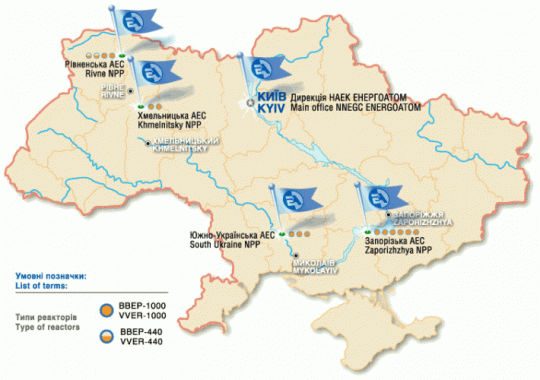
Ukraine’s complicated plan to deal with its excess nuclear energy generation
|
Ukraine plans nuclear-powered block reward mining facility. coingeek, Ed Drake The government of Ukraine is contemplating investing in a new block reward mining facility, to take advantage of an excess of nuclear power being generated in the country……. Vladimirov said the proposals would allow the country to make better use of excess nuclear capacity, as well as boosting tax take. “The idea of creating a data center based on a nuclear power plant, of course, deserves attention because the Ukrainian UES [unified energy system] has unused base capacity.”……. According to Hotmine, the proposals will help Ukraine build on its reputation as an emerging center for block reward mining, with the firm suggesting the country’s low cost nuclear power could help it become a world leader in nuclear-powered block reward mining. ,,………. https://coingeek.com/ukraine-plans-nuclear-powered-block-reward-mining-facility/ |
 8 Feb 21,
1 This Month

Read the Public Inquiry Report, the Commissioners’ report, Surrendering Australia: The AUKUS Deception is available to download for free at aukuspublicinquiry.com. Or just watch the replay of the National Press Club Luncheon.


19 November – Webinar – The Reality of Reprocessing
Time: 11:00 AM Pacific Time (US & Canada) / 2:00 PM Eastern / 7:00 PM UK / 8:00 PM CET
Register for the Zoom Event Here



Shut down the radiation-damaged Heysham nuclear reactors now
To see nuclear-related stories in greater depth and intensity – go to https://nuclearinformation.wordpress.com

Say No to NASA’s Reckless Nuclear Reactor on the Moon
Say No to NASA’s Reckless Nuclear Reactor on the Moon
-
Archives
- November 2026 (109)
- October 2026 (302)
- September 2026 (339)
- August 2026 (330)
- July 2026 (355)
- June 2026 (287)
- May 2026 (306)
- April 2026 (356)
- March 2026 (251)
- February 2026 (267)
- January 2026 (308)
- December 2025 (358)
-
Categories
- 1
- 1 NUCLEAR ISSUES
- business and costs
- climate change
- culture and arts
- ENERGY
- environment
- health
- history
- indigenous issues
- Legal
- marketing of nuclear
- media
- opposition to nuclear
- PERSONAL STORIES
- politics
- politics international
- Religion and ethics
- safety
- secrets,lies and civil liberties
- spinbuster
- technology
- Uranium
- wastes
- weapons and war
- Women
- 2 WORLD
- ACTION
- AFRICA
- Atrocities
- AUSTRALIA
- Christina's notes
- Christina's themes
- culture and arts
- Events
- Fuk 2022
- Fuk 2023
- Fukushima 2017
- Fukushima 2018
- fukushima 2019
- Fukushima 2020
- Fukushima 2021
- general
- global warming
- Humour (God we need it)
- Nuclear
- RARE EARTHS
- Reference
- resources – print
- Resources -audiovicual
- Weekly Newsletter
- World
- World Nuclear
- YouTube
-
RSS
Entries RSS
Comments RSS

