A worker set fire to a nuclear submarine
A Guy Started A Fire On A Nuclear Submarine To Leave Work Early http://www.gizmodo.com.au/2012/07/a-guy-started-a-fire-on-a-nuclear-submarine-to-leave-work-early/ CASEY CHAN 23 July 12, Here’s a friendly reminder for everyone who wants to leave work early: don’t ever set fire to your workplace. Especially if you work on a million nuclear submarine. Continue reading
Call for USA govt to fund new experimental nuclear reactors
 Leaders Renew Call For Federal Grant For Small Nuclear Reactors Osarks First.comBy: KOLR10 Newsroom & MO News Horizon July 23, 2012 “……Gov. Jay Nixon joined officials from Westinghouse Electric Company and Ameren Energy Monday for a Missouri Economic Development Summit in Columbia, where leaders renewed their call for the U.S. Department of Energy to provide grant funding to the companies hoping to build small modular nuclear reactors in Missouri.”
Summer heat brings state of emergency to Missouri

 Missouri declares state of emergency due to heat, drought Jul 23, 2012 (Reuters) – The governor of Missouri on Monday declared a state of emergency due to the drought and prolonged severe heat of this summer, which has so far been blamed in the deaths of 25 people in the state.
“The high temperatures and dry conditions across the state are taking their toll on Missourians,” Governor Jay Nixon said in a statement. “Our farmers are suffering tremendous losses in crops and livestock, and we’re seeing more heat-related deaths and emergency room visits, particularly among seniors.”…. http://af.reuters.com/article/commoditiesNews/idAFL2E8INJ2G20120723
(but Governor Nixon still thinks that nuclear reactors will be OK in the heat?)
I guess that Missouri’s Governor doesn’t understand that nuclear reactors don’t like heat
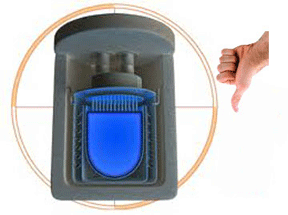 Nixon, UM president Wolfe to tout nuclear plan, http://www.kansascity.com/2012/07/23/3718392/nixon-um-president-wolfe-to-tout.html#storylink=cpy
Kansas City Star, 23 July 12 COLUMBIA –– Gov. Jay Nixon and University of Missouri president Tim Wolfe will join utility executives and business leaders at an event designed to boost support for building small modular nuclear reactors in the state.
The event today on the Columbia campus is billed as an economic development summit, while officials await word on a U.S. Department of Energy grant application.
Westinghouse Electric Co. and Ameren Missouri are competing for a share of the $452 million the energy department has set aside for the new technology.
Ameren wants to build and operate up to five smaller reactors in Missouri. The St. Louis-based company operates the state’s only nuclear power plant in Callaway County. The federal department plans to announce its grant recipients by September.
USA declassifying some nuclear weapons-related information

 Some Nuclear Weapons-Related Info to be Declassified Secrecy News July 23rd, 2012 by Steven Aftergood Certain types of classified information pertaining to nuclear weapons are going to be downgraded or declassified, the Department of State indicated in a newly disclosed report. http://www.fas.org/blog/secrecy/2012/07/dos_nuke.html
USA sparking ‘missile envy’ with expanding missile defence system
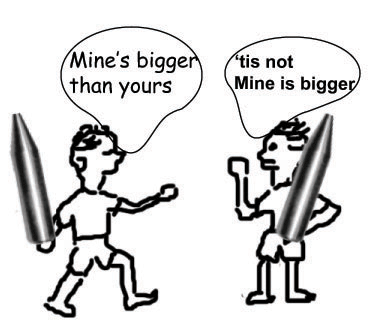 The United States is spending about $10 billion a year to develop, test and deploy missile defences, which would include a European shield as part of a layered system. The defences would also include ship-based interceptors that could be deployed in the Middle East and
Asia-Pacific – for instance as a hedge against North Korea – plus ground-based missile interceptors in silos in Alaska and California.
Missile defences, however benign they appear to the side building them, always force others nations to improve and increase their offensive weapons,”
Missile shield may spark China nuclear upgrade-officer http://in.reuters.com/article/2012/07/18/china-usa-nuclear-idINDEE86H0EY20120718 By Fredrik Dahl VIENNA Jul 19, 2012 (Reuters) – China may need to modernise its nuclear arsenal to respond to the destabilising effect of a planned U.S.-backed missile defence system, a senior Chinese military officer said on Wednesday. Continue reading
Young Americans not well educated? Ignorance about Climate Change
 “Most Generation Xers are surprisingly disengaged, dismissive or doubtful about whether global climate change is happening “
“The results of this report suggest that better educated young adults are more likely to recognize the importance of the problem”
Uninformed Generation X are unconcerned about climate change, Click Green, 19 July 12, As the United States suffers a summer of record-shattering heat and the UK experiences record summer rainfall, a University of Michigan report finds that Generation X is lukewarm about climate change – uninformed about the causes and unconcerned about the potential dangers Continue reading
USA’s AirSea Battle (ASB) plan brings serious risks of nuclear weapons escalation
serious risks to this approach, including the danger of nuclear escalation if AirSea Battle is ever implemented in a shooting war with China.
 Three Paths to Nuclear Escalation with China The National Interest, Joshua Rovner | July 19, 2012 The U.S. military has enjoyed extraordinary freedom of maneuver since the end of the Cold War. The fall of the Soviet Union meant that no one else was left to seriously challenge the United States when it decided to act abroad. Today, however, strategists worry that U.S. rivals are developing weapons that will make it difficult or impossible to gain access to contested areas. Dealing with the so-called “anti-access” problem has become a central task for civilian and military planners—and something close to an obsession for the navy.
One popular solution is AirSea Battle (ASB). Continue reading
VIDEO: USA’s soldier guinea pigs watched atomic explosion
“It was a publicity stunt to show the American public how safe it was during an atomic bomb,” Yoshitake says, “and if there was a war or something, with atomic bombs going off, that it was going to be safe for the general public.”..
all six people who were there that day have had cancer
 VIDEO How not to watch an overhead nuclear test http://www.cbsnews.com/8301-505263_162-57475611/how-not-to-watch-an-overhead-nuclear-test/ CBS News COLLEGE POINT, Md. 19 July 12 – On this date in 1957, the U.S. conducted one of the most important tests of the atomic age.
A nuclear-tipped missile was fired and detonated in the skies over the Nevada desert.
But what was happening on the ground at that moment seems beyond comprehension today. Continue reading
Nuclear power not the fix for global warming: it’s the other way around!
Nationally, thousands of daily high temperature records and warm overnight low temperature records have been set this summer.
With global warming already increasing the odds of extreme heat events, the challenges faced at Braidwood and Browns Ferry are likely to become more common in the coming years. It’s an open question as to whether the nuclear industry is prepared for this. As the Union of Concerned Scientists‘ David Lochbaum told the Times, “Nuclear plants like Goldilocks weather — not too hot, not too cold, but just right.”
Such weather is getting harder and harder to come by.
Heat and Drought Pose Risks for Nuclear Power Plants, Climate Central July 18th, 2012, By Andrew Freedman ”…….. it seems that climate change is increasingly causing problems for operators of nuclear plants. Like coal-fired power plants, nuclear facilities use large amounts of water for cooling purposes. After water has cycled through the plant, it is discharged back into a nearby waterway, usually a lake or a river, at a higher temperature. State regulations prohibit nuclear plants from operating once water temperatures go above a certain threshold, in part because it could compromise the safe operation of the facility, and also because discharging very warm water can kill fish and other marine life. Continue reading
Youth climate movement for a carbon free, nuclear free world
 Working Together for a Nuclear Free, Carbon Free Energy Future Clean Energy Footprints July 18th, 2012 › Jacquie Ayala. At the end of June, in the blistering heat of Chattanooga, Tennessee, over 120 activists converged at the kNOw Nukes Y’all Summit to learn, strategize and build relationships across the South around nuclear issues. The summit was intergenerational – young people as well as activists who have been bravely fighting nuclear power since the first wave of the environmental movement in the 1960s, had a chance to meet, build relationships, and learn together. ….. Here’s some of what I learned: …….
Here’s what I think: as the youth climate movement, we have not addressed the nuclear issue directly. In our eagerness to stop Big Coal, we are letting the nuclear industry sneak its way back to the forefront. If we don’t engage our communities and our campuses for a carbon-free AND nuclear-free future NOW, I fear that we will be fighting the same fight again, just shifting from Big Coal over to Big Nuclear, and never getting anywhere with the renewables and energy efficiency advancements that we know can really create the clean energy economy we so desperately need.
I know we are smart enough and savvy enough to stop the nuclear industry from putting our communities at risk. We just have to work together. At the summit, conversations like this have already started. I was lucky enough to get the chance to participate in a movement-building breakout with about 15 other incredible activists – young and old alike. In the breakout, we discussed how we could work to build the nuclear movement by raising up communities at risk, and building momentum against new nuclear with abig push against Vogtle in Georgia, and coordinated actions across the country around other proposed plants. In Florida, for example, we’ll join in on a coordinated effort to take action against the four new proposed reactors in that state.
So, join the movement today to make our future a carbon-free, nuclear-free one. http://blog.cleanenergy.org/2012/07/18/working-for-a-nuclear-free-carbon-free-future/
“Waste Confidence Rule” allows nuclear waste keep growing, with no solution!
the NRC also stated that it ‘retains confidence that spent fuel can be safely stored with no significant environmental impact until a repository can reasonably be expected to be available and that the Commission has a target date for the availability of the repository in that circumstance’”
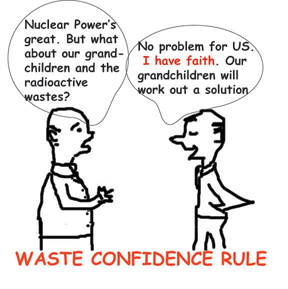
As a result of its confidence in the safety of spent fuel storage, NRC rules note that “no discussion of any environmental impact of spent fuel storage in reactor facility storage pools or independent spent fuel storage installations for the period following the term of the reactor operating license . . . is required in any environmental report, environmental impact statement, environmental assessment or other analysis prepared in connection with the issuance or amendment of an operating license for a nuclear reactor,”
 Group seeks to have spent fuel a factor in re-licensing Limerick plant The Mercury By Evan Brandt 07/17/12 LIMERICK “…….Spent fuel rods are what remains after the uranium pellets inside the fuel rods in a reactor no longer generate enough heat to create the steam that turns the turbines and generates electricity at a nuclear power plant.
Although cooler, this spent fuel remains radioactive to some extent for hundreds of years. For years, spent fuel was kept in concrete “spent fuel pools” located inside a nuclear plant and filled with water to keep it from overheating.
According to the NRDC filing, in 2008 NRC proposed “‘remov(ing) its expectation that a repository (for spent fuel) will be available by 2025’ and acknowledged that its previous finding that sufficient disposal capacity would be available within 30 years after any
reactor’s licensed life ‘is not supportable.’” Continue reading
“Uprating” – a cheap way to increase power from nuclear reactors, but is it safe?
nuclear watchdogs have warned that these bigger uprates also carry bigger risks.
“This trend is, in principle, detrimental to the stability characteristics of the reactor, inasmuch as it increases the probability of instability events and increases the severity of such events, if they were to occur,” the Advisory Committee on Reactor Safeguards, which is mandated by Congress to advise the NRC, has warned
 How to expand nuclear power without attracting (too much) attention
Washington Times, by Brad Plumer July 18, 2012 Since the 1970s, construction on new nuclear reactors in the United States has largely ground to a halt, thanks to public protests, regulatory obstacles and tight financing. Yet over that same period, U.S. utilities have managed to increase the amount of electricity they get from nuclear power. By quite a lot, in fact.
How is that possible? Through a process known as “uprating.” According to a new analysis by the U.S. Energy Information Administration, the operators of 98 of the country’s 104 commercial nuclear reactors have asked regulators for permission to boost capacity from their existing plants. All in all, the Nuclear Regulatory Commission has approved more than 6,500 megawatts worth of uprates since 1977. That’s the equivalent of building six entirely new nuclear reactors—and during a period when fresh plants were impossible to build.
Under the public radar, nuclear power is “uprated”, bringing safety concerns
nuclear watchdogs and the U.S. Nuclear Regulatory Commission’s own safety advisory panel have expressed concern over larger boosts — some by up to 20% — that the NRC began approving in 1998. Twenty of the nation’s 104 reactors have undergone these “extended power uprates.”
U.S. is increasing nuclear power through uprating Turning up the power is a little-publicized way of getting more electricity from existing nuclear plants. But scrutiny is likely to increase in the wake of Japan’s nuclear crisis. LA Times, April 17, 2011|By Alan Zarembo and Ben Welsh, Los Angeles Times
The U.S. nuclear industry is turning up the power on old reactors, spurring quiet debate over the safety of pushing aging equipment beyond its original specifications.
The little-publicized practice, known as uprating, has expanded the country’s nuclear capacity without the financial risks, public anxiety and political obstacles that have halted the construction of new plants for the last 15 years.
The power boosts come from more potent fuel rods in the reactor core and, sometimes, more highly enriched uranium. As a result, the nuclear reactions generate more heat, which boils more water into steam to drive the turbines that make electricity. Continue reading
Amid USA heatwave, loss of power to cooling equipment brings shutdown to Pennsylvania nuclear reactor
Exelon shuts Pa. Limerick 1 nuclear power reactor, Reuters Jul 19, 2012 By Scott DiSavino July 18 – Exelon Corp shut down the 1,130-megawatt (MW) Unit 1 at the Limerick nuclear power plant in Pennsylvania early Wednesday following an electrical disturbance on the non-nuclear side of the plant, the company said in a release.
The outage came at a bad time for the power grid: Homes and businesses in the U.S. Mid-Atlantic are cranking up their air conditioners amid a brutal heat wave blanketing the region.
The electrical disturbance caused a loss of power to generator cooling equipment, the company said. The unit will remain offline until repairs, inspections and testing are
completed, it said…. http://in.reuters.com/article/2012/07/18/utilities-operations-exelon-limerick-idINL2E8II8A620120718
1 This Month



Shut down the radiation-damaged Heysham nuclear reactors now
To see nuclear-related stories in greater depth and intensity – go to https://nuclearinformation.wordpress.com

Say No to NASA’s Reckless Nuclear Reactor on the Moon
Say No to NASA’s Reckless Nuclear Reactor on the Moon
-
Archives
- October 2026 (247)
- September 2026 (339)
- August 2026 (330)
- July 2026 (355)
- June 2026 (287)
- May 2026 (306)
- April 2026 (356)
- March 2026 (251)
- February 2026 (267)
- January 2026 (308)
- December 2025 (358)
- November 2025 (359)
-
Categories
- 1
- 1 NUCLEAR ISSUES
- business and costs
- climate change
- culture and arts
- ENERGY
- environment
- health
- history
- indigenous issues
- Legal
- marketing of nuclear
- media
- opposition to nuclear
- PERSONAL STORIES
- politics
- politics international
- Religion and ethics
- safety
- secrets,lies and civil liberties
- spinbuster
- technology
- Uranium
- wastes
- weapons and war
- Women
- 2 WORLD
- ACTION
- AFRICA
- Atrocities
- AUSTRALIA
- Christina's notes
- Christina's themes
- culture and arts
- Events
- Fuk 2022
- Fuk 2023
- Fukushima 2017
- Fukushima 2018
- fukushima 2019
- Fukushima 2020
- Fukushima 2021
- general
- global warming
- Humour (God we need it)
- Nuclear
- RARE EARTHS
- Reference
- resources – print
- Resources -audiovicual
- Weekly Newsletter
- World
- World Nuclear
- YouTube
-
RSS
Entries RSS
Comments RSS

