For relicensing nuclear plants, Nuclear Regulatory Commission does not consider costs of spent fuel disposal
Paradoxically, while the NRC allows potential earnings from a re-licensed plant to be considered as a way to cover the costs of plant shut-down, it does not consider the potential for those added years of operation to generate additional spent fuel when calculating the cost of shutting the plant down.
Group seeks to have spent fuel a factor in re-licensing Limerick plant The Mercury By Evan Brandt 07/17/12 LIMERICK — Despite a recent federal court ruling invalidating a rule that would allow storage of radioactive spent nuclear fuel rods at nuclear power plants for 60 years after they’ve closed, the Nuclear Regulatory Commission has no plans to consider the issue when deciding on whether to re-license Exelon Nuclear’s Limerick Generating Station for an additional 20 years.
The National Resources Defense Council disagrees with that position and filed papers July 9 seeking to amend its challenge to Exelon’s re-licensing application Continue reading
Safecast providing impartial information on Fukushima radiation
 visit Safecast at blog.safecast.org .
Local governments in Fukushima are linking up with Safecast to get additional readings, for example in schools, and are sharing data with residents. More volunteers are joining, including Europeans and Japanese as well as other nationalities.
U.S. group supplying radiation data Japan Times, 18 July 12By YURI KAGEYAMA People seeking information on radiation levels from the Fukushima crisis are turning to a volunteer group founded in the U.S. that has created a detailed and constantly updated visual database online. Continue reading
Secrets about Crystal River nuclear plant’s financial fiasco
The 36-year-old plant has been out of service since fall 2009. It may have to be shut down permanently because repair and related costs are expected to run in the billions of dollars.

 Secrets about Crystal River nuclear plant could be revealed at hearings this week Tampa Bay Times, By Ivan Penn, July 18, 2012 Duke Energy’s new Florida customers may find out this week just how good the utility is at keeping secrets about the troubled Crystal River nuclear plant.
The North Carolina Public Service Commission has summoned several Duke board members to explain the less-than-one-day tenure of Bill Johnson as CEO of the newly combined Duke-Progress Energy giant.
Johnson’s “lack of transparency” in his accounting of the busted Crystal River plant seems central to his ouster. Duke has revealed that its own secret report highlights the plant’s problems, but it has thus far resisted releasing the study. Continue reading
New, and worrying, data about safety status of San Onofre nuclear power plant
 the numbers show that the damage at San Onofre is much worse than seen elsewhere in the industry
New details about problems at San Onofre nuclear power plant LA Times, July 14, 2012 Data released by the U.S. Nuclear Regulatory Commission and a leaked analysis by Southern California Edison provide some new insights into the situation at the San Onofre nuclear plant. Continue reading
Alarming report on the unsafe state of San Onofre nuclear power plant
 Made in Japan? Fukushima Crisis Is Nuclear, Not Cultural TruthOut, 14 July 2012 By Gregg Levine, Capitoilette | News Analysis “……..Back at San Onofre, US regulators disclosed Thursday that the damage to the metal tubes that circulate radioactive water between the reactor and the steam turbines (in other words, part of the system that takes heat away from the core) was far more extensive than had previously been disclosed by plant operators:
[Each of San Onofre’s steam generators has] 9,727 U-shaped tubes inside, each three-quarters of an inch in diameter.
The alloy tubes represent a critical safety barrier — if one breaks, there is the potential that radioactivity could escape into the atmosphere. Also, serious leaks can drain protective cooling water from a reactor.
Gradual wear is common in such tubing, but the rate of erosion at San Onofre startled officials since the equipment is relatively new. The generators were replaced in a $670 million overhaul and began operating in April 2010 in Unit 2 and February 2011 in Unit 3.
Tubes have to be taken out of service if 35 percent — roughly a third — of the wall wears away, and each of the four generators at the plant is designed to operate with a maximum of 778 retired tubes.
In one troubled generator in Unit 3, 420 tubes have been retired. The records show another 197 tubes in that generator have between 20 percent and 34 percent wear, meaning they are close to reaching the point when they would be at risk of breaking.
More than 500 others in that generator have between 10 percent and 19 percent wear in the tube wall.
“The new data reveal that there are thousands of damaged tubes in both Units 2 and 3, raising serious questions whether either unit should ever be restarted,” said Daniel Hirsch, a lecturer on nuclear policy at the University of California, Santa Cruz, who is a critic of the industry. “The problem is vastly larger than has been disclosed to date.”
And if anything, the Nuclear Regulatory Commission is underplaying the problem. A report from Fairewinds Associates, also released this week, unfavorably compared San Onofre’s situation with similar problems at other facilities:
[SONGS] has plugged 3.7 times as many steam generator tubes than the combined total of the entire number of plugged replacement steam generator tubes at all the other nuclear power plants in the US.
The report also explains that eight of the tubes failed a “pressure test” at San Onofre, while the same test at other facilities had never triggered any more than one tube breach. Fairewinds goes on to note that both units at San Onofre are equally precarious, and that neither can be restarted with any real promise of safe operation….. http://truth-out.org/news/item/10333-made-in-japan-fukushima-crisis-is-nuclear-not-cultural
Uranium mining for Virginia – a done deal? or will reason and science prevail?
“All of the public meetings held to date on uranium mining in Virginia that I’m aware of have had speakers that represented regulatory agencies”
there are plenty of reasons for cynical observers to believe that uranium mining in Pittsylvania is pretty much a done deal.
These guys will walk away in 30 or 35 years with a lot of money, and taxpayers of the United States will be responsible in perpetuity, after the mine is closed, for the integrity of the radioactive tailings disposal situation, which is located on the Roanoke River watershed,”
Metro columnist Dan Casey: Uranium session slated at Virginia Western Community College Roanoke.com By Dan Casey, 15 July 12, “…. the uranium mining issue is about to arise again here in Roanoke in a couple of weeks. Rupert Cutler, a former city councilman, federal cabinet undersecretary and ardent conservationist, has organized a symposium here in town on the subject.
The daylong event is July 27 at Virginia Western Community College and is open to the public (registration is $25). If you’re in town then, you should consider attending.
There are two basic questions. One is, can uranium mining and milling be done safely in the Roanoke River watershed, which empties into North Carolina’s Lake Gaston (and ultimately Albemarle and Pamlico sounds), and serves as a key water supply for Virginia Beach and five
military bases?
The other depends on the answer to that first question. Should the Virginia General Assembly lift its 30-year-old moratorium on uranium mining? That’s going to be a huge issue in the 2013 legislative session. Enormous political pressure has been brought on the state
legislature to do just that. Continue reading
Nuclear danger very real – at Fukushima and at San Onofre
Nuclear Dread On Both Sides Of The Pacific IndyBay by Michael Steinberg Jul 14th, 2012 Nuclear problems are still growing on both sides of the Pacific, at Fukushima and San Onofre…….. Japan Ignored Ominous Signs Continue reading
Expensive and difficult – the nuclear waste storage and security problem
meanwhile the company was paying workers to monitor the fuel and keep the plant safe……
Removal of the fuel is a crucial step in dismantling the plant, a project that could take another seven years.
A nuclear option: After 25 years, Genoa reactor’s waste gets new home There are 333 fuel assemblies each a 6-by-6 inch bundle of 100 eight-foot metal rods filled with uranium dioxide pellets roughly the size of a pencil eraser sitting in a storage tank under about 15 feet of water on the top level of the reactor containment building in Genoa. The fuel contains elements including plutonium, cesium and strontium that are radioactive byproducts of nuclear reactions. Though no longer fissile enough to power a plant, they will continue to emit harmful radiation and some heat for thousands of years. La Crosse tribune • By Chris Hubbuch 15 July 12
MUNICIPAL IMPACT Dairyland Power is moving 333 spent nuclear fuel assemblies only 0.4
miles to the south, but the move could have major ramifications for the village of Genoa.
Under Wisconsin law, counties and municipalities hosting nuclear fuel receive $50,000 a year from money set aside by utilities to offset additional costs.
Because Dairyland sits just on the border of the village of Genoa and the town of Genoa, the village gets $40,000 and the town $10,000.
But the dry storage site is fully in the town, which means moving the fuel would cost the village $40,000 — about 30 percent of its annual operating budget. Continue reading
Fukushima radiation will be higher on USA West coast, than off Japan
Study: N. America’s West Coast to be most contaminated by Fukushima cesium of all regions in Pacific in 10 years — “An order-of-magnitude higher” than waters off Japan (MAPS) July 15th, 2012 Title: Model simulations on the long-term dispersal of 137Cs released into the Pacific Ocean off Fukushima, IOPscience, Erik Behrens, Franziska U Schwarzkopf, Joke F Lübbecke and Claus W Böning Continue reading
Injustice of USA cases against Julian Assange and Bradley Manning
Public opinion can make a great difference in determining that such a prosecution not take place. Such a situation as not very different from what eventually happened in the case of David Hicks.
Think of the different amount of attention given by the Australian Government to Assange’s case, compared to that given to the case of the Australian woman solicitor in Libya by Bob Carr, our Foreign Minister.
It can’t be that Assange has a bad reputation. He is the recipient of many awards testifying as to his courage and excellence as a journalist and about him generally.
A Support Assange & WikiLeaks Coalition Statement by Mr Kep Enderby QC JULY 15, 2012 BY KELLIE TRANTER ” ….There is something terribly wrong going on in both the Assange and Manning cases, and we are being told very little about it.
Sweden’s sex laws are unrealistically repressive, the most repressive in the world! That was made clear in the recent ABC interview with Phillip Adams and in the recent book by Oscar Swartz “A History of Sex in Sweden”.
Bradley Manning has been in custody for long periods of solitary confinement on the ground that he might injure himself, despite psychiatric opinion to the contrary and despite public protest that it amounts to pre-trial punishment without being brought to trial. He was arrested more than 2 years ago.
America still uses the ancient archaic old English medieval grand jury system of determining whether a criminal trial should take place to determine whether a person has committed a serious crime or not, with all its scope for the manipulated injustice. During the hearing the target of grand jury, the person perhaps to be an accused,
cannot put on a defence.
In America, in Virginia, a federal grand jury has already commenced investigating WikiLeaks – which means Julian Assange – to determine whether an indictment should be served on him. Eminent commentators are claiming that the evidence is mounting that the WikiLeaks case is part of a much broader campaign by the Obama Administration to crack down on all leakers. Continue reading
Months passed before nuclear plant’s fire was reported to regulators
Browns Ferry nuclear plant had a control room fire in January, regulators took months to notify public Al.com, July 13, 2012, By Brian Lawson, The Huntsville Times HUNTSVILLE, Alabama –– TVA’s Browns Ferry nuclear plant near Athens had a fire in one its control rooms in January, but public notice of the event was not issued until this week.
The roughly 10-minute fire in the Unit 3 control room was caused by an electrical component determined to be about 34 years old, some four times older than its recommended shelf life, according to a TVA incident report.
TVA’s report on the Jan. 26 fire was submitted to the Nuclear Regulatory Commission on March 26. An NRC spokesman said Friday he had no explanation why the report was not made public by the NRC until July 9.
The fire was reportedly caused by a failed power supply in a panel. It burned out some plant alarms and warning lights….. Those problems should have alerted TVA, said David Lochbaum, a former Browns Ferry engineer and director of the nuclear safety program for the Washington, D.C.-based Union of Concerned Scientists. ….. TVA reported the Unit 3 capacitors all dated back to the original construction of the unit, 34 years ago.
Browns Ferry was the site of the worst nuclear plant fire in U.S. history in 1975. A plant employee using a candle to look for air hose leaks accidentally ignited some sealing material, the fire resulted in operators having no control over the plant for about an hour. Browns Ferry officials didn’t notify Limestone County Emergency Management officials about the fire until the following day……
A litany of ongoing, and rising, costs for San Onofre nuclear power plant
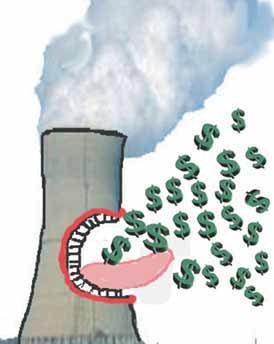 The Sustainability Alliance of Southern California last night hosted a discussiont: “Nuclear Power in Southern California – Can We Afford It? San Diego Reader, 13 July 12, “… Featured speakers were Alliance for Nuclear Responsibility executive director Rochelle Becker and counsel for the Alliance/former executive director and commissioner of the California Energy Commission John Geesman.
A recurring theme of the talk was the cost of nuclear power, touted as a cheap alternative to gas-fired power plants or other means of power.
“For San Onofre, [the original cost estimate] was under $180 million dollars. But it was $4.7 billion dollars when finished,” Becker said. She also pointed out that the cost of new seismic studies needed due to the discovery of earthquake faults near the plant has risen from an original estimated cost of $21 million to a new request by plant operator Southern California Edison to bill its customers as well as those of San Diego Gas & Electric up to $64 million for the studies. Continue reading
Legal action – no confidence in USA’s nuclear Waste Confidence Rule
 Beyond Nuclear files Nuke Waste Con Game contentions against 4 atomic reactors 12 July 12, Beyond Nuclear has filed intervention contentions against a total of four atomic reactors (proposed new reactors at Grand Gulf Unit 3, MS and Fermi Unit 3, MIseeking construction and operating licenses, as well as degraded old reactors at Grand Gulf Unit 1, MSand Davis-Besse Unit 1, OH seeking 20 year license extensions) based on a recent U.S. Court of Appeals for the D.C. Circuit ruling gutting the U.S. Nuclear Regulatory Commission’s (NRC) “Nuclear Waste Confidence Decision.”
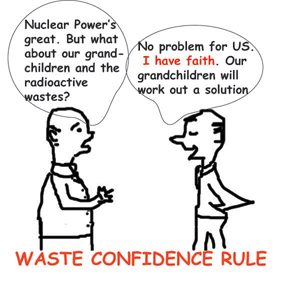
That confidence game has been used against states, environmental groups, and concerned citizens for decades, blocking them from challening the generation of high-level radioactive waste in atomc reactor licensing proceedings, as the NRC has flippantly expressed “confidence” that storage on-site was safe for decades or even centuries, and that a geologic repository for permanently disposing of irradiated nuclear fuel was just over the horizon — despite mounting evidence to the contrary. Continue reading
Ski resorts taking climate change seriously, going to renewable energy
Ski resorts go renewable U.S. ski resorts tap renewable energy sources to combat climate change Action Sports July 13, 2012, By Jesse Huffman As the volatility of the 2011-12 season made clear, the stake ski resort’s have in resolving climate change is a big one. Over the past three years, resorts like Bolton , Burke , Jiminy Peak and Grouse Mountain have installed wind turbines, while others have pursued efficiency updates, in an effort to take responsibly produce, and reduce, the power and heat involved in swinging chairs and heating lodges all winter long. Now, four more areas, from local ski hills in the Northeast to major resorts in the Rockies, have installed or invested in renewable power sources ranging from solar to biomass to coalmine methane.
Smuggler’s Notch closed early this winter after a spring meltdown saw the highest March temperatures in Vermont’s history. The same solar energy that drove skiers and riders batty as it took away their snow is now being put to use by an array of 35 solar trackers, which collectively produce 205,000 kWh per year — around five percent of Smuggler’s total electrical use. The array provides enough juice for most of the resort’s Village Lodge. Continue reading
Nuclear Plant Vogtle – escalating costs, delays, don’t augur well for nuclear industry
Most of the [USA’s nuclear power] projects have been delayed or scrapped due to the lower than expected demand for electricity, the inability to secure financing or because the utility decided a cheaper alternative, such as natural gas, was easier.

Delays, cost increases at nation’s new nuclear projects, By Kristi Swartz The Atlanta Journal-Constitution, 13 July 12, Despite promises from the nuclear industry to regulators and consumers that they learned from mistakes of the past, the nation’s first two nuclear reactor projects built from scratch in 30 years are headed toward hundreds of millions of dollars in cost overruns and months, if not years, of delays.
Georgia Power customers currently are paying the financing costs of Plant Vogtle’s twin reactors. The impact of the early delays and budget increases at Georgia Power’s Plant Vogtle and South Carolina Electric & Gas’s Plant Summer will have on future nuclear projects is unclear. Continue reading
1 This Month



Shut down the radiation-damaged Heysham nuclear reactors now
To see nuclear-related stories in greater depth and intensity – go to https://nuclearinformation.wordpress.com

Say No to NASA’s Reckless Nuclear Reactor on the Moon
Say No to NASA’s Reckless Nuclear Reactor on the Moon
-
Archives
- October 2026 (247)
- September 2026 (339)
- August 2026 (330)
- July 2026 (355)
- June 2026 (287)
- May 2026 (306)
- April 2026 (356)
- March 2026 (251)
- February 2026 (267)
- January 2026 (308)
- December 2025 (358)
- November 2025 (359)
-
Categories
- 1
- 1 NUCLEAR ISSUES
- business and costs
- climate change
- culture and arts
- ENERGY
- environment
- health
- history
- indigenous issues
- Legal
- marketing of nuclear
- media
- opposition to nuclear
- PERSONAL STORIES
- politics
- politics international
- Religion and ethics
- safety
- secrets,lies and civil liberties
- spinbuster
- technology
- Uranium
- wastes
- weapons and war
- Women
- 2 WORLD
- ACTION
- AFRICA
- Atrocities
- AUSTRALIA
- Christina's notes
- Christina's themes
- culture and arts
- Events
- Fuk 2022
- Fuk 2023
- Fukushima 2017
- Fukushima 2018
- fukushima 2019
- Fukushima 2020
- Fukushima 2021
- general
- global warming
- Humour (God we need it)
- Nuclear
- RARE EARTHS
- Reference
- resources – print
- Resources -audiovicual
- Weekly Newsletter
- World
- World Nuclear
- YouTube
-
RSS
Entries RSS
Comments RSS

