How bureaucrats worked secretly to subvert laws on nuclear weapons proliferation
U.S. and international law strictly limited the technology developed in the Clinch River program, particularly reprocessing technology used to separate plutonium from spent nuclear fuel. And the plan would require hundreds of international shipments of weapons-grade plutonium and high level nuclear waste on ships.
United States Circumvented Laws To Help Japan Accumulate Tons of Plutonium, DC Bureau By Joseph Trento, April 9th, 2012“…..Giving to Both Sides – Nuclear deals with China and Japan Westinghouse AP 1000 in China In 1984 the Westinghouse Corporation had struck a deal to supply nuclear reactors to China worth as much as $10 billion. The deal was an incredible windfall for the American nuclear industry and would be a cornerstone in [bureaucrat] Richard Kennedy’s efforts to make the United States dominate in the world’s nuclear commerce. The only problem was China’s abysmal record of sharing nuclear secrets with all bidders.
In a bitter session on the Senate floor, then Democratic Assistant Majority Leader Alan Cranston charged that the Reagan administration on [bureaucrat Richard] Kennedy’s watch had “systematically withheld, suppressed and covered up information – known virtually throughout the executive branch – which Congress might find worrisome.” China was already known to have sold nuclear technology to five international nuclear outlaws: Pakistan, Iran, South Africa, Brazil and Argentina. By 1984, Cranston and most of the American government knew that China had given sophisticated nuclear weapons designs to Pakistan. Beijing had also sold the enriched uranium that would find its way into South Africa’s nuclear bombs. China sold heavy water for use in Argentina’s bomb program, while also selling nuclear materials to arch rival Brazil and negotiating nuclear agreements with Iran.
China’s nuclear proliferation track record could hardly have been worse, but instead of negotiating ironclad safeguards, Kennedy returned from Beijing with an agreement so ambiguous that both sides could interpret it however they liked. Continue reading
U.S. To Provide Access To Marshall Islands Nuclear Test Documents
Marshalls maintains demand for full disclosure of classified information By Giff Johnson SAIPAN, CNMI (Marianas Variety, Aug. 8, 2012) – In response to a strong statement of concern from the Marshall Islands government about the lack of access to classified information about United States nuclear testing in this western Pacific nation more than 50 years ago, a top State Department official has promised to initiate a review of data available for public release.
“Some documents provided in the past were so heavily redacted as to make them unreadable,” said Assistant Secretary of State for East Asian and Pacific Island Affairs Kurt Campbell at a media conference after meeting with President Christopher Loeak in Majuro Thursday evening. “It is fair to ask the United States to see if we’ve provided the Marshall Islands with the information it needs to understand more fully (the nuclear test legacy).”…. http://pidp.org/pireport/2012/August/08-08-09.htm
USA to halt licensing of nuclear plants: no assurance of nuclear waste solution
 U.S. Regulator Halts Nuclear-Plant Licensing, WSJ, By REBECCA SMITH And RYAN TRACY August 7, 2012, Court Rules That NRC Can No Longer Accept Assurances a Permanent Waste Repository Is Coming
The U.S. Nuclear Regulatory Commission said it would stop issuing licenses for nuclear plants until it addresses problems with its nuclear-waste policy that were raised by a recent federal appeals court decision. Continue reading
Nuclear Regulatory Commission to woo indigenous peoples with education money
This funding opportunity is open to institutions of higher education; Alaska Native and Native Hawaiian Serving Institutions; Hispanic-serving Institutions; Historically Black Colleges and Universities; and Tribally-Controlled Colleges and Universities; non-profits.

 $4.7 Million Funding Available for Nuclear Education Curricula Development Power Industry News, WASHINGTON, Aug. 5 — The U.S. Nuclear Regulatory Commission has announced that it expects to award discretionary grant for the development of nuclear education curricula promoting common defense and security; and protecting the environment. Continue reading
U.S. Freezes All Nuclear Power Plant Licensing Decisions
most of the 19 reactor projects are already “essentially sidetracked by the huge problems facing the nuclear industry, including an inability to control runaway costs, and the availability of far less expensive energy alternatives.”
ongoing descent into fiasco of the bubble once known as ‘the nuclear renaissance,’”
WASHINGTON, DC, August 7, 2012 (ENS) – Federal nuclear regulators today froze at least 19 final reactor licensing decisions in response to a ruling by the U.S. Court of Appeals for the DC Circuit that spent nuclear fuel stored on-site at nuclear power plants “poses a dangerous, long-term health and environmental risk.”
In its ruling, the appeals court invalidated the U.S. Nuclear Regulatory Commission’s 2010 updates to the Waste Confidence Rule and also the Temporary Storage Rule and directed the commission to fully comply with federal law.
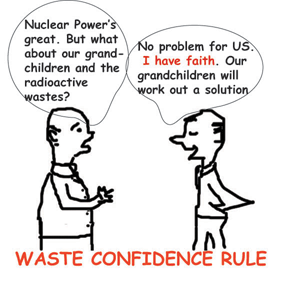
In response, the NRC today put a hold on nine construction and operating licenses, eight license renewals, one operating license, and one early site permit.
The court noted that, after decades of failure to site a permanent geologic repository, including 20 years of working on the now-abandoned Yucca Mountain repository in Nevada, the NRC “has no long-term plan other than hoping for a geologic repository.”
Therefore, it is possible that spent fuel will be stored at reactor sites “on a permanent basis,” the court said.
In its order today, the five-member NRC said, “Waste confidence undergirds certain agency licensing decisions, in particular new reactor licensing and reactor license renewal.”
“Because of the recent court ruling striking down our current waste confidence provisions, we are now considering all available options for resolving the waste confidence issue, which could include generic or site-specific NRC actions, or some combination of both,” the agency said. “We have not yet determined a course of action.”
“In recognition of our duties under the law, we will not issue licenses dependent upon the Waste Confidence Decision or the Temporary Storage Rule until the court’s remand is appropriately addressed,” the NRC said.
The NRC’s order extends only to final license issuance. “All licensing reviews and proceedings should continue to move forward,” the agency said.
The case was originally brought to the appeals court by four states led by New York State, as well as a native Indian community and several environmental groups.
New York Attorney General Eric Schneiderman brought legal action against the NRC because of his concerns about Entergy’s relicensing application for two reactors at Indian Point power plant on the Hudson River at Buchanan, New York, just 24 miles north of New York City. Entergy’s license to operate Indian Point expires on September 28, 2013.
Schneiderman said today, “The storage of nuclear waste at nuclear power facilities poses long-term health and environmental risks, including the risk of leaks from spent fuel pools and fires. Despite this, the NRC has refused my repeated requests to address the serious risks of long-term, on-site storage of nuclear waste in Indian Point’s relicensing proceeding.” Continue reading
Nuclear and fossil fuel lobbies wage expensive war against renewable energy
Renewable Energy Under Siege In The USA http://www.energymatters.com.au/index.php?main_page=news_article&article_id=3326 by Energy Matters, 7 Aug 12, Renewable energy faces opposition from cashed-up fossil fuel supporters in Australia; but it’s nothing compared to what is going on in the USA at the moment. While solar energy, wind power and other clean energy sources have always hit opposition in the USA, the smearing has hit new levels as the nation prepares to vote and crucial renewable energy support mechanisms are under review.

The Sierra Club has released a report revealing how the fossil fuel industry is using tactics such as financial contributions to political campaigns, fake think tanks and faux intellectuals to attack renewable energy in order to alter public opinion and the views of lawmakers. ”From California to Pennsylvania, clean energy jobs are under attack by fossil fuel interest groups – yet many in Congress are sitting on their hands while tens of thousands of American jobs hang in the balance,” said Michael Brune, executive director of the Sierra Club.
The Sierra Club’s report claims the oil and gas industry spent more than $146 million on lobbying alone in 2011 and organizations such as the Manhattan Institute and the Heartland Institute that defend oil subsidies while attacking renewable energy have received in excess of $600,000 each since 1998 from the oil company Exxon. The report states the oil and gas industry contributed to 88 percent of all members of the U.S. House of Representatives and 89% of Senators in the 2010 election cycle.
Quoting data from Open Secrets; ConocoPhillips spent $20.5 million on lobbying last year and Royal Dutch Shell, $14.79 million. Add to those figures spending by ExxonMobil, Chevron, the American Petroleum Institute, and Koch Industries and the grand total comes to more than $74 million in 2011.
The report comes at a crucial time as a crucial element of support for wind energy – the Production Tax Credit (PTC) – may be lost at the end of this year. The PTC helps support the more than 75,000 jobs in the wind industry and many as half those jobs could be lost if it is not renewed.
The report, titled “Clean Energy Under Siege – Following the Money Trail Behind the Attack on Renewable Energy”, can be viewed in full here (PDF).
How Nuclear Regulatory Commissioners undermined nuclear safety
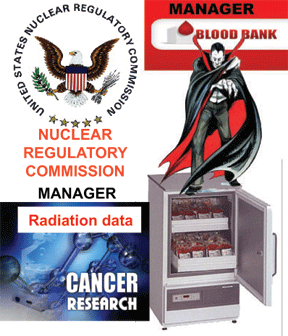 Congressman releases blockbuster report detailing NRC conspiracy in wake of Fukushima http://enenews.com/just-in-congressman-releases-blockbuster-report-detailing-nrc-conspiracy-in-wake-of-fukushima December 10th, 2011
“Regulatory Meltdown” Reveals Efforts to Improve Nuclear Safety Undermined by Four NRC Commissioners New Report Details Conspiracy to Delay, Weaken US Nuclear Safety in Wake of Fukushima, Congressman Edward Markey, Dec. 9, 2011 (Emphasis Added):
WASHINGTON, D.C. – As part of his ongoing investigation into U.S. nuclear safety since the Fukushima meltdowns, today Rep. Edward J. Markey (D-Mass.), Congress’s leading voice for nuclear safety, released a blockbuster new report that details how four Commissioners at the Nuclear Regulatory Commission (NRC) colluded to prevent and then delay the work of the NRC Near-Term Task Force on Fukushima, the entity tasked with making recommendations for improvement to NRC regulations and processes after the Fukushima meltdowns, the worst nuclear disaster in history. The Near-Term Task Force members comprise more than 135 years of collective experience at the NRC, and with full access to expert NRC staff completed a methodical and comprehensive review of NRC’s regulatory system. Continue reading
82 year old anti nuclear nun shows up security danger at nuclear weapons site
 “these anti-Christ nongovernmental terrorists, Christian militias up in Michigan that are getting ready for Armageddon, to kill for Jesus, or the Nazi party or the Taliban, might just as easily have gotten to where we got, with evil intention.”
Security Questions Are Raised by Break-In at a Nuclear Site, NYT, By MATTHEW L. WALD and WILLIAM J. BROAD August 7, 2012 WASHINGTON — An 82-year-old nun and two fellow pacifists who penetrated the defenses of one of the nation’s most important nuclear weapons facilities last week are due in federal court in Knoxville, Tenn., on Thursday to face charges of trespassing and spray-painting antiwar slogans on a building that houses nuclear bomb fuel. But the incident has also put the Department of Energy’s security system on trial.
The security breach, at Oak Ridge in Tennessee, has prompted the Department of Energy to reappraise security measures across its nuclear weapons program and private experts to criticize the agency’s safeguarding of nuclear stockpiles.
The activists, who got past fences and security sensors before dawn on July 28, apparently spent several hours in the Y-12 National Security Complex before they were stopped — by a lone guard, they told friends — as they used a Bible and candles in a Christian peace ritual. In a telephone interview, Sister Megan Gillespie Rice, of Las Vegas, said she was not sure exactly how long they were there. “It was dark; we couldn’t see our watches,” she said. Continue reading
Occupy Nukes Challenges Nuclear Power on A-Bomb Anniversary
 The grassroots struggle against the nuclear-industrial complex in the U.S. is beginning to grow again, as evidenced by Occupy Nukes. This fall, the new anti-nuke movement should find its greatest expression since the height of the disarmament movement in the early 1980s, as thousands from across the country are expected to converge on Washington, D.C., to call for a future free of uranium mining, nuclear weapons, nuke plants and nuke waste.
Opposing Views.com By Waging Nonviolence, August 07, 2012 Occupy Nukes demonstrations were held in towns and cities across the United States on Monday, marking the anniversary of the atomic bombing of Hiroshima on August 6, 1945. Approximately 140,000 civilians were killed by the bomb, code-named Little Boy, while hundreds of thousands died later of cancer, and thousands more inherited birth defects. Nothing before or since has approached the instantaneous and horrific carnage reaped by Little Boy except, perhaps, Fat Man, dropped on Nagasaki three days later.
In a joint declaration, those of us taking part in the nationwide protests said, “Nuclear weapons allow us to gauge the full extent of brutality that the 1 percent — which rules through exploitation, coercion and violence — is capable of committing.” August 6 was a day of remembrance, but also one in which the 99 percent took action “to ensure such destruction [as took place in Hiroshima and Nagasaki] is never wrought on anyone ever again.”
Bearing a banner that read “¡Ya Basta! (un)Occupy The Bomb!” at least six people in New Mexico were arrested as a crowd of roughly 50 demonstrators, periodically throughout the day, blocked an entrance to Los Alamos National Laboratory (LANL). Occupying what was once Pueblo land and the home to 2,000 archeological sites, LANL is the birthplace of the atomic bomb. To this day, secretive weapons experiments are carried out at the lab.
New Mexico local Michelle Victoria, who helped organize the nonviolent direct action at Los Alamos, said the roadblock illustrated community and indigenous opposition to the weapons lab. Last summer, a wildfire swept through Los Alamos, narrowly missing 30,000 55 gallon drums of radioactive waste stored above ground at the site. “There’s a lot radioactivity around here,” said Victoria. “What they used to do at the lab back in the ’50s was just wheel barrels of radioactive material and dump them off the canyon.”
Victoria raised concerns that radioactive ash from last summer’s fire could have spread into the Rio Grande River, which provides drinking water to 90 percent of New Mexico’s municipalities. “We know and believe this is wrong and we are willing to put our bodies on the line for it to stop.”
Meanwhile, 20 miles West of Seattle, members of the Ground Zero Center for Nonviolent Direct Actionsymbolically shut down U.S. Naval base Kitsap-Bangor in the Puget Sound. A fleet of eight nuclear powered submarines carrying Trident D-5 ballistic missiles are docked at Bangor. Each sub can carry up to eight warheads loaded with between 100 kilotons or 475 kilotons of nuclear explosives each. By comparison, the bomb dropped on Hiroshima was 12 kt. “Those submarines could wipe out an entire continent,” said Leonard Eiger with the Ground Zero Center. “They don’t discriminate between civilian and military targets, a violation of international law.”……
On Sunday afternoon, heavily armed police kept a stern eye on peace activists and Buddhist monks making sure those gathered in front of the facility to pray away the demons inside wouldn’t try to hop the fence. In an email message, Rice told Occupy Nukes organizers to “continue the transformation each of you represents.”
The day of action comes amid President Barack Obama’s efforts to expand the U.S.’s nuclear arsenal. According to a White House fact sheet, Obama is pushing for investments of $80 billion “to sustain and modernize the nuclear weapons complex,” and $100 billion to revamp “existing capabilities and modernize some strategic [delivery] systems” by 2020. This nuclear spending spree includes $4 to 12 billion for anew plutonium processing complex at Los Alamos.
“Money spent on nukes is irradiating social programs for the 99 percent,” warns Occupy Nukes. We cite a Brookings Institution study which notes that between 1940 and 1998 the U.S. spent more money on nuclear weapons — $5.5 billion — than the “combined total federal spending for education; training, employment, and social services; agriculture; natural resources and the environment; general science, space, and technology; community and regional development, including disaster relief; law enforcement; and energy production and regulation.” That figure reached 7.2 trillion by the end of President George W. Bush’s term in the White House, and we accuse Obama of charting the same costly nuclear course……
The grassroots struggle against the nuclear-industrial complex in the U.S. is beginning to grow again, as evidenced by Occupy Nukes. This fall, the new anti-nuke movement should find its greatest expression since the height of the disarmament movement in the early 1980s, as thousands from across the country are expected to converge on Washington, D.C., to call for a future free of uranium mining, nuclear weapons, nuke plants and nuke waste.
If inspiration is coming from anywhere, though, it’s from Japan, where hundreds of thousands have taken to the streets in recent weeks against the re-ignition of reactors. The Japanese no nukes movement may even be approaching the critical mass needed to move the country off nukes for good. Close to 80 percent of the population favors a phase-out and the former prime minister, who stepped down after his government’s mishandling of the meltdown, is pushing for legislation that would accomplish just that.
Such a move would go a long way toward showing the ability of people power to disarm nuclear power and help point the way not only to a world free from the fear of another Fukushima or Hiroshima, but also a world where human health and safety is the priority above all. http://www.opposingviews.com/i/religion/christianity/occupy-nukes-challenges-nuclear-power-bomb-anniversary
Budget of Nuclear Regulatory Commission – Incredible in the true sense of the word
 Nuclear Agency Can’t Ensure Their Own Budget is Credible http://pogoblog.typepad.com/pogo/2012/08/nuclear-agency-cant-ensure-their-own-budget-is-credible.html By MIA STEINLE
The agency responsible for the nation’s nuclear weapons cannot ensure its own budget is credible, which may result in overspending, according to a federal investigative office.
The National Nuclear Security Administration “does not thoroughly review” the budget estimates it compiles from U.S. nuclear weapon sites before it draws up its annual budget request to Congress, request to Congress, according to the Government Accountability Office (GAO). The eight nuclear weapons sites are managed and operated by private contractors for the government.
Senior agency officials told the GAO that there is an “inherent trust” between the agency and the nuclear sites. Additionally, they said that a lack of “financial and personnel resources” mean a formal review of the budget is unrealistic.
The National Nuclear Security Administration is a semiautonomous agency within the Department of Energy. It is “responsible for the nation’s nuclear weapons, nonproliferation, and naval reactors programs,” according to the GAO. Its proposed budget for fiscal year 2011 is more than $11.5 billion, which is almost half of the entire Department of Energy budget.
Agency officials also told the GAO that they don’t follow a Department of Energy policy that requires a formal review of the budget because it expired in 2003. However, department officials told the GAO the policy still stands.
“By not adhering to these provisions,” the GAO said the agency “is reducing the creditability of its budget proposals.”
The GAO report comes at a time when rising costs of nuclear weapons projects are turning into “a serious liability for the [agency] as it tries to fend off criticism from Congress,” John Fleck reported for the Albuquerque Journal . He cited the proposed nuclear facility at Los Alamos National Laboratory in New Mexico as a point of contention. The GAO noted that the cost of this project has increased sixfold since its inception.
The GAO also cited the rising cost of the Uranium Processing Facility in Tennessee as a concern. Given the agency’s “record of weak management of major projects,” the GAO said improved oversight of the agency is necessary to ensure responsible spending.
Joint Staffs General Calls for Cut in Nuclear Reserve
06 Aug 2012 By Greg McDonald Air Force Chief of Staff Gen. Norton Schwartz has called for the nation’s reserve of nuclear weapons to be reduced, citing its size and expense to maintain.
Schwartz became the first sitting member of the Joint Chiefs of Staff to suggest publiclythat the so-called “active reserve,” or backup supply of U.S. nuclear weapons should be cut back, the Boston Globe reported Monday.
“We have more backup systems in terms of weapons systems than we
actually have deployed,” Schwartz said in an interview with the Globe.
“Some of that is a reasonable hedge [but] there is probably room for
reductions.”
The Globe said Schwartz’s call for cuts in the reserve to be
considered is supported by a report earlier this year from retired
Marine Corps Gen. James Cartwright, whom the Globe said had been in
charge of all U.S. nuclear weapons.
According to the newspaper, the Cartwright report “recommended that
the United States during the next 10 year years reduce its nuclear
force to a total of 900 weapons, half of them on alert and half in
reserve.”… The reserves are a legacy of the Cold War nuclear
standoff between the United States and the former Soviet Union. …
http://www.newsmax.com/Newsfront/Schwartz-nukes-cut-general/2012/08/06/id/447660
US Power Company To Invest Another $883 Million In Solar by Energy Matters. 7 Aug 12,US utility Public Service Electric and Gas (PSE&G) recently announced it will request approval to invest up to USD$883 million to develop an additional 233 megawatts (MWs) of solar energy capacity.
The company made the announcement at an event marking the start of a renewable energy project that will transform a dormant brownfield in New Jersey into a solar farm. This will be the fifth PSE&G project that uses a brownfield or landfill site for energy production.
Brownfield sites are abandoned facilities often contaminated with materials that make them unsuitable for residential purposes.
“Every time we reclaim a landfill or brownfield site with solar panels, it’s a win for the people of New Jersey,” said PSEG chairman, president and CEO Ralph Izzo. “We are ready to do more of these projects and transform sites like this all over the state to generate more jobs along with clean renewable energy.”
The 1.06-MW PSE&G Hackensack Solar Farm is part of the utility’s Solar 4 All program. When the current phase of the program is complete early next year, PSE&G will have created about 175 direct jobs annually for the last three years and spent $300 million while developing 80 megawatts of solar capacity…. http://www.energymatters.com.au/index.php?main_page=news_article&article_id=3327
Mars probe records radiation blasts that could affect future
astronauts, NBC News, By Alan Boyle, 3 Aug 12 Even before its landing, NASA’s Mars Science Laboratory has sent back its first scientific results — shedding light on the radiation exposure that astronauts would face during a future mission to the Red Planet. Continue reading
Obama would spend up big on weapons, and Romney, even bigger
 a Romney administration would fork out roughly $800 billion toward national defense in 2016 — a notably higher amount than the trimmed-down $578 billion proposed by the Obama administration.
 Is Pentagon spending good for the economy? By Guy Taylor-The Washington Times , August 5, 2012 In a time of deep deficits and tight budgets, President Obama says theDefense Department cannot be entirely spared the scalpel. But Mitt Romney, his likely opponent in November’s election, says the U.S. must spend more on the Pentagon now because it will pay off with a stronger economy in the long run.
Analysts said the differences stem from a deep philosophical divide. Continue reading
Nuclear power plants can’t cope with increasingly hot summers
 simply getting permission to suck in hotter water does not make the problem go away..
despite a myriad of potential problems and two decades of climate warnings, it is sobering to note that none of the US reactors were built to account for any of this
[The new reactors] they are still PWRs and they still require a large reserve of cool, circulating water to keep them operating and nominally safe.

 For Nuclear Power This Summer, It’s Too Darn Hot, Truth Out, 05 August 2012 By Gregg Levine, You know that expression, “Hotter than July?” Well, this July, July was hotter than July. Depending on what part of the country you live in, it was upwards of three degrees hotter this July than the 20th Century average. Chicago, Denver, Detroit, Indianapolis and St. Louis are each “on a pace to shatter their all-time monthly heat records.” And “when the thermometer goes way up and the weather is sizzling hot,” as the Cole Porter song goes, demand for electricity goes way up, too….. Take, for example, Braidwood, the nuclear facility that supplies much of Chicago with electricity: Continue reading
1 This Month
23-25 October – on Zoom – World BEYOND War’s annual global conferenc


Shut down the radiation-damaged Heysham nuclear reactors now
To see nuclear-related stories in greater depth and intensity – go to https://nuclearinformation.wordpress.com

Say No to NASA’s Reckless Nuclear Reactor on the Moon
Say No to NASA’s Reckless Nuclear Reactor on the Moon

-
Archives
- October 2026 (247)
- September 2026 (339)
- August 2026 (330)
- July 2026 (355)
- June 2026 (287)
- May 2026 (306)
- April 2026 (356)
- March 2026 (251)
- February 2026 (267)
- January 2026 (308)
- December 2025 (358)
- November 2025 (359)
-
Categories
- 1
- 1 NUCLEAR ISSUES
- business and costs
- climate change
- culture and arts
- ENERGY
- environment
- health
- history
- indigenous issues
- Legal
- marketing of nuclear
- media
- opposition to nuclear
- PERSONAL STORIES
- politics
- politics international
- Religion and ethics
- safety
- secrets,lies and civil liberties
- spinbuster
- technology
- Uranium
- wastes
- weapons and war
- Women
- 2 WORLD
- ACTION
- AFRICA
- Atrocities
- AUSTRALIA
- Christina's notes
- Christina's themes
- culture and arts
- Events
- Fuk 2022
- Fuk 2023
- Fukushima 2017
- Fukushima 2018
- fukushima 2019
- Fukushima 2020
- Fukushima 2021
- general
- global warming
- Humour (God we need it)
- Nuclear
- RARE EARTHS
- Reference
- resources – print
- Resources -audiovicual
- Weekly Newsletter
- World
- World Nuclear
- YouTube
-
RSS
Entries RSS
Comments RSS

