Savannah River Nuclear Bomb Plant – home of Radioactive Racism

 Race and Radiation: The Equal Opportunity Killer at the Savannah River Site DC Bureau By Joseph Trento, September 6th, 2012 The old Atomic Energy Commission did not give much thought to where they were going to put their new nuclear weapons processing plant in the 1950s other than it needed to be on the other side of the country from their World War II era facility in Hanford, Washington…..
At SRS, five reactors, two separation plants, thousands of miles of pipes and high level nuclear waste storage facilities were built on what amounts to a swamp with the worst earthquake fault in the South running under it. Towns were relocated and the orchards, hunting and fishing grounds that sustained the lives of poor residents were taken over by a country fighting a new kind of war – a cold war. The reactors were built five miles apart so if the Soviets attacked one, the others could survive and keep producing plutonium. Production wastes – deadly to humans – were buried in cardboard boxes in open trenches.
The ugliest of America’s nuclear weapons history is the cavalier way in which the old Atomic Energy Commission and later Department of Energy management allowed African American workers to be deliberately exposed to radiation at the sprawling Savannah River Site while sparing white workers from the same dangers. Continue reading
The USA nuclear industry is to get a new Waste Confidence Rule

USA to get another “Waste Confidence Rule”?
The Appeals Court ruled that the NRC should have considered the potential environmental effects in the event a permanent repository for disposing of spent fuel …. is never built
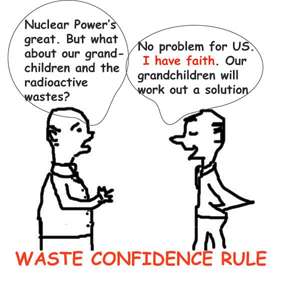
NRC staff to review nuclear reactor waste storage rules http://www.reuters.com/article/2012/09/06/us-utilities-nrc-waste-idUSBRE88515T20120906 by Scott DiSavino, Sep 6, 2012 (Reuters) – The U.S. Nuclear Regulatory Commission (NRC) directed its staff on Thursday to start an environmental review into the temporary storage of spent nuclear fuel, following a court ruling that led the agency to stop issuing new reactor licenses. Continue reading
Challenge to Florida law, letting nuclear companies screw the residents in advance
 Southern Alliance for Clean Energy Looking to Fight Off Rising Nuclear Power Costs for FPL Customers New Times, By Chris Joseph Sep. 6 2012 In 2006, the undaunted geniuses in the Florida Legislature came up with the Florida Renewable Technology and Energy Efficiency Act, a shady law that basically gives utility companies like FPL and Progress Energy Florida permission to charge customers for something that might be built or fixed, without even having to reimburse the customer if they decide, meh, that nuclear power plant doesn’t need to be built or fixed after all… Ah well! But hey, thanks for the extra two bucks on that electric bill, yo!
The Southern Alliance for Clean Energy filed a Florida Supreme Court challenge to the law , saying that the statute is a tad too fuzzy and vague and gives utility companies too much free reign to go building (or not building) nuclear reactors willy-nilly at customers’ expense.
Meanwhile, FPL is now asking for $151.4 million to upgrade nuclear plants in St. Lucie as well as the plant in Turkey Point….
PEF customers might get screwed a little harder, with the company requesting $151.6 million for an upgrade at its Crystal River nuclear plant as well as a new plant in Levy County, which would add nearly $5 per monthly bill.
The Florida Public Service Commission held a hearing on Wednesday to determine if customers should be footing the bill for unbuilt, unfixed nuclear power plant projects.
The commission held off PEF on getting their grubby mitts on $9 million in repairs for the Crystal River plant, which has been just a giant stone thing sitting there doing nothing since 2009. PEF hasn’t even decided if it wants to rebuild the plant or just shut it down completely, yet there it is, asking for 9 mil like it’s loose change in Florida’s cup holder.
On July 10, the Office of Public Counsel called in consultant William R. Jacobs to testify that the Turkey Point plant upgrade costs have ballooned to more than half a billion dollars in the past 14 months. Jacobs also said that costs have been hidden because they are mixed in with other projects.
Think of it like a giant Reece’s peanut butter cup made of your money. Feel better now?….. http://blogs.browardpalmbeach.com/pulp/2012/09/nuclear_cost.php
“It is now clear that the Turkey Point EPU project is on a runaway course of its own, the extent of which is being buried by FPL’s composite approach,” Jacobs said.
Savannah River nuclear site – killer radiation and coverup
 Race and Radiation: The Equal Opportunity Killer at the Savannah River Site DC Bureau By Joseph Trento, September 6th, 2012 “……The multiple lawsuits and harsh criticism of its practices have not seemed to stop some at SRS. …..
While some SRS management discriminates against black workers, the reality is everyone in the region – regardless of color – have been misled about the dangers at the Site. South Carolina and Georgia politicians used the conservative and patriotic culture to make sure the health effects at SRS received no serious monitoring.
The local hospitals and doctors did not establish tumor registries, and local physicians never spoke out about the effects of the plant on workers and residents. Like any other company town, Aiken and the surrounding communities did not dare challenge a federal government agency that provided high-paying jobs and enriched the communities with contributions and donations…..
with the money came unspoken danger. Unannounced radiation releases into the air exposed children to the most toxic nuclear materials on a regular basis during the 1950s and 1960s. Local officials and residents made no effort to ask questions about what went on at SRS. As a result, today SRS is the most radioactively contaminated single site in the world. Though a Superfund Site, the EPA has no legal power to stop the National Nuclear Security Administration from creating more high-level nuclear waste. The NNSA continues to amass more high-level waste every day at SRS. Since the Yucca Mountain nuclear storage facility was abandoned, SRS has become the de facto high-level nuclear waste dump for the United States.
In recent weeks, the DOE-appointed Citizens Advisory Board that does “outside environmental monitoring” at the Site has shown signs of abandoning its traditional DOE rubber stamp role and began asking hard questions that had been reserved for environmental critics of SRS. The reality that radioactivity cannot be mitigated, just segregated and stored for the thousands of years it takes to decay, makes the entire Savannah River Site and the communities near it what former DOE official Robert Alvarez says is “a national sacrifice zone.”
Even South Carolina area political officials who have run for office again and again on the vast amounts of federal aid and contractor monies they enjoy are beginning to understand that the state’s reputation as a retirement haven may be less attractive if future retirees are reluctant to purchase homes adjoining the largest high-level waste nuclear dump site in the United States. The increased publicity and wariness toward SRS is making retirement and second homes from Aiken to Hilton Head less appealing.
As the troubled history of SRS becomes more personal to people in the surrounding communities, the acceptance of DOE’s continued pollution may become politically untenable.
“We were basically revisiting what transpired 46 years ago and yet this story is still being told again and it’s still a tragic story,” Richard Lindsay said. “The same elements are there. These are human beings whose lives are being affected and yet there are other people who seem to be indifferent to it. Sometimes I just get a sense that people don’t get it.” http://www.dcbureau.org/201209067618/national-security-news-service/race-and-radiation-the-equal-opportunity-killer-at-the-savannah-river-site.html
Public to pay upfront nuclear costs? Florida Public Service Commission hearing
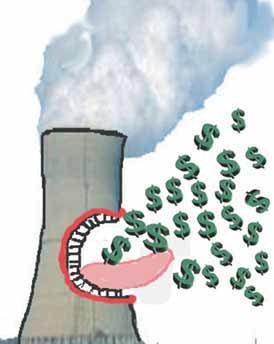 Florida regulators holding nuclear costs hearing By Bill Kaczor on September 06, 2012 Businessweek Bloomberg TALLAHASSEE, Fla. (AP) — The Florida Public Service Commission opened a hearing Wednesday on whether to pass the costs of incomplete nuclear power plant projects to customers of the state’s two largest electric utilities but decided immediately to delay action on a request from Progress Energy Florida and soon went into recess.
The panel heard a single Florida Power and Light Co. witness, who was taken out of order due to a scheduling conflict, before recessing the hearing until Monday, when FPL and consumer advocates will make their opening statements. FPL is a unit of NextEra Energy Inc.
FPL, the larger of the two utilities, is seeking $151.5 million to upgrade existing facilities at its St. Lucie plant and add two new reactors to its Turkey Point plant……
Utilities historically were not allowed to pass on power plant construction costs until those facilities went into service, but the Legislature made an exception for nuclear facilities in 2006 to encourage the development of that form of energy.
Consumer advocates and nuclear opponents argue that consumers may wind up paying for facilities that never get built. http://www.businessweek.com/ap/2012-09-06/florida-regulators-holding-nuclear-costs-hearing
Three Renewable Energy Bills Pass in California, Community Solar Bill Fails http://www.sustainablebusiness.com/index.cfm/go/news.display/id/24049 SustainableBusiness.com News, 6 Sept 12, California’s Community Shared Solar Bill (SB 843) died in an Assembly committee because of pressure from the utilities, says Senator Wolk (D-Davis), who sponsored it. The bill passed the Senate. The legislation would have enabled community renewable energy systems, which would give all residents access to solar even as renters or if they lived in houses that have to much shade, for example.
Customers would have received credit on their utility bills for their portion of clean power generated by a given solar project, much as if those systems were located on site.
It was expected to create 12,000 local jobs, and $7.5 billion in economic activity by expanding access to the state’s renewable energy market, says Vote Solar, which analyzed the plan.
Utility PG&E, for example, lobbied against the bill because it would “burden” customers who didn’t opt in to the program, they say in editorial.
The bill is being re-drafted to address concerns and will be introduced again next year.
Three Bills Head to Governor’s Desk
Three other renewable energy-related bills are close to being adopted, however. They await Governor Brown’s signature.
One bill would expand solar hot water heaters to community pools, another would cap permitting fees for solar systems and a third enables aggregate net metering by farmers, schools and other customers with multiple meters.
Assembly Bill 2249 extends solar hot water heater incentives to commercial pools by amending the Solar Water Heating and Efficiency Act of 2007. It encourages municipalities, schools and nonprofits to use solar hot water heating by extending incentives to commercial pools.
Senate Bill 1222 caps permitting fees charged by counties and cities for solar installations, a key barrier to deploying more systems.
For residential solar PV, fees can’t exceed $500 plus $15 per kilowatt (kW) for systems bigger than 15 kW. For commercial systems, it’s capped at $1000 plus $7 per kW between 51-250 kW, and an additional $5 per kW for each kilowatt above 250 kW.
SB 594, also sponsored by Wolk, allows customers that have multiple electricity meters, such as farmers and schools, to participate in the state’s net energy metering program.
Suffolk Council joins Virginia Beach and Norfolk in opposing uranium mining
 Councils in Virginia Beach and Norfolk adopted similar resolutions earlier this summer. Chesapeake’s council is set to take up the matter Tuesday.
Suffolk council OKs resolution against uranium mining By Jeff Sheler The Virginian-Pilot September 6, 2012 SUFFOLK The City Council added its voice to those of other Hampton Roads cities calling for the continuation of a 30-year ban on uranium mining in Virginia.
By a unanimous vote, the council adopted a resolution Wednesday that opposes the mining and milling of uranium in Pittsylvania County, which it described as a potential threat to the region’s water supply. Continue reading
Costs of USA’s MOX nuclear plant spinning out of control
Supporters, opponents of MOX facility speak out at hearing Augusta Chronicle, By Rob Pavey Sept. 4, 2012 “…..The government has not altered its mission to dispose of the plutonium, but has amended its original plan to build a freestanding plant to process plutonium “pits” from dismantled 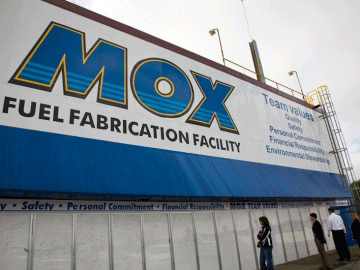 warheads into powder for use at the MOX plant. Instead, the new plan will use multiple existing facilities, including the H Canyon facilities at Savannah River Site, to accomplish the same mission without building a new plant. Plutonium not suitable for MOX will be disposed of at a site in New Mexico.
Critics of the program, however, raised continuing concerns about escalating costs and suggested the plutonium could simply be processed as nuclear waste and immobilized.
Tom Clements, the non-proliferation policy director for the Alliance for Nuclear Accountability, also noted that there are currently no clients willing to use MOX fuel in commercial reactors….. A cheaper alternative, he suggested, would be to immobilize plutonium at the SRS Defense Waste Processing Facility or a similar project that would
prevent any future use of the material for weapons.
“The costs are just spiraling out of control, Clements said……
Nuclear weapons scientists – studied by anthropologist
Designed for Death Guernica , Helen Caldicott interviews Hugh Gusterson September 4, 2012 As we grapple with the legal, political, and cultural implications of drone warfare and targeted killing, the renowned anthropologist draws on an older turning point in military ethics—weapons design at Los Alamos…
…. . A pioneer in the anthropology of science and current professor at George Mason University, Gusterson has studied the culture of nuclear weapons scientists and antinuclear activists in the United Sates and Russia. He is a vocal critic of government recruitment of anthropologists in counterinsurgency projects in Iraq and Afghanistan, and a founding member of the Network of Concerned Anthropologists.
The following interview is excerpted from the forthcoming Loving This Planet: Leading Thinkers Talk About How to Make a Better World, a collection of transcripts from the weekly radio program of physician-turned-activist Dr. Helen Caldicott. …. . A pioneer in the anthropology of science and current professor at George Mason University, Gusterson has studied the culture of nuclear weapons scientists and antinuclear activists in the United Sates and Russia. He is a vocal critic of government recruitment of anthropologists in counterinsurgency projects in Iraq and Afghanistan, and a founding member of the Network of Concerned Anthropologists.
The following interview is excerpted from the forthcoming Loving This Planet: Leading Thinkers Talk About How to Make a Better World, a collection of transcripts from the weekly radio program of physician-turned-activist Dr. Helen Caldicott. ….
Hugh Gusterson: There are two nuclear weapons labs: one is Los Alamos, which developed the bombs dropped on Hiroshima and Nagasaki, and the other is Lawrence Livermore in San Francisco, which was established in 1952. I have done extensive fieldwork at both labs….I vividly remember one weapons scientist telling me that he could never work on conventional weapons, because it would be immoral. He felt much more comfortable working on nuclear weapons, because he was convinced that nuclear weapons would never be used. I was very struck that he felt morally cleaner working on weapons that could destroy a city than he would have felt working on napalm….. most of the weapons scientists didn’t see much conflict between Christianity and designing weapons of mass destruction, and they were quite sure the weapons would never be used……
Hugh Gusterson: They also talk about missiles being connected to the outside world by umbilical cords. The very first bomb tested was referred to as Oppenheimer’s baby. The one dropped on Hiroshima was Little Boy. So there is this language of metaphors of birth that surrounds this bomb enterprise. They talk about the results of radioactive decay processes as being daughter products. So there is this language of fertility and birth….. The language of death is banished from the world of nuclear weapons scientists; they don’t talk about killing people; they talk about collateral damage. People are not incinerated; they’re always carbonized—anesthetizing language from which death is banished. But there’s this very rich set of metaphors about birth. I’ve always wondered if that wasn’t an attempt on their part to say, We’re really about life, we’re not about killing people. Which you can see as a form of denial…..
As an anthropologist, I find it particularly offensive when you talk to weapons scientists, or to other kinds of nuclear weapons professionals, that there’s a uniform assumption that Americans are the only people who can be uniquely trusted with nuclear weapons in a way that black and brown people, non-Christians in particular, cannot. You hear it said that only Americans and Europeans have the strength required of people to have nuclear weapons. This flies in the face of the evidence, since the United States is the only country ever to abuse weapons….. http://www.guernicamag.com/interviews/designed-for-death/
USA Federal government responsible to clean up Hanford nuclear waste
State right to force federal Hanford cleanup http://union-bulletin.com/news/2012/sep/04/state-right-to-force-federal-hanford-cleanup/#
The federal government created the waste; it must clean it up.
By Editorial Board As of Tuesday, September 4, 2012 Washington state —
led by Gov. Chris Gregoire and Attorney General Rob McKenna — is
wisely threatening legal action against the federal government because
it continues to shirk its responsibilities to clean up the Hanford
Nuclear Reservation.
#Federal officials have been delaying fully funding the cleanup
operation for years. Congress trims current funding while promising to
make up for it some day — a day that never arrives. Continue reading
A mainstream journalist sees hope for future of credible journalism
 Read all about it: journalism has a future!, The Age, Katharine Murphy, September 3, 2012 If balance is a pillar of the new media then the truth will still win out. ”….I find myself increasingly energised by the fantastic journalism I can now consume online from the best media outlets in the world. The digital bounty has changed my own news consumption habits fundamentally.
These days I hoover up blogs in London, New York and Washington, scour the American political website Politico (one of the great success stories of this period), admire the methodical journalism of ProPublica, watch live politics coverage on The Guardian and The New York Times, and use Twitter as a brilliant aggregator as well as a breaking news channel in its own right……
Modern journalism should be about providing clarity in the clamour. It should champion facts over what the American comedian Stephen Colbert has brilliantly termed ”truthiness” (a statement that feels or rings true, regardless of
the logic or evidence)…..
 There’s been an interesting affirmation of core professional values over the past few days in the United States. I’ve been fascinated to watch a fact checking offensive unleashed by the US media covering the presidential campaign.
The trigger was an anti-Obama advertisement from the Romney campaign. This particular ad, a core element of the Republicans’ negative campaign, reportedly contained factual errors.
This problem was called out. The response from Team Romney was not an apology. It was defiance. Romney pollster Neil Newhouse reportedly declared: ”We’re not going to let our campaign be dictated by the fact checkers.”...
http://www.theage.com.au/opinion/politics/read-all-about-it-journalism-has-a-future-20120902-2588i.html#ixzz25RW49zSx
“multiple system failures on many levels” US nuclear weapons plant safety audit
Weapons Plant Security Issues Are Described in U.S. Audit, NYT, By MATTHEW L. WALD, August 31, 2012 WASHINGTON — The contractors in charge of guarding the national stockpile of bomb-grade uranium in Tennessee knew well before an 82-year-old nun and two other pacifists broke through three barriers this summer that a lot of the security equipment was broken, and government managers knew it too, according to an internal audit of Energy Department operations at the weapons facility. The inspector general’s investigation found “troubling displays of ineptitude.” The intruders used ordinary bolt cutters to penetrate as far as the uranium storage building before dawn on July 28, and then went undiscovered until they approached an officer in his vehicle and surrendered, according to the audit. The officer failed to draw his gun or even secure his gun from seizure, “and permitted the trespassers to roam about and retrieve various items from backpacks they had apparently brought into the area,” the report said.
The three antiwar protesters — Sister Megan Gillespie Rice, of Las Vegas; Michael R. Walli, 63, of Washington; and Gregory I. Boertje-Obed, 57, of Duluth, Minn. — have been charged with felonies in connection with damage to the building. They said they had brought bread and candles for a Christian ritual.
The guard told The Knoxville News that he was being used as a scapegoat, and that it was obvious that the trio posed no threat.
Internal communications at the weapons plant, Y-12, near Oak Ridge, Tenn., were generally so poor that security officers told the auditors that it was not unusual for roofers or utility repair personnel to show up unannounced, and that when they heard the trespassers banging on the exterior wall of the storage building with hammers, they assumed it was maintenance workers.
The Energy Department’s inspector general, Gregory H. Friedman, said in the report that the episode showed “multiple system failures on many levels.”…. http://www.nytimes.com/2012/09/01/science/earth/audit-finds-security-lapses-at-y-12-uranium-storage-plant.html?_r=1&smid=fb-share
Nuclear power and its threat to fresh water supplies
 According to a 2011 report from the Union of Concerned Scientists, water withdrawals vary widely from one type of power plant to another: “On average in 2008, plants in the US nuclear fleet withdrew nearly eight times more freshwater than natural gas plants per unit of electricity generated, and 11 percent more than coal plants.
When water efficiency is factored into the equation, alternative energy sources, like wind turbines and solar cells, compare more favorably to coal, gas, and nuclear power.
Treading water, BULLETIN OF THE ATOMIC  SCIENTISTS, BY DAWN STOVER | 22 AUGUST 2012 In 1954, Lewis Strauss, then chairman of the Atomic Energy Commission, gave a speech in which he famously predicted that “our children will enjoy in their homes electrical energy too cheap to meter.” Whether he was talking about fission reactors or a secret fusion project is unclear, but he was wrong in either case. What did turn out to be too cheap to meter, however, was water.
Unless you have a private well or spring on your property, you probably don’t enjoy free water in your home. But it’s a different story if you’re running a power plant or drilling for oil: The biggest water consumers pay the least for every gallon, and most power plants pay almost nothing at all. Perhaps that’s why so little research and funding is devoted to saving water — far less than is spent on energy efficiency.
This year’s drought, however, is a painful reminder that water is not an unlimited resource. According to the National Climate Data Center, moderate to exceptional drought currentlycovers 64 percent of the contiguous United States. A new study in the journal Nature Climate Change predicts that severe and widespread droughts will continue during the coming decades……
A June 2012 report from the watershed-protection group River Network found that, for every gallon of water used in an average American household, five times as much water is used to provide that same home with electricity.
It takes water to make energy. Coal, gas, and nuclear power plants generate electricity using steam-driven turbine generators. They withdraw surface water from rivers, lakes, or other bodies and use it to cool the steam. Thermoelectric power production has been the largest category of water use in the United States since 1965, and it is currently the fastest-growing user of freshwater. Continue reading
Climate Change is affecting nuclear power plants

 How Climate Change May Affect Nuclear Power Plants http://theenergycollective.com/node/107461?utm_source=tec_newsletter&utm_medium=email&utm_campaign=newsletter August 29, 2012 Many nuclear power plants rely heavily on access to nearby sources of cold water to keep the system cool. Many of these power plants were built several decades ago and some of them are not well prepared for the warmer weather we are now experiencing.
At a twin-unit nuclear power plant in Illinois , temperatures exceeded what is allowed with current regulations by four degrees Fahrenheit.
Craig Nesbit a spokesman for Exelon, which owns the plant, stated the following about the recent incident:
“I’m not a climatologist. But clearly the calculations when the plant was first operated in 1986 are not what is sufficient today, not all the time.”
The cooling pond consists of a 2,500-acre (10 square kilometer) lake. For a cooling system like this to function properly, the heat dumped into the pond eventually has to move somewhere else. The warmer the weather the more saturated the air becomes, which means less energy is transferred away from the cooling pond. In a typical situation, cooling ponds loose their heat during the night, but because the temperatures these days have stayed above 90 degrees, the plant`s cooling system has been compromised.
The permitted level that originally was 98 degrees has now been increased to 100 degrees in order keep the power plant up and running.
The safety argument “is likely solid and justified,’’ stated David Lochbaum of the Union of Concerned Scientists, but “it is tough to argue (rationally) that warming water conditions are unforeseen.’’ That is a predictable consequence of global warming, he said.
Drought and water shortages, also caused by the change in weather, could potentially become a problem for nuclear power plants in the near future as well. A nuclear power plant`s cooling could become less efficient by water-shortages in much the same it does with increasing temperatures. Georgia, Alabama and similar states have to be extra careful with this in the coming years.
1 This Month
23-25 October – on Zoom – World BEYOND War’s annual global conferenc


Shut down the radiation-damaged Heysham nuclear reactors now
To see nuclear-related stories in greater depth and intensity – go to https://nuclearinformation.wordpress.com

Say No to NASA’s Reckless Nuclear Reactor on the Moon
Say No to NASA’s Reckless Nuclear Reactor on the Moon

-
Archives
- October 2026 (247)
- September 2026 (339)
- August 2026 (330)
- July 2026 (355)
- June 2026 (287)
- May 2026 (306)
- April 2026 (356)
- March 2026 (251)
- February 2026 (267)
- January 2026 (308)
- December 2025 (358)
- November 2025 (359)
-
Categories
- 1
- 1 NUCLEAR ISSUES
- business and costs
- climate change
- culture and arts
- ENERGY
- environment
- health
- history
- indigenous issues
- Legal
- marketing of nuclear
- media
- opposition to nuclear
- PERSONAL STORIES
- politics
- politics international
- Religion and ethics
- safety
- secrets,lies and civil liberties
- spinbuster
- technology
- Uranium
- wastes
- weapons and war
- Women
- 2 WORLD
- ACTION
- AFRICA
- Atrocities
- AUSTRALIA
- Christina's notes
- Christina's themes
- culture and arts
- Events
- Fuk 2022
- Fuk 2023
- Fukushima 2017
- Fukushima 2018
- fukushima 2019
- Fukushima 2020
- Fukushima 2021
- general
- global warming
- Humour (God we need it)
- Nuclear
- RARE EARTHS
- Reference
- resources – print
- Resources -audiovicual
- Weekly Newsletter
- World
- World Nuclear
- YouTube
-
RSS
Entries RSS
Comments RSS

