Debate on Georgia’s nuclear power plant costs may be delayed until 2018
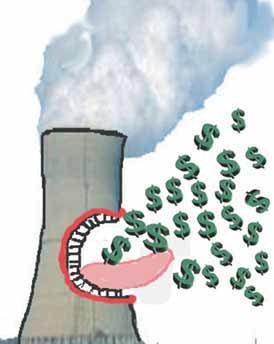 Ga. regulators to vote on nuclear plant agreement http://www.bellinghamherald.com/2013/08/29/3174468/ga-regulators-to-vote-on-nuclear.html August 29, 2013 ATLANTA — The debate over the rising cost of building a new nuclear power plant in eastern Georgia would be deferred several years under a deal that Georgia regulators will consider Tuesday.
The members of the Public Service Commission decided Thursday to consider the preliminary agreement between agency regulators and Southern Co. subsidiary Georgia Power at the PSC’s meeting next week.
Under the proposed deal, Southern Co. would withdraw its request to increase its budget to build two more nuclear reactors at Plant Vogtle (VOH’-gohl), southeast of Augusta. The power company had previously asked to increase its budget by $737 million to $6.85 billion.
Instead, the debate over whether to formally raise the construction budget would not happen until the first of the two reactors comes online, probably January 2018 at the earliest, according to the latest timelines from a state monitor. The deal shifts some financial risk onto Southern Co. If the utility exceeds its budget, then the burden would be on Georgia Power to persuade regulators that the excess spending should be passed along to its customers. But if the PSC votes to raise the project budget, then the law would assume Georgia Power was entitled to collect all of its budgeted costs from customers, so long as regulators couldn’t prove the spending was imprudent, reckless or somehow criminal.
The preliminary agreement also helps Southern Co. avoid a politically charged fight over project spending while it deals with a separate rate case in Georgia and an over-budget coal gasification plant in Mississippi.
low-dose ionizing radiation’s higher cancer risk for women
Cancer risk found higher in women exposed to low-dose ionizing radiation than men, Healio.com, Lawler PR. Am J Cardiol. 2013;doi:10/1016/j.amjcard.2013.07.009. August 29, 2013 Women exposed to low-dose ionizing radiation after an acute MI were more susceptible to cancer than men, according to new study data. Patrick R. Lawler, MD, of McGill University Health Center and the Jewish General Hospital, Montreal, Quebec, and colleagues previously found a linkage between the low-dose ionizing radiation from cardiac imaging and therapeutic procedures and an increased risk for cancer. They sought to further this linkage by identifying the specific risks for women and younger patients……..
after adjusting for age and noncardiac radiation, women were more likely to develop cancer for each mSv of exposure (HR=1.005; 95% CI, 1.002-1.008) than men (HR=1.002; 95% CI, 1.001-1.004; P=.014). Women were more likely to have cancer of the thorax, whereas hematologic cancer rates were higher in men.
The increased incidence of cancer found in women “may relate to relatively smaller body sizes for the same amount of radiation,” the researchers wrote.
Despite these findings, the researchers noted that the RRs for cancer incidence were small.
“We and others have shown that [low-dose radiation ionizing radiation] incurred after MI is primarily comprised of therapeutic procedures with known clinical benefit,” the researchers wrote. “Indeed, the benefits of many medical procedures likely outweigh the potential risks, and clinicians should be very wary of deferring useful interventions for the fear of [low-dose radiation ionizing radiation] risk, doing so only when procedures are truly unnecessary or when alternative non-[low-dose radiation ionizing radiation]-emitting technology is available.”http://www.healio.com/cardiology/intervention/news/online/%7Ba76cf3db-a740-44e5-af92-c68086348df5%7D/cancer-risk-found-higher-in-women-exposed-to-low-dose-ionizing-radiation-than-men
Nuclear waste from France to be dumped in Mississippi?
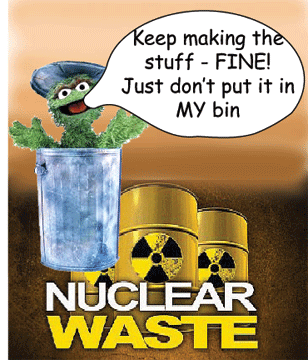 Cottonmouth – Is Mississippi going to be storing France’s Nuclear Waste? http://yallpolitics.com/index.php/yp/post/35788/ 28 Aug 13, While Bryant and his entourage were having a good time in Paris sampling the French lifestyle, did they take a moment to consider how most of the lights are powered there? You may be surprised to find out it’s nuclear power. France generates about 75 percent of its electricity needs from nuclear power. Their nuclear waste has to go somewhere, right? Why not Mississippi?
During their trip to France, did Bryant and his MDA director negotiate a deal with the French government to house that country’s nuclear waste?
Representatives from the Mississippi Energy Institute noted that they know of communities, that they did not specify, which are interested in this project. Were they referring to communities in France instead of Mississippi?
Radioactive plume will arrive at uneven times and concentrations on USA West Coast
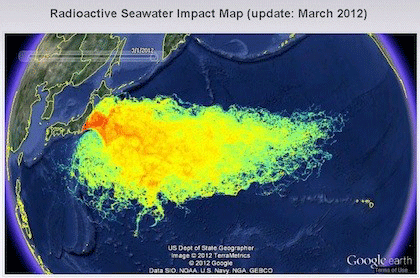 Fukushima radioactive plume to reach US in three years Phys Org 28 Aug 13“….While atmospheric radiation was detected on the US west coast within days of the incident, the radioactive particles in the ocean plume take considerably longer to travel the same distance.
In the paper, researchers from the Centre of Excellence for Climate System Science and others used a range of ocean simulations to track the path of the radiation from the Fukushima incident.
The models identified where it would likely travel through the world’s oceans for the next 10 years…… Observers on the west coast of the United States will be able to see a measurable increase in radioactive material three years after the event,” said one of the paper’s authors, Dr Erik van Sebille…… Eddies and giant whirlpools – some tens of kilometres wide – and other currents in the open ocean continue this dilution process and direct the radioactive particles to different areas along the US west coast.
“Although some uncertainties remain around the total amount released and the likely concentrations that would be observed, we have shown unambiguously that the contact with the north-west American coasts will not be identical everywhere,” said Dr Vincent Rossi.
“Shelf waters north of 45°N will experience higher concentrations during a shorter period, when compared to the Californian coast. This late but prolonged exposure is due to the three-dimensional pathways of the plume. The plume will be forced down deeper into the ocean toward the subtropics before rising up again along the southern Californian shelf.”
Interestingly, the great majority of the radioactive material will stay in the North Pacific, with very little crossing south of the Equator in the first decade. Eventually over a number of decades, a measurable but otherwise harmless signature of the radiation will spread into other ocean basins, particularly the Indian and South Pacific oceans……. For those interested in tracking the path of the radiation, we have developed a website to help them.
“Using this website, members of the public can click on an area in the ocean and track the movement of the radiation or any other form of pollution on the ocean surface over the next 10 years.”
Read more at: http://phys.org/news/2013-08-fukushima-radioactive-plume-years.html#jCp
Inherent dangers in Mississippi as a nuclear waste storage place
Reject nuclear waste storage http://www.clarionledger.com/article/20130827/OPINION01/308270012/Reject-nuclear-waste-storage Aug. 26, 2013 Some ideas are so bad they don’t deserve consideration, and such is the case with the Mississippi Energy Institute’s proposal to build a permanent nuclear waste storage facility in Mississippi.
Yucca Mountain in Nevada was designated the nation’s nuclear waste repository in 1987, but federal funding for the project ended in 2010 after extreme political pressure was placed on Congress and the Obama administration. The pressure came from concerned citizens and activists who feared having the highly radioactive material shipped through their hometowns to the site.
The Energy Department continues to look for a new site, and in 2012, released a blue ribbon study outlining the urgency for determining a new geological repository to consolidate the nuclear waste that is currently being housed in temporary locations across the country.
While nuclear energy itself faces its share of controversy, we believe that it is a safe, viable energy source when properly monitored and maintained. The same could be argued about storing nuclear waste, but we feel doing so overlooks inherent dangers indirectly associated with making Mississippi a temporary or long-term storage facility. Spent fuel rods from nuclear reactors are the most radioactive material of nuclear waste. These rods produce 99 percent of the radiation from nuclear waste, even though they make up a minority of the actual volume of nuclear waste. Nuclear waste can take anywhere from 100 years to thousands of years — in some cases 1 million years — to reach a point where it is no longer radioactive enough to pose a threat.
It’s the presence of such material — not to mention the transportation of it from all across the country to the Magnolia State — that has many people concerned. We tend to agree with those concerns. Despite the nation’s spotless record in transporting nuclear waste, we don’t want to become the destination for U.S. nuclear waste. It would take only one accident to do irreparable damage for decades or longer.
Of course, Mississippi becoming the consolidated geological dumping site for the nation’s nuclear waste is not something that will happen overnight. It would likely take a decade or longer for such a designation to be decided by the federal government. However, short-term storage can happen much sooner.
MEI wants to bring short-term storage of nuclear waste to Mississippi and use emerging technologies to develop a nuclear waste recycling program. Being able to recycle such material is better than burying it thousands of feet underground, and we support the research into such technologies. However, Mississippi does not have to become a short-term storage site for U.S. nuclear waste to conduct such studies.
The nuclear power plant in Port Gibson already stores nuclear waste. It, like other plants, has no place to send the waste for storage. Without a more permanent solution, Port Gibson and other facilities will face real issues. The Energy Department was right in 2012 to insist that the federal government move forward with deliberate speed in finding a permanent, national solution.
However, we hope that Gov. Phil Bryant and state lawmakers will politely remove Mississippi from any consideration — short-term or long-term — as a site to store the nuclear waste from across the country. Some risks are just too great, especially for returns that will not be fully realized for at least 15 years.
And now, Vermont Yankee nuclear power plant bites the dust
 Plan to close Vermont Yankee marks latest blow to nuclear power http://www.csmonitor.com/USA/USA- The Vermont Yankee nuclear power plant will shut down by the end of 2014, its owner said Tuesday, citing ‘financial factors.’ It is the fifth nuclear plant this year to close or to have plans made for closure. By Chelsea B. Sheasley, Correspondent / August 27, 2013
The Vermont Yankee nuclear power plant in Vernon, Vt., will be shut down by the end of next year due to financial factors, the company that owns the plant 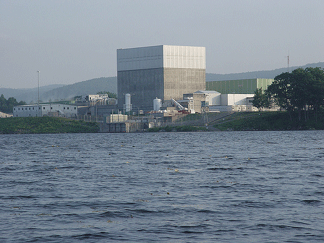 announced Tuesday, in the latest sign of a difficult economic climate for nuclear power companies.Entergy Corp., the New Orleans-based company that owns Vermont Yankee, plans on closing and decommissioning the plant by the fourth quarter of 2014, in cooperation with the US Nuclear Regulatory Commission. It is the fifth nuclear plant this year to close or to have plans made for its closure. The company said the decision to close was based on “a number of financial factors” including sustained lower power prices stemming from the natural-gas revolution, a high cost structure for the plant, and what it called “wholesale market design flaws” that artificially deflate energy prices. Some 630 people work at the plant.
Likely also a contributing factor was the ongoing legal battle with the state of Vermont, where state officials had been trying to shutter the plant on their own authority. In 2006 the state legislature granted itself the authority to close the plant and in 2010 voted to do so
The legal dispute had been turning in Entergy’s favor. Earlier this month a federal appeals court ruled that the Vermont Legislature did not have the authority to close the plant. Entergy had indicated in 2010 that it was considering selling the plant, a single unit boiling water reactor, The Wall Street Journal reports.
Entergy Corp. isn’t the only nuclear power company facing economic challenges. In June, Southern California Edison pulled the plug on the San Onofre Nuclear Generating Station, a 45-year-old facility in northern San Diego County, because of the high cost of repairs needed less than three years after the company invested $780 million in upgrades.
Small Modular Nuclear reactors (SMRs) promoted by hoax film “Pandora’s Promise”
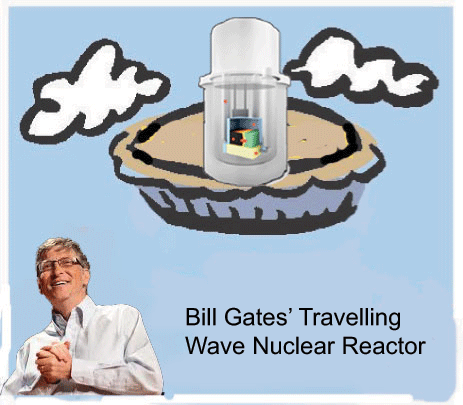 the most obvious deal killer is economic. Even by current calculations, any new reactor design would have difficulty competing with renewable energy sources, especially solar panels that can be installed on rooftops, thus avoiding transmission costs.
The SMR’s primary customer, the Tennessee Valley Authority, has now pushed back to 2015 the target date for submitting its construction permit application. Even if wildly successful, the SMR could not meaningfully affect climate change for another 20 years—this in the midst of a crisis Hansen and so many others see as critical and immediate. The SMR blueprint hinges on technologies that have already failed. Continue reading
Massive radioactive air pollution from Savannah River Nuclear Site.

 Group calls for air pollution investigation at SRS http://www.aikenstandard.com/article/20130821/AIK0101/130829945/1004/group-calls-for-air-pollution-investigation-at-srs Derrek Asberry, August 21, 2013 A nonprofit environmental group is challenging a government study of air pollutants by calling for an investigation of toxic air pollution from Savannah River Site.
The Blue Ridge Environmental Defense League filed a letter with the Agency for Toxic Substances and Disease Registry, criticizing the toxic agency’s evaluation of SRS.
“The amount of airborne radioactive pollution from SRS is massive,” said Luis Zeller, the director of the environmental group, in a recent press release. “It is greater than the liquid releases to streams and groundwater by at least an order of magnitude. How could the ATSDR miss this?”
The group cited the toxic agency’s July 1 public health evaluation of the Site, which concluded that airborne emissions of radioactive materials and most chemical pollutants from SRS were below levels that could potentially cause harmful health effects.
“The ATSDR’s study is contradictory and inconclusive,” said Charles Utley in the press release.
Utley is the environmental justice campaign coordinator for the Blue Ridge Environmental Defense League. He conducted separate field investigations around SRS and followed up with a report entitled “Sow the Wind.”
“The League’s own investigations centered on the air toxics emitted from hundreds of large and small smokestacks at SRS and how they interact to raise downwind pollution levels in Jackson, New Ellenton, Williston and other communities,” the group stated in the release.
The group continued by recommending the Agency for Toxic Substances and Disease Registry take one of two actions: conduct an analysis and produce conclusive results on radioactive air pollutions, or require the Department of Energy to determine the public health impact of radioactive air pollutants in the Central Savannah River Area.
“Our report indicates that operations at SRS have had, and will continue to have, a negative impact on the health of residents in the Central Savannah River Area,” Utley added in the press release.
SRS did not issue a comment on the issue.
Huge federal subsidies to nuclear power, but few to renewables
Ask Saint Onofrio discusses the significance of the Price-Anderson Nuclear Industries Indemnity Act, which limits the costs for nuclear plants by shifting a portion of the liability for an accident from plant operators to taxpayers. Also discussed are decommissioning costs, which fall largely on ratepayers. In the case of San Onofre, closing estimates are in the range of $4.1 billion.
New Report Finds California Nuclear Energy Has Received $8.2 Billion in Federal Subsidies http://www.heraldonline.com/2013/08/26/5149320/new-report-finds-california- nuclear.html DBL Investors examines rationale for subsidizing mature, declining energy sources By DBL Investors SAN FRANCISCO, AUG. 26, 2013 — /PRNewswire/ – DBL Investors, a double bottom line venture capital firm, today announced a report revealing that the California nuclear industry has received $8.21 billion in federal subsidies over the last 50 years. The report, Ask Saint Onofrio: Finding What Has Been Lost in A Tale of Two Energy Sources, compares federal subsidies for nuclear energy to those provided for distributed solar energy.
“In keeping with our nation’s tradition of supporting the emergence of new energy sources, federal subsidies were necessary and highly-effective for the early growth of the nuclear industry and have been vital to the recent growth of the nascent distributed solar industry,” said report co-author and Managing Partner of DBL Investors Nancy E. Pfund,
Nuclear energy has received four times more federal support than distributed solar over a period six times as long. While solar is beginning to comprise a significant portion of installed capacity in California, it has received less support than nuclear did in its earliest years. At the same time, the closure of the San Onofre Nuclear Generating Station (SONGS) has reduced California’s in-state nuclear generation by almost 50 percent.
Pfund adds, “The difference is that despite the declining role of nuclear power in the Golden State, federal subsidies for nuclear have become a perpetuity. Meanwhile, solar subsidies are at risk of ending during the industry’s infancy, even as solar creates thousands of California jobs.” Continue reading
USA West Coast Tuna, Salmon and Herring contaminated by radiation?
 The bottom line – as nuclear experts said 4 days after the Japanese earthquake and tsunami – is that we all need to demand that fish be tested for radiation.
Is Fukushima Radiation Contaminating Tuna, Salmon and Herring On the West Coast of North America?
By Washington’s Blog Global Research, August 26, 2013 Demand that Fish Be Tested for Radiation
We’ve extensively documented that radioactivity from Fukushima is spreading to North America.
More than a year ago, 15 out of 15 bluefin tuna tested in California waters were contaminated with radioactive cesium from Fukushima.
Bluefin tuna are a wide-ranging fish, which can swim back and forth between Japan and North America in a year. But what about other types of fish?
Sockeye salmon also have a range spanning all of the way from Japan to Alaska, Canada, Washington and Oregon: Associated Press reports that both scientists and native elders in British Columbia say that sockeye numbers have plummeted:…….
Another example – pacific herring – is even more dramatic. Pacific herring is wide-ranging fish, spanning all the way from Japan to Southern California:
Every single pacific herring examined by a biologist in Canada was found to be hemorrhaging blood. As Ene News reports:
See also: Alexandra Morton via Vancouver 24 hrs, Vancouver 24 hrs, Alexandra Morton)
The Globe and Mail, Aug 13, 2013 (Emphasis Added):
Independent fisheries scientist Alexandra Morton is raising concerns about a disease she says is spreading through Pacific herring causing fish to hemorrhage. […] “Two days ago I did a beach seine on Malcolm Island [near Port McNeill on northern Vancouver Island] and I got approximately 100 of these little herring and they were not only bleeding from their fins, but their bellies, their chins, their eyeballs. […] “It was 100 per cent … I couldn’t find any that weren’t bleeding to some degree. And they were schooling with young sockeye [salmon]”
Sun News, Aug 12, 2013: Continue reading
Republican Congressman Steven Palazzo opposes nuclear waste dump for Mississippi
Miss. nuclear waste plan sparks early opposition http://www.miamiherald.com/2013/08/26/3587346/miss-nuclear-waste-plan-sparks.html BY JEFF AMY ASSOCIATED PRESS JACKSON, Miss. –– The Mississippi Energy Institute is pushing for more exploration of storing and reprocessing used nuclear fuel in Mississippi at the same time that one of the state’s congressmen is coming out against it.
Leaders of the institute, which promotes energy development, pitched ideas Monday to the state Senate Economic Development Committee. Jason Dean, who works for a unit of the Butler Snow law firm, says Mississippi should explore interim storage and reprocessing of fuel rods.
The Energy Institute also touts Mississippi’s “unique geologic salt domes.” That’s an echo of a proposal to entomb nuclear waste in the Richton salt dome that sparked public opposition starting in the 1980s.
Congressman Steven Palazzo, a Biloxi Republican who represents Richton, is voicing opposition. “Not now, not ever,” Palazzo says in a Monday statement.
USA’s Minuteman missiles – supremely dangerous – to the USA
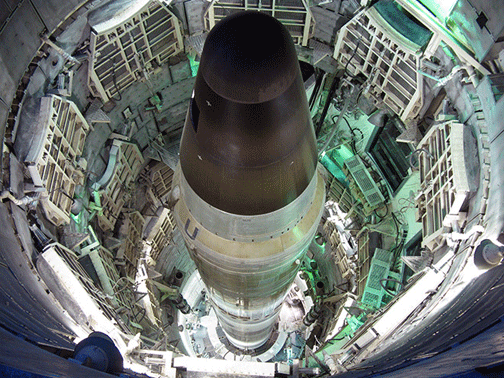 US nuclear weapons poised for catastrophe By James Carroll BOSTON GLOBE AUGUST 26, 2013
The vulnerability is there for all to see. The United States nuclear establishment has been wracked with problems for years. These are especially acute among thousands of officers at the controls of three bases where 450 Minuteman III missiles stand in buried silos on high alert.
In 2008, a Pentagon review found “a dramatic and unacceptable decline” in the way the Air Force was handling its nuclear mission. Senior officials were cashiered. Their replacements were ordered to fix the problems. They have failed to do so. What should be the most rigorously disciplined element in the US military is repeatedly found unworthy of its awesome responsibility. That’s a wake-up call, yet the nation sleeps on……..
supremely dangerous. The missiles are positioned in easily targeted fixed silos across a wide-open western landscape. They are poised for launch on moments’ notice less because of strategic necessity than because they are bound by the rule of “use them or lose them.” The scenario was conceived 50 years ago, under circumstances that are now forgotten. The land-based ICBMs, more than nuclear armed submarines or aircraft, have become the thread from which hangs the sword of accidental holocaust. Fail-safe “right procedures” are the only protection — yet current crews are proving incapable of following those procedures. Fail-safe is the joke that is not funny……… http://www.bostonglobe.com/opinion/2013/08/26/nuclear-tipped-missiles-posed-for-nightmare-holocaust/VZ3KQOUsAUFm4qfuchjmCI/story.html
USA’s nuclear reactors are excellent terrorist targets
 How U.S. nuclear reactors are vulnerable to terrorists By Alan J. Kuperman, CNN, 26 Aug 13 Editor’s note: Kuperman is editor of Nuclear Terrorism and Global Security: The Challenge of Phasing out Highly Enriched Uranium, and coordinator of theNuclear Proliferation Prevention Project (NPPP) at the LBJ School of Public Affairs, University of Texas at Austin, where he is an associate professor. The views expressed are his own.
Nearly a dozen years after the al Qaeda strikes of September 11, 2001, America’s nuclear power plants – and civilian research facilities with bomb-grade uranium – are still not required to protect against a maximum credible terrorist attack of this scale. It is time for policymakers to act, if they want to prevent disaster.
The vulnerability to a terrorist strike was a key finding of a year-long study that I co-authored, as part of a larger interdisciplinary project at the University of Texas at Austin, under a contract for the Office of the Secretary of Defense (which has no responsibility for the final contents of the study)…….
More from CNN: How nations risk nuclear terrorism
Nominally, our government is supposed to protect us against threats that exceed what utilities must defend against. Unfortunately, that is not happening. A terrorist attack could penetrate a facility in minutes to induce a meltdown, while government SWAT teams would not fully engage for at least an hour and a half, according to Congressional testimony by the Project on Government Oversight.
A second danger is the potential theft of bomb-grade, highly enriched uranium from this country’s three civilian research reactors that still use such fuel. The good news is that these facilities have committed to convert to safer, low-enriched uranium fuel, which is not suitable for nuclear weapons. Unfortunately, the conversion program is delayed by technical snags, so the reactors will continue to use bomb-grade uranium for another decade or more.
Most troubling, these research sites are exempt from defending against the modest, posited terrorist attack that utilities must protect against. So, our civilian facilities with bomb-grade uranium are even less secure than nuclear power plants. The amount of bomb-grade uranium at each site might not be sufficient for a nuclear weapon, depending on the sophistication of the bomb-maker, but the U.S. government has been assiduously vacuuming up even smaller amounts of such material around the world, to prevent the spread of nuclear weapons, as detailed in my latest book…… http://globalpublicsquare.blogs.cnn.com/2013/08/26/how-u-s-nuclear-reactors-are-vulnerable-to-terrorists/
Whingeing about nuclear wastes, (but still not stopping making them)

the best plan is to just stop making the stuff
inaction is no longer an option. Twelve states, including California, Massachusetts and Wisconsin, have banned the construction of new nuclear plants until the waste problem is resolved. The byproducts of electricity production and the manufacture of nuclear weapons cannot stay forever in scores of de facto repositories. The public has a right to an efficient and safe long-term waste storage system.
U.S. must commit to permanent, safe disposal of nuclear waste NJ.com By James McGovern 26 Aug 13If someone had suggested 30 years ago that electricity users would be contributing billions of dollars to a government trust fund — and getting nothing in return — the idea would have been dismissed as fantasy.
But this is not made up. It’s really happening, and there’s a possibility it will continue indefinitely unless an effort is made to put a stop to it……..
Here in New Jersey, we have paid more than $665 million into the waste fund — and the money keeps flowing. Nationally, the payments exceed $35.7 billion — and they are growing at a rate of $300 million each year.
What’s more, the Department of Energy was legally obligated to take possession of the used fuel rods no later than 1998, but the used fuel remains where it always has been, in engineered water pools and concrete-and-steel casks at nuclear plants. Reactors such as Salem 1 and 2, Hope Creek and Oyster Creek in New Jersey were not designed to hold used fuel indefinitely. Rather, their mission is electricity production for homes and industry. Continue reading
Closed door meeting between nuclear regulators and — FirstEnergy Corp
FirstEnergy’s nuclear security an issue in an NRC closed-door meeting, Cleveland.com By John Funk, The Plain Dealer August 26, 2013 KING OF PRUSSIA, Pa — FirstEnergy Corp.’s nuclear operating company has asked for a closed-door meeting with top federal regulators about security issues at the company’s nuclear reactor near Pittsburgh.
The Nuclear Regulatory Commission said on Monday that it would meet with company representatives on Sept. 5 at an NRC regional headquarters near Philadelphia.
Security forces at FirstEnergy’s Beaver Valley power plant apparently failed part of a routine “force-on-force” exercise in April. Beaver Valley contains two reactors.
The details of the force-on-force exercise are classified and may never be made public, but the NRC earlier this month warned the company in a public letter that it was considering a citation against the company because the security failure looked significant….. http://www.cleveland.com/business/index.ssf/2013/08/firstenergys_nuclear_security.html
1 This Month
23-25 October – on Zoom – World BEYOND War’s annual global conferenc


Shut down the radiation-damaged Heysham nuclear reactors now
To see nuclear-related stories in greater depth and intensity – go to https://nuclearinformation.wordpress.com

Say No to NASA’s Reckless Nuclear Reactor on the Moon
Say No to NASA’s Reckless Nuclear Reactor on the Moon

-
Archives
- October 2026 (190)
- September 2026 (339)
- August 2026 (330)
- July 2026 (355)
- June 2026 (287)
- May 2026 (306)
- April 2026 (356)
- March 2026 (251)
- February 2026 (267)
- January 2026 (308)
- December 2025 (358)
- November 2025 (359)
-
Categories
- 1
- 1 NUCLEAR ISSUES
- business and costs
- climate change
- culture and arts
- ENERGY
- environment
- health
- history
- indigenous issues
- Legal
- marketing of nuclear
- media
- opposition to nuclear
- PERSONAL STORIES
- politics
- politics international
- Religion and ethics
- safety
- secrets,lies and civil liberties
- spinbuster
- technology
- Uranium
- wastes
- weapons and war
- Women
- 2 WORLD
- ACTION
- AFRICA
- Atrocities
- AUSTRALIA
- Christina's notes
- Christina's themes
- culture and arts
- Events
- Fuk 2022
- Fuk 2023
- Fukushima 2017
- Fukushima 2018
- fukushima 2019
- Fukushima 2020
- Fukushima 2021
- general
- global warming
- Humour (God we need it)
- Nuclear
- RARE EARTHS
- Reference
- resources – print
- Resources -audiovicual
- Weekly Newsletter
- World
- World Nuclear
- YouTube
-
RSS
Entries RSS
Comments RSS

