Anger in India, as government goes for a “sweetheart deal” with US nuclear companies
 ‘Sweetheart’ nuclear deal for US companies sparks furore Indrani Bagchi, TNN | Sep 20, 2013, NEW DELHI: The government’s effort to find an honourable way around the constraint of the nuclear liability law without actually violating it ran into rough weather on Thursday with the opposition accusing it of seeking to dilute the law for the sake of US and other foreign suppliers.
 nuclear plant, to allege that the government was seeking to dilute the provision in the nuclear liability law that would hold foreign reactor suppliers liable in cases of mishaps caused by faulty and defective equipment………. Continue reading
New report on America’s renewable energy policy
2013 America Renewable Energy Policy Handbook Report http://www.environmental-expert.com/news/2013-america-renewable-energy-policy-handbook-report-393874
|
Sep. 19, 2013 North and South America Renewable Energy Policy Handbook 2013 report presents an in-depth analysis of the renewable energy policies across the major countries in North and South America namely the US, Canada, Brazil, Argentina and Mexico. The report provides the current and future renewable energy targets and plans along with the present policy framework, giving a fair idea of overall growth potential of their renewable energy industry.
The report also provides major technology specific policies and incentives provided in each of these countries. The report also provides insights to major policy initiatives for the market development of renewable energy sources such as wind, solar, geothermal, biopower and biofuels. The report ( http://www.reportsnreports.com/reports/268267-north-and-south-america-renewable-energy-policy-handbook-2013.html ) is built using data and information sourced from industry associations, government websites and statutory bodies. The information is also sourced through other secondary research sources such as industry and trade magazines. Scope
Table of Contents for the report North and South America Renewable Energy Policy Handbook 2013 include: Continue reading |
USA’s fossil fuel friendly politicians don’t like pro renewable energy Ron Binz
US energy regulator nominee criticised for pro-renewables stance Climate Spectator 19 Sep, 1 Reuters Republicans and some Democrats criticised Ron Binz in a hearing on Tuesday on his nomination to lead a key US energy regulatory agency as being non mainstream because his views on the nation’s energy future support renewable sources like wind over coal and natural gas.
Chairman of the Colorado Public Utilities Commission from 2007 to 2011 and currently a regulatory consultant, Binz was nominated by President Barack Obama in July to lead the Federal Energy Regulatory Commission .
His nomination was considered by the Senate Committee on Energy and Natural Resources Committee in an often contentious three-hour hearing. No date has been set for a vote.
Some conservative and free-market groups have opposed Binz, citing comments that, among other things, natural gas is a “dead end” energy source, and saying Binz would orchestrate a push for renewable energy sources like wind over coal and natural gas.
A bipartisan group of 12 former FERC commissioners are among those who have spoken in favor of Binz. Sen. Lisa Murkowski, the committee’s ranking Republican, ended the hearing by saying that she “reluctantly” could not support the nomination. The Alaskan said she was “not convinced” that Binz’s views were compatible with FERC’s mission……..http://www.businessspectator.com.au/news/2013/9/19/renewable-energy/us-energy-regulator-nominee-criticised-pro-renewables-stanc
USA’s renewable energy progress races ahead in Western States
 US West Leads The Renewable Energy Way http://www.energymatters.com.au/index.php?main_page=news_article&article_id=3949 19 Sept 13, According to the American Council on Renewable Energy, western US states are leading the charge on good clean energy policy and investment and other regions in the nation need to follow their lead.
In the first instalment of its annual “Renewable Energy In The 50 States” report, ACORE reviewed the renewable energy policies, programs and investment environment in the 13 states that make up the Western Region, and judged the potential for future growth of the renewables sector.
Three more reports, focusing on the Midwest, Northeast, and the Southeast, are due for release in coming months.
The ACORE report found while all states had benefited from enhanced federal government support for wind, solar, and other renewable technologies over the last ten years, “In no part of the U.S. is this truer than in the West,” said Michael Brower, ACORE’s Interim President and CEO.
“With strong renewable portfolio standards (RPS), the political will to protect and/or expand them, and the nearly half of 2012’s new build asset finance for renewable energy, the West is far and away in the national renewable energy vanguard. America needs all the states in our three other regions to quickly follow their lead.” Continue reading
All things considered, renewable energy is cheapest source for Americans
Renewable energy now the cheapest option for Americans, study finds http://www.pv-magazine.com/news/details/beitrag/renewable-energy-now-the-cheapest-option-for-americans–study-finds_100012772/#ixzz2fN7x8IOZ 18. SEPTEMBER 2013 BY: IAN CLOVER
Clean energy sources such as solar and wind are more cost-effective than coal-fired power plants when health and climate impacts are factored in, according to Springer’s Journal of Environmental Studies and Sciences. Factor in the social, health and environmental costs caused by coal-fired power plants in the U.S. and clean energy is the cheaper option, according to a study published in Springer’s Journal of Environmental Studies and Sciences.
Based on official U.S. government estimates totting up the combined toll on health and the environment caused by the burning of fossil fuels, it is also cheaper to replace existing power plants with clean energy alternatives rather than keep the old plant running, added the study.
The journal further stated that America should not be reticent when it comes to replacing its coal-fired power with renewable power, stating that such a move would be cost-effective as well as environmentally friendly. Continue reading
USA National Nuclear Security Administration’s projects all behind schedule and over budget
Sentencing delayed for Duluth nuclear protester, Duluth News Tribune A judge has delayed a sentencing hearing for a Duluth man and two other protesters for breaking into a nuclear weapons plant in Tennessee. By: Associated Press staff,, 16 Sept 13
 “………..Nuclear facilities across the country are getting renewed scrutiny in light of forced across-the-board federal budget cuts and security lapses such as the incident last year at Y-12. Before finally being detected, the three protesters cut through security fences, hung banners and crime-scene tape and hammered off a small chunk of a building inside the complex that is the nation’s central repository for bomb-grade uranium.
At Los Alamos National Laboratory in New Mexico, a seven-year, $213 million upgrade to the security system that protects the lab’s most sensitive nuclear bomb-making facilities doesn’t work. Those same facilities, which sit atop a fault line, remain susceptible to collapse and dangerous radiation releases, despite millions more spent on improvement plans.
In Tennessee, the price tag for a new uranium processing facility has grown nearly sevenfold in eight years to upward of $6 billion because of problems that include a redesign to raise the roof. And the estimated cost of an ongoing effort to refurbish 400 of the country’s B61 bombs has grown from $1.5 billion to $10 billion.
Virtually every major project under the National Nuclear Security Administration’s oversight is behind schedule and over budget — the result, watchdogs and government auditors say, of years of lax accountability and nearly automatic annual budget increases for the agency responsible for maintaining the nation’s nuclear stockpile.
The NNSA has racked up $16 billion in cost overruns on 10 major projects that are a combined 38 years behind schedule, the U.S. Government Accountability Office reports. Other projects have been canceled or suspended, despite hundreds of millions of dollars already spent, because they grew too bloated.
Advocates say spending increases are necessary to keep the nation’s nuclear arsenal operating and safe, and to continue cutting-edge research at the nation’s nuclear labs. But critics say the nuclear program — run largely by private contractors and overseen by the NNSA, an arm of the U.S. Energy Department — has turned into a massive jobs program with duplicative functions…….http://www.duluthnewstribune.com/event/article/id/278086/
Call on America’s EPA to withdraw its weakened guidelines on ionising radiation
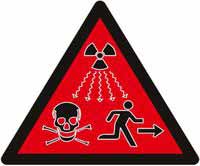 More than 100 Groups Call on EPA to Withdraw Dramatically Weakened Radiation Guides http://www.enewspf.com/latest-news/science/science-a-environmental/46251-more-than-100-groups-call-on-epa-to-withdraw-dramatically-weakened-radiation-guides.html 2013 WASHINGTON–(ENEWSPF)–September 16 – Over 100 environmental organizations today called on U.S. Environmental Protection Agency (EPA) Administrator Gina McCarthy to withdraw EPA’s controversial new Protective Action Guides (PAGs), which would allow exposure to very high doses from radiation releases before government would take action to protect the public. The PAGs are intended to guide the response to nuclear power reactor accidents (like Fukushima in Japan, Chernobyl in Ukraine and Three Mile Island in the U.S.), “dirty bomb” explosions, radioactive releases from nuclear fuel and weapons facilities, nuclear transportation accidents, and other radioactive releases.
Although official estimates of health risks from radiation have gone up substantially (even higher for women) since promulgation of the old PAGs, the new EPA guidance contemplates radically increased “allowable” exposures in the intermediate and long-term periods after radiation releases.
The new PAGs
- propose five options for drinking water which would dramatically increase the permitted concentrations of radioactivity in drinking water, by as much as 27,000 times, compared to EPA’s current Safe Drinking Water Act limits;
- suggest markedly relaxing long-term cleanup standards;
- incorporate very high and outdated allowable food contamination levels;
- eliminate requirements to evacuate people threatened with high projected radiation doses to the thyroid and skin;
- eliminate limits on lifetime whole body doses; and
- recommend dumping radioactive waste in municipal garbage dumps not designed for such waste.
“Rather than requiring protective actions to limit public radiation exposures, EPA is now saying it would allow the public to be exposed to doses far higher than ever before considered acceptable,” said Daniel Hirsch, president of Committee to Bridge the Gap.
“Even though EPA now admits radiation is more harmful than previously thought, it is weakening rather than tightening radiation protections,” said Diane D’Arrigo of the Nuclear Information and Resource Service.
The full letter is at http://committeetobridgethegap.org/GroupPAGltr9-16-13.pdf
###NIRS/WISE is the information and networking center for people and organizations concerned about nuclear power, radioactive waste, radiation, and sustainable energy issues.Source: commondreams.org
Sentence delayed for Sister Megan Rice and friends
Sentencing delayed for Duluth nuclear protester, Duluth News Tribune A judge has delayed a sentencing hearing for a Duluth man and two other protesters for breaking into a nuclear weapons plant in Tennessee. By: Associated Press staff,, 16 Sept 13 A judge has delayed a sentencing hearing for a Duluth man and two other protesters for breaking into a nuclear weapons plant in Tennessee.
U.S. District Judge Amul Thapar granted a motion last week from defense attorneys asking to postpone the date.
The sentencing, which had been scheduled for this month, was reset for Jan. 28 in Knoxville.
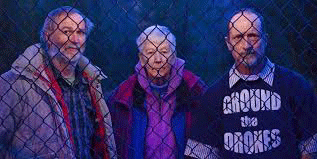
Defense attorneys said they needed more time to prepare for the proceeding.
The defendants — Greg Boertje-Obed of Duluth, Sister Megan Rice and Michael Walli — were convicted in May of sabotaging the plant and damaging federal property last year at the Y-12 National Security Complex in Oak Ridge.
Numerous letters have been sent to the federal judge asking for leniency and objecting to the government’s labeling of pacifists as terrorists.
“The court continues to receive a large volume of letters,” Thapar wrote in the order postponing the hearing.
The defendants remain in federal custody.http://www.duluthnewstribune.com/event/article/id/278086/
“Unusual event” at PPL’s Susquehanna nuclear plant
Leak found at PPL’s Susquehanna nuclear plant after reactor shut down “Unusual event” declared – an emergency classification established by the U.S. Nuclear Regulatory Commission. By Sam Kennedy, Of The Morning Call September 16, 2013 PPL Corp.’s Susquehanna nuclear power plant in Luzerne County declared an “unusual event” Sunday after radioactive water was discovered leaking inside a room in the plant’s Unit 2 reactor building.An unusual event is the first of the four emergency classifications established by the U.S. Nuclear Regulatory Commission for nuclear power plants……..http://www.mcall.com/news/breaking/mc-ppl-nuclear-plant-leak-0916-20130916,0,6535111.story#ixzz2fCcf1bAN
America’s nuclear weapons spending – bloated and out of control
The post-Cold War nuclear warhead complex has become a gigantic self-licking ice cream cone for contractors,”
Nation’s bloated nuclear spending comes under fire Journal Review, 13 Sept 13, Matthew Daly reported from Washington, D.C. Associated Press At Los Alamos National Laboratory, a seven-year, $213 million upgrade to the security system that protects the lab’s most sensitive nuclear bomb-making facilities doesn’t work. Those same facilities, which sit atop a fault line, remain susceptible to collapse and dangerous radiation releases, despite millions more spent on improvement plans.
In Tennessee, the price tag for a new uranium processing facility has grown nearly sevenfold in eight years to upward of $6 billion because of problems that include a redesign to raise the roof. And the estimated cost of an ongoing effort to refurbish 400 of the country’s B61 bombs has grown from $1.5 billion to $10 billion.
Virtually every major project under the National Nuclear Security Administration’s oversight is behind schedule and over budget _ the result, watchdogs and government auditors say, of years of lax accountability and nearly automatic annual budget increases for the agency responsible for maintaining the nation’s nuclear stockpile.
The NNSA has racked up $16 billion in cost overruns on 10 major projects that are a combined 38 years behind schedule, the U.S. Government Accountability Office reports. Other projects have been cancelled or suspended, despite hundreds of millions of dollars already spent, because they grew too bloated. Continue reading
American military intervention in Syria could go nuclear
 Five Ways a Wider Syrian War Could Go Nuclear Truth Dig, By Harvey Wasserman, 13 Sept 13, In the wake of an apparent break in the march to a wider war, the reality of a nuclear dimension in Syria remains largely unspoken.
There are at least five key reasons why American military intervention in Syria’s civil war could go nuclear:
(1) There’s a reactor near Damascus.
It is relatively small, by most accounts containing about a kilogram (2.2 pounds) of weapons-grade uranium. That’s not much in the scheme of things when it comes to building an atomic bomb. But as Alexsandr Lukashevich of the Russian Foreign Ministryputs it, “If a warhead, by design or by chance, were to hit the Miniature Neutron Source Reactor (MSNR) near Damascus, the consequences could be catastrophic.”……
(2) Despite Secretary of State John Kerry’s promise of an “unbelievably limited” attack, once the U.S. military commits to action in Syria, it is unlikely to hold back any of its tactical arsenal. That would almost certainly include depleted uranium (DU).
When shells made of this super-hard material penetrate armored vehicles, hardened bunkers and other structures, the DU disperses into fine radioactive particulates that are easily inhaled. Wherever deployed—as in Yugoslavia, Iraq and Afghanistan—DU inflicts horrifying health consequences, including cancer among people of all ages and birth defects among children born well after its use. Uranium-238 has a half-life of 4.5 billion years, imposing virtually permanent contamination.
Should DU weaponry be used yet again, this time in Syria, the contamination would be widespread and irreversible. Many thousands of innocent people—including the countless unborn—would suffer greatly. As with all radioactive fallout, the lethal effects will stretch through the generations.
(3) When the world’s superpowers collide, nuclear war is always a possibility.
At this point, the U.S. and Russia appear to be coming together. But in this too-often irrational global tinderbox, the stakes could not be higher.
In such situations, we hope for the best, but can’t lose sight of the potential worst………
(4) In the bottomless turbulence that defines today’s Middle East, the Americans and Russians so far seem to retain some shreds of rationality. But given the Peaceful Atom’s half century of weapons-grade proliferation, we cannot know which nations or marginal groups might now have atomic devices and what random impulses might prompt their use.
In a profoundly unpredictable world, each of the more than 400 commercial-sized reactors still operating continues to produce radioactive materials that could fuel a nuclear weapon.
Each of those reactors is itself a profoundly vulnerable target. Should the situation in Syria devolve to a wider war, the likelihood of a freelance atomic “situation” becomes all too probable.
(5) While the world’s attention is focused on Syria, the global-scale disaster at Fukushima spirals out of control.
The more serious the crisis in Syria, the more it will divert attention from an existing nuclear disaster. http://www.truthdig.com/report/item/five_ways_a_wider_syrian_war_could_go_nuclear_20130913/
Power companies join in California’s Community Renewable Energy project
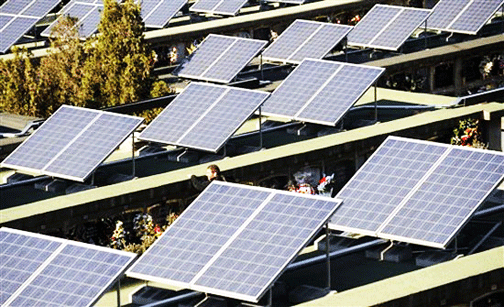 The group estimates that more than 20,000 residential ratepayers throughout California, each purchasing an average 5 KW share, will be able to participate in the program, as well as local schools, businesses, the military and the government.
California approves shared renewable energy program http://www.pv-magazine.com/news/details/beitrag/california-approves-shared-renewable-energy-program_100012727/#axzz2etkybguT 13. SEPTEMBER 2013 BY: IAN CLOVER
Approval of the largest program for shared renewable power in the U.S. passes in California, enabling schools, rental tenants and owners of homes in the shade to invest in solar energy projects. California’s Legislature has given the green light for the state’s “Green Tariff Shared Renewables Program”, which is the largest of its kind in the U.S. and will allow rental tenants, schools, cities and many other interested parties to invest in California’s renewable energy projects.
The program allows businesses and individuals to purchase shares in the renewable developments of three investor-owned utilities– Pacific Gas and Electric Co. (PG&E), San Diego Gas & Electric Co. (SDG&E), and Southern California Edison Co. (SCE) – in return for a greener electricity supply and, in the future at least, lower bills. Continue reading
USA desperate to save its nuclear industry from being accountable for any accidents in India
‘Nuclear liability law poses challenge to Indo-US nuke deal’ Zee News, September 13, 2013, Washington: India’s nuclear liability law posed a tough challenge for implementing the “transformational” Indo-US nuclear deal though there is a very strong desire to move forward, Nisha Desai Biswal, President Barack Obama’s Indian-American nominee for a key post in South Asia, said. “I think that the 123 agreement was a transformational agreement between the relationship between the United States and India, she said at her confirmation hearing for the post of Assistant Secretary of State for South and Central Asia.
“But since that deal was enacted, I think that there has been very slow and halting progress because of the nuclear liability law in India and the hindrances that that has posed to advancing civil nuke cooperation,” she said yesterday.
…..India’s Civil Liability for Nuclear Damage Law allows the operator of a nuclear plant to seek damages from the supplier in case of a nuclear incident due to supply of equipment with latent and patent defects or sub-standard services. The US says the Indian law is not consistent with the Convention on Supplemental Compensation (CSC). http://zeenews.india.com/news/nation/nuclear-liability-law-poses-challenge-to-indo-us-nuke-deal_876374.html
Legal fight Sept 23-30 to save Utah water from Green River Nuclear Project

Our case “HEAL Utah et al v. Blue Castle Holdings et al,” will be tried in the 7th District Court in Price, from Sept. 23-30. This is more than just a nuclear power case. It is also a public airing of whether Western officials should endorse virtually any speculative use of our precious water. It’s a chance to ask a judge to seriously consider the growing impacts of climate change, as study after study suggests the Colorado River basin will lose anywhere from 8 to 35 percent of its water as snowpack recedes and drought intensifies.
And, yes, in the wake of Fukushima, it’s a chance to ask whether siting nuclear reactors upstream from the rivers that supply water to 30 million Americans is a wise choice.
Fight the Green River nuclear reactors project in Utah, High Country News, Matt Pacenza | Sep 12, 2013 Drive south from Price, Utah for about an hour until Route 6 intersects with I-70. On your right, toward the west, the stunning San Rafael Reef rises. And on the left, the eastern Book Cliffs rise.
And, just there, to the east of Route 6, if the energy development company, Blue Castle Holdings, and Utah state water officials have their way, you’ll soon see an industrial park dominated by the Mountain West’s first commercial nuclear reactors: the so-called “Green River nuclear” project.
Later this month, at a courthouse in Price, a Utah state judge will hear a bid from more than a dozen environmental groups, businesses and citizens to overturn a decision approving the transfer of Green River water to cool the proposed reactors. This trial is likely the last and best chance to stop the project before it moves to the industry-friendly Nuclear Regulatory Commission. Continue reading
Florida: costly high risk nuclear power should not be funded by the tax-payer
 Americans may be divided on the use of nuclear power, but few people will defend the notion that massive utilities should be relying on taxpayers to build nuclear reactors. The bottom line is clear: Putting the full faith and credit of the U.S. government behind this costly, high-risk Vogtle reactor project is fiscally irresponsible
Policy wrongly puts risk of nuclear plants on public http://www.orlandosentinel.com/news/opinion/os-ed-front-burner-nuclear-loans-con-20130912,0,1513077.story By Ryan Alexander, September 12, 2013
Think what you want about nuclear power. Maybe it’s the best way to generate electricity or maybe it’s the worst. For Florida taxpayers, that debate may be less relevant than the one aimed right at your pocketbook.
At issue is the use of taxpayer-backed federal loan guarantees to finance nuclear-reactor projects — such as the Vogtle reactors in Georgia now awaiting a deadline for final agreement on loan-guarantee terms. If these terms are finalized, taxpayers will be left holding the bag in the event of a Vogtle default.
In February 2010, the U.S. Department of Energy conditionally offered Southern Company and its partners $8.33 billion in taxpayer-backed loan guarantees to build two nuclear reactors in Georgia. The subsidy would be provided through the same DOE program that awarded more than $500 million to the now defunct solar-power company, Solyndra. The Vogtle project is roughly 16 times bigger than Solyndra in loan-guarantee terms and perhaps every bit as troubled.
The project is already experiencing construction delays that could increase costs substantially, and its design, the AP1000, has never been built in the United States before or been successfully completed or operated anywhere in the world. Initial cost estimates of $14.1 billion are already being pushed up to $15.3 billion. With lawsuits being pursued by contractors designing the reactor, the cost could jump again to $16.2 billion.
All of this is unfolding against a backdrop of grim news for the nuclear industry in the U.S. Continue reading
1 This Month
23-25 October – on Zoom – World BEYOND War’s annual global conferenc


Shut down the radiation-damaged Heysham nuclear reactors now
To see nuclear-related stories in greater depth and intensity – go to https://nuclearinformation.wordpress.com

Say No to NASA’s Reckless Nuclear Reactor on the Moon
Say No to NASA’s Reckless Nuclear Reactor on the Moon

Please sign the petition here: https://www.change.org/p/stop-japan-s…
-
Archives
- October 2026 (190)
- September 2026 (339)
- August 2026 (330)
- July 2026 (355)
- June 2026 (287)
- May 2026 (306)
- April 2026 (356)
- March 2026 (251)
- February 2026 (267)
- January 2026 (308)
- December 2025 (358)
- November 2025 (359)
-
Categories
- 1
- 1 NUCLEAR ISSUES
- business and costs
- climate change
- culture and arts
- ENERGY
- environment
- health
- history
- indigenous issues
- Legal
- marketing of nuclear
- media
- opposition to nuclear
- PERSONAL STORIES
- politics
- politics international
- Religion and ethics
- safety
- secrets,lies and civil liberties
- spinbuster
- technology
- Uranium
- wastes
- weapons and war
- Women
- 2 WORLD
- ACTION
- AFRICA
- Atrocities
- AUSTRALIA
- Christina's notes
- Christina's themes
- culture and arts
- Events
- Fuk 2022
- Fuk 2023
- Fukushima 2017
- Fukushima 2018
- fukushima 2019
- Fukushima 2020
- Fukushima 2021
- general
- global warming
- Humour (God we need it)
- Nuclear
- RARE EARTHS
- Reference
- resources – print
- Resources -audiovicual
- Weekly Newsletter
- World
- World Nuclear
- YouTube
-
RSS
Entries RSS
Comments RSS

