South Dakota medical association unanimously opposes uranium mining in Black Hills
The acceptance by the U.S. Nuclear Regulatory Commission that “the restoration of an ISL-mined aquifer to pre-mining water quality is … an impossibility.”
“the loss of large volumes of water in such mining operations is not in the public interest” when “considering the projected future scarcity of uncontaminated fresh water in our semi-arid region.”
SD medical association unanimously against uranium mining in Hills http://www.bhpioneer.com/local_news/article_833ccd96-2536-11e3-b6be-0019bb2963f4.html 24 Sept 13,
Group hopes to work with Colorado Medical Society, bring petition to AMA By Adam Hurlburt Black Hills Pioneer
CHAMBERLAIN — The South Dakota State Medical Association has come out in opposition of uranium mining in the Black Hills in direct response to Powertech USA’s proposed in situ leach (ISL) uranium mining project in Fall River County, making it the second statewide medical association to publicly oppose uranium mining in response to a Powertech ISL uranium mining proposal in the past six years.

At a recent meeting held in Chamberlain, the SDSMA’s 78-member Council of Physicians unanimously voted to support a petition opposing not only Powertech’s proposed Dewey-Burdock ISL uranium mining project in the Southern Hills, but uranium mining of any type in the Black Hills Area.
“The vote was held after a careful and thoughtful discussion,” SDSMA President Dr. Daniel Heinemann said in a prepared statement Monday afternoon. “The health and safety of the public is of paramount concern to the SDSMA when considering issues such as this.” Continue reading
Bye Bye Nuclear Renaissance
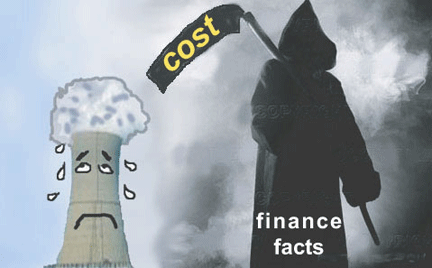 The market setbacks and stark projections have put an emphatic end to talk of the U.S. “nuclear renaissance” that was still being touted by industry supporters as recently as 2010.
More than half of the 28 proposed new reactors have since been officially cancelled or halted, and most of the others are stalled.
First US nuclear power closures in 15 years signal wider industry problems by Elizabeth Douglas, theguardian.com, Wednesday 25 September 2013“……….Cooper believes market conditions are so unfavorable that premature closures will not be limited to plants that have to compete for customers. He said closures will also hit nuclear plants that operate in regulated markets, where they are mostly protected from the competitive forces that drove the Kewaunee and Vermont Yankee plants out of business. Continue reading
Even right wing Cato Institute getting worried about USA’s massive, unnecessary, nuclear arsenal
 Reassessing U.S. Nuclear Weapons Policy By CHRISTOPHER A. PREBLE Cato Institute Sept 24 13 Today Cato released a new white paper, “The End of Overkill? Reassessing U.S. Nuclear Weapons Policy.” I am proud to have contributed to this effort with lead author Benjamin Friedman of Cato, and Matt Fay, a former Cato research assistant now enrolled in the History PhD program at Temple University. We argue that U.S. security does not require nearly 1,600 nuclear weapons deployed on a triad of systems—bombers, land-based intercontinental ballistic missiles (ICBMs), and submarine-launched ballistic missiles (SLBMs)—to deliver them. We estimate that a smaller arsenal deployed entirely on submarines would save roughly $20 billion annually while deterring attacks on the United States and its allies.
The paper is part of a broader project, “From Triad to Dyad: Rationalizing U.S. Nuclear Weapons Delivery Systems,” made possible by the generous support of the Ploughshares Fund. The project began as a top-line review of the triad, but expanded into a more comprehensive study of U.S. nuclear strategy and policy. Over the last year, we presented our preliminary findings at over a dozen public events in ten different cities, as well as several engagements here in Washington, D.C. This process generated useful feedback along the way.
Here are a few excerpts from “The End of Overkill?”:…..http://www.cato.org/blog/reassessing-us-nuclear-weapons-policy
Water conscious Utah residents oppose nuclear power plant in Emery County
 Utah’s first nuclear plant on hold over trial for water rights
The lawsuit, filed in 2012, was brought by multiple groups hoping to kill plans for a proposed twin-reactor nuclear power plant in Emery County.
HEAL Utah and others want 7th District Judge George Harmond to rule illegal the Utah state engineer’s decision granting 53,600 acre-feet of water to the project.
Aaron Tilton’s Blue Castle Holdings is proposing to take the water from the Green River for use in the cooling process at the proposed plant, which would be located near the city of Green River in Emery County and generate 3,000 megawatts of electricity.
The groups challenging Tilton’s acquisition of the water assert that state engineer Kent Jones should have done much more in reviewing the water rights applications, including a demonstration that the water for the project won’t interfere with other water rights or harm the fragile Green River ecosystem……..
HEAL Utah and Uranium Watch are joined by 16 other plaintiffs, including the Utah Rivers Council, Living Rivers and the Center for Water Advocacy. Others include businesses that depend on the Green River such as Moki Mac River Expeditions and Holiday River Expeditions, and several residents from Green River, Moab and Salt Lake City……..http://www.ksl.com/index.php?nid=148&sid=26970736&fm=most_popular
5 drums of radioactive trash fell off a truck at Hanford
In brief: Hanford drums fall from flatbed truck Spokesman Review, 24 Sept 13 RICHLAND – A Department of Energy contractor said five drums holding low-level radioactive waste fell off a flatbed truck in the center of Hanford on Monday but no contaminated material was released.
The drums were among 74 on the truck that were being shipped from a treatment facility at Hanford to a nearby plant, the Tri-City Herald reported.CH2M Hill Plateau Remediation Co. said the truck was in an area where the public is not allowed. It stopped at a railroad crossing and the drums fell off. Radiological surveys showed that none of the drums broke.
The company was working Monday to determine what caused the drums to fall.
The treatment facility receives contaminated wastewater from Hanford activities, and the material in the drums was solid waste left from the water treatment. http://www.spokesman.com/stories/2013/sep/24/in-brief-hanford-drums-fall-from-flatbed-truck/
America’s financially crippling addiction to nuclear weapons
America’s Nuclear Bomb Problem: Outdated B61s Need Expensive Upgrades If U.S. Wants To Keep Them Around International Science Times By Philip Ross on September 23, 2013 U.S. has a nuclear bomb problem. Mainly, the country’s stockpile of B61 nuclear bombs, which have collected dust ever since they were shoved into storage following the Cold War, are in need of some serious – and expensive – upgrades should the U.S. government want to keep them around. According to The World Herald, some of the components of the aging B61s are so old, they can’t be replaced at all.
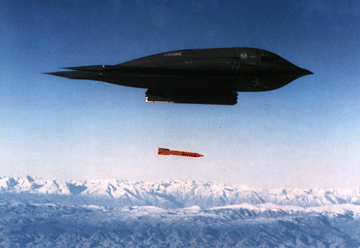
The slender, gray cylinder bombs, which weigh 700 pounds each and measure 11 feet long and 13 inches in diameter, were designed and built in the 1960s by the Los Alamos National Laboratory, a nuclear weapon facility located in New Mexico. The B61s were deployed at NATO air bases in Europe and were meant to dissuade Soviet aggression on the continent during the Cold War. There were about 3,155 of the bombs built during that time.
According to a 2005 report from the Natural Resources Defense Council, the U.S. still has about 480 nuclear weapons in Europe, stored at eight bases in six countries. The U.S. has about 250 of the B61s left lying around air bases in Missouri and North Dakota, with additional bombs stored in Nevada and New Mexico.
The B61s are the most versatile weapon in the U.S. stockpile. They were built to withstand supersonic speeds and can be carried long distances. The nuclear devices also contain about 6,500 parts, and decades of storage have degraded the bombs to a point where some of the electronic pieces are obsolete and unreliable.
“The B61 life-extension program is absolutely necessary,” Gen. C. Robert Kehler, a Commander of the U.S. Department of Defense, told The World-Herald. “Much has been deferred. Now we don’t have the luxury of waiting.” But it’s not a matter of simply dusting the bombs off and tightening a few screws here and there. The nuclear bombs need expensive upgrades – refurbishments that are estimated to cost about $28 million per bomb, according to The World Herald. That’s not to mention the estimated $65 billion price tag to retool America’s missiles, submarines and aircrafts, something politicians on both the left and the right are reluctant to do during a time of congressional belt tightening.
In August, the National Nuclear Security Administration, which maintains the U.S.’s nuclear stash, pitched a solution to America’s B61 nuclear bomb problem. They want to not only refurbish the bombs, but also upgrade them……. http://www.isciencetimes.com/articles/6107/20130923/nuclear-bomb-b61-cold-war-weapons-upgrades.htm
Renewable energy is thriving, despite natural gas investment
Natural Gas Is Not Destroying Renewable Energy http://blogs.wsj.com/experts/2013/09/23/natural-gas-is-not-destroying-renewable-energy/ What is the single biggest misconception people have about renewable energy in the U.S.? And why do you think they have this misconception? IVAN MARTEN: 23 Sept 13 Very simply, the biggest misconception about renewable energy in the U.S. today is that it is failing.
Many people believe that cheap natural gas is crowding out the prospects investment in renewable energy investment; that U.S. companies are largely destined for bankruptcy as Chinese players expand to dominate the market; and that the Department of Energy has lost an immense amount of money on its federal loan guarantee program. In reality, however, the outlook is much brighter. The market for renewable energy in the U.S. continues to grow rapidly alongside natural gas as a quickly increasing source for power generation. Solar-power installations in 2013 are expected to be up 33% over last year and reach their highest level ever. Consumption of wind-powered energy was 21% higher in the first six months of 2013 than during the same period of 2012.
While there has been a shakeout of weak U.S. renewable-energy companies, others are thriving. U.S. solar manufacturer SunPower gained market share versus Chinese competitors in 2012. Innovative services businesses, such as solar installers, also are enjoying dramatic growth: share prices of SolarCity, for example, have tripled since the company’s initial public offering in early 2013. Project developers such as NRG have built strong pipelines of activity. And new players are popping up frequently. More than $500 million in venture capital was invested in clean-technology companies, including those in renewable energy, during the summer of 2013. Nearly all are based in the U.S.
What about those federal loans? Despite a few high-profile failures –including the infamous Solyndra debacle– the DoE currently is on track to recover 98% of the loans it made since 2009 to help renewable-energy startups commercialize their technologies.
In summary, the U.S. remains a healthy, competitive, and growing renewable-energy market. This growth will continue, driven by the need to meet existing mandates and falling costs that will make the energy more competitive with fossil fuels in the future. The creative destruction brought by market forces will continue, and some existing companies will fail. But new, innovative business models will continue to emerge.
Renewable energy is here to stay as part of the U.S.’s total energy mix.
What if USA’s nuclear bombs dropped in North Carolina HAD detonated?
 The Potential Nuclear Fallout in North Carolina, Mapped Atlantic Wire CONNOR SIMPSON 21 Sept 13 You’ve probably heard by now that the U.S. military nearly committed the biggest “oopsie daisy!” in history when they accidentally dropped two nuclear bombs near Goldsboro, North Carolina. But what if they did? Thankfully they didn’t detonate, but let’s imagine, just for a split second, that they did. This isn’t you typical Saturday morning exercise. There’s a certain macabre aspect to it investigation that can be hard to get over. Thousands of people would be dead, but it’s hard not to be at least a little curious to know how much of the U.S. would have been affected had the bombs gone off………
it would have been bad.
How bad, you ask? Well, by using the handy NukeMap3D created by Alex Wellerstein, we can determine how much destruction would have followed at least one atomic bomb dropping in North Carolina. The blast could have reached, with the wind blowing in the right direction, as far up the coast as New York City. Philadelphia and Washington would likely have been affected. This map is calculated with a 15 mile an hour wind and 100 percent fission:
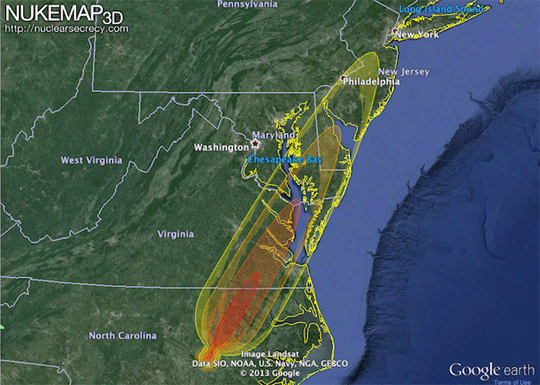
That’s a lot of the east coast. The fallout would likely not fall in such a straight line. And depending on the weather, could bend in many directions and possibly stretch even further. This is all speculative, of course. Most importantly, thankfully, the bombs never detonated in real life.
We know about this ultimate close call thanks to investigate journalist Eric Schlosser. He unearthed this declassified document that details the incident in question through a Freedom of Information Act request while researching his new book, Command and Control, about the nuclear arms race. http://www.theatlanticwire.com/national/2013/09/potential-nuclear-fallout-north-carolina-mapped/69701/
Republican heresy? Religious conservatives promoting renewable energy
As conservatives, we believe that increasing our use of renewable energy will improve public health and help protect the lives of the most vulnerable among us. Study after study demonstrates the negative health effects on people who live near coal plants. They are, by and large, people who are too poor to move. The quality of our air and water impacts not just your health and mine and people across Michigan. They also affect the health and life of the unborn.
As conservatives, we believe that using more renewable energy will reduce the amount of fuel we import from other nations
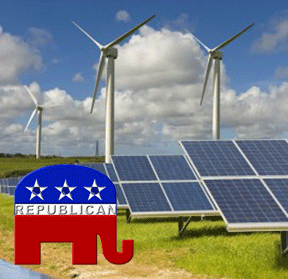
 Conservatives should lead on renewable energy as way to protect God’s creations http://www.mlive.com/politics/index.ssf/2013/09/keith_den_hollander_ renewable.html By Keith den Hollander State Committee Member at Michigan Republican Party Chairman, MI Chapter at Christian Coalition, 22 Sept 13 In the next few days, Michigan Governor Rick Snyder unveiled the first of four reports on renewable energy that could potentially reshape Michigan’s energy economy.
Conservatives have a real opportunity to lead in the area of renewable energy and we should applaud Governor Snyder for his leadership in the energy sector……. Opinions like those expressed by the Mackinac Center’s Ken Braun (9/14/2013), who downplays the importance of renewable energy to Michigan, do not fully reflect the conservative viewpoint on energy.
Humankind has a moral obligation to be good stewards of the Earth and the resources that God has put on this planet for our responsible use. We are free to use coal, natural gas and oil – and also the wind, sun, manure and any other resource that can be economically and responsibly used or harnessed to create energy.
An “all of the above” approach to energy generation is beneficial to our state, economy, and long-term sustainability. This approach can help reduce the amount of energy derived from fossil fuels, and increase the amount generated from renewable sources. Continue reading
Straight after International Day of Peace, USA tests nuclear missile

There was a point in time when America was the noble country of morals. We would take the hard steps first to address freedom and cooperation.
Nuclear Weapons Test from Vandenberg Air Force Base, Las Vegas Guardian Express by Iam Bloom on September 22, 2013 California — Vandenberg Air Force Base launched a Minuteman III rocket this morning, September 22, at 3:01 AM PST. The target of this morning’s test was Kwajalein Atoll, an island in the Pacific Ocean some 4,200 miles away from the launch site. This is the first of two tests of a nuclear weapons delivery system scheduled this week from Vandenberg Air Force Base.
A LGM-30 Minuteman rocket, or the Minuteman III, completed a test this morning from the California Air Base located some 140 miles north of Los Angeles. The letter “L”, in “LGM”, stands for a silo-launched missile; the “G” stands for ground attack; the “M” stands for guided missile. The “Minuteman” designation refers to the Minuteman Militia during the revolutionary war, a group ready to respond at a minutes notice to engage the English. In the same way, the Minuteman III can be prepared and launched in a few minutes with proper code authorization.
The test itself is not as concerning as what day it follows and the day the next test is scheduled for. Continue reading
Again, cracks found at Davis-Besse nuclear power plant
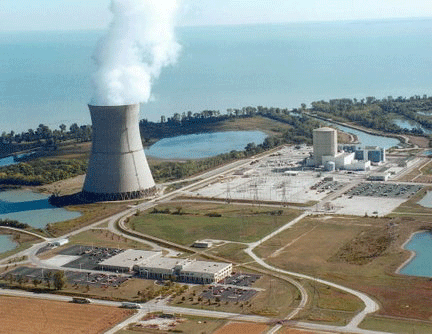 More cracks found at Davis-Besse nuclear plant NRC says they pose no threat Columbus Despatch September 22, 2013 TOLEDO (AP) — The operator of an Ohio nuclear plant along Lake Erie has found several more cracks in the concrete building housing the nuclear reactor and says some cracks found earlier have grown a bit…….http://www.dispatch.com/content/stories/local/2013/09/22/more-cracks-found-at-plant.html
Dispelling some myths about renewable energy
Six Myths About Renewable Energy WSJ, By KEITH JOHNSON 22 Sept “……….MYTH NO. 1: Renewables Are an Insignificant Source of Power ……. Conventional hydroelectric power, such as the Hoover Dam, is also renewable energy. Taken together, hydroelectric and other sources—biomass, geothermal, solar and wind—combined to account for 12% of U.S. electricity production last year, and close to 14% so far this year………It’s also important to remember the scale of the country’s renewable efforts. The U.S. has the second-biggest electricity system in the world, accounting for about 20% of the entire world’s generation capacity. Wind power’s 5% of that pie is a big slice. The 60-odd gigawatts of wind power installed in the U.S. amounts to more electricity-generation capacity than in the entire country of Australia or Saudi Arabia, and as much as all of Mexico…….
Forget about problems down the road. Another criticsm of renewables in the here and now: They’re expensive ways to generate electricity…...
- here are two big issues to bear in mind. First, costs are falling fast—thanks largely to technological advances such as larger wind turbines and cheaper components for solar-power arrays—so in some places, solar and wind power can cost even less.
The latest price data for wind-energy power-purchase agreements, released by the Department of Energy last month, showed that nationwide, the price of wind-generated electricity fell to just over 4 cents per kilowatt-hour nationwide, not counting the 2.2-cent federal tax subsidy. In some regions, well-sited wind farms produce electricity for closer to 2 cents.
Likewise, Lawrence Berkeley National Laboratory just released its latest report on the costs of installing solar power. Costs for small-scale solar residential arrays fell by about 13% in the past year, driven largely by cheaper solar components due to a global supply glut. Utility-scale prices also fell…..
There’s also the question of hidden costs. Coal-fired electricity, for instance, has nasty side effects, including air pollution, health impacts and carbon-dioxide emissions that contribute to global warming (all of which factored into the Obama administration’s proposal Friday for new limits on coal emissions)—and those don’t show up in coal’s price tag. If coal and other fossil fuels had to tally the total costs their use imposed on society, coal wouldn’t be the cheapest source of electricity, and clean-burning renewables wouldn’t look nearly so pricey.
Add all the hidden costs together, and the total cost of different power sources looks quite different, according to that recently published study……..
MYTH NO. 3: Variability Dooms Renewable Energy
The sun doesn’t always shine, and the wind doesn’t always blow,……..Consider the situation with wind power. Curtailments have fallen steadily in recent years as system operators have gotten better at using forecasting and integrating wind power. Investment in new transmission lines has also picked up pace, enabling wind farms in isolated locations to offer power more readily to a wider area.
That is the key to overcoming the natural variability of renewables such as wind and solar power. Individual wind farms may be very volatile. But scores of wind farms over thousands of square miles show less volatility—the wind is always blowing somewhere. As grid operators have added more wind in more locations to their systems, as well as the lines to carry that wind, integrating wind power into the electricity system has become easier.
Take Texas. Four years ago, facing severe transmission constraints, the state was dumping 17% of all the wind power it produced. In 2012, after adding more wind farms and almost 2,600 miles of transmission lines, curtailments were below 4%, and wind power provided 10% of the electricity in the nation’s biggest power market.
Big corporate money funding climate sceptics
The Competitive Enterprise Institute has in the past received funding from Exxon Mobil, the oil company, and the American Petroleum Institute, Texaco, General Motors and the Koch Family Foundations, controlled by the Koch brothers who made their fortune from fossil fuels.
 Big business funds effort to discredit climate science, warns UN official http://www.theguardian.com/science/2013/sep/20/big-business-funding-climate-change-sceptics Climate change summit braced for counterblast from sceptics as report warns greenhouse gas emissions still increasing Fiona Harvey and Graham Readfern The Guardian, Saturday 21 September 2013 Big companies are paying contrarians to undermine the work of climate scientists, according to a top UN official speaking before the release of a landmark review of climate science this weekby international researchers next Friday.
Halldór Thorgeirsson, a director who reports to the head of the UN body that governs the on-going high level international climate negotiations, said that scientists would need to be prepared for a counter-blast from sceptics.
“Vested interests are paying for the discrediting of scientists all the time. We need to be ready for that,” he said……..
His outspoken views will set the tone for a fractious meeting of the world’s leading climate scientists, kicking off on Monday in Stockholm, that will set out the evidence that the world’s governments use when formulating policies to deal with global warming for decades to come. More than 800 scientists have contributed to the report, the final details of which will be hammered out in a gruelling four-day session next week.
According to a draft of the “Summary for Policy Makers” dated June , seen by the Guardian– the most important part of the document – the scientists will argue that the evidence points to 95% certainty that climate change is occurring and is caused mainly by greenhouse gases released by humans – up from 90% certainty in the previous 2007 report. Continue reading
USA’s Energy Secretary Moniz promoting nuclear industry
UNM, LANL reap funds for nuclear energy pushhttp://www.bizjournals.com/albuquerque/news/2013/09/20/unm-lanl-reap-nuclear-research-funds.html The U.S. Department of Energy on Friday announced major grants to New Mexico institutions that total $2.2 million. Secretary of Energy Ernest Moniz announced that the state will receive the money as part of a $60 million initiative to invest in nuclear energy research at the university level. Dan Mayfield Reporter-Albuquerque Business First U.S. Department of Energy on Friday announced major grants to New Mexico institutions that total $2.2 million.
 Secretary of Energy Ernest Moniz announced that the state will receive the money as part of a $60 million initiative to invest in nuclear energy research at the university level.
“By supporting cutting-edge nuclear science and engineering across our universities, national labs and industry, we can strengthen the foundation for a continuing important role for nuclear energy in America’s low carbon future,” said Moniz. “Training and educating the next generation nuclear energy workforce plays a critical role in ensuring American leadership in the safe, secure and efficient use of nuclear power worldwide.”
The announcement included two grants for the University of New Mexico totaling $1.2 million for research into fuel cycle technologies. The DOE is awarding schools a total of $42 million to develop new technologies for energy.
Also, the DoE is supporting Los Alamos National Laboratory with $1 million to research advanced materials for reactors.
“Confidentiality Agreement” on nuclear sales USA to India
Decks cleared for nuclear pact with US firmIndrani Bagchi, TNN | Sep 21, 2013 NEW DELHI: India and the US have cleared the decks for a pre-early works agreement betweenNPCIL and US nuclear company, Westinghouse. National security adviser (NSA) Shivshankar Menon said, “The two sides have resolved all government-to-government permissions and understandings required for enabling commercial negotiations”. The two sides signed a “confidentiality agreement” last week that would allow both sides to share confidential data with each other.

Speaking at an event at Aspen Institute on Friday, Menon said the Atomic Energy Regulatory Board (AERB) will soon begin safety evaluations of Westinghouse’s AP1000 nuclear reactor that they propose to sell to India.Westinghouse is already building four of these reactors in China, the first of which is expected to begin operations next year…… http://timesofindia.indiatimes.com/india/Decks-cleared-for-nuclear-pact-with-US-firm/articleshow/22828566.cms
1 This Month
23-25 October – on Zoom – World BEYOND War’s annual global conferenc


Shut down the radiation-damaged Heysham nuclear reactors now
To see nuclear-related stories in greater depth and intensity – go to https://nuclearinformation.wordpress.com

Say No to NASA’s Reckless Nuclear Reactor on the Moon
Say No to NASA’s Reckless Nuclear Reactor on the Moon

Please sign the petition here: https://www.change.org/p/stop-japan-s…
-
Archives
- October 2026 (190)
- September 2026 (339)
- August 2026 (330)
- July 2026 (355)
- June 2026 (287)
- May 2026 (306)
- April 2026 (356)
- March 2026 (251)
- February 2026 (267)
- January 2026 (308)
- December 2025 (358)
- November 2025 (359)
-
Categories
- 1
- 1 NUCLEAR ISSUES
- business and costs
- climate change
- culture and arts
- ENERGY
- environment
- health
- history
- indigenous issues
- Legal
- marketing of nuclear
- media
- opposition to nuclear
- PERSONAL STORIES
- politics
- politics international
- Religion and ethics
- safety
- secrets,lies and civil liberties
- spinbuster
- technology
- Uranium
- wastes
- weapons and war
- Women
- 2 WORLD
- ACTION
- AFRICA
- Atrocities
- AUSTRALIA
- Christina's notes
- Christina's themes
- culture and arts
- Events
- Fuk 2022
- Fuk 2023
- Fukushima 2017
- Fukushima 2018
- fukushima 2019
- Fukushima 2020
- Fukushima 2021
- general
- global warming
- Humour (God we need it)
- Nuclear
- RARE EARTHS
- Reference
- resources – print
- Resources -audiovicual
- Weekly Newsletter
- World
- World Nuclear
- YouTube
-
RSS
Entries RSS
Comments RSS

