Strong start to USA renewable energy sources in 2014
|
by Renew Grid on March 26, 2014 For the first two months of this year, renewable energy sources accounted for 91.9% of the 568 MW of new installed U.S. electrical generating capacity, according to a report from the Federal Energy Regulatory Commission (FERC). Coal, oil and nuclear provided none, while natural gas and 1 MW of “other” resources provided the balance.
In February alone, wind and solar made up 80.9% of new domestic capacity, with five new “units” of wind providing 99 MW and 12 units of solar providing 92 MW. In addition, one new unit of natural gas provided 45 MW. Citing the FERC statistics, the SUN DAY Campaign, a renewable energy advocacy group, notes renewable energy sources, including hydropower, now account for 16.14% of total installed U.S. operating generating capacity: hydro – 8.45%, wind – 5.26%, biomass – 1.37%, solar – 0.73% and geothermal steam – 0.33%. This is more than nuclear (9.26%) and oil (4.05%) combined. |
Negligence of USA govt in not testing seafood for Fukushima radiation
School Science Project Reveals High Levels Of Fukushima Nuclear Radiation in Grocery Store Seafood Investment Watch By Michael Snyder March 27th, 2014 “……..Meanwhile, PBS reporter Miles O’Brien has pointed out the extreme negligence of the U.S. government when it comes to testing seafood for Fukushima radiation. The following comes from a recent EcoWatch article…
O’Brien also introduces us to scientists from the Woods Hole Oceanographic Institute who have been testing waters around the reactors—as well as around the Pacific Rim—to confirm the levels of Fukushima fallout, especially of cesium.
These scientists are dedicated and competent. But they are also being forced to do this investigation on their own, raising small amounts of money from independent sources. They were, explains lead scientist Ken Buesseler, turned down for even minimal federal support by five agencies key to our radiation protection. Thus, despite a deep and widespread demand for this information, no federal agency is conducting comprehensive, on-the-ground analyses of how much Fukushima radiation has made its way into our air and oceans.
In fact, very soon after Fukushima began to blow, President Obama assured the world that radiation coming to the U.S. would be minuscule and harmless. He had no scientific proofthat this would be the case. And as O’Brien’s eight-minute piece shows all too clearly, the “see no evil, pay no damages” ethos is at work here. The government is doing no monitoring of radiation levels in fish, and information on contamination of the ocean is almost entirely generated by underfunded researchers like Buesseler.
A video news report in which O’Brien discusses these issues is posted below https://www.youtube.com/watch?v=QIjJlK5EWOw
Fishing for data in the radioactive waters off Fukushima It is the job of the authorities to keep us safe, and the Fukushima nuclear disaster was the worst nuclear disaster in human history.
So why aren’t they doing testing?
Why aren’t they checking to make sure that this radiation is not getting into our food chain? Continue reading
Barack warns of nuclear terrorism, but Homeland Security cuts NYPD bomb detection funding
Homeland Security To Cut NYPD Bomb Detection Funding After Obama Says NYC Nuclear Blast Bigger Concern Than Russia NEW YORK (CBSNewYork/AP), 26 Mar 14, – Less than 24 hours after President Barack Obama said he’s more concerned about the prospect of a nuclear weapon exploding in New York City than Russia’s recent actions, Homeland Security officials announced plans to cut the NYPD’s bomb detection funding by 50 percent….. http://newyork.cbslocal.com/2014/03/26/obama-nuclear-blast-in-nyc-bigger-concern-than-russia/
‘Americans For Prosperity’ sabotaging renewabl energy
 How can renewable-energy supporters compete with Kochs? We Blog, 27 March 14 “……the Senate approved a bill revoking the state’s renewable portfolio standard. The standard has helped generate billions of dollars of investment in Kansas and is overwhelmingly supported by the public, according to a recent survey. But the standard is opposed by the Koch-backed Americans for Prosperity and Kansas Chamber of Commerce, which spent more than a million dollars last election purging moderates from the state Senate.
How can supporters of renewable energy, which includes faith groups, compete with those resources? http://blogs.kansas.com/weblog/2014/03/how-can-renewable-energy-supporters-compete-with-kochs/
Nuclear power industry oversees and controls nuclear regulators
Nuclear Overseers Are “Fake” Agencies Funded and Controlled by the Nuclear Power Industry http://www.globalresearch.ca/nuclear-overseers-are-fake-agencies-funded-and-controlled-by-the-nuclear-power-industry/24387
By Washington’s Blog
Global Research, The Christian Science Monitor noted recently:
Just as the BP oil spill one year ago heaped scrutiny on the United State’s Minerals Management Service, harshly criticized for lax drilling oversight and cozy ties with the oil industry, the nuclear crisis in Japan is shining a light on that nation’s safety practices.[Russian nuclear accident specialist Iouli Andreev, who as director of the Soviet Spetsatom clean-up agency helped in the efforts 25 years ago to clean up Chernobyl ] has also accused the IAEA of being too close with corporations. “This is only a fake organization because every organization which depends on the nuclear industry – and the IAEA depends on the nuclear industry – cannot perform properly.”
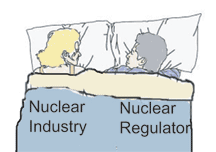
The U.S. Nuclear Regulatory Commission is no better. Continue reading
California will use mainly renewables to replace nuclear energy
 California Mostly Sticks to Renewables to Replace Nuclear Energy http://www.sustainablebusiness.com/index.cfm/go/news.display/id/25596 20 Mar 14, While many feared California would turn to natural gas to replace the electricity from its shuttered San Onofre nuclear plant, the state is holding firm to its commitment to rely increasingly on renewable energy and efficiency.
In its final strategy, the California Public Utilities Commission (CPUC) sticks to “preferred resources” to provide much of the electricity to the Los Angeles/ San Diego area: energy efficiency technologies such as demand response, upgrades to the grid, energy storage and renewable energy. Continue reading
Radiation effects on family of US Navy man
 Wife of Navy Sailor: Our 1-year-old has brain cancer and spinal cancer resulting from Fukushima exposure — Wheelchair-bound Navy Sailor: It’s now affecting my arms and my hands, everything is still progressing (AUDIO) http://enenews.com/wife-of-navy-sailor-our-1-year-old-has-brain-cancer-and-spinal-cancer-resulting-from-fukushima-exposure-wheelchair-bound-navy-sailor-its-affecting-my-arms-and-my-hands-everything-is-still-prog?utm_source=feedburner&utm_medium=email&utm_campaign=Feed%3A+ENENews+%28Energy+News%29
Democracy Now, , Mar. 19, 2014:
Navy Lt. Steve Simmons, USS Ronald Reagan: Now the muscle weakness affects my legs, my arms, my hands — and now everything is still progressing. […]
Host: You’re sitting in a wheelchair right now?
Simmons: I am.
Charles Bonner, attorney: This is a declaration from the wife of the sailor, who writes in here declaration to the court, “My husband was exposed to radiation particles while assigned to the 7th fleet on the USS Ronald Reagan assisting in Operation Tomadachi beginning in March of 2011. As a result of this exposure, our son who was born November 14th 2012, at 8 months was diagnosed with brain and spine cancer.”
New Mexico site still touted as dump for high level nuclear waste

that they should stop making the stuff, as it has no place to go!
WIPP still considered for high-level waste By John Fleck / Journal Staff Writer , March 20, 2014 Despite last month’s radiation leak at the Waste Isolation Pilot Plant, researchers continue to look at the possibility of using WIPP or a facility like it to dispose of high level nuclear waste, a panel of waste experts was told Wednesday at a meeting in Albuquerque. But the leak has been a major setback to the idea.
Rod Ewing, chairman of the U.S. Nuclear Waste Technical Review Board, made clear at the outset of a previously scheduled meeting that the Valentine’s Day WIPP leak was not the reason for the long-scheduled session. But as Ewing and the other panel members discussed broad nuclear waste policy questions and technical issues, WIPP’s recent problems kept intruding on the discussion.
The meeting’s primary purpose was to look at lessons learned at WIPP that might be applied to the disposal of other nuclear waste. In particular, a number of experts talked about the suitability of WIPP or something like it for the disposal of high-level radioactive waste – things like spent nuclear power plant fuel that currently has no place to go……….http://www.abqjournal.com/371437/news/wipp-still-considered-for-highlevel-waste.html
New Mexico nuclear waste may go to Texas
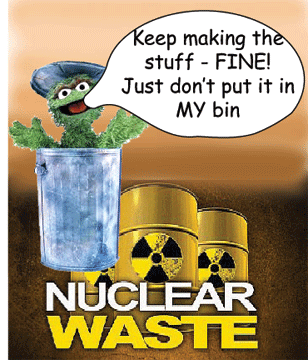 Nuclear waste from New Mexico lab may go to Texas Chron, By JERI CLAUSING and BETSY BLANEY, Associated Press | March 20, 2014 ALBUQUERQUE, N.M. (AP) — With the government’s only permanent nuclear waste dump shuttered indefinitely by back-to-back accidents, officials are making plans to ship radioactive waste from Los Alamos National Laboratory to rural West Texas.
The Department of Energy and the operator of the Waste Isolation Pilot Plant near Carlsbad in southeastern New Mexico say they have signed an agreement with Waste Control Specialists to truck the waste to its site in Andrews County.
The agreement will help Los Alamos meet a June deadline for getting the last of thousands of barrels of plutonium-contaminated clothing, tools, rags and other debris off its northern New Mexico campus before wildfire season hits its peak.
The waste, which is shipped and stored in huge sealed canisters, would come back to New Mexico for final disposal once the Waste Isolation Pilot Plant reopens……..
The West Texas site has in the past taken some less toxic waste from Los Alamos, but the Waste Isolation Pilot Plant is the nation’s only permanent repository for low-level radioactive waste from nuclear weapons facilities.
Waste Control Specialists is licensed to take radioactive materials such as uranium, plutonium and thorium from commercial power plants, academic institutions and medical schools, as well as some DOE waste. It is also the burial ground for dirt from a Hudson River Superfund site that’s tainted with PCBs, or polychlorinated biphenyls.
Chuck McDonald, a spokesman for the plant, said federal officials are working with regulators at the Texas Commission on Environmental Quality to make sure that storing the Los Alamos waste is allowable under its permits.
The state of New Mexico pressured Los Alamos to get the waste off its campus in the northern New Mexico mountains following a massive 2011 wildfire that lapped at the edges of lab property. The waste from decades of bomb building has been stored outside on a mesa. Following the Waste Isolation Pilot Plant shutdown, the state and Sen. Tom Udall, D-N.M., emphasized that the deadline was non-negotiable.
“Removing waste from the mesa in Los Alamos before fire season is critical to ensure safety in the greater Los Alamos community,” Udall said in a statement Thursday. “I’m pleased we have a temporary solution that will ensure there will not be any significant disruption in cleanup efforts.”……
More releases of Plutonium and Americium from New Mexico nuclear waste site
WIPP officials admit new release of Plutonium and Americium — More expected in future — Nearly double levels seen after February leak — 61 DPM on March 11 vs. 36 DPM in February http://enenews.com/wipp-officials-admit-new-radioactive-release-nearly-double-levels-seen-after-february-leak-61-dpm-on-march-11-vs-36-dpm-in-february?utm_source=feedburner&utm_medium=email&utm_campaign=Feed%3A+ENENews+%28Energy+News%29
|
AP, Mar. 19, 2014: New air sampling data from southeastern New Mexico’s troubled nuclear waste dump indicates there has been another small radiation release. […] they believe the contamination is from previous deposits on the inner surface of exhaust ductwork. […] Officials say occasional low-level releases are anticipated, but they should be well within safe limits.
|
Las Cruces Sun, Mar. 18, 2014 (emphasis added): DOE: Another radiation release reported at WIPP […] Samples collected from the ventilation exhaust recorded 61 disintegrations per minute of americium. DPM measures the amount of radioactive contamination from alpha and beta rays in an area. […] The DOE believes the most recent contamination was residual radioactive particles that were trapped in the ventilation system from the initial radiation leak. […] The DOE said it anticipates additional low-level releases on occasion, but officials expect radiation in the environment will remain at safe levels. New Mexico Environment Department Secretary Ryan Flynn said the state was briefed of the news Tuesday morning and thinks there is nothing to worry about at this time. “The level they detected is low and we don’t believe there was any risk to public health or the environment but we need to investigate more,” he said. […] Department of Energy officials were not available for comment.
Albuquerque Journal, Mar. 19, 2014: One air sample collected March 11 from the ventilation exhaust showed increased levels of americium […] In a statement, WIPP called the release “expected, given the amount of contamination captured by the WIPP ventilation system during the February 14 radiation release event.” Engineers say the contamination comes from previous deposits inside the exhaust ducts, WIPP reported. […] WIPP said it doesn’t expect the release to impact the health of workers, the public or the environment.
KVIA News, Mar. 18, 2014: “This is expected given the amount of contamination captured by the WIPP ventilation system during the February 14 radiation release event,” WIPP’s March 18 statement reads.
Las Cruces Sun, Mar. 18, 2014: Increased radiation in Carlsbad not related to WIPP incidents — Radiation levels appear to be on the rise in Carlsbad and around the Waste Isolation Pilot Plant. Air monitoring results since last month’s radiation leak appear to show the amount of radiation trending upward near Carlsbad, but Department of Energy officials say there is no proof it is related to the leak. A DOE air monitor stationed on Carlsbad’s eastern border, near the Bureau of Land Management office on Greene Street, has shown an uptick of radiation from 1.6 disintegrations per minute (DPM) on Feb. 18, to 7.1 DPM as recently as March 4. […] The initial radiation leak registered at 36 DPM at the WIPP site […]
Ocean radiation soon to reach USA’s West Coast
Scientists Expect Traces of Ocean Radiation Soon Science Tech By Jeff Barnard
The March 2011 tsunami off Japan flooded the Fukushima Dai-Ichi nuclear plant, causing radiation-contaminated water to spill into the Pacific. Airborne radiation was detected in milk and rainwater in the U.S. soon afterward. Now, scientists are using a network of volunteers to measure radiation at beaches along the U.S. West Coast. Continue reading |
|||

Stanford Uni research finds wind farms provide a surplus of clean reliable energy
 Wind farms can provide society a surplus of reliable clean energy, Science Daily, March 20, 2014 Source: Stanford University
Summary:
Researchers have found that the wind industry can easily afford the energetic cost of building batteries and other grid-scale storage technologies. However, for the solar industry, scientists found that more work is needed to make grid-scale storage energetically sustainable. e worldwide demand for solar and wind power continues to skyrocket. Since 2009, global solar photovoltaic installations have increased about 40 percent a year on average, and the installed capacity of wind turbines has doubled.
The dramatic growth of the wind and solar industries has led utilities to begin testing large-scale technologies capable of storing surplus clean electricity and delivering it on demand when sunlight and wind are in short supply.
Now a team of Stanford researchers has looked at the “energetic cost” of manufacturing batteries and other storage technologies for the electrical grid. At issue is whether renewable energy supplies, such as wind power and solar photovoltaics, produce enough energy to fuel both their own growth and the growth of the necessary energy storage industry………..
One advantage of wind over solar power is that it has an enormous energy return on investment, Benson explained. “Within a few months, a wind turbine generates enough electricity to pay back all of the energy it took to build it,” she said. “But some photovoltaics have an energy payback time of almost two years. To sustainably support grid-scale storage will require continued reductions in the amount of fossil fuel used to manufacture photovoltaic cells.”
Other costs
The Stanford team’s primary focus was on the energetic cost of deploying storage on wind and solar farms. The researchers did not calculate how much energy would be required to build and replace grid-scale batteries every few years, nor did they consider the financial cost of building and installing large storage systems on the grid.
“People often ask, is storage a good or bad solution for intermittent renewable energy?” Benson said. “That question turns out to be way too simplistic. It’s neither good nor bad. Although grid-scale storage of wind power might not be cost effective compared to buying power from the grid, it is energetically affordable, even with the wind industry growing at a double-digit pace.
“The solar industry needs to continue to reduce the amount of energy it needs to build photovoltaic modules before it can afford as much storage as wind can today.”http://www.sciencedaily.com/releases/2014/03/140320140854.htm
New Mexico nuclear waste facility has a second radiation leak
 Second radiation leak detected at New Mexico nuclear waste site About one month after radiation leaks were reported at the United States’ first nuclear waste repository, a second release has been detected in the air by Department of Energy officials. Rt.com 19 Mar 14, According to the Associated Press, air-monitoring stations near the Waste Isolation Pilot Plant (WIPP) near Carlsbad, New Mexico, have picked up elevated radiation readings, suggesting another small batch of radiation has been released into the air.
The WIPP – one of the world’s three deep nuclear repositories – has been shut down since February, when a sharp rise in radiation levels was linked to a leak in one of the underground tunnels storing radioactive waste about 600 meters underground. This radiation eventually made it into the plant’s surrounding area and was detected in the air by nearby monitoring stations…….One watchdog group, Southwest Research and Information Center, said plans to expand the plant’s operations could have led to lax security measures, and has labeled the WIPP a failure in terms of safety……http://rt.com/usa/second-radiation-leak-new-mexico-913/
Careful plan to replace San Onofre Nuclear Plant with Renewables and Efficiency
 How California Will Use Renewables to Replace Massive Nuclear Plant, Eco Watch Natural Resources Defense Council | March 17, 2014 By Sierra Martinez California took another major and symbolic step this month with its decision to rely significantly on energy efficiency and other clean energy resources to help replace electricity once generated by the San Onofre Nuclear Generation Station (SONGS) serving San Diego and the greater Los Angeles area.
The California Public Utilities Commission (CPUC) made official its strategy to address the loss of the huge nuclear plant, which had been offline since January 2012 and was officially retired last year. Fortunately, it closely resembles its proposal released last month.
The final plan uses efficiency and other “preferred resources”—those resources with lower environmental impacts—like demand response (ways customers can consume less energy at key times during the day) and renewable energy such as wind and solar, as well as some upgrades to the electric system, to replace the vast majority of the lost SONGS generation. Instead of turning directly to dirty gas-fired power to replace SONGS, this decision fills the gap left by SONGS with at least two-thirds of clean energy resources, and up to 100 percent clean energy. That means that dirty gas-fired power is limited to contributing, at most, one-third of the replacement energy and at best, zero. Continue reading
Radiation exposure to US sailors far greater than Japan estimated
 US sailors exposed to Fukushima radiation levels beyond Japan’s estimates Aljazeera 17 March 14, Crew members of the USS Ronald Reagan’s March 2011 Fukushima relief mission encountered radiation levels that far exceeded the Japanese government’s estimates, according to a report in the Asia-Pacific Journal.
The revelations contained in the report could have a bearing on the lawsuit against Tokyo Electric Power Company by more than 70 U.S. service members who say they suffer from long-term health effects from their participation in the U.S. navy’s response to the nuclear disaster. Continue reading
1 This Month
23-25 October – on Zoom – World BEYOND War’s annual global conferenc


Shut down the radiation-damaged Heysham nuclear reactors now
To see nuclear-related stories in greater depth and intensity – go to https://nuclearinformation.wordpress.com

Say No to NASA’s Reckless Nuclear Reactor on the Moon
Say No to NASA’s Reckless Nuclear Reactor on the Moon
-
Archives
- October 2026 (180)
- September 2026 (339)
- August 2026 (330)
- July 2026 (355)
- June 2026 (287)
- May 2026 (306)
- April 2026 (356)
- March 2026 (251)
- February 2026 (267)
- January 2026 (308)
- December 2025 (358)
- November 2025 (359)
-
Categories
- 1
- 1 NUCLEAR ISSUES
- business and costs
- climate change
- culture and arts
- ENERGY
- environment
- health
- history
- indigenous issues
- Legal
- marketing of nuclear
- media
- opposition to nuclear
- PERSONAL STORIES
- politics
- politics international
- Religion and ethics
- safety
- secrets,lies and civil liberties
- spinbuster
- technology
- Uranium
- wastes
- weapons and war
- Women
- 2 WORLD
- ACTION
- AFRICA
- Atrocities
- AUSTRALIA
- Christina's notes
- Christina's themes
- culture and arts
- Events
- Fuk 2022
- Fuk 2023
- Fukushima 2017
- Fukushima 2018
- fukushima 2019
- Fukushima 2020
- Fukushima 2021
- general
- global warming
- Humour (God we need it)
- Nuclear
- RARE EARTHS
- Reference
- resources – print
- Resources -audiovicual
- Weekly Newsletter
- World
- World Nuclear
- YouTube
-
RSS
Entries RSS
Comments RSS

