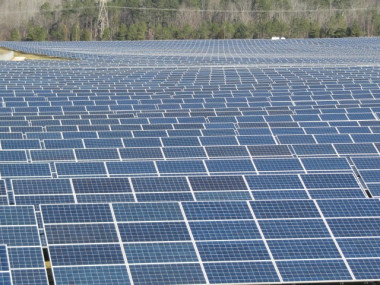
6.4 million Americans now work in the traditional energy and the energy efficiency sector, which added more than 300,000 net new jobs in 2016, or 14 percent of the nation’s job growth.
“This report verifies the dynamic role that our energy technologies and infrastructure play in a 21st century economy,” said DOE Senior Advisor on Industrial and Economic Policy David Foster. “Whether producing natural gas or solar power at increasingly lower prices or reducing our consumption of energy through smart grids and fuel efficient vehicles, energy innovation is proving itself as the important driver of economic growth in America, producing 14 percent of the new jobs in 2016.”
The solar industry is particularly shining bright.
“Proportionally, solar employment accounts for the largest share of workers in the Electric Power Generation sector,” the report, released on Jan. 13, states. “This is largely due to the construction related to the significant buildout of new solar generation capacity.” Overall, the U.S. solar workforce increased 25 percent in 2016.
According to the report, solar—both photovoltaic and concentrated—employed almost 374,000 workers in 2016, or 43 percent of the Electric Power Generation workforce. This is followed by fossil fuels, which accounts for 22 percent of total Electric Power Generation employment, or 187,117 workers across coal, oil and natural gas generation technologies.
Wind generation is seeing growth in employment with a 32 percent increase since 2015. The wind industry provides the third largest share of Electric Power Generation employment with 102,000 workers at wind firms across the nation.
The reason behind this growth in the solar sector is due to the high capacity additions in both distributed and utility-scale photovoltaic solar, the report said. In fact, construction and installation projects represented the largest share of solar jobs, with almost four in ten workers doing this kind of work, followed by workers in solar wholesale trade, manufacturing and professional services.
In a sign of promise for the booming industry, solar employers reported that they expect to increase employment by 7 percent this year.
Solar is becoming the cheapest form of electricity production in the world, according to statistics from Bloomberg New Energy Finance. Last year was the first time that the renewable energy technology out-performed fossil fuels on a large scale.
January 20, 2017
Posted by Christina Macpherson |
employment, renewable, USA |
Leave a comment
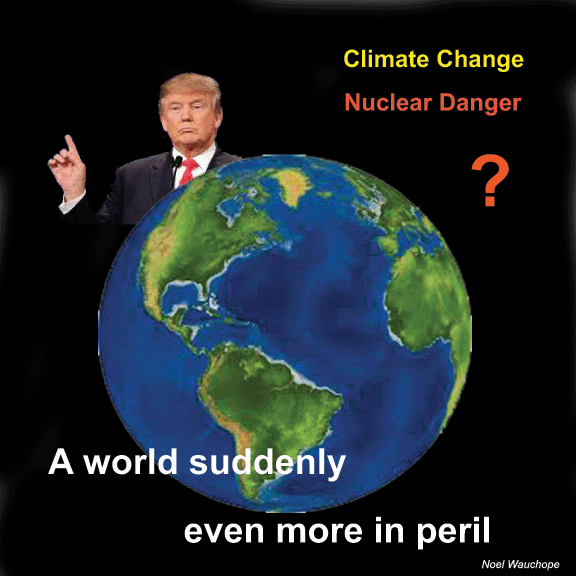
 Donald Trump’s very confusing thoughts on nuclear weapons, explained
Vox, by Zack Beauchamp@zackbeauchampzack@vox.com Jan 18, 2017 Just days before his inauguration, Donald Trump made headlines by trashing America’s European allies in an interview with two of Europe’s biggest newspapers. The hubbub over Trump’s attack on Europe obscured one of the stranger comments in the interview — that he hoped to work with Russian strongman Vladimir Putin to reduce both countries’ nuclear arsenals.
“Let’s see if we can make some good deals with Russia,” Trump said. “For one thing, I think nuclear weapons should be way down and reduced very substantially.”
To say this is a flip-flop is an understatement. Less than a month ago, Trump tweeted that the US “must greatly strengthen and expand its nuclear capability until such time as the world comes to its senses regarding nukes.” When MSNBC’s Mika Brzezinski asked him about the possibility of this policy setting off an arms race with Russia (which is also talking about expanding/modernizing its nuclear arsenal), Trump’s answer was simple.
“Let it be an arms race.”
Nuclear arms control is a hugely important issue — especially in a world where tensions between the US and two other nuclear powers, Russia and China, are heating up. So where does Trump stand: with his comments from December, or with his comments from January?
The truth is that nobody knows — leaving us in the dark on one of the very few policy issues with the potential to transform the future of human civilization.
“It’s difficult to discern what Trump’s policy will be and whether he has given more than a few minutes’ thought to these issues,”
Kingston Reif, the director for disarmament and threat reduction policy at the Arms Control Association, tells me.
Questions about nuclear policy have dogged Trump for more than a year now. In a December 2015 Republican debate, moderator Hugh Hewitt asked Trump about the “nuclear triad” — America’s three-part system for delivering nuclear weapons (bombers, submarines, and intercontinental ballistic missiles). Trump’s answer was confusing:
We have to be extremely vigilant and extremely careful when it comes to nuclear. Nuclear changes the whole ballgame. … The biggest problem we have is nuclear — nuclear proliferation and having some maniac, having some madman go out and get a nuclear weapon. That’s in my opinion, that is the single biggest problem that our country faces right now.
There are two interesting things about this. First, Trump suggests, as he later did in his January interview, that he sees large global nuclear stockpiles as a problem. Second, he doesn’t appear to know any of the major policy questions surrounding the nuclear triad, or even what the nuclear triad is.
That became especially clear when Hewitt followed up, pressing Trump to answer the actual question about the triad. Trump’s response? “I think — I think, for me, nuclear is just the power, the devastation is very important to me.”
This pattern — an abstract abhorrence of nuclear weapons but seemingly confused views on actual nuclear policy — continued throughout the campaign. . In a March 2016 town hall, for example, host Chris Matthews pressed Trump on whether he’d use nuclear weapons. He seemed to say both no and yes at the same time, saying he’d be “the last one to use nuclear weapons,” but also that he would be very willing to nuke ISIS territory in response to a terrorist attack:………… http://www.vox.com/world/2017/1/18/14310168/trump-nuclear-policy-inauguration-explained
January 20, 2017
Posted by Christina Macpherson |
politics, USA, weapons and war |
Leave a comment
 Donald Trump and the ‘nuclear football’: What’s stopping President-elect launching lethal weapon strike http://www.independent.co.uk/news/world/americas/donald-trump-nuclar-football-codes-what-stops-president-elect-push-button-launch-nuclear-weapon-a7534926.html ‘In theory the president has full discretion over authorisation of nuclear use’ Peter Walker @petejohn_walker , 19 Jan 17 Donald Trump will be simultaneously handed power to launch nuclear weapons as he is inaugurated tomorrow.
Here we explain how the “thin-skinned” and “impulsively tempered” President-elect can wield the power of the ‘nuclear football’ and what’s stopping him from using it.
January 20, 2017
Posted by Christina Macpherson |
politics, USA, weapons and war |
Leave a comment

 FPL Wins Battle to Store Radioactive Waste Under Miami’s Drinking Water Aquifer, Miami New Times, BY JERRY IANNELLI JANUARY 16, 2017 Environmental activists have started a petition urging Florida lawmakers to prevent FPL from storing waste underground. South Florida sits atop two gigantic underground stores of water: the Biscayne and Floridan Aquifers. Miamians get most of their drinking water from the upper Biscayne Aquifer, while the government has used the lower portion of the Floridian to dump waste and untreated sewage — despite the fact that multiple studies have warned that waste could one day seep into the drinking water.
According to NRC documents, CASE’s petition was dismissed for being filed “inexcusably late” in FPL’s application process.
“This was thrown out on procedural grounds,” says CASE’s president, Barry J. White. “The science is still there.”
CASE had filed a petition with the U.S. Nuclear Regulatory Commission, but the NRC on Friday threw out CASE’s complaint, saying the environmental group had filed too late in FPL’s approval process.
The fight stems from the energy company’s plan to build two nuclear reactors at the controversial Turkey Point Nuclear Generating Station south of Miami by roughly 2030. The towers might not be operational for a decade or two, but that doesn’t mean the public should stop paying attention to them. FPL is submitting numerous proposals about the project to the government.
As part of that package, FPL told the U.S. Nuclear Regulatory Commission that it plans to store contaminated water used to clean the reactors, as well as radioactive waste (“radwaste”) in the Boulder Zone. In October, the NRC issued a report, stating FPL’s plan would pose “no environmental impacts” to the South Florida environment.
Roughly a month later, on November 28, CASE filed a legal petition demanding that the NRC hold a hearing on FPL’s radioactive waste plan. CASE alleges the government failed to address a host of concerns about the power company’s plan.
“Everything will be put into a supposedly ‘hermetically sealed’ Boulder Zone,” White told New Times in December. “But anybody who lives in South Florida knows nothing below us is hermetically sealed.” Environmentalists say the plan could leak carcinogens such as cesium, strontium 90, and tritium right into the drinking-water aquifers…….. http://www.miaminewtimes.com/news/fpl-wins-battle-to-store-radioactive-waste-under-miamis-drinking-water-aquifer-9059210
January 20, 2017
Posted by Christina Macpherson |
Legal, USA, water |
Leave a comment
|
Groups sue to end ratepayer subsidies of aged nuclear power plants http://www.midhudsonnews.com/News/2017/January/19/nuke_plant_subsidy_suit.html BEACON – Hudson River Sloop Clearwater and a number of co-petitioners filed in Supreme Court a challenge to the recently enacted mandatory 12-year nuclear subsidy that is expected to cost New York ratepayers between $7 billion and $10 billion.The surcharge was ordered by the state Public Service Commission as part of its Clean Energy Standard.
The petitioners argue that the $7.6 billion nuclear subsidy imposed on the state’s electricity consumers was unjustified and that the PSC did not follow the law when it enacted them.
The subsidies will be paid by ratepayers on their monthly energy bills based on usages. That cost will “most seriously impact low-income ratepayers and businesses operating on a thin profit margin,” the groups said.
“New Yorkers who are currently using and who are committed to renewable energy and who are paying additionally for Renewable Energy Credits for 100 percent of their electrical needs should not also be billed for this $7.6 billion nuclear plant subsidy,” said North Salem Town Supervisor Warren Lucas.
“This action has brought to challenge the PSC’s nearly $8 billion bailout of the unsustainable and polluting nuclear industry, based on the mistaken premise that nuclear energy production is emission-free,” said attorney Susan Shapiro, owner of petitioner Goshen Green Farms. “Nuclear energy is not, nor has it ever been emission-free, as it routinely emits radiation, heat and greenhouse gases, which are all climate change catalysts.”
Clearwater Environmental Director Manna Jo Greene noted at Diablo Canyon in California, they are phasing out their last nuclear plant by committing to 100 percent renewable replacement energy, while protecting plant workers by retaining those with critical institutional memory and highly technical knowledge. She said they are also retraining those who are not needed for safe decommissioning, and placing them in jobs in the renewable energy economy.
“New York needs to create a just transition plan, not a prolonged nuclear bailout,” Greene said.
|
|
|
January 20, 2017
Posted by Christina Macpherson |
Legal, USA |
Leave a comment
 Parts of United States are heating faster than globe as a whole A new study shows the Northeast USA will reach the dangerous 2°C warming threshold faster than most of the rest of the planet, Guardian, John Abraham, 17 Jan 17, A new study shows the Northeast USA will reach the dangerous 2°C warming threshold faster than most of the rest of the planet,
Global warming obviously refers to temperature increases across the entire globe. We know the Earth is warming, we know it is human-caused, we have a pretty good idea about how much the warming will be in the future and what some of the consequences are. In fact, when it comes to the Earth’s average climate, scientists have a pretty good understanding.
On the other hand, no one lives in the average climate. We live spread out north, west, east, and south. On islands, large continents, inland or in coastal regions. Many of us want to know what’s going to happen to the climate where we live. How will my life be affected in the future?
This type of question is answered in a very recent study published by scientists from the University of Massachusetts at Amherst. The team, which includes Dr. Raymond Bradley and researcher Dr. Ambarish Karmalkar looked specifically at the Northeastern United States. They found that this area will warm much more rapidly than the globe as a whole. In fact, it will warm faster than any other United States region. The authors expect the Northeast US will warm 50% faster than the planet as a whole. They also find that the United States will reach a 2 degree Celsius warming 10–20 years before the globe as a whole.
So why does this matter? Well first, it matters because some of the effects people will experience are directly tied to the temperature increase in their region. For instance, we know that warmer air leads to more intense precipitation. In fact, we are already observing increases in very heavy rainfall across the United States (especially in the Northeast). Based on this new research, that trend will only get worse. It means that winters in this region will get warmer and wetter – more winter precipitation will likely occur as rain rather than snow. This affects the availability of water into the spring months. It also means that summers will have more intense heat waves which will lead to more severe droughts.
However, there is another impact to this study……..https://www.theguardian.com/environment/climate-consensus-97-per-cent/2017/jan/17/parts-of-united-states-are-heating-faster-than-globe-as-a-whole
January 20, 2017
Posted by Christina Macpherson |
climate change, USA |
Leave a comment

Rick Perry: Energy Secretary nominee didn’t know his job would involve managing nuclear weapon stockpile The 66-year-old is said to be facing a ‘steep learning curve’ The Independent Andrew Buncombe New York @AndrewBuncombe Rick Perry made embarrassing headlines when he could not remember the name of the federal agency he wanted to scrap.
He listed the Department of Commerce and the Department of Education, but failed to recall the third – the Department of Energy. Soon after the performance at that Republican debate, he dropped out of the race.
Mr Perry is now back as Donald Trump’s nominee to head that very same department. But reports suggest the former Texas governor will have a steep learning curve; when he accepted the job, he did not realise one of his major tasks as Energy Secretary would be overseeing the US’s vast nuclear arsenal……..
Mr Perry’s confirmation process before the Senate started on Thursday. If approved, he will replace Ernest Moniz, who was chairman of the Massachusetts Institute of Technology physics department and directed the linear accelerator at MIT’s Laboratory for Nuclear Science.
January 20, 2017
Posted by Christina Macpherson |
politics, USA |
Leave a comment

Christina Macpherson’s websites & blogs
It is a good idea to at least test the feasibility of deep boreholes. As one resident said “Something must be done with the wastes”. There is no obligation on that community to agree to actually accept high level nuclear waste – only to host the testing of the deep bore concept.
The whole project would really make sense if it were combined with a definite plan to STOP MAKING TOXIC RADIOACTIVE WASTES, by closing down all nuclear reactors. This could be done, with genuine good will, and planning for compensation and transition to other employment for workers in the nuclear industry.
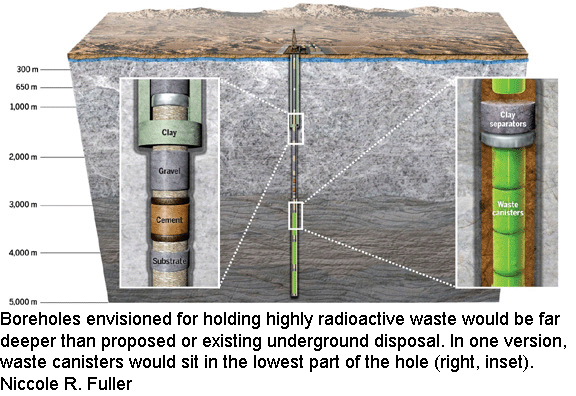
New Mexico town steps up for nuclear borehole project LMT Online, , January 15, 2017 “……. The U.S. Energy Department, Quay County and two energy development companies say the nation’s latest nuclear waste experiment could inject as much as $40 million into the county’s economy. Nara Visa residents just have to agree to let the companies drill a three-mile-deep borehole — seven times deeper than the Waste Isolation Pilot Plant in Carlsbad — into the crystalline, granite crust of the earth a few miles outside of town, on land currently occupied by fat, black cattle.
Right now, the project is pegged as a scientific experiment. The Energy Department says no nuclear waste will be placed in the test borehole.
The ultimate goal is to find a permanent place to dispose of the ever-growing and deadly stockpile of spent nuclear fuel rods and high-level radioactive waste collected at nuclear reactors and nuclear weapons laboratories nationwide.
Until this year, no town in the U.S. had agreed to the proposal. But when the Quay County Commission approved the plan in October, it put Nara Visa on track to become the first.
About seven miles outside Nara Visa, there is a small, gravel roadside park where semi-truck drivers pull off U.S. 54 to sleep. Below the earth, the granite is devoid of oil but just right for deep drilling.
These 10 acres belong to Louis and Elaine James, who’ve agreed to lease it to the government………
As far as the nuclear waste component is concerned, Louis James, 69, said, “I have more of a problem with it sitting over at Pantex 100 miles away than I do with it being under the ground, because you know it will get you if they ever attack those spots.” He was referring to the Pantex Plant, a nuclear weapons assembly facility outside Amarillo, Texas……
The test hole planned for the James’ property is meant to be just 8 1/2 inches wide but would go deep below ground, first through the water table and a mile through sediment before hitting the top of a crystalline rock layer. From there, the hole would be drilled another two miles into the Earth. This is the layer where nuclear waste would be stored, then sealed off with a steel casing and concrete to protect the environment and water in the mile span separating the waste from the land’s surface.
Utah-based DOSECC Exploration Services LLC and Enercon Federal Services, Inc., based in Atlanta, are developing the Nara Visa proposal and are one of four groups that have been granted the go-ahead from the Energy Department for Phase 1 of the project. This is referred to as “community buy-in,” gaining not only public approval but also support for the project, and securing the land for the borehole site.
If DOSECC and Enercon win this bid, they will get $35 million over a five-year period to drill the first hole. The Energy Department will grant an additional $50 million to drill a second, wider borehole if the first is successful……
State Rep. Dennis Roch said that after meeting with the companies, he felt confident there was “no connection between this viability test and the ultimate decision of where to dispose of nuclear waste way down the road.”…….
The Nara Visa site would only be permitted for drilling, he added. Nuclear waste storage would require an entirely different permitting and regulatory process…….
WIPP, after being closed for nearly three years following the radiation leak, began depositing waste below ground for the first time in December. But the stagnation of waste disposal at these facilities left the Energy Department scrambling for alternatives, and in 2012, deep boreholes resurfaced as a potential alternative, an idea that was first floated in the 1950s.
To store all of the waste sitting at 77 U.S. facilities, the Energy Department needs to drill 950 boreholes at an estimated $20 million per hole, or $71 billion for the entire project, including transportation, environmental reclamation, monitoring and site characterization, according to the 2010 Sandia study. In contrast, Yucca Mountain was estimated to cost $96 billion.
Each hole is expected to contain 400 vertically stacked fuel pods that, unlike the costly steel drums used to pack waste headed to WIPP, would not require specialized containers but instead would be stored in their spent fuel form or glass. Multiple boreholes could be drilled just over 200 meters apart to avoid thermal reactions.
Though the Sandia study said boreholes could be used for nuclear reactor waste, Mast from Enercon said he believes the Energy Department is only looking at boreholes for waste from nuclear weapons development.
To actually begin placing nuclear waste in the boreholes will require an amendment to the Nuclear Waste Policy Act.
Before the proposal reaches that stage, Greg Mello, director of the watchdog Los Alamos Study Group, says the government should be more transparent about exactly what type of high-level nuclear waste would go in the holes: spent fuel rods, nuclear weapons waste or down-blended plutonium. …..http://www.lmtonline.com/news/article/New-Mexico-town-steps-up-for-nuclear-borehole-10858853.php
January 16, 2017
Posted by Christina Macpherson |
Reference, USA, wastes |
1 Comment
 Tesla building world’s largest rooftop solar farm on $5B NV gigafactory http://www.constructiondive.com/news/tesla-building-worlds-largest-rooftop-solar-
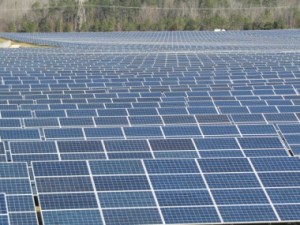 farm-on-5b-nv-gigafactory/434022/ Kim Slowey@kimslowey
Dive Brief:
Dive Insight:
Another energy-saving strategy at the gigafactory, according to 2015 statements from JB Straubel, Tesla’s chief technical officer, was to eschew natural gas pipelines in the structure’s design so that there could be no future possible concessions regarding the company’s no-emissions policy.
Construction on the Nevada gigafactory — expected to be fully functional in 2018 — is progressing, and battery production is already underway. It is widely believed that the solar panels Tesla will use to build its rooftop solar farm will come from SolarCity, which Tesla purchased last year. Soon after the acquisition, Tesla CEO Elon Musk announced that SolarCity would begin to market a relatively low-cost solar roof shingle that mimicked the look of high-end slate and terra cotta roofs, removing the aesthetic barrier of traditional, industrial-looking solar shingles and panels.
Tesla’s solar ambitions, however, extend far beyond the U.S. and solar rooftops. In November, TechCrunch reported that Tesla and SolarCity were behind a solar microgrid project — funded by the Environmental Protection Agency, the Department of the Interior and the American Samoa Economic Development Authority — that aims to eliminate the island’s reliance on costly diesel generators by providing 72 hours of full power from a solar array that recharges with seven hours of sunlight.
January 16, 2017
Posted by Christina Macpherson |
renewable, USA |
Leave a comment
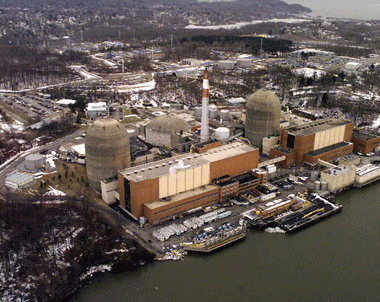
 What’s Really Behind the Indian Point Nuclear Deal? CounterPunch by LINDA PENTZ GUNTER 13 Jan 17 There was general celebration among sensible-thinking people on January 9 when New York Governor, Andrew Cuomo, signed a deal that would see the twin reactors at the Indian Point Nuclear Generating Station in Buchanan, NY, close by 2021.
Indian Point, on the shores of the Hudson River, has been plagued by safety problems for years, sits on two fault lines — putting it at high risk of earthquake — and was identified as a potential target by the 9/11 attackers who flew over the plant while taking flight training lessons.
In 2004, the group Riverkeeper commissioned physicist, Dr. Edwin Lyman, now with Union of Concerned Scientists, to analyze the outcome of a terrorist attack on Indian Point, a report entitled Chernobyl On The Hudson? Lyman calculated that, depending on the weather that day, an attack on Indian Point “could result in as many as 44,000 near-term deaths from acute radiation syndrome or as many as 518,000 long-term deaths from cancer among individuals within fifty miles of the plant.”
Clearly, it’s high time Indian Point, less than 30 miles from Manhattan, was closed. It is equally obvious that 2021 is not soon enough, tempering the joy among those who have worked for decades to get the plant shut down.
Disappointingly, however, the Cuomo administration is at the same time handing out a massive bailout to four upstate nuclear reactors — two at Nine Mile Point and the single units at FitzPatrick and Ginna. FitzPatrick is the same GE Mark I boiling water reactor design as those that exploded and melted down at Fukushima. If we are going to shut down nuclear reactors, the 30 of this design still operating in the U.S. should be top of the list.
Cuomo is a self-proclaimed advocate for renewable energy. Why then would he shoot its development in the foot by handing out $7.6 billion in state subsidies to keep decrepit and dangerous nuclear plants going upstate while shuttering Indian Point?
In a July 22, 2016 submission to the New York Public Service Commission (NYPSC), four advocacy groups noted that this massive bailout effectively values each of the 2,090 nuclear jobs at the three nuclear sites at $303,000 per year per worker, almost three times what these workers are currently paid.
All of this naturally provokes a frustrating level of cynicism about Cuomo’s motives. Is he really a green energy champion or just another pragmatic politician concerned only with (1) getting re-elected in 2018 and (2) raising campaign funds?
In the last gubernatorial election in 2014, Cuomo predictably ran strong in the affluent counties in and around New York City, including Westchester, where Indian Point is located. In wealthy, downstate counties, Cuomo easily defeated his Republican rival, Rob Astorino, by largely resounding margins………
Cuomo is vulnerable at ballot boxes in the farther reaches of the state, (excepting Erie County, home to Buffalo and where he won in a landslide). Making a show of “saving jobs” in these poorer areas could potentially translate into political capital.
Of course it’s an illusion, because propping up jobs at three times their value is a costly piece of lip service. Comments submitted in April 22, 2016 to the NYPSC by the Alliance for a Green Economy and Nuclear Information and Resource Service show that far more secure, long-term jobs are already being created in the renewable energy sector in the upstate region. And some nuclear jobs could still be retained while the plants are being decommissioned.
“The development of green industry, such as the Solar City factory in Buffalo, the 1366 Technologies factory near Rochester, and the Soraa LED lightbulb factory in Syracuse, NY” will collectively “create 6,420 long-term jobs” with just $937 million in state support, said the two groups.
It is in any case just a matter of time before these flawed, aging and uneconomic nuclear plants either close down or melt down. Where will the nuclear workforce go then? Is Cuomo more willing to risk a radiological disaster in low-income Oswego County than 30 miles from Manhattan? Clearly he can win the election without those upstate voters as the 2014 results showed.
Oswego and Ontario counties may have been conned for now into thinking they have been thrown a job-saving lifeline rather than a potential death sentence. But while the bailout has been approved, it can still be challenged. That’s an essential strategy if we are to pre-empt a potential Fukushima on the Great Lakes.
January 16, 2017
Posted by Christina Macpherson |
politics, USA |
Leave a comment
 Thanks, Obama: 6 Big Climate Accomplishments From President Obama’s Tenure, Clean Technica, January 12th, 2017 Originally published on The Climate Reality Project.
“……….Here are six big climate accomplishments from President Obama’s time in office……..
THE CLEAN POWER PLAN In 2014, the Environmental Protection Agency (EPA) released the Clean Power Plan, the first-ever standards to reduce carbon pollution from existing power plants. The EPA projected the plan would bring many, many benefits for Americans, including creating tens of thousands of jobs, saving US citizens as much as $155 billion in energy costs between 2020—2030, and helping prevent some 90,000 asthma attacks in children by 2030.
The benefits didn’t end at our borders, either, as the plan showed the rest of the world we were serious about reducing emissions, leading to a landmark climate deal with China in 2015 that helped energize international climate talks at COP 21. These talks led to the historic Paris Agreement being forged in December 2015.
The Clean Power Plan was a cornerstone of the US commitment to reduce overall emissions 26—28 percent below 2005 levels by 2025 in the agreement.
A BAN ON DRILLING IN US-OWNED PARTS OF THE ARCTIC AND ATLANTIC OCEANS In December, President Obama worked to seal his environmental legacy by permanently banning offshore drilling in Arctic and Atlantic waters controlled by the US federal government – an incredible 3.8 million acres. This is an important move not only to protect marine life, but also to protect our climate. This is especially important in the Arctic. According to NOAA, the region is warming twice as fast as the rest of the world on average.
Some have gone as far as to call President Obama the “Ocean President” because he’s protected more marine areas from development than any other president before him. Since the beginning of Obama’s presidency, his administration has quadrupled the area of protected waters around the US.
COAL LEASING MORATORIUM Between 2009 and 2014, companies mined enough coal on public lands to put more than 3.9 billion metric tons of carbon pollution into the atmosphere. That’s the equivalent emissions of over 825 million cars on the road – every year.
In January 2016, though, the climate community had a major win when the Department of the Interior put a temporary freeze on leasing our public lands for coal mining (called a moratorium). The moratorium is a big deal because when coal is burned for energy, it creates more carbon dioxide per unit than any other fossil fuel.
The bottom line? When we lease our federal lands for coal, we’re helping fuel climate change. The moratorium – though temporary – helps stop that.
PROPOSED NEW FUEL ECONOMY STANDARDS One of the more important moves by the Obama Administration (and it’s gone under the radar in some ways) has been to significantly push fuel economy standards for the vehicles filling our roads and highways – and sending carbon pollution into the atmosphere. In 2011, the White House proposed new fuel economy standards for passenger vehicles, requiring an average performance equivalent of 54.5 miles per gallon by 2025. The administration also finalized new fuel economy standards for commercial trucks, vans, and buses, which are projected to save over 500 million barrels of oil and save American drivers an estimated $50 billion in fuel costs.
These new standards are the most ambitious any US president has implemented, and will save consumers money at the pump, decrease greenhouse gas emissions, and reduce US demand for oil.
IMPROVING ENERGY EFFICIENCY IN HOMES AND BUSINESSES The Obama Administration has focused on increasing energy efficiency not only to protect our environment, but also save Americans money and create jobs. One of the major ways the White House is accomplishing this is through the Better Buildings Challenge, a US Department of Energy initiative focused on making homes, commercials buildings, and industrial plants more energy efficient.
The Better Buildings Challenge is projected to improve energy efficiency in commercial buildings by 20 percent by 2020 through investments in upgrading offices, universities, hospitals, and other commercial buildings. It’s also projected to save companies and business owners about $40 billion per year on energy bills, which can be used to hire more workers and benefit companies in other ways.
CUTTING METHANE EMISSIONS In May 2016, the EPA announced final regulations to curb harmful methane emissions from new and modified oil and gas facilities. These first-ever federal methane pollution standards are a big part of how the US will reach its goal of cutting this pollution by 40–45 percent from 2012 levels by 2025.
While there’s less methane than CO2 in the atmosphere, it’s much more powerful than carbon dioxide in trapping heat – 84 times more potent over 20 years, in fact. Which means it can still do a lot of harm to our climate. These new rules will help rein in the millions of tons of methane the oil and gas industry is leaking into the air, and is a big climate win for the Obama Administration – and all of us………. https://cleantechnica.com/2017/01/12/thanks-obama-6-big-climate-accomplishments-president-obamas-tenure/
January 16, 2017
Posted by Christina Macpherson |
climate change, politics, USA |
1 Comment
The shutdown of New York’s Indian Point is far from the end of nuclear power The agreement between the state and the plant owner comes as New York will invest billions in the upgrade of nuclear power plants upstate. Christian Science Monitor Ben Rosen Staff | @Benji_Rosen JANUARY 8, 2017 —New York Gov. Andrew Cuomo is supportive of nuclear power generation upstate, but has long said a facility 30 miles north of Manhattan is too close to the nation’s most populous city.
Mr. Cuomo will get his wish in 2021, as the Indian Point Nuclear Power plant in Westchester County will shut down its two nuclear reactors under an agreement New York State reached with plant owner Entergy, The New York Times first reported. At the same time, the state has authorized up to $7.6 billion in ratepayer-financed subsidies to keep three other aging nuclear plants operating upstate.
In one sense, the agreement to close Indian Point is part of a nationwide trend to close aging power plants critics have long said pose too many safety risks. California reached a similar agreement with the state’s largest utility provider early this summer to close the Diablo Canyon nuclear plant, about halfway between Los Angeles and San Francisco……..
In New York, Entergy has agreed to close the first of Indian Point’s two reactors by April 2020 and the second exactly a year later.
The agreement, a source confirmed to the Times and the Associated Press, will resolve longstanding disputes between Entergy, a Louisiana-based utility company, and New York State. The state and Riverkeeper, an environmental group that has long fought Indian Point, have agreed to drop safety and environmental claims they previously filed with federal regulatory agencies against the nuclear plant that came online in the 1970s, according to the Times. Entergy, meanwhile, has agreed to make repairs and safety upgrades, as well as allow inspections into the plant starting this year.
Entergy and the New York Attorney General’s office have each signed off on the agreement, which would also approve Indian Point’s two reactor licenses for six years, which expired in 2013 and 2015. The governor’s office has not yet signed off on the agreement……..
The move to close Indian Point would follow the shuttering of other plants across the country. In addition to the proposal to close the Diablo Canyon plant in San Luis Obispo, Calif., energy companies across the country pulled the plug between 2013 and 2014 on four nuclear power plants. In June, Exelon Corp. also announced plansto shutter two nuclear plants in Illinois by 2017 and 2018, respectively……
The Cuomo administration also recently authorized billions worth of upgrades to three upstate nuclear facilities because, it said, nuclear power is necessary to transition the state to renewables.
There are currently 100 nuclear reactors (including the one that came online in Tennessee in October) in the United States, concentrated in 30 states, according to the US Energy Information Administration. Nuclear energy supplies about 20 percent of the nation’s power, while renewables – wind, solar, geothermal, biomass, and hydroelectricity – produce 13 percent combined. http://www.csmonitor.com/Environment/2017/0108/The-shutdown-of-New-York-s-Indian-Point-is-far-from-the-end-of-nuclear-power
January 16, 2017
Posted by Christina Macpherson |
politics, USA |
Leave a comment
King CONG vs. Solartopia, The Progressive December 5, 2016, Harvey Wasserman “………Some 10,000 arrests of citizens engaged in civil disobedience have put the Diablo nuclear reactors at ground zero in the worldwide No Nukes campaign. But the epic battle goes far beyond atomic power. It is a monumental showdown over who will own our global energy supply, and how this will impact the future of our planet.
On one side is King CONG (Coal, Oil, Nukes, and Gas), the corporate megalith that’s unbalancing our weather and dominating our governments in the name of centralized, for-profit control of our economic future. On the other is a nonviolent grassroots campaign determined to reshape our power supply to operate in harmony with nature, to serve the communities and individuals who consume and increasingly produce that energy, and to build the foundation of a sustainable eco-democracy…….
with this dangerous and dirty power have come Earth-friendly alternatives, ignited in part by the grassroots movements of the 1960s. E.F. Schumacher’s Small Is Beautiful became the bible of a back-to-the-land movement that took a new generation of veteran activists into the countryside.
Dozens of nonviolent confrontations erupted, with thousands of arrests. In June 1978, nine months before the partial meltdown at Three Mile Island, the grassroots Clamshell Alliance drew 20,000 participants to a rally at New Hampshire’s Seabrook site. And Amory Lovins’s pathbreaking article, “Energy Strategy: The Road Not Taken,” posited a whole new energy future, grounded in photovoltaic and wind technologies, along with breakthroughs in conservation and efficiency, and a paradigm of decentralized, community-owned power.
As rising concerns about global warming forced a hard look at fossil fuels, the fading nuclear power industry suddenly had a new selling point. Climate expert James Hansen, former Environmental Protection Agency chief Christine Todd Whitman, and Whole Earth Catalog founder Stewart Brand began advocating atomic energy as an answer to CO2 emissions. The corporate media began breathlessly reporting a “nuclear renaissance” allegedly led by hordes of environmentalists.
But the launch of Peaceful Atom 2.0 has fallen flat.
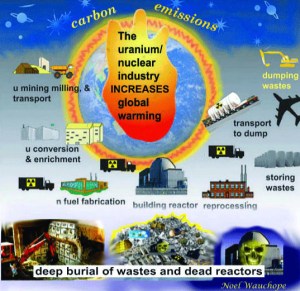 As I recently detailed in an online article for The Progressive, atomic energy adds to rather than reduces global warming. All reactors emit Carbon-14. The fuel they burn demands substantial CO2 emissions in the mining, milling, and enrichment processes. Nuclear engineer Arnie Gundersen has compiled a wide range of studies concluding new reactor construction would significantly worsen the climate crisis.
Moreover, attempts to recycle spent reactor fuel or weapons material have failed, as have attempts to establish a workable nuclear-waste management protocol. For decades, reactor proponents have argued that the barriers to radioactive waste storage are political rather than technical. But after six decades, no country has unveiled a proven long-term storage strategy for high-level waste.
For all the millions spent on it, the nuclear renaissance has failed to yield a single new reactor order. New projects in France, Finland, South Carolina, and Georgia are costing billions extra, with opening dates years behind schedule. Five projects pushed by the Washington Public Power System caused the biggest municipal bankruptcy in U.S. history. No major long-standing green groups have joined the tiny crew of self-proclaimed “pro-nuke environmentalists.” Wall Street is backing away.
Even the split atom’s most ardent advocates are hard-pressed to argue any new reactors will be built in the United States, or more than a scattered few anywhere else but China, where the debate still rages and the outcome is uncertain……..
Where once it demanded deregulation and a competitive market, the nuclear industry now wants re-regulation and guaranteed profits no matter how badly it performs.
The grassroots pushback has been fierce. Proposed bailouts have been defeated in Illinois and are under attack in New York and Ohio. A groundbreaking agreement involving green and union groups has set deadlines for shutting the Diablo reactors, with local activists demanding a quicker timetable. Increasingly worried about meltdowns and explosions, grassroots campaigns to close old reactors are ramping up throughout the United States and Europe. Citizen action in Japan has prevented the reopening of nearly all nuclear plants since Fukushima.
Envisioning the “nuclear interruption” behind us, visionaries like Lovins see a decentralized “Solartopian” system with supply owned and operated at the grassroots………

[In Germany] the transition is succeeding faster and more profitably than its staunchest supporters imagined. Wind and solar have blasted ahead. Green energy prices have dropped and Germans are enthusiastically lining up to put power plants on their rooftops. Sales of solar panels have skyrocketed, with an ever-growing percentage of supply coming from stand-alone buildings and community projects. The grid has been flooded with cheap, green juice, crowding out the existing nukes and fossil burners, cutting the legs out from under the old system.
In many ways it’s the investor-owner utilities’ worst nightmare,………
The revolution has spread to the transportation sector, where electric cars are now plugging into outlets powered by solar panels on homes, offices, commercial buildings, and factories. Like nuclear power, the gas-driven automobile may be on its way to extinction.
Nationwide, more than 200,000 Americans now work in the solar industry, including more than 75,000 in California alone. By contrast, only about 100,000 people work in the U.S. nuclear industry. Some 88,000 Americans now work in the wind industry, compared to about 83,000 in coal mines, with that number also dropping steadily.
Once the shining hope of the corporate power industry, atomic energy’s demise represents more than just the failure of a technology. It’s the prime indicator of an epic shift away from corporate control of a grid-based energy supply, toward a green power web owned and operated by the public.
As homeowners, building managers, factories, and communities develop an ever-firmer grip on a grassroots homegrown power supply, the arc of our 128-year energy war leans toward Solartopia.
Harvey Wasserman’s Solartopia! Our Green-Powered Earth is at solartopia.org. His Green Power & Wellness Show is at prn.fm. He edits nukefree.org. http://www.progressive.org/news/2016/12/189107/king-cong-vs-solartopia
January 14, 2017
Posted by Christina Macpherson |
opposition to nuclear, renewable, USA |
Leave a comment

 Trump’s China policy threatens nuclear war World Socialist Website, James Cogan 13 January 2017
 The confirmation hearings for Donald Trump’s cabinet nominees confirm that his administration intends to vastly intensify US demands for massive economic and strategic concessions from the Chinese regime. In pursuit of the predatory ambitions of a tiny layer of corporate oligarchs, policies are being put forward that could result in a military clash and trigger a nuclear exchange.
On Thursday, Rex Tillerson, Trump’s proposed secretary of state, made unprecedented statements on the attitude the next US government will take toward China’s land reclamation activities and construction of facilities on the islets and reefs Beijing claims as sovereign territory in the South China Sea.
Tillerson declared: “We are going to have to send China a clear signal that, first, the island-building stops and second, your access to those islands also is not going to be allowed.”
The implications of such a policy are immense. The islands referred to by Tillerson are occupied by Chinese military personnel. The waters surrounding them are patrolled by the Chinese Coast Guard and Navy. The airspace above them is patrolled by the Chinese air force. The only conceivable way to deny China access would be through the large-scale deployment of US aircraft carriers and associated military forces into the South China Sea.
Media headlines around the world have reflected the recognition that war would be the most likely outcome of attempting to implement Tillerson’s declaration. For its part, the Chinese state-owned publication Global Times, whose editorial line is believed to come directly from the highest echelons of the Chinese regime, has not hedged its words in response.
Its January 13 editorial states: “Unless Washington plans to wage a large-scale war in the South China Sea, any other approaches to prevent Chinese access to the islands will be foolish. The US has no absolute power to dominate the South China Sea. Tillerson had better bone up on nuclear power strategies if he wants to force a big nuclear power to withdraw from its own territories [emphasis added].”
An analysis of the social forces and economic interests that stand behind Trump leaves no room for doubt that his administration is more than prepared to threaten a full-scale war with China, posing the risk of a nuclear exchange.
Before he is even sworn in, Trump and the cabal of billionaires and ex-generals who will comprise his cabinet have signaled they will provoke conflict with China over a range of issues. In addition to rejecting Chinese territorial claims in the South China Sea, these policies include imposing tariffs on Chinese exports; demanding Beijing force North Korea to shut down its nuclear weapons program; and threatening to repudiate the “One China policy” under which Washington, since 1979, has formally recognised that the island of Taiwan is part of China and not an independent state.
Adding to the possible list of provocations, one of Trump’s chief supporters in the Congress, Arkansas Republican Tom Cotton, joined with Republican presidential aspirant Marco Rubio to introduce the “Hong Kong Human Rights and Democracy Act” in November. The Act would require the US government to take action to ensure Hong Kong remains “sufficiently autonomous” from the mainland regime. Tibetan nationalists have enthusiastically welcomed Trump’s election as a signal that their cause might also be taken up by the incoming administration.
The focus on China flows directly from the interests of a powerful faction of the American corporate elite who view it as their greatest immediate economic, geopolitical and potential military competitor.
Rex Tillerson, the former CEO of oil conglomerate ExxonMobil, personifies this layer. Under Tillerson, ExxonMobil aggressively pursued access to potential oil and gas fields in the South China Sea, in partnership with Vietnam and in defiance of China’s territorial claims. In 2014, one of its fields was occupied by a Chinese oil rig. ExxonMobil’s ambitions for a stake in mainland Chinese energy production and distribution have been hindered also by the dominance of the Chinese state-owned companies that monopolise the domestic industry. Around the world—even in US-occupied Iraq—bids by American energy corporations for contracts have been undercut by their Chinese rivals.
The preoccupation of the Trump oligarchs with shattering Chinese competition is most clearly demonstrated in their willingness to defy the furious demands in the American ruling class for action first against Russia. Trump has thus far largely brushed aside the hysterical calls from the Democratic Party, figures in the Republican Party and the intelligence agencies for an immediate confrontation with Moscow over its alleged interference in the US election and its intervention in Syria to protect the regime of Bashar al-Assad from US-backed Islamist rebels……..ttps://www.wsws.org/en/articles/2017/01/13/pers-j13.html
January 14, 2017
Posted by Christina Macpherson |
politics international, USA, weapons and war |
Leave a comment
Wyoming bill would bar utilities from using wind or solar energy http://www.digitaljournal.com/news/environment/wyoming-bill-would-bar-utilities-from-using-wind-or-solar-energy/article/483604
While it may be hard to believe, nine lawmakers in Wyoming have introduced a bill that would forbid utilities from providing any electricity to the state that comes from large-scale wind or solar energy projects by 2019.
SENATE FILE NO. SF0071 details the Electricity Production Standard for the state of Wyoming, and it’s a real doozy. It is being sponsored by two state senators and seven state representatives, all Republicans, of course.
Inside Climate News is calling the bill an attack on clean energy in Wyoming, and possibly the nation. And what’s really absurd is that it is coming at a time when the cost of using clean energy sources has plummeted across the country, as we seek to remedy the impacts of climate change.
There are only six permissible resources allowed for the generation of electricity in the state, coal, natural gas, hydroelectric, something called a “net metering” system, nuclear power and oil. Wind and solar are not included with the exception that they are for individual use only, reports the Star Tribune.
Utility companies are mandated to use the approved sources to meet 95 percent of the state’s electricity needs by 2018 and 100 percent of the state’s power needs by 2019. Bottom line — using power from utility-scale wind, solar and other renewable projects would be outlawed under this legislation. Now utility companies can sell electricity generated by wind or solar power outside the state without paying a penalty. But they will be charged a fine of $10.00 per kilowatt hour if they give any electricity to state residents.
Wyoming’s dependence on coal
You could believe it when I say many of the lawmakers backing the bill are from top coal-producing counties in the state. Coal production has been the backbone of Wyoming’s economy since the 1970s and has provided the most stable source of tax revenues for the state over the past four decades.
And the proposed legislation is a last ditch effort to save a coal industry that has already been crippled because of plummeting oil, gas and coal prices over the past few years. This is one reason it was so important that Donald Trump win the election in November. With Trump, there was a very good chance that regulations would be rolled back, energizing the coal industry in the state.
Trump’s energy platform is primarily about deregulation, including a promise to kill the Clean Power Plan, which is under consideration by the courts. Under the plan, coal production in Western states would fall by 155 million tons between 2015 and 2040. And two-thirds of that coal comes from the Powder River Basin in northern Wyoming and Montana, according to a story in the Star Tribune in October 2016.
|
|
|
|
January 14, 2017
Posted by Christina Macpherson |
politics, renewable, USA |
Leave a comment