Study Questions U.S. Nuclear Safety http://www.plenglish.com/index.php?o=rn&id=13484&SEO=study-questions-u.s.-nuclear-safety Washington, May 29 (Prensa Latina) The regulatory agency of nuclear energy in the United States underestimates the risk of a catastrophe, a study by the University of Princeton revealed on Monday.
‘The Nuclear Regulatory Commission (NRC) used faulty data to estimate potentially ruinous risks of a nuclear-waste fire – one which could occur at any one of dozens of sites across the country,’ the report concluded.
Its main author, Frank von Hippel, cofounder of the Science and Global Security Program at the Woodrow Wilson School of Public and International Affairs, noted the economic and political manipulations of that stance by the regulatory agency.
‘The NRC has been pressured by the nuclear industry, directly and through Congress, to low-ball the potential consequences of a fire because of concerns that increased costs could result in shutting down more nuclear power plants,’ Von Hippel charged.
The expert considered that that NRC inaction leaves the public at high risk from fires in spent-nuclear-fuel cooling pools at reactor sites.
Washington, May 29 (Prensa Latina) The regulatory agency of nuclear energy in the United States underestimates the risk of a catastrophe, a study by the University of Princeton revealed on Monday.
‘The Nuclear Regulatory Commission (NRC) used faulty data to estimate potentially ruinous risks of a nuclear-waste fire – one which could occur at any one of dozens of sites across the country,’ the report concluded.
Its main author, Frank von Hippel, cofounder of the Science and Global Security Program at the Woodrow Wilson School of Public and International Affairs, noted the economic and political manipulations of that stance by the regulatory agency.
‘The NRC has been pressured by the nuclear industry, directly and through Congress, to low-ball the potential consequences of a fire because of concerns that increased costs could result in shutting down more nuclear power plants,’ Von Hippel charged.
The expert considered that that NRC inaction leaves the public at high risk from fires in spent-nuclear-fuel cooling pools at reactor sites.
‘The pools – water-filled basins that store and cool used radioactive fuel rods – are so densely packed with nuclear waste that a fire could release enough radioactive material to contaminate an area twice the size of New Jersey,’ adds the report.
‘On average, radioactivity from such an accident could force approximately 8 million people to relocate and result in $2 trillion in damages,’ he noted.
According to the scientist, those catastrophic consequences might be unleashed by a big earthquake or a terrorist attack.
That potential disaster might be prevented largely with regulatory measures that the NRC refuses to implement, he noted.
‘The agency excluded the possibility of an act of terrorism as well as the potential for damage from a fire beyond 50 miles of a plant,’ the scientist noted.
June 2, 2017
Posted by Christina Macpherson |
safety, USA |
Leave a comment
Plan To Bail Out Aging Nuclear Power Plants Fuels Frustrations For Long Islanders, May 31, 2017 NEW YORK (CBSNewYork) — All New Yorkers are set to pay to keep three upstate nuclear power plants online.
As CBS2’s Jennifer McLogan reports, the plan is fueling frustrations for folks on Long Island. One particular group of residents has a message for Albany; scrap the governor’s clean energy plan to bail out the three aging plants.
Cuomo says closing them would boost electrical rates for everyone in the state. State subsidies will cost ratepayers up to $7.6 billion over 12 years
“500 million of it will be paid by Long Islanders,” Blair Horner from the New York Public Interest Research Group says. “Long Islanders who have faced a double whammy.”
The double whammy is a result of the never-opened nuclear reactor at Shoreham.
Some ratepayers complain the plan is particularly unfair to Nassau and Suffolk residents, the only New Yorkers still paying for the Shoreham nuclear plant shuttered in 1989. Long Islanders are collectively paying off Shoreham’s $1.1 billion debt until the year 2033. Now, the state’s “Clean Energy Standard” means another surcharge of two dollars per month added to all utility bills — surcharges to energy guzzlers like the Metropolitan Transportation Authority, local governments, and hospitals will be in the millions of dollars.
“Larger facilities like schools, churches, businesses, their rates are going up and they are just going to pass it right onto us,” Suffolk homeowner Gail Payne said……
On Wednesday, protesters appealed to state lawmakers to put a one year moratorium on the nuclear bailout plan until a better solution is reached.http://newyork.cbslocal.com/2017/05/31/plan-to-bail-out-aging-nuclear-power-plants-fuels-frustrations-for-long-islanders/
June 2, 2017
Posted by Christina Macpherson |
politics, USA |
Leave a comment
 President Trump’s Decision To Exit Paris Climate Agreement Is A Mistake, Huffington Post, Will Rogers, ContributorPresident of The Trust for Public Land 1 June 17
The president’s decision not only harms the planet but goes against the wishes of the American public. President Trump’s decision to pull out of the Paris climate agreement is the latest demonstration of his administration’s complete disregard for the health and safety of the American people, the economy on which those families rely, and the future of the planet we all share.
The landmark 2015 climate agreement was negotiated by 197 countries and has been approved by 147 nations, including the United States. It is our best attempt yet to deal with the increasingly negative impacts of climate change.
The president’s decision not only harms the planet but goes against the wishes of the American public, with 70 percent of people saying we should remain in the Paris accords.
The Trump administration has chosen to ignore the fact-based belief of the scientific community that human activity is linked to the increased carbon dioxide in our atmosphere and the climate change that results. But you don’t have to be a scientist to see the impact. Glaciers are rapidly retreating in Glacier National Park, the Florida coastline and low-lying areas of Miami are regularly flooded and the impact of rising seas is being felt in New Jersey and other coastal areas The headlines are full of heat records broken, with a new “hottest year ever” appearing regularly.
While Trump’s decision would have the federal government turn away from the fight against climate change, our organization is working to arm local cities and communities across America with a variety of tools to prepare their residents for the challenges at hand……..http://www.huffingtonpost.com/entry/president-trumps-decision-to-exit-paris-climate-agreement_us_59306c8fe4b042ffa289e86d
June 2, 2017
Posted by Christina Macpherson |
climate change, politics, USA |
Leave a comment
FT 1st June 2017 US companies in industries from manufacturing and energy to information technology have reacted with dismay to the prospect of President Donald Trump withdrawing from the Paris climate agreement, warning that pulling out of the accord would hit jobs and investment.
Businesses have raised concerns about the impact on markets for products that can help cut greenhouse gas emissions, and warned that countries remaining in the accord could impose retaliatory tariffs on American goods.
However, some groups have said they will press ahead with investments in emissions-reducing technologies, saying they expect continued long-term growth in demand despite the lack of support from the US administration. Leading US
companies including Apple, Facebook, Google, Intel and Microsoft have taken out an advertisement in US newspapers on Thursday with an open letter to Mr Trump arguing that the Paris agreement generates jobs and economic growth
by expanding the markets for innovative environmentally friendly technologies. It warns that withdrawal would limit US access to those markets. https://www.ft.com/content/5f2b6e06-4663-11e7-8519-9f94ee97d996
June 2, 2017
Posted by Christina Macpherson |
business and costs, climate change, USA |
Leave a comment
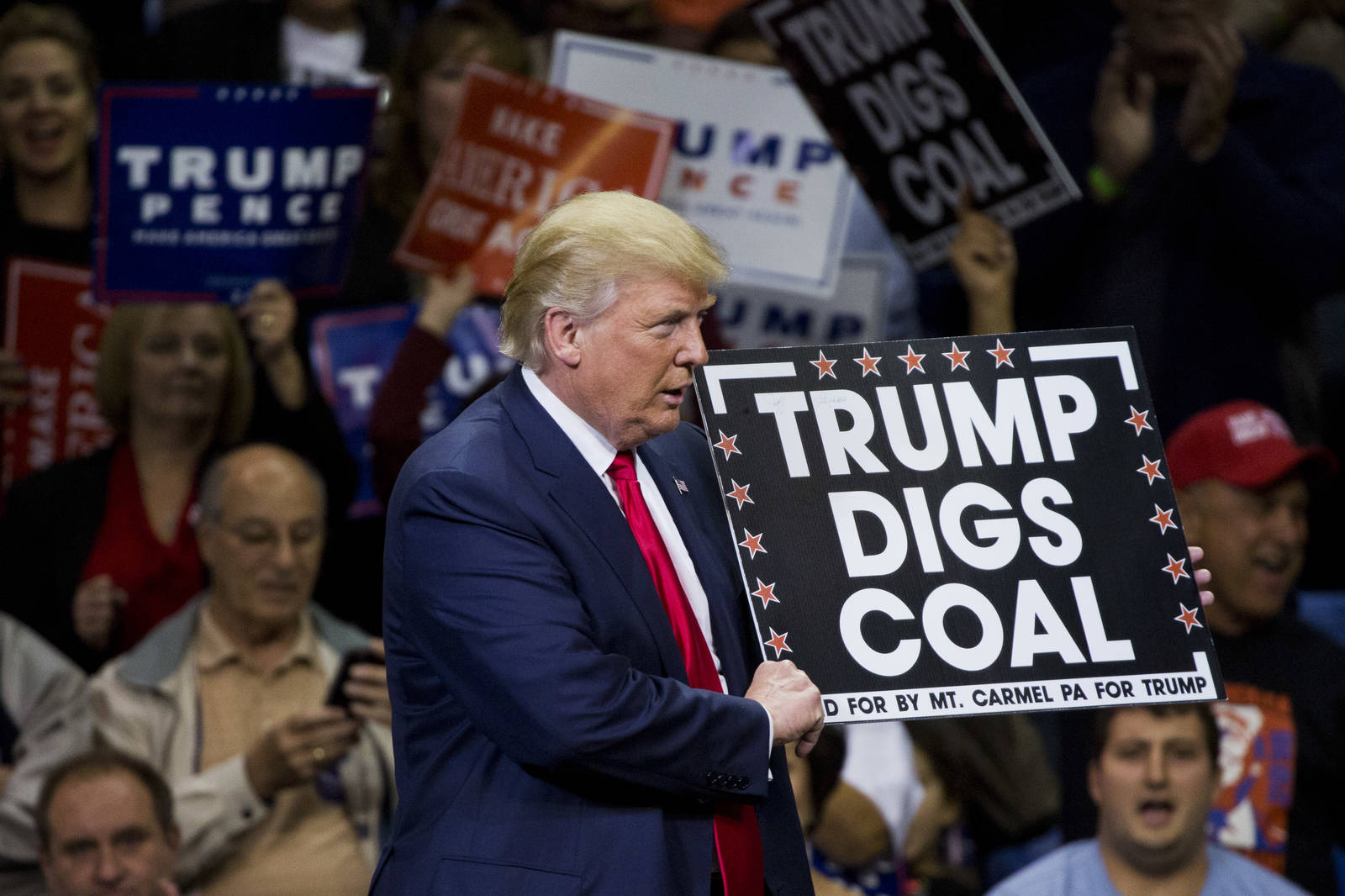
Ecowatch 30th May 2017. Despite President Donald Trump’s pledge to bring back U.S. coal jobs, hundreds of laid off miners in Wyoming—the nation’s largest coal-producing state—are still seeking work.
But these ex-miners might find hope with a most unlikely employer: a wind power company. The American arm of Goldwind, a Chinese wind turbine maker, has announced a free program to retrain miners to become wind farm technicians, The New York Times reported. https://www.ecowatch.com/wind-jobs-coal-miners-goldwind-2426715170.html
June 2, 2017
Posted by Christina Macpherson |
employment, renewable, USA |
Leave a comment
Q&A session on Fort Calhoun nuclear plant focuses on cost of decommissioning, security, By Cole Epley / Omaha World-Herald staff writer, Jun 1, 2017
OPPD’s plan to fund dismantling and cleanup of its Fort Calhoun nuclear plant is expected to be sufficient to cover the cost, and the now-closed plant will retain its 24-hour armed security force even after the last building is no longer needed.
That was the message from federal regulators to Omaha Public Power District ratepayers and members of the public Wednesday night at a meeting on decommissioning the reactor. The plant, which closed in October, is 20 miles north of Omaha.
Questions about security — both in terms of armed guards and spent nuclear fuel left on site — and the cost of tearing down and cleaning up the plant were among issues addressed during a question-and-answer session at the Doubletree Hotel in downtown Omaha.
Representatives from the Nuclear Regulatory Commission and OPPD fielded questions for about an hour following a general overview of the decommissioning process……
Decommissioning the plant is expected to cost about $1.5 billion in 2016 dollars. By the time the work is completed in some 60 years, the inflation-adjusted cost is expected to be roughly $3 billion…….
Within five years, OPPD will be pulling spent fuel from the storage pool inside one of the buildings and putting it in concrete casks on site. Because the U.S. has no functioning long-term storage site for spent nuclear fuel, the Fort Calhoun site will hold spent fuel in the above-ground casks indefinitely. At least as long as the fuel is there, security guards will be there, the public was told Wednesday.
Significant demolition isn’t expected until the 2050s, once much of the radioactivity at the site has decayed.
Doug Broaddus, head of the NRC branch that oversees plants like Fort Calhoun that are transitioning from operating to decommissioning, said utilities that fall short of the money needed to close their plants generally look to the same place.
June 2, 2017
Posted by Christina Macpherson |
decommission reactor, USA |
Leave a comment
Infamous Three Mile Island nuclear plant is latest casualty of shale boom, The Virginian Pilot, 30 May 17 By Jim Polson Bloomberg “….Exelon’s Three Mile Island reactor near Harrisburg, Pennsylvania, site of the worst commercial nuclear accident in U.S. history in 1979, will close in 2019 after losing money for five years, the company said Tuesday in a filing. At least five nuclear power plants have retired in the past five years including Fort Calhoun in Nebraska, which closed in October, as shale gas and rising output of wind and solar power depress prices.
While New York and Illinois have stepped in with mandates that customers pay more for nuclear power to save jobs and curb greenhouse gas emissions, Pennsylvania has not. Last year, Illinois approved a $235 million-a-year lifeline for Exelon’s Quad Cities and Clinton reactors after the company announced they would close.
The announcement smacks of “posturing,” Shahriar Pourreza, a New York-based analyst for Guggenheim Securities, said by phone Tuesday. “This is no different than what they did in Illinois. It’s the right tactic. They’ve got time.”
The Pennsylvania plant, with one reactor still in operation, has become a money loser amid falling power prices, according to Chicago-based Exelon. For the third consecutive year, the plant failed to win generating capacity payments last week in an auction held by PJM Interconnection, the largest U.S. power market……
Exelon’s Three Mile Island reactor near Harrisburg, Pennsylvania, site of the worst commercial nuclear accident in U.S. history in 1979, will close in 2019 after losing money for five years, the company said Tuesday in a filing. At least five nuclear power plants have retired in the past five years including Fort Calhoun in Nebraska, which closed in October, as shale gas and rising output of wind and solar power depress prices.
While New York and Illinois have stepped in with mandates that customers pay more for nuclear power to save jobs and curb greenhouse gas emissions, Pennsylvania has not. Last year, Illinois approved a $235 million-a-year lifeline for Exelon’s Quad Cities and Clinton reactors after the company announced they would close.
The announcement smacks of “posturing,” Shahriar Pourreza, a New York-based analyst for Guggenheim Securities, said by phone Tuesday. “This is no different than what they did in Illinois. It’s the right tactic. They’ve got time.”
The Pennsylvania plant, with one reactor still in operation, has become a money loser amid falling power prices, according to Chicago-based Exelon. For the third consecutive year, the plant failed to win generating capacity payments last week in an auction held by PJM Interconnection, the largest U.S. power market…….
Exelon will record one-time costs of as much as $110 million pretax in the second quarter to retire the plant before its license expires in 2034, according to the filing. Charges of as much as $25 million a year may be recorded in 2018 and 2019. Cash costs related to the closing may reach $70 million, mostly for employee-related expenses. The plant employs about 675 people, the company said in the statement.
Exelon shares rose 0.5 percent to $36 at 10:53 a.m. in New York, outperforming the S&P 500 Utilities Index.
“Investors want them to close the plant,” Pourreza said. “It’s not a great plant. It’s old, it generates negative cash flow.” http://pilotonline.com/news/nation-world/national/infamous-three-mile-island-nuclear-plant-is-latest-casualty-of/article_45587ac5-bd06-5e1e-bfdb-8cef7d75255d.html
May 31, 2017
Posted by Christina Macpherson |
business and costs, USA |
Leave a comment
Washington Post Keeps Running Op-Eds by Lobbyists Pushing Their Clients’ Weapons http://www.truthdig.com/report/item/washington_post_running_op-eds_lobbyists_pushing_weapons_20170527 By Adam Johnson / AlterNet For the third time in two months, The Washington Post has published, without disclosure, an op-ed by a lobbyist for weapons makers pushing for weapons their client makes.
Twice this has been done by staff columnist and BGR Group lobbyist Ed Rogers on behalf of Raytheon, the third time was by Podesta Group lobbyist Stephen Rademaker on behalf of Lockheed Martin.
In early April, after President Trump capriciously decided to bomb a Syrian air force base using Raytheon missiles, Raytheon lobbyist Ed Rogers took to the opinion section of Washington Post–where he, unaccountably, has a recurring column–to lavish praise on the President for doing so.
Rogers’ lobbying firm BGR received $120,000 in 2016 for lobbying on “defense and communications procurement; Defense appropriations and authorizations,” for Raytheon, Media Matters reported at the time.
Rogers boosted Trump again on behalf of his client six weeks later–this time both Saudi Arabia and Raytheon–in his post “The upcoming international trip is an opportunity for Trump and his staff”. The column, while not directly addressing weapons system. painted a glowing picture of a courageous Mr. Trump heading to the middle east to make peace and forge relationships.
Ed Rogers’ firm BGR was paid $500,000 by Saudi Arabia in 2015 to lobby on behalf of the Middle East dictatorship. In addition, the weapons deal finalized by the Trump administration on the trip greatly benefited Rogers’ other client, Raytheon, which has paid BGR $270,000 in the past two and a half years.
Raytheon is also the primary sponsor of Washington Post’s corporate puff interview series “Post Live: Securing Tomorrow” hosted by NatSec-friendly David Ignatius.
A third, and more egregious instance, of the lobbyist-as-pundit practice was from Podesta Group pitchman Stephen Rademaker in a post last week on North Korea’s missile program, “The North Korean nuclear threat is very real. Time to start treating it that way.”
Not only did Rademaker generally push a war his client was helping arm-–as Mr. Rogers did–he expressly lobbied the US to procure two specific weapons systems made by his client, Lockheed Martin:
It’s time to take North Korea’s words and actions at face value: North Korea is a nuclear-armed state and is determined to remain one. The deployment of the Terminal High Altitude Area Defense, or THAAD, missile defense system to South Korea is a welcome first step to contain the threat, allowing us to shoot down short- and intermediate-range missiles fired from North Korea.
As North Korean missile capabilities grow, THAAD needs to be augmented with more robust missile defense systems, including the ship-borne Aegis system, the Aegis Ashore system now being deployed in Romania, expanded interceptor capabilities in Alaska and the corresponding sensors necessary to maximize the effectiveness of all these systems.
Both the THAAD missile system and the Aegis Ashore system are made by Lockheed Martin, one of Podesta Group’s major clients. Lockheed Martin paid Podesta Group $130,000 in the first quarter of 2017 alone and $1.8 million since 2014. According to Podesta Group’s own internal marketing collateral, one of their aims is to “Win key government Projects” for Lockheed Martin.
“At a time when the federal government was seeking to reduce its spending dramatically, Lockheed Martin asked the Podesta Group to ensure one of its flagship programs continued to receive full funding,” their promotional material reads. Presumably writing op-eds pushing Lockheed products in the most influential newspapers in Washington fits neatly into this marketing effort.
The Washington Post mentions Rademaker is a principal at Podesta Group but does not mention Podesta Group is a lobbying firm nor do they mention they’re a lobbying firm on behalf of the makers of THAAD and Aegis Ashore weapons systems being expressly hawked in the post.
In April, liberal watchdog Media Matters
documented twelve separate times Post Columnist Ed Rogers didn’t disclose his conflicts of interest, ranging from Dodd-Frank to the Keystone Pipeline to Climate Change legislation. Podesta Group’s Rademaker
previously pushed then-President Obama to not reduce the U.S. nuclear arsenal in 2014 without disclosing a $200,000-a-year client of his at the time, Huntington Ingalls Industries,
built nuclear weapons systems.
The practice of allowing lobbyists to write “opinion” pieces that act as little more marketing pushes for their clients shiny new war products is an even more vulgar extension of the media’s habit of allowing defense industry-funded think tanks to push for increased military spending and saber-rattling, all without even the pretense of academic research or analysis.
May 31, 2017
Posted by Christina Macpherson |
media, USA, weapons and war |
Leave a comment
 Upgrading U.S. nuclear missiles, as Russia and China modernize, would cost $85 billion. Is it time to quit the ICBM race? LA Times, W.J. Hennigan and Ralph Vartabedian Contact Reporters 30 May 17
The sky over the turbulent Pacific was pitch-black earlier this month when a Minuteman III missile blasted off from Vandenberg Air Force Base on a column of fire that illuminated the California coastline for miles.
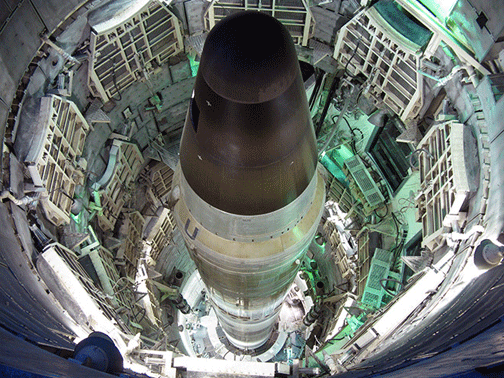
The unarmed missile thundered past the outer reaches of the atmosphere, tracing a fiery arc around the globe before plunging into a lagoon at Kwajalein Atoll in the South Pacific, 4,200 miles away. The Minuteman III tested May 3 near Lompoc is a critical element of U.S. defense strategy: a fleet of intercontinental ballistic missiles capable of obliterating any spot on Earth with a nuclear blast in 30 minutes or less.
Although the flight test proved Minuteman is still capable of performing its mission, major components of the missile and the control centers used to launch them are Cold War-era relics that have become increasingly expensive to maintain. Spare parts are in such short supply that the military has been known to pull them from museums.
At the same time, Russia and China are upgrading their nuclear capabilities. Pakistan, India and Israel continue to build new nuclear weapons and delivery systems. Air Force officials worry increasingly about the Minuteman’s ability to penetrate adversaries’ future missile defense systems.
The result is one of the most strategically complex and financially difficult challenges the Trump administration faces in making good on the president’s pledge for a “great rebuilding of the armed forces,” including the nation’s aging nuclear arsenal.
The Pentagon has begun work to replace the Minuteman fleet with a new generation of missiles and launch control centers, but the plan would cost an astronomical $85 billion, one of the most expensive projects in Air Force history.
Two defense firms will be awarded three-year contracts for $359 million each this year, with a test flight program scheduled for launch in the mid-2020s.
The tremendous expense of deploying a missile fleet capable in the long term of countering nuclear threats has spawned a debate in the American military establishment: How essential, in the 21st century, are the 400 strategic missiles embedded in silos deep under the plains of Colorado, Nebraska, Wyoming, Montana and North Dakota?
The discussion has opened for review the very essence of the nation’s nuclear defense strategy: the “triad” deployment of nuclear weapons, in submarines, strategic bombers and land-based silos, to guarantee the ability to retaliate against any nuclear strike……
Pentagon officials want to replace almost the entire nuclear arsenal, at a cost of up to $1 trillion. But no component has raised more questions than the replacement of the ICBM fleet, which critics have said is no longer crucial to preventing a nuclear war.
The argument for eliminating ICBMs is stronger than at any time in the past. Advocates of that strategy say submarine-based missiles and strategic bombers have improved their capability and are now more than potent enough to deter an enemy attack.
Former Defense Secretary William J. Perry fired the opening salvo last year, calling for phasing out the entire land-based ICBM force. He argued that its continued deployment is too costly. And with the missiles on continuous alert in order to be able to launch instantly if an enemy launch is detected by satellites and radar, a mistake or faulty warning could trigger an accidental nuclear war.
“The ICBM system is outdated, risky and unnecessary,” Perry, who served in the Clinton administration 20 years ago, said in a recent interview. “Basically, it can bring about the end of civilization with a false alarm. It’s a liability because we can easily achieve deterrence without it.”
Perry has not been alone in expressing doubts about the ICBM program, but senior Pentagon leaders have always been persuaded to keep it. Former Defense Secretary Chuck Hagel called for elimination of ICBMs before entering office and then changed his mind. Trump’s Defense secretary, James N. Mattis, questioned the need for the missiles in 2015 when he was a four-star general. But as soon as he was nominated, he began supporting a full-blown modernization of the triad.
The reevaluation of the role of ICBMs in America’s defense comes in an era when nuclear weapons are proliferating, not fading away. GlobalSecurity.org director John Pike, who has analyzed U.S. military systems and strategies for more than three decades, says critics “are gaining no traction” in calling for the elimination of the ballistic missile fleet…….. http://www.latimes.com/nation/la-na-new-icbm-2017-story.html
May 31, 2017
Posted by Christina Macpherson |
USA, weapons and war |
Leave a comment
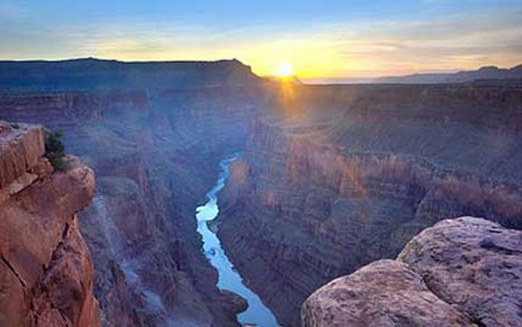
 Will Trump Overturn the Ban on Uranium Mining Around the Grand Canyon? PHOENIX TIMES, MAY 28, 2017 . BY ANTONIA NOORI FARZAN “….IT’S UNDERSTANDABLE THAT ENVIRONMENTALISTS ARE WORRIED THAT THE OBAMA ADMINISTRATION’S MORATORIUM ON URANIUM MINING IN THE AREA SURROUNDING THE GRAND CANYON COULD BE UP NEXT ON THE CHOPPING BLOCK.
That moratorium was announced by the Department of the Interior in 2012, and banned new uranium claims until 2032. Existing claims and mines were unaffected.
It was great news to environmental groups like the Grand Canyon Trust, the Sierra Club, and the League of Conservation Voters, who had spent years pointing out the environmental hazards of uranium mining — particularly the threat of polluting the Colorado River, which provides water to 40 million people in Arizona and the Southwest.
But back in March, Trump signed an executive order promoting “energy independence and economic growth.” It requires heads of each government agency to identify any federal guidelines that are getting in the way of domestic energy production, and tell him which ones can legally be reversed.
“The report shall include specific recommendations that, to the extent permitted by law, could alleviate or eliminate aspects of agency actions that burden domestic energy production,” the executive order states.
While we won’t know for sure until the Department of the Interior submits its report in late July, it’s quite possible that the moratorium on new uranium claims around the Grand Canyon would fall into that category. (The Department of Interior didn’t return a request for comment.)……..http://www.phoenixnewtimes.com/news/advocates-worry-trump-could-overturn-moratorium-on-uranium-mining-at-grand-canyon-9296810
May 31, 2017
Posted by Christina Macpherson |
Uranium, USA |
Leave a comment
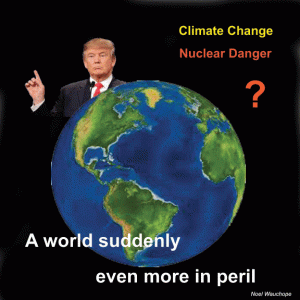 Trump tells confidants U.S. will quit Paris climate deal, https://www.axios.com/scoop-trump-tells-confidants-he-plans-to-leave-paris-climate-deal-2424446776.html AXIOS, Jonathan Swan, Amy Harder, 29 May 17,
Caveat: Although Trump made it clear during the campaign and in multiple conversations before his overseas trip that he favored withdrawal, he has been known to abruptly change his mind — and often floats notions to gauge the reaction of friends and aides. On the trip, he spent many hours with Ivanka Trump and Jared Kushner, powerful advisers who back the deal.
Behind-the-scenes: The mood inside the EPA this week has been one of nervous optimism. In a senior staff meeting earlier this week, Pruitt told aides he wanted them to pump the brakes on publicly lobbying for withdrawal from Paris.
-
- Instead, the EPA staff are quietly working with outside supporters to place op eds favoring withdrawal from Paris.
- The White House has told Pruitt to lay off doing TV appearances until Trump announces his decision on Paris. (In past weeks, the EPA Administrator has gone on TV to say the U.S. needs to quit Paris, but Pruitt told aides he’ll be keeping a lower profile. He doesn’t want a Paris withdrawal to be seen as his victory. “It needs to be the President’s victory,” one source said, paraphrasing what Pruitt has told aides.)
- Pruitt’s aides have told associates in recent days that they remain confident the President will withdraw from Paris but they’ve been worried about him being overseas and exposed to pressure from European leaders and the environmentalist views of his top aides like Ivanka and economic adviser Gary Cohn. Top EPA staff were relieved when Trump refused to join the other six nations of the G7 in reaffirming “strong commitment” to the Paris agreement.
One level deeper: If Trump follows through and announces publicly he plans to withdraw from the Paris deal, an administration official laid out three ways he could do that:
-
-
- Trump could announce he is pulling the U.S. from the deal, which would trigger a withdrawal process that wouldn’t conclude until November 2020 at the earliest. Under the deal’s terms, any country can’t send notice of its intent to withdraw until three years after the deal entered into force, which was Nov. 4, 2016. The actual process of withdrawal would then take one year. In this time, it’s feasible Trump could change his mind, the administration source said.
- Trump could declare that the Paris deal is actually a legal treaty that requires Senate approval. Such a vote would fail, and then Trump would have Senate backing to not abide by the deal, which he deems a treaty. A letter that 22 Senate Republicans, including Senate Majority Leader Mitch McConnell, sent to Trump this week urging him to withdraw from the deal, increases the odds of this happening, the source said. Trump could also call for a Senate vote in combination with either the first or third option.
- Trump could withdraw the U.S. from the treaty that underpins the Paris deal, which is called the United Nations Framework Convention on Climate Change. This would be the most extreme option because it would take the U.S. out of all global climate diplomacy. This process would take just one year.
Will we always have Paris? All of these scenarios take more time and maneuvering than a simple announcement, which ensures the debate about what to do with the climate deal won’t be over with any time soon.
May 29, 2017
Posted by Christina Macpherson |
climate change, USA |
1 Comment
 G7 summit ends with split between Donald Trump, other leaders on climate change, ABC News, 28 May 17 Under pressure from allies, US President Donald Trump has backed a pledge to fight protectionism, but refused to endorse a global climate change accord, saying he needed more time to decide.
Key points:
- German Chancellor says climate talks were “difficult”
- Donald Trump says he will decide on Paris Agreement next week
- Final communique just six pages, compared to 32 last year
The summit of Group of Seven wealthy nations pitted Mr Trump against the leaders of Germany, France, Britain, Italy, Canada and Japan on several issues, with European diplomats frustrated at having to revisit questions they hoped were long settled.
Mr Trump, who has previously called global warming a hoax, tweeted that he would make a decision next week on whether to back the 2015 Paris Agreement on curbing carbon emissions following lengthy discussions with G7 partners.
“The entire discussion about climate was very difficult, if not to say very dissatisfying,” German Chancellor Angela Merkel told reporters.
“There are no indications whether the United States will stay in the Paris Agreement or not.”………
Security questions dominated initial G7 discussion on Friday and the leaders called on internet service providers and social media firms to “substantially increase” their efforts to rein in extremist content.
US officials said Mr Trump had enjoyed “robust” conversations with his allies in Sicily and had also learnt a lot — especially in the debate on climate change.
“He came here to learn. He came here to get smart. His views are evolving, exactly as they should be,” Mr Trump’s economic adviser Gary Cohn said on Friday. http://www.abc.net.au/news/2017-05-28/g7-leaders-end-summit-split-on-climate-change/8566044
May 29, 2017
Posted by Christina Macpherson |
climate change, politics international, USA |
Leave a comment
 Critics have pointed to the rising seas from climate change, risks of storm surge, radioactive waste and threats to drinking water and wildlife at the site, nestled near Everglades National Park, as reasons to stop nuclear expansion.
Complaints have also centered on the difficulty of evacuating the densely populated area around the plant in case of emergency. Miami-Dade County is home to 2.6 million people.
“Investing tens of billions of dollars on a power plant that will be underwater one day, along with the highly radioactive waste it will produce, makes no sense,”
Why nuclear could become the next ‘fossil’ fuel, Afp, Homestead, United States, Daily Star 29 May 17 A gray dinosaur statue outside south Florida’s largest power plant is meant to symbolize two decommissioned fossil fuel reactors, but it also could be seen to represent a nuclear industry crumpling under mounting costs.
Almost a decade ago, Turkey Point was aiming to become one of the country’s largest nuclear plants.Florida Power and Light had argued that such expansion was needed to maintain diverse energy sources and to supply Florida’s booming population for years to come, while touting nuclear as a clean form of energy.
But now, just three reactors are in operation – one natural gas and two nuclear reactors, built in the 1970s. And plans to build two more nuclear reactors — first announced in 2009 — are essentially on hold for at least four years, according to filings with the state’s Public Service Commission……
The project has been controversial from the start, and casts the spotlight on wider concerns about nuclear power.
Critics have pointed to the rising seas from climate change, risks of storm surge, radioactive waste and threats to drinking water and wildlife at the site, nestled near Everglades National Park, as reasons to stop nuclear expansion.
Complaints have also centered on the difficulty of evacuating the densely populated area around the plant in case of emergency. Miami-Dade County is home to 2.6 million people.
“Investing tens of billions of dollars on a power plant that will be underwater one day, along with the highly radioactive waste it will produce, makes no sense,” said fishing captain Dan Kipnis, one of the activists who is fighting to stop the project.
Legal challenges to the plant’s planned expansion began in 2010, and continued this month with a hearing before the Atomic Safety Board.
Over the course of the two-day hearing, environmental scientists and lawyers wrangled over whether the porous limestone in Florida could really contain wastewater injected underground, without allowing toxic chemicals to seep upward into drinking water.
Currently, Turkey’s Point’s two nuclear reactors use a series of cooling canals to treat wastewater.
These canals were confirmed last year to be leaking into a nearby national park, after a radioactive isotope, tritium, was found at up to 215 times the normal levels in the waters of Biscayne Bay.
The three-judge safety board panel is expected to rule by year’s end on whether an operating license should be granted by the Nuclear Regulatory Commission (NRC).
Throughout Florida, FPL is expanding its solar installations, and is shuttering coal plants.
Its energy mix is 70 percent natural gas, 17 percent nuclear, with the rest divided between solar, oil and coal.
Meanwhile, the ever-dropping cost of natural gas is making nuclear less attractive every day, analysts say.
“Most people think Turkey Point will never get built,” said Mark Cooper, senior research fellow at the Institute for Energy and the Environment, Vermont Law School, referring to FPL’s proposed two new nuclear reactors. “It turns out it was not the environmentalists, it was not the lawsuits,” Cooper told AFP.
“They could not deliver a safe, economically viable product. They couldn’t do it in the ’80s and they can’t do it today,” said Cooper.
“Nuclear power is a technology whose time never came.”http://www.thedailystar.net/business/why-nuclear-could-become-the-next-fossil-fuel-1412248
May 29, 2017
Posted by Christina Macpherson |
business and costs, climate change, USA |
Leave a comment
 US nuclear lab’s future up in the air after recent fire http://abcnews.go.com/Technology/wireStory/us-nuclear-labs-future-air-recent-fire-47681951 By THE ASSOCIATED PRESS SANTA FE, N.M. — May 27, 2017 A recent fire has put a national laboratory’s ability to operate safely into question.
The Defense Nuclear Facilities Safety Board announced Friday that it will hold a hearing next month to discuss the future of the Los Alamos National Laboratory, the Santa Fe New Mexican reported (http://bit.ly/2qmP0CY). The board is an independent panel that advises the U.S. Department of Energy and the president.
A fire broke mid-April at the lab’s PF-4 plutonium building where the plutonium cores of nuclear weapons are produced. Lab officials said that the fire was put out quickly and only caused minor injuries.
According to the report, the board is unsure if the lab is fit to continue to operate and handle increasing quantities of plutonium in coming years after a series of problems with management in the maintenance and cleanup of the dangerous materials.
The Department of Energy has announced plans to increase manufacturing of the plutonium pits at Los Alamos over the next decades. President Donald Trump’s budget proposal will also increase funding for weapons work in the next fiscal year.
The moves make local nuclear watchdog groups uneasy.
“Fattening up our already bloated nuclear weapons stockpile is not going to improve our national security,” said Jay Coghlan, the director of Nuclear Watch New Mexico, in a news release issued Friday. “New Mexicans desperately need better funded schools and health care, not expanded plutonium pit production that will cause more pollution and threaten our scarce water resources.”
The board will have the chance to get the opinion of a number of experts on the matter at its June 7 hearing. Information from: The Santa Fe New Mexican, http://www.sfnewmexican.com
May 29, 2017
Posted by Christina Macpherson |
safety, USA |
Leave a comment
Three Republican EPA administrators: Trump is putting us on a dangerous path, https://www.washingtonpost.com/opinions/three-republican-epa-administrators-trump-is-putting-us-on-a-dangerous-path/2017/05/26/10060ad2-424b-11e7-9869-bac8b446820a_story.html?utm_term=.a8b128b1138eBy William D. Ruckelshaus, Lee M. Thomas and William K. Reilly May 26
William D. Ruckelshaus was administrator of the Environmental Protection Agency from 1970 to 1973 and 1983 to 1985. Lee M. Thomas was EPA administrator from 1985 to 1989, and William K. Reilly was EPA administrator from 1989 to 1993.
More than 30 years ago, the world was faced with a serious environmental threat, one that respected no boundaries. A hole in the ozone layer was linked to potential increases in skin cancer and blindness from cataracts. The ozone layer is a thin band of gas in the stratosphere that protects the Earth and humans from dangerous ultraviolet radiation from the sun, and it was slowly being destroyed by chlorofluorocarbons, or CFCs, which are man-made gases used as aerosol propellants and in refrigeration and cooling.
Despite early skepticism, the risk of a thinning ozone layer was such that an international U.N. conference was convened in Vienna to address this problem. The participating countries and international bodies, including the United States, the European Union and other major producers and users of CFCs, afterward met in Montreal to negotiate an agreement setting out a specific program to reduce the production and use of CFCs.
The Environmental Protection Agency, with strong support from President Ronald Reagan, led the international effort that resulted in a treaty that contained an aggressive schedule of reductions known as the Montreal Protocol. It remains in effect today and has resulted in significant improvement in the ozone layer and greatly reduced the threat to human health. An element critical to the success of the effort was strong reliance on the shared science of the impact of CFCs and a willingness of the countries of the world to work together. They accepted that the risk of not acting was simply not acceptable.
Today, presented with the undeniable warming of the planet, we are faced with a global environmental threat whose potential harm to people and other living things exceeds any we have seen before. The Paris climate agreement is the international response to that threat.
[Six of the worst cuts in Trump’s budget]
In his April 22 Earth Day message, President Trump stated, “My administration is committed to advancing scientific research that leads to a better understanding of our environment and of environmental risks.”
Yet when confronted with broad-based evidence of planetary warming and the almost daily emerging evidence of the impacts of climate change, Trump’s March “skinny” budget and this week’s final 2018 budget plansay we should look the other way; he has chosen ignorance over knowledge. The need for extensive and accelerated scientific research about the nature of the problem and its possible policy solutions should be beyond question. Not to get more information is inexcusable.
Trump’s budget proposals have scrubbed every agency and department of expenditures that would provide us with vital information about the pace and impacts of climate change. Among those severely cut or eliminated altogether are programs in the departments of Energy, State, Interior and Homeland Security, and at the National Science Foundation, National Oceanic and Atmospheric Administration, NASA, and EPA.
The EPA budget released this week cuts science and technology spending by more than $282 million , almost a 40 percent reduction. The Greenhouse Gas Reporting Program is zeroed out; air and energy research are cut by 66 percent. Programs targeted at specific areas with significant climate vulnerabilities, such as the Chesapeake Bay, the Great Lakes and Puget Sound, have been eliminated.
The destruction of irreplaceable research would be staggering. It would put us and the rest of the world on a dangerous path. If our president is wrong about the reality of climate change, we will have lost vital time to take steps to avoid the worst impacts of a warming planet. If those urging collective worldwide accelerated action are wrong, we will have developed alternative sources of clean energy that will enhance our green energy choices for the foreseeable future.
We can see already, in many places here and around the world, concrete evidence of what climate change means. Sea-level rise along the Eastern Seaboard of the United States has increased, and with it have come significant increases in coastal erosion and flooding. Glacier ice melt in the Antarctic and Greenland is increasing. Arctic sea ice is at its lowest level since measurements began. The past three years have been the hottest on record; the 10 hottest years all occurred since 1998. When Glacier National Park in Montana was established in 1910, it contained 150 active glaciers; today there are 26.
With no seeming clue as to what’s going on, the president seems to have cast our lot with a small coterie of climate skeptics and their industry allies rather than trying to better understand the impact of increased greenhouse-gas emissions into the atmosphere. His policy of willful ignorance is a bet-the-house approach that is destructive of responsible government.
The consequences of the president’s being wrong are hard to imagine. All the more reason to respect science and continue the work that better defines the problem and the diminishing options for coping with it.
May 29, 2017
Posted by Christina Macpherson |
climate change, environment, politics, USA |
Leave a comment