Peach Bottom nuclear plant operator fails drug test, Lancaster Online, AD CRABLE | Staff Writer, 16 Nov 17, A control room operator at the Peach Bottom nuclear plant has been barred from the controls after the employee failed a controlled substance test.
Plant owner Exelon notified the U.S. Nuclear Regulatory Commission last week that a licensed operator tested positive following a fitness-for-duty test.
The NRC is investigating and has asked Exelon for more information. The operator’s test showed the presence of a controlled substance, according to Neil Sheehan, an NRC spokesman.
The operator’s access to the plant has been frozen, pending further reviews of the employee, Sheehan said.
“We consider control room operators to be in a position of high responsibility and, in line with that, a failed test indicating substance use that could impair job performance is taken very seriously,” he said.
“A positive drug or alcohol test involving a control room operator is a rare occurrence. It takes years of training to become an operator and then regular retraining and requalification in subsequent years.”
Every U.S. nuclear power plant owner is required to maintain a comprehensive fitness-for-duty program that includes random and for-cause testing for drug and alcohol use.
World War 3: US military command ‘ERROR’ sent North Korea ‘false nuclear arsenal’ info
US MILITARY command tweeted false information about its nuclear arsenal sparking fears of an escalation from paranoid North Korea. Express UK, By TARYN TARRANT-CORNISHAn article that falsely boasted of “secret” US silos and B-1 bombers that can drop nuclear warheads was quickly debunked by experts online.
It is feared this move could lead to a catastrophic escalation of tensions with a military force seeming to confirm Pyongyang’s suspicions that B-1s can carry nukes, Asian security expert Van Jackson has warned.
The article that US Strategic Command shared said: “The USS Kentucky is part of what is called the ‘nuclear triad’.
“The triad are the three components of a nuclear defence system: land-based missiles fired from secret silos, B-1 bombers that can drop them from the air, and submarine launched ballistic missiles.” This could provoke a retaliation from North Korea next time the US flies a B-1 bomber over the Korean peninsula, it is feared.
SCE&G will rollback residential rates to where they would have been in March 2015, resulting in an immediate annual reduction to rates by about $90 million, or 3.5 percent, the company said.
It said there would be $2.9 billion in reduced shareholder earnings over 50 years as they absorb the nuclear construction amortization costs. The company also said it would write off $810 million. “This proposal gives customers additional power generation while also lowering rates for customers,” he said.
SCE&G said it will add a 540-megawatt natural gas-fired power plant to its system, replacing more than 40 percent of the projected power that was to be provided from the V.C. Summer nuclear construction project.
The company also said it will add about 100 megawatts of large-scale solar energy to its system.
V.C. Summer, which was majority-owned by Scana, was ditched in July after estimated costs to build two nuclear reactors spiraled to as much as $24 billion.
Analysts have said the failure of the Summer project and the bankruptcy in March of its designer and contractor, Westinghouse Electric, will likely result in no new nuclear reactors being built in the United States for many years, if ever.
In October, Scana announced the resignation of its chief executive, Kevin Marsh, as the utility company grappled with billions of dollars in cost overruns tied to the abandoned nuclear project.
Summer was one of only two new nuclear power plants under construction in the United States. The other is at Southern Co’s Vogtle plant in Georgia, which is still being built. The two
Vogtle reactors are expected to be completed in 2021 and 2022.
Senators deadlock in debate over whether to restrain Trump’s nuclear launch authority Chicago Tribune,Karoun Demirjian, Washington Post, 14 Nov 17
Senators trying to prevent President Donald Trump from launching an unprovoked nuclear attack were stymied Tuesday, after a panel of experts warned them against rewriting laws to restrain a commander in chief many worry is impulsive and unpredictable enough to start a devastating international crisis.
Senate Foreign Relations Committee chairman Bob Corker, R-Tenn., who has said Trump’s threats to global rivals could put the country “on the path to World War III,” began Tuesday’s session warning of the inherent danger in a system where the president has “sole authority” to give launch orders there are “no way to revoke.” By the time Corker emerged from the hearing — the first to address the president’s nuclear authority in over four decades — he was at a loss for what to do next.
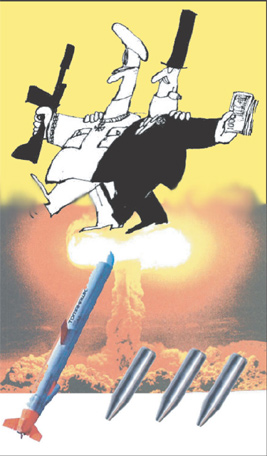
Why the desire for so many nukes? There is, in fact, a dirty little secret behind the massive US arsenal: It has more to do with the power and profits of this country’s major weapons makers than it does with any imaginable strategic considerations.
It may not surprise you to learn that there’s nothing new about the influence the nuclear weapons lobby has over Pentagon spending priorities. The successful machinations of the makers of strategic bombers and intercontinental ballistic missiles, intended to keep taxpayer dollars flowing their way, date back to the dawn of the nuclear age and are the primary reason President Dwight D. Eisenhower coined the term “military-industrial complex” and warned of its dangers in his 1961 farewell address.
Without the development of such weapons, that complex simply would not exist in the form it does today. The Manhattan Project, the vast scientific-industrial endeavor that produced the first such weaponry during World War II, was one of the largest government-funded research and manufacturing projects in history. Today’s nuclear warhead complex is still largely built around facilities and locations that date back to that time.
The Manhattan Project was the first building block of the permanent arms establishment that came to rule Washington. In addition, the nuclear arms race against that other superpower of the era, the Soviet Union, was crucial to the rationale for a permanent war state. In those years, it was the key to sustaining the building, funding, and institutionalizing of the arms establishment.
As Eisenhower noted in that farewell address of his, “a permanent arms industry of vast proportions” had developed for a simple enough reason. In a nuclear age, America had to be ready ahead of time. As he put it, “We can no longer risk emergency improvisation of national defense.” And that was for a simple enough reason: In an era of potential nuclear war, any society could be destroyed in a matter of hours. There would be no time, as in the past, to mobilize or prepare after the fact.
In addition, there were some very specific ways in which the quest for more nuclear weapons and delivery vehicles drove Eisenhower to give that farewell address. One of his biggest fights was over whether to build a new nuclear bomber. The Air Force and the arms industry were desperate to do so. Eisenhower thought it a waste of money, given all the other nuclear delivery vehicles the United States was building at the time. He even cancelled the bomber, only to find himself forced to revive it under immense pressure from the arms lobby. In the process, he lost the larger struggle to rein in the nation’s nuclear buildup and corral the burgeoning military-industrial complex.
At the same time, there were rumblings in the intelligence community, the military establishment, the media, and Congress about a “missile gap” with the Soviet Union. The notion was that Moscow had somehow jumped ahead of the United States in developing and building intercontinental ballistic missiles (ICBMs). There was no definitive intelligence to substantiate the claim (and it was later proved to be false). However, a wave of worst-case scenarios leaked by or promoted by intelligence analysts and eagerly backed by industry propaganda made that missile gap part of the everyday news of the time.
Such fears were then exaggerated further, thanks to hawkish journalists of the era like Joseph Alsop and prominent Democratic senators like John F. Kennedy and Lyndon Johnson, as well as Stuart Symington, who just happened to be a friend and former colleague of an executive at the aircraft manufacturing company Convair, which, in turn, just happened to make ICBMs. As a result, he lobbied hard on behalf of a Pentagon plan to build more of that corporation’s Atlas ballistic missiles, while Kennedy would famously make the nonexistent missile gap a central theme of his successful 1960 campaign for the presidency.
Eisenhower couldn’t have been more clear-eyed about all of this. He saw the missile gap for the fiction it was or, as he put it, a “useful piece of political demagoguery” for his opponents. “Munitions makers,” he insisted, “are making tremendous efforts towards getting more contracts and in fact seem to be exerting undue influence over the Senators.”
Once Kennedy took office, it became all too apparent that there was no missile gap, but by then it hardly mattered. The damage had been done. Billions of dollars more were flowing into the nuclear-industrial complex to build up an American arsenal of ICBMs already unmatched on the planet.
The techniques that the arms lobby and its allies in government used more than half a century ago to promote sky-high nuclear weapons spending continue to be wielded to this day. The twenty-first-century arms complex employs tools of influence that Kennedy and his compatriots would have found familiar indeed—including millions of dollars in campaign contributions that flow to members of Congress and the continual employmentof 700 to 1,000 lobbyists to influence them. At certain moments, in other words, there have been nearly two arms lobbyists for every member of Congress. Much of this sort of activity remains focused on ensuring that nuclear weapons of all types are amply financed and that the funding for the new generations of the bombers, submarines, and missiles that will deliver them stays on track.
When traditional lobbying methods don’t get the job done, the industry’s argument of last resort is jobs—in particular, jobs in the states and districts of key members of Congress. This process is aided by the fact that nuclear weapons facilities are spread remarkably widely across the country. There are nuclear weapons labs in California and New Mexico; a nuclear weapons testing and research site in Nevada; a nuclear warhead assembly and disassembly plant in Texas; a factory in Kansas City, Missouri, that builds nonnuclear parts for such weapons; and a plant in Oak Ridge, Tennessee, that enriches uranium for those same weapons. There are factories or bases for ICBMs, bombers, and ballistic missile submarines in Connecticut, Georgia, Washington State, California, Ohio, Massachusetts, Louisiana, North Dakota, and Wyoming. Such a nuclear geography ensures that a striking number of congressional representatives will automatically favor more spending on nuclear weapons.
In reality, the jobs argument is deeply flawed. As the experts know, virtually any other activity into which such funding flowed would create significantly more jobs than Pentagon spending. A study by economists at the University of Massachusetts, for example, found infrastructure investment would create one and one-half times as many jobs as Pentagon funding and education spending twice as many.
In most cases it hasn’t seemed to matter that the jobs claims for weapons spending are grotesquely exaggerated and better alternatives litter the landscape. The argument remains remarkably potent in states and communities that are particularly dependent on the Pentagon. Perhaps unsurprisingly, members of Congress from such areas are disproportionately represented on the committees that decide how much will be spent on nuclear and conventional weaponry…….. https://www.thenation.com/article/whos-really-driving-nuclear-weapons-production/
Senator Chris Murphy made a damning assessment of US President Donald Trump on Tuesday as Congress discussed if the country’s leader should have the authority to launch a nuclear attack.
Mr Trump has recently been taunting North Korea and vowed to unleash “fire and fury like the world has never seen” on the rogue nation if its nuclear armament program was not pulled back.
While the hearing was not about Mr Trump specifically, Connecticut Democrat Chris Murphy appeared to refer to the 45th president as “unstable” and “volatile” when discussing concerns over his ability to launch a missile attack.
“We are concerned that the president is so unstable, is so volatile, has a decision-making process that is so quixotic that he might order a nuclear weapons strike that is wildly out of step with US national-security interests,” Mr Murphy said in Congress.
“Let’s just recognise the exceptional nature of this moment.”
Senate Foreign Relations Committee Chairman Bob Corker said the examination was about the structure that allows presidents to make critical decisions.
“Making the decision to go to war of any sort is a heavy responsibility for our nation’s elected leaders,” Senator Corker said.
“And the decision to use nuclear weapons is the most consequential of all.”
The topic on the US president’s authority to launch a nuclear missile has not been discussed in nearly four decades since a four-day hearing.
Mr Corker has broken publicly with Trump, warning last month that the president was setting the nation “on the path to World War III” with his statements about North Korea and verbal jousting with Kim.
Robert Kehler, who headed US Strategic Command from 2011 to 2013, referred to a basic military precept: “The military is obligated to follow legal orders, but is not obligated to follow illegal orders.”
So, what constitutes a legal order? Kehler, a retired US Air Force general, said the military principles of “necessity” and “proportionality” also apply to decisions about nuclear weapons.
But when asked what he would do if he determined that a presidential nuclear order was illegal, Kehler hesitated about such a hypothetical.
“I don’t know exactly,” he responded. “The human factor kicks in.”
In such a situation, said Bryan McKeon, a former undersecretary of defense under Barack Obama, the president could replace the commander in question, or even the secretary of defense.
“But you’d have a real constitutional crisis on your hands,” McKeon said.
The discomfort among some Republican senators was visible.
Evidence Mounts That Coal, Nuclear Interests Influenced Perry’s Grid Resiliency Rule
The political pressures behind DOE’s request to declare coal and nuclear power plants as vital to a reliable grid. GreenTech Media, JEFF ST. JOHN NOVEMBER 13, 2017 Energy Secretary Rick Perry’s effort to change federal energy regulations to favor coal and nuclear power plants in the name of grid resilience has received a barrage of criticism for misstating the facts, ignoring the evidence, and attempting to ram through a major disruption in interstate energy markets on an emergency timeframe.
While Perry insists the initiative is necessary to “rebalance the market” and “keep our families warm,” there’s mounting evidence the proposal was taken from an industry playbook.
The accelerated timeline for DOE’s notice of proposed rulemaking (NOPR) is outside of the norm for such a radical market shift, but it does match up with a major political ask from one of President Donald Trump’s key supporters in the coal industry: Robert Murray, CEO of Murray Energy.
Over the past week, new details have emerged linking efforts by the outspoken private coal company owner to obtain federal financial aid for the industry, as well as the DOE’s highly unusual decision in September to directly ask the Federal Energy Regulatory Commission for an emergency intervention in the country’s interstate energy markets.
The interests of Murray Energy run through FirstEnergy, the Ohio-based utility that’s facing near-term financial challenges in managing money-losing coal plants in the region served by grid operator PJM — the same region that would be most heavily hit by DOE’s proposal. As the Houston Chronicle noted in a Sunday article, more than 70 percent of Murray Energy’s coal delivered to U.S. power plants went to PJM.
And the timeline for FirstEnergy to seek relief is fast approaching. In its third-quarter 2017 earnings report late last month, the company noted that it has cash on hand to fund operations through March 2018. But starting in the second quarter, with $515 million of maturing debt that will “likely to be difficult to refinance” coming due, and absent any moves by Ohio state regulators to re-regulate its plants, the company’s power generation division, FirstEnergy Solutions, may be forced to “restructure debt and other financial obligations with its creditors and/or seek protection under U.S. bankruptcy laws” — a move that could push FirstEnergy to do the same. …….
Appointees with long connections to Murray, FirstEnergy and coal industry
PUCO recently joined a long list of state regulators, former FERC commissioners, and other energy-sector insiders in coming out against the NOPR on the grounds that it will raise costs and prop up inefficient resources to the detriment of cheaper, less polluting alternatives. A collection of 14 different energy industry trade groups — ranging from wind and solar, to oil and natural gas — have argued that the NOPR’s proposed payments go beyond those provided to so-called “reliability must-run” power plants, amounting to a bailout to keep certain units running.
FERC has said it will vote on the NOPR in a December 11 meeting. Most observers, including former FERC members, don’t believe that FERC will be able to turn the vague NOPR document into a final rule by next month. But with coal industry allies playing major roles in the agencies tasked with reviewing and implementing the NOPR, opponents are worried that FERC could take some action to prop up coal plants in the short term, while leaving the NOPR’s larger challenges to a future date.
Longtime FirstEnergy lobbyist Sean Cunningham, now executive director of DOE’s office of energy policy and systems analysis, has been the sole DOE representative outside of Perry himself to speak publicly in support of the NOPR. In a debate last month, Cunningham repeated the assertion that coal and nuclear plants weren’t being valued properly and that failing to act on the NOPR could jeopardize grid reliability in the short term.
Meanwhile, FERC acting chairman Neil Chatterjee, a Trump appointee and former aide to Senate Majority Leader Mitch McConnell (R-Ken), said last week that he’s working on an interim plan to “rescue” FirstEnergy’s ailing coal plants, based largely on the utility’s proposals in comments before FERC.
Chatterjee said he has met with FirstEnergy Corp. CEO Chuck Jones to “really kick the tires on what they proposed and challenge them on some of what they had put forward.” Under FirstEnergy’s plan, plants would receive a monthly payment from grid operators that fully offsets operation costs and includes a “fair return on equity.”https://www.greentechmedia.com/articles/read/murray-energy-firstenergy-doe-coal-nuclear-nopr#gs.Rt5kXnk
Until recently, few of us woke up worrying about the threat of nuclear war. Such dangers seemed like Cold War relics, associated with outmoded practices like building fallout shelters and “duck and cover” drills.
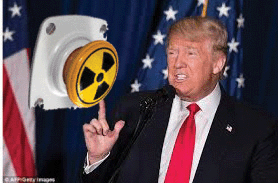
But give Donald Trump credit. When it comes to nukes, he’s gotten our attention. He’s prompted renewed concern, if not outright alarm, about the possibility that such weaponry could actually be used for the first time since the 6th and 9th of August 1945. That’s what happens when the man in the Oval Office begins threatening to rain “fire and fury like the world has never seen” on another country or, as he did in his presidential campaign, claiming cryptically that, when it comes to nuclear weapons, “the devastation is very important to me.”
Trump’s pronouncements are at least as unnerving as President Ronald Reagan’s infamous “joke” that “we begin bombing [the Soviet Union] in five minutes” or the comment of a Reagan aide that, “with enough shovels,” the United States could survive a superpower nuclear exchange.
Whether in the 1980s or today, a tough-guy attitude on nuclear weapons, when combined with an apparent ignorance about their world-ending potential, adds up to a toxic brew. An unprecedented global anti-nuclear movement—spearheaded by the European Nuclear Disarmament campaign and, in the United States, the Nuclear Freeze campaign—helped turn President Reagan around, so much so that he later agreed to substantial nuclear cuts and acknowledged that “a nuclear war cannot be won and must never be fought.”
It remains to be seen whether anything could similarly influence Donald Trump. One thing is certain, however: The president has plenty of nuclear weapons to back up his aggressive rhetoric—more than 4,000 of them in the active US stockpile, when a mere handful of them could obliterate North Korea at the cost of millions of lives. Indeed, a few hundred nuclear warheads could do the same for even the largest of nations and those 4,000, if ever used, could essentially destroy the planet.
In other words, in every sense of the term, the US nuclear arsenal already represents overkill on an almost unimaginable scale. Independent experts from US war colleges suggest that about 300 warheads would be more than enough to deter any country from launching a nuclear attack on the United States.
Despite this, Donald Trump is all in (and more) on the Pentagon’s plan—developed under Barack Obama—to build a new generation of nuclear-armed bombers, submarines, and missiles, as well as new generations of warheads to go with them. The cost of this “modernization” program? The Congressional Budget Office recently pegged it at $1.7 trillion over the next three decades, adjusted for inflation. As Derek Johnson, director of the antinuclear organization Global Zero, has noted, “That’s money we don’t have for an arsenal we don’t need……………”https://www.thenation.com/article/whos-really-driving-nuclear-weapons-production/
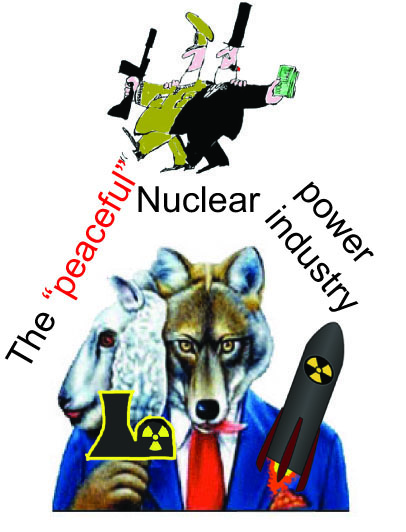
you can’t advocate for nuclear reactors without indirectly advocating for nuclear weapons and radioactive waste. That’s because nuclear reactors are producers of both weapons material and radioactive waste. Ike was a nuclear conman. ‘Atoms for Peace’ have always been Atoms for War.
The Real Nuclear Triad: Energy, Weapons and Waste byJAMES HEDDLE , COUNTERPUNCH, NOVEMBER 7, 2017 “……..Nukes on the Dole – Radioactive Welfare Queens
…………. some strange recent developments.
Nuclear utilities are in trouble, fighting for life against – as Amory Lovins once predicted – ‘a massive overdose of market forces’ and the surging economics of renewables.
But wait. Whatever happened to ‘”the wisdom of the ‘free market’?” Around the country, as aging reactors reach the end of their operational and economic lives, some states like Wisconsin, Vermont, Massachusetts, and Nebraska are letting them die a dignified natural death. But other states, like New York and Illinois are putting their moribund reactors on life support at public expense. Projections suggest that state-sponsored electric ratepayer handouts in the two states could total as much as $10 billion over 12 years.
Tim Judson, Director of Nuclear Information and Resource Service (NIRS), warns that if other states follow New York and Illinois, “The price would be outrageous. If reactor subsidies go nationwide, it could cost $130-$280 billion by 2030.”
Bailout legislation for dilapidated reactors is now pending: in Connecticut, for Millstone 2 & 3; in New Jersey, for Salem 1 & 2 and Hope Creek; in Texas, for South Texas 1 & 2 and Comanche Peak 1 & 2; in Maryland, for Calvert Cliffs 1 & 2; and for nine reactors in Pennsylvania including Beaver Valley 1 & 2, Three Mile Island 1, Susquehanna 1 & 2, Limerick 1 & 2, and Peach Bottom 2 & 3.
Meanwhile America’s Trillion dollar nuclear arsenal upgrade goes forward, even as an overwhelming majority of United Nations states sign on to a treaty declaring the possession, use or threatened use of nuclear weapons illegal under international law.
In the face of the spreading renewed nuclear crackpotism noted above, the International Campaign to Abolish Nuclear Weapons (ICAN), has been the driving force behind the UN Treaty to Prohibit Nuclear Weapons. ICAN will receive the Nobel Peace Prize Dec 10.
Atoms for Peace War
All of which suggests, you can’t advocate for nuclear reactors without indirectly advocating for nuclear weapons and radioactive waste. That’s because nuclear reactors are producers of both weapons material and radioactive waste. Ike was a nuclear conman. ‘Atoms for Peace’ have always been Atoms for War.
And, as Bennett Ramberg showed conclusively in his prescient, but tragically ignored, 1984 book Nuclear Power Plants as Weapons for the Enemy: An Unrecognized Military Peril, its also because every nuclear reactor and radioactive waste storage site in the world are themselves nuclear-weapons-in-place for any enterprising terrorist.
With a projected need for five years of $4 billion annual budgets for the Hanford nuclear reservation, the Hanford Advisory Board is urging the Department of Energy to propose a ramp up in funding to Congress and the White House.
It called the current funding trend “dangerous and destructive” in a letter of advice sent to DOE at the conclusion of a two-day meeting Thursday in Richland. The board is composed of a broad representation of Tri-City and Northwest interests.
Last month, Stacy Charboneau, the DOE headquarters official who oversees Hanford and other environmental cleanup field operations across the nation, warned that Hanford cannot expect significant increases in its budget, which now ranges annually from $2.2 billion to $2.5 billion.
But under current plans, once the vitrification plant starts treating low activity radioactive waste, more money will be needed for waste treatment operations while construction continues on other parts of the plant needed to treat high level radioactive waste. Low activity waste treatment could begin as soon as 2022.
In addition, there will be increased work needed to retrieve radioactive waste from underground storage tanks and feed it to the facilities that will process low activity radioactive waste into glass logs for disposal.
The cost of the vitrification plant and tank farm work, plus $1.2 billion needed to meet legal deadlines for the rest of the nuclear reservation’s cleanup and for general operations, has been estimated at $4 billion for approximately 2022-27.
The advisory board called for a steady ramp up to that amount.
“It is the only way to help avert a major catastrophe, reduce overall costs and risks to workers, the public and the environment,” the board told DOE.
It also asked for more money to establish new storage capacity for the 56 million gallons of radioactive waste held in underground tanks above groundwater that flows toward the Columbia River.
Hanford now has just 27 double shell tanks in service to hold waste emptied from leak-prone single shell tanks until the waste can be treated for disposal.. The oldest double shell tank was taken out of service after it sprang multiple leaks between its shells, and other double shell tanks are at risk, according to the board.
DOE has resisted calls to build more double shell tanks, saying the money could better be spent on advancing environmental cleanup needed after the past production of plutonium at Hanford for the nation’s nuclear weapons program from World War II through the Cold War.
The board said it has become increasingly concerned about inadequate funding for a wide range of Hanford work, leading to the delay of cleanup projects, sometimes for decades.
“Many of Hanford’s hazardous buildings and storage facilities are 50 to 70 years old,” the board said.
Delaying work increases the cost of Hanford cleanup, both because of the large amount of money spent on maintenance and because degrading facilities increase the risk of significant accidents, the board said.
An earthquake could cause underground tanks to fail, resulting in widespread contamination to the groundwater, the board said.
The leak within Hanford’s oldest double shell tank, AY-102, resulted in $100 million being spent to empty the tank, including 500,000 hours of labor over three years and 30,000 worker entries into the tank farms.
The roof of the defunct, 470-foot-long, highly contaminated REDOX processing plant recently had to be replaced to keep the plant from deteriorating until it can be cleaned up.
“These and many other hazards at Hanford will only increase with time as the facilities continue to age and degrade,” the board said.
Important cleanup work is being done, including demolition of the Plutonium Finishing Plant and preparations to move radioactive cesium and strontium capsules out of an underwater pool to safer dry storage, the board said.
“Even as important as these projects are, each took longer than necessary because of serious constraints on funding,” the board said.
It called on DOE to develop an emergency plan with funding in case of a major tank failure. It also should have money available at a national level for incidents like the leaking double shell tank or the PUREX tunnel breach so that future incidents do not reduce money already budgeted for planned cleanup work, the board said.
Trump’s CIA Is Laying the Groundwork for a Devastating War on Iran, with Help from Neocon Think Tank, By Ben Norton, Global Research, AlterNet 10 November 2017
An ex-CIA analyst has raised suspicions about the CIA’s release of bin Laden documents and apparent collaboration with the hard-right organization Foundation for Defense of Democracies. The Central Intelligence Agency appears to have collaborated with the neoconservative think tank Foundation for Defense of Democracies to try to link Iran to the Salafi-jihadist group al-Qaeda.
Ned Price, a former CIA analyst and spokesman, has suggested that the move may be part of a wider campaign by the Trump administration’s new CIA director to establish “a rationale for regime change” in Tehran.
In the lead-up to the illegal 2003 U.S. invasion of Iraq, the effort to link Baghdad to al-Qaeda was “a key element of the march to war,” Price explained, implying that the Trump administration might be doing something similar with Iran.
President Donald Trump has, since the beginning of his term, made aggressive opposition to Iran a key feature of his foreign policy. He has surrounded himself with anti-Iran hawks in the White House, and pledged to unilaterally “tear up” the nuclear deal agreed to by major world powers.
Saudi Arabia, a key U.S. proxy in the Middle East, has in recent weeks escalated its campaign against Iran. The Saudi monarchy pressured Lebanese Prime Minister Saad Hariri to resign, and has been accused of holding him hostage. The kingdom then effectively declared war on Lebanon, in the name of countering Iran and its ally Hezbollah.
President Trump has praised Saudi Arabia’s belligerent intervention and foreign meddling, even while accusing Tehran of doing exactly what Riyadh is doing. The U.S. government is working very closely with the Saudi monarchy and Israel to, in Trump’s words, “counter the regime’s destabilizing activity.”
Supposed Al Qaeda links
To justify these aggressive actions, the Trump administration has tried to link Iran to al-Qaeda.
The neoconservative think tank Foundation for Defense of Democracies published an article November 1 that aimed to highlight the alleged connections between the two. In order to do so, the staunch right-wing organization cited previously unreleased CIA documents that had allegedly been collected in the May 2011 U.S. raid on Osama bin Laden’s compound in Abbottabad, Pakistan.
The Foundation for Defense of Democracies (FDD) indicated in the post, “The CIA provided FDD’s Long War Journal with an advance copy of many of the files.”
The right-wing think tank’s Long War Journal project subsequently stressed that the documents purportedly “show Iran facilitated AQ at times.” The Long War Journal also claimed that several al-Qaeda leaders lived in Iran, where they were allegedly detained at the time.
Next, Long War Journal editors Thomas Joscelyn and Bill Roggio conducted a lengthy interview with conservative radio host John Batchelor, in which they hammered on bin Laden’s supposed connections to Iran.
FDD has for years advocated for aggressive U.S. action, including military options, against Iran. It is one of the leading anti-Iran voices in the Beltway’s constellation of neoconservative think tanks. Funded in the past by the billionaire Sheldon Adelson, a confidant of Donald Trump and Benjamin Netanyahu, FDD has been on the front lines of the campaign to undermine the Iran nuclear deal, which the far-right U.S. president has promised to “tear up.”
The Real Nuclear Triad: Energy, Weapons and Waste byJAMES HEDDLE , COUNTERPUNCH, NOVEMBER 7, 2017 “……….Chasing Nuclear Market Share In a recent piece in Foreign Affairs, entitled Will the West Let Russia Dominate the Nuclear Market? – What the Westinghouse Bankruptcy Means for the Future, born-again ‘new environmentalists’ and new nukes enthusiasts Nick Gallucci and Michael Shellenberger argue that US taxpayers should bail out the once-powerful, now bankrupt and Japanese-owned nuclear giant Westinghouse, or risk losing both global commercial and military nuclear primacy.
In the face of documented world-wide nuclear industry collapse, these guys want to revive what they call Eisenhower’s ‘humanitarian dream’ of Atoms for Peace (which spread deadly US nuclear technology around the world in the first place ) in order to, as Ike promised, “provide abundant electrical energy in the power-starved areas of the world.”
Now, according to nuclear true-believers Nick and Mike, with the added benefit of saving civilization from climate change with new, ‘clean’ nuclear energy will be run on what they call ‘accident tolerant fuels’ – still a completely untested ‘nukes-for-ever’ concept.
The core element in their misguided pitch is that the decline of the civilian nuclear industry in the USA “would significantly undermine U.S. and Western national security interests.”
This, despite statistics showing that global investments in non-hydro renewables are now greater than the global investments in nuclear, hydro and fossil fuels combined.
Nuclear Policy Group-Think Adrift in a Sea of Delusion
Elsewhere in the news, a report by the pro-nuclear Energy Innovation Reform Project on the future costs of new nuclear in the USA notes that: “A sustained decline in the commercial industry could also have a negative impact on the U.S. nuclear naval program.”
Al Gore: Voting Trump out in 2020 could save Paris Climate Agreement
‘A new president could simply give 30 days notice and the United States is back in the agreement,’ says former US Vice President ,Independent, Maya Oppenheim@mayaoppenheimAl Gore has suggested America could stay in the Paris Climate Agreement if a new president gets into the White House in 2020.
President Donald Trump announced he would be withdrawing the US from the Paris Climate Agreement in June, making the US as the only country in the world not to get behind the framework deal to tackle greenhouse gas emissions.
The agreement states that signatories cannot withdraw until 4 November 2019 but the actual departure would not become official until the following year.
“If there is a new president … a new president could simply give 30 days notice, and the United States is back in the agreement,” the former US Vice President told an audience at COP23, the United Nations Climate Change Conference in Bonn, Germany.
Mr Gore added: “The first date upon which the United States could actually leave the Paris Agreement happens to be the first day after the next presidential election in 2020 so that’s good news”……..
Energy undersecretary wants nuclear safety reports hidden from public, Independent watchdog agency entertained the idea Center for Public Integrity ,By Patrick Malone , 10 Nov 17
The head of the federal agency that produces U.S. nuclear weapons has privately proposed to end public access to key safety reports from a federal watchdog group that monitors ten sites involved in weapons production.
Frank Klotz, administrator of the Energy Department’s National Nuclear Security Administration, made the proposal to members of the Defense Nuclear Facilities Safety Board in an October 13 meeting in his office overlooking the Smithsonian Castle on the National Mall, multiple U.S. officials said.
Klotz contended that recent media stories about safety lapses that relied partially on the board’s weekly disclosures were potentially counterproductive to the NNSA’s mission, the officials said. His solution was presented as the Trump administration considers an acceleration and expansion of nuclear warhead production at the federally-owned sites inspected by the board in eight states, including California, New Mexico, South Carolina, and Tennessee
Four of the safety board’s five members heard Klotz’s appeal, and one of them — Bruce Hamilton, a Republican — responded by drafting and briefly circulating a proposal among the members to stop releasing the board’s weekly and monthly accounts of safety concerns at nuclear weapons factories and laboratories.
Under Hamilton’s proposal, these accounts of accidents and problematic incidents — prepared by board staff that routinely visit or are stationed at these federally-owned sites — would be replaced by oral reports by those staff members to their superiors in Washington, which would not be divulged to the public, according to multiple federal officials, who asked not to be named due to the sensitivity of the topic under discussion.
Sen. Bob Corker, R-Tenn., announced Wednesday that the Senate Foreign Relations Committee will hold a hearing Nov. 14 to examine the president’s “authority to use nuclear weapons.”
Corker is one of Trump’s fiercest critics within his own party. The hearing represents a significant escalation of Corker’s concerns about the president’s temperament and fitness for office.
The hearing was announced less than a day after Trump delivered a speech in which he called the nuclear-armed North Korean dictatorship a “dark fantasy” and a “military cult.”
After months of questioning President Donald Trump’s temperament and fitness for office, Sen. Bob Corker, R-Tenn., announced Wednesday that he would convene a hearing to examine the president’s authority to use nuclear weapons.
The announcement of the Nov.14 hearing before the Senate Foreign Relations Committee, which Corker chairs, amounts to a significant escalation of what has so far been a war of merely words between the powerful Republican and his party’s standard-bearer.
“A number of members both on and off our committee have raised questions about the authorities of the legislative and executive branches with respect to war making, the use of nuclear weapons, and conducting foreign policy overall,”Corker said in a statement Wednesday.
After months of questioning President Donald Trump’s temperament and fitness for office, Sen. Bob Corker, R-Tenn., announced Wednesday that he would convene a hearing to examine the president’s authority to use nuclear weapons.
The announcement of the Nov.14 hearing before the Senate Foreign Relations Committee, which Corker chairs, amounts to a significant escalation of what has so far been a war of merely words between the powerful Republican and his party’s standard-bearer.
“A number of members both on and off our committee have raised questions about the authorities of the legislative and executive branches with respect to war making, the use of nuclear weapons, and conducting foreign policy overall,” Corker said in a statement Wednesday.
If President Trump were to order a nuclear strike, here’s what would happen
“This continues a series of hearings to examine those issues and will be the first time since 1976 that this committee or our House counterparts have looked specifically at the authority and process for using U.S. nuclear weapons. This discussion is long overdue, and we look forward to examining this critical issue,” Corker said.
The announcement came less than a day after Trump delivered a combative speech aimed at North Korean leader Kim Jong-Un, in which the president called North Korea a “dark fantasy” and a “military cult.” Speaking in South Korea, Trump accused the hermit kingdom of being founded on “a deranged belief in the leader’s destiny to rule as parent-protector over a conquered Korean Peninsula and an enslaved Korean people.”
Trump’s insistence on engaging in brinkmanship with the nuclear-armed dictator has stunned many military and foreign policy professionals, who fear the president’s ego could lead the country down a path to war.
Some of those professionals are scheduled to testify at Tuesday’s hearing. One, Brian McKeon, is the former Acting Under Secretary for Policy at the Department of Defense under President Barack Obama, and a critic of Trump’s approach to nuclear-armed North Korea.
Another witness is retired Air Force General Robert Kehler, a former commander of the U.S. Strategic Command and an expert in nuclear weapons and the capabilities of America’s nuclear arsenal.
The third witness is Peter Feaver, a former director for Defense Policy and Arms Control at the National Security Council during the George W. Bush administration. In 2016, Feaver was one of nearly 50 Republican national security officials who signed a letter opposing Trump’s candidacy for president. Since then, Feaver has made no secret of the fact that he views Trump as a potential threat to national security.
“In a crisis, for instance with a nuclear-armed North Korea, Trump’s temperament could be problematic and could lead to dangerous escalation, whereas another President with better self-control might be able to manage it more safely,” Feaver told the Duke University Chronicle in August of last year.
A White House spokesman did not immediately respond late Wednesday to a request for comment on the hearing.
Feaver’s view is one that Corker has expressed repeatedly, not least when he called the White House “an adult day care center” last month in response to attacks from Trump.