Illness compensation plan for former nuclear workers
Energy Employees Occupational Illness Compensation Program Huntington News, April 26, 2012 – Here are the facilities in or near former Huntington Pilot Plant that have benefit programs for former nuclear workers and survivors. Data provided by Dept. of Labor: Continue reading
Solar energy- a new economy for Navajo tribes
 There’s a strong desire in Indian Country to step out of the role of just a landlord that is collecting rents to being involved in the equity ownership,” MacCourt said.Erny Zah, spokesman for Navajo
The 30-megawatt solar photovoltaic plant planned for the outlying Navajo community of To’Hajiilee would cover more than 200 acres.
Navajo community banks on proposed solar array, Bloomberg, By SUSAN MONTOYA BRYAN, 26 April 12, TO’HAJIILEE, N.M. This flat, dusty stretch of prairie in central New Mexico is where the leaders of a remote, sparsely populated American Indian community envision a sea of solar panels capable of producing enough electricity for more than 10,000 homes miles away from the reservation.

The To’Hajiilee solar project is one of 19 energy projects that will share in $6.5 million recently awarded by the U.S. Department of Energy to spur renewable energy development on tribal lands. About two-thirds of the money is earmarked for tribes in the West, and most of that will be going toward getting projects in New Mexico andArizona off the ground…… At stake is a wealth of untapped potential. Continue reading
Mothers’ movement against nuclear power spreads beyond Japan
How a Group of Japanese Mothers Are Saying No to Nuclear Power AlterNet April 25, 2012 | “…….The movement isn’t confined to Japan’s borders. In September, 2011, a group of Japanese mothers, including Sachiko Sato, an organic farmer who traveled with her youngest two children) Kaori Izumi, and Aileen Mioko Smith came to New York City to protest Prime Minister Noda’s participation in the UN summit on nuclear safety. “How can you talk about safety?” Sachiko shouted to Noda outside the UN. “You don’t even take care of the children of Fukushima.”
Sachiko, Izumi, and Smith spoke at various anti-nuclear events throughout the New York City area during their visit, urging American citizens to learn a lesson from the disaster in Japan. At one event, Smith stated, “Many Americans live far too close tonuclear power plants that sit on earthquake fault lines—Indian Point in Buchanan, New York, only thirty or so miles from New York City, as well as those on the coast in California. Americans must learn from the Fukushima disaster. You must shut down your own plants, 23 of which are the same design as the Fukushima reactors, GE Mark I. Yes, it can happen here.”
In October 2011, hundreds of mothers in Japan began a protest in Tokyo at the Ministry of Economy, Trade, and Industry. The protest will last 10 months and 10 days (the length of time a pregnancy lasts under Japan’s traditional lunar calendar).
Smith, who is executive director of Green Action, an anti-nuclear NGO based in Kyoto, says the Fukushima accident offers a chance to put an end to nuclear power. Most of Japan’s nuclear reactors were taken offline after the disaster; as of this writing, only one nuclear power plant remains online.
Smith says, “For the first time in 30 years, we have a real opportunity” to shut down nuclear reactors in Japan for good. http://www.alternet.org/world/155154/how_a_group_of_japanese_mothers_are_saying_no_to_nuclear_power
Salp invasion cuts nuclear power output
 Jellyfish-like creatures force California nuclear power plant to curtail operations By Steve Chawkins / Los Angeles Times, April 26, 2012 LOS ANGELES — Strange, jellyfish-like creatures swarming a coastal nuclear power plant: It might sound like the premise of a cult horror flick, but the invasion has prompted officials at the Diablo Canyon facility in San Luis Obispo, Calif., to curtail operations for at least a few days.
The plant’s operator, Pacific Gas & Electric, cut power generation from one of the plant’s two reactors to 25 percent of its capacity, spokesman Tom Cuddy said Wednesday. The other reactor was shut down this week for what PG&E described as routine refueling and
maintenance, a procedure that could take about a month.
Workers on Monday discovered an influx of the creatures, called salp, clogging screens that are used to keep marine life out of the sea water used as a coolant, Cuddy said. Often thronging many square miles of ocean in huge, gelatinous masses, salp are tubular, transparent organisms that can be roughly the size of a human thumb. No one knows how many are at the Avila Beach plant or how long they will remain…
.. Jellyfish swarmed Diablo Canyon in 2008, triggering a steep, sudden decrease in power generation. Over the years, they have been a problem at nuclear plants in the U.S., Japan, Israel andScotland. …. http://news.bostonherald.com/news/national/west/view/20120426jellyfish-like_creatures_force_california_nuclear_power_plant_to_curtail_operations/srvc=home&position=recent
Military experts condemn USA’s wasteful and unnecessary nuclear weapons spending

 Redirect the nuclear weapons budget, The Hill, By Brigadier General Keith Kerr (Ret.) – 04/19/12 Every few years, some outrageous abuse of the taxpayer’s dollars rightfully grabs headlines. Many will remember the infamous $400 toilet seats that were part of the defense procurement scandals of the 1980’s. More recently, there was the “bridge to nowhere,” a $25 million dollar boondoggle that perfectly exemplified poor Congressional oversight of our taxes.
The problem with these headline grabbers is that they often focus on comparatively small matters in the relative scheme of federal spending and arguably distract attention from vastly more wasteful spending.
You need look no further for an example of this than the hundreds of billions of dollars that the U.S. is projected to spend on redundant and unnecessary nuclear weapons over the next decade. Continue reading
Financial folly – pipe-dream of Small Modular Reactors for Missouri
“what already is clear.. is that Ameren and Missouri are embarking on financial folly.”
“other electric utilities are using cheaper natural gas, which has made nuclear energy especially uneconomical. In addition, renewable energy and energy efficiency would be more inexpensive alternatives.”
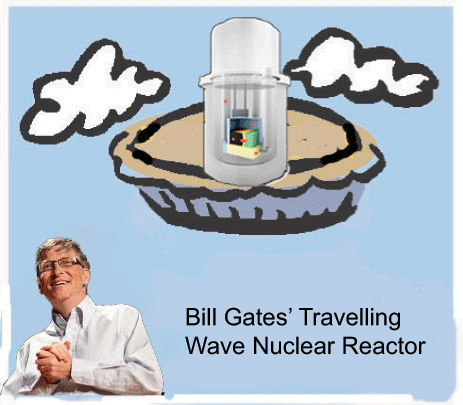 Federal aid sought to build nuclear reactors in Missouri Reactors would be built in Missouri for Callaway plant and for export throughout the world. Kansas City Star, BY JASON HANCOCK AND STEVE EVERLY, 19 April 12, JEFFERSON CITY –– Westinghouse Electric Co. and Ameren Missouri announced Thursday they would seek federal funds to help build a new generation of smaller and safer nuclear reactors.
If Westinghouse wins some of up to $452 million in investment funds from the U.S. Energy Department, then St. Louis-based Ameren would apply for licenses to allow up to five 225-megawatt reactors to be built at the company’s nuclear power plant in Callaway County……
Missouri also could turn into a hub for manufacturing the new reactors — known as Small Modular Nuclear Reactors, or SMRs — to be exported around the world, Gov. Jay Nixon said…… Continue reading
USA government reports calculate and confirm that nuclear power is highly dangerous
Nuclear power plants and the process of atomic fission in them are inherently dangerous—at a scale of technological disaster that is unparalleled.
now there are numerous and truly safe, clean energy technologies available that render nuclear power totally unnecessary. Thus, we can avoid sinking with the atomic Titanics which the nuclear power promoters insist we board.
 Nuclear Titanics – The Perils of Technological Hubris, Counter Punch, by KARL GROSSMAN 16 April 12, On the 100th anniversary of the sinking of the Titanic, The Japan Times yesterday ran an editorial titled “The Titanic and the Nuclear Fiasco” which stated: “Presenting technology as completely safe, trustworthy or miraculous may seem to be a thingof the past, but the parallels between the Titanic and Japan’s nuclear power industry could not be clearer.”
“Japan’s nuclear power plants were, like the Titanic, advertised as marvels of modern science that were completely safe. Certain technologies, whether they promise to float a luxury liner or provide clean energy, can never be made entirely safe,” it said…
the same kind of baloney behind the claim that the Titanic was unsinkable is behind the puffery that nuclear power plants are safe. The nuclear power promoters are still saying that despite the sinking of atomic Titanics: Three Mile Island, Chernobyl and now the Fukushima Daiichi nuclear plants.
In fact, underneath the PR offensive are government documents admitting that nuclear power plants are deadly dangerous. The first analysis of the consequences of a nuclear plant accident was done in 1957 by Brookhaven National Laboratory, Continue reading
Appeals Court hearing of call to block license for Georgia nuclear power plants
 Southern Nuclear Power Plant Foes Ask Court to Block License Bloomberg, By Andrew Harris, Brian Wingfield and Tom Schoenberg – Apr 18, 2012 Southern Co. (SO)’s license from the federal Nuclear Regulatory Commission. to build two nuclear power plants in Georgia should be blocked, opponents of the project said in a U.S. appeals court filing.
The NRC rejected a request by nine environmental groups that it halt construction at the two facilities on April 16, setting the stage for today’s filing with the U.S. Court of Appeals in Washington. The agency approved the license on Feb. 9 by a 4-1 vote
“Issuance of a stay is in the public interest,” the groups said in their filing today, arguing that that NRC failed to fully consider lessons learned from Japan’s Fukushima Dai- Ichi power plant disaster caused by a March 2011 earthquake and tsunami. Continue reading
Don’t drink and Drive a Nuclear reactor
 Nuclear regulator proposes drug, alcohol policy for workers, The Star, 18 April 12 If you can’t drink and drive, maybe you shouldn’t drink and run a nuclear power plant.
Canada’s nuclear regulator has proposed new “fitness for duty” rules that would require anyone with unescorted access to sensitive areas of a nuclear plant to be subject to random drug and alcohol testing. The policy would be a departure for the Canadian Nuclear Safety Commission. “Presently, the CNSC does not have explicit alcohol or drug testing
requirements,” a spokesman said.
The commission does require nuclear operators to have a “fitness for
duty” program, but doesn’t spell out the requirements for drug and
alcohol use. Now, the commission has released a discussion paper proposing to change that.
“The CNSC believes in being proactive, in order to reduce the risk of impairment-related safety events at Canada’s nuclear power plants,” says the paper……
http://www.thestar.com/business/article/1163170–nuclear-regulator-proposes-drug-alcohol-policy-for-workers
Fire at Idaho nuclear research laboratory
Fire prompts evacuation at nuclear research lab in Idaho SALMON, Idaho, April 16 (Reuters) – A welder’s torch ignited a small fire on the roof of a building at a nuclear research laboratory in Idaho on Monday, prompting an evacuation, but no one was hurt and no radioactive material was involved, lab officials said.
Nearly 100 employees were cleared from the building, part of a complex that includes facilities housing spent nuclear fuel and radioactive waste at the Idaho National Laboratory, the U.S. Energy Department’s leading facility for nuclear reactor technology. Continue reading
Rapid increase in brachytherapy for breast cancer, but is this wise?
 “The most plausible explanation for our data is that women treated with brachytherapy were at increased risk of having a recurrence of cancer in their breast”
A large federally funded study is trying to clarify the risks and benefits of brachytherapy for breast cancer. But the results won’t be out for years.
 includes audio. Wider Use Of Breast Cancer Radiation Technique Raises Concern http://www.npr.org/blogs health/2012/04/09/150088892/wider-use-of-breast-cancer-radiation-technique-raises-concern?ps=sh_stcathdl “…..there’s an intense debate under way about whether the approach is being used too widely before there’s clear evidence it’s as effective as the traditional approach. Continue reading
Vermont rallies to keep its right to veto nuclear power plants
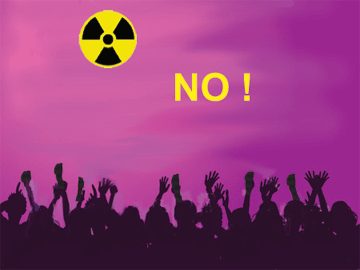 “We are demanding justice for an agreement made 40 years ago,” said Sanders, who drew the loudest cheers. He said the state had the right to determine a “safe energy future for our kids and grandkids.”
Organizers estimated the crowd at between 1,500 and 2,000 people.
Shumlin, Sanders rally anti-nuclear protesters By Susan Smallheer, Rutland Herald, April 15, 2012, BRATTLEBORO — More than 1,200 anti-nuclear protesters flocked to the Brattleboro Common on Saturday and listened to three of the state’s top politicians — Gov. Peter Shumlin, U.S. Sen. Bernard Sanders and Attorney General William Sorrell — take turns criticizing Entergy Nuclear and its Vermont Yankee nuclear power plant. Continue reading
Thousands of gallons of radioactive water into the river
NRC reveals radioactive water spill at Limerick nuke plant, The Mercury, By Evan Brandt 04/12/12 LIMERICK — “Several thousand gallons” of water containing as much as five-times the government’s “safe” level of radioactive tritium was accidentally released at Exelon Nuclear’s Limerick Generating Station last month and then flushed into the Schuylkill River, The Mercury learned Thursday….. http://www.pottsmerc.com/article/20120412/NEWS01/120419797/nrc-reveals-radioactive-water-spill-at-limerick-nuke-plant&pager=full_story
60 years of government welfare to the nuclear industry. Time to stop this.
 Stop the nuclear industry welfare programme After 60 years, the taxpayer should not continue to subsidise multibillion-dollar corporations in the nuclear energy sector Bernie Sanders and Ryan Alexander guardian.co.uk, 13 April 2012 ‘It is shocking that the nuclear industry continues to receive so much federal support at a time of record debt.’
The US is facing a $15 trillion national debt, and there is no shortage of opinions about how to move toward deficit reduction in the federal budget. One topic you will not hear discussed very often on Capitol Hill is the idea of ending one of the oldest American welfare programmes – the extraordinary amount of corporate welfare going to the nuclear energy industry.
Many in Congress talk of getting “big government off the back of private industry”. Here’s an industry we’d like to get off the backs of the taxpayers. Continue reading
The cleanup of Moab uranium tailings – 17 more years to go?
 Lack of funding to slow cleanup of uranium tailings (includes video) KSL.com Utah By Geoff Liesik , 13 April 12, MOAB — Environmental crews have removed more than 5 million tons of radioactive tailings from the banks of the Colorado River in less than three years.
They still have about 11 million tons to go, but the pace of the cleanup is about to slow down. Continue reading
1 This Month

Tell Congress: Prevent Nuclear Catastrophe in Iran

Tell Congress: Prevent Nuclear Catastrophe in Iran

Read the Public Inquiry Report, the Commissioners’ report, Surrendering Australia: The AUKUS Deception is available to download for free at aukuspublicinquiry.com. Or just watch the replay of the National Press Club Luncheon.


Shut down the radiation-damaged Heysham nuclear reactors now
To see nuclear-related stories in greater depth and intensity – go to https://nuclearinformation.wordpress.com

Say No to NASA’s Reckless Nuclear Reactor on the Moon
Say No to NASA’s Reckless Nuclear Reactor on the Moon
-
Archives
- November 2026 (269)
- October 2026 (302)
- September 2026 (339)
- August 2026 (330)
- July 2026 (355)
- June 2026 (287)
- May 2026 (306)
- April 2026 (356)
- March 2026 (251)
- February 2026 (267)
- January 2026 (308)
- December 2025 (358)
-
Categories
- 1
- 1 NUCLEAR ISSUES
- business and costs
- climate change
- culture and arts
- ENERGY
- environment
- health
- history
- indigenous issues
- Legal
- marketing of nuclear
- media
- opposition to nuclear
- PERSONAL STORIES
- politics
- politics international
- Religion and ethics
- safety
- secrets,lies and civil liberties
- spinbuster
- technology
- Uranium
- wastes
- weapons and war
- Women
- 2 WORLD
- ACTION
- AFRICA
- Atrocities
- AUSTRALIA
- Christina's notes
- Christina's themes
- culture and arts
- Events
- Fuk 2022
- Fuk 2023
- Fukushima 2017
- Fukushima 2018
- fukushima 2019
- Fukushima 2020
- Fukushima 2021
- general
- global warming
- Humour (God we need it)
- Nuclear
- RARE EARTHS
- Reference
- resources – print
- Resources -audiovicual
- Weekly Newsletter
- World
- World Nuclear
- YouTube
-
RSS
Entries RSS
Comments RSS

