Potential for clean energy at airports
Clean Energy At Airports Could Find Space Around Runways, Study Says HUFFINGTON POST 05/ 1/2012 From EarthTechling’s Beth Buczynski:  VIDEO a look at Denmark’s clean energy A new report by the U.S. Department of Agriculture shows that bustling airports could serve a vital new function, doubling as alternative energy factories.
The study findings, recently published in an Environmental Management article titled “Airports Offer Unrealized Potential for Alternative Energy Production [PDF],” indicate that airports might want to consider converting empty land into alternative fuel power plants where it is both economically and environmentally beneficial…… Alternative energy projects at major hubs like the Indianapolis and Denver airports, as well as smaller airports like the one in Chattanooga, Tenn., demonstrate the potential for benefits across the airport spectrum. Such efforts may be particularly beneficial for rural economic development, as many rural airport properties contain expansive grasslands that potentially could be converted to biofuel crops or other renewable energy sources… http://www.huffingtonpost.com/2012/05/01/clean-energy-airports-renewables-study_n_1468079.html
USA’s Nuclear Regulatory Commission’s pro nuclear enthusiasts, in turmoil
The NRC review, published last July, made about a dozen safety recommendations.
But the nuclear regulators chose not to enforce those same safeguards before granting a licence to two new reactors at an existing plant in Georgia.
 Jaczko – the sole commissioner to object to the licence – argued the new project should have been built to the higher standard.
Republicans in Congress have been gunning for Jaczko since then.
 The infighting that threatens to undermine US nuclear safety The Nuclear Regulatory Commission became more powerful post-Fukushima, but it has been beset by division and dissent, Guardian UK, 30 April 12,, Suzanne Goldenberg, US environment correspondent “……….the real drama, going largely unseen amid the infighting at the regulator, is over the future of America’s nuclear industry after the Fukushima disaster in Japan last year, nuclear experts say.
USA’s nuclear regulators put costs above safety
“If filtered vents are good enough for Sweden, if they are good enough for Germany, if they are good enough for France and for Switzerland,” “they should be good enough for us.”

 Nuclear Safety Advocates Accuse Industry And Regulators Of Foot-Dragging On Basic Safety Measure HUFFINGTON POST, Tom Zeller Jr.04/30/2012 “…… one seemingly straightforward emergency feature: Requiring a filtered vent in the concrete containment buildings surrounding nuclear reactors like the one at Pilgrim.
Such a vent would come into play in only the worst sort of emergency, when the usual means for keeping the reactor core cool are lost and things inside are heating up to the point of becoming explosive. Operators can then open the vent and exhale the pressure directly into the air. The filter would capture dangerous radioactivity, to prevent contamination of the surrounding area.
Until now, vents have been an optional feature for American plant operators, but in March, the Nuclear Regulatory Commission issued its first orders since undertaking a review of safety systems and procedures at American plants in the aftermath of the disaster in Japan. Among the orders was a requirement that reactors of similar pedigree to those used at Fukushima should have containment vents installed. For reactors that already have them, steps should be taken to ensure they operate in an emergency, officials declared.
To the dismay of Lampert and others, however, regulators have not required filters, Continue reading
Safety shortcomings at Hanford nuclear waste site
The radioactive waste is currently stored in 177 aging, underground tanks, many of which have leaked into the groundwater, threatening the neighboring Columbia River.
Energy Department audit finds nuclear plant vessels procured to 2005 fail to meet requirements The Republic, SHANNON DININNY, 30 April 12 YAKIMA, Wash. — The Energy Department and a contractor building a waste treatment plant at the nation’s most contaminated nuclear site procured and installed tanks that did not always meet requirements of a quality assurance program or the contract, a federal audit concluded Monday. Continue reading
The transition from nuclear energy, fossil fuels – to efficiency, renewables, and smart grids
The upshot of these events is an intensified focus on energy efficiency and renewables, two solutions that hold promise of bridging the supply-demand gap in the years ahead while simultaneously reducing the current heavy reliance on fossil fueled generation.
At the same time, new investments in smart grid technologies to manage demand and integrate renewable power supplies into the grid are increasing rapidly.

 Backfilling Nuclear Shutdowns With Efficiency And Renewables In Japan, Germany And California? Think Progress, Apr 29, 2012 by James Newcomb, via the Rocky Mountain Institute Electric utilities and policymakers in Japan and Germany have been scrambling for months to find ways to compensate for nuclear power plants shut down in the aftermath of Fukushima.
In both instances, fossil fuels are part of the stopgap solution to offset the declines in nuclear generation in the short term, but longer-term energy policies are shifting definitively toward efficiency and renewables. Now, the unexpected and indefinite shutdown of both units at the San Onofre Nuclear Generating Station in Southern California has raised questions about California’s short-term electricity supply options and long-term contingency plans. Continue reading
Safety flaws in San Onofre nuclear power plant
“Here’s a tip: when your nuclear reactor is springing leaks and radioactive pipes are deteriorating 20 times faster than they should, it’s a big deal, and no amount of nuclear spin by Edison or the NRC can hide that fact,”
 Study Claims Flaws Caused Nuclear Leak Laguna Beach Independent, Rita Robinson | April 29, 2012 Changes at the San Onofre nuclear power plant that “crammed” 400 additional tubes into one generator required drilling that allegedly weakened the generator’s foundation, according to a study by the nuclear watchdog group Friends of the Earth.
The weakened foundation along with removing a support piece called the “stay cylinder,” designed to prevent vibration, caused the tubes to rub against other apparatus and resulted in radiation leaks, said the report, issued earlier this month. Continue reading
Are California’s 2 active nuclear plants safe from earthquakes?
Both studies should help decide if California’s two active nuclear plants are safe enough to operate into the 2040s
San Onofre’s Seismic Study to Play Role in Nuclear Plant’s Future The nuclear generating station has been offline since January. Southern California Edison is considering whether to re-license or shut down San Onofre after 2022. Poway Patch, April 27, 2012 Operators of the San Onofre Nuclear Generating Station are about to embark on a costly study on earthquake risk that could determine the future of the plant, it was reported Friday. Continue reading
NRC Chairman Greg Jaczko under attack because he cares about nuclear safety?
“they’ve basically been doing industry’s bidding. So they tried to get rid of Jaczko.”
Why is safety a divisive issue for Nuclear Regulatory Commission? Los Angeles Times, 29 April 12 NRC Chairman Greg Jaczko has found himself on the losing side of 4-1 votes that usually end up favoring less stringent regulations for the industry. He’s also been the target of a congressman’s attacks. By Michael Hiltzik
April 29, 2012 “…… the bill of particulars Rep. Darrell Issa (R-Vista) put out in December in support of a concerted, albeit unsuccessful, campaign to drive Jaczko from his job. Continue reading
Canada avoids testing ocean salmon for radiation

 Canadians track Japanese tsunami debris, but won’t systematically test salmon for radiation http://www.straight.com/article-672746/vancouver/canadians-track-japanese-tsunami-debris-wont-systematically-test-salmon-radiation by Charlie Smith April 29, 2012 The Maritime Museum of B.C. has created a Facebook page devoted to collecting photos of debris from last year’s Japanese tsunami.
The majority of the material floating across the Pacific Ocean is not expected to arrive in B.C. until 2013 and 2014.
What I find interesting is that there still doesn’t appear to be a Facebook page concerning the potential effect of the Fukushima nuclear accident on the Canadian food supply.
Earlier this month, Straight reporter Carlito Pablo wrote an article noting that the Canadian Food Inspection Agency has no plans to systematically test next year’s wild salmon for radioactivity.
These fish travel through the same waters as the flotsam and jetsam coming from Japan, where a devastating nuclear accident crippled the Fukushima power plant.
It’s okay to keep records of the garbage—but as far as the Conservative government is concerned, it appears to be not okay to examine if any of it is ending up in our digestive tracts.
The General Electric Corporations’s connection with Fukushima
5 of the 6 reactors at Fukushima-Daiichi are GE manufactured Mark 1 systems. To add further insult to injury—the GE Mark 1 reactors at Fukushima—have “23 sisters in the US.” According to Nuclear Regulatory Commission (NRC) data, 23 of the 104 existing nuclear plants in the US are GE boiling-water reactors with GE’s Mark 1 radiation containment systems.
nuclear reactors such as those at Fukushima are little more than a radioactive time-bomb …”looking for a place to happen.’
Fukushma the Japanese Chernobyl’…a year later and politics still ‘trump’ safety…UK Progressive, JEANINE MOLLOF | APRIL 29, 2012 “…….. The GE Connection to Fukushima… Tanaka has not been the only engineer involved in the building and operation of ‘boiling-water’ reactors who became a whistle-blower against corporate practices deemed scientifically negligent in the nuclear industry. Dale G. Bridenbaugh, Gregory C. Minor and Richard B. Hubbard, all former engineers with GE resigned in protest over major design flaws in the Mark 1 nuclear reactor designs they were reviewing.
Dubbed the “GE Three”—these engineers switched sides and joined the anti-nuclear movement in 1975. The GE Three were reviewing the Mark 1 system which is among the oldest reactors in use. Arguing that the Mark 1 system was a disaster in the making to deaf corporate ears—the three engineers quit in disgust. Continue reading
President Barack Obama on Climate Chnage

 Ready for the Fight: Rolling Stone Interview with Barack Obama The president, in the Oval Office, discusses his job, the opposition and the coming campaign By JANN S. WENNER APRIL 25, 2012 “…...those who have looked at the science of climate change are scared and concerned about a general lack of sufficient movement to deal with the problem. Frankly, I’m deeply concerned that internationally, we have not made as much progress as we need to make.
Within the constraints of this Congress, we’ve tried to do a whole range of things, administratively, that are making a difference – doubling fuel-efficiency standards on cars is going to take a whole lot of carbon out of our atmosphere. We’re going to continue to push
on energy efficiency, and renewable energy standards, and the promotion of green energy. But there is no doubt that we have a lot more work to do…..
it’s been easy for the other side to pour millions of dollars into a campaign to debunk climate-change science. I suspect that over the next six months, this is going to be a debate that will become part of the campaign, and I will be very clear in voicing my belief that we’re going to have to take further steps to deal with climate change in a
serious way.
That there’s a way to do it that is entirely compatible with strong economic growth and job creation – that taking steps, for example, to retrofit buildings all across America with existing technologies will reduce our power usage by 15 or 20 percent. That’s
an achievable goal, and we should be getting started now……”
http://www.rollingstone.com/politics/news/ready-for-the-fight-rolling-stone-interview-with-barack-obama-20120425#ixzz1tTnVSje7
Small Modular Nuclear Reactors (SMR’s) – last forlorn hope of the nuclear industry
There just isn’t any proof that small reactors are going to be any more economic than larger ones…. it’s all about hype and hope
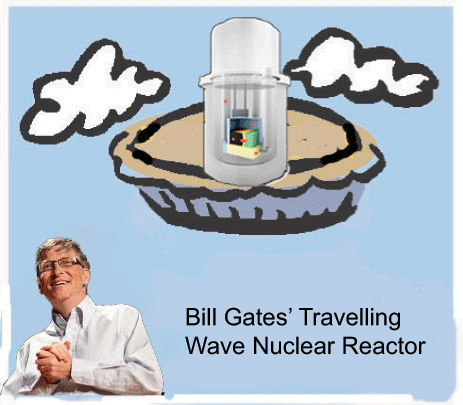 Small nuclear reactors generate hype, questions about cost STL Today 29 April 12, “…..Ameren Missouri and Westinghouse Electric Co. announced plans to pursue a $452 million federal subsidy to advance development of small modular reactors that could be built alongside the utility’s much larger Callaway nuclear plant near Fulton, Mo.
While some utilities are still pursuing full-scale plants, there is a parallel push for smaller reactors that could be easier for utilities to finance and minimize sticker shock for regulators and consumers.
But despite a lower total cost, there’s no evidence yet that tiny fission factories would be able to produce electricity at a competitive cost in an era of abundant, cheap natural gas. Continue reading
Legal action for more scrutiny of nuclear license renewal process
The environmental group’s legal filing also criticizes Ameren for what it says is the company’s “inadequate discussion” of wind energy as an alternative to continued use of nuclear power in its required environmental reviews for the
renewal request
 Environmentalists contest Ameren nuclear renewal, Bloomberg, By ALAN SCHER ZAGIER, 27 April 12, COLUMBIA, MO.A Missouri environmental group is asking the federal government to more closely scrutinize Ameren Corp.’s request for a 20-year license renewal at the state’s only nuclear power plant.
The Missouri Coalition for the Environment on Tuesday filed a legal
objection to the utility’s plan with the U.S. Nuclear Regulatory
Commission. The coalition wants the federal agency to hold a formal
public hearing on Ameren’s license renewal application, a move that
would likely delay consideration of the request. Ameren’s current
40-year operating license for the Callaway County plant expires in
2024…….
The nuclear agency has given Ameren and other U.S. nuclear reactor
operators a deadline of February 2013 to submit updated seismic
studies and complete another safety plan sought in the immediate
aftermath of the Japanese disaster, with a December 2016 deadline to
put those improvements in place….
Curran said the license renewal shouldn’t happen until Ameren provides
the government those requested plans. The St. Louis-based utility
submitted its license renewal application for the nuclear plant late
last year.
“The decision on a license renewal should be delayed until all of this
information is in,” she said….. The environmental group’s legal filing also criticizes Ameren for what it says is the company’s “inadequate discussion” of wind energy as an alternative to continued use of nuclear power in its required environmental reviews for the
renewal request. http://www.businessweek.com/ap/2012-04/D9UCLVKG1.htm
USA’s Nuclear Regulatory Commission staff recommends license renewal
“The NRC staff’s decision is very upsetting because it makes a total mockery out of the process,” said Mary Lampert, director of Pilgrim Watch, who has long called for the plant to be shuttered. “They’re essentially requesting that the game be called before the game is over, while the players are still on the field.”.
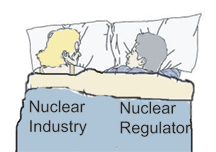 NRC staff recommends renewing license for the Pilgrim Nuclear Power Station in Plymouth Boston Globe, 04 27, 2012 By David Abel, After six years of review and a succession of lawsuits, the staff at the Nuclear Regulatory Commission has recommended that commissioners vote to renew the license of the Pilgrim Nuclear Power Station in Plymouth, which expires next month.
The staff, in an eight-page document, said the 40-year-old plant has “taken, or will take, appropriate actions to manage the effects of aging during the period of extended operation.” Continue reading
90 cancer victims bring lawsuit against nuclear companies
 Radioactive: Revelations on nuclear plants sound a warning http://www.post-gazette.com/stories/opinion/editorials/radioactive-revelations-on-nuclear-plants-sound-a-warning-633299/ April 27, 2012 Pittsburgh Post-Gazette Like a dark family secret long suspected but never confirmed, the shock of discovery is all the more lurid for coming into the light
years later. So it is with the news of radioactive material released into the air — at levels higher than any seen in the nation — at closed nuclear fuels plants in Armstrong County.
Incredulity feeds the first reaction: Surely this could not have happened. But apparently it
did, according to good authority. That would be Joseph P. Ring, a Harvard University radiation safety officer who teaches at Harvard and the University of Massachusetts. He
wrote a 37-page report that was filed Tuesday as part of federal lawsuits brought against plant operators Babcock & Wilcox Co. and Atlantic Richfield Co. by about 90 cancer victims. Continue reading
1 This Month

Tell Congress: Prevent Nuclear Catastrophe in Iran

Tell Congress: Prevent Nuclear Catastrophe in Iran

Read the Public Inquiry Report, the Commissioners’ report, Surrendering Australia: The AUKUS Deception is available to download for free at aukuspublicinquiry.com. Or just watch the replay of the National Press Club Luncheon.


Shut down the radiation-damaged Heysham nuclear reactors now
To see nuclear-related stories in greater depth and intensity – go to https://nuclearinformation.wordpress.com

Say No to NASA’s Reckless Nuclear Reactor on the Moon
Say No to NASA’s Reckless Nuclear Reactor on the Moon
-
Archives
- November 2026 (269)
- October 2026 (302)
- September 2026 (339)
- August 2026 (330)
- July 2026 (355)
- June 2026 (287)
- May 2026 (306)
- April 2026 (356)
- March 2026 (251)
- February 2026 (267)
- January 2026 (308)
- December 2025 (358)
-
Categories
- 1
- 1 NUCLEAR ISSUES
- business and costs
- climate change
- culture and arts
- ENERGY
- environment
- health
- history
- indigenous issues
- Legal
- marketing of nuclear
- media
- opposition to nuclear
- PERSONAL STORIES
- politics
- politics international
- Religion and ethics
- safety
- secrets,lies and civil liberties
- spinbuster
- technology
- Uranium
- wastes
- weapons and war
- Women
- 2 WORLD
- ACTION
- AFRICA
- Atrocities
- AUSTRALIA
- Christina's notes
- Christina's themes
- culture and arts
- Events
- Fuk 2022
- Fuk 2023
- Fukushima 2017
- Fukushima 2018
- fukushima 2019
- Fukushima 2020
- Fukushima 2021
- general
- global warming
- Humour (God we need it)
- Nuclear
- RARE EARTHS
- Reference
- resources – print
- Resources -audiovicual
- Weekly Newsletter
- World
- World Nuclear
- YouTube
-
RSS
Entries RSS
Comments RSS

