American military intervention in Syria could go nuclear
 Five Ways a Wider Syrian War Could Go Nuclear Truth Dig, By Harvey Wasserman, 13 Sept 13, In the wake of an apparent break in the march to a wider war, the reality of a nuclear dimension in Syria remains largely unspoken.
There are at least five key reasons why American military intervention in Syria’s civil war could go nuclear:
(1) There’s a reactor near Damascus.
It is relatively small, by most accounts containing about a kilogram (2.2 pounds) of weapons-grade uranium. That’s not much in the scheme of things when it comes to building an atomic bomb. But as Alexsandr Lukashevich of the Russian Foreign Ministryputs it, “If a warhead, by design or by chance, were to hit the Miniature Neutron Source Reactor (MSNR) near Damascus, the consequences could be catastrophic.”……
(2) Despite Secretary of State John Kerry’s promise of an “unbelievably limited” attack, once the U.S. military commits to action in Syria, it is unlikely to hold back any of its tactical arsenal. That would almost certainly include depleted uranium (DU).
When shells made of this super-hard material penetrate armored vehicles, hardened bunkers and other structures, the DU disperses into fine radioactive particulates that are easily inhaled. Wherever deployed—as in Yugoslavia, Iraq and Afghanistan—DU inflicts horrifying health consequences, including cancer among people of all ages and birth defects among children born well after its use. Uranium-238 has a half-life of 4.5 billion years, imposing virtually permanent contamination.
Should DU weaponry be used yet again, this time in Syria, the contamination would be widespread and irreversible. Many thousands of innocent people—including the countless unborn—would suffer greatly. As with all radioactive fallout, the lethal effects will stretch through the generations.
(3) When the world’s superpowers collide, nuclear war is always a possibility.
At this point, the U.S. and Russia appear to be coming together. But in this too-often irrational global tinderbox, the stakes could not be higher.
In such situations, we hope for the best, but can’t lose sight of the potential worst………
(4) In the bottomless turbulence that defines today’s Middle East, the Americans and Russians so far seem to retain some shreds of rationality. But given the Peaceful Atom’s half century of weapons-grade proliferation, we cannot know which nations or marginal groups might now have atomic devices and what random impulses might prompt their use.
In a profoundly unpredictable world, each of the more than 400 commercial-sized reactors still operating continues to produce radioactive materials that could fuel a nuclear weapon.
Each of those reactors is itself a profoundly vulnerable target. Should the situation in Syria devolve to a wider war, the likelihood of a freelance atomic “situation” becomes all too probable.
(5) While the world’s attention is focused on Syria, the global-scale disaster at Fukushima spirals out of control.
The more serious the crisis in Syria, the more it will divert attention from an existing nuclear disaster. http://www.truthdig.com/report/item/five_ways_a_wider_syrian_war_could_go_nuclear_20130913/
Power companies join in California’s Community Renewable Energy project
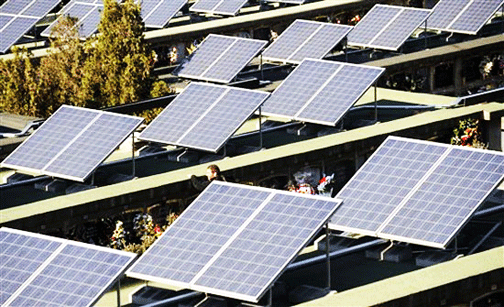 The group estimates that more than 20,000 residential ratepayers throughout California, each purchasing an average 5 KW share, will be able to participate in the program, as well as local schools, businesses, the military and the government.
California approves shared renewable energy program http://www.pv-magazine.com/news/details/beitrag/california-approves-shared-renewable-energy-program_100012727/#axzz2etkybguT 13. SEPTEMBER 2013 BY: IAN CLOVER
 Approval of the largest program for shared renewable power in the U.S. passes in California, enabling schools, rental tenants and owners of homes in the shade to invest in solar energy projects. California’s Legislature has given the green light for the state’s “Green Tariff Shared Renewables Program”, which is the largest of its kind in the U.S. and will allow rental tenants, schools, cities and many other interested parties to invest in California’s renewable energy projects.
The program allows businesses and individuals to purchase shares in the renewable developments of three investor-owned utilities– Pacific Gas and Electric Co. (PG&E), San Diego Gas & Electric Co. (SDG&E), and Southern California Edison Co. (SCE) – in return for a greener electricity supply and, in the future at least, lower bills. Continue reading
USA desperate to save its nuclear industry from being accountable for any accidents in India

 ‘Nuclear liability law poses challenge to Indo-US nuke deal’ Zee News, September 13, 2013, Washington: India’s nuclear liability law posed a tough challenge for implementing the “transformational” Indo-US nuclear deal though there is a very strong desire to move forward, Nisha Desai Biswal, President Barack Obama’s Indian-American nominee for a key post in South Asia, said. “I think that the 123 agreement was a transformational agreement between the relationship between the United States and India, she said at her confirmation hearing for the post of Assistant Secretary of State for South and Central Asia.
“But since that deal was enacted, I think that there has been very slow and halting progress because of the nuclear liability law in India and the hindrances that that has posed to advancing civil nuke cooperation,” she said yesterday.
…..India’s Civil Liability for Nuclear Damage Law allows the operator of a nuclear plant to seek damages from the supplier in case of a nuclear incident due to supply of equipment with latent and patent defects or sub-standard services. The US says the Indian law is not consistent with the Convention on Supplemental Compensation (CSC). http://zeenews.india.com/news/nation/nuclear-liability-law-poses-challenge-to-indo-us-nuke-deal_876374.html
Legal fight Sept 23-30 to save Utah water from Green River Nuclear Project

Our case “HEAL Utah et al v. Blue Castle Holdings et al,” will be tried in the 7th District Court in Price, from Sept. 23-30. This is more than just a nuclear power case. It is also a public airing of whether Western officials should endorse virtually any speculative use of our precious water. It’s a chance to ask a judge to seriously consider the growing impacts of climate change, as study after study suggests the Colorado River basin will lose anywhere from 8 to 35 percent of its water as snowpack recedes and drought intensifies.
And, yes, in the wake of Fukushima, it’s a chance to ask whether siting nuclear reactors upstream from the rivers that supply water to 30 million Americans is a wise choice.
Fight the Green River nuclear reactors project in Utah, High Country News, Matt Pacenza | Sep 12, 2013 Drive south from Price, Utah for about an hour until Route 6 intersects with I-70. On your right, toward the west, the stunning San Rafael Reef rises. And on the left, the eastern Book Cliffs rise.
And, just there, to the east of Route 6, if the energy development company, Blue Castle Holdings, and Utah state water officials have their way, you’ll soon see an industrial park dominated by the Mountain West’s first commercial nuclear reactors: the so-called “Green River nuclear” project.
Later this month, at a courthouse in Price, a Utah state judge will hear a bid from more than a dozen environmental groups, businesses and citizens to overturn a decision approving the transfer of Green River water to cool the proposed reactors. This trial is likely the last and best chance to stop the project before it moves to the industry-friendly Nuclear Regulatory Commission. Continue reading
Florida: costly high risk nuclear power should not be funded by the tax-payer
 Americans may be divided on the use of nuclear power, but few people will defend the notion that massive utilities should be relying on taxpayers to build nuclear reactors. The bottom line is clear: Putting the full faith and credit of the U.S. government behind this costly, high-risk Vogtle reactor project is fiscally irresponsible
Policy wrongly puts risk of nuclear plants on public http://www.orlandosentinel.com/news/opinion/os-ed-front-burner-nuclear-loans-con-20130912,0,1513077.story By Ryan Alexander, September 12, 2013
Think what you want about nuclear power. Maybe it’s the best way to generate electricity or maybe it’s the worst. For Florida taxpayers, that debate may be less relevant than the one aimed right at your pocketbook.
At issue is the use of taxpayer-backed federal loan guarantees to finance nuclear-reactor projects — such as the Vogtle reactors in Georgia now awaiting a deadline for final agreement on loan-guarantee terms. If these terms are finalized, taxpayers will be left holding the bag in the event of a Vogtle default.
In February 2010, the U.S. Department of Energy conditionally offered Southern Company and its partners $8.33 billion in taxpayer-backed loan guarantees to build two nuclear reactors in Georgia. The subsidy would be provided through the same DOE program that awarded more than $500 million to the now defunct solar-power company, Solyndra. The Vogtle project is roughly 16 times bigger than Solyndra in loan-guarantee terms and perhaps every bit as troubled.
The project is already experiencing construction delays that could increase costs substantially, and its design, the AP1000, has never been built in the United States before or been successfully completed or operated anywhere in the world. Initial cost estimates of $14.1 billion are already being pushed up to $15.3 billion. With lawsuits being pursued by contractors designing the reactor, the cost could jump again to $16.2 billion.
All of this is unfolding against a backdrop of grim news for the nuclear industry in the U.S. Continue reading
Is America’s Environmental Protection Agency (EPA) weakening standards for nuclear safety?
 EPA Documents Raise Doubts Over Intent of New Nuclear-Response Guide
National Journal By Douglas P. Guarino, Global Security Newswire September 11, 2013 WASHINGTON —Newly obtained government documents are prompting concern among critics that Environmental Protection Agency officials are seeking to use the organization’s new guide for nuclear-incident response to relax public health standards, but the agency is denying the claim.
The Freedom of Information Act release comes as the agency has yet to finish collecting public comments on the so-called protective-action guide, which it issued in April after years of internal infighting and public controversy. The document is meant to give federal, state and local officials advice on responding to a wide range of radiological incidents, such as “dirty bomb” attacks, nuclear power plant meltdowns and industrial accidents.
The documents obtained by Global Security Newswire show EPA officials have suggested at meetings around the world that the new guide could allow for the use of long-term cleanup standards dramatically less stringent than those the agency has enforced for decades at hundreds of sites throughout the United States, critics say.
In some cases, EPA officials have not only suggested that a drastic event akin to the Fukushima nuclear power plant meltdown in Japan would necessitate more flexible guidelines, but also have made statements that critics say challenge the very science behind the agency’s everyday radiation rules. Continue reading
Public meeting about decommissioning process for san Onofre Nuclear Power PLant
 NRC sets first public meeting on decommissioning San Onofre nuclear plant http://www.scpr.org/news/2013/09/12/39216/nrc-sets-san-onofre-nuclear-plant-meeting-in-carls/
Ed Joyce | September 12th, 2013 The Nuclear Regulatory Commission announced Thursday it will hold a public meeting September 26 in Carlsbad to talk about the decommissioning process for the San Onofre Nuclear Generating Station in northern San Diego County.
It will be the agency’s first public meeting on closing the plant operated by Southern California Edison.
The meeting is scheduled for 6 p.m. at the Omni LaCosta Hotel, 2100 Costa del Mar Road. Doors will open at 5 p.m. to accommodate security screening.
An NRC press release says technical staff will give a presentation describing the process and regulations covering the decommissioning with a Q&A session to follow.
“We think this meeting is very important for the community,” said Gene Stone with San Clemente-based Residents Organized for a Safe Environment. It’s one of several groups in Orange and San Diego counties that pushed for the plant’s closure.
Stone says a coalition of environmental groups “will create a committee focusing on safety of nuclear waste storage, the timeliness of the process and the costs associated with decommissioning.”
The nuclear plant, which is located on the coast near the border of San Diego and Orange counties, has been shut down since January 2012 after radioactive steam escaped from damaged tubes inside one of the reactors. In June of this year, Southern California Edison announced it would seek the permanent closure of the plant.
Edison International Chairman Ted Craver told reporters in June that closing the plant would take decades and result in spent nuclear fuel being stored “for a very long time” at the plant.
According to Craver, the company has a $2.7 billion decommissioning fund that can be used to close San Onofre. But the money to make up for the loss of the San Onofre plant will come from ratepayers, insurance claims, shareholders and Mitsubishi Heavy Industries, which made the equipment that led to the problems at San Onofre.
The California Public Utilities Commission has set an October 1 hearing to determine just how much ratepayers will pay.
Earlier this month, Southern California Edison opened the San Onofre Digital Document Library. The utility said the library provides the public with documents related to the design of the steam generators that were cited as a reason for the plant’s problems.
Along with Edison, San Diego Gas & Electric owns 20 percent of the plant and the City of Riverside owns nearly 2 percent.
The plant is located about two miles south of San Clemente.
Plymouth residents suspicious of Entergy’s nuclear waste plan
 Many experts believe that storing spent fuel assemblies in dry casks is safer long-term than continuing to store them in Pilgrim’s over-crowded spent fuel pool. However, it is important to note that Entergy plans to keep the spent fuel pool full until Pilgrim stops operating, and to move the minimum number of spent fuel assemblies into dry casks.
“We, in fact, support dry cask storage,” said one of the petitioners. “We just want to make sure Entergy is doing it as safely as possible, and not at our expense. Long after Entergy is gone Plymouth will be stuck with a toxic nuclear waste dump.”
OF NUCLEAR INTEREST: Radioactive waste storage facility being built in Plymouth http://www.wickedlocal.com/wareham/topstories/x1655334658/OF-NUCLEAR-INTEREST-Radioactive-waste-storage-facility-being-built-in-Plymouth?zc_p=1 By Sara Altherr Wicked Local Plymouth
Sep 11, 2013 Last year, without fanfare, Louisiana-based Entergy Corporation started work on a nuclear waste storage facility, using “dry casks” to store radioactive spent nuclear fuel at Pilgrim Nuclear Power Station (PNPS). Various estimates put the cost of the facility between $165 million and $400 million. In Pilgrim’s reactor, nuclear fuel assemblies heat water to make steam that turns turbines to create electricity. Pilgrim’s reactor holds 580 fuel assemblies. After a few years, the fuel is “spent,” and needs to be replaced. However, the spent fuel is highly radioactive and will remain dangerous for thousands of years. Continue reading
Transferring spent nuclear fuel rods to dry casks does not increase worker danger
Radiation from Accelerating the Transfer of Spent Fuel from Pools to Casks, Union of Concerned Scientists David Wright, co-director and senior scientist September 11, 2013
To see this, consider the results of an August 2012 study by the Energy Power Research Institute (EPRI), “Impacts Associated with Transfer of Spent Nuclear Fuel from Spent Fuel Storage Pools to Dry Storage after Five Years of Cooling, Revision 1,” which estimates the increase in radiation dose to workers loading fuel into casks in scenarios of accelerated transfers.
The EPRI Study……. http://allthingsnuclear.org/radiation-from-accelerating-the-transfer-of-spent-fuel-from-pools-to-casks/
Nevada board extends contract for Yucca Mountain nuclear waste dump license
Yucca Mountain nuclear waste license renewed Carson City, NV (KTNV) — The fight over Yucca Mountain rages on. A Nevada board has extended a contract with a Washington, D.C. law firm to continue the proposed nuclear waste dump just 90 miles northwest of Las Vegas.
$5 million has been approved to continue the contract; money they said will go quickly when it runs out.
Officials said the federal government only has $11 million left in its nuclear waste licensing account A Nevada board has extended a contract with a Washington, D.C. law firm to continue the proposed nuclear waste dump just 90 miles northwest of Las Vegas.
$5 million has been approved to continue the contract; money they said will go quickly when it runs out.
Officials said the federal government only has $11 million left in its nuclear waste licensing account.So far, the Department of Energy has already spent $670 million on licensing.
US Congress to hear about NRC’s plans for radioactive trash

the only sane thing is to stop making the stuff!
 Energy Week Ahead: NRC’s Chief to Testify on Nuclear-Waste Plans Bloomberg, By Brian Wingfield – Sep 8, 2013 Congress returns from a five-week recess to take up several perennial issues: turmoil in the Middle East, rising government debt and where to dump more than 65,000 tons of waste from the nation’s nuclear power plants.
U.S. Nuclear Regulatory Commission Chairman Allison Macfarlane and Peter Lyons, the Energy Department’s assistant secretary for nuclear energy, testify tomorrow at a House Energy and Commerce subcommittee hearing on the waste issue.
While U.S. lawmakers were away from Washington, a federal appeals court on Aug. 13 ruled the NRC is “flouting the law” by not completing its safety review for a dump at Nevada’s Yucca Mountain. The agency, which stopped work after President Barack Obama’s administration killed funding for Yucca in 2010, is reviewing options on the matter through Sept. 30.
Now lawmakers just have to agree on a place to dispose of the spent-fuel rods, a debate that has been underway since at least President Ronald Reagan’s first term, when he signed a law to set up a permanent repository. For now, the material is stored at about 75 operating and closed nuclear plants……. The nation’s backlog of commercial nuclear waste is rising so high, even Yucca Mountain won’t be able to hold it all, a independent commission established by Obama reported last year. …..http://www.bloomberg.com/news/2013-09-09/energy-week-ahead-nrc-s-chief-to-testify-on-nuclear-waste-plans.html
Nuclear Regulatory Commission trying to instill confidence in its Waste Confidence Rule
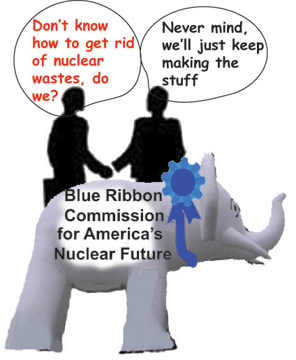 NRC ‘Waste Confidence’ meetings to focus on spent nuclear fuel Augusta Chronicle By Rob PaveyStaff Writer Monday, Sept. 9, 2013 Federal regulators will hold a series of meetings this fall to discuss the fate of spent nuclear fuel that could be left behind after commercial power reactors are shut down and closed.
The 12 meetings, held by Nuclear Regulatory Commission, are part of the process of devising a “waste confidence rule” to assess the environmental impact of continued storage until the material can be sent to an underground repository. The closest meeting to Augusta will be held Nov. 4 in Charlotte, N.C., at the Hilton Charlotte University Place, 8629 J.M. Keynes Drive. An open house begins at 6 p.m., and the formal meeting will be held from 7 to 10 p.m.

Disposal of spent nuclear fuel that continues to accumulate at the nation’s 104 operating commercial reactors has been a perennial dilemma and a source of national debate…… The issue of long-term storage and disposal of spent fuel is an important issue nationwide, and especially in Georgia and South Carolina, said Tom Clements, Southeastern nuclear campaign coordinator for Friends of the Earth.
The solution favored by Friends of the Earth includes removing spent fuel from storage pools, and storing it on-site in protected casks, until a geologic repository can be completed.
Under the Blue Ribbon Commission’s proposals, such a repository must be sited through a “consent-based” process that requires support and coordination from state and local officials who are willing to host such a project. The issue of long-term storage and disposal of spent fuel is an important issue nationwide, and especially in Georgia and South Carolina, said Tom Clements, Southeastern nuclear campaign coordinator for Friends of the Earth.
Wind power to dismantle nuclear weapons
The Largest Federal Wind Farm Will Power The Dismantling Of Nuclear Weapons, Stan Alcorn, Co exist 10 Sept 13 “…..The largest federal wind power plant is now being built to power a facility that does most of the nuclear weapons dismantling in the United States.
At the Pantex in the wind-rich Texas panhandle, electricity will soon come from five massive turbines, to help “green the nuclear security enterprise.”….. The case for the project is largely economic. The 47 million kilowatt hours of energy the five massive turbines will deliver should provide of 65% of the plant’s energy needs. That will save $2.8 million annually over the course of the 18-year contract, according to Siemens–money that will be used to pay back the original investment…. it’s a smart investment in the long run. And Marks says it’s only the beginning. “We hope to expand the wind farm even beyond these five turbines,” she says. “There’s plenty of property there, and plenty of wind.” http://www.fastcoexist.com/3016748/the-largest-federal-wind-farm-will-power-the-dismantling-of-nuclear-weapons
Miserable market for uranium stops Colorado uranium mill build
Plan to build uranium mill in SW Colorado on hold The Associated Press September 8, 2013 DURANGO — A Toronto-based energy company is holding off on its plan to build a uranium mill in southwest Colorado.
The Durango Herald reports (http://bit.ly/15H4qMC ) Stephen Antony, president and CEO of Energy Fuels Resources Inc., told investors during a conference call Friday the company won’t build the Pinon Ridge mill in Montrose County unless there is an unexpected turnaround in uranium prices…..http://gazette.com/plan-to-build-uranium-mill-in-sw-colorado-on-hold/article/1506008he gaztte,
Obama administration’s contradictory claims about attacking Syria
Critics see contradictions in Obama administration’s Syria claims LA Times, By Paul Richter September 8, 2013, WASHINGTON –- The planned military strikes on Syria would be “targeted, limited” and wouldn’t seek to topple the government of President Bashar Assad or even force it to peace talks.
They would also be punishing and “consequential” and would so scare Assad that he would never use chemical weapons again. U.S. airstrikes would change the momentum on the battlefield of the Syrian civil war. But the war will grind on, unchanged, perhaps for years.
As administration officials lay out their case in favor of a punitive attack on Syria, they have been making all of these seemingly contradictory contentions, confusing supporters and providing rhetorical weapons to their opponents.
The contradictions stem from the basic challenge the White House faces: how to reassure the large anti-war contingent in the Democratic Party, as well as conservative opponents of overseas intervention, that strikes won’t open the way to another war, while convincing hawks and more militant internationalists that the strikes will do enough to make the mission worthwhile.
It’s possible to square most of the administration’s arguments – if one believes that a military strike can be so precisely calibrated as to harm the Assad government just enough, but not too much. But as a political case, the effort has so far proven hard to sell.
If officials lean too far in one direction, they risk losing supporters on one side or the other. But when they voice both sides of their case, they risk presenting an argument that is incoherent…….. http://www.latimes.com/world/worldnow/la-fg-wn-contradictions-obama-syria-20130908,0,4466835.story
1 This Month
Tell Congress: Prevent Nuclear Catastrophe in Iran

Tell Congress: Prevent Nuclear Catastrophe in Iran

Read the Public Inquiry Report, the Commissioners’ report, Surrendering Australia: The AUKUS Deception is available to download for free at aukuspublicinquiry.com. Or just watch the replay of the National Press Club Luncheon.


Shut down the radiation-damaged Heysham nuclear reactors now
To see nuclear-related stories in greater depth and intensity – go to https://nuclearinformation.wordpress.com

Say No to NASA’s Reckless Nuclear Reactor on the Moon
Say No to NASA’s Reckless Nuclear Reactor on the Moon
-
Archives
- November 2026 (246)
- October 2026 (302)
- September 2026 (339)
- August 2026 (330)
- July 2026 (355)
- June 2026 (287)
- May 2026 (306)
- April 2026 (356)
- March 2026 (251)
- February 2026 (267)
- January 2026 (308)
- December 2025 (358)
-
Categories
- 1
- 1 NUCLEAR ISSUES
- business and costs
- climate change
- culture and arts
- ENERGY
- environment
- health
- history
- indigenous issues
- Legal
- marketing of nuclear
- media
- opposition to nuclear
- PERSONAL STORIES
- politics
- politics international
- Religion and ethics
- safety
- secrets,lies and civil liberties
- spinbuster
- technology
- Uranium
- wastes
- weapons and war
- Women
- 2 WORLD
- ACTION
- AFRICA
- Atrocities
- AUSTRALIA
- Christina's notes
- Christina's themes
- culture and arts
- Events
- Fuk 2022
- Fuk 2023
- Fukushima 2017
- Fukushima 2018
- fukushima 2019
- Fukushima 2020
- Fukushima 2021
- general
- global warming
- Humour (God we need it)
- Nuclear
- RARE EARTHS
- Reference
- resources – print
- Resources -audiovicual
- Weekly Newsletter
- World
- World Nuclear
- YouTube
-
RSS
Entries RSS
Comments RSS

