“…“Peer review is an essential quality control step in any research project,” said Dr. Patsy Thompson, director general and one of the journal article authors. “We are pleased that our work has been recognized for being scientifically sound. It gives us added confidence in our findings.”…”
Nuclear radiation study published, childhood leukemia not a factor around nuke plants
The Canadian Nuclear Safety Commission (CNSC) announced Sept. 3 that its Radiation and Incidence of Cancer around Ontario Nuclear Power Plants from 1990 to 2008 study (the RADICON study) has been peer-reviewed and published in the prestigious Journal of Environmental Protection.
The RADICON study looked at populations living near the Bruce nuclear station in the Municipality of Kincardine, as well as Pickering and Darlington nuclear generating stations in Ontario, and found no evidence of childhood leukemia clusters in the communities within 25 km of the nuclear power plants.
“Peer review is an essential quality control step in any research project,” said Dr. Patsy Thompson, director general and one of the journal article authors. “We are pleased that our work has been recognized for being scientifically sound. It gives us added confidence in our findings.”
The study was conducted using data from the Canadian and Ontario Cancer Registries and the Census of Canada. The CNSC had released a summary of the study in May 2013.
The study also confirmed public radiation doses from Ontario NPPs were extremely low: 100 to 1,000 times below natural background radiation. In Canada, average background radiation is 1.8 millisieverts per year [arclight says wtf??]. The technical article entitled “Radiation Exposure and Cancer Incidence (1990 to 2008) Around Nuclear Power Plants in Ontario, Canada” is available on the Journal of Environmental Protection Web site.
The CNSC regulates the use of nuclear energy and materials to protect the health, safety and security of Canadians and the environment, and to implement Canada’s international commitments on the peaceful use of nuclear energy.
New geology research says radioactive wastes are unlikely to enter groundwater from a proposed Canadian disposal site less than a mile from Lake Huron.
The research raises questions about future disposal on both sides of the border as radioactive waste continues to sit at power plants around the Great Lakes.
Ontario Power Generation is planning an underground disposal site for low and intermediate level nuclear waste at Kincardine on the Bruce Peninsula in western Ontario. The categories include most things in the United States’ classifications for low-level radioactive waste. For power plants, that includes things like contaminated equipment, clothing, protective gear, and cleaning supplies, as well as filters and reactor water treatment residues.
Starting on September 16, the Canadian government’s joint review panel will hold a public hearing on the project’s environmental assessment. Construction could start within two years, says a timetable on the Canadian Nuclear Safety Commission’s website.
Opposition focuses on the site’s location less than a mile from the Great Lakes, which hold 21 percent of the world’s fresh surface water. More than 35 million people rely on the lakes for drinking water.
Meanwhile, the United States is producing growing quantities of its own radioactive wastes. No current plans call for underground disposal in the United States Midwest. Nonetheless, layers involved in the Bruce disposal site extend under several Midwest states.
Digging deep
Ontario Power’s proposed disposal site is about 1,970 feet (600 meters) deeper than the bottom of Lake Huron. Ontario Power plans to put low and intermediate level radioactive wastes in tunnels within limestone roughly 2,230 feet (680 meters) below ground level. That layer sits beneath a shale layer that’s 660 feet (200 meters) thick.
Geologically speaking, both layers are part of the Michigan Basin. The bowl-shaped, multi-layered region is centered in central Michigan. The region’s layers extend into Canada, Wisconsin, Illinois, Indiana, and Ohio.
A scientific team, led by University of Ottawa geologist Ian Clark, analyzed core samples to see how likely the limestone and shale are to let water flow through.
“If the groundwater isn’t moving, then there’s really no way for the waste to escape,” says University of New Brunswick geologist Tom Al, who worked on the study.
The team’s conclusion, published in the journal Geology, is that any contaminated groundwater would have very little chance of escaping through the rock.
“We found that the shale and limestone package together are an incredible barrier,” says Clark. “Below and above, nothing has penetrated into that zone for these many hundreds of millions of years.”
“This rock material, it’s almost like a steel plate,” agrees Al. “There is no permeability of any kind.” The rock has few pores that can hold water, and those pores are poorly connected.
In geology terms, the limestone and shale layers date back to the Ordovician Period. That era was 490 million to 443 million years ago.
“These waters have been there since before the dinosaurs roamed the earth,” observes Clark.
Geologist Christopher Neuzil of the United States Geological Survey reviewed a draft of the research by Clark’s team. He has also done his own research on the Bruce site, which is currently under review.
Neuzil interprets his data to mean that there’s negative pressure at the Bruce site. If so, that’s another reason why contaminated water wouldn’t escape.
Basically, past glaciers squished down all the layers beneath them. When the glaciers melted, “the rock wanted to expand back a little bit,” says Neuzil. To the extent any water can flow, it’s probably moving in, not out.
“Very, very slowly, water is being drawn into it,” says Neuzil. “It’s on the order of centimeters per thousand years.” And, he adds, it doesn’t look like the pressures will balance out for another five or ten thousand years.
Neuzil’s estimates of the rocks’ permeability are “very similar to the values” that Clark’s team found. That suggests the rocks are impermeable over the whole disposal area, says Neuzil, and not just near the boreholes.
“In many cases we can demonstrate, there’s strong indications that they don’t have any fractures that haven’t been detected,” explains Neuzil. Thus, in building an underground facility, “you won’t run into that kind of surprise.”
Meanwhile, in the U.S.…
The Canadian findings are reminiscent of a 2011 report from the Sandia National Laboratory, which identified geologically stable granite deposits in Great Lakes states as a possible candidate for nuclear waste storage.
“….Astonishingly, authors of the RADICON study conclude that the elevations found in their study of thyroid cancer and leukemia, both radiosensitive cancers, could not be due to radionuclide emissions from reactors.
The conclusion for this study should be that the positive findings for thyroid cancer and leukemia are alarming and should be followed up with more definitive research….”
“… The stack sensor was found, after 18 years of operation and several CNSC inspections, to be under-reporting by close to a factor of 10…”
Download document here
Critique of the RADICON Study (Canadian Nuclear Safety Commission)
Cathy Vakil MD (Board Member of CAPE, Physicians for Global Survival)
Linda Harvey MD (President of Physicians for Global Survival)
June 2013
The stated purpose of this CNSC study was “to determine the radiation doses to members of the public living within 25 km of the Pickering, Darlington and Bruce NPPs and to compare cancer cases among these people with the general population of Ontario from 1990-2008.” The CNSC describes this study on their website as “groundbreaking” and providing “science-based and conclusive evidence that children living nearby are as healthy as children living elsewhere in Ontario”. These claims are false for the following reasons:
1) Poor design:
An ecological study, a design which can give no information about causation of any effects found, will be of limited usefulness in answering the question “Are there health effects caused by radiation doses to the public from nuclear power plants?” In placing the population within 25 km of each nuclear power plant (Pickering, Darlington and Bruce) into a single category, it lacks the definition of the more skillfully executed studies already in existence, such as the German KiKK study
(Kaatsch P., Spix C., Schulze-Rath R., Schmiedel S., Blettner M. Leukemia in Young Children Living in the Vicinity of German Nuclear Power Plants. Int. J. Cancer 2008; 1220: 721-26) and French GEOCAP study (Sermage-Faure C, Laurier D, Goujon-Bellec S, Chartier M, Guyot-Goubin A, Rudant J, Hémon D, Clavel J.Int. J. Cancer 131 (12): 2970-1) on childhood leukemia, case-control studies that examined risk as close as a 5 kilometre radius.
Unsurprisingly, it finds “no evidence” of increased childhood leukemia, or cancers in general, around Canadian nuclear power plants. However, absence of evidence is not evidence of absence. In other words, negative findings in a weak study such as this should not reassure the public that there is not indeed an increase in childhood leukemia near nuclear reactors in Ontario.
One good quality, robustly designed and meticulously executed study (such as the KiKK or GEOCAP study) which finds a clear positive result trumps any number of weak studies that fail to find anything.
2) Mathematical Models
Mathematical models were used to recreate the atmospheric plume and to estimate dispersion into the environment of “each nuclear substance”. The models were not described, nor were the “nuclear substances” in question itemized or named.
The data used to develop these models were supposedly of recorded releases into the atmosphere from each of the plants for each substance. However, the data were never shown, nor were monitoring techniques, frequency, and calibration or other validation procedures described. Emissions to water were not considered at all in this paper.
The statement on p. 12 that, “Radioactive iodine, which is the primary cause of radiation-related thyroid cancer, was below detection limits of the in-stack sampling monitors at all three NPPs for the entire study period”, prompts the question of whether their sampling was adequately done.
Information obtained from Ontario Power Generation (OPG) through Freedom of Information indicates that radioactive iodine is detected and measured now on a weekly basis.
Clearly. the measurements done previously underestimated the iodine present in emissions, making one question whether all other measurements done from 1990 to 2008 presented in this study are inaccurate and/or underestimated.
In addition, the emissions from Darlington and Pickering reactors are not all measured daily. (Bruce Power has refused to provide any emissions other than what is on their website which describe mostly annual averages or totals. It is unacceptable that they are allowed to refuse to release this data to the public). Particulates, iodine, noble gases and carbon 14 are only measured weekly,
Therefore, daily spikes in emissions are not always evident. There are however some remarkably high levels on some weeks, some as much as 100 times the baseline weekly levels. Airborne tritium from Pickering reactor is the only radionuclide measured daily, and there were some spikes in 2012, as much as ten times the baseline.
In addition, the total yearly amounts of airborne tritium from Darlington and Pickering are extremely high, measuring about 7 X 10exp14 becquerels per year. This calls into question the small amounts of radioactivity found in the sampling done in this study and contrasts blatantly with the claims in the paper that doses to the public are “miniscule”.
As Fukushima radiation rages, Tokyo awarded bid to host 2020 Summer Olympics, hilariously named the ‘Safe Games’ September 08, 2013 by Mike Adams (NaturalNews) Despite the fact that Fukushima is already the worst radiological disaster in human history — and worsening by the day — Japan has been chosen as the host nation for the 2020 Summer Olympics.
Hilariously, the event is being billed the “Safe Games” of 2020.
How, exactly, is it safe to host the Olympics in a nation which absolutely no workable evacuation routes from a nuclear facility on the verge of collapsing into another deadly radiation release? The answer to that question is provided by Japan’s Prime Minister Abe. He claims that Fukushima is no problem whatsoever, that no one has ever been harmed by it, and that it is fully under control! (A trifecta, he thinks…)……..
Japan cannot be evacuated
The fact that the Olympic committee chose Japan even while Fukushima rages on, just one earthquake away from a catastrophic collapse and unprecedented release of deadly radiation, tells you just how incredibly stupid the Olympics decision makers really are. (Or how paid off they are, as bribes and corruption have been well documented throughout the history of the Olympics).
Do these people not grasp even the most fundamental concepts of physics? Why would any sane organization vote to host a global event that brings hundreds of thousands of people to a location just a short distance away from a collapsing nuclear power plant that is utterly and completely out of control with no end in sight?
Furthermore, Japan has no workable evacuation plan if Fukushima’s reactor #4 does experience a structural collapse followed by a catastrophic release of radiation. There is no evacuation plan because Japan cannot be evacuated, period. Thus, the strategy of the Japanese government has become one of D-E-N-I-A-L instead of problem solving.
Let’s all pretend radiation is no longer a problem, shall we? Japan is pretending. The U.S. is pretending, and now the Olympic committee is pretending, too.
As long as they’re pretending, why not host the Olympics at the Fukushima Dai-Ichi nuclear power facility? It’s available, after all. And the rent is dirt cheap.
Jiji Press, , Sept. 6, 2013: Crime up among No. 1 plant staff […] In the first eight months of this year, 74 such workers were charged with crimes such as theft and fights resulting in injury. The figure is already close to three times the 2012 total of 26. The police reported only one such suspect in 2011 […] They were mostly suspected of theft […] or of harming others during brawls in their lodgings or bars. In one extreme case, people were held hostage as a result of a disagreement over hiring practices. […] Mainichi, Sept. 2, 2013: Things are going badly. There’s radioactive water leaking, and it can’t be controlled. […] if the workers on-site do not consent to join battle, if they cannot muster the courage to keep up the fight, then we cannot expect real progress. At least, that’s the impression I got after talking with one of those workers […] I cannot write the worker’s name, or age, or job description here. But I can say that he is not an agitator […] he is a completely average employee [… “]we’re not getting any extra staff. The management says ‘do this’ and ‘do that,’ but I don’t think they really consider the workers’ radiation exposure doses at all. “Recently, some government minister came here (to the plant) and ran his mouth, right? When I see stuff like that, I think, ‘Gimme a break! What the hell do you know about anything?’” […] I’ve heard the officer in charge of the Self-Defense Forces efforts at the Fukushima plant describe the situation as being “the same as war.” […] The workers at the Fukushima plant deeply distrust those in Tokyo […] The waters next to the plant have been subject to unprecedented nuclear contamination […] After so much continuous failure, we must repair the damage done to Japan’s international reputation.
He probably felt this was a necessary lie to help Tokyo secure the International Olympic Committee’s approval to host the 2020 Summer Games.
But what about the Pacific Ocean, which is where radioactive water leaks from the crippled power plant end up?
Fukushima and Radioactivity in Seafood
Dr. Michael Gregor is a medical doctor and director of public health and animal agriculture at the Humane Society of the United States.
In the video above, he examines the impact of Fukushima’s radioactive fallout on seafood.
Dr. Gregor has been published in many journals and was one of the experts who helped Oprah Winfrey’s defence when she was accused of defaming the meat industry.
Boycott The Radioactive 2020 Olympics . http://www.rense.com/general96/boycott.htmlrense.com By Yoichi Shimatsu 9-8-13 It does not take 20/20 vision to realize that the corrupt Japanese government has bribed the International Olympic Committee to make the suicidal decision to send young athletes into the radioactive fallout from Fukushima. The decision in Buenos Aires to award Tokyo as host city of the 2020 Games did not arise from a lack of choices between Istanbul and Madrid, but was a knowing decision that is incomprehensible except for the factor of bribery. To risk the lives of young people and their supporters is more than an ethical lapse, it is a crime of manslaughter to the cruelest degree.
The bidding for the Games were rigged from the start by a quintet of disreputable character and dubious association, including former capital governor Shintaro Ishihara, Prime Minister Shinzo Abe, Education Minister Hakubun Shimomura and Japan Olympic Chairman Tsunekazu Takeda, scion and successor to a heinous war criminal. Their industrial partner, is Fujio Cho, honorary chairman of Toyota Motor Company and chief of the Japan Sports Association
During their promotion campaign for the Games of Death, these five Japanese officials spun outright lies claiming that there are zero leaks of radioactive water from the Fukushima nuclear plant. Continue reading →
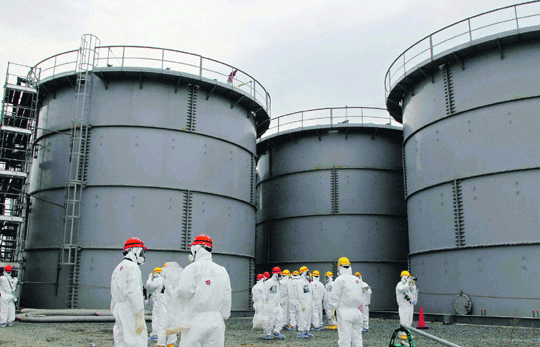
Readings just above the ground near a set of tanks at the plant showed radiation as high as 2,200 millisieverts (mSv), Japan’s Nuclear Regulation Authority (NRA) said Wednesday. The previous high in areas holding the tanks was the 1,800 mSv recorded Saturday.
Both levels would be enough to kill an unprotected person within hours.
The measures do not address the full problem of water management at the plant or the bigger issue of decommissioning.
Critics said the government was mainly trying to cool down international media coverage ahead of the Olympics decision. A more sustainable option, he said, would be to seek global support to confront Fukushima’s unprecedented challenges
Fukushima radiation readings spike to highest levels Aljazeera September 4, 2013The readings have jumped by more than a fifth Radiation readings around tanks holding contaminated water at the crippled Fukushima Daiichi nuclear plant have spiked by more than a fifth to their highest levels, Japan’s nuclear regulator said Wednesday, heightening concerns about the cleanup of the worst atomic disaster in almost three decades.
Radiation hot spots have spread to three holding areas for hundreds of hastily built tanks storing water contaminated by being flushed over three reactors that melted down at the Fukushima Daiichi plant in March 2011.
The rising radiation levels and leaks at the plant further inflamed international alarm, one day after the Japanese government said that it would step in with almost $500 million of funding to fix the growing levels of contaminated water at the plant. Continue reading →
Critics see contradictions in Obama administration’s Syria claims LA Times,By Paul Richter September 8, 2013, WASHINGTON –- The planned military strikes on Syria would be “targeted, limited” and wouldn’t seek to topple the government of President Bashar Assad or even force it to peace talks.
They would also be punishing and “consequential” and would so scare Assad that he would never use chemical weapons again. U.S. airstrikes would change the momentum on the battlefield of the Syrian civil war. But the war will grind on, unchanged, perhaps for years.
As administration officials lay out their case in favor of a punitive attack on Syria, they have been making all of these seemingly contradictory contentions, confusing supporters and providing rhetorical weapons to their opponents.
The contradictions stem from the basic challenge the White House faces: how to reassure the large anti-war contingent in the Democratic Party, as well as conservative opponents of overseas intervention, that strikes won’t open the way to another war, while convincing hawks and more militant internationalists that the strikes will do enough to make the mission worthwhile.
It’s possible to square most of the administration’s arguments – if one believes that a military strike can be so precisely calibrated as to harm the Assad government just enough, but not too much. But as a political case, the effort has so far proven hard to sell.
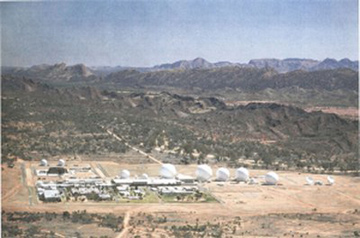
In 1975, the USA – with it’s secret militaristic plans for Pine Gap, in the Central Australian desert – played a critical part in the removal of Australia’s Prime Minister Gough Whitlam
In 2010 multinational mining companies were behind the push to remove Kevin Rudd, and his Mining Super profits tax. I don’t buy the argument that Kevin Rudd was such a difficult personality that Labor had to kick him out. Anyway, Julia Gillard replaced Rudd’s mining tax with a weak as water mining tax. But the corporate powers still weren’t happy.
How were these foreign owned companies, like BHP, able to prevail? Predominantly by promoting the message of climate change denial. And how did this message prevail in Australia, where in 2007, Kevin Rudd was swept to power on a wave of public enthusiasm for action on climate change?
Despite some well informed coverage on climate change, by the Fairfax media, the ABC and SBS, the denialist message, taken up by the right wing politicians and friends of polluting industries, was steadfastly pushed to the public by Rupert Murdoch’s media, with its 70% ownership of Australian media.
There was an easy puppet waiting there for them. Tony Abbott has but one over-riding value – and that is To Be Topp. There might be a few very right-wing Catholic religious themes in there – (ones which many Catholics would be ashamed of) But as for other trifling subjects like climate change, – well they don’t bother Tony Abbott, as he doesn’t understand them.
Nobody seems to notice the fact that Australia is now President of the United nations Security Council. And the UN has not sanctioned an attack on Syria. But the USA might very well attack Syris unilaterally, with out waiting fir the UN. And what will Australia do?
And how confident do you feel about all this, with the vacuous Tony Abbott at the helm of thegood ship Australia?
Where’s the proof? Classified, says US, though poised to strike despite lack of evidence The State Journal, BEIRUT (AP) 9 Sept 13, — The U.S. government insists it has the intelligence to prove it, but the American public has yet to see a single piece of concrete evidence — no satellite imagery, no transcripts of Syrian military communications — connecting the government of President Bashar Assad to the alleged chemical weapons attack last month that killed hundreds of people.
In the absence of such evidence, Damascus and its ally Russia have aggressively pushed another scenario: that rebels carried out the Aug. 21 chemical attack. Neither has produced evidence for that case, either. That’s left more questions than answers as the U.S. threatens a possible military strike.
The early morning assault in a rebel-held Damascus suburb known as Ghouta was said to be the deadliest chemical weapons attack in Syria’s 2½-year civil war. Survivors’ accounts, photographs of many of the dead wrapped peacefully in white sheets and dozens of videos showing victims in spasms and gasping for breath shocked the world and moved President Barack Obama to call for action because the use of chemical weapons crossed the red line he had drawn a year earlier.
Yet one week after Secretary of State John Kerry outlined the case against Assad, Americans — at least those without access to classified reports — haven’t seen a shred of his proof.
There is open-source evidence that provides clues about the attack, including videos of the rockets that analysts believe were likely used. U.S. officials on Saturday released a compilation of videos showing victims, including children, exhibiting what appear to be symptoms of nerve gas poisoning. Some experts think the size of the strike, and the amount of toxic chemicals that appear to have been delivered, make it doubtful that the rebels could have carried it out. http://www.state-journal.com/ap%20general%20news/2013/09/08/sunday-september-8-2013
Boycott The Radioactive 2020 Olympics Of Death http://www.rense.com/general96/boycott.htmlrense.com By Yoichi Shimatsu 9 Sept 13, ……The modern Olympics are dominated openly and secretly by the fraternity of noblemen, who provide camouflage for their financiers from organized crime and the arms industry……….
Contamination and Filth A quick look at each of these Olympic fixers and Fukushima deniers is in order, beginning with former Tokyo Governor Shintaro Ishihara. Long before the wheeling and dealing in Buenos Aires, Tokyo’s bid was tarnished by media allegations that Shintaro Ishihara has siphoned off Olympic-bid donations to finance his boat trips to the disputed Senkaku-Diaoyu islands for planned construction of helipads and a dock for warships. His deep pockets, filled by notorious elements in the Ginza nightlife district (who also provide the manpower for his foreign-policy adventurism) has meant immunity from Tokyo prosecutors, police and fellow politicians. Donations for Olympic, in short, were used by the far right to foment yet another war of aggression by Japan against China.
Second in line is Shinzo Abe, the prime minister who aims to rearm Japan with conventional weapons and nuclear warheads for coming global conflicts Continue reading →
Some have questioned the merits of embarking on such a costly exercise before Japan has addressed its huge public debt – now more than twice the size of its gross national product – and when so little progress has been made toward rebuilding its tsunami-hit northeast coast and decommissioning Fukushima Daiichi.
Having intervened to calm fears about radiation levels in Tokyo, Abe appears to recognize that, for the next seven years, the world will be scrutinizing his response to the nuclear plant’s myriad challenges even more closely than before.
Tokyo 2020: No nuclear worries for IOC, Christan Science Monitor, Tokyo was awarded the 2020 summer Olympics, with the International Olympic Committee convinced that continued leaks from a nuclear power plant in Fukushima are no threat to safety. By Justin McCurry / September 8, 2013 “………..It took an intervention by Japan’s prime minister, Shinzo Abe, who left the G20 summit in Russia early to attend the vote in Buenos Aires, to offer the strongest assurance yet that Tokyo is safe. The situation at the plant was “under control,” he said.
“It has never done and will never do any damage to Tokyo,” he added. “There are no health-related problems until now, and nor will there be in the future. I say this to you in the most emphatic and unequivocal way.”
For 2020 Olympics, I.O.C. Picks Tokyo, Considered Safe Choice, NYT By JERÉ LONGMAN and MARTIN FACKLER September 7, 2013 “……….As Tokyo made its final presentation, Abe, Japan’s prime minister, addressed the issue of the crippled Fukushima nuclear power plant, which is about 155 miles from Tokyo. The nuclear disaster there is considered the worst since Chernobyl’s in 1986, and problems have plagued the cleanup and control efforts.
“Let me assure you that the situation is under control,” Abe said. “It has never done and will never do any damage to Tokyo.”
Gerhard Heiberg, an I.O.C. delegate from Norway, asked Abe how he could make such guarantees. Abe replied that there were no health-related problems related to the nuclear disaster, “nor will there be in the future.”
The Japanese government has pledged nearly $500 million to try to stabilize the nuclear plant, including the building of a frozen wall to curb the flow of groundwater into the contaminated buildings at the reactor site.
Some critics have accused Japanese leaders of being misleading or in denial about the severity of the radiation problem. South Korea, for instance, has banned fish imports from the Fukushima area. But Olympic delegates were sufficiently convinced that the nuclear disaster would not hinder the 2020 Games.
“A lot of folks have been reading in the media that hundreds of tons of radioactive water are being fed into the Pacific every day,” Pound said.
Uranium mining: State defies Centre http://www.deccanchronicle.com/130908/news-current-affairs/article/uranium-mining%E2%80%88state-defies-centreDC | K.N. Reddy Gulbarga: Upset with the decision of authorities of the revenue department to resume acquisition of land around Saidapur, Diggi and Gogi villages for extraction of Uranium, farmers of Yadgir district have decided to resume their agitation as well as approach the court for justice.
Farmers were relieved when the Union ministry of environment and forests issued an order scrapping the mining unit three months ago. District authorities, however, continued with the process of acquisition of land after halting it temporarily.
According to information available, the district authorities have acquired 163 acres and four guntas of land in Saidapur and Diggi for mining Uranium.
The plant would be set up on a hillock where the borders of Saidapur, Umaradoddi and Diggi villages meet. While 46 acres and 15 guntas have been acquired in Saidapur village, followed by 116 acres and 32 guntas in Diggi village limits, and 49 acres and 19 guntas under Gogi and Umaraddi village limits.
“We cannot even buy a 30 X 40 ft site in our village with the compensation amount awarded for an acre of our land. How can we accept this? We will launch an agitation against this” says Bhimareddy Patil, President of Raithara Horata Samiti.
When contacted, deputy commissioner of Yadgir F M Jamadar admitted that authorities have resumed acquisition of land acquisition. “We are doing this as we have not received any intimation from the government directing us to stop the land acquition process,” he added.
Asked about the order of the Union government, scrapping the unit, Jamadar said “the Centre may have issued the order asking Uranium Corporation of India Limited to wind up the project. But we have received no information to stop the land acquition process.”