Dispelling some myths about renewable energy
 Six Myths About Renewable Energy WSJ, By KEITH JOHNSON 22 Sept “……….MYTH NO. 1: Renewables Are an Insignificant Source of Power ……. Conventional hydroelectric power, such as the Hoover Dam, is also renewable energy. Taken together, hydroelectric and other sources—biomass, geothermal, solar and wind—combined to account for 12% of U.S. electricity production last year, and close to 14% so far this year………It’s also important to remember the scale of the country’s renewable efforts. The U.S. has the second-biggest electricity system in the world, accounting for about 20% of the entire world’s generation capacity. Wind power’s 5% of that pie is a big slice. The 60-odd gigawatts of wind power installed in the U.S. amounts to more electricity-generation capacity than in the entire country of Australia or Saudi Arabia, and as much as all of Mexico…….
Forget about problems down the road. Another criticsm of renewables in the here and now: They’re expensive ways to generate electricity…...
- here are two big issues to bear in mind. First, costs are falling fast—thanks largely to technological advances such as larger wind turbines and cheaper components for solar-power arrays—so in some places, solar and wind power can cost even less.
The latest price data for wind-energy power-purchase agreements, released by the Department of Energy last month, showed that nationwide, the price of wind-generated electricity fell to just over 4 cents per kilowatt-hour nationwide, not counting the 2.2-cent federal tax subsidy. In some regions, well-sited wind farms produce electricity for closer to 2 cents.
Likewise, Lawrence Berkeley National Laboratory just released its latest report on the costs of installing solar power. Costs for small-scale solar residential arrays fell by about 13% in the past year, driven largely by cheaper solar components due to a global supply glut. Utility-scale prices also fell…..
There’s also the question of hidden costs. Coal-fired electricity, for instance, has nasty side effects, including air pollution, health impacts and carbon-dioxide emissions that contribute to global warming (all of which factored into the Obama administration’s proposal Friday for new limits on coal emissions)—and those don’t show up in coal’s price tag. If coal and other fossil fuels had to tally the total costs their use imposed on society, coal wouldn’t be the cheapest source of electricity, and clean-burning renewables wouldn’t look nearly so pricey.
Add all the hidden costs together, and the total cost of different power sources looks quite different, according to that recently published study……..
MYTH NO. 3: Variability Dooms Renewable Energy
The sun doesn’t always shine, and the wind doesn’t always blow,……..Consider the situation with wind power. Curtailments have fallen steadily in recent years as system operators have gotten better at using forecasting and integrating wind power. Investment in new transmission lines has also picked up pace, enabling wind farms in isolated locations to offer power more readily to a wider area.
That is the key to overcoming the natural variability of renewables such as wind and solar power. Individual wind farms may be very volatile. But scores of wind farms over thousands of square miles show less volatility—the wind is always blowing somewhere. As grid operators have added more wind in more locations to their systems, as well as the lines to carry that wind, integrating wind power into the electricity system has become easier.
Take Texas. Four years ago, facing severe transmission constraints, the state was dumping 17% of all the wind power it produced. In 2012, after adding more wind farms and almost 2,600 miles of transmission lines, curtailments were below 4%, and wind power provided 10% of the electricity in the nation’s biggest power market.
Big corporate money funding climate sceptics
The Competitive Enterprise Institute has in the past received funding from Exxon Mobil, the oil company, and the American Petroleum Institute, Texaco, General Motors and the Koch Family Foundations, controlled by the Koch brothers who made their fortune from fossil fuels.
 Big business funds effort to discredit climate science, warns UN official http://www.theguardian.com/science/2013/sep/20/big-business-funding-climate-change-sceptics Climate change summit braced for counterblast from sceptics as report warns greenhouse gas emissions still increasing Fiona Harvey and Graham Readfern The Guardian, Saturday 21 September 2013 Big companies are paying contrarians to undermine the work of climate scientists, according to a top UN official speaking before the release of a landmark review of climate science this weekby international researchers next Friday.
Halldór Thorgeirsson, a director who reports to the head of the UN body that governs the on-going high level international climate negotiations, said that scientists would need to be prepared for a counter-blast from sceptics.
“Vested interests are paying for the discrediting of scientists all the time. We need to be ready for that,” he said……..
His outspoken views will set the tone for a fractious meeting of the world’s leading climate scientists, kicking off on Monday in Stockholm, that will set out the evidence that the world’s governments use when formulating policies to deal with global warming for decades to come. More than 800 scientists have contributed to the report, the final details of which will be hammered out in a gruelling four-day session next week.
According to a draft of the “Summary for Policy Makers” dated June , seen by the Guardian– the most important part of the document – the scientists will argue that the evidence points to 95% certainty that climate change is occurring and is caused mainly by greenhouse gases released by humans – up from 90% certainty in the previous 2007 report. Continue reading
USA’s Energy Secretary Moniz promoting nuclear industry
UNM, LANL reap funds for nuclear energy pushhttp://www.bizjournals.com/albuquerque/news/2013/09/20/unm-lanl-reap-nuclear-research-funds.html The U.S. Department of Energy on Friday announced major grants to New Mexico institutions that total $2.2 million. Secretary of Energy Ernest Moniz announced that the state will receive the money as part of a $60 million initiative to invest in nuclear energy research at the university level. Dan Mayfield Reporter-Albuquerque Business First U.S. Department of Energy on Friday announced major grants to New Mexico institutions that total $2.2 million.
 Secretary of Energy Ernest Moniz announced that the state will receive the money as part of a $60 million initiative to invest in nuclear energy research at the university level.
“By supporting cutting-edge nuclear science and engineering across our universities, national labs and industry, we can strengthen the foundation for a continuing important role for nuclear energy in America’s low carbon future,” said Moniz. “Training and educating the next generation nuclear energy workforce plays a critical role in ensuring American leadership in the safe, secure and efficient use of nuclear power worldwide.”
The announcement included two grants for the University of New Mexico totaling $1.2 million for research into fuel cycle technologies. The DOE is awarding schools a total of $42 million to develop new technologies for energy.
Also, the DoE is supporting Los Alamos National Laboratory with $1 million to research advanced materials for reactors.
“Confidentiality Agreement” on nuclear sales USA to India
Decks cleared for nuclear pact with US firmIndrani Bagchi, TNN | Sep 21, 2013 NEW DELHI: India and the US have cleared the decks for a pre-early works agreement betweenNPCIL and US nuclear company, Westinghouse. National security adviser (NSA) Shivshankar Menon said, “The two sides have resolved all government-to-government permissions and understandings required for enabling commercial negotiations”. The two sides signed a “confidentiality agreement” last week that would allow both sides to share confidential data with each other.

Speaking at an event at Aspen Institute on Friday, Menon said the Atomic Energy Regulatory Board (AERB) will soon begin safety evaluations of Westinghouse’s AP1000 nuclear reactor that they propose to sell to India.Westinghouse is already building four of these reactors in China, the first of which is expected to begin operations next year…… http://timesofindia.indiatimes.com/india/Decks-cleared-for-nuclear-pact-with-US-firm/articleshow/22828566.cms
Anger in India, as government goes for a “sweetheart deal” with US nuclear companies
 ‘Sweetheart’ nuclear deal for US companies sparks furore Indrani Bagchi, TNN | Sep 20, 2013, NEW DELHI: The government’s effort to find an honourable way around the constraint of the nuclear liability law without actually violating it ran into rough weather on Thursday with the opposition accusing it of seeking to dilute the law for the sake of US and other foreign suppliers.
 nuclear plant, to allege that the government was seeking to dilute the provision in the nuclear liability law that would hold foreign reactor suppliers liable in cases of mishaps caused by faulty and defective equipment………. Continue reading
New report on America’s renewable energy policy
2013 America Renewable Energy Policy Handbook Report http://www.environmental-expert.com/news/2013-america-renewable-energy-policy-handbook-report-393874
|
Sep. 19, 2013 North and South America Renewable Energy Policy Handbook 2013 report presents an in-depth analysis of the renewable energy policies across the major countries in North and South America namely the US, Canada, Brazil, Argentina and Mexico. The report provides the current and future renewable energy targets and plans along with the present policy framework, giving a fair idea of overall growth potential of their renewable energy industry.
The report also provides major technology specific policies and incentives provided in each of these countries. The report also provides insights to major policy initiatives for the market development of renewable energy sources such as wind, solar, geothermal, biopower and biofuels. The report ( http://www.reportsnreports.com/reports/268267-north-and-south-america-renewable-energy-policy-handbook-2013.html ) is built using data and information sourced from industry associations, government websites and statutory bodies. The information is also sourced through other secondary research sources such as industry and trade magazines. Scope
Table of Contents for the report North and South America Renewable Energy Policy Handbook 2013 include: Continue reading |
USA’s fossil fuel friendly politicians don’t like pro renewable energy Ron Binz
US energy regulator nominee criticised for pro-renewables stance Climate Spectator 19 Sep, 1 Reuters Republicans and some Democrats criticised Ron Binz in a hearing on Tuesday on his nomination to lead a key US energy regulatory agency as being non mainstream because his views on the nation’s energy future support renewable sources like wind over coal and natural gas.
Chairman of the Colorado Public Utilities Commission from 2007 to 2011 and currently a regulatory consultant, Binz was nominated by President Barack Obama in July to lead the Federal Energy Regulatory Commission .
His nomination was considered by the Senate Committee on Energy and Natural Resources Committee in an often contentious three-hour hearing. No date has been set for a vote.
Some conservative and free-market groups have opposed Binz, citing comments that, among other things, natural gas is a “dead end” energy source, and saying Binz would orchestrate a push for renewable energy sources like wind over coal and natural gas.
A bipartisan group of 12 former FERC commissioners are among those who have spoken in favor of Binz. Sen. Lisa Murkowski, the committee’s ranking Republican, ended the hearing by saying that she “reluctantly” could not support the nomination. The Alaskan said she was “not convinced” that Binz’s views were compatible with FERC’s mission……..http://www.businessspectator.com.au/news/2013/9/19/renewable-energy/us-energy-regulator-nominee-criticised-pro-renewables-stanc
USA’s renewable energy progress races ahead in Western States
US West Leads The Renewable Energy Way http://www.energymatters.com.au/index.php?main_page=news_article&article_id=3949 19 Sept 13, According to the American Council on Renewable Energy, western US states are leading the charge on good clean energy policy and investment and other regions in the nation need to follow their lead.
In the first instalment of its annual “Renewable Energy In The 50 States” report, ACORE reviewed the renewable energy policies, programs and investment environment in the 13 states that make up the Western Region, and judged the potential for future growth of the renewables sector.
Three more reports, focusing on the Midwest, Northeast, and the Southeast, are due for release in coming months.
The ACORE report found while all states had benefited from enhanced federal government support for wind, solar, and other renewable technologies over the last ten years, “In no part of the U.S. is this truer than in the West,” said Michael Brower, ACORE’s Interim President and CEO.
“With strong renewable portfolio standards (RPS), the political will to protect and/or expand them, and the nearly half of 2012’s new build asset finance for renewable energy, the West is far and away in the national renewable energy vanguard. America needs all the states in our three other regions to quickly follow their lead.” Continue reading
All things considered, renewable energy is cheapest source for Americans
Renewable energy now the cheapest option for Americans, study finds http://www.pv-magazine.com/news/details/beitrag/renewable-energy-now-the-cheapest-option-for-americans–study-finds_100012772/#ixzz2fN7x8IOZ 18. SEPTEMBER 2013 BY: IAN CLOVER
Clean energy sources such as solar and wind are more cost-effective than coal-fired power plants when health and climate impacts are factored in, according to Springer’s Journal of Environmental Studies and Sciences. Factor in the social, health and environmental costs caused by coal-fired power plants in the U.S. and clean energy is the cheaper option, according to a study published in Springer’s Journal of Environmental Studies and Sciences.
Based on official U.S. government estimates totting up the combined toll on health and the environment caused by the burning of fossil fuels, it is also cheaper to replace existing power plants with clean energy alternatives rather than keep the old plant running, added the study.
The journal further stated that America should not be reticent when it comes to replacing its coal-fired power with renewable power, stating that such a move would be cost-effective as well as environmentally friendly. Continue reading
USA National Nuclear Security Administration’s projects all behind schedule and over budget
Sentencing delayed for Duluth nuclear protester, Duluth News Tribune A judge has delayed a sentencing hearing for a Duluth man and two other protesters for breaking into a nuclear weapons plant in Tennessee. By: Associated Press staff,, 16 Sept 13
 “………..Nuclear facilities across the country are getting renewed scrutiny in light of forced across-the-board federal budget cuts and security lapses such as the incident last year at Y-12. Before finally being detected, the three protesters cut through security fences, hung banners and crime-scene tape and hammered off a small chunk of a building inside the complex that is the nation’s central repository for bomb-grade uranium.
At Los Alamos National Laboratory in New Mexico, a seven-year, $213 million upgrade to the security system that protects the lab’s most sensitive nuclear bomb-making facilities doesn’t work. Those same facilities, which sit atop a fault line, remain susceptible to collapse and dangerous radiation releases, despite millions more spent on improvement plans.
In Tennessee, the price tag for a new uranium processing facility has grown nearly sevenfold in eight years to upward of $6 billion because of problems that include a redesign to raise the roof. And the estimated cost of an ongoing effort to refurbish 400 of the country’s B61 bombs has grown from $1.5 billion to $10 billion.
Virtually every major project under the National Nuclear Security Administration’s oversight is behind schedule and over budget — the result, watchdogs and government auditors say, of years of lax accountability and nearly automatic annual budget increases for the agency responsible for maintaining the nation’s nuclear stockpile.
The NNSA has racked up $16 billion in cost overruns on 10 major projects that are a combined 38 years behind schedule, the U.S. Government Accountability Office reports. Other projects have been canceled or suspended, despite hundreds of millions of dollars already spent, because they grew too bloated.
Advocates say spending increases are necessary to keep the nation’s nuclear arsenal operating and safe, and to continue cutting-edge research at the nation’s nuclear labs. But critics say the nuclear program — run largely by private contractors and overseen by the NNSA, an arm of the U.S. Energy Department — has turned into a massive jobs program with duplicative functions…….http://www.duluthnewstribune.com/event/article/id/278086/
Call on America’s EPA to withdraw its weakened guidelines on ionising radiation
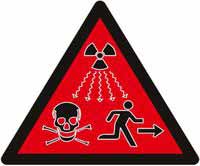 More than 100 Groups Call on EPA to Withdraw Dramatically Weakened Radiation Guides http://www.enewspf.com/latest-news/science/science-a-environmental/46251-more-than-100-groups-call-on-epa-to-withdraw-dramatically-weakened-radiation-guides.html 2013 WASHINGTON–(ENEWSPF)–September 16 – Over 100 environmental organizations today called on U.S. Environmental Protection Agency (EPA) Administrator Gina McCarthy to withdraw EPA’s controversial new Protective Action Guides (PAGs), which would allow exposure to very high doses from radiation releases before government would take action to protect the public. The PAGs are intended to guide the response to nuclear power reactor accidents (like Fukushima in Japan, Chernobyl in Ukraine and Three Mile Island in the U.S.), “dirty bomb” explosions, radioactive releases from nuclear fuel and weapons facilities, nuclear transportation accidents, and other radioactive releases.
Although official estimates of health risks from radiation have gone up substantially (even higher for women) since promulgation of the old PAGs, the new EPA guidance contemplates radically increased “allowable” exposures in the intermediate and long-term periods after radiation releases.
The new PAGs
- propose five options for drinking water which would dramatically increase the permitted concentrations of radioactivity in drinking water, by as much as 27,000 times, compared to EPA’s current Safe Drinking Water Act limits;
- suggest markedly relaxing long-term cleanup standards;
- incorporate very high and outdated allowable food contamination levels;
- eliminate requirements to evacuate people threatened with high projected radiation doses to the thyroid and skin;
- eliminate limits on lifetime whole body doses; and
- recommend dumping radioactive waste in municipal garbage dumps not designed for such waste.
“Rather than requiring protective actions to limit public radiation exposures, EPA is now saying it would allow the public to be exposed to doses far higher than ever before considered acceptable,” said Daniel Hirsch, president of Committee to Bridge the Gap.
“Even though EPA now admits radiation is more harmful than previously thought, it is weakening rather than tightening radiation protections,” said Diane D’Arrigo of the Nuclear Information and Resource Service.
The full letter is at http://committeetobridgethegap.org/GroupPAGltr9-16-13.pdf
###NIRS/WISE is the information and networking center for people and organizations concerned about nuclear power, radioactive waste, radiation, and sustainable energy issues.Source: commondreams.org
Sentence delayed for Sister Megan Rice and friends
Sentencing delayed for Duluth nuclear protester, Duluth News Tribune A judge has delayed a sentencing hearing for a Duluth man and two other protesters for breaking into a nuclear weapons plant in Tennessee. By: Associated Press staff,, 16 Sept 13 A judge has delayed a sentencing hearing for a Duluth man and two other protesters for breaking into a nuclear weapons plant in Tennessee.
U.S. District Judge Amul Thapar granted a motion last week from defense attorneys asking to postpone the date.
The sentencing, which had been scheduled for this month, was reset for Jan. 28 in Knoxville.
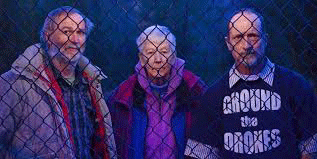
Defense attorneys said they needed more time to prepare for the proceeding.
The defendants — Greg Boertje-Obed of Duluth, Sister Megan Rice and Michael Walli — were convicted in May of sabotaging the plant and damaging federal property last year at the Y-12 National Security Complex in Oak Ridge.
Numerous letters have been sent to the federal judge asking for leniency and objecting to the government’s labeling of pacifists as terrorists.
“The court continues to receive a large volume of letters,” Thapar wrote in the order postponing the hearing.
The defendants remain in federal custody.http://www.duluthnewstribune.com/event/article/id/278086/
Saugeen Ojibway Nations (SON) community won’t agree to Ontario nuclear waste dump in any hurry
Securing approval for nuclear waste site won’t be ‘quick or easy process’: First Nations “If things go south in a hurry, where do our people go? We do not have the luxury of picking up and leaving.” The Star, By: John Spears Business reporter, on Mon Sep 16 2013 KINCARDINE—First Nations communities near Ontario Power Generation’s proposed nuclear waste disposal facility won’t be rushed into supporting the project, a federal hearing has been told. Continue reading
“Unusual event” at PPL’s Susquehanna nuclear plant
Leak found at PPL’s Susquehanna nuclear plant after reactor shut down “Unusual event” declared – an emergency classification established by the U.S. Nuclear Regulatory Commission. By Sam Kennedy, Of The Morning Call September 16, 2013 PPL Corp.’s Susquehanna nuclear power plant in Luzerne County declared an “unusual event” Sunday after radioactive water was discovered leaking inside a room in the plant’s Unit 2 reactor building.An unusual event is the first of the four emergency classifications established by the U.S. Nuclear Regulatory Commission for nuclear power plants……..http://www.mcall.com/news/breaking/mc-ppl-nuclear-plant-leak-0916-20130916,0,6535111.story#ixzz2fCcf1bAN
America’s nuclear weapons spending – bloated and out of control
The post-Cold War nuclear warhead complex has become a gigantic self-licking ice cream cone for contractors,”
Nation’s bloated nuclear spending comes under fire Journal Review, 13 Sept 13, Matthew Daly reported from Washington, D.C. Associated Press At Los Alamos National Laboratory, a seven-year, $213 million upgrade to the security system that protects the lab’s most sensitive nuclear bomb-making facilities doesn’t work. Those same facilities, which sit atop a fault line, remain susceptible to collapse and dangerous radiation releases, despite millions more spent on improvement plans.
In Tennessee, the price tag for a new uranium processing facility has grown nearly sevenfold in eight years to upward of $6 billion because of problems that include a redesign to raise the roof. And the estimated cost of an ongoing effort to refurbish 400 of the country’s B61 bombs has grown from $1.5 billion to $10 billion.
Virtually every major project under the National Nuclear Security Administration’s oversight is behind schedule and over budget _ the result, watchdogs and government auditors say, of years of lax accountability and nearly automatic annual budget increases for the agency responsible for maintaining the nation’s nuclear stockpile.
The NNSA has racked up $16 billion in cost overruns on 10 major projects that are a combined 38 years behind schedule, the U.S. Government Accountability Office reports. Other projects have been cancelled or suspended, despite hundreds of millions of dollars already spent, because they grew too bloated. Continue reading
1 This Month
Tell Congress: Prevent Nuclear Catastrophe in Iran

Tell Congress: Prevent Nuclear Catastrophe in Iran

Read the Public Inquiry Report, the Commissioners’ report, Surrendering Australia: The AUKUS Deception is available to download for free at aukuspublicinquiry.com. Or just watch the replay of the National Press Club Luncheon.


Shut down the radiation-damaged Heysham nuclear reactors now
To see nuclear-related stories in greater depth and intensity – go to https://nuclearinformation.wordpress.com

Say No to NASA’s Reckless Nuclear Reactor on the Moon
Say No to NASA’s Reckless Nuclear Reactor on the Moon
-
Archives
- November 2026 (246)
- October 2026 (302)
- September 2026 (339)
- August 2026 (330)
- July 2026 (355)
- June 2026 (287)
- May 2026 (306)
- April 2026 (356)
- March 2026 (251)
- February 2026 (267)
- January 2026 (308)
- December 2025 (358)
-
Categories
- 1
- 1 NUCLEAR ISSUES
- business and costs
- climate change
- culture and arts
- ENERGY
- environment
- health
- history
- indigenous issues
- Legal
- marketing of nuclear
- media
- opposition to nuclear
- PERSONAL STORIES
- politics
- politics international
- Religion and ethics
- safety
- secrets,lies and civil liberties
- spinbuster
- technology
- Uranium
- wastes
- weapons and war
- Women
- 2 WORLD
- ACTION
- AFRICA
- Atrocities
- AUSTRALIA
- Christina's notes
- Christina's themes
- culture and arts
- Events
- Fuk 2022
- Fuk 2023
- Fukushima 2017
- Fukushima 2018
- fukushima 2019
- Fukushima 2020
- Fukushima 2021
- general
- global warming
- Humour (God we need it)
- Nuclear
- RARE EARTHS
- Reference
- resources – print
- Resources -audiovicual
- Weekly Newsletter
- World
- World Nuclear
- YouTube
-
RSS
Entries RSS
Comments RSS

