Burying nuclear wastes close to Great Lakes is a “shocking idea”
Michigan protests plan to store millions of gallons of nuclear waste next to the Great Lakes RT 221 May 14, A Canadian proposal that calls for a nuclear waste storage facility less than a mile away from the Great Lakes is coming under heavy fire from Michigan lawmakers and environmental groups, who are now attempting to stop the project.Under a plan crafted by energy supplier Ontario Power Generation (OPG), the company would construct a “deep geologic repository” (DGR), which would feature waste storage sites more than 2,200 feet underground to store nearly 53 million gallons of both low- and intermediate-level nuclear waste. The location of the proposed site, however – in Kincardine, Ontario, just three-quarters of a mile away from Lake Huron – has drawn criticism from numerous groups who fear potential contamination.
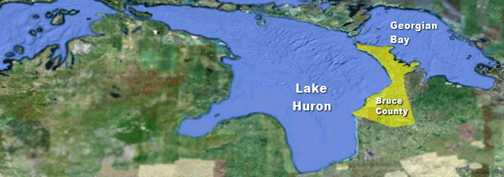
The fact that Lake Huron is connected to all the other Great Lakes via waterways has also drawn concern, since the five bodies of water make up the largest collection of freshwater lakes on the Earth and provide drinking supplies to tens of millions of Americans and Canadians.
According to the Detroit News, lawmakers from both sides of the aisle have continued criticizing the plan, and are now proposing legislation that calls on the federal government to get involved. In addition to requesting that President Obama stake out a position on the issue, state Senate and House members are asking Secretary of State John Kerry to officially ask the International Joint Commission – established to mediate disputes over the Great Lakes – to rule on the matter.
The legislation would also “stop the importation of radioactive waste into Michigan from Canada.”
“Building a nuclear waste dump less than a mile from one of the largest freshwater sources in the world is a reckless act that should be universally opposed,” Michigan Rep. Dan Lauwers (R-Brockway Township) said in a statement Monday, as quoted by the Huffington Post.
While lawmakers continue to get involved in the situation – Michigan’s Senators in Washington have also urged the State Department to bring the IJC into the debate – environmental groups have come out against the plan.
“Burying nuclear waste a quarter-mile from the Great Lakes is a shockingly bad idea — it poses a serious threat to people, fish, wildlife, and the lakes themselves,” said Andy Buchsbaum, regional executive director for the National Wildlife Federation’s Great Lakes Regional Center, in a statement to the Detroit News………http://rt.com/usa/160564-michigan-canada-nuclear-great-lakes/
Several decades of high radiation levels along California coast
Gov’t Report: Elevated radiation on California coast to last “several decades” — Local marine life “will accumulate” Fukushima radioactive material — Plutonium a potential concern — “On-going monitoring clearly warranted” yet ‘surprisingly little’ underway (VIDEO) http://enenews.com/inseveral-decades
California Coastal Commission (State of Calif. Natural Resources Agency), Apr. 30, 2014:
‘Several Decades’ of Fukushima Contamination
“The most recently reported measurements of radioactive cesium in North Pacific seawater indicate that the Fukushima plume is beginning its arrival off the west coast of North America. […] It remains uncertain exactly when, and at what concentration, the radioactive plume will reach the California coast […] Once the radioactive plume does reach California, concentrations of radiocesium are predicted to increase to peak values between 2016 and 2019, declining gradually thereafter over the next several decades.”
Plutonium Concerns?
“Fukushima releases were dominated by gases and volatile fission products […] with little of the […] primary nuclear fuels (plutonium, uranium) […] long-lived nuclear fission products of potential concern include isotopes of strontium and plutonium […] a very small amount of plutonium may have been released to the atmosphere”
Marine life/Seafood
“When the plume of radioactivity currently spreading across the North Pacific reaches the California coast, local marine life will accumulate Fukushima-derived radioactive cesium (and other radionuclides present at much lower levels, such as 90Sr). […] marine organisms are unlikely to accumulate dangerous quantities of radioactivity. However, on-going monitoring of the situation is clearly warranted.” [See also
On-going Monitoring?
“[S]urprisingly little research effort has been devoted to [the potential for dangerous levels of contamination] in California. […] Outside of Japan, ocean monitoring of Fukushima radiation has received much less attention and support from government agencies […] neither the U.S. federal government nor the state of California is currently testing for Fukushima-derived radiation off the California coast.”
Watch a discussion of this report at the last Coastal Commission meeting here
USA’s Plutonium facility at Los Alamos ruled not safe
 Federal Safety Board Cautions DOE on LANL Plutonium Facility L0s Alamos Study Group, 20 May 14
Main plutonium facility might “collapse” in earthquake unless repairs are completed; scope of work needed still unknown
Board says full re-start of LANL plutonium facility premature; nuclear criticality accidents not ruled out
On May 16, the Defense Nuclear Facilities Safety Board (DNFSB, Board), cautioned Congress about the structural integrity of the main plutonium facility at Los Alamos National Laboratory (LANL) in the event of an earthquake similar to those which have rocked the site in recent millenia. The building in question, “PF-4,” was built in 1978 to earlier, less stringent earthquake standards.
The Board was established by Congress in 1988 to advise the Department of Energy (DOE) on the safety of DOE’s nuclear facilities.
Also on the 16th, DNFSB Chairman Peter Winokur wrote National Nuclear Security Administration (NNSA) Administrator Frank Klotz about the Board’s concerns regarding LANL’s planned re-start of higher-hazard plutonium operations in PF-4 without first evaluating the potential of those operations to result in nuclear criticality accidents. Such accidents, were they to occur as a result of human error, mechanical failure or any other cause, would invariably involve very high levels of radiation and have often been fatal to surrounding workers. Such accidents have happened before at LANL and at other nuclear facilities in the U.S. and abroad. (See for example this LANL review.)
Regarding the first issue DNFSB writes in its “Report to Congress on the Status of Significant Safety Issues Concerning the Design and Construction of DOE’s Defense Nuclear Facilities” that:
..the Board remains concerned that PF-4 is vulnerable to seismic collapse. The large plutonium inventory of PF-4, coupled with the facility’s proximity to the public, creates the potential for high off-site radiological consequences. DOE is pursuing actions to address the collapse vulnerability, but maintains that PF-4 is safe to operate in the interim and complies with DOE standards for seismic performance. The Board communicated to DOE in a letter dated July 17, 2013, that it does not agree… -: http://lasg.org/press/2014/press_release_20May2014.html#sthash.cCZ6igPz.VLFKX1CD.dpuf
USA East Coast nuclear power plants set to sink under rising seas
 How Rising Seas Could Sink Nuclear Plants On The East Coast Shane Shifflett Kate Sheppard, HUFFINGTON POST, 19 May 14 In 2011, a tsunami sent waves as high as 49 feet crashing over the seawalls surrounding the Fukushima Daiichi Nuclear Power Plant in Japan, causing meltdowns at three of the plant’s reactors. After that incident, the United States Nuclear Regulatory Commission (NRC) ordered nuclear facilities in the U.S. to review and update their plans for addressing extreme seismic activity and potential flooding from other events, such as sea level rise and storm surges. Those plans aren’t due until March 2015, which means that many plants have yet to even lay out their their potential vulnerabilities, let alone address them.
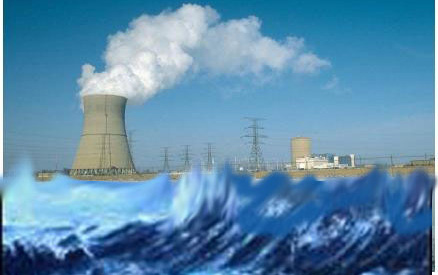
During the 1970s and 1980s, when many nuclear reactors were first built, most operators estimated that seas would rise at a slow, constant rate. That is, if the oceans rose a fraction of an inch one year, they could be expected to rise by the same amount the next year and every year in the future.
But the seas are now rising much faster than they did in the past, largely due to climate change, which accelerates thermal expansion and melts glaciers and ice caps. Sea levels rose an average of 8 inches between 1880 and 2009, or about 0.06 inches per year. But in the last 20 years, sea levels have risen an average of 0.13 inches per year – about twice as fast.
And it’s only getting worse. The National Oceanic and Atmospheric Administration (NOAA) has laid out four different projections for estimated sea level rise by 2100. Even the agency’s best-case scenario assumes that sea levels will rise at least 8.4 inches by the end of this century. NOAA’s worst-case scenario, meanwhile, predicts that the oceans will rise nearly 7 feet in the next 86 years.
But most nuclear power facilities were built well before scientists understood just how high sea levels might rise in the future. And for power plants, the most serious threat is likely to come from surges during storms. Higher sea levels mean that flooding will travel farther inland, creating potential hazards in areas that may have previously been considered safe. During Superstorm Sandy, for example, flooding threatened the water intake systems at the Oyster Creek and Salem nuclear power plants in New Jersey. As a safety precaution, both plants were powered down. But even when a plant is not operating, the spent fuel stored on-site, typically uranium, will continue to emit heat and must be cooled using equipment that relies on the plant’s own power. Flooding can cause a loss of power, and in serious conditions it can damage backup generators. Without a cooling system, reactors can overheat and damage the facility to the point of releasing radioactive material.
Salem and Hope Creek Nuclear Generating Stations Operated by PSEG Nuclear, LLC.……..
Turkey Point Nuclear Generating Station Operated by Florida Power & Light Co……..
America agonises over what to do with nuclear radioactive trash

that they should stop making this toxic stuff
LEGACY OF AMERICA’S NUCLEAR POWER PLANTS — SPENT FUEL AND NO PLACE TO PUT IT BRATTLEBORO REFORMER BY BOB AUDETTE MAY 19, 2014. BRATTLEBORO — After Vermont Yankee nuclear power plant is closed and when the site is finally cleaned up — perhaps before the end of the next decade — there will still be a lingering reminder of what existed there since 1972.
As at other nuclear power plant sites around the country, spent nuclear fuel — or nuclear waste, as it used to be called prior to a successful rebranding campaign waged by the nuclear industry — might remain in Vernon long after all other reminders of Yankee are gone.
In fact, the Nuclear Regulatory Commission released last year a revised waste confidence rule that stated impacts would be small if spent fuel had to be stored at nuclear sites “indefinitely.”
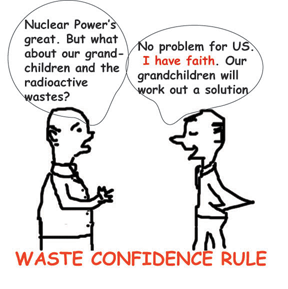
Ernest Moniz, the secretary of the U.S. Department of Energy, was in Vermont last week. During a phone interview with the Reformer, Moniz said his department is focused on developing a way to take care of the nation’s nuclear waste. However, noted Moniz, DOE needs the go-ahead from Congress. Continue reading
Accident at US repository highlights need for tougher nuclear safety monitoring

 Call for better oversight of nuclear-waste storage Accident at US repository highlights need for tougher safety monitoring, say experts.Nature, Declan Butler 13 May 2014 A serious accident in February at the United States’ only deep-storage repository for nuclear waste might never have happened had the government not disbanded a key independent scientific body charged with oversight of the safety of the facility.
The Waste Isolation Pilot Plant (WIPP), carved out of a salt bed 655 metres below the desert near Carlsbad in New Mexico, is run by the Department of Energy (DOE) and stores low- and medium-level military nuclear waste, containing long-lived, man-made elements such as plutonium and americium. But there are politically controversial plans to store far hotter high-level waste at the site. Nuclear-waste experts say that the accident — in which a container is thought to have ruptured or exploded — along with management errors and a lack of oversight at WIPP, highlight the need for an independent risk assessment of any proposed expansion.
The facility was opened in 1999 and is designed to operate for a few decades, after which it will be sealed forever. The accident on 14 February released moderate levels of radioactivity into the repository, as well as small amounts into the environment, and officials say that the plant will not reopen for at least 18 months.
According to a preliminary report released on 24 April by a DOE-appointed Accident Investigation Board, the root cause of the accident lies with the department’s field office and Nuclear Waste Partnership, the contractor that operates the site, both in Carlsbad. They failed to identify radiological risks and make plans to control them, the report’s authors said. They added that maintenance of safety systems was neglected, and that DOE oversight was “ineffective”………
Ed Lyman, a nuclear expert with the Union of Concerned Scientists in Washington DC, says that he strongly supports exploring the storage of down-blended weapons-grade plutonium at WIPP. Such waste generates much less heat than does spent fuel, he adds. But he rejects storing spent fuel at WIPP, as its likely impacts on the surrounding salt “would be inviting trouble”.
The DOE Field Office in Carlsbad and the Nuclear Waste Partnership had not responded to Naturewhen this article went to press.
Several scientists say that whatever the test results or arguments, the storage of high-level waste at WIPP should be ruled out because of the nature of the site. The area is rich in oil, gas and minerals, and oil and gas wells hug the 41-square-kilometre area. Hydraulic fracturing — fracking — of gas is also carried out nearby. This poses the risk that the WIPP repository could be disturbed by future drilling and mining, for example, by the puncture of the high-pressure brine reservoirs beneath WIPP.
There is no way that the authorities would ever approve such a site for storing high-level waste, says Chaturvedi. http://www.nature.com/news/call-for-better-oversight-of-nuclear-waste-storage-1.15211
Safety of USA’s The Waste Isolation Pilot Plant in question
Radiation leak at nuclear waste dump raises questions New York Post, May 16, 2014 ALBUQUERQUE, N.M. — A radiation leak at the government’s troubled nuclear waste dump has been linked to a waste container shipped from Los Alamos National Laboratory, officials said Friday, raising questions about the safety of other barrels being stored on the lab’s northern New Mexico campus and at a temporary site in West Texas…….. watchdog Don Hancock of the Southwest Research and Information Center in Albuquerque said that until more is known about the breach, “we can’t have assurances.”
In a statement, the U.S. Department of Energy said pictures from the latest entry into the half-mile deep Waste Isolation Pilot Plant (WIPP) near Carlsbad in southeastern New Mexico confirm that a container from Los Alamos has a cracked lid and evidence of heat damage.
Officials last week zeroed in on the containers from Los Alamos, prompting officials to suspend shipments of waste from Los Alamos to the temporary site in West Texas. In a statement, the U.S. Department of Energy said pictures from the latest entry into the half-mile deep Waste Isolation Pilot Plant (WIPP) near Carlsbad in southeastern New Mexico confirm that a container from Los Alamos has a cracked lid and evidence of heat damage.
Officials last week zeroed in on the containers from Los Alamos, prompting officials to suspend shipments of waste from Los Alamos to the temporary site in West Texas.
Los Alamos is under orders to remove thousands of such barrels of toxic waste from outdoor storage on a mesa. The presence of the waste, and its potential dangers, came to light three summers ago as a massive wildfire lapped at the edge of lab property. The lab had been on target to have the last of the containers shipped to the Waste Isolation Pilot Plant by June 30 when the repository was shuttered by the leak Feb. 14 that contaminated 22 workers with low levels of radiation……..
The Waste Isolation Pilot Plant is the federal government’s only permanent repository for low-level nuclear waste from Los Alamos National Laboratories and other federal facilities…….http://nypost.com/2014/05/16/radiation-leak-at-nuclear-waste-dump-raises-questions/
Unacceptable delay in Nuclear Regulatory Commission’s action on safety regulations
Are nuclear regulators dragging feet on safety? Orange County Register, BY TERI SFORZA / STAFF COLUMNIST, 18 May 14, ‘Lessons learned’ from the 2011 Fukushima disaster prompted calls for changes that would limit dangers. The pace of improvements is at issue. Germany decided to shut down all of its nuclear power plants by 2022. Switzerland will follow suit by 2034. Jordan is rethinking plans for nuclear power. The U.S. and France remain committed, and new builds surge ahead by the dozens in China and Russia.
Much has changed worldwide in the wake of the Fukushima disaster, according to a recent analysis by the U.S. Government Accountability Office. But have things changed enough?
Japan was the only nation to fundamentally restructure its nuclear regulatory framework after Fukushima – modeling it largely on the U.S. Nuclear Regulatory Agency, the GAO found.
And critics here say that model bureaucracy, the NRC, has been dragging its feet on critical reforms, endangering the public. That’s a charge the NRC vehemently denies.
‘UNACCEPTABLE DELAY’……..“More than two years ago, the NRC charged its most senior nuclear safety officials with making recommendations to help prevent a similar disaster at facilities in the United States,” said Sen. Barbara Boxer at a hearing on post-Fukushima “lessons learned” earlier this year. “Some of the 12 recommendations that NRC’s Task Force proposed have been acted on. The NRC has issued orders to enhance safety when plants lose electrical power and to increase the reliability of venting systems to prevent explosions.
“Other measures to enhance nuclear safety have not moved forward as quickly as they should have,” Boxer continued. “For example, the NRC has allowed three full years for seismic evaluations of nuclear reactors in the Western United States to be completed. If a seismic evaluation finds that there is a seismic risk, the NRC provides an additional three years for yet more analysis.
“This is an unacceptable delay – earthquakes will not wait until after the paperwork has been completed. When the NRC is made aware of new seismic risks, as it was for the Diablo Canyon nuclear facility near San Luis Obispo, it should require immediate steps to be taken to protect the people who live and work near these facilities.”
The Union of Concerned Scientists – a nonprofit watchdog that keeps an eye on the NRC – takes the criticism a bit further……..Another critic is Gregory Jaczko, former chairman of the NRC, who was at the helm when Fukushima melted down in 2011 and resigned in 2012 after controversy over how he treated workers – and after expressing the desire for swifter adoption of Fukushima’s lessons learned.
In an interview last fall with the industry magazine IEEE Spectrum, Jaczko said that more Fukushima-type accidents are inevitable. “For nuclear power plants to be considered safe, they should not produce accidents like this. By ‘should not,’ I don’t mean that they have a low probability, but simply that they should not be able to produce accidents like this (at all). …..http://www.ocregister.com/articles/nrc-614679-nuclear-plants.html
No go for Cameco’s Saskatchewan uranium mine plan, as prices plummet
Poor markets put Saskatchewan uranium mine plan on hold Global News, By Staff The Canadian Press SASKATOON 18 May 14 – Cameco Corporation (TSX:CCO) has withdrawn its application to build and operate a new underground uranium mine in northern Saskatchewan.
The mining company says in a statement on its website that it has also asked the Canadian Nuclear Safety Commission to postpone a hearing scheduled next month into a licence application for the Millennium Mine project.
Cameco cites poor economic conditions in world uranium markets…..http://globalnews.ca/news/1338415/poor-markets-put-saskatchewan-uranium-mine-plan-on-hold/
Top secret cargo. Plutonium from Canada?
 Covert mission: Plutonium source might be Canada Questions being asked about mystery cargo BY IAN MACLEOD, OTTAWA CITIZEN MARCH 30, 2014 The nuclear fuel carrier Pacific Egret slipped into the harbour at Charleston, South Carolina, on March 19 and unloaded a top-secret cargo at the port’s Naval Weapons Station.
Fitted with naval guns, cannons and extensive hidden means of repelling a terrorist assault, the three-year-old British vessel was purpose-built to transport plutonium, highly enriched uranium (HEU) and mixed-oxide (MOX) nuclear fuel on the high seas.
Its previous publicly reported position had been exiting the Mediterranean at the Strait of Gibraltar almost two weeks earlier on March 7, carrying a delicate nuclear cargo loaded at the La Spezia naval base in northern Italy.
As the vessel entered the North Atlantic that day, its tracking image vanished from an online marine traffic monitoring system. The ship the size of a football field became all but invisible to unauthorized eyes.
Questions are now being raised about whether the sensitive cargo included recycled plutonium that originated here in Canada.
The clandestine business of transporting shiploads of fissile nuclear materials between nations rarely comes into public view. An eight-kilogram piece of plutonium-239 the size of a grapefruit could obliterate much of Ottawa in seconds — as it did to Nagasaki in August 1945. It’s aptly named after the ancient Greek god of the underworld……… Continue reading
USA Energy Dept in a fix about legal cases and no answer for nuclear wastes
they should stop making this toxic radioactive trash
 Tiny nuclear waste fee added up to billions LA Times, 17 May 14 A charge for electricity that millions of Americans didn’t even know they pay will suddenly disappear Friday, after the Energy Department this week quietly notified utilities across the country that it was suspending its fees for a future nuclear waste dump.
The Energy Department has been collecting $750 million from electricity bills every year  for such a dump since 1983, putting it into a trust fund that now contains $31 billion.
The court-ordered suspension may be a modest victory for consumers, but it reflects the government’s failure over the last 40 years to get rid of what is now nearly 70,000 metric tons of highly radioactive spent fuel, accumulating at 100 nuclear reactors across the nation……… Continue reading
Wildfires threaten San Onofre nuclear power plant
 Fires sweep southern California and prompt partial evacuation of San Onofre nuclear power plant news.com.au 15 May 14 FIREFIGHTERS are scrambling to control multiple blazes in southern California on the second day of a sweltering heatwave.
 San Diego County officials say there are nine wildfires burning in the region covering more than 36 square kilometres.
At a press conference today, fire and emergency officials said the greatest concern is now in the city of San Marcos north of San Diego, where a new blaze broke out in the late afternoon and some 21,000 evacuation notices have been sent to residents……One fire prompted the partial evacuation of the San Onofre nuclear power plant, theLos Angeles Times is reporting……..
The blazes, which also closed a major north-south highway, come amid record temperatures in the western US state, where the annual wildfire season typically starts much later in the year………http://www.news.com.au/world/fires-sweep-southern-california-and-prompt-partial-evacuation-of-san-onofre-nuclear-power-pant/story-fndir2ev-1226918410622
New nuclear reactor plans for Ontario stopped by Federal Court ruling

 Ontario nuclear reactor plans go back to drawing board http://metronews.ca/news/canada/1035484/reactor-plans-go-back-to-drawing-board/TORONTO – A Federal Court ruling has thrown out the preliminary approvals for a series of new nuclear power reactors in Ontario.
Ruling in a case brought by environmental groups, Justice James Russell says the environmental assessment for the proposed expansion of the Darlington nuclear plant fell short.
Russell says the assessment should have examined the environmental effects of radioactive fuel waste, a Fukushima-type accident and hazardous emissions. As a result of the decision, the whole project is stalled until a panel can redo the assessment.
Ontario Power Generation’s plan to expand Darlington has been in the works since 2006 and would have seen up to four new reactors built.
Environmentalists welcomed the ruling.“This is a win for Canadians’ right to meaningfully participate in environmental reviews and understand the risks of nuclear power,” said Theresa McClenaghan, executive director of the Canadian Environmental Law Association. The group was part of the suit, along with Lake Ontario Waterkeeper, Northwatch and Greenpeace.
“This is a common sense ruling,” said Shawn-Patrick Stensil of Greenpeace. “It boggles the mind that the federal authorities approved new reactors without first considering the environmental effects of radioactive waste and reactor accidents.”
The Ontario government decided last October to suspend its reactor plans. But the ruling means that the project cannot be revived without more assessment.
“The Federal Court has confirmed that federal authorities must do more than simply kick the tires before approving new nuclear reactors,” said lawyer Justin Duncan.“Fully assessing radioactive waste, major accidents, and hazardous emissions is essential to protecting the health of Ontarians.”
As weapons companies make money, depleted uranium destroys lives
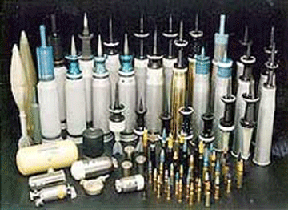 Uranium Weapons Still Making Money, Wreaking Havoc http://www.counterpunch.org/2014/05/15/uranium-weapons-still-making-money-wreaking-havoc/ by JOHN LAFORGE The US Army has awarded General Dynamics a $12 million contract to deconstruct and dispose of 78,000 depleted uranium anti-tank shells. The Pentagon’s May 6 announcement calls for “demilitarization” of the aging shells, as newer depleted uranium rounds are added to the US arsenal.
In the perpetually profitable business of war production, General Dynamics originally produced and sold some of the 120-millimeter anti-tank rounds to the Army. One of the richest weapons builders on earth, General Dynamics has 95,000 employees and sells its wares in 40 countries on six continents.
The International Coalition to Ban Uranium Weapons in Manchester, England, reports the armor-piercing shells to be disassembled are thought to be the large 105-millimeter and 120-millimeter anti-tank rounds. Depleted uranium, or DU, weapons are made of extremely dense uranium-238. More than 700,000 tons of DU has been left as waste in the US alone from the production of nuclear weapons and nuclear reactor fuel rods. The urankum-238 is left when fissionable uranium-235 is separated for H-bombs and reactor fuel. DU is only ‘depleted’ of this U-235. It is still a radioactive and toxic heavy metal. A tax and ecological liability, DU is given away free to weapons builders.
The Pentagon is replacing older DU shells in spite of international appeals for a moratorium on their use. The military is set to buy 2,500 large anti-tank rounds just this year at a cost of $30 million or over $10,000 each from Alliant Tech Systems, formerly of Minneapolis.
In 1991, during its 40-day, 1,000-sorties-per-day bombardment, between 300 and 800 tons of DU was blasted into Iraq by US forces. Another estimated 170 tons were used in the 2003 bombing and annexation. Toxic, radioactive contamination left from the use of these weapons (the DU burns and turns to dusty aerosol on impact) has been linked to the skyrocketing incidence of birth abnormalities in southern Iraq and to the Gulf War Syndrome among tens of thousands of US combat veterans.
After the US/NATO bombardment of Kosovo in 1999, our DU weapons were discovered to be spiked with plutonium and other isotopes. This news created a political uproar in Europe and led to the admission by the US Energy Department that “the entire US stock of depleted uranium was contaminated” with plutonium, americium, neptunium and technetium. United Nations investigators in Kosovo found sites hit with DU to be poisoned with all four isotopes. The Nation magazine reported that about 150,000 tons uranium-238 was dirtied with plutonium-239 and neptunium-237 and that “some apparently found its way to the Persian Gulf and Balkans battlefields.” (Robert Alvarez, “DU at Home,” The Nation, April 9, 2001, p. 24)
European papers shouting “Plutonium!” in headlines saw US and NATO officials rushing to microphones to claim with straight faces that their shells contained “mere traces of plutonium, not enough to cause harm,” and that the highly radioactive materials “were not relevant to soldiers’ health because of their minute quantities.” But plutonium is 200,000 times more radioactive than U-238 and ingesting less than 27 micrograms of plutonium-239 a millionth of an ounce — will cause lung cancer.
(One indication of just how poisonous these weapons are is that in 30 years of resisting nuclear weapons and the war system, the only ‘not guilty of trespass’ verdict I ever won from a jury followed a protest at Alliant Tech over its DU program. The jury agreed with four of us that since poison weapons are banned by the Geneva and Hague Conventions our action was an attempt at crime prevention.)
Long-term disposal plans for the uranium from 78,000 shells were not outlined by the Army. Uranium in the shells is often alloyed with titanium or molybdenum, and if these metals are not recycled, they could become part of our vast stockpile of DU, requiring indefinite storage as intermediate-level radioactive waste. Other parts of the munitions are currently disposed of as low-level rad’ waste in spite of the plutonium content.
Melting shells of the sea butterflies – a sign of global warming endangering oceans
 You Know the Ocean’s in Trouble When Your Shell Starts Melting http://www.enn.com/wildlife/article/47393 Things are getting really dicey for a little ocean creature called a pteropod. Better known as the “sea butterfly,” this delicate little sea snail is serving as an unfortunate bellwether of the deteriorating state of our oceans. Why? Conditions in the Antarctic ocean and along the West Coast of the U.S. have become so unnaturally acidic that the shells of sea butterflies are literally dissolving away.
“We did not expect to see pteropods being affected to this extent in our coastal region for several decades,” said Dr. William Peterson, an oceanographer at National Oceanic and Atmospheric Administration (NOAA)’s Northwest Fisheries Science Center, in a NOAA press release.
Damage that’s “several decades” early is a big alarm bell. We’d better pay close attention before it’s too late.
 What We’re Doing to Our Oceans
The chemistry of the world’s oceans is changing, thanks to the carbon dioxide humans continue to spew into our atmosphere. Oceans absorb between one quarter to one third of that carbon dioxide. Over time, it has turned the ocean from a slightly alkaline state to a bit more acidic.
According to some estimates, the ocean’s pH level 150 years ago was about 8.2. It’s now about 8.1. It may seem to be an infinitesimal shift, but it’s worse than it sounds. The more acidic the ocean gets, the harder it is for marine life like oysters, clams and corals to form calcium carbonite skeletons and shells.
In the case of pteropods, the increased acidity of the ocean is actually eating away at their shells.
“The first thing that happens is the dissolution of their shell,” NOAA’s Dr. Nina Bednarsek told PBS. “Dissolution can be mild, [to] very severe. Once you have it dissolving on the outside, you have to put so much more energy into the shell in order to maintain it. The energy that you would otherwise use for other important physiological maintenance you are putting in the shell maintenance.”
Researchers working off the coast of Oregon, Washington and California in 2011 discovered that over half of the sea butterflies they found onshore were victims of “severe dissolution damage.” Offshore, about 24 percent were damaged.
If we don’t change our ways, by 2050, researchers estimate that coastal waters will be 70 percent more acidic than they were in the pre-industrial era.
Continue reading at ENN affiliate, Care2.
1 This Month
Tell Congress: Prevent Nuclear Catastrophe in Iran

Tell Congress: Prevent Nuclear Catastrophe in Iran

Read the Public Inquiry Report, the Commissioners’ report, Surrendering Australia: The AUKUS Deception is available to download for free at aukuspublicinquiry.com. Or just watch the replay of the National Press Club Luncheon.


Shut down the radiation-damaged Heysham nuclear reactors now
To see nuclear-related stories in greater depth and intensity – go to https://nuclearinformation.wordpress.com

Say No to NASA’s Reckless Nuclear Reactor on the Moon
Say No to NASA’s Reckless Nuclear Reactor on the Moon
-
Archives
- November 2026 (238)
- October 2026 (302)
- September 2026 (339)
- August 2026 (330)
- July 2026 (355)
- June 2026 (287)
- May 2026 (306)
- April 2026 (356)
- March 2026 (251)
- February 2026 (267)
- January 2026 (308)
- December 2025 (358)
-
Categories
- 1
- 1 NUCLEAR ISSUES
- business and costs
- climate change
- culture and arts
- ENERGY
- environment
- health
- history
- indigenous issues
- Legal
- marketing of nuclear
- media
- opposition to nuclear
- PERSONAL STORIES
- politics
- politics international
- Religion and ethics
- safety
- secrets,lies and civil liberties
- spinbuster
- technology
- Uranium
- wastes
- weapons and war
- Women
- 2 WORLD
- ACTION
- AFRICA
- Atrocities
- AUSTRALIA
- Christina's notes
- Christina's themes
- culture and arts
- Events
- Fuk 2022
- Fuk 2023
- Fukushima 2017
- Fukushima 2018
- fukushima 2019
- Fukushima 2020
- Fukushima 2021
- general
- global warming
- Humour (God we need it)
- Nuclear
- RARE EARTHS
- Reference
- resources – print
- Resources -audiovicual
- Weekly Newsletter
- World
- World Nuclear
- YouTube
-
RSS
Entries RSS
Comments RSS

