Risk of further explosions at Waste Isolation Pilot Plant (WIPP)

 Nuclear-waste facility on high alert over risk of new explosions, Nature,
US repository scrambles to seal off barrels containing cat-litter buffer thought to be responsible for February accident. Declan Butler 27 May 2014 Time bombs may be ticking at the United States’ only deep geological repository for nuclear waste. US authorities concluded last week that at least 368 drums of waste at the site could be susceptible to the chemical reaction suspected to have caused a drum to rupture there in February. That accident caused radioactive material to spill into the repository and leak into the environment above ground.
The Waste Isolation Pilot Plant (WIPP) near Carlsbad, New Mexico, is mined out of a salt bed 655 metres underground, and stores low- and medium-level military nuclear waste, containing long-lived, man-made radioactive elements such as plutonium and americium. The suspect drums contain nitrates and cellulose, which are thought to have reacted to cause the explosion in February, and are located in two of the repository’s eight vast storage rooms — 313 in panel 6, which has already been filled, and 55 in the partly filled panel 7, where the February accident occurred.
To mitigate the threat of further exploding drums, the New Mexico Environment Department (NMED) in Santa Fe issued an order on 20 May giving the US Department of Energy (DOE) and the Nuclear Waste Partnership — the contractor that operates the WIPP site — until 30 May to come up with a plan to “expedite” the sealing of panel 6 and part of panel 7. It is not yet clear when the panels will be sealed, as that will depend on how long it takes to ensure that the sealing is done safely, says Jim Winchester, a spokesman for the NMED………
In addition to the drums at the WIPP, another 57 containing the suspect mix are still in temporary storage at the LANL. On 19 May, the NMED told the DOE and the LANL that they had two days to present a plan to secure the drums. In their response on 21 May, the LANL and the DOE said that the drums were being transferred to a tent fitted with fire-control and high-efficiency particulate air filtration to contain any radioactive particles in the event of an accident. They added that air radiation levels and the temperature of the drums were being monitored, and that the drums were being inspected hourly for signs of rupture.
The WIPP has been closed since the February accident and will reopen only “when it is safe to do so”, according to a 22 May statement from the DOE. The accident is still under investigation, and parts of the underground repository are still contaminated with radioactivity. The DOE added that current assumptions and precautions about the hazards of operating the WIPP are being “evaluated and revised”. http://www.nature.com/news/nuclear-waste-facility-on-high-alert-over-risk-of-new-explosions-1.15290
Canadian MP calls for caution on underground nuclear waste storage near Great Lakes
 Masse calls for action on underground nuclear waste site near Great Lakes, The Windsor Star, Dave Battagello May 27, 2014 MP Brian Masse (NDP Windsor-West) will table a motion this week expressing concern over a proposed underground nuclear waste facility on the edge of the Great Lakes which critics say has potential to taint the waterway and drinking water.
“We don’t get a second chance on this,” he said following a press conference in Ottawa. “What we are trying to do is get a more full and robust review of nuclear storage around the Great Lakes.
“Several organizations are coming forward confronting (Ontario Power Generation’s) plan at the Bruce Nuclear Site as being a danger to the environment.”
The planned project is to construct and operate a nuclear disposal site over half a kilometre deep in the earth just north of Kincardine on the grounds of the Bruce site — and one kilometre from Lake Huron. The facility would store “low and intermediate” nuclear waste from operations of OPG-owned nuclear generation plants at Bruce, Pickering and Darlington.
There are several above ground nuclear waste storage sites near the Great Lakes, but environmentalists and politicians fear having it stored below ground makes it nearly impossible to address an accident. They say the impact would be devastating if any waste leaks into the Great Lakes……..
Masse hopes by tabling his motion it will bring the nuclear storage issue at Bruce to “a national level” and heighten awareness about potential impacts to the world’s largest freshwater supply.
“We want to ensure the assessment procedures around nuclear storage are strong enough,” he said. “We want to see if there are other ways to deal with this nuclear waste than just this one option.”
A large percentage of opposition to the OPG’s underground nuclear storage plan has come from the U.S. side of the border, Masse said.
“They have a law not to allow this stuff within 10 miles of the Great Lakes,” he said. “The Americans are concerned. This is not a moot issue to them by any means.”…….http://blogs.windsorstar.com/2014/05/27/masse-calls-for-action-in-ottawa-on-nuclear-waste-site-next-to-great-lakes/
USA House approves, by one vote, policy to maintain nuclear missile triad
 House Bill Shifts Some Nuclear Weapons Funds To Pay for Veterans Care Defense One, Douglas P. Guarino 27 May 14 “……..The House approved by voice vote an amendment offered by Rep. Steve Daines, R-Mont., — whose home state hosts ground-based missile silos — that would make it “the policy of the United States to operate, sustain and modernize or replace the triad” in its entirety.
The House bill also contains language, to which the White House objects, that would require that every intercontinental ballistic missile silo currently containing a deployed missile be kept operational.
At press time, all of the potential discrepancies with the House bill and the Senate version of the annual defense authorization bill were not yet clear. The Senate Armed Services Committee completed drafting its version of the bill on Thursday, but had not yet released the full text of the legislation.
One apparent difference is that the Senate bill would authorize $365 million for the Cooperative Threat Reduction program — the entire amount that the Obama administration requested. TheCTR program — which secures and dismantles potential weapons of mass destruction throughout the world that are considered to be a threat to the United States — would be cut by $10.5 million under the House bill.
Unlike the House bill, the Senate legislation would also provide $346 million — $145 million more than the administration requested — to continue construction of a controversial facility in South Carolina that would convert excess bomb-grade plutonium into nuclear fuel. The administration is looking to suspend construction of the facility while it explores other, possibly cheaper, methods of disposing of the plutonium.
Some lawmakers are questioning the administration’s cost estimates, however, and have suggested it should be able to make a decision in less than the 18 months it has projected. Senate appropriators at a budget hearing earlier this month gave National Nuclear Security Administration officials two weeks to come up with new ways to make the original mixed-oxide fuel conversion plan cost less.
According to NNSA spokesman Derrick Robinson, administration officials did have a follow-up meeting with Sens. Dianne Feinstein, D-Calif., and Lamar Alexander, R-Tenn. last week. It was “a substantive conversation that discussed a range of options and challenges, which included a discussion of MOXcosts and options,” he said.
Robinson did not provide any revised cost projections. http://www.defenseone.com/politics/2014/05/house-bill-shifts-some-nuclear-weapons-funds-pay-veterans-care/85261/
USA’s “temporary” radioactive waste containers are becoming permanent

it’s time to stop making this toxic radioactive trash
US Nuclear Power Plants Prepare Long-Term Radioactive Waste Storage http://www.theepochtimes.com/n3/697217-us-nuclear-power-plants-prepare-long-term-radioactive-waste-storage/ By Associated Press | May 26, 2014 WATERFORD, Conn.—Nuclear power plants across the United States are building or expanding storage facilities to hold their spent fuel — radioactive waste that by now was supposed to be on its way to a national dump.
The steel and concrete containers used to store the waste on-site were envisioned as only a short-term solution when introduced in the 1980s. Now they are the subject of reviews by industry and government to determine how they might hold up — if needed — for decades or longer.

With nowhere else to put its nuclear waste, the Millstone Power Station overlooking Long Island Sound is sealing it up in massive steel canisters on what used to be a parking lot. The storage pad, first built in 2005, was recently expanded to make room for seven times as many canisters filled with spent fuel.
Dan Steward, the first selectman in Waterford, which hosts Millstone, said he raises the issue every chance he can with Connecticut’s congressional members.
“We do not want to become a nuclear waste site as a community,” Steward said.
The government is pursuing a new plan for nuclear waste storage, hoping to break an impasse left by the collapse of a proposal for Nevada’s Yucca Mountain. The Energy Department says it expects other states will compete for a repository, and the accompanying economic benefits, and it’s already heard from potential hosts in New Mexico, Texas and Mississippi. But the plan faces hurdles including a need for new legislation that has stalled in Congress.
So plants are preparing to keep the high-level nuclear waste in their backyards indefinitely. Most of it remains in pools, which cool the spent fuel for several years once it comes out of the reactors. But with the pools at or nearing capacity, the majority is expected within a decade to be held in dry casks, or canisters, which are used in 34 states. Only three of the 62 commercial nuclear sites in the U.S. have yet to announce plans to build their own.
In the past few years since the Yucca Mountain plan was abandoned, the government and industry have opened studies to address unanswered questions about the long-term performance of dry cask storage. The Nuclear Regulatory Commission in 2011 began offering 40-year license renewals for casks, up from 20-year intervals. The tests are focusing on how to monitor degradation inside the canisters, environmental requirements for storage sites, and how well the canisters hold up with “high burnup,” or longer-burning fuels that are now widely used by American plants.
“Now that we’ve shown that the national policy is shifting, we’re having to relook at these systems to make sure they still meet the regulations for longer and longer periods of time,” said Eric Benner, an NRC official who has served as the inspections branch chief with its spent fuel storage division.
At Millstone, 19 canisters loaded with spent fuel are arrayed on a concrete pad, which was expanded in October to make room for as many as 135 canisters by 2045. The canisters, which are cooled by air circulation, seal the waste with inert gas inside an inner chamber and are themselves loaded into concrete modules. Workers regularly inspect temperature gauges and, during the winter, shovel snow off the vents.
Millstone’s low-level nuclear waste is shipped to a disposal facility in Barnwell, South Carolina.
The spent fuel is piling up at a rate of about 2,200 tons a year at U.S. power-plant sites. The industry and government decline to say how much waste is currently stored at individual plants. The U.S. nuclear industry had 69,720 tons of uranium waste as of May 2013, with 49,620 tons in pools and 20,100 in dry storage, according to the Nuclear Energy Institute industry group.
Spent nuclear fuel is about 95 percent uranium. About 1 percent is other heavy elements such as curium, americium and plutonium-239. Each has an extremely long half-life — some take hundreds of thousands of years to lose all of their radioactive potency.
Watchdog groups say the dry storage poses fewer safety concerns than the reactors themselves, and many have pushed for spent fuel to be transferred more quickly from the pools. Heavy security is in place to deter sabotage by terrorists.
The administration’s strategy calls for an interim storage facility by 2025 and a geologic repository by 2048.
Peter Lyons, an assistant secretary for nuclear energy at the U.S. Energy Department, said it cannot make plans for individual sites until the passage of legislation creating a new framework for waste policy. But he said the groups in southeastern New Mexico, western Texas and Mississippi are only the most public of potential hosts to express interest in taking in high-level waste.
The idea for the interim facility is to take spent fuel left behind from reactors that have already shut down, as is the case at sites in California, Maine, Massachusetts, Michigan, Wisconsin, Connecticut, Colorado and Oregon.
Obama talked the talk on nuclear disarmament, but not walking the walk
 Nuclear Weapons: Toward Abolition or Armageddon? By Yuki Tanaka
Global Research, May 26, 2014 People still clearly remember that on April 5, 2009 the U.S. President Barack Obama excited an audience in Prague by declaring that his government “will take concrete steps towards a world without nuclear weapons.” As the only nuclear power to have ever used a nuclear weapon, he said, the United States has a moral responsibility to act. Indeed, the U.S. has not only moral responsibility but also legal responsibility for the victims as the nation that committed a crime against humanity by indiscriminately killing tens of thousands of people and causing lifelong radiation sickness to many survivors.
In his speech, Obama also added ‘this goal will not be reached quickly –- perhaps not in my lifetime.’ Clearly, this goal will never be reached if the U.S. continues to spend ever larger sums on nuclear weapons, overshadowing all other nuclear powers, as the Obama Administration has been doing since the speech in Prague.
On April 29 this year, at the Third Meeting of the Preparatory Committee for the 2015 Nuclear Non-Proliferation Treaty Review Conference in New York, Under Secretary Rose Gottemoeller stated in her speech: ‘Indeed, it is the United States’ deep understanding of the consequences of nuclear weapons’ use – including the devastating health effects – that has guided and motivated our efforts to reduce and ultimately eliminate these most hazardous weapons.’
However, despite her claim of “deep understanding [of] the consequences of nuclear weapons’ use,” in the detailed budget for fiscal 2015 released in mid March this year Obama yet again asked for a substantial increase in funding to support nuclear weapons research and production programs under the Department of Energy’s semi-autonomous National Nuclear Security Administration. The proposal includes a seven percent increase in the nuclear warhead budget from $7.7 billion in FY 2014 to $8.3 billion in FY 2015. This budget request sets a new record for DOE nuclear weapons spending, exceeding even the Cold War high point in 1985 under President Reagan’s military buildup. The plan, moreover, is to increase the military budget to an astounding $9.7 billion by FY 2019, 24 percent above FY 2014.
A large proportion of this budget is for “modernizing” nuclear weapons — both warheads and delivery systems. Among the priorities is the B61 Life Extension Program, designed to extend the life of B61 nuclear bombs by an additional 20 to 30 years. The Obama Administration is requesting $634 million, up 20 percent from FY2014, for this program, which has already catapulted from an original estimate of $4 billion to more than $10 billion. Currently 200 of the B61 bombs are located in Europe.
While rebuilding nuclear weapons at exorbitant expense, Obama proposes to slash the budget for dismantling these weapons by 45 percent, from an already paltry $54.2 million to $30 million. No additional funding has been allocated for a nuclear waste clean-up program, and the National Nuclear Security Administration’s $790 million in spending on nuclear nonproliferation programs is to be cut by 21 percent, or $152 million. Amongst these programs is the Global Threat Reduction Initiative, a program that plays a key part in the effort of preventing terrorists from acquiring nuclear and radiological materials that could be used as weapons of mass destruction.
According to the study entitled Projected Costs of Nuclear Forces 2014 -2023 issued in December 2013 by the nonpartisan Congressional Budget Office, it would cost the U.S. government a total of $355 billion over the next decade to maintain and “modernize” the nuclear weapons stockpile, delivery systems and research and production complex. This would be almost 70 percent more than senior officials have predicted over the next decade. According to the report, The Trillion Dollar Nuclear Triad: U.S. Strategic Modernization Over the Next Thirty Years, published in January 2014 by the James Martin Center for Nonproliferation Studies, ‘Over the next thirty years, the United States plans to spend approximately $1 trillion maintaining the current arsenal, buying replacement systems, and upgrading existing nuclear bombs and warheads.’
It is clear from this official data that the U.S. government has no intention at all to “take concrete steps towards a world without nuclear weapons” despite repeated rhetoric on the reduction of nuclear weapons by Obama himself and his senior staff. Indeed this is the ultimate irony that cannot be ignored: the U.S., under the president who won the Nobel Peace Prize is holding piles of nuclear weapons, while demanding that North Korea and Iran give up their nuclear programs, threatening them with military might. It is not surprising, therefore, that other nuclear power nations such as Russia, China, England and France are also adopting similar policies to “modernize” their own nuclear weapons. In 2012 China officially replaced its “non preemptive nuclear strike” policy by one that permits “the use of nuclear weapons for the purpose of defense,” clearly indicating the possibility of conducting a preemptive nuclear strike………..
USA Memorial Day protest against unsafe Pilgrim Nuclear Power Plant
 Group protests Pilgrim nuclear plant safety plan http://www.myfoxboston.com/story/25610835/group-protests-pilgrim-nuclear-plant-safety-plan#ixzz32xg16R3C May 26, 2014 SAGAMORE, Mass. (MyFoxBoston.com) — Protesters gathered near the Sagamore Bridge Monday to highlight safety concerns about the Pilgrim nuclear power plant.
The protesters say the current emergency plan is unacceptable because it doesn’t include a viable evacuation route in the event of an accident.
The protest comes just two months after Gov. Deval Patrick wrote to the Nuclear Regulatory Commission. He said the Plymouth plant should be decommissioned if it can’t follow safety regulations.
Pilgrim has been relicensed through 2032 and its operators say it is safe.
The dismal history of USA’s failed thorium nuclear experiment
 Thorium: the wonder fuel that wasn’t http://thebulletin.org/thorium-wonder-fuel-wasnt7156 Robert Alvarez May 2014, “Thorium-Fueled Automobile Engine Needs Refueling Once a Century,” reads the headline of an October 2013 story in an online trade publication. This fantastic promise is just one part of a modern boomlet in enthusiasm about the energy potential of thorium, a radioactive element that is far more abundant than uranium. Thorium promoters consistently extol its supposed advantages over uranium. News outlets periodically foresee the possibility of “a cheaper, more efficient, and safer form of nuclear power that produces less nuclear waste than today’s uranium-based technology.”
Early thorium optimism. The energy potential of the element thorium was discovered in 1940 at the University of California at Berkeley, during the very early days of the US nuclear weapons program. Although thorium atoms do not split, researchers found that they will absorb neutrons when irradiated. After that a small fraction of the thorium then transmutes into a fissionable material—uranium 233—that does undergo fission and can therefore be used in a reactor or bomb.
By the early 1960’s, the US Atomic Energy Commission (AEC) had established a major thorium fuel research and development program, spurring utilities to build thorium-fueled reactors. Back then, the AEC was projecting that some 1,000 nuclear power reactors would dot the American landscape by the end of the 20th century, with a similar nuclear capacity abroad. As a result, the official reasoning held, world uranium supplies would be rapidly exhausted, and reactors that ran on the more-plentiful thorium would be needed.
With the strong endorsement of a congressionally created body, the Joint Committee on Atomic Energy, the United States began a major effort in the early 1960s to fund a two-track research and development effort for a new generation of reactors that would make any uranium shortage irrelevant by producing more fissile material fuel than they consumed.
The first track was development of plutonium-fueled “breeder” reactors, which held the promise of producing electricity and 30 percent more fuel than they consumed. This effort collapsed in the United States in the early 1980’s because of cost and proliferation concerns and technological problems. (The plutonium “fast” reactor program has been able to stay alive and still receives hefty sums as part of the Energy Department’s nuclear research and development portfolio.)
The second track—now largely forgotten—was based on thorium-fueled reactors. This option was attractive because thorium is far more abundant than uranium and holds the potential for producing an even larger amount of uranium 233 in reactors designed specifically for that purpose. In pursuing this track, the government produced a large amount of uranium 233, mainly at weapons production reactors. Approximately two tons of uranium 233 was produced, at an estimated total cost of $5.5 to $11 billion (2012 dollars), including associated cleanup costs.
The federal government established research and development projects to demonstrate the viability of uranium 233 breeder reactors in Minnesota, Tennessee, and Pennsylvania. By 1977, however, the government abandoned pursuit of the thorium fuel cycle in favor of plutonium-fueled breeders, leading to dissent in the ranks of the AEC. Alvin Weinberg, the long-time director of the Oak Ridge National Laboratory, was, in large part, fired because of his support of thorium over plutonium fuel.
By the late 1980’s, after several failed attempts to use it commercially, the US nuclear power industry also walked away from thorium. The first commercial nuclear plant to use thorium was Indian Point Unit I, a pressurized water reactor near New York City that began operation in 1962. Attempts to recover uranium 233 from its irradiated thorium fuel were described, however, as a “financial disaster.” The last serious attempt to use thorium in a commercial reactor was at the Fort St. Vrain plant in Colorado, which closed in 1989 after 10 years and hundreds of equipment failures, leaks, and fuel failures. There were four failed commercial thorium ventures; prior agreement makes the US government responsible for their wastes.
Where is the missing uranium 233? As it turned out, of course, the Atomic Energy Commission’s prediction of future nuclear capacity was off by an order of magnitude—the US nuclear fleet topped out at about 100, rather than 1,000 reactors—and the predicted uranium shortage never occurred. America’s experience with thorium fuels faded from public memory until 1996. Then, an Energy Department safety investigation found a national repository for uranium 233 in a building constructed in 1943 at the Oak Ridge National Laboratory. The repository was in dreadful condition; investigators reported an environmental release from a large fraction of the 1,100 containers “could be expected to occur within the next five years in that some of the packages are approaching 30 years of age and have not been regularly inspected.” TheEnergy Department later concluded that the building had “deteriorated beyond cost-effective repair. Significant annual costs would be incurred to satisfy current DOE storage standards, and to provide continued protection against potential nuclear criticality accidents or theft of the material.”
The neglect extended beyond the repository and storage containers; the government had also failed to keep proper track of its stores of uranium 233, officially classified as a Category I strategic special nuclear material that requires stringent security measures to prevent “an unauthorized opportunity to initiate or credibly threaten to initiate a nuclear dispersal or detonation.”
A 1996 audit by the Energy Department’s inspector general reported that the Oak Ridge National Laboratory, the Rocky Flats nuclear weapons facility, and the Idaho National Laboratory “had not performed all required physical inventories ... the longer complete physical inventories are delayed, the greater the risk that unauthorized movement of special nuclear materials could occur and go undetected.” The amounts of uranium 233 that the Oak Ridge and Idaho national labs have reported in their inventories has significantly varied. Based on a review of Energy Department data, there appears to be an inventory discrepancy; 96 kilograms or 6 percent of the U-233 produced is not accounted for. The Energy Department has yet to address this discrepancy, which difference is enough to fuel at least a dozen nuclear weapons.
Uranium 233 compares favorably to plutonium in terms of weaponization; a critical mass of that isotope of uranium—about 6 kilograms, in its metal form—is about the same weight as a plutonium critical mass. Unlike plutonium, however, uranium 233 does not need implosion engineering to be used in a bomb. In fact, the US government produced uranium 233 in small quantities for weapons, and weapons designers conducted several nuclear weapons tests between 1955 and 1968 using uranium 233. Interest was renewed in the mid-1960s, but uranium 233 never gained wide use as a weapons material in the US military because of its high cost, associated with the radiation protection required to protect personnel from uranium 232, a highly radioactive contaminant co-produced with uranium 233.
For a terrorist, however, uranium 233 is a tempting theft target; it does not require advanced shaping and implosion technology to be fashioned into a workable nuclear device. The Energy Department recognizes this characteristic and requires any amount of more than two kilograms of uranium 233 to be maintained under its most stringent safeguards, to prevent “onsite assembly of an improvised nuclear device.” As for the claim that radiation levels from uranium 232 make uranium 233 proliferation resistant, Oak Ridge researchers note that “if a diverter was motivated by foreign nationalistic purposes, personnel exposure would be of no concern since exposure … would not result in immediate death.”
The end of an unfortunate era. After its 1996 safety investigation at the Oak Ridge National Laboratory, the Energy Department spent millions to repackage about 450 kilograms of uranium 233 that is mixed with uranium 235 and sitting in the lab’s Building 3019, and to dispose of diluted uranium 233 fuel stored at the Idaho National Lab. The Energy Department’s nuclear weapons program managed to shift responsibility for the stockpile in Building 3019 from Oak Ridge to the Office of Nuclear Energy, which envisioned using the uranium 233 to make medical isotopes. This plan fell apart, and in 2005 Congress ordered the Energy Department to dispose of the uranium 233 stockpile as waste.
Since then, the Energy Department’s Office of Environmental Management has considered uranium 233 disposal to be an unfunded mandate, disconnected from other, higher-priority environmental cleanup compliance agreements. After several fits and starts, including a turnover of four project managers in less than two years, the Energy Department’s disposition project “had encountered a number of design delays, may exceed original cost estimates, and will likely not meet completion milestones,” the department’s inspector general reported in 2010. The cost of the project increased from $384 million to $473 million—or more than $1 million per kilogram for the disposal of uranium 233.
In an effort to reduce costs, the Energy Department developed a plan to ship nearly 75 percent of the fissile materials in Building 3019, as is, to a landfill at the Nevada Nuclear Security Site by the end of 2014. Because such disposal would violate the agency’s formal safeguards and radioactive waste disposal requirements, the Energy Department changed those rules, which it can do without public notification or comment. Never before has the agency or its predecessors taken steps to deliberately dump a large amount of highly concentrated fissile material in a landfill, an action that violates international standards and norms.
In June 2013, Nevada Gov. Brian Sandoval and members of the state’s congressional delegation announced their opposition to the landfill disposition plan. Energy Secretary Ernest Moniz visited with Sandoval but did not back down from the landfill plan. Even though the Oak Ridge material in its current form meets the legal definition for radioactive waste requiring geologic disposal, the Energy Department has taken the position that the sweeping authority granted to it under the Atomic Energy Act allows the department to dispose of the fissile material however it pleases, regardless of the state’s objection.
The United States has spent nearly $10 billion to discourage practices like landfill dumping of fissile materials in the former Soviet Union, only to have the Energy Department try it at home. Heedless of the discrepancy between overseas and domestic disposal policies, the department’s agenda—which focuses on saving money on guards who would be needed to secure the uranium 233—is placing the United States in an impossible position when it comes to criticizing the nuclear materials security of other countries. So ends America’s official experience with thorium, the wonder fuel.
Anti-nuclear protestors plan rally against Pilgrim nuclear power plant i
Pilgrim nuclear plant protesters to gather at Sagamore Bridge http://www.gazettenet.com/businessmoney/12117764-95/pilgrim-nuclear-plant-protesters-to-gather-at-sagamore-bridge Sunday, May 25, 2014 BOURNE — Protesters are planning to gather near the Sagamore Bridge on Memorial Day to highlight concerns about the safety of the Pilgrim nuclear power plant in Plymouth.
The protesters called the current emergency plan in the event of an accident at the power plant unacceptable for those on the Cape.
The protest comes two months after Gov. Deval Patrick wrote the Nuclear Regulatory Commission expressing concerns about the plant. Patrick said he was writing on behalf of 15 southeastern Massachusetts communities.
Patrick said he shares their concerns because of what he called the lack of a “viable evacuation route” off of Cape Cod.
The NRC relicensed Pilgrim through 2032. The plant’s operators say it’s safe and secure.Patrick said the NRC should require the plant be decommissioned if it can’t comply with safety regulations.
Uranium – the ever losing investment


Investors counted on a convergence of factors to power up the uranium market and put down the critics, including:
- Japan reversing its ban on nuclear power following the Fukushima reactor meltdown.
- The hope that Germany would revisit its phase out of nuclear power by 2021, as coal remains a dirty word.
- Russian hegemony in the Ukraine creating instability in the gas market.
- The completion last year of the U.S. and Russia’s “megatons to megawatts” program that converted old nuclear warheads into fuel for reactors, effectively removing a large supply from the market.
Shares of uranium stocks enjoyed a run-up late last year on the belief that 2014 would jump-start a recovery. Between mid-October and mid-March, Cameco saw its shares appreciate some 50% in value.,,,,,,,,,,,
Yet, the promise of substantial gains didn’t hold up as uranium pricing continued to fall.
Japan, after all, has delayed restarting its nuclear reactors. Germany hasn’t made any movement to reverse its policies, and the uranium supply glut remains in place. Uranium prices hit eight-year lows, sliding to $29 a pound at the start of May, or levels not seen since 2005. They’re down 16% so far in 2014 alone. …..http://www.fool.com/investing/general/2014/05/24/not-even-godzilla-can-save-this-uranium-stock.aspx
America’s nuclear waste sites form many ticking time bombs
it is crazy to keep making this stuff!
 AP: Ticking time bombs of nuclear waste at multiple U.S. sites? Lab checking for smoking drums — CNN: “Imminent threat from radiation” — Gundersen: Serious public health effects if one blows; “Very, very volatile… like nitroglycerin” (VIDEO) http://enenews.com/cnn-imminent-threat-from-radiation-leak-gundersen-interview-public-to-suffer-serious-health-effects-if-nuclear-waste-drums-blow-up-aboveground-a-major-concern-very-very-volat
AP, May 21, 2014: Los Alamos National Laboratory [LANL] on Wednesday told state government it has isolated and is closely monitoring nuclear waste […] packed with a type of cat litter suspected in a radiation leak at [WIPP]. [LANL] said the 55-gallon barrels have been secured in special containers and moved to an isolated area with a fire protection system. They also are being monitored 24 hours a day for any change in temperature, smoking or other abnormalities. […] More than 100 other suspect containers are being stored temporarily at Waste Control Specialists in Andrews, Texas.
AP, May 23, 2014: Has cat litter turned barrels of New Mexico nuclear waste into ticking time bombs? […] COULD THE OTHER BARRELS BE TICKING TIME BOMBS? [LANL] said it has packed them in special containers, placed them under a dome with a fire extinguishing system and is closely monitoring them. Waste Control Specialists has taken similar precautions. As for the more than 350 containers already at the Waste Isolation Pilot Plant, Flynn has ordered the U.S. Department of Energy to expedite plans for sealing off the underground rooms where the waste is stored. Complicating that effort is the laborious investigative process […] they are still working to see if other containers have been breached.
CNN Interview with Arnie Gundersen, May 21, 2014: ‘Imminent’ threat from radiation leak
- At :15 in — Arnie Gundersen, Fairewinds Chief Engineer: Barrels are above ground and still at Los Alamos, which is a major concern because this material gets more and more unstable as it gets warmer, and of course we’re heading into the summer months on the desert. So those barrels that are above ground, if they were to blow like the one that did below ground, we’d have a serious public health effect. […]
At 1:30 in – Gundersen: When the corn [in the kitty litter] absorbed the moisture, the nitrogen inside got very, very volatile. Almost like in these old movies when you see somebody holding nitroglycerin — any shake will cause it to be disturbed. Well that’s what happened to these canisters that have the organic kitty litter. They’ve got to go back through and find all of those and isolate them and then figure out how to change the litter.
USA Congress Bill to take money from nuclear weapons, and to care of veterans
House Bill Would Tap Into Nuclear Weapons Fund to Aid Veterans National Journal, By Douglas P. Guarino 23 May 14 The version of the fiscal 2015 defense authorization bill that the House approved Thursday would cut some controversial nuclear weapons spending in a bid to help veterans. Continue reading
Wind energy a winner in the right wing State of Texas
How Green Energy Won Out Over Fossil Fuels in a Red State In Texas, wind power is set to come online faster than natural gas over the course of the next decade.by Clare Foran National Journal, 22 May 14 Wind is going head to head with natural gas at the heart of the fracking boom—and wind is winning.
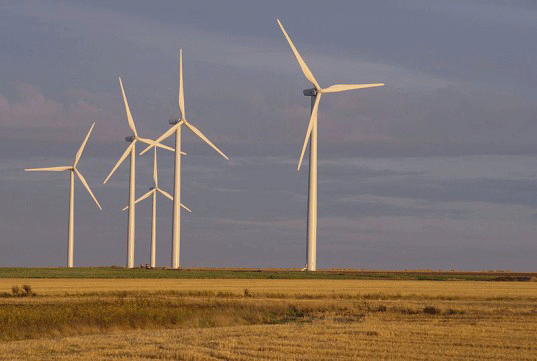
Fracking—a drilling technique that involves breaking open shale rock formations to extract oil and natural gas—has taken Texas by storm. The Lone Star State is dotted with drill sites and leads the nation in natural-gas production. But wide open spaces and strong gusts make it an ideal place to turn turbines. And Texas also takes the top spot for states with the most wind power.
Green energy has steadily gained traction in the deep-red state. In 2003, wind made up less than 1 percent of the power supply, according to state grid operator the Electric Reliability Council of Texas. By 2013, that share had risen to roughly 10 percent.
Problems in nuclear reactor decommissioning thrashed out in US Senate hearing
 Senate Hearing on Nuclear Reactor Decommissioning Challenges Energy Collective May 22, 2014 Bemnet Alemayehu, Project Scientist, Nuclear Program, Washington, D.C.
U.S. Senator Barbara Boxer’s Environment & Public Works Committee held a hearing on Wednesday, May 14th, 2014 to assess the challenges of nuclear reactor decommissioning nationwide. Panelists called to testify at Wednesday’s senate hearing included Christopher Recchia, Public Service Department Commissioner of Vermont, Geoffrey Fettus, Senior attorney of NRDC, Donald Mosier, Council Member of the City of Del Mar, Michael Weber, Deputy Executive Director for Compliance Programs of NRC and Marvin Fertel, President & Chief Executive Officer of NEI.
Christopher Recchia’s testimony to the senate opposed a request by operators of the Vermont Yankee nuclear power plant to discontinue off-site emergency planning after the reactor shuts down. He argued that the off-site emergency planning should continue after the reactor shuts down until all of the plant’s spent fuel rods are removed from pools and placed in dry cask storage. ……… Continue reading
The Energy and Policy Institute (EPI) ‘outs’ the fossil fuel groups behind the attacks on renewable energy
New Report Exposes Fossil Fuel Front Groups Behind Attacks on Renewables http://www.desmogblog.com/2014/05/22/new-report-exposes-fossil-fuel-interest-groups-behind-clean-energy- attacks Fossil fuel exploitation in the United States has reached a fevered pitch. Oil production is at a near-record high, and fracking activities have made the U.S.the number one producer of natural gas. All of this comes at a cost. In 2013, the oil industry averaged 20 oil spills per day, destroying countless swaths of the environment and leaving toxic chemicals for nearby residents to deal with. Meanwhile, oil and gas train derailments have totaled at least 11 in the last 11 months.
During this period of dirty energy dominance, investments in renewable energy continued to fall by 14% in 2013. The United States is averaging 20 oil spills per day, 1 dirty energy transport train derailment and explosion per month, and yet we’re still doubling down on fossil fuels.
This all seems fairly shocking, until you peel back the curtain on who is behind the efforts to keep renewable energy solutions out of the picture, which is exactly what a new report has done. The Energy and Policy Institute (EPI) has released a report detailing not only the fossil fuel front groups behind the attacks on clean energy, but also how they are able to use their money and political muscle to prevent a viable market for clean energy, limiting energy choices for consumers.
From the report, Attacks on Renewable Energy Standards and Net Metering Policies By Fossil Fuel Interests & Front Groups 2013-2014:
The fossil fuel lobby aggressively uses lobbying and propaganda to achieve their goals. Self-identified “free market think tanks” are among the most effective advocates for the fossil fuel industry to lobby for policy changes. Dozens of these so-called free market organizations, a majority of which are members of the State Policy Network (SPN), worked to influence state level energy policies and attack the clean energy industry…
Fossil fuel-funded front groups operate in multiple areas to influence the policy-making process in their attempts to eliminate clean energy policies. Continue reading
NextGen Climate, – a progressive, pro-environment counterbalance to the wealthy oil and gas industry
 Green billionaire prepares to attack ‘anti-science’ Republicans By Peter Hamby, CNN National Political Reporter May 22, 2014 Washington An environmental advocacy group backed by hedge fund tycoon Tom Steyer is set to unleash a seven-state, $100 million offensive against Republican “science deniers” this year, a no-holds-barred campaign-style push from the green billionaire that could help decide which party controls the Senate and key statehouses come November.
The Steyer-backed outside group, NextGen Climate, has billed itself as a progressive, pro-environment counterbalance to the wealthy oil and gas industry — as well as the primary foil to the pro-business Koch brothers and their well-funded conservative donor network.
The outfit, launched last year by the San Francisco billionaire, has already pledged to spend heavily this midterm year in Iowa to assist the Democratic Senate nominee Bruce Braley, and in Florida, where Gov. Rick Scott is facing a difficult re-election fight against Democrat Charlie Crist……….
GOP candidates in the NextGen cross hairs — Scott in Florida, Terri Lynn Land in Michigan, Scott Brown in New Hampshire and Cory Gardner in Colorado — hew closely to the “Republican troglodyte brand,” Lehane argued.
“They are anti-immigrant, anti-women, anti-science,” he said. “It’s a tough brand to win elections around.”
The group said that climate can be successfully used as a wedge issue — Lehane framed it as a moral clash between “right and wrong” — to boost turnout among Democratic voting groups that tend not to show up in midterm election years, specifically young voters, Hispanics and African-Americans……….
he primary difference between Steyer and conservative mega-donors, Lehane said, is that Steyer is not personally profiting from his political efforts. “He is giving all the money away,” he said. “He doesn’t have stand to gain some economic benefit by spending money that translates into his own personal economics.”
Lehane added, “We are spending a drop in the big oil bucket as compared to the fossil fuel industry, especially the Koch brothers. All Tom is trying to do is try to balance and level the playing field. We are never going to have as much money as the other side.” http://edition.cnn.com/2014/05/22/politics/steyer-climate-change-campaign/
1 This Month
Tell Congress: Prevent Nuclear Catastrophe in Iran

Tell Congress: Prevent Nuclear Catastrophe in Iran

Read the Public Inquiry Report, the Commissioners’ report, Surrendering Australia: The AUKUS Deception is available to download for free at aukuspublicinquiry.com. Or just watch the replay of the National Press Club Luncheon.


Shut down the radiation-damaged Heysham nuclear reactors now
To see nuclear-related stories in greater depth and intensity – go to https://nuclearinformation.wordpress.com

Say No to NASA’s Reckless Nuclear Reactor on the Moon
Say No to NASA’s Reckless Nuclear Reactor on the Moon
-
Archives
- November 2026 (238)
- October 2026 (302)
- September 2026 (339)
- August 2026 (330)
- July 2026 (355)
- June 2026 (287)
- May 2026 (306)
- April 2026 (356)
- March 2026 (251)
- February 2026 (267)
- January 2026 (308)
- December 2025 (358)
-
Categories
- 1
- 1 NUCLEAR ISSUES
- business and costs
- climate change
- culture and arts
- ENERGY
- environment
- health
- history
- indigenous issues
- Legal
- marketing of nuclear
- media
- opposition to nuclear
- PERSONAL STORIES
- politics
- politics international
- Religion and ethics
- safety
- secrets,lies and civil liberties
- spinbuster
- technology
- Uranium
- wastes
- weapons and war
- Women
- 2 WORLD
- ACTION
- AFRICA
- Atrocities
- AUSTRALIA
- Christina's notes
- Christina's themes
- culture and arts
- Events
- Fuk 2022
- Fuk 2023
- Fukushima 2017
- Fukushima 2018
- fukushima 2019
- Fukushima 2020
- Fukushima 2021
- general
- global warming
- Humour (God we need it)
- Nuclear
- RARE EARTHS
- Reference
- resources – print
- Resources -audiovicual
- Weekly Newsletter
- World
- World Nuclear
- YouTube
-
RSS
Entries RSS
Comments RSS

