Success of wind energy in reducing USA’s greenhouse gas emissions
Wind energy blows US emissions onto right track for 2025 target http://www.newscientist.com/article/dn27361-wind-energy-blows-us-emissions-onto-right-track-for-2025-target.html#.VTBP5tyUcnl 16 April 2015 by Fred Pearce Is Uncle Sam going green at last? US carbon emissions from power stations this year are set to be the lowest for 20 years, as decrepit coal-fired power plants shut and clean wind farms and less-dirty natural gas plants replace them.
And back in 1994, the US economy was only 42 per cent of its current size, adding evidence to the idea that an economy can grow while its emissions go down.
This year’s emissions are expected to be 15.4 per cent below 2005 levels. The startling projection comes from analysts at Bloomberg New Energy Finance. It suggests that the US may now be on course to meet the promise that the Obama administration will take to UN climate negotiations in Paris later this year, to cut total CO2 emissions by 28 per cent below 2005 levels by 2025.
So what is going on? Most attention has focused on the replacement of coal in conventional power plants by natural gas, much of it from fracking. Burning gas emits only half as much CO2 as burning coal.
And there is much more to come from wind, says William Nelson, an analyst at Bloomberg New Energy Finance. He expects 9 gigawatts more wind generating capacity to be commissioned during 2015, much of it in Texas. It is a wind of change that he calls a giant, permanent step towards decarbonising out entire fleet of power plants.
Danger of nuclear reactors as explained by Alvin Weinberg
 Top US Nuclear Physicist: “Iodine-131 will be lethal after ingestion of 30 billionths of a gram” — Main worry is not a Chernobyl-type accident, rather it’s a melt-through of containment vessel — “Not possible to disprove China Syndrome” http://enenews.com/top-nuclear-physicist-iodine-131-will-be-lethal-after-ingestion-30-billionths-gram-main-worry-chernobyl-type-accident-melt-containment-vessel-possible-disprove-china-syndrome?utm_source=feedburner&utm_medium=email&utm_campaign=Feed%3A+ENENews+%28Energy+News%29 The hazards of nuclear power plants and the related nuclear industries are reviewed
Alvin M. Weinberg, nuclear physicist (Director of Oak Ridge National Lab and pioneered the pressurized water reactors and boiling water reactors used in nuclear power plants, worked on the Manhattan Project, appointed to President’s Science Advisory Committee during the Eisenhower and Kennedy administrations), 1973:
- [A]re there concerns regarding the possibility that these systems may malfunction and cause hazard to people and to the environment? This is a perfectly legitimate question that deserves serious and thoughtful consideration; and it is this aspect of the matter that I shall address… The potential hazard of a nuclear system arises from the toxicity both of the materials that keep the system burning and from the fission product ashes. Plutonium-239… is lethal to man in doses of about 16 thousandths of a gram if ingested in the lungs; Strontium-90, with a half-life of 30 years, will be lethal if about 70 millionths of a gram is ingested; Iodine-131, with a half-life of eight days, will be lethal after ingestion of only about 30 billionths of a gram.
- As I have said, even during the Manhattan Project, we realized that a nuclear reactor could undergo what is known as an excursion [see Chernobyl] – that is, if too many control rods were removed, the reactor power could surge to dangerous levels. This, however, is not the main worry, for such excursions are inherently self-limiting both in time and magnitude.
- Rather, the worry is that in a very high-powered reactor, immediately after the chain reaction has stopped, the fission products at least momentarily continue to generate 7% as much energy… Thus a high-powered chain reactor must continue to be cooled for a considerable time after shutdown if fuel meltdowns are to be avoided. It was Edward Teller who some 25 years ago insisted with great prescience that in these respects nuclear reactors were potentially dangerous, and therefore they should be subjected to the most searching kind of technical scrutiny… The response of the engineer… was to build a… containment vessel around every reactor; the second [was] various back-up safety systems… to prevent the reactor core from melting. Why bother with the back-up cooling systems if the containment vessel in final analysis will catch whatever radioactive debris might be created in an accident and thus prevent harm befalling the public? And indeed this was the attitude in the earliest days… As long as reactors were relatively small we could prove by calculation that even if the coolant system and its back-up failed, the molten fuel could not generate enough heat to melt itself through the containment However, when reactors exceeded a certain size, then it was no longer possible to prove by calculation that an uncooled reactor fuel charge would not melt through its containment vessel. This hypothetical meltthrough is referred to as the China Syndrome for obvious reasons. Since we could not prove that a molten fuel puddle wouldn’t reach the basement of a power reactor, we also couldn’t prove whether it would continue to bore itself deeper into the ground. Whether or not the China Syndrome is a real possibility is moot. The point is, however, that it is not possible to disprove its existence. Thus, for these very large reactors, it is no longer possible to claim that the containment shell, which for smaller reactors could be relied upon to prevent radioactivity from reaching the public, was sufficient by itself. In consequence, the secondary back-up cooling systems… must now be viewed as the ultimate emergency protection against the China Syndrome… if one is trying to be practically 100 percent sure of always being able to cope with a reactor meltdown, then one must… be absolutely certain that the engineered safety features, particularly the emergency core cooling system, will work as planned.
Utah State regulators have safety concerns about plans to bury nuclear wastes

 Regulators question plan to store depleted uranium in Utah By MICHELLE L. PRICE, Associated Press, April 13, 2015 SALT LAKE CITY (AP) — State regulators on Monday cited a number of concerns they need resolved before approving a plan to bury in Utah’s western desert a type of nuclear waste that grows more radioactive over a million years.
The Utah Department of Environmental Qualityreleased a 250-page report Monday that examines a plan from Salt Lake City-based EnergySolutions to store depleted uranium at its site about 80 miles west of Salt Lake City. The company said its plan would allow for it to safely bury the waste in a way that weathers changes in climate, civilization and other disruptions.
The state report highlights eight areas where regulators say EnergySolutions hasn’t answered enough questions about how the storage site will hold up in various scenarios, including large-scale geologic changes to the planet.
State officials had begun accepting public comment on the plan through May and may reconsider their conclusions based on that feedback. The division will also hold public meetings in Tooele and Salt Lake City in May……..
While the Monday report from Utah’s Department of Environmental Quality doesn’t make a final conclusion about the plan, some environmental groups said they’re hopeful about the state’s response.
Matt Pacenza, the executive director of HEAL Utah, said after reading the state report that he’s optimistic that regulators may lean toward rejecting the plan.
“You can’t possibly take waste that’s dangerous for two million years,” Pacenza said, “if you have a whole host of unanswered questions and huge gaps in scientific knowledge.” http://www.greenwichtime.com/news/science/article/Regulators-question-plan-to-store-depleted-6196824.php
Utah Radiation Control Board insists on public input to review of depleted uranium waste plan
Utah Radiation Control Board insists depleted uranium hearings go on By BRIAN MAFFLY | | The Salt Lake Tribune, 14 Apr 15 EnergySolutions wants to put the process on hold after state faulted its proposal to accept radioactive waste. Utah Radiation Control Board members Tuesday pushed back against EnergySolutions’ request to delay a public review of the company’s plans to bury depleted uranium in Tooele County.
Board members told company executives they want to move forward with a public process that will culminate this summer with a decision whether to accept the nation’s 700,000-metric-ton stockpile of radioactive waste that is low-level now, but becomes increasingly hotter over the next 2 million years.
“This literally is of national interest, and we keep punting it down the road,” said radiation board chairman Peter Jenkins. “It is time to get additional opinions on it.”
On Monday the state Department of Environmental Quality (DEQ) released a long-anticipated safety evaluation of EnergySolution’s plan to bury the waste at its Clive landfill 80 miles west of Salt Lake City……..
Depleted uranium is a byproduct of the enrichment process required to produce fissionable material for nuclear bombs and fuel. The nation’s stockpile of the waste is currently stored at three federal sites, in Kentucky, Ohio and South Carolina.
EnergySolutions proposes burying most of the waste in an 80-acre, west desert landfill cell, covering 55-gallon barrels of the stuff with concrete, clay and rocks.
Meanwhile, 5,800 drums already have been shipped to Clive from the U.S. Department of Energy’s Savannah River, S.C. site. After the state blocked further shipments, those barrels were placed in a metal warehouse in Clive.
EnergySolutions also has buried 49,000 tons of depleted uranium under previous disposal contracts………
Eight technical issues remain unresolved, including questions about frost damage, infiltration, evaporation and erosion of the cell that would hold the depleted uranium, as well as how the waste could affect the environment in “deep time” — tens of thousands of years from now. http://www.sltrib.com/home/2399963-155/utah-radiation-control-board-insists-depleted
Scientists advise deep bore burial for high level nuclear wastes
 Nuclear waste: Bury nuclear waste down a very deep hole, say scientists, Science Daily April 14, 2015 Source: University of Sheffield
The concept — called deep borehole disposal — has been developed primarily in the UK but is likely to see its first field trials in the USA next year. If the trials are successful, the USA hopes to dispose of its ‘hottest’ and most radioactive waste — left over from plutonium production and currently stored at Hanford in Washington State — in a deep borehole………
Deep borehole disposal (DBD) has a number of advantages over the current solution envisaged for all UK nuclear waste, which is in a mined repository at 500m depth:
- DBD is effectively ‘pay-as-you-go’ disposal. A mined repository can cost from hundreds of millions to tens of billions of dollars to construct before any waste can be disposed of; DBD costs a few tens of millions of dollars per borehole.
- There are more geological sites suitable for DBD as the granite layer that is required can be found at appropriate depths under most of the continental crust.
- A borehole could be drilled, filled and sealed in less than five years, compared to the current timescale for a UK mined repository, which is to open in 2040 and take its first waste by 2075 (although a site has not yet been agreed).
- As DBD disposes of nuclear waste at greater depths and with greater safety and because there are more potential sites available, it should be easier to obtain public and political acceptance of the technology.
- DBD has limited environmental impact and does not require a huge site: the holes are a maximum 0.6m in diameter and can be positioned just a few tens of metres apart. Once a borehole is complete, all physical infrastructure on the surface can be removed.
- While seismic activity might damage the containers within the borehole, fracture the surrounding rock and disrupt some of the nearest barriers in the borehole, it would still not destroy the isolation of the waste or make it possible for radioactivity to reach the surface or any ground water.
The demonstration borehole in the USA will be drilled just under half a metre in diameter and trials will be conducted to ensure waste packages can be inserted into the borehole and recovered if required. Initial results are expected in 2016. If these results are positive, disposal of the Hanford waste capsules would then take place in another borehole, just 0.22m in diameter.
Story Source:
The above story is based on materials provided by University of Sheffield. http://www.sciencedaily.com/releases/2015/04/150414100956.htm
US Senate gives Congress a voice in Iran nuclear negotiations
Senate Panel Passes Bill on Iran Nuclear Deal; Obama Indicates He’ll Sign It, NYT By JONATHAN WEISMAN and PETER BAKER APRIL 14, 2015 WASHINGTON — The Senate Foreign Relations Committee unanimously approved legislation granting Congress a voice in negotiations on the Iran nuclear accord, sending the once-controversial legislation to the full Senate after President Obama withdrew his opposition rather than face a bipartisan rebuke.
”We’re involved here. We have to be involved here. Only Congress can change or permanently modify the sanctions regime,” said Senator Benjamin L. Cardin of Maryland, the committee’s ranking Democrat, who served as a bridge between the White House and Republicans as they negotiated changes in the days before Tuesday’s vote…………..
The grim facts on the unsafety of Davis Besse, Columbia, Diablo, New York and other nuclear power stations
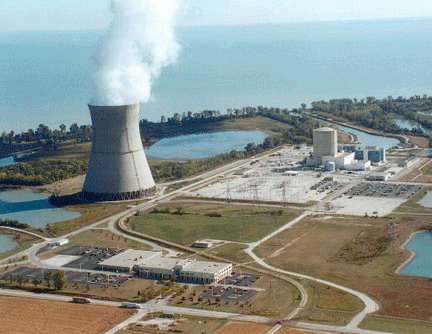 The Real Nuclear Threats, CounterPunch 12 Apr 15 by MIRIAM GERMAN “……….These are just some of the facts about Davis-Besse.
● Because it was built in a flood plain, a 1972 Lake Erie storm caused massive flooding of the entire construction site including the pre-operational reactor.
● In October 1977, a relief valve stuck.
● Uranium fuel must be submerged in water (coolant) at all times to prevent a meltdown. In June 1985, Davis Besse had a loss-of-feedwater accident. The Nuclear Regulatory Commission closed the plant for a year.
● A June 1998 tornado caused loss of external electric power.
● In March 2002, neglected, leaking boric acid in the coolant water had eaten through more than seven inches of the steel reactor lid, leaving only a 3/16″ liner to prevent radiation release. The plant closed for two years, costing ratepayers $600 million. Davis-Besse was fined $33.5 million, the largest in NRC history.
● The corroded lid was replaced before restart in 2004, but in 2010, cracks were found in this new lid, forcing its replacement in 2011.
● To replace aging, deteriorating, damaged parts, an unprecedented four large cuts have been made through the Davis-Besse concrete shield building which prevents release of radiation. Starting in 2011, cracks and voids were discovered in the building’s concrete.
Moniz must look over here, below his feet on US ground, to recognize and acknowledge the bomb fields laying in wait that you still believe are safe, inexpensive and necessary, but which I call ancient relics of poor technology based on the idiocy of a few terrible ideas by self-important arrogant fools who believed nukes would save the world but would instead, kill the very Earth we inhabit. What side of the gambling table are you on? Remember, the cards have already been shown. Fukushima, Chernobyl, Three Mile Island. Hanford.
There is no peaceful nuke and there is no peace with nukes. There is only a mirage.
Columbia Generating Station. Richland, WA. Located on the Columbia River. CGS was built on twelve fault lines. It was not known at the time but now we have facts. It is not built to withstand an earthquake of the 9.0 magnitude the NW is expecting any day. Not even close. With facts, we are armed with the ability to make changes for the sake of humanity. But we only care about being armed for war. There is no containment around the CGS fuel pool. The fuel pool is five stories high. Think Fukushima. Really. Think Fukushima. CGS is the same kind of nuclear reactor as Fukushima. CGS sits ten miles from 56 million gallons of highly radioactive nuclear waste at Hanford. If a meltdown or explosion happens at CGS, it will take Hanford with it. There will be no way to get in to the area to clean it up due to the massively high levels of radiation. The Columbia River flows directly into the Pacific. CGS has problems with the monitoring stacks just about every two to three weeks. They cannot monitor levels of radiation going into the environment from the plant properly without these stacks. On top of all of this, we have records of drug abuse from managers and workers at the plant caught stoned or drunk during surprise drug testing, so many records that we have a spreadsheet that we add to periodically. Would you like to live near CGS?
Where is the IAEA? They are waiting to be flown to Iran.
Diablo Canyon. Corruption. PG&E. Water Bureau. Illegal dumping of hot water into the Pacific. Fault lines. To see a photo of the fault lines at the base of Diablo Canyon and on out just a bit into the ocean off the coast of California is to understand a vision of insanity……..
New York City. Home to well over eight million people and the Indian Point Nuclear Power Plant, just twentyfive miles from the Bronx. Here we have a known leaking nuke plant but the IAEA and all of their grave concerns about safety in Iran can be found no where close to home. Indian Point leaks Tritium. Do you know how bad it is to have that in the ground water, drinking water or rivers and lakes? The Big Apple can turn to molten corium as far as the IAEA, the DOE and the NRC are concerned.
Let’s mention MOX fuel since Kerry and Moniz talk so much lately about oversight and care and safety and transparency from the IAEA to Iran. Plutonium from dismantled nuclear weapons can get used as fuel in nuke plants creating more heat and radioactivity than uranium if it explodes while causing twice as many civilian cancers as the same explosion using uranium. Fact: MOX fuel is the easiest type of fuel to explode; it is the Viagra for nuclear weapons. Yet knowing that it’s the easiest to explode, nuclear engineers still decided to put MOX fuel into nuclear power plants. Pure insanity…….
Miriam German is the director of RadCast.org. She founded No Nukes NW in 2012. http://www.counterpunch.org/2015/04/10/the-real-nuclear-threats/
Business realities are catching up with climate denialists
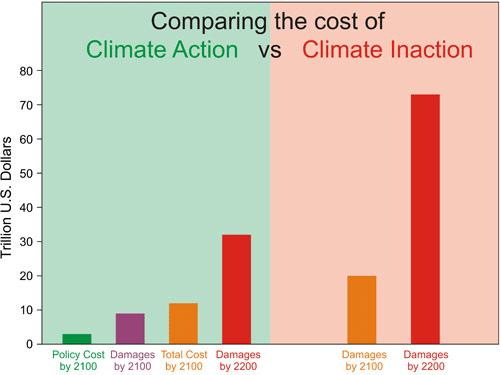
There’s even a fierce battle brewing in Florida between the Koch brothers and a free market Tea Party group pushing for solar power—a clear sign that, as with gay marriage, there is no longer just one single monolithic conservative position. Continue reading
Vancouver the latest of 50 cities to commit to %100 renewable energy
More than 50 cities have announced they are on their way to 100% renewable energy including San Diego and San Francisco in California, Sydney Australia, and Copenhagen. Some are aiming for 2020, others by 2030 or 2035.
Vancouver commits to run on 100% renewable energy http://www.theguardian.com/environment/2015/apr/10/vancouver-commits-to-run-on-100-renewable-energy
Canadian city of 600,000 people is the latest to announce it will use only green energy for electricity, transportation, heating and air conditioning within 20 years Vancouver has become the latest city to commit to running on 100% renewable energy. The city of 600,000 on Canada’s west coast aims to use only green energy sources for electricity, and also for heating and cooling and transportation. Continue reading
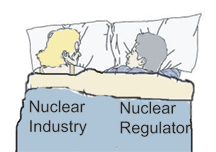
Who’s to blame for the faults in San Onofre Nuclear Plant: not us -says NRC
NRC: Nuclear plant failure not our fault UT San Diego, By Morgan Lee .APRIL 10, 2015 As it turns the page on the breakdown of the San Onofre nuclear plant, the U.S. Nuclear Regulatory Commission is standing by its role in overseeing the replacement of steam generators that led to a radiation leak and the facility’s early retirement in 2013.
The safety agency also is warning the nuclear power industry that the destructive vibrations among generator tubes carrying radioactive water that occurred at San Onofre could emerge at other reactors over time.
A detailed memo by nuclear commission staff on the lessons learned at San Onofre has concluded that efforts by plant operator Southern California Edison to avoid a more-detailed review of the generators by safety regulators are not necessarily to blame in the breakdown of the plant. Responsibility lies instead with design mistakes overseen by Edison, according to the 70-page memo quietly released last month……..
The commission is directing the nuclear power industry to revise design guidelines that do not sufficiently address the kind of destructive tube vibrations that disabled the replacement generators at San Onofre.
A letter from the agency to industry engineers last year warned that “events at San Onofre not only raise questions about industry standards for designing and fabricating steam generators, but also raise questions about the operation of existing steam generators.” It cited no immediate safety concerns but said active generators could become susceptible as conditions change.
A 2012 radiation leak at San Onofre was traced to rapid wear on generator tubes that carry radioactive water that circulates through the reactor core.
 Meanwhile, the nuclear commission is preparing to dismiss formal accusations that a more-thorough safety review of the San Onofre generators was warranted. That complaint was filed by the environmental group Friends of the Earth in 2012……….http://www.utsandiego.com/news/2015/apr/10/nrc-stands-by-process-at-onofre/
Connecticut’s sole nuclear under scrutiny for security issue
Federal energy regulators and a local oversight panel are set to meet to discuss safety issues at Connecticut’s sole nuclear plant.
Nuclear Regulatory Commission staff members and the state Nuclear Energy Advisory Council will meet in Waterford Tuesday to review operations at the Millstone nuclear plant.
Millstone’s Unit 3 is under heightened oversight due to problems related to the plant’s auxiliary water pump. It’s one of several used to help cool down the reactor.
The Nuclear Regulatory Commission announced increased oversight April 2. The agency didn’t disclose the security problem, but said Millstone’s problem rated a low-significance “greater than green” on a scale ranging from green for very low safety or security significance to red for high safety or security significance.
Unless the finding is successfully appealed, it will result in additional scrutiny. http://www.wfsb.com/story/28780712/us-nuclear-regulators-to-review-millstone-with-state-panel#ixzz3X8UtUviJ
Issues of anger and violence – in commander in charge of moving nuclear bombs
 He Handles American Nuclear Weapons, Has ‘Anger’ Issues A federal agent who ferries nuclear bombs around the U.S. allegedly threatened to kill a co-worker and got into physical fights with others—and bosses weren’t informed, an audit finds.The Daily Beast By R. Jeffrey Smith, 10 Apr 15 “…….the commander of a nuclear courier squad based in Oak Ridge, Tennessee—where the uranium portions of H-bombs are fabricated, stored, and periodically moved to other federal sites—allegedly threatened to kill one of his colleagues two years ago, and senior officials did not learn about it for five months, according to a recent inspection report by the Department of Energy’s top auditor.
Moreover, the commander in question repeatedly engaged in related misconduct without more senior officials being promptly informed, the report said. “Each of the seven incidents” described by the commander’s colleagues during the auditor’s investigation “involved physical or verbal altercations,” the report said. The misconduct began as long as a decade ago, but it wasn’t reported up the chain of command……….
The report noted that on two other occasions, in 2004 and 2008, the commander got into physical altercations with couriers, according to the accounts of those who worked with him, but senior officials said these also were not properly reported.
The alleged misconduct is embarrassing for a group of military and special forces veterans that arguably performs one of the nation’s most sensitive tasks—securely transporting nuclear bombs and weapons-usable nuclear materials among several dozen government factories, storage sites, and military installations nationwide, such as missile and bomber bases and submarine ports.
The stated mission of the little known courier group, the Office of Secure Transportation—an entity within the department’s National Nuclear Security Administration (NNSA)—is to “defend, recapture, recover” the bombs or explosives they transport. ……This story is from The Center for Public Integrity, a nonprofit, nonpartisan investigative news organization in Washington, D.C. To read more of their work on nationral security, go here or follow them on Twitter.….http://www.thedailybeast.com/articles/2015/04/10/he-handles-american-nuclear-weapons-has-anger-issues.html
Scientists detect Fukushima radiation in Canadian waters
Fukushima radiation in Canadian waters, DW 10 Apr 15 Scientists have detected radiation from Japan’s 2011 nuclear disaster off the Canadian coast. Experts disagree as to whether the amount detected constitutes a dangerous level or not. Trace amounts of the radioactive isotopes cesium-134 and cesium-137 have been found in samples that were collected close to Vancouver Island in British Columbia. According to the Integrated Fukushima Ocean Radionuclide Monitoring (InFORM) Network, it was the first time that traces of cesium-134 had been detected off North American coasts.
 As cesium-134 has a two-year half-life, any cesium-134 detected in the ocean today can only have been added recently – making Fukushima the only possible source.
Ken Buesseler, a marine chemist at Woods Hole Oceanographic Institution (WHOI), said in a statement: “Radioactivity can be dangerous, and we should be carefully monitoring the oceans after what is certainly the largest accidental release of radioactive contaminants to the oceans in history.”
He led an initiative that measured 60 sites along the U.S. and Canadian West Coast and Hawaii over the past 15 months for traces of radioactive isotopes from Fukushima. Using computer models, the scientist had already predicted that the traces would reach the coast,……..http://www.dw.de/fukushima-radiation-in-canadian-waters/a-18367257
Michigan lawmaker urges Congress to oppose Canada’s waste dump plan near Lake Huron
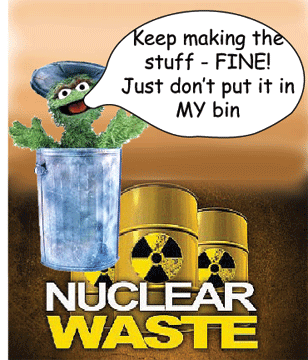 Michigan lawmaker: Congress should oppose Canada’s plan to bury nuclear waste near Lake Huron Star Tribune by: JOHN FLESHER , Associated Press April 10, 2015 – TRAVERSE CITY, Mich. — Michigan Rep. Dan Kildee said Friday he will push Congress to officially oppose Canada’s plans to allow nuclear waste to be stored underground less than a mile from Lake Huron, saying the country should find a site farther away from the Great Lakes, the world’s largest body of surface fresh water.
Kildee offered a similar resolution during the last congressional session, and numerous cities in the Great Lakes region have come out against the storage plan, but it failed to win House approval. Even if successful, it would have no force of law because Canadian officials will make the final decision.
Even so, the Democrat from Flint Township said the effort was worth making. He said the Ontario Power Generation plan to bury radioactive material, including discarded parts from the reactor core and ashes from incinerated floor sweepings and map heads, was “dangerous and an unnecessary risk we shouldn’t take.”
“The Great Lakes aren’t just a source of natural wonder,” said Kildee, whose district includes a section of the western Lake Huron coastline. “As the world’s largest body of fresh water, they’re vital to our way of life.”
Publicly owned Ontario Power Generation wants to bury 7.1 million cubic feet of low- and intermediate-level waste from its nuclear plants about 2,230 feet below the earth’s surface at the Bruce Power generating station near Kincardine, Ontario……..
Critics say there’s no way to guarantee the lake’s safety over the thousands of years that would be required for all the waste to lose its radioactivity.
Kildee’s office said the plan is opposed by 146 cities in the Great Lakes region, from Chicago to Toronto to Rochester, New York.
“My congressional resolution seeks to find an alternative location for this Canadian nuclear waste storage site so it does not endanger our state’s livelihood or economy — now or for future generations,” the congressman said.
A review panel of the Canadian Nuclear Safety Commission has conducted hearings on the project and is expected to issue a report by May 6. The Canadian environment minister would decide whether to approve or deny the project. If the minister endorses it, the review panel will decide whether to issue a construction license. http://www.startribune.com/politics/national/299322701.html
Federal Judge OKs Uranium Mining Next to Grand Canyon National Park
 http://www.biologicaldiversity.org/news/press_releases/2015/uranium-mining-04-08-2015.html
Decision Allows Mining Without Tribal Consultation or Update Decades-old Environmental Review
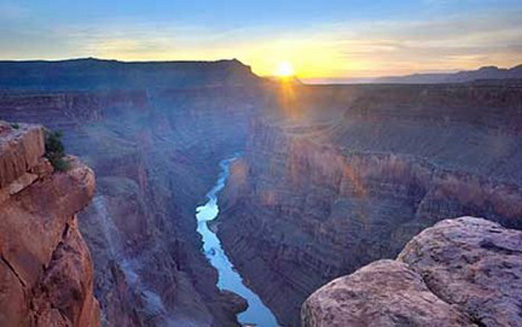
PHOENIX, Ariz.— U.S. District Court Judge David Campbell denied a request to halt new uranium mining at the Canyon uranium mine, located only six miles from Grand Canyon National Park’s South Rim. The Havasupai tribe and a coalition of conservation groups had challenged the U.S. Forest Service’s decision to allow Energy Fuels Inc. to reopen the mine without initiating or completing formal tribal consultations and without updating an obsolete federal environmental review dating to 1986. At stake are tribal cultural values, wildlife and endangered species, and the risk of toxic uranium mining waste contaminating the aquifers and streams that sustain the Grand Canyon and Colorado River.
“We are very disappointed with the ruling by Judge Campbell in the Canyon Mine case,” said Havasupai Chairman Rex Tilousi. “We believe that the National Historic Preservation Act requires the Forest Service to consult with us and the other affiliated tribes before they let the mining company damage Red Butte, one of our most sacred traditional cultural properties. The Havasupai Tribal Council will meet this week to talk about appealing this ruling.” Continue reading
1 This Month
Tell Congress: Prevent Nuclear Catastrophe in Iran

Tell Congress: Prevent Nuclear Catastrophe in Iran

Read the Public Inquiry Report, the Commissioners’ report, Surrendering Australia: The AUKUS Deception is available to download for free at aukuspublicinquiry.com. Or just watch the replay of the National Press Club Luncheon.


Shut down the radiation-damaged Heysham nuclear reactors now
To see nuclear-related stories in greater depth and intensity – go to https://nuclearinformation.wordpress.com

Say No to NASA’s Reckless Nuclear Reactor on the Moon
Say No to NASA’s Reckless Nuclear Reactor on the Moon
-
Archives
- November 2026 (224)
- October 2026 (302)
- September 2026 (339)
- August 2026 (330)
- July 2026 (355)
- June 2026 (287)
- May 2026 (306)
- April 2026 (356)
- March 2026 (251)
- February 2026 (267)
- January 2026 (308)
- December 2025 (358)
-
Categories
- 1
- 1 NUCLEAR ISSUES
- business and costs
- climate change
- culture and arts
- ENERGY
- environment
- health
- history
- indigenous issues
- Legal
- marketing of nuclear
- media
- opposition to nuclear
- PERSONAL STORIES
- politics
- politics international
- Religion and ethics
- safety
- secrets,lies and civil liberties
- spinbuster
- technology
- Uranium
- wastes
- weapons and war
- Women
- 2 WORLD
- ACTION
- AFRICA
- Atrocities
- AUSTRALIA
- Christina's notes
- Christina's themes
- culture and arts
- Events
- Fuk 2022
- Fuk 2023
- Fukushima 2017
- Fukushima 2018
- fukushima 2019
- Fukushima 2020
- Fukushima 2021
- general
- global warming
- Humour (God we need it)
- Nuclear
- RARE EARTHS
- Reference
- resources – print
- Resources -audiovicual
- Weekly Newsletter
- World
- World Nuclear
- YouTube
-
RSS
Entries RSS
Comments RSS

