Steady fall in support for nuclear power among American public
A Slim Majority of Americans Say They Support Nuclear Energy Public approval has steadily dropped over the last five years, greentech media Julia Pyper April 10, 2015 Nuclear energy is losing popularity. A recent Gallup poll found that a slim majority of Americans — 51 percent — say they favor nuclear energy for electricity generation in the United States, while 43 percent say they oppose it. This year’s support levels are among the weakest Gallup has recorded in the last two decades. With a 46 percent approval rating, 2001 was the only year support sank lower.
Public approval of nuclear energy peaked in 2010 at 62 percent, shortly after President Barack Obama announced $8 billion in federal loan guarantees for the construction of two nuclear reactors in Georgia. The new, roughly 1,200 megawatt nuclear reactors at the Alvin W. Vogtle Electric Generating Plant, are the first to be built in the U.S. in three decades.
Over the last five years, support for nuclear energy has fallen by more than 10 percentage points………
The new Gallup poll similarly found a preference for renewable energy alternatives to nuclear power. The vast majority of respondents — 79 percent — called for a greater emphasis on solar power. Wind was close behind at 70 percent.
Thirty-five percent of Americans think the U.S. should put more emphasis on nuclear power, while 33 percent favor less emphasis and 28 percent say the emphasis should remain unchanged. Only coal had less support, with 43 percent of respondents saying coal should have less emphasis as a domestic energy resource……..http://www.greentechmedia.com/articles/read/a-slim-majority-of-americans-say-they-support-nuclear-energy
As hydraulic fracturing (fracking) increases- so do indoor levels of radon
 Small increases in radon track natural gas development with fracking in Pennsylvania, The Conversation, Joan A. Casey Robert Wood Johnson Health and Society Scholar at University of California, San Francisco Brian S. Schwartz Professor of Environmental Health Sciences at Johns Hopkins University 11 Apr 15
Historically, Pennsylvania has had one of the biggest indoor radon problems in the country. Why? Much of the bedrock in Pennsylvania contains high levels of uranium, which is radioactive and eventually decays to radium and radon gas. Radon gas can then enter buildings by diffusing through cracks in the foundation or by dissolving in water. It can get trapped in the basement and other areas of the home and can lead to health effects. Radon is the second-leading cause of lung cancer in the United States.
Due to high levels in Pennsylvania, indoor measurements are often taken when buildings are bought and sold with results reported to the state. This created a huge database, with over 1.5 million measurements from 1989 to 2013. The first unconventional natural gas development in Pennsylvania was in 2005, and by 2013 the industry had drilled 7,469 unconventional wells in the Marcellus shale.
Fracking is just one step in the process of unconventional natural gas development. The sheer scale of development in Pennsylvania made us, and others, wonder if the industry might be influencing those indoor radon measurements collected by the state. Once fully developed, some have estimated that there will be over 50,000 wells in the state……….
In our study we sought to take into account the cumulative effect of thousands of wells drilled statewide, and at a location more relevant to health – in buildings where people live, work and play. By contrast, the state study evaluated a few point sources of radiation pollution.
But what happens if a building is surrounded by hundreds of wells, which are each a potential point source? Is there a cumulative impact that the state missed? We believe our study is better suited for that possibility.
As public health professionals, our goal is to protect public health. We discovered that 42% of basement radon levels exceeded the level at which the EPA recommends people take action. Homes using well water had 21% higher radon levels than homes using municipal water.
With upward trends in radon levels, Pennsylvania’s long-standing radon problem certainly hasn’t gone away. We now leave it up to others – health professionals, economists, politicians and community members debating together – to weigh the evidence regarding the risks and benefits of unconventional natural gas development. For now we suggest homeowners continue to measure radon in their homes, the state continue to be vigilant about possible impacts of this industry on pathways and levels, and that future studies move beyond this first look to better understand the relationships that we may have uncovered. http://theconversation.com/small-increases-in-radon-track-natural-gas-development-with-fracking-in-pennsylvania-39991
New legal case: sick USA sailors against Tokyo Electric Power
 U.S. Sailors Sick From Fukushima Radiation File New Suit Against Tokyo Electric Power, EcoWatch Harvey Wasserman | February 9, 2014 Citing a wide range of ailments from leukemia to blindness to birth defects, 79 American veterans of 2011’s earthquake/tsunami relief Operation Tomadachi (“Friendship”) have filed a new $1 billion class action lawsuit against Tokyo Electric Power.
The suit includes an infant born with a genetic condition to a sailor who served on the USS Ronald Reagan as radiation poured over it during the Fukushima melt-downs, and an American teenager living near the stricken site. It has also been left open for “up to 70,000 U.S. citizens [who were] potentially affected by the radiation and will be able to join the class action suit.”
The re-filing comes as Tepco admits that it has underestimated certain radiation readings by a factor of five. And as eight more thyroid cancers have surfaced among children in the downwind region. Two new earthquakes have also struck near the Fukushima site.
The amended action was filed in federal court in San Diego on Feb. 6, which would have been Reagan’s 103rd birthday. It says Tepco failed to disclose that the $4.3 billion nuclear-powered aircraft carrier was being heavily dosed from three melt-downs and four explosions at the Fukushima site. The Reagan was as close as a mile offshore as the stricken reactors poured deadly clouds of radiation into the air and ocean beginning the day after the earthquake and tsunami. It also sailed through nuclear plumes for more than five hours while about 100 miles offshore. The USS Reagan (CVN-76) is 1,092 feet long and was commissioned on July 12, 2003. The flight deck covers 4.5 acres, carries 5,500 sailors and more than 80 aircraft.
Reagan crew members reported that in the middle of a snowstorm, a cloud of warm air enveloped them with a “metallic taste.” The reports parallel those from airmen who dropped the Bomb on Hiroshima, and from central Pennsylvanians downwind from Three Mile Island. Crew members drank and bathed in desalinated sea water that was heavily irradiated from Fukushima’s fallout.
As a group, the sailors comprise an especially young, healthy cross-section of people. Some also served on the amphibious assault ship Essex, missile cruiser Cowpens and several others.
The plaintiffs’ ailments parallel those of downwinders irradiated at Hiroshima/Nagasaki (1945), during atmospheric Bomb tests (1946-1963), and from the radiation releases at Three Mile Island (1979) and Chernobyl (1986). Among them are reproductive problems and “illnesses such as Leukemia, ulcers, gall bladder removals, brain cancer, testicular cancer, dysfunctional uterine bleeding, thyroid illnesses, stomach ailments and a host of other complaints unusual in such young adults.”
One 22-year-old sailor declared to the court that “Upon my return from Operation Tomodachi, I began losing my eyesight. I lost all vision in my left eye and most vision in my right eye. I am unable to read street signs and am no longer able to drive. Prior to Operation Tomodachi, I had 2/20 eyesight, wore no glasses and had no corrective surgery.” Additionally, he said, “I know of no family members who have had leukemia.”
Plaintiff “Baby A.G.” was born to a Reagan crew member on Oct. 15, 2011—seven months after the crew members exposure—with multiple birth defects.
The suit asks for at least $1 billion to “advance and pay all costs and expenses for each of the Plaintiffs for medical examination, medical monitoring and treatment by physicians,” as well as for more general damages……..
Filed on Dec. 12, 2012, the initial suit involved just eight plaintiffs. It was amended to bring the total to 51.
That action was thrown out at the end of 2013 by federal Judge Janis S. Sammartino on jurisdictional grounds.
A January deadline for re-filing this second amended complaint was delayed as additional plaintiffs kept coming forward. Attorneys Paul Garner and Charles Bonner say still more are being processed.
The suit charges Tepco lied to the public—including Japan’s then Prime Minister Naoto Kan—about the accident’s radioactive impacts. Kan says Unit One melted within five hours of the earthquake, before U.S. fleet arrived. Such news is unwelcome to an industry with scores more reactors in earthquake zones worldwide.
The Plaintiffs say Tepco negligently leveled a natural seawall to cut water pumping expenses. The ensuing tsunami then poured over the site’s unprotected power supply, forcing desperate workers to scavenge car batteries from a nearby parking lot to fire up critical gauges. Tepco belatedly dispatched 11 power supply trucks that were immediately stuck in traffic.
Similar reports of fatal cost-cutting, mismanagement and the use and abuse of untrained personnel run throughout the 65-page complaint.
Attorney Bonner will explain much of it on the Solartopia Radio show at 5 p.m. EST on Tuesday, Feb. 11.
Some 4,000 supporters have signed petitions at nukefree.org, moveon.org, Avaaz and elsewhere.
Feb. 11—like the eleventh day of every month—will be a worldwide fast day for those supporting the victims of Fukushima’s deepening disaster.
The future of the U.S. Seventh Fleet, the nuclear power industry and a growing group young sailors tragically afflicted by Fukushima’s secret fallout will be hanging in the balance.
Visit EcoWatch’s FUKUSHIMA page for more related news on this topic. Harvey Wasserman edits www.nukefree.org, where petitions calling for the repeal of Japan’s State Secrets Act and a global takeover at Fukushima are linked. He is author of SOLARTOPIA! Our Green-Powered Earth. http://ecowatch.com/2014/02/09/u-s-sailors-fukushima-radiation/
Arrival of Fukushima’s radioactive isotopes on North American shores
 “BREAKING NEWS – Scientists detect Fukushima radiation on North American shores” — Coastal communities ‘concerned’ — Over 7 Bq/m3 of cesium from dock in Pacific Northwest — Professor: It indicates arrival of other radioactive substances — “Represents potential radiological health risk” (VIDEO) http://enenews.com/top-headline-fukushima-radiation-reached-north-american-shores-7-bqm3-cesium-detected-dock-pacific-northwest-professor-indicator-other-types-radioactive-substances-arrived-represents-potentia
Statesman Journal, Apr 6, 2015: BREAKING NEWS Scientists detect Fukushima radiation on North American shores — Seaborne radiation from Japan’s Fukushima nuclear disaster has reached North America… cesium-134 and cesium-137 in a sample of seawater taken in February from a dock on Vancouver Island… It’s the first time radioactivity from the March 2011 triple meltdown has been identified on West Coast shores [see: April 2011 — California seawater squeezed from kelp sample had 400,000 Bq/m3 of Iodine-131]… sample was taken Feb. 19… It contained 1.5 becquerels per cubic meter (Bq/m3) of cesium-134, the Fukushima fingerprint, and 5 Bq/m3 of cesium-137 [actually 1.4 and 5.8, respectively]… Fukushimaradiation concerns coastal communities… models have predicted that in general, the plume would hit the shore in the north first, then head south toward California… currents can be unpredictable… Woods Hole has received support from the National Science Foundation to analyze about 250 seawater samples that will be collected next month…
CTVNews, Apr 6, 2015: First low-level trace of Fukushima radioactivity detected off B.C. — But the levels are so low they are likely of little concern… Still, researchers say this is the first detectable of radioactivity from Fukushima found in a water sample taken from the U.S. and Canadian West Coast… Ken Buesseler, a marine chemist at WHOI who has been measuring radioactivity in Pacific seawater since 2011, says it’s been important to carefully monitor the oceans, given that the Fukushima disaster saw the largest accidental release of radioactive contaminants to the oceans in history.
Buesseler’s statement: “Even if the levels were twice as high, you could still swim in the ocean for six hours every day for a year and receive a dose more than a thousand times less than a single dental X-ray. While that’s not zero, that’s a very low risk.. We expect more of the sites will show detectable levels… Predicting the spread of radiation becomes more complex the closer it gets.”
CBC Radio, March 2015: Four years after the nuclear disaster in Fukushima, scientists like UVic’s Jay Cullen are still monitoring the Pacific waters near us for radiation. Listen to what he’s found and what he hasn’t… Cullen: “If we see cesium-134 in a water sample or a fish for example we know that that’s been affected by the Fukushima disaster… Not only is cesium a marker for other isotopes that were released… it also represents a potential radiological health risk because if its internalized… it can damage our cells and cause illness. So the risk of illness appearing in individuals relates to the activity, how much of that isotope ends up in their body. Given the nature of this disaster, with most of the isotopes going into the North Pacific Ocean, the most likely way that a human being would be exposed to this radioactivity at this point would be through the consumption of seafood.” >> Full interview here
Watch Woods Hole’s latest projection of Fukushima Cs-137 levels through 2021 here
Local opposition to nuclear waste dumping seems to work, in Canada
 environmental groups, including Sierra Club Canada, have raised significant concerns about the transportation of liquid nuclear waste from Chalk River Laboratories near Ottawa to a U.S. government site in South Carolina.
 Coincidence or success? Nuclear waste facility drops towns after protest, rabble.ca
On March 3, the towns of Creighton, Saskatchewan and Schreiber, Ontario were dropped from considerationby the Nuclear Waste Management Organization (NWMO) to host a facility for highly radioactive used nuclear fuel.
Since 2010 the NWMO has been actively seeking a location to build what it calls a ‘long-term management site’ for the storage of used nuclear fuel. While there were originally 22 communities on the NWMO’s list of potential hosts, only nine 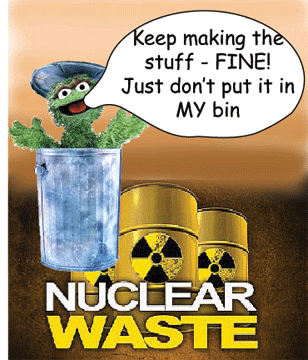 remain, all in Ontario, as candidates for a high-level waste site for used nuclear fuel.
While community activists celebrate being dropped from the lists, concerns about nuclear waste transportation remain. Local politicians are also quick to note a potential economic loss for their communities.
‘Geological complexities’ arise when there’s opposition Continue reading
Muzzling scientists: UK follows Canada’s lead
 Following Canada’s Bad Example, Now UK Wants To Muzzle Scientists And Their Inconvenient Truths https://www.techdirt.com/articles/20150331/06512830496/following-canadas-
bad-example-now-uk-wants-to-muzzle-scientists-their-inconvenient-truths.shtml from the non-appliance-of-science dept Free Speech by Glyn MoodyWed, Apr 1st 2015
Under the new code, scientists and engineers employed at government expense must get ministerial approval before they can talk to the media about any of their research, whether it involves GM crops, flu vaccines, the impact of pesticides on bees, or the famously obscure Higgs boson.

The fear — quite naturally — is that ministers could take days before replying to requests, by which time news outlets will probably have lost interest. As a result of this change, science organizations have sent a letter to the UK government, expressing their “deep concern” about the code. A well-known British neurobiologist, Sir Colin Blakemore, told the Guardian:
“The real losers here are the public and the government. The public lose access to what they consider to be an important source of scientific evidence, and the government loses the trust of the public,” Blakemore said.
Not only that, by following Canada’s example, the British government also makes it more likely that other countries will do the same, which will weaken science’s ability to participate in policy discussions around the world — just when we need to hear its voice most.
Follow me @glynmoody on Twitter or identi.ca, and +glynmoody on Google+
USA’s Nuclear Regulatory Commission gambles with safety, using legalistic jargon
 US NRC Playing Brazen Legalese Games with Safety (Reactor Pressure Vessel Embrittlement) at Palisades Nuclear Power Station and Elsewhere, Mining Awareness, 9 Apr 15 In the April 18, 2013 US NRC “Summary of the March 19, 2013 Public Meeting Webinar Regarding Palisades Nuclear Plant” one finds brazen legalese statements by the US NRC in order to defend one of Entergy’s aging reactors, Palisades (Note that the NRC also had lawyer(s) working on the corporate side pushing the judge to ignore current concerns at Davis Besse Nuclear Power Station too. Davis Besse and Palisades endanger the largest surface fresh water system on earth.) The NRC inadvertently points out that, most likely, no US nuclear reactor has the more resistant materials required for safety starting in 1977.
Someone asked the NRC:
“Which are the other most embrittled plants in the U.S.? How many PWRs will reach their screening criteria in the next 10 years?”
The NRC responded:
“The NRC currently estimates that the following plants will exceed the PTS screening criteria of 10 CFR 50.61 during their 20-year period of operation beyond their original 40 year licenses. Updated fluence calculations, capacity factors changes, power uprate, new surveillance data, and improved material property information (i.e., the use of direct rather than correlative measurements of the vessel material’s resistance to fracture) can change these estimates…
1. Point Beach 2 (2017)
2. Palisades (2017)
3. Diablo Canyon 1 (2033)
4. Indian Point 3 (2025)
5. Beaver Valley 1 (2033)”
http://pbadupws.nrc.gov/docs/ML1310/ML13108A336.pdf
(It’s not clear if these years are the license expiration dates, or when they are estimated as in most danger of reactor pressure vessel fractures, minus uprates etc, which increase stress and put them at risk more quickly. PTS is Pressurized Thermal Shock. Point Beach is also on the Great Lakes (Lake Michigan, as is Palisades)
According to the NRC, Entergy-Palisades didn’t violate standards because there weren’t any! “Palisades did not violate the NRC’s PTS safety standards in 1981 since the NRC did not have any regulations pertaining to PTS until June 26, 1984.”
The NRC inadvertently explains that US Reactors are not up to even 1977 standards:
“For new plants, the reactor vessel beltline materials should have the content of residual elements such as copper, phosphorus, sulfur, and vanadium controlled to low levels. The levels should be such that the predicted adjusted reference temperature at the ¼ T position in the vessel wall at end of life is less than 200 °F. [These] recommendations … will be issued in evaluating construction permits docketed on or after June 1, 1977.”http://pbadupws.nrc.gov/docs/ML1310/ML13108A336.pdf
“There has been no ground-breaking on new nuclear plants in the United States since 1974. Up until 2013, there had also been no ground-breaking on new nuclear reactors at existing power plants since 1977.”http://en.wikipedia.org/wiki/Nuclear_power_in_the_United_States
Since permitting would normally come before ground-breaking this appears to mean that no nuclear reactors currently in operation are up to the 1977 standards for prevention of embrittlement. 1977 was 37-38 years ago. Jimmy Carter was President and the Cold War was far from over. Apple home computers weighed 11.5 pounds excluding the screen, which probably weighed almost as much. Apple Ipad air weighs less than one pound.
The NRC further states:
“In conclusion, there was no violation of NRC requirements concerning PTS at Palisades. Had Palisades ever violated PTS requirements the NRC would have shut down the plant.
Regulatory Guides do not contain requirements, only recommendations.”http://pbadupws.nrc.gov/docs/ML1310/ML13108A336.pdf
So, since the “Regulatory Guides only contain recommendations”, anything goes? What’s the NRC for then? Making the US tax-payer pay for lawyers and staff to protect the interests of the nuclear power industry? Safety doesn’t matter? Regulations are supposed to be laws. Aren’t they?
Where did concern about the US budget go anyway? A good place to start cuts is the US NRC, which has long been called an instance of regulatory capture. ……..https://miningawareness.wordpress.com/2015/04/09/us-nrc-playing-brazen-legalese-games-with-safety-reactor-pressure-vessel-embrittlement-at-palisades-nuclear-power-station-and-elsewhere/
Will Energy Secretary Moniz benefit France in MOX nuclear boondoggle deal? Or make AREVA accountable?
 $30+billion Plutonium (Pu) Fuel Project, Good for France; Bad for America: AREVA-MOX Ça Pue! Pe-yoo! Minimg Awareness, 5 Apr 15 [Recall that Areva is 89.9% French State owned and would be long gone if it weren’t for French taxpayers keeping it afloat. Furthermore, Areva has been under police investigation for years in France due to what is known as the Uramin scandal. After the French State the largest shareholder is Kuwait (Kuwait Investment Authority at 4.8%.]
From Savannah River Site Watch:
“Now, we’re being told the real reason for continuing construction of the $12.7 MOX plant at SRS – “it’s good for France!” Part of DOE’s foreign aid program fostered by Senator MOX….
“French ambassador impressed with MOX”
Aiken Standard, March 17, 2015,
We all know that with the gracious assistance of big-spender Senator Lindsey Graham that the bankrupt company AREVA has thrived on the transfer of US tax payer money into their coffers and are getting desperate as their plans for reprocessing of commercial spent fuel in the US have gone down the drain.
“We want to save the jobs in South Carolina because it’s good for the state, he (Wilson) believes it’s good for the U.S. and to me, it’s good for France,” Araud said. (Gerard Araud, France’s Ambassador to the United States)
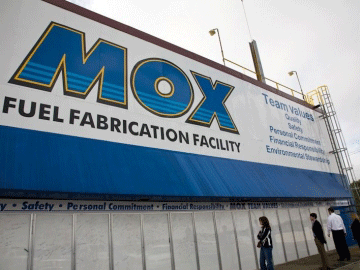 “The MOX facility is being designed by AREVA, a French company that is also the parent company to the MOX contractor, CB&I-AREVA MOX Services. Gilles Rousseau, the chief operating officer for the contractor, expressed his gratitude for having Araud on site.”
[…]
“Business at its Ugly Usual at DOE: As of April 4, 2015, there is No Accountability to the Tax-Paying Public for the U.S. DOE’s Grossly Mismanaged $30+-billion Plutonium Fuel (MOX) Project, a Textbook Case of Big Government’s Inability to Manage a Costly, Complex Project. When will Secretary of Energy Moniz and Congress act to hold those responsible accountable?
As DOE spins out of control in its management of large projects, the MOX coverup drags on and on and on. When will there be any accountability for the failed MOX project?
 SRS Watch requested in a letter hand delivered to US Secretary of Energy Ernest Moniz on July 29, 2014 that he “Take immediate steps to hold managers in DOE, NNSA and Shaw AREVA MOX Services accountable for the massive cost overruns and schedule delays associated with MOX project.”.http://www.srswatch.org/uploads/2/7/5/8/27584045/letter_to_moniz_from_srs_watch_july_28_2014.pdf
Will Secretary Moniz act responsibly and fulfill his obligations as a public servant? Will he hold specific individuals accountable and make sure that their glaringly inadequate abilities in managing the MOX boondoggle are not used elsewhere in DOE? Let us know who you think must be held accountable: srswatch@gmail.com https:// ……….miningawareness.wordpress.com/2015/04/05/30billion-plutonium-pu-fuel-project-good-for-france-bad-for-america-areva-mox-ca-pue-pe-yoo/
PLUTONIUM ALERT!
 $30+billion Plutonium (Pu) Fuel Project, Good for France; Bad for America: AREVA-MOX Ça Pue! Pe-yoo! Mining Awareness 5 Apr 15“…….DOE will soon release its report to Congress on the life-cycle cost of two plutonium disposition options: MOX and disposal of plutonium as blended down waste. Watch for the report around April 15-16, if DOE actually delivers it to Congress and makes it publicly available.
PREDICTION: The report will officially confirm that the MOX option is far more costly than disposal of plutonium of that waste that it is. On release of the report, there will be much hand wringing by MOX boosters and CB&I AREVA MOX Services (designing and building the $12.7 billion MOX plant at SRS) and their political minions (primarily Senator Lindsey Graham and Representative Joe Wilson) but they will produce no report of their own. Congress will finally be forced to take in to account that MOX isn’t financially sustainable and can’t continue. But will Congress hold accountable those DOE mangers and contractors responsible for the massive MOX boondoggle?
The handwriting remains on the wall for the fate of the MOX boondoggle.” From http://www.srswatch.org. Read more and keep updated at their link.
It’s important to note that Shaw and CBI have benefited from this project, and note the funding given by Shaw CBI to politicians, including former Senator Landrieu of Louisiana. Senator Vitter has been given donations by Areva.
Areva ownership: http://fr.wikipedia.org/wiki/Arevahttp://en.wikipedia.org/wiki/State-owned_enterprise#France https://miningawareness.wordpress.com/2015/04/05/30billion-plutonium-pu-fuel-project-good-for-france-bad-for-america-areva-mox-ca-pue-pe-yoo/
Japan forced to give USA nuclear corporations legal immunity, in order to get help with Fukushima cleanup
 US: Japan should accept liability to receive international help at Fukushima Daiichi Enformable, Lucas W Hixson
Website 4 Nov 2013 As reported last week, United States Energy Secretary Ernest Moniz requested that Japan join a treaty called the Convention on Supplementary Compensation for Nuclear Damages. This treaty collects funds from participating nations to assist with payments for damages resulting from nuclear disasters.
What most mainstream media sources failed to relate, was that the treaty also assigns accident liability to the operators of the nuclear power plant, rather than the vendors which develop the technology or construct the equipment.
To receive help, the United States essentially told Japan that they would have to incur the losses and sign a treaty which would prevent them from seeking compensation from contracted companies, like those which built and constructed the Fukushima Daiichi nuclear power plant, and instead must satisfy itself only with seeking repayment from the operator, Tokyo Electric – who is facing bankruptcy and relies largely upon the Japanese government for funds to prevent a financial meltdown. In the wording of the treaty, “the operator’s liability for nuclear damage shall be absolute”, and “the right to compensation for nuclear damage may be exercised only against the operator liable.”……..
Seeing as Tokyo Electric will be unable to pay back the money they owe in the near future, this means Japan must accept to largely handle the financial costs themselves, aside from the amount that they would receive from the international funds.
Readers may ask why Japan would accept this deal that obviously appears to be the short end of the stick. Even if Japan were to attempt to seek compensation from the American companies that designed and constructed the Fukushima Daiichi nuclear power plant, like General Electric, they are not guaranteed to get judgment in their favor. By signing the treaty, Japan will receive some monetary compensation, and while it will likely be far less then they could seek as damages – it is more certain of a process then the legal system. http://enformable.com/2013/11/us-japan-accept-liability-receive-international-help-fukushima-daiichi/
The 211 radioactive poisons left in wastes from CANDU nuclear reactors
Chart of 211 Radioactive Poisons in 10-Year Old CANDU Spent Fuel
The following chart identifies 211 radioactive poisons which are present in every ten-year old irradiated CANDU fuel bundle. The list is not complete.These data, compiled from AECL-9881, refer to the radioactive contents of an irradiated fuel bundle from the Bruce A reactors.
The origin of each radioactive poison is also indicated in the chart:
- F.P. indicates ”Fission Products”: these are the broken pieces of atoms which were split or fissioned in the reactor to produce energy [fission products are also produced when an atomic bomb explodes].
- F.I.A.P. indicates ”Fuel Impurity Activation Products”: during fission, impurities in the fuel become radioactive by absorbing neutrons.
- Z.A.P. indicates ”Zircaloy-4 Activation Products”: elements in the zirconium sheath also become radioactive by absorbing neutrons.
- ”Actinides” refer to the radioactive decay products of uranium and the trans-uranium (heavier-than-uranium) elements created during fission, when uranium atoms absorb one or more neutrons without fissioning.
The radioactivity of each poison is only roughly indicated:
- a single yen-sign ¥ indicates the presence of a particular radioactive poison;
- a triple yen-sign ¥ ¥ ¥ indicates the presence of over a million becquerels of that radioactive poison
- per kg of uranium fuel (for FP, FIAP, and Actinides) or
- per kg of zirconium alloy (for ZAP).
The list is organized according to the electric charge of the nucleus (the so-called “atomic number [Z]”), from the smallest charge (Hydrogen-3, also known as “tritium”) to the largest charge (Californium-252). This is consistent with the order of the elements in the periodic table.Within each chemical species, the radioactive varieties (called “isotopes” or “nuclides”) are organized according to the mass of the nucleus, indicated by the accompanying number in the chart, called the “mass number [A]”…….
CHART – on original …..http://www.ccnr.org/hlw_chart.html
The Dirty Tricks of US nuclear company Exelon
 Exelon plays dirty http://safeenergy.org/2015/04/02/exelon-plays-dirty/ Michael Mariotte It should surprise absolutely no one that a utility that relies on dirty energy to make its money also plays dirty when its money is threatened or when a state legislature is considering whether to bail out the company with its constituents’ money.
So don’t be surprised that we report that yes indeed, gasp, Exelon is playing dirty in Illinois. And just about everywhere else too.
Misleading robocalls. A subsidiary trying to sabotage energy efficiency programs. Even hiding–or at least not drawing attention to–a huge tax case loss. That’s Exelon in action.
Take those robocalls. Dave Kraft of Illinois’ Nuclear Energy Information Service (NEIS) reports that some NEIS members have received unidentified robocalls on their home phones, urging them to call their state legislators to “support clean renewable energy.”
The problem is, the bill the robocalls support is Exelon’s bill to establish a “low carbon portfolio standard.” As we reported last month, that’s the bill that was written to bail out Exelon’s uneconomic reactors in Illinois and prevent the expansion of “clean renewable energy” in the state.
NEIS, NIRS and those honestly in favor of clean energy are supporting a different bill also before the legislature, SB 1485/HB 2607, that actually would encourage clean energy in the state–and wouldn’t bail out Exelon’s failing nukes in the process.
Earlier this week, Crain’s Chicago Business, which continues to be the best source of reporting on Exelon and its machinations, reported that Exelon subsidiary Commonwealth Edison–the state’s largest distribution utility–“wants to make it illegal in Illinois to count the benefits of lowering energy prices when deciding which energy efficiency projects should qualify for ratepayer-funded financial assistance.”
In other words, while even CommEd can’t discount the fact that energy efficiency is cleaner than electricity generation, it wants the other main benefit of improving efficiency–lower electricity prices for ratepayers–to be ignored entirely.
Why? Because holding back gains in energy efficiency would help out Exelon’s six uneconomic reactors. Improving efficiency means less generation is needed. By attempting to sabotage the state’s efficiency programs, CommEd is trying to ensure that electricity demand goes up, making it at least somewhat more likely those reactors would be useful. In fact, those reactors still wouldn’t be needed; but the numbers conceivably could be manipulated enough to make it appear so.
Finally, Forbes reported on Monday that Exelon lost a major tax case, worth $661 million–or about 2% of the company’s value. The issue is complicated (it is tax law, after all) and has to do with decommissioning funds and Exelon’s purchase a decade or so ago of Amergen, which owned the Three Mile Island-1, Oyster Creek and Clinton reactors.
It doesn’t appear that Exelon actually misled anyone about the case; it’s all there in its Securities and Exchange Commission filings. But it’s there in footnotes, and Exelon didn’t exactly publicize its loss in the case either. So, instead of going down, Exelon’s stock went up. Maybe because no one reads footnotes. Perhaps they should.
It is vital that we reach everyone possible in Illinois to counter Exelon’s proposed nuclear bailout. That’s a bailout that would cost ratepayers hundreds of millions of dollars and provide them with nothing but the electricity they would receive even without the bailout. But instead of coming from cleaner energy sources, and helping to expand Illinois’ clean energy programs, the bailout would ensure that Illinois’ power would continue to come from dirty, aging and expensive nuclear reactors.
If you’re in Illinois, act now here. If you have any friends at all, any relatives, business colleagues, if a part of any e-mail list you’re on, includes anyone from Illinois, send them this link to our action page: http://org2.salsalabs.com/o/5502/p/dia/action3/common/public/?action_KEY=19803 And please post it on every social network you’re on.
As we’ve said, this is the most important state action this year. And the outcome will have national implications. It matters to all of us. Act. Now.
It’s time now for a tax on carbon
Why Now Is the Right Time for a Carbon Tax http://blogs.wsj.com/experts/2015/04/02/why-now-is-the-right-time-for-a-carbon-tax/ MARGARET WALLS: The current downturn in the oil and gas business, like the ups and downs of the cycles that came before it, is fundamentally a result of demand and supply. Weak economic activity in Europe, China and elsewhere has led to reduced demand at the same time that increased exploration and development, particularly from U.S. unconventional sources, has increased supply.
The low prices are creating winners and losers in the U.S., but the biggest loser may be the environment. As consumption of gasoline, diesel, jet fuel and other refined petroleum products rises in response to lower prices (and it will, mark my words), emissions of carbon dioxide and other greenhouse gases will rise, too, exacerbating the already dire projections for global climate change. The time couldn’t be better for implementing a carbon tax.
The timing is right for two important reasons. For one thing, low oil prices will dampen the blow. A tax of $25 a ton of CO2 would raise gasoline prices by about 25 cents a gallon, keeping pump prices still far below where they were a year ago. For another, a carbon tax might help to avert some capital investment decisions that would lock in higher emissions. Many observers are worried that low oil prices may lead households to increase purchases of SUVs and other gas guzzlers, cause manufacturers to back off from conversions of oil-fired boilers, and dampen plans for a variety of renewable-energy investments. A carbon tax would provide the right consumption and investment incentives.
As former Treasury Secretary Larry Summers put it in advocating for a carbon tax, “that which is not paid for is overused.” We pay a price for energy but that price reflects only its private costs and benefits and not the externalities associated with its use, the most serious of which is climate change. The call for a carbon tax is now coming from many quarters.
Former Secretary of State George Shultz has made an impassioned plea for a revenue-neutral carbon tax, an option many economists have supported for years. Coupling a carbon tax with reduced income or payroll taxes can improve the environment and the tax code. A lump sum per household annual “climate dividend” is another option.
Congress is gridlocked but a revenue-neutral carbon tax should have appeal to both political parties. And with oil prices at a five-year low, no time could be better.
Margaret Walls (@margaretwalls1) is research director and senior fellow at Resources for the Future, an independent nonprofit research organization in Washington, DC.
Read the latest Energy Report.
The Nuclear Power Agenda to block climate action, stop renewable energy, and subsidize old reactors.
Nuclear Economics Nuclear Information and Resource Service….…….September 11, 2014. Killing the Competition. The Nuclear Power Agenda to block climate action, stop renewable energy, and subsidize old reactors. Major new report by NIRS’ Executive Director Tim Judson details how major utilities and nuclear power companies have begun a campaign to rig energy markets, climate regulations, and clean energy programs to prevent the advance of renewable energy.
 Using a deceptive public relations campaign and heavily-funded front groups like Nuclear Matters, Third Way, and C2ES, corporations including Exelon and Entergy have tried to drum up fears of a national energy crisis stemming from the closure of several aging, uncompetitive nuclear plants and the advance of renewable energy. While touting the need to “preserve” nuclear power, nuclear interests have covered up the actual reforms they are seeking and their implications for the U.S.’s energy future.
Audio recording (mp3 file) of press conference release of the report featuring Tim Judson, Dr. Mark Cooper, Vermont Law School, Institute for Energy and the Environment; Tyson Slocum, energy program director, Public Citizen; Deb Katz, executive director, Citizens Awareness Network (New England); David Kraft, executive director, Nuclear Energy Information Service (Illinois); Jessica Azulay, program director, Alliance for a Green Economy (New York).”…..http://www.nirs.org/neconomics/neconomicshome.htm
A risky precedent – if ratepayers bail out Ginna nuclear plant
 Bailout of nuclear power plant would set bad precedent, Times Union By David O. Carpenter, March 30, 2015 The New York state Public Service Commissionand the Cuomo administration will soon decide whether ratepayers can be forced to bail out Exelon, the nation’s largest nuclear power plant operator, and its Ginna nuclear plant, one of the world’s oldest commercial reactors, built near Rochester in 1969. A bailout would set a costly, dangerous precedent with state and national implications.
Across New York and the U.S., as older nuclear plants age, their operating costs are rising while prices for electricity from competing sources are falling, making many of them uneconomical, including a third of Exelon’s fleet. So they seek shelter from market forces that increasingly favor cleaner, cheaper alternatives, including wind and solar.
Ginna is an important test case. It lost $100 million in the last three years. So Exelon negotiated a new purchase agreement withRochester Gas & Electric worth $735 million — $165 million above the market price for electricity — passing on its losses to customers by raising their rates.
Exelon threatens that without a bailout, it will close Ginna and other uneconomical reactors, undermining electricity supply. Supply fears are overblown — Ginna could be phased out and its power replaced more cost-effectively, including by improving substations and transmission lines. The PSC may be more worried about losing Ginna’s 600 jobs (though there would be hundreds of decommissioning jobs if the reactor shut down).
Meanwhile, many oppose the bailout. Physicians for Social Responsibility’s New York chapter opposes it because of growing public health and safety risks as Ginna ages. New York utilities and power producers oppose it because it violates established procedure for shuttering plants. A group of 60 large industrial, commercial and institutional energy consumers oppose it because it would distort electricity markets and trigger “potentially staggering” rate hikes. Alliance for a Green Economy opposes unjustly forcing consumers to subsidize Exelon and its obsolete reactor, which would also pre-empt better energy alternatives. It wants Ginna’s losses borne by RG&E, not ratepayers, and swift, orderly decommissioning.
New York City Mayor Bill de Blasio‘s administration opposes a Ginna bailout as bad precedent for other troubled plants, which might try to hold his city’s residents hostage to closure threats. For example, what if the aging, leaking Indian Point nuclear plant, which should be decommissioned, followed suit and demanded to be propped up through extortionate rate hikes?
These are all good reasons to say “no” to bailing out Ginna and other aging nuclear plants that might seek to follow in its wake…….. http://www.timesunion.com/tuplus-opinion/article/Bailout-of-nuclear-power-plant-would-set-bad-6168217.php
1 This Month
Tell Congress: Prevent Nuclear Catastrophe in Iran

Tell Congress: Prevent Nuclear Catastrophe in Iran

Read the Public Inquiry Report, the Commissioners’ report, Surrendering Australia: The AUKUS Deception is available to download for free at aukuspublicinquiry.com. Or just watch the replay of the National Press Club Luncheon.


Shut down the radiation-damaged Heysham nuclear reactors now
To see nuclear-related stories in greater depth and intensity – go to https://nuclearinformation.wordpress.com

Say No to NASA’s Reckless Nuclear Reactor on the Moon
Say No to NASA’s Reckless Nuclear Reactor on the Moon
-
Archives
- November 2026 (224)
- October 2026 (302)
- September 2026 (339)
- August 2026 (330)
- July 2026 (355)
- June 2026 (287)
- May 2026 (306)
- April 2026 (356)
- March 2026 (251)
- February 2026 (267)
- January 2026 (308)
- December 2025 (358)
-
Categories
- 1
- 1 NUCLEAR ISSUES
- business and costs
- climate change
- culture and arts
- ENERGY
- environment
- health
- history
- indigenous issues
- Legal
- marketing of nuclear
- media
- opposition to nuclear
- PERSONAL STORIES
- politics
- politics international
- Religion and ethics
- safety
- secrets,lies and civil liberties
- spinbuster
- technology
- Uranium
- wastes
- weapons and war
- Women
- 2 WORLD
- ACTION
- AFRICA
- Atrocities
- AUSTRALIA
- Christina's notes
- Christina's themes
- culture and arts
- Events
- Fuk 2022
- Fuk 2023
- Fukushima 2017
- Fukushima 2018
- fukushima 2019
- Fukushima 2020
- Fukushima 2021
- general
- global warming
- Humour (God we need it)
- Nuclear
- RARE EARTHS
- Reference
- resources – print
- Resources -audiovicual
- Weekly Newsletter
- World
- World Nuclear
- YouTube
-
RSS
Entries RSS
Comments RSS

