Guilty plea from Russian official in USA graft case
Russian official to plead guilty in US court over graft in cooperative nuclear weapons destruction program, Bellona, August 20, 2015 by Charles Digges charles@bellona.no
Vadim Mikerin, a former executive with the Russian state nuclear fuel conglomerate Tenex has agreed to plead guilty in the US to money laundering and bribery charges in connection to a cooperative disarmament deal between Washington and Moscow, The Wall Street Journal reported………
Mikerin is the second major Russian nuclear official in a decade to be felled for defrauding a cooperative US-Russian nuclear program. The first was Yevgeny Adamov, former chief of Minatom, Rosatom’s predecessor.
Three US nationals, Daren and Carol Condrey, and Boris Rubizhevsky, were also charged with conspiracy to commit wire fraud in connection with the case, various public documents from the US Attorney General’s office in Maryland show.
Mikerin was initially arrested on October 29, 2014 on charges of accepting kickbacks from uranium deals between Russia and the United States under the expired Megatons to Megawatts cooperative disarmament program.
He was denied bail and has remained in jail in Washington, D.C. since his arrest, the Russian Legal Information Agency Rapsi reported.
The disarmament program
Between 1993 and 2013, Russia down blended 500 metric tons of highly enriched uranium for sale to and use in US commercial reactors under the HEU-LEU, or Megatons to Megawatts program……….http://bellona.org/news/nuclear-issues/2015-08-russian-official-plead-guilty-us-court-graft-cooperative-nuclear-weapons-destruction-program
USA Defense experts give unwise advice on new generation nuclear weapons
Beware the Nuclear Experts, Defense News, By James Doyle, an independent nuclear security specialist supported by the Ploughshares Fund and non-resident associate of the Belfer Center for Science and International Affairs at Harvard University. August 20, 2015 In their July 13 Defense News commentary, Clark Murdock and Thomas Karako advocate a mobilization of America’s nuclear weapons industry to build a new generation of forward-deployed, low-yield nuclear weapons. Their commentary is a summary of recommendations from their “Project Atom” study recently completed at the Center for Strategic and International Studies (CSIS). America should think twice before heeding the advice of these so-called nuclear experts.
Nuclear deterrence is risky business to be sure, but Murdock and Karako’s recommendations suffer two fundamental flaws: They ignore the lessons of history and neglect a fundamental requirement of nuclear strategy. That requirement is the need to assess how America’s nuclear weapon deployments will be perceived by her potential nuclear-armed adversaries.
With respect to Murdock and Karako’s recommendation that the United States develop and deploy additional “tactical” nuclear weapons to its NATO allies, it is critical to remember that we have been down this road before. We know that deployments such as those proposed by the CSIS study can increase rather than decrease the risk of nuclear war by miscalculation.
In the early 1980s the United States deployed the stealthy nuclear ground-launched cruise missile (GLCM) to the UK, Belgium, Netherlands, Germany and Italy, and the highly accurate Pershing II nuclear ballistic missile to Germany.
These deployments, ostensibly in response to the Soviet Union’s deployment of its SS-20 nuclear ballistic missile, came at a time of high tensions between Washington and Moscow. The GLCMs and Pershing II together provided the US and NATO the theoretical potential to launch a nuclear strike destroying the Soviet political and military leadership in eight to 10 minutes from the time the Pershings were fired.
This led the Soviets to believe that they could only inflict similar nuclear damage on the West if they launched their nuclear forces immediately following the reception of warning of a NATO nuclear attack, but before the incoming NATO and American nuclear weapons detonated on their forces.
This need to “launch on warning” under extreme time constraints is the classic definition of lowering the nuclear threshold, not raising it, as is desired….
The idea of “controlling nuclear escalation” in Europe or any other nuclear-armed region was discredited decades ago. As the authors admit, “the distinction between strategic and nonstrategic nuclear weapons is long obsolete and any use of a nuclear weapon could have profound strategic effects.”………
The fundamental basis of nuclear strategy is not only to be prepared to retaliate to a nuclear attack but also to see the balance of nuclear forces through the eyes of your potential nuclear-armed adversaries. In other words, in the nuclear age your adversaries’ sense of security becomes your concern.
No side prevails in a nuclear exchange. Both will suffer consequences that far outweigh any advantage that was sought by their initial use. Only the maintenance of a strategic dialog, serious efforts to reduce tensions and the establishment of operational and diplomatic means to resolve periodic crises can avoid nuclear war. These are the essential lessons of the Cold War……….
The real danger is when both sides lack an understanding of the mentality of the other. Deploying another generation of mini-nukes as urged by the “Project Atom” report without seeking to improve this understanding through diplomatic means will make nuclear war more likely. http://www.defensenews.com/story/defense/commentary/2015/08/20/beware-nuclear-experts/32083997/
Nuclear plant Vogtle – another cost increase approved – now up to $2.97 billion
 Georgia energy regulators approve 12th Plant Vogtle construction update http://www.bizjournals.com/atlanta/blog/capitol_vision/2015/08/georgia-energy-regulators-approve-12th-plant.html?utm_source=Sailthru&utm_medium=email&utm_campaign=Issue:%202015-08-19%20Utility%20Dive%20Newsletter&utm_term=Utility%20Dive
Commissioners voted unanimously to approve $169 million the utility reported spending on the project during the last half of last year. That brings Georgia Power’s cumulative construction and capital costs to date to $2.97 billion.
In approving the 12th semi-annual update Georgia Power has submitted to the PSC since the construction of two additional nuclear reactors at the plant south of Augusta, Ga., was authorized in 2009, the commission rejected requests from environmental and consumer advocacy groups concerned that a 39-month delay in the project’s scheduled completion is driving up customer costs.
Commissioner Stan Wise argued Atlanta-based Georgia Watch’s request that the PSC consider the costs of achieving the same additional electric generating capacity with wind and solar projects as an alternative to nuclear expansion was inappropriate.
“It’s not going to change anything we do at Vogtle,” he said. “Wind and solar are going to run their own course, like any product does.”
The commission voted in 2013 to postpone consideration of who should pay for cost overruns at Plant Vogtle – Georgia Power’s shareholders or its customers – until after the first of the two new nuclear reactors goes into service. Under a revised timetable Georgia Power submitted last winter, that won’t come until 2019.
South Carolina court blasts state’s environmental protection agency over poor oversight of leaking nuclear waste dump
For the second year in a row, the S.C. Court of Appeals has ripped the state’s environmental protection agency for failing to properly oversee a leak-prone nuclear waste dump in Barnwell County.
But this time, the appeals court isn’t telling regulators when to resolve problems at the 44-year-old site.
In an Aug. 12 ruling that disappointed landfill critics, the court backed away from requiring a specific timetable to improve conditions at Chem-Nuclear’s dump near the Savannah River.
Last year, the appeals court ordered the Department of Health and Environmental Control and site operator Chem-Nuclear to develop a written plan for correcting problems within 90 days. Both then appealed for a rehearing, which delayed the 90-day requirement and ultimately resulted in last week’s decision.
Sierra Club lawyer Bob Guild said this year’s decision leaves DHEC — the agency that has failed to properly manage the site — the discretion to react to the court ruling at its own leisure.
“We have an agency that has been lawless for years in not enforcing its own regulations, and now, the court is giving it another open-ended opportunity to review itself,’’ Guild said. “That is unfortunate. We are going to monitor this very carefully.’
Guild’s group filed suit 10 years ago in an attempt to force tougher disposal practices at the unlined landfill, where radioactive tritium leaks first were detected in the 1970s. A plume of tritium extends downhill from the site and has for years trickled into a creek that flows toward the nearby Savannah River.
Sierra Club officials say DHEC has been lax in making Chem-Nuclear follow rules at the disposal site through the years.
The appeals court acknowledged problems, saying that DHEC “failed to enforce the law of South Carolina’’ in monitoring the 235-acre landfill outside the town of Snelling.
The court said DHEC, as the agency overseeing Chem-Nuclear’s activities, did not enforce a handful of specific regulations established to protect the environment. It also said Chem-Nuclear had failed to follow some of the rules on nuclear waste disposal. Except for the timetable, the court’s decision last week was similar to last year’s ruling that took DHEC and Chem-Nuclear to task.
“It is important that DHEC enforce its own regulations and require Chem-Nuclear to take action to comply with the technical requirements,’’ the ruling said in sending the matter back to DHEC for consideration……….
An array of critics, however, say tritium is still toxic and often is a forerunner of other, more dangerous pollutants that will one day wash into groundwater. Leaks were discovered within a decade of the Barnwell County site’s opening in 1971, despite initial assurances from state regulators.
The disposal site once took low-level nuclear waste from atomic power plants, hospitals and other places from across the country. Today, the landfill is open only to South Carolina, Connecticut and New Jersey, and waste volumes have dropped sharply. But the Sierra Club has pressed ahead with its 2005 lawsuit, saying better disposal practices will prevent tritium leaks from getting any worse.
One of the major concerns centers on rain that falls into open burial trenches. Environmentalists for years have pushed the state to require the placement of tents or roofs atop the burial trenches. That would cut down on the amount of rain that pours in, picks up radioactive pollutants from the waste and leaks through the bottom of the landfill and into groundwater, they say.
The court said Chem-Nuclear had done nothing to keep rain out of the burial pits, even though a state regulation says it is supposed to minimize movement of water in the pits. And the court said DHEC had not forced the company to comply with the rule intended to keep rain out of the pits — or acted to prevent rain from leaking through the bottom and into groundwater………http://www.thestate.com/news/local/article31585892.html
Most churches support the Iran nuclear deal
American Churches and the Iran Nuclear Deal, Weekly Standard, AUG 20, 2015 • BY MARK TOOLEY Most church groups and prominent religious voices speaking to the Iran nuclear deal are supportive. Most notable among them is the U.S. Catholic Conference of Bishops. n April, Bishop Oscar Cantú of Las Cruces, who leads the U.S. Catholic bishops’ Committee on International Justice and Peace, wrote members of Congress to hail the accord as an “important step in advancing a peaceful resolution.” He quoted Pope Francis, who prayed that, “the framework…may be a definitive step toward a more secure and fraternal world.”………
In July, Bishop Cantú again wrote Congress to commend the “remarkable step with Iran in reaching this agreement” and urging Congress to “support these efforts to build bridges that foster peace and greater understanding.”
Liberal Evangelical activist Jim Wallis of Sojourners similarly hailed the accord for pursuing options that will “prevent further war with more dangerous weapons,” which is the “right course of action in a highly imperfect world.” He warned that “those who oppose deals like this often proclaim a binary world of simple good and evil, which we don’t have — and believing so is a dangerous illusion.”………https://www.weeklystandard.com/blogs/american-churches-and-iran-nuclear-deal_1015151.html
Savannah River Site’s MOX project needs $800 million a year
Review: MOX needs $800M a year http://www.aikenstandard.com/article/20150820/AIK0101/150829974/1121
Earlier this year, the Department of Energy commissioned the Red Team, a group led by Thom Mason, the director of the Oak Ridge National Laboratory, to evaluate cost projections and alternatives to the MOX method of plutonium disposition. The method includes the Mixed Oxide Fuel Fabrication Facility under construction at SRS.
The project is part of a nonproliferation agreement with Russia to dispose of 34 metric tons of weapons grade plutonium.
“The Red Team concluded that if the MOX pathway is to be successful, then annual funding for the whole program would have to increase from the current $400 million per year to $700 to 800 million per year over the next 2-3 years, and then remain at $700 to $800 million until all 34 metric tons are dispositioned,” officials wrote.
The Aiken Standard will have more on the MOX review in Friday’s paper.
WHOI Study Shows Fukushima Contaminated Sediment Moving Offshore
 Researchers deployed time-series sediment traps 115 kilometers (approximately 70 miles) southeast of the nuclear power plant at depths of 500 meters (1,640 feet) and 1,000 meters (3,280 feet). The two traps began collecting samples on July 19, 2011—130 days after the March 11th earthquake and tsunami—and were recovered and reset annually.
WOODS HOLE – Researchers from Woods Hole Oceanographic Institution have been studying the effects the Fukushima Nuclear Power Plant disaster in 2011 has had in the Pacific Ocean.
WHOI has recently released the results of a three-year study of sediment samples collected offshore in the American Chemical Society’s journal, Environmental Science and Technology.
The purpose of the study is to understand what happens to the Fukushima contaminants after they are buried on the seafloor off of coastal Japan.
The team, led by senior scientist and marine chemist Ken Buesseler, found that a small fraction of contaminated sea floor sediments off Fukushima are moved offshore by typhoons that resuspend radioactive particles in the water, which then travel laterally with Southeasterly currents into the Pacific Ocean.
Researchers used funnel-shaped traps to collect the data at depths of 500 meters and 1,000 meters starting 130 days after the disaster.
The research found radiocesium from the plant along with sediment with a high fraction of clay material in the samples. The clay material is characteristic of shelf and slope sediments and suggest a near shore source.
Buesseler says that more than 99 percent of the contaminated material from the plant moved with the water offshore and that less than 1 percent ended up on the sea floor as buried sediment.
Source: CapeCod.com
WHOI Study Shows Fukushima Contaminated Sediment Moving Offshore
Canadian Nuclear Safety Commission called upon to disclose study on nuclear disaster

 Groups want full nuclear report released http://www.durhamregion.com/news-story/5804511-groups-want-full-nuclear-report-released/ By The Canadian Press, 19 Aug 15, OTTAWA – Environmental groups are urging the Canadian Nuclear Safety Commission to release a study on nuclear disaster scenarios that they say was suppressed.
The commission released a study last year looking at health and environmental consequences of accident scenarios, following the Fukushima nuclear disaster in Japan, but the groups say it wasn’t released in full.
Greenpeace, the Canadian Coalition for Nuclear Responsibility and other environmental organizations say emails obtained through access to information requests show management at the nuclear commission censored the original draft.
They say the original study analyzed the impacts of a Fukushima-scale accident at the Darlington nuclear plant, 70 kilometres east of Toronto, but that wasn’t included in the version released to the public.
The groups cite an email from the director of the Darlington regulatory program division that says it would become a “focal point of any licence renewal” and would be used “malevolently” in a public hearing.
The nuclear commission is holding a hearing today in Ottawa on Ontario Power Generation’s application to extend the operating life of four aging Darlington reactors and the environmental groups want the Fukushima-scale analysis released before public submissions are due next month.
“The CNSC has betrayed the public trust by concealing a study revealing risks to Toronto,” said Shawn-Patrick Stensil, a senior energy analyst with Greenpeace. “The study should be released so these hazards can be addressed transparently and appropriate emergency plans put in place.”
Why is USA ignoring Israel’s nuclear arsenal?
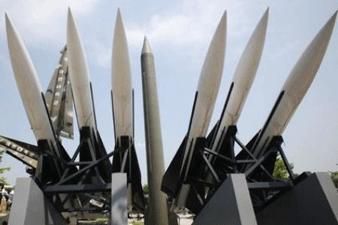
 Why is Israel’s nuclear arsenal not mentioned in Iran deal debate?, McClatchy DC
Israel has as many as 100 nuclear warheads and systems to deliver them
But U.S. officials don’t mention them under a 1969 agreement
Iranian nukes would challenge Israel’s unique Middle East position
BY JONATHAN S. LANDAY jlanday@mcclatchydc.com WASHINGTON , 19 Aug 15,
There’s one major issue that President Barack Obama, his supporters and his critics assiduously have avoided as they battle over the deal designed to prevent Iran from obtaining nuclear weapons: Israel’s own nuclear arsenal.
An open secret for decades, the Israeli stockpile is estimated at some 80-100 warheads, though Israel refuses to confirm or deny its existence under a policy of deliberate ambiguity. The arsenal was developed as the ultimate guarantor of the Jewish state’s survival against threats from its hostile neighborhood.
Yet as the sides joust over the Iran deal’s impact on Israel’s security, Obama has been silent on the Israeli arsenal as a potential deterrent against Iranian cheating on the accord. Opponents, led by Israeli Prime Minister Benjamin Netanyahu, haven’t touched the issue, either. And it hasn’t figured in the public hearings that Congress is holding as part of a 60-day review that will culminate in a Republican-led bid to kill the Iran accord next month.
To some experts, the fierce debate over whether the Iran deal endangers Israel or makes it safer will be incomplete and misleading as long as it skirts the Middle East’s only nuclear arms stockpile………http://www.mcclatchydc.com/news/nation-world/world/article31470917.html
Canada’s radioactive trash dump plan, all too close to USA border
Canada Might Start Dumping Nuclear Waste Near the US Border, VICE, By Arthur White August 19, 2015 A Canadian plan to build an underground nuclear waste dump less than a mile from Lake Huron is getting unfriendly attention from US lawmakers, who are trying to force the Obama administration to invoke a 106-year-old treaty against its northern neighbor.

Though a Canadian review panel declared that the proposed Deep Geologic Repository will have “no significant adverse effects on the Great Lakes,” opponents wonder why a site so close to the world’s largest freshwater system was chosen. One environmental group even warned that the project could give terrorists the opportunity to steal radioactive materials and blow up a “dirty bomb” in downtown Toronto.
The project would bury 7 million cubic feet worth of low and intermediate level nuclear waste — including contaminated mop heads, paper towels, floor sweepings, but also filters and reactor components — 2,230 feet underground. Ontario Power Generation, which operates two nuclear power plants in Canada’s most populous province, has chosen a site just north of the lakefront town of Kincardine, after getting approval from the municipality.
The power company claims that the site is “ideal” for containing the waste, which will lay ensconced in limestone under a 660-foot layer of shale, a boundary they call “impermeable.” The risk from earthquakes is low, they say, and the rock formations have been stable for millions of years.
Data from a government earthquake database reveal that over the past 10 years there have been about a half dozen earthquakes roughly 20 miles north of the site. At less than 2 on the Richter scale, all of those tremors were extremely weak. The most powerful quake in the region, which hit 4.3 on the scale, was about 50 miles away.
This March, a review panel recommended that the government approve the dump, claiming that the health risks to people living around the lakes are “virtually zero………
That report was sent to Canada’s environment minister, who is expected to announce a decision in early December.
But many challenge the panel’s impartiality, with the Sierra Club Canada saying it’s stacked with ex-nuclear industry officials, and the Canadian Environmental Law Agency (CELA) calling its report biased, incomplete, and “fundamentally flawed.”
“The members of the panel support nuclear power from the outset,” the Sierra Club’s program director, John Bennett, told VICE News. “They’ve never not approved a project.”
CELA blasted the panel and the power company for only considering a “hypothetical” alternative to the DGR plan, without looking at a single other real-world site to bury the waste………https://news.vice.com/article/canada-might-start-dumping-nuclear-waste-near-the-us-border
Nuclear bombing of Japanese cities was not needed to end World War 2
 The Real Reason America Used Nuclear Weapons Against Japan. It Was Not To End the War Or Save Lives. True Activist.com August 6, 2015 by True Activist Atomic Weapons Were Not Needed to End the War or Save Lives. By Washington’s Blog / globalresearch.ca
Like all Americans, I was taught that the U.S. dropped nuclear bombs on Hiroshima and Nagasaki in order to end WWII and save both American and Japanese lives.
But most of the top American military officials at the time said otherwise.
The U.S. Strategic Bombing Survey group, assigned by President Truman to study the air attacks on Japan, produced a report in July of 1946 that concluded (52-56):
Based on a detailed investigation of all the facts and supported by the testimony of the surviving Japanese leaders involved, it is the Survey’s opinion that certainly prior to 31 December 1945 and in all probability prior to 1 November 1945, Japan would have surrendered even if the atomic bombs had not been dropped, even if Russia had not entered the war, and even if no invasion had been planned or contemplated.
General (and later president) Dwight Eisenhower – then Supreme Commander of all Allied Forces, and the officer who created most of America’s WWII military plans for Europe and Japan – said:
The Japanese were ready to surrender and it wasn’t necessary to hit them with that awful thing.
Newsweek, 11/11/63, Ike on Ike
Eisenhower also noted (pg. 380):……….
Why Were Bombs Dropped on Populated Cities Without Military Value?
Even military officers who favored use of nuclear weapons mainly favored using them on unpopulated areas or Japanese military targets … not cities.
For example, Special Assistant to the Secretary of the Navy Lewis Strauss proposed to Secretary of the Navy James Forrestal that a non-lethal demonstration of atomic weapons would be enough to convince the Japanese to surrender … and the Navy Secretary agreed (pg. 145, 325):……..
The Real Explanation?
History.com notes:
In the years since the two atomic bombs were dropped on Japan, a number of historians have suggested that the weapons had a two-pronged objective …. It has been suggested that the second objective was to demonstrate the new weapon of mass destruction to the Soviet Union. By August 1945, relations between the Soviet Union and the United States had deteriorated badly. The Potsdam Conference between U.S. President Harry S. Truman, Russian leader Joseph Stalin, and Winston Churchill (before being replaced by Clement Attlee) ended just four days before the bombing of Hiroshima. The meeting was marked by recriminations and suspicion between the Americans and Soviets. Russian armies were occupying most of Eastern Europe. Truman and many of his advisers hoped that the U.S. atomic monopoly might offer diplomatic leverage with the Soviets. In this fashion, the dropping of the atomic bomb on Japan can be seen as the first shot of the Cold War.
New Scientist reported in 2005:……….http://www.trueactivist.com/the-real-reason-america-used-nuclear-weapons-against-japan-it-was-not-to-end-the-war-or-save-lives/
Momentum growing in campaign to shut down Diablo Canyon Nuclear Plant
 Grassroots Pressure Escalates to Shut Down Diablo Canyon Nuke Plant, EcoWatch, 14 Aug 15 Harvey Wasserman | The two reactors at Diablo Canyon are the last ones still operating in California. And the grassroots pressure to shut them down is escalating.
Together grassroots activists have shut three California reactors at San Onofre, between Los Angeles and San Diego and one each at Rancho Seco, near Sacramento and at Humboldt, perched on an earthquake zone in the north.
But the two at the aptly named Diablo still run, much to the terror of the millions downwind………
the earthquake issue is now in the federal courts. So are questions about water usage. Diablo’s once-through cooling system dumps billions of gallons of over-heated water into the ocean every day, killing countless quantities of aquatic life. Two key California boards do havethe power to shut Diablo if they deny it further permission to violate state and federal water quality laws.
That issue is being fiercely contended on a state level. Decisions may come by the end of the year, at which point the battle will rise to a whole new level……
It’s also become clear that the sinking costs of renewables and efficiency have made Diablo’s energy extraneous. And that the jobs being created by the transition to green power will more than compensate for any lost at the nukes. Among other things, shut-down advocates are demanding that all key workers be retained at the reactors to make sure the decommissioning is done right………
Over 300 US rabbis urge Congress to support Iran nuclear deal
Hundreds of US rabbis voice support for Iran nuclear deal, 124 News, 19 Aug 15 IDF: deal could help rein in terrorist activities; US will not succeed to ‘intrude’ on Iran: Khamenei
More than 300 American rabbis wrote members of Congress Monday urging them to support the international nuclear deal with Iran, signalling the US Jewish community is split over the historic but controversial accord.
The religious leaders come from across the spectrum, but hail overwhelmingly from Judaism’s Conservative and Reform streams as well as other progressive Jewish movements, a spokesperson said.
“We encourage the members of the Senate and the House of Representatives to endorse this agreement,” the 340 rabbis wrote in a letter to Congress distributed by Ameinu, a progressive charitable Jewish organization.
“We are deeply concerned with the impression that the leadership of the American Jewish community is united in opposition to the agreement,” the rabbis added.
“We, along with many other Jewish leaders, fully support this historic nuclear accord”……..http://www.i24news.tv/en/news/international/82396-150817-fate-of-nuclear-deal-still-not-clear-iran-s-khamenei
North American Animal Decline Since Fukushima
The biological effects of Fukushima contamination are likely to extend far beyond Japan. The use of seawater to cool the reactors produced spherical, uranium peroxide clusters called buckyballs, which are noted for their durability and transportability.
Radioactive Sulfur-35 (35S) was detected in Southern California from 20-28 March 2011. The researchers concluded that neutron leakage transformed salt water chlorine (35Cl) into radioactive 35S through a process of multistage decay.
During roughly that same time period, separate researchers from California State Long Beach sampling kelp offshore found Iodine-131, which has an approximate eight day half-life. The researchers concluded that the iodine-131 was likely deposited by precipitation contaminated with Fukushima fallout.
Contamination transported by wind and precipitation is supplemented by dispersion of radionuclides by ocean currents. Research conducted by Stan-Sion, Enachescu, and Pietre identified arrival of the ocean-borne plume of radionuclides from the initial days of the Fukushima disaster in La Jolla, California, evidenced by a 2.5 factor increase in Iodine-129 and Iodine-127 activity peaking June 18 2013 (date collection ended July 2013).
More plumes of contaminated water are no doubt forthcoming given (1) ongoing dumping of water contaminated with tritium and (2) relentless leakage of water contaminated by the entire range of fission isotopes, with Strontium-90 emerging as particularly salient given spiking levels in Fukushima’s port during the spring of 2015.
Although there is no way of proving causation, a vast number of adverse mortality events occurring in sea life up and down the North American Pacific Coast raises questions about whether Fukushima and tsunami contamination may have interfered with the food cycle or increased susceptibility to disease.
In 2011 and unusual mortality events were reported for Alaskan walruses, seals, and polar bears, all of which were found to be “suffering from hair loss, skin sores, and unusually lethargic behavior.” No cause was ever identified. Unusual mortality events for California sea lions were reported by the NOAA in 2013, escalating to catastrophic losses in 2015.
Dolphin populations in California also experienced significant mortality events in 2013 and were found to have significantly impaired immune systems. Sardines in the Pacific Northwest experienced also experienced a significant reduction in numbers in 2013, with the November population estimate of 378,000 tons constituting a steep drop from the 1.5 million tons estimated in 2000. 378,000 tons represented the lowest reported in over ten years. The King Salmon population in Alaska declined 73 percent from 2011 to 2012 (Jim Carlton, Wall Street Journal (August 4, 2012) p. A3).
In 2014, starfish were afflicted with a devastating and inexplicable wasting disease up and down the coast of North America.
An unusual mortality event was reported for Alaskan whales in 2015. North American Pacific coast sea birds have also been impacted. Adverse mortality events have afflicted murres and shearwater. Autopsies indicated the shearwaters had a high parasite count and were starving. Auklets living along entire north American pacific coast have also experienced a steep population declines that were described as “just massive, massive, unprecedented” by Julia Parish, a seabird ecologist at the University of Washington who oversees the Coastal Observation and Seabird Survey Team.
Land animals in Alaska and California also experienced significant and inexplicable population declines.
Western Arctic caribou experienced a decline of 27 percent between 2011 and 2013. Monarch butterfly populations that migrate to a specific area in Mexico experienced a record low in 2013, with their numbers contained by 2.9 acres in 2013, compared to 12 acres between 2003 and 2012. In 2013 California race horses were afflicted with a mysterious affliction that caused them to drop dead suddenly. Bees in California also experienced a significant population decline in 2013: “A mysterious malady that has been killing honeybees en masse for several years appears to have expanded drastically in the last year, commercial beekeepers say, wiping out 40 percent or even 50 percent of the hives needed to pollinate many of the nation’s fruits and vegetables.” The moose population, already in decline prior to Fukushima, fell still further between 2010 and 2014 with one population in Minnesota cut in half between 2010 and 2014.
These data points suggest a trend of accelerating population declines in sea and land life that became very apparent in 2013.
NOAA officials and scientists queried by the media have not provided definitive answers, often describing the events as perplexing and befuddling. In 2015, large numbers of dying sea lions on California beaches heightened media inquiry.
The most commonly forwarded explanation for their condition was an unprecedented toxic algae bloom of Pseudo-nitzschia, often described as red tide, which produces a neurotoxin named domoic acid. Unusually warm water was figured as responsible for this algae bloom off the coast of California, but no research has been released about potential radionuclide contamination of the bloom, nor were radionuclide results of sampled deceased animals made publicly available, although another species of red tide aglae has been shown to bioaccumulate radionuclides.
Climate change is being forwarded as the generalized and encompassing cause for all animal mortality events, but this explanation ignores the potential contribution of other factors, especially radiation bioaccumulation effects in the wake of the Fukushima crisis.
Moreover, tritium and noble gasses produced by Fukushima (among other radionuclides), particularly Krypton-85, may have played a role in altering climatic and ocean conditions.
Atmospheric levels of Krypton-85 have increased tremendously throughout the atomic age, raising scientific concerns about atmospheric effects. A 1997 study found significant increases in Krypton-85 in the atmosphere from nuclear explosions and reprocessing, noting that in the mid-1940s there existed less than 5 disintegrations per minute (dpm) per liter of krypton, but by the end of that decade levels had risen to 100 dpm per liter. Samples from the 1990s measured “tens of thousands” of disintegrations per minute per liter. Krypton-85 increases air ionization and electrical conductivity.
A study on Krypton-85 published by the IAEA notes: “There are unforeseeable effects for weather and climate if the krypton-85 content of the earth atmosphere continues to rise. There may be a krypton-specific greenhouse effect and a collapse of the natural atmospheric-electrical field.” Concerns about Krypton-85 levels caused the EPA to announce new regulatory efforts in 2014.
Fukushima reactors 1 through 3 were estimated to have lost their full inventory of Krypton-85, resulting in a release of 44.1 PetaBecquerels, whereas Chernobyl produced 33 PetaBecquerels.
This estimate for Fukushima does not include emissions from the fuel in reactor 4’s spent fuel pool, although that pool was known to have lost water for at least five days. Remember that research from Stohl et al. on Fukushima’s noble gas releases concluded that unit 4 must have also contributed to releases.
The estimate of 44.1 PetaBecquerels of Krypton-85 also does not include ongoing noble gas emissions reported by TEPCO in 2012 and 2015.
Increased ionization of the atmosphere by Krypton-85 may have impacted atmospheric conditions, contributing to the “record drought” in the western US reported in the summer of 2012. Moreover, ionization from the decay of Krypton-85 and other radionuclides could also be contributing to ocean acidification. Many radionuclides, such as tritium and cesium, are water soluble and noble gasses saturate the sea surface, although colder temperatures increase uptake. Radioactive decay can cause oxidation, which promotes acidification. Some algae are better adapted to acidification, including red algae ones that produce domoic acid. Acidification of the world’s oceans was an escalating problem before the Fukushima disaster. The impacts of the unprecedented release of radionuclides, including Krypton-85, Tritium, and Cesium, from Fukushima may be contributing to an array of factors that together present “tipping points” for already stressed ocean life.
As noted in previous chapters, marine defaunation is escalating, reaching critical proportions in some species. Mass animal mortality events can be triggered by complex inputs whose synergies produce “tipping points.” A mass mortality event is defined as a:
rapidly occurring catastrophic demographic events that punctuate background mortality levels. Individual MMEs are staggering in their observed magnitude: removing more than 90% of a population, resulting in the death of more than a billion individuals, or producing 700 million tons of dead biomass in a single event. (1)
Although well documented, science lacks understanding of the major features and characterizations of MMEs, including causes and trends. Scientists studying MMEs have found they are increasing in number and seem connected to a rise in disease emergence, biotoxicity, and events resulting from multiple interacting stressors. MMEs with the largest magnitude resulted from multiple stressors, starvation and disease. Tipping points occur through the convergence of multiple stressors.
SCIENTIFIC ANALYSIS OF BIOACCUMULATION OF RADIONUCLIDES IN PACIFIC OCEAN LIFE NEEDED NOW!
SOURCE
[i] Samuel Fey, Adam Siepielski, Sébastien Nusslé, Kristina Cervantes-Yoshida, Jason Hwan, Eric Huber, Maxfield Fey, Alessandro Catenazzi, and Stephanie Carlson “Recent shifts in the occurrence, cause, and magnitude of animal mass mortality events,” PNAS (2014 early edition), www.pnas.org/cgi/doi/10.1073/pnas.1414894112., 1.
Source: Majia’s Blog
http://majiasblog.blogspot.fr/2015/08/north-american-animal-decline-since.html
America and Churchill planned huge pre emptive nuclear strike on USSR
 Unthinkable as it may seem, Churchill’s plan literally won the hearts and minds of US policy makers and military officials.
These “first-strike” plans developed by the Pentagon were aimed at destroying the USSR without any damage to the United States.
The 1949 Dropshot plan envisaged that the US would attack Soviet Russia and drop at least 300 nuclear bombs and 20,000 tons of conventional bombs on 200 targets in 100 urban areas, including Moscow and Leningrad (St. Petersburg)
the Kennedy administration introduced significant changes to the plan, insisting that the US military should avoid targeting Soviet cities and had to focus on the rival’s nuclear forces alone.
Post WW2 World Order: US Planned to Wipe USSR Out by Massive Nuclear Strike, Sputnik News. Ekaterina Blinova. 15 Aug 15, Was the US deterrence military doctrine aimed against the Soviet Union during the Cold War era really “defensive” and who actually started the nuclear arms race paranoia?
Interestingly enough, then British Prime Minister Winston Churchill had ordered the British Armed Forces’ Joint Planning Staff to develop a strategy targeting the USSR months before the end of the Second World War. The first edition of the plan was prepared on May 22, 1945. In accordance with the plan the invasion of Russia-held Europe by the Allied forces was scheduled on July 1, 1945.
Winston Churchill’s Operation Unthinkable The plan, dubbed Operation Unthinkable, stated that its primary goal was “to impose upon Russia the will of the United States and the British Empire. Even though ‘the will’ of these two countries may be defined as no more than a square deal for Poland, that does not necessarily limit the military commitment.” Continue reading
1 This Month
Tell Congress: Prevent Nuclear Catastrophe in Iran

Tell Congress: Prevent Nuclear Catastrophe in Iran

Read the Public Inquiry Report, the Commissioners’ report, Surrendering Australia: The AUKUS Deception is available to download for free at aukuspublicinquiry.com. Or just watch the replay of the National Press Club Luncheon.


Shut down the radiation-damaged Heysham nuclear reactors now
To see nuclear-related stories in greater depth and intensity – go to https://nuclearinformation.wordpress.com

Say No to NASA’s Reckless Nuclear Reactor on the Moon
Say No to NASA’s Reckless Nuclear Reactor on the Moon
-
Archives
- November 2026 (224)
- October 2026 (302)
- September 2026 (339)
- August 2026 (330)
- July 2026 (355)
- June 2026 (287)
- May 2026 (306)
- April 2026 (356)
- March 2026 (251)
- February 2026 (267)
- January 2026 (308)
- December 2025 (358)
-
Categories
- 1
- 1 NUCLEAR ISSUES
- business and costs
- climate change
- culture and arts
- ENERGY
- environment
- health
- history
- indigenous issues
- Legal
- marketing of nuclear
- media
- opposition to nuclear
- PERSONAL STORIES
- politics
- politics international
- Religion and ethics
- safety
- secrets,lies and civil liberties
- spinbuster
- technology
- Uranium
- wastes
- weapons and war
- Women
- 2 WORLD
- ACTION
- AFRICA
- Atrocities
- AUSTRALIA
- Christina's notes
- Christina's themes
- culture and arts
- Events
- Fuk 2022
- Fuk 2023
- Fukushima 2017
- Fukushima 2018
- fukushima 2019
- Fukushima 2020
- Fukushima 2021
- general
- global warming
- Humour (God we need it)
- Nuclear
- RARE EARTHS
- Reference
- resources – print
- Resources -audiovicual
- Weekly Newsletter
- World
- World Nuclear
- YouTube
-
RSS
Entries RSS
Comments RSS

