USA about to set off a new nuclear arms race – former Defense Secretary Perry
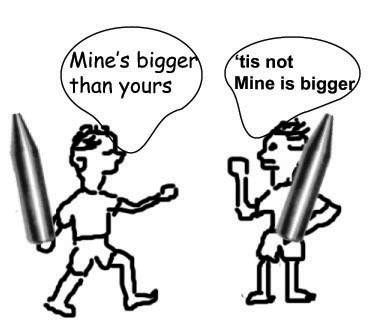
 Former SecDef Perry: US on ‘Brink’ of New Nuclear Arms Race, Defense News, By Aaron Mehta December 3, 2015 WASHINGTON — The US is on the “brink” of kicking off a new nuclear arms race that will elevate the risk of nuclear apocalypse to Cold War levels, former Secretary of Defense William Perry warned Thursday.
Perry also called for the breaking of the nuclear triad by dismantling the intercontinental ballistic missile (ICBM) stockpile.
“We’re now at the precipice, maybe I should say the brink, of a new nuclear arms race,” Perry said at an event hosted by the Defense Writer’s Group. “This arms race will be at least as expensive as the arms race we had during the Cold War, which is a lot of money.”
The Pentagon is starting a major overhaul of its nuclear triad, made up of bomber, submarine and ICBM nuclear options. The Air Force is starting work on its Long Range Strike-Bomber (LRS-B) program, a conventional bomber that later could be nuclear-certified; it is also planning a new version of the ICBM. Meanwhile, the Navy is figuring out funding plans for the Ohio-class submarine nuclear replacement program.
In an August assessment, the Center for Strategic and Budgetary Assessments projects that it will cost more than $700 billion over the next 25 years to recapitalize the nuclear triad.
Speaking on Wednesday, Pentagon acquisition chief Frank Kendall indicated the nuclear modernization programs would be protected in the fiscal 2017 budget and remain a priority for the department going forward.
To Perry, who served in a number of Pentagon positions before becoming the 19th US secretary of defense under President Bill Clinton, spending that money is foolish when the US is both short of cash for other programs and capable of a robust nuclear deterrence already.
The risk of nuclear war is exacerbated by the dismantling of the relationship between Russia and the US that had been formed after the fall of the Soviet Union. Without clear military-to-military communication between those two nations, the risk of an accidental conflict increases…… http://www.defensenews.com/story/defense/policy-budget/2015/12/03/former-secdef-perry-us-brink-new-nuclear-arms-race/76721640/
Green party of Ontario (GPO) strongly opposes nightmare prospect of Liberals rebuilding 6 nuclear reactors
Liberal nuclear dreams are a nightmare for Ontario, http://www.wireservice.ca/index.php?module=News&func=display&sid=17792 Amy Watson, 3 Dec1 5 Efforts to reduce electricity bills and build the renewable energy sector were dealt a killer blow today.
WireService.ca Media Release (12/03/2015) Queen’s Park – “It’s a nightmare for Ontario to make a deal to rebuild six reactors at Bruce,” says GPO leader Mike Schreiner. “Spending billions on nuclear will drive up electricity prices with toxic energy.”

“Why are the Liberals wasting your money on nuclear power that we don’t need without any public oversight or input? This is especially odd after the Auditor General criticized the government for excess supply,” Schreiner adds.
Ontario currently has a surplus of power. The province’s base load generation from 2015 to 2020 will exceed demand according to Ontario’s Auditor General. Excess supply cancels out any financial savings from conservation and energy efficiency programs.
No nuclear project in Ontario’s history has delivered on time or budget. The GPO has collected over 1000 signatures on a petition calling on the government to conduct an independent public review of the costs of and alternatives to rebuilding the Bruce B Nuclear Station and the Darlington Nuclear Station.
“It’s irresponsible for Ontario to spend billions on nuclear when they have access to more affordable, emission free electricity,” says GPC leader Elizabeth May. “The risks are too high to spend money on rebuilding nuclear reactors that threaten the Great Lakes.” Ontario does not have a plan for storing radioactive nuclear waste, nor does it have a public emergency plan to deal with a Fukushima-scale nuclear accident. Canadian taxpayers are on the hook for any nuclear accident that exceeds $1 billion.
Greens continue to oppose nuclear waste dumps that threaten the Great Lakes. The federal Green Party also seeks an amendment to the Nuclear Liability Act to increase maximum insured liabilities from $1 billion to $13 billion, which is the amount for which U.S. reactors are insured.
“We simply can’t leave a legacy of toxic waste and financial debt for our children and future generations,” says Schreiner. “Greens demand an independent public review of the costs of and alternatives to nuclear power.”
The GPO is on a mission to bring honesty, integrity and good public policy to Queen’s Park.
Britons fear Donald Trump might use NATO nuclear weapons, if he becomes President
 Britons seek to ban Donald Trump, eliminate nuclear weapons he might use as president,

Oregon Live, Douglas Perry 3 Dec 15 It’s beginning to look like Donald Trump really could win the Republican nomination for president, and the party’s mainstream leaders are starting to panic.
Across the pond, some Britons are way past panic. They’re rallying support to formally ban Trump from the British Isles. And, just in case the businessman/reality-TV star does become the U.S. commander in chief, there’s a separate effort from the Scottish National Party to end Britain’s Trident nuclear-weapon program, noting that the U.S. president is the de facto decider when it comes to NATO countries using nuclear weapons.
“The UK’s independent nuclear deterrent isn’t, I believe, all that independent,” SNP defense spokesman Brendan O’Hara said in Parliament last week. “In reality, it will be an American commander-in-chief who will ultimately decide, and in 18 months time that commander-in-chief could be President Donald Trump.”…….http://www.oregonlive.com/politics/index.ssf/2015/12/britons_seek_to_ban_donald_tru.html
Entergy will definitely shut down Fitzpatrick nuclear power plant
 Entergy rejects Exelon’s offer to cover FitzPatrick’s fuel cost By PAYNE HORNING , 3 Dec 15 “•…………We have explored every legitimate commercial arrangement that might have changed the decision regarding Fitzpatrick’s retirement,” Holden [Fitzpatrick spokeswoman Tammy Holden] said in a statement. “The [nuclear] plant will retire at the end of 2016 or early 2017, as we have previously announced and formally advised the NRC.”…..http://wrvo.org/post/entergy-rejects-exelons-offer-cover-fitzpatricks-fuel-cost#stream/0
Bill Gates’ nuclear dream doesn’t stand up to critical analysis
Germany gives rise to much optimism. With solar resources no better than Alaska, solar power has nevertheless reached nearly 6% of the total electricity mix in the country. Ten years ago, solar power essentially didn’t exist there. In the U.S., the cost of installing solar has fallen from more than $8/watt to less than $3 in the past eight years, the industry has 175,000 working in it — more than twice the number of people that mine coal — and the value of solar installations reached $18 billion last year, according to the Solar Energy Industries Association.
Thiel and Gates are using their megaphones to make different points, but they actually share much in common. Gates is an investor in TerraPower, one of the companies trying to build the kind of advanced nuclear reactor Thiel wants to see the regulatory environment pave the way for. Gates talks up far-out technologies like making fuels directly from the sun, perhaps pulling carbon from the air to do it. Like Thiel’s nuclear, it’s not remotely clear any of this is going to make economic sense and its very unlikely any of it will be useful for a decade or more……..
There are paths to 100% renewable energy using existing technologies and aggressive deployment efforts.
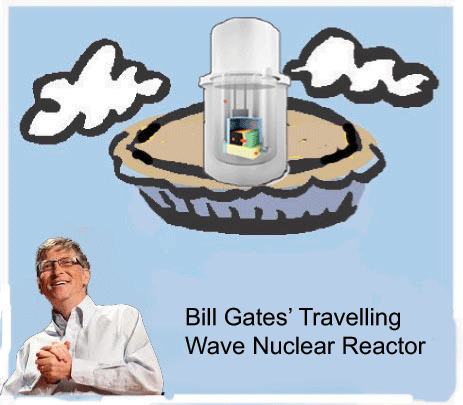 One Tech Billionaire Sees Nuclear As The Path To Clean Energy, But Is He Right?, Forbes, 30 Nov 15
Mark Rogowsky ,
The United Nations climate summit begins today in Paris and already there are headlines. The world’s richest man, Bill Gates, and a slew of his fellow billionaires have announced the Breakthrough Energy Coalition: an effort to take private money to advance promising clean-energy ideas from the lab to the marketplace. Gates suggests wind and solar have made good progress, but given the daunting scale of the challenge ahead, we need to look everywhere we can for promising ideas and develop them as quickly as possible. One thing he doesn’t talk up much is nuclear power, which just days earlier got some very positive words from another tech billionaire, number 234 on the Forbes list, Peter Thiel, who penned “The New Atomic Age We Need” for The New York Times…….
nuclear has established a safety record that argues for a rebirth, right? Perhaps if today were 1979. Unfortunately, the world has changed and nuclear hasn’t changed quickly enough……
The French, however, are set to lower the share that nuclear contributes to 50% over the coming decade. With the average French reactor now three decades old, at least part of the story is economic and technological. Thiel argues that what’s holding back nuclear is: “Designs using molten salt, alternative fuels and small modular reactors have all attracted interest not just from academics but also from entrepreneurs and venture capitalists like me ready to put money behind nuclear power… However, none of these new designs can benefit the real world without a path to regulatory approval.”
What he neglects to mention is that none of these designs are remotely ready to be put into use either. Although molten-salt reactors date back to the 1960s, the current designs haven’t left the research phase. Even in countries like China where U.S. regulatory approval isn’t a gating factor, when the scientists and engineers working on building a production reactor to make power dates like 2032 are tossed around. There are a number of other promising technologies being researched, but still the timeframes for first deployment are all between 2020-30. The U.S. regulatory regime isn’t holding these up, the slow path to development of incredibly complex systems is….. Continue reading
The Strange Politics of Global Warming and Nuclear Power
in 2013 and 2014, the top five U.S. nuclear energy companies and NEI spent a combined total of $60.4 million to lobby Congress and federal agencies.
Despite its legitimate urgency, global warming should not trigger a race to build more nuclear power plants. Rather, an upsurge in political momentum is needed to support the rapid rise of renewable energy. Democratic and Republican presidential contenders have failed to clarify their own ideas about the future of nuclear power within our energy mix, and the time is ripe for a meaningful public conversation. Regardless of affiliations and preconceptions, the question of whether to rely on nuclear power in a warming world is too important to ignore
The Curious Politics of Global Warming and Nuclear Power, HP, Charles B. Strozier Professor of History, The City University of New York Kelly A. Berkell Attorney and Research Fellow, Center on  Terrorism at John Jay College, Dec 15 In the lead-up to the 2016 election, the most formidable candidates vying to serve as our next president have largely avoided the topic of nuclear power. Indeed, they have encountered little pressure to address it even as the Paris climate talks open, with none of the Republican or Democratic debates so far including a single, specific question on nuclear energy. Only one Republican candidate, Chris Christie, and one former Democratic candidate, Jim Webb, broached the subject during the past debates. Christie strongly endorsed nuclear energy, arguing that if we want to mitigate climate change, “nuclear needs to be back on the table in a significant way.” In a subsequent forum across the aisle, Webb essentially agreed.
Bernie Sanders appears to be the only candidate to reject expressly an increased reliance on nuclear power. Continue reading
A new nuclear dream: Westinghouse wants its employees to produce new reactor designs
 Westinghouse, again, looks for the next generation of nuclear reactors, Power Source, December 1, 2015 By Anya Litvak / Pittsburgh Post-Gazette Westinghouse Electric Co.’s CEO Danny Roderick in January challenged his employees to come up with the next big thing in nuclear energy — the next generation reactor.
It had been a very long time since such words were uttered at the Cranberry-based nuclear company……
No new nuclear reactor has been built in the U.S. on time and on budget, and the overruns haven’t been trivial. That track record, along with cheap and plentiful natural gas and a lack of environmental policy that incentivizes low carbon generation, has held back the nuclear renaissance predicted a decade ago.
Even operating nuclear plants with capital costs far behind them are having trouble competing. A handful are headed for premature retirement.
For that reason, economics and scale are top priorities…….
DOE seeks new ideas for reactors Last month, Westinghouse submitted its proposal to the Department of Energy, which had solicited ideas about advanced nuclear reactors that could be built by 2035. The agency plans to award $80 million to two teams over the next five years, but that depends on Congress’ approval going forward. In the meantime, the department is getting ready to announce the winners of a much smaller opportunity.
Westinghouse hasn’t said yet who else it has enlisted to be part of its team, only that there are more than a dozen entities and that they include universities, national labs and vendors.
A spokesman for the agency said the response has been strong with more than a dozen teams vying for funding. The winners — there will be two, and each will be awarded $6 million — are expected to be announced before the end of the year.
By nuclear standards, that’s a drop in the bucket.
“At one time, there was a fair amount of investment going on in Generation IV,” said Larry Foulke, adjunct professor at the University of Pittsburgh’s Swanson School of Engineering……“A number of nations were working together on these reactors,” he said. “But as with most research activities where you’re studying reactors on paper and not making them,” investment dwindles.
“Generation IV reactors are suffering from a lack of funding worldwide,” he said…..http://powersource.post-gazette.com/powersource/companies/2015/12/01/Westinghouse-again-looks-for-the-next-generation-of-nuclear-reactors/stories/201512010005
Radioactive spill at Cotter’s defunct uranium mill in central Colorado
Uranium mill line leaks 1,800 gallons near Cañon City http://gazette.com/uranium-mill-line-leaks-1800-gallons-near-caon-city/article/1564689 By: Bruce Finley – The Denver Post December 1, 2015 Colorado health officials were reviewing an explanation from Cotter Corp. on Monday after a spill at Cotter’s defunct uranium mill in central Colorado — one of the nation’s slowest superfund cleanups.
A pipeline leaked about 1,800 gallons last week on Cotter’s 2,538-acre property uphill from Canon City and the Arkansas River.
Well tests in July found water in the waste pipeline area contained elevated uranium (577 parts per billion, above a 30 ppb health standard) and molybdenum (1840 ppb, above a 100 ppb standard).
This spill was the latest of at least five since 2010. Federal authorities in 1984 declared an environmental disaster and launched a superfund cleanup. Read more at denverpost.com
Connection between Hosgri fault and another larger crack: hazard for Diablo Nuclear Station
Research: Major fault near reactors links to second crack, WT . By MICHAEL R. BLOOD – Associated Press – Sunday, November 29, 2015 LOS ANGELES (AP) – The Diablo Canyon nuclear power plant and earthquake faults have been uneasy neighbors for decades. Even before the twin reactors produced a single watt of electricity, the plant had to be retrofitted after a submerged fault was discovered 3 miles offshore during construction.
That cleft in the earth, known as the Hosgri fault, has long been considered the greatest seismic threat to a plant that stands within a virtual web of faults. But new questions are being raised by sophisticated seafloor mapping that has found that the Hosgri links to a second, larger crack farther north, the San Gregorio fault.
In general, the longer the fault, the stronger its potential shaking power. Together, the two faults create a strand about 250 miles long, more than double the length of the Hosgri alone……
Earlier this year, the Nuclear Regulatory Commission directed Diablo Canyon to conduct additional, in-depth analysis on earthquake risks by June 2017, part of a broad review of seismic threats following Japan’s Fukushima Dai-ichi disaster. The agency found that among commercial U.S. nuclear plants, the California plant is among those that face the highest hazard when potential strong ground shaking is evaluated against the plant design. http://www.washingtontimes.com/news/2015/nov/29/research-major-fault-near-reactors-links-to-second/
New York City and State Department oppose relicensing of Indian Point nuclear plant
 New York expresses opposition to relicensing Indian Point as NRC hears issues 18 Nov 2015. New York Governor Andrew Cuomo is strongly opposed to the renewal of the operating licenses for the two reactors at the 2,069-MW Indian Point nuclear plant and has asked the US Nuclear Regulatory Commission to deny Entergy’s application to extend its operations.
In a letter dated Monday, Jim Malatras, director of New York state operations, reiterated the state’s opposition to relicensing the units as the Atomic Safety and Licensing Board began hearings to address issues raised during the application process.
The hearings began Monday and will continue through the week.
The plant’s proximity to a major population center, with more than 20 million people within 20 miles of the two-unit plant makes it impossible to have an effective safety and evacuation plan, Malatras said. The reactors generate about 25% of the power for New York City and Westchester County. http://www.platts.com/latest-news/electric-power/birmingham-alabama/new-york-expresses-opposition-to-relicensing-21495027
NY agency objects to relicensing Indian Point nuclear plant November 12, 2015. A New York agency has objected to relicensing the Indian Point nuclear plant on the Hudson River, saying it kills millions of fish larvae and sits near seismic faults with an earthquake threat to millions of people.
The Department of State said the plant is incompatible with the estuary’s ecology and safety of New York City 24 miles downstream. The Nuclear Regulatory Commission is prohibited from relicensing the Indian Point reactors unless the U.S. commerce secretary overrides the objection on appeal, Secretary of State Cesar Perales wrote.http://finance.yahoo.com/news/ny-agency-objects-relicensing-indian-173916667.html
Pacific Gas and Electric Co. faces problems in trying to extend last Californian nuclear station’s license
 Californians debate future of state’s last nuclear plant , The Oregon, MICHAEL R. BLOOD, Associated Press, 29 Nov 15 LOS ANGELES (AP) — Six years ago, the company that owns California’s last operating nuclear power plant announced it would seek an extended lifespan for its aging reactors. Pacific Gas and Electric Co. envisioned Diablo Canyon as a linchpin in the state’s green energy future, with its low-carbon electricity illuminating homes to nearly midcentury.
Now, with a much changed nuclear power landscape, the company is evaluating whether to meet a tangle of potentially costly state environmental requirements needed to obtain renewed operating licenses.
If it doesn’t move forward, California’s nuclear power age will end.
That prospect is remarkable considering it was once predicted that meeting California’s growing energy needs would require a nuclear power plant every 50 miles along its coast. But vast fields of solar panels, wind turbines that in places are as common as fence posts and developments in power storage speak to changed times.
“We are not talking about either go dark or go nuclear. There are clearly now so many alternatives,” said former California Environmental Secretary Terry Tamminen, a green energy advocate who served under Republican Gov. Arnold Schwarzenegger.
The issues in play at Diablo Canyon range from a long-running debate over the ability of structures to withstand earthquakes — one fault runs 650 yards from the reactors — to the possibility PG&E might be ordered by state regulators to spend billions to modify or replace the plant’s cooling system, which sucks up 2.5 billions of gallons of ocean water a day and has been blamed for killing fish and other marine life……..
Without new operating licenses, the plant can’t run past 2025. Renewing a nuclear power license is a lengthy proposition, and so even with years to go it’s fast becoming a late hour.
The uncertainty around PG&E’s 3-decade-old plant comes at a challenging time for the company and the U.S. nuclear industry, once thought on the verge of a renaissance. Continue reading
Decision on radioactive trash dump near Great Lakes is delayed until March 2016
 Canada puts off decision on proposed nuclear waste dump near Lake Huron http://michiganradio.org/post/canada-puts-decision-proposed-nuclear-waste-dump-near-lake-huron#stream/0By STEVE CARMODY , 28 Nopv 15 The Canadian government has announced it needs more time to decide if it will OK permits for a nuclear waste storage facility near the shore of Lake Huron. Ontario Power Generation wants to bury approximately 200,000 cubic meters of low to medium level nuclear waste 680 meters – just under a half mile – below ground. The utility insists the rock formation in the area, less than a mile from Lake Huron, is geologically stable.
The Trudeau government had faced a December 2nd deadline to decide if it would approve the permits for the facility. But the agency responsible for the review announced today it is delaying the decision until March 1st.
Beverly Fernandez is with the group Stop the Great Lakes Nuclear Dump. She welcomes today’s decision.
“We are hopeful that the minister will act to protect the Great Lakes and ultimately say ‘no’ to OPG’s plan,” says Fernandez, “This really is a matter that does affect all the people in Canada and the U.S. The Great Lakes are a shared natural resource.”

Fernandez hopes the decision to delay is a sign the Trudeau government may will willing to reject the project. The proposed nuclear waste storage facility has been controversial on both sides of the border. Dozens of local governments in Michigan have passed resolutions opposing it. Environmental groups have protested against it.
Michigan’s congressional delegation has raised serious concerns about the potential consequences to the Great Lakes if the facility fails to contain the radioactive waste.
The former Conservative Canadian government appeared friendly to the planned nuclear waste storage facility. But the government of Prime Minister Stephen Harper was defeated by the Liberals in recent elections.
We don’t talk about the terrorism danger to nuclear facilities: it’s not polite
 Don’t ask, don’t tell – terrorism and the nuclear threat http://thehill.com/blogs/congress-blog/presidential-campaign/261344-dont-ask-dont-tell-terrorism-and-the-nuclear-threat By Robert Dodge, MD, 27 Nov 15 With recent tragic events in Paris the world is once again reminded that there is no safe haven from the threat of terrorism.
In a nuclear world one can only imagine what the outcome would be if the perpetrators had nuclear materials. In a world with over 15,000 nuclear weapons the potential for such a scenario is very real.
Yet with the threat posed by the existence of nuclear weapons and materials, there has been no questioning of or statements by our presidential contenders on how to address and eliminate this threat to all of humanity. As though there was a conspiracy of silence and a fear that one would somehow appear weak if advocating for the abolition of nuclear weapons.
Failing to address the existential threat posed by the continued existence of nuclear weapons while failing to deal with the causation of terrorism is ultimately a recipe for disaster.
This is particularly true now after the Paris attacks, when like after 9/11, all the world has a sense of being Parisian. As long as the ingredients for terrorism exist, no nation will be immune to the potential risk of terrorist attacks. Now is the time for nations to come together. The international leadership void that calls for a joining of efforts to address the causation allows the continued fermentation of the elements.
As per the question of nuclear weapons and their very real and growing threat to human existence, no one is speaking to the humanitarian consequences of nuclear weapons and nuclear war. Probability theorists place the threat of nuclear war by design or accident conservatively at 1 percent per year with some as high as 2-3 percent. A child born today has an unlikely chance of reaching his or her 30th birthday without a nuclear war in their world.

Studies have now confirmed that a limited regional nuclear exchange using less than ½ of 1 percent of the global nuclear arsenals would have global implications ultimately killing up to 2 billion people on the planet from the resulting climate change and devastating effects on agricultural production in the years to follow. This scenario is a very real possibility with the ongoing tensions between the nuclear armed nations of India and Pakistan.
With growing tensions in Ukraine and Syria and with the U.S. and Russia on opposing sides, either side unleashing only their nuclear weapons on hair trigger WITHOUT RETALIATION would result in massive devastation beyond that of the limited regional scenario, possibly ending human life on this planet.
With such a threat we must demand a response from our future leader to tell us what their administration will do to achieve nuclear disarmament, or under what circumstances would they propose such a suicide mission?
Yet who among the candidates for commander-in-chief, who is sworn to protect and serve the United States, has the courage to speak about this greatest threat to our country and indeed to humanity itself? And who in the media is willing to pose the questions about this grave threat? Until we address this issue we will face the possibility in the words of Albert Einstein of “unparalleled catastrophe” continuing to rely on luck as a defense strategy.
Dodge is a family physician practicing full time in Ventura, California. He serves on the National and Los Angeles boards of Physicians for Social Responsibility (www.psr.org,www.psr-la.org,). He also serves on the board of the Nuclear Age Peace Foundation (www.wagingpeace.org) and Citizens for Peaceful Resolutions (www.c-p-r.net). He writes for PeaceVoice (www.PeaceVoice.info).
Dead nuclear reactors still leave an intractable wastes problem
Security, storage concerns linger at closed nuclear sites US regulators still seek safe site for waste, Boston Globe, By David Abel GLOBE STAFF NOVEMBER 26, 2015 VERNON, Vt. — Across from an elementary school, a short road leads to a gate topped by barbed wire and a stark sign that warns in large letters:
“Security personnel are authorized to use deadly force.”
The Vermont Yankee nuclear plant stopped producing power last year, but rigorous security measures, including heavily armed guards in bulletproof towers, are still in place and will be for decades to protect hundreds of tons of radioactive waste that remain behind the gate. The spent fuel will stay here along a bend of the Connecticut River, just 10 miles from the Massachusetts border, until the federal government can resolve a decades-old political battle over where to store the waste from the nation’s nuclear plants.
Across the United States, there are 22 decommissioned plants that have become heavily guarded repositories of spent fuel, their owners waiting indefinitely for a federal decision on where to permanently store the radioactive waste. About 150 miles away in Plymouth, Mass., the Pilgrim Nuclear Power Station will enter the same phase after it closes sometime in the next four years and moves its waste into massive casks.
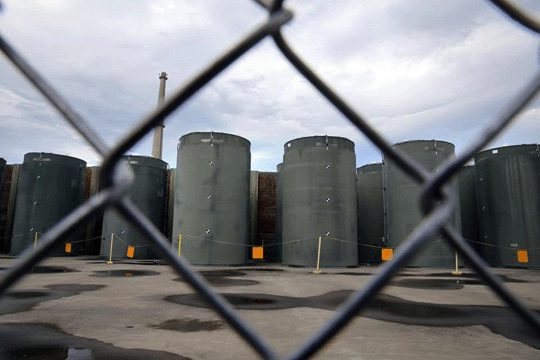
The issue of nuclear waste has long been a political quandary, one that has become increasingly urgent as more of the nation’s aging nuclear plants are shuttered…….
“We don’t think Yucca Mountain will be a viable approach,” said Secretary of Energy Ernest Moniz during a recent meeting with reporters and editors at the Globe.
Moniz said his staff is reviewing a proposal to build a temporary storage site in Andrews County, Texas, which already hosts two radioactive waste disposal facilities. The government will also have to overcome concerns and potential challenges over transporting the fuel through a variety of jurisdictions.
Until then, the waste will remain atop specially built concrete pads at the nation’s nuclear plants. That means the properties cannot be redeveloped for other uses, major security measures will remain in force at sites scattered across the country, and many of their neighbors will continue to live in fear.
“We’re talking about a colossal amount of dangerous waste,” said Deb Katz, executive director of Citizens Awareness Network, who lives 18 miles from Vermont Yankee. “The radioactive plume from an accident could travel more than 100 miles within 24 hours, depending on which way the wind blows.”
Entergy Corp., a Louisiana-based conglomerate that owns the plants in Vernon and Plymouth, plans a decommissioning process at Pilgrim similar to the one it has started at Vermont Yankee.
On its compact campus in Vernon, Vermont Yankee’s remaining 285 employees — about 600 people worked at the plant until last December — have transferred all of the remaining fuel to a 37-foot-deep pool suspended seven stories above ground in a concrete containment building. There are 2,996 spent fuel assemblies cooling in the pool.
After they’re moved into safer, dry storage, the plant will have 58 of the 18-foot-tall, 300,000-pound casks on the outdoor pad along the Connecticut River.
Activists who live near Vermont Yankee have urged the plant to move the spent fuel more quickly from the pools, which they fear could catch fire if an earthquake or other natural disaster caused a leak or cut power to the plant. They have also raised concerns about storing the casks closely together out in the open, rather than below ground or in a hardened building.
“Should someone be interested in shooting them up, they’re sitting ducks,” said Nancy Braus of the Safe and Green Campaign in Brattleboro. “They’re easy targets, very visible.”………. David Abel can be reached at dabel@globe.com. Follow him on Twitter @davabel. https://www.bostonglobe.com/metro/2015/11/26/the-long-road-decommissioning-nuclear-power-plant/k5VWUQzLKCIz2VuYs8RhoO/story.html
Nuclear weapons on hair-trigger alert: time to take steps towards safety

 Could U.S.-Russia Tensions Go Nuclear? Politico Believe it or not, hair-trigger launch alerts are still with us—and perhaps even more dangerous than during the Cold War. By Bruce Blair November 27, 2015 The Russian warplane recently shot down inside Turkey’s border with Syria fits a pattern of brinkmanship and inadvertence that is raising tensions and distrust between Russia and U.S.-led NATO. Low-level military encounters between Moscow and Washington are fanning escalatory sparks not witnessed since the Cold War. And there exists a small but steadily growing risk that this escalation could morph by design or inadvertence into a nuclear threat.
The backdrop for these concerns is that both the United States and Russia maintain their nuclear command posts and many hundreds of strategic nuclear warheads on hair-trigger alert. This is a long-standing practice, or habit, driven by the inertia of the Cold War. The two sides adopted the accident-prone tactic known as launch-on-warning in order to ensure that their strategic forces could be fired before incoming warheads arrived. President Barack Obama’s recent nuclear employment guidance reiterated the need to preserve this option. Our nuclear command system and forces practice it several times a week. So do the Russians.
And believe it or not, Russia has shortened the launch time from what it was during the Cold War. Today, top military command posts in the Moscow area can bypass the entire human chain of command and directly fire by remote control rockets in silos and on trucks as far away as Siberia in only 20 seconds.
Why should this concern us? History shows that crisis interactions, once triggered, take on a life of their own. Military encounters multiply; they become more decentralized, spontaneous and intense. Safeguards are loosened and unfamiliar operational environments cause accidents and unauthorized actions. Miscalculations, misinterpretations and loss of control create a fog of crisis out of which a fog of war may emerge. In short, the slope between the low-level military encounters, the outbreak of crisis and escalation to a nuclear dimension is a steep and slippery one.
Somewhere along this slope, a psychological construct known as “deterrence” is supposed to kick in to prevent the use of nuclear weapons. But deterrence can become an extreme sport during a confrontation, a game of taking and manipulating existential risk, morphing into games of chicken, bluff, coercion and blackmail. The basic idea is to instill fear in an adversary’s mind that events could spin out of control and result in a nuclear war.
That’s especially true since the public doesn’t realize just how little time exists for our leaders to make a decision to use nuclear weapons, even today—and if anything the atmosphere has become even more hair trigger with the threat of cyberwarfare. A launch order is the length of a tweet. Missile crews in turn transmit a short stream of computer signals that immediately ignite the rocket engines of many hundreds of land-based missiles. For the United States, this takes 1 minute. As a former nuclear-missile launch officer, I personally practiced it hundreds of times. We were called Minutemen. U.S. submarine crews take a little longer; they can fire their missiles in 12 minutes.
The last time the U.S. brandished nukes wholesale for the purpose of deterrence was in 1973………
Do U.S. leaders understand that the Russians may fear a decapitation threat is emerging, and that this threat may be the underlying driver raising the stakes for Russia to the level of an existential threat warranting preparations for the use of nuclear weapons? I doubt they do.
At some point one side or the other may blink and back off, or maybe not.
Tensions could continue to rise until the crisis escalates by intention or inadvertence to the threshold of nuclear use. In the case of Russia, this threshold is low. Russia’s strategy in Europe was devised by President Vladimir Putin himself in the year 2000 in response to NATO’s bombing of the Balkans. The strategy is called “de-escalatory escalation,’ which unleashes tens to hundreds of nuclear weapons in a first strike meant to shock an adversary into paralysis. And so it might, or it might just escalate into a nuclear exchange………
It is aggravated by a murky new threat—cyberwarfare. Given our poor comprehension of this cyberthreat, it seems imprudent in the extreme to keep U.S. and Russian command systems poised to launch on warning, and nuclear missiles poised to fly as soon as they receive a short stream of computer signals, whose origin may not be authorized.
Given all this risk-taking, which extends with even greater force to other nuclear weapons countries, and given that deterrence itself is nothing more or less than the manipulation of nuclear risk, we cannot reasonably expect nuclear weapons never to be used..
The obvious solution is to eliminate nuclear weapons entirely, but of course that will not happen overnight. Meanwhile, the following seven measures would help move the dial further away from nuclear midnight. They draw upon the recent report of the Global Zero Commission on Nuclear Risk Reduction……..
One. The United States and Russia could agree to eliminate launch-on-warning from their strategy………
Two. They could agree to begin taking their strategic missile forces off of hair trigger,……
Three. All the nuclear weapons countries could agree to refrain from putting any nuclear forces on high alert except under tightly controlled conditions…..
Four. The U.S. and Russia could work with other nuclear establishments to share knowledge, best practices and technologies in the area of safety and security..
Five. The U.S. and Russia, perhaps with China, could lead an effort to ban cyberwarfare…..
Six. Confidence-building measures agreed to through military-to-military dialogue ……
http://www.politico.com/magazine/story/2015/11/russia-us-tensions-nuclear-cold-war-213395#ixzz3sirbYxpC
1 This Month
Tell Congress: Prevent Nuclear Catastrophe in Iran

Tell Congress: Prevent Nuclear Catastrophe in Iran

Read the Public Inquiry Report, the Commissioners’ report, Surrendering Australia: The AUKUS Deception is available to download for free at aukuspublicinquiry.com. Or just watch the replay of the National Press Club Luncheon.


Shut down the radiation-damaged Heysham nuclear reactors now
To see nuclear-related stories in greater depth and intensity – go to https://nuclearinformation.wordpress.com

Say No to NASA’s Reckless Nuclear Reactor on the Moon
Say No to NASA’s Reckless Nuclear Reactor on the Moon
-
Archives
- November 2026 (215)
- October 2026 (302)
- September 2026 (339)
- August 2026 (330)
- July 2026 (355)
- June 2026 (287)
- May 2026 (306)
- April 2026 (356)
- March 2026 (251)
- February 2026 (267)
- January 2026 (308)
- December 2025 (358)
-
Categories
- 1
- 1 NUCLEAR ISSUES
- business and costs
- climate change
- culture and arts
- ENERGY
- environment
- health
- history
- indigenous issues
- Legal
- marketing of nuclear
- media
- opposition to nuclear
- PERSONAL STORIES
- politics
- politics international
- Religion and ethics
- safety
- secrets,lies and civil liberties
- spinbuster
- technology
- Uranium
- wastes
- weapons and war
- Women
- 2 WORLD
- ACTION
- AFRICA
- Atrocities
- AUSTRALIA
- Christina's notes
- Christina's themes
- culture and arts
- Events
- Fuk 2022
- Fuk 2023
- Fukushima 2017
- Fukushima 2018
- fukushima 2019
- Fukushima 2020
- Fukushima 2021
- general
- global warming
- Humour (God we need it)
- Nuclear
- RARE EARTHS
- Reference
- resources – print
- Resources -audiovicual
- Weekly Newsletter
- World
- World Nuclear
- YouTube
-
RSS
Entries RSS
Comments RSS

