Sudden mass kill of fish in Mississippi River due to shutdown of Monticello nuclear power plant
Sudden shutdown of Monticello nuclear power plant causes fish kill, By David Shaffer Star Tribune NOVEMBER 25, 2015 The sudden drop in temperature in the discharged cooling water resulted in a fish kill in the Mississippi River.
In a report to the U.S. Nuclear Regulatory Commission, Xcel Energy said it shut down the plant while operating at 100 percent power after a problem arose with a reactor pump. The utility said shutdown happened safely, with no release of radiation and no risk to the public.
But the sudden drop in temperature in the discharged cooling water resulted in a fish kill. Xcel said it counted 59 dead fish. The fish were crappies, sunfish, bass, catfish and carp, according to the state Department of Natural Resources, which was notified of the incident.
During unexpected shutdowns, the water temperature near the plant can drop from about 65 degrees to 40 degrees in a few hours, said Harland Hiemstra, a DNR information officer. The fish can’t cope with the sudden change in temperature, he said. “It is thermal shock,” he added…….http://www.startribune.com/sudden-shutdown-of-monticello-nuclear-power-plant-causes-fish-kill/354007091/
USA’s nuclear operators want to extend reactor lives to 80 years!

If the nuclear reactor is 75 years old and faulty – will the company still be around to pay the costs?
“Just like a car and plane, power reactors get old year by year,” Yoshiaki Himeno, a professor at the Tokyo Institute of Technology, said by e-mail. While owners refurbish parts and renew the systems, “the question is how long they can continue those repairs and renewals from economical and safety points of view.
America Set to Decide Whether a Nuke Can Outlive a Human, Bloomberg, Jonathan Crawford , 26 Nov 15
-
Dominion Resources first to request extension to 80 years
-
Move to push reactor life beyond 78.8-year human average
The majority of the nation’s 99 reactors have already received 20-year extensions to their original 40-year operating licenses. Now, operators led by Dominion Resources Inc. want to expand the time frame further, potentially creating a precedent for an aging global fleet at a time when the economics of the industry are undergoing dramatic change.
Dominion said earlier this month it will request an extension from the U.S. Nuclear Regulatory Commission, which oversees the industry. The plan has already raised the ire of anti-nuclear campaigners who cite decades of wear and tear on the nation’s reactors, as well as the 2011 Fukushima disaster in Japan. The NRC will release a draft report next month outlining safety measures needed to extend the time line.
Nuclear waste dump a danger to water, threat to Nevada’s farming community
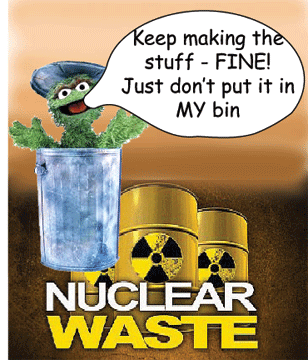 Nevada says national nuclear dump could harm farm community,Naples
Herald, By Associated PressNov 23, 2015 BY KEN RITTER LAS VEGAS (AP) —  Radioactive well-water contamination could threaten some 1,400 people in a rural farming community if federal regulators allow the nation’s deadliest nuclear waste to be buried in the Nevada desert, state officials said in a report issued Friday.
A 53-page document submitted to the U.S. Nuclear Regulatory Commission derides environmental assessments of the proposed Yucca Mountain repository as legally inadequate. It also characterizes the project itself as “an unworkable waste management plan at an unsafe repository site.”
“In the end, there are real people there,” said Robert Halstead, chief of the Nevada Agency for Nuclear Projects and the top state official leading opposition to the project.
“That’s the thing about the way the NRC has approached the whole process,” Halstead said Friday. “Their maps imply there is no population there. They label it as the Amargosa desert.”
George Gholson, chairman of the Timbisha Shoshone Tribe, submitted additional comments Friday accusing commission officials of failing to evaluate effects that building the project would have on tribal members.
“Radioactive contamination of groundwater and springs … affronts the Timbisha’s way of life, is disrespectful to cultural beliefs, and constitutes an environmental justice infringement on the rights of a sovereign nation,” the letter said.
The documents amount to the state staking its legal ground to oppose the Yucca Mountain project. They came on the last day of an environmental study comment period ahead of yet-to-be-scheduled licensing hearings and amid calls from some in Congress to restart the long-mothballed project.
Commission officials didn’t immediately respond to messages seeking comment.
More than three decades of study yielded findings that water seeping through tunnels containing some 77,000 tons of spent nuclear reactor waste could become contaminated and slowly migrate into groundwater west along the normally dry course of the ancient Amargosa River, toward Death Valley in California……..
A federal appeals court breathed new life into the project in 2013 with an order that the Nuclear Regulatory Commission either approve or reject the Energy Department license application.
Officials say a full slate of licensing hearings could take at least three years. http://naplesherald.com/2015/11/23/nevada-says-national-nuclear-dump-could-harm-farm-community/
USA anxious about nuclear proliferation, but keen to market nuclear technology to South Korea
 US, South Korea ratify deal on nuclear energy http://www.dw.com/en/us-south-
 korea-ratify-deal-on-nuclear-energy/a-18875053 A pact between Seoul and Washington on nuclear energy has officially entered into effect. The deal, almost five years in the making, stops short of allowing South Korea to reprocess nuclear fuel from the US. The 20-year accord came into force on Wednesday, with South Korea’s foreign minister and the US ambassador exchanging documents in Seoul.
South Korea is among top five consumers of nuclear energy in the world, and home to 23 nuclear power plants.
However, all of the nuclear fuel in the country is provided by the US.
Seoul has repeatedly urged Washington to allow South Korea to develop uranium enrichment and reprocessing capabilities, citing energy concerns and environmental issues. The US is opposing the move, fearing that such technology could also be used for weapons-grade nuclear material.
The US government is concerned about sparking the nuclear rivalry between Seoul and North Korea,the country that already conducted three successful nuclear tests.
The latest accord denies South Korea the right to reprocess and enrich the US-origin fuel.
However, Seoul and Washington agreed to establish a high-level committee to discuss the issue, which South Korean officials described as a step towards securing a possible consent from Washington in the future.
South Korea is also seeking to become a key exporter of atomic power plants.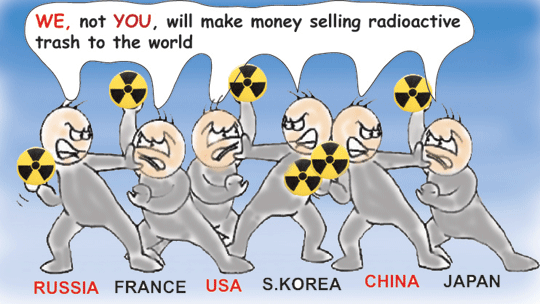
The US ally could also research technologies such as “pyroprocessing” which are generally considered safe from the proliferation standpoint.
Call on President Obama to protect precious groundwater from uranium mining in Grand Canyon
Huffington Post, 24 Nov 15, [Good maps] “…….The mining industry’s statement counts on readers to be ignorant
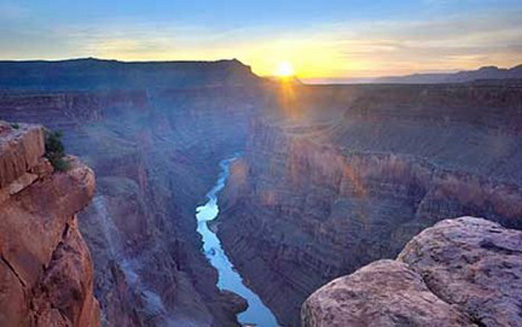 of the fact that federal and state agencies do not require wells to measure water pollution more than a thousand feet underground, where uranium mining threatens aquifers that feed springs deep within the Grand Canyon. No monitoring means contamination is undetected: out of sight, out of mind.
But that’s changing as the U.S. Geological Survey pieces together samples taken from existing wells and places where groundwater flows downward into the Grand Canyon. These show that mining has already polluted 15 springs and five wells within the Grand Canyon’s watershed with toxic levels of uranium.
As I’ve said with regards to oil and gas development, one well contaminated or one person made sick is one too many. The same is true for uranium mining, making the situation around the Grand Canyon a disaster where we can least afford one.
In 2012, this sorry history led my friend and fellow Coloradan, Interior Secretary Ken Salazar, to impose a 20-year ban on new uranium mining in the watersheds that drain directly into the Grand Canyon. His action came in response to thousands of new mining claims filed in the preceding decade. Science and prudence also guided his decision, coupled with the knowledge that nearly $1 billion in annual economic activity is generated by this greatest of earth’s geological treasures.
Need for Permanent Ban on Grand Canyon Uranium Mining
The bill aims to protect 1.7 million acres of historical tribal homeland, including water sources and sacred sites.
Unfortunately, there’s almost no chance that the legislation will gain approval in today’s gridlocked Congress. But the 1906 Antiquities Act gives the president unilateral authority to set aside federal lands as protected national monuments to stop the looting of archaeological sites and for reasons of “historic or scientific interest.”
I’ve long believed we will be judged by the nation we leave to future generations. After all, we don’t inherit the earth from our parents — we borrow it from our children. The president should act now to protect the Grand Canyon from irresponsible development around this national treasure.
The National Mining Association may not be willing to stop digging — literally or figuratively — but the president owes it to us all to help them.
California Governor appeased utilities while SanOnofre nuclear station was under scrutiny?
Email Suggests Governor Appeased Utilities During Calls For San Onofre Investigation, KPBS, AMITA SHARMA, Investigative Reporter | Contact, November 24, 2015
San Onofre’s new steam generators were supposed to last 40 years.
But less than one year after they were installed, hundreds of tubes had shown wear, causing a radioactive leak in January 2012. The leak forced the plant’s closure and stuck San Diego and other Southern California ratepayers with a multibillion dollar bill.
By May 2013, U.S. Sen. Barbara Boxer had in her possession two key documents. They showed that Edison officials knew there was potential for premature tube wear before those steam generators were installed but didn’t allow for fixes. One reason, according to internal documents was that the company wanted to avoid a rigorous government review.
Boxer was incensed.
The California Democrat called on the U.S. Justice Department to open a criminal investigation into whether Edison had lied to federal regulators about what it knew before the faulty equipment was turned on.
“At that point, it was clear that things had gone very seriously awry,” said John Geesman, an attorney for the Alliance for Nuclear Responsibility……….
Meanwhile, a series of bills intended to reform the PUC passed the Legislature this year. One would have compelled the commission to release the sought-after communications between regulators and Brown’s office on San Onofre.
The governor vetoed the reforms, calling them important but technical and conflicting. http://www.kpbs.org/news/2015/nov/24/email-suggests-governor-sided-utilities-over-san-o/
Tennessee unhappy about new radioactive trash plans for Oakridge.
Tennessee raises concerns about proposed Oak Ridge nuclear landfill http://www.timesfreepress.com/news/local/story/2015/nov/22/tennessee-raises-concerns-about-proposed-oak-ridge-nuclear-landfill/337007/ November 22nd, 2015by Associated Press OAK RIDGE, Tenn. — Tennessee officials are raising concerns about the U.S. Department of Energy’s plans for a new nuclear landfill at Oak Ridge.

The Tennessee Department of Environment and Conservation is pushing DOE to consider other Oak Ridge sites beyond the agency’s preferred one, the Knoxville News Sentinel reported.
The federal agency’s preferred site is adjacent to an existing landfill on the government reservation and only 650 yards from the city boundary.
“We are continuing to work with the DOE and EPA on this issue and taking the matter very seriously,” Kelly Brockman, communications chief for TDEC, said in an email response to questions.
The Department of Energy’s current landfill for cleanup wastes is approaching capacity. That’s largely due to the mountains of hazardous and radioactive debris generated by the demolition of K-25 and other former uranium-processing facilities in Oak Ridge. Continue reading
“The Third Way” – front group for new nuclear spinning hard for Paris climate Conference

 Washington think tank, has taken upon itself the unenviable task of trying to convince liberal Democrats that nuclear energy is an important part of the battle against global warming…….
“NuclearMatters” lobby group revs up its spin ahead of Paris climate conference
 Bloomberg BNA and Nuclear Matters Hosting December 3 Event in Austin on the Role of Nuclear Energy in the Region, PR Newswire
Complimentary Event Features Industry Leaders, Policy Experts and Members of Academia Discussing Challenges and Opportunities for Nuclear Energy in Texas ARLINGTON, Va., Nov. 20, 2015 /PRNewswire-USNewswire/ — Bloomberg BNA today announced that it is hosting Nuclear Energy,Texas and the EPA Clean Power Plan, an afternoon conversation exploring the future role of nuclear energy in Texas. The fourth in a series of nationwide events underwritten by Nuclear Matters, the discussion is being held in Austin on Thursday, December 3 from3:30 p.m. to 6:30 p.m. at the Driskill Hotel Austin. ……
Price Anderson Act lets nuclear companies off the hook when big accidents occur
The Atomic Age and limited liability for nuclear accidents, The Hill, 20 Nov 15 By William F. Shughart II.……….Half a century ago, the United States was the only member of the global nuclear club. After detonating atomic bombs at Hiroshima and Nagasaki, Washington’s attention turned to civilian uses of nuclear power. “Atoms for Peace” was a catchphrase of the day. The Cold War was well underway then and civilian reactors were seen as a key producer of nuclear materials destined for military use.
To jumpstart nuclear power in the United States, and to assuage fears that utilities would go bankrupt if radioactive materials were accidentally released into the atmosphere, Congress passed – and President Eisenhower signed – the Price-Anderson Nuclear Industries Indemnity Act in 1957.

-…………-the very large expected costs of a major nuclear event, unlikely as it may be, explain why private insurers are unwilling to underwrite fully any and all future accident claims.
Price-Anderson clearly is a form of corporate welfare that indemnifies the nuclear industry in a worst-case scenario. Although the law doesn’t allow the industry to get off scot-free for all injuries it may cause and it doesn’t prevent injured parties from seeking compensation, the industry’s support for its periodic reauthorization suggests that it highly values Price-Anderson protections.
From an economist’s perspective, the downside of Price-Anderson, as with insurance in general, is that it encourages behavior known as “moral hazard.” Because the nuclear industry itself will not bear the full costs of a devastating accident, such accidents are more likely to happen than otherwise. http://thehill.com/blogs/congress-blog/energy-environment/260837-the-atomic-age-and-limited-liability-for-nuclear
17 year delay before USA govt even starts cleanup of Hanford radioactive waste
 U.S. government proposes 17-year delay in start of Hanford nuclear tank cleanup — until 2039 http://www.latimes.com/science/la-na-hanford-delay-20151118-story.html Ralph VartabedianContact Reporter, 19 Nov 15
The Energy Department has proposed a 17-year delay in building a complex waste treatment plant at its radioactively contaminated Hanford site in Washington state, pushing back the full start-up for processing nuclear bomb waste to 2039.
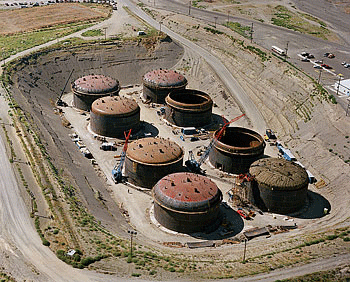
The department submitted the 29-page plan in federal court as part of a suit to amend an agreement with the state that requires the plant to start operating in 2022.
A series of serious technical questions about the plant’s design have caused one delay after another. Two of the major facilities at the cleanup site, which resembles a small industrial city, are under a construction halt ordered in 2013 by then-Energy Secretary Steven Chu.
The plant, located on a desert plateau above the Columbia River, is designed to transform 56 million gallons of radioactive sludge, currently stored in underground tanks, into solid glass that could theoretically be stored for thousands of years.
The waste was a byproduct of plutonium production, which started with the Manhattan Project during World War II.
The 586-square-mile Hanford site is widely considered the most contaminated place in the country, requiring 8,000 workers to remediate half a century of careless industrial practices that were done under strict federal secrecy. The Energy Department filing shows the extent of the problems. Continue reading
Florida citrus fruitys show trace levels of Fukushima radioactive cesium-137
 Trace levels of radioactive cesium-137 from Fukushima now being detected in Florida citrus fruits https://glblgeopolitics.wordpress.com/2015/11/18/trace-levels-of-radioactive-cesium-137-from-fukushima-now-being-detected-in-florida-citrus-fruits/
Posted by aurelius77 on November 18, 2015 (NaturalNews) Radioactive cesium from the 2011 Fukushima disaster is still being detected in citrus and other plants as far away as Florida, according to a report sent to the U.S. Nuclear Regulatory Commission (NRC).
In March 2011, multiple nuclear meltdowns took place at the Fukushima Daiichi plant in Japan. The explosions ejected massive amounts of radioactive material into the environment, most notably radioactive cesium isotopes. In the weeks after the disaster, winds carried airborne radionuclides to every corner of the globe. Most of the radioactivity, however, settled into the Pacific Ocean.
Levels consistent since 2011
The report is Duke Energy Florida’s Annual Radiological Environmental Operating Report to U.S. NRC, dated May 5. It notes that immediately following the Fukushima disaster, radioactive iodine and cesium from the plant were detected in Florida vegetation.
“The Japanese event also affected broad leaf vegetation sample media throughout the year as long-lived radionuclides (Cs-137) were released at Fukushima multiple times,” the report reads.
“The vegetation measurements in 2014 are still affected by the Fukushima event due to the long-lived radionuclides deposited. The vegetation control sample station located in Orlando, Fl. is also experiencing similar Cs-137 deposition on the broad leaf sample media.”
According to the report, levels of Cs-137 have remained relatively constant in the samples tested over the past four years. This is to be expected, because that radionuclide has an incredibly long half-life.
In 2012, 13 of 24 samples taken tested positive for Cs-137, up to 172 pCi/kg (a picocurie is a unit of radiation; approximately 27 pCi is equivalent to one Bequerel [Bq], a common unit of radioactivity). Samples taken in Orlando tested at levels up to 201 pCi/kg.
Nuclear lobby predominates at Wisconsin public hearing
 Nuclear power hearing dominated by speakers looking to lift restrictions http://www.wisbusiness.com/index.Iml?Article=360284 11/19/2015 By Chris Thompson Not one person during a nearly three-hour public hearing testified against a bill that would lift what amounts to Wisconsin’s moratorium on nuclear power plant construction.
Beyond bill author Rep. Kevin Petersen, those speaking in favor of AB 384 yesterday included Public Service Commission member and former DOA Secretary Mike Huebsch. The Assembly’s Energy and Utilities Committee also heard from multiple construction industry representatives and students wearing t-shirts that read “Environmentalist for nuclear energy.”
Amber Meyer Smith of Clean Wisconsin said her group supports current Wisconsin law. The costs of a nuclear plant and the threats to the environment from fuel waste, Meyer Smith said, are just too much for Clean Wisconsin to support.
Her organization, along with the Citizens Utility Board and a private citizen, registered against the bill but didn’t testify. The Sierra Club-John Muir Chapter is registered with the GAB in opposition to the legislation.
“We submitted testimony,” Meyer Smith said, “and just felt that was sufficient.”
The topic isn’t new in the Capitol. It arose as a possibility during former Gov. Jim Doyle’s administration through an energy task force. And committee member Rep. Josh Zepnick, of Milwaukee, said he is among the Dems who have tried to lift the moratorium.
Petersen, R-Waupaca, said the state in 1983 enacted regulations that essentially put a stop to nuclear plant construction. Petersen, Huebsch and others argued storage and fuel recycling technology have advanced to the point that the concerns of 1983 no longer apply.
Frank Jablonski, a lobbyist for the Nuclear Energy Institute, testified he would bet his own health on the safety of storage technology.
“If you want to put a dry cask in my backyard, you absolutely could,” he said. “Just build the plant in Wisconsin.”
Obama backs community solar power as rooftop energy alternative
White House pushes community solar power as rooftop
alternative Gregory Korte, USA TODAY, 19 Nov 15 WASHINGTON — About half of electric customers can’t  install solar panels because they don’t own their building, don’t get enough sun or don’t have a large, south-facing roof to install solar panels, according to the U.S. Department of Energy.Those technical challenges are a particular hurdle for low- and middle-income customers — and that’s why the Obama administration is pushing a solution known as community solar.
The White House hosted a summit Tuesday to bring together major solar players to figure out ways to expand retail solar power from traditional rooftop arrays to a model in which households and businesses invest in shared solar systems. The administration announced that 68 cities, states, and businesses had signed on to a White House initiative to promote community solar, with an emphasis on low- and moderate-income households.

Those commitments are expected to bring solar power to to more than 20,000 households in 21 states, the White House said. And, just as importantly for President Obama, it will allow the United States to expand its use of clean energy as Obama prepares to travel to Paris for an international climate summit where he’ll press other companies to make similar strides to reduce carbon pollution from fossil fuels…….
Another participant, Michelle Moore of the nonprofit Groundswell, works as a community organizer to try to create markets for community solar power in places where it doesn’t yet exist. She said the White House summit was helpful in bringing for-profit utilities, cooperatives, local governments, non-profits and financiers together to make connections.
“Our role is organizing customers so that they’re able to have more of a say in what kind of energy they want and how they want to buy it,” said Moore, a former environment policymaker at Obama’s White House Council on Environmental Quality. “It’s a way to buy into a solar project without a home construction project.” http://www.usatoday.com/story/news/politics/2015/11/17/white-house-pushes-community-solar-power-rooftop-alternative/75950054/
USA tests non-nuclear version of B61-12 gravity bomb in Nevada
 USAF Completes Testing Of Non-nuclear Gravity Bomb, Defense World, November 17, 2015 The National Nuclear Security Administration (NNSA) and United States Air Force (USAF) have tested non-nuclear version of the B61-12 gravity bomb at Tonopah Test Range in Nevada.
The test was performed in a realistic guided flight environment, the USAF announced today.
This test is the last of three development flight tests for the B61-12 Life Extension Program (LEP). The B61-12 test asset was released by a USAF F-15E Strike Eagle and it demonstrated successful performance in a realistic guided flight environment…….
The development flight test asset contained representative non-nuclear components but no highly enriched uranium or plutonium, which is consistent with test treaty obligations, NNSA added……..The B61-12 is expected to replace earlier B61 models, including the B61-3, B61-4, B61-7, and B61-10. Development engineering of the B61-12 LEP began in February 2012 as a joint USAF-NNSA program. http://www.defenseworld.net/news/14614/USAF_Completes_Testing_Of_Non_nuclear_Gravity_Bomb#.VkwpS9IrLGg
1 This Month
Tell Congress: Prevent Nuclear Catastrophe in Iran

Tell Congress: Prevent Nuclear Catastrophe in Iran

Read the Public Inquiry Report, the Commissioners’ report, Surrendering Australia: The AUKUS Deception is available to download for free at aukuspublicinquiry.com. Or just watch the replay of the National Press Club Luncheon.


Shut down the radiation-damaged Heysham nuclear reactors now
To see nuclear-related stories in greater depth and intensity – go to https://nuclearinformation.wordpress.com

Say No to NASA’s Reckless Nuclear Reactor on the Moon
Say No to NASA’s Reckless Nuclear Reactor on the Moon
-
Archives
- November 2026 (215)
- October 2026 (302)
- September 2026 (339)
- August 2026 (330)
- July 2026 (355)
- June 2026 (287)
- May 2026 (306)
- April 2026 (356)
- March 2026 (251)
- February 2026 (267)
- January 2026 (308)
- December 2025 (358)
-
Categories
- 1
- 1 NUCLEAR ISSUES
- business and costs
- climate change
- culture and arts
- ENERGY
- environment
- health
- history
- indigenous issues
- Legal
- marketing of nuclear
- media
- opposition to nuclear
- PERSONAL STORIES
- politics
- politics international
- Religion and ethics
- safety
- secrets,lies and civil liberties
- spinbuster
- technology
- Uranium
- wastes
- weapons and war
- Women
- 2 WORLD
- ACTION
- AFRICA
- Atrocities
- AUSTRALIA
- Christina's notes
- Christina's themes
- culture and arts
- Events
- Fuk 2022
- Fuk 2023
- Fukushima 2017
- Fukushima 2018
- fukushima 2019
- Fukushima 2020
- Fukushima 2021
- general
- global warming
- Humour (God we need it)
- Nuclear
- RARE EARTHS
- Reference
- resources – print
- Resources -audiovicual
- Weekly Newsletter
- World
- World Nuclear
- YouTube
-
RSS
Entries RSS
Comments RSS

