Decrepit old nuclear facilities a safety worry in America

 Photos show nuclear facilities in dangerous disrepair By Nicole Gaouette and Barbara Starr, CNNWashington (CNN) Story highlights
- Nuclear officials describe critical utility, safety and support systems that are failing
- Many facilities date from World War II and intended to operate for as little as one decade
US nuclear security facilities are dangerously decrepit and putting national security goals at risk, according to nuclear officials who are asking Congress to back the administration’s push to modernize the system.
India and Canada hoping to market nuclear technology together?
 India, Canada discuss civil-nuclear cooperation The two leaders discussed a wide range of issues of mutual interest, including civil-nuclear cooperation between the two countries, an official release issued said today. Indian Express By: PTI | New Delhi September 8, 2016 India and Canada have discussed a wide range of issues of mutual interest, including the civil-nuclear cooperation between the two countries. The discussion was held during a meeting between Union Minister Jitendra Singh and visiting Canada Minister for Natural Resources, James Gordon Carr, here on Wednesday.
The two leaders discussed a wide range of issues of mutual interest, including civil-nuclear cooperation between the two countries, an official release issued said today. As a country with large energy requirements, India looks forward to promoting nuclear energy production at a significant scale and the two nations can jointly work to achieve this, said Singh, Minister of State in Prime Minister’s Office.
He referred to a common technological base of Pressurised Heavy Water Reactor (PHWR) in which India and Canada are global leaders and it is an area offering opportunity of potential bilateral cooperation between the two countries……….
Singh referred to the visit of Prime Minister Narendra Modi to Canada in April 2015 during which a long term uranium procurement contract was signed by Department of Atomic Energy, Government of India with the Canadian Uranium producer CAMECO…….http://indianexpress.com/article/india/india-news-india/india-canada-discuss-civil-nuclear-cooperation-3020552/
President Obama to stay with the policy of pre-emptive nuclear strike
 Obama to Stick With “First Strike” Nuclear War Doctrine, Claiming Deterrence Value https://www.districtsentinel.com/obama-stick-first-strike-nuclear-war-doctrine-claiming-deterrence-value/ September 6, 2016 by Sam Knight President Obama will not rule out the possibility of the United States conducting a first nuclear strike, keeping intact a policy that has been in place since the Cold War.
The New York Times reported Tuesday that Obama won’t attempt to revise the so-called “First Strike” doctrine before leaving office in January 2017.
The paper noted he had faced criticism, including some from “former senior aides,” over unfulfilled campaign and first-term promises, to work towards “a world without nuclear weapons.”
“For months, arms control advocates have argued for a series of steps to advance the pledge he made,” the Times said. “An unequivocal no-first-use pledge would have been the boldest of those measures.”
The source of complaints about the President’s about-face are from roughly six years ago. In 2010, when Obama renewed the START treaty with Russia, he also agreed to modernize the US nuclear arsenal, per Congressional Republicans’ demands.
The Times said that a shift away from First Strike would be mostly cosmetic, with US presidents dating back to Harry Truman, having pledged to only use nuclear weapons as a “last resort.”
History, however, casts a pall over these pledges.
Truman ordered the dropping of two atomic bombs on an already-battered Imperial Japan in 1945, despite the fact that some American military officials–at the time and, in the years after–expressed doubt that the nuclear bombings were needed to force a Japanese surrender. Those critics included Dwight Eisenhower, Pacific fleet commander Adm. Chester Nimitz, and Truman’s Chief of Staff, Adm. William Leahy. The United States is still the only nation in history to use nuclear weapons against an adversary.
According to The New York Times’ Tuesday report, President Obama had considered a move away from First Strike this summer, not long after he became the first US President to visit Hiroshima—the first of the two Japanese cities targeted by nuclear weapons, under orders from Truman.
Obama was, however, persuaded to move away from altering the policy by his cabinet. The Secretaries of Defense, State and Energy—Ash Carter, John Kerry, and Ernest Moniz—were all opposed to the move.
Kerry and Carter were particularly concerned about upsetting allies in East Asia, South Korea and Japan, in the context of perceived US “weakness,” in the face of possible North Korean military strikes.
The Times also noted Kerry objecting to “weaken[ing] the nuclear deterrent while Russia is running practice bombing runs over Europe and China is expanding its reach in the South China Sea.”
President Obama also ran the risk of adopting a policy that would be quickly reversed by the next administration, the paper noted.
“[Donald] Trump bristled at the idea [of abandoning first strike], saying he would never want to weaken America’s leverage,” The Times said. “[Hillary] Clinton has not spoken on the issue during her campaign.”
The Dead Nuclear Plant Society – in nuclear trash burial business
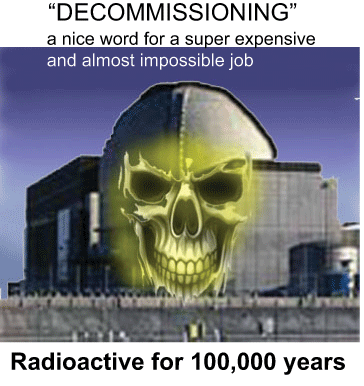 ‘Dead Plant Society’ lobby group booms as reactors close Hannah Northey, E&E reporter Greenwire: September 6, 2016 “……..Reactors are closing as nuclear utilities struggle to compete with cheap natural gas, low demand for power and no national energy policy. And when the behemoth nuclear plants close, the Dead Plant Society grows.
As the teacher played by Robin Williams in the movie famously tells his young students, “We are food for worms, lads. Because, believe it or not, each and every one of us in this room is one day going to stop breathing, turn cold and die.”
The group of doomed-reactor owners has doubled from its original five members to 10 and now includes Exelon Corp., the nation’s largest nuclear utility.
Operators who climb aboard are eager to weigh in on a high-profile rulemaking at the Nuclear Regulatory Commission for decommissioning reactors and to find solutions — on or off Capitol Hill — for growing amounts of radioactive waste piling up across the country, said Smith, the president of Governmental Strategies Inc.
Exelon came to the society five years ago. The nuclear giant is deactivating reactors — or is planning to do so — at three sites in Illinois and one in New Jersey, Smith said. Entergy Corp. signed after it bought the shuttered Big Rock Point nuclear power plant near Charlevoix, Mich. And Pacific Gas & Electric Co. was next when it decided to close the Diablo Canyon nuclear reactors in California.
Following years would see Southern California Edison join with the closure of the San Onofre reactors in California and Duke Energy Corp. as it shuttered the Crystal River nuclear plant in Florida.
All told, the tight-knit club represents more than a dozen reactors that have been closed or are about to be snuffed out in eight states. And nuclear executives have warned that an additional 15 to 20 reactors could close in coming years.
Many of the companies are either suing the federal government or involved in legal settlements after the Department of Energy failed to uphold its 1980s agreements and take possession of spent reactor fuel destined for the stalled repository at Yucca Mountain, Nev. So far, DOE has paid out more than $5 billion, and the lawsuits are still mounting.
And like the industry implementing cost-cutting measures to keep reactors afloat, Smith said the Dead Plant Society is on a tight budget, spending under $160,000 a year on lobbying since its inception, according to the Center for Responsive Politics. Working with Smith is Michael Callahan, president of CCMSC Corp. and a former NRC congressional affairs officer….
‘Real security and safety issues’
Smith isn’t thrilled about the group’s growth.
The former Hill staffer and Nuclear Energy Institute executive said he’d rather be promoting a growing industry, not burying cooling waste.
“I hope not to grow it; I don’t like being in the nuclear trash burial business,” said Smith, who worked for former Louisiana Sen. John Breaux (D), a former Entergy lobbyist. “I had a lot more fun when I was lobbying to get new plants up and running.”
Then again, most members of the Dead Plant Society would rather not belong to the group, either.
Owners of the three Yankee reactors in New England, for example, recently sued the federal government after DOE failed to pick up spent reactor fuel stored in concrete casks at the site of former reactors in Connecticut, Maine and Massachusetts.
Connecticut Yankee Atomic Power Co., Maine Yankee Atomic Power Co. and Yankee Atomic Electric Co. said they existed as corporations only because DOE had failed to pick up the waste, forcing the companies to build, staff and oversee on-site storage. The court awarded the companies $76.8 million in damages.
Tim Smith, a lobbyist and president of Governmental Strategies Inc., has represented the Decommissioning Plant Coalition since 2001, better known in industry as the “Dead Plant Society.” Photo courtesy of Governmental Strategies Inc.
 The dispute, like many others, stems from the Nuclear Waste Policy Act, which required DOE to remove spent nuclear fuel and high-level radioactive waste from reactors. The agency signed contracts with the companies to remove the waste by January 1998 and store it in a permanent repository, but the department failed to do so. The Obama administration later pulled support for building a waste repository under Yucca Mountain, forcing utilities across the nation to store spent nuclear fuel in wet pools or dry storage casks on-site……
DOE will see its legal problems grow should more reactors go dark.
The department could face between $29 billion and $50 billion in legal fees if it begins accepting waste by 2025, according to a recent study by the Kleinman Center for Energy Policy at the University of Pennsylvania. If the decadeslong debacle slips past that date, costs could continue to grow by $500 million a year, said Christina Simeone, the report’s author. There are currently 19 lawsuits pending in federal court, according to a DOE report.
But the real losers are the ratepayers and taxpayers who have paid for a repository and may not realize that radioactive waste may live in their communities for ages, long after a reactor is snuffed out, she said.
What’s more, federal funds to move the process forward are off-limits unless the law is changed, she added. The $34 billion Nuclear Waste Fund — a cache nuclear customers have fed over years — is untouchable under statute for repository-related activities, and DOE legal fees are taken out of a federal fund made up of taxpayers’ contributions, she said.
“I don’t think these communities realize that when these plants close, the waste is going to stay there,” Simeone said. “The plant may be remediated, but there’s a portion of the land that’s going to remain under license at the NRC and is going to store waste indefinitely. There are real security and safety issues.”……..
The commission’s work — slated to be complete by 2020 — has spurred passionate debate between the industry and host communities, public advocates and environmental groups over funding for multibillion-dollar cleanups. Central to those discussions is what happens to pools and casks full of radioactive waste, the sizes of security forces and evacuation zones, and what role the host communities play.
As it stands, there are no such federal rules for dead nuclear plants.
Instead, companies must seek “exemptions” from regulations for operating plants as they power down the units.
Smith said the Dead Plant Society is supporting the NRC’s work to streamline the process and make it transparent, adding that operators set aside money to ensure they can remove or reduce radiation from the former plant sites so the land can be released or repurposed — a process that can cost as much as $400 million……..
The Vermont Yankee decommissioning panel has said host communities — people living near the nuclear plant within the 10-mile evacuation zone — need a voice on par with industry. The group has called on the NRC to take a closer look at the effect on communities hit by the multimillion-dollar loss in tax revenues after reactors close.
In their comments to the NRC, neighbors of nuclear reactors are asking the agency to ensure that decommissioning funds aren’t used for lobbying or operating expenses, and not to reduce evacuation zones. ……http://www.eenews.net/stories/1060042350
Outcry over secret trucking of weapons grade nuclear waste to South Carolina
 Weapons-grade nuclear waste shipments to U.S. prompt outcry Trucks expected to carry
 casks containing highly enriched uranium and radioactive isotopes CBC News Sep 05, 2016 A highly secretive plan to ship weapons-grade nuclear waste from a federal lab northwest of Ottawa to the United States is drawing ire in some of the southern Ontario and American communities along the potential route.
Radioactive waste from the former Atomic Energy of Canada Ltd. laboratory in Chalk River, Ont., a major but dwindling world supplier of medical isotopes that is now run by a private consortium, is set to be transported in liquid form to a site in Savannah River, S.C., for processing and disposal. The route could take it through Ontario’s fruit-rich Niagara Region, or possibly even through the border crossing at Sault Ste. Marie, Ont., into Michigan, according to a lawsuit trying to stop the shipments. Thelawsuit was filed in a U.S. federal court last month by a coalition of American environmental and nuclear watchdog groups. …….
Kept secret from emergency personnel
The plan is for about 150 shipments by truck to South Carolina, a minimum distance of nearly 1,700 kilometres from Chalk River, which is 180 km northwest of Ottawa. Each shipment would carry four 58-litre steel containers placed inside a larger steel and lead tube, carrying liquid radioactive waste including isotopes of cesium, iodine, strontium and plutonium, according to the U.S. lawsuit.
The waste would also contain a modest but dangerous quantity of highly enriched uranium, which can be used to make a nuclear bomb, the lawsuit states.
The waste is a byproduct of making molybdenum-99, a medical isotope used in diagnostic tests of organs and other body parts.
The Niagara area’s regional government passed a motion last year opposing the shipments…….
One problem raised by opponents is that, for security reasons, the route through Canada and the timetable for shipments are being kept under tight secrecy — so secret that local emergency responders haven’t been kept in the loop.
“There would be no notice given, but of course it would be our first responders, my friends, my neighbours, working in our volunteer force and in our emergency services, that would be exposed… in case there was an accident,” Hodgson said, adding that even his local fire chief only found out through the media.
The Canadian Nuclear Safety Commission, the federal nuclear safety regulator, approved the steel tube design last year for transporting the nuclear waste, but full environmental assessments have not been conducted in either Canada or the U.S., opponents complain. …… http://www.cbc.ca/news/health/nuclear-waste-chalk-river-uranium-transport-carolina-1.3748658
Flooding – a dire hazard to nuclear power stations
Nuclear Reactors and Flood Protection DAVE LOCHBAUM, DIRECTOR, NUCLEAR SAFETY PROJECT | SEPTEMBER 6, 2016 DISASTER BY DESIGN/ SAFETY BY INTENT #48 Safety by Intent Oconee Flood Protection Issue

In August 2006, NRC inspectors identified a deficiency in a flood protection measure at the Oconee Nuclear Station in South Carolina. Specifically, the inspectors discovered that workers removed a 6-inch by 10-inch panel in the 5-foot tall flood wall around the Standby Shutdown Facility (SSF) to allow temporary cables to be used during a modification. When the work was completed and the cables removed, the panel was not re-installed.
The SSF houses power supplies and emergency equipment that provide core cooling for all three Oconee reactors during certain accidents. The opening in the flood wall could have allowed water to enter the SSF and submerge the equipment, disabling it. The NRC’s preliminary determination was that the problem warranted a white finding.
The owner contested the white finding in October 2006 on grounds that the lower end of the opening is 4.71 feet above the ground and no credible flood could cause water to rise high enough to flow through the opening to threaten the equipment inside the SSF. The NRC considered the argument, then decided against it and issued the white finding in November 2006.
The owner appealed the white finding in December 2006 on largely the same grounds that the NRC had considered and rejected. The NRC formed a five-member panel to review the owner’s appeal. In February 2007, the NRC panel recommended that the appeal be denied. The NRC notified the owner on March 1, 2007, that the appeal was denied.
The owner appealed the denial of the first appeal in May 2007 on largely the same grounds that it had unsuccessfully trod twice before. Once again, the NRC formed another panel to handle the appeal.
The flood of appeals forced the NRC to closely examine the design basis flood event for Oconee. Included in the mix of things that could inundate the Oconee site was the failure of the Jocassee Dam, upriver about 20 miles. The NRC discovered that the owner made a mistake when calculating the probability of the dam’s failure—the dam’s failure was more than 10 times more likely than the owner had calculated. The NRC denied the second appeal in November 2007 to let the white finding stand.
But the owner’s failed appeals resulted in far more than a white finding. Along the way, the NRC discovered a larger problem than a 6-inch by 10-inch opening in a 5-foot tall flood wall. The NRC learned of a study completed in the early 1990s showing that Jocassee Dam’s failure could inundate the Oconee site up to 16.8 feet and cause the meltdown of all three reactors, rendering the presence or absence of a hole in a 5-foot tall flood wall somewhat moot. The NRC mandated in August 2008 that the owner respond, under oath or affirmation, with information explaining how Oconee is adequately protected against floods. The owner responded to the NRC’s mandate in September 2009.
The NRC sat down with the owner in November 2008 about flood protection deficiencies at Oconee. The NRC informed the owner that its response to the NRC’s mandate was “insufficient.” The NRC seemed more than a little perturbed by the owner’s insistence that Oconee could not possibly be inadequately protected against flooding caused by failure of the Jocassee Dam, because Oconee did not legally have to be protected against dam failures.
The owner and the NRC discussed/debated the matter until they agreed upon 15 compensatory measures to be taken at Jocassee and Oconee to reduce the chances of the dam’s failure and increase the chances of Oconee surviving a flood……….
Fort Calhoun Flood Protection Issue
As described in an All Things Nuclear post, the NRC identified in July 2010 several deficiencies in protective measures against flooding at the Fort Calhoun nuclear plant (Nebraska). The owner attempted to justify the configuration as-is, largely on grounds that the plant had operated for over three decades without experiencing a flood requiring the protections the NRC deemed inadequate. The NRC considered that argument, then decided against it and issued a yellow finding in October 2010. (For context, the NRC issued 827 findings to plant owners during 2010 and only two were yellow in the green, white, yellow, and red hierarchy; it issued no red findings that year). The NRC pointed out that the flood barriers and related measures were installed for protection against the postulated failure of upriver dams, and the fact that the dams had not yet failed had little relevancy on the acceptability of deficient barriers.
The NRC’s identification of the flood protection deficiencies and their strong inducement for the owner to remedy them expeditiously came in handy when Fort Calhoun literally became an island in the Missouri River in June 2011.
Nationwide Flood Protection Issues
Prior to a flood in March 2011 causing three reactors at Fukushima Daiichi in Japan to melt down, the NRC discovered from Oconee, Bellefonte, and Fort Calhoun that protection against flooding hazards might not be as reliable and robust as necessary. On July 19, 2010, the NRC initiated Generic Issue 204 (GI-204), “Flooding of Nuclear Power Plant Sites Following Upstream Dam Failures.” The NRC was conducting due diligence for GI-204 (i.e., researching postulated floods and associated protections to assess which reactors might have what vulnerabilities) when Fukushima happened. The NRC finished its screening study for GI-204 in July 2011and accepted GI-204 as a generic issue in February 2012. The GI-204 effort helped inform the NRC’s decision-making about steps to be taken to reduce flooding vulnerabilities, the potential consequences of which had been vividly revealed by the Fukushima disaster………
Disaster by Design
Floods pose dire hazards to nuclear power plant safety for two reasons. First, flood waters can submerge and disable primary safety systems and their backups. Flooding can thus breach multiple barriers in the defense-in-depth approach to safety. Second, flood waters can impair efforts by workers to compensate for disabled systems and breached barriers.
The one-two punch of knocking out installed systems and impairing manual compensatory measures make floods a genuine risk to be reckoned with.
UCS’s Disaster by Design/ Safety by Intent series of blog posts is intended to help readers understand how a seemingly unrelated assortment of minor problems can coalesce to cause disaster and how effective defense-in-depth can lessen both the number of pre-existing problems and the chances they team up. http://allthingsnuclear.org/dlochbaum/nuclear-reactors-and-flood-protection
Hypocrisy of big USA companies on climate change
 U.S. companies tout climate policies, fund climate skeptics. Reuters, 6 Sept 16, By Richard Valdmanis and Grant Smith | BOSTON/NEW YORK
U.S. companies that have expressed the most fervent public support for President Barack Obama’s environmental agenda are also funding its biggest enemies – the scores of U.S. lawmakers who are climate change skeptics and oppose regulation to combat it, according to a Reuters review of public records.
Ahead of the Nov. 8 presidential and congressional elections, the donations from companies including PepsiCo, Dupont, and Google reveal a disconnect between how these companies present themselves to the public on environmental issues, and how they manage their political contributions to support business-friendly policy.
But inconsistency between a company’s environmental positions and its political giving may point up a need for better oversight, according to Jon Lukomnik, head of the Investor Responsibility Research Center Institute.
“There really needs to be a process that looks at these issues … at C-suite and board levels on a periodic basis,” Lukomnik said.
The Reuters review covered donations made during the 2016 election cycle by the political action committees (PACs) of 30 of the biggest publicly traded U.S. companies that signed Obama’s “American Business Act on Climate Change Pledge” in 2015, a public promise to enact climate-friendly corporate policies and support strong climate change oversight like the global climate accord signed in Paris.
The review found that 25 of the 30 companies are funding the campaigns of lawmakers featured on a “climate deniers” list that was put together by Organizing For Action, a non-profit created by former Obama campaign aides to advocate his agenda.
The list includes more than 130 members of Congress, nearly all Republicans, and is a who’s who of the biggest opponents of Obama’s plan to combat climate change. Some of those on the list dispute the label “denier” and describe themselves as climate change “skeptics”.
The list includes Republican Congressman Kevin Cramer of North Dakota, an energy advisor to presidential candidate Donald Trump who once argued the Earth was cooling not warming, and Republican U.S. Senator Jim Inhofe of Oklahoma, who last year held up a snowball on the Senate floor as evidence global warming does not exist.
Other signatories to the American Business Act on Climate Change Pledge that gave more than a third of their top political contributions to lawmakers on the list include Google, AT&T, GE, Verizon, and Mondelez, according to the review.
Those levels of donations given to climate skeptics are relatively high given that the list covers about a quarter of U.S. Congress members……… http://www.reuters.com/article/us-usa-election-climate-donations-idUSKCN11C0ED
Comprehensive Test Ban Treaty has enduring value
THE ENDURING VALUE OF THE CTBT, Arms Control Wonk, by Michael Krepon | September 6, 2016
The Senate Foreign Relations Committee is turning its attention to the Comprehensive Test Ban Treaty for the first time since 1999, when it held the briefest of hearings on the Treaty before fast-forwarding it to the Senate, which rebuked President Bill Clinton by denying its consent to ratification. The vote was mostly along party lines – only four Republican Senators voted yea back then – a preview of bitter partisan divides to follow.
One of these years, the SFRC will hold lengthy hearings on the CTBT, focusing on what has changed since the 1999 vote, what benefits the Treaty can provide, and what insurance policies could address lingering concerns. The two biggest and most important developments since the 1999 vote, as former Secretary of State George Shultz and others have noted, are the U.S. stockpile stewardship program and advancing capabilities to detect very low-yield, covert nuclear tests.
At the time of the 1999 vote, effective stockpile stewardship without explosive testing was a concept. Now it is a reality. The U.S. nuclear labs have figured out how to extend the longevity of existing warhead designs without explosive testing. Exceptional progress has also been made in detecting extremely low-yield tests – both by U.S. national technical means and by a parallel International Monitoring System built by the CTBT Preparatory Commission, based in Vienna. As a consequence, the two biggest concerns of CTBT skeptics have been satisfactorily addressed.
For these reasons alone, the CTBT deserves open-minded consideration in hearings informed by technical expertise. The Senate’s consent to ratification could do more than any other single step to reduce nuclear dangers in East Asia, South Asia, and the Middle East, where continued or renewed testing would rattle allies and accelerate negative regional dynamics……….
Given the CTBT’s enduring value, it deserves a boost by means of a rare UN Security Council resolution and a companion P-5 statement – especially on the 20th anniversary of the Treaty’s signing ceremony at the United Nations.
Note: The Stimson Center will convene a meeting on September 13, 2016 on the United States and the Future of the CTBT. http://www.armscontrolwonk.com/archive/1201904/the-enduring-value-of-the-ctbt/
Study: Future drought will offset benefits of higher CO2 on soybean yields
EurekAlert, 6 Sept 16 UNIVERSITY OF ILLINOIS AT URBANA-CHAMPAIGN, CHAMPAIGN, ILL. — An eight-year study of soybeans grown outdoors in a carbon dioxide-rich atmosphere like that expected by 2050 has yielded a new and worrisome finding: Higher atmospheric CO2 concentrations will boost plant growth under ideal growing conditions, but drought – expected to worsen as the climate warms and rainfall patterns change – will outweigh those benefits and cause yield losses much sooner than anticipated.
The new discovery, reported in the journal Nature Plants, contradicts a widely accepted hypothesis about how climate change will affect food production, said University of Illinois plant biology professor Andrew Leakey, who led the new research…….http://www.eurekalert.org/pub_releases/2016-09/uoia-sfd090116.php
USA and China formally ratify Paris climate agreement

 US joins China in ratifying Paris climate agreement in ‘turning point’ for planet , ABC News 4 Sept 16 America and China have formally joined the Paris climate change agreement, with US President Barack Obama hailing the accord as the “moment we finally decided to save our planet”.
The move by the world’s two biggest polluters is a major step forward for the 180-nation deal, which sets ambitious goals for capping global warming and funnelling trillions of dollars to poor countries facing climate catastrophe.
Mr Obama and his Chinese counterpart Xi Jinping handed ratification document to United Nations chief Ban Ki-moon, who said he was now optimistic the agreement will be in force by the end of the year.
Mr Ban described the two leaders as far-sighted, bold and ambitious.
“China and the United States represent nearly 40 per cent of global greenhouse gas emissions,” he said.
“Now by formally joining the Paris agreement your have added powerful momentum to the drive for the agreement to enter into force this year.”
Mr Obama said history would show that the Paris deal would “ultimately prove to be a turning point, the moment we finally decided to save our planet”……..http://www.abc.net.au/news/2016-09-04/us-joins-china-in-ratifying-paris-climate-agreement/7812366
Coal lobby is urged to copy tactics of the tobacco lobby!
 Here we go again: Fossil fuel industry takes a play from Big Tobacco’s playbook. http://www.dailyclimate.org/t/1692193038704125011 August 31, 2016 by Sen. Sheldon Whitehouse (D-R.I.)
Last year, coal mining executives attending the annual meeting of the Rocky Mountain Coal Mining Institute were treated to a presentation on the future of American mining titled:“Survival Is Victory: Lessons From the Tobacco Wars.” As the title implies, the presentation laid out a path for the fossil fuel industry to weather a barrage of lawsuits and new safety and health regulations, modeled on the efforts of the tobacco industry in the 90s and early 2000s. (See John Schwartz’s story in The New York Times.)
Richard Reavey, the Cloud Peak Energy vice president who delivered the presentation, described the similarities between what Big Tobacco went through and the challenges facing coal today as “remarkable and eerie.” (We should take his word for it. Before working for Cloud Peak, a mining company, Reavey was an executive at tobacco giant Philip Morris for 17 years, according to his LinkedIn profile.) His advice to the coal execs: do what tobacco did and “cut a deal while we are still relevant.” After all, “a much more heavily regulated tobacco industry is still viable and profitable.”
Ironically, Reavey’s presentation on these similarities between tobacco and fossil fuel strategies has a much deeper parallel.
For decades, cigarette makers hid from the public and from policymakers the scientific evidence they had of their product’s dangers. The Justice Department brought, and ultimately won, a civil racketeering lawsuit against the major tobacco companies for carrying out that fraud. Today, researchers often compare this tobacco fraud on the public to the fossil fuel industry’s suppression of its research on the dangers of carbon pollution.
Dr. Michael Mann of Pennsylvania State University has written about the pattern followed by both industries: hiring their own scientists to churn out favorable research; creating (and bankrolling) front groups to sow doubt in the public debate about scientific consensus, while obscuring the hand of the industry; and even attacking and harassing individual scientists whose work may discredit the industry propaganda. Professor Mann himself has been the target of vexatious “investigations” and efforts to intimidate and harass him, including death threats—just for producing peer-reviewed academic research shedding light on the effects of increasing concentrations of carbon dioxide in the atmosphere.
Dr. Robert Brulle of Drexel University has documented an intricate propaganda web of climate denial, with over one hundred organizations, from industry trade associations to conservative think tanks to plain old phony front groups. The purpose of this sophisticated denial apparatus, he says, is “a deliberate and organized effort to misdirect the public discussion and distort the public’s understanding of climate.” These are tactics that were developed, tested, and proven effective by the tobacco industry—and in some cases the very same front groups were involved.
Public lawyers demanded that the “tobacco files”” behind this fraud be made a public record. A recentanalysis by the Center for International Environmental Law of millions of documents from these tobacco industry archives reveals close collaboration over the better part of a century between cigarette manufacturers and oil producers on research, lobbying, and public relations. The new bookPoison Tea, by Climate Nexus Executive Director Jeff Nesbit, chronicles this same relationship.
In the book and film Merchants of Doubt, Drs. Naomi Oreskes and Erik Conway identify spin doctors, spokespeople and even scientists-for-hire who were involved in the tobacco and now fossil fuel campaigns. Not only has the energy industry recycled tobacco’s strategies and front groups, it’s redeploying some of the same personnel, like Mr. Reavey, the coal convention presenter.
Sharon Eubanks, lead counsel on behalf of the United States in United States v. Phillip Morris, the federal tobacco litigation, has said she believes the government could make a case against fossil fuel producers very similar to the one she led against tobacco under federal civil racketeering laws. That’s not just because coal companies are openly taking cues from tobacco’s legal and regulatory fight. It’s because mounting evidence indicates that, like tobacco, the fossil fuel industry may have engaged in a deliberate, protracted fraud to mislead the public, to protect their profits, to the peril of us all.
Harvey Wassermann on nuclear’s last stand in New York
 Nuclear’s Last Stand? New York’s Cuomo Rushes in to Save Dying Plants Progressive.org, September 2, 2016 Harvey Wasserman Andrew Cuomo is trying to ram through a complex backdoor bailout package worth up to $11 billion to keep at least four dangerously decrepit nuclear reactors operating.
To many proponents of safe energy, the move comes as a shock. Its outcome will have monumental consequences for nuclear power and the future of our energy supply.
For years, Governor Cuomo has made a public show of working to shut down two Entergy-owned reactors at Indian Point, thirty-five miles north of Manhattan. He and New York Attorney General Eric Schneiderman have fought Entergy in court, trying to stop operations. They warn that the reactors are too dangerous to run so close to New York City, which cannot be evacuated in case of a major accident. More than ten million people live within a fifty-mile radius of Indian Point, whose two operating reactors opened in the 1970s.
Entergy is now trying to get the Nuclear Regulatory Commission to extend the expired operating licenses for the two plants, Indian Point Two and Three. (Indian Point Unit One was shut in October 1974 due to its lack of an Emergency Core Cooling System).
Cuomo claims he still wants to close Indian Point Two and Three. Like most aging reactors, they have been continually plagued with leaks, mechanical failures, structural collapse, and unplanned shutdowns. Recent revelations of major problems with critical bolts within Indian Point’s core structure, and tritium leaks into the broader environment, have deepened public opposition.
The national and local groups fighting to shut Indian Point, some for decades, include Riverkeepers, Clearwater, the Indian Point Safe Energy Coalition, the Nuclear Information & Resource Service, Beyond Nuclear, Friends of the Earth, and many more.
But now Cuomo wants to earmark more than $7 billion in public money, for starters, to keep four upstate nuclear reactors on line. One is the Ginna reactor, near Rochester; the other three—FitzPatrick, Nine Mile Point One, and Nine Mile Point Two—occupy a single site on Lake Ontario. Fitzpatrick is owned by Entergy. The rest are owned by Exelon, the nation’s largest nuclear power owner/operator.
All four reactors are in various stages of advanced deterioration and were slated for permanent closure. Without massive public subsidies, none can compete with natural gas or with wind and solar, which are rapidly dropping in price.
Entergy announced last fall that economic factors would force it to shut Fitzpatrick in January 2017. Exelon told the New York Public Service Commission that it would probably shut Nine Mile 1 and Ginna next year as well.
Environmentalists hailed the announcements. The aging U.S. fleet now involves about 100 reactors, down from a maximum of about 130, and 900 fewer than the 1,000 Richard Nixon predicted in 1974. Many of them, like Ginna, are well over forty years old. Many are known to be leaking various radioactive substances, most commonly tritium, as at Indian Point. Major leaks have also recently been revealed at FitzPatrick. Structural problems like Indian Point’s missing bolts and a crumbling shield building at Ohio’s Davis-Besse are rampant.
Nonetheless, in a complex twelve-year package ostensibly meant to promote clean energy, Cuomo’s PSC has passed a huge subsidy plan meant keep the four upstate reactors going.
The deal’s arcane terms involve a transfer of Fitzpatrick from Entergy to Exelon. The handouts from the public to the nuclear industry would be spread over more than a decade. Ironically, they could, under certain circumstances, also be used to keep open the two reactors at Indian Point.
Cuomo has made much of “saving” some 2,000 reactor jobs jobs in a depressed region where unemployment is rampant. But Stanford economist Mark Jacobson has shown that the billions spent to keep the reactors open could create tens of thousands of jobs throughout the state if spent on pursuing wind and solar energy and increased efficiency. Those sources could provide New York with far more energy at a much cheaper rate, without the long-term safety, ecological, and public health problems caused by the aging reactors………
Nuke operators throughout the United States are watching to see if New York’s proposed subsidies will keep set a precedent for states to jump in and keep money-losing reactors operating as they crumble. Exelon has lost a fight for billions in Illinois. Environmental, consumer, and even competing utilities are fighting huge bailout demands from FirstEnergy for its Davis-Besse reactor near Toledo.
At the turn of the twenty-first century, the industry fought for deregulation, arguing that its reactors would do well in a “free market economy.” But in the process it demanded (and got) about $100 billion in public handouts for “stranded costs” that it argued were unfairly imposed on its massively inefficient technology.
Now that the reactors are failing even after that huge cash infusion, the industry wants another round of huge subsidies…….
The reaction among New York anti-nuke groups to Cuomo’s handout has been fierce. The battle heads back to the PSC in the form of public comment, and then into the courts. Opponents are buoyed by the growing success of the state’s solar industry. As the interests tied to Solartopian technologies expand, their opposition to bailouts like this escalates.
It’s unclear how the battle over nuclear power in New York will be resolved. “The fight,” promises Tim Judson of the Nuclear Information and Resource Service, “is far from over.”
Harvey Wasserman, a co-founder of the global “No Nukes” movement, has been writing forThe Progressive since 1967. He is author of Solartopia! Our Green-Powered Earth, and editswww.nukefree.org. http://www.progressive.org/news/2016/09/188931/nuclear%E2%80%99s-last-stand-new-york%E2%80%99s-cuomo-rushes-save-dying-plants
Polarisation on climate change – now worse than ever in America
global warming has joined God, guns, gays, and abortion as core elements of Republican identity, and this will be hard to change.
Americans Now More Politically Polarized On Climate ChangeThan Ever Before, Analysis 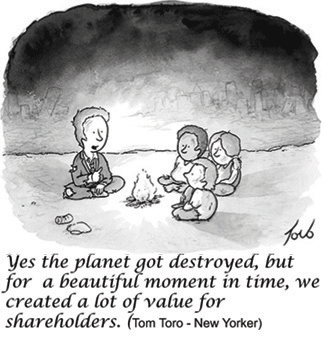 Finds http://www.skepticalscience.com/americans-more-polarized-on-climate-change.html
American voters and politicians are now more polarized than ever before across all aspects of climate change — from the cause, to the science and the impacts — a major new analysis has found.
Campaigns funded by vested fossil fuel interests and pushed by a network of ideological think tanks, many linked to the oil billionaire Koch brothers, have helped to widen the gap, pushing Republican politicians, elites and voters away from action ongreenhouse gas emissions.
Tracking Gallup opinion poll surveys going back to 2001 and congress voting patterns from 1970 onwards, the analysis authors warn that as the November election approaches, Americans are faced with a stark political choice.
The analysis is published in the respected journal Environment and comes from sociologists Associate Professor Aaron McCright of Michigan State University, Professor Riley Dunlap of Oklahoma State University, and PhD researcher Jerrod Yarosh also at Oklahoma.
The researchers found the widest gaps between Democrats and Republicans come when they are asked about the causes of climate change and if the media exaggerates the seriousness of the issue.
While virtually all climate scientists and the world’s leading scientific academies have long agreed that the burning of fossil fuels is causing climate change, only about half Republicans accept the science.
A Republican controlled Congress, the article says, would be a “huge step backward in our nation’s efforts to reduce greenhouse gas emissions” and could also undermine international cooperation, especially if Republican nominee Donald Trump won the Presidency.
“Whether, and how, individual Americans vote this November may well be the most consequential climate-related decision most of them will have ever taken,” the authors conclude.
Stark Choices
Dunlap told DeSmog the choice facing US voters was glaring.
“Looking back, Gore versus Bush was stark, although Bush hid his denial for a bit. But now the partisan differences on climate change are out in the open, and the choices from the top down are stark.”
The Koch brothers had led a network of “conservative mega-donors” that had created a “shadow GOP” that had managed to reduce the influence of the Republican National Committee, the analysis argues.
These efforts, the article explains, have blocked legislation, limited international negotiations and made rejection of climate science “normative” among Republican elites and activists.
Widening Gaps
Dunlap, McCright and Yarosh looked at how elected Democrats and Republicans had voted on environment and climate bills in both houses of Congress since 1970, using data from the League of Conservation Voters. The researchers found:
What was once a modest tendency for Congressional Republicans to be less pro-environmental than their Democratic counterparts has become a chasm—with Republicans taking near-unanimous anti-environmental stances on relevant legislation in recent years, especially 2015.
Since 2001 polling company Gallup has been asking US voters for their views on aspects of climate change, such as if they think it’s happening, if it’s caused by humans and if they are concerned about it.
In 2001, 53 percent of Republican voters agreed that global warming was caused by humans, compared with 70 percent of Democrats — a gap of 17 percentage points. But by 2016, this gap had blown out to 41 percentage points, with only 43 percent of Republican voters accepting climate change is human-caused.
These “partisan gaps” had widened across all areas since 2008, except when voters were asked if they thought global warming had already started, where the gap remained at 34 percentage points.
Bridging the Gap?
Alongside the analysis, the authors look at various attempts to bring Republicans closer to accepting the realities of climate change, such as changing communication strategies. The writers claim:
Does any persuasive framing strategy hold special promise for penetrating Republicans’ partisan/ideological identities? The evidence so far gives little basis for optimism.
The sociologists say one major reason why attempts to better communicate the realities of climate change to conservatives have failed is down to “motivated cognition” — described as the tendency for people to only accept information that reinforces their existing political beliefs and their views on the world.
Even when Republicans experience extreme weather events, there was little evidence that this was enough for those voters to change their views. Dunlap told DeSmog:
“I fear polarization will be difficult to overcome because Republican reluctance to accept the reality and seriousness of human-caused climate change is in a self-reinforcing loop.
There are top-down cues from Republican political elites and their supporters from conservative think tanks to conservative media — especially the Murdoch media— that influence voters, as well as bottom-up pressure from party activists such as Tea Party supporters who act as ‘enforcers’ of party principles, especially in primary elections to select Republican candidates.
The result is that global warming has joined God, guns, gays, and abortion as core elements of Republican identity, and this will be hard to change.”
Talen Energy abandons proposed Bell Bend nuclear power plant
Enformable, 1 Sept 16 , Talen Energy, the company that owns the Susquehanna Steam Electric Station in Pennsylvania, has informed the Nuclear Regulatory Commission (NRC) that it sees no “viable path” forward and is abandoning its application to construct a new nuclear power plant next to the Susquehanna facility…….. http://enformable.com/2016/09/talen-energy-abandons-proposed-bell-bend-nuclear-power-plant/
Dangerous transport of radioactive wastes – legal action against this
The nuclear waste is a byproduct of the process used at the Chalk River laboratories to create medical radioisotopes from highly enriched uranium originally produced in the U.S. It’s being shipped back to the U.S. as part of a 2010 agreement to repatriate the radioactive material, costing the Canadian government about US$60 million.
According to the U.S. lawsuit filed Aug. 12 in Washington, D.C., the thick yellowy-green liquid being shipped contains highly enriched uranyl nitrate, highly enriched uranium, radioactive varieties of cesium, niobium, zirconium, rhodium, rubidium, iodine, xenon, tellurium, barium, lanthanum, cerium, strontium, praseodymium, neodymium, europium, neptunium and plutonium.
 Niagara on nuclear waste route, Welland Tribune, By ALLAN BENNER, August 31, 2016 Trucks loaded with liquid nuclear waste could be rolling down highways within days — likely travelling through Niagara on their way into the U.S.
But seven American environmental groups have teamed up to launch a lawsuit against the United States government and its Department of Energy (DoE) in the hope of stopping the shipments before they begin.
A November 2015 DoE report, which concluded that an environmental impact statement on the plan would not be necessary, says up to 150 shipments of liquid nuclear waste will be hauled by transport truck from Canadian Nuclear Laboratories in Chalk River, Ont., a community near Algonquin Park, to a disposal site in Savannah River, S.C., 1,700 kilometres south.
Each shipment will include four 58.1-litre stainless steel containers, for a total of 232 litres of nuclear waste per trip. Those containers will be placed inside cylindrical steel nuclear transport casks, which will then be loaded into typical shipping containers and loaded onto trucks. The project is expected to continue for several years.
The nuclear waste is a byproduct of the process used at the Chalk River laboratories to create medical radioisotopes from highly enriched uranium originally produced in the U.S. It’s being shipped back to the U.S. as part of a 2010 agreement to repatriate the radioactive material, costing the Canadian government about US$60 million.
Niagara-on-the-Lake resident Gracia Janes, environment convener for the National Council of Women of Canada who has lobbied against the plan, described the material being transported as “absolutely deadly stuff.”
According to the U.S. lawsuit filed Aug. 12 in Washington, D.C., the thick yellowy-green liquid being shipped contains highly enriched uranyl nitrate, highly enriched uranium, radioactive varieties of cesium, niobium, zirconium, rhodium, rubidium, iodine, xenon, tellurium, barium, lanthanum, cerium, strontium, praseodymium, neodymium, europium, neptunium and plutonium.
Although environmental groups believe shipments could begin in September, that information could not be confirmed.
It’s classified……….
Higgins is concerned about the use of the Peace Bridge in the proposed route, one of the busiest border crossings between the two countries. “It’s only three lanes,” he said. “Consequently, trucks are stuck on the bridge idling for inordinate periods of time.”
Niagara’s regional council has taken a stand on the issue, too. On June 11, 2015, councillors ratified a motion opposing any shipment of radioactive liquid waste, and urging the governments of Canada and the U.S. to halt the shipment of high-level radioactive liquid waste pending the outcome of public consultations on the advisability and the potential adverse impacts of the proposed shipments, as well as alternative procedures.
Lincoln regional Coun. Bill Hodgson said he was concerned at the time the motion was passed, but he’s “more alarmed now that it seems that it’s imminent, and really no one with authority has stepped forward and said, ‘Let’s rethink the movement of this stuff.’” “This is a really toxic soup. This is not kid’s play,” he said.
Niagara Falls Mayor Jim Diodati shares the concerns about the plans……..
if one of those containers were to break, Janes said it would be a disaster. “If it did break open, if it did get down to what’s in there, it’s radioactive material that would take an awfully long time — thousands of years — to actually disappear, if it ever does disappear,” said Janes, who first brought the issue to regional council’s attention during a delegation in February 2015.
“It would go into the groundwater and it could be in a community. We’re not sure where it’s going,” she said. “Or there could be a fire, and it could be sending off plumes of we don’t know what.”
She said it’s “not quite Chernobyl, but I don’t know.”
The November 2015 DoE report also looked at worst-case scenarios, including the potential for radioactive liquid to spill on the ground after highway collisions……
Gervais, however, said he doesn’t believe facilities exist at Chalk River to convert the liquid material to solid.
Kamps said the shipments are unprecedented. “Never before has highly radioactive liquid waste been transported in North America,” he said. http://www.wellandtribune.ca/2016/08/31/not-quite-chernobyl
1 This Month
19 November – Webinar – The Reality of Reprocessing
Time: 11:00 AM Pacific Time (US & Canada) / 2:00 PM Eastern / 7:00 PM UK / 8:00 PM CET
Register for the Zoom Event Here

Tell Congress: Prevent Nuclear Catastrophe in Iran

Tell Congress: Prevent Nuclear Catastrophe in Iran

Read the Public Inquiry Report, the Commissioners’ report, Surrendering Australia: The AUKUS Deception is available to download for free at aukuspublicinquiry.com. Or just watch the replay of the National Press Club Luncheon.


Shut down the radiation-damaged Heysham nuclear reactors now
To see nuclear-related stories in greater depth and intensity – go to https://nuclearinformation.wordpress.com

Say No to NASA’s Reckless Nuclear Reactor on the Moon
Say No to NASA’s Reckless Nuclear Reactor on the Moon
-
Archives
- November 2026 (178)
- October 2026 (302)
- September 2026 (339)
- August 2026 (330)
- July 2026 (355)
- June 2026 (287)
- May 2026 (306)
- April 2026 (356)
- March 2026 (251)
- February 2026 (267)
- January 2026 (308)
- December 2025 (358)
-
Categories
- 1
- 1 NUCLEAR ISSUES
- business and costs
- climate change
- culture and arts
- ENERGY
- environment
- health
- history
- indigenous issues
- Legal
- marketing of nuclear
- media
- opposition to nuclear
- PERSONAL STORIES
- politics
- politics international
- Religion and ethics
- safety
- secrets,lies and civil liberties
- spinbuster
- technology
- Uranium
- wastes
- weapons and war
- Women
- 2 WORLD
- ACTION
- AFRICA
- Atrocities
- AUSTRALIA
- Christina's notes
- Christina's themes
- culture and arts
- Events
- Fuk 2022
- Fuk 2023
- Fukushima 2017
- Fukushima 2018
- fukushima 2019
- Fukushima 2020
- Fukushima 2021
- general
- global warming
- Humour (God we need it)
- Nuclear
- RARE EARTHS
- Reference
- resources – print
- Resources -audiovicual
- Weekly Newsletter
- World
- World Nuclear
- YouTube
-
RSS
Entries RSS
Comments RSS

