According to the update, the Energy Department has a town hall meeting planned for Oct. 13 in Carlsbad, New Mexico, to discuss recent ground control issues……..http://www.aikenstandard.com/article/20161008/AIK0101/161009624
Establishment of a no-fly zone (NFZ) in Syria? A step towards allout war?
Going Beyond Propaganda. Nuclear Conflict, Deception or Real Threat? Pentagon: A “Preemptive” Nuclear Strike against Russia is still Valid By Federico Pieraccini Global Research, October 16, 2016 The events in the Middle East, Syria and Aleppo are the focus of global attention. Rarely has a battle been so decisive to the outcome of a war and the fate of hundreds of millions of people around the world
Indigenous forum addresses horrors of nuclear legacy in USA
 Nuclear Standoff, CounterPunch, OCTOBER 14, 2016 “…….This week, as if in sync with the Marshall Islanders, a group called the Native Community Action Council convened the Native American Forum on Nuclear Issues, addressing half a century of lingering horror at another nuclear testing site, in Nevada. The forum addressed such issues as abandoned uranium mines and the proposed high-level nuclear waste disposal site under Yucca Mountain, “in the heart of the Western Shoshone Nation (and) a sacred site for Shoshone and Paiute peoples,” according to the organization’s press release.
“Because of U.S. nuclear testing in Nevada, the Western Shoshone Nation is already the most bombed nation on earth’” the release continues. “They suffer from widespread cancer, leukemia, and other diseases as a result of fallout from more than 1,000 atomic explosions on their territory.”
This is the reality we ignore. We’ve been ignoring it for the last 70 years and, indeed, much longer. We’ve reached the end of our ability to treat the planet, and much of its people, as disposable. Much of humanity knows this, but its leaders are refusing to listen. The human conscience is dismissed on a technicality. http://www.counterpunch.org/2016/10/14/nuclear-standoff/
Canadian nuclear safety official in bed with nuclear industry?
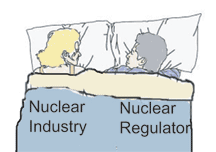
 Critics accuse nuclear safety official of acting as industry cheerleader http://www.theglobeandmail.com/news/politics/critics-accuse-nuclear-safety-official-acting-as-industry-cheerleader/article32341301/ GLORIA GALLOWAY OTTAWA — The Globe and Mail, Oct. 12, 2016 Opposition politicians and environmentalists are questioning the priorities of the man responsible for nuclear safety in Canada after a string of incidents in which he publicly defended the industry and was dismissive of concerns about potential hazards – a stance that runs contrary to his mandate at the Canadian Nuclear Safety Commission.
People and planet endangered by the Trans Pacific Partnership
TPP would allow firms to turn to secretive international tribunals where they can sue governments for millions or billions of dollars if environmental or other public interest regulations interfere with expected future profits
The TPP undermines sound climate policy. The TPP would ramp up global warming by increasing U.S. coal, oil and gas exports to the world

7 ways the Trans Pacific Partnership threatens people and the planet, FOE USA, by Bill Waren, senior trade analyst, 13 Oct 16, The Trans Pacific Partnership trade deal is not so much about trade as it is about deregulation and forcing governments to pay corporations and wealthy investors for the cost of complying with environmental and other public interest safeguards. The TPP broadly restricts the policy space for governments to take effective environmental and climate action.
Unlike most international agreements, tribunals of trade lawyers would effectively enforce the TPP. Such tribunals could impose retaliatory sanctions like higher tariffs on the non-complying countries’ exports or award money damages that can run into millions or even billions of dollars.
Trade tribunals often treat environmental and public health regulations as trade barriers.
Until about twenty years ago, trade deals focused on reducing trade barriers like tariffs and quotas. Today’s trade deals, by contrast, focus on curbing the authority of democratic governments and legitimate courts to regulate the global marketplace. Trade tribunals often treat environmental and public health regulations as trade barriers. Trade deals like the TPP focus on dismantling many regulations that are alleged to interfere with the profits of multinational corporations and wealthy foreign investors.
Multinational corporations have lined up behind the TPP, as have Wall Street banks and Big Oil. But over 1,500 public interest organizations, such as internet freedom groups, faith-based organizations, labor unions, women’s & LBGT advocates and environmentalists, are standing up to oppose TPP……
Here are seven ways that the Trans Pacific Partnership trade deal threatens people and the planet:
1) TPP investment tribunals subvert democracy. TPP would allow firms to turn to secretive international tribunals where they can sue governments for millions or billions of dollars if environmental or other public interest regulations interfere with expected future profits. This would discourage government action like restricting oil and gas drilling, imposing pollution controls, and limiting the use of fracking (hydraulic fracturing). TransCanada, for example, is using a similar provision in the North American Free Trade Agreement to sue the U.S. for $15 billion for stopping construction of the Keystone XL pipeline.
2) The TPP undermines sound climate policy. The TPP would ramp up global warming by increasing U.S. coal, oil and gas exports to the world. The TPP is designed to protect “free trade” in such dirty energy products shipped out of West Coast ports. The result would be worsened climate change from carbon emissions across the Pacific.
3) The TPP deal threatens bees. …….
4) TPP threatens deregulation of chemical safety standards…..
5) TPP undercuts prudent food safety regulations. ….
6) TPP encourages GMOs……
7) TPP puts family farms at risk. …….
If you want to join the fight against the TPP, contact Bill Waren at wwaren@foe.org. https://medium.com/economic-policy/7-ways-the-trans-pacific-partnership-threatens-people-and-the-planet-ad49815f337b#.u2u3a5pif
Cuomo’s nuclear plant bailout lets Exelon and Entergy rip off US taxpayers
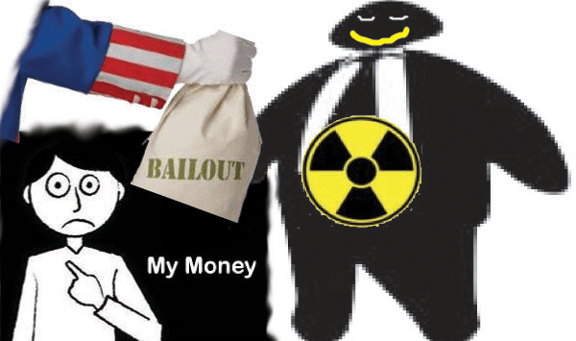 Cuomo wrong on nuclear plant bailout: View, Lohud.com Michael Shank October 12, 2016
New York state sets a trap with its plan to boost upstate nuclear plants by tacking on a fee to utility customers’ bills Bailouts are common in government — at the federal and state level and regardless of political party — and that’s what is happening now in New York for the nuclear industry.
New York’s nuclear bailout is merely the latest example of business getting off scot-free while taxpayers pick up multi-billion-dollar tabs. Gov. Andrew Cuomo is planning to bail out the aging and money-losing Ginna, FitzPatrick and Nine Mile Point nuclear plants, some of America’s oldest nuclear plants owned by Exelon and Entergy, with nearly $8 billion of New Yorkers’ hard-earned money (and another $2.8 billion if energy prices fall).
That decision was made after Exelon alone spent $430,000 in lobbying Albany over the past two years. In the same amount of time, Entergy spent $1.7 million lobbying New York state. Money talks…….
The New York nuclear bailout falls into the same trap that riddled financial industry and auto industry bailout schemes. There’s little corrective action that’s encouraged, or regulated, and so the industry is allowed to continue making the same mistakes — all at a significant cost to our economy. Nothing could be more inefficient. The most common nuclear industry bailout props up companies operating old plants — in desperate need of repair, emitting radioactive waste, leaking toxic material often and keeping cooling systems that kill massive amounts of marine life — with no conditions. And it’s done using taxpayer dollars to prop up companies — such as Fortune 100 Company Exelon with $34 billion in annual revenues — that aren’t in need of extra revenue……
Neither New York’s nuclear industry nor the utilities industry should be passing on these costs to taxpayers, nor should state governments be picking up the corporate tab. These are costs that companies should cover, not citizens. http://www.lohud.com/story/opinion/contributors/2016/10/12/cuomo-nuclear-plant-bailout/91945160/
Washington State seeks legal protection for the health of nuclear workers

 Washington State Seeks to Protect Nuclear Site Workers http://abcnews.go.com/US/wireStory/washington-state-seeks-protect-nuclear-plant-workers-42759576 By THE ASSOCIATED PRESS Washington state asked a federal judge Wednesday to issue an injunction requiring the U.S. Department of Energy and its contractor to take steps to protect workers at a major nuclear waste storage site.
Washington state Attorney General Bob Ferguson says more than 50 workers at the Hanford Nuclear Reservation have been exposed to toxic vapors and the “culture of indifference to worker safety must end.”
From January through July, Hanford workers reported suspicious smells or symptoms that indicate exposure to chemical vapors, according to The Tri-City Herald. ( http://bit.ly/2dVsCtf )
U.S. District Chief Judge Thomas Rice in Spokane heard arguments on the safety issue and the federal agency’s motion to dismiss the lawsuit. Rice said he would rule at a later date.
Lawyers for the Energy Department have argued in motions that the state lacks standing to bring the lawsuit. Hanford Challenge, an advocacy group, and the United Association of Plumbers and Steamfitters Local Union 598 are also plaintiffs in the lawsuit.
The agency has said the plaintiffs in the case have not shown harm to Hanford workers from vapors. It has argued that symptoms like headaches are common and don’t necessarily indicate exposure to vapors.
The state called that claim astounding.
The trial for the case is set for Sept. 18, 2017, but Ferguson said workers can’t wait that long to have a safe workplace.
The injunction would force the agency and its contractor, Washington River Protection Solutions, to provide supplied air for all workers within certain areas. The state also seeks the installation of additional monitoring and alarm equipment to warn workers when toxic vapors are being emitted.
Hanford’s 177 underground storage tanks contain more than 50 million gallons of toxic waste, the byproducts of decades of plutonium production, Ferguson said in a statement. Over a few days in late April and May, at least 48 workers were exposed to vapors from the tanks, and more were exposed in June.
The longterm effects are not known, he said.
Nuclear-powwered USS Ronald Reagan to join U.S.-South Korean joint naval drills
The large-scale naval drills, known as Invincible Spirit, kicked off Monday and are due to run for six days, the South’s navy said in a statement.
On Monday, the allies carried out exercises involving ship-to-ground and submarine-to-ground cruise missiles with average flight ranges of up to 1,000 km, the South Korean Defense Ministry said.
The exercises come just days after reports that the North may be making preparations for a sixth nuclear test or a long-range rocket launch…….
The reclusive nation [North Korea] also stoked concern in August when it claimed to have successfully test-fired a submarine-launched ballistic missile (SLBM). North Korean leader Kim Jong Un called that test “the greatest success” after the missile landed in Japan’s air defense identification zone, flying about 500 km — its longest test-flight by a weapon of that type.
The SLBM test has left the United States, South Korea and Japan worried that further developmental successes could give the North a difficult-to-detect weapon that would pose a serious security threat to all of them.
The U.S. and its Asian allies have responded to the North’s tests by showing off their own military muscle.
Late last month, the U.S. and South Korea conducted joint naval exercises in the Sea of Japan after Washington earlier in the month flew two supersonic bombers over the South — with one landing on the Korean Peninsula for the first time in 20 years.
One of the bombers also flew the closest a B-1B strategic bomber had ever flown to the border between the North and South. It was the second time in less than a month that the U.S., which has about 28,500 troops in South Korea, had flown bombers over the country. http://www.japantimes.co.jp/news/2016/10/10/asia-pacific/u-s-south-korean-joint-naval-drills-kick-off-nuclear-powered-uss-ronald-reagan-set-take-part/#.V__uQeV97Gg
America’s militarisation of the Pacific should stop
Washington Should Stop Militarizing the Pacific OCT. 9, 2016 WASHINGTON — Americans often assume that Chinese 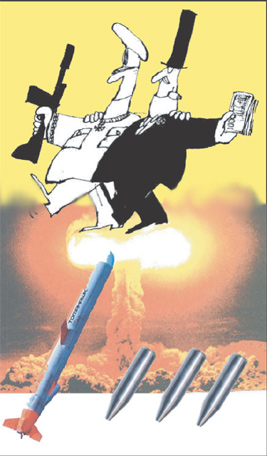 military aggression is increasing the likelihood of a clash between China and the United States. But many policy makers in Washington ignore that Beijing has good reason to be troubled by the United States’ military footprint in its neighborhood. President Obama’s “pivot” to Asia — which includes doubling down on Washington’s already-robust military presence in the region — further stokes the potential for conflict between China and the United States.
In USA Over 10 GW of utility-scale solar is under construction
Over 10 GW of utility-scale solar is under construction in the United States http://www.pv-magazine.com/news/details/beitrag/over-10-gw-of-utility-scale-solar-is-under-construction-in-the-united-states_100026373/#axzz4MoKxV81R05. OCTOBER 2016 | TOP NEWS, MARKETS & TRENDS | BY: CHRISTIAN ROSELUND
Eight states have more than 400 MW-DC of projects under construction each, showing increasing market diversification. The U.S. utility-scale market has long been set for a breakout year in 2016, due to the formerly pending expiration of the U.S. Investment Tax Credit (ITC). But figures on exactly how much solar will get installed have been hard to pin down.
GTM Research has documented a boom in project starts, and according to the company’s Utility PV Market Tracker service there is currently 10.1 GW-DC of utility-scale solar PV under construction nationwide. This includes 8.6 GW of solar projects being built in the top 10 state markets – more PV than was put online in the entire year 2015 across all market segments.
Among this, the company also lists eight states where more than 400 MW-DC of solar is currently under construction. These include not only California and Texas – which each have over 1 GW under construction – but also states that a few years ago had small to non-existent markets, such as Georgia, Florida and Utah.
GTM Research notes that this has been building for some time. “States don’t go from zero to 1 GW, so a lot of the places where we’re seeing diversification, there is only a small amount being developed, but it is indicative of more to come,” GTM Research Solar Analyst Colin Smith told pv magazine.
In at least two of the top eight states – North Carolina and Utah – projects are being driven by PURPA, a 1978 law which mandates that utilities must buy electricity from independent power producers if they can match the price that the utility would otherwise pay for generation.
Rounding out the eight states with more than 400 MW under construction are Nevada and Arizona. Both of these states have seen regulatory set-backs for distributed solar in recent years, and in both utilities are instead pursuing large-scale solar.
Third ceiling collapse at Nuclear Waste Isolation Pilot Plant
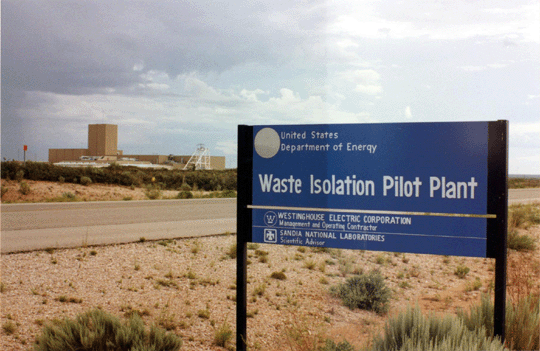 Waste Isolation Pilot Plant sees third ceiling

collapse, Aiken Standard, By Thomas Gardinert gardiner@aikenstandard.com Oct 8 2016 New Mexico’s Waste Isolation Pilot Plant has suffered its third ceiling collapse.
The first collapse was discovered Sept. 27, and the following two happened this past week. The third collapse was identified on Friday morning and was found to have followed the cave-in earlier in the week.
According to a WIPP update sent Friday evening, the area of the collapse continues to remain restricted for workers and employees. According to SRS Watch Director Tom Clements, who has been inside the facility, material regularly comes off of the walls and ceiling.
WIPP is an underground facility, cut into salt beds. Over time, groundwater and other natural forces are designed to form the salt deposits around the waste containers. He said the facility was designed to encase the nuclear waste buried there to permanently dispose of the material…
The WIPP facility was shut down in 2014 after a containment leak and an underground salt-truck fire. The facility is set to reopen in December 2016 and shipments are expected to resume in the fall of 2017.
WIPP is the intended resting place for some of the nuclear material at South Carolina’s Savannah River Site near Aiken. The Energy Department is currently disposing of plutonium through a process called dilute and dispose. That material is among those eventually intended for WIPP disposal.
According to the WIPP update, emergency evacuation routes were also out of date. The routes were still based on the facility before sections were closed, including the areas where the cave-ins occurred. The update said, “The Department of Energy identified a deficiency in the WIPP Mine Escape and Evacuation Plan, which still relied on evacuation routes established before some areas had been posted as prohibited. NWP had identified compensatory measures – immediate changes that could be made while the Evacuation Plan is formally updated.”
America’s enormous splurge on Defense leaves little funding for Climate Change action
We Have Money to Fight Climate Change. It’s Just That We’re Spending It on Defense, Reader Supported News , By Kenneth Pennington, Guardian UK,08 October 16
Stopping one fighter plane program would save enough to build wind farms to power 320,000 homes. We need to drastically reassess our priorities
One year ago this week, I was sitting in a cramped hotel room with 15 other staffers in Las Vegas for Bernie Sanders’ first debate for the presidential nomination. The question came from CNN: “What is the greatest national security threat?” Pundits criticized and mocked him for weeks after he answered “climate change”. But he was right.
And it’s not just Sanders pointing out the imminent threat posed by climate change to global and national security. CIA analysts and our nation’s military strategists are rightfully naming it as a contributor to refugee flows, the spread of disease, and conflicts over basic resources like food and water.
In 2014, 17.5 million people were displaced by climate-related disasters. Those numbers will continue to rise dramatically in the coming decades, according to climate displacement program manager Alice Thomas of Refugees International.
Our nation’s defense officials know global warming’s destructive forces could undermine fragile governments in unstable regions of the world where extremist ideologies can take root. Yet mainstream Republican avoidance of reality on the science of climate change impedes the necessary reassignment of resources to meet the challenges posed.
Now a new report from the Institute of Policy Studies provides the most accurate calculation of government spending on climate security to date. The picture isn’t pretty. We’re spending 28 times as much on military security than climate security. A public sector investment of $55bn per year is required to meet the challenge, according to the study. With $21bn in the 2017 budget, a shortfall of $34bn is left.
That may seem like an insurmountable hill to climb. It’s not! As the IPS report points out, plenty of money lies untouched in the nation’s bloated military budget……….
Republicans should take heed of former GOP President Dwight Eisenhower’s words of wisdom:
Every gun that is made, every warship launched, every rocket fired signifies, in the final sense, a theft from those who hunger and are not fed, those who are cold and are not clothed. This world in arms is not spending money alone. It is spending the sweat of its laborers, the genius of its scientists, the hopes of its children.
Let’s steward our resources wisely. Let’s choose climate over combat. http://readersupportednews.org/news-section2/318-66/39569-we-have-money-to-fight-climate-change-its-just-that-were-spending-it-on-defense
USA needs to be prepared for nuclear terrorism
Preparing the country for nuclear terrorism http://thebulletin.org/preparing-country-nuclear-terrorism9985 JEROME M. HAUER Jerome M. Hauer has served in cabinet-level positions at the local and state level and as an acting assistant secretary for the Office of Public Health Emergency Preparedness at the US Department…

In 2005, Kofi Annan, former secretary general of the United Nations, said, “Nuclear terrorism is still often treated as science fiction. I wish it were. But unfortunately we live in a world of excess hazardous materials and abundant technological know-how, in which some terrorists clearly state their intention to inflict catastrophic casualties. Were such an attack to occur, it would not only cause widespread death and destruction, but would stagger the world economy … [creating] a second death toll throughout the developing world.
In 2007, US Sen. John McCain was quoted as saying, “My greatest fear is the Iranians acquire a nuclear weapon or North Korea and pass enough highly enriched uranium (HEU) to a terrorist organization. And there is a real threat of them doing that. Just 55 kilograms, roughly 122 pounds of HEU, can be used to make a 10 kiloton IND, similar to the bomb dropped over Hiroshima.”
In 2005, Graham Allison, director of Harvard University’s Belfer Center for Science and International Affairs at Harvard University’s John F. Kennedy School of Government, asked, “Is nuclear mega-terrorism inevitable? Harvard professors are not known for being subtle or ambiguous, but I’ll try to the clear. Is the worst yet to come? My answer: Bet on it. Yes.
Matthew Bunn, also at the Belfer Center, argued in 2007, “Theft of the essential ingredients of nuclear weapons is not just a hypothetical worry, it is an ongoing reality.”
Nuclear physicist Frank Barnaby has been quoted as saying “The really frightening thing about HEU is that it is so easy to make an atom bomb out of it. You only need a couple of PhD students and a small amount of material. I think we should be very frightened about the possibility of nuclear terrorism; I’m surprised it hasn’t happened yet.”
The aftermath of a detonation of a relatively small improvised nuclear device—one that is roughly the yield of the bomb dropped on Hiroshima—in a US city would be almost unimaginably gruesome. In New York City, for example, most buildings within one quarter of a mile would be destroyed. Some 300,000 to 400,000 people would be killed instantly, with several hundred thousand more requiring various levels of medical care. Electrical and communications systems would be severely damaged, at best. And medical and other responders would face radiation dangers and a host of other problems.
In a search of both media and scholarly literature, however, I was able to find only one mention of US preparedness for nuclear terror. “The United States is unprepared to mitigate the consequences of a nuclear attack,” Pentagon analyst John Brinkerhoff wrote in a July 2005 confidential memo to the Joint Chiefs of Staff. “We were unable to find any group or office with a coherent approach to this very important aspect of homeland security.”
Several federal agencies have been aggressively working to address this deficit. The Department of Health and Human Services’ Office of the Assistant Secretary for Preparedness and Response has made significant strides in medical and public health preparedness. But much more work needs to be done across the federal behemoth.
After spending untold millions of dollars since its establishment, the Department of Homeland Security—the umbrella agency in which the Federal Emergency Management Agency resides—still does not have adequate radiation detection technology for use in the aftermath of a nuclear detonation and confuses local responders with inconsistent units of measure for radiation emitted by various nuclear isotopes. In Homeland Security advisories to first responders, the terms REM, rad, Sieverts and Gray are thrown about as if interchangeable. They’re not, and knowing the difference is important if responders are to feel and be safe in the aftermath of a nuclear blast.
Because there is such a clear history of concern about the threat of nuclear terrorism, the presidential candidates must cross the bridge from merely accepting the possibility of an attack with an improvised nuclear device, to planning an effective response that reduces the mass morbidity and mortality such an attack inevitably will cause—and then leads beyond the attack, toward recovery.
The road to preparedness. The detonation of a Hiroshima-yield improvised nuclear device in New York would level or significantly damage a significant portion of the city and instantaneously kill and maim hundreds of thousands of people. Trauma, burns, and radiation damage to organ systems are just some of the injuries that would place extraordinary demands on health care systems. In most multi-casualty incidents, there are one or two triage points where victims are taken for assessment and routing to treatment. Following a nuclear detonation in a major city, there could be need of 25 to 75 such triage points—or more—because of the vast geographical footprint of the detonation and the number of victims involved. Coordination will be difficult; much of the communication infrastructure will be demolished or rendered unusable. Moving patients to definitive care will be a monumental task and deciding which patients are triaged for medical care and which are triaged to receive end-of-life services will vary by triage point.
C. Norman Coleman and colleagues at the Department of Health and Human Services have developed criteria for establishing a triage network in the event of a nuclear explosion, but training for emergency physicians and pre-hospital care providers has not been integrated into the fabric of primary or continuing education for those responders.
Finally, studies—including research I conducted in 2012— have shown that between 30 and 50 percent of critical personnel will not be present at or be unable to travel to work in the aftermath of a nuclear detonation. Many of those non-responding responders will want to be with their families; others will fear the personal health threat of radiation.
This dismal picture of US preparation for an incident of nuclear terrorism could be improved with strong leadership at the White House, particularly from the homeland security advisor to the president. The following areas need support, both in terms of funding and in developing uniform plans for managing a nuclear incident in a major city:
- Threat-based funding is important. We no longer have the luxury of giving money to buy toys—aka equipment that is unlikely to be used—to smaller cities and rural counties. Walla Walla, Washington is a lot less likely to be attacked with an improvised nuclear device than Washington, DC. But hundreds of millions of dollars have been wasted on inappropriate terrorism-response “toys” for small governments that will likely never use them. A robust, mobile medical infrastructure needs to be created—one that is capable of handling tens of thousands of patients at once. The Department of Defense will be central to any response plan developed by Health and Human Services; the White House should make certain they are cooperating on that plan—starting yesterday.
- The president should request and Congress should approve additional funding for communication systems that don’t rely on the local infrastructure likely to be destroyed or heavily damaged in a nuclear terror attack. Satellite-based operability would meet the need, making a seamless transition to undamaged communication channels available in high-threat cities. Competition as to which cities are included in such a system needs to be transparent, and political gamesmanship must be discouraged. The communications issue is too central to any effective response to delay it through influence peddling.
- HHS funding should be increased to accelerate research on medical countermeasures for acute radiation sickness. Such research is being conducted, but at an insufficient scale, given to potential for mass death that an improvised nuclear device poses. This research program should be the new Manhattan Project.
- A commission that includes the best minds in radiation, emergency medicine, emergency medical services, the fire service, law enforcement, the Defense Department, HHS, radiation medicine, and high target states and cities should be formed to address the gaps in response plans for a nuclear detonation. That commission should finalize a report to the new president in 180 days. There is no room for delay.The report should suggest the funding required to close each gap.
- A federal government structure for responding to an improvised nuclear device detonation in a major city should be completed within one year in the new administration.
I realize that the program I’ve suggested is daunting. But it’s absolutely not an insurmountable goal. Millions of lives depend on it. What is more important to an incoming administration than saving millions of lives?
Nuclear reactors in Florida in the path of Hurricane Matthew
Safety fears as Hurricane Matthew hits TWO nuclear reactors: Storm also sweeps past heads Cape Canaveral and Trump’s Mar-a-Lago resort Hurricane Matthew started hitting Florida early this morning with heavy rain and strong winds
Experts say there is very little risk of a repeat of the Fukushima accident in Japan in 2011 Daily Mail. By CHRIS SUMMERS FOR MAILONLINE The storm arrived on shore on Friday north of Palm Beach County, which has a population of 1.4 million people, and the National Hurricane Center predicted it would push along the Interstate 95 corridor towards Jacksonville.
The St Lucie nuclear reactor was right in the storm’s path while Turkey Point in southern Florida was also affected by high winds.
The Department of Energy said: ‘Some reactors were shut as a precaution to protect equipment from the storm; others were forced to shut down or reduce power output due to damage to plant facilities or transmission infrastructure serving the plant.’………
The strongest winds of 120 mph were just offshore, but Matthew’s wrath still menaced more than 500 miles of coastline and 26 million Americans.
Government officials declared a state of emergency in several states in an effort to plan ahead since the deadly Category Three storm is expected to wreak havoc with its 120mph winds.
Two million people across the Southeast have been warned to flee inland as tens of millions along 500 miles of coastline battened down the hatches. ……..http://www.dailymail.co.uk/news/article-3826653/Safety-fears-Hurricane-Matthew-heads-TWO-nuclear-reactors-Storm-set-hit-Cape-Canaveral-Trump-s-Mar-Lago-resort.html
Hurricane Matthew could endanger Florida’s nuclear reactors
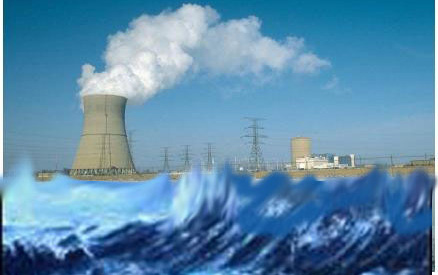 What if Hurricane Matthew Hits Florida’s Nuclear Reactors?, Clean Energy Footprints, October 5th, 2016 Hurricane Matthew has already caused devastation in Haiti and elsewhere in the Caribbean. Tracking this dangerous storm’s path, which Bloomberg reported as a “$15 billion threat,” as it moves towards Florida, Georgia, the Carolinas and potentially up the Eastern seaboard is proving difficult. But despite unclear predictions, communities are wisely mobilizing and calling for evacuations (or are already in the process of doing so) and/or declaring states of emergency.
Extreme weather events have widespread ramifications on our electricity systems. A Department of Energy review of responses to Hurricanes Irene and Sandy from nuclear reactors in the Northeast highlighted a number of strategies to protect the reactors. According to the Department of Energy, “Some reactors were shut as a precaution to protect equipment from the storm; others were forced to shut down or reduce power output due to damage to plant facilities or transmission infrastructure serving the plant; and still others were forced to reduce power output due to reduced power demand caused by widespread utility customer outages.”
Two nuclear power plants exist on Florida’s eastern coast: the St. Lucie and Turkey Point facilities. Based on the current National Hurricane Center projections, it appears that Hurricane Matthew will come closest to the St. Lucie nuclear facility early Friday morning. Storm surge near the St. Lucie nuclear reactors may reach 2-5 feet, and with hurricane force winds of 130 miles per hour. Meanwhile, a significant water quality problem in the Southeast is the ongoing pollution at Florida Power and Light’s (FPL) Turkey Point cooling canal system. It’s unclear what effects high winds and storm surge could have on Turkey Point’s open air industrial sewer.
After flooding caused a nuclear meltdown at the Fukushima Daiichi nuclear reactor in Japan, the Miami News Times published an article, “Five reasons Turkey Point could be the next nuclear disaster.” The article noted: “Just like in Japan, Turkey Point is susceptible to a meltdown caused by a natural disaster. A hurricane-spurred tidal surge from Turkey Point’s neighboring Biscayne Bay could create catastrophic conditions identical to those in Japan. With power down, the plant would be forced to rely on emergency diesel generators to pump water to cool the reactors….those generators would ‘certainly’ become inundated with water from the tidal surge, causing them to drown and fail.” (Southern Alliance for Clean Energy and Tropical Audubon with Friends of the Everglades filed a lawsuit this summer to resolve the pollution problem caused by Turkey Point.)……….http://blog.cleanenergy.org/2016/10/05/nuclearhurricanematthew/
Climate change could bring megadroughts to California
Looming megadroughts in western US would make current drought look minor. Warming temperatures and uncertain rainfall mean if more isn’t done to slow climate change, droughts lasting 35 years could blight western states, study says, Guardian, Oliver Milman, 8 Oct 16, The harsh drought currently gripping California may appear trivial in the future as new research shows that the south-west US faces the looming threat of “megadroughts” that last for decades.
California is in its sixth year of drought, which was barely dented by rains brought by the El Niño climate event and sparked a range of water restrictions in the state. But warming temperatures and uncertain rainfall mean that if more isn’t done to slow climate change, droughts lasting 35 years are likely to blight western states by the end of the century, according to the study, published in Science Advances.

Such a megadrought would impose “unprecedented stress on the limited water resources” of the parched US south-west, researchers found, bringing conditions similar to the 1930s dustbowl to California, Nevada, New Mexico, Colorado and Utah – but over a lengthier period.
Using a combination of temperature and precipitation models, the study predicts a 70% chance of a megadrought by the end of the century, should rainfall levels remain the same, with a 90% chance of an elongated drought should rainfall decrease, as most climate models forecast.
“We can’t rule out there could be a 99.9% chance of a megadrought, which makes it virtually certain,” said Toby Ault, a scientist at Cornell University and lead author of the study………
The new report does proffer a crumb of hope – if greenhouse gas emissions are radically cut then the risk of megadrought will reduce by half, giving a roughly 50:50 chance that a multi-decade stretch of below-average rainfall would occur this century.
But the research found that the emissions cuts would have to be far steeper than those agreed to by nations in Paris last year, where a 2C limit on warming was pledged……..https://www.theguardian.com/environment/2016/oct/05/climate-change-megadrought-california-global-warming
1 This Month
19 November – Webinar – The Reality of Reprocessing
Time: 11:00 AM Pacific Time (US & Canada) / 2:00 PM Eastern / 7:00 PM UK / 8:00 PM CET
Register for the Zoom Event Here

Tell Congress: Prevent Nuclear Catastrophe in Iran

Tell Congress: Prevent Nuclear Catastrophe in Iran

Read the Public Inquiry Report, the Commissioners’ report, Surrendering Australia: The AUKUS Deception is available to download for free at aukuspublicinquiry.com. Or just watch the replay of the National Press Club Luncheon.


Shut down the radiation-damaged Heysham nuclear reactors now
To see nuclear-related stories in greater depth and intensity – go to https://nuclearinformation.wordpress.com

Say No to NASA’s Reckless Nuclear Reactor on the Moon
Say No to NASA’s Reckless Nuclear Reactor on the Moon
-
Archives
- November 2026 (166)
- October 2026 (302)
- September 2026 (339)
- August 2026 (330)
- July 2026 (355)
- June 2026 (287)
- May 2026 (306)
- April 2026 (356)
- March 2026 (251)
- February 2026 (267)
- January 2026 (308)
- December 2025 (358)
-
Categories
- 1
- 1 NUCLEAR ISSUES
- business and costs
- climate change
- culture and arts
- ENERGY
- environment
- health
- history
- indigenous issues
- Legal
- marketing of nuclear
- media
- opposition to nuclear
- PERSONAL STORIES
- politics
- politics international
- Religion and ethics
- safety
- secrets,lies and civil liberties
- spinbuster
- technology
- Uranium
- wastes
- weapons and war
- Women
- 2 WORLD
- ACTION
- AFRICA
- Atrocities
- AUSTRALIA
- Christina's notes
- Christina's themes
- culture and arts
- Events
- Fuk 2022
- Fuk 2023
- Fukushima 2017
- Fukushima 2018
- fukushima 2019
- Fukushima 2020
- Fukushima 2021
- general
- global warming
- Humour (God we need it)
- Nuclear
- RARE EARTHS
- Reference
- resources – print
- Resources -audiovicual
- Weekly Newsletter
- World
- World Nuclear
- YouTube
-
RSS
Entries RSS
Comments RSS

