A new resolution on DU weapons will be voted on by governments at the UN General Assembly this month.
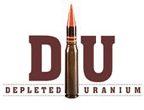 US broke its own rules firing depleted uranium in Iraq http://www.bandepleteduranium.org/en/us-broke-own-rules-firing-depleted-uranium-in-iraq
An analysis of recently declassified military data shows that the United States military ignored its own guidelines for the use of depleted uranium ammunition in the 2003 Iraq War, firing the controversial weapons at unarmoured targets, buildings in populated areas and troops. It has also tripled the number of sites known to be contaminated in Iraq to more than 1,000; even as fears grow that the US has used depleted uranium in Syria.
The targeting data, which details the use of 30mm DU ammunition by USAF A-10 Thunderbolt II aircraft – or “Warthogs”, was released under FOIA and accounts for 54,000kg of the 118,000kg of DU ammunition that the US and UK have acknowledged firing in the conflict. Analysis by PAX and ICBUW of the 1,116 strikes, which took place during the first month of the 2003 invasion, and published in a new report Targets of Opportunity shows that DU use was widespread across Iraq.
For the first time, the data also reveal that the majority of targets attacked with the radioactive and chemically toxic weapons were not armoured. This runs counter to claims by the US that the A10’s ammunition is specifically for destroying tanks and other armoured vehicles. A significant number of the 182,000 30mm PGU-14/B rounds fired by the aircraft – each of which contains 298g of DU – were also fired in or near populated areas, increasing the likelihood that civilians would be exposed.
The need to destroy armour is central to the US’s ongoing military justification for the use of the weapons, which place civilians at risk of exposure and leave a complex and costly legacy for years after the end of conflicts. The US’s own legal guidelines, which were placed on the use of the armour-piercing incendiary weapons in 1975, restricts their use to armoured vehicles, a restriction that appears to have been ignored in the 2003 conflict.
Little transparency, even less assistance
While the UK released information to the UN on where it fired 1,900kg of DU, the US is still withholding data on where it fired 62,000kg of the weapons. This is hampering clearance work. PAX has reported that Iraq continues to struggle with the identification and remediation of DU contaminated sites, and the country has called for assistance in doing so from the international community.
“With the current burden of fighting the Islamic State, the Iraqi government’s capacity is already stretched. But people are worried about DU contamination, especially in southern Iraq,” says one of the report’s authors, PAX’s Wim Zwijnenburg. “The US did too little, too late, and now Iraq’s people are facing layer upon layer of toxic health risks as a result of the conflicts.”
“At present countries that use DU weapons, or are affected by them, are under no formal obligations to clear contamination after conflicts in order to minimise the risks it poses to civilians,” said co-author Doug Weir from ICBUW. “This is in stark contrast to land mines, cluster munitions and other explosive remnants of war. Governments must take steps to meaningfully address the legacy from DU and other toxic remnants of war that can harm civilians and their environment for years after the end of conflicts.”
New information suggests that A-10s have used DU in Syria n early 2015, the US stated – contrary to previous claims – that its A-10 aircraft had not and would not use DU in Iraq or Syria in operations against Islamic State. However information obtained by ICBUW suggests that US A-10s have used DU on at least two occasions in Syria.
ICBUW and PAX are calling for urgent clarification from the US authorities on both the incidents and its DU policy for the conflict, and for them to swiftly release the targeting data to ensure that the relevant authorities can conduct clearance and risk awareness efforts and to isolate and recover contaminated material.
A new resolution on DU weapons will be voted on by governments at the UN General Assembly this month. : https://www.irinnews.org/analysis/2016/10/06/exclusive-iraq-war-records-reignite-debate-over-us-use-depleted-uranium
October 19, 2016
Posted by Christina Macpherson |
depleted uranium, Iraq, Reference, USA |
Leave a comment

 The Hillary Clinton Environmental Scorecard The former Secretary of State could inherit a number of ambitious eco-commitments established by President Obama. Here’s where she stands on each one. Outside By: Juliet Eilperin Oct 17, 2016 “…….
Climate Change and Renewable Energy
In contrast to Obama, who barely mentioned the issue when he was running for reelection in 2012, Clinton has made tackling climate change a major theme in her campaign. She’s mentioned it during both the primary and general election debates, mocking Trump during the first debate by saying, “Donald thinks that climate change is a hoax perpetrated by the Chinese. I think it’s real.” Trump replied, “I did not. I did not. I do not say that.” (He actually did tweet that, and he has also questioned whether global warming is even underway.)
Clinton has vowed to cut U.S. greenhouse gas emissions by as much as 30 percent below 2005 levels by 2025, and 80 percent by mid-century. She’s also pledged to cut U.S. oil consumption by a third, ensure that half a billion solar panels will be installed by 2020, and carry out a ten-fold increase in renewable energy production on public lands. On top of that, she aims to provide $60 billion to state and city officials through a “clean energy challenge fund” so they can reduce their carbon output and enhance their resilience to climate impacts, along with another $30 billion to struggling coal communities.
Such ideas make Clinton attractive to environmentalists. “It’s probably fair to say that, by the time his term is over, President Obama will be regarded as the most environmental president we’ve ever seen, and yet we’re confident Secretary Clinton will build on this record, and even do more,” says League of Conservation Voters President Gene Karpinski, whose group is pouring $10 million into the presidential race this cycle.
Clinton’s 2020 overall emissions target is more aggressive than what Obama has pledged under the Paris climate agreement. Her solar plan, for example, suggests that the U.S. will have 140 gigawatts of installed solar by the end of 2020, compared to the 100 gigawatts that’s now projected. But the question of whether she can deliver on her promises remains—especially since she has yet to embrace the idea of imposing a sweeping carbon tax, and it’s unlikely that Congress would hand over tens of billions of dollars to her administration if she’s elected. While Clinton has vowed to defend federal regulations limiting the carbon output of existing power plants, which are currently being challenged in court, she will have to do much more than that in order to meet her professed goals. …….http://www.outsideonline.com/2125806/hillary-clinton-environmental-scorecard
October 19, 2016
Posted by Christina Macpherson |
climate change, USA, USA elections 2016 |
Leave a comment
 Stop the Next President From Waging the Next War http://www.counterpunch.org/2016/10/18/stop-the-next-president-from-waging-the-next-war/ by ZOLTAN GROSSMAN 91 Oct 16 Hillary Clinton now says her “number one priority” in Syria is the removal of Bashar al-Assad, putting us on the path of war with Syria and Russia next year. Whether or not you are voting for her, you should commit yourself to stopping her from this insanity, which President Obama wisely averted in 2013. Syria and Russia are indeed committing war crimes in Aleppo, but if you’re tempted to buy in to a “no-fly zone” or “humanitarian intervention” against Syrian, Russian, and Iranian forces, consider these ten facts and observations:
1/ We never hear about the atrocities committed by the Sunni rebel forces backed by the U.S., including the Al Qaeda-aligned Islamists that are now tacitly included in the rebel ranks. A sudden regime change in Syria will result in these forces being in charge, and fighting each other for power. Some victorious rebels would commit ethnic/sectarian cleansing against Alawites, Christians, and Kurds, causing many of these and other minorities to fear the rebels as much as the Sunni majority fears Assad. Yes, the war can and will get even worse with more outside intervention.
2/ Any “no-fly zone” over Syria will certainly be followed by the shooting down of both Russian and U.S. jets, in an unpredictable escalation that could easily spread elsewhere in the region or world. Bombing Syrian/Russian forces would result in more civilian deaths, not fewer civilian deaths. In a leaked 2013 transcript, Hillary admitted, “To have a no-fly zone, you have to take out all of the air defense, many of which are located in populated areas. So our missiles, even if they are standoff missiles so we’re not putting our pilots at risk– you’re going to kill a lot of Syrians.”
3/ The U.S. is actively aiding Saudi bombing of Houthi rebels in Yemen, with devastation and civilian deaths that differs little from the Syrian/Russian bombing of Aleppo. The U.S. just directly launched missiles against the Houthis, embroiling us in a very dangerous part of the regional proxy war between Saudi Arabia and Iran. State Department spokesperson John Kirby became tongue-tied when reporters asked him to define the difference between the Russian in Syria and the Saudis in Yemen.
4/ The U.S. has around 800 foreign military bases around the world. Russia has exactly two bases outside former Soviet territory–both of them in Syria. Putin is trying to emulate what the U.S. did in Iraq and Afghanistan, by establishing Russia as a regional and global power. Russia is doing exactly what the U.S. did in Panama–brazenly intervene in the affairs of a country that hosts its bases. The U.S. has zero legitimacy to criticize an upstart in global imperialism, or to demonize Russia for committing the same atrocities that U.S. forces did in Fallujah and elsewhere.
5/ Russia will not back down if we start shooting down its aircraft. Putin was the “Butcher of Grozny” in Chechnya (as the West turned a blind eye), and has intervened against nationalist governments in Georgia and Ukraine. He will pivot to somewhere else in the world–arming Iran, establishing a naval base in Egypt, or threatening Latvia. One way to lessen his popular appeal is to stop feeding into his nationalist propaganda that NATO is encircling Russia and tacitly backing fascists and ultranationalists on its borders. He only thrives politically when the West’s military pressure increases, and he can portray himself as standing up to NATO. Both Russia and Iran also thrive when U.S. and Israeli saber-rattling drives up global oil prices.
6/ The practice of “humanitarian intervention” upholds double standards that only highlight atrocities by the other side and not by U.S. allies. Bill Clinton’s bombings in Bosnia and Kosovo stopped ethnic cleansing by Serbian forces, but actively enabled ethnic cleansing by Croatian and Albanian militias. Obama’s bombing of Libya to supposedly “save” Benghazi ended up turning Libya into a free-fire zone. It wasn’t stepping in as a neutral party, but taking sides in a civil war and prolonging it. A real “humanitarian intervention” would order all sides to freeze in place, not attack one human rights abuser in favor of another.
7/ The U.S. seems to want to rubberstamp the partition of Syria into ethnic/sectarian enclaves as part of a “settlement,” just as it did in Yugoslavia and to a large extent in Iraq. Partition does not bring lasting peace, as the examples of Palestine and India demonstrate. Regional autonomy is helpful to build peace, but communities and even families are too mixed together historically to allow for a “clean” territorial separation without massive violence and genocidal ethnic/sectarian cleansing. But it helps neoliberal capital to have large multiethnic states divided into more easily controllable mini-states.
8/ There have been many paths not followed in bringing peace to Syria since the genuine democratic revolution against Assad began in 2011. There has never been a choice between “doing something” and “doing nothing.” The U.S. and Israel could stop supporting Sunni Islamist rebels in return for Russia and Iran holding back the worst of Assad’s Alawite-led military atrocities, and vice versa. They could both support the Kurds’ valiant defense against ISIS, instead of selling them out (once more) to the Turkish military. They could engage with Syrian civil society that began the revolution, instead of only arming the militaries and militias. They could negotiate for a regional deescalation and coalition government that guarantees minority rights, and allows Syrians to focus on the real threats of ISIS and the economic ruin of war.
9/ The regime change in Iraq will look like small potatoes, if the new Administration tricks the American people into allowing a so-called “humanitarian intervention” in Syria. We could very quickly get involved in a full-blown regional war–with the U.S., Saudi Arabia, Israel, Gulf states, and Syrian, Iraqi, and Yemeni Sunnis on one side, and Russia, Iran, Syria, Iraqi Shi’as, Hezbollah, and Houthis on the other side. The region is a powder keg, with entangled alliances much like Europe on the eve of World War I. It wouldn’t take much for that nightmare to escalate into a nuclear confrontation. Russia is clearly mobilizing for a possible conflict, and signaling its warnings through state media and civil defense exercises, but we haven’t been told by our leaders how risky the situation has become.
10/ A lot more is at stake in Syria in 2017 than in Iraq in 2003.
The Iraq War never had the potential of escalating into a full-blown war with Russia and Iran, or triggering a nuclear confrontation. And since both Hillary Clinton and Donald Trump uncritically accept Benjamin Netanyahu’s view of Iran as the main enemy in the Middle East, Israel and the Gulf States will be unleashed next year to restart military brinkmanship with Iran, which could also bring us to the gates of hell.
It is possible to stand against Assad and Putin, and still oppose wars waged by Clinton or Trump that will inflame the Middle East. Whoever wins on November 8th, the names of the losing candidates will quickly fade. Our “number one priority” the next day should be to stop the new president from taking us down the path of a new major war.
October 19, 2016
Posted by Christina Macpherson |
2 WORLD, USA, weapons and war |
Leave a comment

 Medical and Disaster Experts Investigate Pipeline Construction Next to Indian
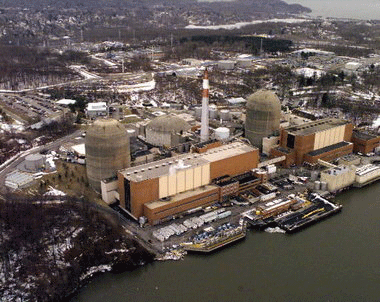
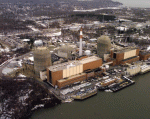 Point Nuclear Plant: Prompts Strong Call to Immediately Halt Pipeline Construction and Operation, Physicians For Social responsibility October 18, 2016 Buchanan, NY – With a sense of utmost urgency, health care professionals, nuclear and disaster experts, public officials and members of the public had a first hand look this morning at the dangerous siting of the 42 inch diameter, high pressure Spectra AIM gas pipeline only 105 feet from vital structures at the aging Indian Point nuclear power plant located near two major earthquake fault lines in the most densely populated region in the nation. The pipeline construction which is nearing completion is targeted for operation on November 1st further heightening experts’ warnings and deep concerns regarding the unacceptable risk the pipeline poses to more than 20 million people in the region and the imperative to immediately halt construction and operation of the pipeline project to avert a potential nuclear disaster. The tour and press conference, hosted by Physicians for Social Responsibility (PSR), a national organization comprised of medical professionals, that has been advocating for public health and safety for over 50 years, featured Dr. Irwin Redlener, Director of the National Center for Disaster Preparedness at Earth Institute at Columbia University and Paul Blanch, a nuclear power expert.
Leading nuclear and pipeline safety experts have repeatedly warned that a pipeline rupture at Indian Point could result in catastrophic nuclear releases worse than the Fukushima nuclear disaster endangering millions of people throughout the New York tri-state area who live within the 50-mile impact radius. Numerous documents in the record submitted by safety experts to the Federal Energy Regulatory Commission (FERC), the Nuclear Regulatory Commission (NRC), and other state and federal agencies reflect serious concerns regarding the lack of pipeline thermodynamics expertise and the complete absence of comprehensive independent risk, health and safety assessments of the co-location of these two major hazardous sites despite repeated urgent calls for such evaluations before any consideration of approval of the pipeline project. Serious concerns have also been raised about the considerable national security implications of the vulnerability of multiple, proximate sources of critical power infrastructure. However, FERC disregarded all of those concerns and requests and granted approval for the project in March 2015 allowing construction to begin in October 2015. The unacceptable risk to New York’s vast population compounded by the total lack of emergency protocols, safety training and preparedness, evacuation plans and public education in emergency scenarios have prompted public officials on local, state, and federal levels to join health and safety experts and the public in their demand for FERC to immediately halt construction and operation of the Spectra AIM pipeline.
Requests by safety experts and public officials for emergency protocols and safety preparedness indicate no evidence of planning for a pipeline rupture or explosion adjacent to the nuclear plant. The lack of emergency training and preparedness reflects the lack of recognition of the safety experts’ concerns regarding the perilous impact of a pipeline accident at that location and the imminent and permanent danger the AIM pipeline poses to the nuclear plant and the entire New York metropolitan area. Data from the U.S. Department of Transportation Pipeline Hazardous Material Safety Administration (PHMSA) confirms that pipeline accidents are commonplace and have been significantly increasing in frequency in recent years including in newly constructed pipelines. There were 143 gas transmission line accidents in 2015.
Major concerns regarding lack of health and safety assessments, emergency procedures, training and preparedness before pipeline project approvals are considered have been echoed by other health professionals, public officials and emergency first responders in other regions across the Spectra AIM pipeline route in New England and for other pipeline projects across the United States……..http://www.psr.org/news-events/press-releases/medical-and-disaster-experts-halt-pipeline-indian-point.html?referrer=https://t.co/PrdY14d7r1
October 19, 2016
Posted by Christina Macpherson |
safety, USA |
Leave a comment
 The U.S. government just made its biggest clean energy purchase ever , WP, By Chris Mooney October 14 On Friday in Maricopa County, Ariz., the U.S. government will hit a clean energy milestone: What officials are calling the largest procurement ever of renewable energy by the federal government, in this case from a desert solar array.
The new 150-megawatt, or million-watt, Mesquite 3 solar array is located in Arizona, but the electricity it generates will be sent to California’s electric grid and will power roughly one-third of the electricity needs of 14 naval installations in the state, including San Diego’s naval base and the Marines’ Twentynine Palms and Camp Pendleton………
The move is being celebrated not only by the Navy, but also the Energy Department, which contends that the dramatic growth of large-scale solar plants in the Southwest is a direct result of major investments made by its Loan Programs Office as part of the stimulus legislation passed in the wake of the financial collapse in 2008-2009……..
The over 10 gigawatts of installed utility scale solar photovoltaic capacity in the United States today is just one part of the tremendous solar boom the country has seen. None of this takes into account more medium-sized arrays or individual rooftop solar installations. The Energy Department has also given loans for a different type of large-scale solar array, called concentrated solar power, many of which also have been built.
According to the Solar Energy Industries Association, there are 31.6 total gigawatts of solar photovoltaic capacity installed in the United States, capable of providing enough electricity for 6.2 million homes……. https://www.washingtonpost.com/news/energy-environment/wp/2016/10/14/the-u-s-government-just-made-its-biggest-clean-energy-purchase-ever-it-was-for-the-navy/?utm_term=.f407e98b78ca
October 19, 2016
Posted by Christina Macpherson |
renewable, USA |
Leave a comment
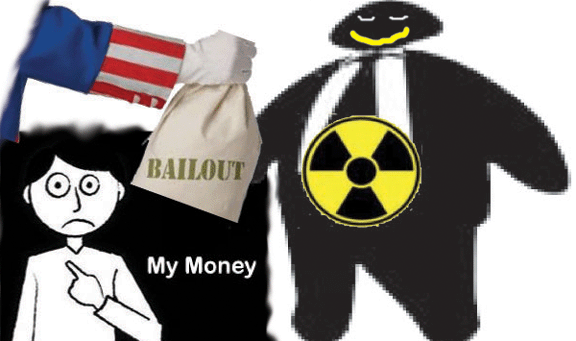
 Bailing out aging nuclear power plants can impact development of renewable energy technologies, Enformable, 17 Oct 2016 “………Rickover: “Outlaw Nuclear Reactors”
The bottom line when it comes to nuclear power comes from Admiral Rickover, considered the “father” of the U.S. nuclear navy as well as being in charge of building Shippingport. When he retired from the Navy in 1982 he addressed a Congressional committee and said—his remarks are included in Cover Up—that until several billion years ago “it was impossible to have any life on Earth; that is, there was so much radiation on Earth you couldn’t have any life—fish or anything. “ Then, “gradually, “the amount of radiation on this planet and probably in the entire system reduced and made it possible for some form of life to begin.”
“Now,” he went on, by utilizing nuclear power “we are creating something which nature tried to destroy to make life possible…every time you produce radiation,” a “horrible force” is unleashed, “in some cases for billions of years.” In other words, nuclear power plants recreate the very radioactive poisons that precluded life from existing. “And,” said Rickover, “I think there the human race is going to wreck itself.”
We must, for the sake of life, Rickover told the Congressional committee, “outlaw nuclear reactors.”
Rickover, deeply involved in nuclear technology, finally saw—as we all must—the light.http://enformable.com/
October 19, 2016
Posted by Christina Macpherson |
radiation, USA |
Leave a comment
 Charges Dropped Against Amy Goodman–No Thanks to Corporate Media, Common
 Dreams, byJim Naureckas , 18 Oct 16
North Dakota District Judge John Grinsteiner stood up for the First Amendment by dismissing “riot” charges against
Democracy Now!’s Amy Goodman (
Democracy Now!,
10/17/16). That’s more than you can say for most of Goodman’s corporate media colleagues.
After Goodman reported on the use of pepper spray and attack dogs against Native American demonstrators opposing the construction of the Dakota Access Pipeline (Democracy Now!, 9/4/16), North Dakota State’s Attorney Ladd Erickson charged her with criminal trespassing. Realizing that he couldn’t make that charge stick, he sought to charge her instead with participation in a “riot”—based on Erickson’s contention that Goodman “was not acting as a journalist” because “everything she reported on was from the position of justifying the protest actions” (FAIR.org, 10/15/16).
Few corporate media journalists took note of a fellow reporter being charged with trespass for doing her job (FAIR.0rg, 9/15/16). When the prosecutor upped the ante by trying to build a criminal charge based on his perception of a reporter’s point of view, this still did not provoke much attention—let alone outcry—from outlets whose lucrative commercial enterprises are dependent on the protection of the First Amendment.
A handful of journalists at commercial outlets did weigh in to defend Goodman. Will Bunch, columnist for the Philadelphia Daily News (Philly.com, 10/16/16), wrote that “the First Amendment was created to prevent exactly this: the jailing of a writer for his or her political point of view.” The LA Times‘ Michael Hiltzik (10/17/16) called out the charges as “an attempt to quash legitimate news reporting.” Matt Taibbi in Rolling Stone (10/13/16) noted the odd fact that Erickson is an avowed fan of Taibbi’s work—but nonetheless urged him to stop prosecuting Goodman, saying she is “as close to the ideal of what it means to be a journalist as one can get in this business.”
That’s about it for journalists in the corridors of corporate media who defended Democracy Now!‘s reporter. A few others took note of the threat she was under; AP‘s James MacPherson and Blake Nicholson wrote a piece that was picked up by outlets like the Minneapolis Star Tribune, Idaho Statesman, Fresno Bee and Arizona Daily Star. Public Radio International‘s The Takeaway (10/17/16) ran a 12-minute interview with Goodman.
A few new media outlets covered the riot charges, like Jezebel (10/15/16) and TechCrunch(10/16/15). Some journalism sites also weighed in, like The Wrap (10/15/16) and Poynter(10/17/16)—though Poynter’s James Warren buried the item under ten other items, heading his one-paragraph report “Post-Pipeline Protest Hoopla,” a headline that may accurately convey the degree of importance corporate journalism accords to First Amendment threats to alternative reporters.
That would explain why people who wanted to be informed about an independent journalist facing criminal charges based on her presumed opinions mostly had to go to overseas outlets (BBC, 10/17/16 ; Independent, 10/17/16) or to alternative sources likeThe Nation (10/15/16) and Common Dreams (10/15/16)………
If there are any regretful reporters at the New York Times, Washington Post, the broadcast or cable news outlets, or any of the other media properties that neglected to cover Goodman’s case when she stood accused of thoughtcrime, they can make up for it by reporting on the still-pending case of documentary filmmaker Deia Schlosberg, who is facing up to 45 years in prison based on three felony counts derived from her reporting on the Dakota Access protests (Reuters, 10/13/16). The First Amendment you save may be your own. http://www.commondreams.org/views/2016/10/18/charges-dropped-against-amy-goodman-no-thanks-corporate-media
October 19, 2016
Posted by Christina Macpherson |
media, USA |
Leave a comment
US Prepares For Nuclear War, Air Force Drops Two Faux Nukes, Popular Resistance, by Marcus Weisgerber, www.defenseone.com October 8th, 2016 The tests in the Nevada desert come as tensions rise with Russia and the Pentagon seeks to replace its aging nuclear arsenal.
A pair of U.S. Air Force B-2 bombers dropped two 700-pound faux nuclear bombs in the middle of the Nevada desert within the past few days. Now the Pentagon wants to tell you about it.
Conducted “earlier this month,” according to an Oct. 6 press release, the test involved two dummy variants of the B61, a nuclear bomb that has been in the U.S. arsenal since the 1960s. One was an “earth penetrator” made to strike underground targets, the other a tactical version of the B61. Neither carried an actual warhead.
“The primary objective of flight testing is to obtain reliability, accuracy, and performance data under operationally representative conditions,” said the statement from the National Nuclear Security Administration, the Energy Department arm that oversees such tests. “Such testing is part of the qualification process of current alterations and life extension programs for weapon systems.”
But why now? Perhaps it has to do with tensions with Russia, which are higher than they have been in decades, and which have sparked fears of a new nuclear arms race. Earlier this week, the Russian government announced it would conduct a massive drill to prepare its citizens for nuclear war.
But it may also have to do with the Pentagon’s quest to replace its decades-old nuclear arsenal with new bombs and delivery vehicles, an endeavor whose price tag tops several hundred billion dollars. The Air Force, for one, has been making its case for new intercontinental ballistic missiles and a nuclear cruise missile. At an Air Force Association conference in the Washington suburbs last, Boeing touted its work on the Minuteman III ICBM, mounting large-scale models of the long-range missiles front and center in its sprawling display area………
Last year, the Air Force inked a deal with Northrop Grumman to build a new long-range, stealth bomber — recently named the B-21 Raider — that will eventually be equipped to carry nuclear weapons. At the same time, the Navy is preparing to buy 12 newColumbia-Class submarines that will replace the Ohio-Class, which can launch nuclear missiles.
The total price tag for the all of the new nuclear weapons is projected to cost between $350 billion to $450 billion over the next two decades. https://www.popularresistance.org/us-prepares-for-nuclear-war-air-force-drops-two-faux-nukes/
October 19, 2016
Posted by Christina Macpherson |
USA, weapons and war |
Leave a comment
The Hidden Defect In U.S. Nuclear Strategy That Could Spell America’s Doom, The National Interest, 18 Oct 16
“………aside from a very minimal collection of radars and interceptors on the West Coast designed to deal with North Korea, America has no strategic defenses.
What it has is offenses — about 1,500 nuclear warheads distributed in hardened silos, stealthy submarines and long-range bombers. These forces are known as the nuclear “triad;” along with flying command centers, secure communications satellites and aerial-refueling tankers, the triad is designed to make any act of nuclear aggression potentially suicidal for the perpetrator. The plan is to respond proportionately to any level of nuclear aggression, and make that plan abundantly clear to any nation that might contemplate an attack.
The assumption is that no sane leader would deliberately launch an attack knowing the retribution that would follow. That seems logical enough, but think about the other ways a nuclear exchange might occur. What if we find ourselves facing an irrational adversary with nuclear weapons? What if the other side is rational, but suffers a mechanical failure in its command system? What if it misreads U.S. intentions in a crisis such as war in Eastern Europe? What if parts of its nuclear arsenal are seized by elements intent on fomenting war?
These are not just science-fiction scenarios. The Russian early-warning network of satellites and ground-based radars is so fragile that it could easily fail, or result in mis-interpretation of threat data. If Moscow seriously thought it was under attack, it would be strongly incentivized to launch quickly before its weapons were destroyed on the ground. That might well signal the end of American civilization,…….
If Washington had spent as much money over the last 15 years on protecting our homeland as it has spent on trying to fix Afghanistan, America would be well on its way to having defenses against nuclear attacks — no matter how or where they originated. Instead, the United States remains vulnerable to the one threat that could destroy our civilization before sunset. This may be the greatest strategic mis-calculation in history, and the next president needs to focus on correcting it.
Loren B. Thompson is Chief Operating Officer of the non-profit Lexington Institute and Chief Executive Officer of Source Associates, a for-profit consultancy. Prior to holding his present positions, he was Deputy Director of the Security Studies Program at Georgetown University and taught graduate-level courses in strategy, technology and media affairs at Georgetown. He has also taught at Harvard University’s Kennedy School of Government. http://nationalinterest.org/blog/the-buzz/the-hidden-defect-us-nuclear-strategy-could-spell-americas-18083?page=2
October 19, 2016
Posted by Christina Macpherson |
USA, weapons and war |
Leave a comment

 Bailing out aging nuclear power plants can impact development of renewable energy technologies, Enformable, 17 Oct 2016 “…………Beyond Dollars—It’s About Life
And this, most importantly, is beyond dollars—it’s about life.
The most comprehensive study of the consequences of a nuclear plant meltdown with loss of containment was done for the U.S. Nuclear Regulation Commission, which succeeded the Atomic Energy Commission, by Sandia National Laboratories in 1982. It’s title: Calculation of Reactor Accident Consequences or CRAC2.
The study projected “peak early fatalities,” “peak early injuries,” peak cancer deaths” and “scaled costs” in the billions of dollars for such a meltdown at every nuclear plant in the United States. In “scaled costs” the study itemizes “lost wages, relocation expenses, decontamination costs, lost property” but it is noted that “the cost of providing health care for the affected population” is not included. The nuclear industry and nuclear promoters in government were so upset with the release of this analysis that I doubt there will ever be anything like it again. I’ve distributed a breakdown of the CRAC2 numbers done by the House Subcommittee on Oversight & Investigations for your review.
The figures—and we’re speaking here of lives not mere numbers—for the four nuclear plants that would be bailed out under the Cuomo plan are:
Ginna — 2,000 fatalities, 28,000 injuries, 14,000 cancer deaths and $63 billion in costs—based on the value of the 1980 dollar. It would be three times that now.
FitzPatrick – 1,000 fatalities, 16,000 injuries, 17,000 cancer deaths and $103 billion in costs.
Nine Mile Point which consists of two nuclear power plants.
Unit 1 — 700 fatalities, 11,000 injuries, 14,000 cancer deaths, $66 billion in costs.
And Nine Mile Point 2 – 1,400 fatalities, 2,600 injuries, 20 000 cancer deaths, $134 billion in costs.
Also, as we have seen from Three Mile Island, Chernobyl and Fukishima, nuclear accidents are not rare events, like the BNL scientists told me, and not minor. With a little more than 400 nuclear power plants in the world, 100 in the U.S., disaster has occurred nearly every decade.
And if the next nuclear disaster is to strike anywhere, it could easily happen at these four old nuclear plants. Nuclear plants were only seen as operating for 40 years. After that, the metals would become embrittled from radioactivity creating unsafe conditions. So they were given 40-year operating licenses. But the Nuclear Regulatory Commission has gone ahead in recent times and given 20-year license extensions to now more than 80 of the nuclear plants in the U.S.—including the four upstate plants. This would allow them to run for 60 years. And the NRC is considering having an additional license extension program to allow nuclear plants to run for 80 years. It’s just asking for disaster. Considering taking a 60-year car on to the LIE or an Interstate and driving it at full speed—and that’s also part of the NRC program, allowing the nuclear plants given extensions to “uprate”—run hotter and harder to produce more electricity.
In terms of age, Nine Mile Point Unit 1 went online in 1969 and is one of the two oldest nuclear plants in the U.S., tied with Oyster Creek in New Jersey. Ginna started operating in 1970. FitzPatrick in 1975. These are from-the-past machines prone to mishap.
Excelon: 800 Pound Nuclear Gorilla
But there’s an 800 pound nuclear gorilla heavily involved in the bail-out plan—a company called Excelon. It’s the major owner of three of the plants—Ginna and the two Nine Mile Point plants—and Excelon has made a $110 million deal to buy FitzPatrick from Entergy with the bail-out deal in mind……….http://enformable.com/
October 19, 2016
Posted by Christina Macpherson |
Reference, safety, USA |
Leave a comment
 Nordea Bank taps BNY Mellon as US debt, equity portfolios custodian, SNL, October 12, 2016
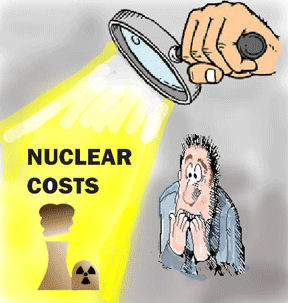
| By Andrew Coffman Smith Seven nuclear power plants may have to retire early because of large capital expenses and transmission congestion costs, not low wholesale power prices brought on by cheap and available natural gas, according to a new analysis.
The R Street Institute, a Washington, D.C.-based think tank, on Oct. 6 published a “sober assessment” of the risk exposure of 29 merchant nuclear power plants in competitive wholesale markets. The study examined the operations and maintenance, or O&M, costs and day-ahead pricing of those plants and five other nuclear power plants that recently closed or have announced their retirements.
“[W]hile natural gas certainly has affected the industry by putting a ceiling on prices, the facilities that are closing are ones located in areas with considerable transmission constraints, that have required significant and unexpected capital investments to extend their operational life or where closure has been a response to heightened regulatory oversight,” R Street energy policy director Catrina Rorke found.
Rorke did not find any substantial risk that ISO New England Inc.‘s two remaining nuclear plants that have not yet announced plans to shutter may have to do so, nor any “widespread closure risk” for PJM Interconnection LLC‘s 16 remaining nuclear plants.
However, she did find that four out of the five nuclear plants in the Midcontinent Independent System Operator Inc.‘s market already have O&M costs above day-ahead price signals and are at risk of closing. Those plants are NextEra Energy Inc.‘s majority-owned Duane Arnold Energy Center in Iowa and its wholly-owned Point Beach unit in Wisconsin, as well as DTE Energy Co.‘s Fermi plant and Entergy’s Palisades plant, both of which are in Michigan.
In Electric Reliability Council of Texas Inc.‘s market, Luminant Generation Co. LLC‘s Comanche Peak plant and the South Texas Project, which is partially owned by NRG Energy Inc., CPS Energy and others, are also at risk of closure because of a narrow margin between O&M costs and the hub price. However, the report said ERCOT’s use of scarcity pricing during supply shortages could provide enough payments to keep them operational.
In addition, the analysis singled out Exelon Corp. and EDF Group‘s jointly-owned R.E. Ginna in the New York ISO as operating at a loss for every megawatt-hour generated. Ginna is one of three nuclear plants that are expected to be subsidized under Gov. Andrew Cuomo’s clean energy standard.
The study’s findings questioned if industry wide interventions, such as creating subsidies or including the price of carbon within electricity markets, are needed to prevent further early retirements as many within in the nuclear energy industry desire. New York earlier this year approved a subsidy for three at-risk nuclear power plants that could amount to almost $7.6 billion over 12 years. Supporters claim that the alternative of allowing those plants to retire early would still be more costly for both ratepayers and the environment.
As for the recent closures or announced retirements, Rorke found that those nuclear power plants also had “substantial additional financial challenges beyond natural-gas prices.”
“Transmission congestion and large capital expenditures have been the two factors that tip the scales in favor of retirements,” the study concluded……..https://www.snl.com/Interactivex/article.aspx?CdId=A-37975535-11048 |
|
October 19, 2016
Posted by Christina Macpherson |
business and costs, USA |
Leave a comment
Nuclear (Information) Power, UCS, DAVE LOCHBAUM, DIRECTOR, NUCLEAR SAFETY PROJECT | OCTOBER 18, 2016 DISASTER BY DESIGN/SAFETY BY INTENT #54
Safety by Intent
Robin Morgan wrote that “Knowledge is power. Information is power.”
Among many lessons learned from the March 1979 core meltdown at Three Mile Island was the need to collect, assess, and disseminate relevant operating experience in a timely manner. In other words, nuclear information has the power to promote nuclear safety, but only when that information is shared so as to replicate good practices and eradicate bad ones. Both the Nuclear Regulatory Commission (NRC) and the nuclear industry undertook parallel efforts after Three Mile Island to improve operating experience efforts.
NRC’s Information Sharing
The centerpiece of the NRC’s operating experience efforts is its generic communications program. The NRC instituted this program before the Three Mile Island accident, but took steps following the accident to expand the program and to shorten the time between events and advisories. The NRC also lowered the threshold used to screen the information to share more operating experience with plant owners.
The NRC has issued thousands of generic communications since the Three Mile Island accident.Bulletins and Generic Letters typically alert owners to a potential problem and require them to either confirm their facilities are not vulnerable or implement measures to reduce vulnerabilities.Regulatory Issue Summaries and Information Notices typically apprise owners about operating experience but do not require that the owners take specific actions in response.
Examples illustrating these various generic communications are:
- Bulletin 2003-01, “Potential Impact of Debris Blockage on Emergency Sump Recirculation at Pressurized Water Reactors,” warned owners that a rupture inside containment of a pipe filled with steam or water could generate large amounts of debris as the high pressure fluid jetting from the broken pipe ends scoured coatings off equipment, insulation off piping, and even paint off walls…….
- Generic Letter 2007-01, “Inaccessible or Underground Power Cable Failures that Disable Accident Mitigation Systems or Cause Plant Transients,” warned owners about a rash of unexpected failures of electrical cables. Many of the electrical cables had been qualified for 40 years of service, but failed before the end of their qualified lifetimes due to submergence in water. Several of the failed cables had been routed through underground metal conduits and buried concrete trenches. Groundwater or rainwater leaked into the conduits and trenches, subjecting the cable insulation to more rapid deterioration than anticipated………
- Information Notice 2011-13, “Control Rod Blade Cracking Resulting in Reduced Design Lifetime,” warned owners of boiling water reactors about experience at a foreign nuclear plant. Workers discovered severe degradation of the control rods caused by irradiation-assisted stress-corrosion cracking. …….
- Regulatory Issue Summary 2015-11, “Protective Action Recommendations for Members of the Public on Bodies of Water,” reminded owners of their obligations under Appendix E, “Emergency Planning and Preparedness for Production and Utilization Facilities,” to 10 CFR Part 50. Specifically, the regulatory issue summary reinforced the NRC’s expectation that owners’ emergency plan measures account for all affected members of the public whether on land or on water.
- Regulatory Issue Summary 2014-12, “Decommissioning Fund Status Report Calculations—Update to Low-Level Waste Burial Charge Information,” informed owners that they could use data in Revision15 of NUREG-1307, “Report on Waste Burial Charges: Changes in Decommissioning Waste Disposal Costs at Low-Level Waste Burial Facilities,” in preparing periodic funding status reports required by 10 CFR 50.75(f). Owners are required to estimate the cost of decommissioning their facilities based on (1) labor rates, (2) energy costs, and (3) low-level waste disposal costs. The U.S. Department of Labor periodically publishes data on labor and energy costs that owners can use. The regulatory information summary identified a source of low-level waste disposal cost data acceptable to the NRC.
Nuclear Industry’s Information Sharing
The nuclear industry formed the Institute for Nuclear Power Operations (INPO) in December 1979 as part of its responses to the Three Mile Island accident. Information sharing is one of several functions performed by INPO to support the nuclear industry……..
UCS’s Disaster by Design/ Safety by Intent series of blog posts is intended to help readers understand how a seemingly unrelated assortment of minor problems can coalesce to cause disaster and how effective defense-in-depth can lessen both the number of pre-existing problems and the chances they team up.
http://allthingsnuclear.org/dlochbaum/nuclear-information-power
October 19, 2016
Posted by Christina Macpherson |
Reference, safety, USA |
Leave a comment
 US citizens warned to prepare for NUCLEAR WAR over claims attack warning upgraded THE US could be edging ever closer to nuclear war with Russia after upgrading its attack defence readiness, it has been claimed. http://www.express.co.uk/news/world/721603/US-nuclear-attack-warning-upgraded-DEFCON-3-Vladimir-Putin-Russia-WW3 By VICKIIE OLIPHANT Oct 16, 2016 DEFCON is an alert system used by the US military to indicate the current threat of nuclear war.
The system has five states of alert, increasing in severity from DEFCON 5 – the least severe – to DEFCON 1 – the highest level. Currently, the levels is understood to be at 5.
But conspiracy theorists have warned the threat has secretly been upgraded two levels to DEFCON 3 – meaning the US could mobilise troops in as little as 15 minutes. The level was last upgraded to 3 in the aftermath of September 11, 2001 – with standby ordered for a potential rise to DEFCON 2.
Now website DEFCON warning system claim it has been upgraded again in a terrifying revelation.
While there are currently no imminent threats to the US, it claimed the situation is “fluid and can change rapidly.” However it also highlighted the dying relationship between the US and Russia, citing concerns of all-out warfare between the bitter rivals. A statement posted on its website read: “Tensions between Russia and the United States have reached levels beyond the cold war in the recent week.
“The situation between Russia and the United States is extremely fluid at the moment. In all likelihood as dynamic as at times during the Cuban Missile Crisis of 1962.
“At this time, the DEFCON Warning System feels that an increase to DEFCON 3 would be a prudent move.” Russian citizens have been encouraged to find bomb shelters and gas masks today, as state-sponsored infomercials on television gave out guidelines on how people should prepare for a nuclear attack.
President Vladimir Putin meanwhile has ordered the evacuation of 40 million people in a military drill.He also transferred nuclear-capable Iskander ballistic missiles to one of its strategic Baltic regions last week, in what officials claim was part of regular military manoeuvres.
However many world leaders fear the moves are being carried out in preparation for war. The conspiracy theory site warned citizens to prepare for any potential conflict, saying: “This is a very sensitive situation which has the potential to spiral out of control.
“It is recommended that all citizens learn the steps to be taken in the event of nuclear war.”
Theorists have even claimed a move to DEFCON 2 is being muted, based on Putin’s call for Russians to return home.
Though the threat of war seems to be rising, the DEFCON level indication reported by the website is only speculation. The US military do not share the actual DEFCON status with the public for obvious security reasons.
October 18, 2016
Posted by Christina Macpherson |
Russia, USA, weapons and war |
Leave a comment
Throughout her campaign, Clinton has repeatedly called for a no-fly or “safe zone” for Syrian civilians, without providing a detailed explanation as to what that would entail. But her advisors have suggested that it could involve the United States shooting down Syrian aircraft, forcing Russia to choose between defending Assad or working with Washington. In discussing the no-fly-zone idea, Clinton has not acknowledged the presence of an advanced Russian S-400 air defense system in Syria, which potentially could be used against U.S. aircraft enforcing a no-fly zone

Putin Throws Out the Old Nuclear Rules, Rattling Washington, FP, Washington and Moscow used to keep arms control separate from other crises around the world. But that era is over and the next president will have to decide how to deal with it. BY DAN DE LUCE, REID STANDISH OCTOBER 16, 2016
Russian President Vladimir Putin’s nuclear saber-rattling and military brinksmanship have upended the rules that long governed relations between Moscow and Washington, presenting the United States with a dangerous dilemma.
The next U.S president will inherit an increasingly fraught relationship with Russia in which Washington’s attempts to deter Putin have mostly failed. Moscow’s decision this month to pull out of a landmark agreement on disposing tons of weapons-grade plutonium, coupled with reports last week that Russia deployed new nuclear-capable missiles to Kaliningrad on the Baltic Sea, underscore how Putin is flexing Russia’s power in new and often unpredictable ways.
U.S. and European officials are increasingly alarmed over Putin’s willingness to risk military confrontation and threaten to use his country’s nuclear arsenal over issues the West sees as unrelated and separate. That makes it devilishly difficult for the United States and its European allies to find an effective response to Putin’s audacious tactics that in recent years range from Russia’s annexation of Crimea, to its air war in support of the Syrian regime, to Moscow’s suspected hacking of America’s presidential election.
“It very much feels like we are entering a very troubled and dangerous phase in this bilateral relationship,“ said Julianne Smith, a former senior Pentagon official who oversaw NATO policy and a former senior advisor to Vice President Joe Biden. “The next president will face some big strategic choices,” said Smith, who now advises Democratic presidential candidate Hillary Clinton on Europe and Russia.
President Barack Obama’s successor will have to choose from a range of
unpleasant and risky options when it comes to handling a resurgent Russia, current and former officials said. A more conciliatory stance, aimed at cutting a grand bargain with Russia focused on Ukraine, would defuse tensions in the short term but at the cost of ultimately emboldening Putin. A more hawkish line — like the one championed by Clinton, who is leading nationwide polls — would risk escalation, with the chance of a military showdown in Syria or the Baltics……….
In the Kremlin’s decree this month declaring Russia would no longer cooperate with the United States on a 2009 agreement to dispose of weapons-grade plutonium, Moscow said it would consider reviving the agreement only if the United States scaled back its military presence near Russia’s border, lifted all sanctions against Russia, and paid Moscow compensation for the economic losses caused by the sanctions.
U.S. officials said they were disappointed by Moscow’s decision and dismayed at what they consider a worrisome pattern of behavior……..
The United States says Russia has flouted a 1987 arms control treaty, negotiated by then-U.S. President Ronald Reagan and Soviet leader Mikhail Gorbachev, which called for the elimination of all ground-launched ballistic and cruise missiles with ranges of 500 to 5,500 kilometers. The treaty helped bring an end to the Cold War and served as a crucial foundation for arms control efforts.
After signing the
New START arms control accord in 2010, Russia has rebuffed overtures from Obama during the past six years to negotiate further reductions in nuclear weapons. The
treaty expires in 2021, and without a new deal, the gains in arms control over the last 25 years would be endangered. Putin’s government also has
backed away from mutual efforts launched in the 1990s to secure nuclear material. In March, Russia
declinedto attend the Nuclear Security Summit in Washington…….
Against the
sharp deterioration in U.S.-Russian relations, finding a new way to moderate mounting tensions between the two countries will be left to the next U.S. administration. In Syria, Russia’s deployment of fighter aircraft squadrons and artillery in 2015 blindsided the Obama administration, and has succeeded in shifting the tide of the war in favor of Syrian President Bashar al-Assad’s regime. The intervention has enabled Russia to set the agenda in Syria, reducing Washington’s influence and drastically limiting U.S. options for any military action.
When lawmakers last month asked the chairman of the Joint Chiefs of Staff, Gen. Joseph Dunford, about the possibility of the United States setting up a no-fly zone in Syria, he said it “would require us to go to war with Syria and Russia.”
October 18, 2016
Posted by Christina Macpherson |
politics international, Russia, USA |
Leave a comment
TVA sets auction date for Bellefonte nuclear power plant, Abandoned twin-reactor complex in Alabama to go on block Nov. 14, Times Free Press,
October 14th, 2016by Dave Flessner Nearly a half century after the Tennessee Valley Authority assembled a riverfront parcel in Northeast Alabama to build what was supposed to be one of its biggest nuclear power plants, the federal utility is giving up the project and selling the 1,400-acre site next month for a mere fraction of the more than $5 billion it has spent on the facility.
TVA said Friday it has set an auction date of Nov. 14 at 9 a.m. central time to sell its unfinished Bellefonte nuclear power plant. Concentric Energy Advisors Inc., a property consulting firm TVA hired this spring to market the 1,400-acre power plant site on the Tennessee River in Hollywood, Ala., will conduct the sale at the plant site.
TVA directors declared the unfinished nuclear plant to be surplus property earlier this year — 43 years after construction began on the twin-reactor complex. TVA said in a statement Friday the “primary goal in selling the site is to provide the best long-term economic return to the surrounding communities.” The minimum bid price is $36.4 million, which is the appraised value of the riverfront property, but the bids will be evaluated on both the price offered and the economic gains any sale would generate for the region.
TVA has invested more than $5 billion in capital and interest costs at Bellefonte since work began on two Babcock and Wilcox reactors in 1973. Work was suspended in the 1980s when TVA’s growth in power demand slowed and TVA determined it didn’t need either of the 1,200-megawatt units…….http://www.timesfreepress.com/news/business/aroundregion/story/2016/oct/14/tva-sets-bellefonte-nuclear-plant-auction-date-next-month/392167/
October 18, 2016
Posted by Christina Macpherson |
business and costs, USA |
Leave a comment