 Nuclear Power Rapidly Losing Race With Renewable Energy, http://www.ecowatch.com/nuclear-power-renewable-energy-2031607650.html, by Sun Day Campaign, Oct. 05, 2016 Two new reports from the Federal Energy Regulatory Commission (FERC) and the U.S. Energy Information Administration (EIA) confirm that nuclear power is rapidly losing the race with renewable energy sources.
Fermi 1 nuclear accident remembered in protest rally- ‘We almost lost Detroit’
Anti-nuclear activists mark Fermi 1 incident It was a half-century ago that plant had a partial meltdown By | BLADE STAFF WRITER Oct. 6, 2016 MONROE — Anti-nuclear activists marked the 50th anniversary of Fermi 1’s partial meltdown Wednesday with a peaceful rally at downtown Monroe’s Loranger Square Pavilion, during which they called for America to embrace more renewable energy and support efforts to safeguard the public from radiation exposure…….
“The striking thing to me is — 50 years later — there are still lessons unlearned,” Terry Lodge, Toledo Coalition for Safe Energy spokesman, said.
Mr. Keegan, Mr. Lochbaum, and Mr. Lodge were among seven speakers who addressed about two dozen people Wednesday at a news conference which began at the exact moment the meltdown was reported to authorities 50 years earlier.
Although eclipsed by Three Mile Island and more significant events in other parts of the world, such as the Fukushima Daiichi meltdown of 2011 in Japan and the Chernobyl disaster of 1986 near Kiev, Russia, the Fermi 1 incident inspired the 1975 John G. Fuller book We Almost Lost Detroit, as well as a protest song by the late singer Gil Scott-Heron……http://www.toledoblade.com/local/2016/10/06/Anti-nuclear-activists-mark-Fermi-1-incident.html
Coalition of New York groups call on state to scrap upstate nuclear subsidies
 Green groups call on state to scrap upstate nuclear subsidies,Times Union
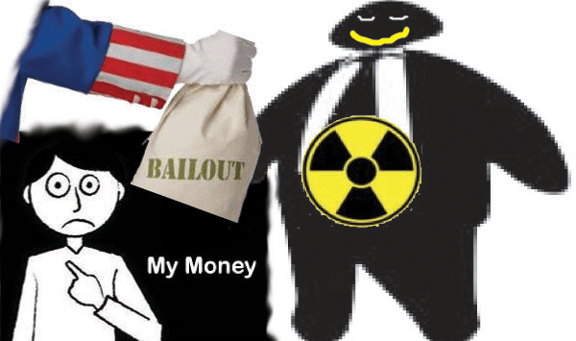
A coalition of environmental groups including Food & Water Watch and the New York Public Interest Research Group have united to oppose what they estimate as an almost $8 billion effort to subsidize three upstate nuclear power plants: the James A. Fitzpatrick Nuclear Power Plant and Nine Mile Point Nuclear Generating Station outside Oswego and the R.E. Ginna plant east of Rochester.
The state Public Service Commission voted in early August to approve a rate increase for the power generated by the plants to pay for the subsidies. Since then, a group of downstate lawmakers have called for the PSC to reconsider that action and be more transparent in its analysis, noting that the majority of the cost of keeping the plants on line will be borne by downstate rate-payers.
On Wednesday, the environmental coalition made the same economic argument, estimating that residential consumers will be on the hook for an estimated $2.3 billion over the 12-year life of the deal. Con Ed ($705.8 million) and Long Island Power Authority ($501.4 million) would bear the largest proportionate share of the cost based on their number of customers.
Blair Horner of NYPIRG said that keeping the plants in operation was like “subsidizing the horse-and-buggy industry while Henry Ford is rolling cars off the Assembly line.”
The coalition plans to mount a grassroots effort to kill the subsidies in much the same way that the natural gas drilling technique known as hydrofracking was blocked…….http://blog.timesunion.com/capitol/archives/268142/green-groups-call-on-state-to-scrap-upstate-nuclear-subsidies/
Renewable energy racing ahead, nuclear energy falling behind
Nuclear Power Rapidly Losing Race With Renewable Energy, http://www.ecowatch.com/nuclear-power-renewable-energy-2031607650.html, by Sun Day Campaign, Oct. 05, 2016 Two new reports from the Federal Energy Regulatory Commission (FERC) and the U.S. Energy Information Administration (EIA) confirm that nuclear power is rapidly losing the race with renewable energy sources.EIA’s latest “Monthly Energy Review” notes that during the first six months of this year, renewable sources—i.e., biofuels, biomass, geothermal, hydropower, solar and wind—accounted for 5.242 quadrillion Btus (quads) of domestic energy production. This includes thermal, liquid and electrical forms of energy. By comparison, nuclear power provided only 4.188 quads. That is, renewablesoutpaced nuclear by more than 25 percent.
Meanwhile, FERC’s latest “Energy Infrastructure Update” states that the total available installed generating capacity in the U.S. from the combination of utility-scale (i.e., greater than 1-MW) hydropower, wind, solar, biomass, and geothermal has grown to 215.82 gigawatts (GW) or 18.39 percent of total generating capacity. Nuclear power’s installed capacity is only107.06 GW or 9.12 percent of the total. Thus, renewable energy generating capacity is now more than double that of nuclear.
However, actual electrical generation by nuclear plants for the first seven months of 2016 is 19.9 percent of total generation. That is still higher than that provided by renewable sources whichcontributed 15.8 percent—a figure which does not include electricity produced by distributed renewables such as rooftop solar.
But while nuclear power’s share of net electrical generation has remained essentially flat over the past decade—e.g., it was 19.4 percent in 2006, renewable energy’s share is growing rapidly, increasing from 9.5 percent 10 years ago to 15.8 percent today with EIA forecasting continuedstrong growth in the years ahead.
“If renewable sources maintain their current growth rates, they could fully eclipse nuclear in the trifecta of not only energy supply and generating capacity but also electricity production within the next five or six years … or less,” Ken Bossong, executive director of the SUN DAY Campaign, concluded.
Russia has suspended its nuclear and energy research agreement with the United States
Russia suspends its nuclear agreement with the United States http://www.smh.com.au/world/russia-suspends-its-nuclear-agreement-with-the-united-states-20161005-grvw7t.html Lidia Kelly
Moscow: Russia has suspended its nuclear and energy research agreement with the United States as a countermeasure against Washington for imposing sanctions on Russia over Ukraine.
The Russian government also said on Wednesday it was terminating an agreement between its nuclear corporation Rosatom and the US Department of Energy on feasibility studies into conversion of Russian research reactors to low enriched uranium.
On Monday, President Vladimir Putin suspended a treaty with Washington on cleaning up weapons-grade plutonium, signalling he was willing to use nuclear disarmament as a new bargaining chip in disputes with the United States over Ukraine and Syria.
“The regular renewal of sanctions against Russia, which include the suspension of Russian-American cooperation in the field of nuclear energy demands the adoption of countermeasures against the US side,” the Russian government said on its website.
The agreement on co-operation in nuclear- and energy-related scientific research, signed in 2013, provided the legal framework necessary to expand work between US and Russian nuclear research laboratories and institutes in nuclear technology and nonproliferation, among others.
The uranium agreement, signed in 2010, provided for feasibility studies into the conversion of six Russian research reactors from dangerous highly enriched uranium to more secure low enriched uranium.
The West imposed economic sanctions on Russia over its annexation of Ukraine’s Crimea peninsula in 2014, followed by a pro-Russian insurrection in the east of the country. The breakdown of a ceasefire in Syria, where Russia backs government forces and the West supports rebel groups, has added to tensions.
In USA, Republicans are rejecting reality on climate change – Pew survey
Pew survey: Republicans are rejecting reality on climate change
Only 48% of Americans – and 15% of conservative Republicans – realize that humans are causing global warming, Guardian, Dana Nuccitelli, 6 Oct 16, Climate scientists have 95% confidence that humans are the main cause of global warming over the past six decades. Their best estimate attributes 100% of global warming since 1950 to human activities. 90 to 100% of climate scientists and their research agree on this. Human-caused global warming is as settled as science gets.
Yet most Americans don’t realize it. Moreover, the more conservative a person’s ideology, the less likely they are to accept this scientific reality or to trust the scientific experts.
According to a new Pew Research Center poll, just 48% of Americans realize that the Earth is warming mostly due to human activity. Highlighting a vast partisan reality gap, 79% of liberal Democrats and just 15% of conservative Republicans answer the question correctly………https://www.theguardian.com/environment/climate-consensus-97-per-cent/2016/oct/06/pew-survey-republicans-are-rejecting-reality-on-climate-change
Both right wing and left wing attack New York’s nuclear subsidy
 Nuclear plan gets backlash from left, right, Daily Star, By Joe Mahoney CNHI State Reporter, 5 Oct 16 ALBANY — A coalition of environmental and consumer activists warned Wednesday that New York electricity customers will be jolted by a “huge tax” stemming from Gov. Andrew Cuomo’s plan to subsidize aging nuclear power plants.
Federal compensation wanted by town of Rowe, for hosting stranded nuclear wastes
Rowe Board of Selectmen chair Marilyn Wilson said the town over the summer heard from Illinois Republican Rep. Robert J. Dold concerning a bill that would help towns that host a “stranded spent nuclear fuel storage site.”
A plainclothes guard with an assault-style rifle stood at the front gate. Reporters were told to point their cameras away from the facility.
 Rowe seeks federal compensation for hosting nuclear waste at former atomic power plant http://www.masslive.com/news/index.ssf/2016/10/rowe_seeks_federal_compensatio.html ROWE — Yankee Rowe Nuclear Power Station shut down in 1992, and was demolished and decommissioned by 2007, but the fenced and isolated site on the upper Deerfield River still hosts 127 tons of spent fuel and high-level radioactive waste in 16 concrete casks under 24-hour security.
The tiny town of Rowe is one of about a dozen communities nationwide affected by the presence of nuclear waste, but no longer benefiting economically from the presence of a functioning reactor.
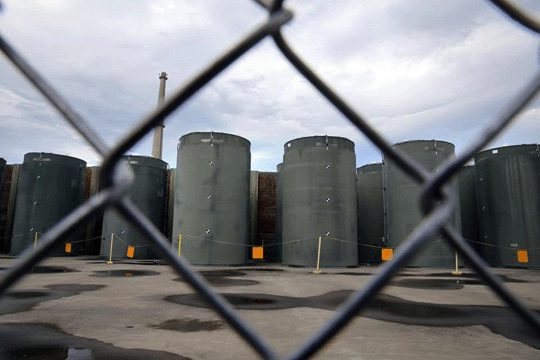
On Monday, U.S. Rep. Richard Neal and state Sen. Paul Mark (D-Peru) toured the site as guests of the Rowe Board of Selectmen. Mark is a member of the Yankee Rowe Spent Fuel Storage & Removal Citizens Advisory Committee. Neal, who represents the state’s 1st Congressional District, assured local officials that he supports bipartisan legislation in Washington that would compensate communities that are forced to store nuclear waste.
The “Interim Spent Nuclear Fuel Storage Compensation Act” would seek up to $100 million for 13 towns ranging from Zion, Illinois to Wiscasset, Maine.
“The federal government is obligated to provide mitigation costs to communities such as Rowe, considering that the Department of Energy failed to remove the waste as promised,” said Neal, a Democrat.
It was never the intention of the federal government for small towns such as Rowe to host spent fuel rods forever.
The Nuclear Waste Policy Act of 1982 directed the U.S. Department of Energy to take ownership of the nation’s nuclear waste. The plan was to build a repository at Yucca Mountain in Nevada, but the facility was never built. Capping decades of gridlock, the Obama administration withdrew support for the plan in 2011.
Various nuclear plant owners, who over the years paid into a Department of Energy Fund to handle their waste, repeatedly sued the government over the broken promise, and dozens of settlements to date have cost taxpayers a combined $4 billion.
Rowe Board of Selectmen chair Marilyn Wilson said the town over the summer heard from Illinois Republican Rep. Robert J. Dold concerning a bill that would help towns that host a “stranded spent nuclear fuel storage site.” She said the proposed bill recognizes that such communities have become de facto interim nuclear waste sites.
Wilson said when Yankee Rowe was fully operational, the company paid for the town’s police, fire, and emergency response budgets, on top of paying substantial property taxes. Now taxes are diminished and public safety expenses are borne by local taxpayers. The town continues to bear other plant-related costs, she said.
Event without the nuke, Rowe enjoys a solid tax base thanks to several hydro-electric facilities on the Deerfield River. With a population of 358, its own elementary school, and hundreds of acres of conservation land, the residential tax rate remains at $6.03 per thousand valuation. The commercial and industrial tax rate stands at $13.31. The tax history of the Yankee Rowe plant was not immediately available. The company owns more than 1,700 acres.
Members of the press, initially invited by Neal’s office to attend Monday’s tour, were blocked from attending by plant officials, who cited security reasons. A plainclothes guard with an assault-style rifle stood at the front gate. Reporters were told to point their cameras away from the facility.
Robert Capstick, a spokesman for Yankee Rowe, said he is as eager as town officials to see a solution. The company spends millions every year to host the waste that the government failed to remove, he said. In New England, other plants with stranded waste are Maine Yankee, Vermont Yankee, and Connecticut Yankee.
Meanwhile, the Department of Energy is considering privately-owned interim storage to overcome the impasse in Congress over authorizing a permanent site. Waste Control Specialists proposes an interim facility for 40,000 tons of nuclear waste in West Texas. Energy Secretary Ernest Moniz has said siting of interim facilities would be done under a “consent-based” model.
Moniz still acknowledges the need for an permanent, underground geological repository. About 2,000 metric tons of spent nuclear fuel is created every year.
Canadian Nuclear Safety Commission Finds Flaws in Canada’s Nuclear-Safety Practices
Watchdog Finds Flaws in Canada’s Nuclear-Safety Practices Audit recommendations focus on documenting and on conducting site inspections WSJ, PAUL VIEIRA Oct. 4, 2016 OTTAWA—Canada’s nuclear-safety regulator is facing criticism from the country’s environmental watchdog for failing to prove it conducted adequate power-plant inspections and falling short on staffing levels.
The shortcomings were highlighted in an independent audit released Tuesday by the Canadian Nuclear Safety Commission, which is tasked with ensuring the country’s nuclear power plants are operating safely……
Canada’s commissioner of the Environment and Sustainable Development looked at the nuclear agency’s operations over a two-year period ended March 31, 2015, and focused on whether the regulator adequately managed its site inspections.
“We concluded that the (Canadian Nuclear Safety Commission) could not show that it had adequately managed its site inspections of nuclear power plants,” Commissioner Julie Gelfand wrote. The audit issued five recommendations for the regulator to improve operations, focused largely on documenting and conducting site inspections……http://www.wsj.com/articles/watchdog-finds-flaws-in-canadas-nuclear-safety-practices-1475609449
Climate denialists fiddle on, as scientists sound the alarm on climate change
Scientists Sound Alarm on Climate but US Still Toys With Skepticism Monday, 03 October 2016 By Dahr Jamail, Truthout Every month, after I finish writing this climate dispatch, I think that this is the most dire, intense, mind-bending, heartbreaking dispatch I have written to date. And every month, for the more than two years that I’ve been writing them, I am correct.
During the morning I was finishing this dispatch, I conducted an interview with Mike Loso, a physical scientist with the National Park Service (NPS), about ice loss in several US national parks. “We as park rangers are tasked with managing and protecting what is in our National Parks, to protect it so it will be there for future generations,” he told me. “But the glaciers are going away, and we can’t stop climate change. So if the Park Service can’t stop the change, we at least have to bear witness to it.”
The information he provided, which will be used in future writings, caused my heart to feel 50 pounds heavier.
To see more stories like this, visit “Planet or Profit?”
When we finished the interview, all I could do was go outside, stand still, and gaze at the trees. I called a friend and shared some of it with him, and he listened. “Thank you for bearing witness with your dispatches, and for holding all of this information,” he told me.
The news about how rapidly the planet is changing only continues to accelerate in both frequency and intensity, and it’s all for the negative……….
Things have become dire enough that 375 National Academy of Sciences members, (including 30 Nobel Prize winners), frustrated with the ongoing political inaction towards anthropogenic climate disruption (ACD), signed an open letter warning of the “real, serious, immediate” climate threat.
Richard Betts, the head of climate impacts research at the UK meteorological office’s (Met Office) Hadley Centre recently stated that the planet is already two-thirds of the way to the 1.5C benchmark, [the politically agreed upon goal of the upper limit of global temperature increase that is allowable before extreme climate disruption impacts ensue] and could begin to pass it in about a decade.
And the alarm bells continue to ring………..
Meanwhile, the tangible signs of warming abound, all around the planet.
Although the Southern Hemisphere is still technically in its winter season, in early September, temperatures across the Antarctic Peninsula and areas of Western Antarctica reached levels of 15 to 23 degrees Celsius (27-40 degrees Fahrenheit) above normal, with the Larsen C ice shelf experiencing thawing temperatures during winter.
Yes, you read that correctly. Parts of Antarctica are melting during the winter.
Scientists are also now closely monitoring a key ocean current in the North Atlantic to find out if rising seawater temperatures and increasing freshwater from melting ice are combining to alter the “ocean conveyor belt,” which they describe as “a vast oceanic stream that plays a major role in the global climate system.” In their own words, they are studying “how climate change could jam the world’s ocean circulation.”……
Is this how life in our ACD-driven world will be, going forward? How much unpredictability can our planet and its inhabitants take?
Earth Soils around the planet are soaking up far less carbon than we previously believed……..
Water As usual, much is happening in the water realm, when it comes to ACD……..
……..rising oceans are not simply a thing of the future: Noticeable sea level rise has already begun.
In the US, one only need look towards Virginia, Florida and Louisiana, among other places, to see that warnings about sea level rise are not theoretical; it is already causing flooding on a daily basis.
Looking west, sea level rise is now causing increasing numbers of people to move off of the Marshall Islands.
The same can be said for most of the population of the atoll of Takuu, which is in the Bougainville region of Papua New Guinea. Ten years ago, 600 people lived on the atoll. Now there are only 50, and sea level rise is a large part of the reason why.
Lastly, a disconcerting report from Australian Geographic cites two recent studies showing that life in the oceans is diminishing so rapidly that they are literally going quiet, since diminishing nutrients and increasing ocean acidification (driven largely by ACD) are killing off sea life.
Air In addition to the global temperature records mentioned above, another interesting study was published last month about ACD-related atmospheric changes……….
Fire In addition to wildfires burning more often, hotter, and with greater frequency around the planet as ACD advances, a recent report showed that there is an alarming increase of fires across the Brazilian Amazon………
Denial and Reality As usual, there is plenty of material from the ACD-denial camp for this dispatch………
Thankfully, the number of people and organizations recognizing ACD’s reality far outweighs the deniers.
Joining a growing handful of other states, Washington State recently adopted a new rule to limit greenhouse gas emissions from large carbon polluters. The change covers fuel distributors, power plants, oil refineries, pulp and paper mills, and other industries.
A recent report from the US military has called ACD a “significant and direct” threat. More than a dozen retired military and national security officials signed a statementsaying that “climate change presents a strategically significant risk to US national security, and inaction is not a viable option.”
Similarly, a recently released US government report stated that ACD is going to get worse. “The impacts of climate change on national security are only going to grow,” Dr. John Holdren, director of the White House Office of Science and Technology Policy, said of the report. The report noted that over the next 20 years, ACD will pose an increasing security challenge, due to the heightening of social and political tensions which will threaten the stability of some countries and cause increasing risks to human health. The report also said that extreme weather events already have dire implications for humanity, which “suggest that climate-change related disruptions are well underway.”………
it is more important than ever that we see it clearly, so as to make more informed decisions about how we live our lives during this key time. http://www.truth-out.org/news/item/37833-scientists-sound-alarm-on-climate-but-us-still-toys-with-skepticism
US Dept of Energy spells out good news on wind and solar power’s phenomenal rise
DOE charts show why climate doom and gloom isn’t needed Clean tech costs have fallen 41–94% over the past 7 years. Wind and solar accounted for two-thirds of new energy installations in the US in 2015, [Excellent graphs] Guardian, Dana Nuccitelli, 3 Oct 16 , A new report from the US Department of Energy paints a bright picture for our prospects to cut carbon pollution and prevent the most dangerous levels of climate change. The report looked at recent changes in costs and deployment of five key clean energy technologies: wind, residential solar, utility-scale solar, batteries, and LED bulbs. For each technology, costs fell between 41% and 94% from 2008 to 2015
Good news for doom and gloom environmentalists Many who understand the realities and dangers of human-caused global warming are afraid that we’ll fail to avoid catastrophic climate change. Among this group, even positive climate stories are often viewed through a lens of pessimism, and we often see stories about the likelihood that we’ll miss climate targets.
However, it’s important to acknowledge the progress that’s being made, and retain a sense of hope and optimism that we can still avoid the worst climate consequences. This new DOE report highlights the fact that clean energy technology is quickly moving in the right direction, toward lower costs and higher deployment.
Wind energy is blowing away expectations
The report finds that due to its low cost, US wind energy capacity has nearly tripled since 2008. Wind now supplies nearly 5% of total US electricity generation.
As a result, there are now nearly 90,000 U.S. manufacturing, construction, and wind operations jobs. Research has resulted in bigger turbines that can generate more electricity:
a wind turbine installed today on average has 108% longer blades and is 48%taller than one installed in 1999. The longer blades allow each turbine to capture more energy, and taller towers allow access to the stronger and more consistent wind speeds that occur at higher altitudes in many parts of thecountry. Combined, these innovations allow each turbine to produce more electricity, reducing both the number of turbines needed to produce a given amount of electricity and the land area needed for their installation.
Offshore wind also presents tremendous untapped potential, with the first such project set to begin generating power off the cost of Rhode Island this month. The DOE envisions wind generating 20% of the nation’s electricity by 2030 and 35% by 2050, with costs falling a further 35% by 2050.
Solar energy’s bright future
Utility-scale solar farm costs have fallen 64% since 2008, and distributed (mostly residential) solar costs by 54%. While solar still accounts for a relatively small percentage of overall US electricity generation, its deployment has been increasing rapidly as costs have dropped. Even the military is getting on board:
For example in 2015 the Department of the Navy procured 210 MW of a utility-scale PV project to support fourteen Navy installations in California.
In 2015, the solar sector employed about 220,000 Americans. The DOE envisions that solar power could supply 27% of US electricity generation by 2050. Solar deployment is surging in 2016, with around 10 gigawatts (GW) set to be installed this year – equal to all the solar capacity installed in the US through 2014.
Solar panel leasing from companies like Solar City and Sungevity has revolutionized the distributed solar market, accounting for the majority of domestic residential system installed in leading state markets in 2015. This approach makes solar panels obtainable for households that can’t afford to purchase them. Distributed solar costs are expected to fall a further 16–33% by 2020.
Stunning drop in LED costs
The best available LED bulbs use 85% less energy than incandescent bulbs. ………
Electric cars are the future of transportation
Electric vehicle (EV) sales in the US reached 115,000 in 2015, more than double the number sold in 2012. Overall US EV sales will surpass a half-million by the end of this year. As shown by a new paper and app from MIT, EVs reduce greenhouse gas emissions 58% compared to gasoline-powered cars, and often cost less on a per-mile basis. As low-carbon energy deployment increases, EVs will only become cleaner………. https://www.theguardian.com/environment/climate-consensus-97-per-cent/2016/oct/03/doe-charts-show-why-climate-doom-and-gloom-isnt-needed
The USA’s nuclear lobby’s main aim? -to weaken NRC safety regulations
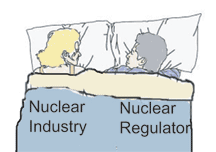 Nuclear power lobby names new CEO, The Hill, By Timothy Cama – 10/04/16 The Nuclear Energy Institute (NEI) has tapped Maria Korsnick, a veteran of the nuclear industry, to be its new CEO.
Korsnick, currently the chief operating officer at NEI, will start her new role Jan. 1, when Marv Fertel, the current CEO, retires.
She has previously held executive positions at Constellation Energy Nuclear Group and Exelon Corp……..
The changes come at a crucial moment for the nuclear sector. Numerous plants are expected to close in the coming years amid competition from cheap natural gas and renewables, and increasing safety and security requirements.
A small handful of new plants or reactors are under construction domestically as well.
NEI is working on various major policy priorities, like getting a tax credit renewed for newly built plants, trying to get the Yucca Mountain nuclear waste site built and reforming the Nuclear Regulatory Commission. http://thehill.com/policy/energy-environment/299158-nuclear-lobby-names-new-ceo
Rising demand for lithium, and the pollution resulting from this
IN YOUR PHONE, IN THEIR AIR A TRACE OF GRAPHITE IS IN CONSUMER TECH. IN THESE CHINESE VILLAGES, IT’S EVERYWHERE. WASHINGTON POST, STORY BY PETER WHORISKEY PHOTOS BY MICHAEL ROBINSON CHAVEZ VIDEOS BY JORGE RIBAS OCTOBER 2, 2016 “……DEMAND RAMPS UP
While U.S. consumers may seem uninvolved in — and untouched by — the Chinese pollution, the truth is more complicated.
The U.S. demand for cheap goods helps keep the Chinese factories going. More than a quarter of the emissions of two key pollutants in China — sulfur dioxide and nitrogen oxides — arose from the production of goods for export, according to research published in 2014 in the Proceedings of the National Academy of Sciences. The largest share of exports goes to the United States.
Moreover, the same researchers found that some of the pollution in China reaches the United States — the air pollution drifts across the ocean and raises ozone levels in the western part of the country, according to the study.
“Outsourcing production to China does not always relieve consumers in the United States . . . from the environmental impacts of air pollution,” according to the authors of the study, which was conducted by a consortium of scientists from China and the United States.
Now the rise of the electric-car industry promises a huge surge in the lithium-ion battery business.
Making batteries big enough to power cars will cause a daunting leap in demand. A laptop requires just a handful of the familiar, thin, cylindrical lithium-ion batteries known as “18650s.” A smartphone requires even less. But a typical electric car requires thousands of times the battery power.
Today, the best known “gigafactory” for electric-car batteries is the one being built by Tesla in the Nevada desert — a plant the company says will produce 500,000 electric-car batteries annually. But it’s just one of many. About a dozen other battery gigafactories are being planned around the world.
This is “not just a Tesla story,” said Simon Moores, managing director of Benchmark Mineral Intelligence, a firm that tracks demand and assesses prices for raw materials in the industry. “The demand is rising everywhere, especially in China.” Todd C. Frankel and Yanan Wang in Washington and Xu Jing contributed to this report.
Story by Peter Whoriskey. Photos by Michael Robinson Chavez. Videos by Jorge Ribas. Graphics by Lazaro Gamio andTim Meko. Design by Matt Callahan, Emily Chow and Chris Rukan. https://www.washingtonpost.com/graphics/business/batteries/graphite-mining-pollution-in-china/
Wildfire danger to stranded radioactive wastes
 Feds Leave Radioactive Waste Stranded In Wildfire Danger
Zone http://www.mintpressnews.com/feds-leave-radioactive-waste-stranded-wildfire-danger-zone/191781/ DOE announces it will not meet deadline for removal of radioactive containers held above-ground at northern New Mexico nuclear weapons lab, By The Department of Energy admitted Friday it will not meet a deadline to remove dangerous radioactive waste, currently stranded above-ground in unsafe conditions at a New Mexico nuclear weapons laboratory, before wildfire season hits.
At least 3,706 cubic meters of radioactive waste are being stored at the Los Alamos National Laboratory complex after the Waste Isolation Pilot Plant, an underground nuclear waste dump in southeastern New Mexico, was shut down indefinitely in February due to an airborne radiation leak.
Officials in New Mexico have warned that the waste at Los Alamos could be within the reach of wildfires and must be transferred elsewhere by the end of June. According to the Associated Press, “The agreement for removal of the waste by June 30 was reached after a massive wildfire lapped at the edge of lab property three years ago, raising concerns about the thousands of barrels of waste that were being stored outside.”
“The waste at Los Alamos is trapped with no place to go,” Arnie Gundersen, chief engineer and nuclear safety advocate at Fairewinds Associates, told Common Dreams.
The Los Alamos radioactive materials are “transuranic waste” that is described by the DOE as “clothing, tools, rags, debris, soil and other items contaminated with radioactive material generated during decades of nuclear research and weapons development.”
Concerns have been raised about the safety of these barrels after it was posited that changes in methods of packaging at Los Alamos, from use of inorganic to organic cat litter to absorb moisture, may be responsible for a chemical reaction with nitrate salts and set off the “heat event” behind the WIPP leak. Officials are still trying to determine the cause of the accident and are investigating the potential danger of the more than 500 nuclear waste containers originating from Los Alamos that were packed with organic cat litter.
The DOE had been sending some Los Alamos radioactive waste to a Texas facility for temporary storage until WIPP is functional. Upon discovering that Los Alamos shipments may be dangerous, the DOE halted all shipments, citing public safety.
But Gundersen warns that these barrels of waste could pose a threat in Texas and Los Alamos, where they are being stored above-ground. “It is worse in the summer, because it is hotter in the summer, and the reactions become less stable,” he said.
In a statement (pdf) released Friday, the New Mexico Environment Department said it is “disappointed, but not surprised” that the DOE will not meet its deadline to remove the waste.
Meanwhile, it is still not clear when WIPP will reopen. The facility, which was never supposed to leak, is the bedrock of the U.S. government’s current approach to dispose of military-generated plutonium-contaminated transuranic waste from decades of nuclear bomb production and testing.
Critics have warned that WIPP’s failure raises serious questions about the overall federal strategy for disposing of nuclear waste.
The need to support a community when a nuclear power station closes
When a nuclear plant closes, a community suffers. Here’s how we can change that.The Tribune, BY JOHN MULLIN, LAURA SIBILIA AND JENNIFER STROMSTEN, 2 Oct 16
Regional and national conversations about nuclear power center on electricity supply and cost, environmental goals and radiological safety. But we focus on how closure looks from the host community’s standpoint. There are substantial financial and social losses that pose major, long-term risks to local and regional economies.
The foreseeable losses from plant closures are substantial enough to merit major planning efforts. Economic impact studies forecast the nature and scale of losses, but it’s not clear what to do next to prepare, beyond bracing for the worst and slashing budgets.
Unfortunately, no targeted programs or funding exist to support nuclear host communities doing this kind of planning. The accelerating pace of nuclear power plant closures has exposed a problem that will affect quality of life for hundreds of towns, many in rural or economically depressed areas. There are no model practices or policies, and no federal entity that assumes responsibility beyond radiological safety, environmental cleanup and monitoring of spent fuel.
A decade ago, community leaders in Southern Vermont asked what might happen to the regional economy if their plant shut down. They conducted a study to understand the problem, and produced the first-ever Comprehensive Economic Development Strategyincorporating nuclear plant closure impacts into economic planning. They had realized it was up to the region to take action because no help would be offered. By the time Vermont Yankee announced closure, work was already underway to replace Vermont Yankee losses with new jobs and businesses.
Today, the community around the Diablo Canyon Power Plant is at the start of a long journey. As home to many of the earliest plant closures, New England offers a network of people with experience, many of whom are also working to improve federal policies that will frame your future experience. This includes engaging with two current initiatives; NRC rulemaking on decommissioning and the Department of Energy consent-based approach to the spent fuel siting process.
Hundreds of billions of dollars will be spent to decommission the nuclear power plants that supply one-fifth of our nation’s energy. Additional billions are going into spent fuel handling and related litigation.
Currently, the best-case closure scenario is simply restoring nuclear sites to a natural state, erasing the past with no attempt to generate new economic activity.
We can do more. Only a few decades ago, America lacked a coherent approach to polluted sites. Now brownfield programs commonly transform polluted sites into new assets that attract investment.
Military base closures have been devastating, but over time Base Realignment and Closurepractices are evolving to help create new economic activity and redevelopment.
The local, county, regional and state agencies responsible for each community need enough funding and authority to implement timely and sufficient mitigation of all risks — to economic, environmental and human health. Decommissioning creates unfunded mandates precisely at the point when revenues are dropping. Ultimately, we need a national solution that makes the long-term economic health of host communities a policy goal. We need a federal agency that assumes responsibility for achieving that goal.
We urge California’s policymakers to join a growing body of state and federal legislators and regulators who believe we can do better when it comes to caring for the communities providing our nation’s energy.
John Mullin is professor emeritus of regional planning at the University of Massachusetts Amherst and former dean of the graduate school. He is co-founder of the Institute for Nuclear Host Communities and teaches a course on nuclear plant closures in the UMass Honors College.
Laura Sibilia is economic development director at the Brattleboro Development Credit Corp. in Vermont and a member of Vermont’s House of Representatives. She worked on development of a Comprehensive Economic Development Strategy to address impacts of Vermont Yankee’s closure.
Jennifer Stromsten is program director for the Institute for Nuclear Host Communities. She has 20 years of nonprofit development experience, and a master’s degree in regional planning, focused on sustainable land use and economic development. http://www.sanluisobispo.com/opinion/letters-to-the-editor/article105472331.html
#ExxonKnew lawsuit could open floodgates for more cases

 New type of #ExxonKnew lawsuit could open floodgates for more cases, Mashable, Andrew Freedman, 2 Oct 16, Exxon’s climate change-related legal problems are growing by the day.
The suit, filed by the Conservation Law Foundation (CLF), is significant because it is the first to allege that a private company is violating the Clean Water Act and hazardous waste laws by failing to adequately prepare for climate change impacts such as sea level rise and stormwater runoff from increased instances of heavy rainfall events.
According to the suit — filed with the U.S. District Court for the District of Massachusetts — the Exxon facility in Everett, Massachusetts, just to the northwest of Boston, has a stormwater drainage system that is easily overrun during extreme precipitation events, which are becoming more frequent due to climate change.
The suit contends that climate change-fed heavy rainfall is flooding the facility, which emits harmful contaminants into a tributary of the Mystic River in violation of the facility’s permit.
The reporting revealed that instead of incorporating the risks into its planning and being transparent about them, the company chose to fund climate denial groups and withhold its research from shareholders.
The reporting has sparked a public campaign against Exxon, known together with the reporting by the hashtag #ExxonKnew………
The lawsuit could pave the way for many more similar legal actions, and not just against Exxon, but other oil and gas companies too.
“America’s coastlines are dotted with oil and chemical tanks and other facilities that are at risk from rising seas.” http://mashable.com/2016/09/29/exxon-knew-lawsuit-massachusetts/#rjmvgqrODuq7
1 This Month
19 November – Webinar – The Reality of Reprocessing
Time: 11:00 AM Pacific Time (US & Canada) / 2:00 PM Eastern / 7:00 PM UK / 8:00 PM CET
Register for the Zoom Event Here

Tell Congress: Prevent Nuclear Catastrophe in Iran

Tell Congress: Prevent Nuclear Catastrophe in Iran

Read the Public Inquiry Report, the Commissioners’ report, Surrendering Australia: The AUKUS Deception is available to download for free at aukuspublicinquiry.com. Or just watch the replay of the National Press Club Luncheon.


Shut down the radiation-damaged Heysham nuclear reactors now
To see nuclear-related stories in greater depth and intensity – go to https://nuclearinformation.wordpress.com

Say No to NASA’s Reckless Nuclear Reactor on the Moon
Say No to NASA’s Reckless Nuclear Reactor on the Moon
-
Archives
- November 2026 (166)
- October 2026 (302)
- September 2026 (339)
- August 2026 (330)
- July 2026 (355)
- June 2026 (287)
- May 2026 (306)
- April 2026 (356)
- March 2026 (251)
- February 2026 (267)
- January 2026 (308)
- December 2025 (358)
-
Categories
- 1
- 1 NUCLEAR ISSUES
- business and costs
- climate change
- culture and arts
- ENERGY
- environment
- health
- history
- indigenous issues
- Legal
- marketing of nuclear
- media
- opposition to nuclear
- PERSONAL STORIES
- politics
- politics international
- Religion and ethics
- safety
- secrets,lies and civil liberties
- spinbuster
- technology
- Uranium
- wastes
- weapons and war
- Women
- 2 WORLD
- ACTION
- AFRICA
- Atrocities
- AUSTRALIA
- Christina's notes
- Christina's themes
- culture and arts
- Events
- Fuk 2022
- Fuk 2023
- Fukushima 2017
- Fukushima 2018
- fukushima 2019
- Fukushima 2020
- Fukushima 2021
- general
- global warming
- Humour (God we need it)
- Nuclear
- RARE EARTHS
- Reference
- resources – print
- Resources -audiovicual
- Weekly Newsletter
- World
- World Nuclear
- YouTube
-
RSS
Entries RSS
Comments RSS

