-
Attacks could pave way to disrupt U.S. electric grid
-
Kansas site is among those trying to eject intruders
-
Hackers working for a foreign government recently breached at least a dozen U.S. power plants, including the Wolf Creek nuclear facility in Kansas, according to current and former U.S. officials, sparking concerns the attackers were searching for vulnerabilities in the electrical grid.
The rivals could be positioning themselves to eventually disrupt the nation’s power supply, warned the officials, who noted that a general alert was distributed to utilities a week ago. Adding to those concerns, hackers recently infiltrated an unidentified company that makes control systems for equipment used in the power industry, an attack that officials believe may be related.
The chief suspect is Russia, according to three people familiar with the continuing effort to eject the hackers from the computer networks. One of those networks belongs to an aging nuclear generating facility known as Wolf Creek — owned by Westar Energy Inc., Great Plains Energy Inc. and Kansas Electric Power Cooperative Inc. — on a lake shore near Burlington, Kansas.
- The possibility of a Russia connection is particularly worrisome, former and current officials say, because Russian hackers have previously taken down parts of the electrical grid in Ukraine and appear to be testing increasingly advanced tools to disrupt power supplies…….
- Several private security firms are studying data on the attacks, but none has linked the work to a particular hacking team or country…….
- Many of the power plants are conventional, but the targeting of a nuclear facility adds to the pressure. While the core of a nuclear generator is heavily protected, a sudden shutdown of the turbine can trigger safety systems. These safety devices are designed to disperse excess heat while the nuclear reaction is halted, but the safety systems themselves may be vulnerable to attack.
Homeland Security and the FBI sent out a general warning about the cyberattack to utilities and related parties on June 28, though it contained few details or the number of plants affected. The government said it was most concerned about the “persistence” of the attacks on choke points of the U.S. power supply. That language suggests hackers are trying to establish backdoors on the plants’ systems for later use, according to a former senior DHS official who asked not to be identified.
Those backdoors can be used to insert software specifically designed to penetrate a facility’s operational controls and disrupt critical systems, according to Galina Antova, co-founder of Claroty, a New York firm that specializes in securing industrial control systems.
“We’re moving to a point where a major attack like this is very, very possible,” Antova said. “Once you’re into the control systems — and you can get into the control systems by hacking into the plant’s regular computer network — then the basic security mechanisms you’d expect are simply not there.”
- The situation is a little different at nuclear facilities. Backup power supplies and other safeguards at nuclear sites are meant to ensure that “you can’t really cause a nuclear plant to melt down just by taking out the secondary systems that are connected to the grid,” Edwin Lyman, a nuclear expert with the Union of Concerned Scientists, said in a phone interview.
The operating systems at nuclear plants also tend to be legacy controls built decades ago and don’t have digital control systems that can be exploited by hackers. Wolf Creek, for example, began operations in 1985. “They’re relatively impervious to that kind of attack,” Lyman said….. https://www.bloomberg.com/news/articles/2017-07-07/russians-are-said-to-be-suspects-in-hacks-involving-nuclear-site
Nuclear facilities targeted by hackers – say USA Homeland Security Dept. and F.B.I.
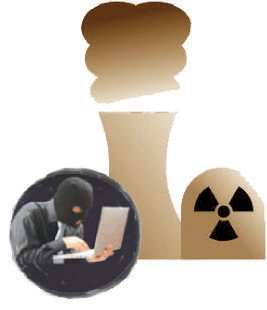 Hackers Are Targeting Nuclear Facilities, Homeland Security Dept. and F.B.I. Say, NYT, JULY 6, 2017, Since May, hackers have been penetrating the computer networks of companies that operate nuclear power stations and other energy facilities, as well as manufacturing plants in the United States and other countries.
USA President just as irresponsible with nuclear weapons as North Korean dictator is
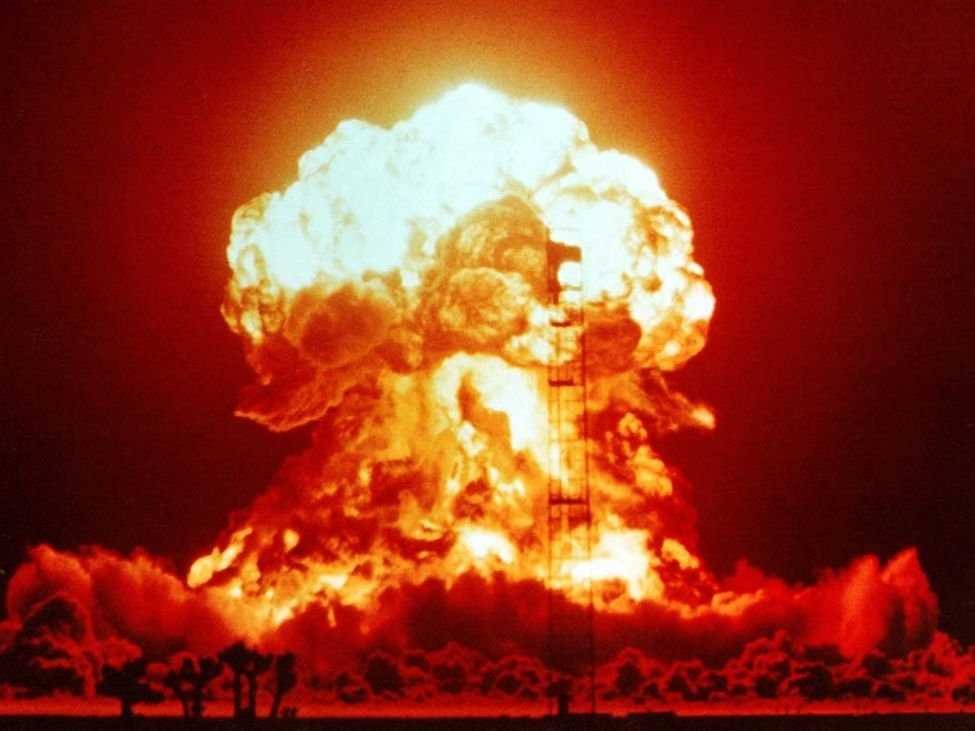 Don’t assume Trump is more responsible with nuclear weapons than North Korea, Guardian, Anna Weichselbraun, 6 Jul 17 It’s never been safe to rely on assurances of nuclear deterrence from ‘responsible’ nuclear powers. The US elections are a reminder of that
Anna Weichselbraun is a nuclear security postdoctoral fellow at Stanford University’s Center for International Security and Cooperation
Who can be trusted with nuclear weapons? Received wisdom has it that only the leaders of the world’s established nuclear weapons states are responsible guardians of their nations’ nuclear arsenals. At the same time, only the belligerent leaders from developing countries with nuclear aspirations present a security threat.
But as the current historical context shows, the belief that the president of the United States is somehow more responsible than the North Korean dictator is ill founded.
Advocates for a treaty to ban nuclear weapons currently being negotiated at the United Nations argue that nuclear weapons are not safe in anybody’s hands. The aim of the prohibition treaty is to delegitimize nuclear weapons by creating a new international norm that recognizes these weapons as a planetary threat.
The eight states who are known to possess nuclear weapons – China, France, India, Israel, Pakistan, Russia, the US and the UK – are boycotting these negotiations because they don’t want their status quo disturbed.
As my own research shows, the US and its allies have long sought to make nuclear weapons normal, even boring, placing international oversight of nuclear technology in the hands of anonymous bureaucrats at the International Atomic Energy Agency and constraining the spread of nuclear weapons via the Nuclear Nonproliferation Treaty.
This treaty legitimizes the status of five states – which also happen to be the permanent members of the UN Security Council – as nuclear armed, and commits other signatories to permanently forgo the development of nuclear weapons.
This treaty’s structure has come to imply that five nuclear weapons states can be “trusted” to refrain from launching nuclear attacks. The normalization of five nuclear weapons states as legitimate is based on the tacit premise that all other states are untrustworthy, and that nuclear weapons should especially be prevented from falling into the hands of “rogue” states: those considered to be unstable, undemocratic, and hostile to the prevailing geopolitical order.
Generations of US leaders have claimed that our nuclear weapons need not be feared because our system of government and our military command and control system ensure rationality in their employment.
Mere weeks after the first atomic bombs were detonated over Hiroshima and Nagasaki, Truman called US guardianship over this terrible new weapon a “sacred trust”. This premise was already questionable even before the latest crisis on the Korean peninsula. ……
now that the recent US election has brought to power a president that exhibits irrational and authoritarian tendencies, the time is ripe for those committed to reducing the nuclear danger to get serious about disarmament….. https://www.theguardian.com/world/2017/jul/06/trump-nuclear-weapons-north-korea
USA and Russia are not keeping to privisions of the Nuclear Non-Proliferation Treaty (NPT)
The original treaty [Non-Proliferation Treaty (NPT) ]is quite clear. Article VI reads as follows (emphasis mine):
“Each of the Parties to the Treaty undertakes to pursue negotiations in good faith on effective measures relating to cessation of the nuclear arms race at an early date and to nuclear disarmament, and on a treaty on general and complete disarmament under strict and effective international control.”
The “nuclear club” countries, however, have lately reneged on their end of the “let’s move toward disarmament” plan. The most recent news in the U.S., of course, is that both of our major political partieshave supported a massive, trillion-dollar “modernization” program that would significantly enhance rather than reduce existing stockpiles……..
North Korea Isn’t the Only Rogue Nuclear State Nuclear weapons are about to be made illegal worldwide, but good luck hearing about it at home, Rolling Stone, By Matt Taibbi, 6 July 17, As if the last few years weren’t bad enough, we now have a real nuclear crisis.
North Korea’s loony regime of Kim Jong-un conducted a successful missile launch test – landing about 60 miles south of the Russian city of Vladivostok, according to some reports – marking a frightening nuclear escalation that has heightened tensions across the planet.
That this first serious confrontation in ages is happening now is ironic, given that a little-reported showdown about the use of nuclear power will soon take place in the U.N.
A draft of a U.N. treaty to ban all nuclear weapons is about to be voted on. It has the support of 132 nations and is very likely to pass, at which point the United States will soon once again be in technical violation of a major international agreement, as it long has been with regard to the International Treaty banning land mines.
While practically the ban may not accomplish much, it matters a little when we violate treaties, at least intellectually speaking. North Korea’s violation of similar international agreements is at the crux of the international consensus against allowing the country to have a nuclear program in the first place.
This is what Steve Snyder, the senior fellow on U.S.-North Korea relations for the Council of Foreign Relations, wrote last year about why North Korea must never be allowed to have nukes:
“The United States cannot accept North Korea as a nuclear weapons state for normative reasons; North Korea had signed onto the Non-Proliferation Treaty (NPT) as a non-nuclear state and then abandoned the treaty in order to pursue nuclear capabilities. Tolerating North Korea’s nuclear status would be equivalent to setting a precedent for other NPT signatories to violate the treaty.”
The problem with this argument is that from the point of view of many non-nuclear countries, the United States itself, along with other nuclear club countries (particularly Russia), has been in continuing violation of the original nuclear non-proliferation treaty, as drafted in 1968.
The treaty has been mostly very successful. Since 1970, when it went into effect, only four more countries – Israel, India, Pakistan and North Korea – are known to have developed nuclear weapons, and only one, North Korea, was at any time a signatory.
Israel, India and Pakistan were three of just four U.N. member states to originally refuse to sign the treaty. North Korea, meanwhile, pulled out of the treaty in 2003, almost exactly a year after it was put in the crosshairs by George W. Bush in the infamous “Axis of Evil” speech. It had long been suspected of pursuing a secret development program.
One of the reasons the NPT was long seen as successful is that over the decades, it did inspire the main actors – particularly the United States and Russia – to move toward disarmament. Through a variety of programs, nuclear stockpiles have been drastically diminished, down to about 14,900 warheads worldwide, or two-thirds less than their high point in the mid-Eighties.
Russia and the United States didn’t just reduce their stockpiles out of goodwill. They did so in part because moving toward global disarmament was a major component of the original bargain of the non-proliferation treaty.
The original treaty is quite clear. Article VI reads as follows (emphasis mine):
“Each of the Parties to the Treaty undertakes to pursue negotiations in good faith on effective measures relating to cessation of the nuclear arms race at an early date and to nuclear disarmament, and on a treaty on general and complete disarmament under strict and effective international control.”
The “nuclear club” countries, however, have lately reneged on their end of the “let’s move toward disarmament” plan. The most recent news in the U.S., of course, is that both of our major political partieshave supported a massive, trillion-dollar “modernization” program that would significantly enhance rather than reduce existing stockpiles……..
A lack of dialogue on the nuclear front between Russia and America is an extremely negative development, given that our two countries have nearly blown up the planet by accident multiple times, in underreported incidents.
The most serious of these was probably 1983, when a Soviet satellite mistakenly detected the launch of five American minuteman missiles headed toward Russia. Only the high-stress judgment of a 44-year-old Soviet lieutenant colonel named Stanislav Petrov prevented a massive counter-launch and the probable deaths of millions.
“I had a funny feeling in my gut,” Petrov said years later, explaining his determination that the signal was faulty. “When people go to war, they don’t do it with five missiles.”…….
Nut-jobs like Kim Jong-un, and Trump for that matter, are the exact reason why 132 countries are right, and the only truly safe number of nuclear weapons is zero. Surely only dumber leaders await us in the future, and we should do our best to leave them with as small an arsenal as possible. http://www.rollingstone.com/politics/features/taibbi-north-korea-isnt-the-only-rogue-nuclear-state-w491060
Radioactive pollution “flowing freely” into the Columbia River, from the decommissioned Hanford nuclear facility
Groundwater contaminated with radioactive waste from the decommissioned Hanford nuclear facility in Washington  state is still “flowing freely” into the Columbia River, a program manager with the U.S. Environmental Protection Agency said at a meeting of the Hanford Advisory Board.
Radioactive Waste Still Flooding Columbia River, EPA Says, By Karina Brown, Global Research, July 04, 2017 Courthouse News Service 8 June 2017 KENNEWICK, Wash. (CN) –
The announcement came as part of a five-year review of cleanup measures taken at the Superfund site. Officials with the EPA and the Department of Energy said at a meeting Wednesday that the review showed most of the cleanup actions at Hanford were properly “protective,” meaning the public was shielded from the worst of the site’s estimated 500 million gallons of potentially radioactive waste.
Radioactive sludge in shuttered reactors, contaminated soil in landfill sites and equipment that was once used to refine the uranium that fueled the nuclear bomb dropped on Nagasaki were all properly contained, according to the report.
But there was a glaring exception: groundwater contaminated with hexavalent chromium and strontium-90 was still flowing into the nearby Columbia River, according to a presentation from Mike Cline, director of the Department of Energy’s Soil & Groundwater Division.
“Contaminated in-area groundwater is still flowing freely into the Columbia,” EPA Project Manager Dennis Faulk told members of the board. ……..http://www.globalresearch.ca/radioactive-waste-still-flooding-columbia-river-epa-says/5597591
Suspicion falls on Russia, in the hacking of USA nuclear sites
Russians Are Said to Be Suspects in Nuclear Site Hackings, Bloomberg, By Michael Riley, Jennifer A Dlouhy, and Bryan Gruley 6 July 2017Former AECL scientists condemn plan for nuclear waste dump at the Chalk River site
Globe & Mail 27th June 2017, Former AECL scientists are condemning a plan to build a nuclear waste
facility at the Chalk River site on the Ottawa River, saying it would be
ill-equipped to handle the level of radioactive material planned for it.
The government-owned, private sector-operated Canadian Nuclear Laboratories
(CNL) is proposing to build a $325-million facility to dispose of a large
quantity of low- and intermediate-level waste generated from the demolition
of aging buildings and other contaminated material generated over the past
65 years.
But several former senior scientists who worked there say the CNL
proposal is seriously flawed and represents a threat to human health and
the environment.
https://www.theglobeandmail.com/news/politics/scientists-decry-plan-for-ontario-nuclear-waste-site/article35482638/
Nevada ready for the legal battle against Yucca Mountain nuclear waste dump plan
 Nevada poised to fight Yucca Mountain nuclear waste dump https://lasvegassun.com/news/2017/jul/05/nevada-poised-to-fight-yucca-mountain-nuclear-wast/, By Cy Ryan (contact), July 5, 2017 | CARSON CITY — Nevada is poised to thwart a federally proposed high-level nuclear waste dump at Yucca Mountain, but there could be battles ahead in Congress, a lawyer leading the fight said.
Adams fought against the Yucca Mountain project for 20 years with the Nevada Attorney General’s Office before she retired. She received a $300,000 contract as a private attorney to continue the battle, and that amount was raised to $450,000 a year by the Board of Examiners. This is federal money.
President Donald Trump’s administration has included $120 million in its budget for the Federal Regulatory Commission to restart hearings on licensing Yucca Mountain.
Gov. Brian Sandoval, chairman of the Board of Examiners, said the federal government was trying to do “an end run” around the authority of the state. He said the site sits atop an aquifer, and the stored radioactive material could get into the water.
Adams said the Nuclear Regulatory Commission is not as ready as it thinks it is to begin the licensing process, with hearings that could last five years. She said the Nevada Legislature stands behind the state’s opposition.
Hanford nuclear station has a widlfire, now 85 percent contained
Wildfire partly on Hanford nuclear site is 85 percent contained http://komonews.com/news/local/wildfire-partly-on-hanford-nuclear-site-is-85-percent-contained by Associated Press, 6 July 17RICHLAND, Wash. (AP) – A wildfire burning in part on the Hanford Nuclear Reservation is 85 percent contained and does not threaten any of the site’s nuclear facilities.
The grass and brush fire covers about 35.9 square miles in Yakima and Benton counties.
There are no evacuations or closures related to the fire, which started last Sunday.
Fire officials say a drone aircraft flew over the fire area on Tuesday, temporarily grounding aircraft assigned to fighting the fire.
Donald Trump has few real options in dealing with North Korea

 For Trump, Threats but Few Options in Confronting North Korea, NYT, JULY 4, 2017 When then-President-elect Trump said on Twitter in early January that a North Korean test of an intercontinental ballistic missile capable of reaching the United States “won’t happen!” there were two things that he still did not fully appreciate: how close Kim Jong-un, the North’s leader, was to reaching that goal, and how limited any president’s options were to stop him.
If you live in USA, you could well be uncomfortably close to a nuclear bomb
How Close Do You Live to a Nuclear Bomb?
How Close Do You Live To A Nuclear Weapons Facility? http://foxtrotalpha.jalopnik.com/how-close-do-you-live-to-a-nuclear-weapons-facility-1796554219 Terrell Jermaine Star You’re probably thinking about BBQ and hanging out at the beach instead of the nuclear apocalypse, and why would you? It’s Fourth of July, for God’s sake. But, for fun, let’s take a quick nuclear weapons quiz. Do you live near any nuclear weapons?
USA and Russia have no intention of scaling back nuclear weapons
The two countries with nearly all the world’s nuclear weapons have no intention of scaling back https://qz.com/1020437/the-two-countries-with-nearly-all-the-worlds-nuclear-weapons-have-no-intention-of-scaling-back/, 4 July 17 The US and Russia, which possess nearly 93% of all nuclear weapons in the world, don’t plan to continue reducing their nuclear arsenal, but instead are spending money to modernize and modestly expand their weapons systems.
The world’s nuclear arsenal has gradually declined since its peak of nearly 70,000 nuclear warheads in the mid-1980s, but reductions have slowed in recent years. According to a new report by the Stockholm International Peace Research Institute (SIPR), an independent think tank, in 2017, there were approximately 14,935 nuclear weapons, a slight reduction compared with 15,395 in early 2016. The report notes that both the US and Russia have failed to commit to further reductions. Just nine states possessed these weapons: the US, Russia, the UK, France, China, India, Pakistan, Israel, and North Korea.
States with nuclear weapons are spending billions on updating their systems and developing weapons. The US will spend approximately $400 billion over a 10-year period to maintain and modernize its arsenal; the US plans to buy replacement systems and build new nuclear weapon facilities. To maintain strategic parity with the US, Russia is limiting any further reduction in its nuclear arsenal and working to modernize its aging, Soviet-era missiles. The British government is investing £31 billion ($45.2 billion) to maintain its nuclear arsenal, while Pakistan and India are both gradually expanding the size of their nuclear weapon stockpile.
North Korea carried out high-profile tests of its nuclear weapons in the last year. The country has prioritized building a long-range ballistic missile that can deliver a nuclear warhead to the US (experts suggest there’s no independently verified evidence that the country currently has the capability to do so). US president Donald Trump has pressed president Xi Jinping of China to address what Trump called the “growing threat” (paywall) posed by North Korea’s nuclear weapons.
The United Nations drafted the first-ever treaty to ban nuclear weaponslast month. More than 130 countries currently support the initiative that would outlaw nuclear weapons. Unsurprisingly, not one of the nine countries currently possessing nuclear weapons support the proposed measure.
Pentagon now withholding results of nuclear weapons inspection
 Pentagon withholding nuclear weapons inspection results: report http://thehill.com/policy/defense/340599-pentagon-withholding-nuclear-weapons-inspection-results-report BY MAX GREENWOOD – 07/04/17 The Pentagon has started withholding the results of inspections of its nuclear weapons operations, The Associated Press reported Tuesday.
Overall inspection results, such as “pass-fail” grades, at the country’s nuclear weapons facilities were previously made public. But the Pentagon told the AP that by ending such disclosures, it’s hoping to withhold key information about the U.S. nuclear arsenal from the country’s adversaries.
U.S. nuclear weapons operations have faced a bevy of embarrassing failings and shortcomings in past year stemming from security blunders, substandard performance, insufficient funding and poor leadership.
By withholding inspection results, the Pentagon is following a recommendation generated by an internal review of shortcomings in the country’s nuclear arsenal, including where and how the weapons are kept and the workers responsible for them.
Chuck Hagel, the former defense secretary under former President Barack Obama, ordered the internal review, as well as a separate study by an independent group, in 2014.
The recommendation to withhold inspection results was put forward in the internal review, which remains secret.
The Air Force personnel office posted on its website last month that the overall results of the inspections could no longer appear in personnel documents, such as performance reports. But that change began taking effect in the Navy in March, according to the AP. The Navy oversees the country’s submarine-launched ballistic missiles, while the Air Force operates aerial bombers and land-based missiles — in all, the three components that make up the nuclear triad.
NASA spending $millions on plan for nuclear reactors on Mars
NASA to place NUCLEAR REACTOR on Mars to help humans colonise Red Planet NASA is working on an £11 million project that will see the space agency develop nuclear fission reactors on Mars. Express UK By SEAN MARTIN, 4 July 17, As humanity gears up to make a move across the solar system, with some experts believing the Red Planet could be in the midst of a colonisation process by 2030, space agencies are preparing ways to sustain life.
One of the necessities for life to be built and sustained on Mars will be power, which is why Nasa is working on nuclear fission reactors that could work on Earth’s next door neighbour.
Nasa has already built the small 6’5” reactors which they will soon test on Earth, and if all goes to plan, could be shipped off to Mars in the future.
The reactors work by splitting uranium atoms in half which generate huge amounts of power – which will be needed to generate oxygen, light, heat, electricity and even water…….http://www.express.co.uk/news/science/824664/NASA-NUCLEAR-REACTOR-Mars
Watts Bar 2 nuclear power unit shut down after just 5 months in operation
Atomic Bellyflop: America’s 1st ’21st Century Nuclear Reactor’ Fails, Shuts Down After 5 Months bureau EnviroNews DC News Bureau ,by Julia Travers July 3, 2017
Sa n Onofre and America’s failed nuclear waste issue
1,800 tons of radioactive waste has an ocean view and nowhere to go, LA Times, By RALPH VARTABEDIAN | PHOTOGRAPHY BY ALLEN J. SCHABEN 2 July 17 [good photographs and graphs] The massive, 150-ton turbines have stopped spinning. The mile-long cooling pipes that extend into the Pacific will likely become undersea relics. High voltage that once energized the homes of more than a million Californians is down to zero.
But the San Onofre nuclear power plant will loom for a long time as a landmark, its 1,800 tons of lethal radioactive waste stored on the edge of the Pacific and within sight of the busy 5 Freeway.
Across the site, deep pools of water and massive concrete casks confine high-power gamma radiation and other forms of radioactivity emitted by 890,000 spent fuel rods that nobody wants there.
And like the other 79,000 tons of spent fuel spread across the nation, San Onofre’s nuclear waste has nowhere to go.

The nation’s inability to find a permanent home for the dangerous byproduct of its 50-year-adventure in nuclear energy represents one of the biggest and longest running policy failures in federal government history.
Now, the Trump administration and Congress are proposing a fast track fix. The new plan aims, after decades of delays, to move the waste to one or more temporary central storage sites that would hold it until a geologic repository can be built in Nevada or somewhere else.
But the new strategy faces many of the same challenges that have dogged past efforts, leaving some experts doubtful that it can succeed.
America’s nuclear waste failure The shuttered San Onofre facility — not withstanding its overlook of prime surf breaks — is similar to about a dozen other former nuclear power plants nationwide that now have to babysit waste to prevent natural disasters, human errors or terrorist plots from causing an environmental or health catastrophe.
Though utilities and government regulators say such risks are remote, they have inflamed public fear at least since 1979’s Three Mile Island reactor accident in Pennsylvania.
The sites are located on the scenic shores of northern Lake Michigan, along a bucolic river in Maine, on the high plateau of Colorado and along the densely populated Eastern Seaboard — each environmentally sensitive for different reasons.
No one wants that waste near them — including officials in the sleepy beach town of San Clemente, just north of San Onofre. Even Southern California Edison Co. officials, while insisting the waste is safe, agree it should be moved as soon as possible.
“It doesn’t make any sense to store the fuel at all these sites,” said Thomas Palmisano, chief nuclear officer at the Southern California Edison plant. “The public doesn’t want the spent fuel here. Well, the fuel is here.”
But every attempt to solve the problem almost instantly gets tangled in complex federal litigation and imposes enormous expense on taxpayers.
The Energy Department was legally bound to haul away the waste by 1998 under the Nuclear Waste Policy Act, making the agency about 20 years late in fulfilling its promise. That has saddled utilities with multibillion-dollar costs to store the waste onsite.
As a result, every nuclear utility, including Southern California Edison, has sued to recover its waste storage costs. So far, they have won judgments and settlements of $6.1 billion, and the Energy Department has projected that it may be liable for up to $25 billion more.
But the new plan is fraught with complex legal, political and financial questions, and has yet to be fully defined or vetted among powerful interest groups or receive approval by Congress or survive inevitable court challenges.
The House Energy and Commerce Committee last week overwhelmingly approved legislation that could clear up many legal questions. Similar bills have been introduced in recent years and failed to move ahead, but this legislation has strong bipartisan support and is backed by the White House.
Still, a lot could go wrong with the plan, as it has for every plan for decades.
Two little-known privately held companies, New Jersey-based Holtec International and Texas-based WCS, have unveiled plans and begun licensing applications with the Nuclear Regulatory Commission for interim storage sites on each side of the New Mexico-Texas border. Officials in the area, a booming center of oil production, are enthusiastic about the potential economic benefits. And nuclear utilities have offered encouragement.
Company officials and other proponents say such temporary dumps could be opened in as little as three or four years, assuming the licensing goes smoothly. But other nuclear waste experts expect a timetable of 10 to 15 years for a temporary dump and much longer for a permanent repository.
Two dozen antinuclear activist groups and leading environmental nonprofits already have signaled in letters to the NRC that they will dispute the idea of creating temporary consolidated storage sites.
The groups, along with many longtime nuclear waste technical experts, worry that temporary storage will weaken the government’s resolve to build a permanent repository. And they assert the plan would require transporting the fuel twice, first to the temporary site and then to a permanent dump, magnifying transportation costs and the fuel’s exposure to accidents or attacks by terrorists.
“These trains hauling nuclear waste would go right by Trump’s hotel in Las Vegas,” said Marta Adams, a now-retired deputy attorney general in Nevada who is consulting with the state on its renewed legal battle.
Serious business problems cloud the plan. Among the most important is who would own and be legally responsible for the waste once it leaves the utility plant sites.
The federal government promised in the Nuclear Waste Policy Act of 1982 to take ownership at a government-owned dump, but it never authorized such ownership at a temporary private facility — one of the legal questions that the Energy and Commerce Committee’s legislation would clear up.
A temporary facility by Holtec or another organization is intended as a segue to a permanent dump at Yucca Mountain, about 100 miles north of Las Vegas. Along with an interim storage site, the Trump administration wants to restart licensing of Yucca Mountain, which President Obama suspended.
But reviving Yucca Mountain is a long shot………. http://www.latimes.com/local/california/la-me-stranded-nuclear-waste-20170702-htmlstory.html
1 This Month

Tell Congress: Prevent Nuclear Catastrophe in Iran

Tell Congress: Prevent Nuclear Catastrophe in Iran

Read the Public Inquiry Report, the Commissioners’ report, Surrendering Australia: The AUKUS Deception is available to download for free at aukuspublicinquiry.com. Or just watch the replay of the National Press Club Luncheon.

19 November – Webinar – The Reality of Reprocessing
Time: 11:00 AM Pacific Time (US & Canada) / 2:00 PM Eastern / 7:00 PM UK / 8:00 PM CET
Register for the Zoom Event Here


Shut down the radiation-damaged Heysham nuclear reactors now
To see nuclear-related stories in greater depth and intensity – go to https://nuclearinformation.wordpress.com

Say No to NASA’s Reckless Nuclear Reactor on the Moon
Say No to NASA’s Reckless Nuclear Reactor on the Moon
-
Archives
- November 2026 (156)
- October 2026 (302)
- September 2026 (339)
- August 2026 (330)
- July 2026 (355)
- June 2026 (287)
- May 2026 (306)
- April 2026 (356)
- March 2026 (251)
- February 2026 (267)
- January 2026 (308)
- December 2025 (358)
-
Categories
- 1
- 1 NUCLEAR ISSUES
- business and costs
- climate change
- culture and arts
- ENERGY
- environment
- health
- history
- indigenous issues
- Legal
- marketing of nuclear
- media
- opposition to nuclear
- PERSONAL STORIES
- politics
- politics international
- Religion and ethics
- safety
- secrets,lies and civil liberties
- spinbuster
- technology
- Uranium
- wastes
- weapons and war
- Women
- 2 WORLD
- ACTION
- AFRICA
- Atrocities
- AUSTRALIA
- Christina's notes
- Christina's themes
- culture and arts
- Events
- Fuk 2022
- Fuk 2023
- Fukushima 2017
- Fukushima 2018
- fukushima 2019
- Fukushima 2020
- Fukushima 2021
- general
- global warming
- Humour (God we need it)
- Nuclear
- RARE EARTHS
- Reference
- resources – print
- Resources -audiovicual
- Weekly Newsletter
- World
- World Nuclear
- YouTube
-
RSS
Entries RSS
Comments RSS

