U.S., UK and France Denounce Nuclear Ban Treaty, CounterPunch, by DAVID KRIEGER, JULY 13, 2017 “…….In a joint press statement, issued on July 7, 2017, the day the treaty was adopted, the U.S., UK and France stated, “We do not intend to sign, ratify or ever become party to it.” Seriously? Rather than supporting the countries that came together and hammered out the treaty, the three countries argued: “This initiative clearly disregards the realities of the international security environment.” Rather than taking a leadership role in the negotiations, they protested the talks and the resulting treaty banning nuclear weapons. They chose hubris over wisdom, might over right.
They based their opposition on their belief that the treaty is “incompatible with the policy of nuclear deterrence, which has been essential to keeping the peace in Europe and North Asia for over 70 years.” Others would take issue with their conclusion, arguing that, in addition to overlooking the Korean War and other smaller wars, the peace in Europe and North Asia has been kept not because of nuclear deterrence but in spite of it.
The occasions on which nuclear deterrence has come close to failure, including during the Cuban missile crisis, are well known. The absolute belief of the U.S., UK and France in nuclear deterrence seems more theological than practical……
The three countries reiterate their commitment to the Non-Proliferation Treaty (NPT), but do not mention their own obligation under that treaty to pursue negotiations in good faith for an end to the nuclear arms race at an early date and to nuclear disarmament. ….
If the U.S., UK and France were truly interested in promoting “international peace, stability and security” as they claim, they would be seeking all available avenues to eliminate nuclear weapons from the world, rather than planning to modernize and enhance their own nuclear arsenals over the coming decades.
These three nuclear-armed countries, as well as the other six nuclear-armed countries, continue to rely upon the false idol of nuclear weapons, justified by nuclear deterrence. In doing so, they continue to run the risk of destroying civilization, or worse.
The 122 nations that adopted the nuclear ban treaty, on the other hand, acted on behalf of every citizen of the world who values the future of humanity and our planet, and should be commended for what they have accomplished.
The new treaty will open for signatures in September 2017, and will enter into force when 50 countries have acceded to it. It provides an alternative vision for the human future, one in which nuclear weapons are seen for the threat they pose to all humanity, one in which nuclear possessors will be stigmatized for the threats they pose to all life. Despite the resistance of the U.S., UK and France, the nuclear ban treaty marks the beginning of the end of the nuclear age.
David Krieger is President of the Nuclear Age Peace Foundation (www.wagingpeace.org). He is the author of Zero: The Case for Nuclear Weapons Abolition. https://www.counterpunch.org/2017/07/13/u-s-uk-and-france-denounce-nuclear-ban-treaty/
July 15, 2017
Posted by Christina Macpherson |
France, UK, USA, weapons and war |
Leave a comment

 Trump likely to say Iran complying with nuclear deal: U.S. official, WASHINGTON (Reuters) by Steve Holland and Jonathan Landay-13 July 17 U.S. President Donald Trump is “very likely” to state that Iran is adhering to its nuclear agreement although he continues to have reservations about it, a senior U.S. official said on Thursday.
Under U.S. law, the State Department must notify Congress every 90 days of Iran’s compliance with the so-called Joint Comprehensive Plan of Action (JCPOA). Trump has a congressionally mandated deadline of Monday to decide.
The landmark 2015 deal struck with Iran by the United States, France, Britain, Russia, China and Germany is aimed at preventing Tehran from developing a nuclear weapon by imposing time-limited restrictions and strict international monitoring on its nuclear program. In return, Tehran won relief from punishing international economic sanctions.
If Trump does state Iran is in compliance, it would be his second time since taking office in January to do so despite his promise during the 2016 campaign to “rip up” what he called “the worst deal ever.”…….https://www.reuters.com/article/us-usa-trump-iran-idUSKBN19Y226
July 14, 2017
Posted by Christina Macpherson |
Iran, politics international, USA |
Leave a comment
 Cyber attacks target nuclear power plants. Is Oyster Creek safe? Amanda Oglesby , @OglesbyAPP APPJuly 13, 2017 LACEY – Computer hackers, not content with mucking around with U.S. commerce and elections, have trained their sights on nuclear power plants, prompting questions about cyber security at Oyster Creek.
Industry officials and federal regulators say there’s nothing to fear, but experts say there is cause for concern, including from the harm that could be caused by cyber attacks on the electrical grid upon which power plants depend.
In recent weeks, hackers tried to – and in at least one case succeeded – in penetrating the firewalls and digital protections of administration information at these nuclear facilities, according to government reports cited recently in the New York Times and Bloomberg News.
“The nuclear industry didn’t really believe that they were a target,” said Edwin Lyman, senior scientist of the Global Security Program of the Union of Concerned Scientists in Washington, D.C.
Industry executives learned otherwise when hackers worked their way into computers at Wolf Creek nuclear power plant near Burlington, Kansas, according to the Times. The Asbury Park Press asked nuclear experts if hackers could also penetrate Oyster Creek.
“A plant like Oyster Creek, it’s old. Its systems that are used to control plant functions are mostly analog based, and that’s true for most of the plants in the United States. So the scenario of some malevolent terrorist pushing a button and causing a plant to melt down, that’s far-fetched,” Lyman said.
But there are reasons hackers might want to penetrate other plant systems.
“The fact is, a successful radiological sabotage attack on a nuclear plant, or on the spent fuel pool (where radioactive waste is cooled) at the plant, could cause a devastating catastrophe,” he added. “It could essentially contaminate hundreds of square miles with long-lived radioactive material. It could require the forced resettlement of millions of people. It could cost trillions of dollars in damages, and for a plant like Oyster Creek or others in the New York City area, a densely populated area, they are even more desirable targets for a terrorist who wants to cause that kind of mass disruption event.”
Plants separate critical systems from the internet or plant business networks by physical distance or hardware, Nuclear Regulatory Commission spokesman Neil Sheehan said in an email.
The Nuclear Regulatory Commission also regulates how employees use removable media, perform vulnerability assessments and train other employees on recognizing “insider threat(s),” he added.
The systems targeted in the recent attacks are not under the Nuclear Regulatory Commission’s regulations and oversight, Sheehan said in the email.
Hackers used faked resumes crafted in Microsoft Word that were riddled with malicious computer code to try and squeeze through the network protections, according to the Times. They also inserted malicious code into legitimate websites frequented by plant employees and tried to redirect employee web traffic through company computers, according to the report………
Nuclear plant administrative networks are not regulated by the Nuclear Regulatory Commission similarly to operational systems, Lyman said.
“I think that narrow interpretation (by the Nuclear Regulatory Commission) of what needs to be protected needs to be rethought,” he added.
By not regulating how administrative information is stored and protected, Lyman said information like plant blueprints, security guard schedules, computer passwords and door security could be vulnerable to hackers.
Another outside threat
There is another way nuclear plants are vulnerable to hackers, said Paul Gunter, director of the Reactor Oversight Project at Beyond Nuclear, a Maryland-based organization that opposes nuclear energy,
“From our point of view, the biggest vulnerability comes from the electrical grid itself,” he said.
That electrical grid is a patchwork system that is more than 50 years old in many places. It is riddled with problems caused by “aging equipment, capacity bottlenecks and increased demand,” according to a report issued by the American Society of Civil Engineers. The society recently gave the nation’s energy grid a D+ rating in its 2017 Infrastructure Report Card.
If hackers attack the grid and shut it down, Oyster Creek is designed to automatically “scram,” or shut down, Gunter said.
“This is a little bit like hitting your breaks at full speed on the interstate,” he said. “It’s a violent action not to be taken lightly.”
The risk comes from power loss to the safety systems that cool the nuclear fuel and regulate the reactor, Gunter said. Those systems could be compromised when the grid loses power for an extended period of time, though the plant has emergency generators and batteries as backup, he said.
“The concern here is that a cyber attack may not necessarily be isolated to just disrupting the electrical grid to safety systems, but it could be associated with a much broader military objective,” Gunter said……..http://www.app.com/story/news/investigations/watchdog/government/2017/07/13/hackers-target-nuclear-oyster-creek-safe/469639001/
July 14, 2017
Posted by Christina Macpherson |
secrets,lies and civil liberties, USA |
Leave a comment
 US Senator demands details of nuclear plant cyber attacks, Nuclear Energy Insider, Jul 12, 2017 US Senator demands details of cyber attacks on nuclear reactors
Senator Edward Markey has called for U.S. federal government departments to reveal how many nuclear power plants have been impacted by cyber attacks and demonstrate sufficient cyber security measures are in place, following media reports of security breaches.
Last week the New York Times reported a persistent cyber security threat targeted personnel working for nuclear plant operators and manufacturers of plant control systems, citing a classified report by the Department of Homeland Security. Bloomberg reported that the chief suspect in these attacks was Russia, which is also suspected of disrupting energy infrastructure in Ukraine.
Senator Markey demanded further details in a letter sent to federal government departments on July 10. Markey is a member of a U.S. subcommittee for international cyber security and sits on the Senate Foreign Relations Committee.
“The Department of Homeland Security has stated that the impact of these attacks ‘appears to be limited to administrative and business networks.’ However, there is no guarantee that malicious code could not migrate to physical control systems through the errant or unauthorized use of removable storage devices,” Senator Markey said in the letter.
“Furthermore, administrative and business networks could contain information relevant to the safety and security of nuclear plants, as well as personal information about the plant personnel. Malicious actors could use sensitive data to undermine plant security,” he said……..http://analysis.nuclearenergyinsider.com/us-senator-demands-details-nuclear-plant-cyber-attacks-uk-hinkley-build-cost-rises-8
July 14, 2017
Posted by Christina Macpherson |
secrets,lies and civil liberties, USA |
1 Comment
 Dr. Strangelove and the Los Alamos Nuclear Fiasco, Farming out the nuclear arsenal turned out to be radioactive. The American Conservative , By KELLEY BEAUCAR VLAHOS • July 13, 2017 WASHINGTON — It’s no secret that federal bureaucracy can be inefficient, wasteful and dysfunctional, but when the cumulative effect of mistakes at a major nuclear weapons laboratory starts resembling a Three Stooges shtick, it’s anything but funny. It’s dangerous.
Despite being a major component (and birthplace) of the U.S. nuclear weapons program, the lab is not (mis)managed solely by the federal government. The longstanding problems at the New Mexico campus, which include enough safety and security lapses to make one’s hair curl, have taken place under the stewardship of a private global construction giant, Bechtel Corporation, which leads the public-private partnership called Los Alamos National Security LLC. This also includes the University of California, which botched its own 62-year management of the lab but was taken on as a partner anyway. Two other private contractors—BWX Technologies and Washington Group International (now AECOM)—form the rest of the enterprise, which beat out other major privateers, such as Lockheed Martin, for the $2.2 billion contract in 2006.
Bechtel, the largest civil engineering and construction contractor in the United States, brought in an annual revenue stream of $32.3 billion as of 2015. It raked in billions of military contracts during the Iraq and Afghanistan wars, scooping up a $680 million deal to “rebuild” only a month after the initial invasion of Iraq in 2003. Despite a long record of cost-overruns, mismanagement, environmental violations, and even fraud in its many war and domestic contracts, Bechtel has soared on to bigger and better things, today holding an unprecedented $10 billion contract to build Saudi Arabia’s first underground transportation system in Riyadh, and a planet full of other projects, including those involving the U.S. nuclear arsenal.
The Los Alamos partnership is destined to be just a footnote in the company’s 120-year history, however. In fact, Bechtel’s stewardship was so bad the consortium is losing its contract in 2018 and the National Nuclear Security Administration (NNSA), the semi-autonomous part of the Department of Energy that oversees the development and modernization of the nation’s nuclear warheads, officially started the bid process for the new contract in late June.
The question is if privatizing the industry proved less safe and more expensive than a government run operation, will another private contractor be any better? Furthermore, seeing how the DOE, NNSA—even the U.S. Congress—fell down in its oversight responsibilities, who can be confident that the government can turn this lab, or any other that has been farmed out to industry, around?
“The management problems at Los Alamos National Laboratory are so deep and structural, there’s a lot of blame to go around, and they won’t be fixed by picking one contractor over another. The entire contracting arrangements need to be completely rethought and congressional oversight committees need to do their duty,” says Greg Mello, director of the Los Alamos Study Group, an Albuquerque-based non-profit that since 1989 has been relentless in its pursuit to cast sunlight on the lab’s activities, including its contract and program boondoggles and security breaches.
“There has been little accountability for mistakes for literally hundreds of fiascos and goofball management decisions,” Mello told TAC last week. “We have to start with parsing the elements of the mission and the presumption that a lot of people can get rich while doing very little work at a federal nuclear weapons laboratory. The culture of Los Alamos is deeply arrogant and to bring back a culture of public service and intellectual integrity will require more institutional examination than has ever happened.”……..
But what about cost? The move toward privatization was supposed to save taxpayers money but as the watchdogs point out, it’s done anything but. As the Santa Fe New Mexican reported early this year, the management fee incurred by the government increased from $8 million in 2005 to $80 million by 2010, while the number of upper-level managers making more than $200,000 a year tripled.
Just as bad are the lab’s boondoggles. As TAC reported in 2011, a facility that was supposed to increase pit (the cores of a nuclear weapon) production to 80 pits a year (per congressional mandate) ballooned to $6 billion in projected costs and spent $500 million in the planning phase before it was cancelled amid widespread criticism. That didn’t stop the lab from embarking on a new plan, one that is expected to cost $3 billion despite all of the aforementioned safety problems that already exist and have yet to be fixed.
Lydia Dennett, an investigator with the Project on Government Oversight says she has little confidence a new contractor will do any better after the Bechtel gang leaves town. There are less than two dozen contractors in this field, and they have all worked together in some configuration or another, even on the current contract. The big ones have their lobbyists in Washington to help pull the strings. She points to Lockheed Martin, which got a mere ‘slap on the wrist’ for using federal funds to lobby Washington for no-bid contracts, which is illegal. It still manages the Sandia National Laboratory to the tune of $2.4 billion a year.
“I don’t see any of these concerns changing just because there is a changing of the guard,” she tells TAC. “What needs to happen is the DOE needs to get more engaged in its management and oversight role.” She said the lack of accountability has been appalling, taking nearly a decade before Bechtel was penalized. “They got a lot of leeway and a lot of chances before the government stepped in and said, ‘enough.’ How much are taxpayers paying for before the government says, ‘enough’’’?
Mello points out that without stronger government oversight, a change in the lazy, pass-the-buck culture, and a true ‘free market’ approach that breaks up the small number of contractors’ grip on the industry and makes them truly accountable, the status quo will remain.
“In the absence of such a profound self-examination the only conclusion we can make is that Los Alamos cannot be reformed, it’s just going to be a mess,” he said. “And it will be just a matter of time before there’s more accidents, more project management failures, hundreds if not billions wasted.”
Kelley Beaucar Vlahos is managing editor of The American Conservative. https://www.theamericanconservative.com/articles/dr-strangelove-and-the-los-alamos-nuclear-fiasco/
July 14, 2017
Posted by Christina Macpherson |
business and costs, politics international, USA |
Leave a comment
Turkey Point: Fire and Explosion at the Nuclear Plant, UCS , DAVE LOCHBAUM, DIRECTOR, NUCLEAR SAFETY PROJECT | JULY 11, 2017, The Florida Power & Light Company’s Turkey Point Nuclear Generating Station about 20 miles south of Miami has two Westinghouse pressurized water reactors that began operating in the early 1970s. Built next to two fossil-fired generating units, Units 3 and 4 each add about 875 megawatts of nuclear-generated electricity to the power grid.
Both reactors hummed along at full power on the morning of Saturday, March 18, 2017, when problems arose.
The Event
At 11:07 am, a high energy arc flash (HEAF) in Cubicle 3AA06 of safety-related Bus 3A ignited a fire and caused an explosion. The explosion inside the small concrete-wall room (called Switchgear Room 3A) injured a worker and blew open Fire Door D070-3 into the adjacent room housing the safety-related Bus 3B (called Switchgear Room 3B.)
A second later, the Unit 3 reactor automatically tripped when Reactor Coolant Pump 3A stopped running. This motor-driven pump received its electrical power from Bus 3A. The HEAF event damaged Bus 3A, causing the reactor coolant pump to trip on under-voltage (i.e., less than the desired voltage of 4,160 volts.) The pump’s trip triggered the insertion of all control rods into the reactor core, terminating the nuclear chain reaction.
Another second later and Reactor Coolant Pumps 3B and 3C also stopped running. These motor-driven pumps received electricity from Bus 3B. The HEAF event should have been isolated to the Switchgear Room 3A, but the force of the explosion blew open the connecting fire door, allowing Bus 3B to also be affected. Reactor Coolant Pumps 3B and 3C tripped on under-frequency (i.e., alternating current electricity at too much less than the desired 60 cycles per second). Each Turkey Point unit has three Reactor Coolant Pumps that force the flow of water through the reactor core, out the reactor vessel to the steam generators where heat gets transferred to a secondary loop of water, and then back to the reactor vessel. With all three pumps turned off, the reactor core would be cooled by natural circulation. Natural circulation can remove small amounts of heat, but not larger amounts; hence, the reactor automatically shuts down when even one of its three Reactor Coolant Pumps is not running.
At shortly before 11:09 am, the operators in the control room received word about a fire in Switchgear Room 3A and the injured worker. The operators dispatched the plant’s fire brigade to the area. At 11:19 am, the operators declared an emergency due to a “Fire or Explosion Affecting the Operability of Plant Systems Required to Establish or Maintain Safe Shutdown.”
At 11:30 am, the fire brigade reported to the control room operators that there was no fire in either Switchgear Room 3A or 3B.
Complication #1…….
Complication #2…… Complication #3……. Complication #4…..
…….The NRC needs to understand HEAF factors as fully as practical before it can determine if additional measures are needed to manage the risk. The NRC is also collecting information about potential HEAF vulnerabilities. Collectively, these efforts should enable the NRC to identify any nuclear safety problems posed by HEAF events and to implement a triaged plan that resolves the biggest vulnerabilities sooner rather than later. http://allthingsnuclear.org/dlochbaum/turkey-point-fire-and-explosion-at-the-nuclear-plant
July 14, 2017
Posted by Christina Macpherson |
incidents, USA |
Leave a comment
 Looking for Hanford’s radioactive hot spots from the air http://www.tri-cityherald.com/news/local/hanford/article160823189.html, BY ANNETTE CARY, acary@tricityherald.com Hanford will use an airplane to save some employee legwork this week.
A small plane based at the Pasco airport will fly over central Hanford to survey for slight increases in temperature. Thermal images will be collected to check for hot spots that could be caused by buried radioactive waste.
The data will be used to augment information collected two years ago with a helicopter equipped with sensors to measure levels of radiation and to help predict what type of radioactive contaminants might be present.
“It gives us a starting point of where to go look,” said Mike Cline, Department of Energy director for the Hanford nuclear reservation soil and groundwater division.

Work then will be done to determine the extent and type of waste that may have been buried in central Hanford from World War II through the Cold War, when Hanford was producing plutonium for the nation’s nuclear weapons program.
Characterization will be done with more intrusive methods, such as boring into the ground, before plans are developed for how to clean up the waste.
July 14, 2017
Posted by Christina Macpherson |
radiation, USA |
Leave a comment
 Tests Reveal Stormwater Contamination at Missouri Landfill, US News, Missouri test results reveal that stormwater from just outside a landfill complex contains radioactive contaminants. July 11, 2017, BRIDGETON, Mo. (AP) — Missouri test results reveal that stormwater from just outside a landfill complex contains radioactive contaminants.
The Missouri Department of Natural Resources found levels of alpha particles that exceeded the threshold allowed in drinking water outside the West Lake Landfill, the St. Louis Post-Dispatch (http://bit.ly/2tDXjKI ) reported.
Environmental Protection Agency officials said the data doesn’t signal a public health risk because stormwater doesn’t represent a source of drinking water. Alpha particles are a form of radiation that needs to be ingested to pose a significant health threat……
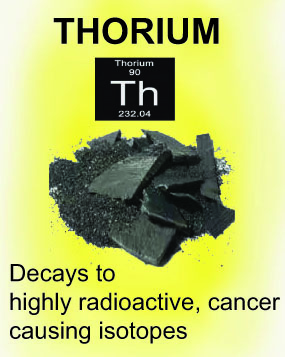
The natural resources department said the alpha readings released last month couldn’t be attributed to uranium and radium that were tested for, so the department is conducting additional tests for thorium as a potential cause for high particle levels……https://www.usnews.com/news/best-states/missouri/articles/2017-07-11/tests-reveal-stormwater-contamination-at-missouri-landfill
July 14, 2017
Posted by Christina Macpherson |
thorium, USA, water |
Leave a comment
 Tipping point for nuclear war’ – North Korea lashes out after US practice bombing run, Telegraph UK, Our Foreign Staff 9 JULY 2017 North Korea on Sunday lashed out at a live-fire drill the US and South Korea staged in a show of force against Pyongyang, accusing Washington of pushing the peninsula to the “tipping point” of nuclear war.
The allies held the rare live-fire drill as tensions grew over the peninsula following the North’s first intercontinental ballistic missile (ICBM) test held last week. The test sparked global alarm as it suggested North Korea now possessed an ICBM capable of reaching Alaska, a major milestone for the reclusive, nuclear-armed state.Saturday’s drill, designed to “sternly respond” to potential missile launches by the North, saw two US bombers destroy “enemy” missile batteries and South Korean jets mount precision strikes against underground command posts.
The North’s state-run Rodong newspaper accused Washington and Seoul of ratcheting up tensions with the drill, in an editorial titled “Don’t play with fire on a powder keg.”
“The US, with its dangerous military provocation, is pushing the risk of a nuclear war on the peninsula to a tipping point,” it said, describing the peninsula as the “world’s biggest tinderbox.”During Saturday’s drill, long-range B-1B Lancer bombers reportedly flew close to the heavily-fortified border between two Koreas and dropped 2,000-pound (900 kilogram) bombs.
Pyongyang described the joint drill as a “dangerous military gambit of warmongers who are trying to ignite the fuse of a nuclear war on the peninsula.”
“A small misjudgment or error can immediately lead to the beginning of a nuclear war, which will inevitably lead to another world war,” it said…… http://www.telegraph.co.uk/news/2017/07/09/north-korea-us-practice-bombing-run-could-tipping-point-nuclear/
July 10, 2017
Posted by Christina Macpherson |
North Korea, politics international, USA, weapons and war |
1 Comment
 Study Links Three Mile Island Nuclear Partial Meltdown To Thyroid Cancers In Surrounding Counties https://cleantechnica.com/2017/06/07/study-links-three-mile-island-nuclear-partial-meltdown-thyroid-cancers-surrounding-counties/, June 7th, 2017 by James Ayre A new study from the Penn State College of Medicine has — for the first time, apparently — linked the partial meltdown of the Three Mile Island Nuclear Generating Station on March 28, 1979, to thyroid cancers in the surrounding counties.
To be more exact here with the wording, the researchers have found a “shift in (thyroid cancer) cases to cancer mutations consistent with radiation exposure from those consistent with random causes,” as worded by the press release.
As most people reading this will remember, the partial meltdown at the Three Mile Island facility — near Harrisburg, Pennsylvania — definitely released some radiation into the wider environment, but according to the United States Nuclear Regulatory Commission, the levels were low enough that no detectable health effects were associated with it.
The new work — which analyzed tumor samples from people who have been verified through an extensive vetting process to have lived in areas surrounding the nuclear facility at the time of the accident, to have stayed in the area, and to have later developed thyroid cancer there — shows that this apparently hasn’t, in fact, been the case.
The press release provides more:
“In this retrospective cohort study — meaning the patients in the study already had thyroid cancer and were known to have been exposed to the TMI accident — lead researcher Dr David Goldenberg, professor of surgery, and colleagues identified 44 patients who were treated at the Penn State Health Milton S Hershey Medical Center for the most common type of thyroid cancer, papillary thyroid cancer, between 1974 and 2014. The patients were then divided into two groups: at risk and control groups.
“Patients in the at-risk group were those who developed cancer between 1984 and 1996, consistent with known latency periods of radiation-induced thyroid cancer, and who lived in at-risk geographical areas — based on reported weather patterns — at the time of the accident.”
“This definition was designed to allow us to identify relatively acute effects of radiation exposure from the accident,” explained Goldenberg.
The press release continues: “Patients who developed cancer outside of the expected latency period were placed in the control group. Researchers searched through all thyroid cancer tumor samples in the hospital’s possession from the study period for patients who lived in at-risk regions Dauphin, York, eastern Cumberland, Lancaster and western Lebanon counties. They used genealogical software to verify that the patient was in an at-risk area during the accident, remained until cancer developed and was treated at the Medical Center. The tumor samples of those patients who were positively linked to the TMI accident area were then processed through the Penn State Institute for Personalized Medicine to determine genetic makeup of the cancer.
“While most thyroid cancers are sporadic, meaning they happen without clear reasons, exposure to radiation has been shown to change the molecular makeup of the cancer, according to the researchers. The researchers observed an increase in the genetic mutation caused by exposure to low-dose radiation in the at-risk group and a decrease in the incidence of sporadic thyroid cancer, identified by a specific genetic mutation known as BRAF. The BRAF mutation is typically not present in the radiation-induced types of thyroid cancer.
“The study indicates that these observations are consistent with other radiation-exposed populations. In the control group, 83% of patients had the BRAF mutation. The BRAF mutation was found in only 53% of patients in the at-risk group. In the at-risk group, there was also a rise in other molecular markers seen in radiation induced thyroid cancer, the researchers added.”
So, this is yet another example of the way that nuclear energy is probably not the safest (or most economical) way to go about providing people with electricity.
Goldenberg continued: “While no single marker can determine whether an individual tumor is radiation-induced, these data support the possibility that radiation released from TMI altered the molecular profile of thyroid cancers in the population surrounding the plant.”
The researchers are now planning to expand the work to include patients from other regional hospitals, to try and determine if the correlation is true on the larger scale as well.
The new research is detailed in a paper published as a supplement to the latest issue of the journal Laryngoscope.
July 10, 2017
Posted by Christina Macpherson |
health, USA |
Leave a comment
 Global Meltdown? Nuclear Power’s Annus Horribilis, Jim Green, New Matilda, 9 July 2017 https://newmatilda.com/2017/07/09/global-meltdown-nuclear-powers-annus-horribilis/
This year will go down with 1979 (Three Mile Island), 1986 (Chernobyl) and 2011 (Fukushima) as one of the nuclear industry’s worst ever ‒ and there’s still another six months to go, writes Dr Jim Green.
Two of the industry’s worst-ever years have been in the past decade and there will be many more bad years ahead as the trickle of closures of ageing reactors becomes a flood ‒ the International Energy Agency expects almost 200 reactor closures between 2014 and 2040. The likelihood of reactor start-ups matching closures over that time period has become vanishingly small.
In January, the World Nuclear Association anticipated 18 power reactor start-ups this year. The projection has been revised down to 14 and even that seems more than a stretch. There has only been one reactor start-up in the first half of the year according to the IAEA’s Power Reactor Information System, and two permanent reactor closures.
The number of power reactors under construction is on a downward trajectory ‒ 59 reactors are under construction as of May 2017, the first time since 2010 that the number has fallen below 60.
Pro-nuclear journalist Fred Pearce wrote on May 15: “Is the nuclear power industry in its death throes? Even some nuclear enthusiasts believe so. With the exception of China, most nations are moving away from nuclear ‒ existing power plants across the United States are being shut early; new reactor designs are falling foul of regulators, and public support remains in free fall. Now come the bankruptcies…. The industry is in crisis. It looks ever more like a 20th century industrial dinosaur, unloved by investors, the public, and policymakers alike. The crisis could prove terminal.”
Pro-nuclear lobby groups are warning about nuclear power’s “rapidly accelerating crisis“, a “crisis that threatens the death of nuclear energy in the West“, and noting that “the industry is on life support in the United States and other developed economies“.
United States
The most dramatic story this year has been the bankruptcy protection filing of US nuclear giant Westinghouse onMarch 29. Westinghouse’s parent company Toshiba states that there is “substantial doubt” about Toshiba’s “ability to continue as a going concern”. These nuclear industry giants have been brought to their knees by cost overruns ‒estimated at US$13 billion ‒ building four AP1000 power reactors in the U.S.
The nuclear debate in the US is firmly centred on attempts to extend the lifespan of ageing, uneconomic reactors with state bailouts. Financial bailouts by state governments in New York and Illinois are propping up ageing reactors, but a proposed bailout in Ohio is meeting stiff opposition. The fate of Westinghouse and its partially-built AP1000 reactors are much discussed, but there is no further discussion about new reactors ‒ other than to note that they won’t happen.
Six reactors have been shut down over the past five years in the US, and another handful will likely close in the next five years. How far and fast will nuclear fall? Exelon ‒ the leading nuclear power plant operator in the US ‒ claims that “economic and policy challenges threaten to close about half of America’s reactors” in the next two decades. According to pro-nuclear lobby group ‘Environmental Progress‘, almost one-quarter of US reactors are at high risk of closure by 2030, and almost three-quarters are at medium to high risk. In May, the US Energy Information Administration released an analysis projecting nuclear’s share of the nation’s electricity generating capacity will drop from 20 per cent to 11 per cent by 2050.
There are different views about how far and fast nuclear will fall in the US ‒ but fall it will. And there is no dispute that many plants are losing money. More than half in fact, racking up losses totalling about US$2.9 billion a year according to a recent analysis by Bloomberg New Energy Finance. And a separate Bloomberg report found that expanding state aid to money-losing reactors across the eastern US may leave consumers on the hook for as much as US$3.9 billion a year in higher power bills.
Japan
Fukushima clean-up and compensation cost estimates have doubled and doubled again and now stand at US$191 billion. An analysis by the Japan Institute for Economic Research estimates that the total costs for decommissioning, decontamination and compensation could be far higher at US$443‒620 billion.
Only five reactors are operating in Japan as of July 2017, compared to 54 before the March 2011 Fukushima disaster. The prospects for new reactors are bleak. Japan has given up on its Monju fast breeder reactor ‒ successive governments wasted US$10.6 billion on Monju and decommissioning will cost another US$2.7 billion.
As mentioned, Toshiba is facing an existential crisis due to the crippling debts of its subsidiary Westinghouse. Toshibaannounced on May 15 that it expects to report a consolidated net loss of US$8.4 billion for the 2016‒2017 financial year which ended March 31.
Hitachi is backing away from its plan to build two Advanced Boiling Water Reactors in Wylfa, Wales. Hitachi recentlysaid that if it cannot attract partners to invest in the project before construction is due to start in 2019, the project will be suspended.
Hitachi recently booked a massive loss on a failed investment in laser uranium enrichment technology in the US. A 12 May 2017 statement said the company had posted an impairment loss on affiliated companies’ common stock of US$1.66 billion for the fiscal year ended 31 March 2017, and “the major factor” was Hitachi’s exit from the laser enrichment project. Last year a commentator opined that “the way to make a small fortune in the uranium enrichment business in the US is to start with a large one.”
France
The French nuclear industry is in its “worst situation ever” according to former EDF director Gérard Magnin. France has 58 operable reactors and just one under construction.
French EPR reactors under construction in France and Finland are three times over budget ‒ the combined cost overruns for the two reactors amount to about US$14.5 billion.
Bloomberg noted in April 2015 that Areva’s EPR export ambitions are “in tatters“. Now Areva itself is in tatters and is in the process of a government-led restructure and another taxpayer-funded bailout. On March 1, Areva posted a €665 million net loss for 2016. Losses in the preceding five years exceeded €10 billion.
In February, EDF released its financial figures for 2016: earnings and income fell and EDF’s debt remained steady at €37.4 billion. EDF plans to sell €10 billion of assets by 2020 to rein in its debt, and to sack up to 7,000 staff. The French government provided EDF with €3 billion in extra capital in 2016 and will contribute €3 billion towards a €4 billioncapital raising this year. On March 8, shares in EDF hit an all-time low a day after the €4 billion capital raising was launched; the share price fell to €7.78, less than one-tenth of the high a decade ago.
Costs of between €50 billion and €100 billion will need to be spent by 2030 to meet new safety requirements for reactors in France and to extend their operating lives beyond 40 years.
EDF has set aside €23 billion to cover reactor decommissioning and waste management costs in France ‒ just over half of the €54 billion that EDF estimates will be required. A recent report by the French National Assembly’s Commission for Sustainable Development and Regional Development concluded that there is “obvious under-provisioning” and that decommissioning and waste management will take longer, be more challenging and cost much more than EDF anticipates.
In 2015, concerns about the integrity of some EPR pressure vessels were revealed, prompting investigations that are still ongoing. Last year, the scandal was magnified when the French Nuclear Safety Authority (ASN) announced that Areva had informed it of “irregularities in components produced at its Creusot Forge plant.” The problems concern documents attesting to the quality of parts manufactured at the site. At least 400 of the 10,000 quality documents reviewed by Areva contained anomalies. Work at the Creusot Forge foundry was suspended in the wake of the scandal and Areva is awaiting ASN approval to restart the foundry.
French environment and energy minister Nicolas Hulot said on June 12 that the government plans to close some nuclear reactors to reduce nuclear’s share of the country’s power mix. “We are going to close some nuclear reactors and it won’t be just a symbolic move,” he said.
India
Nuclear power accounts for just 3.4 percent of electricity supply in India and that figure will not rise significantly, if at all. In May, India’s Cabinet approved a plan to build 10 indigenous pressurized heavy water reactors (PHWR). That decision can be read as an acknowledgement that plans for six Westinghouse AP1000 reactors and six French EPR reactors are unlikely to eventuate.
The plan for 10 new PHWRs faces major challenges. Suvrat Raju and M.V. Ramana noted: “[N]uclear power will continue to be an expensive and relatively minor source of electricity for the foreseeable future…. The announcement about building 10 PHWRs fits a pattern, often seen with the current government, where it trumpets a routine decision to bolster its “bold” credentials. Most of the plants that were recently approved have been in the pipeline for years. Nevertheless, there is good reason to be sceptical of these plans given that similar plans to build large numbers of reactors have failed to meet their targets, often falling far short.”
South Africa
An extraordinary High Court judgement on April 26 ruled that much of South Africa’s nuclear new-build program is without legal foundation. The High Court set aside the Ministerial determination that South Africa required 9.6 gigawatts (GW) of new nuclear capacity, and found that numerous bilateral nuclear cooperation agreements were unconstitutional and unlawful. President Jacob Zuma is trying to revive the nuclear program, but it will most likely be shelved when Zuma leaves office in 2019 (if he isn’t removed earlier). Energy Minister Mmamoloko Kubayi said on June 21 that South Africa will review its nuclear plans as part of its response to economic recession.
South Korea
South Korea’s new President Moon Jae-in said on June 19 that his government will halt plans to build new nuclear power plants and will not extend the lifespan of existing plants beyond 40 years. President Moon said: “We will completely re-examine the existing policies on nuclear power. We will scrap the nuclear-centred polices and move toward a nuclear-free era. We will eliminate all plans to build new nuclear plants.”
Since the presidential election on May 9, the ageing Kori-1 reactor has been permanently shut down, work on two partially-built reactors (Shin Kori 5 and 6) has been suspended pending a review, and work on two planned reactors (Shin-Hanul 3 and 4) has been stopped.
Taiwan
Taiwan’s Cabinet reiterated on June 12 the government’s resolve to phase out nuclear power. The government remains committed to the goal of decommissioning the three operational nuclear power plants as scheduled and making Taiwan nuclear-free by 2025, Cabinet spokesperson Hsu Kuo-yung said.
UK
Tim Yeo, a former Conservative politician and now a nuclear industry lobbyist with New Nuclear Watch Europe, saidthe compounding problems facing nuclear developers in the UK “add up to something of a crisis for the UK’s nuclear new-build programme.”
The lobby group noted delays with the EPR reactor in Flamanville, France and the possibility that those delays would flow on to the two planned EPR reactors at Hinkley Point; the lack of investors for the proposed Advanced Boiling Water Reactors at Wylfa; the acknowledgement by the NuGen consortium that the plan for three AP1000 reactors at Moorside faces a “significant funding gap”; and the fact that the Hualong One technology which China General Nuclear Power Corporation hopes to deploy at Bradwell in Essex has yet to undergo its generic design assessment.
The only reactor project with any momentum in the UK is Hinkley Point, based on the French EPR reactor design. The head of one of Britain’s top utilities said on June 19 that Hinkley Point is likely to be the only nuclear project to go ahead in the UK. Alistair Phillips-Davies, chief executive officer of SSE, an energy supplier and former investor in new nuclear plants, said: “The bottom line in nuclear is that it looks like only Hinkley Point will get built and Flamanville needs to go well for that to happen.”
There is growing pressure for the obscenely expensive Hinkley Point project to be cancelled. The UK National Audit Office report released a damning report on June 23. The Audit Office said: “The Department for Business, Energy and Industrial Strategy’s deal for Hinkley Point C has locked consumers into a risky and expensive project with uncertain strategic and economic benefits… Today’s report finds that the Department has not sufficiently considered the costs and risks of its deal for consumers…. Delays have pushed back the nuclear power plant’s construction, and the expected cost of top-up payments under the Hinkley Point C’s contract for difference has increased from £6 billion to £30 billion.”
Writing in the Financial Times on May 26, Neil Collins said: “EDF, of course, is the contractor for that white elephant in the nuclear room, Hinkley Point. If this unproven design ever gets built and produces electricity, the UK consumer will be obliged to pay over twice the current market price for the output…. The UK’s energy market is in an unholy mess… Scrapping Hinkley Point would not solve all of [the problems], but it would be a start.”
And on it goes. Hinkley Point is one of the “great spending dinosaurs of the political dark ages” according to The Guardian. It is a “white elephant” according to an editorial in The Times.
EDF said on June 26 that it is conducting a “full review of the costs and schedule of the Hinkley Point C project” and the results will be disclosed “soon”. On July 3, EDF announced that the estimated cost of the two Hinkley reactors has risen by €2.5 billion (to €23.2 billion, or €30.4 billion including finance costs). In 2007, EDF was boasting that Britons would be using electricity from Hinkley to cook their Christmas turkeys in December 2017. But in its latestannouncement, EDF pushes back the 2025 start-up dates for the two Hinkley reactors by 9‒15 months.
Oliver Tickell and Ian Fairlie wrote an obituary for Britain’s nuclear renaissance in The Ecologist on May 18. Theyconcluded: “[T]he prospects for new nuclear power in the UK have never been gloomier. The only way new nuclear power stations will ever be built in the UK is with massive political and financial commitment from government. That commitment is clearly absent. So yes, this finally looks like the end of the UK’s ‘nuclear renaissance’.”
Switzerland
Voters in Switzerland supported a May 21 referendum on a package of energy policy measures including a ban on new nuclear power reactors. Thus Switzerland has opted for a gradual nuclear phase out and all reactors will probably be closed by the early 2030s, if not earlier.
Germany will close its last reactor much sooner than Switzerland, in 2022.
Sweden
Unit 1 of the Oskarshamn nuclear power plant in Sweden has been permanently shut down. Unit 2 at the same plant was permanently shut down in 2015. Ringhals 1 and 2 are expected to be shut down in 2019‒2020, after which Sweden will have just six operating power reactors. Switzerland, Germany and Taiwan have made deliberate decisions to phase out nuclear power; in Sweden, the phase out will be attritional.
Russia
Rosatom deputy general director Vyacheslav Pershukov said in mid-June that the world market for the construction of new nuclear power plants is shrinking, and the possibilities for building new large reactors abroad are almost exhausted. He said Rosatom expects to be able to find customers for new reactors until 2020‒2025 but “it will be hard to continue.”
China
With 36 power reactors and another 22 under construction, China is the only country with a significant nuclear expansion program. However nuclear growth could take a big hit in the event of economic downturn. And nuclear growth could be derailed by a serious accident, which is all the more likely because of China’s inadequate nuclear safety standards, inadequate regulation, lack of transparency, repression of whistleblowers, world’s worst insurance and liability arrangements, security risks, and widespread corruption.
Dr Jim Green is the national nuclear campaigner with Friends of the Earth, Australia, and editor of the World Information Service on Energy’s Nuclear Monitor newsletter.
July 10, 2017
Posted by Christina Macpherson |
2 WORLD, business and costs, China, France, Germany, India, Japan, politics, Russia, South Africa, South Korea, Sweden, Switzerland, Taiwan, UK, USA |
Leave a comment
 Why America is still on the right path for climate change, By Kalpana Sutaria – American Statesman, 9 Jul 17 “…… States, cities, counties, universities, corporations, businesses, manufacturers, and social and religious organizations have climate action plans to lower emissions. I worked on the city of Austin’s Climate Action Plan and experienced positive environmental impacts. Many leaders around the country have affirmed their conviction to continue with the goals of Paris accord, which included national pledges to reduce emissions.
It may seem difficult to see how we get there when the leaders at the top do not accept that human activities are major contributor to climate change. In the absence of the federal government’s support, cities, states, corporations and manufacturing companies are determined to work towards meeting those temperature targets. Seven states have bills filed on carbon pricing.
Texas has been a leader in producing renewable energy and has its institutions and workforce moving forward with innovative, low-carbon technologies. Texans want that. Some other recent developments in the U.S. are encouraging:
• The Climate Solutions Caucus in the U.S. House is a bipartisan group that will address the impacts, causes and challenges of our changing climate. “The caucus will serve as an organization to educate members on economically viable options to reduce climate risk and protect our nation’s economy, security, infrastructure, agriculture, water supply and public safety,” according to an announcement from the Committee on House Administration. It has 42 members: 21 Republicans and 21 Democrats. They must join in pairs.
•. Climate Leadership Council was formed this year by conservative Republican leaders and others who make a case for carbon dividends and how a new climate strategy can strengthen our economy, reduce regulation, help working-class Americans, shrink government and promote national security.
• More than six in 10 Trump voters support taxing or regulating the pollution that causes global warming, according to national survey of Trump voters done shortly after the election by the Yale Program on Climate Change Communication. They support variety of clean energy policies.
The Citizens’ Climate Lobby has a proposal of a carbon fee and dividend that is studied and supported by prominent economists. It is a market-based solution that will reflect true cost of carbon to the society, steer the economy away from fossil fuels to clean energy sources, and create millions of jobs while protecting the environment. Market will be a key element in spurring innovations. With the dividend, most low-income and middle-income families would come out ahead.
Every year, thousands of Citizens’ Climate Lobby members gather in Washington, D.C., to meet with representatives in the House and Senate to ask for their support of a carbon fee and dividend. Anyone concerned about global warming should ask their lawmakers to join the Climate Solutions Caucus.
Sutaria is an architect and project manager for the city of Austin.
July 10, 2017
Posted by Christina Macpherson |
climate change, USA |
Leave a comment
Last month, Brown discussed climate change with Chinese President Xi Jinping in Beijing, an unusual level of engagement between the Chinese head of state and a governor. (Energy Secretary Rick Perry, by contrast, did not meet with Xi in a recent trip to China).
“He wants to make clear that if you can’t look to Washington, you can look to California on progressive environmental policy,” said Ann Carlson, professor of environmental law at UCLA
 Gov. Brown unveils plan for global climate summit, further undercutting Trump’s agenda, Melanie Mason, Evan Halper and Patrick McGreevyContact Reporters, 6 Jul 17, In a rebuke to President Trump’s disengagement from worldwide climate change efforts, Gov. Jerry Brown told an international audience Thursday the president “doesn’t speak for the rest of us” and unveiled plans for a global environmental summit in San Francisco next year.
The announcement, at a convening of climate activists in Hamburg, Germany, coinciding with Trump’s arrival there for the G-20 summit of world leaders, signals once more how Brown and other American leaders aim to galvanize continued efforts against climate change, even as the federal government moves in the opposite direction.
“It’s hard to grasp the mortal danger that climate change represents,” Brown said in an interview with The Times. “I believe that California, New York, France and Germany and the other countries — we have to get our act together, strengthen our commitment and bring as many nations along as we can.”
Whether Brown and his American cohorts, including Los Angeles Mayor Eric Garcettiand former New York Mayor Michael Bloomberg, will ultimately be able to take sufficient action to curb global warming is uncertain, but they are already succeeding in undercutting the authority of the White House to set the U.S. agenda on climate. Since Trump quit the Paris accord on climate change, California and a dozen other states have vowed to not only stick with the agreement, but also step up their emission reduction efforts to push the rest of the country along. A coalition of cities committed to the climate action outlined in Paris — led by Garcetti — has swollen from a few dozen members to 331 in the last few weeks.
Brown and other American climate crusaders see the G-20 meeting as a crucial moment. Several world leaders who will attend the summit have already signaled that they will confront Trump on climate issues during its proceedings, and a move is afoot to conclude the meeting with a written reaffirmation of commitment to the Paris guidelines that would ostensibly be signed by every G-20 every nation except the U.S. — underscoring how far out of alignment with the rest of the world Trump is on the issue.
But even before the summit began, unity among the other countries was already starting to fray. While Western European leaders vowed to push the issue, countries such as Russia, Indonesia and Turkey were expressing less bombast. Saudi Arabia — which is still bullish on climate action but is also eager to remain in good diplomatic standing with the U.S. amid its dispute with fellow American ally Qatar — is also hedging.
With his video announcement Thursday to attendees of the Global Citizen Festival in Hamburg, Brown aimed to shore up opposition to Trump’s climate moves and send a signal that the U.S. can maintain a leadership role despite the president.
“It’s up to you and it’s up to me and tens of millions of other people to get it together to roll back the forces of carbonization and join together to combat the existential threat of climate change,” Brown said in his video, appearing in a leafy setting with a blazer and no tie. “Yes, I know President Trump is trying to get out of the Paris agreement, but he doesn’t speak for the rest of America…. We in California and in states all across America believe it’s time to act, it’s time to join together and that’s why at this climate action summit we’re going to get it done.”
Host of next United Nations climate conference turns to California in the global warming battle »
Brown’s message was projected into the arena, and the audience burst out in applause when the governor said Trump doesn’t speak for the rest of the U.S.
Trump was not invited to speak at the festival because his policies don’t align with its goal of supporting global health, climate and gender equality, said a source involved in organizing the festival. Canadian Prime Minister Justin Trudeau, Argentinian President Mauricio Macri and other leaders took the stage to speak about climate change and education to the crowd of 12,000.
The planned 2018 California summit, Brown told The Times, would signify “the biggest state in the union is the venue for a worldwide convocation of states, regions and entrepreneurs and others who want to do something serious about climate change.”……
Last month, Brown discussed climate change with Chinese President Xi Jinping in Beijing, an unusual level of engagement between the Chinese head of state and a governor. (Energy Secretary Rick Perry, by contrast, did not meet with Xi in a recent trip to China).
“He wants to make clear that if you can’t look to Washington, you can look to California on progressive environmental policy,” said Ann Carlson, professor of environmental law at UCLA………http://www.latimes.com/politics/la-pol-sac-jerry-brown-climate-summit-20170706-story.html
July 8, 2017
Posted by Christina Macpherson |
climate change, USA |
Leave a comment
 New Survey Shows Majority Of Americans Believe Climate Change Is Real And Caused By Human Activity https://www.desmogblog.com/2017/07/06/new-survey-shows-majority-americans-believe-climate-change-real-and-caused-human-activity?utm_source=dsb%20newsletter By Farron Cousins • Thursday, July 6, 2017 The current leadership in the United States — the U.S. House of Representatives, the Senate, and the White House — have a hostile relationship with climate change science. Not only has current President Donald Trump suggested that the entire concept is a hoax perpetrated by the Chinese, but the Legislative Branch of government is populated with a majority of representatives who do not accept the scientific consensus regarding climate change. Not only are these views dangerous for the future of the planet, but a new poll shows that these views are entirely out of sync with a majority of the U.S. population.
According to a new report by the Yale Program on Climate Change Communication, a majority of people in the United States believe that climate change is real and that it is mostly the result of human activities. The survey shows that 58% of the public now accepts that climate change is mostly caused by human activity, which is the highest level ever recorded of public acceptance of the human role in climate change since Yale began conducting these studies in 2008.
Here are a few key findings from the new report:
Over half of Americans (58%) understand that global warming is mostly human caused, the highest level since our surveys began in November 2008. By contrast, three in ten (30%) say it is due mostly to natural changes in the environment – the lowest level recorded since 2008.
Only about one in eight Americans (13%) understand that nearly all climate scientists (more than 90%) are convinced that human-caused global warming is happening.
Over half of Americans (57%) say they are at least “somewhat worried” about global warming. About one in six (17%) are “very worried” about it.
About one in three Americans (35%) think people in the U.S. are being harmed by global warming “right now.”
By a large margin, Americans say that schools should teach children about the causes, consequences, and potential solutions to global warming (78% agree vs. 21% who disagree).
One particularly intriguing finding from the Yale report is that the majority believe that the threats of climate change are things that will either happen in the distant future, or that they will not happen to the individuals polled or their families:
Most Americans think global warming is a relatively distant threat – they are most likely to think that it will harm future generations of people (71%), plant and animal species (71%), the Earth (70%), people in developing countries (62%), or the world’s poor (62%). They are less likely to think it will harm people in the U.S. (58%), their own grandchildren (56%) or children (50%), people in their community (48%), their family (47%), themselves (43%), or members of their extended family living outside the U.S. (41%).
The fact that most Americans either believe the threat is something that will happen in the distant future or that it won’t happen to them is one possible reason so many people are willing to vote for politicians who either outright deny the existence of climate change or who refuse to act on the issue. Currently, a majority of members of both the U.S. House and the U.S. Senate fall into one of those categories, with 53 out of 100 U.S. Senators counted as climate change deniers and 232 out of 435 House members listed as deniers.
But the truth is that climate change is not a far-off threat for Americans. Rising sea levels are already threatening drinking water in South Florida, as salt water is seeping into aquifers. Elsewhere, rising temperatures, rising sea levels, changes in precipitation patterns, and extreme weather events that have been linked to climate change are wreaking havoc. So one of the main focuses of climate science advocates needs to be educating people about the timeline so they stop viewing climate change as a problem that can be put on the back burner. It is happening right now.
Nevertheless, the fact that a majority of U.S. citizens understand the realities of climate change while our elected leaders refuse to accept the science indicates that they have become too far removed from the values, desires, and concerns of their constituents. That’s likely due in part to the massive amounts of money that fossil fuel companies spend on lobbying and direct campaign contributions which totaled $120+ million and $103 million in 2016, respectively.
July 8, 2017
Posted by Christina Macpherson |
climate change, Reference, USA |
Leave a comment
A Summit Without Fireworks Over North Korea, 38 North, BY: LEON V. SIGAL 6 JULY 17 Observers who expected fireworks at the first Trump-Moon summit meeting had to wait for the Fourth of July when North Korea test-launched what it said was an ICBM. Smiles rather than tweets marked the mood of the summit with both leaders determined to put on a public show of alliance solidarity and personal rapport. That display will now be put to the test in the aftermath of the North’s missile test.
The sharp differences at the summit came over trade, not North Korea, as US President Donald Trump made clear his intent to revise the Korea-US Free Trade Agreement, focusing on automobiles and steel.[1] That demand could face resistance in South Korea…….
As the summit communique stated: “Noting that sanctions are a tool of diplomacy, the two leaders emphasized that the door to dialogue with North Korea remains open under the right circumstances.” The communique endorsed Seoul’s re-engagement with Pyongyang, as well, explaining: “President Trump supported President Moon’s aspiration to restart inter-Korean dialogue on issues including humanitarian affairs.”[3]
As the summit communique stated: “Noting that sanctions are a tool of diplomacy, the two leaders emphasized that the door to dialogue with North Korea remains open under the right circumstances.” The communique endorsed Seoul’s re-engagement with Pyongyang, as well, explaining: “President Trump supported President Moon’s aspiration to restart inter-Korean dialogue on issues including humanitarian affairs.”[3]
En route to Washington, President Moon spoke with reporters about a two-phased nuclear negotiating process, starting with a freeze on its nuclear programs. ……..
Furthermore, Moon did not back away from the need for a peace process in Korea. “With the nuclear dismantlement, a peace system will be established on the peninsula,” he stated.[7]And he made clear that economic engagement with the North would resume at the Kaesong Industrial Complex and Mount Kumgang with the onset of a nuclear freeze.
Sustaining Washington’s secret talks with Pyongyang will be critical to relations with both Koreas. ……..
the latest test-launch underscores how tougher sanctions by Washington and Seoul provoke Pyongyang to step up arming unless nuclear diplomacy is resumed and the North’s security concerns are addressed.
It’s time to stop acting as if the United States and South Korea have to talk to each other and not North Korea. http://www.38north.org/2017/07/lsigal070617/
July 8, 2017
Posted by Christina Macpherson |
politics international, South Korea, USA |
Leave a comment