Alberta joins Ontario, New Brunswick and Saskatchewan -led by the nose by nuclear NuScam?

 Going Nuclear: Alberta Signs Inter-Provincial MOE to Explore Small Modular Reactors, J.D. Supra, 14Aug 20,
On August 7, 2020, the Government of Alberta announced its intention to enter into a Memorandum of Understanding (MOU) to explore emerging nuclear power generation technology in the form of Small Modular Reactors (SMRs).
Alberta is the fourth province to sign the MOU, following in the footsteps of the governments of Ontario, New Brunswick and Saskatchewan, which signed the MOU in December 2019. Ontario and New Brunswick are Canada’s only provinces currently producing nuclear energy, while uranium fuel is mined in Saskatchewan. Athabasca Basin contains the world’s largest high-grade deposits of uranium and straddles the Alberta-Saskatchewan border……
Survey finds that U.S. Democrats and Republicans both want to phase out land-based nuclear missiles
|
Democrats And Republicans Agree: Phase Out Land-Based Nuclear Missiles https://www.forbes.com/sites/matthewkorda/2020/08/12/democrats-and-republicans-agree-phase-out-land-based-nuclear-missiles/#74441be7109d Matt Korda I write about the nexus between nuclear weapons, climate change, and injustice. Although Democrats and Republicans increasingly seem worlds apart, when it comes to nuclear weapons issues, they’re actually much closer than one might think.
According to a new report by the Program for Public Consultation at the University of Maryland, 61 percent of Americans–including both Democratic and Republican majorities–are in favor of phasing out the United States’ aging fleet of 400 intercontinental ballistic missiles. This finding is highly noteworthy, as it runs in direct contrast to the Pentagon’s current plan of spending approximately $100 billion to buy a brand-new generation of ICBMs by 2030. The survey, entitled “Common Ground of the American People,” is a compilation of studies conducted over the past five years, collecting data from nearly 86,000 individuals throughout the polling process. It specifically aimed to place the respondents into the shoes of a policymaker: respondents were first given an issue briefing, and were then asked to evaluate arguments for and against various policy proposals, before finally offering their recommendations.
The survey’s unique methodology is highly illuminating, because it allows readers of the report to see which arguments were deemed to be most or least convincing, and by whom. For example, Republicans preferred a proposal to phase out ICBMs while maintaining the same number of deployed warheads, while Democrats preferred a proposal to phase out ICBMs and reduce the arsenal to a lower number of deployed warheads.
The main takeaway though, is that–regardless of how the ICBM phase-out takes place–69 percent of Democrats and 53 percent of Republicans agree that the land-based leg of the nuclear triad should be eliminated entirely.
It makes sense that both Democrats and Republicans would agree on phasing out ICBMs: they are outdated, destabilizing, and very expensive. Intercontinental ballistic missiles are largely relics of the Cold War, when the United States and the Soviet Union alike feared a “bolt-from-the-blue” nuclear attack. At the time, it was believed that both countries having large land-based nuclear arsenals would prevent each other from launching a massive surprise attack. However, in today’s multipolar nuclear environment, the likelihood of such an attack is extremely slim, and so ICBMs no longer hold much strategic value. Given the abundance of more flexible options in the U.S. arsenal, U.S. Strategic Command would certainly turn to nuclear bombers or submarines–not ICBMs–in the event of a low-level nuclear crisis.
Additionally, the inherent vulnerability of the ICBM fleet actually creates a psychological pressure to launch them during a nuclear crisis, before an adversary’s missiles can wipe them out. This is why siloed ICBMs–like those deployed across the United States––are commonly referred to as “use ‘em or lose ‘em” weapons. In the event of a false alarm, accident, or miscalculation, this pressure to “use ‘em” could inadvertently trigger a nuclear war. No other nuclear weapon in the US nuclear arsenal comes with this kind of destabilizing psychological pressure. ……
Perhaps knowing this, the Pentagon argues that ICBMs are necessary as a “hedge” in case technological advances suddenly render the United States’ nuclear-armed submarines vulnerable. However, the 2018 Nuclear Posture Review admits that “When on patrol, [ballistic missile submarines (SSBNs)] are, at present, virtually undetectable, and there are no known, near-term credible threats to the survivability of the SSBN force.” This condition is likely to continue as US submarines get even quieter, thus making these fears seem relatively exaggerated. On top of this, replacing the ICBMs with brand-new missiles would be extremely expensive. The latest estimate for the Ground-Based Strategic Deterrent, as the replacement program is called, totals approximately $100 billion. In reality, these costs are expected to rise, given that the contract will be sole-sourced to Northrop Grumman NOC -0.7% after Boeing BA -2.6% pulled out of the competition last year. The chairman of the House Armed Services Committee has called this development “very troubling,” and the sole-source contract has since triggered a Federal Trade Commission investigation into Boeing’s allegations that Northrop Grumman was engaging in anti-competitive behavior.
Given these underlying programmatic and strategic concerns––in addition to the new survey demonstrating that both Democrats and Republicans want to phase out ICBMs entirely––why is this $100 billion project still moving forward? In the midst of an election, a recession, and a devastating pandemic, it seems like common sense to delay the program at the very least.
However, a robust lobbying effort by weapons contractors has impeded public scrutiny of the program. Northrop Grumman––the only bidder for the ICBM replacement contract––spent more than $162 million on lobbying between 2008 and 2018, with the bulk of the contributions going to members of the “ICBM Caucus”––a coalition of Senators from states where ICBMs are deployed. In 2018, this lobbying effort helped kill an amendment to the National Defense Authorization Act which called for a feasibility study on extending the life of the current ICBM force, rather than rebuilding it from scratch. This has had the effect of suppressing public debate over the future of the ICBMs; without studies like this one, the public is being asked to blindly swallow the pro-ICBM claims of those that would materially benefit from their replacement.
The University of Maryland’s report offers a new tool to push back against the “business” of nuclear policy. The survey suggests that corporate lobbying and “special interests” are alienating the public from their elected representatives, and dividing the two political parties even further. Therefore, treating its respondents as neutral “policymakers” clearly demonstrates that without the presence of moneyed interests, Democrats and Republicans agree on much more than one might think. And in this particular instance it is clear: majorities from both parties want to phase out intercontinental ballistic missiles.
|
|
Biden Condemns Trump’s Nuclear Plans, (but he himself supports nuclear power)
 Uranium Week: Biden Condemns Trump’s Nuclear Plans, Fn ArenaAug 11 2020 Presidential nominee Joe Biden has reiterated his objection to President Trump’s nuclear energy plan. FN Arena By Mark Woodruff
Presidential nominee Joe Biden used Twitter last week to declare he would create a clean energy economy that will generate “millions of well-paying union jobs ..….without jeopardising the places we hold dear.” Biden was responding to President Trump’s recent plan to mine uranium around the Grand Canyon. To achieve this, the President would need to lift the current 20-year ban on new mining in the area. In a further statement he also reiterated condemnation for President Trump’s nuclear energy plan, released in April this year, which outlined the creation of a US$150m uranium reserve in the coming decade. Last month, according to the Washington Post, Joe Biden unveiled a proposal to transform the nation’s energy industry and significantly reduce the United States’ reliance on fossil fuels and the 15-year timeline for 100% clean electricity standard.
However, unlike some of his Democratic primary opponents, Biden backs nuclear power, according to energyworld.com. https://www.fnarena.com/index.php/2020/08/11/uranium-week-biden-condemns-trumps-nuclear-plans/
|
|

Hazards in U.S, government’s plans for more locations for low level nuclear wastes
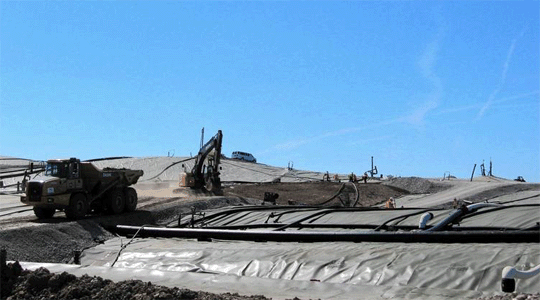
Feds Propose More Sites For Nuke Waste Storage (Not Disposal) Forbes , Ed Hirs 12 Aug 20,
The Nuclear Regulatory Commission (NRC) is proposing that more locations around the country be used to dispose of very low level radioactive waste. This proposal has raised the ire of environmentalists and nuclear waste storage proponents alike…….
Bad actors can make a considerable profit at the expense of public health. As the United Steelworkers union noted in their public comment urging the NRC against the ruling: “[the ruling]…requires workers with little to no training to handle contaminated material leading to a greater probability of mishandling or improper disposal; and the proposed rule lack[s] requirements to monitor surrounding soil and ground water from any exempt waste location to ensure there is no increase of radiological contamination outside of the potential dumping sites.”
Safe disposal does not equal safety when materials remain active for generations. To improve safety landfills need to keep records for generations, and to deal with low-level contamination appropriately. Over time landfills become golf courses, sources of methane for electricity generation, and mines for reclaiming metal. These activities result in exposure to radiation that future generations must be prepared for. This means meticulous record keeping, which is unlikely to be present across multiple changes of ownership and decades of time.
What the NRC proposes is an expansion of opportunities for things to go wrong. In the past this approach has given us names that remain infamous today: think Love Canal. Brio Refinery. Savannah River and DuPont. It gave us the remains of leaded gasoline.
Water supplies are particularly vulnerable. Historically, the dictum of chemists has been “dilution is the solution.” That works for chemicals. It does not work for radiation, which is being generated continuously.
The current system is better than what is being proposed. Expanding the opportunities for things to go wrong is a step backwards. If the proposal is adopted, today’s laxity and profits will become tomorrow’s health problems and remediation expenses. If we care about coming generations we should leave well enough alone. https://www.forbes.com/sites/edhirs/2020/08/11/hazardous-nuclear-waste-storage-its-not-disposal/#2086a6624ad3
What about Vermont Yankee’s nuclear waste? Or dealing with it?
What about Vermont Yankee’s nuclear waste? Or dealing with it?
High-Level Nuclear Waste (HLNW) is a byproduct of nuclear power plants and is extremely dangerous for thousands of years. The Vermont Yankee Nuclear Power Plant, in Vernon, has been shut down since 2014 and the HLNW it produced over the years of operation has been transferred into stainless steel and concrete dry casks stored onsite. Currently, our federal government has not come up with a permanent site to store HLNW safely over time.
NorthStar, the corporation which now owns Vermont Yankee, wants to transport that waste to a Centralized “Interim” Storage (CIS) site that it owns in Texas. To transport this waste is a dangerous proposition since an accident would likely result in great damage to the environment and the life forms in the surrounding area. We should only move the material once to a permanent repository. Also, if Vermont Yankee’s HLNW is allowed to be transported across the country on our highways, railways and waterways to a temporary open-air storage site, such a precedent would likely result in thousands of shipments across the country as other nuclear plants are shut down during the coming four decades.
Communities in the Southwest are speaking out in opposition to accepting our toxic waste. As members of the Vermont Yankee Decommissioning Alliance (VYDA), we support their concerns and are against the transportation and interim storage of Vermont Yankee’s waste at a CIS. We feel it is safer to keep our waste within our state in monitored, hardened, onsite storage in stainless steel and concrete dry casks while a scientifically-based permanent storage site is located.
For the above reasons, join us in contacting U.S. Rep. Peter Welch and urge him to vote against any bill that would authorize Centralized Interim Storage of High-Level Nuclear waste? https://www.timesargus.com/opinion/commentary/famette-rice-and-the-nuclear-waste/article_436e1a1b-deb3-5b6a-87a9-228cfb16afbc.html
Audrey Famette lives in Montpelier. Nancy Rice lives in Randolph Center.
Fort Worth doesn’t need dangerous nuclear waste rolling through on Tarrant rail line
|
Fort Worth doesn’t need dangerous nuclear waste rolling through on Tarrant rail lines https://www.star-telegram.com/opinion/opn-columns-blogs/other-voices/article244891627.html BY PEGGY HENDON AND LINDA HANRATTY
AUGUST 12, 2020The Nuclear Regulatory Commission is considering licensing two different facilities to store the nation’s high-level nuclear waste. One would be at the existing low-level storage facility in Andrews County, Texas. The second, known as the Holtec site, would be between Carlsbad and Hobbs, New Mexico. Why should Tarrant County be concerned? Most of the uranium waste from nuclear power plants is located east of the Mississippi River. Union Pacific Railroad appears to be the most likely carrier of the high-level nuclear waste casks, although any commercial rail lines could be used. Union Pacific tracks run through the middle of the county, just south of downtown Fort Worth and just north of Arlington’s City Hall and library, traversing neighborhoods of all kinds. Fort Worth’s medical district and the TCU and UT-Arlington campuses are within 1.5 miles of the tracks. A second Union Pacific rail line runs north toward Denton from Tower 55, a major railroad intersection just southeast of downtown Fort Worth. A large Union Pacific railyard lies southwest of downtown Tower 55 holds vital national and international significance, connecting freight and passenger travel between the East and West coasts, Southeast, Midwest, Gulf Coast, Mexico, and Canada. More than 100 trains pass through Tower 55 each day. Interim Storage Partners, which operates the Andrews County site, has asked to have 45 days to move low-level waste from Vermont. The rail cars carrying the high-level radioactive waste would sit at the Fort Worth rail yard, across from Colonial Country Club. These nuclear waste cars are readily identifiable, given their huge dumbbell-like shape, size and weight, which makes them a potential target for terrorist attacks. High-level radioactive waste is one of the most dangerous substances on earth, consisting of irradiated fuel rods that have been inside nuclear reactors. Exposure to unshielded nuclear waste is lethal. One railcar would carry more plutonium than was in the bomb dropped on Nagasaki. If the Nuclear Regulatory Commission approves either or both licenses, thousands of rail shipments of deadly, high-level radioactive waste could move through Tarrant County for more than 20 years, risking accidents leaks, and terrorist actions. Transport of massive amounts of high-level waste in thousands of shipments across the country is unprecedented. A 2019 report of the U.S. Nuclear Waste Technical Review Board found that there is a substantial lack of data regarding potential damage of spent nuclear fuel during transport. Many rails are only designed to carry 143 tons per car. The loaded casks for this waste weigh 210 tons or more. It is unclear whether tracks in Tarrant County would handle such weight. And accidents can happen. A cask carrying low-level waste that was headed to Andrews caught fire in the Chicago area in June. A better alternative would be to leave high-level waste at existing nuclear plants until a permanent repository is found to bury cannisters underground. The repository should be owned by the federal government, not a private entity. One radioactive railway accident in Tarrant County could contaminate our region and harm thousands of lives, posing substantial health risks and seriously impacting future economic growth. Resolutions opposing consolidated interim storage of this waste and its transport through heavily populated communities have been passed by Bexar, Dallas, Nueces, El Paso and Midland Counties and the cities of San Antonio, Midland and Denton, as well as the Midland Chamber of Commerce. Tarrant County, along with the cities of Fort Worth and Arlington, should also oppose the transportation of high-level nuclear waste through our communities and advise our federal representatives and the Nuclear Regulatory Commission of our serious concerns. Our lives and economic well-being may depend upon preventive action now. Peggy Hendon is president of the League of Women Voters of Tarrant County. Linda Hanratty is the group’s environmental chairwoman. |
|
Extreme weather causes emergency shutdown of nuclear plant in Iowa
|
‘Derecho’ storm causes Cargill plant closure, emergency shutdown of nuclear plant in Iowa
The storm caused crop damage and outages throughout the Midwest Star Tribune,
By Mike Hughlett Star Tribune, AUGUST 12, 2020 — A violent storm that tore through Iowa on Monday caused an emergency shutdown at a nuclear power plant near Cedar Rapids.
The storm packing hurricane-force winds tore across the Midwest, compounding troubles for a U.S. farm economy already battered by extreme weather, the U.S.-China trade war and most recently, the disruption caused to labor and consumption by the COVID-19 pandemic. Grain silos were ripped apart, and Minnetonka-based Cargill and Archer Daniels Midland closed crop-processing plants in Cedar Rapids. The Duane Arnold nuclear plant lost its connection to the electricity grid. At about 1 p.m., the plant in Palo, 11 miles northwest of Cedar Rapids, declared an “unusual event” — an indication of a safety threat, according to a report posted Tuesday by the U.S. Nuclear Regulatory Commission (NRC). An unusual event is the lowest of four levels of emergency conditions under NRC regulations. While the Duane Arnold plant is not now producing electricity, it does have power to run its emergency systems. The plant is stable and is using a backup power source at this time,” Duane Arnold’s majority owner and operator, Florida-based NextEra Energy Resources, said in a statement. The storms damaged the plant’s cooling towers, which are used in electricity production to cool steam after it exits the turbine, NextEra said. The cooling towers are not part of the safety systems used to cool the reactor and other critical components……. David Lochbaum, former director of the Union of Concerned Scientists’ nuclear safety project, said that loss of off-site power at nuclear power plants — usually due to storms — happens about four to five times a year in the U.S. Iowa’s 45-year-old Duane Arnold plant, which is a little smaller than Xcel Energy’s nuclear plant in Monticello, is due to shut down later this year………. |
|
California’s Wildfires Are 500 Percent Larger Due to Climate Change
 California’s Wildfires Are 500 Percent Larger Due to Climate Change “Each degree of warming causes way more fire than the previous degree of warming did. And that’s a really big deal.” The Atlantic, ROBINSON MEYERJULY 16, 2019 ” …….. Californians may feel like they’re enduring an epidemic of fire. The past decade has seen half of the state’s 10 largest wildfires and seven of its 10 most destructive fires, including last year’s Camp Fire, the state’s deadliest wildfire ever.A new study, published this week in the journal Earth’s Future, finds that the state’s fire outbreak is real—and that it’s being driven by climate change. Since 1972, California’s annual burned area has increased more than fivefold, a trend clearly attributable to the warming climate, according to the paper. The trend is dominated by fires like the Mendocino Complex Fire—huge blazes that start in the summer and feed mostly on timberland. Over the past five decades, these summertime forest fires have increased in size by roughly 800 percent. This effect is so large that it is driving the state’s overall increase in burned area. Why are summertime forest fires so much more likely? Because climate change has already redefined the seasons in Northern California. Since the early 1970s, summers in Northern California have warmed by about 2.5 degrees Fahrenheit (1.8 degrees Celsius) on average. A few degrees may not sound like much, but heat has an exponential relationship with forest fire. “Each degree of warming causes way more fire than the previous degree of warming did. And that’s a really big deal,” Park Williams, a climate scientist at Columbia University and an author of the paper, told me. Every additional increment in heat in the environment speeds up evaporation, dries out soil, and parches trees and vegetation, turning them into ready fuel for a blaze. For that reason, Williams said, hot summers essentially overpower anything else happening in Northern California. Even during a wet year, an intense heat wave can choke forests so that it is as though the rain never fell…….. https://www.theatlantic.com/science/archive/2019/07/climate-change-500-percent-increase-california-wildfires/594016/ |
|
|
North Dakota shows how to deter any plan for nuclear waste dumping

The Legislature passed a bill into law in 2019 that prohibits the disposal of high-level radioactive waste in North Dakota. For the rules to even take effect, “the first thing you have to do is get that law overturned or thrown out,” State Geologist Ed Murphy said.
Regulators prep for an industry few want: nuclear waste disposal, Bismarck Tribune, 10 Aug, 20
The state Industrial Commission approved the regulations in late July, as well as new rules surrounding deep geothermal wells, another industry that does not exist in North Dakota but could emerge one day.
The waste disposal rules spell out all the steps an entity would have to go through if it were to propose storing “high-level radioactive waste” in North Dakota. Such waste is highly radioactive material generated from the reprocessing of spent nuclear fuel, for example, and it requires permanent isolation……
The Legislature passed a bill into law in 2019 that prohibits the disposal of high-level radioactive waste in North Dakota. For the rules to even take effect, “the first thing you have to do is get that law overturned or thrown out,” State Geologist Ed Murphy said.
“We were writing rules for a program that, by law, is prohibited,” he said.
Roers said the thinking behind establishing the rules in light of the ban is that if the federal government were ever to try to trump North Dakota’s prohibition, it might still agree to follow the regulations established by the state.
If the entity wanted to move forward with a project, it would then need a “facility permit,” which would prompt a similar vetting process. Officials would have up to a year to decide whether to issue a permit.
Before granting a permit, the operator would need to deposit at least $100 million in a new state fund.
“The half-lives of some of the radioactive waste will be dangerous much longer than any sign, monument, or avoidance structures would remain unless they are maintained in perpetuity,” the regulations state. “This money is to be used to ensure the passive institutional controls are maintained for thousands of years.”
If a facility were to make it through the permitting process, it would have to pay an annual operating fee of at least $1 million to the state. It also would need to provide monthly reports on activities at the site and comply with reclamation rules when the site is no longer in use.
Documents regarding the location and depth of the site, as well as details about the half-life of the radioactive waste buried there, must be stored in local, state and national archives — an effort to ensure they last in perpetuity in case the information is needed hundreds or thousands of years down the road, Murphy said.
While counties cannot outright impose a ban on the disposal of the materials, any project would need to adhere to local zoning regulations as to the size, scope and location of the site.
Murphy said the state examined the regulations of 13 other states in developing its rules…………..
The new rules for high-level radioactive waste and deep geothermal energy have one final hurdle to clear before they become official — they will go to a legislative Administrative Rules Committee for approval. ….. https://bismarcktribune.com/news/state-and-regional/regulators-prep-for-an-industry-few-want-nuclear-waste-disposal/article_5afd3c76-9ac1-556f-be69-50f6c9811642.html
Nuclear fuel canisters all stored at decommissioned San Onofre nuclear station in California
The latest milestone brings the spent fuel roads one step closer to relocation at an off-site facility. Currently, however, no such federally licensed facility exists…… https://www.power-eng.com/2020/08/10/nuclear-fuel-canister-all-stored-at-decommission-san-onofre-nuclear-station-in-california/
Army finally tearing down Fort Belvoir’s nuclear plant
Nuclear watchdog opposes any agreement that would transfer ownership of Three Mile Island Unit
Nuclear watchdog opposes any agreement that would transfer ownership of Three Mile Island Unit 2 https://lancasteronline.com/news/local/nuclear-watchdog-opposes-any-agreement-that-would-transfer-ownership-of-three-mile-island-unit-2/article_20c1bc76-d8cb-11ea-9431-97c468d34a2b.html, SEAN SAURO | Staff Writer – 10 Aug 20,
-
- And signs point to a settlement between state and federal regulators, and FirstEnergy, the power company that now owns the unit that partially melted down in 1979.
At least that’s what Dauphin County-based nuclear watchdog Eric Epstein said he suspects. Epstein said he opposes any kind of agreement that would advance the plan, which he worries could threaten radioactive disaster.
“We will not agree to allow Three Mile Island to become a radioactive waste site,” Epstein said. “An island in a river is the worst place for it.”
Spokespeople speaking on the behalf of the state Department of Environmental Protection and the U.S. Nuclear Regulatory Commission did not provide details about the negotiations.
“Regarding a settlement, DEP is evaluating the motion and will reach a decision soon,” DEP spokesman Neil Shader said. “More information will be available once a decision is reached.”
FirstEnergy spokeswoman Jennifer Young said much the same.
“FirstEnergy continues to work with the DEP as well as the NRC to address questions relevant to the license transfer and decommissioning plans for TMI-2,” she said. “Details of the settlement agreement are confidential.”
Last fall, Unit 2’s owners at FirstEnergy announced they planned to transfer ownership of all related licenses and assets to a subsidiary of Utah-based EnergySolutions, which would eventually dismantle the reactor.
The transfer must be approved by the Nuclear Regulatory Commission, and it’s to that commission that Epstein of the Harrisburg-based Three Mile Island Alert raised concerns, urging that the transfer not be approved before they are addressed.
Specifically, he worried about the environmental threats of leaving radioactive waste on the island, which is situated in the Susquehanna River just north of Conoy Township near the Dauphin-Lancaster counties line. That’s in addition to fears that rate-payer funded accounts will not have enough money to cover the cost of decommissioning.
Similar concerns were included in a letter sent earlier this year from DEP Secretary Patrick McDonnell to federal regulators.
But now, Epstein worries that DEP officials will settle, undermining those fears, though he admits he hasn’t been a part of ongoing discussions — a point of contention.
“I don’t know how you build public confidence by excluding the public,” he said.
Regardless of what may come from negotiations, Epstein said his organization plans to continue advocating for safety “by any legal means,” appealing decisions if necessary.
Inhumanity, racism, sheer immorality, in the decisions to nuclear bomb Hiroshima and Nagasaki

|
The decision 75 years ago to use atomic bombs was fuelled not by strategy but by sheer inhumanity “If we’d lost the war, we’d all have been prosecuted as war criminals.” So said Curtis LeMay after America obliterated Hiroshima and Nagasaki with two atomic bombs in August 1945. LeMay was no bleeding-heart liberal. The US air force chief of staff who had directed the assault over Japan in the final days of the Second World War, he believed in the use of nuclear weapons and thought any action acceptable in the pursuit of victory. Two decades later, he would say of Vietnam that America should “bomb them back into the stone ages”. But he was also honest enough to recognise that the incineration of Hiroshima and Nagasaki was not regarded as a war crime only because America had won the war. Last week marked the 75th anniversary of the world’s first nuclear attacks. And while Hiroshima has become a byword for existential horror, the moral implications of the bombings have increasingly faded into the background. Seventy-five years ago, LeMay was not alone in his verdict. “We had adopted an ethical standard common to the barbarians of the Dark Ages,” Fleet Admiral William Leahy, chair of the chiefs of staff under both presidents Roosevelt and Truman, wrote in his autobiography, I Was There. Dwight Eisenhower, too, had, as he observed in the memoir The White House Years, “grave misgivings” about the morality of the bombings. Almost as soon as the bombs had dropped, however, attempts began to justify the unjustifiable. On 9 August, the day of the Nagasaki bombing, the US president, Harry Truman, broadcast to the nation, claiming that “the first atomic bomb was dropped on Hiroshima, a military base… because we wished… to avoid the killing of civilians”. In fact, more than 300,000 people lived in Hiroshima, of whom up to 40% were killed, often in the most grotesque fashion. Many commentators, including Truman, have also argued that without the bombings, hundreds of thousands, perhaps millions, of US troops would have been killed in any invasion of Japan. What the casualty figures may have been is in the realm of speculation and estimates vary widely. Most Allied military leaders did not, however, see the necessity for the bombings of Hiroshima and Nagasaki. Chester W Nimitz, the commander in chief of the US Pacific fleet, insisted that they were “of no material assistance in our war against Japan”. Eisenhower agreed that they were “completely unnecessary” and “no longer mandatory as a measure to save American lives”. General Douglas MacArthur, supreme commander of the southwest Pacific area, saw “no military justification for the dropping of the bomb”. The official Strategic Bombing Surveys in 1946 concluded that “Japan would have surrendered even if the atomic bombs had not been dropped”. There is evidence that the Americans had been preparing to use the A-bomb against the Japanese as early as 1943 and that, in the words of General Leslie R Groves, director of the Manhattan Project, the US nuclear weapon programme, “the target… was always expected to be Japan”. It’s an attitude that may have been driven by the different ways in which the Allies saw their enemy in Europe and in Asia. Germans were depicted as brutal and savage, but the bigotry was restrained to some extent by the fact that they were European and white. The Japanese, however, were particularly despised because they were non-white. As the historian John Dower observes in his pathbreaking book, War Without Mercy, the Pacific war was especially brutal because both sides saw the conflict “as a race war” that was “fuelled by racial pride, arrogance and rage”. It was common for western diplomats to refer to the Japanese as “monkeys” and “yellow dwarf slaves”. A former marine, Andrew Rooney, observed that US forces “did not consider that they were killing men. They were wiping out dirty animals.” Truman himself wrote: “When you have to deal with a beast you have to treat him as a beast.” “The entire population of Japan is a proper military target,” wrote Colonel Harry F Cunningham, an intelligence officer of the US Fifth Air Force. “There are no civilians in Japan.” The deliberate firebombings of Japanese cities are believed to have killed some 350,000 civilians. Against this background, the bombings of Hiroshima and Nagasaki become more explicable. The Japanese too were vicious, cruel and racist. But Japanese attitudes and atrocities are well known; those of the Allies are often forgotten, because they were the “good guys”. So much so that simply to question the morality of the bombings now can be deemed unpatriotic. When, 25 years ago, Washington’s National Air and Space Museum planned an exhibition to mark the 50th anniversary of the end of Second World War, part of which put the bombings in historical context, it faced fierce criticism from politicians and veterans. It was forced to rework the exhibition and its director, Martin Harwit, had to resign. He later reflected: “Those who in any way questioned the bomb’s use were, in this emotional framework, the enemies of America.” At a time when Black Lives Matter protests have thrust the history of slavery and of empire into public debate, it is striking that there remains such historical amnesia about Hiroshima and Nagasaki. We seem much less aware today of the sheer inhumanity and moral indefensibility of the bombings than even the military hawks were at the time. In the 2003 documentary The Fog of War, Robert McNamara, the former US defence secretary who had been LeMay’s military aide during the Second World War, reflected on the question of war crimes: “LeMay recognised that what he was doing would be thought immoral if his side had lost. But what makes it immoral if you lose and not immoral if you win?” That’s not just a historical question. It’s as relevant today, and to today’s wars, as it is about the destruction of Hiroshima and Nagasaki. History may be written by the victors, but morality should not be defined solely by them. |
|
“The Good Energy Collective” – a new nuclear front group getting the nuclear lobby into USA government
 US / New Policy Group Calls For Nuclear-Specific Staff In White House https://www.nucnet.org/news/new-policy-group-calls-for-nuclear-specific-staff-in-white-house-8-4-2020 By David Dalton, 6 August 2020
It said advanced nuclear energy should be integrated into climate legislation and incentives should be similar to those for renewables, including loan guarantees, production and investment tax credits, access to public land, and federal power purchase agreements.
The nuclear industry should create new business and finance models for new nuclear technologies and ensure a “robust commercialisation pathway” to bring advanced reactor designs to market.
“Nuclear energy will be needed to reach ambitious climate goals, but we must first reconstruct the technology for a new era complete with modern, socially-grounded approaches,” the Good Energy Collective said.
“Smart policies and better nuclear governance can help quickly shift the sector to a new, more sustainable pathway. Better governance will require a step-change by the administration, congress, and the nuclear industry.”
Nuclear crime seems to have actually still been worth it for South Carolina fraudsters
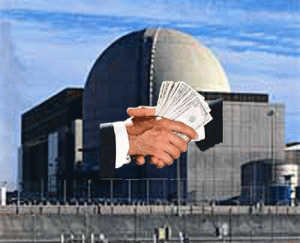 Executive admits fraud in fleecing ratepayers and shareholders https://wordpress.com/read/feeds/72759838/posts/2851460855 By Linda Pentz Gunter

“It looks like crime might well pay after all.”
That was the weary and only slightly tongue-in-cheek conclusion drawn by longtime anti-nuclear campaigner, Tom Clements recently, after a former South Carolina nuclear utility executive pled guilty to fraud in federal court.
Clements is the director of Savannah River Site Watch, but his activism has, for decades, extended well beyond the perimeter of that vast nuclear site.
For years, Clements and others have followed — and attempted to stand in the way of — the forced march of South Carolina ratepayers toward nuclear fiasco. When it finally unraveled in late July, there was only cautious cause for celebration.
On July 23, Stephen Byrne, the former COO of SCANA, the South Carolina utility originally in charge of the construction of two new nuclear reactors in the state, pled guilty in a massive nuclear conspiracy that defrauded ratepayers, deceived regulators and misled shareholders.
Byrne is charged with lying about progress on two Westinghouse AP 1000 reactors under construction — and since abandoned — at the V.C. Summer site, where costs ballooned to more than $9 billion.
The lies — or “intentional misrepresentations” as court documents described them — were necessary to make the case that the two new reactors would be finished on time, thereby qualifying the company for $1.4 billion in future federal tax credits.
But when Clements did the math, Byrne still came out ahead. “One of the court filings says Byrne earned $6.3 million from 2015-2017,” Clements said. “The project originally started with a filing with the SC Public Service Commission in 2008 and ended in July 2017. His plea agreement says he will pay a $1 million fine, though the judge could make it higher.”
So yes, crime still pays.
And so did South Carolina ratepayers. They were bilked of at least $2 billion until the project faltered and finally collapsed. A class action law suit and decisions by judges will see millions returned to ratepayers.
Ironically, the Nuclear Energy Institute, the industry’s lobbying group, gave Byrne the opportunity to explain exactly how ratepayers could be fleeced in advance to save money. In this 2012 NEI video, Byrne describes how Construction Work in Progress (CWIP) would allow the utility to collect funds from ratepayers in advance rather than waiting for construction completion — which has now, of course, not happened, even though customers paid for two new reactors that failed to materialize.
Byrne, who began cooperating with investigators about two years into the now three year-long investigation, could face jail time and a fine, but will likely testify against his co-conspirators to reduce his punishment.
For the time being, the judge has let him go home without even requiring he post the $25,000 bond. Sentencing could be years down the road. Clements believes Byrne “should face prison time” and that he “must fully reveal the criminal role of others in the conspiracy that has been so disastrous for ratepayers.”
Two other top SCANA executives could also be in the FBI’s crosshairs by now — former CEO Kevin Marsh and former chief financial officer Jimmy Addison.
Early warning signals of trouble to come sounded in February 2020, when Byrne and Marsh were charged with civil fraud by the Securities and Exchange Commission (SEC). The agency said the pair “lied and deceived shareholders, regulators, and the public regarding the construction of two new nuclear units at the V.C. Summer site, which the company abandoned amid massive cost overruns in July 2017,” according to reporting in Energy and Policy.
The thoroughly duped — or possibly hopelessly biased — S.C. Public Service Commission, had earlier “allowed SCE&G to raise its electric rates nine times to finance the doomed V.C. Summer Nuclear Station project,” reported the Charlotte Observer.
But by January 2019, the PSC had changed its mind, saying that “SCE&G intentionally misled the commission about a failing nuclear reactor construction project to win electric rate hikes.”
Clements joined other protesters outside the Columbia, SC courthouse where Byrne pled guilty to his offenses. “As he scurried into the federal courthouse, Byrne refused to tell us if he would apologize for his crime against ratepayers,” Clements said.
He, along with other South Carolina activists, and with support of Friends of the Earth, had consistently opposed the state law (CWIP, described in the NEI video), that had allowed the utility to fleece ratepayers in advance of completion of the reactors. The groups had also contested approval of the two-reactor project before the SC PSC since 2008.
As Clements watched Byrne enter the courthouse, finally forced to face up to his crimes, he basked, for a brief moment, in the glow of the celebratory light at the end of the tunnel.
“I’m glad there is going to be a little bit of justice,” Clements told the Post and Courier. And in an email, he wrote: “Nukes bring fraud, graft and corruption wherever they go. The next charges here will be more serious, I think.”
The Post and Courier described the nuclear debacle as “one of the worst economic calamities in South Carolina history”.
But while there may eventually be a day of reckoning — and sentencing — until then, South Carolina ratepayers could keep right on paying.
That is because, when SCANA went bankrupt over the Summer debacle, Dominion Energy took over. Dominion, says Clements, “will file a rate-hike request next month and the cost to ratepayers for the nuclear construction debacle will go up.”
1 This Month

Read the Public Inquiry Report, the Commissioners’ report, Surrendering Australia: The AUKUS Deception is available to download for free at aukuspublicinquiry.com. Or just watch the replay of the National Press Club Luncheon.


19 November – Webinar – The Reality of Reprocessing
Time: 11:00 AM Pacific Time (US & Canada) / 2:00 PM Eastern / 7:00 PM UK / 8:00 PM CET
Register for the Zoom Event Here



Shut down the radiation-damaged Heysham nuclear reactors now
To see nuclear-related stories in greater depth and intensity – go to https://nuclearinformation.wordpress.com

Say No to NASA’s Reckless Nuclear Reactor on the Moon
Say No to NASA’s Reckless Nuclear Reactor on the Moon
-
Archives
- November 2026 (94)
- October 2026 (302)
- September 2026 (339)
- August 2026 (330)
- July 2026 (355)
- June 2026 (287)
- May 2026 (306)
- April 2026 (356)
- March 2026 (251)
- February 2026 (267)
- January 2026 (308)
- December 2025 (358)
-
Categories
- 1
- 1 NUCLEAR ISSUES
- business and costs
- climate change
- culture and arts
- ENERGY
- environment
- health
- history
- indigenous issues
- Legal
- marketing of nuclear
- media
- opposition to nuclear
- PERSONAL STORIES
- politics
- politics international
- Religion and ethics
- safety
- secrets,lies and civil liberties
- spinbuster
- technology
- Uranium
- wastes
- weapons and war
- Women
- 2 WORLD
- ACTION
- AFRICA
- Atrocities
- AUSTRALIA
- Christina's notes
- Christina's themes
- culture and arts
- Events
- Fuk 2022
- Fuk 2023
- Fukushima 2017
- Fukushima 2018
- fukushima 2019
- Fukushima 2020
- Fukushima 2021
- general
- global warming
- Humour (God we need it)
- Nuclear
- RARE EARTHS
- Reference
- resources – print
- Resources -audiovicual
- Weekly Newsletter
- World
- World Nuclear
- YouTube
-
RSS
Entries RSS
Comments RSS

