Wake up world -to the climate emergency – Naomi Klein’s new book “On Fire”
 To avoid climate catastrophe, it’s going to take a revolution of the mind,
As we approach a turning point in our civilization’s journey, author Naomi Klein has been sounding the alarm about how to shift the current paradigm and loosen our deadly chokehold on the living world. Fast Company, BY ANNA LENZER, 15 Mar 20,
Antarctica just hit 65 degrees, the highest temperature it’s ever recorded, and a sea in Siberia is “boiling” with methane. Major parts of the U.S. drinking water supply are contaminated with “forever chemicals”—so called because they virtually never degrade—that are linked to cancers and liver damage, among other health problems. Climate models used to forecast warming are running red-hot and giving us far less time than we thought to turn things around. And last July was the hottest month in the 140 years that records have been kept, the 415th consecutive month with temperatures above the 20th-century average.
There’s a growing sense that we’re approaching a turning point in our civilization’s journey, in which the path diverges between two extremes—a re-flourishing garden planet and a bleak, burning wasteland of increasingly rationed resources. We’re pushing on dominoes that could fall into a runaway series of irreversible tipping points and feedback loops that will leave us to do emergency triage and run rescue-salvage missions on a dying and incinerated planet for the rest of our days. Peak Life is in sight, possibly already behind us, and our current trajectory is about to fling us off the cliff.
The UN is raising the alarm that the mass extinction of plant and animal species—which has already decimated large swaths of the planet—risks collapsing into a catastrophic point of no return, and that halting this destruction of the web of life (along with our food and water security) requires an unprecedented transformation of civilization beginning immediately.
A series of global summits through the end of this year is intended to kick off  this paradigmatic shift and to loosen our deadly chokehold on the living world.
A few days before the UN’s Climate Action Summit in New York last fall, author Naomi Klein launched her latest broadside against the forces of inertia with the now best-selling On Fire: The (Burning) Case for a Green New Deal, a book designed to inspire a blueprint for the United States’ reemergence as a global climate leader………https://www.fastcompany.com/90475368/to-avoid-climate-catastrophe-its-going-to-take-a-revolution-of-the-mind
A ruse to save the nuclear industry? Dangerous, expensive portable mini-reactors
|
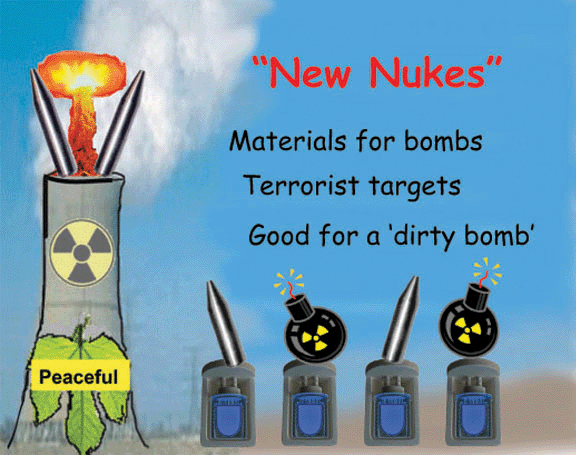
Pentagon invented the internet: This time portable Micro Nuclear reactors, https://www.globalvillagespace.com/pentagon-invented-the-internet-this-time-portable-micro-nuclear-reactors/ 12 Mar 20, There’s no shortage of hefty defense deals awarded by the US Department of Defense, but the $40 million contract for micro-reactors definitely stands out, as it hides safety risks and raises doubts over its economic efficiency.The nuclear device that the DoD strategists want must have the capability to be safely and rapidly transported by road, rail, sea or air (sic!) as well as swiftly set up and shut down. The project split between three companies — BWX Technologies, Westinghouse Government Services and X-energy — calls for a “safe, mobile and advanced nuclear micro-reactor.” The safety part sounds particularly soothing, but how would it look on the ground? What if those miniature reactors, when moved by land, become targets of high-profile terrorist attacks? And will it prove to be a real alternative (which means cheaper price, of course) to conventional energy sources? The more reactors — the greater the danger“Any nuclear reactor attracts terrorists,” Andrey Ozharovsky, nuclear scientist, program expert at the Russian Social Ecological Union, told RT. “It doesn’t matter if it’s located at a nuclear power plant [or inside a portable device]… if you remember, the terrorists planned directing one of the planes at a nuclear plant during 9/11.” The logic here is simple, he pointed out: “the more reactors are out there — the greater the danger.” If the US builds hundreds, or even dozens of such devices, it’ll be really hard for them to properly defend them all. Another vital safety issue is the reliability of the nuclear micro-reactors. Interestingly enough, the US military had already experimented with them back in the 1950s and 1960s — and it ended in a tragedy. Several portable reactors were built and setup in Greenland and Panama, but one of them blew up in 1961, killing three operators. The Army Nuclear Power Program was shut down shortly after that. “There were eight US micro-reactors and one of them exploded. That’s how safe they are,” Ozharovsky said, adding that the Pentagon’s idea of bringing them back will “likely create more risks instead of solving any problems.” Micro-reactors yet to prove their economic efficiencyBut even if the portable reactors will be shielded from the perils of the battlefield and operate without failure, what’s the Pentagon’s rationale behind bringing the radioactive fuel to their military bases? For decades, the army had been successfully running on gasoline, diesel and fuel oil; when going off-grid, it would switch to generators and high-power accumulators. “The main problem has nothing related to safety,” Anton Khlopkov, director of Energy and Security Center and member of Russian Security Council’s Scientific Council argued. Micro-reactors must prove their viability from the economic point of view since such plants always have alternatives It is yet to be proven that micro-reactors won’t be “many times more” expensive than other conventional sources of energy. Electricity produced by such devices should be at least comparable in cost to the one produced by diesel generators, he said. Some kind of a soap bubbleIf micro-reactors are such a questionable solution, why is the Pentagon pushing for their development? The answer isn’t lying on the surface, but it isn’t buried too deep. “They work against the trends,” Ozharovsky suggested. And those trends are that the world is giving up on the use of civilian nuclear energy due to being too expensive. Washington may be trying to “support the US the nuclear industry that’s dying out with the use of the military budget; sponsor their research and development — which is an expensive thing.” RT with additional input by GVS News Desk At last – someone recognises the bleeding obvious – thank you! To keep the nuclear industry alive there MUST be new nuclear reactors built. With no willing private investment available, then it must be the tax-payer who coughs up. Especially in USA, it seems that the only respectable use of tax-payer money is in that most sacred of cows – defence. |
|
Canisters for high level nuclear wastes likely to corrode faster than expected
 Corrosion poses risk in nuclear waste storage https://frontline.thehindu.com/science-and-technology/article30913130.ece March 13, 2020 The materials the United States and other countries plan to use to store high-level nuclear waste are likely to degrade faster than previously thought because of the way those materials interact, new research from Ohio State University shows.
The findings, published in a recent issue of “Nature Materials”, show that corrosion of nuclear waste storage materials accelerates because of changes in the chemistry of the nuclear waste solution and the way the materials interact with one another. “This indicates that the current models may not be sufficient to keep this waste safely stored,” Xiaolei Guo, lead author of the study was quoted in the news release issued by the university.
The team’s research focussed on storage materials for high-level nuclear waste that is highly radioactive. While some types of the waste have half-lives of about 30 years, others like plutonium have a half-life that can be tens of thousands of years.
With no long-term viable nuclear waste disposal mechanism yet in operation, in most sites nuclear waste is stored near the plants where it is produced. While countries around the world have debated the best way to deal with nuclear waste, only Finland has started construction of a long-term repository for high-level nuclear waste.
In general, proposals involve mixing nuclear waste with other materials to form glass or ceramics and then encasing those pieces of glass or ceramics, now radioactive, inside metallic canisters. The canisters are buried deep underground in a repository to isolate it.
Researchers found that when exposed to an aqueous environment, glass and ceramics interact with stainless steel to accelerate corrosion, especially of the glass and ceramic materials holding nuclear waste. The study measured the difference between accelerated corrosion and natural corrosion of the storage materials. “In the real-life scenario, the glass or ceramic waste forms would be in close contact with stainless steel canisters. Under specific conditions, the corrosion of stainless steel will go crazy,” he said. “It creates a super-aggressive environment that can corrode surrounding materials.”
To analyse corrosion, the research team pressed glass or ceramic “waste forms” (the shapes into which nuclear waste is encapsulated) against stainless steel and immersed them in solutions for up to 30 days, under conditions that simulate those under Yucca Mountain, the proposed nuclear waste repository in the U.S.
Those experiments showed that when glass and stainless steel were pressed against one another, stainless steel corrosion was “severe” and “localised”. The researchers also noted cracks and enhanced corrosion on the parts of the glass that had been in contact with stainless steel.
Part of the problem lies in the Periodic Table. Stainless steel is made primarily of iron mixed with other elements, including nickel and chromium. Iron has a chemical affinity for silicon, which is a key element of glass.
The experiments also showed that when ceramics, another potential holder for nuclear waste, were pressed against stainless steel under conditions that mimicked those beneath Yucca Mountain, the ceramics and stainless steel corroded in a “severe localised” way.
Angst in Nevada over law designating Yucca Mt for a national repository.
 CORTEZ MASTO PRESSES DOE SECRETARY ON PLAN TO SEEK YUCCA ALTERNATIVES Lincoln County Central | Mar 13, 2020 By Humberto Sanchez, The Nevada Independent
Energy Secretary Dan Brouillette sought to reassure Sen. Catherine Cortez Masto on Tuesday that the Department of Energy plans to seek alternatives to storing nuclear waste at Yucca Mountain, but he stopped short of backing an effort to change the law designating the site for a national repository.
At a Senate Energy and Natural Resources Committee hearing Tuesday on the DOE budget, Cortez Masto, who opposes the project, asked Brouillette what DOE would do if Congress provided funds for the Yucca project in the current fiscal year.
‘We will follow the law, obviously, but it’s our intent to look for alternatives to Yucca Mountain,” Brouillette said. “It’s our intent to begin a process, and that’s why we’ve requested $27.5 million in the budget, to do a few things.” ……
Cortez Masto also pressed Brouillette about whether he would support a repeal of the 1987 law that designated the Yucca the spot for the nation to bury its nuclear waste. …..
At a House hearing last week, Brouillette said the administration currently has no plans to change the law even though it would be needed to implement storing waste at temporary sites, which is something DOE has said it could explore……
After seeking funds for the project in his first three budgets, President Donald Trump reversed course in the fiscal 2021 budget blueprint and in a tweet last month said he heard Nevadans on the issue of Yucca. Most Nevada lawmakers and business interest groups oppose the project’s proposed site, which is located about 90 miles from Las Vegas.
Following the release of the budget, Gov. Steve Sisolak, who was in Washington for the annual National Governors Association winter meeting, hand-delivered a letter to the White House calling on Trump to pledge to veto legislation that would advance the Yucca project and “undermine the State’s legal standing or consent requirements.”
The White House has not yet responded according to Sisolak’s office……..
Trump’s decision on Yucca also comes as he looks to win Nevada in his 2020 re-election bid. He lost the state to Hillary Clinton in 2016 by two points.
After the hearing, Murkowski said she welcomed the president’s budget request dropping funds for Yucca because it would allow Congress to focus on advancing legislation to authorize temporary nuclear waste storage rather than expending energy on the Gordian knot that is Yucca.
“We think we have an opportunity to move on our interim waste bill,” Murkowski said. “I always thought that was a path that we needed to pursue as well. And so I think this gives us an opportunity and an opening.”
The energy secretary also said that DOE remains on track for removing the half metric-ton of weapons-grade plutonium the agency secretly shipped to the Nevada National Security Site (NNSS) from the Savannah River site in South Carolina.
In April, Cortez Masto struck a deal with then-Energy Secretary Rick Perry to remove the plutonium beginning in 2021 and getting all of it out by 2026. The DOE disclosed in January 2019 as part of a lawsuit filed by the state to prevent any plutonium shipment—after talks with DOE yielded no resolution—that it had already shipped the plutonium. ……. https://lccentral.com/2020/03/13/cortez-masto-presses-doe-secretary-on-plan-to-seek-yucca-alternatives/
In southern Nevada, some form of advanced B61-12 testing is underway
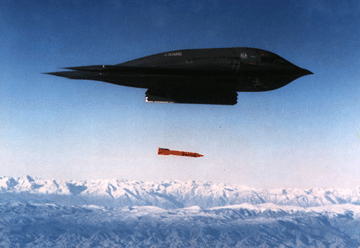 F-15E Strike Eagle Spotted Flying With An Inert B61-12 Nuclear Bomb Out Of Nellis AFB https://www.thedrive.com/the-war-zone/32585/f-15e-strike-eagle-spotted-flying-with-an-inert-b61-12-nuclear-bomb-out-of-nellis-afb
The precision-guided upgrade of the B61 tactical nuclear bomb has had a troubled and very expensive past. BY TYLER ROGOWAYMARCH 14, 2020, Exercise Red Flag is underway with the U.S. and some of its tightest allies fighting a mock air war over the Nevada Test and Training Range (NTTR)
In southern Nevada. Either in conjunction with the exercise or independent of it, there is a lot of testing currently going on over the same area. Case in point, this test F-15E Strike Eagle assigned to Eglin Air Force Base carrying an inert version of America’s newest variant of its long-running B61 series of nuclear bombs, the precision-guided B61-12.
The jet was snapped by aviation photographer Kris Trajano on Tuesday, March 10th, 2020. The F-15E was followed by a pair of F-16s that were landing just before the first Red Flag launch of the day. It isn’t uncommon for various test, training, and tactics development missions to be executed in the space between the two daily Red Flag mass launches and recoveries. Still, it is interesting to see the B61-12 hanging on an F-15E coming into Nellis. Much of the test and evaluation work for the USAF’s nuclear weapons delivery systems occurs on the Tonopah Test Range in the northern reaches of the NTTR. Nearby Tonopah Test Range Airport also supports those activities under certain circumstances.
It isn’t clear why the F-15E is carrying the weapon into Nellis. It appears to be a full-up guided round, but an inert one that lacks a nuclear warhead for testing purposes. The aircraft could be set to run another drop test on the Tonopah Test Range, or it’s possible, but less likely, that deployment of the weapon could be folded into an upcoming Red Flag mission. America’s NATO allies Germany, Italy, and Spain are the only foreign players taking part in this Red Flag, so an operational test of the weapon that will be the lynchpin of the Alliance’s nuclear deterrent in Europe would make some sense, especially this late in its development. It’s not unheard of for B61 deployment tactics development and training to occur out of Nellis, either.
As for the B61-12 program, which is seen as an essential upgrade to the Air Force’s only tactical nuclear gravity bomb, it has been mired in cost overruns and other issues. All said, the bombs will be worth over twice their weight in gold, literally, once they are operational. The F-15E, along with the F-16 and B-2, are the Air Force’s delivery systems for this weapon.
The Air Force’s F-35As will acquire this capability in the future, as well. The 412th Test Wing at Edwards noted that it “advanced strategic capabilities [for the F-35] like Dual-Capable Aircraft” in a round-up of its accomplishments during 2019. “Dual-capable” in this context refers to the ability to carry both conventional and nuclear weapons. In 2017, Military.com had reported that the B61-12 might be integrated into the F-35A as early as 2020, but when The War Zone reached out to the 412th Test Wing for an update earlier this year, the unit’s public affairs office said it could not “provide a response at this time due to operational security reasons.”
The updated B61-12’s ability to make precision strikes greatly increases its versatility, regardless of the plane carrying it, and the ways in which it could be employed during an actual nuclear strike. You can read all about the weapon and its developmental state here and here. Once the B61-12 is fully operational, it will be forward-deployed, including to Europe, where some of America’s NATO partners could be tasked with delivering a portion of the weapons during an all-out conflict.
The unit’s public affairs office said it could not “provide a response at this time due to operational security reasons.”
Clearly, some form of advanced B61-12 testing is underway out of Nellis. Hopefully, this will involve ironing out some of the weapon’s kinks so that it can be made operational. Regardless, it’s always interesting seeing a tactical fighter carrying a weapon type that is intended to be far more destructive than anything else in the jet’s air-to-ground arsenal.
It’s fascinating just how much destructive power can be packed inside the B61’s svelte, 700-pound frame. The B61-12 has a so-called “dial-a-yield” warhead with various settings, the highest of which is a 50 kiloton yield. This is a little over twice the power of the Fat Man bomb, a substantially larger weapon overall, which the United States dropped on Nagasaki at the end of World War II.
Pentagon’s latest scam for tax-payers’ money; dangerous, costly portable nuclear reactors

Pentagon hands out contracts for PORTABLE nuclear reactors… yet  another gold vein for cash-savvy military? https://www.rt.com/news/482942-us-military-nuclear-microreactor/ 13 Mar, 2020 There’s no shortage of hefty defense deals awarded by the US Department of Defense, but the $40 million contract for micro-reactors definitely stands out, as it hides safety risks and raises doubts over its economic efficiency.
The nuclear device that the DoD strategists want must have the capability to be safely and rapidly transported by road, rail, sea or air (sic!) as well as swiftly set up and shut down. The project split between three companies — BWX Technologies, Westinghouse Government Services and X-energy — calls for a “safe, mobile and advanced nuclear micro-reactor.”
The safety part sounds particularly soothing, but how would it look on the ground? What if those miniature reactors, when moved by land, become targets of high-profile terrorist attacks? And will it prove to be a real alternative (which means cheaper price, of course) to conventional energy sources?
‘The more reactors — the greater the danger’
“Any nuclear reactor attracts terrorists,” Andrey Ozharovsky, nuclear scientist, program expert at the Russian Social Ecological Union, told RT. “It doesn’t matter if it’s located at a nuclear power plant [or inside a portable device]… if you remember, the terrorists planned directing one of the planes at a nuclear plant during 9/11.”
The logic here is simple, he pointed out: “the more reactors are out there — the greater the danger.” If the US builds hundreds, or even dozens of such devices, it’ll be really hard for them to properly defend them all.
Another vital safety issue is the reliability of the nuclear micro-reactors. Interestingly enough, the US military had already experimented with them back in the 1950s and 1960s — and it ended in a tragedy.
Several portable reactors were built and setup in Greenland and Panama, but one of them blew up in 1961, killing three operators. The Army Nuclear Power Program was shut down shortly after that.
“There were eight US micro-reactors and one of them exploded. That’s how safe they are,” Ozharovsky said, adding that the Pentagon’s idea of bringing them back will “likely create more risks instead of solving any problems.”
‘Micro-reactors yet to prove their economic efficiency’
But even if the portable reactors will be shielded from the perils of the battlefield and operate without failure, what’s the Pentagon’s rationale behind bringing the radioactive fuel to their military bases? For decades, the army had been successfully running on gasoline, diesel and fuel oil; when going off-grid, it would switch to generators and high-power accumulators.
“The main problem has nothing related to safety,” Anton Khlopkov, director of Energy and Security Center and member of Russian Security Council’s Scientific Council argued.
Micro-reactors must prove their viability from the economic point of view, since such plants always have alternatives.
It is yet to be proven that micro-reactors won’t be “many times more” expensive than other conventional sources of energy. Electricity produced by such devices should be at least comparable in cost to the one produced by diesel generators, he said.
‘Some kind of a soap bubble’
If micro-reactors are such a questionable solution, why is the Pentagon pushing for their development? The answer isn’t lying on the surface, but it isn’t buried too deep.
“They work against the trends,” Ozharovsky suggested. And those trends are that the world is giving up on the use of civilian nuclear energy due to being too expensive.
Washington may be trying to “support the US the nuclear industry that’s dying out with the use of the military budget; sponsor their research and development — which is an expensive thing.”
Ozharovsky didn’t rule out the possibility that the whole thing “is some kind of a soap bubble.” The research will be made, some prototypes may even be put together, but no actual mini-reactors will be ordered by the Pentagon, he said.
The DoD’s was never shy to spend the US taxpayer dollars: its F-35 program was worth a whopping $1.4 trillion in procurement and operating costs over its lifetime, while Pentagon also acquired such items of prime necessity as… $640 toilet seats and $7,600 coffee makers. The micro-reactors may well become another entry in this wasteful list.
Steps to nowhere on nuclear disarmament – USA’s “Creating an Environment for Nuclear Disarmament” (CEND)

The Virus of Nuclear Proliferation https://www.commondreams.org/views/2020/03/12/virus-nuclear-proliferation, March 12, 2020, by In Depths News
Rather than addressing the promising path forward provided by the new Treaty for the Prohibition of Nuclear Weapons to finally ban the bomb, the U.S. launched a new initiative, by Alice Slater
Ironically, it is not nearly so well-reported, that the 50-year old NPT is threatening the world with an even worse illness then the new terrifying coronavirus.
The NPT’s critical requirement that the nuclear armed states, which signed the treaty in 1970, must make “good faith efforts” for nuclear disarmament is virtually moribund as nations are developing new nuclear weapons, some characterized as more “usable” and destroying treaties that contributed to a more stable environment.
These include the 1972 Anti-Ballistic Missile Treaty which the U.S. negotiated with USSR and walked out of in 2002, and its repeated rejections of offers from Russia and China to negotiate a treaty to keep weapons out of space, and from Russia to ban cyberwar, all of which would contribute to “strategic stability” which would enable the fulfillment of the NPT’s nuclear disarmament promise.
Further, this year the U.S. withdrew from the Intermediate Nuclear Force agreement it made with Russia in 1987, left the nuclear deal it had negotiated with Iran as well, and just announced it would not meet with Russia to discuss a renewal of the Strategic Arms Control Treaty (START), due to expire this year, which limits nuclear warheads and missiles.
It also created a whole new branch of its military, the Department of Space, which was formerly housed in the U.S. Airforce. And in an obvious breach of “good faith” [i] ,this February the US staged a “limited” nuclear battle against Russia in a war game!
It cannot be denied that the NPT contributes to even more burgeoning nuclear proliferation by extending its misbegotten “inalienable right” to “peaceful” nuclear power, currently promoting this lethal technology to Saudi Arabia, UAE, Belarus, Bangladesh and Turkey which are all constructing their first nuclear power plants — expanding the keys to the bomb factory in more and more countries, while almost all of the current nuclear weapons states have new nuclear weapons under development.
The U.S., for example, is planning to spend over a trillion dollars over the next 10 years and is working with the UK to replace Britain’s Trident nuclear warheads.
Rather than addressing the promising path forward provided by the new Treaty for the Prohibition of Nuclear Weapons to finally ban the bomb, the U.S. launched a new initiative, Creating an Environment for Nuclear Disarmament (CEND), to develop yet another set of possible new steps to comply with its 50 year old “good faith” promises for nuclear disarmament.
At a recent meeting in Stockholm with fifteen of its allies, new measures were announced for nuclear disarmament now being described as “stepping stones”, having graduated from various commitments over the years for “steps” and “an unequivocal commitment” to those steps, since the NPT was extended in 1970, indefinitely and unconditionally.
These new “stepping stones” bring to mind M.G. Escher’s stunning drawing of a series of steps to nowhere with people endlessly trudging up a staircase, never to reach their destination!
Renewables surpass coal and nuclear says USA’s Federal Energy Regulatory Commission (FERC)
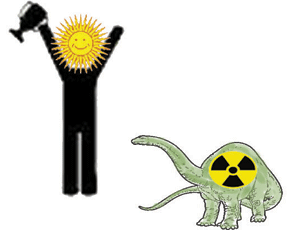
US: Renewables to rise above coal and nuclear says FERC https://www.smart-energy.com/renewable-energy/us-renewables-to-rise-above-coal-and-nuclear-says-ferc/ Renewables are estimated to add nearly 50,000 MW, being more than a quarter of the total capacity according to a review by the SUN DAY Campaign of data, issued last week by the Federal Energy Regulatory Commission (FERC). 13 Mar 20,
According to the report, the mix of renewable energy sources (i.e., biomass, geothermal, hydropower, solar, wind) provided 57.26% of new U.S. electrical generating capacity added in 2019 – swamping that provided by coal, natural gas, oil, and nuclear power combined.
FERC’s latest monthly “Energy Infrastructure Update” report (with data through to December 31, 2019) reveals renewable sources (i.e. biomass, geothermal, hydropower, solar, wind) accounted for 11,857 megawatts (MW) of new generating capacity by the end of the year. That is a third more (33.97%) more than that of natural gas (8,557 MW), nuclear (155 MW), oil (77 MW), and coal (62 MW) combined.
Renewables have now also surpassed 22% (i.e., 22.06%) of the US’ total available installed generating capacity – further expanding their lead over coal capacity (20.89%). Among renewables, wind can boast the largest installed electrical generating capacity – 8.51% of the U.S. total, followed by hydropower (8.41%), solar (3.49%) [2], biomass (1.33%), and geothermal (0.32%). Thus, wind and solar combined now account for 12.0% of the nation’s electrical generating capacity.
Moreover, the FERC foresees renewables dramatically expanding their lead over fossil fuels and nuclear power in terms of new capacity additions during the coming three years (i.e., by December 31, 2022). Net generating capacity additions (i.e., “proposed additions under construction” minus “proposed retirements”) for renewable sources total 48,254 MW: wind – 26,403 MW, solar – 19,973 MW, hydropower – 1,460 MW, biomass – 240 MW, and geothermal – 178 MW.
By comparison, net additions for natural gas total 21,090 MW while the installed capacities for coal, nuclear, and oil are projected to drop by 18,857 MW, 3,391 MW, and 3,085 MW respectively. In fact, FERC reports no new coal capacity in the pipeline over the next three years.
Thus, while net new renewable energy capacity is projected to be nearly 50,000 MW greater within three years, that of fossil fuels and nuclear power combined will decline by over 4,200 MW. Between now and the end of 2022, new wind capacity alone will be greater than that of natural gas while that of wind and solar combined will more than double new gas capacity.
Moreover, if FERC’s data prove correct, then by the end of 2022, renewable sources will account for more than a quarter (25.16%) of the nation’s total available installed generating capacity while coal will drop to 18.63% and that of nuclear and oil will decrease to 8.29% and 2.95% respectively. Natural gas will increase its share — but only slightly – from 44.67% today to 44.78%.
As the Executive Director of the SUN DAY Campaign, I believed that the rapid growth of renewables and corresponding drop in electrical production by coal and oil in 2019 provides a glimmer of hope for slowing down the pace of climate change. In addition, renewables’ continued expansion in the near future – as forecast by FERC – suggests that with supportive governmental policies, these technologies could provide an even greater share of total U.S. electrical generation.
Statistics presented in this article can be found here. Read the full FERC report.
They’ve licensed Exelon’s Peach Bottom Nuclear Plant for 80 Years – but it mightn’t last
Exelon’s Peach Bottom Nuclear Plant Licensed for 80 Years—Will It Make It? Power, Mar 12, 2020, by Aaron Larson The U.S. Nuclear Regulatory Commission (NRC) granted a 20-year license extension for Peach Bottom Atomic Power Station Units 2 and 3. The extension authorizes the two reactors—both of which began commercial operation in 1974—to continue operating through 2054…….
Exelon, which operates the largest fleet (21 reactors) of nuclear plants in the U.S., has lobbied strongly for years to obtain government support for nuclear power. The company was successful in getting legislation passed in Illinois and New York that provides financial incentives for some of its plants. Government investigations, however, have put Exelon under a microscope as a result of its lobbying activities.
Exelon received a grand jury subpoena in the second quarter of 2019 from the U.S. Attorney’s Office for the Northern District of Illinois, requiring production of information concerning the company’s lobbying activities in the state. On Oct. 4, 2019, Exelon received a second grand jury subpoena, requiring production of records of any communications with certain individuals and entities. On Oct. 22, 2019, the U.S. Securities and Exchange Commission (SEC) notified Exelon that it had also opened an investigation into the company’s lobbying activities. ……..
Other units have also been retired long before their licenses expired, including Kewaunee, Vermont Yankee, Fort Calhoun, and Pilgrim, so obtaining a license extension is no guarantee of long-term operation for the Peach Bottom facility. ………https://www.powermag.com/exelons-peach-bottom-nuclear-plant-licensed-for-80-years-will-it-make-it/
Joe Biden to encourage nuclear power, and Bernie Sanders is not all that anti nuclear
 Bernie’s nuclear plan, explained, By KELSEY TAMBORRINO Politico Newsletter 03/10/2020 Bernie’s nuclear plan, explained, By KELSEY TAMBORRINO Politico Newsletter 03/10/2020 BREAKING DOWN BERNIE’S NUCLEAR PLAN: Sen. Bernie Sanders has pledged to secure 100 percent of U.S. electricity from renewable sources by 2030, and he’d do so in part by ending new licenses to nuclear power plants. But his opposition to nuclear energy may not be as radical as his critics fear, Pro’s Gavin Bade reports this morning. Sanders’ campaign says he would not order the vast majority of existing reactors in the U.S. to shut down, and campaign aides privately acknowledge that Sanders will lack the tools to bring an end to nuclear power within the next decade.Sanders’ opposition to nuclear power stands in contrast to former Vice President Joe Biden, who promises to “identify the future of nuclear power,” including new waste disposal systems and small, modular reactors that the industry hopes will be safer and easier to deploy. The nuclear issue could affect upcoming Democratic primaries in states like Illinois, New Jersey, Ohio and Connecticut, where state nuclear subsidies keep plants running and employ thousands of union jobs. Sanders’ allies say the candidate would prioritize phasing out natural gas and coal-fired power before shutting any nuclear generators. The campaign declined to give further detail on how it would ensure nuclear plants are not replaced by gas, but emphasized Sanders’ call for a complete phase-out of fossil fuels and a ban on hydraulic fracking for gas. …..https://www.politico.com/newsletters/morning-energy/2020/03/10/bernies-nuclear-plan-explained-785957 |
|
U.S. Department of Energy’s plans could mean delay in Hanford nuclear waste clean-up
|
Nuclear waste cleanup efforts in Washington could be delayed https://triblive.com/news/world/nuclear-waste-cleanup-efforts-in-washington-could-be-delayed/, ASSOCIATED PRESS | Wednesday, March 11, 2020 RICHLAND, Wash. — The Department of Energy has announced priority plans for environmental cleanup nationwide and indicates a slower process for the decommissioned nuclear site in Washington state, a report said.
The focus at the Hanford Site will be to start treating waste at the $17 billion vitrification plant, but the report does not detail other work at the 580-square-mile site, the Tri-City Herald reported Tuesday. The report does not mention moving radioactive capsules to safer storage and cleaning up a radioactive spill under one of the buildings a mile north of Richland. “It is shocking that DOE would propose to delay projects like the cesium-strontium capsules and the 324 Building contamination, which pose such great risks to the workers and public,” said Tom Carpenter, executive director for Hanford Challenge, a watchdog and worker advocacy group. The “Environmental Management Vision 2020-2030: A Time of Transition and Transformation” report may also signal delays and decreased commitment to current plans for up to 10 years, including cleanup of contaminated groundwater flowing toward the Columbia River, the newspaper said. “Proactively addressing these hazards before they pose an imminent risk is critically important, and frankly, they can’t wait until sometime in the 2030s,” said David Reeploeg, the Tri-City Development Council vice president for federal program. A budget request for upcoming year by President Donald Trump’s administration proposes cleaning up 56 gallons of radioactive waste held in underground tanks at the site. Reeploeg added that he was pleased there is some commitment to treat tank waste. Hanford produced plutonium for nuclear weapons during the Cold War and World War II. |
|
And they say that small nuclear reactors do not have military applications
Pentagon awards contracts to design mobile nuclear reactor Defense News
The department awarded contracts to BWX Technologies, Inc. of Virginia, for $13.5 million; Westinghouse Government Services of Washington, D.C. for $11.9 million; and X-energy, LLC of Maryland, for $14.3 million, to begin a two-year engineering design competition for a small nuclear microreactor designed to potentially be forward deployed with forces outside the continental United States.
The combined $39.7 million in contracts are from “Project Pele,” a project run through the Strategic Capabilities Office (SCO), located within the department’s research and engineering side. The prototype is looking at a 1-5 megawatt (MWe) power range. The Department of Energy has been supporting the project at its Idaho National Laboratory…….
If the testing goes well, a commercially developed, Nuclear Regulatory Commission licensed reactor will be demonstrated on a “permanent domestic military installation by 2027,” according to DoD spokesman Lt. Col. Mike Andrews. “If the full demonstration proves to be a cost effective energy resilience alternative, NRC-licensed [reactors] will provide an additional option for generating power provided to DoD through power purchase agreements.”
The best way to differentiate between the programs may be to think of the A&S effort as the domestic program, built off commercial technology, as part of an effort to get off of local power grids that are seen as weak targets, either via physical or cyber espionage. Pele is focused on the prototyping a new design, with forward operations in mind — and may never actually produce a reactor, if the prototype work proves too difficult…… https://www.defensenews.com/smr/nuclear-arsenal/2020/03/09/pentagon-to-award-mobile-nuclear-reactor-contracts-this-week/
Peach Bottom nuclear station can struggle on for 80 years!

It’s getting a bit tiresome – this endless, mindless repetition of “carbon-free”  “clean energy” “zero-carbon” nuclear energy. Why don’t Larry Pearl and other writers, who otherwise provide thorough and well-researched information – why don’t they do their homework on the full carbon emissions of the entire nuclear fuel chain? Even the reactors themselves release a tiny an mount of Carbon 14. There is not only the chain of construction and demolition, but also the continuing fuel chain of mining through to radioactive waste disposal.
Exelon’s Peach Bottom becomes second US nuclear plant to get license 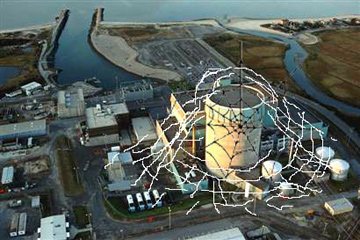 approval to 80 years, Utility Dive , By Larry Pearl March 9, 2020
Dive Brief:
- Exelon’s Peach Bottom plant became the second nuclear power reactor in the U.S. to get permission to operate out to 80 years, after the Nuclear Regulatory Commission approved another 20-year extension on Friday.
- Last December, Florida Power & Light’s Turkey Point units 3 and 4 got the first such approval as utilities work to retain a major source of carbon-free [?] as long as possible.
- Dominion has applied for a similar license extension for its Surry nuclear plant and plans to request for at least two more, while Duke plans to do the same for all 11 of its nuclear plants, Bloomberg reported last month.
Dive Insight:
Peach Bottom Unit 2 in York County, Pennsylvania, is now licensed to operate through August 2053 and Unit 3 through July 2054. The approvals come as more and more states move to adopt aggressive clean energy goals and the nuclear industry looks to advance a new generation of reactors.
But the economics of the current generation of U.S. reactors remains challenging, especially for new plants, and the industry and a number of states have adopted programs to recognize the zero emission attributes of nuclear.
While Exelon Nuclear’s Chief Nuclear Officer Bryan Hanson called the license extension, “good news for the environment, our employees and the community,” he noted that “nuclear plants must remain financially viable to continue to operate. ….
But FERC’s move in December to effectively raise the price floor for subsidized resources attempting to bid into the PJM wholesale capacity market complicates state efforts to support nuclear plants in Pennsylvania and elsewhere.
A variety of stakeholders have petitioned FERC to reconsider its decision.
The NRC’s decision to move forward with Peach Bottom’s license extension is also being challenged…. https://www.utilitydive.com/news/exelons-peach-bottom-becomes-second-us-nuclear-plant-to-get-license-approv/573690/
Dr Chris Busby exposes the facts on Cancer in US Navy Nuclear Powered Ships

Cancer in US Navy Nuclear Powered Ships https://www.counterpunch.org/2020/03/06/cancer-in-us-navy-nuclear-powered-ships/ by CHRIS BUSBY Here is a good one. In 2011, the nuclear-powered aircraft carrier USS Ronald Reagan was about 100km off the coast of Japan at the time of the Tsunami and the subsequent Fukushima reactor explosions. It was directed by the US government to ride to the rescue in what was later called Operation Tomodachi (friendship)–to provide assistance to the victims of the floods. What no-one on board was told was that the reactors had exploded and a plume of highly radioactive material was blowing east from the site into the path of the vessel. Of course, when this arrived, all the radiation monitors on the boat started screaming, and the planes and helicopters that had flown the rescue sorties were contaminated.
In 2014, following all the publicity about the cancers, a number of US Senators and important people were asking pertinent questions—the Navy had to do something to answer the accusations that the Fukushima radiation was killing those who sailed on Operation Tomodachi. They panicked. A big report was prepared by the US Defense Threat Reduction Agency (DTRA), entitled: Final Report to the Congressional Defense Committees in Response to the Joint Explanatory Statement Accompanying the Department of Defense Appropriations Act, 2014, page 90, “Radiation Exposure” [2]. Never use one word when ten will do
What I discuss in the paper to explain the result is my usual argument about how the radiation protection legislation is wildly incorrect when dealing with internal contamination from radionuclides. The legal limits in USA and the West are based on the comparison of cancers in those exposed to acute external gamma ray doses to the Japanese A-Bomb populations and cannot apply to internal exposures to substances which target DNA (Uranium, Strontium-90) or which provide huge local ionisation to some living cells but nothing at all to others (DU particles, reactor discharge particles).
Nuclear workers work outside at a nuclear site where the discharges get dispersed. Nuclear sailors live in a tin box that also contains the reactors. Nuclear worker studies are based on data that is provided by the nuclear industry to show there are no cancers. The DTRA study had to show more cancers in order to swamp the Ronald Reagan sailors’ cancers. But to do this, they brought out their Queen. And it was taken
Notes.
1) https://www.courthousenews.com/us-sailors-face-grim-diagnoses-after-fukushima-mission/
3) https://seer.cancer.gov/data/
4) https://www.tandfonline.com/doi/abs/10.1080/07357907.2020.1731526?journalCode=icnv20
5) https://www.genetics.org/content/204/4/1627
6) https://royalsocietypublishing.org/doi/10.1098/rspb.2017.1070
7) https://royalsocietypublishing.org/doi/10.1098/rspb.2017.1070
Dr Chris Busby is the Scientific Secretary of the European Committee on Radiation Riskand the author of Uranium and Health – The Health Effects of Exposure to Uranium and Uranium Weapons Fallout (Documents of the ECRR 2010 No 2, Brussels, 2010). For details and current CV see chrisbusbyexposed.org. For accounts of his work see greenaudit.org, llrc.org and nuclearjustice.org.
Trump’s America prepares to use low-level nuclear weapons as “a viable option” – Russia fears
 Russia Fears US Under Trump Now Ready to Use Nuclear Weapons as ‘Viable Political Option’ https://www.commondreams.org/news/2020/03/06/russia-fears-us-under-trump-now-ready-use-nuclear-weapons-viable-political-option“This dramatically increases the chance of a nuclear exchange due to miscalculation or human error.”by Eoin Higgins, staff writer
 |
“Washington is not just modernizing its nuclear forces, but is striving to give them new capabilities, which greatly expands the likelihood of their use,” Russian Foreign Ministry spokeswoman Maria Zakharova said Friday. Zakharova told reporters that the U.S. increase in nuclear weapons capabilities earlier in the year, when the military deployed a low-yield ballistic warhead to its submarines, reduces the threshhold for using the weapons and brings the world closer to the possibility of nuclear war. As Common Dreams reported, the move was seen by International Campaign to Abolish Nuclear Weapons treaty coordinator Tim Wright as “an alarming development that heightens the risk of nuclear war.” “Of particular concern is the expansion of the range of U.S. low-yield weapons in its nuclear arsenal, including the development and deployment of such munitions for strategic carriers,” said Zakharova. The U.S. in February angered Russian officials for a war game in which the Pentagon ran a scenario where Russia attacked a NATO ally with a low-yield nuclear weapon and the U.S. responed with a “limited” nuclear strike. According to RT, the Russian government’s concerns are based in part on the U.S.’s nuclear doctrines:
As the Washington Physicians for Social Responsibility’s Bruce Amundson and Joseph Berkson wrote for the Seattle Times in February after the U.S. deployment of low-yield weapons was announced, the deployment raises the risk of overreaction and escalation:
In her remarks Friday, Zakharova said Moscow was treating U.S. moves as a sign the country “has made a decision to consider a nuclear conflict as a viable political option and are creating the potential [scenario] necessary for it.” President Donald Trump and his administration have been reluctant to commit to renewing the Nuclear Nonproliferation Treaty in April 2021. The treaty turned 50-years-old on March 5, leading United Nations General Secretary António Guterres in a statement to call on treaty signatories to recommit to world peace. “The Secretary-General calls on States parties to make the most of this opportunity to strengthen international peace and security through the promotion of non-proliferation of nuclear weapons and nuclear disarmament, as well as measures to strengthen implementation of the NPT and achieve its universality,” said Guterres. |
1 This Month

Protect Sazan Island from the Trump family! https://secure.avaaz.org/campaign/en/protect_sazan_island_from_the_trump_family_loc/?bqFCVab&v=174511&cl=22707147157&_checksum=5e9dde668860e8231c33699735e16a1fbf22ab2cb01da50c999fe8732b9775ef&utm_source=email&utm_medium=blast_email&utm_campaign=174511
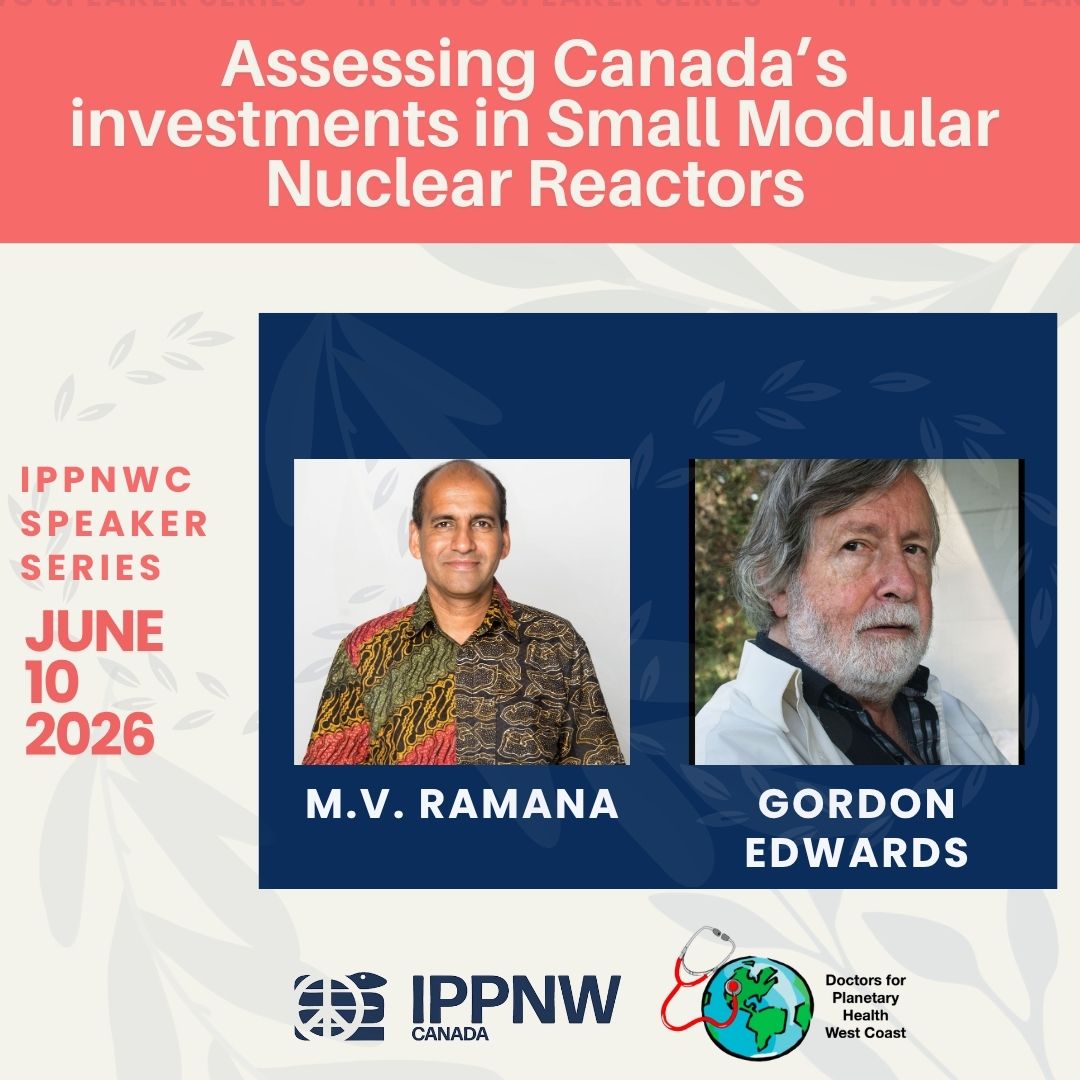
10 June – Assessing Canada’s Investments in Small Modular Nuclear Reactors – https://zoom.us/meeting/register/IiqHA5feRhaEBycOLNTJlA#/registration


Cuba Is Not a Failed State – It Is a Besieged State
PETITION: “Global Appeal to Endorse Palestinian Right of Return of Refugees”
To see nuclear-related stories in greater depth and intensity – go to https://nuclearinformation.wordpress.com
-
Archives
- June 2026 (89)
- May 2026 (306)
- April 2026 (356)
- March 2026 (251)
- February 2026 (268)
- January 2026 (308)
- December 2025 (358)
- November 2025 (359)
- October 2025 (376)
- September 2025 (257)
- August 2025 (319)
- July 2025 (230)
-
Categories
- 1
- 1 NUCLEAR ISSUES
- business and costs
- climate change
- culture and arts
- ENERGY
- environment
- health
- history
- indigenous issues
- Legal
- marketing of nuclear
- media
- opposition to nuclear
- PERSONAL STORIES
- politics
- politics international
- Religion and ethics
- safety
- secrets,lies and civil liberties
- spinbuster
- technology
- Uranium
- wastes
- weapons and war
- Women
- 2 WORLD
- ACTION
- AFRICA
- Atrocities
- AUSTRALIA
- Christina's notes
- Christina's themes
- culture and arts
- Events
- Fuk 2022
- Fuk 2023
- Fukushima 2017
- Fukushima 2018
- fukushima 2019
- Fukushima 2020
- Fukushima 2021
- general
- global warming
- Humour (God we need it)
- Nuclear
- RARE EARTHS
- Reference
- resources – print
- Resources -audiovicual
- Weekly Newsletter
- World
- World Nuclear
- YouTube
-
RSS
Entries RSS
Comments RSS
 nuclear-news